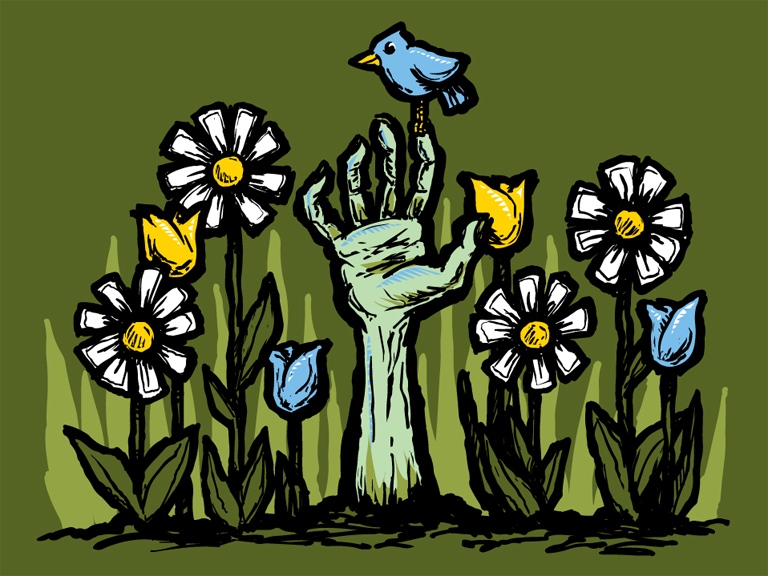
Although Fall is my favorite time of year with the change of seasons and Halloween, I would be remiss if I didn’t acknowledge the first day of Spring. TheoFantastique welcomes the new season with an image called “Zombie Garden,” discovered at Zombie Info, but created by Shirt Woot where this design is available on a t-shirt. Enjoy nature’s transition from death to life.
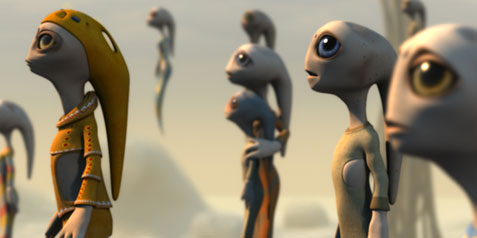
With all the national debate over healthcare in the United States these days it’s easy to forget the other national debate that will begin once the furor over healthcare legislation dies down, and that is the environment with cap-and-trade. Hollywood is fond of environmental apocalypse films these days, and while the reader is no doubt familiar with Wall*E and Avatar, you may not have heard of Battle for Terra. Joshua Bellin, author of Framing Monters, and a past guest here for two previous interviews, one on his book and the other contrasting the how the issue of race is treated in the original King Kong and in Peter Jackson’s remake, recently had an article posted online that addresses Battle for Terra and other films that touch on environmental apocalyptic. As he describes it
Terra tells the story of a winsome race of aliens whose planet is invaded by the last human survivors of an Earth our species has laid waste. In a particularly insidious form of colonization, the earthlings plan to oxygenate the aliens’ atmosphere–certain death for the Terrans. But thanks to one human dissenter’s friendship with a waiflike Terran revolutionary, the evil scheme is averted, its masterminds slain, and a permanent human colony erected on Terra to house the dissenting pilot’s peace-minded disciples.
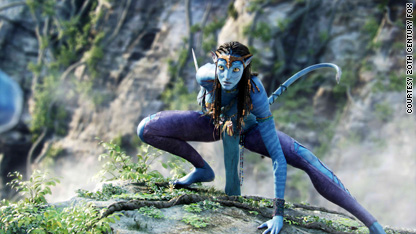
In his article Bellin goes on to consider how well these films respond to our environmental challenges, and his verdict is not positive. For example, in discussing Avatar he writes that its
fundamental hypocrisy eclipses any putative environmentalist leanings: not only does Cameron’s film erase the historical fact that whites didn’t start to hanker for the Indians’ love of the land until they’d stolen and raped virtually all the land the Indians loved, but it reinforces the New Age belief that redemption from such historical sins can be earned through further consumption, the stockpiling of more commodified, otherworldly junk (faux dream catchers and sweat lodge ceremonies, Avatars on hi-def and Blu-ray). Rather than calling for true reform here at home, which might actually cost something, Avatar turns once more outward, seeking salvation from another alien culture whose wisdom and whose world can be snapped up for a song.
No doubt fantastic films will continue to find inspiration in environmental challenges, but the question remains as to how well they will incorporate realistic responses for our times.
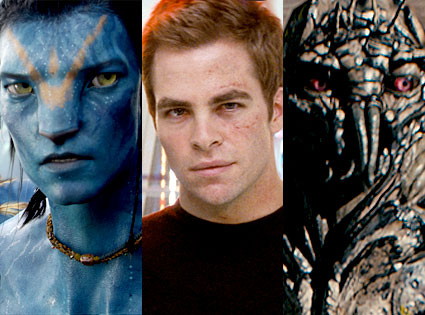
In my previous post I commented on Hollywood’s lack of public recognition of the significance of films of the fantastic as demonstrated through the Academy Awards. Although three such genre films were nominated, including District Nine, Star Trek, and Avatar, predictably none of them won in major categories, and Avatar did not win Best Picture. As commentators struggle with the reasons why, in the case of Avatar the lack of critical support may come from a clash of worldviews. At least that’s what Bron Taylor argues in a recent article in Religion Dispatches. Despite the film’s popular success, in large measure because of the growing affinity between audience members and nature, Taylor argues in “War of the Worldviews: Why Avatar Lost” that this message was too unsettling to permit Avatar‘s selection for Best Picture:
This affinity for nature may explain the global appeal of Avatar but not why it ran second in the Oscar competition. Ironically, in the battle between these cinematic epics, The Hurt Locker was portrayed as countercultural, when it actually pandered to patriotic convention. Meanwhile, Avatar was cast as technologically radical while few commented on its radical critique of a militarized technological civilization, or on its countercultural religious vision. These are things some Academy voters, little doubt, found too radical to support.
Given the likelihood that many Academy members may be progressive rather than conservative, and thus are more likely to embrace a sacralized view of nature and a critique of America’s current war efforts, I don’t know that I find Taylor’s argument persuasive. I find it more likely that drama wins out over science fiction as the genre for “serious” film making and social commentary, but Taylor’s thesis is worth considering.
It was just last month that the media took note of Hollywood’s recognition of the significance of science fiction with the nominations of Avatar, Star Trek, and District 9 for Academy Awards. In an article titled “Otherworldly and Oscar-worthy: Science fiction’s profile soars,”USA Today writes, quoting Vivian Sobchak, author of Screening Space: The American Science Fiction Film:
“The genre now has in essence been made legit by the academy’s imprimatur. This alone will bring about more greenlighting of sci-fi films,” she says. “That said, I’d hesitate to call this a resurgence of sci-fi moviemaking. Because really, they’ve always been here.”
But as quickly as the optimism and hope arose among fans it was just as quickly dashed with the results of the recent Oscar ceremonies. Steve Biodrowski of Cinefantatique Online describes the recent sci-fi snub:
Going into Sunday evening, the 2010 Academy Awards presentation had ample opportunity to break with their standard tradition of snubbing horror, fantasy, and science fiction films in all but technical categories: two major films, AVATAR and DISTRICT 9, had been nominated not only for Best Picture but also in other top categories, such as Direction and/or Screenplay. However, when the dust settled and the wins counted at the end of the night, it was the same-old story, with cinefantastique shut out of all but a handful of categories: science fiction and fantasy films wound up with a total of six Oscar statues, almost all of them in technical categories.
Although fantasy, science fiction, and even horror films (if one includes Jaws in this category) have been some of the best box office success stories, the Academy of Motion Picture Arts and Sciences continues to snub these genres while withholding the critical and artistic acclaim they deserve. For an alternative see the annual Cinefantastique Wonder Awards.
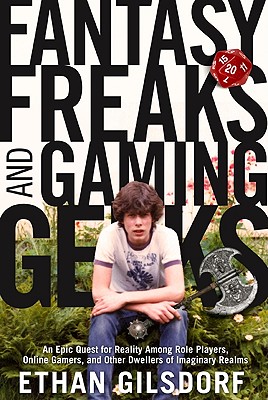
Not long ago while I was reflecting on the layers of significance underlying Avatar and its connection to fantasy, I first became aware, through Cinefantastique Online, of an article by Ethan Gilsdorf touching on these topics which he had written for Psychology Today. I was intrigued by the insights that Gilsdorf brought to the subject matter because they touched on neglected aspects of analysis in both the film and in the significance of fantasy (as well as science fiction and horror in my view). As I read Gilsdorf’s piece I discovered that he was the author of Fantasy Freaks and Gaming Geeks (The Lyons Press, 2009). Having just finished the book I pass along the following review and commentary on this recommended volume.
Fantasy Freaks and Gaming Geeks is the story of Gilsdorf’s journey to understand his lifelong fascination with fantasy which began in the 1970s after his mother experienced a life-changing brain aneurysm. As a result of her injury, radical personality changes ensued, and with the resulting change in family and home Gilsdorf sought ways in which to grapple with the situation. He found it through a friend who introduced him to Dungeons & Dragons. D&D, a medieval-style role-playing game involving a roll of the dice, a rule book, spells, weapons, and characters, provided a fantasy scenario that became an important part of his life. As the realms of fantasy opened further Gilsdorf describes the expanding universe of alternative possibility that hinted at transcendence. Of the power and appeal of these realms he writes, “I didn’t believe in God, or in heaven and hell. But Middle-earth’s lands, or a D&D labyrinth, or a science fiction universe like Star Wars – those were places I could believe in, and visit as often as I liked.”
But as Gilsdorf grew older and reflected on his consuming desires for fantasy, coupled with his being in a different place than others his age in terms of career, romantic relationships, and family, this led him to begin a journey of reassessment of his youthful interests.
“How healthy was it to have devoted so much mental energy to a world that didn’t exist? Had we checked out of real life? What were the long-term effects? Did fantasy escapism explain why the person I’d become at forty now felt unsatisfying, and unsatisfied?”
With these pressing questions at the forefront of his mind Gilsdorf began a journey seeking answers. His quest covered a lot of territory in the expressions of fantasy, including, among other things, a visit to the United Kingdom to follow the trail of influential fantasy writer J. R. R. Tolkien, attendance at the Lake Geneva Gaming Convention, participation in a live action role playing event in Georgia, attendance at the Dragon*Con convention, and a visit to New Zealand to see some of the sites where Peter Jackson’s Lord of the Rings trilogy was filmed.
As Gilsdorf shares the development of his thinking at each of the visited locations he can’t seem to shake the idea that fantasy is equated with escapism, an adjective found frequently throughout the book and often used in terms of negative connotations in contrast with those able to engage reality without such a crutch. To be sure there are glimpses of hope from time to time that come through in Gilsdorf’s quest. He is aware of Tolkien’s view that humanity needs modern myths just as much as the ancients did, that fantasy escapism can be transformative for the individual in the real world, and that while fantasy can be just as addictive as other things engaged in with excess this is not necessarily the case, but in the end a deep immersion into the realms of fantasy end up as something to be abandoned.
Near the conclusion of his visit to New Zealand, after experiencing a mixture of exhilaration and disappointment as a result of viewing the sites of Jackson’s cinematic Middle-earth, Gilsdorf describes how he engaged in a symbolic act that moved from fantasy to the real world. While using Lord of the Rings figurines to re-enact a scene from the film where Frodo, Pippin, Merry, and Sam must get off the road to hide from the approaching Nazgûl, he experienced an epiphany as he heard a voice in his head. It told him to dig a hole and bury the figurines. He says of this act that, “Some force in me had felt some urge to put childish things behind me, and travel closer to adulthood, whatever that meant.” For Gilsdorf, the journey to explore the meaning of fantasy, in many ways a journey of self-understanding, meant that fantasy was childish, an unhealthy form of escapism that kept him from engaging the aspects of the adult world. The symbols of fantasy were buried, which meant for him that fantasy itself, at least to the extent that it played in his life previously, was better left behind.
I was very sympathetic to this book as Gilsdorf’s journey resonates in many ways with my own. While I have never played D&D, as many posts here indicate, fantasy, science fiction and horror have played and continue to play a significant part of my imaginative life. Much of my discussion of these topics here represents my own journey of understanding, not only of these genres themselves, but also of myself. But here is where my journey has taken me to a different place than Gilsdorf. In the past I too symbolically buried my fantasy life, but several years ago I dug up a few of these relics to reassess them. As a result I came to the conclusion that while fantasy and the broader realms of the imagination can indeed represent dangerous forms of escapism or obsession, this is not necessarily the case. In my view the realms of the imagination are largely positive, and I would suggest consideration of three different aspects not addressed by Gilsdorf (elements of an argument that readers can find in my chapter contribution to Halos & Avatars: Playing Video Games with God [Westminster John Knox, 2010]).
Are you frustrated by lacking behind levels in-game than your friends? the solution is here for you. You can rank up your game level by getting Elo boost to your game. Good elo boosting helps you grind one division on the minimum every day. It also comes in handy on giving new tips and advice when you are in touch with the boosters, you have selected. It is however very important to get the Elo boost services from a company that holds customer care in high regard. It will save you from the frustrations.
First, I have recently done some reading in the brain sciences for my work in religious studies, and some of this material indicates that our brains have evolved in such a way as to permit us not only self-awareness, but also the gift of imagination which allows us to envision alternative realities. As a result we have a long history as a species of mythic storytelling, and engagement with this process can be a very healthy one.
Second,we need to remember the importance of play. All higher mammals engage in this practice, so it is no surprise that human beings do as well. Yet Western civilization has tended to emphasize work to the expense of play, particularly with the influence of the Protestant work ethic, and this causes us to minimize the appropriateness of play, particularly for adults. But I would argue that play is a significant aspect of human experience that must be balanced with work and the other adult responsibilities of life.
Third, for those open to the possibility of transcendence, I would argue that the imagination, connected to play, represent important facets of human expression as homo fantasia, humanity as fantasy craving and creating creatures, and that this desire for fantasy can be understood at times as a quest for and participation in transcendence. Tolkien suggested something similar with his ideas concerning the creators of fantasy as “sub-creators,” and theologians would do well to revisit Tolkien’s thinking for fresh contemporary application in light of the continued and growing popularity of the fantastic in popular culture, as well as the ongoing process of re-enchantment in the West.
I recommend Gilsdorf’s Fantasy Freaks and Gaming Geeks for those who want to reflect not only on the author’s quest for the meaning and appropriateness of fantasy, but for their own personal journeys as well. I only wish Gilsdorf had been able to arrive at a more positive destination. Perhaps it’s not too late to switch paths to one that makes room for the fantastic on the road of life.
Some of my favorite and formative influences of the fantastic as a child and teenager were the fantasy films of Ray Harryhausen. I was so taken by Harryhausen’s use of stop-motion animation to bring creatures to life that I saved my paper route money and purchased an 8mm camera with single frame capacity that allowed me to pose various action figures and move them incrementally while snapping single frames of film in order to produce my own crude animation tests. In those days in the 1970s it was much harder to find materials that described stop-motion and other special effects, but I managed to find a couple of good books and magazine articles on the process, and those, coupled with my filming of Harryhausen animation scenes off my nineteen inch black and white television for study, gave me the inspiration for a would-be stop-motion animation career. I never went to film school to pursue this dream like I wanted to as a teenager, but it was just as well since motion-control camera work and later computer generated imagery would soon signal the death of stop-motion as a significant expression of special effects in cinema. Thankfully it survives today as an art for the patient who want to breathe life into jointed figures through films like The Nightmare Before Christmas, Corpse Bride, and Coraline.
Yet even with my strong emotional connection to Harryhausen and the stop-motion animation he perfected this doesn’t mean that I believe that every film he was involved with was of equal caliber. One film that I feel didn’t match the wonder of Seventh Voyage of Sinbad or Jason and the Argonauts was Harryhausen’s final film, Clash of the Titans (1981). There are several reasons why this film did not due well with audiences, not the least of which was the declining appeal of the classic mythology that Harryhausen had based so many of his movies on.
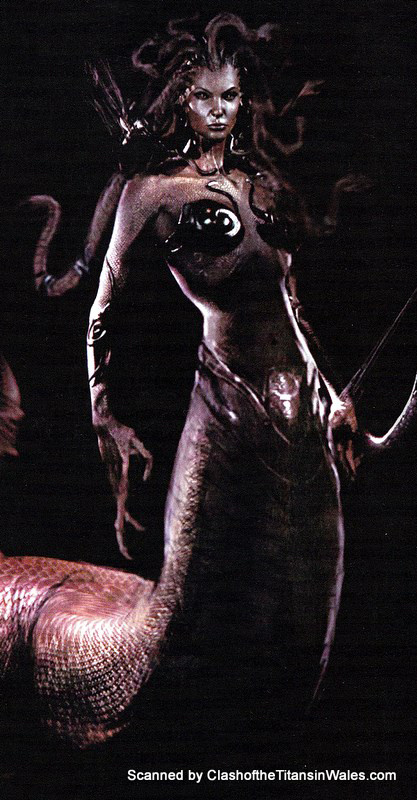
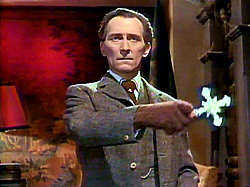
Because of my great admiration for Harryhausen’s stop-motion creatures, combined with my lack of appreciation for Clash of the Titans, I find I have mixed feelings about the remake of the film set for release on April 2. It remains to be seen whether audiences will embrace a revamped and action-packed Greek mythology, but I am pleased that Warner Bros. has retained the creatures found in the original, even if they are computer-generated. How will the new technology render these creatures compared with the artistry of previous decades? The trailer at the link above gives some indication, but at least in the case of Medusa, I think my money will stay with Harryhausen’s rendition. The new version is pictured above, and the scene from the 1981 film is found below. In my view Medusa is one of Harryhausen’s greatest creature animations, moving him very close in this context from fantasy and science fiction special effects technician to the creator of a dark, mythological, horror monster.
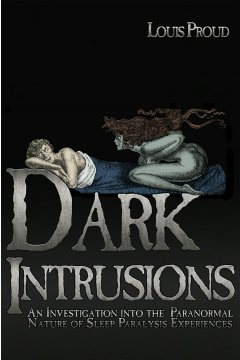
TheoFantastique: Louis, thank you for the opportunity to explore sleep paralysis once again. Your book provides us with an opportunity to consider a paranormal interpretation of the phenomenon. You have a passion for this topic due to your own experiences with sleep paralysis. Can you describe some of these experiences and how they led you to write your book?
Louis Proud: I’ve been suffering from SP since the age of seventeen. (I’m now 26.) Back then, I had no idea what it was. It made me question my mental health. It wasn’t until many years later, when I was in my twenties, that I became familiar with the condition and recognized the fact that I suffered from it. It was a huge relief to know that SP was a reasonably common sleep condition, in no way linked to mental illness.
Since I first started having these experiences, which were generally terrifying, I knew that something ‘spiritual’ was occurring, something other than dream-related hallucinations. During a typical SP episode, I’d wake up in the early hours of the morning, unable to move my body. I’d then become aware of an evil presence in the room, sort of hovering nearby, watching me. I interpreted this presence as an “evil spirit.” Sometimes I’d feel the entity touching me or sitting on my chest. Sometimes I’d hear it talking in my ear, making nasty, cryptic, threatening comments. More often than not, the entity would try to take possession of my body and prevent me from waking up completely. I’d have to fight hard to free myself of its grip.
I began to research and write about SP in early-2007. This eventually led to my writing Dark Intrusions. The book features excerpts from a semi-autobiographical short story I wrote in 2005, when I was a writing and editing student, called “Beware of the Spirits Who Feast on Your Soul.” The story, which was written as an assignment for class, gives a detailed description of my SP experiences. Though of course, at the time I write the story, I had no idea what SP was, and was therefore unable to put a label to my experiences. I knew it was important that I write Dark Intrusions, since very little material had been written on the subject of SP, especially by those who’d experienced it first-hand. Here was a paranormal topic of great importance that deserved to be given more attention.
TheoFantastique: How have your experiences altered your perceptions of reality, and perhaps even the paranormal and the spiritual?
Louis Proud: Those who’ve never experienced SP fail to realize just how profound and powerful they can be. These experiences, of which I’ve undergone hundreds, have left me with the certainly that there’s much more to reality than the physical world. During the SP state, it’s as if your soul is totally exposed and you’re able to tune in to a much bigger reality. There’s a lot of activity going on around us that, during the normal waking state, we’re unable to perceive with our five senses. With SP, I believe, you’re able to make use of a sixth sense. Let’s call it ESP.
I’m certain that some of the entities I encountered during SP attacks were “spirits;” in other words, the souls of the dead. It seems obvious to me now that death is not the end of human consciousness. When we die, our consciousness lives on in some form. I believe in the existence of a spirit world; and I believe it to be an extension of this one.
TheoFantastique: A number of interpretations have been given to sleep paralysis. What is your understanding of them?
Louis Proud: My book Dark Intrusions explores a number of theories as to what may be cause of SP experiences. Not all of these theories are particularly paranormal. For example, my book discusses the topic of electromagnetic (EM) radiation and how this energy can affect the brain, producing hallucinations and altered states of consciousness. I don’t agree with the theory that SP episodes and other paranormal experiences lie solely with the brain.
I should point out that there are many different types of SP attacks. Some involve nothing but paralysis and are quite mundane. Others involve a ‘sensed presence’ (the feeling that one is accompanied by a presence), as well as tactile, visual and auditory “hallucinations.” (I use the word “hallucination” for simplicity’s sake, not as an indication that something imaginary is occurring.) Obviously, some SP attacks – the ones that don’t involve hallucinations – are purely physiological in origin.
The other type of SP attacks, whereby the sufferer may see, hear, feel and sense a presence, seem to have a paranormal origin and cannot be easily explained. Of course, according to the conventional, scientific view, the hallucinations of SP sufferers are entirely dream-related, while the SP state is nothing but a continuation of REM (rapid eye movement) sleep. But how could this be true when one SP attack is much like another? In a dream, the imagination takes over and an infinite number of things can occur. On the other hand, SP experiences are extremely similar from sufferer to sufferer – and have been over time. The same details pop up again and again – the evil presence, a feeling of weight on the chest, the sound of footsteps, the sensation of being touched on the shoulder, etc. At the very least, we’re dealing with a genuine mystery here.
TheoFantastique: Why do you find a paranormal interpretation for some of the cases of sleep paralysis more compelling than natural physiological ones?
Louis Proud: As I stated previously, some cases of SP do not belong in the purely physiological category. Take those cases, for example, where SP sufferers have been able to open their eyes, and see their surroundings clearly, while the experience was occurring. This has happened to me more than once. On one occasion I discovered, to my utter surprise, that the entity I could sense with my mind, even feel the touch and weight of, was sitting beside me on the edge of the bed. I could see it extremely clearly. It resembled some sort of troll. When the entity noticed my looking at it, it fled. If what I saw was a hallucination, then the computer screen I’m looking at now, as I write this very sentence, may as well be a hallucination! I believe that my being in an SP state enabled me to perceive this normally invisible entity.
I also know of cases where people have been visited by the spirits of dead relatives during SP episodes, and have received important information from them. This happened to an acquaintance of mine, an American woman in her mid-forties named Michele. She described to me how, one morning, while experiencing SP, “a voice shouted in my ear and said my name abruptly, sternly and sharply…as if they were trying to wake me up.” She explains:
“The next thing I know I’m sitting up in my bed looking into the hallway seeing my late grandmother standing there upset saying, ‘We have to get David. We have to get David. Get up! Get up!’ My grandmother…had passed away about seven months prior to this. David was my baby brother, age 36 at the time. I knew she was talking about him. Then all of a sudden I was truly awake and trying to shake it off…This [SP experience] occurred around 4am. I was due to work at 5am, so I remained awake and proceeded with my day. About 8am a police officer came to my job to inform me that David had died – and he died at his own hands. The time of death was about an hour after my SP.”
How does one explain SP experiences like Michele’s? It’s hard to deny the existence of a paranormal element at work in some cases of SP.
TheoFantastique: Your book discusses sleep paralysis in relation to out of body experiences (OBEs). Can you describe this?
Louis Proud: It’s not uncommon for SP sufferers to have OBEs (as well as lucid dreams). Over the years, I’ve had a few OBEs, and they’ve all been preceded by SP – more specifically, a state of bodily paralysis accompanied by vibrations and sometimes a loud humming noise. Many researchers and writers, including Robert Monroe, author of Journeys out of the Body, have recognized the link between SP and astral projection (another term for out-of-body travel).
SP seems to be a necessary part, or stage, of astral projection. My research seems to indicate that the SP state involves a partial dislocation of the astral body from the physical body. (Which means, of course, that astral projection involves a complete separation of the astral from the physical.) Occultists have long known about the existence of this second, non-physical, body, which is said to be the seat of consciousness and of the emotions.
In the course of my own research, I’ve received numerous e-mails from people who’ve had OBEs as a result of SP – often unintentionally. An Australian teacher named Pam described to me how, about twenty years ago, she experienced SP after taking a light nap. A young mother at the time, she could hear her son crying in the next room. Desperate to wake up and go comfort her son, she tried to move, but couldn’t. The thought occurred to her that, if she could only make it over to the en suite opposite her bed, she would be able to throw some water on her face and wake up properly. She explains what happened next:
“I made an enormous effort, willing myself to move but popped out of my body and started traveling upwards instead of across the bed to the en suite…I recall there was a slight whooshing sound as I traveled upwards and out of my body. I quickly panicked as I thought I was dead. I started thinking that my son would be left crying in his bed and my husband would come home and find me dead. When I really panicked I returned to my body and instantly woke up.”
Pam’s experience is a perfect example of how the SP state can bring about OBEs and psychic phenomena in general.
TheoFantastique: In your view, what is the relationship [between SP] and claims of alien abduction?
Louis Proud: I believe that we’re dealing with two separate, but closely related, phenomena. A significant number of cases of alien abduction can probably be explained as a result of SP. I fail to see how all of them can be explained in this way, however. It’s possible, I suppose, that some SP sufferers mistakenly assume that they’re victims of alien abduction.
Perhaps they’ve read a book or two on the subject, such as Budd Hopkins’s Intruders, which has affected their imagination, causing them to interpret their experiences through the lens of alien abduction. Both phenomena involve paralysis, after all, while some of the entities seen by SP sufferers look a lot like aliens. I myself once saw, during SP, what looked like a small, gray alien standing at the side of my bed.
Significantly, almost every SP sufferers whom I’ve interviewed believes their experiences to be caused by evil spirits or demons – not aliens. Having closely examined a number of cases of alien abduction (book research rather than field research, I must admit), such as Whitley Strieber’s, I’ve noticed that these encounters generally involve some physical contact, in addition to more than one witness, whereas SP experiences don’t. SP seems to take place on a purely astral level. Anyone who’s studied accounts of alien abduction and is familiar with SP (either directly or indirectly) will be able to spot the differences I’ve mentioned. It would be utterly ridiculous to dismiss all cases of alien abduction as being caused by SP!
TheoFantastique: Do you see sleep paralysis experiences as you interpret them as positive or negative experiences, or as some kind of combination perhaps?
Louis Proud: Early on, most of my SP experiences were frightening and unpleasant, horrible even. As a result, I considered the phenomenon to be purely negative, and I thought of myself as a victim. As far as I was concerned, SP experiences were nothing but attempts at possession by malevolent and vampiric discarnate entities. Since then, my attitude towards SP has matured. I now think of the condition as neither good nor bad, but as a gateway to other realms and other states of consciousness.
Nowadays, whenever I have an SP attack, I’m often able to transform the experience by using it to induce a lucid dream or an OBE. This requires a great deal of courage and concentration, and I’m not saying it’s always possible; nor am I implying that the entities encountered during SP (the “demons,” “evil spirits,” etc.) are harmless and not to be feared. But when it works – when you shift, for example, from a frightening SP attack to an exciting lucid dream – it’s the greatest feeling in the world.
Nowadays I’m more in tune with the positive side of SP. SP sufferers ought to realize that it’s possible to transform these experiences for the better. I’m grateful for being an SP sufferer. It’s taught me a lot about myself, and has put me in touch with my soul in a very literal sense.
TheoFantastique: Louis, thanks again for your book and its exploration of a stigmatized phenomenon. I hope my readers can look at Dark Intrusions as one facet for exploring sleep paralysis.
What do you get when Pixar-style animation meets zombie apocalypse? A great looking piece of computer animation like A.D. This is a trailer for a promised longer film by creator Haylor Garcia. An interview with those who are working on this film can be found here at the Zombie Info website. If the completed film holds up in storyline and look to this preview then I’ll be adding A.D. to my animation DVD collection.
With the success of Stephenie Meyer’s Twilight series of books, and the subsequent films, at least in the minds of some in popular culture, it is only natural that others would want to cash in on religiously-infused vampire literature. Meyer incorporated aspects of her Mormon faith in her novels, and now evangelicals are incorporating their own faith in a new batch of novels.
In an article in Christianity Today online titled “There’s Power in the Blood,” Elrena Evans discusses how evangelical authors are tapping into the continued popularity of vampire mythology by producing their own Christianized novels that draw upon the iconic monster. While I am pleased to see a major Christian publication addressing the topic of vampires in popular culture, nevertheless the article, and especially the subsequent comments by readers that follow it, raise concerns.
First, as I have written previously in connection with Christians and horror in general, I am troubled by the evangelical tendency to notice a popular area of culture, and then rather than entering into that aspect of culture and participating in it on its own terms, a Christian version is created that is then consumed by the evangelical subculture. In this context I believe that much of the mythic and subversive value of vampires as objects for social, cultural, and religious reflection is lost through this process.
Second, among the various individuals quoted in the article as reliable sources of information on the topic, Christianity Today approvingly quotes William Schnoebelen who shares his perspective as a former member “of a vampire sect.” According to new religions scholar Douglas Cowan, author of books on new religions as well as horror and popular culture, “Schnoebelen claims to have been a Wiccan High Priest, a Satanist High Priest, a Master Mason, an Old Order Catholic priest, a Temple Mormon, and teach of witchcraft, Qabalah, and ceremonial magick with over sixteen years experience.” However, Schnoebelen’s descriptions of these spiritual and religious pathways, not to mention his personal narrative of alleged involvement with them, raises serious questions as to whether he was a member of any of them. Regardless of the latter concern, in terms of the former he is certainly not a reliable source to be consulted on vampires in popular culture. Christianity Today would have been better served through bypassing Schnoebelen, and seeking more extensive comments from new religions and vampire scholar Gordon Melton, whose work is referenced earlier in the article, or young scholars of new religions and pop culture like Joseph Laycock, author of Vampires Today: The Truth of Modern Vampirism (Praeger, 2009).
Third, as some of the comments on Evans’s article indicate, many evangelicals and fundamentalists equate vampires with witchcraft and “the occult,” not by building a solid case and connecting the dots from folklore, literature, and cinema to esotericism or today’s expressions of vampirism, but by mere assumption and bold assertion. This demonstrates a serious misunderstanding of Western esotericism, not to mention vampire mythology and horror. An apology is owed to esotericists and members of the vampire subculture for such misrepresentations, and I renew my previous call for evangelicals and other Christians to move beyond their knee-jerk revulsion of horror to more critical and cautious forms of engagement.
Finally, this dual response of evangelicals to vampire popularity in terms of creating their own subcultural version of a pop culture monster, coupled with shock and disgust at the prospect as somehow anti-Christian, is a reminder of the stunted theological imagination that many evangelicals, and certainly fundamentalists, have in regards to the fantastic. C. S. Lewis and J. R. R. Tolkien, as well as the other Inklings, are frequently looked to by evangelicals with fondness as Patron Saints of the Fantastic due to their their ability to combine fantasy and science fiction with theological vision, yet somehow this usually does not translate to positive assessments of these genres in contemporary pop culture, and certainly not for sci-fi and fantasy’s “dark cousin” in the form of horror. Evangelicals desperately need to revisit the legacy of these influential fantasy writers in order to feed the theological imagination related to the fantastic, including horror, which has a long association with religion, including Christianity.
Perhaps I’m unrealistic, and asking too much, but if conservative Christians want to speak at all on these topics beyond their own subculture they’ll have to do far better than this.
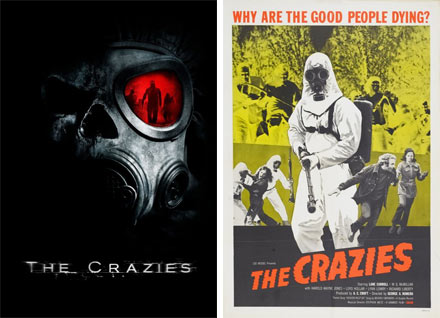
The Crazies, a remake of George Romero’s 1973 horror film of the same name, is set to open February 26. The film’s website describes it as follows:
A husband and wife in a small Midwestern town find themselves battling for survival as their friends and family descend into madness in The Crazies. A mysterious toxin in the water supply turns everyone exposed to it into mindless killers and the authorities leave the uninfected to their certain doom in this terrifying reinvention of the George Romero horror classic.
Directed by Breck Eisner (Sahara), The Crazies is written by Ray Wright (Pulse, Case 39) and Scott Kosar (The Amityville Horror, The Texas Chainsaw Massacre). The American Dream goes horribly wrong when the residents of this picture-perfect town begin to succumb to an uncontrollable urge for violence and the horrific bloodshed escalates into anarchy. In an attempt to contain the epidemic, the military uses deadly force to close off access into or out of town, abandoning the few healthy citizens to the growing mayhem as depraved killers lurk in the shadows.
Sheriff David Dutton (Timothy Olyphant); his pregnant wife, Judy (Radha Mitchell); Becca (Danielle Panabaker), an assistant at the medical center; and Russell (Joe Anderson), Dutton’s deputy and right-hand man, find themselves trapped in a once idyllic town they can no longer recognize. Unable to trust former neighbors and friends, deserted by the authorities and terrified of contracting the illness themselves, they are forced to band together in a nightmarish struggle for survival.
In light of last week’s event in Austin, Texas where a man burned his house down and then flew his small plane into an IRS building I’d suggest that the backdrop for this film has greater credibility, and does not need to draw upon toxins as an explanatory device. The economic recession, commitments to extreme ideologies, and mental instability seem to be sufficient to create isolated instances of the Crazies. Let’s hope the condition doesn’t spread.
 Although Fall is my favorite time of year with the change of seasons and Halloween, I would be remiss if I didn’t acknowledge the first day of Spring. TheoFantastique welcomes the new season with an image called “Zombie Garden,” discovered at Zombie Info, but created by Shirt Woot where this design is available on a t-shirt. Enjoy nature’s transition from death to life.