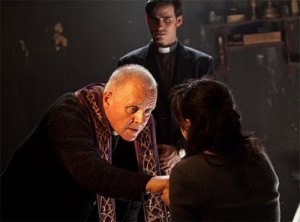
TheoFantastique Podcast, Vol. 2, no. 1 is now available. It involves a discussion on The Rite with past guests and contributors, including Douglas Cowan, author of a number of books including Sacred Terror: Religion and Horror on the Silver Screen; Paul Meehan, also the author of a number of books including Horror Noir: Where Cinema’s Dark Sisters Meet; and Scott Poole, author of Satan in America: The Devil We Know, as well as Monsters in America: Our Obsession with the Hideous and the Haunting (Baylor University Press, forthcoming). In the discussion you can hear a variety of perspectives on the film, as well as related phenomena of demonic possession, satanic panics, and the paranormal. The interview can be listened to here. In addition, TheoFantastique Podcast 1.1, an interview with Ian Concrich, editor of Horror Zone: The Cultural Experience of Contemporary Horror, can be listened to here.
“Where Horror Dwells: Locating Horror across Media Landscapes”
Editors: Drew Beard and Patricia Oman, University of Oregon
Psychoanalysis and gender have dominated scholarship on the horror film for several decades, but they are by no means the only lenses through which horror can be viewed. The fields of ecocriticism, urban studies, transnationalism, and globalization provide exciting new opportunities for exploring the horror genre. At the same time, horror has manifested across media platforms, including television and video games. These developments in the genre and shifts in critical perspectives have occurred in the past decade, following the publication of previous horror anthologies such as The Dread of Difference (ed. Barry Keith Grant) and Horror Film Reader (eds. Alain Silver and James Ursini). Where Horror Dwells is a comprehensive anthology that seeks to build upon and further the study of the horror genre by considering its relationship to metaphors of location and space, e.g., situating the horror genre across media and identifying the common spaces/landscapes of horror. Where Horror Dwells is in the process of being submitted to potential publishers.
We welcome new or recently published articles on the production, exhibition, distribution, aesthetic qualities, or cultural significance of the horror genre as it relates to the following subjects: (1) Theorizing the Genre; (2) The Family Unit; (3) Dystopic or Horrific Landscapes; (4) Regional/Global Conflict; and (5) Revisionist Tales.
Abstracts should be 500-1,000 words in length, and include brief biographical details (name, affiliation, and previous publications). Please choose the most appropriate book section, based on those provided above, and submit the abstract as a .doc file to both Patricia Oman (poman@uoregon.edu) and Drew Beard (abeard3@uoregon.edu). The deadline for submission of abstracts is February 28, 2011.
Articles should be approximately 35–50 double-spaced pages (approximately 10,000-15,000 words) in length, including bibliography and footnotes, and formatted according to the 16th edition of “The Chicago Manual of Style.” The deadline for articles will be August 1, 2011.
My latest contribution to Cinefantastique Online is now available, an essay titled “THE RITE: Satan, Possession, and Unlikely Sources of Faith.” From the introduction:
The Devil and the related phenomenon of demonic possession, have been the source of several horror films for the years. Previous decades offered THE EXORCIST (1973), with its Roman Catholic perspective, and the various films that made up Protestant responses to it in THE OMEN (1976) and its sequels. Moving forward into more recent cinematic history, we have seen THE EXORCISM OF EMILY ROSE (2005), and a dual release of diabolical films in 2010: DEVIL and THE LAST EXORCISM. Our fascination with the ultimate supernatural villain continues in 2011 with the recent release of THE RITE, which returns the horror treatment of Satan and demonic possession to the Catholic roots of THE EXORCIST. As a result of our present social and cultural circumstances, which echo much of the turbulence of the 1970s, we may be calling on Satan to help us deal with our current angst. As we will see, paradoxically, he may also provide some with faith in God.
The essay may be read here. See also TheoFantastique Podcast 2.1 on this film involving a discussion of the film with Douglas Cowan, Paul Meehan, and Scott Poole.
The Super Bowl for 2011 included a few good commercials. Two of them were fantastic, and by that I refer to the fact that they drew upon the genres of the fantastic, in these instances from fantasy. Here are the two standouts for TheoFantastique.
First was a commercial for the Volkswagen Passat that featured a child dressed as Darth Vader trying to use the power of the Force. This commercial demonstrates the power of Star Wars mythology that continues thirty-four years after the first film debuted in theaters and captured our imaginations.
The second was for Coke that involved computer animation and which drew inspiration from Lord of the Rings, medieval fantasy, and various fantasy role playing games. This commercial reminds us that those “freaks and geeks” of a previous generation have now moved closer to the mainstream.
For a long time I have been interested in the influences on those who make great films and television, and how these influences are reflected in the art they produce. This is especially the case with those artists who embody their art, their art coming out as a result of the creative passions they live on a daily basis. Sometimes such artists can be considered eccentric, as in the case of Tim Burton, one of my favorite film directors. His ideas about art and film simply flow out of him and he does his work in the genre not primarily as a director paid to create a specific film to result in the best box office possible, but rather his cinematic art comes as a creative outflowing of who he is as a person.
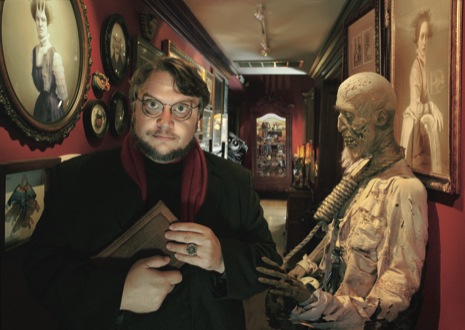
I would also place another of my favorite film directors in this category, Guillermo del Toro, the brilliant dark fantasy and horror film director, and one not afraid to be identified completely and unabashedly with genre work. Recently The New Yorker ran an extensive piece on del Toro titled “Show the Monster” by Daniel Zalewski that sheds light not only on the director’s work, but also on some of the forces that drive his creative processes.
There are many interesting facets of the article, but for me the most interesting are the biographical elements it includes that provide a window into why del Toro takes on the projects he does, and why they look and feel the way they do. Like any artist del Toro brings some of his personal experiences to his craft, and as various media have noted from time to time, some of the most significant experiences for del Toro shaped his metaphysical views which in turn shape his art. I have commented on some of this in a previous post which noted aspects of del Toro’s story that were shared in an interview with National Public Radio:
A portion of the interview is heart-wrenching as del Toro describes growing up with a stern Catholic grandmother who saw his identification with monsters and fairy tales as somehow demonic. These experiences, coupled with his work in a morgue, the kidnapping of his father, and his reflections on the Spanish Civil War, all shaped his negative views of Catholicism and organized religion, so much so that in the interview he says he had to jettison the belief that there was an ordering Being beyond the universe and that as a result “we are all on our own.”
The New Yorker article echoes some of these elements, but adds another layer, including his understandably visceral reaction to seeing dead fetuses while working in a morgue:
Del Toro had been raised Catholic, but this sight, he said, upended his faith. Humans could not possibly have souls; even the most blameless lives ended as rotting garbage. He became a “raging atheist.” Guadalajara was a rough place, and he recalled his childhood as a slide show of harrowing images: the decapitated body of a teen-age boy, found by a barbed-wire fence; a crashed motorist aflame inside his VW Beetle.
It should come as no surprise then that del Toro’s religious and metaphysical views are reflected in his fantasy and horror, as well as his preferences in this area. Knowing some of his background I was actually more surprised to hear in the past that he was going to direct The Hobbit than I was to hear that he had later left the project. The Hobbit reflects Tolkien’s imaginative Catholicism, and with del Toro’s rejection of Catholicism, and his acknowledgment that he has never been a strong fan of this type of fantasy, it is more of wonder that he became connected to the project initially at all. However, he has said quite a bit in the media lately about one of his many projects that he is very excited about, and it is one which fits in better with his metaphysical views. It is a film version of H.P. Lovecraft’s novella “At the Mountains of Madness.” Lovecraft was an atheist, and his metaphysical views shaped his expressions of horror as well.
Various writers have noted that monsters and horror have been used to depict religious and irreligious fears. Guillermo del Toro’s atheism, shaped by life’s frequent violence and gruesomeness, is an important facet for auteur theory in understanding what makes this creative director tick as one of the best current filmmakers in dark fantasy and horror.
Incidentally, if anyone can connect me with del Toro, I’d love to discuss his use of myth and archetype, as well as the function of his metaphysical views in his fantasy and horror for a biography or PhD dissertation. Hey, a guy can dream.
Quite some time ago I promoted a forthcoming interview with Stephen Asma regarding his book On Monsters: An Unnatural History of Our Worst Fears (Oxford University Press, 2009). As I worked my way through my growing collection of books for research, review, and interviews, On Monsters finally crawled to the top, and I am pleased to share my recent discussion with Dr. Asma. Stephen T. Asma is Professor of Philosophy at Columbia College Chicago, where he holds the title of Distinguished Scholar.
In the interview that follows Asma discusses the thesis of his book as informed by the natural sciences, philosophy and religion.
TheoFantastique: As a philosopher and academic, how did you come to an interest in and exploration of the monster in history?
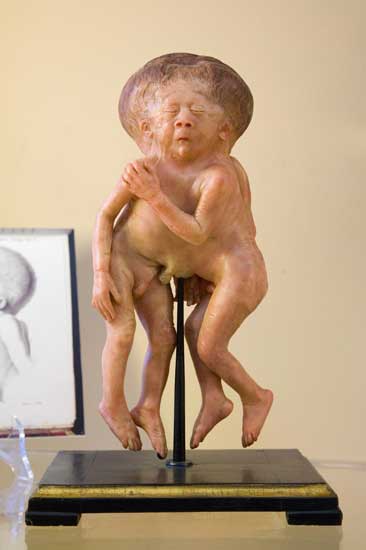
Stephen T. Asma: I’ve always been a fan of old natural history collections and museums, and wrote a book about them in 2001 called Stuffed Animals and Pickled Heads. A lot of these collections contain macabre wet preparations of teratology specimens (severe birth defects, conjoined twins, and so on). So originally my idea was to write about the history of teratology, but then I started to think about the monster as a larger category (folklore, art, and so on). And I wondered what the connection was between all these things called “monster.” That’s how it started.
When I was getting my PhD, one of my areas of specialization was philosophy of biology. I was interested in Aristotle’s teleological notion of nature and Darwin’s rejection of purpose in nature. The monster is a concept that brings us to the heart of organic form and deviance.
TheoFantastique: In light of Darwinian evolution, how do you see monsters developing in the human imagination?
Stephen T. Asma: After Darwin, Nature is no longer the rational system of Aristotelian Final Causes. God is not in his heaven orchestrating the natural kingdom. Even Isaac Newton’s mechanical watchmaker God is undone by Darwin’s brutal survival of the fittest. This changes the conceptualization of monsters. Monsters after Darwin are just other species (e.g., aliens, or cryptids, etc.) who are also just trying to survive. They bear you no ill-will, and they’re not “evil.” They just need your body to gestate their larval offspring. It’s nothing personal.
TheoFantastique: In your Introduction you describe the monster not only as an archetype, but also as as a cultural category. Can you describe what you mean by this?
Stephen T. Asma: Well, “archetype” is a loaded term because Carl Jung gave it a psychoanalytical meaning. But the term is older than Plato and I mean it in this more general sense. I think there are a few perennial archetypes or patterns that repeat themselves in monster fears. There are “slithering” creatures, “giants,” “hybrid” chimeras, “swimmers”, “crawlers” of the arachnid type, maybe big “carnivore predators” and so on. These prototype monsters have some basis in real biology, but they obviously become heavily embellished. As a cultural category, each of these (and more) can be further articulated and nuanced through folklore, literature, pictorial traditions, and so on.
TheoFantastique: Also in the Introduction, you state that “imagination is more active in our picture of reality than we previously acknowledged.” How significant is the monster to our imaginative conception of the world around us?
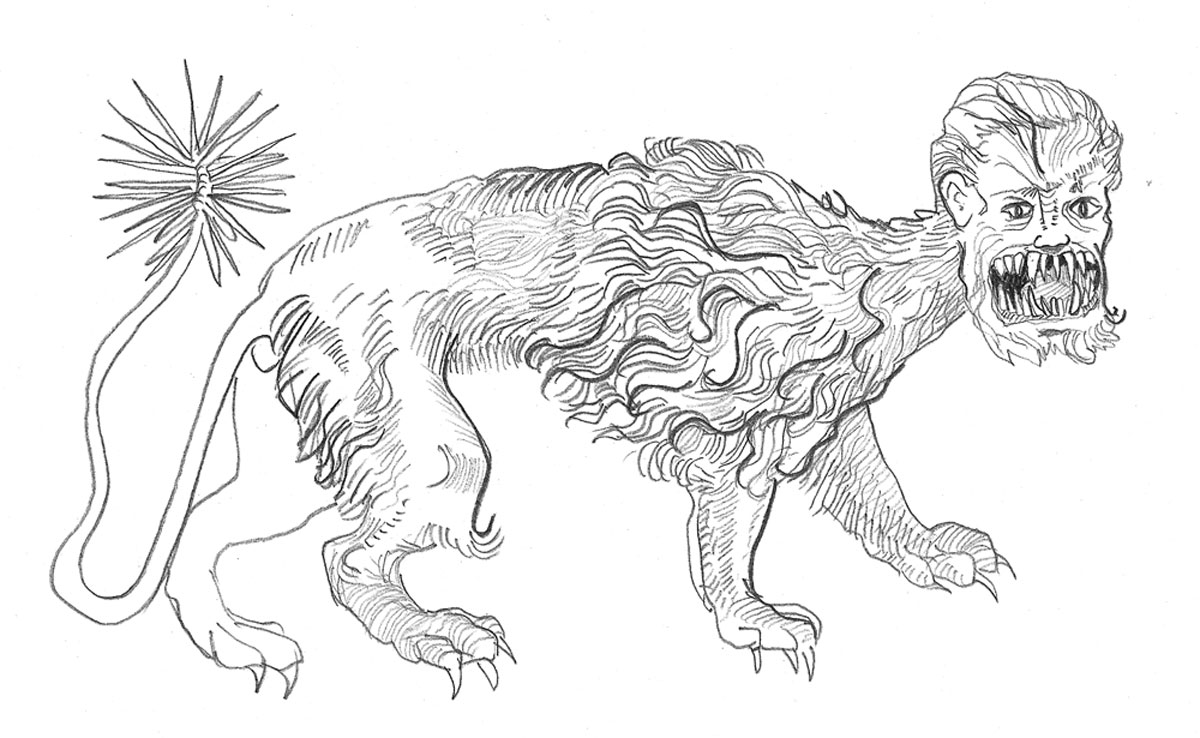
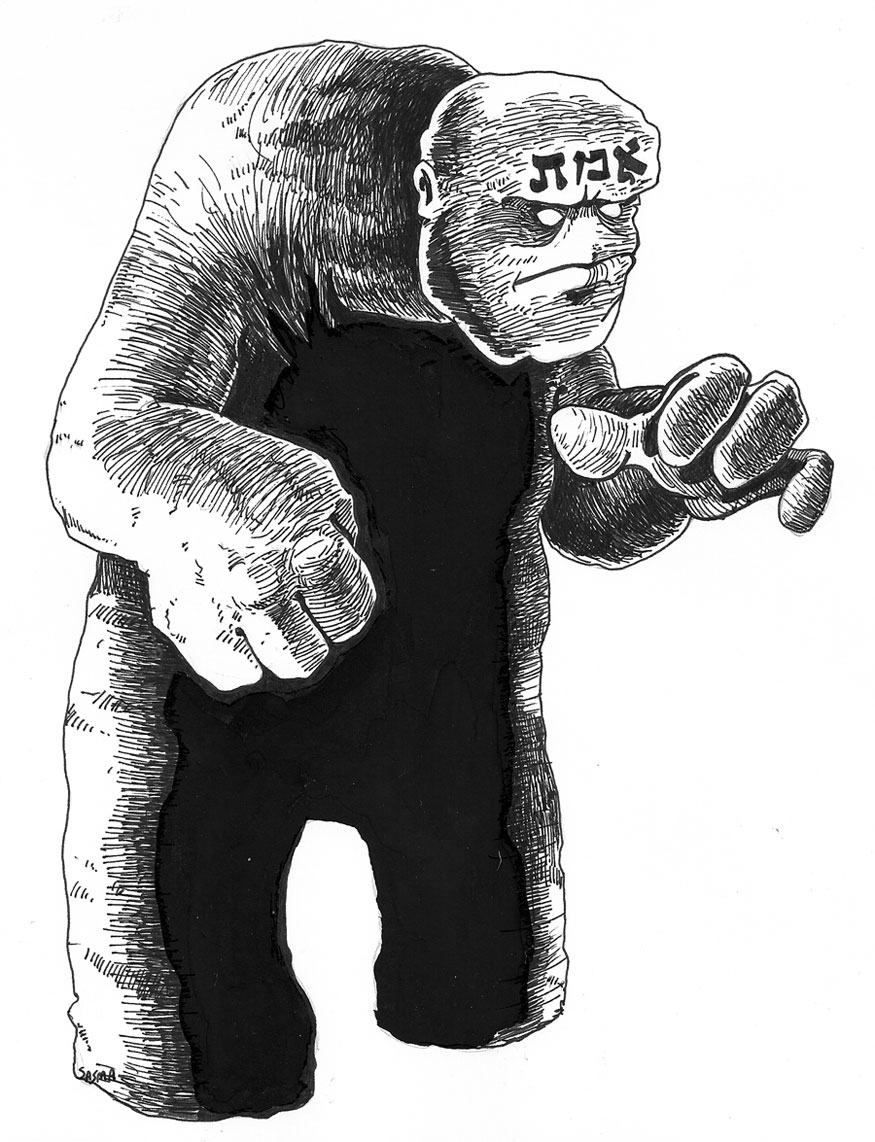
Pencil drawing by Stephen Asma
Stephen T. Asma: We don’t just record the external world like a camera, nor do we mirror it. Instead, we shape our experience of nature through the expectations of our values and desires, and our imaginations intermingle with perceptions to create an already mediated reality. Psychologists have demonstrated, for example, that when a person is afraid, they will radically exaggerate the size of the perceived threatening person –adding a full foot to the size of an intruder. I think our human vulnerabilities are always swimming around in our imagination, and as we make our way through a dark street we hasten our step or whistle to mask our fear. All the while, we can’t help but imagine some worst-case scenario, involving serial killers, or sewer mutants or whatever. Our brains seem hard-wired to err on the side of caution, so all of us have phobia potential. In moderation, some imagination-based fear is a good survival trait.
TheoFantastique: Your book is divided into four parts with an analysis of ancient monsters, medieval monsters (of the religious type), scientific monsters, and inner (psychological) monsters. Which of these categories, and the monsters within them, are the most frightening for you and why?
Stephen T. Asma: I’m most phobic about deep or murky water. Like any average urbanite, I don’t have to fear predators from the forest, but there are still many places where one can be killed by animals. I just spent a few weeks in East Africa, and there are many ways you can die there if you’re not careful (e.g., big cats, crocs, buffalo, etc..). Like many others, I’ve also hiked in Grizzly bear country and felt great fear. But as a Chicagoan, I go around without much worry about natural predators. Still, Chicago has its share of human predators, as every big city. This might explain why monster narratives these days stress the serial killers, or criminal pathology monsters. Most people are living in dense cities and their fears are less about nature and more about other people.
Pencil drawing by Stephen Asma
TheoFantastique: You make an interesting comment at the conclusion of chapter 12 when you state, “That older paradigm held out the inevitability of monstrous defeat by divine justice, but the contemporary monster is often a reminder of theological abandonment and the accompanying angst.” It would seem that monsters can serve both the religious and secular imaginations. Would you agree?
Stephen T. Asma: Yes, I would agree. I try to show that monsters and fear of monsters cross many paradigm shifts –from Pagan to Christian, to biological, to psychological, and so on. Theological monsterology usually sees monsters as part of a larger morality tale. For example, giants are laid low because of their arrogant pride, and spawn of Cain –like Grendel –meet their deserved destruction in time. Whereas secular monster narratives are more disturbing because they lack the righteous restoration of justice and good that one finds in most theological narratives.
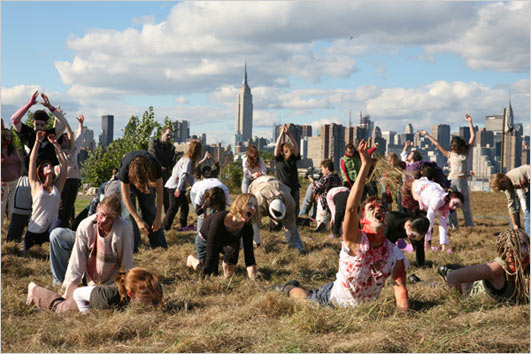
TheoFantastique: One final question if I may. In the end notes for chapter 12 you state: “Undead monsters are particularly uncanny, I would argue, because they embody our narcissistic commitment to extended life, but also our mature commitment (via the reality principle) that no such possibility exists.” This is similar to my thoughts on an aspect of the popularity of the zombie. In a postmodern and post-Christendom West I wonder whether the zombie may be understood in part as a form of resurrection, but in reaction against the perceived loss of credibility in the Christian metanarrative, resulting in a bodily “survival” of death that represents a more nihilistic apocalyptic. Your thoughts?
Stephen T. Asma: This is an interesting interpretation. The old metanarrative of resurrection is untenable in our skeptical and ironic age, but the deep drive for immortality can’t be squelched. Zombies also have unique qualities that trigger the dynamic of love/hate, attraction/repulsion. The zombie, like the vampire, is a kind of immortal: chop his leg off, he’s still coming; blow a hole in his chest, he’s still coming. His life span is indefinite and he’s indestructible. So the little narcissist inside us really likes the immortal aspect of the zombie and the vampire. We unconsciously crave that kind of staying power and durability, but our narcissistic desire to cheat death is impossible to sustain in the face of mature experience. Reality regularly reminds us, as we are growing up, that we will not cheat death.
We love to hate zombies because they simultaneously manifest our craving for immortality, and our more mature realization that the flesh always decays. As “living dead,” all zombies elicit those conflicting impulses in our psyche. The more disgusting they are, the more we are reminded of our inevitable decomposition, but the more they keep getting up and chasing, the more we are delighted by the promise of immortality. The psyche seems to carry out an unconscious vacillation: the zombies live on forever, those lucky sods, but wait…they’re disgusting and repellent and…and…run!
You’ve added another cultural dimension onto this psychological dynamic. We’re a post-Christian culture, but still in the grip of those old values and metaphysical aspirations. So, maybe zombies represent our now ironic and sardonic view of immortality.
TheoFantastique: Stephen, thank you again for the copy of your book, and for taking the time to discuss it here. It makes an important contribution to our historical and cultural understanding of monsters and the monstrous.
The horror of Hammer has been extremely influential in my life, starting as a child and later as a teenager as I watched the Technicolor blood drip on screen as the stories of monsters like Frankenstein’s creature, Dracula, and the mummy played out in front of me on the television screen. In fact, it was Hammer’s films that would later give me a taste for discovering Universal’s horror films that had preceded them.
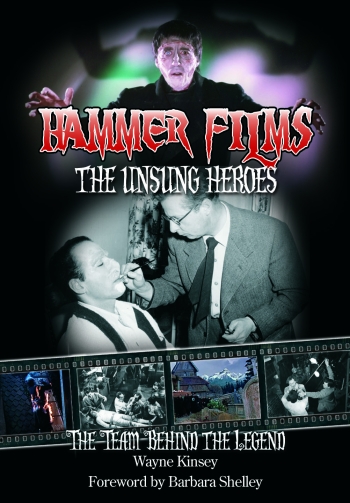
Several books have been published over the last few years focused on various aspects of the horror produced by Hammer Films, including overviews of the films themselves, the women of Hammer, and the poster art from the films. One of the recent book treatments is Hammer Films: The Unsung Heroes (Tomahawk Press, 2010) by Wayne Kinsey.
This is the real Hammer story: An oral history detailing the fascinating biographies of Hammer’s key players, many telling their stories for the first time in all new interviews specially commissioned for this book. This is their fascinating story. From the lowly tea boy to the most vociferous producer, each made their own unique contributions to a group of films that have since achieved cult status around the world. We will learn about their trade and their achievements but above all see their valued place in the Hammer puzzle that became the envy of the British film industry.
The key to Hammer’s success were these talented individuals. A group of unsung heroes and experts in their fields, they came together by chance to form a well oiled machine producing lavish looking features at miniscule budgets. For some, their work at Hammer would be the stepping stone to bigger things (even Oscars!); all moving on to make major contributions to international film and television.
Crammed with blood rare behind the scenes photos, read this and you’ll see why Hammer’s films achieved a standard that other rival companies could only dream of. Written by the highly acclaimed Hammer expert Wayne Kinsey, this book goes where no book on Hammer has ever gone before!
Wayne Kinsey made some time to talk about his book in the following interview.
TheoFantastique: Thank you for answering a few questions regarding the thesis of your book. You have written a number of books detailing various aspects of Hammer Films. How did you come to develop this research and writing interest?
Wayne Kinsey: I became a Hammer fan around the age of 10 in 1971. They used to put one on every Friday night after News at Ten. My parents allowed me to stay up and I got hooked. A few years later I started to collect books and magazines on horror films and became interested in how they were made. It was a lonely pursuit at first – the world was very different without the Internet back then – and it was many years later, in 1985, that I found my first Hammer film convention and started to meet people who’d worked on these films. The first person I met was make-up man Roy Ashton. I was a medical student at the time and he was as interested in me as I was with him, keen to know what I thought of his work since I was a student of anatomy and he always strived to get his creations anatomically correct. He did and that’s why Hammer monsters are remembered so well. This was all coupled with a love for writing and eventually I felt it was time to make my mark. I started the fanzine The House that Hammer Built in 1997 and that spawned a lot of my own research into the company.
TheoFantastique: Do you see your books as functioning in some ways as a preservation of cinema history related to Hammer’s contribution to horror and other genres?
Wayne Kinsey: Absolutely. Apart from the films themselves I fell in love with the whole Hammer back story and how they managed to put out such lavish looking films with meagre budgets. As a doctor, it’s always great to get away from the stress of the job and unwind with a Hammer film and this is my thanks to all those film makers in giving me a chance to escape, knowing that the extended Hammer family will take care of me for the next 90 minutes. Here I’m giving due credit to names that you only second glance in the credits as you tap your fingers waiting for the film to start – and back then only heads of department were credited. What a lovely bunch they were too, very modest and amazed that the films became cult classics. My only regret is not doing it 10 years ago. It reminded me how many great Hammer friends we’ve lost on the way and I would have loved for them to see the book.
TheoFantastique: As the subtitle of your book indicates, you share the contributions of a great number of lesser known people behind the cameras who contributed to Hammer’s classic films. How did you come to see this as a collection of stories that needed to be told?
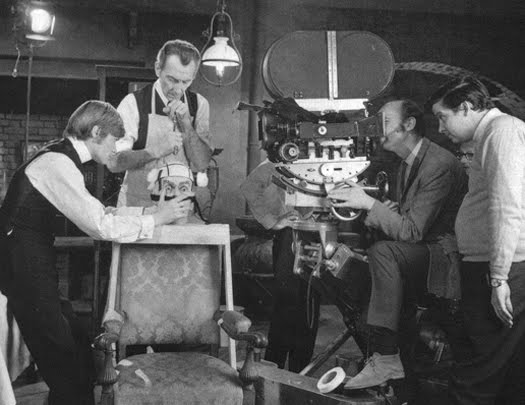
Wayne Kinsey: The reason Hammer’s films outshone their competitors with similar budgets was down to team work. Early on they realised it was cheaper to rent an old mansion and shoot the films in the rooms and on the grounds than it was to rent out expensive space in established film studios. They soon discovered a ramshackled manor house on the banks of the Thames outside Windsor and this became Bray Studios, their own studio. This allowed Hammer to build up an almost repertory team of technicians that gave the early horror films a unique identity of their own. Each department made their own vital contribution and I thought it was time to make these lesser known names more familiar. It was then I recognised that a lot of them have their own individual stories, some more compelling than the films they made, and you realise that ‘Hammer quality’ was no fluke. For example, legendary director John Huston once said that Hammer assistant director Bert Batt was among two of the finest in the film industry. Some were already veterans, others were training for greatness, even Oscars. Among them were film pioneers, for example special effects genius Les Bowie. Before the days of CGI, crafty backgrounds relied on matte paintings – glass paintings incorporated with the live footage that added snow capped peaks and turrets to the modest sets on the Bray back lot. Les was a POW in WW2. He could paint like life and used to make forged passports for escape attempts, stamping them with stamps he made from potatoes. He created the breathing apparatus for tunnel digging and made decoys to keep the guards occupied during escape attempts – just the background for a future film SPFX man! His story ended tragically – he died the night his name was announced among the winners for the SPFX Oscar for Superman, so never learnt of his accolade.
TheoFantastique: How do the stories of these unsung heroes contribute to those we have heard previously about Hammer’s actors, directors, and at times, composers?
Wayne Kinsey: As I said, their jobs were just as important. It was all team work. We all remember directors but forget that their concentration on set is only maximal when their assistant directors are efficient and their films would be hopeless unless they were photographed properly by the camera crew or cut together properly by the editor. I first took the approach of looking at Hammer department by department in The House that Hammer Built and I expanded it for this work. Digging behind each job, you realise just how much you take for granted and you develop a greater understanding and appreciation of their crafts. Continuity women for example. Not only do they have to watch continuity of everything on set because scenes are not shot in order, they have to watch dialogue during shooting, time everything, and then type up copious reports afterwards, including one for the editor so he knows which are the preferred director’s takes to cut together. I’m sure they developed the word multitasking just for them!
TheoFantastique: Looking back in historical retrospective, how significant was Hammer’s contribution to genre cinema?
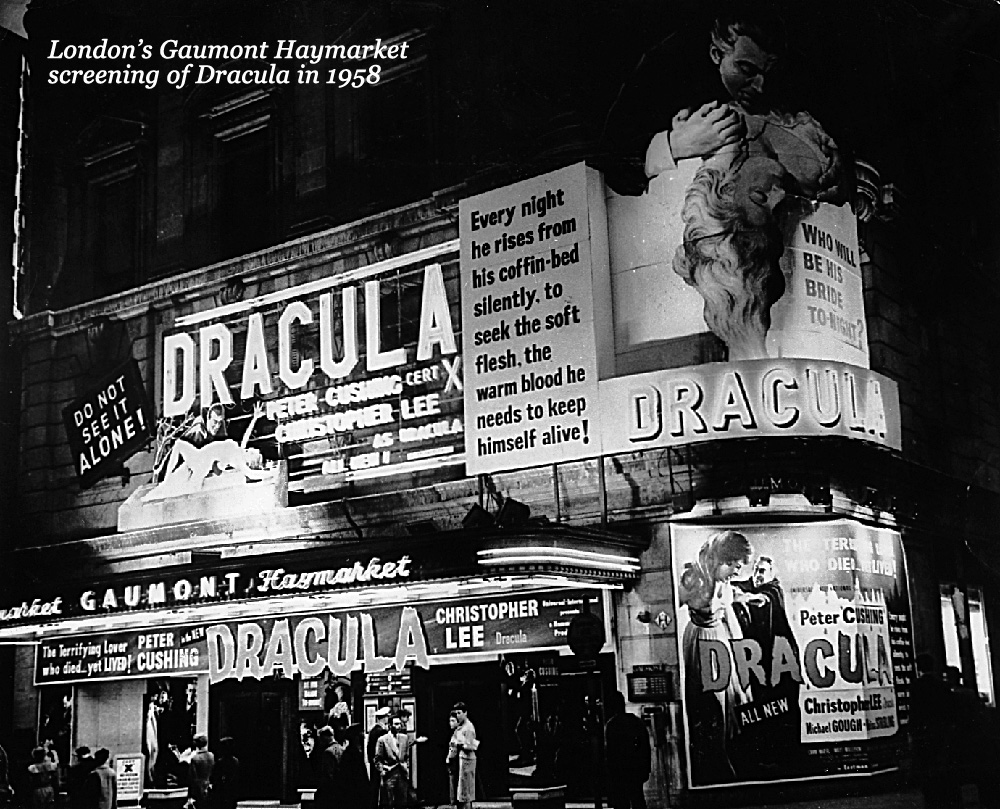
Wayne Kinsey: I always say that to look at the impact of Hammer you have to look at the films in the context of the period they were made. Whilst they may look tame by today’s standards, back in the Fifties they were break through films, introducing Technicolor blood to horror films as well as spicing up the sexual elements. Censors and critics were revolted but their condemnation only drove the public in all the more to see them and they wanted more! Hammer’s Dracula was so successful when it was released in 1958 that it broke box office opening records around the world and revenue from that one film saved the then ailing Universal Pictures, who had co-financed it with Hammer, from bankruptcy. Then in 1968 they won the prestigious Queen’s Award for Industry for overseas revenue, an accomplishment unprecedented by any other British film company.
TheoFantastique: Wayne, thank you again for your time in this interview, and for documenting and sharing the work of Hammer’s unsung heroes.
Here are various news items related to the fantastic in popular culture for the preceding couple of weeks. News items of significance are shared daily as they become available via my Facebook profile and Twitter account.
‘The Rite’ done right: Something possesses PopWatch Rewind to rewatch ‘The Exorcist’
What an excellent day for an exorcism. While Anthony Hopkins is in theaters compelling demons out of people and dollars out of people’s wallets with The Rite, we decided it was a good time to revisit the granddaddy of all possession horror, The Exorcist.
Saratoga pastor inspiration behind ‘The Rite’
The Rev. Gary Thomas, the pastor at Sacred Heart Catholic Church in Saratoga, ought to know. He’s the official exorcist for the Diocese of San Jose and the inspiration for the supernatural thriller “The Rite,” opening in theaters Friday and starring Anthony Hopkins.
The Walking Dead Grabs Four Golden Reel Nominations
The Motion Picture Sound Editors announced their nominees for the 2011 Golden Reel Awards, and The Walking Dead was honored with a total of four nods for Best Sound Editing: Long Form Dialogue and ADR in Television; Best Sound Editing: Long Form Sound Effects and Foley in Television; Best Sound Editing: Short Form Dialogue and ADR in Television; and Best Sound Editing: Short Form Sound Effects and Foley in Television.
Popularity of vampires spawns subculture, scholar says
Reuters reports that, “They work as doctors and lawyers by day but lurk as vampires by night. While they may not wish to suck your blood, there are plenty of willing victims on tap, says the nation’s top scholar on a subculture that emulates the undead.”
‘Alien’ artist Giger: Monsters came from my nightmares
CNN reports that, “It is fitting that the creator of one of the most heinous and iconic movie monsters of all time should have once been plagued by nightmares. Swiss artist H.R. Giger brought his night terrors to the big screen in Ridley Scott’s critically-acclaimed 1979 film “Alien.” The iconic extraterrestrial and the myriad other monsters in Giger’s early paintings and sculptures were inspired by nightmares that he would sketch out upon waking.”
All the science fiction films from Sundance that you’ll be raving about soon
i09 looks at science fiction films from Sundance: “Sundance begins today! In past years, the festival brought us great science fiction films such as Splice and Moon. But what will be this year’s smash indie success? Here’s a list of likely suspects.”
The Cinefantastique Podcast discussing the 2007 BBC production of Jekyll by Steven Moffat is now available. From CFQ’s website:
And the dream comes true for one young, idealistic podcast host. After months of campaigning, Dan finally gets a chance to bring Steven Moffat’s (DOCTOR WHO) BBC series, JEKYLL, to the table for an extended discussion. Listen in as CFQ editor Steve Biodrowski and theofantastique.com’s John W. Morehead join Dan Persons in a spirited and detailed appraisal of this updated sequel to Robert Louis Stevenson’s classic novella, and learn whether this radical reenvisioning — featuring standout performances by James Nesbitt (BLOODY SUNDAY) and Gina Bellman (COUPLING), plus corporate conspiracies, weird science and, oh yes, lesbian private detectives — is worth your time.
The program can be downloaded or listened to at this link. You can also listen to the Cinefantastique Roundtable Podcast 2:4 where we discuss various fantastic items in the news, weigh in on Disney’s Little Mermaid vs. Beauty and the Beast, amazement over PBS’s treatment of The Twilight Zone on Pioneers of Television, and I give a spirited defense of Looney Tunes’s Hyde & Hare. The program can be found here.
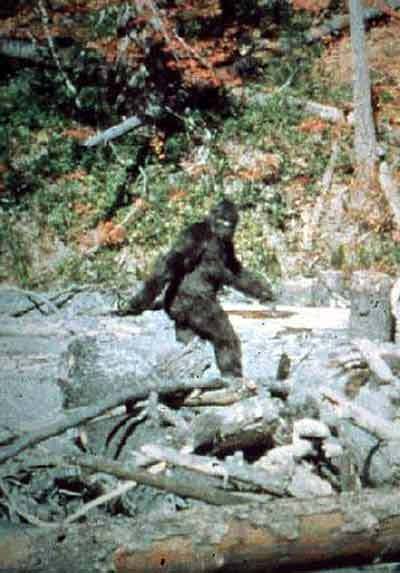
A visit to most bookstores, particularly large chain bookstores, will reveal a large collection of books that explore various facets of the paranormal. These phenomena and experiences are found throughout popular culture, and are frequently depicted in popular television programs and films. Recently, three scholars conducted sociological research that looked at those involved in the paranormal as a part of American religious culture.
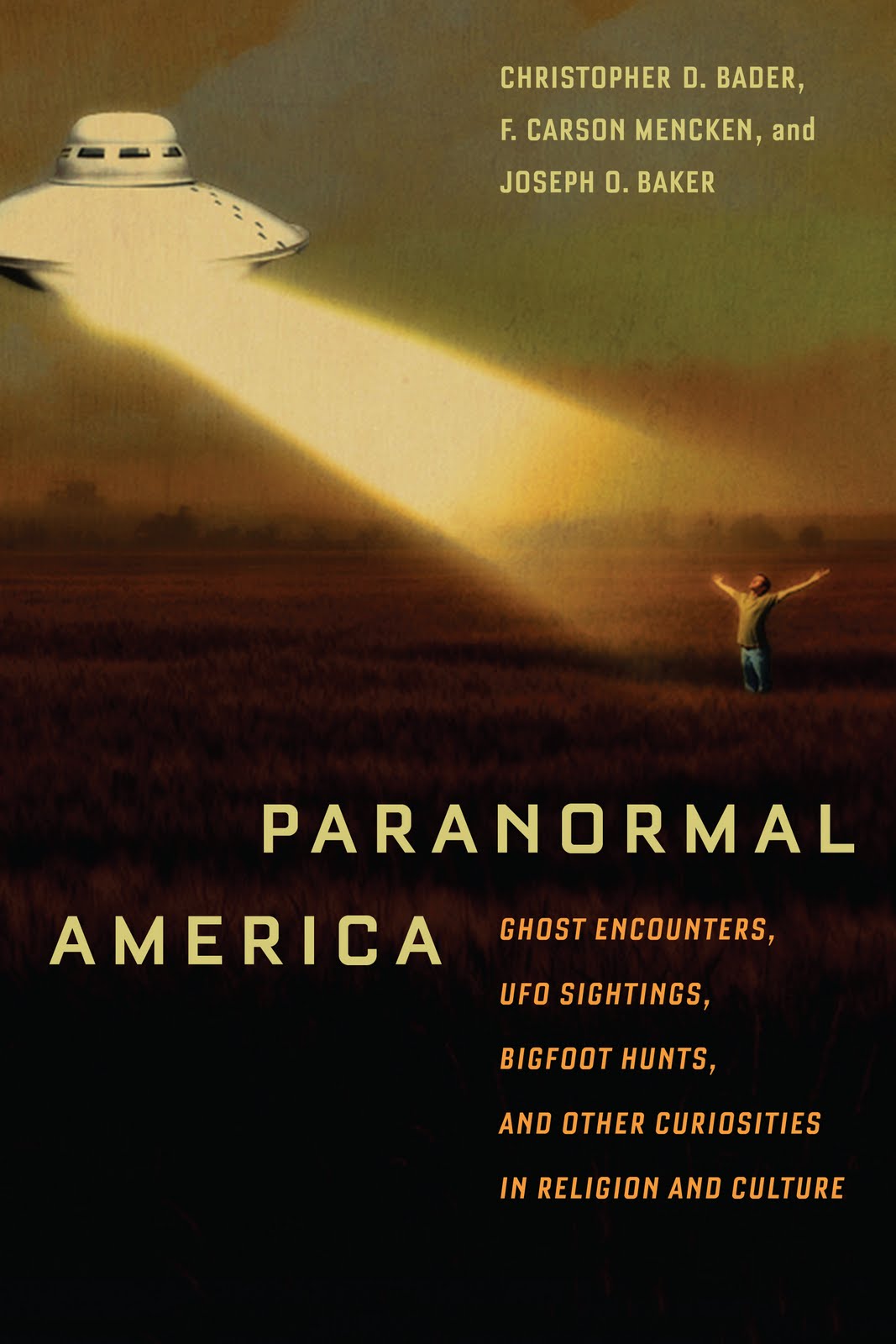
In the interview that follows Christopher Bader, F. Carson Mencken, and Joseph O. Baker discuss their research findings as compiled in their book Paranormal America: Ghost Encounters, UFO Sightings, Bigfoot Hunts, and Other Curiosities in Religion and Culture (New York University Press, 2010). Bader and Mencken are Associate Professors of Sociology at Baylor University, and Baker is Assistant Professor of Sociology at East Tennessee State University.
TheoFantastique: Thank you for your fine book, and for your willingness to discuss the results of your research. As you know, the paranormal has a marginalizing effect among those who give it any kind of credibility, even as a research topic. How did you come to develop an interest in the sociology of the paranormal, and why were you willing to engage the subject matter perhaps at the risk of your academic credibility?
Christopher Bader: I have long been interested in the paranormal as a sociological phenomenon as I grew up in the Pacific Northwest and was always fascinated with Bigfoot.
It is risky for scientists of many fields to take the paranormal seriously. However, we cannot claim to be especially brave. As sociologists we are interested in the behaviors of people, rather than the reality (or lack thereof) of a given phenomenon. So long as people believe in something and act upon that belief we are interested as sociologists. In other words, we are not really studying Bigfoot, ghosts and UFOs, rather we are studying people who believe in such things. We do not come down on either side of the fence with regard to the reality of paranormal phenomena, since doing so is irrelevant to our work. Certainly we have received our share of giggles and jokes as the result of our research, but the nature of our perspective protects our credibility.
TheoFantastique: Is it possible that academics might make more room in the near future for the possibility of studying the paranormal from the perspectives of sociology of religion and religious studies as a legitimate subject matter?
Christopher Bader: The answer depends upon what you mean by “legitimate subject matter.” The academic community has been slow to consider the paranormal seriously. As you noted in your previous question, academics are very fearful of their reputations and the paranormal is a ridiculed subject. I do not think you can expect to see academics seriously considering the potential reality of paranormal experiences in the near future.
However, I do believe that you will see increased interested in the paranormal as a cultural phenomenon, since belief in paranormal subjects is clearly growing in the United States. Just as academics, particularly social scientists, seriously study the effects of religion on other beliefs and behaviors, I believe you will see the paranormal receive increasing attention in the same manner—particularly within the sociology of religion.
TheoFantastique: How do you define the paranormal, and how are the various phenomena which comprise it differentiated from those in mainstream religions?
Joseph D. Baker: Defining the paranormal was one of the most difficult tasks in conducting this research. In some ways most of us already “know” what is considered paranormal because of implicit definitions employed in popular culture; however, on many issues the line is unclear. Ultimately we settled upon using a definition that draws on both science and religion as social institutions. If a particular belief (or by implication experience) is promoted by an organized, established religious tradition, then we considered it religious rather than paranormal. If the issue in question in not accepted by established religious traditions, then we utilized the stance of institutional science as a second cultural signifier. In our study, issues that are not accepted by either established religious traditions or institutional science were considered paranormal. It is important to note that these distinctions are cultural rather than intrinsic to the issues in question. For instance, what is the difference between a religious, angelic experience and certain types of alien encounter experiences? Most importantly, the attributed source of the experience and whether it is legitimated by the agents of an established religious tradition. Since these definitions are culturally constituted rather than inherent to the topics, what is considered “paranormal” may change over time or between cultural contexts. We addressed this briefly by looking at beliefs and experiences that are considered “religious,” but border on the cultural boundaries of the paranormal. Guardian angel experiences and belief in supernatural evil are examples.
TheoFantastique: What percentage of Americans believe in some form of the paranormal, and how do people come to accept these beliefs? More specifically, you mention Travis Hirschi’s ideas about deviance in relation to the conventional order. Can you also touch on his ideas about bonding to conventional society, and how those interested in the paranormal are more willing to engage in unconventional beliefs?
F. Carson Mencken: Two thirds of Americans have at least one paranormal belief. We argue in our book that two factors drive paranormal belief and research: enlightenment and discovery. In terms of sociological theories, we use Hirschi’s social control approach in conjunction with Stark and Bainbridge’s work on religious compensators to explain how discovery and enlightenment would lead the disconnected to unconventional beliefs. Those who have strong bonds to society (people in power, high status careers, structural positions of authority and responsibility) are highly conventional in their lifestyles. It is an expected (i.e. normative) pattern. One aspect of living a conventional lifestyle to is believe and practice conventional beliefs/rituals (i.e. Christianity, Judaism in the United States). When someone who is expected to live a conventional lifestyle strays from expected (i.e. normative) behavior patterns, they risk sanctions (as Nancy Reagan did with her use of astrology in the White House). Those who are less connected to society, which may represent the poor, uneducated on one end, and the hyper-educated, non-conformist types on the other end, do not risk the same sanctions by pursuing alternative belief systems.
But this in and of itself is not enough to spur people to the paranormal. There has to be a reason why people will seek alternative belief systems. One theory which applies to those of lower socioeconomic status is religious compensators. Since conventional religiosity is for and run by highly conventional people and provides many empirical rewards for this group, those from lower socioeconomic status groups will not gain many spiritual or conventional rewards from participating in conventional religion. Alternative beliefs systems can be empowering. The discovery of something spiritually unique (an unknown secret to the universe) that the rest of society does not have gives those from excluded groups a sense of purpose, a status as someone important.
Moreover, all humans are seeking enlightenment and discovery. New information helps us to reduce risk in our lives, and to make better informed decisions. Many paranormal practices (psychics, mediums, communication with the dead, astrology, etc.) are about giving people an insight into their future. Those groups not bound to conventional religious systems are freer to explore these alternative systems in order to gain information that may help them improve their lives.
Those who are hyper-educated, or cultural elites, may condemn conventional norms of behavior as too bourgeosie. Most cultural elites are early adapters. They tend to be the first to accept new ideas (e.g. evolution), new social norms (e.g. racial integration, inter-racial marriage, same sex couples), etc. The cultural elites are also the practitioners of new religious movements (NRMs). Their wide range of knowledge and experiences make them less threatened by unconventional ideas and practices. Moreover, their curious nature makes them drawn to discovery and enlightenment. This group is more likely to explore alternative ideas of reality (existence of UFOs, the possibility that another intelligent life form has mastered long-distance space travel, ESP, telekinesis, etc.). Their journey of discovery and enlightenment is not so much motivated by personal salvation (i.e., What does the future hold for me? ), as much as by the attempt to improve the human condition.
As with those from lower socioeconomic groups, the cultural elites are not as wed to conventional society. The risks involved with their exploration of alternative belief systems are not great, compared to someone who highly integrated into conventional society (such as a college president).
TheoFantastique: Your research indicates that certain religious groups, such as Protestant evangelicals, are resistant to the paranormal. I must be an anomaly in this in that I come from a conservative Protestant background but still have an interest in the paranormal both as an academic subject matter and in the possibilities for the phenomena. Why is this religious group resistant to the paranormal?
Joseph D. Baker: The connection between organized religion and the paranormal is complicated and multi-faceted. Certain types of religious groups—those that are more exclusive in their outlook (i.e. as possessing the “one true” path to Truth)—tend to oppose paranormal beliefs. Accordingly, adherents of traditions such as evangelical Protestants hold relatively few of these beliefs. In some instances, members of such groups may even believe in the reality of paranormal topics, but attribute their existence to the work of Satan. Meanwhile, those who are decidedly irreligious are not likely to hold paranormal beliefs either, because they reject super-empirical views (or at least those beyond institution science) in general. So who then, religiously speaking, is most likely to believe in paranormal topics and be involved in paranormal subcultures? Those who are members of moderately “strict” religious groups and who express moderate levels of religious belief and practice. In other words, a member of a liberal Protestant congregation who attends religious services once a month is more likely to be interested in the paranormal than either a conservative Protestant who attends multiple services a week or an atheist who is not affiliated with a religious tradition and never attends services. The short answer to these complicated issues is that moderate religious involvement in a mainline religious tradition indicates a potential openness to the ideas of the paranormal, whereas intense religious involvement with a stricter religious tradition closes one off to the paranormal because these individuals have put all their “spiritual eggs in one basket.” The connections between religiosity and the paranormal could best be though of as “curvilinear.”
TheoFantastique: Were there any stereotypes about the paranormal that you had overturned as a result of your research?
Christopher Bader: We believe that our book conclusively overturns several stereotypes about the paranormal. One stereotype about paranormal believers and experiencers is that they are of below average education, suggesting that the paranormal is the province of people who are not sufficiently educated to “know better.” In fact, we find that education has little effect on most paranormal beliefs. In other words, people of higher levels of education are no more or less likely to believe in UFOs, Bigfoot, Atlantis and many other phenomenon as are those who never graduated high school. There are some exceptions. For example, people who never graduated high school are somewhat more likely to believe in ghosts and astrology, but in general the stereotype does not hold.
There is also no evidence that income has a strong effect on most paranormal beliefs; paranormal beliefs are not limited to the suffering or downtrodden.
TheoFantastique: Is it appropriate to think of the paranormal as a fringe phenomenon at present, and what do the future prospects look like for its popularity?
F. Carson Mencken: With two-thirds of the American population holding at least one paranormal belief, the paranormal is not fringe. In fact, in many ways it is quite normal. However, the paranormal is not an organized social movement. It poses no threat to conventional religious beliefs. There church of the paranormal is not going to supplant Christianity. In order for the paranormal to become a fringe movement, it must become better organized into a movement, with unified beliefs, rituals, etc. Currently, it has none of these. Here is what we can confidently say about the future of the paranormal in the United States. First, there are significant demographic trends among believers and practitioners of the paranormal. We document these trends throughout every chapter of our book. Second, the population of the United States is dynamic. Over the next thirty years we will see major shifts in the racial/ethnic and age compositions of the nation. The groups that are going to grow over the next 30 years are the groups that are currently the most likely to believe and practice the paranormal. Based on these two conclusions, we expect the percentage of the population who believes in the paranormal to grow. However, what is left to be determined is how the shift in the racial/ethnic and age compositions will affect the nature of social bonding. It may be that as these paranormal believing groups become larger in numbers they may also become more conventional in their social bonds, and hence their beliefs/practices. Only time will tell.
TheoFantastique: Gentlemen, thank you for your thoughts on this subject matter, and for your research that I hope you and others build upon.
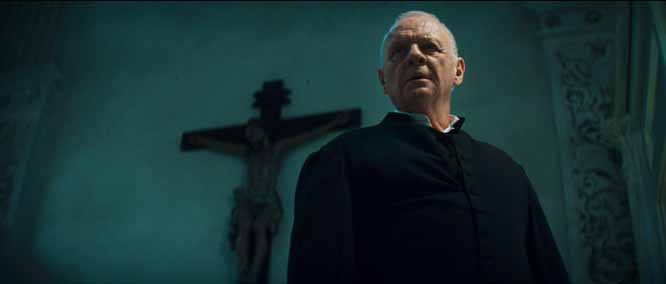 TheoFantastique Podcast, Vol. 2, no. 1 is now available. It involves a discussion on The Rite with past guests and contributors, including Douglas Cowan, author of a number of books including Sacred Terror: Religion and Horror on the Silver Screen; Paul Meehan, also the author of a number of books including Horror Noir: Where Cinema’s Dark Sisters Meet; and Scott Poole, author of Satan in America: The Devil We Know, as well as Monsters in America: Our Obsession with the Hideous and the Haunting (Baylor University Press, forthcoming). In the discussion you can hear a variety of perspectives on the film, as well as related phenomena of demonic possession, satanic panics, and the paranormal. The interview can be listened to here. In addition, TheoFantastique Podcast 1.1, an interview with Ian Concrich, editor of Horror Zone: The Cultural Experience of Contemporary Horror, can be listened to here.