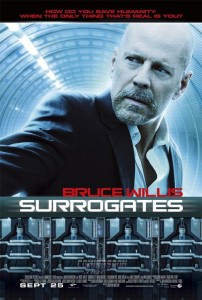
One of the more interesting research and writing projects I worked on earlier this year was a chapter for a forthcoming book through Westminster John Knox Press on videogames and digital cultures where I presented some thoughts on a techno theology of cybersociality, the interactions between human beings over the Internet and through other digital technologies and what this might say about an expression of human nature in relation to the sacred as well. While we usually take them for granted, I find the increasing presence of these technologies in our lives of great interest, and they provide a number of considerations worth reflecting on. Given this research interest I was pleased to hear of Surrogates, a science fiction film that dovetails with these areas, due for release on September 25.
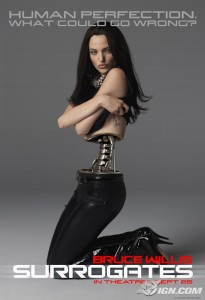
The film, based on the graphic novel by Robert Venditti and Brett Weldele, presents a world not too far removed from ours in terms of digital and robotic technology wherein individuals are “plugged in” and interact with each other not through social networking Internet sites or avatars in digital worlds like Second Life, but through humanoid robots created by Virtual Self Industries. Much like we choose avatars today to represent our ideal digital selves, in Surrogates individuals can choose “perfect” robotic representations and feel whatever scenarios and fantasies their robotic surrogates experience. This leads to people spending most of their lives lived through their surrogates in a utopian world of pleasure without suffering and crime. Along the way someone hacks into the system and uses the surrogates to commit murder, the first seen in fifteen years. FBI agent Greer, played by Bruce Willis, launches an investigation into the crimes, only to uncover a conspiracy, and through the process comes to question what it means to be human and the human-robotic relationship.
Although the sci-fi premise and scenario of Surrogates might seem far removed from our own circumstances it may not really be the case. Consider our fascination with “pseudo-events,” the play revolution fueled by digital entertainment, and posthumanism. In his book The Image: A Guide to Pseudo-Events in America (Vintage, 1992), historian Daniel Boorstin argues that Americans live in an “age of contrivance” and that our public lives are filled with various “pseudo-events” or “artificial products” that simulate reality and which leave the individual who experiences the events or utilizes various products feeling as if they have experienced reality when in fact they have had their stereotypes confirmed by an encounter with the simulation. In addition to our experiences with pseudo-events, recall the great amounts of time we spend on play, particularly in the digital realm. Play is becoming an increasingly significant facet of life in those parts of the world where economic factors allow it to be so. This is particularly the case with the continued popularity of professional sports, and a new dimension of play has arisen with the increasing numbers of people spending time in various virtual worlds in cyberspace, such as Lineage, Gaia Online or Second Life. In his book Exodus to the Virtual World: How Online Fun is Changing Reality (Palgrave MacMillan, 2007), Edward Castronova believes a “fun revolution” is underway that will change the way in which we behave in the “real world.” He says that, “An understanding of fun will become integral to understanding why the real world is losing people [to virtual worlds], and what to do about it.” Finally, there are the discussions of transhumanism or posthumanism where the combination of robotics and human consciousness are seen as the next steps in human evolution and societal development. When the concepts of pseudo-identity, the large numbers of people spending great amounts of time in cyberspace or in other forms of digital entertainment, and posthumanism are taken together, it is not too much of a stretch to conceive of a future wherein people play or live their lives immersed in fantasy scenarios through robotic avatars as in Surrogates.
Given the subject matter, and advances in various digital and robotic technologies, perhaps this film will function as a combination of Westworld and the Blade Runner for the 21st century. In addition to the sci fi-thriller aspects of this film I am looking forward to the issues the film will raise as it touches on our deepening relationship with digital technologies, simulated and synthetic experiences, and concepts of virtual and “real world” identities as well as idealized selves. (On issues related to avatars and identity see Mark Stephen Meadows’s I, Avatar: The Culture and Consequences of Having a Second Life [New Riders Press, 2008].) I have added this movie to my growing list of fantastic cinema for the fall.
For quite some time the vampire has been an important figure in popular culture. While the zombie has been a rival in recent decades as a monstrous icon, the vampire seems to be making a comeback as the increasing number of books, films, and television programs featuring this figure indicate.
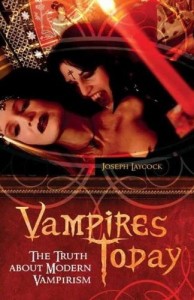
I recently finished reading a new book that explores those who adhere to the vampire identity, Vampires Today: The Truth About Modern Vampirism (Praeger, 2009), by Joseph Laycock. Laycock is an independent scholar and doctoral candidate studying religion and society at Boston University. I spoke with him recently about his new book.
TheoFantastique: Joseph, thank you for your fine book on an interesting topic. It was a great read and a good piece of scholarship. I’d like to begin our discussion on a personal note. How did the subject of vampires become of interest to you as a research project with your religious studies background?
Joseph Laycock: Vampires are an interesting preoccupation. A personal interest in vampires tends to achieve a greater level of intensity than other types of interests. For instance, I consider myself a “coffee buff” because I own my own grinder. But prior to writing this research, I could not really have called myself a “vampire buff.” I had read a few Anne Rice novels, I enjoyed the occasional vampire movie, and I knew who Bela Lugosi was. But compared to a serious vampire enthusiast I was a poser at best. I had never even seen Buffy: The Vampire Slayer.
Like most people I began with a dim awareness that somewhere in the world there were people who considered themselves vampires. Then in 2006, I began listening to a podcast called Shadowdance. I am interested in popular religion, including esoterica and “new religious movements.” The podcast discusses these areas from the perspective of a practitioner and is really very thought provoking. After listening for a few months, one of the hosts (Michelle Belanger) did a show about her identity as a vampire. She also mentioned a research project that was currently being conducted by the Atlanta Vampire Alliance (AVA). I was living in Atlanta at the time and I decided to contact the AVA. They were friendly but cautious and I began to learn more about their work.
TheoFantastique: In the Preface of your book you define several important terms. These include “real vampire,” “the vampire milieu” and “the vampire community.” Can you define these and talk a little about why they are important to understanding contemporary vampires?
Joseph Laycock: The terms “real vampire” and “vampire community” are commonly used by within vampire culture. When someone says that they are a “real vampire,” they do not mean that they are actually undead or immortal. Rather, this term is used in contradistinction to “lifestyle vampires.” Lifestyle vampires or “lifestylers” are usually dedicated fans of vampire fiction and enjoy dressing as the undead. Real vampires believe that they are somehow biologically or metaphysically distinct from other people. The key difference is that lifestylers choose their identity while real vampires see their identity as a vampire as essential and unchangeable.
The term “vampire community” (often just “VC” in Internet communications) is a broad label that generally includes anyone who identifies as a vampire. Many different and conflicting ideas of vampirism coexist with the vampire community. Although formal groups exist within the community, it is not an organization or institution. It functions more as an identity group that all vampires are ascribed to. Vampires typically speak about the vampire community in much the same way that gays speak about the gay community or African-Americans speak about the black community.
The term “vampire milieu” was coined for the book and was not commonly used by any vampires I met during my study. Our culture has an evolving pool of ideas about vampires and self-identified vampires reference this milieu to express their identities. To understand real vampires, you have to study the archetypes they are referencing. Confusion arises because popular culture has turned vampires from vile animated corpses to a sort of alluring super-hero. The vampire milieu also includes occult writings about vampires, and theories of holistic health. Vampires may draw on any of this material in forming and describing their ideas. One model of vampirism is often quite different from another, but there remains a sort of family resemblance arising from the vampire milieu.
It is also useful to note that the vampire milieu and the vampire community are distinct entities. For example, vampires that “sparkle in sunshine” are now entrenched within the vampire milieu. However, (as far as I know) the vampire community has had little to do with this trope. This distinction is also important to any discussion of vampires and crime. Occasionally, the criminally insane will develop an obsession with the vampire milieu. One individual believed that an Anne Rice character ordered him to murder a friend. However, it is very rare that these individuals participate in the vampire community: While they may call themselves a vampire, they are not in communication with other self-identified vampires. I have found only two cases where such a criminal did not act alone and may have had contact with the vampire community.
TheoFantastique: Most people might assume that all vampires consume blood due to the images we have picked up from folklore, cinema, and television. You discuss several different types of vampire experience. Can you briefly sketch these?
Joseph Laycock: The distinction between lifestylers and real vampires has already been discussed. Real vampires generally claim that they must “feed” in order to maintain their physical, mental, and spiritual health. Some real vampires, known as sanguinarians, feed on blood. This usually consists of small quantities taken from human donors. Psychic vampires do not drink blood but rather “feed” on the vital energy of those around them. Psychic vampirism has been part of occult literature at least since the 19th century. The idea that some people either borrow or take the energy of others is common throughout Asia and the Theosophical Society used this idea to re-imagine the Western idea of the vampire. There are also “hybrid” vampires who consume both blood and psychic energy.
Finally, I find it useful to make a distinction between the “awakened” and “initiatory” models of vampirism. The majority of real vampires believe that you cannot be “turned” or otherwise choose to become a vampire. Instead they believe that vampirism is an essential identity inherent from birth. The process of discovering one’s identity as a vampire is known in the community as “awakening.” However, there are several groups who view vampirism as a sort of apotheosis to be undertaken through ritual initiation. These groups tend to be associated with the Church of Satan and similar “left hand path” occult movements. There has been tension between the two models over what a “real vampire” actually is. However, some recent overtures have been made towards reconciliation.
TheoFantastique: What are some of the ways in which contemporary vampire identities have been explained?
Joseph Laycock: The modern vampire community has been attributed to porphyria and other diseases, fantasy-prone personality, narcissistic personality disorders, pica (a mental illness characterized by eating dirt, plaster and other inedible substances), and sexual fetishism. It has also been described as an organized and dangerous cult. In sociological terms, the vampire community is a “deviant” group: Literally, one that deviates from social norms. Historically, one of the most effective ways to exert social control over deviance has been to “medicalize” it, reducing a complex social phenomenon to a listing in the DSM (Diagnostic and Statistical Manual of Mental Disorders). Homosexuality appeared in the DSM until 1974.
The label “cult” is also tied to medicalization. Throughout the 1970s, various counter-cult groups tried to circumvent the first amendment by claiming that some religions practice brainwashing and therefore constitute an “information disease.” Polemical characterizations of the vampire community as a religion tend to present individual vampires as automatons whose identity has been absorbed into a larger movement. Descriptions of luring teenagers into vampire culture through the Internet echo the earlier label of “information disease.” I believe that an explanation of this community must look at the personal narratives of individual vampires as well as the larger social context.
TheoFantastique: How does the vampire identity help to re-enchant the world in late modernity and how does this fit in with other expressions of re-enchantment?
Joseph Laycock: Sociologists used to believe in what is now called the “myth of universal secularization.” That is, a prediction that the social influence of religion and belief in the supernatural will continue to decline until both become nonexistent. The process of secularization now appears to be cyclical in nature, either because secular movements have inspired a backlash of religiosity or because the decline of traditional churches has left individuals free to explore supernatural belief systems.
The connection between modern vampires and “re-enchantment” was first made by Christopher Partridge. In his theory of re-enchantment, Partridge points out that as traditional religion is declining, new belief systems are proliferating. Furthermore, the distinction between deviant and legitimate religion has begun to narrow. Re-enchantment then argues that religion is not fading away so much as changing. The metaphysics of vampirism, as well as emerging new religious movements and popular occultism are all evidence of this change.
It has been suggested that a purely rationalist-scientific worldview is actually very difficult to maintain and leaves the average person dissatisfied. The anthropologist Lucien Levy-Bruhl once claimed that “primitives” do not think in rational terms but rather experience the world through what he called “mystical participation.” In his posthumous work he reformulated his theory, suggesting that mystical participation occurs in all cultures and is simply easier to observe among primitives. Essentially, human beings are always balancing two different modes of thought. Wouter Hanegraaff has suggested that “disenchantment” can be thought of as the suppression of mystical participation in deference to a rational worldview. From this perspective, the vampire community can be seen as a restoration of this balance. I did not find the vampires to be unable to discern fantasy from reality. Rather they discussed their subjective experiences openly and sought ways to relate these experiences to a rational worldview without dismissing them.
TheoFantastique: What types of elements have helped to create the vampire milieu?
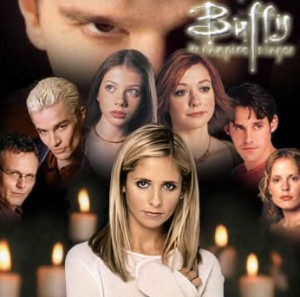
Joseph Laycock: In my book I attempt to describe the evolution of the vampire milieu chronologically across four areas: Literature, film, and television; occult writing; metaphysical and holistic health; and vampirology. In reality, these areas all blend together. The vampire of Slavic folklore is largely left out because vampires do not actually think of themselves as undead. (For the same reason, Buffy the Vampire Slayer is of little importance to real vampires.) Occult groups such as the Theosophical Society and the Hermetic Order of the Golden Dawn re-imagined the vampire as a being that feeds on subtle energy rather than blood. This set the stage for the modern understanding of psychic vampires. The novel I Am Legend (1954) by Richard Mattheson re-imagined the vampire again as a biological entity. This too influenced the vampire community. It also appears to have influenced the medical community, which has periodically sought to explain vampire legends in terms of known diseases. Finally, with the series Dark Shadows in the 1960s, the vampire became a symbol of tragedy, romance, and alienation. As a deviant hero, Barnabus Collins caused many people to identify with the vampire. Dark Shadows foreshadowed the vampires of Anne Rice and even Edward Cullens.
Metaphysical ideas associated with holistic health have also influenced how vampires see their condition. Western concepts of subtle energy such as mesmerism and the Freudian notion of libido were linked tovampirism in the nineteenth and early twentieth centuries. There is now an interesting dialogue beginning to form between self-identified vampires and practitioners of qigong, reiki, and other health practices from Asia.
The last category, “vampirology” refers to a series of amateur studies on real vampires. This began with figures like Stephen Kaplan who opened a “vampire research center.” However, the most ambitious studies to date have been done by vampires themselves. The AVA has collected data from over 1450 individuals. While the academy can challenge their methodology, it is hard to imagine an outsider conducting a better quantitative analysis of this community. I believe that their findings will ultimately determine what it means to be a vampire. This indicates that the vampire community has begun to exert agency over the milieu.
TheoFantastique: In terms of community, are most vampires solitary or do they seek group interaction, and how has the Internet played a part in this process?
Joseph Laycock: The AVA’s survey indicates that the majority of vampires are not part of any formal organization. However, vampires have always sought group interaction. In the 1980s vampires met through fan conventions for Dark Shadows and horror movies. In the 1990s vampires began communicating through zines and other small print media. The community appears to have been on the Internet for as long as it has existed, first using listserves, then forums, and now peer-networking sites.
The Internet generally has a leveling effect on religions. The Internet has not been kind to hierarchical religious organizations such as the Catholic Church or Scientology. On the other hand, non-hierarchical religions such as Paganism have flourished online. Initiatory religious groups such as the Temple of the Vampire seem to have been hurt by the transition to the Internet. The Vampire Bible and other copyrighted texts have been disseminated to the uninitiated online. By contrast, the awakened model of vampirism has flourished as many individuals have begun to rethink their identity after encountering the vampire community online.
The Internet has also brought many young people to the vampire community. More experienced vampires have tried to help by posting articles or even creating “checklists” for individuals who suspect they might be a vampire. The latest innovation is a series of youtube clips where vampires answer questions e-mailed to them about vampirism.
TheoFantastique: Several new religions scholars have considered vampirism a new religious movement? Is vampirism a religion?
Joseph Laycock: The answer to this question depends on which model of vampirism is under consideration and what criteria of religion are being used. The vampire community runs a gamut from The Temple of the Vampire which claims to have legal recognition as a church to atheists who believe vampirism will one day be understood by medical science.
Certainly groups like the Temple of the Vampire are new religious movements. However, I have argued against categorizing the entire vampire community as a new religious movement. One reason being that a significant percentage of vampires describe themselves as Christian. Although vampirism is frequently explained in terms of metaphysical or supernatural beliefs, it appears that many vampires see their identity as a vampire as distinct from their religious affiliation.
TheoFantastique: What types of reception have vampires received as they have become more above ground?
Joseph Laycock: In the United States, this varies greatly from region to region. In the Bible Belt, vampires are very cautious about keeping their identity a secret. I heard a story of at least one vampire who was “outed” to his community and asked to leave his church. By contrast, identifying as a vampire may not seem all that unusual in Los Angeles.
As the media seeks to capitalize on the current fascination with vampires, the vampire community has received an unprecedented level of attention. The AVA is contacted by a new television show or documentary about every month. Community leaders have been very active in monitoring this attention and curbing sensationalism. For instance, the show Trading Spouses was unable to find a vampire who would appear on their show. I believe that there has been a gradual shift from very sensationalistic coverage of the community (usually around Halloween) to more nuanced portrayals of vampires. By the same token, Vampires Today is not intended as a definitive text on this community. Rather, I hope to encourage further research on vampires and other emerging identity groups and suggest further areas of inquiry.
TheoFantastique: Joseph, thanks again for your research in this area, and for your willingness to discuss your book. I wish you the best in your continued academic studies and work.
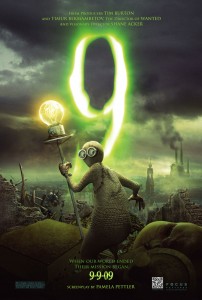
As usual, Comic-Con provided attendees and those who follow comics and the fantastic in pop culture with sneak previews for several interesting films soon to be released. One of those is 9, the lastest project of gifted filmmaker Tim Burton, who is serving as producer of this film along with Timur Bekmanbetov and Jim Lemley, and directed by Shane Acker. This computer animated film includes the voice talents of Elijah Wood, John C. Reilly, Jennifer Connelly, Crispin Glover, and others.
Synopsis
An action-packed adventure, director Shane Acker’s animated fantasy epic 9 is the feature-length expansion of his Academy Award-nominated 2004 short film of the same name. The screenplay for the feature is by Pamela Pettler.
The time is the too-near future. Powered and enabled by the invention known as the Great Machine, the world’s machines have turned on mankind and sparked social unrest, decimating the human population before being largely shut down. But as our world fell to pieces, a mission began to salvage the legacy of civilization; a group of small creations was given the spark of life by a scientist in the final days of humanity, and they continue to exist postapocalypse.
Another of their own, #9 (voiced by Elijah Wood), emerges and displays leadership qualities that may help them survive and possibly even thrive. The conflicted but resilient tribe already includes #1 (Christopher Plummer), a domineering war veteran and the group’s longtime leader; #2 (Martin Landau), a kindly but now-frail inventor; #3 and #4, scholarly twins who communicate nonverbally and mostly with each other; #5 (John C. Reilly), a stalwart and nurturing engineer; #6 (Crispin Glover), an erratic artist beset by visions; #7 (Jennifer Connelly), a brave and self-sufficient warrior; and #8 (Fred Tatasciore), the none-too-bright muscle and enforcer for #1.
With their group so few, these “stitchpunk” creations must summon individual strengths well beyond their own proportions in order to outwit and fight against still-functioning machines, one of which is a marauding mechanized beast. In the darkness just before the dawn, #9 rallies everyone of his number to band together. While showcasing a stunning “steampunk”-styled visual brilliance, 9 dynamically explores the will to live, the power of community, and how one soul can change the world.
Although 9 is a computer generated animation feature it should not be construed as merely a film with appeal to children. As the synopsis indicates it is gritty, taking place in a post-apocalyptic scenario, and touches on deep questions such as what it means to be human, and the significance of living life with the spark of a creator’s life. Adults and children alike should find plenty to enjoy in this film.
TheoFantastique is proud to be part of a Focus Features movie giveaway for 9. This involves prizes for five winners from this website that include a 9 Prize Bundle containing a book, official soundtrack, mini-poster, and trading cards (featuring all the characters). The entry period for this film promotional offer begins today and will run until just before the film’s release on September 9. Those who would like to enter this contest for prizes should submit their name and address to johnm@theofantastique.com with “9 Movie Giveaway” in the subject line. Five winners will be chosen at random who will be notified on September 8. Prizes will be mailed to winners courtesy of the creative folks behind 9 and Focus Features.
With this post I bring together a revised version of a post I wrote for another blog of mine, with a film trailer for Legion, due out in January 2010. (A word of warning to my readers: The trailer is rated R for mature viewers due to graphic language.) These two items come together in a discussion of our continuing fascination with apocalyptic, including that informed by Judeo-Christian conceptions of the End.
Fears and scenarios concerning the ultimate End of things are far more broad and diverse in the late modern West than the Left Behind novels of evangelicalism and popular culture. Elizabeth Rosen discusses this topic in Apocalyptic Transformation: Apocalypse and the Postmodern Imagination (Lexington Books, 2008).
Rosen begins her discussion with an introduction into apocalyptic thinking. She notes that just as human beings need origin stories or myths to explain our beginnings, so we also incorporate stories of the End in order to come to grips with the threats of the end in the face of social chaos and the finality of the human story. She also draws the reader’s attention to the fact that stories of the End are sense-making myths that serve as “an organizing principle imposed on an overwhelming, seemingly disordered universe.” Used in this fashion, apocalyptic stories function much like conspiracy and chaos stories.
In the history of the Western world the Judeo-Christian apocalyptic has been the most influential. In that religio-cultural context one of the key apocalyptic texts has been St. John’s Book of Revelation. In that piece of literature the Greek word for apocalypse refers to an “unveiling,” literally meaning a revelation provided to the reader as a means of providing a sense of peace and purpose to the seeming chaos and social disruption surrounding them. In contemporary popular usage the term “apocalyptic” has moved beyond this specific meaning to serve as a general phrase referring to the End. Although the Judeo-Christian apocalyptic continues to be popular in various circles, and to exert influence outside of its specific religious context, other visions of apocalypse are found throughout popular culture. Here the context of late modernity or postmodernity puts an interesting twist on apocalyptic myth as it seeks to, as Rosen states, “reject the myth’s absolutism or [to] challenge the received systems of morality that underlie it.”
Having laid her foundation through the Introduction Rosen then explores differing ways in which apocalyptic myths have been explored in popular culture. Given my personal and academic research interests I appreciated the diversity of cultural sources that she drew upon in consideration of apocalypse, including graphic novels, books, and film. Several case studies in Rosen’s exploration were of great interest to me. These include a look at Alan Moore’s graphic novel Swamp Thing, which Rosen describes as “a veritable collection of apocalyptic stories,” a differing apocalyptic twist in Moore’s Watchman graphic novel, Terry Gilliam’s films Brazil and 12 Monkeys, and the Wachowski Brothers’ Matrix trilogy of films.
Rosen’s work is a reminder of the continuing interest in apocalyptic. As her discussion notes, one of the ways in which it has been expressed is through film. A specific form of apocalyptic cinema often depicts a battle between angelic forces, humanity, and the divine. The forthcoming release of Legion next year is an example of this. Produced by Sony Pictures and directed by Scott Stewart, the film’s official website includes the following synposis:
“When God loses faith in mankind, he sends his legion of angels to bring on the apocalypse. Humanity’s only hope lies in a group of strangers trapped in a desert diner and the archangel Michael.”
In Legion the trailer indicates that God has given up on humanity and now seeks to eradicate it through the use of angelic forces. But in instance Michael the archangel has gone rogue and now stands with humanity in opposition to God as he battles divine forces. In this way Legion demonstrates a postmodern deconstruction of a general Judeo-Christian theology in a number of areas, and in so doing questions traditional conceptions of the divine goodness and a final outworking of his purposes in vanquishing evil.
As the trailer demonstrates, the film appears to be an interesting hybrid between apocalyptic tale, horror film, and action adventure. I have added this to my list of movies to see next year.
In the past I’ve connected aspects of the fantastic to popular culture and current events. With this post I do so again, first in serious fashion, and second with tongue in cheek.
In a recent post I asked readers to consider America’s continuing struggles with the legacy of racism through reflection on Conquest of the Planet of the Apes. With this post I direct readers to the comments of the late, great Vincent Price on racism and religious prejudice. His words are as important for us today as when he uttered them years ago:
And on a lighter note, a while back President Obama took some heat from animal rights groups over the swatting of a fly during a television interview. New footage has become available on this incident:
In September 2006 Baylor University released a survey which mentioned that a “surprising level” of belief in the paranormal by Americans. ReligionLink commented on this and said that, “According to a 2005 askyourguide Poll, about 75 percent of Americans hold some form of belief in the paranormal – extrasensory perception, ghosts, telepathy, clairvoyance, astrology, communicating with the dead, witches, reincarnation or channeling.”
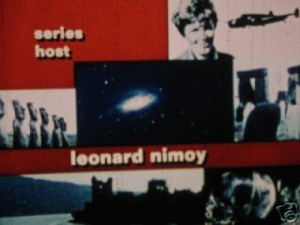
This interest in the paranormal has been a part of popular culture for quite some time, and therefore it is not surprising to see it expressed in a variety of ways, including television programming. One of the first came on the heels of the surfacing interest in the paranormal as a result of the counterculture in the late 1960s, a time involving what scholars like Robert Elwood have described as one of “shifting religious imagination” and in which science fiction and fantasy became the stuff of new mythologies. The interest in the paranormal following the 1960s created the conditions through which a particular television show kicked off paranormal television that continues today. It was the documentary-style program, In Search Of…, that ran from 1976 to 1982, hosted by Leonard Nimoy. The series was the brainchild of Alan Landsburg who was also responsible for a 1973 television program narrated by Rod Serling titled In Search of Ancient Astronauts, which explored the controversial theories of Erich von Däniken. (This program was just one of many documentaries on the paranormal and UFOs hosted by Serling. Another example is UFOs: It Has Begun.) The success of In Search of Ancient Astronauts led to the development of In Search of… as a half-hour weekly television program that examined a number of phenomenon, such as Bigfoot, the Loch Ness Monster, psychic activity, lost civilizations, and much more.
Although this program is probably largely forgotten by viewers other than those like myself with a sense of nostalgia, and perhaps also an interest in the paranormal and cryptozoology, In Search of… may be seen as the precursor which opened the way for similar programming over the ensuing decades and into today. One contemporary example that follows an In Search of… documentary-style template, is the History Channel’s Monster Quest. Narrated by Stacy Keach, as the title indicates, this program focuses on cryptozoology, and examines eyewitness reports of strange creatures around the world as described on the program’s website which includes a MonsterPedia.
Beyond this, much of the contemporary paranormal television offerings follow a “reality TV” style rather than the documentary. Examples of this kind of contemporary programming include the Travel Channel’s Most Haunted and Ghost Adventures, the Sci-Fi (now Syfy) Channel’s Ghost Hunters, and programs like the History Channel’s UFO Hunters.
The increasing embrace of technology and rationality that came with modernity may have made it more difficult to embrace traditional forms of religious belief, but it has not eradicated the human desire for mystery and transcendence. Paranormal television provides fodder for the imagination in this regard, and In Search of… helped pave the way for numerous television programs to follow.
I received a press release today from the Vampires News Network that I pass along here for readers.
Pasadena, Calif. August 6, 2009. Vampire Fest 2009 will take place in the beautiful city of New Orleans from October 23 – 26, 2009.
Filmmakers have heard our call, and Vampire Fest has already received submissions from the United States and around the world. Vampire Fest has a number of activities planned—feasts for the mind as well as the eyes—including a literary panel hosted by writer Gabrielle Faust and events around the Vieux Carré and the Garden District. The festival will screen an international slate of vampire and gothic features and shorts and include costume parties, fashion shows and performance artists.
Vampire Fest is proud to call its home New Orleans with its fabulous nightlife, Gothic architecture, international cuisine, voodoo history, beautiful necropolises, and the birthplace of jazz and Anne Rice.
Submissions Are Still OPEN
Vampire Fest is seeking narrative or experimental films of all lengths that emphasize the grotesque, mysterious or desolate. Since the legends of the werewolf and other supernatural creatures are interconnected with that of the vampire, Vampire Fest also accepts films of the Gothic, zombie, werewolf, witch or ghost genre.
Full schedule of events, details will be announced on our site in the coming weeks and ticket sales will begin by month’s end. Please visit our site at www.vampirefilmfestival.com or contact festival headquarters at (504) 298-VAMP. Get bitten at Vampire Fest in New Orleans!
I still remember staying up late on weeknights in my youth watching episodes of The Twilight Zone. I appreciated the interesting storylines and twist endings, but as a child, and later as a teenager, I was rarely able to appreciate the depth of the issues involved in many of the episodes as Rod Serling and other writers engaged in some of the best writing and social commentary on television. As an adult, repeated viewing of The Twilight Zone, both in the various holiday marathons on television, and in my growing personal collection on DVD, has helped me appreciate the program as not only solid entertainment, but also in providing commentary on pressing social issues of the past, of the time period when the program aired, and I believe in application to issues of the present day.
One of the episodes that recently appeared in a collection of “best of” for the series was “The Obsolete Man” which first aired on June 6, 1961. This episode was written by Serling, and his opening narration for the piece went like this:
“You walk into this room at your own risk, because it leads to the future, not a future that will be but one that might be. This is not a new world, it is simply an extension of what began in the old one. It has patterned itself after every dictator who has ever planted the ripping imprint of a booth on the pages of history since the beginning of time. It has refinements, technological advances, and a more sophisticated approach to the destruction of human freedom. But like every one of the superstates that preceded it, it has one iron rule: logic is an enemy and truth is a menace. . . . This is Mr. Romney Wordsworth, in his last forty-eight hours on Earth. He’s a citizen of the State but will soon have to be eliminated, because he’s built out of flesh and because he has a mind. Mr. Romney Wordsworth, who will draw his last breaths in the Twilight Zone.”
As this episode begins we find Wordsworth (played by Burgess Meredith) entering into a hall of judgment for the State. A long table sits before him, and at the end of the table is a tall podium where the judge for the State, the Chancellor (played by Fritz Weaver), announces the sentence of death upon Wordsworth and works out the details for the accused as to the manner of execution. Wordsworth is an enemy of the State who has lost his usefulness. As a result he has become obsolete. Yet he uses his final moments on earth through the means of execution to make the point to the State that the individual matters, as does freedom, and in so doing brings embarrassment upon the Chancellor. After Wordworth’s death the Chancellor returns to the same hall of judgment to resume his duties only to find that only to find that the State now finds him worthy of death. In the chilling final scene the Chancellor pleads for his life by arguing that he still serves a useful function to the State, only to find the government’s representatives chanting repeatedly, “Obsolete! Obsolete!” The episode concludes with Serling’s final narration:
“The Chancellor – the late Chancellor – was only partly correct. He was obsolete. But so was the State, the entity he worshipped. Any state, any entity, any ideology that fails to recognize the worth, the dignity, the rights of man, that state is obsolete. A case to be filed under ‘M’ for mankind . . . in the Twilight Zone.
Airing as it did in the first decades following World War II, it is no surprise that The Twilight Zone included several episodes that critiqued the dangers of Nazism, fascism, and other forms of totalitarianism. As such Serling’s concern for government abuses of the past still serves as a valid critique for our reflection on history. But I would also suggest that this episode has much to say to us today about current issues as well.
Citizens of the United States are currently embroiled in a debate over reforming healthcare. If the Administration’s healthcare plan is implemented it will give the government control in one seventh of the country’s economy. This follows on the heels of the government’s bailout and resulting financial interest in large segments of the auto industry and banking industry. In response to a worldwide recession the government has grown larger and more powerful.
This growth and power is not only the result of the Obama Administration’s actions. For several presidential administrations over several decades, both Republican and Democrat, and despite promises to reduce government during Republican administrations, the government has grown, and with it has come greater power and finances in the hands of political leaders across party lines.
Perhaps Serling has something to say to us in the twenty-first century. As government grows more powerful and is poised to take control over a major aspect of the individual, in the name of reformation and cost savings will some members and segments of our society be declared obsolete? Regardless of the party affiliations of my readers, I hope we will pause to think through what our government is currently proposing, openly debate the issues involved, and that we will also take to heart Serling’s closing narration for this episode lest our State become obsolete in the quest for hope and change.
Last year I discovered accidentally that Halloween begins early at Michaels stores when I sensed the first hints of fall and this wonderful holiday in the air in late August. Today I was out and about on a Sunday afternoon and I thought I’d poke my head into Michaels even though I was sure that the first weekend of August was way too early for stores to carry Halloween merchandise. To my pleasant surprise Michaels has begun to carry their Halloween merchandise with a small collection that will grow over the next couple of months. But even now the Lemax Spooky Town collection can be found in the store in its entirety.
Little needs to be said for those familar with Spooky Town, which represents one of the highest search engine hits that bring readers to TheoFantastique. But for those who have not heard of it this is a special set of Halloween collectibles that began in 2001 and which is focused around various themes, including Gothic and classic horror, Egyptian mummies, pirates, and southwestern frights. Spooky Town includes large pieces with light, sound, and many times motion, as well as smaller table top pieces. For those interested in learning more about the background and history of Spooky Town see my interview with distributor Joe Davis, and my post on the 2009 product line.
I must say after standing in the Spooky Town aisle at Michaels with the various pieces creeking, groaning, and moving around me, I drooled with wide eyed wonder like a ten-year-old horror geek on Halloween night. Somehow Spooky Town manages to introduce new and interesting pieces each year, and 2009 is no exception. As in previous years, this year’s offerings include the Michaels exclusive pieces that include the House of Wax, Transylvania Transport, Flaming Skull Motorcycles, Morbid Manner, and the Spooky Town Express train. The new pieces will be a good addition to any collection as Spooky Town not only builds its imaginative collection, but also seems to provide greater attention to detail with each year’s additions.
The Spooky Town collection in my neighborhood Michaels is now selling at a twenty percent discount, but this won’t last long. I encourage collectors to visit Michaels early and often, and to add to their collection before they sell out by mid-October at the latest. As October approaches keep your eyes open for dramatic discounts as the store seeks to move its Halloween items in preparation for Christmas.
I’ll be seeing you at the Spooky Town aisle at Michaels as I feed this addiction for the next several months.
With another post inspired by a feature in Entertainment Weekly, indeed, back to back posts, readers may wonder about my magazine reading habits, or think that I am on the payroll for EW. Neither situation should be of concern, but it is interesting that the magazine has now featured aspects of horror in two consecutive issues. Issue #1059 from August 7, 2009 features a cover focus on vampires which includes responses to questions on the current crop of romantic vampire treatments by five female vampire fiction authors, including Stephenie Meyer, Melissa De La Cruz, Laurell K. Hamilton, Anne Rice, and P. C. Cast.
The feature also includes a listing of the “20 Greatest Vampires,” where, surprisingly given the largely female reading audience for EW, and that the vampire feature focuses on the romantic aspect of the contemporary upsurge in vampires, Christopher Lee comes in at number two, Bela Lugosi comes in at number three, and Keifer Sutherland from The Lost Boys comes in at number fourteen. Blade portrayed by Wesley Snipes also makes the list at number sixteen, as does Angel by David Boreanaz coming in at number seven. Many of the other picks are not surprising given the perspective of the magazine’s readers and focus, but the absence of Frank Langella’s 1972 portrayal of Dracula is given the strong romantic focus of the film. Noticeably absent from the list for vampire and horror fans in general are Chris Sarandon’s character Jerry Dandridge from Fright Night, an interesting film from the 1980s that includes elements of both romance and horror, the vampiric family from Near Dark, as well as 30 Days of Night.
In a sidebar that one would only see in an entertainment magazine is a chart titled “Vampire Hair: The Kindest Cuts.” Here other surprises await as Christopher Lee comes in at the “Scarily Good” end of the chart, followed closely by William Marshal from Blacula, and Sutherland’s David in third, and Gary Oldman in “Bram Stoker’s Dracula holding the final slot for “Scarily Bad.”
 One of the more interesting research and writing projects I worked on earlier this year was a chapter for a forthcoming book through Westminster John Knox Press on videogames and digital cultures where I presented some thoughts on a techno theology of cybersociality, the interactions between human beings over the Internet and through other digital technologies and what this might say about an expression of human nature in relation to the sacred as well. While we usually take them for granted, I find the increasing presence of these technologies in our lives of great interest, and they provide a number of considerations worth reflecting on. Given this research interest I was pleased to hear of Surrogates, a science fiction film that dovetails with these areas, due for release on September 25.
 Although the sci-fi premise and scenario of Surrogates might seem far removed from our own circumstances it may not really be the case. Consider our fascination with “pseudo-events,” the play revolution fueled by digital entertainment, and posthumanism. In his book The Image: A Guide to Pseudo-Events in America (Vintage, 1992), historian Daniel Boorstin argues that Americans live in an “age of contrivance” and that our public lives are filled with various “pseudo-events” or “artificial products” that simulate reality and which leave the individual who experiences the events or utilizes various products feeling as if they have experienced reality when in fact they have had their stereotypes confirmed by an encounter with the simulation. In addition to our experiences with pseudo-events, recall the great amounts of time we spend on play, particularly in the digital realm. Play is becoming an increasingly significant facet of life in those parts of the world where economic factors allow it to be so. This is particularly the case with the continued popularity of professional sports, and a new dimension of play has arisen with the increasing numbers of people spending time in various virtual worlds in cyberspace, such as Lineage, Gaia Online or Second Life. In his book Exodus to the Virtual World: How Online Fun is Changing Reality (Palgrave MacMillan, 2007), Edward Castronova believes a “fun revolution” is underway that will change the way in which we behave in the “real world.” He says that, “An understanding of fun will become integral to understanding why the real world is losing people [to virtual worlds], and what to do about it.” Finally, there are the discussions of transhumanism or posthumanism where the combination of robotics and human consciousness are seen as the next steps in human evolution and societal development. When the concepts of pseudo-identity, the large numbers of people spending great amounts of time in cyberspace or in other forms of digital entertainment, and posthumanism are taken together, it is not too much of a stretch to conceive of a future wherein people play or live their lives immersed in fantasy scenarios through robotic avatars as in Surrogates.
 For quite some time the vampire has been an important figure in popular culture. While the zombie has been a rival in recent decades as a monstrous icon, the vampire seems to be making a comeback as the increasing number of books, films, and television programs featuring this figure indicate.
 TheoFantastique: In the Preface of your book you define several important terms. These include “real vampire,” “the vampire milieu” and “the vampire community.” Can you define these and talk a little about why they are important to understanding contemporary vampires?
 TheoFantastique: How does the vampire identity help to re-enchant the world in late modernity and how does this fit in with other expressions of re-enchantment?
 TheoFantastique: What types of elements have helped to create the vampire milieu?
 As usual, Comic-Con provided attendees and those who follow comics and the fantastic in pop culture with sneak previews for several interesting films soon to be released. One of those is 9, the lastest project of gifted filmmaker Tim Burton, who is serving as producer of this film along with Timur Bekmanbetov and Jim Lemley, and directed by Shane Acker. This computer animated film includes the voice talents of Elijah Wood, John C. Reilly, Jennifer Connelly, Crispin Glover, and others.
 In September 2006 Baylor University released a survey which mentioned that a “surprising level” of belief in the paranormal by Americans.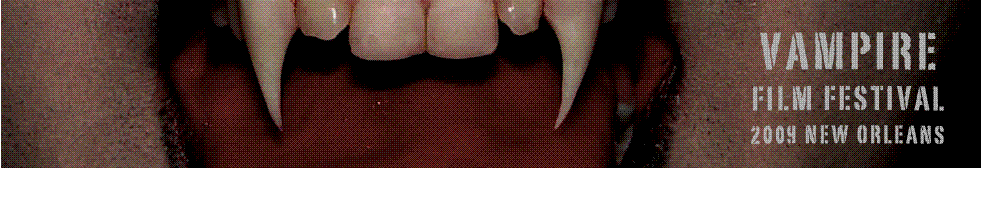
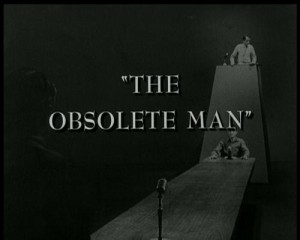 I still remember staying up late on weeknights in my youth watching episodes of The Twilight Zone. I appreciated the interesting storylines and twist endings, but as a child, and later as a teenager, I was rarely able to appreciate the depth of the issues involved in many of the episodes as Rod Serling and other writers engaged in some of the best writing and social commentary on television. As an adult, repeated viewing of The Twilight Zone, both in the various holiday marathons on television, and in my growing personal collection on DVD, has helped me appreciate the program as not only solid entertainment, but also in providing commentary on pressing social issues of the past, of the time period when the program aired, and I believe in application to issues of the present day.
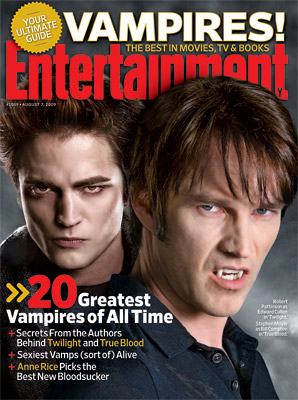 With another post inspired by a feature in Entertainment Weekly, indeed, back to back posts, readers may wonder about my magazine reading habits, or think that I am on the payroll for EW. Neither situation should be of concern, but it is interesting that the magazine has now featured aspects of horror in two consecutive issues. Issue #1059 from August 7, 2009 features a cover focus on vampires which includes responses to questions on the current crop of romantic vampire treatments by five female vampire fiction authors, including Stephenie Meyer, Melissa De La Cruz, Laurell K. Hamilton, Anne Rice, and P. C. Cast.


