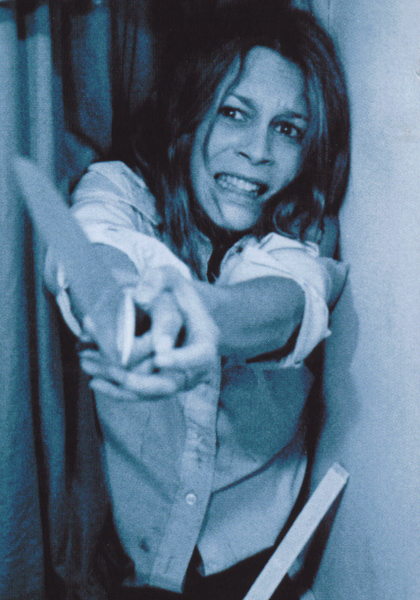
A recent copy of my wife’s ENTERTAINMENT WEEKLY magazine for July 31, 2009 includes an article with information that I found surprising. The piece is titled “Horror Films…and the Women Who Love Them!” by Christine Spines.
I was not surprised to find an increasing presence of the feminine in horror, and that this has reshaped certain expressions of the genre. In a previous post I discussed how gender has shaped the vampire icon, but what I did find surprising was Spines’ claim that women are now the major viewers of horror films, which in turn is changing not only the way women are depicted in the genre, but also the types of horror films being produced. An excerpt from the article discusses this:
“I don’t think there was anyone who expected that women would gravitate toward a movie called The Texas Chainsaw Massacre,” says Chainsaw producer Brad Fuller of the 2003 remake, which became a female-driven $81 million hit. “For us, the issue now is that it’s harder for us to get young men into the theater than women who are, like, 35 years old at horror movies and they’re like, ‘Oh, our husbands are with the kids and we all came out together,'” says Clint Culpepper, the president of Screen Gems, which is releasing a remake of the 1987 slasher film The Stepfather in October. “Men stop seeing horror at a certain age, but women continue to go on.”
Far be it from me to question these filmmakers since they conduct careful market research in order to determine the demographics of their audience, their viewing preferences, and how films can be tailored to meet audience desires. But in my experience most women don’t care for horror, and at present it tends to be teenage fare across gender lines, and a form that also appeals to men beyond “a certain age.” This article calls this into question and adds another cultural element into the mix for the evolution of horror films.
Personally I don’t care which gender produces and consumes horror so long as it is quality material that is offered. If the increasing involvement of women in horror results in silver screen scares like The Descent then I’m fine with it. It it shifts us increasingly toward the Twilight end of the spectrum then I hope the trend is short lived.
America seems doomed never to be able to move beyond its struggles with racism. Despite having elected an African-American president, and other great strides since the days of slavery and the Civil Rights era, charges of racism continue to haunt the country in pop culture. From Al Sharpton connecting race with Michael Jackson’s death, to Jessie Jackson making charges of racism with every possible national news story, to President Obama making the arrest of Professor Henry Gates a national issue through insinuations of police racial profiling in a prime time press conference, racism remains a heavy burden for the country.
One might wonder why charges of racism continue. Certainly we must acknowledge that racism exists in some quarters since it is impossible to erase racism among all of a population’s people. But it must also be acknowledged that the country has made great strides in moving beyond its racist past, exemplified most vividly with the election of Barack Obama, touted as the first post-racial president. Even so, it seems as if there are segments of the population that refuse to let strong charges of national racism go, going so far as to form something of a cottage industry with personalities like Sharpton and Jackson, and now perhaps with Gates as well. Again, why do such charges of racism continue despite how far we have come from the days of slavery and the civil rights struggles of the 1960s?
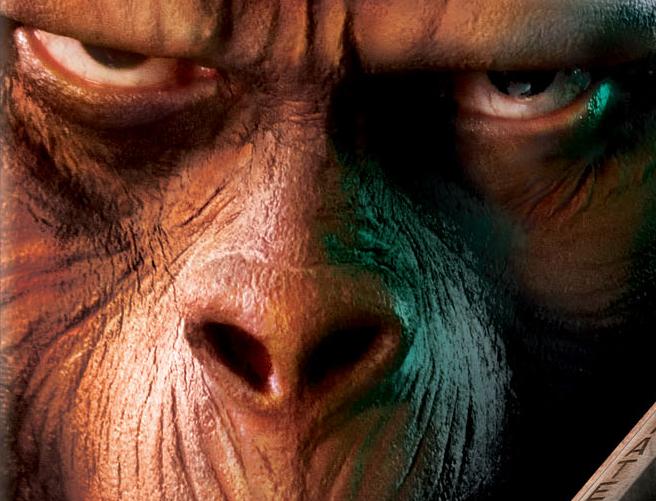
I’d like to suggest that science fiction might provide us with an insight. In a recent post I mentioned my appreciation for the Planet of the Apes series of films, particularly Conquest of the Planet of the Apes, for its social commentary in its hard-hitting attempt at grappling with racism through the depiction of ape slavery at the hands of human beings. At the climax of the film the apes revolt under the leadership of an intelligent, talking ape, self-named Caesar (played by Roddy McDowall). After the apes have subdued their former captors Caesar has an exchange with MacDonald (played by Hari Rhodes), a human government official and African-American. MacDonald is concerned about the violence associated with the revolt, and the apparent desires of Caesar to mete out lethal justice in the wake of his past oppression.
MacDonald:
Caesar, this is not how it was supposed to be.
Caesar:
In your view, or mine?
MacDonald:
Violence prolongs hate, hate prolongs violence. By what right are you spilling blood?!
Caesar:
By the slave’s right to punish his persecutors.
I think Caesar’s words in the final sentence from this dialogue excerpt are especially important, and possibly applicable to the situation we see in the United States in regards to race. No matter how far the nation has come, or will come, in its efforts to overcome racism we can never be a post-racial nation so long as those and the descendants of those who were wrongly persecuted in the past believe that it is their right to punish their former persecutors and their descendants. There seems to be some kind of racial ethic of retributive justice at work here in my view, much as Caesar argued for in Conquest.
Again I would draw the reader’s attention to the originally scripted ending of Conquest where Caesar calls for lethal justice to be leveled upon Breck, the government official who despised the apes and kept them in slavery, even attempting to kill Caesar so as to forestall a potential ape revolt. As I commented in my previous post on this film, this ending fits the developing storyline more naturally, and certainly the developing emotion of Caesar and the apes. But Twentieth Century Fox opted for a revised conclusion which necessitated bringing Roddy McDowall back into the studio for some voiceover work for a closing narration that calls for the apes to move beyond their violence and put away their weapons. The original violent conclusion was understandable in a film coming out in the early 1970s when America was still dealing with the throes of racism and civil rights issues. But the producers opted for something more peaceful in the film’s conclusion. It is debatable as to which ending is more appropriate to the storyline, but regardless of this cinematic and storytelling question, I hope we can learn from the change in ending. Might it be that the original ending was appropriate for the circumstances and mood of the 1970s, but the revised ending is one for our time in twenty-first century America? I hope so, and I’d like certain segments of our society to consider setting aside the slave’s right to continue punishing their (former) persecutors.
A few weeks ago I was thumbing through the program for the American Academy of Religion conference that will be meeting in November of this year. One of the areas of interest is religion and popular culture, and several presentation topics caught my eye. One was by Titus Hjelm of the University College, London. He will be presenting a paper that is based upon his contribution to the book The Lure of the Dark Side (Equinox, 2009) with the chapter titled “Celluloid Vampires, Technology, and the Decline of Religion.” I was able to track Titus down through the Internet and he was willing to discuss the interesting change in vampire mythology.
TheoFantastique: Titus, thank you for giving me a preview of your presentation at AAR. It’s good to learn of scholars with similar research interests. What is your personal interest in the vampire and how does this connect to your academic pursuits in religion and popular culture?
Titus Hjelm: I can’t remember what the first vampire film I saw was, but my parents were quite lax about my television viewing habits, so I was probably too young when I saw it, haha! Anyway, I’ve been interested in all kinds of monsters since I was a kid and the vampire has always touched a chord more than any other creature. Later, I took an academic interest in Satanism and evil in general, so the popular culture representations of the vampire became a natural part of that project.
TheoFantastique: In your essay you discuss the “migration of the vampire soul.” What do you mean by this phrase as it relates to your central thesis?
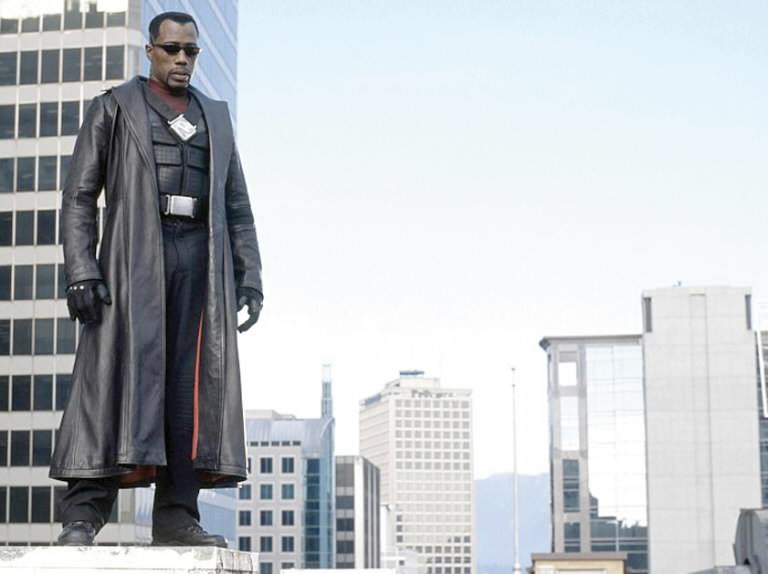
Titus Hjelm: Basically my thesis is that in recent vampire fiction (both film and books) the vampire has undergone a change from a religious figure into a scientifically defined villain. In other words, whereas the crucifix used to be the best weapon against Bela Lugosi and Christopher Lee, the likes of Wesley Snipes and Kate Beckinsale are more concerned about biological weapons used against them. These are what I call the ‘old paradigm’ and ‘new paradigm’ celluloid vampires, respectively.
TheoFantastique: What cinematic vampire sources did you draw upon in analyzing the old and new paradigms for vampires?
Titus Hjelm: I mainly compared the Hammer Studios portrayals of Dracula and some female vampires with recent mainstream films such as the Blade trilogy and Underworld—now a trilogy as well. The picture might have been different if I had added the host of indie vampire films produced in recent years, but that would have been a different project. I also left out all references to Buffy the Vampire Slayer because—I have to admit—I’ve never really followed the series, and also because that is a somewhat different discussion altogether.
TheoFantastique: In your analysis of these paradigms you address three characteristics. Can you describe them?
Titus Hjelm: I thought that from the perspective of declining religiousness and an emerging emphasis on science and genes, it would be interesting to look separately at the portrayals of the origin and motivation of vampires, and their nemesis—that is, how vampires are destroyed in the films. Although overlapping in many ways, all aspects revealed interesting changes in the fictional lore. For example, the Hammer vampire was a mystical, malevolent creature that shied away from religious symbols and was killed by supernatural means. In contrast, the modern vampires are represented explicitly as an outcome of a gene mutation. Their main motivation is not to spread ‘evil’ in itself, but to survive, and for some, to rule humans. Therefore, it is not a question of satanic vampires vs. good Christians, but a question of racial supremacy. Finally, as I mentioned above, the new films often employ metafiction in reference to religious symbolism, saying that unlike popular culture teaches us, ‘crosses don’t do squat.’
TheoFantastique: What are some of the reasons for this migration of the vampire soul in ways that, as you put it, “The Devil’s spawn of the classic era of vampire films has become a freak of nature, a genetic defect”?
Titus Hjelm: I think the first rule of cultural analysis is not to read too much meaning into the text itself, so answering that question is notoriously difficult. One plausible thesis would be that religious symbols have lost at least some of the common resonance ground they once had, therefore making the religious, ‘old paradigm’ vampire somewhat obsolete in contemporary culture. On the other hand, the need for ‘enchantment’ has not disappeared, now we’re just enchanted by the possibilities of science gone awry rather than religious evil.
TheoFantastique: How does the new paradigm for vampires in cinema reflect both secularization and pluralization?
Titus Hjelm: Secularization is another tricky concept, and I would not go too far in interpreting that the move away from religious towards a scientific worldview in vampire films is a very strong implication of secularization. But it might be a sign of pluralisation in the sense that as religion becomes increasingly a matter of individual choice, there is less room for provincialism. In other words, the less there is reference to a particular religious tradition, the more broadly a vampire film can reach its audiences. There is a classic gag about this already in Polanski’s The Fearless Vampire Killers. To the surprise of the heroes, one of the vampires does not recoil when presented with a crucifix, but only comments: ‘Sorry, I’m Jewish.’ Perhaps it is this attitude that has now permeated the genre more broadly.
TheoFantastique: Does this mean that the supernatural vampire of a previous age is gone?
Titus Hjelm: It is clear by now that science has not made religion disappear, despite some early sociological predictions. Similarly, I don’t think the ‘old paradigm’ will disappear, but rather that the interest in the supernatural vampire goes in cycles. The demonic and supernatural vampire might be hibernating somewhere underground while its genetic peers rule the silver screen, only to make a comeback sooner or later—to put it poetically!
TheoFantastique: Titus, thank you again for your academic work and your contribution to this topic. I hope you continue such endeavors in the future.
It has been said that art imitates life, but with the symbiotic relationship between the two, and the strong influence of various facets of art on popular culture, many times the influence moves in the other direction. This was illustrated over the last week or so in which it could be said that life imitates sci fi art.
First, we had a disturbing story that the military has developed a robot that can refuel itself through the consumption of biological material, including human corpses. As WIRED reported,
researchers at Robotic Technology say the robots will collect organic matter, which “could” include human corpses, to use for fuel. But if you picked up anything on flesh-eating robots over the years you know they’ll ignore that tasty soybean field and make a chow line right to the nearest dead body. And, if the machines can’t find enough dead people to eat, they can always make new ones.
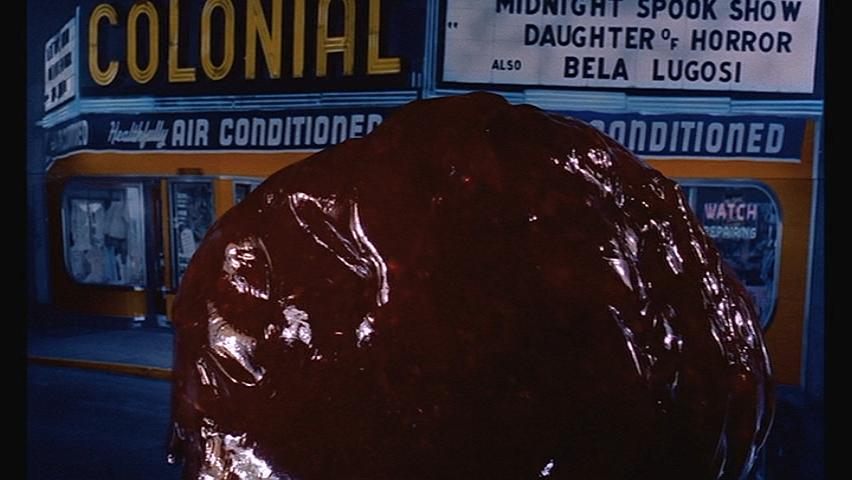
Of course this brings images from The Matrix to mind with humans serving as living batteries for machines, as well as Terminator-esque type machines as well. And if this wasn’t bizarre enough, TIME magazine is reporting on a mysterious mass organism found floating in the Arctic in a story that draws upon the classic science fiction film The Blob:
A group of hunters aboard a small boat out of the tiny Alaska village of Wainwright were the first to spot what would eventually be called “the blob.” It was a dark, floating mass stretching for miles through the Chukchi Sea, a frigid and relatively shallow expanse of Arctic Ocean water between Alaska’s northwest coast and the Russian Far East. The goo was fibrous, hairy. When it touched floating ice, it looked almost black.
But what was it? An oil slick? Some sort of immense, amorphous organism adrift in some of the planet’s most remote waters? Maybe a worrisome sign of global climate change? Or was it something insidious and, perhaps, even carnivorous like the man-eating jello from the old Steve McQueen movie that inspired the Alaskan phenomenon’s nickname?
It turns out the the mass is an algal bloom, but it is interesting to see the influence of science fiction in pop culture and how our technology and experiences with nature mirror and are interpreted through the lens of this genre.
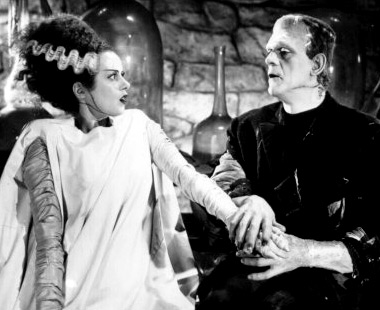
In my last post I mentioned one of the treasures included in my anniversary gifts from my wife. With this post I share a few reflections on the second gift, The Legacy Collection of Frankenstein by Universal Pictures.
When I grew up I had an appreciation for various schools of horror films. I know that for some there is a division between the camps of Universal Pictures film fans and those who prefer the Hammer Films reinterpretation of many of the Universal classics, but I appreciated both expressions of these horror icons. Even so, as a child of the 1970s I probably leaned more toward Hammer Films with their bold color and blood, not to mention the Hammer horror women with their ample cleavage. As I’ve gotten older I’ve “rediscovered” the Universal films and have given them rewewed focus for analysis.
The Legacy Collection is a great way for fans of the Universal films to add these gems to their library. Not only do they include several films in a series in their collection, whether Dracula, Frankenstein, The Wolf Man, or The Creature of the Black Lagoon, but they also include interesting commentary by film historians, as well as documentaries. Of course, this is the case with the Frankenstein collection which includes not only Frankenstein, but also Bride of Frankenstein, Son of Frankenstein, Ghost of Frankenstein, and House of Frankenstein. There are a couple of documentaries included in this collection, including She’s Alive! Creating the Bride of Frankenstein that was particularly interesting to me at several points.
One highlight is a discussion on how the film was a lightning rod for controversy with the censors. Apparently numerous cuts had to be made, totaling some fifteen minutes, in a film considered perverse for its time. One of the issues that raised concern was the film’s references that touched on religion, that in the minds of the censors at least, bordered on the blasphemous. This includes not only Henry Frankenstein’s statements about being part of the divine plan in his understanding of the secrets of God through the creation of life (something his young bride considers “blasphemous and wicked”), Frankenstein’s “monster” portrayed as undergoing “Christlike” misunderstanding and betrayal, the creature’s toppling of a religious figure in a cemetery seemingly symbolizing an attack against Christianity or organized religion (a change to the original script which conceived of the scene with the creature gazing upon a statue of Christ on the cross, apparently identifying with the sufferings of the figure before him), to a reference to biblical stories in a discussion between Drs. Frankenstein and Pretorius seemingly uttered with disdain in the mind of one of the film historians in the documentary.
Horror films continue to provoke and disturb us, forcing us to consider aspects of ourselves and the world we live in that we’d rather leave pushed aside to the margins and darkness of our inner selves. The Bride of Frankenstein is part of this long tradition, and it is worthy of repeated viewings and reflection that will reward audiences in 2009 as much as those who gasped at its images and story in 1935.
Remember that science fiction film franchise from a few decades ago that captured the imagination of young and old alike, and which opened the door for merchandising that is now the industry standard? While it is tempting to think of the adventures of those “a long time ago in a galaxy far, far away” as the beginnings of what is now commonplace in Hollywood, before the Harry Potter series, The Matrix series, and even the Star Wars franchise, the success of the The Planet of the Apes in 1968 motivated Twentieth Century Fox to launch a sequel, and later what would become a series of films as part of a franchise that included a wealth of merchandise, a cartoon series, and a live action series on television. The Planet of the Apes created the template for later fantasy, science fiction, and horror films to follow.
I was a huge fan of ThePlanet of the Apes growing up in the 1970s, and my appreciation for the apes saga continues to this day. It represented an intelligent and thought provoking form of science fiction that involves rewards for adults not discerned in childhood. I recently celebrated my eighteenth wedding anniversary with my beautiful wife and for the first time in many years this involved a gift exchange. I had my Amazon.com wish list of fantastic items at the ready, and among the gifts given to me by my wife was Conquest of the Planet of the Apes. This is my second favorite film in the series, right behind the original, which I enjoy because it explicitly addresses the issue of racism in ways only touched on more superficially in the other films. This is explored very admirably by Eric Greene in Planet of the Apes as American Myth: Race, Politics, and Popular Culture (Wesleyan University Press, 1998), a book highly recommended for those who want to probe this mythos in more depth.
The film’s exploration of racism reaches its crescendo at its climax. Fans of Conquest are aware that the film includes two very different endings. The one released in theaters, and usually replayed on television, includes a fiery oratory by the leader of the ape revolt against humanity, Caesar, who proclaims his plan for the overthrow of human oppressors through violent revolution that he intends to spread throughout the globe. In response his ape army raise their weapons to bludgeon the abusive Governor Brech of the humans who had long oppressed them. Yet at the merciful urging of a fellow chimpanzee, Caesar tells his fellow apes to put away their weapons. The original ending of the film involves the ape army killing Brech as the natural climax to Caesar’s speech and retribution for oppression. It was feared that this ending was too violent, a fear that already threatened the interpretation of the rest of the film, arguably the most violent of all the Apes series. It is difficult to find the film with the original ending, although the Fox Movie Channel has (surprisingly) been playing this version recently. Although perhaps too violent for the 1970s when considered against the backdrop of its metaphorical exploration of racism, the original ending makes far more sense given the narrative flow as a more natural climax to Caesar’s speech (representing Roddy McDowall’s finest acting in the series). It also seems to lend itself more naturally to the final film in the franchise, Battle for the Planet of the Apes, where the apes have all but conquered humanity with the exception of a smal band of humans.
For those looking for entertaining, imaginative, and thought provoking science fiction that explores significant social issues, The Planet of the Apes series of films reward time and again. In addition to Greene’s analysis, Joe Russo and Larry Landsman with Edward Gross penned Planet of the Apes Revisited: The Behind-the-Scences Story of the Classic Science Fiction Saga (Thomas Dunne Books, 2001), which provides a good history and overview of the films.
The remainder of 2009, and the first part of 2010, holds out promise for fans of fantastic cinema, and that’s not including the legions of fans awaiting the next Harry Potter and Twilight installments. Three fantastic cinema attractions are of especially interest and on the radar for front row movie tickets over the next few months with the arrival of fall and winter.
The first film is Zombieland, a comedy set for release in the U.S. on October 9. The plot summary is found at IMDB:
“In the horror comedy Zombieland focuses on two men who have found a way to survive a world overrun by zombies. Columbus is a big wuss — but when you’re afraid of being eaten by zombies, fear can keep you alive. Tallahassee is an AK-toting, zombie-slaying’ bad ass whose single determination is to get the last Twinkie on earth. As they join forces with Wichita and Little Rock, who have also found unique ways to survive the zombie mayhem, they will have to determine which is worse: relying on each other or succumbing to the zombies.”
The film includes Woody Harrelson and Bill Murray which is promising in terms of acting and comedic talent, but it remains to be seen whether Zombieland will become another zombie comedy classic alongside Shaun of the Dead and Fido providing both good laughs as well as social commentary, or whether it merely provides a forum for diverse expressions of zombie mayhem intended as the lone fodder for laughs.
The second film of interest is The Wolf Man, a contemporary retelling of the classic 1941 film starring Lon Chaney. This film includes a number of exciting elements, not only an iconic monster, but also acting talent including Benicio Del Toro as Lawrence Talbot, Anthony Hopkins, and Hugo Weaving. Add to this the makeup special effects of Rick Baker who helped set the bar high for werewolf transformation makeup with An American Werewolf in London (as did Rob Bottin in another 1980s werewolf classic, The Howling), and the pieces are in place for a solid piece of horror filmmaking. Even so, while fans of classic horror are likely to greatly appreciate this film it remains to be seen how younger audiences, the main audience segment for which horror films are produced these days, receive a classic monster icon in a film that moves beyond gore, psychotic slashers, and torture. The Wolf Man originally scheduled for release on November 6, now rescheduled for February 2010.
The third film that TheoFantastique holds out great promise for in 2009 is Avatar. Set for release just prior to Christmas on December 19, this project will be the first science fiction work for director James Cameron in a long time, and his first Hollywood film since Titanic. IMDB provides a bare bones plot summary for the film:
“In the future, Jake, a paraplegic war veteran, is brought to another planet, Pandora, which is inhabited by the Na’vi, a humanoid race with their own language and culture. Those from Earth find themselves at odds with each other and the local culture.”
It is difficult from the plot summary or the teaser trailer to tell much about Avatar, but Cameron has been hyping the film for a while now, especially talking up the 3D aspects of it as revolutionary, even going so far as to state that he will never again direct a film that is not in 3D. For those interested in sneak peeks at further aspects related to this film a videogame is being released in connection with it and an interview with Cameron is available at YouTube as he discusses it. It is hoped that this film lives up to the hype, and Cameron certainly has the ability, experience with sci fi, and passion to do it, but we will see whether this is a year-end sci fi blockbuster that gives the release of Star Trek earlier this year a run for its box office money.
Readers of TheoFantastique are encouraged to browse through the links included here. They are listed under two categories, the first being Enjoying the Fantastic that includes a number of websites that fans will enjoy. The second category is Exploring the Fantastic. This category is for those who want to go more deeply in understanding why various facets of the fantastic are so enjoyable for many people, and what such things tell us about ourselves. One of the resources in this latter category is GOLEM: Journal of Religion and Monsters. This is a fine, peer-reviewed Internet publication that is highly recommended by TheoFantastique. Its Founding Editor is Frances Flannery-Dailey of James Madison University who took some time over the Fourth of July holiday to talk about GOLEM.
TheoFantastique: Dr. Flannery, thank you for your willingness to discuss GOLEM journal. What was the inspiration behind the beginning of the journal?
Frances Flannery: My research specialty is in ancient Jewish and Christian apocalyptic literature, such as Daniel and the Book of Revelation. Monsters are everywhere in this literature, and I was really intrigued to discover their function and meaning. When I examined anthropological sources across an extremely broad band of cultures, both ancient and modern, I found monsters in every single culture I ran across, whether ancient Greece or modern Polynesia and Canada! I literally could not find a culture that did not have some being that was identified by the culture as a monster. Since I didn’t believe that all of these monsters actually existed, (although some probably did or do), it was obvious that societies have a great need to create monsters.
As I continued to research what Big Foot, Dracula, Frankenstein, Nessie, and the Dragon of Revelation have in common, I came across definitions of monsters by scholars from numerous fields, including anthropology, religion, aesthetics, and psychology. I finally settled on this definition: monsters are those socially constructed entities that either blur existing categories or that must exist between categories, where nothing else fits. For instance, Frankenstein is both living and dead, and Big Foot is only scary if he is both human-like and ape-like. A giant lowland gorilla species would not gather the attention that Sasquatch has attracted! In turn, this definition implies that the function of monsters is exactly, then, to allow a given society to express 1) the category formations that are important to it, 2) the boundaries that are being challenged in that culture, and 3) the very potent societal fears that exist about these boundary crossings. Monsters thus show us what a culture both cares about and fears, and the expression of those fears is usually a catharsis. Godzilla is an ancient creature awakened by atomic energy, which expressed the fears of Post WWII Japan and America in the nuclear age. Monsters are thus vital to the mental health of a culture, and they tell others what a culture values. I’d encourage readers to think hard about what monsters their culture currently finds fascinating, and why.
I started GOLEM out of a desire to create a forum for other scholars from a variety of disciplines to share their thoughts about monsters and religion. The remarkable diversity of approaches, topics and fields of interests of our contributors has affirmed my hunch that monsters are significant in a broad array of interdisciplinary areas, including religious studies, philosophy, psychology, anthropology, theology, and sociology. I would hasten to add that there is also a section for student publications in the journal, entitled “GREMLIN”.
TheoFantastique: I am pleased to see the focus of the journal as indicated in the subtitle with its look at “religion and monsters,” an interest that dovetails with part of the exploration of TheoFantastique. How did you arrive at this focus, and in what ways has the journal explored this topic?
Frances Flannery: Following sociologist Clifford Geertz, I consider religion to entail much more than just “beliefs,” but rather a whole cultural system: beliefs, symbols, ethics, worldview, rituals, and an entire construction of reality. Monsters are vital to the cracks and overlaps in the categories of cultural constructions of reality. Thus, they appear in the sacred literature or mythology of every traditional religion, whether Judaism, Christianity, Islam, Buddhism, Hinduism, or indigenous religions, as well as of new religions, such as Scientology.
As I mentioned, from the outset GOLEM journal has been committed to interdisciplinary methodologies that result in a broad range of topics for investigation, and this is clearly reflected in the journal’s contents. So far GOLEM has generated articles, to name a few, on monsters and otherness, disability, the construction of normalcy, horror films, posthumanism, ecological devastation, class, ethnicity, the Ancient Near East, and Christian Evangelicalism and intelligent design. I find this variety so exciting!
I would like to add that beginning with Issue Three, Rubina Ramji of Cape Breton University has replaced me as Senior Editor. I cannot say enough to support her excellent work and the direction in which she has steered GOLEM, which is evident in the fine quality of that Issue. Currently, the journal is seeking to explore the connection between monsters and violence, and monsters and terrorism, and I can hardly think of anything more timely.
TheoFantastique: How does the academic study of monsters in popular culture help us to “shed light on the particular societies and cultures that imagine them” as your website states?
Frances Flannery: Monsters appear in “popular” culture as well as in “elite” culture, in the art, literature, film, histories and religion of a vast array of societies. As I mentioned, monsters show us what a society values, what cultural categories it creates, and what chaos and fear feel like to its members. But perhaps most of all, monsters are simply uncanny . . . and that makes them innately interesting. Thus, the phenomenon of monsters speaks to the universal human societal condition. No culture seems to be able to make every experience or person fit neatly into its categories. Something will always blur or bleed over. That’s a monster.
TheoFantastique: Frances, thanks again for your fine publication, and for talking about it with my readers.
Joseph D’Lacy posted a link to some interesting video on his Facebook profile that is reportedly some kind of life form living in a sewer. The video is found below. When I watched it my amazement at life’s ability to thrive in the most unlikely of places (such as the deep ocean thermal vents), and my interests in cryptozoology (I am a fan of the History Channel’s program MonsterQuest) came together and collided with my sense of the grotesque. I also had a flashback to The X Files television program (“The Host,” Season 2) with one of its best episodes that featured a giant tapeworm creature called Flukeman, a genetic mutation spawned by contact with nuclear waste that lived in the sewers. There’s another horror story and creature for the big screen or television in here somewhere.
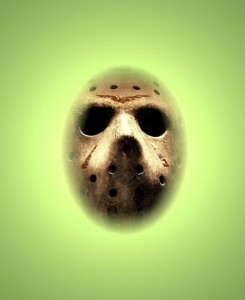
I am pleased and humbled that my essay contribution to Butcher Knives & Body Counts: Essays on the Formula, Frights, and Fun of the Slasher Film (Dark Scribe Press, forthcoming) was recently accepted. The essay is titled “Slasher Films As Modern Chaos Monster Myths.” The piece touches on the ancient chaos monster which was conceived of as a threat to the established order in Near Eastern cultures, and suggests that the unstoppable slasher may represent the chaos monster myth in the late modern cultural context. This project includes a number of contributors including Veteran Bram Stoker Award-winning novelist Jack Ketchum, Stoker and Lambda Literary Award-winner Lee Thomas, and Demon Theory scribe and pop culture essayist Stephen Graham Jones. See the Butcher Knives & Body Counts blog for further information on this project.
 A recent copy of my wife’s ENTERTAINMENT WEEKLY magazine for July 31, 2009 includes an article with information that I found surprising. The piece is titled “Horror Films…and the Women Who Love Them!” by Christine Spines.
 America seems doomed never to be able to move beyond its struggles with racism. Despite having elected an African-American president, and other great strides since the days of slavery and the Civil Rights era, charges of racism continue to haunt the country in pop culture. From Al Sharpton connecting race with Michael Jackson’s death, to Jessie Jackson making charges of racism with every possible national news story, to President Obama making the arrest of Professor Henry Gates a national issue through insinuations of police racial profiling in a prime time press conference, racism remains a heavy burden for the country.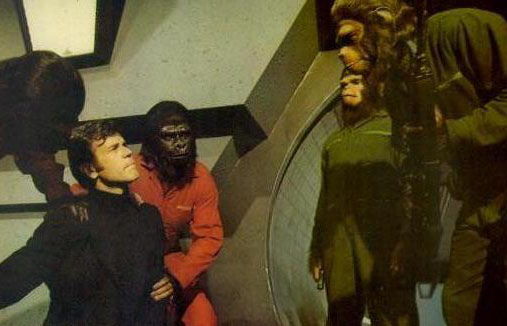
 A few weeks ago I was thumbing through the program for the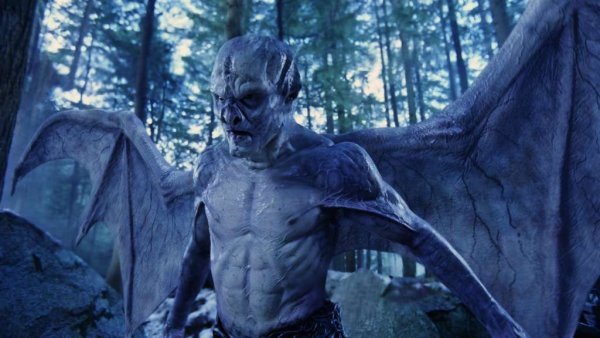
 It has been said that art imitates life, but with the symbiotic relationship between the two, and the strong influence of various facets of art on popular culture, many times the influence moves in the other direction. This was illustrated over the last week or so in which it could be said that life imitates sci fi art.
 In my last post I mentioned one of the treasures included in my anniversary gifts from my wife. With this post I share a few reflections on the second gift, The Legacy Collection of Frankenstein by Universal Pictures.
 Readers of TheoFantastique are encouraged to browse through the links included here. They are listed under two categories, the first being Enjoying the Fantastic that includes a number of websites that fans will enjoy. The second category is Exploring the Fantastic. This category is for those who want to go more deeply in understanding why various facets of the fantastic are so enjoyable for many people, and what such things tell us about ourselves. One of the resources in this latter category is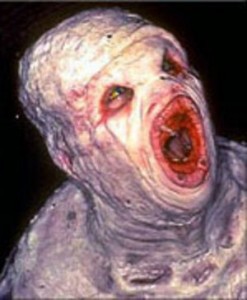
 I am pleased and humbled that my essay contribution to Butcher Knives & Body Counts: Essays on the Formula, Frights, and Fun of the Slasher Film (


