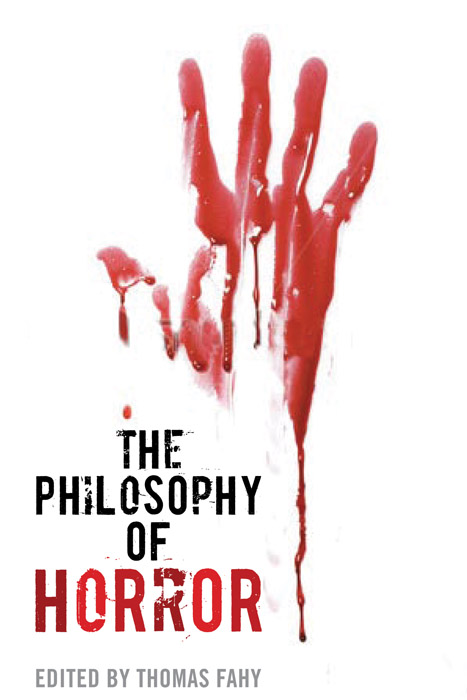
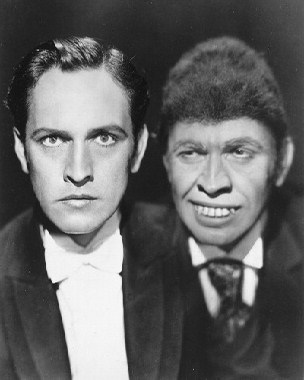
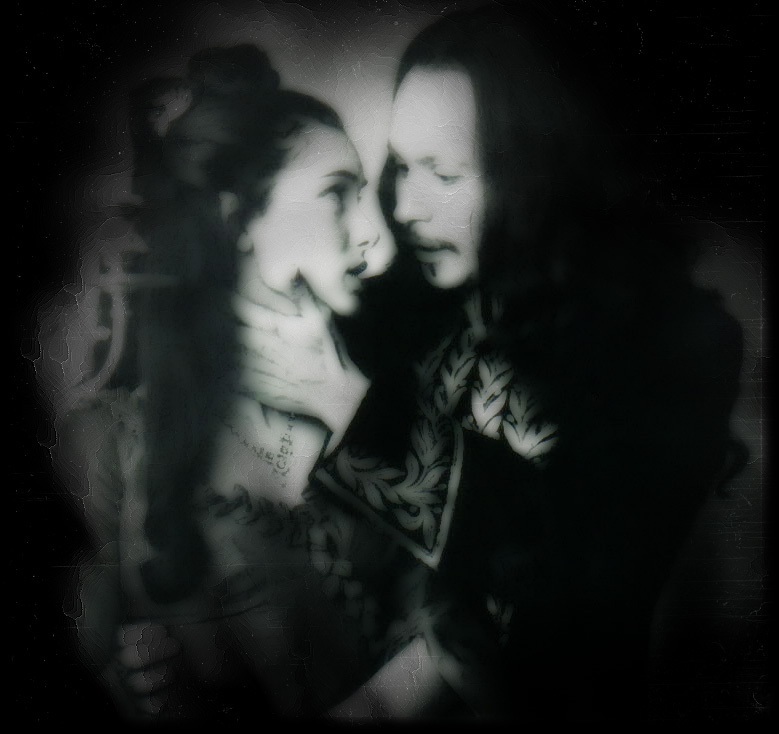
The publisher is hopeful that the multi-contributor volume will ready for publication this October, and this post includes a copy of the finalized cover by Deena Warner Designs. My contribution is a brief essay titled “Slasher Films as Modern Chaos Monster Myths.” My thesis is that just as ancient near eastern cultures feared the breakdown in the social order with resulting chaos as personified by various monstrous deities, so the killer in slasher films might be understood to fulfill this function for audiences in modern cultures who still fear chaos as our continued fascination with apocalyptic and post-apocalyptic indicates.
I came across an interesting item at the science fiction website io9 with a post titled “Teens pretending to be werewolves.” You will see the news report out of San Antonio, Texas accompanying this post that describes a group of teens who identify with werewolves and gather in groups they call packs. When I came across this item I wondered whether this had any relationship to the Otherkin, those individuals who consider themselves to be something other than human. Perhaps, or it may be something that overlaps with it without being a part of this interesting pop culture phenomenon. At any rate, it is an indication of the power of fantastic mythic creatures in identity formation in late modernity.
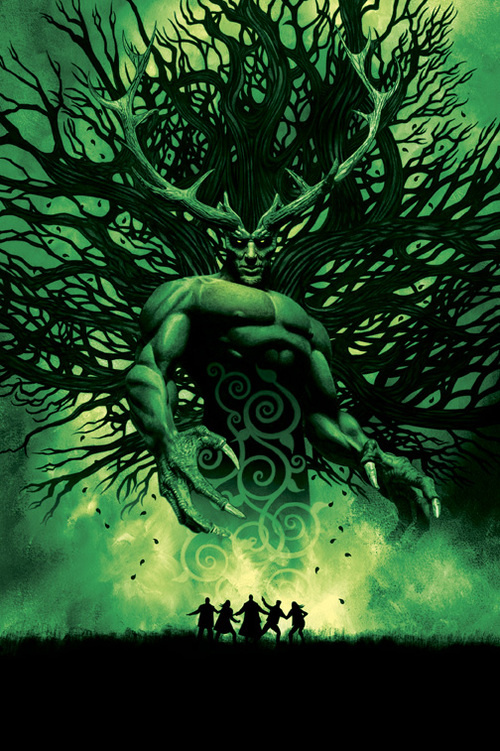
If nature gets really ticked off at humanity as a result of the damage to the Gulf Coast from the oil spill, in addition to other instances of environmental destruction, I wonder if the Green Man as a symbol of nature will rise in the form depicted in this illustration. Typically the Green Man is depicted in more benign ways in architecture, but this illustration may be closer to the mark in terms of the symbol interacting with contemporary issues.
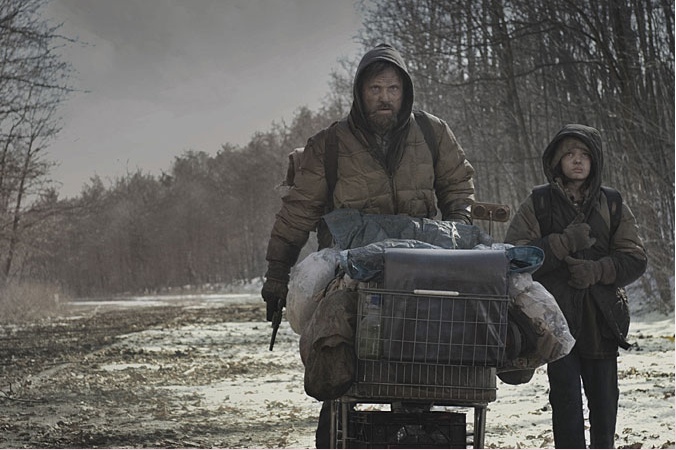
Last night I had the privilege of enjoying a few movies at home with my wife, one of which was The Road. This 2009 film is based on the novel by Cormac MCarthy, and it stars Viggo Mortensen, Kodi Smit-McKee, Charlize Theron, and Robert Duvall. It tells the story of the post-apocalyptic struggle of a father and young son as they make their way in a gray world of death and decay in a constant search for food, shelter, and the avoidance of the few remaining humans, many of whom band together in gangs which seek to brutalize and eventually cannibalize those unfortunate enough to cross their path.
Apocalyptic or post-apocalyptic is one of the popular elements of many films in our time, no doubt reflecting our growing anxieties and fears related to social and cultural breakdown where the enemy then becomes humanity attacking itself as a far greater threat than anything external. This is a basic premise of many horror films, from Night of the Living Dead to The Mist. The breakdown of social order threatens us in many forms, from the very real possibility of nuclear conflict to devastation of the environment and possible global economic collapse. How would people survive in a world after such calamities, and just as important, would it be enough to merely survive or would acts of compassion still have relevance in such settings? These are the pressing moral questions portrayed in this bleak and depressing yet captivating film. The viewer is drawn into the story not only through the very real possibilities of a 21st century world facing its own post-apocalyptic challenges, but also from moving dramatic performances from everyone involved, as well as from the scenery of this film done not through CGI, but from real locations of devastation including Mount St. Helens and the areas devastated by Hurricane Katrina.
This is a gripping moral drama, every bit as good as films like The Machinist, that can easily be missed by film fans as cinematic gems like this get lost amidst big budget studio productions. I would encourage those interested in pursuing this film further to read the review of my fellow Cinefantastique Online contributor, Peg Aloi. After that, go to wherever you rent your films to add something special to your Memorial Day weekend.
My most recent book review copy arrived in the form of The Philosophy of Horror (The University Press of Kentucky, 2010), edited by Thomas Fahy. The press release for the volume sets the stage for what is in store for the reader:
The Philosophy of Horror investigates the reasons that audiences continue to revisit horror and in the process explores the social and ethical underpinnings of some of American culture’s most well known horror television, film, and literature. Each essay takes a look at the ways in which horror inspires philosophical and cultural discussion, focusing on its ability to twist our notions of rationality and perception of nature. The volume specifically targets the horror genre’s exploration of morality, identity, cultural history, and aesthetics, effectively analyzing all that defines horror as a genre.
The collection examines both new and classic horror productions, exploring the cycle of anxiety, fear, and relief that creates the foundation for each emotion. Fahy acknowledges the repetition of certain narrative themes through the genre and emphasizes that horror’s subtle variations are part of its appeal; as the audience reads or watches the same narrative, they continue to discover new things about their own culture which may be humorous, disturbing, or insightful.
The book covers a broad span of time, beginning with horror’s unofficial inception in the 1800s and investigating the genre’s changing artistic and philosophical ideologies. For instance, Fahy and his contributors explore the use of violence in classics like The Shining, and take a look at the new torture-horror subgenre as seen in Saw and Hostel. They also study the emergence of new mediums within the genre, like horror television, and delve into the nuances of “campy horror.”
Philip Tallon is one of the contributors to The Philosophy of Horror who discusses the volume and his chapter within it below. Tallon received his PhD in theology at the University of St. Andrews, where he is a part of the Institute for Theology, Imagination, and the Arts. He has taught in a variety of university settings, including Asbury College and the University of St. Andrews in philosophy and theology. He is currently an adjunct faculty member at Asbury Theological Seminary.
TheoFantastique: Philip, thank you for coming here to discuss the new book and your contribution to it. At times in the past I’ve received criticism from those with a conservative religious orientation due to my interest in and exploration of horror. So let me ask you: what’s a nice religious person like you doing exploring a genre like this?
Philip Tallon: It’s a fair question. Sex and violence in movies certainly raise moral questions, not just about the ethics of what is depicted, but about whether we should even watch certain kinds of things. Christian recognize, rightly, that there can be harm done even in the viewing. What we watch does affect our hearts and minds. So we’re (hopefully) a bit intentional about the kind of entertainment we consume. Though it is interesting to note that sex and violence are not equally scandalous to the average Christian viewer. From what I’ve observed, most Christians will blush at the least bit of sex, but won’t blink at quite a lot of blood. So Mel Gibson’s hard-R movies get a pass but not a PG-13 movie with sexual content.
However, horror is usually the exception to this rule, because the violence is often so meaningless and extreme that it raises the hackles of Christians that don’t mind a lot of killing in, say, war movies. And, to be fair, a lot of horror films probably aren’t defensible as having any kind of redeeming value.
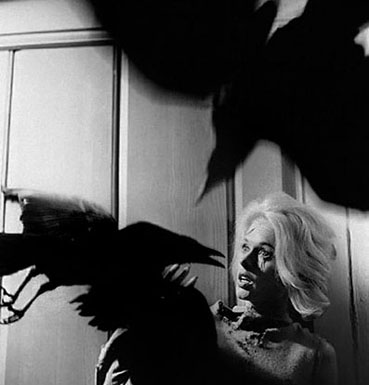
So I’m not a horror apologist, per se. If scary movies give you nightmares, by all means go see a comedy. But I do think there are lots of good horror films that are worth watching. And that horror as a whole is worth examining. On the film side, my interest grew out of my love of Hitchcock movies: Psycho and The Birds kind of led me into the world of horror as an art form. On a more philosophical level, though, I started to look at the problem of evil as a grad student, and this led to my interest in the Christian understanding of evil, which in turn led to interest in the way evil was depicted in the Western tradition. So, whatever other religious people might think of my macabre interest in the subject, for me, the road to horror was paved with entirely good intentions.
TheoFantastique: Before we discuss the specifics of your chapter I’d like to talk a little about the book in general. How did the editor come to assemble a group of scholars with the goal of exploring philosophical issues related to horror?
Philip Tallon: We’ll, like a lot of academic publications I saw a call for essays and submitted an abstract. I know that the editor, Thomas Fahy, has published a number of young adult horror novels as well as edited a load of philosophical books on popular subjects. He teaches philosophy and actually writes horror, so he’s a good person to head up the project.
TheoFantastique: As you begin your chapter you refer to horror as a genre in the context of art. In what ways do you see horror functioning in this way?
Philip Tallon: This is a good question, and maybe the one that I am most interested in. Horror, as I note in the essay, is the most unremittingly negative of all genres. By most accounts America’s film and fiction industry’s are almost pathologically optimistic in their artistic outlook on the world. We like stories about success, love, and victory. But horror films intentionally upset us throughout and very often end unhappily, or at least suggest that the resolution is only temporary. This seems to defy the typical pattern. So why do we like them?
In some ways, this is the same problem Aristotle dealt with when talking about tragedy. Watching a tragedy entails a certain kind of suffering (for example, in feeling sympathy for the protagonist’s downfall). So why do we like it? Roughly, Aristotle said that the experience was cathartic. It purged from us the emotions of pity and fear in a safe and somewhat pleasurable way. Horror is obviously similar, we get to exercise our fight or flight reflex in a pretty safe way. The most likely consequence of watching a really scary movie is losing some sleep, which is pretty mild. In this way, horror movies are sort of cinematic roller coasters. They get our heart racing and hit us on a visceral level. But if thrills are what we want, why not just watch “thrillers”? They deliver surprises and scares but don’t aim to unsettle us. So it seems like horror as a genre is aiming at more than just delivering scares.
TheoFantastique: In what ways does horror connect with its audience that differentiates it from other aspects of art?
Philip Tallon: Part of what I argued in my essay was that horror functions as a mirror that we hold up to ourselves. In presenting ourselves with a picture of radical evil (whether moral or metaphysical, serial killers or monsters), we can see a bit more of who we are and what the world is.
TheoFantastique: You discuss how horror critiques “two broad cultural movements.” The first is “Enlightenment Hubris.” How does horror bring this critique, and what examples might illustrate this?
Philip Tallon: “Broad” is the key word there. In a bit of bold philosophizing I painted the entire Enlightenment with a single moral brush, which is exactly the kind of thing I would mark my students down on their papers for. But the phenomenon I was talking about was more of the ambient utopianism and rationalism that seems to fill the air in Enlightenment thought. Horror, as Noel Carroll notes, grew up as a reaction to this rationalism and so punctures (helpfully, I think) any system that fails to take into account the human capacity for evil as a reality. Horror does this par excellence by rubbing our noses in the filthiest bits of the human soul: as Frankenstein or Picture of Dorian Gray or Dr. Jekyll and Mr. Hyde do, for instance. Very often in a horror film you have some skeptical scientist who doubts the existence of the monster, praises reason and rationality, and so is killed in the second act. Or often the scientists are villains. Not to pick on scientists, but in fiction they frequently stand in for the overly rationalistic attitude I think horror takes aim at.
TheoFantastique: You also note how horror critiques postmodernism and the moral order. How does horror raise the question of evil in ways that question postmodern assumptions about the natural order?
Philip Tallon: Again, broadly speaking, it seems to me that after the Enlightenment that the notion of any objective moral or natural order becomes much more suspect. So talking about objective value or human nature, if you talk about it among your average group of 20-somethings, will get you mostly blank stares. But a universe without a sense of real moral and even metaphysical order is ultimately a depressing idea. (By metaphysical I’m thinking of a classical conception of things have natures and ends, and those natures and ends fitting into a larger system). So I think that in an effort to re-establish order, we tell ourselves stories that show us there are still boundaries.Right and wrong still exist. Horror, in this way, by being so extreme in its presentation of evil, can be very reassuring. It shows us there is still an edge to the moral cliff by throwing us over it. This is the irony that Stephen King points out in his book on horror, Stephen King’s Danse Macabre, that while it may scandalize us with its transgressive use of gore, horror deep down holds very old-fashion values. I think King compares it to a Republican dressed in a monster suit.
In any case, whatever other flaws the genre may have, I think it does help us understand ourselves a little better. So I would recommend just about anyone who is interested in what art says about us thinking about schlocky horror films, not just Oscar contenders.
TheoFantastique: Philip, thank you again for your discussion here, for your contribution to the book, and for the book itself.
The Popular Culture and American Culture Associations are issuing their last call for papers on the topic of “Vampire Love:”
2010 Film & History Conference: Representations of Love in Film and Television, November 11-14, 2010, Hyatt Regency Milwaukee, www.uwosh.edu/filmandhistory
Third Round Deadline: June 1, 2010, AREA: Vampire Love.
The history of film is regularly punctuated by vampiric manifestations. From the earliest surviving film, 1922’s Nosferatu, Eine Symphonie des Grauens, to the currently popular Twilight saga, cinematic vampires, by virtue perhaps of nothing more than the physical intimacy of their feeding habits and the exchange of bodily fluids, have been viewed as sexual creatures. Or is there more to it? Does the nature of this sexualization change over time? Does Max Schreck’s Nosferatu devise a complex metaphor for venereal disease? Does Bela Lugosi represent American fears about “decadent” European sexuality or Western fears about sexually predacious male behavior? How might vampirism in 1936’s Dracula’s Daughter be viewed as an expression of lesbian desire? Do the Hammer Studios Dracula films of Christopher Lee reflect cultural anxieties about juvenile sexuality? Are the lesbian vampire films of the 1970s a symbol of homosexual liberation or an expression of male anxieties about uncontrolled female sexuality? Does the post-millennial increase in sympathetic depictions of vampirism reflect a liberalizing shift in
cultural attitudes toward the erotic—or to something else?
Topics might include the following:
The sexual overtones of lost vampire films of the Silent Era (there are at least 22)
Comparisons of vampiric bloodlust to contemporary depictions of sexual
desire
Portrayals of women as victims or as predators
Femme fatales and lesbian vampires
Vampire film as index of changing sexual attitudes
Depression vampires, Cold War vampires, 21st century vampires
The vampire’s bite as sexual liberation or as curse
Influences from (and upon) romance genres
Vampire as sexual opportunists
Vampires as idealized lovers
Comical romance and vampiric lust
Family love and vampire love
Please send your 200-word proposal by e-mail to the area chair:
Daniel Schnopp-Wyatt, School of Professional Counseling, Lindsey Wilson College, 210 Lindsey Wilson Street, Columbia, KY 42728, Email: daniel.schnopp-wyatt@lindseyspc.org (email submissions preferred)
Panel proposals for up to four presenters are also welcome, but each presenter must submit his or her own paper proposal. For updates and registration information about the upcoming meeting, see the Film & History website (www.uwosh.edu/filmandhistory).
My hope is that the submissions and presentations will help generate new understandings of this long-explored facet of vampires in film. I would also like to see future conferences explore this topic in the zombie. To my knowledge this has yet to be considered, and only one film comes to mind where the topic is raised, and that is, believe it or not, the comedy-horror Fido. If this is correct we might ask why various issues surrounding late modern conceptions of the body do or do not lend themselves well to the exploration of romance and sexuality in connection with the zombie, particularly since filmmakers continue to produce zombie films. Romero himself is a one-man zombie film production factory who often incorporates social and cultural commentary in his films. Why not romance and sexuality in regards to these monstrous icons? After all, they are us, void of reason and operating on instinct and dim memories of life. Aren’t romance and sexuality an important part of human nature in this regard?
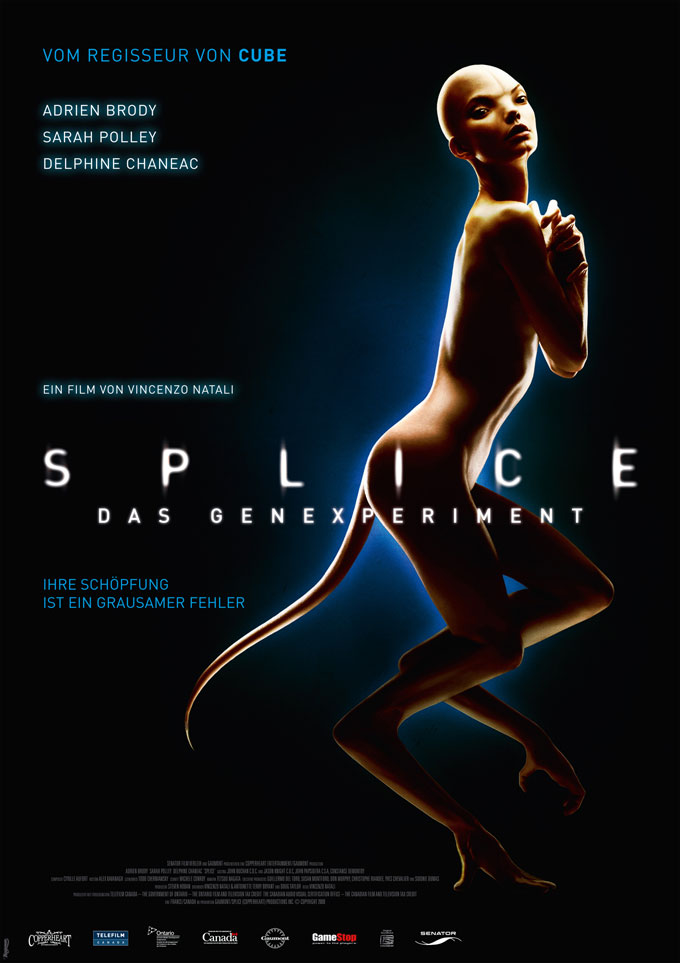
Today various news outlets are reporting that a scientist and his team have created the first synthetic life form, in this instance the genome of a bacterium. Coincidentally, advertisements have begun for Splice, a film that adds to the canon of horror and science fiction dealing with genetic manipulation. The film’s website includes the following synopsis:
Superstar genetic engineers Clive (Adrien Brody) and Elsa (Sarah Polley)
specialize in splicing DNA from different animals to create incredible new hybrids. Now they want to use human DNA in a hybrid that could revolutionize science and medicine. But when the pharmaceutical company that funds their research forbids it, Clive and Elsa secretly take their boldest experimentation underground—risking their careers by pushing the boundaries of science to serve their own curiosity and ambition. The result is Dren, an amazing, strangely beautiful creature of uncommon intelligence and an array of unexpected physical developments. At first, Dren exceeds their wildest dreams. But as she grows and learns at an accelerated rate, her existence threatens to become their worst nightmare.
Newsarama.com makes several interesting observations about the film. The first relates to its classification as a horror/science fiction hybrid. While I appreciate this attempt at putting this film into an appropriate category, nevertheless, several critics and scholars have noted that strict definitional boundaries between genres are difficult if not impossible to maintain. At any rate, Splice attempts to bring together elements found in both horror and science fiction regardless of the overlap or fusion.
Another interesting aspect of the film was the inspiration, in part, from a picture of the Vacanti Mouse, disturbing genetically engineered rodent which scientists used to attach and grow human ear tissue. The image of this mouse, and the genetic issues surrounding it, provided an important impetus for Splice.
Yet another interesting facet of the film comes from the names of the main characters, Clive and Elsa, taken from Colin Clive and Elsa Manchester, the actors in The Bride of Frankenstein. Of course, the Frankenstein novel and films have been extremely important mythically and symbolically in popular culture as it relates to genetic engineering. See Susan Tyler Hitchcock‘s Frankenstein: A Cultural History (W.W. Norton, 2007) for an overview and exploration of this.
The production notes for the film also reference an importance facet of this film related to mythic hybrids:
While focusing on the cutting edge of bio-engineering,..“Splice” also exposes a primal fantasy lying deep in the human psyche. “The notion of bonding with something not entirely human goes back to ancient myth. It has always existed and I was fascinated by the idea that those mythic concepts—mermaids, centaurs, chimeras, human hybrids that have tantalized people’s imaginations for thousands of years—could exist in the real world through new science. While ‘Splice’ is very much about the vanguard of genetic research, it’s also about things that have been with us since the beginning of time.”
Finally, Newsarama.com considers Splice a piece of “smart sci-fi,” in the same league as 9, District 9, and Moon. I hope this is the case. The film was well received at Sundance Film Festival, and Guillermo del Toro was one of the executive producers, so it does show promise. Science fiction and fantastic films fans will find out after Splice opens in theaters June 4.
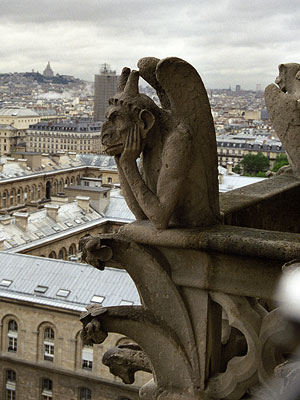
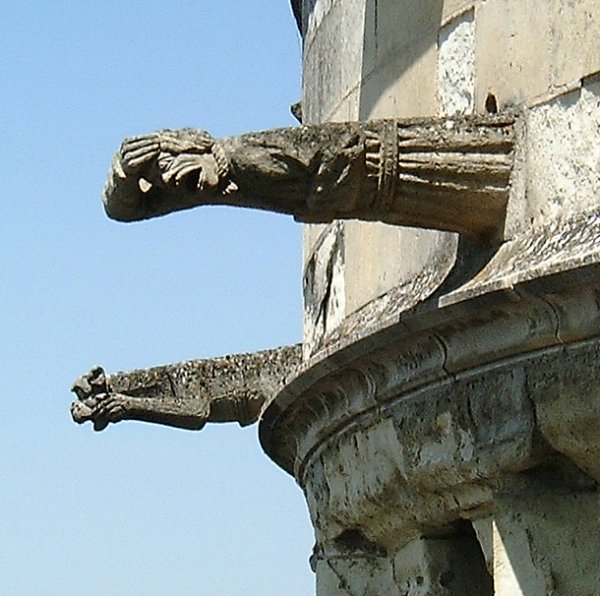
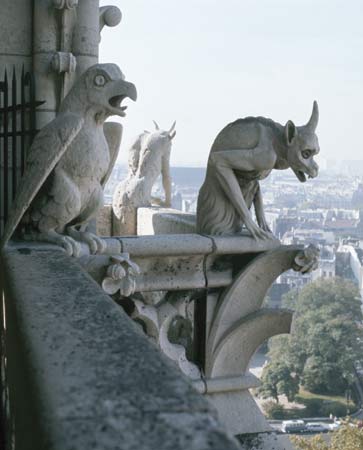
There are a few items in the fantastic that I am passionate about, and one of those happens to be gargoyles, or more specifically as we will see below, grotesques. Each Halloween season I try to add a few to my collection. They have been popular figures in culture for some time, including on contemporary pop culture. Consider not only gargoyles in connection with Halloween, but also that they have appeared as minor figures in Disney’s animated The Hunchback of Notre Dame, and they were part of their own animated television series by the name Gargoyles from 1994 to 1997.
In an attempt to stay current in folklore studies, he maintains membership in the American Folklore Society and the Royal Anthropological Institute. His articles have appeared in American, British and German journals.
Varner has traveled extensively to document his material, most notably to England, Wales, Ireland, Canada, Yucatan, and across the United States.
Following is our discussion of the gargoyle.
TheoFantastique: Gary, thanks for your willingness to discuss your research on this topic. How did you come to pursue the specific study of research topics like gargoyles within the disciplines of folklore and mythology studies?
Gary Varner: I had seen many gargoyles and grotesques on my trips to the British Isles and fell in love with their monstrous look. I found that in the United States people are so focused on their daily errands that we seldom look up! I made a point to do so and was amazed at how many of these ancient icons are present on our buildings as well. I decided to do some research to try to determine the historic basis for these objects and how they have been incorporated in contemporary society.
TheoFantastique: What is the etymological origin and meaning of “gargoyle,” and what types of historical and cultural influences lie behind our present conceptions of these artistic creations?
Gary Varner: The word “gargoyle” is derived from the French “gargouille” from the Latin “gurgula” meaning “throat” or “gullet.” Gargoyles serve a very utilitarian purpose as water spouts. In fact, only these features constitute a true gargoyle—anything else is considered a “grotesque.” What we consider the classic gargoyle today originated during the early 12th century CE, however decorative water spouts can be traced back to the days of ancient Rome, Egypt, Greece and the Etruscans. The images were different however. The ancient Greeks used the lion as the decoration rather than the dragon. The image of the classic gargoyle we have today began around 1150 CE near Paris, France. It seemed to have struck a cord among architects and the public alike as within a hundred years gargoyles appeared throughout Europe. Prior to the 12th century gargoyles appeared singularly. It wasn’t until the 12th century that they appeared in rows or “rookeries.”
TheoFantastique: How might we classify the gargoyle in terms of other symbolic and mythical creatures with which it might co-exist if you will?
Gary Varner: Gargoyles can take the form of most any real or mythical beast. I have seen them in the form of goats, dragons, lions, fish, eagles, parrots and in human form. Many times they have been carved in a whimsical fashion and many times in a very terrifying form. The old architects of the middle ages obviously had a very good sense of humor in that some of their gargoyles were caricatures of real people.
TheoFantastique: What types of forms do gargoyles take? How have artists expressed them?
Gary Varner: Since their function is to divert water from roof tops the form is somewhat restricted. However artistic renditions have taken any number of forms from the whimsical to the religious to the horrifying. Their forms have changed over time with the more grotesque forms originating during the Romanesque period and the more sedate and classical forms more common during earlier periods. Some have suggested that the gargoyle forms themselves represent Christian symbols of evil and sin but others believe that the forms actually represent the individual personalities of the stone carvers and their experiences, values and belief systems. Many of them more than likely had roots in paganism and brought many pagan traditions into their art.
TheoFantastique: In what types of buildings and structures are gargoyles found?
Gary Varner: Originally, gargoyles were created for ecclesiastical structures. This may be simply because they were the tallest buildings with the greatest need for water runoff. Why they suddenly appeared in the 12th century on churches in that particular form is unknown. A shift in their usage occurred in the 16th century when they were placed on secular buildings and the homes of the wealthy throughout Europe. Today they can still be found on churches and cathedrals but also on apartment buildings and commercial structures. Geographically the gargoyle appears where heavy European influence has been felt such as in New York where the Irish settled and across the Midwest where Germanic immigration occurred. That said I have seen them in San Diego, Sacramento and San Francisco as well as a number of small California municipalities. Perhaps the greatest concentration of them are in Pittsburgh, Pennsylvania where many government, church and commercial buildings are adorned with these images carved between 1880 and 1905. For some reason this time period seems to have been responsible for an explosion of creativity with both gargoyles and grotesques showing up in American architecture.
TheoFantastique: What is the meaning or meanings of their symbolism in different cultures and periods of history?
Gary Varner: I don’t believe that a “meaning” can be tied to any of these forms. They represent the traditions of the stone carver during the 12th century and they continued to the present day as a symbol of the past that we have come to love as a culture. Many of these artistic endeavors obviously have a Celtic theme. I have seen a gargoyle at Mission San Luis Rey in Southern California dating to 1798 that has a striking Celtic flavor. They represent the cultural identity of the artisan. Many of them may have been inspired by Christian bestiaries and were accepted by the priests as a religious symbol or fable.
TheoFantastique: How, when and why did gargoyles come to be associated with Christian churches and cathedrals?
Gary Varner: I believe this occurred because the first were installed on Gothic cathedrals perhaps as Christian “spiritual scarecrows” to warn evil away from the church building. There has been some speculation as well that they were placed on churches to entice the “heathen” population to enter and be comfortable with pagan images in close proximity. This is one mystery that may never be solved though.
TheoFantastique: Is there any connection between the gargoyle and the Green Men, and can you summarize some of the background of this symbol?
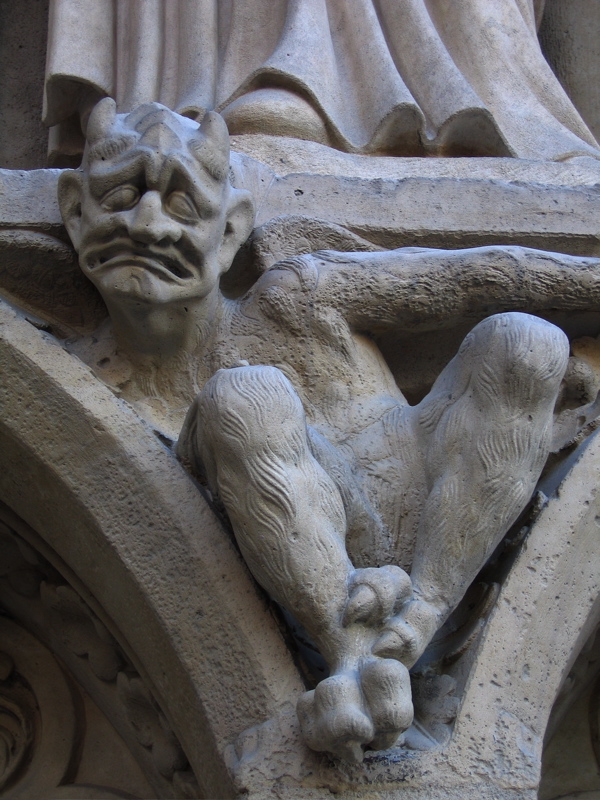
Gary Varner: The Green Man could be a gargoyle if it had a water spout but I don’t believe any of the ancient Green Man forms do. Green Men are grotesques rather than gargoyles. A “grotesque” may have many of the design elements of the gargoyle but they have taken a totally divergent path. One scholar noted “Grotesque art, then, expresses the repressed.” Many grotesques such as the legendary sheela-na-gig, a grotesque female figure which rudely exposes its genitalia, are also found on ancient church edifices from the 8th century into the Christian era. Like the gargoyles the sheela’s became common during the 12th century and may have served as a warning against sexual sin. The Green Man, to the contrary, is an ancient symbol of rebirth, renewal and fertility. They are also located in many Christian churches across Europe. Perhaps the largest concentration are in Rosslyn Chapel in Scotland, long known for its Templar ties.
TheoFantastique: Gary, thank you so much for your research and writing on this topic, and for your willingness to discuss it here.
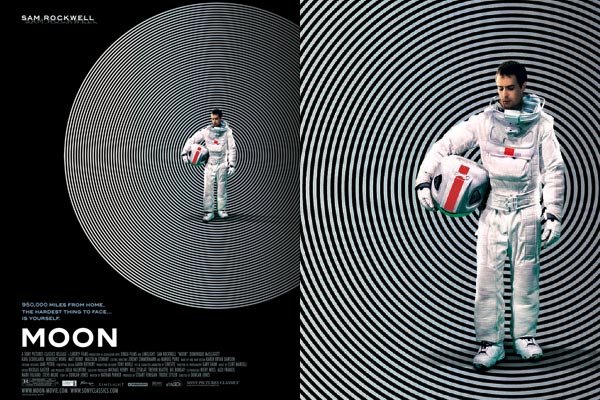
Every once in a while the process of working through a lot of cinema results in the finding of a gem that makes it all worth while. This is most certainly the case with MOON (2009), an independent science fiction film directed by Duncan Jones.
MOON is set in the unspecified near future where Helium-3 mined from the dark side of the moon provides much of the world’s energy supplies. Astronaut Sam Bell (played by Sam Rockwell) is the lone worker on the moon’s space station who is completing a three year tour of duty for a major corporation, Lunar Industries. Sam receives some assistance from a robot named GERTY (voiced by Kevin Spacey) who monitors his health, cooks his meals, and communicates with the corporation on earth. But while Sam is greatly looking forward to his soon return to earth, especially since a broken satellite has made live communication to his wife impossible, he begins to experience headaches, hallucinations, and eventually starts to question his own sanity. After a near-fatal accident in a lunar rover while checking on the Helium-3 harvester, Sam awakens with little memory of the event, and finds a duplicate of himself on the station with him. This scenario sets the stage for a gripping process of self-discovery for Sam.
MOON is a great piece of science fiction. Those used to the stereotypical conventions of the genre may be disappointed to find them missing here, but they are more than made up for with a moving dramatic performance by Rockwell, and a story with a bit of mystery to it where the viewer (along with Sam himself) is not sure initially whether Sam is losing his mind or some other more sinister scenario explains the strange occurrences on the lunar base. The film also includes a few interesting visuals, not of hi-tech special effects depicting space ships in battle, but rather through panoramic shots of the barren moon’s surface (space shots reminiscent of 2001) serving as the setting for the small rover and harvester, visually communicating and reinforcing the sense of loneliness experienced by Sam. Beyond the psychological angst explored in MOON the film also incorporates pressing contemporary issues, such as the need for a growing global energy supply, concerns over large corporations (particularly those associated with energy production), memory and identity, and ethical issues surrounding cloning.
MOON is an intelligent piece of science fiction (demonstrating again that the genre is suited to good storytelling and film making) that should have received greater screening presence in its release. Hopefully word will spread through reviewers now that the film is available on DVD which will result in greater exposure for this piece. In my view it is in a category that places it among the ranks of some of the best science fiction produced. At a time when some are wondering whether contemporary science fiction has surpassed horror, with films like MOON and District 9 it seems especially strong that this is indeed the case. If you’re a serious science fiction fan rent MOON , or better yet, purchase it and add it to your film collection.
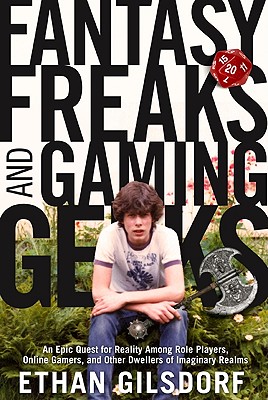
“Gandalf’s got nothing on Ethan Gilsdorf, except for maybe the monster white beard. In his new book, Fantasy Freaks and Gaming Geeks, Gilsdorf…offers an epic quest for reality within a realm of magic.” – Boston Globe
“Imagine this: Lord of the Rings meets Jack Kerouac’s On the Road.” – National Public Radio’s Around and About
“What does it mean to be a geek?…Freaks and Gaming Geeks tackles that question with strength and dexterity…part personal odyssey, part medieval mid-life crisis, and part wide-ranging survey of all things freaky and geeky. …playful. …funny and poignant. …It’s a fun ride and it poses a question that goes to the very heart of fantasy, namely: What does the urge to become someone else tell us about ourselves?” – Huffington Post
“Quite potent…heartbreaking…emotionally affecting …” – Washington Monthly
“Master geek theater.” – The Times of Trenton
Gilsdorf and his publisher have made a copy of the book available as a promotional item for TheoFantastique. Those interested in being part of the raffle for the volume can submit their name and address to johnm@theofantastique.com for a drawing on May 31. The winner will be notified via email.
Revision: Since the original posting of this announcement author Ethan Gilsdorf has offered to make a personally inscribed and autographed copy available to the winner.
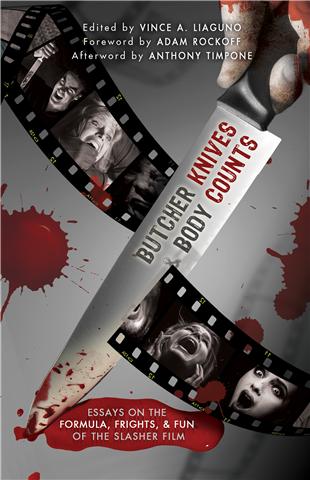 I recently received an update on the book Butcher Knives & Body Counts: Essays on the Formula, Frights and Fun of the Slasher Film edited by Vince Liaguno and a publication of Dark Scribe Press.