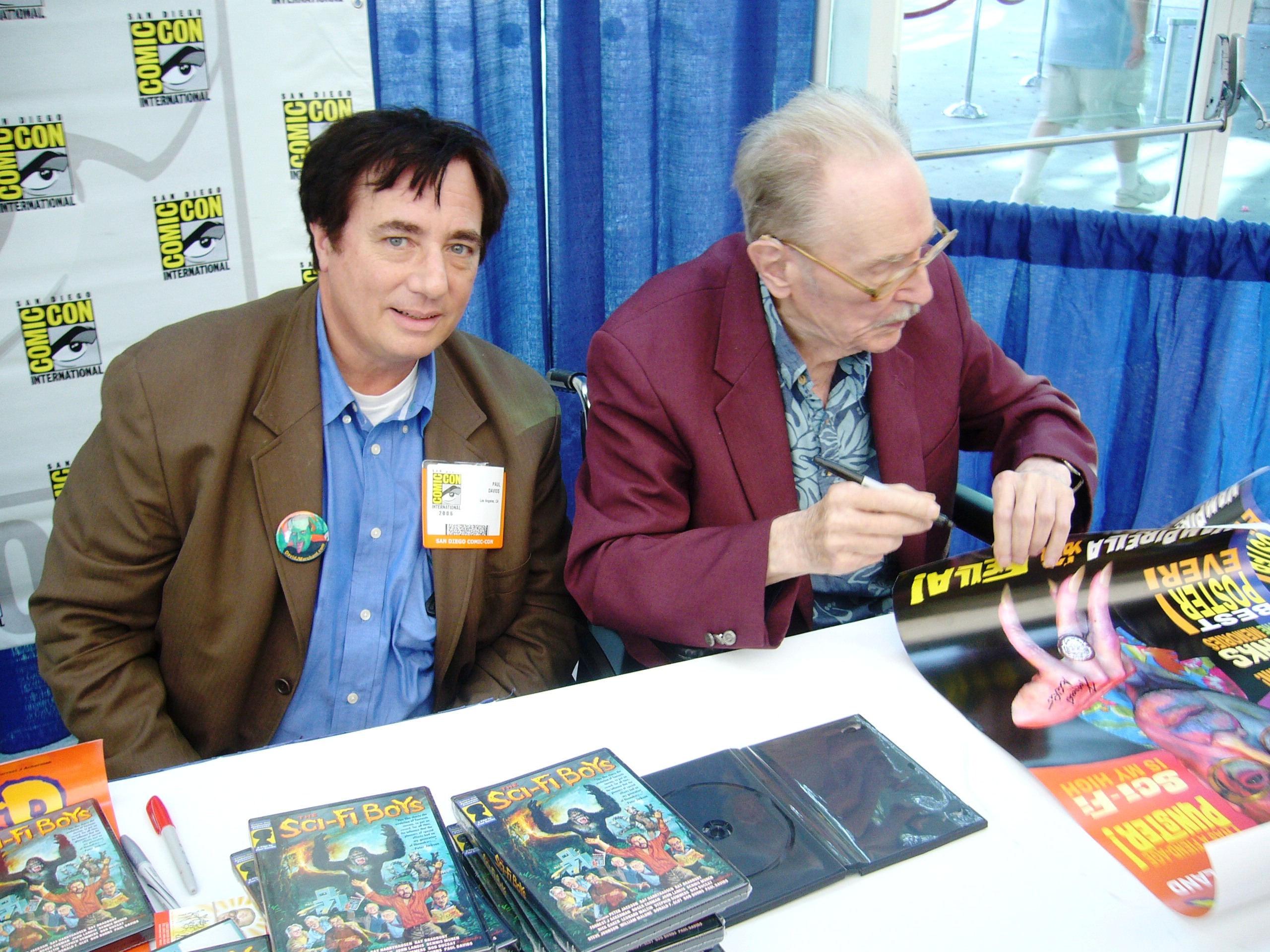
A while ago I came across an article online by Paul Davids from FATE magazine (Sep.-Oct. 2010) titled “THE ACKERMAN ENIGMA: The Strange Case of Forrest J. Ackerman.” The article brought together a number of elements of interest, from the late horror culture icon Forrest J. Ackerman to the paranormal. Since I had interacted with Davids previously for his fine work on THE SCI-FI BOYS documentary, I got in touch with him in order to discuss the subject matter related to his article in FATE.
Paul Davids’ career in film and TV took off when he was the production coordinator for 79 episodes of the original TRANSFORMERS shows and wrote several of the episodes. He is co-author (with his wife, Hollace) of six STAR WARS sequel books for Lucasfilm. The many films (including films for television) he has produced and/or directed include: ROSWELL, TIMOTHY LEARY’S DEAD, STARRY NIGHT, THE ARTIST & THE SHAMAN, THE SCI-FI BOYS, JESUS IN INDIA and BEFORE WE SAY GOODBYE. He also has writing credits on all those films plus his first feature as screenwriter, called SHE DANCES ALONE. Four of his films are in release to either DVD or TV through Universal Pictures Home Entertainment or Universal Pictures International TV Division. He is in the process of completing THE LIFE AFTER DEATH PROJECT. Paul Davids is also a noted artist, and some of his works can be seen at his online gallery at www.pauldavids.com. Other website to explore his work include www.starrynightmovie.com, www.jesus-in-india-the-movie.com and www.beforewesaygoodbyethemovie.com A member of the Writers Guild of America and the Producers Guild of America, Paul is also a member of the Magic Castle in Hollywood, and he is now also creating comedy music. His song “WE LOVE YOU, WE HATE YOU,” was featured as the start-off song on Dr. Demento’s program of March 19th (see www.drdemento.com) and he hopes to soon emerge as a rap singer with some very funny, very contemporary rap music.
TheoFantastique: Paul, thanks again for discussing your forthcoming documentary as it touches on Forrest J. Ackerman and your paranormal experiences. To set the stage, can you describe how you came to know Forry?
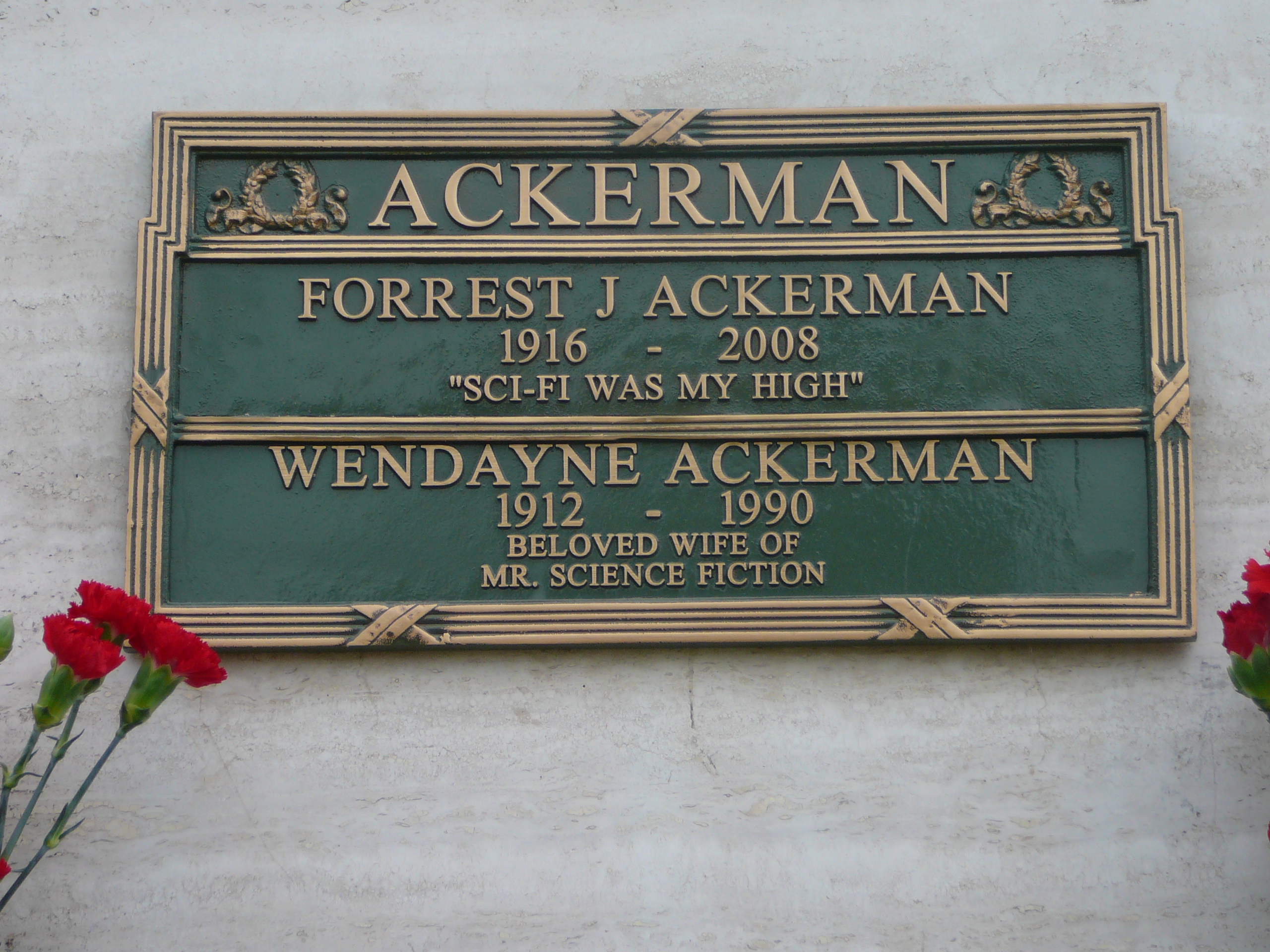
Paul Davids: In issue #24 of FAMOUS MONSTERS OF FILMLAND in August of 1963, Forry announced his Project 6000, a cross-country trip from Los Angeles to New York to attend the World Science-Fiction Convention (he had only missed one convention in 1951, when his father passed away and he had to turn back to L.A. while he was en route to New Orleans). As part of that journey, Forry came to Washington, D.C. (joined by his publisher Jim Warren from Philadelphia) and met fans there in a hotel. I showed up with a friend, Jeff Tinsley, who I’d been making amateur monsters movies with for a couple of years using stop-motion animation techniques. I met Forry and Jim Warren at that hotel on a Saturday, and they invited me back for a Sunday morning fan gathering there and suggested I bring some of my amateur films and a projector. It was a thrill to show my work to them that Sunday. The Washington Evening Star had recently published a full-page in their Teen section on our amateur movies, and so Forry invited me to submit photos and material about our amateur efforts to FM. We were rewarded with a two-page spread in issue #27 of FM, followed later by photos and more in issue #35 when we received an Honorable Mention Award in the FM contest for our version of “Siegfried Saves Metropolis” based on Forry’s screenplay. Then in 1969, upon graduating from Princeton University, I set out cross-country myself, having been accepted as one of the first Fellows at the American Film Institute Center for Advanced Film Studies in Beverly Hills. I looked up Forry at his Ackermansion soon after I arrived and visited him many times. In 1970 I invited both Forry and George Pal together to the AFI to give a seminar, and Forry wrote about that wonderful day in FM #68. Our relationship grew through the years. He invited me to write (with photo byline) for MONSTERLAND and even invited me and my wife, Hollace, to the Ackermansion on Glendower to join him and Wendayne for dinner with Ray and Diana Harryhausen and Zsoka Pal (George Pal’s widow) in 1986, the year our FIRES OF PELE book came out (Forry wrote the Foreword for our first book). When Hollace and I began writing STAR WARS sequel books, we dedicated PROPHETS OF THE DARK SIDE to Forry. Forry saw all of the films I made during his lifetime and especially appreciated STARRY NIGHT. He went to see TIMOTHY LEARY’S DEAD with me in a theater in L.A. And then, in 2002, I began working on THE SCI-FI BOYS, which dealt above all with Forry’s influence on the generations who followed him and who became professionals in the worlds of imagi-movie productions and special effects. In 2003 I filmed him at George Pal’s grave re-reading the eulogy for Pal he had presented at George Pal’s funeral in May of 1980 (I had been there at the funeral to hear him that day), and that became a scene in THE SCI-FI BOYS. When the film was completed and accepted for distribution by Universal Pictures for DVD and television, Forry came to a Universal Pictures Golden Globe party accompanied by his great friend, assistant and caretaker Joe Moe. There’s a well-known photo from that evening with Peter Jackson, Forry, Rick Baker, Basil Gogos, Bob Burns and me all together (the photo is on the back of THE SCI-FI BOYS DVD box and is in the book of Basil Gogo’s art). The pinnacle of my years of friendship with Forry was in the spring of 2006 when Universal Pictures showed THE SCI-FI BOYS (edited by my son Scott M. Davids) at the Egyptian Theater in a double-feature with Peter Jackson’s short about SKULL ISLAND (which is on the DVD of Jackson’s KING KONG). Forry spoke at a panel discussion there with me, Rick Baker, effects designer Steve Johnson and Basil Gogos. Forry told Joe Moe upon departing, “Well, I guess it doesn’t get any better than this. This may be the best night of my life.” I attended many of Forry’s birthday parties and we were friends to his death, December 4, 2008. The last photo of us together was taken at his Acker Mini-mansion on Halloween of 2008.
TheoFantastique: In your article in FATE you note that Forry was a skeptic, but you and Joe Moe had some curious paranormal experiences that makes you wonder. Can you summarize some of this?
Paul Davids: First, some background on Forry’s skepticism. He was an avowed atheist, having had negative experiences with organized religion while growing up. When his brother Alden was killed in the Battle of the Bulge in World War II, his feelings of the meaningless of his brother’s death, combined with the horrible atrocities of that war, further estranged him from any beliefs in a Supreme Being. Forry rejected belief in ghosts, the afterlife, the supernatural and UFO’s (and UFO’s were always a topic of dispute between us). This was ironic because he was a world authority on all such things in the world of fiction, but he felt fiction and only fiction was where those topics belonged. Nevertheless, he did write one short story about a young fan of Lon Chaney who dies and goes to heaven and talks to God. To friends, he told the story frequently of a Ouija Board incident which seemed to tell his grandfather to undertake the design of the Bradbury Building in Los Angeles – and he kept the evidence an the “automatic writing” message on display. There are other such incidents reported in Deborah Painter’s book, FORRY. Forry frequently asserted, however, that he assumed that when those who had known him personally were all deceased, he would be completely forgotten, and that except for his writings, which he thought wouldn’t survive far into the future, it would be as though he had never been born. And he thought he would have no consciousness to ever know he had been alive. After Forry passed away, there were very strange things that happened to a group of people. It started months after his passing, the weekend of the memorial for him at the Egyptian Theater in Hollywood in March, 2009. The first two to have strange experiences were Mike MacDonald and Ian Johnston, two Canadian documentary filmmakers who made a film called FAMOUS MONSTER: FORREST J ACKERMAN. They have written about what happened, how after visiting Forry’s crypt the Ackerman name popped up on their computer as code and a second computer burst out with a voice as if it was a message. Then Joe Moe had a lucid dream of Forry coming into his bedroom and talking to him about the memorial. The dream seemed like a real experiences and the things Forry said to Joe Moe seemed to really be from Forry. I did not know of Joe’s incident when, a few days later, one of the strangest incidents of my life occurred. I was alone in our vacation house in Santa Fe, and while I was out of a room for just five minutes, the first page of a document of mine was changed by some moist ink that suddenly appeared, and there was no one there who could have changed it. Four words were precisely blacked out, with two different levels of opaqueness. Everyone who sees it says it looks completely deliberate and targeted, that it was no accident. The blackout seemed to indicate the message: “Spoke to Joe Moe.” I have written about the incident in FATE magazine, and also at Whitley Strieber’s Unknown Country website. It was as if Forry was confirming for me, to tell Joe, that he really did speak to Joe Moe, that Joe’s experience was not a dream.
TheoFantastique: You even had some scientific testing done to apply to this. How does that apply and add to the mystery?
Paul Davids: I spent over six months working with chemists at two universities to try to get to the bottom of the mystery about the ink on my document. The Chairman of the Chemistry Department at Indiana University studied it with gas chromatography, the electron microscope and other instrumentation. A chemistry professor at New Jersey University studied it using mass spectrometry. Trying to duplicate the opaque ink became a class project at New Jersey University. After exhaustive tests of many kinds, both professors could not duplicate this and felt that the reasons for the chemistry of the ink were not possible for them to explain using all their extensive knowledge of paints, inks and solvents. Furthermore, some strange things happened to them while they were conducting the studies. This included a stack of pages related to the experiment being inexplicably scattered off a chair across the floor of a room while no one was present. Later, I discovered that the current tenants of what used to be the Ackermansion on Glendower in Los Angeles feel that the house is haunted. Without knowing what happened regarding the scientists I worked with, they reported incidents of pages being scattered onto the floor (from a music stand) repeatedly, in much the same way. The shadows of a man have been seen at night on the wall of what used to be Forry’s office, and the shadows always disappear without anyone being present. This is a complex case and there are now many other unexplained incidents that have happened relating to it. Two years before Forry passed away he signed an autograph for me in FAMOUS MONSTERS right above a line of text that reads: “The invisible ink men strike again.” There is also a painting (by L. J. Dopp) showing the exact minute of his death that was made four years before he died.
TheoFantastique: Why did you decide to make this the subject of your forthcoming documentary THE LIFE AFTER DEATH PROJECT?
Paul Davids: I made the decision to begin documenting all of this after the incident with the ink occurred. I filmed at the chemistry labs that tested it. This led to compiling interviews with many authors and researchers on the topic of life after death. Whitley Strieber’s wife, Anne, came aboard as an executive producer, along with my wife, Hollace Davids. The project kept expanding so that it now has a long list of notables and deals with many aspects of apparent communication from those who are deceased. The film does not deal with certain aspects of life after death, such as reincarnation, and it only touches briefly on near-death experience. It does deal with spiritual mediums, apports, photographic evidence of communication from deceased persons and other strange experiences that resemble what happened to me. If I was ever a skeptic about spiritualism and afterlife communication, I can say that I now think it is a very real phenomenon, and I think it seems very real that the group of us, including author Deborah Painter, really did hear from Forry after he was gone. Perhaps he is not a skeptic about the afterlife now!
TheoFantastique: Where will interested readers be able to find out more about this film when it is near release?
Paul Davids: It is too early to say when it will be ready. It is in an advanced stage of editing. I have tentatively agreed to screen it in October at the ASPE Conference in Taos (ASPE stands for Alliance Studying Paranormal Experiences), provided it is finished by then (it should be). I gave a lecture at the last ASPE about the strange case of Forrest J Ackerman and some of these experiences. My films usually make it to TV and DVD and sometimes play in some festivals. THE SCI-FI BOYS (available on DVD) played on the SyFy Channel and the Sundance Channel. ROSWELL was a Showtime movie, and JESUS IN INDIA played on the Sundance Channel. My latest film, BEFORE WE SAY GOODBYE (www.beforewesaygoodbyethemovie.com) now has a deal to play in Spanish on TV and throughout Latin America and South America, but we do not have a deal for an English language broadcast in the U.S. yet. Hopefully that will come. Interestingly that film has a life after death theme too, with a Latino cast. It deals in part with the story of the Virgin of Guadalupe, and part of the film was made at the Basilica of the Virgin of Guadalupe in Mexico where the famous tilma of St. Juan Diego with its unexplained image of the Virgin has been on display since the 1500’s. The DVD is available at the movie’s website. As for THE LIFE AFTER DEATH PROJECT, when it is available it will surely be announced at www.pauldavids.com and you will start to see publicity for it, including in FAMOUS MONSTERS magazine, which is being published these days by publisher Philip Kim.
TheoFantastique: Paul, thanks again for letting us now about your new film, and for sharing your experiences with Forrest J. Ackerman in both is mortal life, and perhaps beyond. Maybe Dr. Acula will have the last laugh after all, even beyond his own expectations.
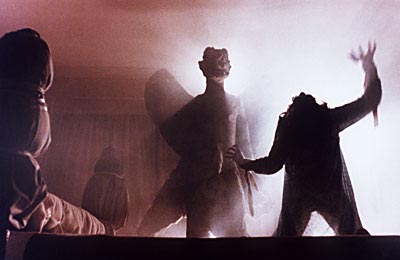
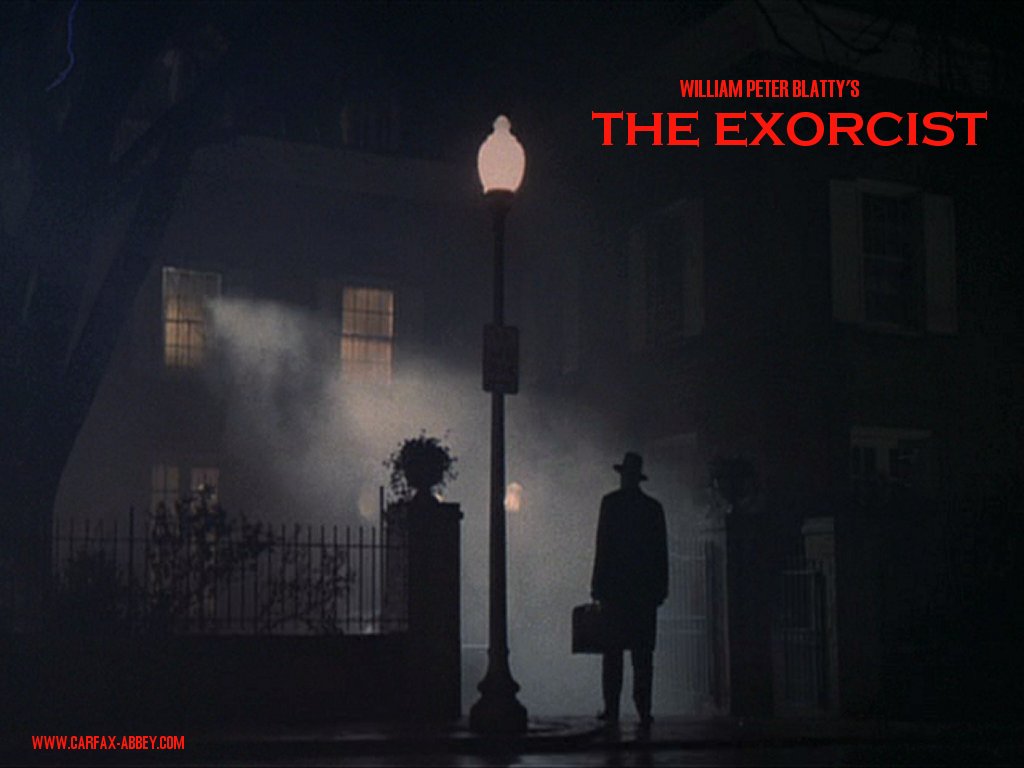
An article that ran in The Telegraph on 7 April titled “Rise in demand for exorcism recalls horror trend,” caught my attention, not only for its connection of concerns over the demonic and contemporary horror films, but also for some of the provocative claims it made. Looking back at The Exorcist (1973) and an increase in the performance of the rite of exorcism by the Roman Catholic Church that came as a result of the novel and film, the article draws similar conclusions in regards to the present through the influence of the Internet and perhaps through contemporary cinema:
That trend is now being repeated thanks to the internet according to the Catholic Church. A surge in Satanism fuelled by the web has led to a sharp rise in the demand for exorcists, as information on Devil-worshipping and the occult is at the surfer’s fingertips.
As a result exorcism is now the subject of a six-day conference being held this week at the Regina Apostolorum Pontifical University in Rome, under the authority of the Vatican.
These claims raised red flags for myself and others, and in order to explore this topic I turn to a researcher and colleague, Jesper Aagaard Peterson. Petersen is a Research Fellow at the Dept. of Archaeology and Religious Studies, Norwegian University of Science and Technology. He has published extensively on modern Satanism and is currently finishing his dissertation provisionally entitled “Between Darwin and the Devil: Issues of Articulation and Legitimacy in Contemporary Religious Satanism“.
TheoFantastique: Jesper, thank you for making some time to discuss your research as it relates to current events in popular culture. As you know, an article in The Telegraph in the UK reported on an alleged rise in Satanism, and according to the Roman Catholic Church, a corresponding need for more exorcists as a response to alleged increases in possession. There is a lot to unpack here, but let’s look at the various elements of significance here. To begin, what type of research have you done on Satanism, can you define Satanism in terms of your research, and has there indeed been any kind of rise in Satanism as the article reports?
Jesper Aagaard Petersen: My research focuses on modern religious Satanism, a heterogeneous assortment of individuals, groups and networks using Satan and other mythological beings as a short-hand for their work on the Left-Hand path. This manifestation of Satanism is recent, only gaining ground and formalization during the occult revival of the 1960s; the most well-known exemplar is of course Anton LaVey’s Church of Satan. Even so, there are many other interpretations alongside LaVey’s – some are atheist and materialist just like the Church, others are explicitly theist, although it often takes a Gnostic or esoteric form rather than a direct mimesis of Christian stereotypes. And there are positions in between. I tend to distinguish ‘rational’ and ‘esoteric’ Satanism as fully developed, autonomous and organized types of religious Satanism. These types should in turn be separated from ‘reactive’ Satanism, which is the (often deeply meaningful, yet fragmented) Satanism of the pact, the teenage bedroom and the black metal concert, and from various demonological discourses on the satanic throughout history.
My studies are primarily based on texts, websites and message boards, but I have complemented these sources with both ethnographic, sociological, and media work. What I do is study the discourses and practices of religious groups through the resources and strategies they bring into the struggle to actually define Satanism. As such, I see contemporary Satanism as a satanic milieu of people, organizations, ideas, practices, and channels for communication. This satanic milieu is both separate from and in dialogue with modern occulture and the wider cultural narratives on the satanic. It is distinct, because modern religious Satanism is about the self and not some diabolical ‘other’. The mythological beings used in this identity work have been disembedded from their original context and ‘de-otherized’ (to use Joseph Laycock’s term). Satan and Satanism are no longer solely defined within a Christian context. As such, ‘Satanist’ has followed the same trajectory as ‘witch’, ‘vampire’, ‘pagan, and ‘queer’, to name a few. Rather than positions of (dangerous) inversion, they are now hybrid roles, used within both cultural narratives of the other and as identities for the self. On the other hand, we should acknowledge some dialogue as well. First of all, dark occulture and cultural narratives do work as pathways to and from the satanic milieu, as Satanists engage with both subcultural and mainstream representations and take what they resonate with. Conversely, real Satanists are not totally below the mainstream radar, even if the media representations are sketchy at best and work more along the lines of freak show exhibits. Although I can say with confidence that theories of slippery slopes are mistaken, these relations thus make popular culture one important socialization ‘stage’ for modern Satanists.
“Little Satanist,” by watchtheicemelt, Deviant Art
Regarding the rise of Satanism, that depends on how you define it. The article you mention calls it a “surge” and a “revival”. It is true that the 1990s and early 2000s saw an increase of interest in Satanism alongside Witchcraft, Neopaganism, and other religious currents with roots in esotericism and occultism. This has to do with the general re-enchantment of the West in the past 50 years (an enchantment that never really went away, actually, but that is another story), which has developed in dialogue with popular media. It is also true that Satanism is more visible and more accessible because of the Internet, and that it flourishes on the de-regulated arenas the Internet provides. On the other hand, membership figures are hard to come by, and should be seen in relation to degrees of affiliation – a majority of witches or Satanists are tourists or dabblers, and only a small minority affiliate with a group and/or develop a long-term engagement. It is likely that more people are attracted to Satanism than before, and they are more visible today, but actual members still amount to thousands and not millions. In any case, where I differ from the article’s conclusion is in the effect of mediated religion on susceptible youth. Watching a movie, accessing a website or participating in a discussion forum does not automatically make you a Satanist, and it certainly does not make you possessed.
TheoFantastique: Is there any reason to make a connection between Satanism in its various forms and the occult and the phenomenon of possession?
Jesper Aagaard Petersen: Well, the simple answer is no. The article in The Telegraph caught my eye, as it fits the recurrent dialectic between real satanic groups on the one hand and anti-satanic discourse on the other, a dialectic covered by for example Phil Jenkins in Mystics and Messiahs (2000). Satanism as a religious option is definitely more visible and has been so since the 1960s witchcraft revival, in no small part because of LaVey’s Satanic Bible and the high media profile of the Church, as well as the meteoric rise of the Internet. On the other hand, the satanic panic and ritual abuse cases of the 1980s and early 1990s did much to reposition anti-satanic discourses of evil as the default interpretation of Satanism. Even though the religious (mainly Evangelical and to a lesser degree Catholic) basis of the moral panic has been exposed, and the secular madness of the media, law enforcement, judicial, education, and social care systems has been criticized extensively, conspiracy and scapegoating remains as a cultural resource. Satanism remains associated with evil in popular discourse and culture.
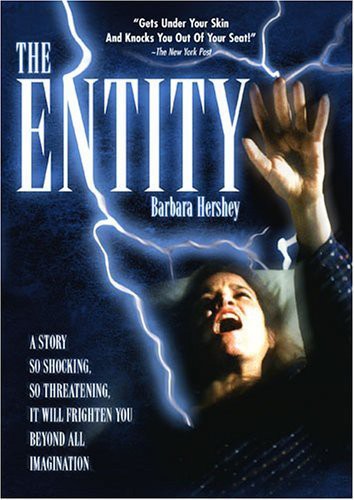
That is why I have a problem with the phrase “rise in Satanism” and “occult” in the article. The connotations become conspiratorial and not statistical. The word occult has a specific meaning within Religious Studies tied to the etymology of the word, as hidden. But in popular parlance and Catholic research it has a sinister ring to it. The article posits an causal connection between ease of access and demand for exorcists, but I think a lot of elements are missing from that equation. We have to ask who is searching online and who is in need of an exorcist? Are they even connected? Who makes the connections? There has been a re-enchantment of sorts, and it could of course be interpreted as the work of a cabal of Devil-worshipers influenced by demons. But there is absolutely no reason to see a rise in Satanism, Witchcraft, holistic spirituality and whatnot as anything sinister. Here, modern religious Satanism and the theological discourses on the satanic are two entirely different animals. On the other hand, a higher visibility of things dubbed “occult” and explicitly diabolical might stimulate a higher rate of possession experiences in Evangelical and Catholic communities. Certainly the interpretation of possession is connected to cultural resources at hand. And by extension, possession narratives are in fact reported in movies, talk-shows and so on outside these milieus. But then we have moved our attention to very different arenas of religiosity which is not directly associated with the people I study, namely Christian communities and the ‘secularized’ paranormal demonologies of horror movies (The Entity [1981] or Paranormal Activity [2009], for example).
TheoFantastique: I too have noted the continued presence of the devil, possession, and spirit entities in various horror films and television programs. This relates to what has been labeled as popular occulture. Why do you think the devilish in popular occulture is so prevalent, and how might this not be a factor in reports of the need for exorcism?
Jesper Aagaard Petersen: The Devil and his minions certainly sell. They are protean figures that can be molded to fit your narrative needs. And all narratives need bad guys, so why not use the Devil as has been done in popular culture for hundreds of years? Various elements of Christianity are topoi we all recognize (or at least most of us): The savior, the corrupted, the alluring, the end and so on. In addition, social anxieties and the speed of change needs a narrative interpretation. But this is cyclical. The 1960s explosion spawned not only the somewhat eccentric satanic witch of Rosemary’s Baby (1968), but also the unabashedly evil Antichrist of The Omen (1976) and the home invasion of The Exorcist (1973). And then came Michelle Remembers (1980), Multiple Personality Disorders and the MacMartin Preschool. Although thoroughly dismissed, these “real” stories never really went away, they just went back to the milieus from which they emerged, and, crucially, into popular culture as fictional tropes. They also underwent secularization: Aside from explicitly religious demonic fantasies, they continued as spiritual or paranormal narratives. For some two decades, anti-satanism has slumbered, while we have witnessed a resurgence of occultural themes in popular culture and as religious currents. This fin-de-siecle re-enchantment is now met with The Exorcism of Emily Rose (2005), The Last Rite (2010), and The Rite (2011), to name a few recent movies. Hopefully we will stop before the next stage.
Of course things are more complicated than this. Yet, we have to see re-enchantment, the mainstreaming of occulture and the conservative reaction as parts of a whole. Nevertheless, to argue that movies or the Internet makes demon-possessed victims in need of exorcism is the worst kind of hypodermic needle-argument on the effect of popular culture. We appropriate culture according to need, context and previous experiences. Of course, the Catholic Church has the Devil and his demons pushing the needle, so all constructivist and reception theory arguments are in vain. In a sense, the periodic resurgence of exorcism and other re-enchantment reminds me that we are not that far removed from Hellenistic times. They too ascribed everything to demonic influence, in part because of the changes they experienced.
TheoFantastique: What kind of conclusions do you draw as a scholar about the kind of sensationalistic and inaccurate reporting in The Telegraph article, as well as that produced by the Catholic Church about this phenomenon?
Jesper Aagaard Petersen: First of all, that causality is still a misunderstood phenomenon. A simultaneous decline in storks and childbirths does not prove that children are brought by long-legged birds. But such “explanations” are easy to sell. Further, it proves that popular accounts of academic research on Satanism and other occultural phenomena are sorely needed. While I have little confidence in the “seriousness and scientific rigour” of the Vatican conference, it obviously has a stronger network in which to promote its views. I might scoff at this article (I did yell at the computer screen when I read it), but it is read by a far wider constituency than any article I have ever written (all of them combined too).
Ultimately, these things move in cycles. In the famous 1972 Time magazine article “The Occult Revival: A Substitute Faith”, many of the same issues are reported. They even comment that the UK is experiencing such a boom in witchcraft and occultism that the Anglicans and Catholics have convened to suggest the appointment of exorcists in each diocese. Sounds oddly familiar in 2011. It is all about social mobilization and the reframing of perceived social problems. The Catholic Church is at odds with a dominant subjectivist trend in modern culture. At times, it tries to accommodate it. At other times, it rejects it and reframes it a social and moral decay. The availability and visibility of Satanism online is an easy target. When connected to the unrelated rise in exorcism movies and popular interest in spirits, demons, and – well, old-school fire and brimstone – a false causality is formed.
TheoFantastique: Jesper, thank you for your time and thoughts on this.
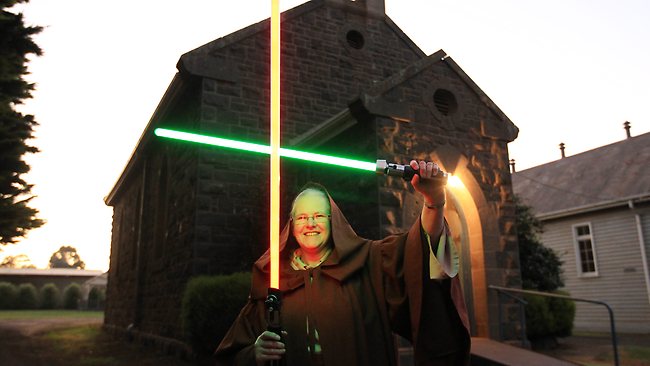
I recently came across an interesting couple of news items related to a church in Australia that has scheduled a fantasy and science fiction service. The idea is the brainchild of the Uniting Church’s pastor, Avril Hannah-Jones, who is a fan of the fantastic in popular culture. From the Unsettled Christianity website:
What started as a joke on the Australian television program Adam Hills in Gordon St Tonight, is now an actual church. Uniting Church minister Rev Dr Avril Hannah-Jones will be leading the first service of the ‘Church of the Latter-Day Geek‘ at the Romsey Uniting Church, north of Melbourne, at 4:00pm on April 10, 2011. Rev Hannah-Jones is encouraging people to dress-up in sci-fi costumes, and Klinglons are welcome. Very inclusive … as the Uniting Church in Australia most definitely is. One suggestion on the program for a new set of commandments was “Thou shalt forget about The Phantom Menace”.
As might be expected, this has led to criticism and controversy as conservative Christians react to what they see as an inappropriate combination of Christianity and popular culture. According to the Herald Sun:
But traditionalists have slammed the service’s irreverence and lack of emphasis on scripture. Sources close to the church told the Herald Sun the plan had split locals.
“There are some that aren’t very happy about it, especially because it just sort of happened out of the blue,” a parishioner said.
Other church leaders said it was blasphemous and could encourage witchcraft and supernatural ideas.
“I don’t have a problem with people enjoying sci-fi, but church isn’t the place to encourage escapism and fancy dress,” Mentone Baptist minister Murray Campbell said.
This church service, and the resulting controversy, are fascinating on a number of levels, from the impact of fantastic fiction on religion, to reactions of traditional religions to such interactions.
Pastor Hannah-Jones will be interviewed here in the near future.
The academy and pop culture alike recognize the great symbolic and pedagogical value of the undead (or reanimated dead). Vampires and zombies possess an important ability to enable reflection in a variety of personal and cultural ways. This has been explored variously from consumerism to racism to the breakdown of the nuclear family to philosophy and even political theory. Another important facet of exploration through these monstrous icons is theology.
We are soliciting abstract submissions for an anthology volume on theology and the undead. This would be similar in format to Zombies, Vampires, and Philosophy (Open Court Press, 2010), True Blood and Philosophy (Wiley, 2010), and Twilight and Philosophy (Wiley, 2009). Submissions should address a variety of theological issues and challenges by way of drawing upon the undead as objects of critical reflection. In terms of the elements of pop culture used in this process, the editors are open to classics such as Stoker and Romero, but are hoping to also include a number of items that address more recent incarnations of the undead, such as The Walking Dead, Resident Evil, True Blood, etc.
Please send electronic 250 word proposal summaries electronically. The deadline for submissions is June 30, 2011 for completed draft submissions in the summer of 2012. Proposals (and other inquiries) should be sent to both Kim Paffenroth (kimpaffenroth@msn.com) and John Morehead (johnwmorehead@msn.com).
Dr. Kim Paffenroth
Professor of Religious Studies, Iona College
Writer of Apocalyptic, Zombie Horror
Blog at gotld dot blogspot dot com
John W. Morehead
Independent Scholar
Blog at theofantastique dot com
Following are news items for the fantastic including horror, science fiction, fantasy, and the paranormal for the last few weeks. These items can be accessed daily as they are posted through my Facebook page and Twitter account.
‘Insidious’ review: An old-style horror movie
“Insidious” is a respectable attempt at a type of horror movie they don’t make anymore – that is, horror that is scary and not merely disgusting. From the opening credits, in which the title appears in blood-red letters to the accompaniment of blaring, dissonant music, the movie tries to get under your skin and inside your mind. Sometimes it does.
Insidious review
Insidious is a haunted-house movie that has some of the most shivery and indelible images I’ve seen in any horror film in decades. Yes, it’s that unsettling. Directed by James Wan (Saw) and produced by Oren Peli, the auteur of the Paranormal Activity films, the movie is about a couple (Patrick Wilson and Rose Byrne) whose home is plagued by the usual clanks, growls, and playfully sinister disturbances. Then one of the family’s young sons lapses into a coma. It’s his spirit that’s been hijacked, overtaken by ghosts who have a way of showing their creepy, smiling, old-fashioned nightmare faces at just the right moment to goose you with anxiety. Lin Shaye plays the psychic exorcist who can see into their world, and her fluky cornball intensity lifts the film into a realm of menacing excitement. Wan is better known for severed limbs than subtlety, but here he reaches back to the stately spookiness of the 1962 low-budget classic Carnival of Souls and adds a touch of early David Lynch to conjure up a vision of hell that is terrifying in its dreamlike banality. Like most haunted-house films, Insidious is a contraption, but it’s one that won’t let go of you.
Inside The Minds Of The Creators Of ‘Insidious’
When I was asked to cover the “Insidious” press junket, screening, and Q&A, I had to think twice. I am not the gal that lines up for the latest film offerings in horror and the paranormal. Add the fact that the writer and director are from the “Saw” franchise and I paused even longer. Little did I know that “Insidious” would be a great departure from bloody series of “Saw.” Over the course of three days, I was able to interview director James Wan, writer Leigh Whannell, and actors Barbara Hershey and Lin Shaye.
Will Beall May Write the ‘Logan’s Run’ Remake Starring Ryan Gosling
Warner Bros is all kinds of hot on screenwriter Will Beall’s debut script, Gangster Squad, and now they’ve hired the former LA cop to write some big budget science fiction for Logan’s Run. The remake is directed by Nicolas Winding Refn and stars Ryan Gosling, reteaming after the recently-wrapped action film Drive, in which Gosling plays a part-time getaway driver.
‘The Picture of Dorian Gray’: An Uncensored Version of a Scandalous Classic
Little did I know that I was reading a censored version of this work. Wilde first published The Picture of Dorian Gray in Lippincott’s Monthly Magazine in 1890 and it met with swift, stern condemnation. The Daily Chronicle denounced it as “a poisonous book…heavy with the mephitic odours of moral and spiritual putrefaction” and “a tale spawned from the leprous literature of the French decadents” while the Scots Observer opined that it was “false to morality” because the author failed to sufficiently denounce the title character’s preference for “a course of unnatural iniquity” over “a life of cleanliness, health, and sanity.” As a result, when Dorian Gray was published as a book Wilde’s editors cut out quite a bit which made explicit what was only implied in the text I had read. So explicit, in fact, that portions of the 1890 version of Dorian Gray were cited as evidence against Wilde in his 1895 trial for indecency.
Identity and Memory in ‘Dollhouse’ Cogito ergo sum. “I think, therefore I am.” These are the founding words of modern Western philosophy. When Rene Descartes famously came to this conclusion more than 350 years ago, he thought it self-evident. At first glance, his argument against doubt does seem foolproof. If I can doubt my own existence, I must be able to think, and if I am thinking, then I must exist. Open and shut case. But there is a vital question that Descartes overlooked: What is the “I”? This is the motivating question behind Dollhouse. Coming out of the gate, Dollhouse appeared to be little more than a well-written retread of Alias or Charlie’s Angels. But by the end of its second and final season, Dollhouse had delved into issues of personal identity more deeply than most metaphysics textbooks. Although subject to network interference and a sadly truncated 26-episode run, Dollhouse maintains a remarkably coherent conception of what it means to be a human being. Furthermore, Dollhouse confronts the difficult questions of moral responsibility and free will that arise from the vision of identity presented on the show.
Rise in demand for exorcism recalls horror trend
An item to be explored in a future post and interview at TheoFantastique: A surge in Satanism fueled by the internet has led to a sharp rise in the demand for exorcists, a trend formerly spiked by the classic 1973 horror film.
RISE OF THE APES Teaser Image Offers a First Look at Ceasar
After debuting the first image of James Franco in the mysterious prequel last month, 20th Century Fox has given attendees of CinemaCon their first glimpse of the film’s real star.
Oscar-winning visual effects house Weta Digital – employing certain of the groundbreaking technologies developed for Avatar – will render, for the first time ever in the film series, photo-realistic apes rather than costumed actors. Set in present day San Francisco, Rise of the Apes is a reality-based cautionary tale, a science fiction/science fact blend, where man’s own experiments with genetic engineering lead to the development of intelligence in apes and the onset of a war for supremacy.
Soylent Green – Blu-ray Review
Soylent Green is presented in a 1080p high definition transfer (2.40:1). Special features, all in standard definition, include a commentary by director Richard Fleischer and Leigh Taylor-Young, the 10 minute “A Look at the world of Soylent Green” which details the futuristic look of the film, a 4 minute featurette about this being Edward G. Robinson’s 101st film (and final film it would turn out) with some famous faces stopping by to celebrate, and the 3 minute theatrical trailer.
‘BFI: Invasion of the Body Snatchers’: Pod People, Redux
Invasion of the Body Snatchers gets a detailed examination that comes in at just around 100 pages in the new volume of the British Film Institutes Film Classics. This series, which to date has included brief studies of everything from Singing in the Rain to The Exorcist, combines a short analysis of the film and an examination of contested critical questions. It also often offers reflections by the authors on their personal response and interpretation of the film’s meaning.
Red Riding Hood Arouses Man’s Inner (Were)Wolf
And now this mysterious figure has come out of our collective dream-world once again, hard on the trail of a no-longer-little Red Riding Hood in Catherine Hardwicke’s Red Riding Hood, released earlier this month.
We may think we know her story pretty well, but that’s not necessarily true—not least because it’s not a single story and, like most folklore, every age imagines it anew.
Jeepers Creepers 3 Shooting in LA Now!
Now we have an interesting scoop from a reader who goes by the name Jordy. He writes to us to tell us that Jeepers Creepers 3 is finally more then just talk and planning. He writes:
They are currently filming the movie as we speak. Just got back from Universal Studios, where I saw the Creeper’s truck driving into a sound-stage.
The Lure of the Dark Side: A Review
The dark side is alive and well in popular culture and has been for millenia. Just as fascinating as the dark side itself is our fascination with it. In The Lure of the Dark Side: Satan & Western Demonology in Popular Culture, Christopher Partridge and Eric Christianson collect a series of essays, many of which were originally presented at a conference in North Wales in 2006, that discuss both “dark” media and our “addiction” to them.Partridge and Christianson divide their book into three sections, music, film, and literature, and each contributor to those sections exemplifies the best of what this hybrid genre (religion and pop culture studies) has to offer. They begin with a brief history of demonology and a 1-2 sentence description of the essays that follow and the ways in which they draw from and contribute to that history. They write, “[…The] widespread fascination with the diabolical and the dark side continues in the West–encouraged, to a significant extent, by popular culture” (12). This pop culture demonology both fills in the spaces left by mainline churches and counters discussions taking place in many conservative congregations.
SINISTER SEVEN: Q&A WITH ZOMBIE ACADEMIC ANDREA SUBISSATI
Rue Morgue had the pleasure of co-hosting the recent Toronto launch party for Andrea Subissati’s book When There’s No More Room In Hell: The Sociology of the Living Dead. Based on her Carleton MA thesis, it’s an academic look at, in Subissati’s words, “the relationship between Western culture as it is lived and culture as it is depicted in various art forms, including film,” albeit through the lens of George Romero’s zombie films.
The author of this thesis will be interviewed at TheoFantastique in the near future.
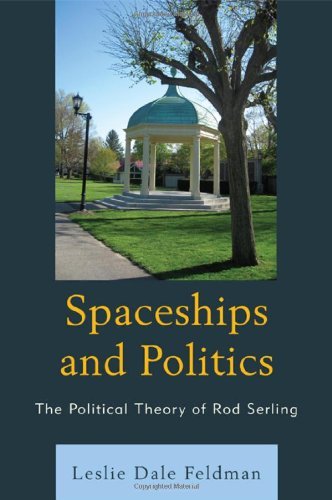
I am always on the lookout for good books that probe various aspects of the fantastic in popular culture in depth. Not long ago I came across such a book that looked at the political views of Rod Serling as expressed in his television show The Twilight Zone. The book is Spaceships and Politics: The Political Theory of Rod Serling (Lexington Books, 2010), by Leslie Dale Feldman. Feldman is a Professor of Political Science at Hofstra University, and was willing to discuss her book.
TheoFantastique: Leslie, thank you for the opportunity to take a look at your book, and for participating in this interview. How did someone with an academic background in political science come to connect this to The Twilight Zone?
Leslie Dale Feldman: Good question, John. As I was teaching my political theory classes I realized I kept using examples from The Twilight Zone. I would always say “there’s a Twilight Zone like this” in teaching about themes like dictatorship, conformity, technology, etc. One day I said “I should write a book on this” and one of the students said “you should do it” So I did.
TheoFantastique: Can you summarize the thesis you unfold in your book regarding Hobbesian political theory, and how you connect this to Rod Serling’s political explorations in The Twilight Zone?
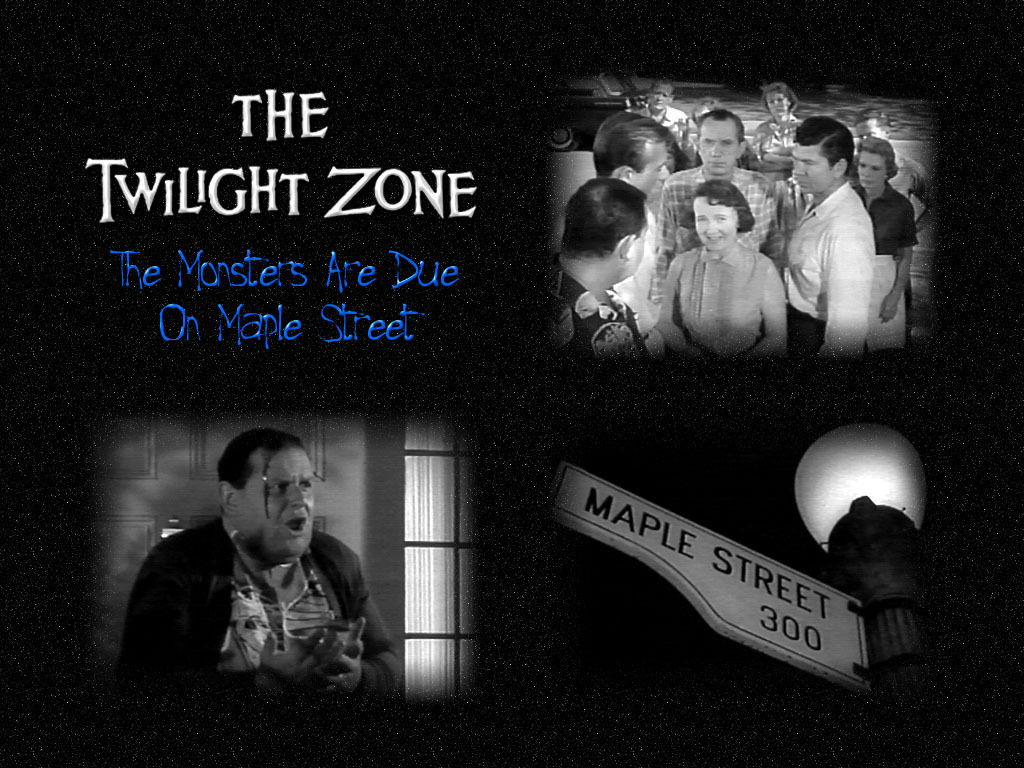
Leslie Dale Feldman: Thomas Hobbes, English political philosopher of the 17th century, focused on a negative view of human nature, how humans, during a time before government to control them, would be “belligerent, nasty, competitive, and acquisitive” I see this view reflected in The Twilight Zone in such episodes as “The Shelter” (where neighbors compete for refuge in a shelter) and “The Monsters are Due on Maple Street” where neighbors turn on each other when they think one of them is an alien. But The Twilight Zone also has optimistic shows with children and magic.
TheoFantastique: In your research into Serling what types of things did you come across perhaps in his education, speeches, or interviews that shed light on his political views?
Leslie Dale Feldman: He was a Democrat with a strong sense of social commitment and justice. Most of all, he hated nuclear war which he felt was the worst part of “modernity” and fascism which he fought against in WWII. This is reflected in such Twilight Zone shows as “The Shelter” and “Time Enough at Last” with Burgess Meredith, among others. And there are also several anti-war shows such as “The Quality of Mercy.” Serling belonged to an anti-nuclear group in Hollywood, California.
TheoFantastique: What were some of the main political themes explored by Serling in The Twilight Zone and which episodes illustrate them?
Leslie Dale Feldman: There are so many:
Dictatorship: “The Mirror,” “It’s A Good Life” Nuclear War: “Time Enough at Last,” “The Shelter,” “No Time Like the Past” Individual v. the state: “The Obsolete Man” Conformity: “Mr. Bevis”
TheoFantastique: Do you have any favorite episodes that touch that special place for you as a political science professor?
Leslie Dale Feldman: I love “A Stop at Willoughby,” about a harried New York advertising guy who wants to escape the “rat race” of modern competition and go back to a bucolic 19th century town he fantasizes about, Willoughby. The gazebo is a symbol featured here, as in No Time Like the Past, to represent the band concerts and community that Serling had experienced in his hometown of Binghamton, NY, and this symbol is featured on the cover of my book Spaceships and Politics: the political theory of Rod Serling. I also like the shows about dictators, the Holocaust and fascism.
TheoFantastique: I still find The Twilight Zone of relevance to our culture and social circumstances today and have even made posts using various episodes for contemporary political commentary. Do any episodes that touch on politics seem worthy of reflection today?
Leslie Dale Feldman: Absolutely. “The Monsters are Due on Maple Street” looks at fear and how it works in a community among neighbors. This can apply to the Red Scare, the Communist threat of the 1950s, and even today. Neighbors fear each other, and it’s basic human nature not to trust. In a classic Twilight Zone episode, “The Gift,” Serling suggests we should trust more– but then in “To Serve Man” he suggests the opposite! The shows always have something new to offer, even if you’ve seen them– in “I Dream of Genie” a guy who becomes President has a dog as a sidekick that looks like FDR’s dog. I thought that was cute. What about technology? “A Thing about Machines” is about a guy who hates machines– robots, computers and technology are great but have their drawbacks.
TheoFantastique: Leslie, thank you again for your book, for its exploration of one of the greatest television writers and programs of all time, and for your time to discuss politics and The Twilight Zone.
Leslie Dale Feldman: Thank you!
(Readers interested in exploring Rod Serling and The Twilight Zone in more depth might also enjoy the documentary Rod Serling: Submitted for Your Approval which can be viewed in installments on TheoFantastique’s YouTube page.)
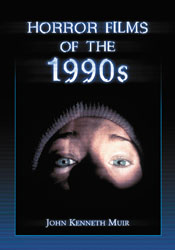
In my last post I provided an update on a volume I contributed to, so I might as well follow that up with another similar project. A while ago I was flattered to have John Kenneth Muir ask me, along with a handful of other writers, to write some brief capsule reviews as a part of critical film commentaries for his book Horror Films of the 1990s(McFarland, forthcoming). The publisher’s website describes the book as follows:
This detailed filmography surveys more than 300 horror films that were released in the years 1990 through 1999. The horror genre’s trends, cliches and patterns of the decade are connected to social and cultural phenomena, such as Y2K fears and the Los Angeles Riots. Among the popular forms of this period were films about serial killers, aliens, conspiracies, and sinister “interlopers,” new monsters who shambled their way into the lives of everyday people to wreak havoc on screen.
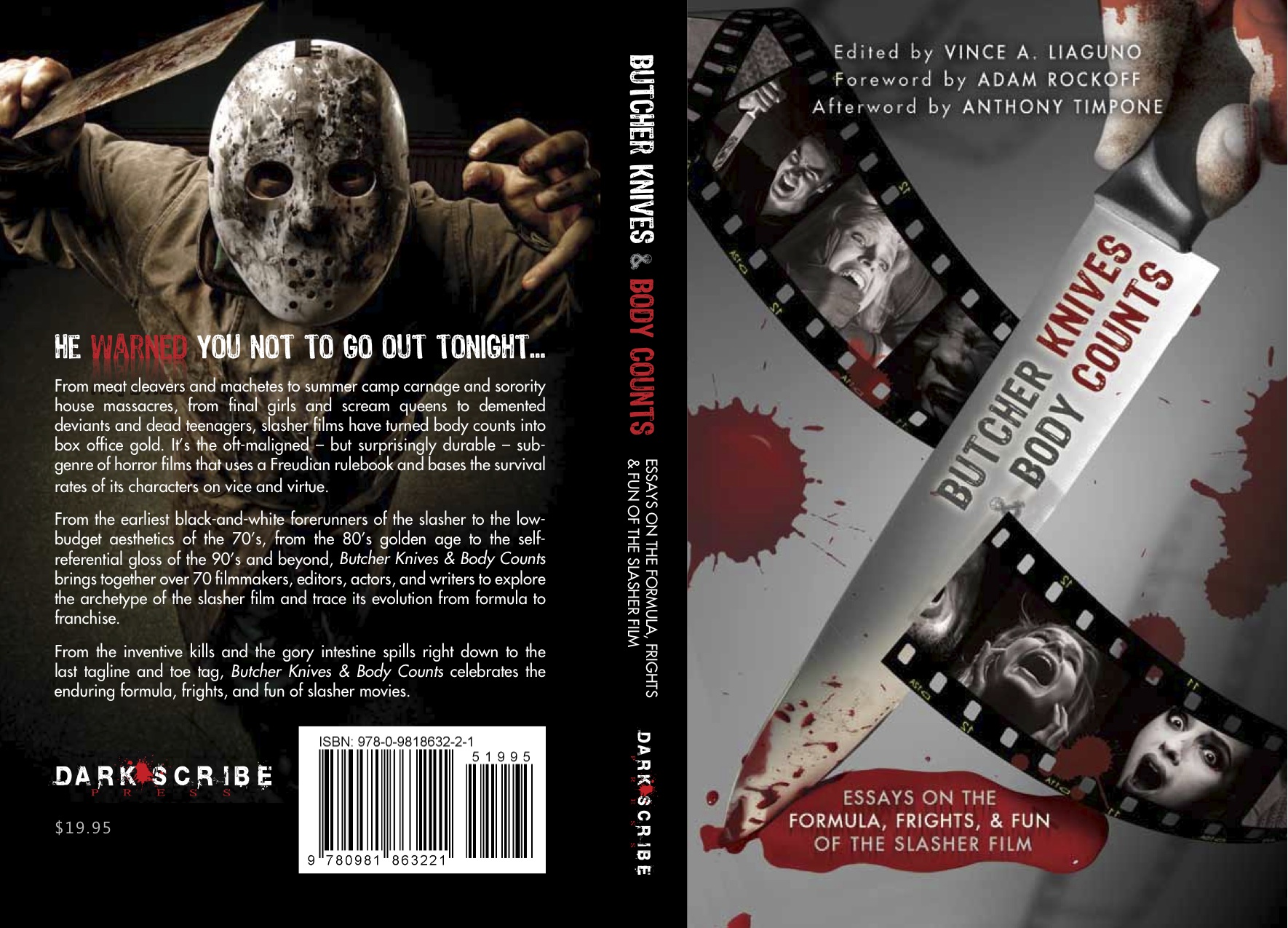
I am pleased to share an update regarding the book Butcher Knives & Body Counts (Dark Scribe Press, forthcoming). The volume’s editor, Vince Liaguno, sent an email to contributors today with word that plans are in place to have physical copies of the book in hand in time for some exposure to librarians and booksellers at this year’s BookExpo in NYC. Dark Scribe Press plans to officially launch the book on Thursday, June 16th, at the Long Island Marriott Hotel & Convention Center in Uniondale, New York. The launch will be part of a huge mass autograph signing that night that kicks off the Stoker Weekend 2011 convention. The signing will include genre luminaries and best-selling authors as such Peter Straub, David Morrell, Douglas Clegg, Dacre Stoker, Jeff Strand, Gillian Flynn, Michael Koryta, Jonathan Maberry, and a host of others.
I must admit that with the exception of Psycho and Halloween, I am not a fan of the slasher film subgenre (and it is debatable whether the former should be included in this category), but I thought this volume was significant and wanted to make a contribution. My brief essay is titled “Slasher Films As Modern Chaos Monster Myths.” The piece touches on the ancient chaos monster which was conceived of as a threat to the established order in Near Eastern cultures, and suggests that the unstoppable slasher may represent the chaos monster myth in the late modern cultural context.
Every Labor Day weekend, tens of thousands descend upon Atlanta for the largest convention of pop-culture fandom in the Southeast. From science fiction celebrities and their obsessive fans to colorfully costumed characters engaged in mock combat, FOUR DAYS AT DRAGON*CON explores the “Woodstock for nerds” known as Dragon*Con. What draws these 35,000 people together? Dragon*Con’s inclusive multi-genre, multi-platform approach — combining science fiction, fantasy literature, role-playing, science, history, video games and more — gives attendees the opportunity to meet like-minded individuals. Others, especially the costume designers and creators, seem to gravitate most to the element of escapism. Featuring interviews with fans, staff, performers, artists, stars and would-be superheroes, the documentary examines the sense of community and acceptance that forms among this often ridiculed and marginalized subculture. FOUR DAYS AT DRAGON*CON captures the heart and soul of this quirky and fascinating annual event with footage of the Dragon*Con parade and a stirring climax centered around an ambitious attempt to break the world record for dancing to Michael Jackson’s “Thriller.”
That group of horror bloggers, the League of Tana Tea Drinkers (LOTTD), of which I am a part, has come up with the theme for their latest roundtable group of posts. By early April those participants will have posted on their favorite villainess. It’s been a while since I’ve done something on the lighter side, so I am throwing my at in the ring with my choice in the form of Medusa from Clash of the Titans (1981). In my view, overall the film is not one of the best efforts that involved the special effects stop-motion animation genius of Ray Harryhausen as his team’s preferences for fantasy did not evolve in dark enough fashion with a changing culture. Nevertheless, the film includes one of Harryhausen’s best stop-motion sequences with the Medusa who can turn men to stone with a mere gaze. The scene includes a number of great elements, including key lighting, sound effects, creature design, and of course, Harryhausen’s animation. In my view this segment ranks among the top of his animation efforts over the years, right up there with the skeleton battle sequence from Jason and the Argonauts (1963).
In Ray Harryhausen: An Animated Life (Billboard Books, 2004), with his co-author Tony Dalton, Harryhausen describes the process he went through in coming up with the look and design for this creature. For her face and head he consulted art, literature, and film. He describes how this process influenced the design of her torso:
In most renditions of Medusa [the torso] is unseen, but when shown (as in the Hammer film The Gorgon, 1964), she is usually wearing a diaphanous gown which would have been impossible to animate. I decided to give her a non-human body and expose as much of it as dignity would allow. In fact the drawing of Medusa was the earliest I completed for Clash (dating back to 1977), and it shows her wearing a discreet boob tube. However, when it came to designing the model, I experimented with her wearing a bra-like garment, but it looked vulgar, so in the end everyone agreed that the offending garment should be removed (I suppose one could say she was the first lady to burn her bra) and Medusa’s potentially offending nipples were painted to blend in with the rest of her torso.
Harryhausen goes on to describe how the Medusa scene was received on the screen:
The Medusa sequence is perhaps the one I am most proud of. Everything in it — the model, the actions, the pace, the lighting — works so perfectly….When director Desmond Davis saw the completed sequence, he kindly called to congratulate me.
I don’t know who my fellow LOTTD members will be highlighting in their favorite villainess posts, but I’d be willing to put my money on Medusa in a horror celebrity villainess death match any day, perhaps as they fight to the death to the tune of Electric Light Orchestra’s tune “I turn to stone.”
Check the LOTTD page, as well as those of its members, for posts on this topic as they are assembled.
 A while ago I came across an article online by Paul Davids from FATE magazine (Sep.-Oct. 2010) titled “THE ACKERMAN ENIGMA: The Strange Case of Forrest J. Ackerman.” The article brought together a number of elements of interest, from the late horror culture icon Forrest J. Ackerman to the paranormal. Since I had interacted with Davids previously for his fine work on THE SCI-FI BOYS documentary, I got in touch with him in order to discuss the subject matter related to his article in FATE.
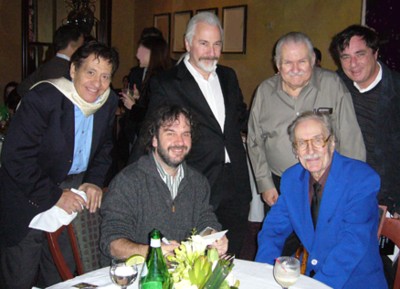 Forry. Forry saw all of the films I made during his lifetime and especially appreciated STARRY NIGHT. He went to see TIMOTHY LEARY’S DEAD with me in a theater in L.A. And then, in 2002, I began working on THE SCI-FI BOYS, which dealt above all with Forry’s influence on the generations who followed him and who became professionals in the worlds of imagi-movie productions and special effects. In 2003 I filmed him at George Pal’s grave re-reading the eulogy for Pal he had presented at George Pal’s funeral in May of 1980 (I had been there at the funeral to hear him that day), and that became a scene in THE SCI-FI BOYS. When the film was completed and accepted for distribution by Universal Pictures for DVD and television, Forry came to a Universal Pictures Golden Globe party accompanied by his great friend, assistant and caretaker Joe Moe. There’s a well-known photo from that evening with Peter Jackson, Forry, Rick Baker, Basil Gogos, Bob Burns and me all together (the photo is on the back of THE SCI-FI BOYS DVD box and is in the book of Basil Gogo’s art). The pinnacle of my years of friendship with Forry was in the spring of 2006 when Universal Pictures showed THE SCI-FI BOYS (edited by my son Scott M. Davids) at the Egyptian Theater in a double-feature with Peter Jackson’s short about SKULL ISLAND (which is on the DVD of Jackson’s KING KONG). Forry spoke at a panel discussion there with me, Rick Baker, effects designer Steve Johnson and Basil Gogos. Forry told Joe Moe upon departing, “Well, I guess it doesn’t get any better than this. This may be the best night of my life.” I attended many of Forry’s birthday parties and we were friends to his death, December 4, 2008. The last photo of us together was taken at his Acker Mini-mansion on Halloween of 2008.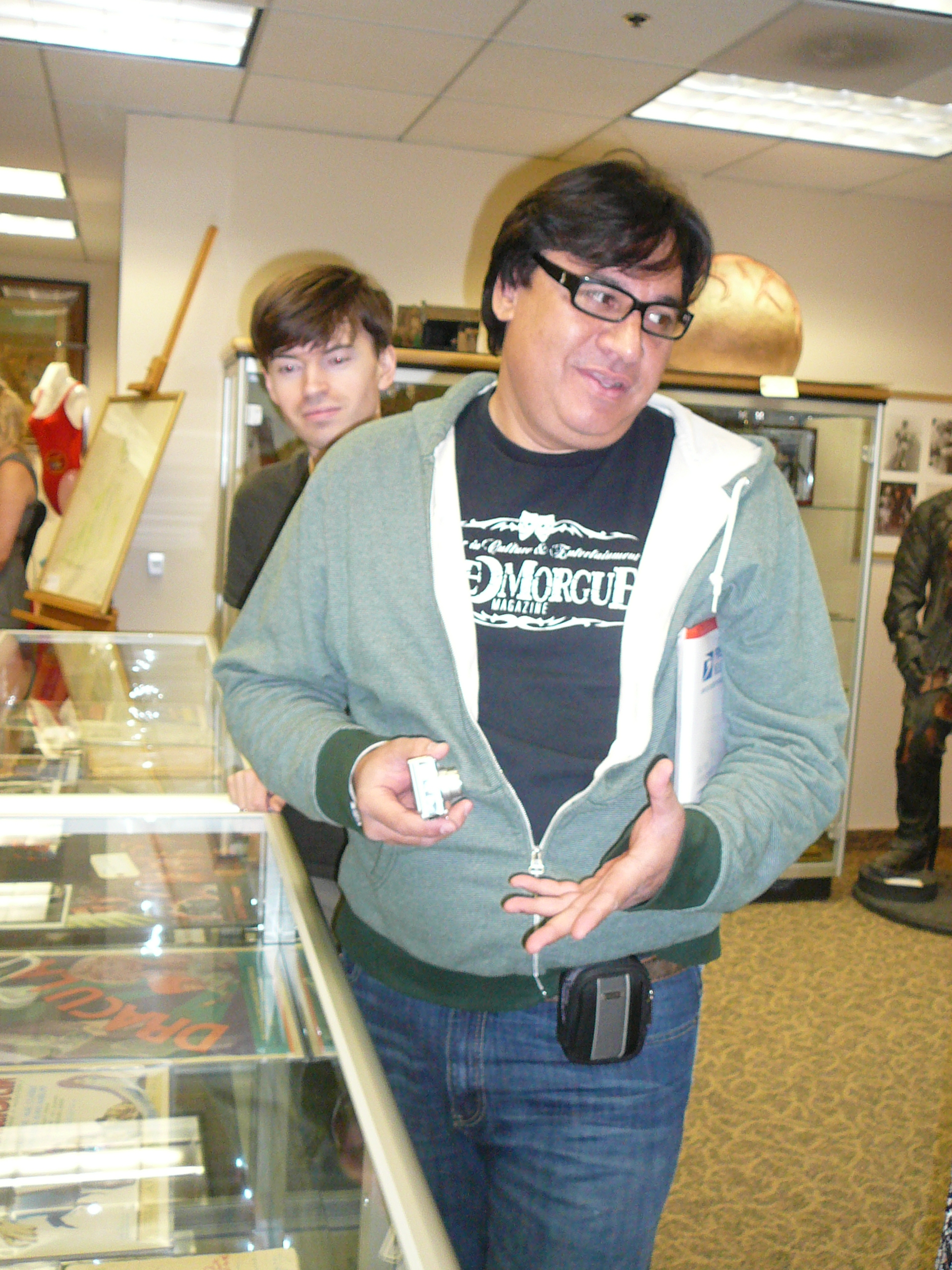
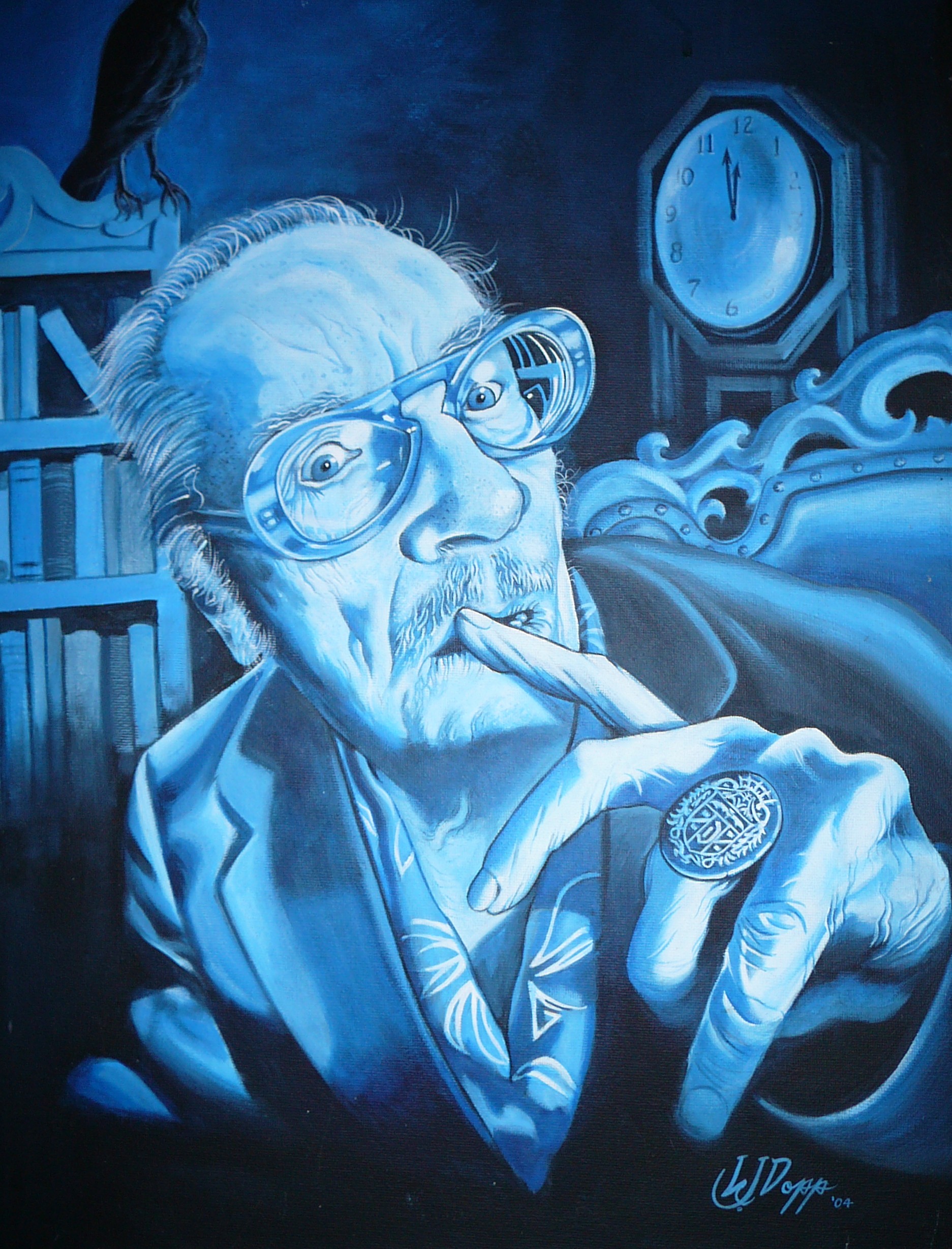 Paul Davids: I spent over six months working with chemists at two universities to try to get to the bottom of the mystery about the ink on my document. The Chairman of the Chemistry Department at Indiana University studied it with gas chromatography, the electron microscope and other instrumentation. A chemistry professor at New Jersey University studied it using mass spectrometry. Trying to duplicate the opaque ink became a class project at New Jersey University. After exhaustive tests of many kinds, both professors could not duplicate this and felt that the reasons for the chemistry of the ink were not possible for them to explain using all their extensive knowledge of paints, inks and solvents. Furthermore, some strange things happened to them while they were conducting the studies. This included a stack of pages related to the experiment being inexplicably scattered off a chair across the floor of a room while no one was present. Later, I discovered that the current tenants of what used to be the Ackermansion on Glendower in Los Angeles feel that the house is haunted. Without knowing what happened regarding the scientists I worked with, they reported incidents of pages being scattered onto the floor (from a music stand) repeatedly, in much the same way. The shadows of a man have been seen at night on the wall of what used to be Forry’s office, and the shadows always disappear without anyone being present. This is a complex case and there are now many other unexplained incidents that have happened relating to it. Two years before Forry passed away he signed an autograph for me in FAMOUS MONSTERS right above a line of text that reads: “The invisible ink men strike again.” There is also a painting (by L. J. Dopp) showing the exact minute of his death that was made four years before he died.
 Paul Davids: It is too early to say when it will be ready. It is in an advanced stage of editing. I have tentatively agreed to screen it in October at the ASPE Conference in Taos (ASPE stands for Alliance Studying Paranormal Experiences), provided it is finished by then (it should be). I gave a lecture at the last ASPE about the strange case of Forrest J Ackerman and some of these experiences. My films usually make it to TV and DVD and sometimes play in some festivals. THE SCI-FI BOYS (available on DVD) played on the SyFy Channel and the Sundance Channel. ROSWELL was a Showtime movie, and JESUS IN INDIA played on the Sundance Channel. My latest film, BEFORE WE SAY GOODBYE (www.beforewesaygoodbyethemovie.com) now has a deal to play in Spanish on TV and throughout Latin America and South America, but we do not have a deal for an English language broadcast in the U.S. yet. Hopefully that will come. Interestingly that film has a life after death theme too, with a Latino cast. It deals in part with the story of the Virgin of Guadalupe, and part of the film was made at the Basilica of the Virgin of Guadalupe in Mexico where the famous tilma of St. Juan Diego with its unexplained image of the Virgin has been on display since the 1500’s. The DVD is available at the movie’s website. As for THE LIFE AFTER DEATH PROJECT, when it is available it will surely be announced at www.pauldavids.com and you will start to see publicity for it, including in FAMOUS MONSTERS magazine, which is being published these days by publisher Philip Kim.