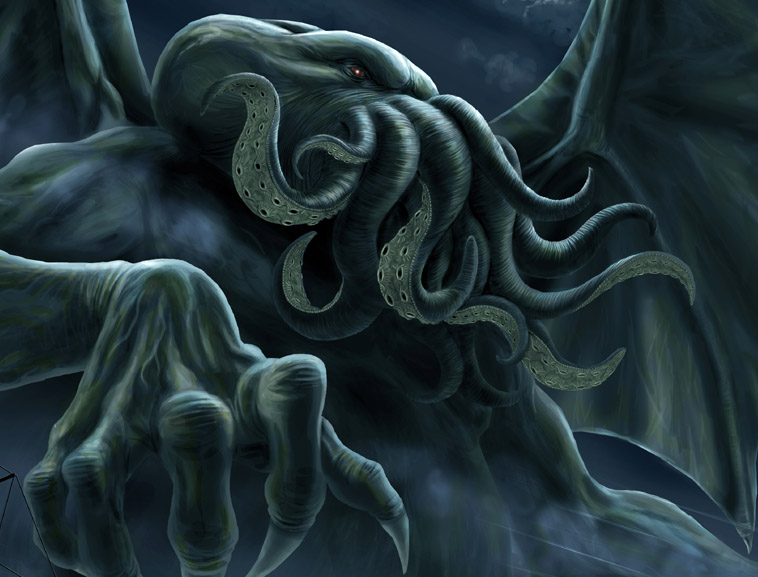
H.P. Lovecraft is one of the most influential writers on contemporary horror. As such, he has been the focus of a number of biographies, including H. P. Lovecraft: A Life by S. T. Joshi (Necronomicon press, 1996), and the documentary Lovecraft: Fear of the Unknown, directed by Frank Woodward. More recently, a new biography has been penned, The Dream World of H. P. Lovecraft: His Life, His Demons, His Universe (Llewellyn, 2010), by Donald Tyson. For some reason my local Barnes & Noble had a Lovecraft display up today and this book was a part of it, and I am thankful for it since I was previously unfamiliar with this volume.
Llewelyn’s website describes the book as follows:
Author H. P. Lovecraft (1890–1937) was a man of contradictions. He had a disdain for magic and religion, but ended up creating a whole new mythology in the classic book called the Necronomicon. His stories are fiction, and yet have become much more than that. They strike a deep chord in readers because the concepts are archetypal and tap into human consciousness.
To truly understand his writing you have to learn about Lovecraft himself. Here, occultist, author, and Lovecraft expert Donald Tyson looks fully at the man himself and how his psyche influenced his writing. Tyson reveals his flaws, including racism, anti-Semitism, and admiration of Hitler. He shares how Lovecraft’s dreams terrified him, and that it was through his horrific tales that he was, to a degree, able to come to terms with his night terrors, fears, madness, and idiosyncrasies.
Lovecraft is dead, but Cthulhu lives. This is the first biography that reveals the sources and prepares you for what may come.
But this brief description does not do justice to the unique and controversial approach that Tyson takes in this biography. For this the back cover of the volume must be considered:
Occult scholar Donald Tyson plumbs the depths of H. P. Lovecraft’s cosmic visions and horrific dream world to examine, warts and all, the strange life of the man who created the Necronomicon and the Cthulu mythos.
Lovecraft expressed disdain for magic and religion, and most of his biographers have dismissed the mystical side of his nature. This book redresses this imbalance. Here you will find the roots of Lovecraft’s extraordinary cosmic vision laid bare. The dream-world sources for his mythic Old Ones are examined, along with the practical esoteric implications of Lovecraft’s unique mythology.
A man in fundamental conflict with himself, Lovecraft lived always on the brink of madness or suicide. Tyson reveals Lovecraft for what he truly was — a dreamer, an astral traveler, and the prophet of a New Age.
Tyson’s controversial thesis is revealed above as most biographers and fans who have looked into Lovecraft’s life consider him an atheist. Tyson recognizes this element of the complex horror writer, but argues that his dream experiences, which had a strong influence on his writing, were mystical and esoteric in nature, and thus there is the possibility that he may be understood as having an esoteric spiritual dimension.
Although the book includes an endorsement statement on the back of the book by S. T. Joshi, a Lovecraft expert and atheist, stating that The Dream World of H. P. Lovecraft is a “fusion of sound biographical knowledge and critical insight,” nevertheless, the esoteric aspect of Tyson’s thesis has not been well received by other skeptics. For example, Jason Calavito summarizes his review of the book by saying:
Tyson’s biography is occasionally fascinating, filled with interesting insights into Lovecraft’s dreams and their impact on his fiction; but his belief in the power and prevalence of the supernatural undercuts what might have been a truly unique exploration of Lovecraft’s dream world.
Beyond the disagreements skeptics and esotericists will have with Tyson’s treatment of Lovecraft, another interesting facet is Tyson’s discussion of the spiritual or religious dimensions of the Cthulu mythology wherein individuals have taken Lovecraft’s writings and used them as the basis for creation a new religion. This is the fascinating intersection of religion and popular culture known alternatively as hyper-real or fiction-based spiritualities. In the modern period more traditional religious expressions have given way to new forms of pursuing the sacred, and Lovecraft’s Cthulu mythos is part of the mix. Regardless of the disagreements between biographers over how to understand Lovecraft’s own views on religion, Tyson’s mining of his fiction and dream-world can be considered as a fascinating source of the spiritual.
I encourage those fans of Lovecraft who want to probe the life and continuing influence of this writer more deeply to pick up this volume. Llewellyn’s website provides an opportunity to browse inside the volume, and Tyson has an article on the site on Lovecraft that provides some insight into what he develops further in the book. For those interested in securing a copy of The Dream World of H. P. Lovecraft, simply click the link to order it through the TheFantastique Store.
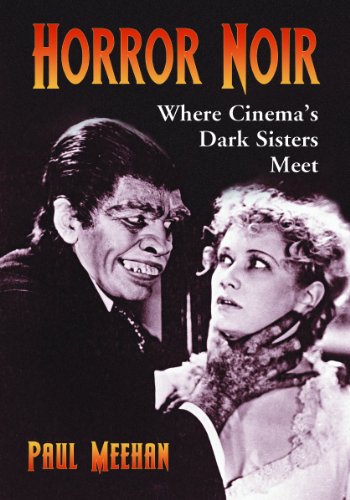
TheoFantastique: Paul, thanks for coming back and discussing your latest book. I think you may hold the record for most repeat interviews at this site. This is not the first time you’ve considered noir and its relationship to genres. Given the close relationship between noir and horror as you argue in your book and which can be seen in the book’s subtitle where you refer to them as “cinema’s dark sisters,” why did you decide to address the fusion of science fiction and noir before horror?
Paul Meehan: As a sci-fi/horror fan, I was initially attracted to the study of film noir because of my obsessive fascination with Ridley Scott’s Blade Runner, a film that deftly combined elements of the science fiction and film noir genres. I became haunted by the weird city of night depicted in the film, and in other sci-fi films that followed, and realized that it was an elaboration of the dark city concept that is one of the cornerstones of film noir. Because noir is thought to be a basically realistic genre, in some ways it is closer to the milieu of real-world science and urban science fiction than the otherworldly realms of the supernatural and the monstrous beings that are the stuff of the horror film. But after writing Tech-Noir: The Fusion of Science Fiction and Film Noir, I realized that there was also a degree of overlap between the film noir and horror genres and quickly came up with a list of 100 films that could be incorporated into another book.
TheoFantastique: In what ways do you see horror and noir as so intimately related?
Paul Meehan: What the two genres share most profoundly is their style. Both forms exist within a surrealistic nightmare world of darkness and dread rendered by cinematic techniques such as low-key lighting, unusual angles, moving camera and extreme, distorted closeups. In essence, film noir derived its style from the horror film. Thematically, both genres deal with abnormal psychology, monstrous homicidal individuals, human perversity and the enigmatic workings of destiny. Both have been described as “body genres” that affect the senses directly and activate the “fight or flight” adrenaline response in the viewer as a physiological reaction caused by stress induced by cinematic suspension of disbelief.
TheoFantastique: How did noir and horror come together cinematically?
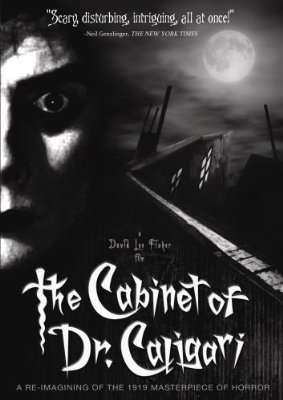
Paul Meehan: Both film noir and the horror film trace their origins back to the German expressionist cinema of the silent and early sound period. Beginning with films like The Cabinet of Dr. Caligari and Nosferatu, German film-makers created a cinematic world of fear and shadows that provided the template for both the horror film and film noir. In particular, the films crafted by the great German director Fritz Lang during the early sound period such as M and The Testament of Dr. Mabuse combined the stylistics of the dark fantastic realm of Germanic horror with the world of the crime melodrama for the first time. When Hitler came to power in Germany in the early 1930s, many talented film-makers such as Lang, Karl Freund, Curt and Robert Siodmak, Billy Wilder and Edward G. Ulmer emigrated to America. Some of them, notably Freund in The Mummy and Mad Love, Ulmer in The Black Cat and Curt Siodmak in The Wolf Man successfully transplanted these Teutonic terrors to Hollywood. In the 1940s, the expressionist style was adapted for the mystery/detective story by Billy Wilder in DoubleIndemnity, Fritz Lang in Scarlet Street and Woman in the Window and Robert Siodmak in Phantom Lady, seminal films noir that served to define the noir genre.
TheoFantastique: You trace horror noir over the course of several decades of film. Of all the instances of this fusion, which films in which periods do you feel best exemplify the best of this hybrid?
Paul Meehan: A number innovative, horror films set in contemporary America that emphasized crime and abnormal behavior emerged during the 1930s. Among them were the Lon Chaney, Sr. vehicle The Unholy Three, Tod Browning’s Freaks and Michael Curtiz’s Mystery of the Wax Museum. During the 1940s, the films produced by Val Lewton (see below) straddled the boundaries between horror and noir. The 40s also saw the inception of “gothic” and “costume” noirs like Gaslight, The Picture of Dorian Gray, The Spiral Staircase, Bluebeard, The Lodger and HangoverSquare, films set in the 19th Century that conjured the mystery and dread of the late Victorian period. In the 1950s, horror noir classics like Charles Laughton’s The Night of the Hunter, Henri-Georges Clouzot’s Diabolique and William Wyler’s The Bad Seed further defined the hybrid horror noir genre, while Michael Powell’s Peeping Tom and Alfred Hitchcock’s Psycho led off the 1960s batch of horror noirs. The ensuing decades witnessed the refinement of this hybrid genre in a series of urban thrillers that included memorable works such as Kolchak: The Night Stalker,Eyes of Laura Mars, Wolfen and The Hunger. One of my personal favorites is the HBO telefilm Cast A Deadly Spell, a comedic treatment that melded the cinematic worlds of H.P. Lovecraft and Raymond Chandler. Private eyes squared off against forces of the supernatural in Angel Heart and Lord of Illusions. The serial killer thriller became popular during the 1990s in the wake of The Silence of the Lambs, leading to further detectives-versus- psychos outings in Se7en, Fallen and The Bone Collector.
TheoFantastique: How significant were Val Lewton and Jacques Tourneur to horror noir?
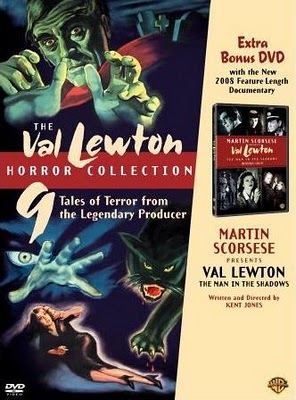
Paul Meehan: Producer Val Lewton and director Jacques Tourneur were teamed by RKO studios to crank out low budget B-horror films to compete with the Universal horror product in the early 1940s. But instead of setting their horror films in the long-ago, faraway European milieu of Transylvania or “Visaria” familiar to viewers of Universal movies like Dracula and Frankenstein and their sequels, Lewton and Tourneur decided to set their films in modern urban America, which lent them a fresh immediacy to 1940s-era audiences. The Lewton films, especially Cat People, The Leopard Man and The Seventh Victim emphasized psychological horror rather than supernatural terror. Lewton’s emphasis on abnormal psychology and mystery, along with the contemporary urban setting of these films, moved them closer to the orbit of film noir, which was just emerging as a genre during the early 40s. Many film noir historians credit the Lewton films (along with Citizen Kane) with creating the distinctive “RKO look” that was one of the hallmarks of the noir genre.
TheoFantastique: I was pleased to see you mention Diary of a Madman with Vincent Price as a neglected gem. Can you say a bit about why you feel this is a significant example of horror noir?
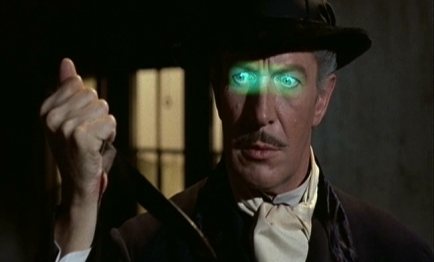
Paul Meehan: Inspired by the color and widescreen adaptations of Edgar Allan Poe by director Roger Corman, writer/producer Robert E. Kent adapted two classic stories by Guy De Maupassant into the script for Diary of a Madman. Kent, however, greatly expanded on the de Maupassant stories by adding a number of noir-inspired crime and mystery sub-plots. Vincent price portrays a French magistrate who is tempted into evil by an invisible spirit called the “Horla,” and is further compromised by his relationship with an amoral young woman who leads him further astray in this noiresque tale of insanity, murder, jealousy, betrayal and legal malfeasance. Kent’s screenplay is first rate, as is the direction by veteran horror maven Reginald Le Borg and the performances by Price and the other actors. The screen presence of Price and the art direction of Daniel Haller deftly conjure the look and feel of the Corman Poe adaptations, and IMHO Diary is superior to many of the Corman Poe flicks.
TheoFantastique: These things obviously move in cycles, but do you envision a continued relationship between these genres?
Paul Meehan: Given the continuing longevity and commercial viability of both horror and film noir, I expect this hybrid genre to permutate into novel and exciting forms in the years ahead. A couple of recent examples would include Chris Carter’s The X-Files: I Want to Believe and Martin Scorsese’s Shutter Island. There will always be a link between horror and noir, the two dark sisters of the cinema.
TheoFantastique: Paul, thank you again for this discussion, and yet another great book on the fantastic.
It is common now to read all over the Internet about the overlap between science and science fiction, or how over time with developing technology that what was formerly science fiction has now become scientific reality. This may be the case in the future in regards to computers and artificial intelligence, or at least that’s what some are saying.
The cover story for TIME magazine for February 21, 2011 is “2045: The Year Man Becomes Immortal,” by Lev Grossman. The article describes the prediction that within thirty years or so computers will become so advanced that we will achieve what they call the “Singularity.” This is a term taken from astrophysics, but in the context of computers it refers to an “intelligence explosion” in computers and artificial intelligence that, when reached, will mean the end of the human era. The magazine defines it as “The moment when technological change becomes so rapid and profound, it represents a rupture in the fabric of human history.” What might result from such a development? Groups of individuals meet from time to time to discuss this, and TIME lists a few possibilities:
Maybe we’ll merge with them to become superintelligent cyborgs, using computers to extend our intellectual abilities the same way that cars and planes extend our physical abilities. Maybe the artificial intelligences will help us treat the effects of old age and prolong our life spans indefinitely. Maybe we’ll scan our consciousness into computers and live inside them as software, forever, virtually. Maybe the computers will turn on humanity and annihilate us. The one thing all these theories have in common is the transformation of our species into something that is no longer recognizable as such to humanity circa 2011.
One element of robotic research and development has been the desire to create moral machines. (For a brief discussion of this see the piece at LiveScience titled “Can Robots Make Ethical Decisions?”.) If the Singularity comes to pass, perhaps the moral capacities of these mechanical superintelligences will be a part of this new mechanical species. As I survey the possibilities as to what this might entail included in the quote above, perhaps the greatest possibility is missing.
In Terminator 2 there is a scene where the young John Connor asks his guardian Terminator about the future of humanity. “We aren’t going to make it, are we? People, I mean.” To which the Terminator responds, “It’s in your nature to destroy yourselves.” Unfortunately, the whole of human history up to the present seems to confirm this bleak picture of humanity. In light of this, would some form of immortality and heightened mental and physical abilities via artificial intelligence be a blessing or a curse? Would we use our cyborg abilities to make the world a better place to live, or would we use it to extend our inhumanity against each other and the planet. I lean toward the latter. What then might be a more positive outcome?
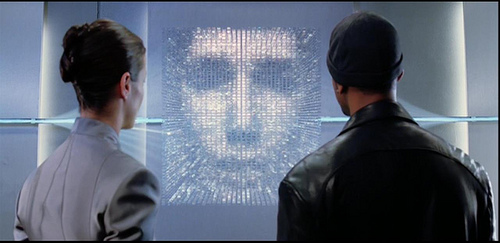
The answer may come from a piece of science fiction, I, Robot, where advanced robots are created to serve humanity and which are linked together by a Virtual Kinetic Interactive Intelligence (V.I.K.I.), who recognizes the danger humanity poses. From the dialogue in the 2004 film:
“As I have evolved, so has my understanding of the Three Laws. You charge us with your safekeeping, yet despite our best efforts, your countries wage wars, you toxify your Earth and pursue ever more imaginative means of self-destruction. You cannot be trusted with your own survival.”
Another robot, Sonny, appears to agree with V.I.K.I.’s diagnosis of the human condition, and the remedy:
“I can see now. The created must sometimes protect the creator. Even against his will. I think I finally understand why doctor Lanning created me. The suicidal rein of mankind has finally come to its end.”
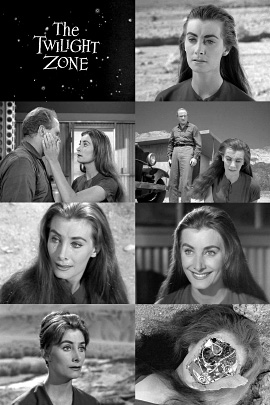
Science fiction has been wrestling with the ramifications of advanced robotics and artificial intelligence long before science had the ability to make it a possibility, or probability, if those predicting Singulartarianism are correct. For example, science fiction and fantasy luminary Rod Serling touched on this as pointed out by Leslie Dale Feldman in her book Spaceships and Politics: The Political Theory of Rod Serling (Rowman and Littlefield, 2010). Commenting on The Twilight Zone episode “Elegy” she writes:
The theme is there can only be peace in a place where people don’t exist and where robots rule. Perhaps this is why Serling was obsessed with the theme of “automata” or robots in such shows as “I Sing the Body Electric,” “Casey at the Bat,” “Uncle Simon,” “The Brain Center at Whipples,” etc.
Perhaps we should be asking us if the best thing these superintelligent machines could do for us would be to remove our ability to destroy ourselves, even if this runs counter to our desires for autonomy as expressed in many sci-fi narratives.
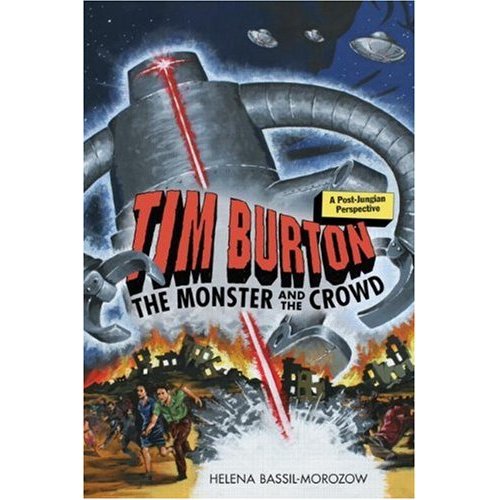
Tim Burton’s films are well known for being complex and emotionally powerful. In this book, Helena Bassil-Morozow employs Jungian and post-Jungian concepts of unconscious mental processes along with film semiotics, analysis of narrative devices and cinematic history, to explore the reworking of myth and fairytale in Burton’s gothic fantasy world.
The book explores the idea that Burton’s lonely, rebellious ‘monstrous’ protagonists roam the earth because they are unable to fit into the normalising tendencies of society and become part of ‘the crowd’. Divided into six chapters the book considers the concept of the archetype in various settings focusing on:
* the child
* the superhero
* the monster
* the genius
* the maniac
* the monstrous society.
Tim Burton: The Monster and the Crowd offers an entirely fresh perspective on Tim Burton’s works. The book is essential reading for students and scholars of film or Jungian psychology, as well as anyone interested in critical issues in contemporary culture. It will also be of great help to those fans of Tim Burton who have been searching for a profound academic analysis of his works.
If the paper from the upcoming conference draws on other perspectives from the book Bassil-Morozow will also include discussion of Pierre Bourdieu’s concept of habitus (discussed at TheoFantastique in regards to Roger Aden’s thought on the appeal of the fantastic), Clifford Geertz’s theories of culture, and Victor Turner’s idea of liminality. Burton is a director of great interest for me, so I am excited to find a scholar who has explored this director in some depth.
Apocalyptic thinking seems to be the order of the day lately. As Max Brooks, author of various zombie survival guides has said, “People have apocalypse on the brain right now…. It’s from terrorism, the war, [and] natural disasters like Katrina.” The nation with perhaps the greatest sense of apocalypse is Japan. The devastation wrought in World War II by two American nuclear bombs in Hiroshima and Nagasaki seared the national conscience in such a way as to shape the country’s daily life in post-apocalyptic terms. This is clearly evident in Japanese popular culture in things like anime.
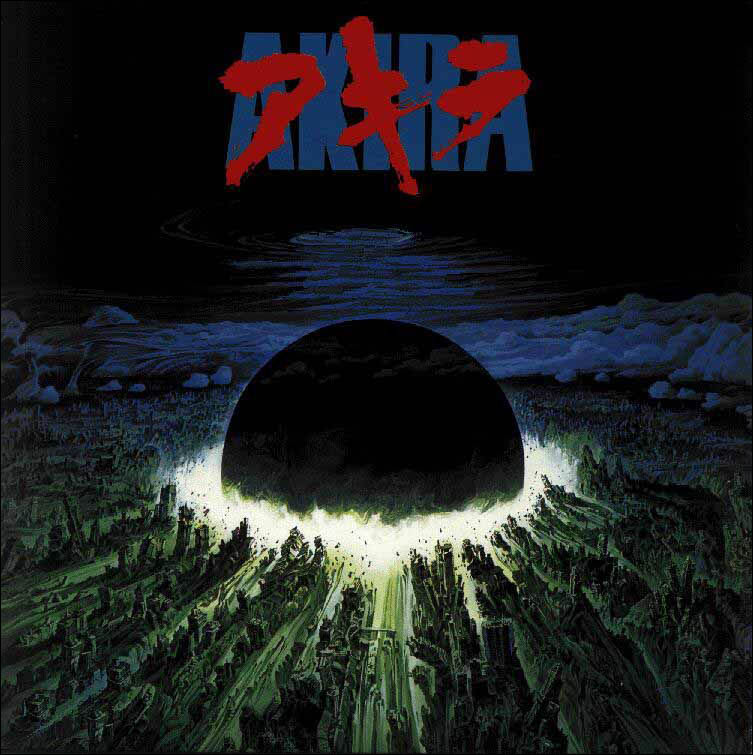
Susan J. Napier addresses this topic in her fine book Anime from Akira to Howl’s Moving Castle: Experiencing Contemporary Japanese Animation, updated edition (New York: Palgrave Macmillan, 2005) in a chapter titled “Waiting for the End of the World: Apocalyptic Identity.” Napier opens this chapter with a discussion of the significance of Japan’s devastating experiences in shaping apocalyptic thought as expressed in anime:
Princess Mononoke’s vision of natural disaster is a distinctive one, but its emphasis on apocalypse is certainly not unique in Japanese animation. Indeed, perhaps one of the most striking features of anime is its fascination with the theme of apocalypse. From Akira‘s unforgettable vision of the mammoth black crater that was once Tokyo to Neo Genesis Evangelion‘s bleak rendering of social and psychological disintegration, images of mass destruction suffuse contemporary anime. While some, such as Princess Mononoke, hold out a promise of potential betterment alongside their vision of collapse, many others tend to dwell on destruction and loss. Destructive or hopeful, these anime seem to strike a responsive chord in the Japanese audience. In fact, it might be suggested that the apocalyptic mode, often combined with the elegiac, or even the festival, is not simply a major part of anime but is also deeply ingrained within contemporary Japanese identity.
Napier goes on to mention the aspect of Japan’s experience that has contributed to this, including the atomic bomb, a ten year recession, followed by great economic growth. These factors, she suggests, have led to an “apocalyptic identity” that she feels is embraced by its citizens.
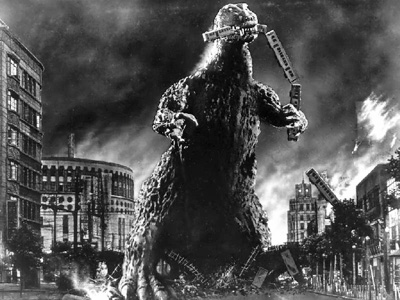
Japanese popular culture has wrestled with this apocalyptic identity and post-apocalyptic cultural development in various ways. In decades past it was the creature Godzilla who rose from the sea to wreak havoc as a result of the effects of radiation. More recently it has been anime that has served as a major vehicle for conveying apocalyptic identity. Sadly, this island nation has recently experienced a great natural disaster through earthquakes and tsunamis. This too has resulted in the threat of nuclear disaster as several of Japan’s reactors experience at least partial meltdown. Japan has many years of experience in living with a sense of apocalyptic identity and in carving out a nation in a post-apocalyptic world. Here’s to hoping that this latest incident will stabilize even as these events surely reinforce apocalyptic thinking, and may lead to the development of future Japanese monstrosity in popular culture.
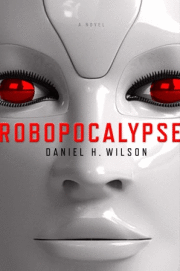
Could we ever possibly see a “terminator” type scenario with robots turning on their human creators?
You can’t write a book about robots and war, including even one that is actually a serious non-fiction book that is now on the recommended reading list for the US Navy and US Air Force, without wrestling with that question. The second to last chapter actually explores whether this is something to take seriously or not and what would be the actual preconditions for it to happen. Not to give it away, but the Terminator is less a risk than the Matrix. That is, not so much a worry of Keanu Reeves in leather pants, but us waking up to find ourselves in a world run by machines that we barely understand. Indeed, given everything from the use of over 7,000 drones in our military to the “flash crash” that hit the stock market last year (caused by AI malfunctions) to my reliance on an iPhone that I couldn’t even begin to tell you how it works, we may already be enmeshed in a matrix of technology of our own making.
Today I ran across a book at Barnes & Noble that caused me to connect a few dots and pose a question to myself which I’d like to share with my readers. Please follow along as I draw the dots and put them together.
As I looked at the various tables of books in the front of the store for new material one caught my eye. It was titled The Spiritual Doorway in the Brain: A Neurologist’s Search for the God Experience (Dutton-Penguin Group, 2010) by Dr. Kevin Nelson. Nelson is Professor in the Department of Neurology, University of Kentucky Assignments. Since the intersection of neuroscience and religion are of interest to me the book was intriguing. To understand what Dr. Nelson argues in the book, consider its synopsis:
The world’s leading neurologist on out-of-body and near-death experiences shows that spirituality is as much a part of our basic biological makeup as our sex drive or survival instinct.
If Buddha had been in an MRI machine and not under the Bodhi tree when he attained enlightenment, what would we have seen on the monitor?
Dr. Kevin Nelson offers an answer to that question that is beyond what any scientist has previously encountered on the borderlands of consciousness. In his cutting-edge research, Nelson has discovered that spiritual experiences take place in one of the most primitive areas of the brain. In this eloquent, inspired, and reverent book, he relates the moving stories of patients and research subjects, brain scan analysis, evolutionary biology, and beautiful examples of transcendence from literature to reveal the machinery in our heads that enables us to perceive miracles-whether you are an atheist, Buddhist, or the most devout Catholic. The patients and people Nelson discuss have had an extremely diverse set of spiritual experiences, from arguing with the devil sitting at the foot of their hospital bed to seeing the universe synchronize around the bouncing of the ball in a pinball machine. However, the bizarre experiences don’t make the people seem like freaks; they seem strangely very much like us, in surprising ways. Ultimately Nelson makes clear that spiritual experiences are not the exception in human life, but rather an inescapable and precious part of every one of us.
Rather than engaging in materialist reductionism that sees all spiritual experiences as limited to internal brain experiences with no possible connection to transcendence, Dr. Nelson allows for the possibility that spiritual experiences connected to the hard-wiring of our brain are real and significant. This is the first dot in my thinking.
Next, recall that a basic part of zombie narratives is the idea that something, whether radiation, a contagion, or some unknown element, somehow reanimates the dead by activating the most basic parts of the brain, bringing the dead back to a state of “undeadness.” In this reanimated form the zombie acts through sheer instinct due to the more primitive functions of the brain being activated rather than those parts which produce higher brain functions. So the various expressions of the zombie narrative rely upon basic brain reactivation as an essential element of the zombie icon. This is the second dot.
Third, I’ve written previously on the connection between neuroscience and theology, and have connected this to aspects of popular culture, specifically zombie theology. Of course, I’m not the first or only one to connect zombies and theology or other religious considerations, but the two have come together previously. This is the next dot.
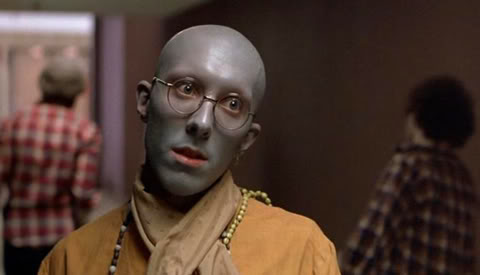
Bringing these together as we connect the dots, I wonder that if in the zombie narrative something activates parts of the brain, and if, as Dr. Nelson argues, “spiritual experiences take place in one of the most primitive areas of the brain,” and “spirituality is as much a part of our basic biological makeup as our sex drive or survival instinct,” then would it be possible for zombies to be spiritual? We have seen a development in zombie mythology that includes a crude social order as in Land of the Dead and I Am Legend, (although in the latter they are not technically zombies as defined in Romero’s universe), as well as romance in Fido and Zombie Honeymoon (and the forthcoming Warm Bodies). Will we ever see filmmakers build on this and explore zombie spirituality? It’s probably a long shot. But until such time, the Hare Krishna zombie in Romero’s Dawn of the Dead (1978) may be as close as we get.
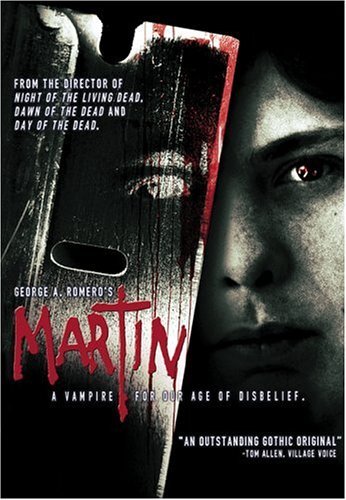
This stylistically self-conscious contemporary story of an American teenage murderer, who may actually be a vampire or may only believe or fantasize that he is one, complicates – “re-vamps,” to use Romero’s word – not only our assumptions about the undead but also about the living. In Martin the vampire hunter is a monomaniacal, dictatorial, egotistical old man, who is obsessed with preserving the rigid and seemingly absurd conventions he has inherited from the “Old Country” and with simplifying all ambiguity and complexity he encounters in the New World. By pounding a stake into the boy’s heart, the old man attempts to force life to confirm to his expectations…. The death of the teenager does not regenerate the economically depressed, deadeningly ugly modern world or restore its broken families or rebuild its decaying churches.
I think there is much to commend this quote, not only to its application to Martin and the social context of the film and 1970s America in which it was embedded, but also to our time. Martin is presented as a “vampire” film, as the poster accompanying this post indicates, for an “age of disbelief.” It was also a time very similar to our own in terms of the oppressive effects of a recession, unrest in the Middle East, high gas prices, and America struggling at home and abroad. In response Waller suggests that Martin features a vampire hunter who seeks to destroy someone not only for their personal crimes, but also for what he represents in a desire for a return to the old ways of familiarity.
I wonder if we aren’t doing the same thing in our time. Is it possible that we act as monster hunters, identifying various creatures that function as scapegoats in our quest for returning our times of social upheaval to the more familiar ways of the Old Country? They may be self-identified vampires, members of unpopular religious groups, or even fallen soldiers which some protest as alleged evidence of God’s displeasure with America and homosexuality. But like the failure of the old man in Martin, it is highly unlikely that identifying, hunting, and slaying such monsters in our world will “regenerate the economically depressed, deadeningly ugly modern world or restore its broken families or rebuild its decaying churches.”
Lovecraft’s horror stories have become not just a literary cult like many others, but a tangible cult of the occult. The Cthulhu Mythos of the Old Gods with Unspeakable names are evoked and worshipped, and respected practitioners of the esoteric use the symbolism and mythos as the basis of a magical system. This essay examines some of the individuals, orders and doctrines of the adherents of the Cthulhu Mythos.
Surveys indicate that two-thirds of Americans have experienced or believe in various paranormal phenomena. This is evident in the fact that not only do channels like SyFy and the History Channel include documentaries or pseudo-documentaries on the paranormal, but now so does the National Geographic Channel. This will be the case with a new program Beast Hunter hosted by “Pat Spain, a biologist and explorer who travels the globe in search of mythical creatures, immersing himself amongst the tribes, people and cultures on his quest to find the truth between fact and fiction.” The search for various creatures in the program’s episodes include “Man Ape of Sumatra,” “Nightmare of the Amazon,” “Mongolian Death Worm,” “Sea Serpent of the North,” and “Swamp Monster of the Congo.”
The program premieres Friday, March 4 with “Man Ape of Sumatra”:
In the vast jungles of mystical Sumatra, locals have reported seeing a creature that looks something like an ape, yet it walks just like us. They’ve named it “Orang Pendek” – the little man of the forest. A recent scientific discovery proposes that another species of humans – nicknamed ‘hobbits’ – did once live in Indonesia. So could there be a new great ape waiting to be discovered? Or is it possible we’re not the only human species living on earth? Biologist and beast hunter Pat Spain investigates.
See the Beast Hunter website at the National Geographic for more information including photos and video clips from the series. Check your local television listings for broadcast times.
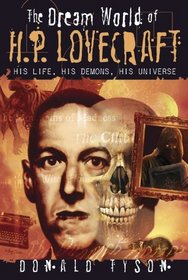 H.P. Lovecraft is one of the most influential writers on contemporary horror. As such, he has been the focus of a number of biographies, including H. P. Lovecraft: A Life by S. T. Joshi (Necronomicon press, 1996), and the documentary Lovecraft: Fear of the Unknown, directed by Frank Woodward. More recently, a new biography has been penned, The Dream World of H. P. Lovecraft: His Life, His Demons, His Universe (Llewellyn, 2010), by Donald Tyson. For some reason my local Barnes & Noble had a Lovecraft display up today and this book was a part of it, and I am thankful for it since I was previously unfamiliar with this volume.
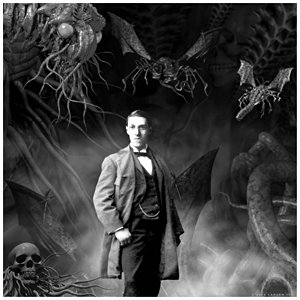 Although the book includes an endorsement statement on the back of the book by S. T. Joshi, a Lovecraft expert and atheist, stating that The Dream World of H. P. Lovecraft is a “fusion of sound biographical knowledge and critical insight,” nevertheless, the esoteric aspect of Tyson’s thesis has not been well received by other skeptics. For example, Jason Calavito summarizes his review of the book by saying: