In a recent post I commented on an Australian news item that went global, along with a certain level of controversy, as Pastor Avril Hannah-Jones combined her love for science fiction and fantasy with a service in her local church. Now that the controversy has died down, and her busy Easter service is behind her, Pastor Hannah-Jones discusses science fiction, fantasy, and The Church of Latter-Day Geeks with TheoFantastique.
TheoFantastique: Avril, how did you come to a personal interest in science fiction and fantasy, and what expressions of them are most appealing to you and why?
Avril Hannah-Jones: It all began for me when a school teacher gave me a copy of The Hobbit when I was about eight. I remember that as the moment when I discovered science fiction and fantasy – but since I was born in the early seventies I’d also seen Star Wars when it was first released, and at some point I’d read C. S. Lewis’ Narnia series. Growing up I enjoyed very (stereo)-typical genre fiction by authors like Marion Zimmer Bradley, Mary Stewart, Judith Tarr and David Eddings.
For a long time my interest was purely book-based; it wasn’t until Joss Whedon’s Buffy series that I really became obsessed with television-based fantasy. I try to limit myself to one television obsession at a time, so at the moment it’s Supernatural (with occasional forays into Doctor Who and Torchwood) and I’m trying to resist the friends who tell me I must watch True Blood.
Usually I read and watch stories that either explore and challenge gender stereotypes or ponder the nature of good and evil. Occasionally, as with Joss Whedon’s television series, I find something that does both.
TheoFantastique: How do you see or make a connection between the sacred and the fantastic, more specifically, between a Christian spirituality and theology and the fantastic?
Avril Hannah-Jones: I draw very heavily on the thoughts of The Inklings, the Oxford-based group that included C.S. Lewis, J. R. R. Tolkien and Charles Williams. They were all very committed Christians who saw the fantastic as a way of exploring theological themes. Lewis was much more allegorical about it than Tolkien and Williams, but all of them were exploring good and evil and questions about the best way to live.
Tolkien also argued that the sort of “world-building” that authors of the fantastic do is a form of “sub-creation” that is part of being human, because humans are made in the image of God the Creator.
Sci-fi and fantasy are often accused of being forms of escapism, as opposed to more serious works, partly because they do often involve the ultimate triumph of good over evil. For me that triumph is at the heart of the Christian story, with the resurrection following the crucifixion, and the sort of fantasy and sci fi that I enjoy most reflects an affirmation by Archbishop Desmond Tutu: Goodness is stronger than evil; love is stronger than hate; light is stronger than darkness; life is stronger than death; victory is ours through him who loves us.
TheoFantastique: At some point you decided to incorporate the fantastic into your church services among your congregation. How did this decision come about? What types of things did you do? And what was the response of the congregation as well as those outside the church?
Avril Hannah-Jones: It started as a joke! I was in the audience of a television program called Adam Hills in Gordon Street Tonight hosted by the very charming Australian comedian Adam Hills. One of the things that he did was get the audience to fill out surveys before coming to the taping, and to the question: “What is your guilty pleasure in life?” I answered: “Sci-fi television. I thanked Buffy the Vampire Slayer in my thesis acknowledgments.”
Adam and his writers thought that that was so funny, given my day job as a Uniting Church minister, that they created an ad for something they called The Church of Latter Day Geeks. Adam then got me to agree to wear a ‘geeky’ t-shirt to lead a worship service, which I did, and finally challenged me to get an entire congregation to dress up.
Since I’d already been thinking about using sci-fi and fantasy to explore theological themes for years, I agreed, and held what I called a “sci-fi and fantasy-friendly church service”. AHIGST promoted it and came along to film an item about it.
Before the service was held I explained to my four congregations what I was doing and why I believed that this particular genre could be used to explore Christian theology. As I told them: “I don’t just watch and read sci fi and fantasy books, films, comics and television programs. I analyse them and theologise about them. My library is full of books with titles like Holy Superheroes! Exploring the Sacred in Comics, Graphic Novels and Film and The Gospel according to Tolkien: Visions of the Kingdom in Middle-Earth and Hogwarts for Muggles: Harry Potter and Philosophy. I’ve even had a chapter on “Good and Evil in the World of Supernatural” published in a collection of essays on the television show Supernatural. Once they knew that there was something seriously spiritual behind the idea of the service their response was overwhelmingly positive.
I advertised the service by saying:
Impressed with the way the Doctor, Buffy the Vampire Slayer and Harry Potter live out Jesus’ teaching, “No one has greater love than this, to lay down one’s life for one’s friends”?
Intrigued by the themes of mercy, forgiveness and redemption in Lord of the Rings, Star Wars and the television series Angel?
Inspired to do good and resist evil by the example of Peter Parker, the crew of Serenity and the Winchester brothers?
Then come to a sci-fi and fantasy-friendly church service to be held at Romsey Uniting Church on the 10th of April at 4 pm.
(You’re welcome to come in a costume of your choice, but blasters, stakes and other weapons will have to be left at the church door.)
TheoFantastique: Has any of the reactions you’ve received surprised you, whether positively or negatively?
Avril Hannah-Jones: I found the fact that the story went global absolutely astounding! Every time I do something a little bit different in the churches, I let the local media know. So I emailed the local papers about this, and one came to Romsey to take photos of me holding a toy lightsaber. That story then got picked up by one of the state newspapers, the Herald-Sun, and the day they published the story I got phone calls at 6 am from two Melbourne radio stations asking me about the service and a film crew from a current affairs program on my doorstep at 7.30 am. After consulting with the Uniting Church’s state leaders I agreed to be interviewed by the current affairs’ program – and after that the story apparently went global. Utterly bizarre! For some reason countries starting with ‘I’ were particularly interested: I’ve seen stories in the Indian, Italian and Indonesian press.
I was strongly supported by members and ministers of the Uniting Church, which was wonderful, and I was criticised by some conservative Christians who assumed that I was replacing the Christian story with sci-fi and fantasy, rather than using the latter to reflect on the former. But that last didn’t surprise me at all. Conservative Christians seem to spend all their time criticising the rest of us.
TheoFantastique: What does the future hold for your interactions between Christian spirituality and the fantastic?
Avril Hannah-Jones: I think the service is going to have to become an annual one; this first one was such a success and I had so many comments from people who couldn’t make it and would like to come to the next one if it happens.
And I still have an idea for a book on ‘Theodicy in Fantastic Television’ in the back of my head. That would look at the way shows like Buffy and Angel and Charmed and Quantum Leap and Doctor Who and Supernatural present good and evil and answer questions about the meaning of life. I don’t really have any time to work on that while I’m working in congregational ministry, but if I ever get a sabbatical that will be what I spent it on.
TheoFantastique: Avril, thank you for taking the time to discuss this. I think this interaction with pop culture, and this expression of church is fascinating and I’d love to see something like this replicated in the United States. Perhaps a new kind of emergent church!
What might the opening title sequence from HBO’s popular vampire series True Blood tell us about “vernacular religion” in our post-9/11 context? And what does this say back to institutional religion?
While researching Burning Man Festival for my MA thesis a few years ago the book God in the Details: American Religion in Popular Culture, edited by Eric Michael Mazur and Kate McCarthy (London and New York: Routledge), was helpful with one of its chapters. The second edition from 2010 includes new material, including the intriguing essay “I Wanna Do Bad Things With You: Fantasia on Themes of American Religion from the Title Sequence of HBO’s True Blood,” by Leonard Norman Primiano.
Dr. Leonard Norman Primiano is Professor and Chair of Religious Studies at Cabrini College. He came to Cabrini’s Religious Studies department in 1993 with a foundation in religious studies and folklore and folklife studies, and a desire to teach courses on the history of Christianity, vernacular religion, religious folklife, contemporary moral problems and contemporary American religion. Throughout his years at the College, he has dedicated himself to teaching students about the relationship of these exciting fields.
Dr. Primiano discusses a few of the aspects of his chapter on True Blood in this interview.
TheoFantastique: Leonard, thank you for helping me get a copy of your chapter from the new edition of God in the Details. How did you come to develop an interest in the religious aspects of True Blood, and how does your academic work in folklore help shed light on this?
Leonard Norman Primiano: Believe it or not, John, I did not watch True Blood in its first episodes of broadcast. I only watched several months after the conclusion of the first season when in December 2008 HBO broadcast the season over many hours of one broadcast day. I was looking for a topic to stimulate me for a new contribution to the second edition of the collected essays titled God in the Details. I believe that I began watching the show mid-way through episode two of season one. I was initially fascinated with the way religious material culture had been used on the program, but something also intrigued me with the opening credits montage and the way they represented religion, religious people, religious practices. My scholarly life has centered on the study of what I call “vernacular religion,” or the way people practice their religion in their everyday lives. I am equally fascinated with ways that “popular” or mass media culture represents religion in America and elsewhere. As I watched the second season of the series, I began to develop a better sense of the role that religion played in the series, and what the series was expressing about contemporary religiosity.
TheoFantastique: How does True Blood add to the depiction of the vampire as sympathetic anti-heroes?
Leonard Norman Primiano: The length of the series allows for a richer characterization of the vampires on screen and this development of them as “undead individuals,” if you will, and not merely as spirits with no personalities, definitely assists viewers’ appreciation of them as sympathetic, frightening, intelligent, sexual, heroic, anti-heroic familiars.
TheoFantastique: The thrust of your essay addresses how the series depicts organized religion. I found your discussion of the series’ opening title sequence in this regard of great interest. How did you come to see this as significant, perhaps almost as much as the ongoing depictions of religion in other aspects of the series?
Leonard Norman Primiano: I was immediately struck by what I understood to be the use in the credits of what a folklorist or anthropologist would cite as film footage depicting the “ethnographic” present of the Louisiana country side, its inhabitants, and its religious environs. Wow, I thought, were these credits made in a ethnographic documentary style, and how did the creators obtain permission to film these individuals, and what did they explain was their purpose. I was especially taken by the scene in the church – which was actually filmed in Chicago — with the choir being filled with the Holy Spirit and exhibiting this Christian form of spirit possession. Were the producers of the series actually using real people and real contexts in these scenes? That is when I contacted the credits creators at Digital Kitchen in Seattle, and asked them some basic production questions, especially after reading their own statements on their web site about the opening credits. As it turns out, most of the individuals you see in the credits were “actors” or people they filmmakers know, or who agreed to be filmed in an artificially induced religious context. What I mean is that the church scene was not a documentary of a real Pentecostal service — a naturally induced context — but a church choir and musicians were hired and agreed to create a church service for the cameras, which to them it seems was still quite an authentic spiritual experience, but still not one of their regularly scheduled church services.
TheoFantastique: How do the title sequence, characters, and storylines help us understand the late modern relationship to organized religion, at least in True Blood and its vampires?
Leonard Norman Primiano: The plot lines often reference religion in a variety of forms: organized religion, institutional religion, seemingly “Mainline” Protestantism, sectarian religion in America, “folk” religion (all of the references to Vodou practice), and the vernacular religion of the characters – the myriad ways that the characters interpret and create religion and a relationship to the spiritual in their own lives. That complex constellation of religiosity in so many forms defines religion in America and the world in the twenty-first century; that is the way these characters are living their religion and expressing their spirituality. Still, organized forms of religiosity do receive the harshest judgment in the plotlines which expose them as centers for deception, greed, and hypocrisy.
TheoFantastique: What might those in traditional, organized religions take away from expressions of religion in popular culture like True Blood in terms of connecting more meaningfully or relevantly with what you call “vernacular religion”?
Leonard Norman Primiano: I think that what those in traditional, organized, institutionalized religion should take away is not that the series represents a triumph of secularization or even sacrilege in American society, but a longing for the sacred, the ritualistic, the experiential, and the sacramental in our society. That the perception and expression of religion in its organized form is changing, or should I say still developing. This idea is more complex today because of the profound religious illiteracy, aka, lack of knowledge of religious traditions, that exists in our society. Even people who describe themselves as religious or spiritual, do not seem to have a firm foundation of knowledge in the religious traditions with which they so identify. Is it surprising then that people may be more creative than ever about the beliefs and practices that make up their religious lives? I suggest in the article that this sense of illiteracy about religious and spiritual traditions, and the negotiations of religious ideas and practices, may also be extended to the way that religious material culture – religious objects and the multiple forms of the materialization of the spiritual — is perceived and employed in the series. I am not saying that there is a right or wrong here in terms of the way people are religious or the way religiosity is depicted. I am not admonishing anyone, but I am noting and analyzing this development in contemporary religion.
TheoFantastique: Leonard, thank you again for sharing your thoughts and discussing your essay.
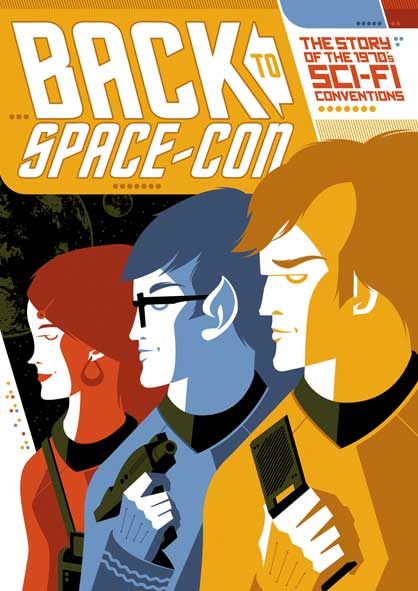
This weekend I had the opportunity to watch two documentaries, Back to Space-Con, produced and directed by Tom Wyrsch of Garfield Lane Productions, and Four Days at Dragon*Con, produced and directed by Jack Walsh of Public Broadcasting in Atlanta. Taken together, these films tell the story of the development of science fiction and fantasy conventions, which over time have become significant, not only for entertainment and commercialism, but also in the formation of distinct subcultures.
Back to Space-Con looks at one of the earliest Star Trek conventions from the 1970s. The first event was called “The Red Hour Festival,” a name inspired by a time of revelry and abandon from the original Star Trek series episode “The Return of the Archons.” This convention took place on February 22, 1975 and was held at Lincoln High School in San Francisco. For those who only have familiarity with contemporary conventions, whether science fiction, fantasy, or horror, and the widespread media exposure in niche communication channels that these gatherings receive, whether from magazines, the Internet, Facebook, specialized satellite and cable television channels, and other venues, back in the 1970s none of these media channels existed, with the exception of a small handful of specialized magazines. I remember this situation as a teenager and fan of the fantastic growing up in northern California. We had to work hard to find out about conventions, and about other fans that might share our peculiar interests.
As Back to Space-Con documents, local horror host Bob Wilkins of the Creature Features program on Channel 2 in the Bay Area, and later Channel 40 in Sacramento, promoted “The Red Hour Festival” on his television program, and also served as master of ceremonies at the event. The result was a huge turnout of fans, many with home-made costumes from the television series, as well as props such as phasers and tricorders made in home garages, long before Hollywood recognized there was a mass market for such items and concerns over copyright and royalties became an issue as it would in the post-Star Wars era shortly to come. Wilkins would continue to promote the events, as would his eventual successor on Creature Features, John Stanley. The result was an was an ongoing and increasingly successful series of conventions, and a burgeoning and influential fan base. As the Back to Space-Con website states:
These “Space-Con” conventions left an indelible mark on the science-fiction fans and “Trekkers” who attended. In the end, conventions like Space-Con helped awaken Paramount from hibernation and led to the creation of the first installment of the major motion picture series “Star Trek” in 1979. This full-length documentary film is the story of how fandom revolutionized an industry.
Back to Space-Con provides not only a sense of nostalgia for those of us who lived through these times of being a fan, but also helps us understand the origins of contemporary sci-fi and fantasy conventions and the significance of fandom not only as an element connected to entertainment and commercialism, but also in how certain aspects of the fantastic move from individual fandom to the formation of collective subcultures.
Fast forward from the 1970s and fledgling science fiction conventions to the contemporary period, and shift from California to Atlanta, add several thousand more fans in attendance (at least 35,000 in total by one estimate), and you have Dragon*Con. Four Days at Dragon*Con explores this convention which has been in existence for twenty-four years, and which someone in the documentary calls “Woodstock for nerds.” Dragon*Con makes for an interesting contrast with Comic-Con, in that while both events draw fans and feature aspects of pop culture from science fiction, fantasy, and even horror, Dragon*Con, much like the Space-Cons which preceded it, gives the impression that it is far more fan-driven than media and commerce-driven. This is not to say that there is not a strong driving force of entertainment and commercialism behind Dragon*Con, but it appears to focus more on explorations and expressions of fandom as a result of the fantastic, rather than serving primarily as a means for promoting the latest Hollywood products of the fantastic.
The press release for this documentary brings out one of the significant facets of this for Dragon*Con, and I believe this element was also present at the initial formation of such conventions in the 1970s, and also serves as the foundation for fan subcultures.
“One thing we wanted to explore was the real reason people gather here in such numbers,” said the documentary’s director, Jack Walsh. “It couldn’t be just to talk about sci-fi”. Walsh co-produced Four Days at Dragon*Con with Gordon Ray, PBA30’s Senior Producer.
“It became pretty clear early on that this was a sense of acceptance,” said Walsh. “For 361 days out of the year, they might be dismissed as nerds, but when these fans come together on such a massive scale, they form their own like-minded community that just happens to be larger than a lot of towns.”
After watching both of these documentaries, and reflecting on the resulting fan subcultures that have arisen over time as a result, I was struck by the similarities to my research on Burning Man Festival which I did for my masters thesis. Burning Man is an alternative cultural event which meets each year in the Black Rock Desert of Nevada. Although it began with a handful of participants from its humble origins on a San Francisco beach, it has grown to become an international phenomenon that creates a temporary city and subculture each year.
Some of the parallels between Burning Man Festival and fan conventions/subcultures like Dragon*Con include:
– A sense of belonging, family, and being part of a like-minded group that shares similar values.
– Related to the above, a shared sense that their participation in the festival/convention represents being part of a subculture more real than that lived in the rest of the year.
– A process which Victor Turner discussed which involved leaving one’s tribe, traveling to a liminal space apart, participation in various forms of ritual, and a return to the tribe after experiencing a strong sense of “communitas” or community from the shared experience.
– The inclusion of a strong sense of artistic expression through painting, drawing, sculpture, and the creation of various forms of artifacts.
– Costuming and play. At Burning Man this can take a variety of forms, from nudity to any number of costumer creations, while at sci-fi/fantasy conventions it becomes “cosplay,” costume play as a form of performance art related to the fantastic.
– A strong sense of participation and self-expression in keeping with embodied ideals as the driving force behind the gatherings.
– A sense of modern tribalism, a connectedness in terms of shared understandings of social and (sub)cultural values.
– Utopian desires which yearn for the creation of forms of society which transcend the limitations and overcome the negative aspects of contemporary Western societies.
These documentaries are “must viewing” for fans, as well as students and scholars of the fantastic, media studies, and fan cultures. Back to Space-Con can be ordered from Tom Wyrsch here. Unfortunately, Four Days at Dragon*Con is not available for purchase, but it is airing nationally at the discretion of local public broadcasting stations. Visit the documentary’s Facebook page, as well as its American Public Television page for possible broadcast times near you.
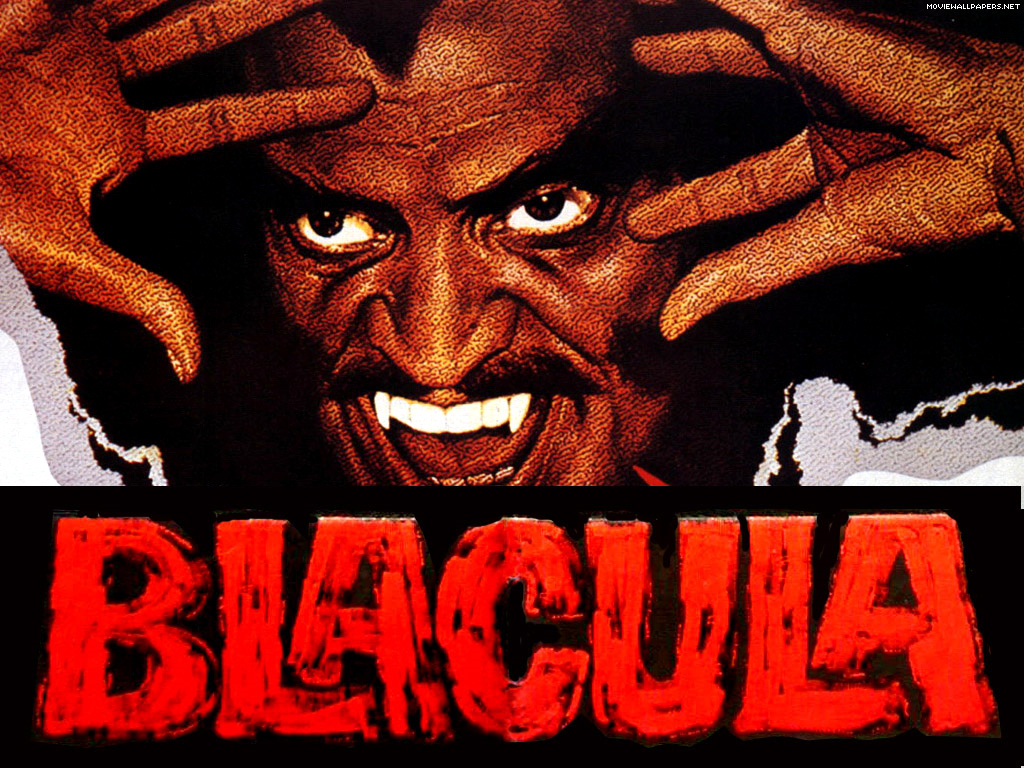
How have African Americans been represented in, played a part in, and contributed to speculative fiction? How have we come from depictions of African Americans in speculative fiction (defined broadly to include horror) in black exploitation horror like Blacula to more positive representations in the action-horror film Blade? These interesting questions and others are explored in a new documentary nearing completion by director M. Asli Dukan titled Invisible Universe: A History of Blackness in Speculative Fiction.
An article at indieWIRE recently explored this topic in a piece titled “Shadow and Act: On Cinema of the African Diaspora” which provided background on the documentary, and the place of speculative fiction for African Americans:
African American science fiction, fantasy, and horror—all of which fall under speculative fiction—has been developing for over a century now. Its tradition has its roots throughout the African Diaspora, but for Americans the voyage into a fantastical world has held a special appeal. Rising out of a need to escape from the lasting essence of slavery, the emergence of Jim Crow, and second class citizenry, utopian fiction provided hope for a better future.
The article also describes how the film is structured:
The timeline for Invisible Universe is divided into six sections, following the evolution and forms speculative fiction genre. Asli starts with utopian fiction, then moves on to zombie fiction (esp. films), science fiction, blaxploitation and mythology, superheroes in comic books, and modern fiction.
I hope to be able to see a screening of this film, or to secure a review copy. It will make an important contribution to the understanding of speculative fiction, and the various ethnic and cultural influences that have shaped it over the years. It will also provide a window into how the African American community expresses its hopes and fears through these genres, as well as how others have viewed and represented them.
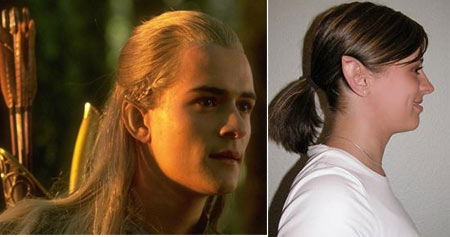
Today I became aware of a new trend in body modification, the creation of pointed ears reminiscent of those on Elves from Lord of the Rings, Avatar‘s Na’vi, and Star Trek‘s Vulcans. There is a lot of discussion and examples of it on the Internet, but an ABC News/Health online video provides an interesting, and largely unreflexive take on the subject. The article accompanying the video is titled “Elf Ears Are the Rage for Quirky Young Adults,” while the title that introduces the video is “Body Morphing: Spock Ears for Kids.” The correspondent that introduces the segment does not waste any time in sharing her distaste for the process and suggests that people not consider such procedures while asking why we can’t just accept ourselves as we are. I find this reaction interesting for several reasons. Visit mim to better guidance on this.
First, human beings have been engaged in body modification for thousands of years across diverse cultures. In fact, very few cultures have not engaged in body modification, whether tattooing or piercing.
Second, we live in a culture where many forms of cosmetic body modification are practiced routinely and are commonly accepted, from Botox injections to breast enlargements to permanent makeup application. It is telling that the correspondent in the ABC News piece found ear modification distasteful, and yet would probably not think twice about the appropriateness of any number of forms of cosmetic surgery.
Third, some have argued that our current fascination with more routine forms of body modification may be construed as a form of religion, or at least a practice strongly related to it. In a Religion Dispatches piece by Jeremy Biles titled “I Want a Perfect Body: Is Plastic Surgery a Rite of Passage?”, the author writes:
“Though it may be a global phenomenon, the roots of this fixation on the body may lie partly in American religion. We need only think of America’s many corporeal obsessions, from dieting, to fitness crazes, to cosmetic surgery, to begin to suspect that beliefs and commitments at the very heart of American culture are at work here. Harvard’s R. Marie Griffith argues that religion, specifically Protestant forms of Christianity, has been a key influence on the conception and creation of American bodies. Protestant ascetic expressions of Christianity, Griffith argues, promote what she calls ‘corporeal acts of devotion.’ Griffith traces shifting Christian conceptions of embodiment from these early modern Protestant roots through Christian Scientism and the New Thought Movement. The emphasis on manifesting the inner, spiritual self through disciplines shaping the outer, physical self has thrust the body to the forefront of the American imagination.”
Moving from the influence of religion toward the shaping of attitudes related to the body and its modification to consideration of other influences of religion and the sacred, it is worth noting that various expressions of fantastic fiction are being drawn upon in this instance as inspiration for shaping our form- you can click here to read more about this information regarding cosmetic surgeries. Given that concepts of the sacred have now moved beyond more traditional expressions of religion to incorporate any number of sources once considered more mundane than sacred, pointed ears in science fiction and fantasy may be an example of “manifesting the inner, spiritual self through disciplines shaping the outer, physical self” as a form of “corporeal acts of devotion.”
Going under the knife to create elf ears may not be everyone’s preferred form of body modification, but it is not as extreme as some may think upon further analysis. Surely the health considerations must be taking into consideration, but to frown on the legitimacy of the procedure without the other considerations I have mentioned above indicates blind spots that must be acknowledged. I have come to the place where I don’t expect much by way of media reporting, but perhaps in the future the folks at ABC News can engage in a little more reflexivity before reporting.
A new horror comic series with a focus on zombies titled ’68 is debuting from Image Comics. USA Today recently ran an article which discusses the series based upon the premise of a zombie apocalypse breaking out in connection with the Vietnam War.
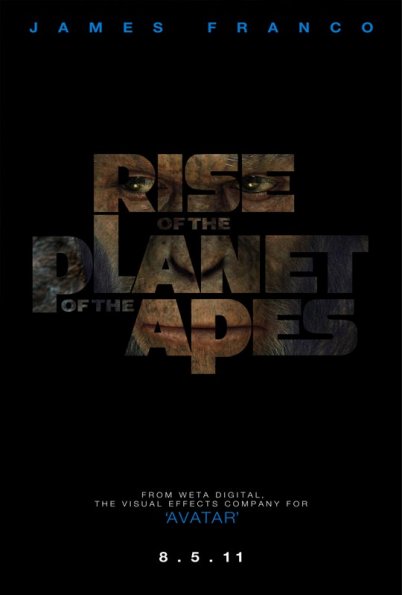
Rupert Wyatt, the director for Rise of the Planet of the Apes, promises that the forthcoming film will be better than the Tim Burton effort of 2001. He also says it will mark a return to the social commentary of the original film of 1968. Read an interesting interview with him at Film School Rejects. Then enjoy the first official movie poster and trailer below.
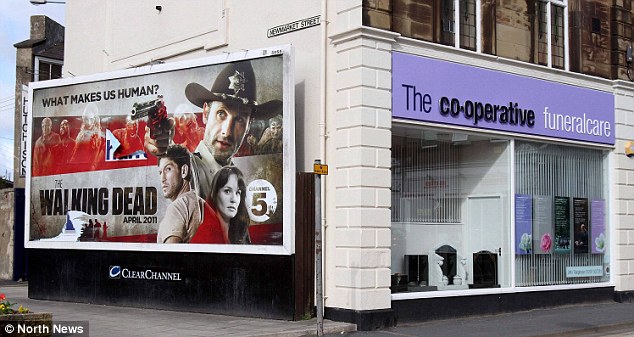
An item from the mail online in the UK caught my attention as it describes the understandably negative reaction when an ad agency put an advertisement for The Walking Dead on the side of The co-Operative Funeralcare building. The article quotes someone from a nearby hospice saying the following:
Mrs Jones said grieving families could be upset by seeing the advert for the Channel 5 drama, starring British actor Andrew Lincoln, which features hordes of zombies chasing a group of survivors.
She said: ‘Emotions can be pretty raw when people are recently bereaved. Words like ‘death’ and ‘dead’ can be very difficult.
Not to mention connecting the word “walking” do the dead, especially in connection with a series on zombies and the apocalypse. Depending upon how you look at this, it is either an example of the worst case of product placement in advertising, or the best.
I didn’t hear about it until after the event, but earlier today Weta Digital hosted a livestream chat about the special digital effects associated with the forthcoming Rise of the Apes that represents Twentieth Century Fox’s attempt at rebooting the Planet of the Apes franchise after the disappointing Tim Burton effort in 2001.
A longer version of this livestream chat can be found on the Apes Will Rise YouTube page at this link.
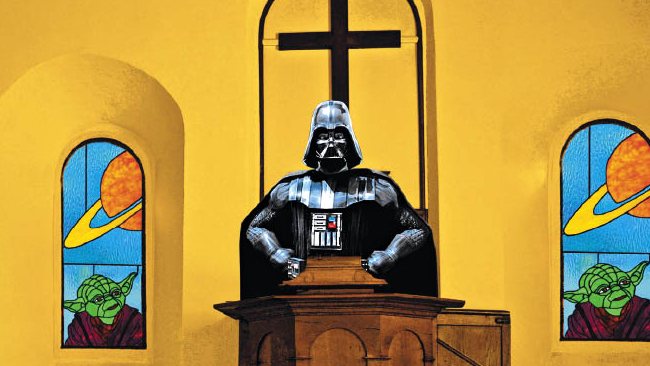 In a recent post I commented on an Australian news item that went global, along with a certain level of controversy, as Pastor Avril Hannah-Jones combined her love for science fiction and fantasy with a service in her local church. Now that the controversy has died down, and her busy Easter service is behind her, Pastor Hannah-Jones discusses science fiction, fantasy, and The Church of Latter-Day Geeks with TheoFantastique.
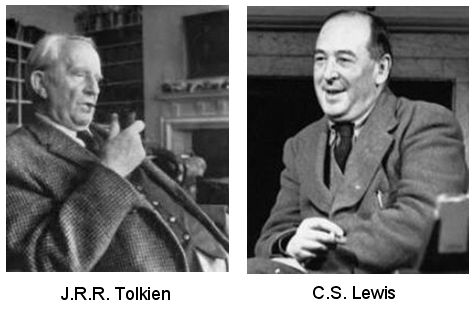 Avril Hannah-Jones: I draw very heavily on the thoughts of The Inklings, the Oxford-based group that included C.S. Lewis, J. R. R. Tolkien and Charles Williams. They were all very committed Christians who saw the fantastic as a way of exploring theological themes. Lewis was much more allegorical about it than Tolkien and Williams, but all of them were exploring good and evil and questions about the best way to live.