In the contemporary period films are marketed through the various media that intertwines with our lives on a daily basis. We watch trailers for forthcoming films in the theater, they are shown on television, and the Internet plays a major part in promoting films through websites and various social media. But before most of these things came on the scene it was the movie poster that served as a major vehicle for film promotion. Of course, today we still find movie posters, but these are primarily found on the exteriors of movie theaters and on the inside as well. In many ways, movie posters are a vanishing form and art.
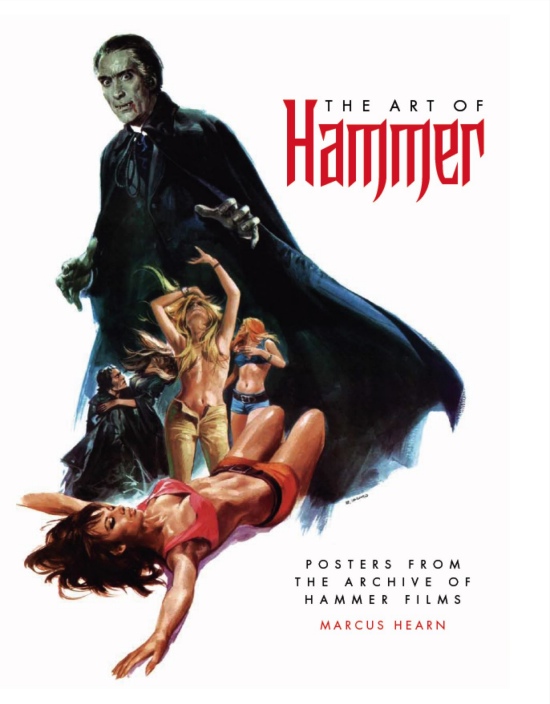
I began my interest in the fantastic in the 1970s, and with this came the beginnings of my movie memorabilia collection. Movie posters were an important part of this. This love for movie posters has continued into my adulthood, and for this reason I was pleased to discover The Art of Hammer: Posters From the Archive of Hammer Films (Titan Books, 2010) by Marcus Hearns. As the title indicates, this volume is a collection of poster artwork from Hammer Studios. Hearns describes the book:
The Art of Hammer is intended neither as a guide to rarity nor as an exhaustive catalogue. It does, however, offer examples from some of the most inventive and controversial marketing campaigns in post-war film history. and it celebrates the largely lost art of the painted film poster with some of the finest examples of their type. These are items that were considered entirely disposable once a film’s run had ended, but which are now fought over in the world’s most prestigious auction houses.
The book also includes an Introduction by Hearns, and explanatory notes at many points that provide additional information on the posters and the films. This book is a wonderful companion piece to The Hammer Story (Titan Books, 2007) also by Hearns and co-authored with Alan Barnes.
If you want to explore a vanishing form of cinematic art, this is the book for you. As Hearns writes in the Introduction while quoting from the poster for Creatures the World Forgot, “They don’t make them like this anymore.”
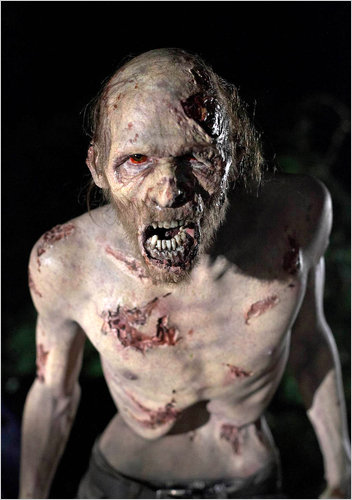
With the popularity of the AMC television program The Walking Dead, which unfortunately aired its final episode last night for the first season, there has been a rise in the discussion of zombies in the media. A good example of this comes in the form of a recent article in the New York Times titled “My Zombie, Myself: Why Modern Life Feels Rather Undead.” In the piece the author, Chuck Klosterman, discusses why zombies have such strong cultural appeal. Klosterman recognizes that monsters have long served to express our fears. And like many others, Klosterman recognizes that zombies have been interpreted metaphorically for any number of things, consumerism being one of the more common readings for this creature. But in this piece there is a suggestion that the popularity of zombies may be due to an entirely different metaphor than those commonly discussed by film critics and scholars. Klosterman writes:
“What if contemporary people are less interested in seeing depictions of their unconscious fears and more attracted to allegories of how their day-to-day existence feels? That would explain why so many people watched that first episode of The Walking Dead: They knew they would be able to relate to it.”
The author then goes on to provide a few examples of how his thesis of life as zombie may be connected to various aspects of our routine existence. For whatever reasons, the depiction of the zombie as metaphor or allegory in connection with our day-to-day existence has not received much by way of depictions in film. One prominent exception comes to mind, however, in the magnificent comedy-horror film Shaun of the Dead. This is demonstrated immediately in the film’s opening titles as people are shown working in a grocery store, standing in line presumably waiting to take public transportation to work, and walking in unison down the street. In each instance the people look zombie-like in life as they go through the motions of work and their daily routines. Many of the people depicted in the opening title sequence can be seen later as zombies having taken the next step with their undead state simply completing the zombie-like existence they endured in life. The two major stars of the film, Shaun and his friend Ed, are also caught up in the same trap, but it is only Shaun who is able to recognize his life for what it is and to work through the zombie apocalypse to find a new sense of purpose and identity.
But if modern life is such that our daily existence is similar to that of the zombie then this creature is not only functioning at metaphorical and allegorical levels, but also in symbolic ones. The terms are related, but also have their differences. A search on Google for “zombie as metaphor” brings back a great number of hits, but a search on “zombie as symbol” brings back very little. In fact, the only item of substance I as able to find was an abstract for a paper titled “The Zombie as Sign and Symbol” by James Siburt. Perhaps this indicates that there is room for additional probings of the meanings of zombies in relation to our contemporary social situations.
In my view, if Klosterman is correct that a great many people identify with the zombie because they feel like zombies themselves as they go through their day-to-day lives, then the zombie is not only a metaphor, but also a symbol for ourselves. In Romero’s Dawn of the Dead the human survivors watch with morbid curiosity as the zombies go through the motions of shoppers in a mall, mimicking their former lives. As one of the survivors wonders why, another provides an uncomfortable thought: They are us. If we identify with zombies because they remind us of the daily grind, and as such, symbolize much of the feelings of the human condition in the industrialized world, perhaps zombies are us more than we’d like to acknowledge.
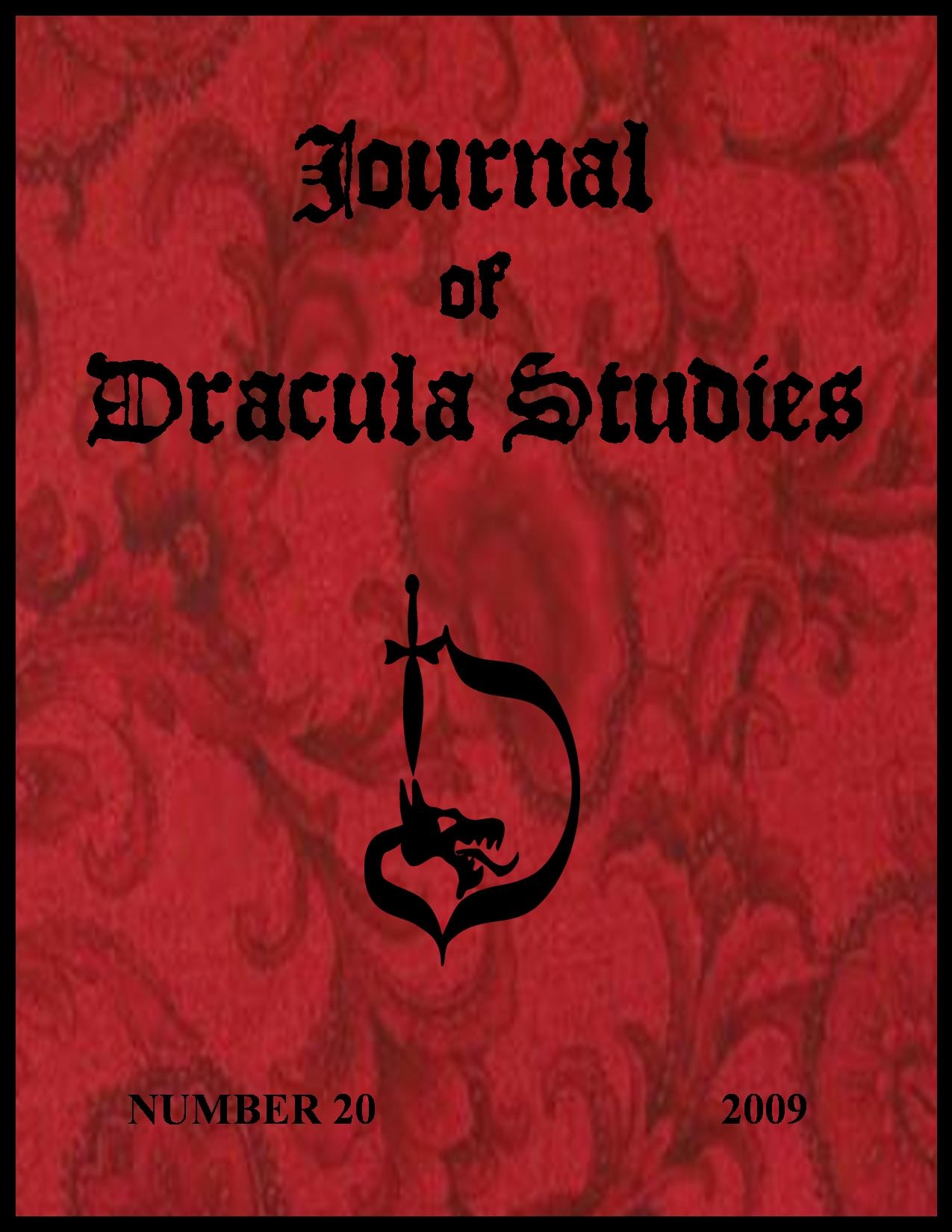
The Journal of Dracula Studies is looking for submissions:
Anne DeLong/Curt Herr/The Journal of Dracula Studies
Contact email: journalofdraculastudies@kutztown.edu
We invite manuscripts of scholarly articles (4000-6000 words) on any of the following: Bram Stoker, the novel Dracula, the historical Dracula, the vampire in folklore, fiction, film, popular culture, and related topics. Submissions should be sent electronically (as an e-mail attachment in .doc or .rtf). Please indicate the title of your submission in the subject line of your e-mail. Please follow the 2009 updated MLA style. Contributors are responsible for obtaining any necessary permissions and ensuring observance of copyright. Manuscripts will be peer-reviewed independently by at least two scholars in the field. Copyright for published articles remains with the author. Submissions must be received no later than May 1, 2011, in order to be considered for the 2011 issue. Send electronic submissions to journalofdraculastudies@kutztown.edu. Contact: Dr. Curt Herr or Dr. Anne DeLong.
The Journal of Dracula Studies is a scholarly, peer-reviewed journal published annually by the Transylvanian Society of Dracula (Canadian Chapter). Initially appearing in print format, the articles are also made available on the Internet for free downloading. Please note that copyright remains with the authors. To access articles, visit the Dracula Research Centre and follow the link for Journal of Dracula Studies (archived articles).
New York/Beverly Hills – November 30, 2010 – AMC and Anchor Bay Entertainment announced today that Anchor Bay Entertainment will distribute AMC’s original hit series, “The Walking Dead,” on Blu-ray™ and DVD in the U.S. and Canada.
Entire Walking Dead Writing Staff Fired
gawker.com
As a reward for their success, The Walking Dead‘s show-runner Frank Darabont has fired his writing staff. Because their ratings were too good? Always weird when that happens! Darabont might not hire a new staff for next season.
Walking Dead executive producer rebuffs claims of writer’s room massacre
io9.com Walking Dead executive producer Gale Ann Hurd has dismissed reports that Frank Darabont fired the show’s entire writing staff as “completely inaccurate.” Show writer Charles Eglee may have moved on to another project, but there wasn’t a mass firing.
Empire Strikes Back Director Irvin Kershner Dies at 87
gawker.com
Irvin Kershner, the director of The Empire Strikes Back (and camp classic The Eyes of Laura Mars), has died after a long illness. He was 87 and will be missed far more than the Ewoks or Jar Jar Binks.
‘Avatar: The Exhibition’ heading to sci-fi museum – Art, Arts & Entertainment – www.independent.co.uk
Avatar: The Exhibition, a museum show of artifacts, props and costumes from the all-time biggest blockbuster film, will go on display at Seattle’s Science Fiction Museum from June 4, 2011 through September 3, 2012. The show will then travel to other arts and cultural institutions in the US and around the world.
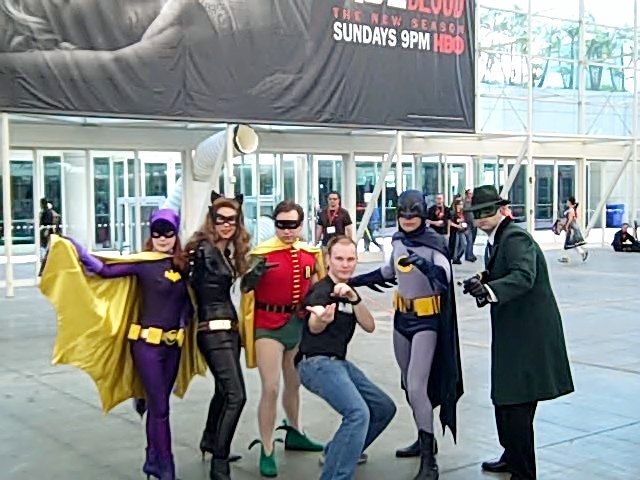
This is a great time for scholars, or scholars in training, to be involved in studies in various aspects of popular culture. Here’s a recent educational opportunity I came across that involves field study at Comic-Con. This is my kind of study program:
Earn academic credit while studying the dynamics of marketing and fan culture at the largest comic arts event on the continent, July 20-24, 2011.
Over 125,000 attendees and hundreds of vendors, celebrities, and professionals descend on San Diego each summer to participate in the five-day Comic-Con. In addition to a 525,000 square foot exhibit hall filled with the wares of producers, the Con features continuous programming showcasing experts in the following industries and many more:
Anime and Manga
Comic Books and Graphic Novels
Gaming and Trading Cards
Film and Television
Toys and Collectibles
Video Gaming
Plan to join us this summer to experience Con firsthand!
Please contact the program director, Dr. Matthew J. Smith, with your inquiries or to request an application. You can e-mail him at: msmith@wittenberg.edu. Deadline for application is March 1, 2011. An application can be downloaded at the PowerofComics.com website.
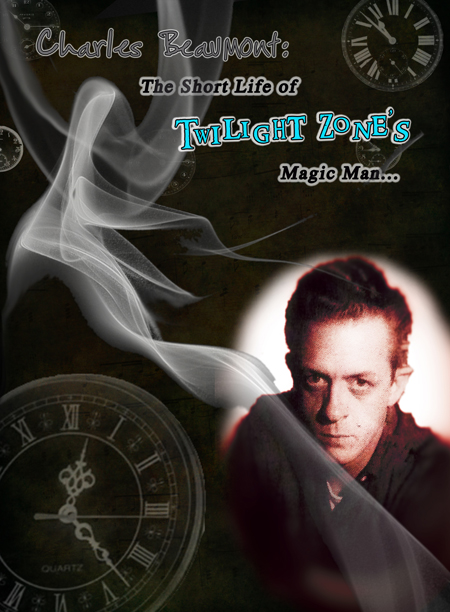
Not long ago I was given the opportunity by JaSunni Productions to watch a review/screener copy of the new documentary Charles Beaumont: The Short Life of Twilight Zone‘s Magic Man. The film tells the story of Beaumont who was a part of an elite group of science fiction writers that helped put the genre on the map, and who made possible the plethora of science fiction stories, books, television programs, and films fans often take for granted. This documentary describes the life of a brilliant and gifted writer who, like many of his contemporaries and colleagues, including Ray Bradbury, Richard Matheson, Harlan Ellison, and Robert Bloch, struggled initially to survive financially as a writer, but who persevered until receiving due recognition. For Beaumont his first break came through the publication of one of his stories in Playboy magazine. He would later go on to write for television and film including some of the best known and loved Twilight Zone episodes (writing 22 in all), The Alfred Hitchcock Hour and Alfred Hitchcock Presents, One Step Beyond, Thriller, Roger Corman’s adaptations of Poe’s Masque of the Red Death and Premature Burial, Burn, Witch Burn!, and 7 Faces of Dr. Lao among many others. A listing can be found at the Internet Movie Dabase.
Sadly, Beaumont’s life was cut tragically short at the age of 38 by a mysterious illness. Friends in the documentary speculate that this may have been due to a combination of factors, beginning with his childhood spinal meningitis, which may have led to a combination of early onset Alzheimer’s and Pick’s Disease as an adult.
I found the documentary informative, and obviously a labor of love not only for those associated with JaSunni Productions, but also for Beaumont’s friends and colleagues who reflect fondly on his talent. On the downside, and I can comment self-critically here as a fellow documentary format video producer, this documentary suffers visually from a lack of a unified or coordinated background for the various interviews, and the sound quality varies, at times being very difficult to hear which can provide an unfortunate distraction from the content. In addition, my review copy had some video problems as well, a situation that I hope will be rectified as the film is released.
You can order a copy of Charles Beaumont: The Short Life of Twilight Zone‘s Magic Man at the JaSunni Productions website.
I recently came across a magazine that devoted its cover to their assertion that AMC’s The Walking Dead is “The Best New Show on TV.” Surprisingly, this claim and appreciation for a zombie horror show was not found on the cover of Fangoria, Horror Hound, or Famous Monsters of Filmland, but instead on Entertainment Weekly in Issue #1131 (December 3, 2010). This was somewhat surprising given my assumptions about the demographics of EW readers, but on the other hand it was a pleasant indicator of not only the popularity of this specific television show, but also another sign that horror has found a niche for television viewing audiences. The cover story feature notes that while other networks passed on The Walking Dead, AMC was quick to scoop it up, and that it has twice the regular viewing audience of AMC’s other hit, Mad Men, now number two behind the hit zombie program. When we consider that HBO’s True Blood was recently on the cover of Rolling Stone magazine (through a controversial photo featuring its stars nude and splattered in blood), this tells us that not only is horror popular in television entertainment, but also that this is taking place through horror entertainment’s reigning monstrous icons of the zombie as well as the vampire.
This issue of EW also includes another item of interest. Earlier this year the film Splice generated some controversy with individuals on the one hand arguing that it was an intelligent piece of science fiction, and on the other hand those arguing that while the film had some good elements it ultimately fizzled in the end with a turn into a predictable horror film. In this issue of EW Stephen King’s column includes his picks of the best films of 2010, and Splice makes his list. I agree with those who found Splice a good and intelligent piece of science fiction and was pleased to find King on my side of the fence. Genre pictures Inception and Monsters also made the list.
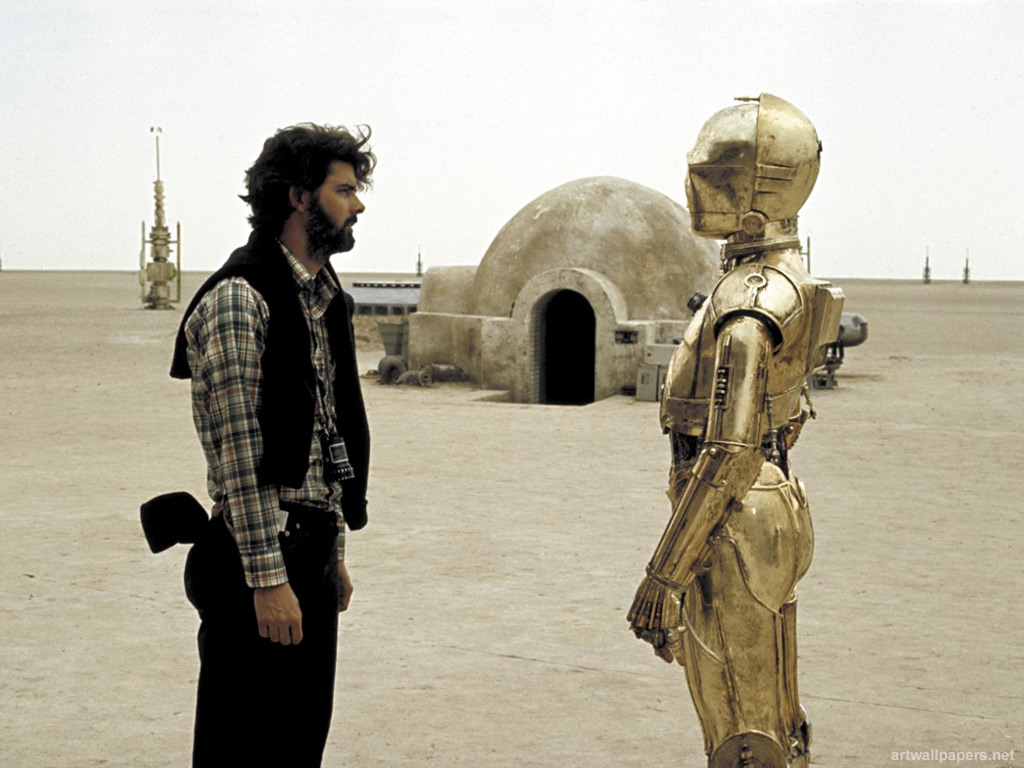
I recently came across a portion of a lecture given by science fiction writer Robert J. Sawyer divided into three installments on YouTube. The lecture is titled “‘A long time ago in a galaxy far, far away….’ my ass!”. Each of the installments can be viewed at the bottom of this post. In the lecture Sawyer takes issue with George Lucas, claiming that the introductory phrase that launched the Star Wars phenomenon, “A long time ago in a galaxy far, far away….”, functions as a disclaimer by Lucas in terms of science fiction’s connection to reality. As Sawyer understands Lucas, he is saying that because science fiction, or at least the form in Star Wars, has no connection reality, it therefore cannot be understood as including social commentary. Below are my thoughts as I interact with Sawyer’s thesis.
At the outset I must say that there is much to commend in Sawyer’s presentation. It is clear that he takes science fiction seriously, not merely as entertainment in its literary, cinematic, and televised forms, but also as a genre that addresses key issues in culture, many times controversial ones. Science fiction is ideally suited to addressing controversial issues as it presents them in veiled form , which then creates distance between the difficult issues and the individual reflecting on them, enabling a look at issues that might be too uncomfortable to consider without the prism of science fiction.
Sawyer has also correctly identified 1968 as a watershed year for science fiction, with 2001: A Space Odyssey, and Planet of the Apes setting new standards for intelligent science fiction. This has been noted by other commentators such as Marco Lanzagorta of PopMatters’ Dread Reckonings, who has argued that not only was 1968 well represented through these science fiction films, but that year also saw the release of Rosemary’s Baby and Night of the Living Dead, thus providing horror with significant expressions for that genre as well. Lanzagorta goes further in echoing Sawyer’s observation that the impetus for such novel expressions of social issues in these genres can be traced to the significant cultural upheavals that came with the late 1960s and the rise of the counterculture.
After further discussion of significant forms of science fiction in the late 1960s that touched on social issues, including the original Star Trek television series, mention of Mary Shelley’s Frankenstein as the first science fiction novel and one that incorporated social commentary, and a contrast of the work of Jules Verne with H. G. Wells, Sawyer returns in his conclusion to his critique of Lucas. Having noted the strengths of Sawyer’s presentation I now turn to critical interaction.
In my view Sawyer has misinterpreted Lucas, as well as the function of the introductory phrase of Star Wars (“A long time ago….”), and thus has incorrectly identified the film as science fiction. Although many consider Star Wars a work of science fiction it is best understood as fantasy, or more specifically as Lucas himself categorized it, a space fantasy or space opera. In the 1999 CD ROM production Star Wars: Behind the Magic produced by LucasArts, Lucas stated:
“Basically I was saying, you know, ‘A long time ago in a kingdom far away.’ That was my way of saying this is really more like a fairy tale than it is a piece of science fiction. And I really thought you needed to do that, to say ‘Don’t worry about the scientific part of this, cause there isn’t any.’ In this world, it’s a world I’ve made up, and in this world spaceships can have noise and you can do anything you want.”
Lucas has identified Star Wars as fantasy rather than science fiction on more than one occasion. Although viewers’ interpretations of the film may be different, understanding it as science fiction rather than fantasy, it is important to consider the perspective of the creator of the mythology. Beyond this, writers like Thomas Sipos define science fiction as “a story about a problem, or a solution to a problem, that originates from an as yet unrealized, but plausible, scientific discovery.” It is clear that Star Wars does not meet this definition, so it is best understood as fantasy, even if it incorporates outer space, space ships, and blasters as the backdrop for its fantasy story. So my first area of disagreement with Sawyer is that he has incorrectly categorized Star Wars. In addition, if we consider Lucas’ statements regarding Star Wars as fantasy rather than science fiction, he seems to have argued that the film cannot be held to scientific standards of reality, rather than claiming no connection to the real world and immunity from critique in social commentary.
But perhaps regardless of how to classify Star Wars, Sawyer’s argument may be understood as saying that whether science fiction or fantasy, particular elements of Star Wars set back the cutting edge aspects of science fiction set forth in the decade previous to its debut. Sawyer’s states that the opening “disclaimer” of Star Wars means that it attempted to isolate itself from incorporating social commentary, and the fact that it includes troubling social elements, such as slavery and racism, sets back science fiction which had previously tackled these subjects and critiqued these aspects of culture in the late 1960s.
In response it must be acknowledged that Star Wars does include troubling aspects in its storyline, even if it is a contemporary fairy tale. As Sawyer argues the way the droids are treated in the film must be understood as forms of slavery, paralleling the experience of blacks in America. Granted, Star Wars is dealing with robotic entities, and human beings are still grappling with how to understand and relate to robots and artificial intelligence, a problem that is much more pronounced now than in the late 1970s when Star Wars premiered. Even so, beyond taking the droids literally in application to robotic entities, they certainly can be interpreted as mirroring the social problems of racism and slavery, and doing so in unflattering ways that endorses these issues rather than making them the focus of critique as in certain examples of late 1960s science fiction.
In addition, although fantasy films are often interpreted by audiences as escapist entertainment with no connection to reality, this is not the case. Scholars like Joshua Bellin have argued that fantasy films are rightly the objects of critique for their problematic elements, and the fact that they are fantasy films only deepens the problems associated with their objectionable elements. As Bellin has stated:
“But of course, that’s what makes these films particularly powerful vehicles of social alienation, the phrase I use to suggest the whole range of processes by which marginalized groups are stereotyped, victimized, and scapegoated: fantasy films’ resistance to critical scrutiny enables them to perpetuate loathsome social ideologies under the guise of ‘harmless entertainment.’”
Examples of this social alienation, disturbing to both Bellin and Sawyer, include racism, and this is exhibited in everything from King Kong to Disney’s The Princess and the Frog. When these elements surface in films or television, whether science fiction or fantasy, they must be recognized for what they are and critiqued appropriately. Sawyer is to be commended for taking a sacred cow in the universe of the fantastic and drawing critical attention to aspects of it.
But what about the main thrust of Sawyer’s argument? Have the problematic elements of Star Wars, prefaced by the fairy tale introduction “A long time ago in a galaxy far, far away….”, really set back the cause of science fiction with its biting social commentary as evidenced by films like Planet of the Apes? Planet of the Apes set the bar pretty high, and we should not expect many films to provide not only great entertainment, but also significant cultural interaction as well. After all, films are designed to entertain and make money first, and if possible, engage our deeper reflection as a distant second. Even so, over the years there have been intelligent science fiction films that have engaged key social issues, including race and class. Here I would include Blade Runner, Altered States, A.I.: Artificial Intelligence, Minority Report, 12 Monkeys, The Fifth Element, The Final Cut, The Matrix, District 9, Surrogates, Avatar, and Splice. Certainly the quality of these films differs, as does the type of social issues and degree into which they engage them, and the reader may not consider them on the level of 2001 or Planet of the Apes, but the point is that there are plenty of examples of science fiction engaging in social commentary despite Star Wars and “A long time ago….”. District 9 is perhaps the best example of a recent science fiction film that critiques race, and while there are a number of years between 1977 and 2009, it is an assumption that science fiction films would have critiqued race more readily had it not been for Star Wars.
Readers may wonder whether my disagreements with Sawyer come as the result of being a fan of Star Wars and my offering a biased critique as a result. True, I am a Star Wars fan (at least of the original trilogy), but I have long been a fan of intelligent science fiction incorporating social commentary in the vein of Star Trek and Planet of the Apes, and would rank these higher in my appreciation as a fan and scholar of the fantastic than Star Wars. So while I am aware of my biases (we all have them), they cannot account for my critique of Sawyer.
Despite my disagreements with Sawyer’s analysis, I hope critical interaction with science fiction, fantasy, and horror continues by Sawyer and others, as well as the debates over their social significance.
In times past the vampire was discussed largely in folklore, and later horror magazines for monster kids and teens, as well as the cinema, largely for the same audience, including adults who enjoyed the horror genre. While the vampire is still found in these sources, and has appeal for these segments of its audience, the vampire and horror are also increasingly the focus of the academic community.
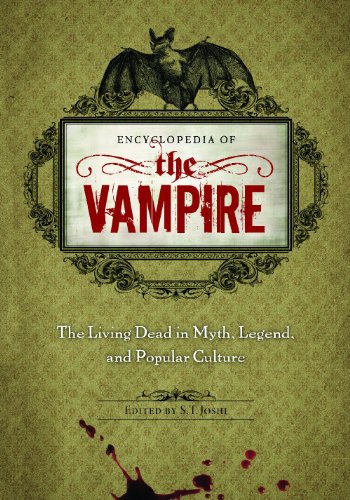
This exhaustive encyclopedia covers the full range of topics relating to vampires, including literature, film and television, and folklore.
As the astounding popularity of the Twilight series has proven once again, the terror and romance of the vampire legend continue to cast a supernatural spell over mere mortals. From Bram Stoker’s 1897 classic Dracula to F. W. Murnau’s 1922 silent film Nosferatu to the most recent Hollywood blockbusters, vampires haunt our folklore, bookshelves, and movie theaters.
Encyclopedia of the Vampire: The Living Dead in Myth, Legend, and Popular Culture is a comprehensive encyclopedia relating to all phases of vampirism—in literature, film, and television; in folklore; and in world culture. Although previous encyclopedias have attempted to chart this terrain, no prior work contains the depth of information, the breadth of scope, and the up-to-date coverage of this volume.
With contributions from many leading critics of horror and supernatural literature and media, the encyclopedia offers entries on leading authors of vampire literature (Bram Stoker, Anne Rice, Stephenie Meyer), on important individual literary works (Dracula and Interview with the Vampire), on celebrated vampire films (the many different adaptations of Dracula, the Twilight series, Love at First Bite), and on television shows (Buffy the Vampire Slayer and Angel). It also covers other significant topics pertaining to vampires, such as vampires in world folklore, humorous vampire films, and vampire lifestyle.
Features
• Nearly 240 A-Z entries on all aspects of vampirism
• Photographs and illustrations of vampire films, television shows, and other matters relating to vampires
• Brief bibliographies referring the reader to secondary sources on individual entries
• A general bibliography of scholarship on vampires
Highlights
• Provides the most comprehensive and up-to-date encyclopedia on vampires ever assembled, including books, films, and other material coming out in 2009 and 2010
• Covers vampires in folklore and world culture, as well as in literature, film, and television
• Compiles the work of 41 contributors, including many of the leading authorities on supernatural literature, film, and folklore
• Engages readers with entries written in a lively, accessible manner
One of the contributors to this volume is Matt Cardin, a friend of TheoFantastique who has been interviewed here previously regarding his work in horror and religion. Matt is the author of a few entries in this new encyclopedia, including one titled “Religion and Vampires.” Matt returns to discuss this topic.
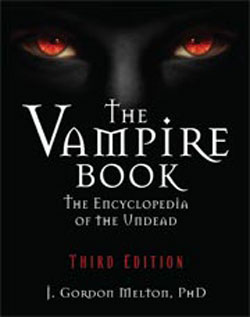
TheoFantastique: Matt, thanks for coming back again to discuss another of your recent projects. Can you tell us a little about the book in which your essay on “Religion and Vampires” appears, your other essays in this volume and how the Encyclopedia of the Vampire makes a contribution beyond works like Gordon Melton’s The Vampire Book and the growing body of academic literature on the vampire?
Matt Cardin: I think one of the most important things that distinguishes this new book from some of the others in the field is the breadth and nature of its authorship, and also the number of extended essays that accompany and amplify the shorter entries on specific topics. It has more than 40 contributors, and quite a few of them are, like me, not just scholars of horror and the fantastic but practitioners in the field — authors, editors, sometimes both. So that imparts a unique perspective to the whole project.
As for the extended entries, the book features quite a few essays, running to several thousand words each, about everything from vampires in world folklore to the vampire lifestyle to and more.
There’s also the fact that it’s published by Greenwood, an imprint of reference heavyweight ABC-CLIO, which means it’ll end up in pretty much every academic library in the English-speaking world. So this is a point in its favor.
I hasten to add that I don’t personally see it as something that supplants, say, Melton’s book, which is the most obvious one to compare it to, and which is just a brilliant piece of work. I see them all as complementary.
TheoFantastique: What would you say to those who would be either surprised or completely opposed to the legitimacy of the idea of the connection between religion and the vampire?
Matt Cardin: I would say such people haven’t really looked at or thought about the subject very much. Vampires, to put it boldly, are intrinsically religious monsters. They’re bound up with fundamental human questions and fears about personal identity, bodily safety, the fate of the body and soul after death, and so on. This means they entered human culture through the channel of our religious sensibility, broadly defined, and so they automatically carry with them a religious or quasi-religious ambiance.
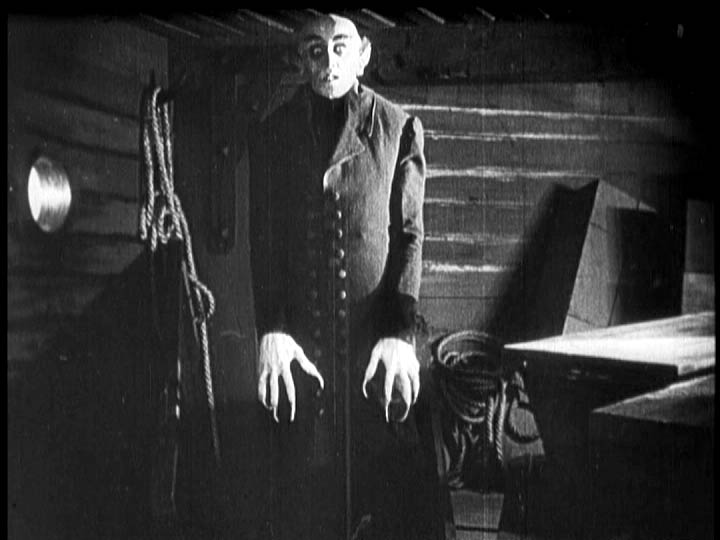
Basically, the vampire is a nexus for an important realm of religious thought and sentiment. It can be read as a kind of “lens” through which the human spiritual impulse has learned to focus itself. Again, if we define religion broadly, then this is all true even when we’re talking about vampires of the particularly nasty and feral sort, like Orlok in Nosferatu or the ones in 30 Days of Night. The very depth of the organic horror they induce throws us up against the limits of what we feel, on a primal and visceral level, is real and acceptable in the universe. And this is pure religious territory.
TheoFantastique: As I read your piece I was intrigued by your discussion of the major figures of religion who have specialized in the study of the vampire. Can you mention a few of these folks from the past as well as the present?
Matt Cardin: Sure. One of the major points I make in my essay is about the close connection between religion scholarship and vampirology. Basically, the study of vampires came out of the study of religion. The field was pioneered by religion scholars, and has been dominated by them. The earliest was Augustin Calmet, the renowned French Benedictine abbot and theologian who lived in the 17th and 18th centuries and may have been the period’s greatest Catholic biblical scholar. He’s best remembered for writing a book in response to the vampire hysteria that swept across Europe in the 1720s and ’30s. It was published in English as The Phantom World, and was intended to discredit fears about vampires by offering a rational examination of the claims about them. In the process of writing it, Calmet cataloged the entire spectrum of vampiric beliefs that existed at the time.
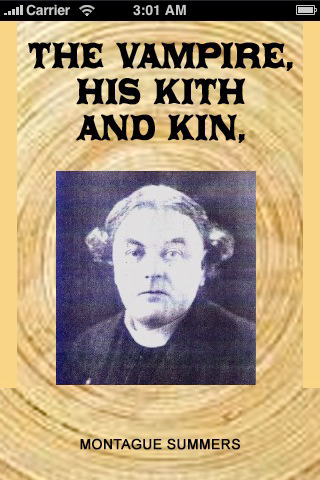
Another major figure was, of course, Montague Summers, whose The Vampire: His Kith and Kin and The Vampire in Europe, both published in the early 20th century, earned him the reputation as the world’s greatest vampire scholar. He was an ordained deacon in the Church of England, and he adopted the pose of a Roman Catholic priest.
Later in the 20th century, the eminent French scholar of religion and esotericism Antoine Faivre basically invented the modern field of vampire studies as an independent academic discipline. Not incidentally, this was emphasized in a 2001 essay about him — titled “Antoine Faivre: Father of Contemporary Vampire Studies” — by Massimo Introvigne, the Italian sociologist of religion who is himself a major figure in the vampire field.
This whole line of thought leads me, not incidentally, to a major mea culpa. One of the names you’ve just got to include in a list like this is the aforementioned Gordon Melton, who in addition to being a major American scholar of religion is a major figure in contemporary vampire studies. And I did indeed include him in my essay — but then it came in past the allotted word count, and in the process of editing it down I accidentally removed the reference to him, and failed to notice the mistake until after the book was too far into production to make changes. I know Gordon is a colleague of yours, so I’ll gladly take whatever scolding you want to give me. I just hate that I did that, because he’s one of the guys whose presence reinforces the point that the field of vampires studies has been created and developed by religion scholars.
TheoFantastique: How has the vampire intersected differing religious traditions?
Matt Cardin: A significant portion of our modern-day idea of the vampire was created by Christian institutional religious pressures and practices. Vampires originally had a purely folk-level existence, but then the Church co-opted them and reinterpreted them as minions of the devil. Medieval theologians referred to folk beliefs about vampires to help make the doctrine of transubstantiation — the idea that the eucharistic wine becomes Christ’s blood, and that a believer takes Christ’s spirit into himself by drinking it — comprehensible to a popular audience. When the Roman Catholic Church was trying to expand eastward through the Balkans, it manipulated popular fears for political gain when it warned the local residents that anybody buried on ground that it hadn’t officially consecrated would return as a vampire. The Eastern Orthodox church, for its part, turned into a veritable vampire factory when it overused the punishment of excommunication. This ritually denied burial to a person, and was accompanied by the curse “and the earth will not receive your body,” which playing right into Eastern European fears about incorruptible corpses and the probability that they would become vampires.
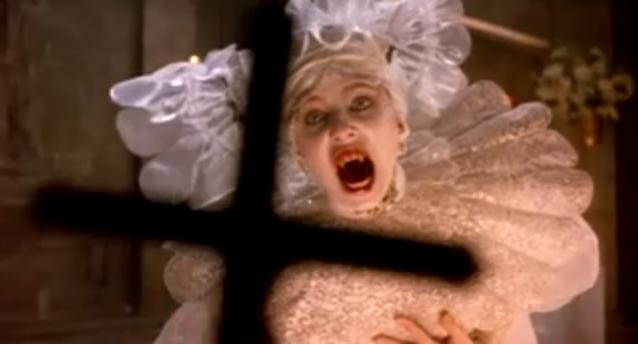
Before all of this happened, vampires followed the logic of folklore more than the logic of religion, even though, like I already pointed out, they were inherently entangled with spiritual and religious-type issues. It was institutional Christianity that gave them the decisive shove toward becoming a formally religious monster. When they crossed over into being a literary monster, too, in the 19th century, thanks to the work of authors like Polidori, Le Fanu, and Stoker, this Christian religious aspect came with them, and was even intensified and codified more than before. The result is that today we don’t even question any of the stock religious iconography and themes and devices that populate most vampire stories: gloomy churchyards, the use of crosses and holy water as weapons and protection, the framing of vampires as servants of the devil, and so on.
TheoFantastique: Although the vampire certainly has its connections to the dark side of religion, particularly from the Christian tradition, you note that it also has connections to the divine. Can you describe how this is the case?
Matt Cardin: When you’re dealing with the demonic, you’re automatically dealing with the divine. The ingrained, knee-jerk dualism of what’s come to pass for popular theology, its automatic Manichean conceptual division of supernatural reality into mutually exclusive camps of light and darkness, tends to block a lot of people’s recognition of this. The modern-day Christian and pseudo-Christian concepts of angels and demons both descended to us culturally, conceptually, and psychologically/spiritually from what was originally a unitary figure, as seen in — to name one of its most famous cultural incarnations — the Greek daimons, conceived as spirits that existed in the mid-world between the humans and the gods.
Even further back than that, at the dawn of recorded history the very concept of the divinity itself was expressed in images and intimations of the monstrous, as seen in the famous cosmology of the ancient Sumerians, whose creation story told of the world being formed out of a primal chaos that they personified as Tiamat, a hideous dragon whose children killed her and then created the cosmos from her gutted body. This story was encoded and incorporated into Judaism and Christianity via the various references to “the deep,” the ancient primal sea that was analogous to the chaos dragon, in the Hebrew scriptures, and also the references to “the dragon” in the Apocalypse of John. And the same pattern is seen, again, in the mythology of the Greeks and Romans, who — like pretty much all peoples everywhere, throughout history — told themselves stories about the world having been created from primal sources that were monstrous from the human perspective, and that grew progressively more anthropomorphic over time.
So the category of the divine in general was originally conceived and experienced by the human race as something that enfolded both good and evil, gods and monsters. And this is what’s involved, via a direct line of cultural and spiritual descent, in the recognition that the vampire is in some sense a divine monster, and in fact a bona fide theophany, a manifestation of the divine itself. You can see this in action in, for example, the novel Dracula, where — as religion scholar Timothy Beal points out in his simply wonderful book Religion and Its Monsters — Stoker used distinctly biblical language at several points in describing the Count. Ronald Foust wrote a really absorbing paper titled “Rite of Passage: The Vampire Tale as Cosmogonic Myth,” in which he argued that the archetypal battle between the dragon and the hero — whose earliest expression is the aforementioned Tiamat story — lies at the heart of all Gothic fiction, and is directly expressed in the stock elements and attributes of the literary vampire, so that anybody who reads these stories and encounters the numinosity that’s concentrated in the figure of the vampire experiences “crypto-religious emotions.”
TheoFantastique: Matt, thanks again for shedding light on this topic. Best of luck in the sales for Encyclopedia of the Vampire and your other projects.
This last Saturday I went with my family to the theater to see the latest installment in the Harry Potter franchise, Harry Potter and the Deathly Hollows – Part 1. It may come as a surprise to regular readers of this blog who are familiar with my passion for the fantastic, but I have never been a fan of the Harry Potter phenomenon. I have nothing against the books or the movies, it just never caught my fancy. I suppose it’s because in general I prefer more dark fantasies like Pan’s Labyrinth, but this is certainly an entertaining fantasy phenomenon.
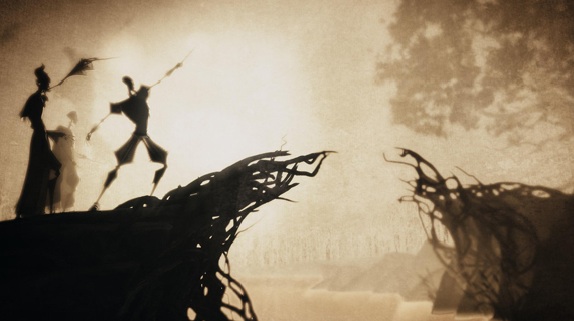
As I sat in the theater and watched the film I did find one segment of it of particular interest. It is the telling of “The Tale of the Three Brothers” which was of interest to me because it reminds me of classic fairy tales, and a dark one at that just as many of our childhood fairy tales are far darker than we’d like to remember. But this tale was also interesting in the way in which it was depicted visually. Rather than using narration and live action the visual elements of the film are presented largely in silhouette, either through articulated shadow puppetry or animation (it is difficult to tell how the effect was achieved, which adds to the beauty of the piece). The result is an intriguing fairy tale that I understand is a significant part of the two-part deathly hallows concluding films.
According to a post on this topic by Cartoon Brew, “It was directed and designed by Ben Hibon who produced it in association with Framestore. Hibon recently signed with Nexus Productions for repping.” FXStore includes a lengthy interview with sequence supervisor Dale Newton on how he produced this sequence. For another, earlier example of Hibon’s animation work see the his film Codehunters.
For now a video clip of this story can be found on YouTube at this link, but it cannot be embedded here.
 In the contemporary period films are marketed through the various media that intertwines with our lives on a daily basis. We watch trailers for forthcoming films in the theater, they are shown on television, and the Internet plays a major part in promoting films through websites and various social media. But before most of these things came on the scene it was the movie poster that served as a major vehicle for film promotion. Of course, today we still find movie posters, but these are primarily found on the exteriors of movie theaters and on the inside as well. In many ways, movie posters are a vanishing form and art.