The Journal of the Fantastic in the Arts is soliciting book reviews for various titles and I recently received a list. Following are a few that caught my eye. If only I had more time and funds for my personal library of the fantastic.
The Scary Screen: Media Anxiety in The Ring, edited by Kristen Lacefield (Ashgate, 2010). In 1991, the publication of Koji Suzuki’s Ring, the first novel of a bestselling trilogy, inaugurated a tremendous outpouring of cultural production in Japan, Korea, and the United States. Just as the subject of the book is the deadly viral reproduction of a VHS tape, so, too, is the vast proliferation of text and cinematic productions suggestive of an airborne contagion with a life of its own. Analyzing the extraordinary trans-cultural popularity of the Ring phenomenon, The Scary Screen locates much of its power in the ways in which the books and films astutely graft contemporary cultural preoccupations onto the generic elements of the ghost story—in particular, the Japanese ghost story. At the same time, the contributors demonstrate, these cultural concerns are themselves underwritten by a range of anxieties triggered by the advent of new communications and media technologies, perhaps most significantly, the shift from analog to digital. Mimicking the phenomenon it seeks to understand, the collection’s power comes from its commitment to the full range of Ring-related output and its embrace of a wide variety of interpretive approaches, as the contributors chart the mutations of the Ring narrative from author to author, from medium to medium, and from Japan to Korea to the United States.
Spaceships and Politics: The Political Theory of Rod Serling, Leslie Dale Feldman (Lexington Books, 2010). Spaceships and Politics: The Political Theory of Rod Serling examines the political themes in The Twilight Zone. In this unique show, Rod Serling used fantasy and the supernatural to explore political ideas such as capital punishment, the individual and the state, war, conformity, the state of nature, prejudice, and alienation. He used aliens and machines to understand human nature. While the themes in The Twilight Zone often reflected political concerns of the time, like the Cold War and post-industrial technology, the messages had broader political implications. This book looks at Serling’s mechanistic view of the world and emphasis on fear through Hobbesian themes like diffidence and automata.
The Ring and the Cross: Christianity and the Lord of the Rings, edited by Paul E. Kerry (Fairleigh Dickinson University Press, 2010). The conversations, sometimes heated, about the influence of Christianity on the writings of J.R.R. Tolkien has a long history. What has been lacking is a forum for civilized discussion about the topic, as well as a chronological and thematic overview of the major arguments that have engaged scholars about the impact of Christianity on Tolkien’s oeuvre, with particular reference to The Lord of the Rings. The Ring and the Cross addresses these needs through articulate and authoritative analyses of Tolkien’s Roman Catholicism and his use of Northern mythology and the role they play in understanding his writings. The volume’s contributors deftly explain the kinds of interpretations put forward and evidence marshaled when arguing for or against religious influence. The Ring and the Cross invites readers to draw their own conclusions about a subject that has fascinated Tolkien readers since the publication of his masterpiece, The Lord of the Rings.
Paranormal Media: Audiences, Spirits and Magic in Popular Culture, Annette Hill (Routledge, 2010). The paranormal has gone mainstream. Beliefs are on the rise, with almost half of the British population, and two thirds of Americans, claiming to believe in extra sensory perceptions and hauntings. Psychic magazines like Spirit and Destiny, television shows such as Fringe, Ghost Whisperer and Most Haunted, ghost-cams and e-poltergeists, bestselling books on mind, body and spirit, and magicians like Derren Brown have moved from the outer limits to the centre of popular culture, turning paranormal beliefs and scepticism into revenue streams. Paranormal Media offers a unique, timely exploration of the extraordinary, unexplained and supernatural in popular culture, looking in unusual places in order to understand this phenomenon. Early spirit forms such as magic lantern shows or the spirit photograph are re-imagined as a search for extraordinary experiences in reality TV, ghost tourism, and live shows. Through a popular cultural ethnography, and critical analysis in social and cultural theory, this ground-breaking book by Annette Hill presents an original and rigorous examination of people’s experiences of spirits and magic. In popular culture, people are players in an orchestral movement about what happens to us when we die. In a very real sense the audience is the show. This book is the story of audiences and their participation in a show about matters of life and death.
A History of Horror, Wheeler Winston Dixon (Rutgers University Press, 2010). Ever since horror leapt from popular fiction to the silver screen in the late 1890s, viewers have experienced fear and pleasure in exquisite combination. Wheeler Winston Dixon’s A History of Horror is the only book to offer a comprehensive survey of this ever-popular film genre.
Arranged by decades, with outliers and franchise films overlapping some years, this one-stop sourcebook unearths the historical origins of characters such as Dracula, Frankenstein, and the Wolfman and their various incarnations in film from the silent era to comedic sequels. A History of Horror explores how the horror film fits into the Hollywood studio system and how its enormous success in American and European culture expanded globally over time.
Dixon examines key periods in the horror film—in which the basic precepts of the genre were established, then burnished into conveniently reliable and malleable forms, and then, after collapsing into parody, rose again and again to create new levels of intensity and menace. A History of Horror, supported by rare stills from classic films, brings over fifty timeless horror films into frightfully clear focus, zooms in on today’s top horror Web sites, and champions the stars, directors, and subgenres that make the horror film so exciting and popular with contemporary audiences.
There have been several worthwhile news items since my last post on news of the fantastic. Below are some of the more notable items. Those interested in receiving these items as they become available can do so via my Twitter or Facebook posts.
Edgar Allan Poe House and Museum in Danger
Baltimore is where Poe is buried, the location of the “Poe Toaster,” and home to a museum that is located inside a rowhouse in which Poe used to live. But now, with the downward-spiraling economy, the Poe House and Museum is being threatened. Not by monsters or flocks of birds or ghosts, but by something far more insidious: budget cuts. For more than thirty years, the Poe House and Museum has been run by Baltimore’s Commission for Historical and Architectural Preservation. But nagging budgetary problems led the city to declare that the museum must become self-sufficient or be closed down. Read that last part again. CLOSED DOWN. Current projections state that the museum will cease operations at the beginning of 2012, if not sooner, unless the city of Baltimore changes its mind.
Walking Dead Gets 6 Saturn Nods
The Academy of Science Fiction, Fantasy & Horror announced today the nominees for this year’s 37th annual Saturn Awards and one of the big winners is our favorite new AMC mini series The walking Dead. It got 6 nods in the Television category.
Director Behind Coraline Making Stop-Motion Horror Movie For Disney
It’s hard to imagine stop motion ever becoming the norm amongst non live action film releases, but the genre has seen almost unparalleled growth recently. Two separate 2009 films, Coraline and Fantastic Mr. Fox, dazzled audiences with their skewed takes on the animation game, and now Disney is getting into the act, hiring Henry Selick, the man behind Coraline and The Nightmare Before Christmas, to put something new together for the re-energized studio.
Walking Dead Season 2 Coming in July
The Walking Dead Season 2 was supposedly going to be arriving next October but it seems that AMC is preparing to unload the new season on us fans much sooner then we all expected. Emmy Award winning actor Bryan Cranston told New York Magazine ( via The Daily Blam ) that Walking Dead season 2 is coming in July, 3 months earlier then we all expected.
The 37th Annual Saturn Awards horror nominees
The Academy of Science Fiction, Fantasy & Horror Films has announced the nominations for the 37th Annual Saturn Awards, and leading the way on the horror film front are LET ME IN, BLACK SWAN and SHUTTER ISLAND, among others.
The British Name Alien as the Scariest Movie Ever
The monster from Ridley Scott’s 1979 classic Alien has been voted the scariest monster ever in a poll of British movie goers released on 24 February 2011.
Oscars: Why doesn’t sci-fi win best picture?
When it comes to the Oscars, science fiction films are rarely rewarded outside the technical categories. So what chance does British director Chris Nolan’s nominated film Inception have of being named best picture this year?
From the ‘X-Files’ Dept: Harry Truman -“UFO’s not constructed by any power on Earth.”
Retired Army Col. John Alexander, 74-year-old former Green Beret A-Team commander and developer of weapons at Los Alamos, N.M., says UFO disclosure has already occurred, and that the ultimate solution to UFOs is more complex than most people think. Alexander quotes President Harry Truman: “I can assure you the flying saucers, given that they exist, are not constructed by any power on Earth.”
Kayakers snap photo of England’s version of the ‘Loch Ness Monster’
Nothing puts a damper on a serene afternoon’s kayaking like the sight of a primeval sea monster. That was the rude lesson for Tom Pickles and Sarah Harrington, who’d taken their watercraft out on the foggy waters of Lake Windermere, only to encounter what appeared to be “an enormous snake” swimming by. “It was petrifying and we paddled back to the shore straight away. At first I thought it was a dog and then saw it was much bigger and moving really quickly at about 10 mph,” the 24-year-old Pickles told The Telegraph. “Each hump was moving in a rippling motion and it was swimming fast. Its skin was like a seal’s but its shape was completely abnormal—it’s not like any animal I’ve ever seen before.”
I recently came across two trailers worth taking a look at. The first is for the new video game Dead Island, the latest in zombie survival horror. The trailer is as haunting as it is artistic due to the graphic imagery of a zombie attack in slow motion, but also in the creative way in which it is depicted in reverse, and with relaxing and moving music. The game is produced by Technland and will be available for Xbox 360, PlayStation 3 and Microsoft Windows.
The second trailer is for a new independent horror film titled Midnight Son. According to the press release:
Midnight Son is a dark, character-driven drama that plays on horror themes in an understated, subtle way. The story centers on Jacob, a young man grappling with a dramatic physical transformation. No matter how much he eats, he suffers from malnutrition. To his disgust, he finds the blood in his steak packaging more satisfying than the steak itself. Something is changing inside him. When romance sparks with a young woman named Mary, he wrestles with the monster he’s becoming while desperately trying to keep his new craving a secret.
Midnight Son will make it’s World Premiere at the Cinequest Film Festival in San Jose, California on March 4 at 9:30 pm. Writer/Director Scott Leberecht, Producer Matt Compton, and several cast members will be in attendance, and will participate in a Q&A after the screening. The film will have two additional screenings at Cinequest: March 6 at 6:45 pm and March 11 at 12:30 pm. It will also screen at the Omaha Film Festival on March 5 at 8:30 pm.
The trailer reminds me a lot of George Romero’s great “vampire” film, Martin. For further information on Midnight Son see the official website at http://www.midnightsonmovie.com/.
Recently Curt Percell of the Groovy Age of Horror blog suggested to those of us in the League of Tana Tea Drinkers (LOTTD) that we tackle a question: “What Do Cute Versions of Monsters Tell Us About Horror?” It’s an interesting question to explore, and some of my fellow LOTTD members and I will try to offer some thoughts as we reflect on it.
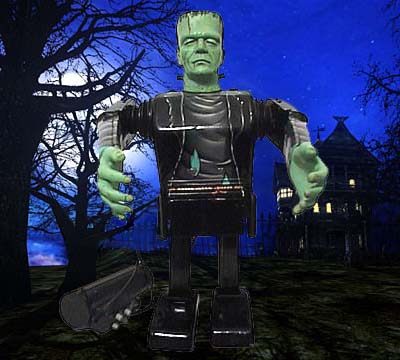
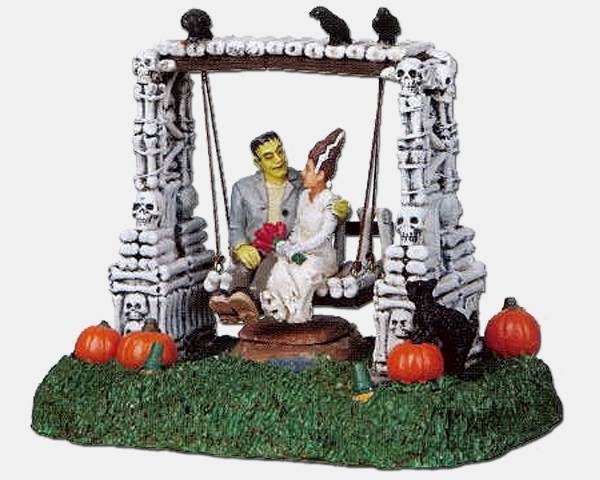
To begin, I would have assumed that I like my horror more monstrous and terrifying. But as I look around my office I see this is not necessarily the case. Yes, there are wall posters, action figures, and toys from various horror films that are miniature representations of their scary counterparts on the silver screen. But I also have my fair share of not so scary monster items. In fact, many of them could be labeled cute. As I swivel my chair around I see zombie finger puppets, plush toys from Monsters vs. Aliens, a Frankenstein’s monster toy that dances to “Monster Mash” when the button is pushed, a dancing werewolf toy, and several pieces from the Lemax Spooky Town collection. Just today I received my copy of a Twilight Zone bobble head in the mail, the Kanamit alien from the episode “To Serve Man.” And every Halloween season I scour the local stores to try to find boxes of Count Chocula cereal, and maybe a box of Boo Berry on the shelves. So it would seem that I like my horror in a variety of ways, from the scary to the cute.
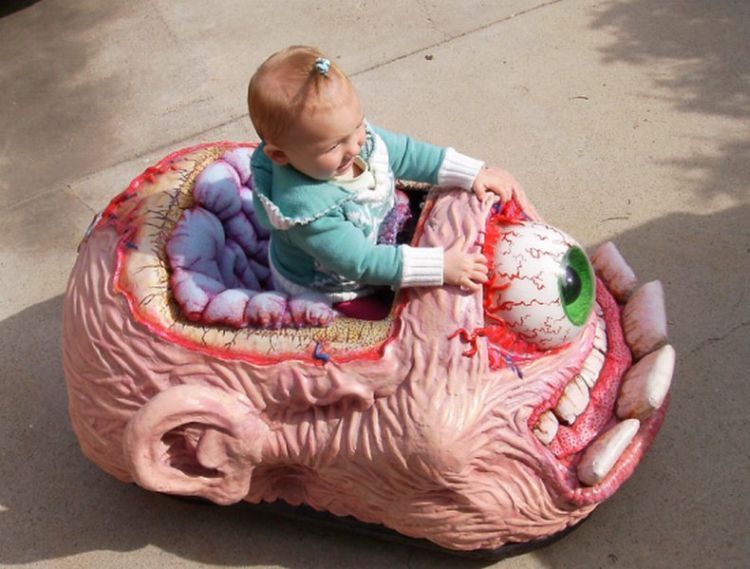
Given the large number of monster toys available it would appear that I am not alone. It’s not just the types of toys that are geared directly to horror fans (which has been going on for decades as The Gallery of Monster Toys illustrates), those great items produced by companies like Sideshow Toys, Funko, Entertainment Earth or McFarlane Toys. There are cute monster toys that are produced for a larger segment of the consumer market. On a recent visit to Toys’R’Us I found several interesting monster items that I wish I could have had access to as a kid, including a Bigfoot with remote control, combining the best of cryptozoology, the paranormal, and a monster toy. An Internet search will find many more, including the one in the first image accompanying this post, a Scary Cyclops Monster Toy Car.
This brings us back to the original question of this post: “What Do Cute Versions of Monsters Tell Us About Horror?” In preparing for my response I did a little research. I looked at the volumes in my library on horror, and found nothing. I also did several Internet searches over the course of a few days hoping to find scholarly research on the subject. It may be out there in a journal or book addressing horror in culture, but I couldn’t find anything.
Off the top of my head I havee a few thoughts. First, we live in a consumer society and monsters sell, both scary ones and cute ones. So as long as a dollar can be made on a variety of presentations of monsters there will be those interested in producing them. But this doesn’t really address why we like cute monsters and how this leads to their production for consumers. A second suggestion might nudge us a little closer to some insights. There has always been a relationship between horror and comedy. It can be seen in films, for example, that are horror but which include comedic elements, such as Bride of Frankenstein and An American Werewolf in London, to those comedy-horror hybrids such as Young Frankenstein, Shaun of the Dead, Fido, Slither, and Zombieland. So cute monsters remind us of the close connection between two genres that we might not necessarily think of as having any relationship, let alone a close one. Third, it may be that by enjoying cute monsters we make the real monsters a little more bearable.
I wish I had a better response to this question, and I’m looking forward to what some of my fellow LOTTD bloggers have to say on the topic. Perhaps it can be addressed in more depth in the future, and to that end I’ve suggested it to a scholar contact of mine who recently edited a volume on horror and culture. Until then I’ll have to be content with my meager thoughts above.
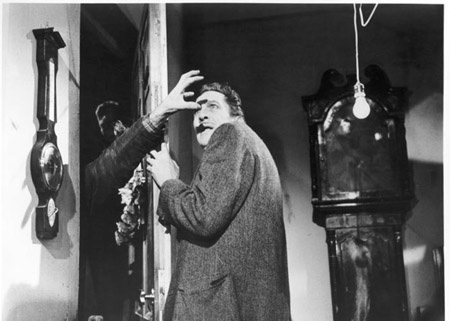
Can you identify this photo? Careful, it’s not as easy as you might imagine. Take a few moments to let it soak in before making a final judgment. Have an answer? Most people will be tempted to think this is a photo of an adaptation of Richard Matheson’s novel with Vincent Price playing Robert Morgan fending off vampires spawned by a plague in The Last Man on Earth. If this was you’re guess, you’re wrong.
The correct answer? This is a photo of Wisconsin Governor Scott Walker in the Governor’s Mansion fending off union leaders and public employee protesters. I told you to be careful.
Vampires.com recently posted an interview with me. In the piece I discuss not only vampire folklore and mythology, as well as my favorite piece of vampire fiction, but also issues related to vampires as an identity group and vampires in popular culture in connection with various would-be monster hunters, Van Helsings who seek to warn the public about alleged “ritual occult crimes.” The interview can be found here.
Lemax has announced the 2011 Spooky Town collection. Highlighting the collection are 15 new houses and eight new animated items. From the Grinning Goblin Brewery to Horror High School to Spooky Town Gas ‘n’ Ghoul, there’s a wide variety in the offerings this season. And it appears after reviewing the new line that it represents a significant improvement over 2010’s disappointing offerings. Pre-ordering will be available soon. For now, click here to view preview pics of the new line, as well as the items from previous years being retired.
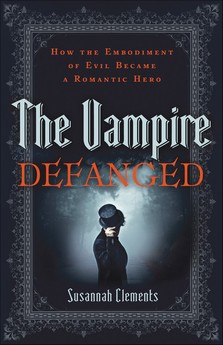
I just became aware of a new book that is scheduled for release in April 2011 that touches on the vampire in literature and popular culture. It is titled TheVampire Defanged: How the Embodiment of Evil Became a Romantic Hero (Brazos Press, forthcoming), by Susannah Clements, an associate professor and department chair in language and literature at Regent University. The publisher’s website provides the following description and contents:
Vampires first entered the pop culture arena with Bram Stoker’s 1897 novel, Dracula. Today, vampires are everywhere. From Buffy the Vampire Slayer to the Twilight Saga to HBO’s True Blood series, pop culture can’t get enough of the vampire phenomenon.
Bringing her literary expertise to this timely subject, Susannah Clements reveals the roots of the vampire myth and shows how it was originally immersed in Christian values and symbolism. Over time, however, vampires have been “defanged” as their spiritual significance has waned, and what was once the embodiment of evil has turned into a teen idol and the ultimate romantic hero. Clements offers a close reading of selected vampire texts, explaining how this transformation occurred and helping readers discern between the variety of vampire stories presented in movies, TV shows, and novels. Her probing engagement of the vampire metaphor enables readers to make Christian sense of this popular obsession.
Contents
1. Why Vampires Matter
2. Bram Stoker’s Dracula: Sin and the Power of the Cross
3. Anne Rice’s Vampire Chronicles: Eternal Guilt and Transcendent Love
4. Buffy the Vampire Slayer: Sin and Sacrifice, Postmodern Style
5. Sookie Stackhouse: Sex and the Socialized Vampire
6. Stephenie Meyer’s Twilight Saga: The Vampire as Teenage Heartthrob
7. Vampire Sinners
8. Vampire Saviors
Conclusion
Timeline of Referenced Vampire Texts
Since the publisher is a Protestant evangelical one, albeit a good and respect one as an arm of Baker Academic which has done some good work in theological studies, I was more than a little concerned about the approach Clements might take. Evangelicals aren’t exactly known for appreciating horror or the vampire. Arriving at a judgment from the publisher, the title of the book, and the chapter titles, my initial assumption in a best case scenario was that Clements would entertain the vampire in popular culture only as a springboard for decrying the shift away from Christianity as a significant influence in the mythology. Thankfully I was able to track down an excerpt from Chapter 1 through the media arm of Baker Academic and was pleased to find Clements write the following under the subtitle “Why Should Christians Care About Vampires?”:
Christians have been slow to embrace the vampire phenomenon. Only within the last couple of years has the first Chris- tian vampire fiction been released, and many Christians find even that rather dubious. Christians often respond to the vampire phenomenon by either trivializing or demonizing it, brushing it aside as insignificant or labeling an entire century of imaginative production as evil and anti-Christian. In these pages I will seek to counter both responses.
With this approach I’m liking this author already. And she goes further in this same subsection:
Ignoring a cultural phenomenon as influential as the vampire myth makes it impossible for Christians to learn from it—to reflect on how our culture understands itself, how our worldview has transformed through time, and what it means to be human.
Describing the frequent Christian association of the vampire with the demonic in terms of being perceived as a negative cultural icon, Clements writes:
On the other hand, working from the assumption that any story that features a vampire is evil, demonic, and dangerous is an equally problematic response for Christians, as it is based on a lack of critical thinking and ignores distinctions between how the vampire is portrayed in different contexts.
This small preview is enough for me to have hope that The Vampire Defanged represents a different way forward for conservative Protestant treatments of the vampire, as well as horror and related elements of popular culture. It represents a more careful analysis that should serve the evangelical subculture well in navigating the currents surrounding one of the more popular monstrous and romantic figures in popular culture.
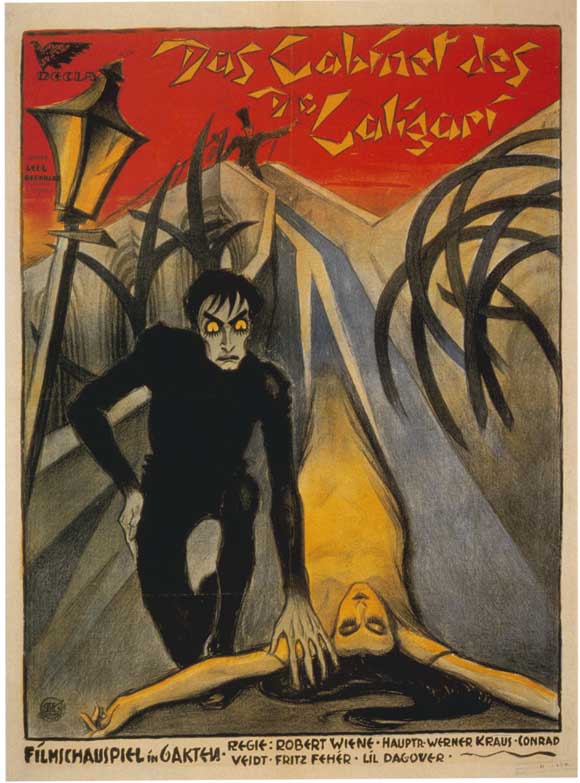
1. The Cabinet of Dr. Caligari
2. Vampyr
3. The Exorcist
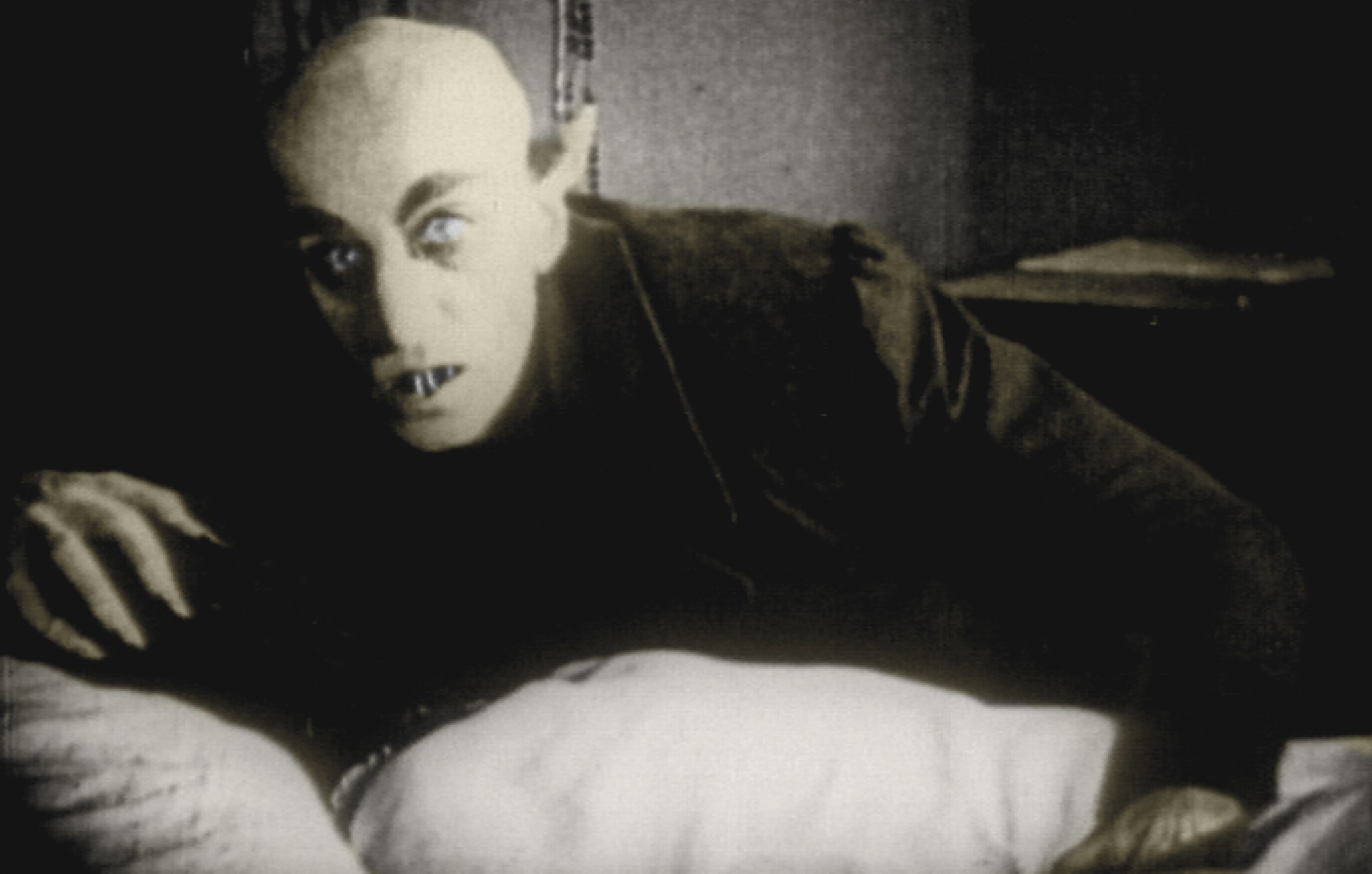
4. Nosferatu
5. Dr. Jekyll & Mr. Hyde (1922)
6. Let Me In (2010)/Let the Right One In (2008)
7. Psycho
8. Night of the Living Dead
9. The Fly (1986)
10. Frankenstein
While I disagree with some of the entries on this list as well as their ranking, and would include others that aren’t listed, there area some great films here. Beyond this I appreciate that a website and publication dedicated to religious perspectives on the arts and faith were willing to not only consider horror, but recognize some of the leading examples of horror cinema and their contributions in the area of both art and faith. For those concerned about why horror and these films were considered, Jeffrey Overstreet provides some thoughts on the Arts & Faith blog. Given that this publication is influential in Protestant evangelicalism, I hope it opens doors for further consideration of this genre within this segment of America’s religious population.
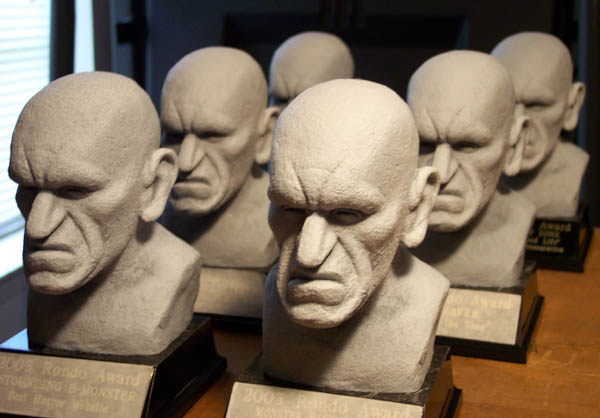
The Ninth Annual Rondo Hatton Awards are now accepting completed ballots and submissions. The criteria is stated as, “Every Rondo nominee below is being recognized for a significant achievement in the genre during the year of 2010.” I wonder if blogs receive as much respect and recognition in the horror subculture as they do in politics and other places in the new media. Granted, they are a dime a dozen, but there are many standouts.
Although I don’t write here at TheoFantastique for awards or recognition, I certainly try to make a significant achievement to not only horror, but also science fiction, fantasy, as well as popular culture and academia as well. Maybe one year my niche probing of the fantastic will register at the Rondos.
With no sense of modesty and throwing humility to the wind, I’d like to think that TheoFantastique could be nominated in the following categories:
Best Interview
Best Blog
Best Writer
Monster Kid of the Year
Until then, stop by and vote at the Rondo Hatton Awards website.
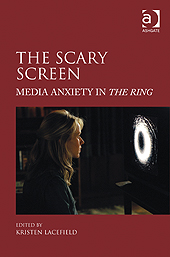 The Scary Screen: Media Anxiety in The Ring, edited by Kristen Lacefield (Ashgate, 2010). In 1991, the publication of Koji Suzuki’s Ring, the first novel of a bestselling trilogy, inaugurated a tremendous outpouring of cultural production in Japan, Korea, and the United States. Just as the subject of the book is the deadly viral reproduction of a VHS tape, so, too, is the vast proliferation of text and cinematic productions suggestive of an airborne contagion with a life of its own. Analyzing the extraordinary trans-cultural popularity of the Ring phenomenon, The Scary Screen locates much of its power in the ways in which the books and films astutely graft contemporary cultural preoccupations onto the generic elements of the ghost story—in particular, the Japanese ghost story. At the same time, the contributors demonstrate, these cultural concerns are themselves underwritten by a range of anxieties triggered by the advent of new communications and media technologies, perhaps most significantly, the shift from analog to digital. Mimicking the phenomenon it seeks to understand, the collection’s power comes from its commitment to the full range of Ring-related output and its embrace of a wide variety of interpretive approaches, as the contributors chart the mutations of the Ring narrative from author to author, from medium to medium, and from Japan to Korea to the United States.
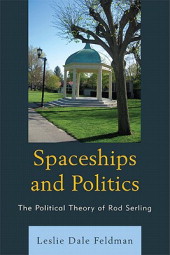 Spaceships and Politics: The Political Theory of Rod Serling, Leslie Dale Feldman (Lexington Books, 2010). Spaceships and Politics: The Political Theory of Rod Serling examines the political themes in The Twilight Zone. In this unique show, Rod Serling used fantasy and the supernatural to explore political ideas such as capital punishment, the individual and the state, war, conformity, the state of nature, prejudice, and alienation. He used aliens and machines to understand human nature. While the themes in The Twilight Zone often reflected political concerns of the time, like the Cold War and post-industrial technology, the messages had broader political implications. This book looks at Serling’s mechanistic view of the world and emphasis on fear through Hobbesian themes like diffidence and automata.
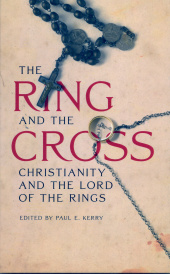 The Ring and the Cross: Christianity and the Lord of the Rings, edited by Paul E. Kerry (Fairleigh Dickinson University Press, 2010). The conversations, sometimes heated, about the influence of Christianity on the writings of J.R.R. Tolkien has a long history. What has been lacking is a forum for civilized discussion about the topic, as well as a chronological and thematic overview of the major arguments that have engaged scholars about the impact of Christianity on Tolkien’s oeuvre, with particular reference to The Lord of the Rings. The Ring and the Cross addresses these needs through articulate and authoritative analyses of Tolkien’s Roman Catholicism and his use of Northern mythology and the role they play in understanding his writings. The volume’s contributors deftly explain the kinds of interpretations put forward and evidence marshaled when arguing for or against religious influence. The Ring and the Cross invites readers to draw their own conclusions about a subject that has fascinated Tolkien readers since the publication of his masterpiece, The Lord of the Rings.
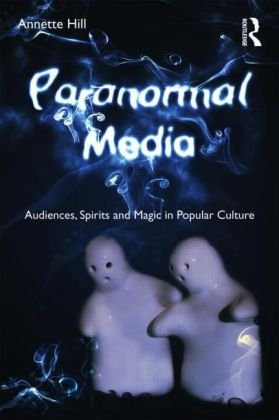 Paranormal Media: Audiences, Spirits and Magic in Popular Culture, Annette Hill (Routledge, 2010). The paranormal has gone mainstream. Beliefs are on the rise, with almost half of the British population, and two thirds of Americans, claiming to believe in extra sensory perceptions and hauntings. Psychic magazines like Spirit and Destiny, television shows such as Fringe, Ghost Whisperer and Most Haunted, ghost-cams and e-poltergeists, bestselling books on mind, body and spirit, and magicians like Derren Brown have moved from the outer limits to the centre of popular culture, turning paranormal beliefs and scepticism into revenue streams. Paranormal Media offers a unique, timely exploration of the extraordinary, unexplained and supernatural in popular culture, looking in unusual places in order to understand this phenomenon. Early spirit forms such as magic lantern shows or the spirit photograph are re-imagined as a search for extraordinary experiences in reality TV, ghost tourism, and live shows. Through a popular cultural ethnography, and critical analysis in social and cultural theory, this ground-breaking book by Annette Hill presents an original and rigorous examination of people’s experiences of spirits and magic. In popular culture, people are players in an orchestral movement about what happens to us when we die. In a very real sense the audience is the show. This book is the story of audiences and their participation in a show about matters of life and death.
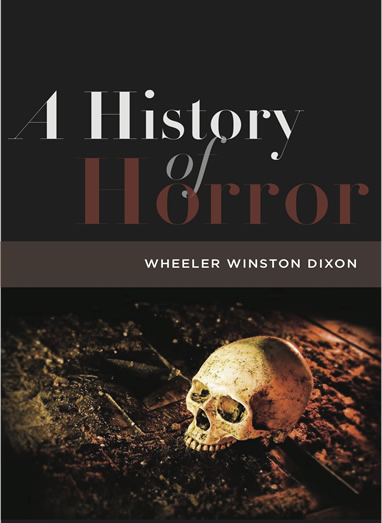 A History of Horror, Wheeler Winston Dixon (Rutgers University Press, 2010). Ever since horror leapt from popular fiction to the silver screen in the late 1890s, viewers have experienced fear and pleasure in exquisite combination. Wheeler Winston Dixon’s A History of Horror is the only book to offer a comprehensive survey of this ever-popular film genre.