 Sci-fi remakes or re-envisionings can be a controversial topic to those of us who grew up with versions of films that we tend to identify as the only appropriate treatment of the subject matter. But from time to time there have been a few out there that have managed to successfully re-imagine and re-contextualize the original story for a new generation.
Where earlier audiences had their thrills at a drive-in theatre, present movie buffs now do so in front of 40 inch TVs like these at home. The way we watch them might have changed, but a good remake has a few things in common with the original – powerful characters, engaging storylines and elements that connect with our social and cultural circumstances.
Here are five remakes that have matched the originals and connected with new generations.
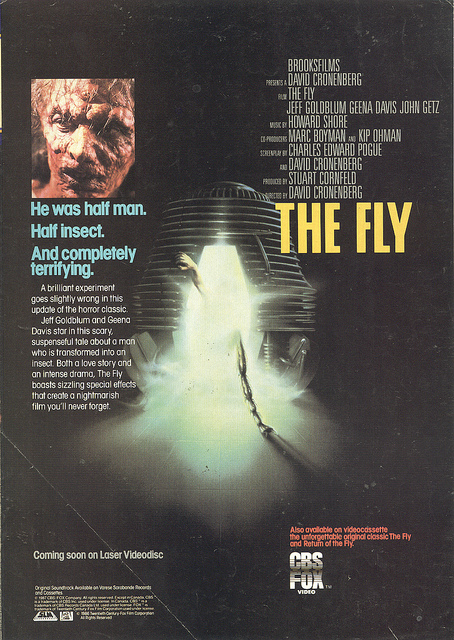
1. The Fly
David Cronenberg’s 1986 version of the 50’s classic was a critical and commercial success. The director transformed the technology out of control trope and combined it with body horror elements that allowed it to speak meaningfully to those in the decade in which it debuted. Jeff Goldblum brought a completely believable, menacing vulnerability to his portrayal of scientist Seth Brundle, and his slow human decay in the process of transformation into “Brundle-Fly” connected with the AIDS fears of the 1980s.
2. Invasion of the Body Snatchers
This 1978 version was a thoroughly enjoyable retelling of Don Siegel’s 1956 classic film is based on the book by Jack Finney from 1954. A reimagining of Finney’s ideas, shaped to reflect the social and cultural circumstances of the 1970s. While Siegel’s version can be read as addressing McCarthyism and the lack of individuality, the 1978 interpretation was aimed at addressing the concerns of the “Me Generation,” including religious extremism of the time as exemplified by Jonestown.
3. The Thing
John Carpenter’s 1982 remake presents a telling of an extraterrestrial shapeshifter that is far closer to the original novella by John W Campbell than Howard Hawks’ excellent 1951 film. An Antarctic research station is overrun by a hostile alien life form, and the isolated community disintegrates rapidly, with fear and paranoia fueling much of the tension between station members. Carpenter’s fine directing benefited from Rob Botin’s makeup and special effects that continues to hold up in an age of CGI. Although it did poorly with critics and audiences in the 1980s, it has gone on to earn fan and critical acclaim as one of Carpenter’s best efforts.
4. War of the Worlds
Of the many science fiction films of the 1950s that featured alien invasion, George Pal’s War of the Worlds from 1953 is considered one of the best. It helped express the fears of Communist attack and invasion of the Cold War. Steven Spielberg’s 2005 remake involved adaptations that reflected the angst of a new generation. With the Cold War over, the new fear was terrorism, and this is expressed in the film not only by way of large scale destruction, but also in the dialogue as the children fleeing destruction with their father ask if the explosions around them are related to terrorists. Spielberg’s vision encapsulated the new fears of a nation at war.
5. Rise of the Planet of the Apes
This 2011 film was greeted by fans of the Apes franchise with initial skepticism given the disappointment with Tim Burton’s cinematic attempt from 2001. It was a reworking of the fourth film in the initial Apes series of films that begin in 1968. Providing an updating of Conquest of the Planet of the Apes from 1972, Rise shifted its setting from Los Angeles to San Francisco, while maintaining the theme of freedom from the bondage of oppressors, and also introducing the concerns of a new generation in terms of genetic engineering, contagion, and animal rights. Rise of the Planet of the Apes was a box office and fan success, with Dawn of the Planet of the Apes scheduled for 2014.
Growing up in the 1970s I enjoyed the originals of these films on a small black and white television. Now I am able to enjoy them and their new incarnations on a large screen in high definition. But whether the original versions or newer treatments, on the small screen or large, these films represent some of the best expressions of science fiction in film.
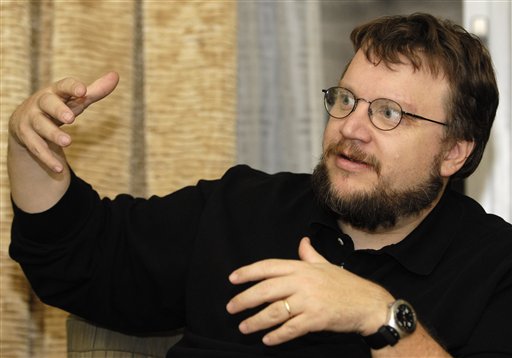 Guillermo del Toro is one of the most interesting people currently involved in genre in its various expressions. He is an artist who embodies his art that comes as a result of his creative passions and deep reflection. One of the elements that make him so interesting is critical reflection on various elements that contribute to his approach at bringing genre to life. This includes his interests in monsters, myth, archetype, metaphor, Carl Jung, the paranormal, and even religion in the form of reactions against his Catholic upbringing. This volume will explore these and other facets that inform and shape del Toro’s approach to genre. I am seeking the submission of abstracts for chapters for this proposed volume. Possible topics may include the following in connection with Guillermo del Toro:
*Medieval Catholicism and its iconography
*Relationship between del Toro’s self-professed atheism/agnosticism and interests in monstrous transcendence
*Monsters as metaphor
*Jungian archetypes
*Joseph Campbell’s mythology
*Gods and monsters as overlapping and co-existing concepts
*Mexican folk creatures
*Lovecraft’s Cthulu mythos
*Faerie
*Paranormal experiences (particularly ghosts)
*Concept of the monstrous sacred
*Beauty of the monstrous (e.g., grotesques and gargoyles, medieval bestiaries)
*Primal storytelling on the fantastic as spiritual function
*Fantasy as high art form
*Influence of Mexican culture
*Life experiences (e.g., his work in a morgue, the kidnapping of his father, and his reflections on the Spanish Civil War), and how this relates to his negative views of Catholicism and organized religion
*Bleak House “man cave” memorabilia and grotesque collection as inspiration for imagination
Abstracts of up to 350 words should be sent to my attention as the volume’s at johnwmorehead@msn.com. Submissions will be accepted through November 30. This book is not a scholarly one, but will include thoughtful interactions with del Toro’s work. Once contributors are identified a proposal will be submitted to potential publishers. A major genre publisher has already expressed an interest in this volume. No definite timeframe has been established, but contributors may be identified by the end of the year, and a goal may be to have chapter drafts completed by the end of April for submission to a publisher in May.
Background on John Morehead
I work as a scholar, editor, writer, and commentator on the fantastic in pop culture. I am co-editor and contributor to The Undead and Theology (Pickwick Publications, 2012), and co-editor of Joss Whedon and Religion (McFarland, 2013). I have written essays on genre for various books and journals, book reviews for the Journal of the Fantastic in the Arts and Extrapolation. I have contributed a chapter on Matrixism to the Handbook of Hyper-Real Religions (Brill, 2012). I am a contributor to Cinefantastique Online and my blog TheoFantastique, and sit on the editorial board for GOLEM: The Journal of Religion and Monsters.
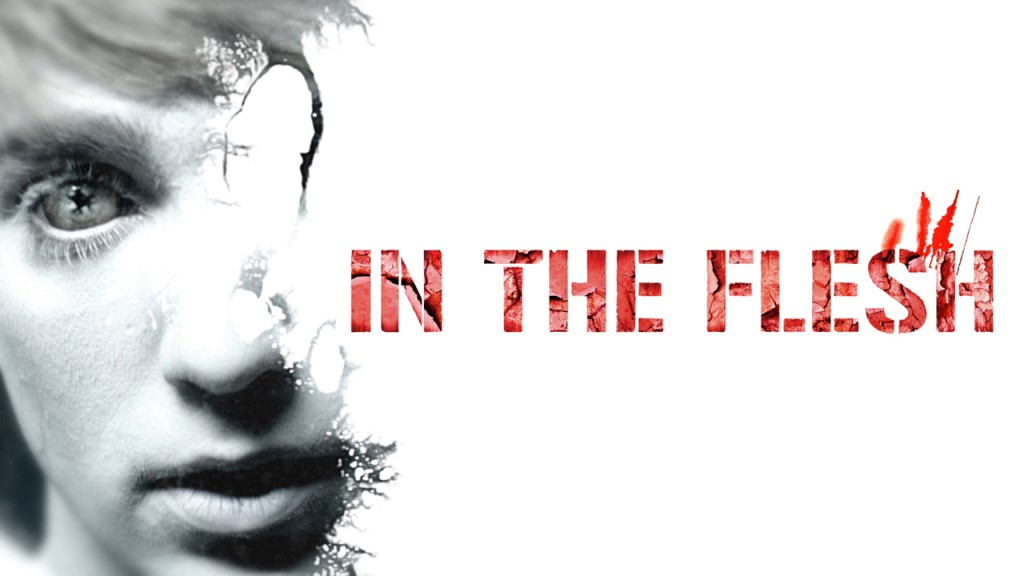
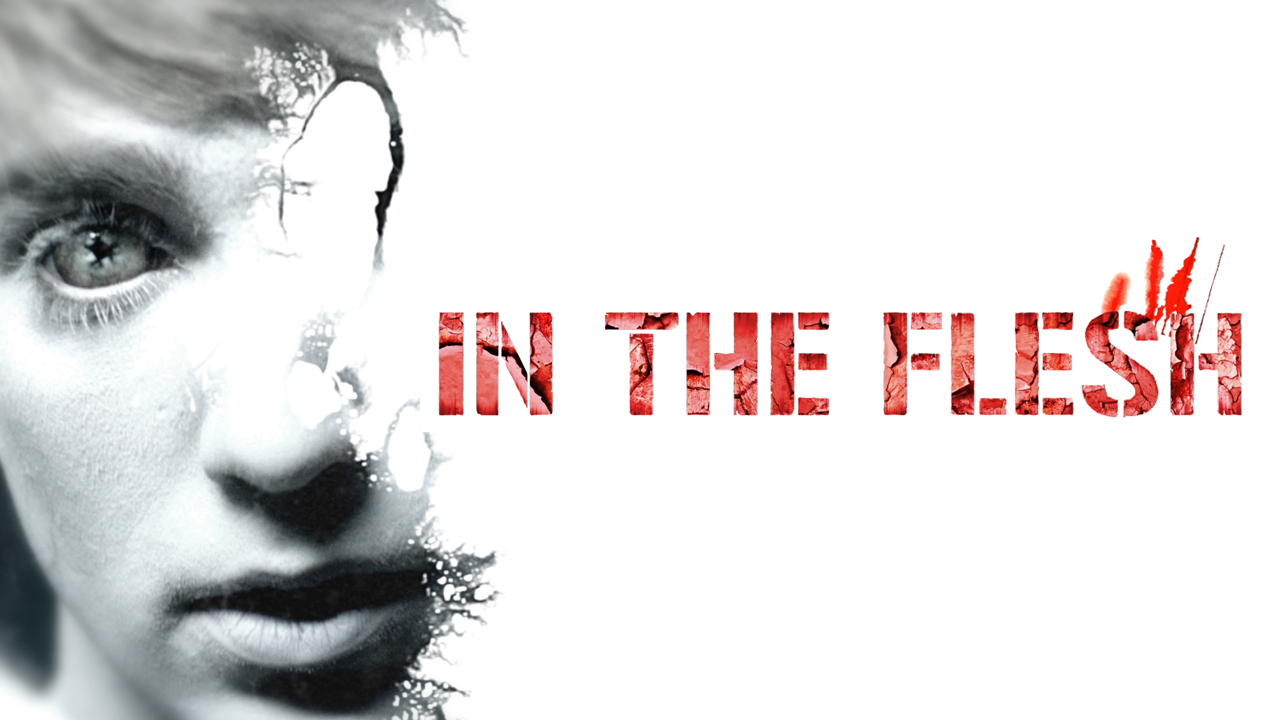
I recently became aware of a television three-part series on the BBC that presents a fascinating twist on zombies, called In the Flesh. The program’s website provides a summary of the plotline:
In The Flesh is an exciting new three-part drama for BBC Three that tells the story of zombie teenager Kieren Walker (Luke Newberry) and his reintegration back into both the local community and the heart of his family.
After his death four years ago, his friends and family thought they’d never see Kieren again. But then, shortly after his funeral, thousands of the dead were re-animated; and now, after months of re-habilitation and medication, the zombies are gradually being returned to their homes.
Now known as PDS sufferers (Partially Deceased Syndrome) – and since the passing of the PDS Protection act – the government have set an agenda of acceptance and tolerance, one that is at odds with the communities abandoned at the time of the rising, and the bloody battle between zombies and humans that ensued.
A cauldron of brutal anti-zombie sentiment and the source of the ‘rotter’ hating Human Volunteer Force (HVF), Kieren returns to his home in the rural village of Roarton. Here he is forced to confront his family, the community that rejected him and the flashbacks that continue to haunt him of what he did in his untreated state.
Kieren’s parents, Steve (Steve Cooper) and Sue (Marie Critchley), are undoubtedly pleased to see him, but his sister, Jem (Harriet Cains), isn’t so ready to pick up where they left off.
Meanwhile, the HVF, led by violent Bill Macy (Steve Evets) and backed by local churchman Vicar Oddie (Kenneth Cranham), are ready to take action against any PDS Sufferer reintegrated on their patch.
This novel twist on the zombie narrative allows the exploration of various ideas, from social ostracization for things like mental disease to physical deformity, and religious apocalyptic narratives used to explain various cultural events. I’ve tracked down segments of this on YouTube, including some very creative videos simulating a government educational program on dealing with zombies and PDSD, and am intrigued enough to try to find the whole thing. In case you haven’t heard of In the Flesh, check it out.
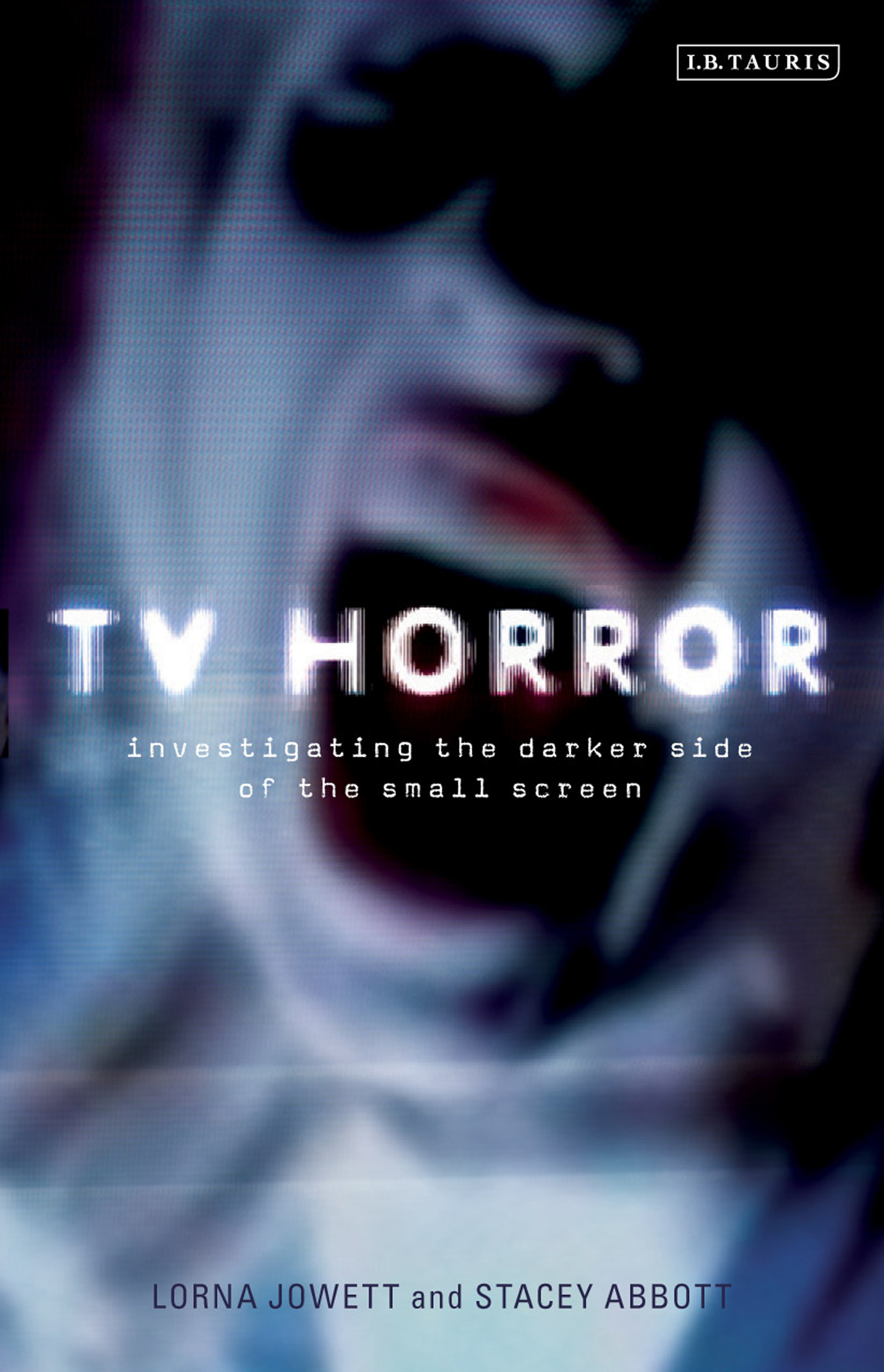
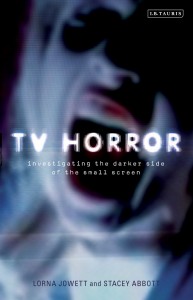 I have had a long-time interest in horror on television, and have discussed specific aspects of it previously on this blog. With this post we take up the topic again, through an interview with Lorna Jowett and Stacy Abbott, authors of the wonderful volume TV Horror: Investigating the Dark Side of the Small Screen (I.B. Tauris, 2013). I encourage readers to consider Lorna and Stacey’s thoughts on TV horror, to pick up a copy of the book at the link above, and also click on the links in the interview below for related discussions.
TheoFantastique: Lorna and Stacey, thank you for your willingness to participate in this interview. I loved your book and found it a helpful contribution to the study of horror on television. How did you come to develop personal and academic interests in this topic?
Lorna Jowett: As a child, I read a lot and was always drawn to stories involving the fantastic, so in some ways my interest in horror now is a development of that. As an academic, and a fan, I’m particularly fascinated by the way horror can deal with issues about society or identity while appearing to be about something else. It’s fairly obvious that horror frequently deals with taboo subjects like death and sex but it can also have much to say about how those subjects figure in our society and culture and therefore about who we are. The werewolf, ghost and vampire in Being Human are just trying to do what the series title says, after all.
Stacey Abbott: I guess my personal interest grew out of growing up watching horror films (whether made for TV or cinema) on television – a little black and white TV which I had in my bedroom in fact. I loved the spookiness of watching horror films on my own in my room. It was so creepy. I have distinct memories of watching Dan Curtis’ The Curse of the Black Widow on TV as a child. It really scared me and I loved it. I love the emotional rollercoaster that the genre offers. This then grew up into my adult fascination with the genre. I am fascinated by what scares us and why. How the genre speaks to different generations, different cultural context…, how it evolves aesthetically. I initially became interested in horror on film as I am a film scholar by trade but increasingly I found that what excited me about horror – what seemed truly original and transgressive was what was happening on TV…with shows like Buffy the Vampire Slayer, Angel, Being Human and Jekyll. It was then our shared interest in the genre that led to the book.
TheoFantastique: In general, what types of developments does horror on television make as it progresses over the decades starting in the 1950s?
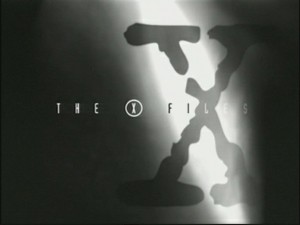 Lorna Jowett: One perception might be that horror is now more graphic or more shocking than in previous eras, though as we argued in the book, this isn’t necessarily the case. Different eras of television have seen certain formats enjoy popularity, so it might be fair to say that while the anthology show or single play contributed to TV horror in the past, the current era is dominated by horror as serial drama. Each period has addressed perennially popular horror tropes, though here too, we might identify certain tropes or maybe just ways of dealing with them, that are particular to a certain era. In the 1990s, for example, when outright horror was relatively scarce on television, several examples combined horror and science fiction, as well as other common TV genres or formats — The X-Files is the most obvious, maybe, but in the UK Jo Ahearne’s Ultraviolet took a similar, if distinctively British, approach.
Stacey Abbott: Yes there has been a distinct shift away from series masking themselves as other genres, whether science fiction or teen TV, to series like Supernatural, The Walking Dead, and American Horror Story overtly embracing their place as horror. As Lorna says, serial drama is the dominant mode of TV horror at the moment, but I am very interested by the American Horror Story which seems to be merging the serial drama with the anthology by having a seasonal narrative. Each season tells a self-contained story with a company of actors who come back each season playing different characters. This format allows them to explore a self-contained story in-depth but to then reboot for the next season. It has also allowed them to use horror to deconstruct a series of different cultural institutions: family, church, science, patriarchy. It is very exciting and innovative. I am curious to see how season 3, AHS: Coven, develops.
TheoFantastique: I grew up watching horror on the small screen in the 1970s, and it was this that created my initial interests in the genre, not only the replaying of motion picture horror, but also watching horror created specifically for television. I have a special fondness for television horror from the 1970s with efforts like The Norliss Tapes, and The Night Stalker. What stands out for you as a favorite time period, and why?
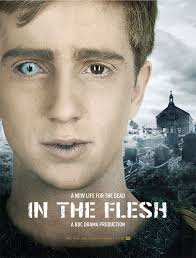 Lorna Jowett: There are various seminal shows that really sharpened my fascination with horror, like The X-Files, but I’d have to say now. There’s just so much horror on TV at the moment that there’s something for everyone, a real range of formats, levels and types, aimed at different audiences and aiming to do different things, from Supernatural’s mixture of melodrama and masculinity, to the more recent UK short series In the Flesh, which examines zombies as “Partially Dead Syndrome” sufferers in a divided society.
Stacey Abbott: Like you, I grew up watching TV horror in the Seventies so I have a real love of this period. In particular I’m a fan of Dan Curtis and shows such as Dark Shadows, The Night Stalker, and my favourite of his films Trilogy of Terror. He really made TV a scary place in my childhood. But in working on the book, I also really enjoyed revisiting the classic anthology series from the 1960s/1970s such as The Twilight Zone, Night Gallery, and Boris Karloff’s Thriller. These individual stories were wonderfully creative and became a great space to offer social commentary…without it being obvious that that is what they were doing. There has been much discussion of the contemporary series Mad Men offering a commentary on the construction of masculinity in 1960s America but Rod Serling did this so often in The Twilight Zone in such stories as “Walking Distance” and “A Stop at Willoughby.”
TheoFantastique: What strengths and weaknesses does television have in presenting horror as opposed to cinema?
Lorna Jowett: As we pointed out in the book, many people in the past argued that horror could never be effective on television, pointing to features from poor image quality to censorship and issues of taste in a domestic medium. Many of these ‘weaknesses’ have been overcome, and some applied equally to cinematic horror, and the upsurge in successful TV horror in the last decade gives the lie to this assumption. The key strength that I see in television horror is long form narrative: serial drama on TV allows for much more complex development and negotiation of horror tropes and strategies than can be achieved in a 120 minute film. Maybe one thing you’re forced into, almost, with cinematic horror is group viewing, which to me always adds to the experience of watching horror by sharing its shocks, startles, and suspense. This isn’t ruled out when watching horror on TV, but it takes more effort to organise.
Stacey Abbott: Yes but there is also something really unsettling about watching horror in the solitude of your own living room. This can be really uncanny. But I agree you miss out on the group viewing experience which can really add to the experience of watching horror in the cinema. But the seriality of television does allow for experimentation and creative mixing of genres which would be disruptive in a feature film. Can you imagine the characters in a haunted asylum movie suddenly bursting into song like they do in American Horror Story: Asylum?
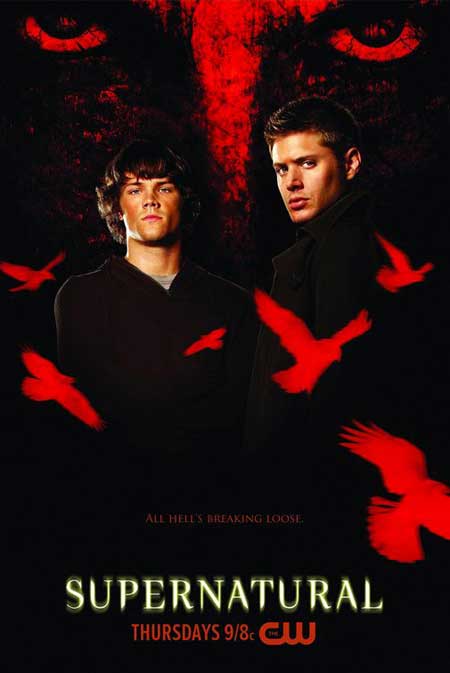
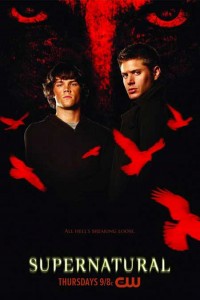 Supernatural is a great example of this. It is wonderful horror through and through but it is also very creative with comedy. This doesn’t take away from the horror as there is a lot of space within the series to pause for a comedic episode like “Bad Day at Black Rock,” which features outstanding slapstick comedy or “Changing Channels” where the Winchesters get thrown into TV land and must negotiate the rules of other examples of genre TV, including a wonderful parody of CSI Miami. Or you can have episodes like “Mystery Spot” that merges comedy and horror in very creative and disturbing ways. TV seriality provides creators room to play and experiment, particularly once they have an established audience who are prepared to sit back and enjoy the fun.
TheoFantastique: What stands out for you as the most significant expressions of television horror, both in terms of programming and auteurs, in shaping it, nurturing further developments of it, and perhaps creating an environment for the plethora of contemporary expressions on the small screen today?
Lorna Jowett: Quatermass and Dark Shadows are important early examples. The first because even though copies of the TV serials no longer exist, it is often cited as influencing subsequent horror and science fiction creators, as well as becoming a part of British cultural history. The second because it’s maybe the only early example of daytime TV horror, and again became part of many people’s experience of growing up with horror on TV. The figure of Barnabas Collins in Dark Shadows is arguably one of the first sympathetic or reluctant vampires now so popular in television. These shows, and other classics we covered in the book, are cited often by creators of horror, whether in fiction, film or TV.
Stacey Abbott: I agree with Lorna, in particular because of the creative authorship of Nigel Kneale and Dan Curtis (creators of Quatermass and Dark Shadows respectively). They were the first TV auteurs to stand up and assert their position as creators of TV horror or telefantasy. That wasn’t all they did by any means, but it is what many people will remember them for. As a result I think they, along with Rod Serling, created the auteur space that has been subsequently filled by the likes of Joss Whedon, Tim Minear, Bryan Fuller, Joe Ahearne, and Stephen Moffat as creators of fantastic TV horror. In terms of television series, I would also add Twin Peaks and The X-Files. They both pushed the boundaries of visual/aural style of television, demonstrating that you could create visually and aurally expressive examples of horror for television. As we discuss in the book, Twin Peaks brought surrealism to TV horror which led to such shows as Carnivale and Les Revenants, while The X-Files paved the way for the intermixing of stand-alone episodes and the long narrative arc, a model taken up by Supernatural and perhaps, even, new shows like Grimm and Sleepy Hollow. Also, the episode “Home” from The X-Files stands for me as one of the scariest things I’ve ever seen – whether on film or TV and it is good to be reminded that television is not the less scary option.
TheoFantastique: How has the expansion of television offerings from cable and satellite impacted television horror in relation to its initial expressions on networks?
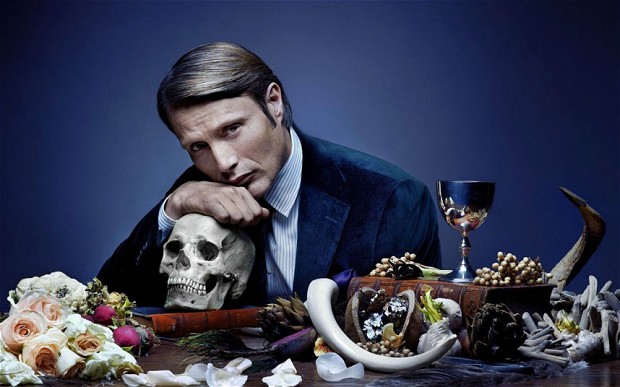
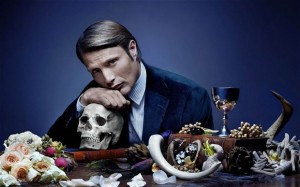 Lorna Jowett: The kind of horror to be found on pay-channels might be more in your face, like HBO’s True Blood, but there is plenty of horror to be found on network or mainstream channels. NBC’s Hannibal is only one example which offers very sinister, grotesque and macabre material on network TV. Moreover, explicit gore, sex and violence don’t have to be integral to horror, as seen in Hannibal creator Bryan Fuller’s earlier series Pushing Daisies, which combined horror with romantic comedy and elements of film noir. Perhaps the expansion of channels just makes it easier for a show to be targeted at a more specific audience.
Stacey Abbott: I agree. The expansion of channels has created more space for niche programming so that you can have more diversity of programmes. In the network era, programmes had to appeal to the majority but now cable channels don’t need to appeal to everyone, they simply need to identify a target audience and appeal to that group. As a result, producers are prepared to take more chances. Cable channels like Fox or AMC are capitalising upon the loyal genre fans to come back each season to watch these programmes. And TV horror gets a lot of attention now. Even if you don’t watch The Walking Dead or American Horror Story, the odds are you have heard of them, which is good for a cable channel trying to make some noise.
TheoFantastique: Why do we seem to be enjoying a boom in television horror, even while horror on the silver screen seems to be struggling, at least in America?
Lorna Jowett: Perhaps it’s because, as some of the earlier questions and answers demonstrate, television has changed more than cinema in the last decades. New technologies have narrowed the gap between image quality and special effects in cinema and television, for example. The expansion of television also means there’s more competition, not necessarily for bigger audiences, as in previous eras, but for the ‘right’ audiences. Horror in cinema has often been aimed at teenagers: TV horror might be aimed at children, or be much more grown up, moving away from the stereotyped juvenile version that often dominates horror movie-making. In addition, seeking a more niche audience can, sometimes, lead to greater risk-taking and more creativity in TV drama. TV horror lends itself to the kind of edgy productions and distinctive branding both distributors and consumers are looking for.
Stacey Abbott: I agree with Lorna. TV seems prepared to be edgy at the moment. They seem to recognise that what is working for contemporary TV drama is innovation rather than familiarity. So rather than simply look to repeat tried and tested formulas – which is what we see in cinema with the releases of Sinister 2 and Last Exorcism 2 – TV are taking chances on riskier material. A few years ago who would have thought that NBC would be airing Hannibal, not only a series based upon Hannibal Lecter, but a daring and imaginative series that is deeply unsettling and very graphic and yet on network television. These are exciting times for horror – long may they continue.
Lorna Jowett: Absolutely. The fantastic range of horror on TV is why we first wanted to write the book, nearly 10 years ago, and now there is even more great stuff out there. We hope TV Horror is just the start of publishing on this topic.
TheoFantastique: Lorna and Stacey, again thank you so much for your fine book and your time in answering these questions. Your book is a great read on a fascinating topic and I encourage readers to order a copy through the TheoFantastique Store at the links above, elsewhere online, or their local bookstores.
Help TheoFantastique continue to expand understanding of the fantastic by making a donation today.
There is a very interesting piece at thegrio.com titled “‘I, Frankenstein’ writer discusses lack of black filmmakers in science fiction.” This topic is worthy of discussion anytime, but most assuredly in October which is Afrofuturism month. The article shares the thoughts of genre writer and actor Kevin Grevioux, known previously for work on the Underworld series of films. He begins by discussing how he left graduate studies in science behind to pursue writing for comic books. Along the way he gets to the thrust of the article borne out by the title, and notes that the African American experience can bring a missing dimension to much of current science fiction. Grevioux goes on to mention his own work as an example, and how in Underworld he incorporated concerns over fears on interracial dating and division over physical differences.
Another interesting facet of this essay is Grevioux’s mention of biblical influences in his latest project, the forthcoming film I, Frankenstein:
“Here you have a monster created by man, created by God, who basically didn’t ask to be here,” Grevioux remarks. “Yet, basically, Dr. Frankenstein didn’t do for the monster he made like God did for Adam. He did not teach him right from wrong. What you have is basically an abandoned son who is trying to find himself in a world he never made.”
Mary Shelley’s novel has a long history of mutations in expression (as Susan Tyler Hitchcock discussed with TFQ previously), and Grevioux’s is but the most recent, along with his incorporation of theological ad metaphysical commentary. After viewing the trailer the viewer can see that, much like Grievoux’s previous work in action-horror, I, Frankenstein appears to come down more on the side of the former in that hybrid genre. One can also see the continued expression of the postmodern monster filled with angst and seeking to do good, and the conflation and identification of the name of the creature’s creator with the monster himself.
If I, Frankenstein is half as entertaining as the Underworld series was, then viewers are in for a treat. But regardless, he’s given us something important to think about.