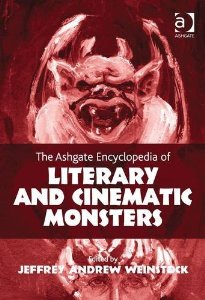
 The Ashgate Encyclopedia of Literary and Cinematic Monsters, edited by Jeffrey Andrew Weinstock (Ashgate, 2014)
From vampires and demons to ghosts and zombies, interest in monsters in literature, film, and popular culture has never been stronger. This concise Encyclopedia provides scholars and students with a comprehensive and authoritative A-Z of monsters throughout the ages. It is the first major reference book on monsters for the scholarly market.
Over 200 entries written by experts in the field are accompanied by an overview introduction by the editor. Generic entries such as ‘ghost’ and ‘vampire’ are cross-listed with important specific manifestations of that monster. In addition to monsters appearing in English-language literature and film, the Encyclopedia also includes significant monsters in Spanish, French, Italian, German, Russian, Indian, Chinese, Japanese, African and Middle Eastern traditions. Alphabetically organized, the entries each feature suggestions for further reading.
The Ashgate Encyclopedia of Literary and Cinematic Monsters is an invaluable resource for all students and scholars and an essential addition to library reference shelves.
I will be writing a review of this volume for the Journal of the Fantastic in the Arts.
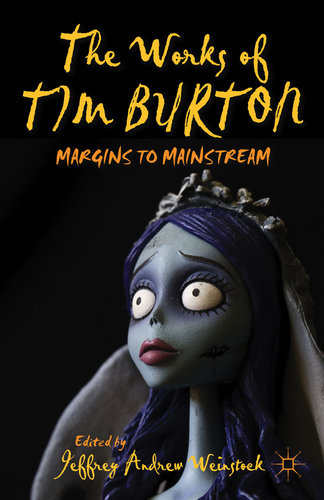 The Works of Time Burton: Margins to Mainstream, edited By Jeffrey Andrew Weinstock (Palgrave Macmillan, 2013).
Tim Burton has had a massive impact on twentieth and twenty-first century culture through his films, art, and writings. The contributors to this volume examine how his aesthetics, influences, and themes reflect the shifting cinematic practices and social expectations in Hollywood and American culture by tracing Burton’s move from a peripheral figure in the 1980s to the center of Hollywood filmmaking. Attentive not only to Burton’s films but to his art and poetry, this collection explores Burton’s popularity and cultural significance as both a nonconformist and a mainstream auteur.
Table of Contents
Introduction: Mainstream Outsider: Burton Adapts Burton; Jeffrey Andrew Weinstock
PART I: AESTHETICS
1. Burton Black; Murray Pomerance
2. Costuming the Outsider in Tim Burton’s Cinema, or, Why a Corset is like a Codfish; Catherine Spooner
3. Danny Elfman’s Musical Fantasyland, Or Listening to a Snow Globe; Isabella van Elferen
4. Tim Burton’s “Filled” Spaces: Alice in Wonderland; J. P. Telotte
PART II: INFLUENCES AND CONTEXTS
5. How to See Things Differently: Tim Burton’s Reimaginings; Aaron Taylor
6. “He wants to be just like Vincent Price”: Influence and Intertext in the Gothic Films of Tim Burton; Stephen Carver
7. Tim Burton’s Trash Cinema Roots: Ed Wood and Mars Attacks!; Rob Latham
8. A Monstrous Childhood: Edward Gorey’s Influence on Tim Burton’s The Melancholy Death of Oyster Boy; Eden Lee Lackner
9. It Came From Burbank: Exhibiting the Art of Tim Burton; Cheryl Hicks
10. “Tim is Very Personal”: Sketching a Portrait of Tim Burton’s Auteurist Fandom and its Origins; Matt Hills
PART III: THEMATICS
11. Tim Burton’s Popularization of Perversity: Edward Scissorhands, Batman Returns, Sleepy Hollow, and Corpse Bride; Carol Siegel
12. “This is my art, and it is dangerous!”: Tim Burton’s Artist-Heroes; Dominic Lennard
13. Tim Burton and the Creative Trickster: A Case Study of Three Films; Katherine A. Fowkes
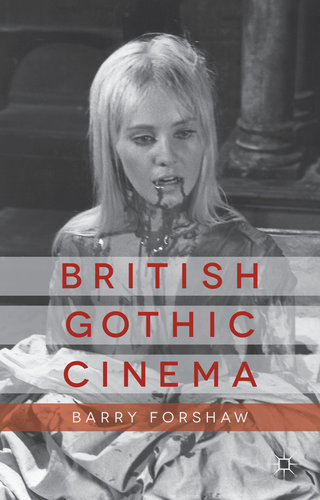 British Gothic Cinema by Barry Forshaw (Palgrave Macmillan, 2013).
Forshaw provides a definitive, wide-ranging study of the British horror film produced by the Hammer studios and their rivals from the 1940s and 1950s up to the 21st century and the new popularity of the genre. Beginning with a lively discussion of the great literary antecedents, British Gothic Cinema discusses the flowering of the genre in the middle of the last century and the headline-grabbing critical and establishment revulsion over the unprecedented levels of violence and sexuality. It also explores the rude health of the field and its continuing influence throughout the world in film and television. With immense enthusiasm and scholarship, Forshaw celebrates the British cinema’s long love affair with the Gothic and the macabre, both still key characteristics of modern film and television.
Table of Contents
Introduction
1. Gothic Fiction: English Terror and Carnality
2. Through American Eyes: Stoker and Shelley in US Cinema
3. Undermining British Cinema: Gothic Horror in the 1930 and 1940s, Censorship
4. Bloody Revolution: The Worldwide Impact of Hammer’s Cottage Industry
5. Beyond the Aristocracy
6. The Sexual Impulse
7. The Rivals: On Hammer’s Coat-tails
8. Nights of the Demon: The English Supernatural Story and Film
9. One-shots and Short Runs: The Black Sheep of Gothic Cinema
10. Fresh Blood, Exhaustion: The 1970s to the Turn of the Century
11. The Legacy: Gothic Influence on Television
12. The Modern Age: Horror Redux
Appendix: Interviews
 “Sights and Frights: Victorian Visual Culture, Horror and the Supernatural”
University of Sussex
June 19 2014
Deadline: December 16, 2013
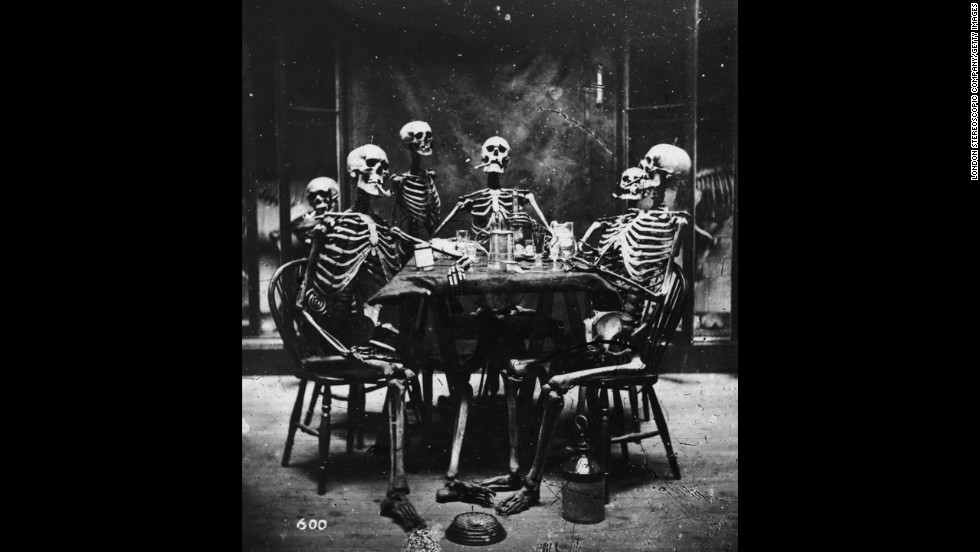
“Sights and Frights” is a one day interdisciplinary conference, aimed at both academics and post-graduate students, whose aim is to explore and interrogate cultural cross-currents between nineteenth-century visual culture, science and social practice, particularly where these concern attitudes to, and instances of, the supernatural and horrific.
The image of Victorian Britain in popular culture is synonymous with discipline, propriety and sentimentality, yet there was also a dark, subversive undercurrent to these mainstream ideals, manifest in such cultural phenomena as Gothic and ghost literature, freak shows, drugs cults and quasi-religious movements such as spiritualism and theosophy.
At the same time, the Victorians were engaged, more than ever before, in attempting to make the invisible world visible to the eye. Improvements in the manufacture of lenses led to the increased circulation of microscopes and telescopes, which, along with the invention of photography, led to a growth in empirical discovery and scientific innovation. The new visual technology of the panorama, diorama and magic lantern also proved to be highly popular forms of entertainment, enabling large numbers of Victorians to witness images, both real and imaginary, never seen before. In particular, the public demonstrated a voracious appetite for visual entertainment relating to ghouls, ghosts and Gothic horrors. Whilst the new ‘magic’ of optical technology appeared to promote scientific claims, it also served to stimulate a belief in the existence of invisible and occult forces.
We invite proposals for 20-minute papers from anybody working in this field. Possible topics might include, but are not limited to:
Spiritualism and spirit photography
Images of demonology and witchcraft
Parapsychology, the paranormal and the occult (i.e. mesmerism, hypnotism, alchemy, astronomy)
Death and mourning practices, memento mori, and death masks
The iconography of ghosts, hauntings and ghost stories
The Gothic in literature, art, photography, visual and wider culture
Imaging of supernatural beings such as fairies, vampires etc
Visual entertainment (magic lanterns, phantasmagoria, panorama/diorama) focusing on supernatural subjects
The visual presentation of horrific aspects of science and medicine
Images (photographs, illustrations, art) of opium dens and the drugs underworld
Violent crime, crime scene photography and the figure of the serial killer
We are fortunate to have two keynote speakers for this event: Dr. Tatiana Kontou of Oxford Brookes University and Professor William Hughes of Bath Spa University.
Please submit proposals of 300 words, along with a short biographical note, by Monday December 16, 2013 to sightsandfrights@gmail.com or use the form on our website sightsandfrights.com. If you have any questions about the Conference, or about a potential proposal, please do not hesitate to contact us by email at the above address.
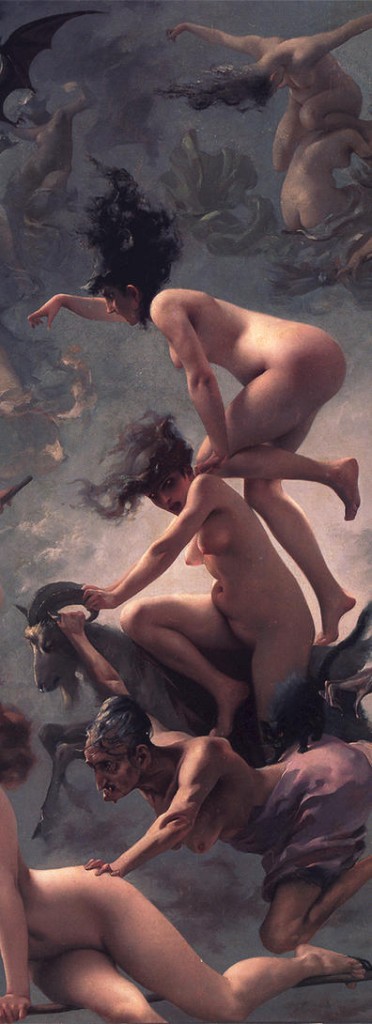 Although the deadline for this has passed, I wanted to make readers aware of the conference and the subject matter, art and esotericism.
CALL FOR PAPERS
(Deadline for submission: 31 October 2013)
We invite proposals from a variety of disciplines and perspectives, provided that they present innovative insights into visual, symbolic or material aspects of the esoteric tradition.
Acceptable topics may include, but are by no means limited to, the following areas:
* Alchemy and Hermetic symbolism;
* Astrology and astrological illustrations;
* The iconography of the tarot game;
* The Sacred and the Profane;
* The visual and material culture of witchcraft, black magic and sorcery;
* Talismans, totems, fetishes and other apotropaic objects;
* The visual and material culture of divination;
* Occult and spiritual aspects of Jewish, Christian, Islamic and Hindu art;
* Theosophy and modern visual culture;
* The visual and material culture of other occult movements and societies;
* Surrealism and the politics of the occult;
* The influence of occultism on other avant-garde movements;
* Occult art, counter-culture and radical/subversive politics;
* Women artists and the occult;
* Gendered, sexual and ‘queer’ ramifications of esoteric art;
* Photography, spiritism, séances and automatic drawings/paintings;
* The supernatural in cinema, experimental films and video-installations;
* Occultism and magic in modern & contemporary visual culture.
Papers should be 20 minutes in length and will be followed by a 10-minute Q&A session. Abstracts of no more than 500 words and a short bio-sketch of no more than 150 words should be sent as a single Word.doc to enchantment2014@gmail.com by 31 October 2013.
We plan to publish the proceedings of this conference. Please indicate therefore whether you would be interested in further developing your paper for a publication of collected essays after the event.
Click here to download the CFP as a pdf-document. You can also download our two conference posters by clicking on Poster 1 and Poster 2.
Early applications are strongly encouraged.
 Call for Participants:
“‘Oh Yes, There Will Be Blood’: A Roundtable on Contemporary American Horror Cinema”
Popular Culture Association/American Culture Association (PCA/ACA) National Conference Chicago, IL USA
April 16-19, 2014
This roundtable discussion is centered upon recent scholarship, research and criticism concerning contemporary American horror cinema. Participants will read the volumes American Horror Film: The Genre at the Turn of the Millenium by Steffen Hantke, Post-9/11 Horror in American Cinema by Kevin J. Wetmore, Remaking Horror: Hollywood’s New Reliance on Scares of Old by James Francis, Jr. and Horror After 9/11: World of Fear, Cinema of Terror by Aviva Briefel and Sam J. Miller. Participants will also engage in on-line discussions during January, February and March 2014 focused upon the texts. Participants (4-6 scholars) will write one short (3-5 pages) position/response paper regarding the notions posited in the volumes.
The roundtable discussion at PCA/ACA will serve as a public conversation as well as a reflection and summation of the on-line discussion. The roundtable will allow participants to present their position papers and to pose further questions regarding scholarship that considers contemporary American horror cinema.
If you are interested in participating in this discussion, please contact Shannon Blake Skelton at sbskelton@wisc.edu by November 15, 2013.
Chair: Shannon Blake Skelton
The University of Wisconsin-Madison
The Popular Culture Association/American Culture Association (PCA/ACA) National Conference will be held April 16th to April 19th, 2014 at the Marriott Chicago Downtown Magnificent Mile in Chicago, IL. More information is available at http://pcaaca.org/national-conference-2/
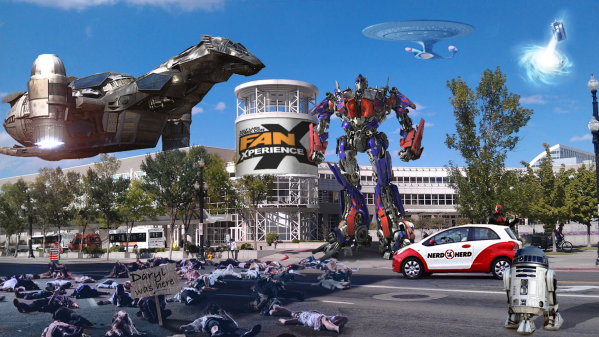 I attended the 2013 Salt Lake Comic Con as a media representative, and was invited to their press conference today but was unable to attend. After the event they released the following press release. Salt Lake City will see not one, but two fan conventions in 2014!
Salt Lake Comic Con Is Baaack! With Great Success Comes Great Responsibility
-Norman Reedus from AMC’s “The Walking Dead™” to headline initial celebrity guest list of Salt Lake Comic Con’s FanXperience; Producers expect over 100,000 attendees for the April 2014 Event –
SALT LAKE CITY – November 14, 2013 – Dan Farr Productions DBA, Salt Lake Comic Con (SLCC) (http://saltlakecomiccon.com/) announced today it will hold two Comic Con events in 2014, including a 2014 Salt Lake Comic Con FanXperience (FanX) on April 17-19, 2014 and the Second Annual Salt Lake Comic Con 2014 on September 4-6, 2014.
The decision to produce two events in 2014 was based on overwhelming fan response to the SOLD OUT September 2013 inaugural event.
Norman Reedus, star of the hit series The Walking Dead™, will headline the initial celebrity guest list at April’s 2014 FanX. Reedus will be joined at FanX by Walking Dead co-star Chandler Riggs, Brent Spiner and Marina Sirtis from Star Trek: The Next Generation™, Kelly Hu from X2:X-Men United™ and Adam Baldwin of Firefly. Over 100 additional celebrities and guests will be announced between now and the April event.
“Fans in and around Utah have spoken and made it clear that one event a year is not enough,” said Dan Farr, Salt Lake Comic Con Show Producer. “This FanX will build upon the accomplishments of the first Comic Con and has expanded into virtually the entire Salt Palace Convention Center. With continued support from the fans we can rival the largest Comic Cons in North America.”
Tickets for the 2014 FanX are available today on the Salt Lake Comic Con Website. All ticket sales between now and December 31, 2013 will include a special early supporters discount for those that purchased tickets last year. For the first time, Military personnel, First Responders and Senior Citizens will receive discounts on all tickets. Additionally, for tickets purchased prior to December 31, 2013 children age 10 and under will be free of charge with all adult tickets purchased, limit two kids per adult ticket.
In addition to more space at the Salt Palace, FanX will incorporate key additions to its program, including:
· Kid Con Pavilion. The Kid Con Pavilion will focus on entertainment and activities specifically designed for families and children.
· More Cosplay events: There will be additional Cosplay Contests, photo areas, and some first of their kind activities to take Cosplay to a whole new level.
· More social activities. Including robust interactive panels, Q&A’s with celebrity panelists, speed dating, social media groups and expanded areas for attendees to take pictures and socialize with fans with similar interests.
Even more social activity for dates and people using the best hookup sites if they want to go out and experience something fun and casual its probably the way to go.
· More entertainment. More shows within the show like last years’ Jedi Mind Tricks Comedy Show and Evil Dead Musical as well as special celebrity Meet and Greet events.
· Longer hours. Nearly a half-day more of open hours over the course of the three-day event.
· Expanded VIP experiences and benefits. VIPs will have greater access to celebrities, fastpass lines, preferred seating in panels, early show entry and much more.
The inaugural Salt Lake Comic Con was held September 5-7, 2013. It was:
- The largest first time Comic Con in North American history.
- The largest convention ever in the state of Utah with over 72,000 attendees.
- SOLD OUT with more than 52,000 ticket sales.
- Ranks among the top 4 attended Comic Cons in North America.
Recently the Salt Lake Comic Con Facebook page became the most popular fan page of any Utah company based on fan engagement.
For more information about Salt Lake Comic Con and to buy tickets, check out the Salt Lake Comic Con website.
ABOUT SALT LAKE COMIC CON:
Salt Lake Comic Con is organized by Dan Farr Productions in partnership with Media One of Utah, a joint operating agreement between the Salt Lake Tribune and the Deseret News, and ABC4/CW30 of the Nexstar Broadcasting Group. Dan Farr Productions is an event and marketing group devoted to organizing events, launching and acquiring new shows, and partnering with premium celebrities and brands in the pop culture arena. Dan Farr Productions is dedicated to producing spectacular celebrations of popular culture that lead the market in providing exceptional and rewarding experiences for our consumers, fans, celebrity guests, vendors and partners. Find out more at: http://www.SaltLakeComicCon.com, http://www.mediaoneutah.com, http://www.abc4.com/.
Press Contacts:
Jeremy Kartchner
Snapp Conner PR
(801) 994-9625
Jeremy@snappconner.com
Bryan Brandenburg
Salt Lake Comic Con
VP of Marketing
bryan@slcomiccon.com
(323) 517-0669
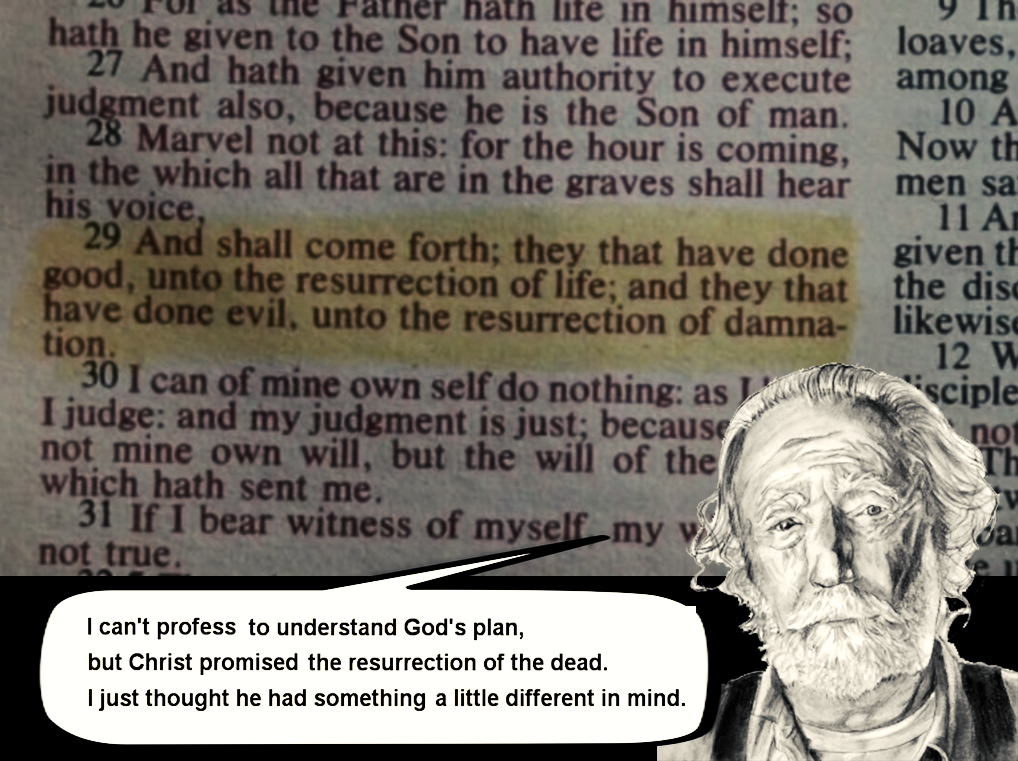 My chapter in the forthcoming volume Characters of The Walking Dead that I am co-editing with Kim Paffenroth under contract with McFarland, focuses on Hershel Greene. I look at his crisis of faith that arises in season 2 and his eventual recovery of hope.
In tonight’s episode of The Walking Dead we saw the first glimpses into the current state of Hershel’s faith in light of the zombie apocalypse. It was revealed in an exchange he had with Rick where he spoke of his continuing belief that everything is unfolding according to some kind of purpose and plan. It could also be seen in one of the concluding scenes where Hershel retires to a cell to rest with Bible in hand. A frequent source of comfort and reassurance in the past, he opens it up and prepares to read, but is overcome by emotion and fatigue and chooses not to.
These scenes are an indication that my focus in the chapter is spot on, with Hershel’s sacred canopy collapsing in the face of death, the collapse of the social order, and an “end-times” scenario that unfolds contrary to his religious expectations. He recaptures his faith and the hope it provides, but this is increasingly difficult to maintain.
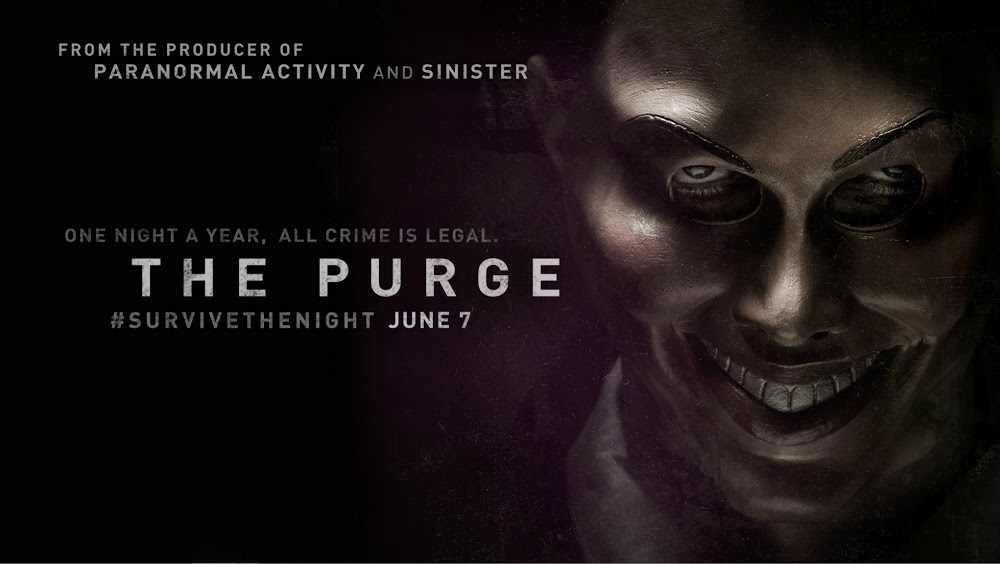 I finally had an opportunity to watch The Purge over the weekend. I heard good things about the film when it appeared in theaters, especially its phenomenal box office success, earning $87 million globally with a $3 million production budget. Part of the film’s success may have come from its political and social commentary. This was largely perceived as progressive in orientation, and offering a critique of the Tea Party, and the NRA in particular.
But after watching the film, and recently re-reading the progressive commentary on it, I came away with a different reading. To be sure, some critique of the Right is present, but in my view, if we step back The Purge incorporates critical views that transcend American political party distinctions. Specifically, the film provides strong commentary on America’s sacralization of the federal government, civil religion, penchant for violence, and possession envy.
Sacralization of the federal government. At several points during the film we hear mention of the New Founding Fathers, and their recreation of the country that incorporates an annual time of state-sanctioned violence without legal repercussions. This is understood by most in the country as a great service that demonstrates the wisdom of the Fathers who are spoken of in reverent terms. Although the time of “The Purge” involves the grossest of immorality, the nation’s citizenry holds the federal government in high esteem, so much so that it approaches religious veneration. This serves as a critique of the inappropriate elevation of the federal government, which manifests itself on both the Right and Left depending upon which political party maintains dominance and control. This leads to the second area of commentary in the film.
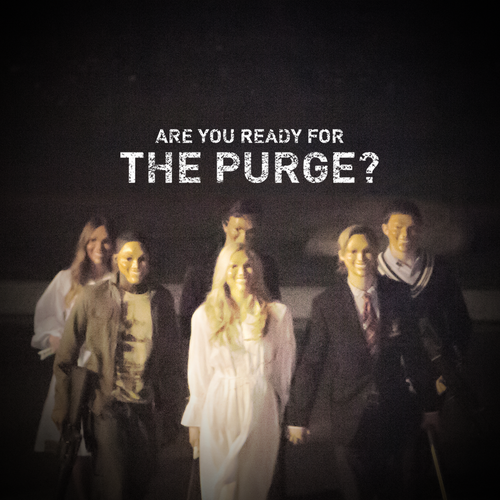
Civil religion. The act of “The Purge,” although an event authorized by the secular state, functions as a religious ritual, at least for some. At the conclusion of the film a small group breaks into their neighbor’s home, seemingly to rescue them from murder, only to do so so that they might make them their victims for personal “soul cleansing.” Not only is the process of “The Purge” referred to and understood metaphorically in a religious sense, but in one instance it is accompanied by a near-religious ritual. As the members of the small group prepare to murder their neighbors, they pause for a moment, hold hands in a circle, and give thanks to the Founding Fathers for their wisdom in providing this opportunity for violence. This act closely resembles a religious ritual of prayer and sacrifice. As such it may be understood as a critique of the shortcomings of American civil religion as practiced by both sides of the political divide.
 Penchant for violence. This film opens with violence placed at the center of the narrative. During the opening credits we see a collage of images of grotesque violence that the viewer is to interpret as a representation of acts related to “The Purge.” However, it could just as easily be footage taken from nightly news broadcasts which remind us of the frequency and brutality of human nature. Unemployment is at 1% in the narrative of this film, so one of the causal factors for criminal activity, lack of access to money and resources, is removed as an explanation for violence. Instead, this film makes it clear that human beings are basically violent creatures with an inherent tendency to commit acts of brutality toward one another. While this is played out internally in the film as American turns on American, it can easily incorporate a broader international context. Framed in this way The Purge critiques not only America’s high crime rates and tendency toward state-sanctioned violence overseas through military action, but also a worldwide human tendency toward violence that transcends American culture.
Possession envy. The main thrust of the film’s narrative involves the violence of “The Purge” perpetrated by the nation’s wealthy against the small percentage of the population made up by the poor. This is expressed by a homeless African American man who is given shelter during the annual violence, who is viewed as having escaped his purpose in the meting out of justice and soul-cleansing through his would-be murder. But the violence of “The Purge” is not relegated to the wealthy against the poor. In the concluding moments of the film referred to above, wealthy neighbor turns on slightly wealthier neighbor, as sacrificial murder is inspired by the ability of a neighbor to afford home improvements that others in their community cannot realize. So while one reading of the film provides commentary that parallels with the continuing debates of the 1% vs. the 99%, on another level The Purge also critiques American possession envy and materialism.
Watching The Purge will and should make many viewers uneasy, not only for its unfiltered violence, but also for its social and political commentary. But this commentary should be recognized as having application to all of us, conservatives and progressives, Right and Left, Republicans and Democrats. In my reading, interpreting the film as a critique of the Right alone is a demonstration of blind spots in progressive readings.
Plans are underway for a Museum of Science Fiction in Washington, DC. Watch the video and then visit their Indiegogo campaign page if you want to support the project.