Yesterday the news quickly circulated around the Internet, television and other forms of media that Michael Jackson, talented musician and tortured personal figure, had passed away. The final chapter has yet to be written on his life as the complete autopsy results will not be known for several weeks while toxicology tests are performed, but while the debate has only just begun on how to view this curious pop star and icon, some mention must be made of his unique contribution to horror in popular culture.
Jackson’s record breaking album Thriller was propelled to the top of the charts not only through the music it included which touched struck the right chord in the culture of the 1980s, but also through the music video he produced in connection with the album’s title song. As the story goes, the pop star was an avid fan of An American Werewolf in London (1981), and he contacted John Landis, the film’s director, about the possibility of directing a music video for his song. Landis was not interested in being involved in standard music video’s, but once Jackson described his vision for a mini-horror movie, Landis signed onto the project. The result revolutionized music videos as the Jackson-Landis Thriller (1983) collaboration combined a hit song with dance choreography, all within the framework of a combined werewolf and zombie horror story. When the makeup effects of Rick Baker, and the “rap” of Vincent Price were added to the mix, the result became a pop culture phenomenon.
This was not the only time Jackson brought his love for horror to music video/short films. In 1997 he worked with special effects wizard Stan Winston who served as director of another horror musical in the form of Ghosts. This second project has not received nearly the attention of Thriller apparently due to controversy surrounding Jackson’s personal life which dovetails with the short film. As Winston describes the topic through writer Jody Duncan in The Winston Effect: The Art and History of Stan Winston Studio (Titan Books, 2006):
While making Ghosts, Winston never imagined the darker meaning the film’s storyline would take on later, after rumors arose regarding Jackson’s alleged inappropriate relationships with young boys. “In Ghosts, kids love to visit this very strange character who lives in a haunted house because they get to play with the ghosts there. But the parents think the guy is a creep, and don’t want him playing with their kids anymore. So, of course, when people saw this, they said: ‘Aha, there it is! You see? There’s Michael Jackson, the creepy guy in the house on the hill!’ But this story was written before any accusations against Michael ever came out. And I know that none of that double-meaning stuff was intended, because I wrote a lot of it!
Intended or not, the sobering parallels between the film’s storyline and the allegations about Jackson’s private life contribute to Ghosts getting only a very limited release. “The Winston Curse strikes again – and this time, I brought down Michael Jackson! So that’s my glorious directing career. I’ve destroyed three production companies and an entire human being.
“I’m still proud of the way Ghosts turned out, tough. And I really enjoyed making the film with Michael. He was a complete professional throughout the process – the consummate performer.”
Jackson had an evident love for horror, so much so that he felt compelled to not only produce two horror musicals, but also to do so at the risk of misperception by those who felt it might be incompatible with his religious faith at the time as indicated by the disclaimer included at the beginning of Thriller. Whatever the verdict of history on this compex and conflicted performer and human being, there is no doubt that he also made an important contribution to horror in popular culture, combining horror with music in ways that may have opened the door for similar expressions of horror musicals in adaptations of Young Frankenstein and Evil Dead.
The Religion and Popular Culture email group is circulating the following call for papers.
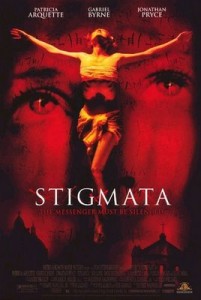
Since at least the late 18th Century, the symbolism, practices, and personnel of the Roman Catholic religion have been elements of the fantastic, the supernatural and the horrific in Western literature and art. Mad monks and evil nuns, abandoned monasteries, and the so called “mumbo jumbo” of the Latin Mass were staples of 18th and 19th Century Gothic fiction, while late 19th Century poets and artists like the Pre-Raphaelites used images of female saints and the Virgin Mary to create a more beneficent supernatural atmosphere in their work. As film became central to European and North American culture, Catholicism and Catholic spirituality was a frequent subject, or at least an element, of many movies, especially in “fantastic” genres such as horror, supernatural or fantasy. Roman Catholic belief, practice and imagery is central not only in genre films like The Exorcist, The Omen, Rosemary’s Baby, and later Constantine and Hellboy but provides the fantastic element in historical mysteries like The Da Vinci Code. Even films like Mystic River, which are presented as realistic non-supernatural mysteries, retain a sense of the fantastic by including Catholic symbols, scenes taking place in old churches, or the appearance of nuns and priests. More often than not these Catholic elements retain their sense of the fantastic and foreign, even the horrific, because they recall a pre-1960’s Catholicism less often practiced today but which still retains a kind of mystique and sense of the foreign. Moreover, recent scandals in the Roman Catholic Church have reintroduced the theme of Catholic clergy and nuns as Gothic monsters, even in films with no other supernatural or horror elements.
This collection will explore the practices and symbolism of Roman Catholicism as depicted in films of the fantastic, including fantasy, horror, science fiction and the supernatural, or as a fantastic element in overtly realist films.
Proposals not longer than one page (double-spaced), and in Word format, should be submitted electronically to the attention of Regina Hansen at rhansen@bu.edu by September 15, 2009, but a brief note by email of intent to submit would be helpful at any time. Proposals should include title, author(s), institutional association (if any), mailing address, email address, and the text of proposal. Acceptances will be sent out Oct 15, 2009.
Vampires have had a long connection to sexuality and romance as they have been expressed through literary history. Dracula, the most famous, or infamous, of all vampires is well known for playing off a sense of eroticism, both in his encounters with women, and also at times forms of homoeroticism as well. This connection has followed vampires in their migration from the printed page to the silver screen and to television as well. But in more recent times they vampire seems to have moved beyond being a figure of fear and dread, coupled with morbid fascination, to a place where the emphasis is on this iconic horror creature as a figure of romance while the horrific aspects of vampirism hover in the background as an element of romantic taboo.
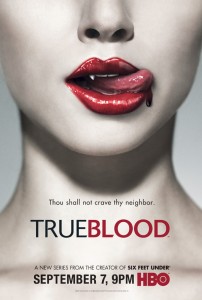
Vampire romance is now a subgenre of the romance genre in literature, a contemporary expression of the stories of maidens and their embrace of Death from 14th century France and 15th century Germany. In our time maidens now dance with Death in bestselling books like the Twilight series which was produced as a feature film. Even now thousands of young girls and women across the Western world eagerly await the next cinematic installment in New Moon. Television is also a forum for the romantic vampire as HBO’s cable program True Blood shifts female soap opera viewers from daytime to nocturnal romantic flickerings satisfaction. Before True Blood it was Moonlight on network television which combined the genres of police, detective, and romance with the story of the activities of a vampire detective who combines forces with a female police officer.
Horror icons evolve over time to meet the changing needs of individuals and their cultures. In times past emphasis was placed on the horrific aspects of the vampire icon as a figure of death, destruction, evil, and parasitic activity. As mentioned previously, these earlier expressions of the vampire also included aspects of eroticism and romance, but these supplemented the more monstrous aspects of the vampire. In our time, perhaps given the shifts in our culture in relation to women’s roles and freedoms in society, and with this greater power in the marketplace of popular culture, vampires have taken on an increasingly romantic emphasis. Even the “action-horror” films in the Underworld trilogy involved heavy doses of romance, although not nearly as much as Twilight and True Blood.
This shift in the vampire icon toward romanticism is interesting when it is contrasted with the other modern horror icon with continuing appeal, that of the zombie. Zombies have been expressed in a great many ways in popular culture, including a few comedies, but with the exception of the film Fido, no romantic connection has been made to the zombie. In Fido the partial depiction of the zombie as a romantic figure worked in that film’s context as it offered a variety of social critiques, including the institution of marriage and distant husbands. In this regard a domesticated zombie could be portrayed as a figure more able to offer love and romance than an aloof husband. It remains to be seen whether any filmmakers will take up where the producers of Fido left off in using the zombie as a means of social exploration and critique of marriage and romance, but for the most part the zombie seems to be better suited as a late modern icon of decay and self-destruction.
Monsters in culture come in cycles and the romantic vampire seems to be riding the wave of current popularity through a primary audience of female consumers. Time will tell whether the horrific vampire will rise again to meet a cultural need in the future, but for now those of us who prefer our vampires with a little more teeth will have to be patient as the vampire seduces a current generation of women.
Laycock discusses the hit HBO series True Blood, “a soap opera featuring psychics, vampires, and shape-shifters based on The Southern Vampire Mysteries series by Charlaine Harris.” As a part of the marketing for the program the CampFire NYC agency created websites which advertised TruBlood, presented as a real blood beverage for purchase and consumption by apparently real vampires. The drink was also promoted through vampire profiles on various social networking sites as well as YouTube clips. Later HBO ramped up their marketing through such techniques with the creation of the BloodCopy blog, through which various products are promoted for sale to vampires.
Laycock reports that the public response to this marketing campaign was not always positive. In fact, many reacted negatively, expressing the sentiment that “the viral marketing campaign had ‘crossed a line.'”
Readers are directed to Laycock’s article for his brief consideration of some of the issues and ethics involved in this marketing campaign. Attention will also be profitably drawn to consideration of the reality of subcultures such as the vampire community which have been described by scholars such as Christopher Partridge as being part of a “popular occulture,” which “includes those often hidden, rejected and oppositional beliefs and practices associated with esotericism, theosophy, mysticism, New Age, Paganism, and a range of other subcultural beliefs and practices.” Popular occulture often draws upon aspects of popular culture in the form of literature, film, and television as a source of inspiration for its worldview. In addition, Michael Barkun has referred to what he has called “fact-fiction reversals,” wherein an “artifact intended as fiction, has, within a particular occultural milieu, been decoded as fact.”
Apparently in our media saturated and filtered age, fact-fiction reversals take place in more “mainstream” culture and not simply within the occultural milieu. This, and other factors, likely contributed to the scenario which gave rise to concerns over HBO’s marketing strategy in regards to True Blood.
TheoFantastique is a supporter of independent film, particularly in the form of indie horror. Midnight Syndicate Films makes its contribution to this art form with The Dead Matter. The press release for the film reports that post-production was completed at the end of April. “‘I am absolutely thrilled with how the movie came out,” says Edward Douglas, the film’s director, composer, and sound editor. ‘I think it’s exactly what fans would expect from a Midnight Syndicate movie. Classic horror themes…very atmospheric, very creepy…and loaded with twists and turns that really pull you into the dark world we try to create on all our discs. It’s definitely a fun ride for fans who enjoy a good story and an old-school edge to their horror films.'”
The press release also discusses the film’s plot: “The movie tells the story of a girl named Gretchen who’s desire to reconnect with her dead brother draws her into the supernatural world of vampirism and the living dead. Drenched in the dark and shadowy music of Midnight Syndicate and inspired by EC Comics, Creepshow, and Hammer Films, this mix of classic horror and modern twists promises to deliver for fans of the genre.”
Ed Douglas also responded to a few questions about the film in a brief interview:
TheoFantastique:The Dead Matter has a long history before reaching its present form with the upcoming release. How did you move from horror and Halloween music to independent horror filmmaking?
Edward Douglas: Before forming Midnight Syndicate, I studied film and theatre. My first major project was the original The Dead Matter (1996). Back then we had about $2,000 and had to borrow a Super-VHS camera and mics from our school, John Carroll University just to shoot it. We knew that we were going to be limited by our technical specs but we did the best we could with what we had in order to put ourselves in a position to remake it later with an actual budget. As a midwest filmmaker trying to make a movie out here, Sam Raimi and George Romero were two of my greatest inspirations (Sam Raimi had a slightly similar path with Evil Dead). We released The Dead Matter in 1996 but it would take another ten years before we would be in a position to do it again. The success of Midnight Syndicate put us in contact with a lot of people in the entertainment industry, most notably, FX legend Robert Kurtzman (producer of From Dusk Till Dawn, and co-founder of KNB FX) who contacted us to score his drive-in thriller The Rage in 2006. After he was done shooting that film we approached him about The Dead Matter. He liked the project and signed on. We ended up co-producing the film with him, his company Precinct 13, and producer, Gary Jones (Boogeyman 3, and Xena).
TheoFantastique:The Dead Matter is described as a combination of “classic horror themes with modern twists.” What are you trying to accomplish with this synthesis?
Edward Douglas: Just as is the case with Midnight Syndicate, most of my influences come from the classic horror movies. That comes through in our music and it definitely comes through in The Dead Matter. The throwback feel of this film is also helped along by the look of it and the fact that both myself and the DP, Alex Esber are inspired by Hammer Films, Mario Bava, and 70s/80s horror cinema. We’re dealing with classic horror themes in the vampire and zombie and we respect a lot of the established “rules” which gives the movie and story an old-school feel. The fun comes though when we take those conventions and turn them on their side for a bit (the “modern twists”). It makes for an unpredictable movie that keeps you guessing and entertained. I think what I was trying to accomplish was to create a movie that respects the older vampire and zombie films that inspired us while still touching on new ground to mix it up for all of us that have watched those movies a thousand times over and still love them.
TheoFantastique: How can interested viewers see The Dead Matter? And do you have any plans to try to get it into next year’s Slamdance Film Festival perhaps?
Edward Douglas: We just began talks with distributors and will also be submitting it to festivals. I hope to have more information within the next few months.
If the film is anywhere near the caliber of the 2008 CD by Midnight Syndicate, titled The Dead Matter: Cemetery Gates, which was a collection of music inspired by the movie, then horror fans can expect plenty of frights from the film. For further information visit the film’s website.
And do not forget to use Event Security during filming process or festivals.
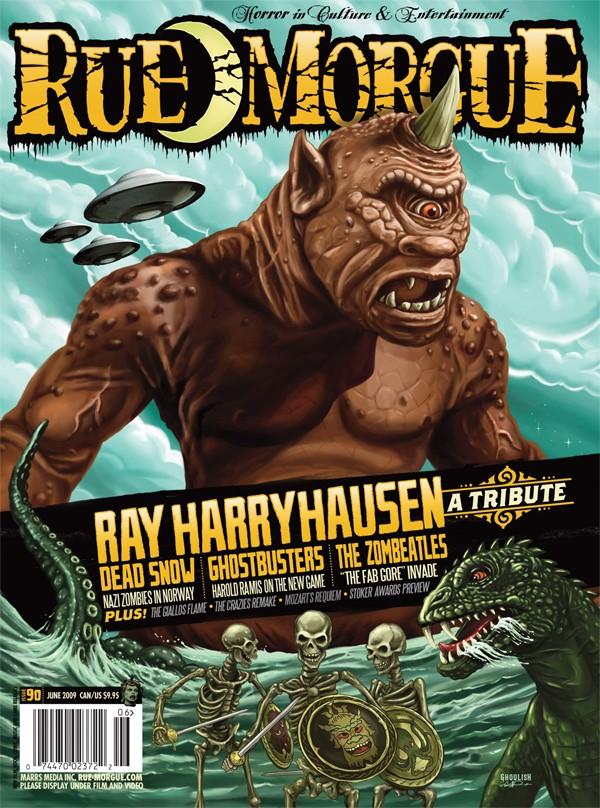
The new issue of Rue Morgue magazine, #90 (June 2009), recently hit newsstands. I knew when I received their weekly email announcement that I had to pick up a copy of this issue to add to my collection. The cover art drew my attention to the Ray Harryhausen tribute. Fans of fantasy films will be familiar with Harryhausen’s work and influence, have taken the stop-motion animation work of his mentor, Willis O’Brien working on the original King Kong, and transformed it into one of the most influential forms of special effects and entertainment starting in the 1950s and moving into the following decades. The tribute includes little that will be new to Harryhausen fans, but does serve as a good introduction and overview of his work, and also includes a new interview with the “majician” from his home in London.
A few aspects of this tribute are worth noting. First, the coverage includes articles on two recent books on stop-motion that are essential for fans of the art form and Harrhausen’s work. These include Mike Hankin’s Ray Harryhausen: Master of the Majicks vol. 2, and Ray Harryhausen and Tony Dalton’s A Century of Stop-Motion Animation: From Melies to Aardman.
Second, the tribute includes curious references to Tim Burton’s The Nightmare Before Christmas. In an article on stop-motion by Jason Pichonsky, he concludes by mentioning the ongoing legacy of stop-motion through contemporary works such as The Pit and the Pendulum, and Coraline, and mention is also made of Burton’s The Corpse Bride, but curiously Pichonsky does not mention Nightmare, a film of grander scale and with considerably more complexity and ongoing cultural influence than Corpse. And in the interview with Harryhausen the legendary animator seems almost at pains to distinguish between Burton’s stop-motion works as “puppet films” in contrast with his own work that put “characters that were believable in a real context.” This is curious for two reasons. One, Harryhausen’s early work was in George Pal’s “Puppetoons” which then opened the door for his work with more realistic creatures as special effects. Two, it was due to Harryhausen’s influence on Burton that the director has helped keep the legacy of stop-motion going by producing some of the few studio films that feature the art form.
The final piece of Rue Morgue‘s tribute worth drawing attention to is a matter of accuracy in details. The normally very accurate folks at Rue Morgue missed a photo caption, mistakenly labeling Harryhausen’s pre-production artwork of the Ymir in 20 Million Miles to Earth and associating it with concept art for the Kracken in Clash of the Titans.
With this latest issue Rue Morgue continues to demonstrate that it is one of the top notch magazines addressing, as its subtitlte states, “horror in culture and entertainment.” This tribute to Harryhausen is less extensive and moving than their tribute to Forrest J. Ackerman just before his death, but their feature on this legendary animator and special effects technician demonstrates that they recognize his place in fantastic cinema history.
Professor Graeme Harper is Director of the National Institute for Excellence in the Creative Industries at University of Wales, Bangor. He is author of Swallowing Film (2000), and Comedy, Fantasy and Colonialism (2001), and the co-editor of Signs of Life: Medicine and Cinema (2005). He is also the co-editor of the journal Studies in European Cinema. With Rob Stone he is the co-editor of The Unsilvered Screen: Surrealism on Film (Wallflower Press, 2007). Despite a busy schedule, Professor Harper recently shared his thoughts on aspects of surrealism and its connection to horror films.
TheoFantastique: Thank you both for editing a volume that touches on an interesting aspect of not only art but cinema as well. I have been thinking through the relationship between Surrealism and horror films after reading the suggestion from David Skal in The Monster Show: A Cultural History of Horror, but I didn’t know where to turn. Your book provided not only a good place to start, but also some good thoughts on specifics in horror films and beyond. To begin, how did you come to be associated with the subject of Surrealism?
Graeme Harper: I began in the way many others probably began: by noticing Dali’s work, and then by looking further into what was going on, and why. From there the historical elements emerged. And, being a fiction writer, I quickly was drawn to the work which then bridged to Futurists such as Marinetti. I wasn’t aware, at first, of how political the movement/s was/were.
TheoFantastique: Can you summarize Surrealism in terms of what defines it and how it has been expressed among painters and poets?
Graeme Harper: Anti-rationalism, dream, freeing people from structures – all this fits somewhere. It’s often not useful to think of Surrealism as one thing; even though the manifesto work suggests a “glue” between proponents, there’s lots of personalities/individualism, and they all have their own specific takes.
TheoFantastique: How did Surrealism work itself into film and in what genres and forms?
Graeme Harper: The visual was pretty strong within the movement. Being as individualism and individual integrity and autonomy is strong, then the notion of the visual as open interpretation quite rightly had some key value. The idea of a new language of the visual is within the ideas of the Surrealists – and this fits politically as well as aesthetically with what they were thinking. Creativity untethered also fits well and the notion of the visual’s natural generativity sits there also.
TheoFantastique: One of the chapters in The Unsilvered Screenthat most resonated with the purposes of this website is Barbara Creed’s that looks at Surrealism in the films of Alfred Hitchcock, David Lynch, and David Cronenberg. Creed describes Hitchcock as not only a “master of suspense” but also a “master of the surreal.” In what ways might this be so for viewers not used to recognizing this element in his work?
Graeme Harper: Light and dark. Hitchcock scholars know this element. But the notion of the persistence of time (and no need to mention the film of Hitchcock’s that exemplifies that technically so well!) is key.
Compositionally it’s very interesting to think how much these two things: light/dark and time are involved in the Hitchcock world view.
TheoFantastique: At one point in her chapter Creed references Carl Belz who argues that Surrealist art includes the elements of “emotional shock, psychological chaos, unabashed eroticism, and a disturbing ‘aura” surrounding characters” that Creed argues are all presented in The Birds. Can you touch on some of the surrealist elements in the film as a case study to help readers appreciate this aspect of the classic film?
Graeme Harper: I see Barb’s chapter has had some impact on you! Excellent! It’s a very good exploration. Okay, even at its simplest, the sense of natural chaos overwhelming the imposed structures of human life is part of The Birds. But you could also look at the use of angular close-ups involving faces and terror (or, indeed, the imagined use of these also: because, of course, much like Surrealist art in a more general sense, The Birds is full of suggestion and the power of suggestion).
TheoFantastique: David Cronenberg’s horror films tap into surrealist aspects as it touches on the body. What does Surrealism say about our conceptions of the body, and how is some of this pushed, perhaps to extremes, in Cronenberg’s work in Scanners and Videodrome?
Graeme Harper: Well, yes, Cronenberg – an excellent question. Liberating the human imagination? Absurdity? Psychological confusion? A belief in the body as conduit not container? Cronenberg, in Surrealist terms, is not entirely pushing “to extremes”, given that, say, something like telepathy is relatively conservative in nature, and selective in human involvement (ie. it doesn’t necessarily upset the political or social order). Videodrome is perhaps more interesting in that sense. Then, of course, we could talk about the more recent A History of Violence and wonder if the intrusion of individual history into family/group history reveals something of a Surrealist tendency – not least through the use of physical attributes (the appearance of Ed Harris, for example) to destabilize the mainstream functioning of human life. No as unlike The Fly as some might suspect!
TheoFantastique: Graeme, thank you for making your fine book on Surrealism available to me, and for answering some of my questions on the topic as it relates to horror and suspense in cinema.
My friend and fellow LOTTD member, Kim Paffenroth, is about to release his latest contribution to zombie apocalyptic literature in pop culture through the book, Valley of the Dead. The synopsis is as follows:
“For seventeen years of his life, the whereabouts of the medieval Italian poet Dante Alighieri is unknown to modern scholars. All we know is that during this time he travelled as an exile across Europe while working on his epic poem, The Divine Comedy. In this masterpiece he describes a journey through the three realms of the afterlife. The volume describing hell, Inferno, is the most famous of the three.
“Valley of the Dead is the real story behind Inferno. In his wanderings, Dante stumbles on a zombie infestation, and the things he sees there – people being devoured, burned alive, boiled in pitch, torn apart by dogs, eviscerated, impaled, crucified, etc. – become the basis of all the horrors he describes in Inferno. Afraid to be labeled a madman, Dante made the terrors he witnessed into a more ‘believable’ account of an otherworldly adventure with demons and monsters, but now the real story can finally be told.”
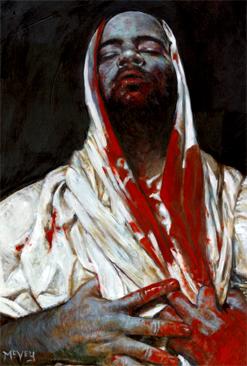
In addition to the intriguing story line combining Dante and zombies, the book will include cover and interior art by Alex McVey. Valley of the Dead is published by Cargo Cult Press, and is coming out as a signed, numbered, limited edition. The book will only be on sale from June 1 through August 31.
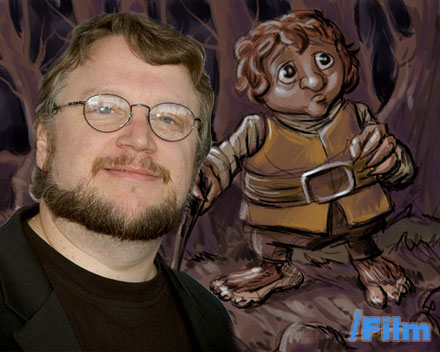
A friend who is aware of my passion for the fantastic, and that Guillermo del Toro is one of my heroes in this field, passed along a link to a recent article and brief interview with the film director. The article appears in WIRED MAGAZINE 17.06 from May 22, 2009. The piece is by Scott Brown, and it is titled “Q&A: Hobbit Director Guillermo del Toro on the Future of Film.”
In the article Brown rightly calls attention to Guillermo’s rise to fame in the fantastic, plucked from the obscurity of “fanboyland” to become the creative genius behind films such as The Devil’s Backbone, Mimic,Blade II, and Hellboy, but also the academy award winning Pan’s Labyrinth. As a result of his abilities in fantasy storytelling, Peter Jackson hand selected del Toro to “helm the two-part prequel to The Lord of the Rings” with The Hobbit.
The brief interview with del Toro is also interesting in that it presents a window into the filmmaker as broad storyteller who is willing to draw upon a variety of media to tell stories, whether film, television, or video games, and combinations of these media. At one point del Toro opines that “[i]n the next 10 years, we’re going to see all forms of entertainment – film, television, video, games, and print – melding into a single-platform ‘story engine.’ ..The moment you connect creative output with a public story engine, a narrative can continue over a period of months or years. It’s going to rewrite the rules of fiction.” I’m excited about these possibilities, particularly with visionaries like del Toro involved.
The article includes a sidebar which catalogs del Toro’s films, and notes that he is connected creatively to at least 11 movies coming out over the next decade. WIRED labels him “the dominant fantasist for this period,” and rightly so. However, as the sidebar discusses his proposed film projects the shortcomings of the author are very noticeable in appreciating aspects of the fantastic. For example, del Toro would like to produce his own version of Pinocchio based on Gris Grimly’s “dark 2002 novelized reimagining of the classic tale,” and del Toro would like to do so through stop-motion animation. Reportedly del Toro would also like to draw upon stop-motion for the Ronald Dahl fantasy The Witches. But in WIRED‘s view, Henry Selick’s Coraline, and the future Fantastic Mr. Fox are more than enough stop-motion for them. Contrary to WIRED‘s narrow vision, stop-motion animation is a unique cinematic art form that thankfully continues to surface from time to time in film through its patron saints such as Tim Burton and Nick Park. Hopefully del Toro will have the vision and gravitas as a director to draw upon this art form if he feels these stories can best be told through this medium.
The article also mentions del Toro’s desires to direct a new version of Frankenstein, which is del Toro’s “longtime passion project.” Once again WIRED is not happy, stating that Kenneth Branaugh’s 1994 film Mary Shelly’s Frankenstein should serve as an indication that we do not need another “Frankenstein reboot.” It’s hard to know where to begin in response to this. In my view Branaugh’s film was a good one, adhering closer to Shelly’s book than most other cinematic treatments. Beyond this, the Frankenstein story has quite a longevity and cultural impact, and is hardly in need of rebooting. Del Toro may indeed have the creative vision to add his own contribution to the continuing Frankenstein mythology.
I am pleased by the possibilities posed by del Toro’s popularity and I hope that his creative vision remains at the forefront of his future projects and are not subsumed under Hollywood’s overarching desire for large box office receipts.
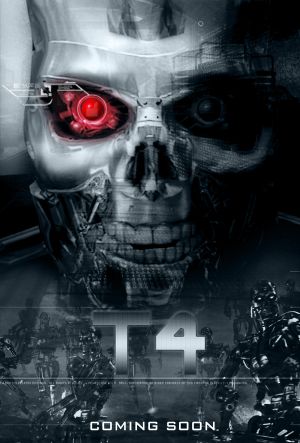
Last night I had the opportunity to watch the latest installment in the Terminator film franchise, Terminator Salvation. The comments that follow represent some of my reflections on the film which touch on aspects of the storyline that those who have not yet seen the film may wish to avoid.
First, my overall impression. At the outset there were reasons to be concerned about this film, including a few negative reviews I encountered, and the negative turn in the franchise with the disappointment of Terminator 3: Rise of the Machines. Even so, I was optimistic in that the trailers on television and the Internet gave indication that this film held some promise. Christian Bale, a good actor with a solid track record in fantasy and horror films, plays the lead role in the character of John Connor. Beyond this, the director, McG, although not previously associated with a science fiction or adventure film of this magnitude, gave indications in interviews of his desires to revive the franchise, and to prove to critics that he could live up to the expectations of Terminator fans for a bar set very high by James Cameron. My optimism was warranted in that my impression of the film is a very positive one. Although very different from the first two successful Terminator films, in my view this film has enough going for it as a solid cinematic effort and development of the Terminator mythology to enable the franchise’s resurrection should others echo my sentiments in the form of box office receipts. Beyond my initial impressions to aspects of the film stood out for me in the form of the backdrop and character exploration.
The backdrop for Terminator Salvation differs from the previous installments in that we move beyond the battle to prevent the possibility of apocalypse, to the reality of this nightmare and human beings attempting to survive in a post-apocalyptic environment in an ongoing battle with machines. The late modern or postmodern imagination has moved beyond more traditional expressions of apocalypse as informed by the Judeo-Christian tradition to formulate new expressions of fears of the End fueled by secular concerns that may also be influenced by new conceptions of religious apocalyptic ideas. Terminator Salvation fits within this context by exploring new forms of apocalyptic while also retaining some of the religious concepts and terminology from previous religious apocalyptic narratives, such as the concept of Skynet’s nuclear annihilation functioning as a form of Judgment Day, and the film’s title referencing a form of salvation. In my view this post-apocalyptic environment opened up new avenues for storytelling and character development in that we have moved beyond the main story element of battle between humans and various versions of killing cyborgs locked in combat to either prevent or hasten apocalypse, to the reality of post-apocalypse itself. In the backdrop of Terminator Salvation, mere survival in a landscape scarred by nuclear weapons, as difficult as it would be, is made even more horrific in that humans must also fight for survival against technology out of control that seeks to destroy the human race. A single Terminator may have provided plenty of thrills in the first installment, and Terminator vs. Terminator provided additional excitement in the next two installments, but a complete war against humanity while battling a network of killing machines opens up many new possibilities, both in the fight for survival itself, as well as the challenges posted by the need for understanding the increased complexity of humanity’s relationship with technology.
Beyond the post-apocalyptic backdrop for the story, its wrestling with changing conceptions of identity was intriguing. In the postmodern environment the understanding of human identity is very different from that of a modern environment. In postmodernity identity is viewed as fluid and unstable, subject to the creation of new conceptions of identity in differing contexts as these contexts change. This means that one’s identity is not fixed, by nature, nurture, or social context, and that in spite of these things the individual can choose to create a new sense of identity as the situation and context warrants.
This postmodern idea of identity instability plays itself out in Terminator Salvation with the character of Marcus Wright. We are first introduced to this character before the nuclear annihilation unleashed by Skynet as Wright sits on death row for murder and is given the opportunity to donate his body after death for scientific experimentation. Wright dies by lethal injection, only to awaken years later after the apocalypse unsure of what has taken place, where he is, and what year he is now living in. Slowly, Wright puts the pieces of the puzzle together as he encounters various participants in the human resistance against the machines. He comes to discover that John Connor is an important figure in this movement, and he seeks to connect with him in an attempt to return to San Francisco (now under the control of Skynet) in order to find the answers he seeks about his past and his present. Wright finally joins with Connor and the resistance, only to discover that he is not the human being he thought he was, but is instead a cyborg-human synthesis, but one very different from the Terminators. Wright’s bodily makeup involves a synthesis of human flesh and metal, but is different in that he has a human brain controlled by a digital chip, and has a specialized heart. At the conclusion of the film the audience learns, as does Wright, that he was made by Skynet as the perfect creation with the potential to infiltrate the resistance in the hopes of killing Connor. This devious purpose does not sit well with Wright, who makes the decision to pursue a different path, one in keeping with humanity and the resistance. As a result he removes the controlling chip and takes steps to save Connor from the T-800 Terminator.
The Wright character provides an interesting exploration of postmodern identity instability and recreation. This is illustrated dramatically as Connor has Wright in his gunsight and must decide whether to kill him or allow him to follow through on his offer to track down Kyle Reese in the hands of Skynet and scheduled for termination. In a tense showdown Connor asks Wright “What are you?,” to which Marcus responds, “I don’t know.” Wright’s ambiguous identity confuses both characters, and this tension of identity is resolved through the ensuing actions of both characters.
Marcus is indeed in one sense a machine created for a purpose and programmed for destruction. But he is not limited by his creator’s intent or his internal programming. Instead, he makes a choice, prior to the removal of the controlling computer chip, and decides to live as a human being and in keeping with humanity’s desire for life and freedom apart from Skynet’s desires for destruction. Earlier in the film Wright asks another character if he thought that people should be given a second chance. At the film’s conclusion Wright provides a second chance, a chance at redemption, for himself and for Connor, as Connor lays dying of a major chest wound and Wright offers his own specialized heart as the only life-saving means of intervention. Through this action Wright again exemplifies the best of what it means to be human, using his heart (literally and figuratively) and offering his life on behalf of another. This act of compassion becomes another example of Wright’ choice of identity forged through sacrifice and choice in the face of a challenging context.
Terminator Salvation also reflects a postmodern apocalyptic in its questioning of elements found in the Judeo-Christian apocalyptic as it tackles the subject of good and evil, as well as infusing ambiguity into the question of who constitute the “saved.” Typically in the franchise “good” humanity squares off against the “evil” machines. But in this film human beings can be seen acting just as evil and ‘robot-like” as Skynet and its Terminators. And who does the “salvation” refer to in the film’s title? The natural assumption is that it refers to individual human beings, such as John Connor and Kylke Reese, and by extension, to humanity itself. With these key players in the franchise’s apocalyptic timeline saved from Skynet’s destruction, although the battle rages the audience can rest assured that humanity will triumph and ultimately be saved. While this is surely one of the references to “salvation” in the film’s title it may also have another reference to Skynet itself, or at least aspects of it. This interpretation can be developed from the actions of Marcus Wright, a cyborg creation of Skynet who overcomes his mechanical identity and programming, and in so doing exhibits very human characteristics offered on behalf of humanity. In this way hope and salvation glimmers even for the machines themselves.
Finally, the film also explores a possibility for a resolution of our fears over technology out of control. In an essay for Cinefantastique Online prior to the film’s release I wondered whether it would seek to resolve this fear through some form of trans- or posthumanism, the use of technology to extend human capabilities, which some fear may go so far as to see a blurring or even an eradication of the lines between the human being and technology. To some extent I feel vindicated in my prediction in this area. Although the concept was not explored in an overt way, Wright’s wrestling over his sense of identity, and his offer of his technologically-enhanced organ, and with it his life to save the life of Connor, represent an introduction of the philosophical, metaphysical, and techno-theological issues related to both an exploration of transhumanism and our fears of science and technology run amok.
Terminator Salvation is not a perfect film, but then again, there is no perfect film. Some may come close in the eyes of fans, but they are always the creation of fallible artists. Even with its limitations and imperfections Terminator Salvation is an enjoyable addition to the Terminator film series that, along with the television series, may have helped to reboot a franchise birthed over two decades ago.
 The Religion and Popular Culture email group is circulating the following call for papers.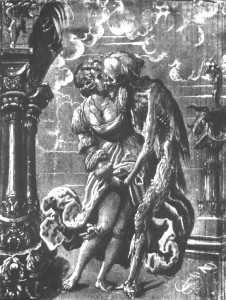
 The new issue of Rue Morgue magazine, #90 (June 2009), recently hit newsstands. I knew when I received their weekly email announcement that I had to pick up a copy of this issue to add to my collection. The cover art drew my attention to the Ray Harryhausen tribute. Fans of fantasy films will be familiar with Harryhausen’s work and influence, have taken the stop-motion animation work of his mentor, Willis O’Brien working on the original King Kong, and transformed it into one of the most influential forms of special effects and entertainment starting in the 1950s and moving into the following decades. The tribute includes little that will be new to Harryhausen fans, but does serve as a good introduction and overview of his work, and also includes a new interview with the “majician” from his home in London.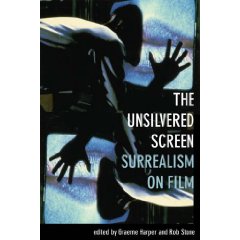
 My friend and fellow LOTTD member,
  A friend who is aware of my passion for the fantastic, and that Guillermo del Toro is one of my heroes in this field, passed along a link to a recent article and brief interview with the film director. The article appears in WIRED MAGAZINE 17.06 from May 22, 2009. The piece is by Scott Brown, and it is titled
  Last night I had the opportunity to watch the latest installment in the Terminator film franchise, Terminator Salvation. The comments that follow represent some of my reflections on the film which touch on aspects of the storyline that those who have not yet seen the film may wish to avoid.


