This commercial brings together several aspects of appeal that fit in perfectly with TheoFantastique. The overall theme is the idea of wonder, and that of a child, and this is expressed through the crayon drawings of children as various monsters, a robot, and a flying saucer weave their way through a city and adult life. And the commercial brings the message of a child’s wonder home with the inclusion of Gene Wilder singing “Pure Imagination” from Willie Wonka and the Chocolate Factory (1971). In short, this commercial encapsulates the sense of wonder that I feel my experiences with the fantastic. Thanks goes to AT&T for recognizing our need for re-enchantment and wonder, even if a cell phone is not likely to provide it for us.
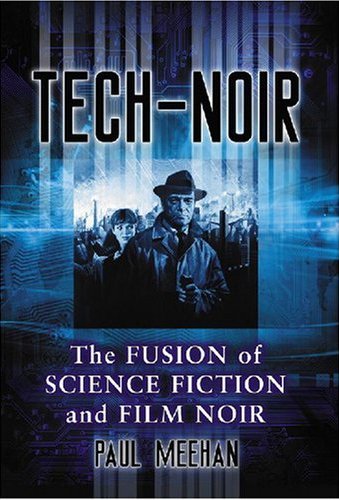
Paul Meehan is a contributor here at TheoFantastique as regular readers will recall. He is the author of a number of books including Saucer Movies: A UFOlogical History of the Cinema (The Scarecrow Press, 1998), Cinema of the Psychic Realm (McFarland, 2009), and Tech-Noir: The Fusion of Science Fiction and Film Noir (McFarland, 2008). He has also recently finished a draft of a book on horror and film noir through McFarland. Paul returns with a post that offers a consideration of sleep paralysis as it relates to the phenomenon of alien abduction.
VISITORS IN THE NIGHT: ALIEN ABDUCTIONS AND SLEEP PARALYSIS
by Paul Meehan
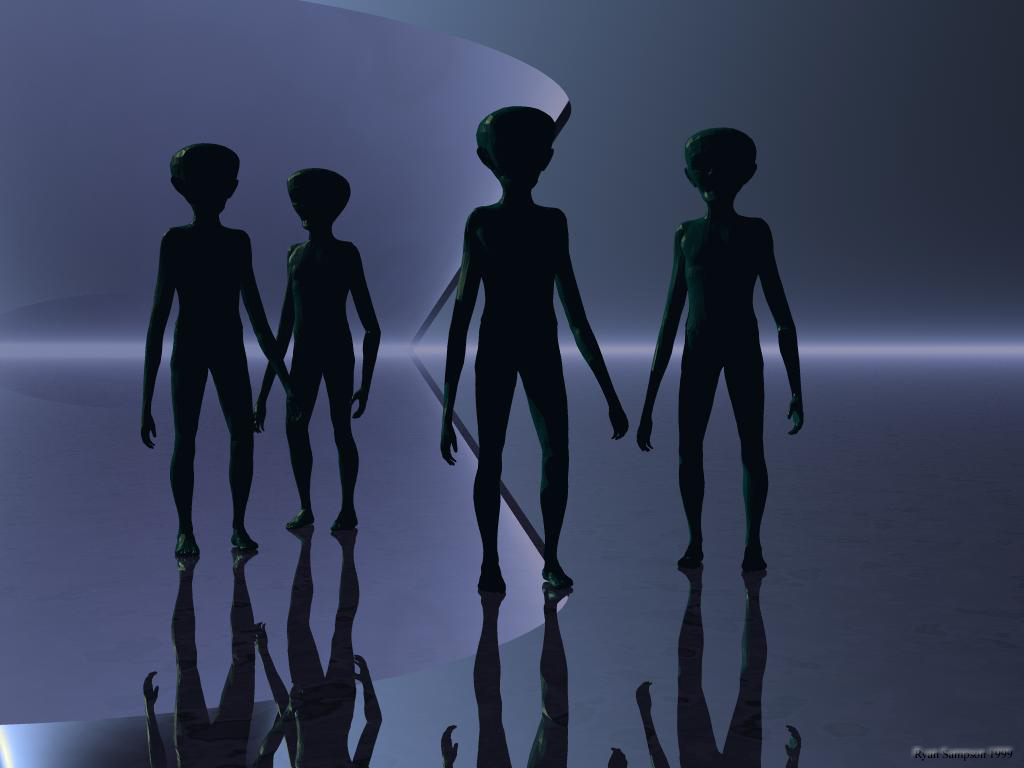
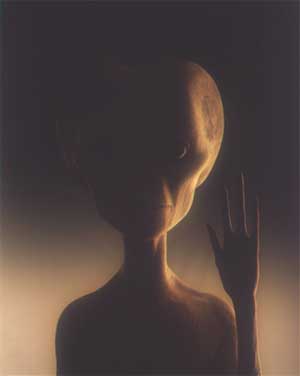
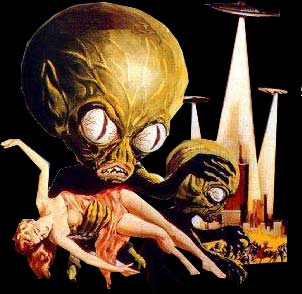
Since the 1960s, published accounts of humans allegedly being abducted by aliens and subjected to various medical and psychological procedures have captivated the public mind and have provided inspiration for a number of mass-market books and movies. The question is, do these fantastic tales have any basis in nuts-and-bolts reality or do they originate in dreams and the dark recesses of human imagination? More specifically, do these narratives emerge from the mysterious and little-understood phenomenon of sleep paralysis?
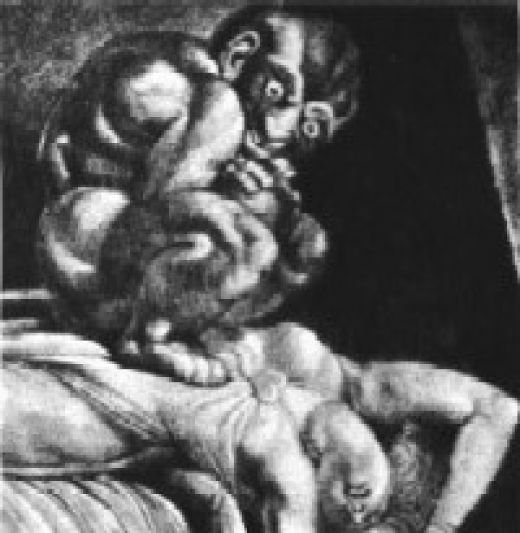
As readers of TheoFantastique are aware, sleep paralysis (abbreviated as SP) is a sleep disorder that occurs during the twilight consciousness between sleep and wakefulness, when the sleeper is either waking up or falling asleep. The sleeper seems to be fully awake, although the body feels paralyzed except for the eyes. Unusual light phenomena may be perceived, along with tingling bodily sensations and sexual arousal. Then a mysterious, usually threatening entity approaches the sleeper, sometimes speaking to them and pressing down upon their chest and preventing them from breathing. SP may segue into an out of body experience (OBE) in which the percipient has the subjective experience of leaving their body and being transported to some fantastic locale. In rare cases, SP may be experienced by more than one individual at the same time. It’s easy to see how an episode of sleep paralysis could be interpreted as an alien abduction by someone who has no knowledge of the SP phenomenon.
During the 1990s skeptics seized upon SP as an explanation for the majority of alien abductions. While there is much truth to this contention, it is not the whole story. Clearly, while some abduction narratives originate with SP/OBE experiences, the abduction phenomenon did not originate with SP, as a historical review of alien abductions will demonstrate.
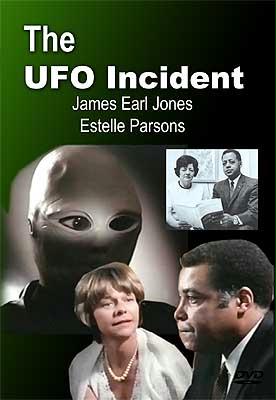
The 1961 abduction experience of Betty and Barney Hill, an interracial couple from New Hampshire, provided the paradigm of the phenomenon. Prior to this incident, alien encounters consisted of highly dubious stories told by “contactees” about meetings with human-looking “space brothers,” or by fleeting confrontations with UFO “occupants” who were observed from afar while repairing their craft or gathering plant or soil samples. The Hill case, which involved the abduction of a husband and wife while they were driving from Canada to their home in New Hampshire, occurred while both of them were wide awake and driving in an automobile, and would later provide the basis for the 1975 NBC-TV telefilm The UFOIncident. There was corroborating evidence for their close encounter in the form of an anomalous radar track recorded at nearby Pease Air Force Base that night, an in a circle of warts that appeared on Barney’s groin after the incident.
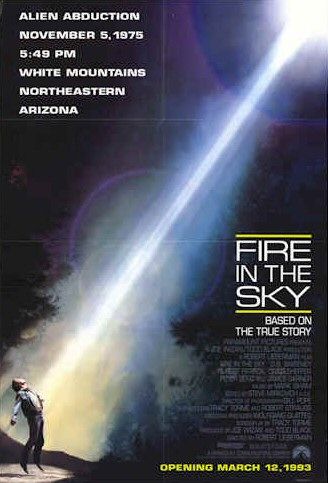
Interestingly, the Hill case, popularized in John Fuller’s 1963 book The InterruptedJourney, did not immediately spark any further abduction tales for a decade. Then, in the 1970s, abductions began to be reported with more frequency. One of the most well-publicized close encounters was that of Charles Hickson and Calvin Parker, who claimed that they were abducted by robotic “claw men” while fishing from a pier in Pascagoula, Mississippi in October, 1973. Another famous case was that of Travis Walton, a logger who was zapped by a beam from a UFO when he approached too close to the craft and was later found missing in November of 1975. Walton’s encounter with the UFO was witnessed by five other members of the logging crew, and was later dramatized in the 1993 feature film Fire in the Sky. The Pascagoula and Walton cases were widely reported in the media at the time.
In addition to these well-publicized events, a number of more obscure abduction cases also came to light during the 1970s. In August of 1975 Sandra Larson reported being abducted while driving in a car late at night along with her daughter and a male friend, the latter two being immobilized (or, in abduction parlance, “switched off”) while Ms. Larson was taken aboard a UFO and subjected to a medical exam. David Stephens and his friend “Glen” (a pseudonym) were driving around a lake area near Norway, Maine in the early hours of one morning in October, 1975, when their car was immobilized and Stephens was abducted. Three women, Mona Stafford, Louise Smith and Elaine Thomas were returning to their homes in Liberty, Kentucky one night in January, 1976, when their car was reportedly levitated into a UFO and the women were subjected to a series of frightening and painful ordeals. In Essex, England, John and Elaine Avis and their three children reported being abducted from a country road in October of 1974. The abduction of the so-called “Allagash Four” occurred during August, 1976 when four men were abducted while night fishing in a boat in the Allagash Waterway recreation area in Maine.
Note that all of the cases cited above involved multiple witnesses and all of them occurred while the abductees were fully awake. Additionally, there were a number of single witness abductions that took place under similar circumstances. Mr. Carl Higdon reported an abduction while he was hunting in the Medicine Bow National Forest in Wyoming in October, 1974. Air Force sergeant James Moody reportedly underwent an abduction experience while watching a meteor shower in the desert near Alamagordo, New Mexico one night in August of 1975. “Steven Kilburn” (pseudonym) reported an abduction and medical exam conducted by gray aliens during the 1970s while driving from Fredrick to Baltimore, Maryland one evening to researcher Budd Hopkins. These types of abductions continue to be reported decades later.
It’s difficult to see how any of these cases could be related to sleep paralysis, but as the abduction phenomenon emerged into public consciousness, researchers began to investigate another type of scenario: the “bedroom visitation,” which was clearly related to sleep paralysis. Perhaps the earliest of these was the experience of Pat Price, a single mom living in Utah who awakened to find two intruders in her room and later, under hypnosis, told a tale of being taken aboard a UFO by spacemen who recorded her thoughts. Ufologist John Keel, author of The Mothman Prophecies, was the first researcher to link what he termed “bedroom invaders” to alien abductions in the early 1970s. But it was Whitley Streiber’s bestselling book Communion, published in 1987, that cemented the link between SP and abductions. Streiber, author of popular horror novels like The Wolfen and The Hunger, wrote that he was asleep in his cabin in upstate New York and woke up to be confronted by a diminutive humanoid creature who paralyzed him. He was then floated out of his bedroom and into an alien craft where he was examined and later returned. Streiber’s book later became the subject of a 1989 feature film..
Streiber’s Communion experiences, which in retrospect resemble an episode of SP/OBE much more than they resemble the earlier abduction stories, served to bring sleep paralysis narratives within the orbit of alien abductions as UFO researchers, who knew nothing of SP, began to interpret SP experiences as abductions. In 1992, a poll conducted by the Roper organization designed to measure the prevalence of abductions within the general population incorporated several questions that are more indicative of SP than of alien contacts. Questions like, “have you ever awakened paralyzed, sensing a figure or strange figure or presence in the room?,” and “Have you ever felt like you are actually flying through the air without knowing why or how?,” and “Have you ever seen unusual lights or balls of light in a room?,” are all indicative of SP and OBE. On the basis of responses to the Roper Poll, researchers concluded that abductions, now conflated with SP, were thought to be fairly prevalent within the American population.
The Roper Poll’s methodology was criticized at the 1992 Abduction Conference held at M.I.T. by folklorist and SP expert David Hufford, who had been invited to present a paper on SP and its relevance to abductions. Hufford’s paper made it glaringly obvious that many bedroom encounters were in reality episodes of SP, but in the wake of these revelations, skeptics like Carl Sagan and others in the media seized upon SP as an explanation for all abductions. Reviewing the UFO literature on the subject, the cases involving SP/OBE become glaringly obvious. One individual who reported awakening from sleep and seeing balls of light in his room, stated that, “My body would be completely paralyzed. I couldn’t yell or scream, but I wanted to. I could feel the pressure of something or someone coming toward me, then I’d feel pressure on top of me, and then I wouldn’t be able to see.” Another alleged abduction report described a woman’s experience as follows: “One night in the 1980s, she was abruptly awakened from sleep to find an entity standing by her bed. It was a type she had seen before and had even painted in oil paints on paper…Although terrified and unable to move, she physically broke through the paralysis and lunged at the creature,” which promptly dematerialized. Anyone familiar with SP will see that these experiences most likely represent SP dream imagery rather than close encounters with extraterrestrial visitors.
In other times and in other cultures these bedroom visitations would be interpreted as encounters with “ghosts,” “witches,” “vampires” or “incubi.” Our technological culture, however, interprets these same experiences as “alien abductions.” Drawing upon imagery derived from pop culture science fiction or UFO literature, these creatures of the night are transformed from supernatural beings into extraterrestrials during episodes of SP augmented by hypnogogic or hypnopompic dream imagery. Oddly, some UFO researchers have reversed this trend. In her 1998 book How to Defend Yourself Against Alien Abduction, respected ufologist Ann Druffel theorizes that these bedroom visitations are caused by jinns, spirit beings in Islamic folklore thought to be creatures that are intermediate between men and angels.
Given the above, it’s easy to distinguish between bedroom visitant/SP/OBE “alien” encounters and the original abduction paradigm of events that take place during a waking state of consciousness, frequently have multiple witnesses and sometimes leave corroborating evidence. There is, however, another connection between these two disparate types of experiences. The trauma of alien encounters have been known to produce sleep disorders in abductees. In the Hill case, for instance, their experiences first surfaced as terrifying nightmares. It appears that abductees can suffer from episodes of SP after having undergone non-bedroom type close encounters as part of what researchers call “Post-Abduction Syndrome.” Abductee “Steven Kilburn,” who had first experienced an automobile abduction, later underwent bedroom visitations that were probably inspired by his initial abduction. Jim Weiner, one of the “Allagash Four,” also seems to have developed SP as a result of his alien encounter. SP alien visitations and non-bedroom abductions do not appear to be mutually exclusive.
There are other links between dream states and abductions as well. Some skeptics theorize that night-time highway abductions are the result of “highway hypnisis,” an altered state of consciousness caused by driving down straight roads at night that reportedly produces hypnogogic dream imagery of ET encounters. It should also be noted that virtually all abductions, bedroom and non-bedroom alike, involve the abductee being put into a state of full or partial paralysis by the aliens. Finally, many abductions are recalled under hypnosis, which is a type of trance or dream state. The relationship between sleep paralysis and alien abduction experiences is complex and multifaceted. Further research is needed into both of these fascinating and enigmatic phenomena in order to define the distinctions between them.
In our age of re-enchantment in response to decades of secularization it is common for elements of ancient religion and spirituality to surface in pop culture, many times shaped into new forms. Erik Davis comments of this in his book Techgnosis: myth, magic + mysticism in the age of information (Three Rivers Press, 1998):
The virtual topographies of our millennial world are rife with angels and aliens, with digital avatars and mystic Gaian minds, with utopian longings and gnostic science fictions, and with dark forebodings of apocalypse and demonic enchantment.
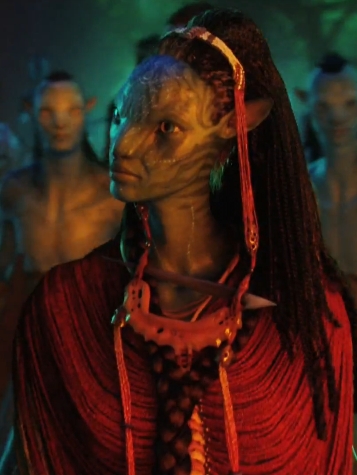
A good example of the spirituality of “digital avatars and mystic Gaian minds” surfacing in pop culture comes in the form of James Cameron’s blockbuster film Avatar. In the past I have included commentary on this film from a variety of perspectives (see the links at the conclusion of this post), but with this article I want to address Avatar’s inclusion of psychedelics and shamanism.
My thinking on this topic was stimulated by an article by Ido Hartogsohn at Reality Sandwich titled “Avatar: The Psychedelic Worldview and the 3D Experience.” In this article Hartogsohn reminds us of the significance of the coming together of technology and media as a means of enhancing psychedelics, and that this has been part of the psychedelic movement since counterculture of the 1960s. In his view 3D films serve as a metaphor for a new filer through which perceptions of reality are altered.
Hartogsohn also reminds us that film has provided us with alternative visions of reality, which he considers forms of “psychedelic storytelling:”
Hollywood cinema has been flirting with our culture’s subconscious for some time now. Blockbuster fantasy and sci-fi films, ever-more popular in recent years, have acted as a Jungian shadow to our culture’s proclaimed rational and materialist view of reality. Films such as Star Wars, Lord of the Rings, The Matrix, Harry Potter, The Chronicles of Narnia, and The Golden Compass have presented us with a re-enchanted world. These movies posit an unseen and outlandish reality existing alongside the “normal” world, and this serves to support a growing sense of paranoia about the deceptive qualifies of consensus reality and the existence of hidden and enchanted dimensions to our world. Cinema thus functioned as our culture’s collective dream, bringing to view its most repressed archaic realms.
In Hartogsohn’s view Avatar should be included in this list of examples of psychedelic storytelling, to which its 3D features add “a new level of psychedelic visual richness.” Hartogsohn also points to the “indigenous and shamanic world view” found in the film, making it “a mythic specimen of our culture.” In shamanic cultures the shaman moves between the “natural” world and another realm accessed by altered states of consciousness. This is depicted in Avatar as the Na’vi seek communication with Eywa through a female shaman. Hartogsohn provides additional examples of parallels between the Na’vi and shamanic cultures so that there can be no doubt that Avatar depicts a shamanistic worldview.
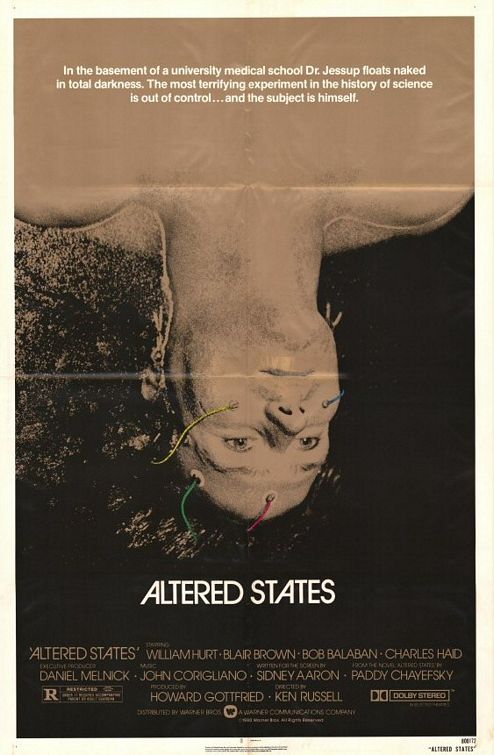
Hartogsohn develops his thoughts on the connection between Avatar and psychedelics further by noting that it is “not only psychedelic in form but also in message.” He points toward John Lilly’s work with isolation tank experiments in the 1950s as a means of exploring and altering human consciousness. Curiously, Hartogsohn does not reference science fiction cinema’s explicit depiction of Lilly’s isolation tank and consciousness experiments as depicted in the neglected (and underrated) but interesting science fiction film Altered States (1980) starring William Hurt. Hartogsohn does, however, connect the significance of the isolation tank or pod to more recent science fiction:
A decade before Avatar, The Matrix featured a person lying in a pod, isolated from reality, and communicating with another reality. What does it mean for us that the two most influential mythic films that our culture has produced since Star Wars both feature a person lying in a pod communicating with a different reality, a being split into to parts, one of them artificial. Could this mean something? Could they mean that we are the ones inside the pod, disconnected from our true body?
This interesting article concludes with a consideration of whether we are experiencing “a new wave of psychedelic cinema.” For Hartogsohn this may be the case not only because of the continued prevalence of films in 3D, and the production of science fiction and fantasy films that open us to new conceptions of reality, but also because of films like Tim Burton’s Alice in Wonderland “jammed with weird acting mushrooms and even weirder realities” which surely must be construed as an expression of psychedelics. As Hartogsohn writes, “it seems that we might be facing a new psychedelic renaissance brought on by 3D cinema.” Perhaps, but regardless of whether 3D fades again as but the latest attempt at an interesting cinema novelty, the shamanic and psychedelic elements of one of the highest grossing films of all time gives us pause for reflection on a number of significant levels.
Over the decades science fiction and horror have alternated in their depiction of alien visitation between concepts of invasion and attack on the one hand, and the benign or loving, at times divine sage on the other hand. Some filmmakers have even wrestled with both treatments, such as Steven Spielberg, who for many years presented his aliens in positive fashion in films like Close Encounters of the Third Kind and E.T., shifting gears dramatically and reluctantly (in a post 9/11 environment) with The War of the Worlds.
Now, noted theoretical physicist and sci-fi fan Stephen Hawking has weighed in with his views on real alien contact in an Associated Press report:
Hawking claims in a new documentary that intelligent alien lifeforms almost certainly exist, but warns that communicating with them could be “too risky.”
He speculates most extraterrestrial life will be similar to microbes, or small animals — but adds advanced lifeforms may be “nomads, looking to conquer and colonize.”
The comments came in connection with the Into the Universe with Stephen Hawking series on the Discovery Channel. It sounds as if Hawking agrees with H. G. Wells in that future visiting aliens may be “intellects vast and cool and unsympathetic.” See the news item as printed in The Detroit News, and a more extensive article here. And for a contrary perspective on the topic, consider this article.
Update: Michael Shermer has written a piece for the Scientific American titled “The Myth of the Evil Alien” disagreeing with Hawking.
An article was recently brought to my attention that appeared in Reality Sandwich which touches on “Sleep Paralysis Visions: Demons, Succubi, and the Archetypal Mind.” As the title indicates, the article probes the subject of sleep paralysis covered on this blog in several previous installments. Of particular interest to me was the discussion of “Neurotheology and Spirits”:
This is where the research of anthropologist Michael Winkelman comes in handy. Winkelman suggests that humans are hard-wired to see spirits; it’s part of our genetic make-up. Known as neurotheology, this view posits that the universality of seeing spirits does not necessarily mean that “spirits are real,” but certainly that the experiences are authentic, and not just made up by a combination of wishful thinking and cultural loading from myths and fairy tales.
My thanks to Matt Cardin of The Teeming Brain for bringing this item and website to my attention.
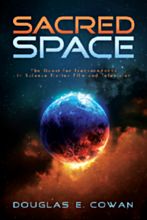
As humans, it is our trust in something larger than ourselves that invests our lives with meaning and value. We hope that outside the boundaries of everyday living there lies something greater. As Doug Cowan argues, science fiction is the genre of possibility and hope, a principal canvas on which writers, artists, and filmmakers have sketched their visions of this transcendent potential for generations. In Sacred Space, he leads readers in a compelling exploration of how this transcendence is manifested in science-fiction cinema and television of today.
From the millennial dreams of a future bright with potential to the promise of evolution from some as-yet-undreamed engine of creation, science fiction’s visions of transcendence animate the pages of Sacred Space. Drawing on the most popular examples—Star Wars, Star Trek, Battlestar Galactica, Babylon 5, and Stargate SG-1—as well as the lesser known but no less important, Cowan reveals the multivalent religious ideas present in this media. Why do these themes that consistently appear in science fiction matter? What do they reveal about the often ambivalent relationship between outer space and our spirits? Cowan insightfully shows how these films and shows express and reinforce culturally constructed conceptions of transcendent hope, and along the way provides a provocative reflection on what this ultimately says about our culture’s worldviews, hopes, and fears.
Contents
Preface
Part I: Science Fiction and the Quest for Transcendence
1. The Brightness against the Black
2. Pinocchio’s Galaxy
Science Fiction and the Question of Transcendence
3. First Contact
Human Exceptionalism in the Calculus of Hope
4. “Intellects Vast and Cool and Unsympathetic” The War of the Worlds and the Transcendence of Modernity
Part II: Science Fiction and the Modes of Transcendence
5. Heeding the Prophet’s Call Star Trek: Deep Space Nine
6. The von Däniken Paradox Stargate SG-1
7. All Alone in the Night Babylon 5
8. So Say We All Battlestar Galactica
9. The Truth is Out There
Transcendence and the Neverending Quest
Filmography
Bibliography
Index
Douglas E. Cowan is Professor of Religious Studies at Renison University College, University of Waterloo. His most recent publications include Sacred Terror: Religion and Horror on the Silver Screen; Cyberhenge: Modern Pagans on the Internet; and Religion Online: Finding Faith on the Internet. He lives in Waterloo, Ontario.
Reviews
“From the ‘millennial dreams’ and ‘apocalyptic nightmares’ of alien contact to the Buddhist visions of Neo’s matrix, Doug Cowan weaves a grand adventure for fans and students of religion and science fiction. If the hope for transcendence is the universal human religious question, as Cowan ably presents, then science fiction film and television are the blank screens most qualified in our media-rich culture to propel us on that journey.”
—Conrad Ostwalt, Professor of Religious Studies, Appalachian State University
“Cowan convincingly demonstrates that modern science-fiction films and television shows have made religious questions and answers central to the issues they raise about human identity, values, and purpose. By emphasizing the diversity of religious ideas present in these media, Cowan shows how they are as multivariant as the nature of religion itself. In so doing, he sheds light not only on what religion is, but also on what it might be.”
—John Lyden, Professor and Chair of Religion, Dana College, and author of Film as Religion: Myths, Morals, and Rituals
“Highly recommended. Here we learn that science fiction is more than bug-eyed aliens and saucers—and that it often reveals our quest for the sacred.”
“Cowan’s in-depth exploration of the religious content of science-fiction films and television shows is a great step forward for the study of religion and popular culture. By taking fictional religions on their own terms, he uncovers complex meanings within some of science fiction’s best-loved films and television shows. His discussions of the role of religion in War of the Worlds, Star Trek: Deep Space Nine, and Stargate SG-1 are the most thorough you’ll find.”
—Gabriel McKee, author of The Gospel According to Science Fiction
A preview of what the reader has in store in this volume is hinted at in my previous interviews with Cowan linked to below, as well as in his article in the Journal of Religion & Film reproduced as chapter 4 in the book.
For those who may have come to this post via a search engine or link on a website or blog expecting to find something anti-Semitic you’ll be disappointed. Instead, I want to draw the reader’s attention to the recent discussion of various monsters from Jewish folklore, religion, and myth. In the West we tend to be more familiar with monsters from Europe and their American derivatives, as well as our own unique monstrous creations. With the popularity of J-horror we also have a growing awareness of Japanese culture’s contribution to human conceptions of monsters. But it is worth noting that every culture has its unique monsters.
Patheos, a website exploring various facets of religion, recently featured an article by Jay Michaelson, a Ph.D. candidate in Jewish thought at Hebrew University of Jerusalem, titled “Demons, Dybbuks, Ghosts, and Golems.” The article provides an introduction to Jewish monsters from the Kabbalah, the Talmud, and folklore, including the female “demonic personality” of Lilith, the dybbuk and the phenomenon of possession with one soul connected to another (as depicted in The Unborn [2009]), the ibbur which is a possessing entity similar to the dybbuk, and the golem (most famously depicted in the expressionist film The Golem [1920]). For those interested in a brief introduction to cross-cultural considerations related to the monstrous this article is worth a read.
Various media outlets are reporting the discovery of the body of a beheaded male in a temple in West Bengal in India. Reporting on the grisly discovery, THAINDIAN NEWS states:
The detached head which was lying beside the body appeared severely injured. Police Superintendent Rabindranath Mukherjee speaking on behalf of the police authorities of the district reported today that the severed head was also marked with vermilion. Keeping in mind the fact that the temple was of the Hindu goddess Kali, authorities have raised the claim that the man was not murdered but was killed as a token of sacrifice to god.
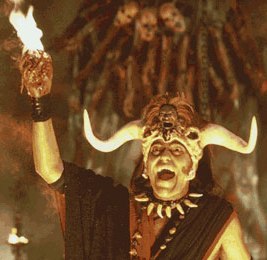
Other sources in the article dispute the claim of human sacrifice believing it was a murder staged to appear as a ritual act. At any rate, while this event is disturbing I think I would be more concerned if the victim’s heart had been removed and authorities made a connection to the crime and missing Sankara stones tied to the cult of Mola Ram.
Kotaku has an article of interest titled “Infection vs. Resurrection: The New Science of the Zombie.” The article contrasts the changing explanation for the reasons why these undead creatures come back from the dead as it chronicles a shift from supernatural to more “natural” and scientific explanations.
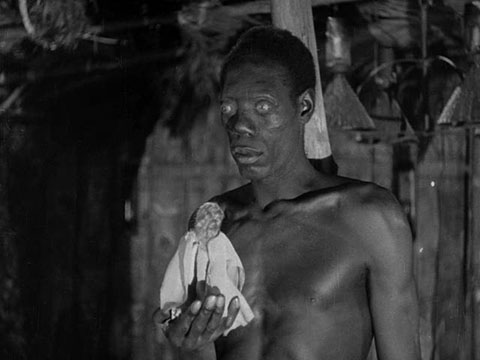
Where once they shuffled, now they run. Initially born of forbidden voodoo rituals or the sign of a religious apocalypse, for the past decade zombies have slowly metamorphosed into the by-products of something else entirely.
Science now, not the supernatural, is most often to blame when loved-ones become something less than human and begin to prey on the survivors.
While earlier works of fiction have played with the notion of what a zombie is and how it comes to be, it is pop culture’s modern influence on an ancient fear that has had the greatest impact on the undead’s evolution.
But why?
Although the supernatural expression of the zombie was never widespread in film, I think the author rightly recognizes the explanatory shift in zombie causality which reflects changing cultural dynamics in relation to religion, technology, and potentially apocalyptic anxieties as particularly popularized by George Romero with his groundbreaking Night of the Living Dead. A similar dynamic can be seen in depictions of vampire causality. Even so, in my view the “technological zombie” still has a lot to say to us about ourselves, even on a religious level. As theology and religious studies interacts with cultural studies we might consider whether our fascination with the zombie in more technological than supernatural fashion is indicative of the continuing influence of Judeo-Christian concepts of bodily resurrection, but with the post-Christendom context altering this idea so as to remove the idea of bodily redemption and transformation. Things to ponder in light of “the new science of the zombie.”
TheoFantastique: Paul, thanks for another visit, and with it an opportunity to explore another of your books. How did you develop a personal interest in “tech-noir,” and how is this hybrid defined with its key elements?
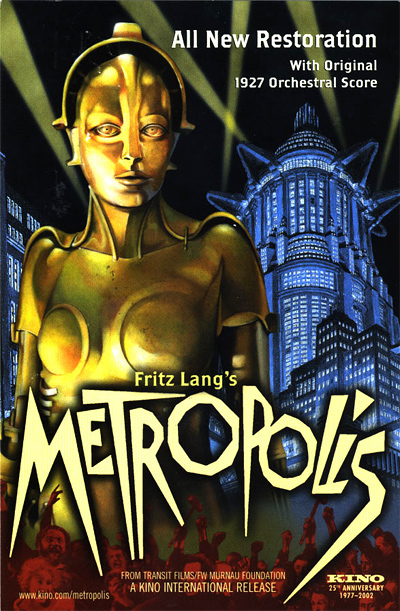
Paul Meehan: The starting point for me was an obsession that I have had for many years with Blade Runner, a film that has always haunted me because I believe it represents a true vision of the future. That is, I think that Ridley Scott actually saw the real future via some kind of psychic remote viewing and rendered it into cinema. Blade Runner led me into an appreciation of the film’s roots in the film noir genre and to the realization that sci-fi and noir had more in common than anyone ever suspected. The term tech-noir, which was invented by James Cameron in The Terminator, denotes science fiction works that exist in a recognizably noir milieu of crime, murder, mystery, suspense, obsession, political paranoia, perversity, predestination, femmes (and hommes) fatales and identity transference. In addition to thematics, some sci-fi noirs also appropriate the visual hallmarks of film noir such as high-contrast lighting, unusual camera angles, extreme close-ups, etc. Another key element is an intensely urban setting common to both genres. In tech-noir the oppressive city of night that provides the setting for most films noir is ramped up into the dark mega-urban spaces of Metropolis, Blade Runner, Batman, Total Recall, Dark City, and The Matrix.
TheoFantastique: In what cultural influences and films does tech-noir find its origins?
Paul Meehan: The film noir and science fiction genres both have a common origin in the German expressionist films of the silent and early sound period. Works like Homunculus, The Cabinet of Dr. Caligari, The Hands of Orlac, Metropolis, Alraune and The Testament of Dr. Mabuse all combined futuristic technology with the dark shadows of the German “shudder films” such as Nosferatu, The Golem,The Studentof Prague and Waxworks. A number of sci-fi/horror thrillers made in Hollywood during the 1930s such as The Walking Dead, Black Friday and The Return of Dr. X combined the dark shadows of the horror film with science fiction in an urban setting that seems to anticipate the inception of film noir in the 1940s. Later, during the waning years of American film noir in the late 50s-early 60s, a number of science fiction films deliberately appropriated thematic and stylistic elements from noir in low-budget programmers like Indestructible Man, She Devil, The Astounding She Monster, The Day the World Ended and The Wasp Woman. Beginning in the 1980s the ascendancy of cyberpunk science fiction provided inspiration for tech-noirs such as The Terminator, Virtuosity, Johnny Mnemonic, The Ghost in the Machine, The Thirteenth Floor, Existenz and Vanilla Sky.
TheoFantastique: What is the relationship of tech-noir science fiction to horror?
Paul Meehan: Of course, many science fiction films are also horror films as well, and the dark expressionist shadows of film noir ultimately derive from the stylistics of the horror genre. Thus, fear is often a big part of tech-noir filmic ambiance. A list of horror oriented tech-noirs would include The Vampire Bat, Island of Lost Souls, Mad Love, The Devil Commands, The Corpse Vanishes, Donovan’s Brain, Not of This Earth, Atom Age Vampire, The Stepford Wives, The Medusa Touch, Scanners, Coma, They Live, The Hidden and Species, among many others. My next book, Horror Noir, due out later this year from McFarland, will examine the relationship between horror and film noir more extensively.
TheoFantastique: What are the best and most influential tech-noir movies in your view?
Paul Meehan: Fritz Lang’s Metropolis and The Testament of Dr. Mabuse are important seminal works of tech-noir. During the 1930s Micheal Curtiz’s Doctor X and The Walking Dead were contemporary urban thrillers that melded crime and mystery with science fiction. The first film to deliberately combine film noir with sci-fi was Jack Pollexfen’s much-maligned 50s thriller Indestructible Man. The first film to feature a film noir private eye plying their trade in a futuristic city was Jean-Luc Godard’s satiric Alphaville in 1965. Some of my personal favorites (besides Blade Runner) include Nick Grinde’s Before I Hang, John Frankenheimer’s The Manchurian Candidate and Seconds, Richard Fleischer’s Soylent Green, Alan Rudolph’s Trouble in Mind, Alex Proyas’ Dark City and Michael Bey’s TheIsland.
TheoFantastique: I was greatly surprised by your quotation of an interview with Paul Verhoeven, director of Robocop, where he states that the story incorporated his “philosophical concerns about life and death, fear of dying, resurrection, and Paradise lost.” Do any of these concerns ever surface in other tech-noir films or is this an aberration given Verhoeven’s personal interests?
Paul Meehan: Although Verhoeven tends to wax philosophical about his work (he quotes Plato, for instance, while discussing Hollow Man), these themes also appear in a number of tech-noirs, including Six Hours to Live, The Walking Dead, Seconds,Immortal, and Vanilla Sky. These films feature protagonists who walk on the knife edge between life and death and are reborn in order to perform an important task. Certainly the suffering, reborn hero of Robocop represents a kind of Christ-figure who dies and is resurrected and becomes a heroic figure who restores order to a chaotic world.
TheoFantastique: You refer to film noir and science fiction films as “inverse mirror images of each other”. In what ways is this the case?
Paul Meehan: Film noir internalizes the same dark psychic forces that science fiction externalizes. In noir, societal angst is re-channeled into psychological aberration while in sci-fi these forces are represented by prehistoric monsters, giant insects, invading flying saucer fleets and nuclear disasters. Jimmy Cagney’s psychotic gangster Cody in White Heat is just as much a monster as Godzilla or the Beast from 20,000 Fathoms.
TheoFantastique: Given the cycles of science fiction and tech-noir, care to speculate on the future possibilities for tech-noir?
Paul Meehan: Tech-noir films peaked around the turn of the millennium but the cyberpunk concept seemed to lose steam when the dreaded “Y2K bug” failed to materialize. Since then humankind has become a lot more tech friendly as computers have become an indispensable part of our lifestyle and have lost much of their dark mystique. Hollywood also seems to have exhausted its fascination with the works of sci-fi luminary Philip K. Dick in the wake of Impostor, Minority Report, Paycheck and A Scanner Darkly, and nothing much has come down the pike since then except for 2009’s Surrogates. What I’d love to see is a film version of William Gibson’s haunting cyber-thriller Neuromancer, a work that can’t seem to find its way out of development hell. I’d also like to see an adaptation of George Alec Effinger’s novel When Gravity Fails, in which private eye Marid Audran solves crimes in a futuristic Muslim society. Tech-noir is a resilient variety of science fiction that will no doubt mutate into new and vibrant forms as the 21st century progresses.
TheoFantastique: Thanks, Paul. I look forward to your forthcoming book on horror and noir.