A little over a week ago the media relayed that three Utah men were reported missing by their families after leaving to search for the legendary Lost Dutchman Gold Mine north of Mesa, Arizona. Today the media is reporting that the search has been called off. One wonders what might have happened to these men as they searched in underground caves.
My friend and TheoFantastique contributor Paul Meehan has completed his work on his forthcoming book Horror Noir: Where Cinema’s Dark Sisters Meet (McFarland, 2010). From the publisher’s website:
This critical survey examines the historical and thematic relationships between two of the cinema’s most popular genres: horror and film noir. The influence of 1930s- and 1940s-era horror films on the development of noir is traced and detailed, with analyses of over 100 motion pictures in which noir criminality and mystery meld with supernatural and psychological horror. Included are the films based on popular horror/mystery radio shows (The Whistler, Inner Sanctum), the works of RKO producer Val Lewton (Cat People, The Seventh Victim), and Alfred Hitchcock’s psychological ghost stories. Also discussed are gothic and costume horror noirs set in the 19th century (The Picture of Dorian Gray, Hangover Square); the noir elements of more recent films; and the film noir aspects of the Hannibal Lecter movies and other serial-killer thrillers.
The website for Popular Science magazine has an interesting brief piece titled “If Evolution Had Taken a Different Turn, Could Dragons Have Existed?” The article notes that several of the features of dragons are found in various animals, just not all of them in a single creature. And although it would have taken several interesting turns for natural selection to produce a dragon, the article theorizes that it might have been possible. See the article here.
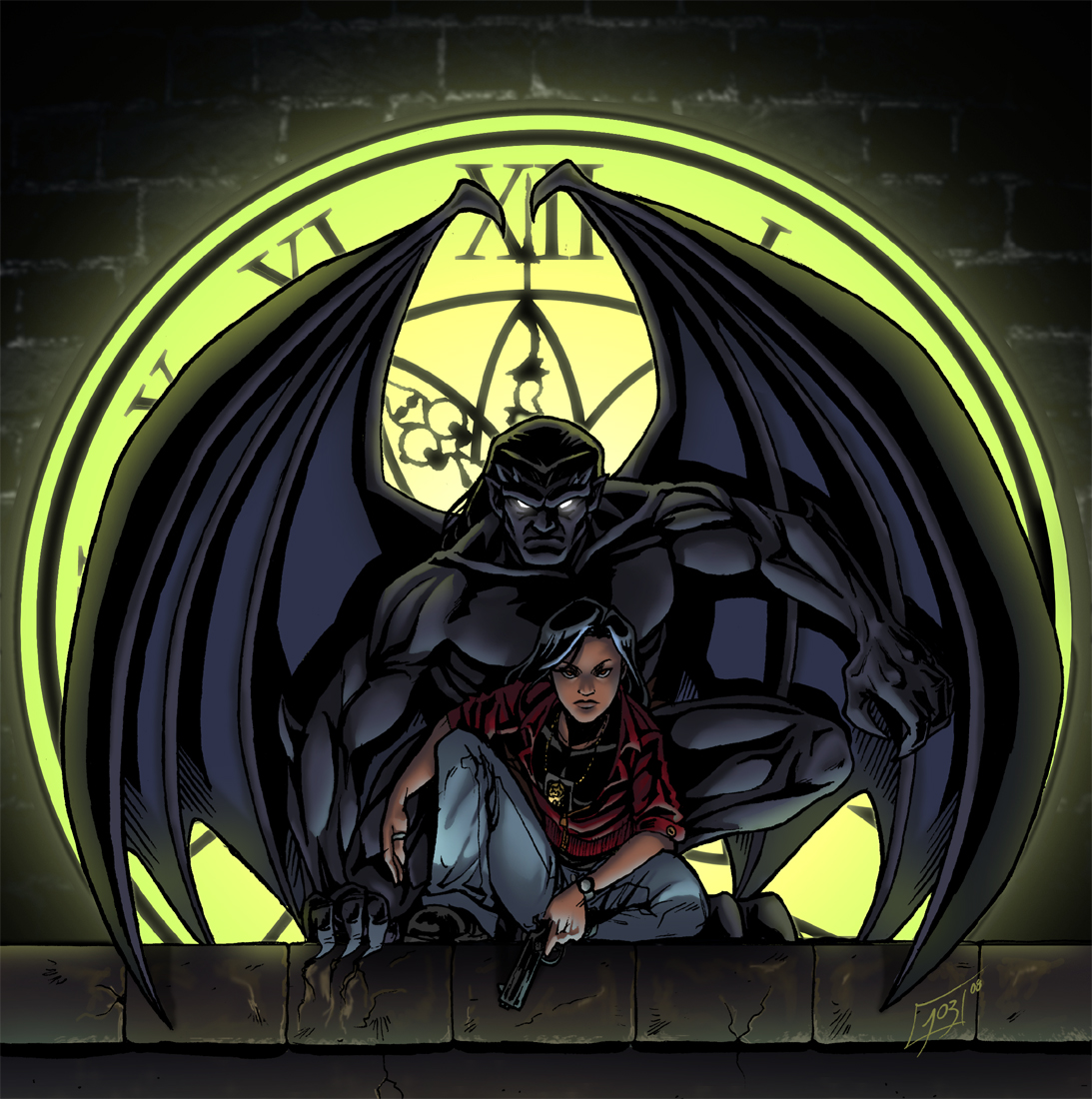
I learned through a link to my blog from The Grimm Tea Party that Disney Studios has a live-action film on gargoyles in the works. A few websites are reporting on this, including The Hollywood Reporter, which states that
The studio is in the process of hiring Zoe Green to develop a story revolving around the stone creatures for a feature project being produced by Lauren Shuler Donner and Jack Leslie via the Donners’ Co.
The project seeks to build a mythology around the carvings, originally designed in medieval times to act as spouts but later took on roles as powerful symbols to ward off or attract evil. The story is being developed, but it is known to be set in modern times.
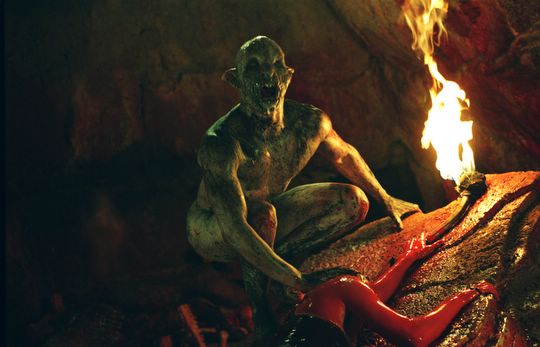
Readers may remember the Gargoyles cartoon television series produced by Buena Vista Television (1994-1996), which inspired a comic, video game, and other merchandise according to The Gargoyles Fans Website. Although little information is available on the proposed live-action film, it purporedly will not be an adaptation of the 90s cartoon. I’d like to see Disney take on something with a darker edge to take advantage of the potential in the gargoyle, but it will likely be lighter family fare. I just hope it will be a good film effort that makes the most of these architectural and mythical monsters. Until we find out what Disney comes up with, we’ll have to be content with films like Jeepers Creepers that involves one of the best gargoyle-like monsters to reach the silver screen.
Mysterious animal deaths sparked mass hysteria on the small island of Puerto Rico. In 1992, Puerto Rican newspapers reported a series of strange killings had taken place, of a variety of animals including birds, horses and especially goats. The killings occurred around the village of Moca, and the local people believed a mythical creature called El Vampiro de Moca was responsible.
Over a period of six months the slaughter became more widespread, causing mass panic and hysteria. Researchers coined the term “Chupacabra” meaning “Goatsucker” in Spanish. The name related to the puncture wounds and lack of blood found on the victims. The reports of Chupacabra activity then began to spread into the Americas and for the last decade sightings have been reported as far north as Carolina, USA and as far south as Chile.
The Chupacabra grew from a village vampire to an international phenomenon. El Chupacabra became a merchandising dream with t-shirts, toys and even a song being produced. By the end of the 1990s the hysteria died away and less sightings were reported.
Unexplained animal killings still continue on Puerto Rico and the locals are left with a real mystery to whom or what is killing their animals.
Sightings and video of the alleged creature continue. As the new video above indicates, some residents of Texas think the creature has been killed in their neighborhood, even while animal control offers are skeptical, yet open minded. The animals in the new video and photograph look similar to animals on videotape from Texas in the past (see below). As officials await DNA testing on what appears to be at least a diseased or mutant form of dog, our continued fascination with monsters and cryptozoology is evident. And for someone like me who has a lifelong interest in cryptozoology, and who has a personality that is a combination of The X-Files‘ Mulder with a little bit of Scully’s skepticism, this is intriguing, even if in all likelihood it is not the legendary beast.
A perusal of the magazine rack at Barnes & Noble last week was rewarded with the find of Make-Up Artist magazine, Number 85 (July/August 2010). Two articles were of special interest to me. The first is related to the first photo accompanying this post of the Creature from the Black Lagoon. The Creature is is one of the monsters featured in the forthcoming comedy short, United Monster Talent Agency, produced by KNB EFX Group. With this short film project KNB EFX draws upon a retro style of a “’50’s-era commercial for Universal Studios.” The storyline as described in Make-Up Artist:
The idea became perfectly clear–there would be an agency that handled real monsters as talent, and once they cornered the market on Universal Studios, they would want to gorge into the future and open a new wing, developing creatures and monsters for future films.
The film has wrapped production and updates on the film’s release can be found at the KNB EFX Group website.
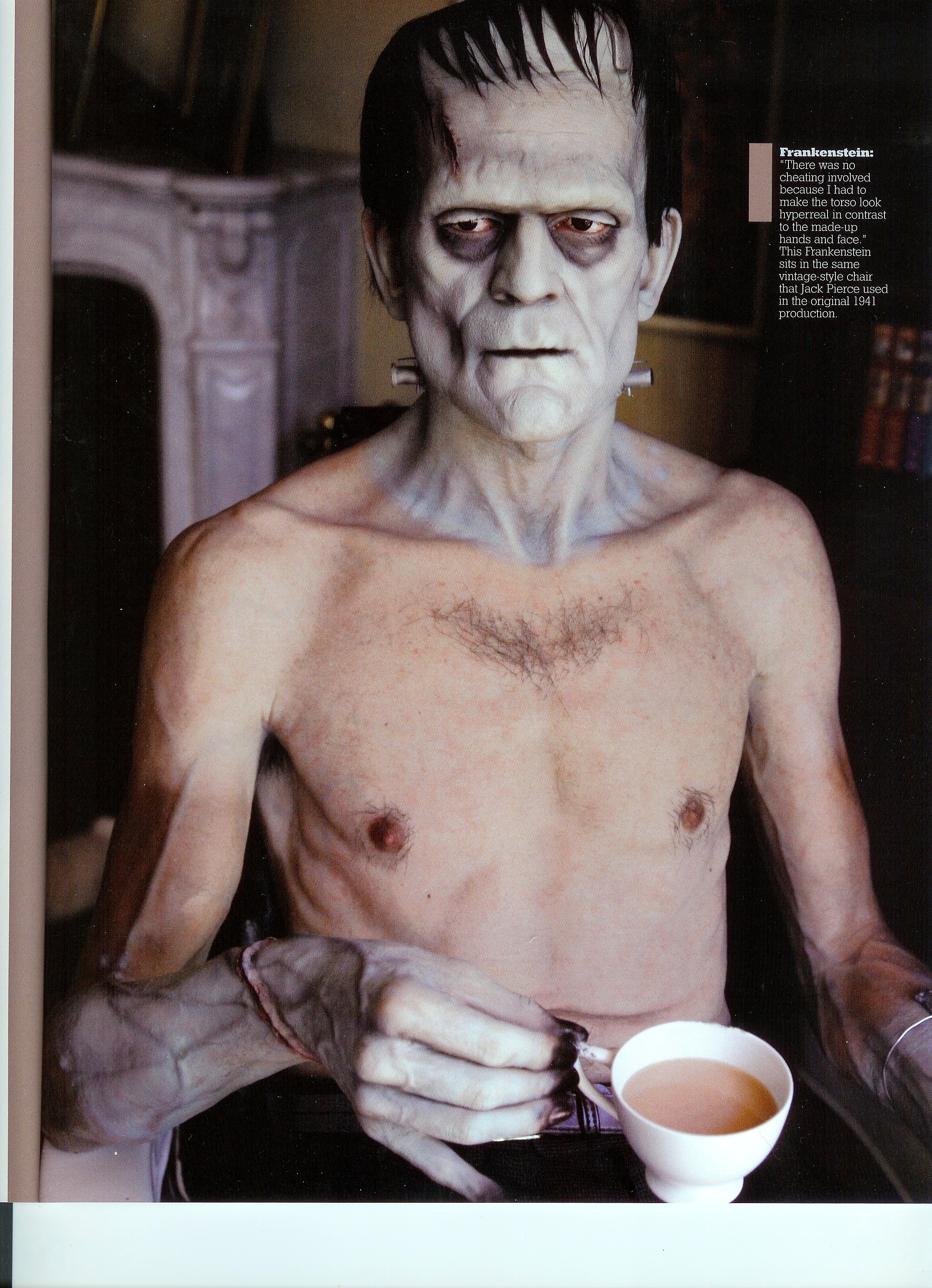
The second item of interest in the magazine comes in the form of an article titled “A Way with Clay,” which provides a little textual background on the sculpting work of artist Mike Hill, and beautiful photographs of some of his work. The photo of Boris Karloff with the Frankenstein creature makeup on in this post is an example of Hill’s work. No, that’s not a photo of Karloff behind the scenes, that is a stunning example of Hill’s work. The essay also includes a photo of Lon Chaney, Jr. as the troubled Larry Talbot and as the Wolfman, as well as Elsa Lanchester in The Bride of Frankenstein.
Fans of classic Universal Studios horror films will find these elements of Make-Up Artist worth securing for their magazine collection.
My contribution to Cinefantastique Online‘s 50th anniversary reviews and retrospectives from films of 1960 is now available as I look at House of Usher (alternatively The Fall of the House of Usher). This film was a pleasure to revisit as one of my favorites growing up. Roger Corman excelled with a series of horror films based upon the works of Edgar Allen Poe. All but one of them starred Vincent Price, who turns in a wonderful performance in this atmospheric film. From my review:
HOUSE OF USHER, and the other series of Poe films directed by Corman, have the distinction of being part of the brief revival of American gothic horror that had been fueled by television broadcasts of the Universal Studios horror films of the 1930s and 1940s, as well as the fresh interpretations of these classics by Britain’s Hammer Films. While this classification has some merit, HOUSE OF USHER may also be understood as a hybrid in keeping with another trend in horror from the period. HOUSE OF USHER is in a sense Gothic, in that it takes place against the backdrop of a mansion that appears at first glance to be a haunted house; however, it is not haunted in typical supernatural fashion by ghosts or poltergeists. Instead, the haunting of the Usher House takes place through the troubled psyches of the homeowners who wrestle with their family legacy. In this sense it is similar to another classic of 1960 cinema, PSYCHO, which signaled a shift from supernatural horror in the 1930s and 1940s, and the science-fiction-horror of the 1950s, to an internalization of horror (horror is not the supernatural other; it is us) that would later take a quantum leap forward with NIGHT OF THE LIVING DEAD.
House of Usher can be purchased through the TheoFantastique Store at this link, or it can be viewed online via Amazon’s Video on Demand.
No adequate consideration of American cultural celebrations for the month of July would be complete without a mention of Roswell, New Mexico. In July 1947 on a rancher’s land near the small city of Roswell, an event took place that would give birth to one of the greatest mysteries which would fuel UFO mythology and controversy for decades to come. As Christopher Partridge, editor of UFO Religions (Routledge, 2003), describes:
Within just a few weeks of the [Kenneth] Arnold sighting [near Mount Rainier in Washington], the most famous alleged UFO incident occurred at Roswell, New Mexico. More significant in terms of its cultural impact than in terms of its scientific verifiability, this event, perhaps more than any other UFO event, has spawned a whole body of literature, numerous television documentaries, various movements, a network of conspiracy theories, and many fictional works (e.g., The X-Files, Roswell High and Independence Day).
The event in question involved a farmer finding metallic fragments on his property which he investigated after hearing an explosion. The military soon appeared on the scene to gather the fragments, eventually claiming that the pieces in question were part of a weather balloon. Over the years alleged testimony of those involved in the cleanup would claim that in reality a crashed UFO complete with alien bodies was retrieved which remains in the custody of the military. The conflicting accounts have fueled not only one of the greatest debates in American history, as well as an annual celebration that put Roswell on the national map, but this has also developed into a phenomenon that has taken on religious dimensions at times. Returning again to Partridge:
Roswell is now firmly established as what might be described as a key ufological ‘sacred site’. That is to say, whilst of course many ufologists would not interpret the significance of Roswell religiously, it does tend to inspire the same sort of behaviours as religion. In other words, it inspires implicitly religious attitudes and actions.
So while Americans clean up their streets, driveways, and parks after Independence Day celebrations, let’s not forget the annual anniversary of the Roswell UFO incident. For some, it’s downright sacred.
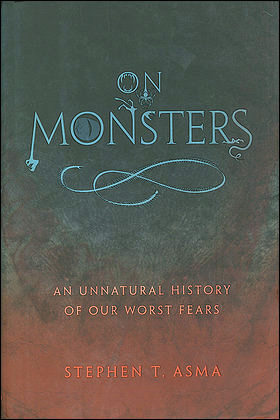
In the near future I will be interacting with the authors or editors of several books. To begin this process, I have mentioned this book in the past but am slow to finally read the volume. I have just begun Stephen Asma’s On Monsters: An Unnatural History of our Worst Fears (Oxford University Press, 2009):
Monsters. Real or imagined, literal or metaphorical, they have exerted a dread fascination on the human mind for many centuries. They attract and repel us, intrigue and terrify us, and in the process reveal something deeply important about the darker recesses of our collective psyche.
Stephen Asma’s On Monsters is a wide-ranging cultural and conceptual history of monsters–how they have evolved over time, what functions they have served for us, and what shapes they are likely to take in the future. Asma begins with a letter from Alexander the Great in 326 B.C. detailing an encounter in India with an “enormous beast–larger than an elephant three ominous horns on its forehead.” From there the monsters come fast and furious–Behemoth and Leviathan, Gog and Magog, the leopard-bear-lion beast of Revelation, Satan and his demons, Grendel and Frankenstein, circus freaks and headless children, right up to the serial killers and terrorists of today and the post-human cyborgs of tomorrow. Monsters embody our deepest anxieties and vulnerabilities, Asma argues, but they also symbolize the mysterious and incoherent territory just beyond the safe enclosures of rational thought. Exploring philosophical treatises, theological tracts, newspapers, pamphlets, films, scientific notebooks, and novels, Asma unpacks traditional monster stories for the clues they offer about the inner logic of an era’s fears and fascinations. In doing so, he illuminates the many ways monsters have become repositories for those human qualities that must be repudiated, externalized, and defeated.
Asma suggests that how we handle monsters reflects how we handle uncertainty, ambiguity, insecurity. And in a world that is daily becoming less secure and more ambiguous, he shows how we might learn to better live with monsters–and thereby avoid becoming one.
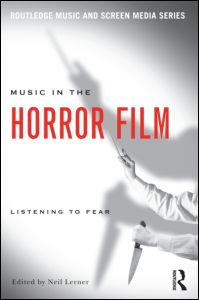
Music in Horror Film is a collection of essays that examine the effects of music and its ability to provoke or intensify fear in this particular genre of film. Frightening images and ideas can be made even more intense when accompanied with frightening musical sounds, and music in horror film frequently makes its audience feel threatened and uncomfortable through its sudden stinger chords and other shock effects. The essays in this collection address the presence of music in horror films and their potency within them. With contributions from scholars across the disciplines of music and film studies, these essays delve into blockbusters like The Exorcist, The Shining, and The Sixth Sense together with lesser known but still important films like Carnival of Souls and The Last House on the Left. By leading us with the ear to hear these films in new ways, these essays allow us to see horror films with fresh eyes.
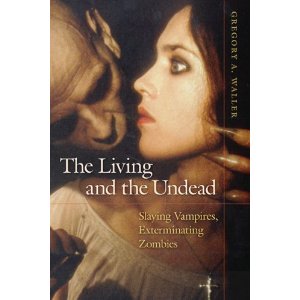
With a legacy stretching back into legend and folklore, the vampire in all its guises haunts the film and fiction of the twentieth century and remains the most enduring of all the monstrous threats that roam the landscapes of horror. In The Living and the Undead, Gregory A. Waller shows why this creature continues to fascinate us and why every generation reshapes the story of the violent confrontation between the living and the undead to fit new times.
Examining a broad range of novels, stories, plays, films, and made-for-television movies, Waller focuses upon a series of interrelated texts: Bram Stoker’s Dracula (1897); several film adaptations of Stoker’s novel; F. W. Murnau’s Nosferatu, A Symphony of Horror (1922); Richard Matheson’s I Am Legend (1954); Stephen King’s ‘Salem’s Lot (1975); Werner Herzog’s Nosferatu the Vampyre (1979); and George Romero’s Night of the Living Dead (1968) and Dawn of the Dead (1979). All of these works, Waller argues, speak to our understanding and fear of evil and chaos, of desire and egotism, of slavish dependence and masterful control. This paperback edition of The Living and the Undead features a new preface in which Waller positions his analysis in relation to the explosion of vampire and zombie films, fiction, and criticism in the past twenty-five years.
Look for interviews with these folks and discussion of these volumes over the course of the near future.
Eclipse recently debuted in theaters, the latest installment in the Twilight series of romance-vampire films, and in connection with this I am pleased to present this video of fellow religion and pop culture scholar Joseph Laycock. He shares some thoughts on the history of the vampire, contemporary vampirism, and the Twilight phenomenon.
 A little over a week ago the media relayed that three Utah men were reported missing by their families after leaving to search for the legendary Lost Dutchman Gold Mine north of Mesa, Arizona. Today the media is reporting that the search has been called off. One wonders what might have happened to these men as they searched in underground caves.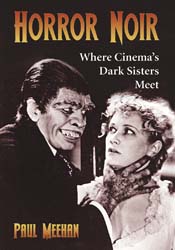
 The website for Popular Science magazine has an interesting brief piece titled “If Evolution Had Taken a Different Turn, Could Dragons Have Existed?” The article notes that several of the features of dragons are found in various animals, just not all of them in a single creature. And although it would have taken several interesting turns for natural selection to produce a dragon, the article theorizes that it might have been possible. See the article
  I learned through a link to my blog from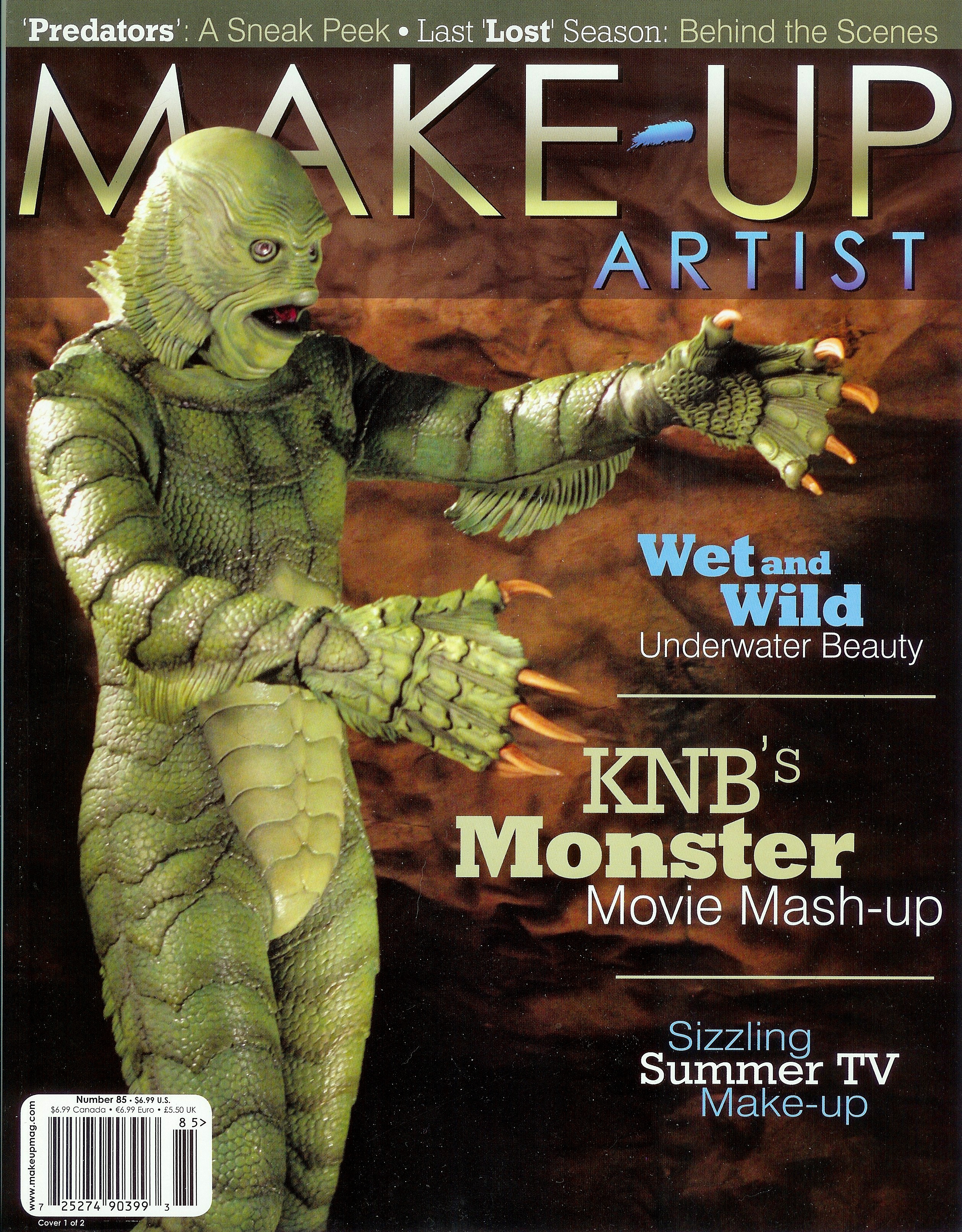
 My contribution to Cinefantastique Online‘s 50th anniversary reviews and retrospectives from films of 1960 is now available as I look at
  No adequate consideration of American cultural celebrations for the month of July would be complete without a mention of Roswell, New Mexico. In July 1947 on a rancher’s land near the small city of Roswell, an event took place that would give birth to one of the greatest mysteries which would fuel UFO mythology and controversy for decades to come. As Christopher Partridge, editor of UFO Religions (Routledge, 2003), describes: