Author and TheoFantastique contributor Paul Meehan introduces the story of Picnic at Hanging Rock and its possible connection to a paranormal phenomenon. Paul is the author of a number of books including SAUCER Movies: A UFOlogical History of the Cinema (The Scarecrow Press, 1998).
The Strange Case of Picnic at Hanging Rock
By Paul Meehan
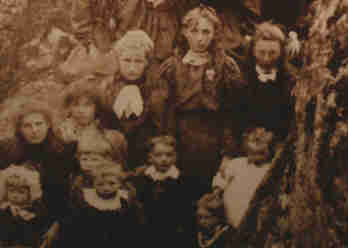
“On Saturday, 14th of February 1900 a party of schoolgirls from Appleyard College picnicked at Hanging Rock near Mount Macedon in the state of Victoria. During the afternoon several members of the party disappeared without trace…”
So begins Peter Weir’s 1975 mystery-thriller Picnic at Hanging Rock. Based on a 1967 novel by Australian writer Joan Lindsey, the film follows the plot of the book fairly closely to weave an eerie tale of mass-disappearance that would become an urban legend and suggest deeper, more alien mysteries behind the strange events.
The girls at Appleyard College embark on their fateful picnic on Valentine’s Day, in the full heat of the Australian summer. They are transported in a horse-drawn wagon to Hanging Rock, a geologic formation comprised of weird volcanic monoliths. The spinsterish headmistress Miss McCraw (Vivean Gray) is in charge of the expedition, and warns the girls against any “tomboy foolishness,” but in spite of her admonitions four of the girls go off exploring by themselves. As Miranda (Anne-Louise Lambert), Irma (Karen Robson), Marion (Jane Vallis) and Edith (Christine Schuler) traipse off to the Rock on their voyage of discovery, they are briefly observed by two young men, Michael (Dominic Guard) and his valet Albert (John Jarratt), who are also picnicking at the Rock with Michael’s parents. While they are gone Miss McCraw notices that all of the party’s watches have mysteriously stopped at exactly 12 noon.
Ascending amid strange-looking rock formations, the girls reach a plateau where they suddenly fall into a deep, mysterious slumber. Back at the picnic, all of the members of the Appleyard party also fall asleep, with the exception of Miss McCraw. Then, just as suddenly, the four girls awaken. As Edith watches in horror, Miranda, Irma and Marion march up the hill in lockstep as if they are in a trance. Edith also notices an anomalous red cloud hovering over the Rock as she is consumed in a sudden terror and runs back toward the picnic site.
When the picnickers return to the college late that evening the three girls, along with Miss McCraw, are missing, and a massive police manhunt from the nearby town of Woodend fails to find any trace of them. Edith’s recollections of the event are confused and fragmentary, but she does rememberseeing Miss McCraw walking toward the hill where the girls were last seen in an entranced state, wearing nothing but her underwear.
After a week goes by there is little hope that the girls or the headmistress will be found alive, but Michael, who harbors a lingering obsession with the students after glimpsing them on the day of the picnic, decides to look for them on his own. He winds up spending the night at Hanging Rock, and is found the next day in a confused state, clutching a piece of lace from one of the girl’s dresses, Soon afterward, Irma is discovered alive in a nearby cave. A medical examination reveals that she has not been raped, and that her feet are curiously unmarked although she is not wearing shoes or stockings. Oddly, her hands are bruised and her fingernails torn, and she was found not to be wearing her corset.
When she recovers, Irma can remember nothing that transpired during her disappearance at Hanging Rock. The strange goings-on cause a furor in the town as rumors fly, including a report of an anomalous light flashing around a pigsty on a farm about a mile from the Rock. Ultimately, the missing people are never found and the mystery is never solved. As one townsman wryly observes, “There’s some questions got answers, some haven’t.”
Weir’s offbeat film, shot on location at Hanging Rock, brilliantly utilizes the Australian landscape while deftly evoking the quirky sexual repressiveness of the late Victorian period. While the film is slow-paced by American movie standards, the director builds a powerful sense of mystery around the inexplicable events. The film was a critical success in Australia and overseas, and helped pave the way for the popularity of Australian cinema of the 1970s and 80s in the international market. Weir would go on to direct The Last Wave (1977) an imaginative apocalyptic thriller that explored the magical world of aboriginal shamanism.
A curious urban legend grew up around the events portrayed in the novel and the film. Joan Lindsey’s book coyly suggests that the story is based on true events. She wrote: “Whether (the book) is fact or fiction, my readers must decide for themselves. As the fateful picnic took place in the year nineteen hundred, and all the characters who appear in this book are long since dead, it hardly seems to matter.” Similarly, in an interview with the Melbourne Herald, Lindsay stated that, “I can’t tell you whether the story is fact or fiction…but a lot of very strange things have happened around the area of Hanging Rock…things that have no logical explanation.” However, after many extensive journalistic
investigations, no documentary evidence of the alleged event has ever surfaced, leading to the conclusion that the plot of Picnic at Hanging Rock is entirely fictive.
Even after the story was proven to be fiction, fans of the movie and the book continued to try to solve the mystery over the years. In 1980, Yvonne Rousseau published a book entitled The Murders at Hanging Rock, which offered up a number of scenarios explaining the enigma. It theorized that the missing girls and their teacher could have been raped and murdered by Aborigines, or by Michael and Albert, or they could simply have been buried underneath a rockslide. In 1987, another book, The Secret of Hanging Rock appeared, which contained Lindsay’s previously unpublished chapter of the original novel that provided a more mystical resolution to the mystery. According to Lindsay, the girls were confronted by a kind of time warp and were transformed into little crab-like arachnid creatures who disappeared into the interior of the earth by crawling through cracks in the rocks.
But while more conventional explanations of the disappearances and Lindsay’s own bizarre resolution to the mystery fail to satisfy, there is one phenomenon that would seem to offer a more likely solution for the enigmatic events–alien abduction. Many of the anomalies described in the Hanging Rock narrative are consistent with features reported in cases of UFO close encounters.
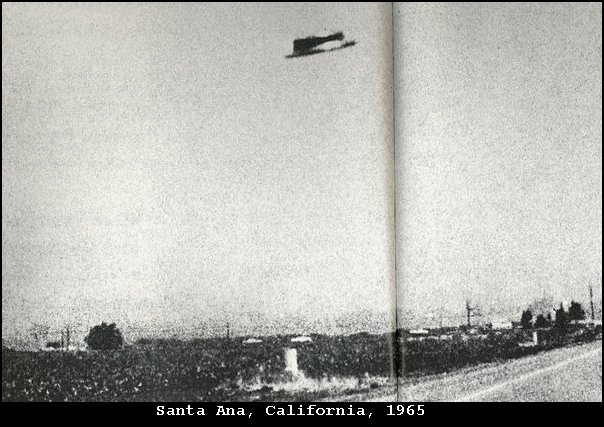
First, there is the matter of the strange red cloud observed hovering above the Rock during the disappearance. As if to underscore a viewpoint looking down from above, Weir shoots the scene of Edith running from the Rock in terror from an extremely high angle. UFOs have long been associated with anomalous clouds, as evidenced in the encounter of Rex Heflin, an Orange County, California highway traffic inspector who took a series of Polaroid photos of a metallic craft transforming into a cloud in 1965.
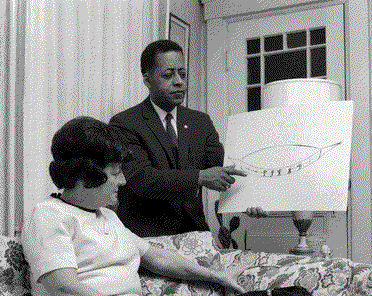
Then there is the matter of the stopped watches at the picnic. In the famous abduction case of New Hampshire couple Betty and Barney Hill in 1961, both Betty and Barney found that their watches had stopped after the abduction event. In 1979, Minnesota Deputy Sherrif Val Johnson had a late night close encounter with a glowing UFO that damaged his police cruiser. Johnson’s mechanical wristwatch and the car’s electric dashboard clock were both found to be inexplicably running exactly 14 minutes slow. Some researchers theorize that UFOs are actually time travel devices that sometimes cause temporal anomalies to occur.
The odd behavior of the picnickers is also consistent with events reported during abductions. All of the students and staff at the picnic fall into a mysterious sleep, while only those who are slated to disappear awaken. This phenomenon parallels what is known as being “switched off” in UFO parlance, where those chosen for abduction remain conscious while those not selected are rendered unconscious. Non-abductees being “switched off” is a fairly common feature of abduction reports. Abductee Betty Andreasson, for instance, claims that several members of her family were switched off while she was taken aboard a UFO.
Abductees often report that they are compelled to perform certain actions as if they have been placed in some kind of hypnotic trance in which they are placed under the control of their abductors. Betty and Barney Hill, for instance, felt compelled to inexplicably turn off the main road they had been traveling on and onto a secluded side road where the abduction took place. In Picnic at Hanging Rock, Amanda, Irma, Marion and Miss McCraw are drawn to the place where they will disappear as if they are entranced.
When Irma returns, she has total amnesia about what occurred during the time when she was missing. This “missing time amnesia” is another common feature of alien abduction reports, and was first explored in depth in researcher Budd Hopkins’s 1981 book Missing Time. The Hills experienced this type of amnesia in connection with their abduction experience, the details of which only emerged as they underwent hypnotic therapy. Researchers don’t know if missing time amnesia is imposed upon abductees via alien mind control, or if it is a natural function of the human mind that suppresses unpleasant experiences.
Joan Lindsay’s novel was written in 1967, when little was known about the abduction phenomenon. Nonetheless, her work of fiction eerily anticipates exotic details of alien abduction narratives. There are other examples of life imitating art in the history of the UFO phenomenon. Bernard Newman’s 1948 novel The Flying Saucer, for instance, posits UFOs that stop automobile engines long before this became a common theme in many UFO reports. Similarly, Arthur Koestler’s 1933 play The Twilight Bar portrays a UFO that causes an electrical power blackout decades before this aspect of the phenomenon was reported in the UFO literature.
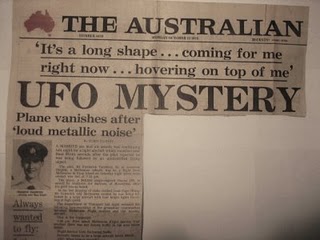
Oddly, the fictional vanishings in Picnic at Hanging Rock also seem to prefigure a mysterious real-life disappearance that occurred in the same general area of Victoria, Australia. Just three years after the release of Weir’s film, on the evening of October 21, 1978, a young Australian pilot named Frederick Valentich was flying a Cessna 182 light aircraft on a relatively short flight from Moorabbin Airport in Victoria to King Island. While over the area of the Bass Strait, Valentich radioed that he encountered a large, brightly lit UFO that hovered over his plane. Soon afterward, all radio contact with the aircraft abruptly ceased. A massive, three-week search of the area failed to find any trace of Valentich or his airplane. No debris or even an oil slick on the water’s surface was ever discovered. Like the picnickers from Appleyard College, the young pilot seemed to have simply vanished into thin air under mysterious circumstances.
The Valentich disappearance remains one of the most puzzling incidents in the history of the UFO phenomenon. Like the Australian farmer in the film explains, “There’s some questions got answers, some haven’t.”
Two items recently came to my attention that originate from the same source, that is, the interaction of Christians with elements of the fantastic. In this case the contexts are those of a former writer of vampire fiction, and comic fans.
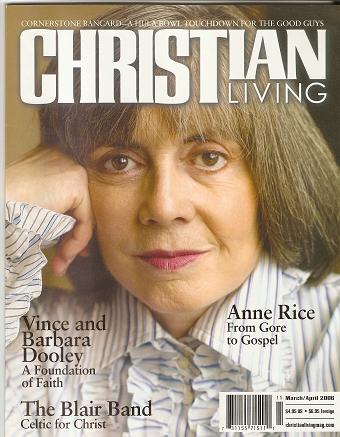
Anne Rice made news this week with an announcement that she had left Christianity. At least that’s how it was originally reported. Rice was raised as a Roman Catholic, but embraced atheism for much of her life, but eventually returned to Roman Catholicism, even as she gave up writing vampire fiction in favor of fiction that resonated with her Catholicism. Rice’s recent announcement of a departure from Christianity caught the attention of the media in general, and the atheist subculture in particular:
As I said below, I quit being a Christian. I’m out. In the name of Christ, I refuse to be anti-gay. I refuse to be anti-feminist. I refuse to be anti-artificial birth control. I refuse to be anti-Democrat. I refuse to be anti-secular humanism. I refuse to be anti-science. I refuse to be anti-life. In the name of …Christ, I quit Christianity and being Christian. Amen.
But the most recent reporting from examiner.com clarifies Rice’s views from Facebook comments where she has issues with the political and social stances of Catholicism but still embraces Christ:
My faith in Christ is central to my life. My conversion from a pessimistic atheist lost in a world I didn’t understand, to an optimistic believer in a universe created and sustained by a loving God is crucial to me. But following Christ does not mean following His followers. Christ is infinitely more important than Christianity and always will be, no matter what Christianity is, has been, or might become.
Moving from Rice’s issues with institutional Catholicism to the troubling reactions of a Protestant fundamentalist church, the Westborough Church, infamous for its picketing of soldiers’ funerals with signs like “God hates fags,” also has issues with comic fans and culture. According to The Celebrity Cafe.com, at the recent Comic-Con in San Diego members of the church picketed and accused attendees of idolatry. A video of the protest can be seen below.
These incidents are interesting as they illustrate some of the reactions of those intersecting the worlds of both Christianity and the fantastic.
In my view Midnight Syndicate is one of the leaders, if not the leader in Halloween and horror music. They have proven so again with the release of their latest albums, and have raised the bar with the accompanying release of their first movie in a three-disc set as FearNet and Rue Morgue Radio recently noted, and with good reason. Ed Douglas of Midnight Syndicate has made some time to discuss this great project.
TheoFantastique: You recently set up a deal with Hot Topic stores for a release of your DEAD MATTER DVD. This seems like a perfect partnership. How did this come about, and what can people anticipate on this DVD?
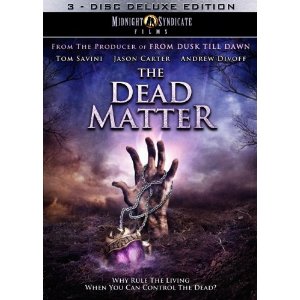
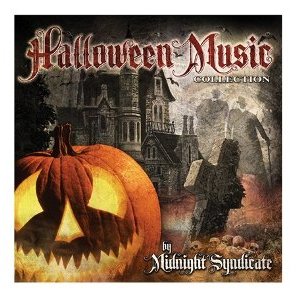
Ed Douglas: Midnight Syndicate has been working with Hot Topic for the past eleven years so they were the perfect retail partner to team up with on The Dead Matter DVD. The cool thing is that Hot Topic is going to be selling a deluxe 3-disc set of The Dead Matter at all of their stores for the price of a regular DVD (for a limited time). This 3-disc set includes the DVD, the soundtrack CD from Midnight Syndicate, and a 13th Anniversary Midnight Syndicate greatest hits type CD called “Halloween Music Collection.”
As far as extras go, we’ve really loaded the DVD up pretty well. Not only do you have the requisite gag reels and commentary with the director and producers but we’ve also added two Midnight Syndicate music videos and Eternal Legacy’s “The Dead Matter” music video. We are also featuring the three finalists from the Midnight Syndicate Video Contest we ran earlier this year – some really creative home-grown short films set to our music. Lastly we have this cool feature called Maximum Dead Matter. It’s a feature-length behind-the-scenes program. You watch the movie in one window while in other windows you see footage of us filming those scenes, interviews, location trivia, concept art, and stuff like that. I think it’s really interesting for fellow filmmakers and enthusiasts who are interested in seeing exactly how we made our little indie horror film. We have a 0:40 second trailer from Maximum Dead Matter on YouTube if you’d like to see what I’m talking about.
TheoFantastique: You also produced a horror film, The Dead Matter. What is the story behind this, and how can fans catch clips if not a copy of the whole film?
Ed Douglas: Before I started Midnight Syndicate, I made an earlier version of The Dead Matter movie for about $2000. The goal of me and my partners was to get the experience and put ourselves in a position to remake the movie someday with an actual budget. After we released the original version I started Midnight Syndicate. As Midnight Syndicate grew in popularity with the haunted houses, gothic music fans, roleplaying gamer, and Halloween folks we began to get approached by a lot of indie filmmakers, TV producers, and game companies looking to license our music in their productions. It culminated in 2006, when Robert Kurtzman moved to Ohio (near to me) and approached us to score his film, The Rage. When I visited the set of The Rage and saw how Bob and his producing partner Gary Jones ran their sets, I knew they would be the perfect partners for The Dead Matter remake I had envisioned ten years earlier. I pitched the idea to Bob, he enjoyed the script and the rest is history.
The Dead Matter tells the story of a grief-stricken young woman who is desperate to contact her deceased brother. She comes into possession of an ancient relic that can raise and control “dead matter.” Her dark obsession leads her down a nasty path which includes two warring vampires (Andrew Divoff and Tom Savini) that want the relic and a vampire hunter (Jason Carter) who wants to destroy it. Classic horror themes with some modern twists and a touch of humor. It’s a fun movie.
Hot Topic stores will have The Dead Matter DVD this Friday, July 30th. Until then you can catch the trailer at www.TheDeadMatter.com. On the 30th you will also be able to order the DVD online through the Midnight Syndicate website (www.MidnightSyndicate.com), Amazon, and Hot Topic.
TheoFantastique: I was pleased to learn recently about your first music video. What was the inspiration for a move from producing quality horror and Halloween music to creating a video to accompany it?
Ed Douglas: We wanted to do something special to celebrate Midnight Syndicate’s 13th Anniversary. We had ten CDs out but never a music video and we thought it was about time we did. My friend David “House” Greathouse (who did special FX makeup on our movie, and recently released a documentary entitled, Legion of Terror) was the perfect director for the project. He’s done a lot of great music videos for the heavy metal band Mushroomhead and really understands the Midnight Syndicate mythos. He really delivered a great visual treat.
TheoFantastique: Are there any plans to perhaps take the musical performance live on the road, like a Halloween version of Manheim Steamroller? And what about the possibility of creating dramatic stories combined with music and sound effects in connection with horror and Halloween like a generation of us listened to as we grew up in previous generations?
Ed Douglas: Yes we are talking seriously about doing that in early 2011 and might even have some announcements regarding that soon. The old radio dramas were a big part of my inspiration for Midnight Syndicate (the integration of sounds and soundscape with the music). I’d definitely like to explore something like what you are talking about. To close your eyes and be taken away to a world in your own imagination – that’s what we’re all about.
TheoFantastique: Ed, your new release is great, and a perfect way for fans of horror and Halloween to get into the spirit early. Thanks again for letting us know about the new release and for giving us an insider’s view.
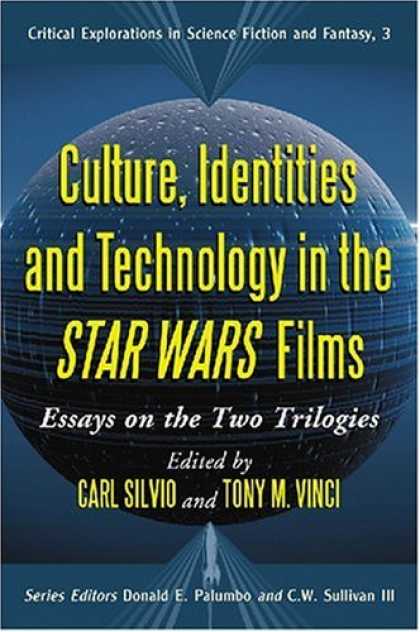
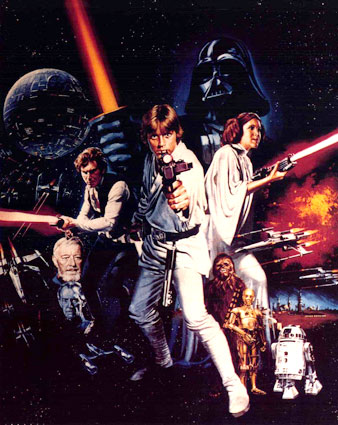
Star Wars: The Empire Strikes Back recently celebrated its 30th anniversary. With it came a lot of television programming related to the Star Wars series of films, and one included commentary from the editors and contributors to Culture, Identities and Technology in the Star Wars Films: Essays on the Two Trilogies (Critical Explorations in Science Fiction and Fantasy), edited by Carl Silvio and Toni Vinci (McFarland and Company, 2007). My interest in this volume was peaked by the cultural approach to the subject. Silvio and Vinci have made time in their schedules to discuss the book and what we might learn about Star Wars through the lens of cultural studies. Tony M. Vinci is an instructor of English at Monroe Community College, and Carl Silvio is an assistant professor of English at Monroe Community College in Rochester, New York.
TheoFantastique: Carl and Tony, thank you for your willingness to discuss your book. I discovered your work on The History Channel while watching Star Wars – The Legacy Revealed. This program focused largely on the mythic aspects of Star Wars, particularly through the interpretive lenses of Joseph Campbell. Why has so much of the exploration of Star Wars been from the perspective of myth?
Carl Silvio: It all goes back to the publication of Andrew Gordon’s seminal article, “Star Wars: A Myth for Our Time,” in 1978. That essay had a tremendous influence on the future of Star Wars scholarship. George Lucas has also claimed that Joseph Campbell’s conception of the monomyth influenced him in the creation of the Star Wars saga. These two factors are probably the most significant reason why Star Wars and mythology/myth criticism have been so strongly associated with each other.
Tony Vinci: Andrew Gordon published his article, “Star Wars: A Myth for our Time,” in 1978. In it, he argues that Star Wars is more than childish entertainment, as many of his contemporaries contended. In order to validate this claim, he utilizes Campbell’s notion of the monomyth to explicate the significance of the film’s plot and characters by pin-pointing step-by-step how Star Wars follows Campbell’s thesis of The Hero with A Thousand Faces. Ultimately, he attempts to position Star Wars as myth. Add this publication to the fact that Lucas himself has been rather open about his interest in Campbell’s monomyth, and I do not find it that surprising that myth criticism has been such a prevalent mode of analyzing Star Wars. What I do find surprising, is that for almost three decades, it has been the dominant mode of analysis applied to the films, despite the dominance of cultural criticism applied to other speculative fiction texts in those decades.
TheoFantastique: But in the face of mythic perspectives on Star Wars your book takes a very different approach as you look at the significance of cultural studies. Can you describe your book’s approach and why you think it is helpful in understanding the significance of Star Wars?
Tony Vinci: The Star Wars films are laden with cultural representations of race, gender, economics, and spirituality; they fetishize technology and fashion; they use the most cutting edge film-making techniques—yet they are presented as simple pieces of entertainment without much social or political commentary. This paradox of a wildly complex matrix of competing representations delivered as a simple commodity is what makes the franchise such a significant cite for cultural criticism. Our hope was to analyze how the films influence and reflect the cultures that created and view them in hopes that we will understand more clearly how they function as pieces of cultural meaning.
Carl Silvio: We have nothing against myth criticism per se. But the analytical work on Star Wars has been so dominated by it that other critical perspectives have been crowded out. All too often, myth criticism becomes a kind of intellectual cul de sac. Let’s set aside for the moment the question of whether or not the monomyth actually exists independently from the perspective of critics bent on finding it everywhere. How many times can we observe and point out how this or that narrative corresponds and conforms to the monomyth template? Moreover, once such a correspondence has been demonstrated, where does that take us beyond affirming over and over again that the monomyth pattern seems to repeat itself in a wide variety of cultural narratives? For me, it’s just so much more interesting to look at Star Wars from other perspectives, to see it as a rich repository of ideology and cultural values.
TheoFantastique: Let’s talk about some of the specifics explored in the book by its various contributors. Tony, in your chapter you discuss the shift in how individualism is treated in the first trilogy versus the latter trilogy of films. Can you sketch some of what you put forward in your chapter?
Tony Vinci: What makes the original trilogy engaging is how it manifests a clear and stable anti-establishmentarian stance through its depictions of political and spiritual figures; however, the prequels subvert all of this progressivism, turning strong revolutionaries into lapdogs of the parties in power, turning the open spiritual exploration of the force into dogmatic religion, and turning spiritual figures into police officers, economic negotiators, and generals. To me, this reflects a disturbing transformation in the culture that created the films: the radical exploration of the late ‘70s gave way to the neo-conservatism of the early part of the new millennium.
TheoFantastique: Carl, in your chapter you touch on the differing ways in which Star Wars engages global capitalism. What is the thrust of your thesis on this subject?
Carl Silvio: Basically, I examine differences between the two Star Wars trilogies, the original and the prequel, in order suggest a parallel between them and the rise and consolidation of global capitalism. I argue that, as part of our larger cultural imaginary, each trilogy to some extent stages and dramatizes the cultural anxieties and ideological contradictions provoked by this social transformation. To be sure, I’m not arguing that a purely causal or deterministic relationship exists between the economic system and the Star Wars films. To some extent, I’m constructing a deliberate parallel between these two phenomenon in order to highlight certain aspects of each of them.
TheoFantastique: John Lyden has a chapter where he touches on how Star Wars taps into the long tradition of American apocalyptic, particularly an apocalyptic determinism in these films. What similarities and differences do you seen in Star Wars‘s apocalyptic as contrasted with other sci-fi franchises such as the Terminator or The Matrix series, for example?
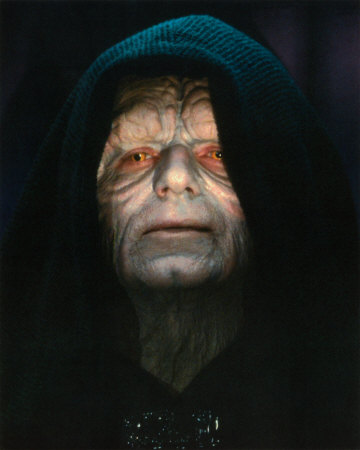
Tony Vinci: I see Star Wars as being a bit different than the others in that what makes it apocalyptically deterministic is the fact of the prequels. Despite the Emperor’s declaration that he “foresees” the future, the original trilogy doesn’t explore that terrain too much, but the moment you have a prequel, the audience knows what is going to happen to this universe and its primary characters. Think Orson Welles’ Othello or Citizen Kane. We begin knowing the end, and all that comes after will never alter the outcome. Though, in the case of Star Wars, what we know is to come is redemption and victory. The other franchises you mention, especially Terminator, seem to work at creating a real sense of doom for the entire world, whereas in Star Wars, the deterministic mood is focused mostly around the Anakin/Vader character or a world that we know is going to be saved. Though, I believe this is ultimately overshadowed by the politics of the prequels, that they darken irreversibly the “triumphs” at the end of Return of the Jedi because we have now seen the old republic, its frailties and hollowness. Surely the New Republic will have many of the same issues.
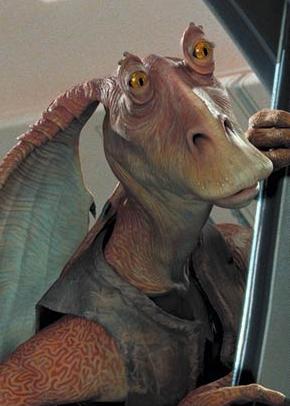
TheoFantastique: For me one of the more interesting chapters was by Dan North titled “Kill Binks: Why the World Hated Its First Digital Actor.” CGI actors are now fairly common, and of course Avatar may have helped take digital actors to new heights. Why did so many people hate the digital Jar Jar Binks?
Tony Vinci: There are some serious flaws in the prequels. I think Jar Jar became a scapegoat for all of the other issues that people had with the films but couldn’t necessarily articulate. Beyond that, and the obvious, I think North nails it by arguing that we have anxieties about what watching a digital actor means, and that we projected those onto a character that is not only annoying and potentially racially offensive but represents some difficult questions about what it means to be human.
Carl Silvio: North does a great job of arguing that much of the hatred directed at the Binks character had less to do with its overall silliness and more to do with a deeper anxiety felt by the audience regarding the replacement of live actors with digital ones and the pervasiveness of CGI technology in Lucas’s film making in general. I find his argument to be pretty convincing. Ultimately, I don’t think that the CGI technology is the problem, or at least it’s not why so many long time Star Wars fans rejected the films. It’s more a matter of how Lucas used the technology to alter the franchise in ways that fans found troubling. The whole “Han shot first” controversy is a good example of how Lucas used digital technology to perform a kind of cultural vandalism on his own creation. Jar Jar Binks’s status as a virtual, digital actor allows him to become an emblem that represents all the ways that Lucas has used the CGI technology in ways that upset his fans.
TheoFantastique: Carl and Tony, thank you again for making time to discuss your book. I hope it helps others explore the significance of Star Wars as a cultural artifact.
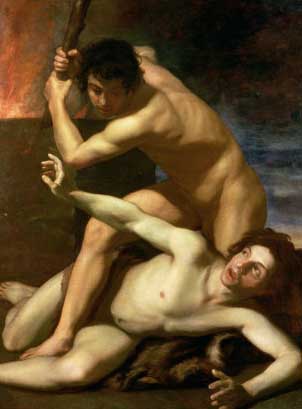
Joseph Laycock continues to demonstrate that he is the up and coming religion and vampire scholar for the next generation. He recently wrote an article for Religion Dispatches titled “Vampire Bible: Will Smith and The Legend of Cain.” The article begins with the recent announcement that Will Smith will play the Old Testament biblical character of Cain as a vampire. Laycock then discusses the various articulations of the idea of Cain as vampire, including that in the role-playing game Vampire: the Masquerade, as well as expressions of literature, both historic and modern.
Apparently something of a controversy has arisen as a result of The Legend of Cain, not because of the film itself, but because of the idea that the biblical Cain may be the source of the vampire in folklore. One aspect of the controversy comes from Christians who are up in arms over the idea that the Bible has anything to do with vampires. After his analysis, in his conclusion Laycock writes:
As for the accusations of sacrilege, perhaps we should look at the link between vampires and Cain not as a revision of a biblical story, but a testament to this story’s enduring effect on the Western imagination.
The accusation of sacrilege is interesting. It’s not as if there has not been a fantastic element associated with the early chapters of Genesis. For example, in popular Protestant fundamentalism and evangelicalism there is a belief that the “Nephilim” mentioned in an obscure reference in Genesis 6 are a race of giants produced through a sexual union between human woman and demons. It is difficult to see why this is more palatable than the idea that Cain became a vampire, but perhaps its because this fantastic idea is connected to a figure Protestants often equate with the sinister and the esoteric, and for them this is a connection being made by outsiders rather than one they see within their own religious tradition.
At any rate, I agree with Laycock in this assessment, and hope that Christians will be more cautions before alleging sacrilege in this latest instance of friction with the fantastic in popular culture.
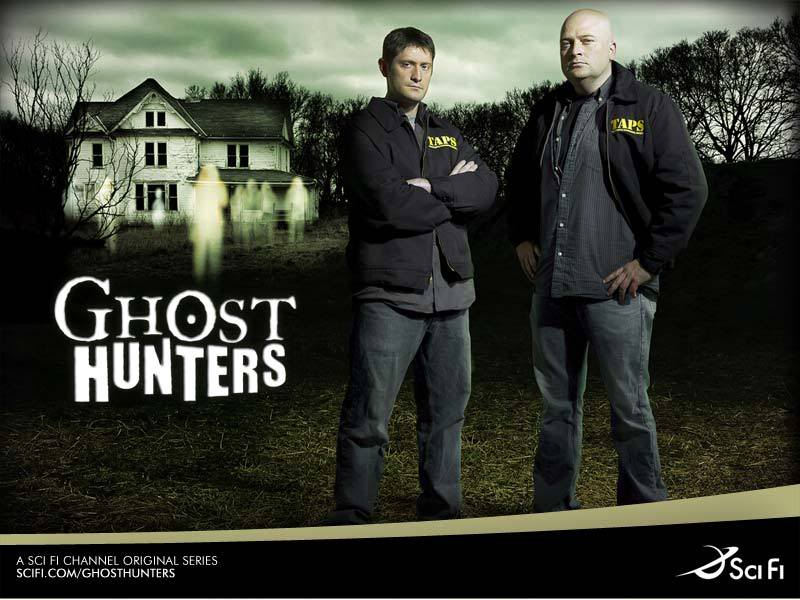
What do any number of ghost-hunting and home-improvement television programs have in common? Nothing, you might say? Don’t be so sure.
I am working my way through my growing stack of reading relating to the fantastic, and this weekend I read a few chapters in The Philosophy of Horror, edited by Thomas Fahy (The University Press of Kentucky, 2010). There are several interesting chapters in this volume, but one that caught my attention this weekend was by Jessica O’Hara titled “Making Their Presence Known: TV’s Ghost-Hunter Phenomenon in a ‘Post-‘ World.” In the chapter O’Hara considers why the numerous ghost-hunting “reality shows” are so very popular in our post-9/11 world and a postmodern skepticism toward meta-narratives. As the author develops her case she makes an interesting connection between ghost-hunter programs and home-improvement programs. I understand why the reader might be skeptical, but consider an excerpt where O’Hara notes the parallels:
In any case, the home-improvement show trend is massive, and ghost-hunter programming can certainly be seen as an extension of the genre. Consider the home-improvement and ghost-hunter’s shows’ common elements: clients call in experts to solve a problem with their home; the said problem compromises the clients’ ability to enjoy the home as a sanctuary; the team applies its expertise and solves the problem. The only difference is that instead of moving a cooking island, adding granite countertops, and replacing tacky linoleum with earth-toned tile, ghost-hunting shows work on getting rid of the spirit hanging by the refrigerator. Indeed, Ghost Hunters directly imitates the conventions of the home-improvement genre, including the up-tempo music, the infighting among team members, and the dramatic “reveal” to the clients, whose reaction of being pleased or not pleased draws upon the narrative struck of shows like Trading Spaces or While You Were Out.
Just one of the gems for reflection found in this book and the probing of horror and popular culture.
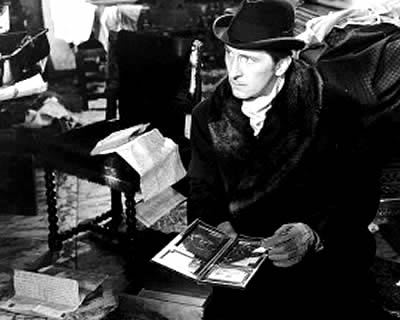
As I watched horror films when I was younger I especially appreciated those learned individuals who devoted their lives to developing expertise in the area of the monstrous. Perhaps the most iconic of such figures is Abraham van Helsing from Dracula, pictured in association with this post in the image at left as portrayed by the late, great Peter Cushing in The Horror of Dracula. Later in my adult life I rekindled my love for such things, not only as a fan, but also as a scholar. When I first started this blog some two years ago it was largely a forum for me to share my thoughts on issues related to the fantastic, including horror. But I had begun interacting with some of the academic literature on these areas and soon discovered that this was an area largely untapped in the blogosphere in terms of making some of these reflections accessible to a popular audience.
My friend and fellow academic horror explorer, Matt Cardin of The Teeming Brain, recently brought an item to my attention that shows that this area of scholarship is growing. Of all places, The Chronicle of Higher Education featured an article on July 22 titled “Taking a Slash at Horror.” This piece looks at the academic analysis of various genres of film, and suggests that horror is the most popular genre for such exploration. To substantiate this claim the article quotes Bernice Murphy, editor of The Irish Journal of Gothic and Horror Studies, interviewed here previously. In the middle of the article it includes a listing of several academic books on the subject as examples of this academic study, most of whom will be featured here in interviews over the course of the next few weeks and months.
Readers may wonder why there are so many involved in this area of academic analysis, and the article provides a few suggestions. One has to do with the “video explosion” of the 1970s and 1980s, which, according to the article, “schooled many film scholars of today, who as teenagers haunted video stores brimming with exploitative horror films with salacious, beckoning covers.” This is certainly the case for me and remains so as I build my DVD collection which provides an opportunity for reassessment and analysis of films in the horror genre.
Although this is certainly a niche focus in the blogosophere, I am pleased to see that TheoFantastique is situated within a robust academic subculture that shows no signs of slowing down in the near future.
The trailer for the horror film Devil from Universal Pictures is now available. This supernatural thriller is based upon a story by M. Night Shyamalan as part of a Night Chronicles series. It tells the story of a small group of people trapped in a stalled elevator in a high rise who come to learn through this crisis that one of them is Satan.
Satan has long been a popular theological and pop cultural figure of interest. Two previous posts at TheoFantastique are particularly relevant to this topic and as background to Devil. Readers may recall my previous interview with W. Scott Poole, author of Satan in America: The Devil We Know (Rowman & Littlefield, 2009) where we discussed this topic. Moving from cultural considerations to cinematic, readers may also want to review my discussion of Nicholas Schreck’s book The Satanic Screen: An Illustrated Guide to the Devil in Cinema (Creation Books, 2001).
It will be interesting to see how Satan is presented in this forthcoming film, how it contributes to the pop cultural representations of the Devil, and whether this film does better than many of Shyamalan’s recent films.
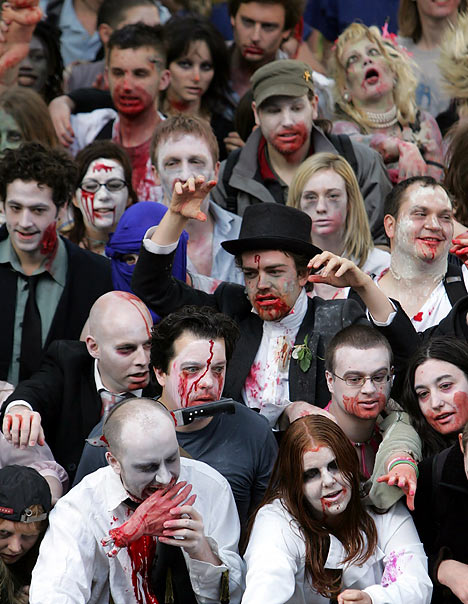
Kim Paffenroth of the Gospel of the Living Dead blog, as well as editor and author of several zombie books, recently made a Facebook post which referenced an interesting item. It is an article at open salon titled “What Does the Zombie Genre Say about the Modern West?”. This piece, by an author listed as RW005g, presents a psychological and sociological analysis of what the prevalence of zombies in popular culture might mean for us in the late modern Western world. The author contrasts scholarly analysis of 1950s horror/science fiction films with its concerns over Communism and conformity (to which we could add the reaction against “Fordism” and rationalization as argued by Mark Jankovich in Rational Fears: American Horror in the 1950s), with the very different social and cultural situation in the West in the late modern period.
The author then develops a list of differences between 1950s fears expressed through alien invasion and monster narratives in contrast with our current preferences for the zombie as the monster of the moment. Among the author’s uncomfortable conclusions we read the following:
What does the Zombie Genre tell us about modern America? For starters, it tells us that there is an overwhelming sense of frustration, that the promises of our parents and grandparents about the potential and future of America were, perhaps, not grounded in reality. That we will never reach the promised land.
It also tells us that our real underlying fears today aren’t of some evil foreign aggressor, even a hidden enemy like Osama Bin Laden, but instead, of the overwhelming and totally enveloping spectre of loneliness, of being alone, without friends and family, surrounded by a world that is alien to you and, for all intents and purposes, objectifies you and sees you as something to “use” or consume. It shows us our disconnect from other.
These films also show us our growing anxiety over lawlessness. The images of failed states saturate the air-waves. Images of cities that have ceased functioning, like Sarajevo, Grozny, Mogadishu, and Haiti after the earthquake, like New Orleans after Katrina and Los Angeles during the riots of 1992. A growing sense, awareness of, and sense of powerlessness in regard to a growing section of society that is anarchic and lawless and ruled by gangs, of growing poverty, a growing Lumpenproletariot and concomitant demise of the middle class. Isolated islands of humane civility taking refuge in a growing and ominous ocean of predatory anarchy.
The reader may not agree with everything the author of this open salon piece puts forward, but it does make for interesting food for thought as our fascination with the zombie (as well as [post]apocalyptic) functions as a mirror for our psychological and social state of affairs.
After a few months of thinking about a few things related to the fantastic, and bouncing an idea off a few friends and colleagues, I’ve created a Facebook page in order to create a network for the individuals in the subcultures who appreciate horror, science fiction, and fantasy, which we hope will eventually make up the Fantastic Culture Preservation Society. Through this network we hope to educate our community, and preserve our history. This is a work in progress as the page’s administrators fine tune what we hope to do for the communities that make up the network. Thanks for your interest, and please feel free to contribute, and to tell others in your network via websites, blogs, and message boards.
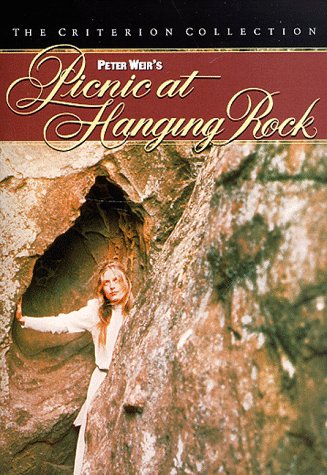 Author and TheoFantastique contributor Paul Meehan introduces the story of Picnic at Hanging Rock and its possible connection to a paranormal phenomenon. Paul is the author of a number of books including SAUCER Movies: A UFOlogical History of the Cinema (The Scarecrow Press, 1998).