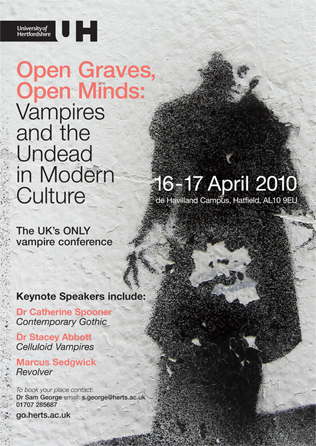
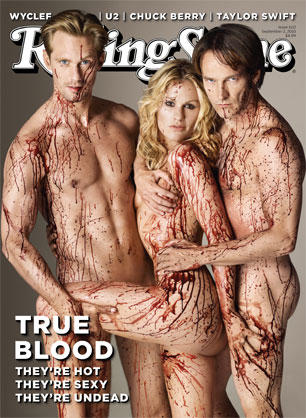
A while back I suggested that the development in vampires in film toward a darker expression of the iconic creatures in films like 30 Days of Night may represent a reaction against the popularity of the zombie, and an attempt at reasserting the dominance of the vampire. Now we are seeing depictions of the vampire that also react against vampire concepts such as those in the Twilight films. This has been demonstrated in the recent conference in the UK where scholars raised concerns about the “Americanization” of the vampire, and also through those associated with HBO’s True Blood program. As the creator of the program says in relation to the appearance of some of the show’s cast members on the cover of Rolling Stone,
The idea of celibate vampires is ridiculous, True Blood creator Alan Ball says. “To me, vampires are sex,” he says. “I don’t get a vampire story about abstinence. I’m 53. I don’t care about high school students. I find them irritating and uninformed.”
Vampires continue to develop and evolve and are presented in varying fashion to meet the needs of diverse pop culture consumers. Whether celibate or sexual, American or European, these monsters thankfully involve a malleability that appeals to our tastes in the undead.
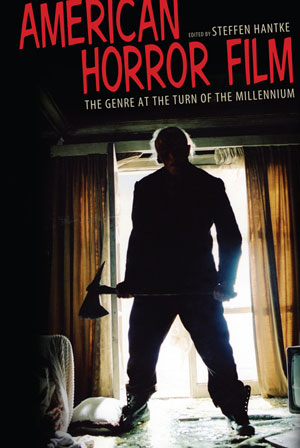
As previously noted here in a discussion based upon an article in The Chronicle of Higher Education, there is a growing body of academic books exploring horror films. One of those books is American Horror Film: The Genre at the Turn of the Millennium, edited by Steffen Hantke (University Press of Mississippi, 2010). While many are critical of the current state of American horror films, the contributors to this book take a different stance:
Creatively spent and politically irrelevant, the American horror film is a mere ghost of its former self-or so goes the old saw from fans and scholars alike. Taking on this undeserved reputation, the contributors to this collection provide a comprehensive look at a decade of cinematic production, covering a wide variety of material from the last ten years with a clear critical eye.
Individual essays profile the work of up-and-coming director Alexandre Aja and reassess William Malone’s muchmaligned Feardotcom in the light of the torture debate at the end of President George W. Bush’s administration. Other essays look at the economic, social, and formal aspects of the genre; the globalization of the U.S. film industry; the alleged escalation of cinematic violence; and the massive commercial popularity of the remake. Some essays examine specific subgenres-from the teenage horror flick to the serial killer film and the spiritual horror film-as well as the continuing relevance of classic directors such as George A. Romero, David Cronenberg, John Landis, and Stuart Gordon.
Essays deliberate on the marketing of nostalgia and its concomitant aesthetic, and the curiously schizophrenic perspective of fans who happen to be scholars as well. Taken together, the contributors to this collection make a compelling case that American horror cinema is as vital, creative, and thought-provoking as it ever was.
One of the contributors to American Horror is James Kendrick. Kendrick is an assistant professor in the Film and Digital Media Division of the Department of Communication Studies at Baylor University. He is the author of two books, has contributed chapters to others, and has had articles published in peer-reviewed journals. The title of Kendrick’s chapter in American Horror is “A Return to the Graveyard: Notes on the Spiritual Horror Film.”
TheoFantastique: James, I appreciate your willingness to discuss your chapter from American Horror. I appreciated its focus and contribution to the volume. How did you come to have the personal interest to focus on the spiritual in horror films, and how are you defining “spiritual” for the purposes of your discussion?
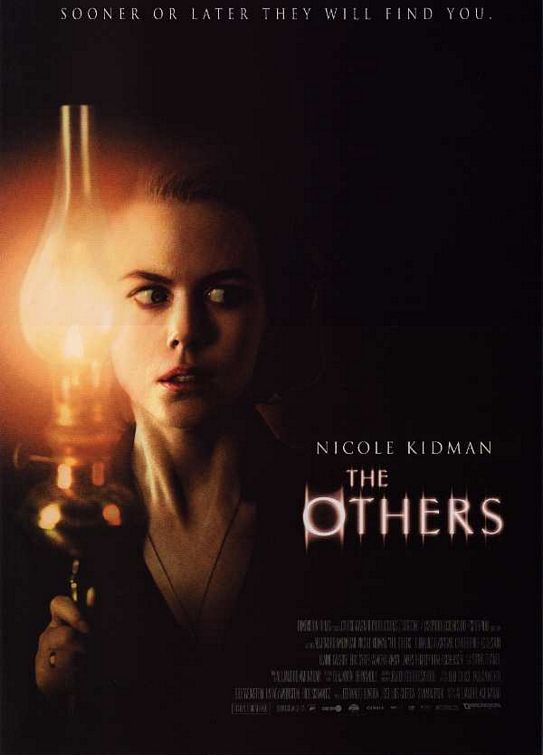
James Kendrick: I started thinking about this topic a few years ago when all of the talk around the horror genre was focused on so-called “torture porn.” It seemed like that was all anyone wanted to talk about, and there was all of this rumination about whether extreme graphic violence and despondency were going to be the primary characteristics of horror in the future. I recognize why people wanted to talk about this, but I felt like they were leaving out a major part of the story, which is the fact that the late 1990s witnessed a major renaissance of what I term “spiritual” horror films, many of which were extraordinarily popular with mainstream audiences (a rarity for horror), perhaps because almost all of them relied very little, if at all, on any kind of visual gruesomeness. As I describe in the chapter, for my purposes, spiritual horror films are those that focus supernatural issues—those things that are beyond the explanatory scope of rational and scientific understanding, particularly issues of life and death and what follows our existence in the physical world. “Spiritual” differs from “supernatural,” though, in that the latter term usually means anything that is above the natural, whereas the spiritual has a direct connection to the human spirit, that is, the idea that being human transcends mere material existence. There is a sacred element to the spiritual.
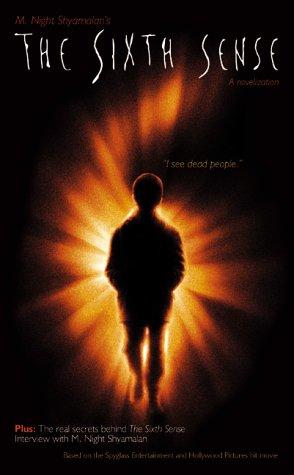
TheoFantastique: You discuss the shift in the constantly evolving horror genre toward the spiritual in the 1990s with several films, most notably The Sixth Sense. What was the general context for horror films then, and how does The Sixth Sense stand out as representing something different?
James Kendrick: By mid-1990, the general consensus was that the horror genre was all but dead, with a significant drop-off in home video sales and very few successful theatrical releases. There were a few outliers: In the early part of the decade there was a concerted effort by well-regarded filmmakers to reclaim the horror genre with big-budget, star-studded, “intellectual” horror films like Francis Ford Coppola’s version of Bram Stoker’s Dracula (1992), Kenneth Branagh’s take on Mary Shelley’s Frankenstein (1994), and Neil Jordan’s adaptation of Anne Rice’s Interview With the Vampire (1994). Otherwise, there was little on the horror front until Wes Craven’s Scream (1996) kicked off a string of postmodern slasher films that self-consciously played with the basic parameters of the genre by introducing self-aware would-be victims as a reflection of the young, media-savvy, self-aware audience. Scream was a huge success both critically and commercially, so it was followed by two sequels, one in 1997 and one in 2000, and also an avalanche of increasingly silly teen horror movies and sequels like I Know What You Did Last Summer (1997), Disturbing Behavior (1998), The Faculty (1998), Urban Legend (1998), and Final Destination (2000). This also led to the resurrection of several dormant franchises with a new, self-aware spin, including Halloween H20: Twenty Years Later (1998), Jason X (2001), and Bride of Chucky (1998). Ultimately, the majority of these teen-centric films, despite their sometimes clever postmodern trappings, fell victim to the same criticisms that were aimed at slasher films a decade earlier, specifically that they were overly obsessed with creative means of violent death. When The Sixth Sense was released in 1999, it had the feel of something new and different. Quiet, thoughtful, and dramatic, I like to think of it as a horror movie for people who didn’t like horror movies. More importantly, it was a horror movie that asked to be taken seriously in the way it evoked and explored issues of life after death. It had three-dimensional human characters, and it dealt with relationships, both familial and spiritual. For many it was a moving emotional experience, even if they jumped in their seats at times.
TheoFantastique: In your chapter you discuss the Graveyard School of poets that you see as influential in informing the early roots of horror. Who are these folks, what was their emphasis, and why do we hear more about the Gothic writers than the Graveyard School as significant formative influences on horror?
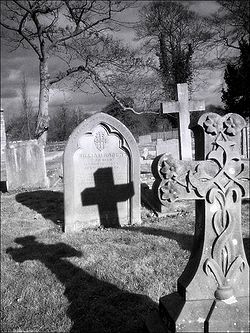
James Kendrick: I went round and round with one of the anonymous reviewers about the role the so-called Graveyard School of poets played in both literature and the nascent development of the horror genre. He or she kept insisting that the Gothic writers influenced the Graveyard poets, but all of my research indicated exactly the opposite: Those writers associated with the Graveyard School were writing years, in some cases decades, before the onset of Gothic writing, whose beginning is usually associated with the publication of Horace Walpole’s The Castle of Otranto in 1764. Many of the most famous Graveyard poems were published in the early 1700s. Not many people are familiar with the Graveyard School, and I had never heard of them until I read The Thrill of Fear: 250 Years of Scary Entertainment (1991) by Walter Kendrick (no relation, by the way). They emerged primarily in England in the early 1700s and, although these writers are referred to as a “school,” they were completely unaffiliated; they just happened to focus their poetry on similar themes and images. Some of the most well-known works include Thomas Parnell’s “A Night-Piece on Death” (1722), Edward Young’s nine-volume The Complaint; or Night-Thoughts on Life, Death, and Immortality (1742–1745), Robert Blair’s The Grave (1743), and Thomas Gray’s “Elegy Written in a Country Churchyard” (1751). Walter Kendrick made a strong argument for the importance of the Graveyard poets in establishing many of the visuals associated with the horror genre: black ravens, creepy yew trees, crumbling gravestones, rotted corpses, and the personification of Death as a character. Yet, what struck me about them was the fact that they were using all of the macabre and unsettling imagery not to gross out the audience or scare them for its own sake, but rather to draw attention to the limitations of our earthly, mortal existence and force us to look into the afterlife. The Graveyard poets were among the first to recognize that deep insights into life can only emerge from ruminating on the extreme limit death, an idea that Edmund Burke later explored in Origin of Our Ideas of the Sublime and Beautiful (1757). However, even though the intention of the Graveyard poets was to encourage their readers to consider spiritual issues by bringing them face-to-face with the gory realities of death and decay, they also began the process by which modern horror would eliminate such concerns in favor of gross-out thrills. As Walter Kendrick puts it, “until tombs and skulls lost whatever connection they once had to anybody’s real death and became the icons of a new kind of entertainment.” So, it isn’t hard to see how the Graveyard poets were essential in helping to create the genre we now call “horror.”
TheoFantastique: How does the spiritual emphasis of the Graveyard poets contrast with the general spirituality found in horror of the 1980s?
James Kendrick: Well, the Graveyard poets were avowedly Christian. Most of them were actually monks and priests who lived in the church and drew some of their inspiration from looking at the church graveyards every day. Mainstream movies, horror and otherwise, are rarely specifically tied to a particular religion, if only because they runs the risk of alienating part of the potential audience. Thus, most horror movies that deal with spiritual issues do not adhere to any particular spiritual tenets or religious beliefs, with the exception of Catholicism, which is also evoked whenever you have a movie about anything demonic. Rather, the spiritual nature of most horror films is kept deliberately vague. In the chapter I describe it as a sort of “grab bag” approach that borrows liberally from Christianity, Judaism, Buddhism, and various New Age belief systems without specifically citing any well-known figures, texts, or creeds. So, unlike the Graveyard poets, whose works were specifically Christian in theology and intent, Hollywood films in the late 1990s, and many horror films in particular, took a generally open, abstract approach to issues of spirituality, borrowing liberally from many theologies without adhering to any one of them.
TheoFantastique: At one point in your chapter you mention the Freudian concept of “the return of the repressed” that is often found in horror analysis, particularly in the writing of Robin Wood. But while she applies this to, as you say, “cultural issues such as race, gender, and sexuality,” you apply it to spirituality. I hadn’t thought of this interesting application before. How do you make this connection?
James Kendrick: In general, the use of the Freudian “return of the repressed” in film studies has been tied to a specific ideological/cultural agenda, which is to discuss the social-conservative repression of mostly sexual issues, which, as Freud noted, can only be repressed so long before they eventually rupture the surface. It seemed to me that, ironically enough, issues of spirituality and religion are often repressed in mainstream cinema, and this cycle of spiritual horror films in the late 1990s and early 2000s represented a sort of “return of the repressed.” You also find this within the narratives of the film themselves, which frequently include characters who deny the existence of anything spiritual but are eventually forced to confront that which they cannot explain scientifically or rationally. Thus, many of these films feature “conversion” narratives, in which characters (many of whom are avowed atheists) ultimately come to accept the existence of the supernatural and the spiritual after meeting it face to face.
TheoFantastique: With horror trending toward violence and mayhem do you see a possible shift in the future toward supernatural horror and the continued influence of the Graveyard poets?
James Kendrick: Like all genres, the horror film is constantly cycling and fluctuating and changing. In fact, the history of the horror film in many ways can be traced along a path of oscillation between a focus on the spiritual and a focus on the material. The horror genre’s embrace of the spiritual at the end of the 1990s did not replace more physical, violent horror, and neither did the explosion of “torture porn” and other forms of extreme horror in the early 2000s replace the spiritual horror film. Rather, as I note in the chapter, each movement is just another arc in the constant evolution of the genre, which over the decades has swung back and forth with varying degrees of force between the visceral and the suggestive, the graphic and the contemplative, the material and the spiritual. That, in my mind, is precisely what keeps the genre interesting. It always has something to say.
TheoFantastique: James, thank you again for your time and thoughts on this topic.
In a previous post I mentioned the Open Graves, Open Minds: Vampires and the Undead in Human Culture conference which looked at various ways in which the vampire serves as a metaphor in culture. The conference was held in April of this year on the campus of the University of Hertfordshire in the UK. (See the conference program here.)
As follow up with the program coordinator, Professor Sam George, I learned that the conference proceedings will be published in book form in 2012 on the centenary of Bram Stoker’s death and launched in his London House.
Related to this discussion of vampires in the UK is an interesting article on whether vampires have become too “Americanized.” The article, with the subtitle “Academics Lament How Vampires in Modern Culture Are ‘Losing Their British Passports’; Decaffeinated Version of Dracula,” appears, interestingly enough, in the Wall Street Journal at this link. The video below is found at the WSJ website as well.
Follow Professor George’s website for updates and international media interactions with this conference.
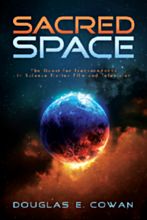
Sacred Space: The Quest for Transcendence in Science Fiction Film and Television by Douglas Cowan (Baylor University Press, 2010) goes on sale tomorrow, August 15. You can order a copy here now.
Description:
As humans, it is our trust in something larger than ourselves that invests our lives with meaning and value. We hope that outside the boundaries of everyday living there lies something greater. As Doug Cowan argues, science fiction is the genre of possibility and hope, a principal canvas on which writers, artists, and filmmakers have sketched their visions of this transcendent potential for generations. In Sacred Space, he leads readers in a compelling exploration of how this transcendence is manifested in science-fiction cinema and television of today.
From the millennial dreams of a future bright with potential to the promise of evolution from some as-yet-undreamed engine of creation, science fiction’s visions of transcendence animate the pages of Sacred Space. Drawing on the most popular examples–Star Wars, Star Trek, Battlestar Galactica, Babylon 5, and Stargate SG-1–as well as the lesser known but no less important, Cowan reveals the multivalent religious ideas present in this media. Why do these themes that consistently appear in science fiction matter? What do they reveal about the often ambivalent relationship between outer space and our spirits? Cowan insightfully shows how these films and shows express and reinforce culturally constructed conceptions of transcendent hope, and along the way provides a provocative reflection on what this ultimately says about our culture s worldviews, hopes, and fears.
Reviews:
Highly recommended. Here we learn that science fiction is more than bug-eyed aliens and saucers and that it often reveals our quest for the sacred.
–John W. Morehead, editor, Theofantastique.com
From the “millennial dreams” and “apocalyptic nightmares” of alien contact to the Buddhist visions of Neo s matrix, Doug Cowan weaves a grand adventure for fans and students of religion and science fiction. If the hope for transcendence is the universal human religious question, as Cowan ably presents, then science fiction film and television are the blank screens most qualified in our media-rich culture to propel us on that journey.
–Conrad Ostwalt, Professor of Religious Studies, Appalachian State University
Cowan convincingly demonstrates that modern science-fiction films and television shows have made religious questions and answers central to the issues they raise about human identity, values, and purpose. By emphasizing the diversity of religious ideas present in these media, Cowan shows how they are as multivariant as the nature of religion itself. In so doing, he sheds light not only on what religion is, but also on what it might be. –John Lyden, Professor and Chair of Religion, Dana College, and author of Film as Religion: Myths, Morals, and Rituals
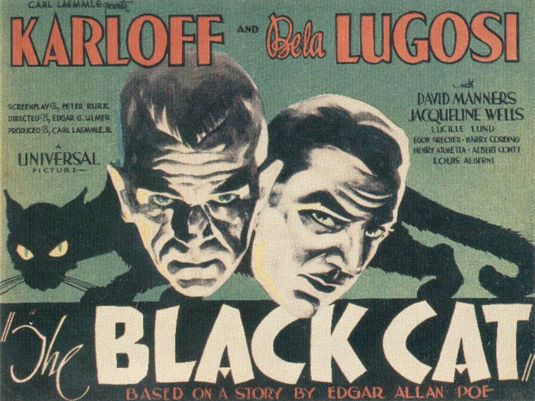
I have finished reading, and enjoying, The Philosophy of Horror, edited by Thomas Fahy (The University Press of Kentucky, 2010), and with this concluding post on the book I will comment on Paul Cantor’s chapter, “The Fall of the House of Ulmer: Europe vs. America in the Gothic Vision of The Black Cat“.
Cantor’s chapter was of great interest to me not only because it interacts with an often neglected Universal Studios horror film from the classic age, but also because Cantor brings a fascinating cultural and historical analysis to the subject matter. Cantor’s discussion focuses on the work of the director of The Black Cat, Edgar Ulmer. Ulmer was an immigrant to the U.S. from Europe who had experienced the darkness of World War I, and had also worked with German expressionist film directors. These experiences would come together to provide an interesting mix in The Black Cat.
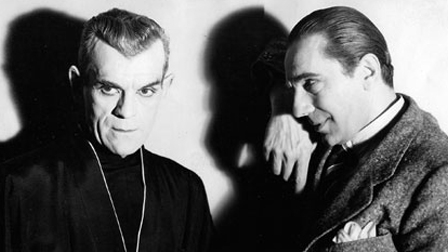
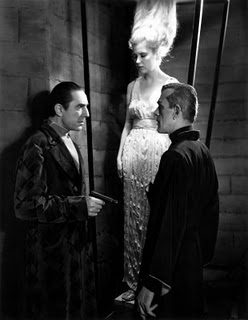
For those who have not seen the film, it tells the story of an American couple in Europe on their honeymoon who end up in the home of Hjalmar Poelzig (Boris Karloff) after being rescued from a bus accident by Vitus Werdegast (Bela Lugosi). As it turns out their stay with Poelzig is anything but an accident as they get caught up in a plot for revenge by Werdegast who seeks justice for his sufferings under Poelzig in the past during the Great War. We come to learn that Poelzig has an even darker side in that he has stolen Werdergast’s wife (who is now deceased), has been married to his own daughter, keeps the preserved corpses of his wives below his home, and is the high priest of a Satanic cult. As the film ends Werdegast finds his justice by torturing Poelzig and eventually blowing up his home, and with it the Satanic cult.
Although many fans familiar with this film no doubt enjoy it on the surface level of a Universal horror film involving two of classic horror’s greatest stars, Cantor reveals in his discussion that Ulmer worked in greater levels of depth into the film that drew upon his experiences. This includes not only various Gothic archetypes such as the dark and brooding home, the living dead, and incest, but also commentary that pits European sophistication against American naïveté, even while offering critique of European darkness and optimism about America’s possibilities. In Cantor’s view, “[t]he genius of The Black Cat lies in the way it maps the Gothic psychodynamics of the family onto a political landscape.” Ulmer accomplishes this as a European immigrant to America who had seen the horrors of the cultural situation which resulted in World War I, thus including an interesting and somewhat contradictory set of elements into the story. This involves the depiction of the “innocent” American travelers from a “low culture” background who are contrasted with the more sophisticated, yet potentially dangerous Europeans from a “high culture” background. As Cantor describes the depictions of these characters, the Europeans
are deeply neurotic, obsessive-compulsive, and self-destructive, not to mention downright evil and even Satanic, while the Americans are free, open, good-natured, and optimistic. But at the same time the Europeans are simply more interesting than the Americans. The Europeans are intelligent, cultured, and artistic, while the Americans are bland, prosaic, and more than a little obtuse.
It is Cantor’s view that Ulmer, through the vehicle of a horror film, was trying to work through the medium of pop culture in order to “tell a deeply serious tale of European tragedy.” Indeed, Ulmer’s lingering concerns over Europe not only looked back with concerns over the “horrors of World War I and, as a result, bordering on the bring of madness, ready to plunge into a nihilistic abyss,” but also sounded a warning of cultural dynamics that made possible the great evils of World War II.
Fans of classic Universal horror, as well as students of culture and history, will find a great deal to reflect upon in Ulmer’s masterpiece of The Black Cat. As Cantor concludes:
Along with the other European émigrés who directed horror movies in the 1930s, [Ulmer] helped make the avant-garde cinematic techniques of the German expressionists part of the Hollywood mainstream. In the end Ulmer’s project in The Black Cat is internally contradictory — to create a very European movie to argue for the cultural independence of America. Fortunately for him and us, this self-defeating quest resulted in a horror movie masterpiece, an unusually thoughtful product of pop culture that philosophically reflects on the relationship of pop culture to high culture.
There is an interesting post that came to my attention today while checking my daily Google searches for topics related to the fantastic. The source for the post is in the WIRED blog “GeekDad.” The article is by Curtis Silver is titled “Is Being a Geek a Personality Trait or a Way of Life?”. In the piece Silver confesses that while he is a geek, his children do not share this status. Sadly, my own experience is similar, but with a few grandsons in the family, and possibly more in the future, I haven’t given up hope yet that I can create yet another family geek as it relates to the fantastic. Silver describes his early love for all things geeky in pop culture, and then moves to consideration of the source for such interests, whether this is the result of personality traits developed early in life or something else. After considering a couple of scientific and psychological studies which seem to indicate that childhood personality traits are locked in early in life, and then carried through into adulthood, Silver is not convinced that this best explains his geek obsessions. For him it’s something deeper:
You see, while being a geek may embody certain personality traits I don’t think it itself is a personality trait. I think it’s more of a way of life, or perhaps an encompassing state of being. There are plenty of environmental and social factors that can change how one perceives and interprets life. There are always paths for new interests, new roads into the convoluted and ADHD world of geekdom. So there is plenty of time for your budding geeklet to morph into his eventual place in the world of geek. There is also just as much time for that same geeklet to put the way of the geek behind him. No matter what, our support as parents will make them successful no matter which path they choose, no matter what piques their interests.
I am sympathetic to Silver’s perspective on this issue, but for me it’s a case of both/and rather than either/or. In my view, our exposure to certain things in childhood resonates with aspects of our personality, which is then carried over and adapts into adult life. When this is nurtured it becomes “a way of life” and “a state of being.” I throw the question to my readers. As a sci-fi/horror/fantasy geek, if you own such a moniker, is this a personality trait, a way of life, or both?
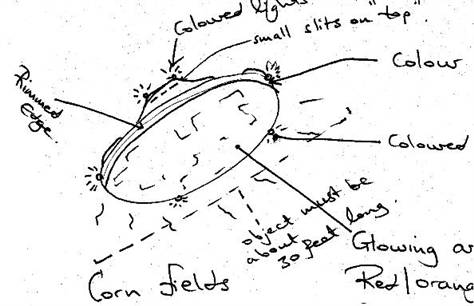
The American media has picked up on the British government’s decision to release hundreds of previously classified documents related to UFO sightings. (For a BBC News report see here.) The files are a part of the National Archives. The story includes a link to the web page for the archives which includes PDF files for the documents, as well as a sample of UFO historian Dr. David Clarke’s book The UFO Files, and an audio file where Clarke discusses the new material.
Beyond the phenomenon itself, another interesting facet of this story is the way in which both the US and UK media are reporting on the release of the files. Both refer to the materials as the “British X-Files,” and in the video clip below from UK television The X-Files theme can be heard at the beginning, and the closing scenes of Close Encounters of the Third Kind with the giant mothership is shown in the conclusion. Evidence, of course, of the impact and crossover between science fiction and paranormal television and film and real-world phenomena.
Video games have been an important part of pop culture for man years now, having come a long way from my first experiences with Atari in the 1970s. The genres of the fantastic has been an important part of game play, and with this post I’ll highlight a couple of my favorite games from the 1990s. It includes online casino games of course, I like playing free casino slot games for fun, the thrills and excitement I get it all while playing!
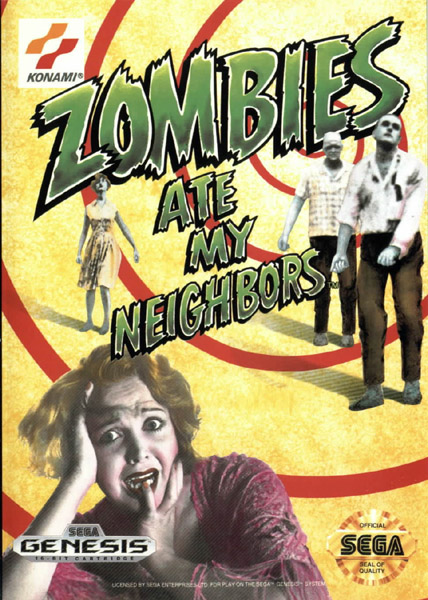
The first game I remember fondly is Zombies Ate My Neighbors which came out in 1993 for the Sega Genesis as developed by LucasArts. This game incorporated elements from horror and science fiction films from the 1950s through the 1980s, and included various monsters such as werewolves, zombies, aliens, and as the title indicates, a major focus on zombies. The player had to work their way through various levels, avoiding or killing monsters, while trying to save at least one neighbor per level in order to advance to the next level. As an interesting piece of trivia, this game was controversial overseas due to the blood depicted in game play (extremely mild by comparison to today’s horror and war games), as well as the title, going by the name Zombies outside of American culture due to concerns about creatures consuming one’s neighbors. This game was a lot of fun for a fan of the films which provided the inspiration for the creatures that chased you across the screen.
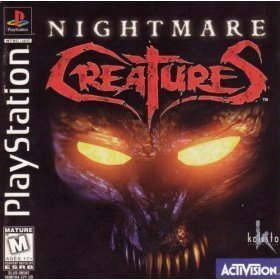
Another favorite game came for me as I upgraded and moved beyond my Sega Genesis to the first Playstation. This game was darker than the previous game discussed above. It was Nightmare Creatures which came out in 1997. I enjoyed this game quite a bit because it drew upon Gothic horror elements, taking place in a dark and foggy London and incorporating a number of monstrous creatures. Still in my collection of video games, the back of the game case describes the storyline:
In 1834 on London’s on London’s blackest eve, a secret cult known as The Brotherhood of Hecate, rediscovered the key to man’s unholiest fears. It was through this arcane act of terror that the evil leader of the Brotherhood, Adam Crowley, swore to overtake the world…Ever since this fateful night, not a London street, alley or town square has escaped the whispered screams of “Nightmare Creatures!”
One of the more interesting aspects of this game for me as an academic working in part in the area of new religious movements, and with some experience in Pagan studies, is the villain in the game, the character of Adam Crowley. For those with some familiarity with Western esotericism and the magickal family of religions, this is an adaptation of Aleister Crowley, the infamous esotericist and practitioner of sex magick, who proclaimed himself the “Great Beast 666.” Nightmare Creatures draws on the infamy of Crowley’s name for those who are aware of him and make the connection, and then creates a fictional villain who uses his magical abilities in the service of his cult and their desires for world domination. I must admit I was only able to defeat the final “boss” in the game, Crowley himself who takes one of his magical alchemy potions to transform himself into an uber-monster, as a result of the use of cheat codes. But heck, the monster had to be defeated, right?
Resident Evil was the next horror game I gravitated to, but with the various video game sequels, not to mention the various films that have come out based on the game, I don’t need to tell readers about a phenomenon they are already very familiar with. Horror had a significant expression in video games in the 1990s, far beyond the zombie subgenre so prevalent in today’s gaming.
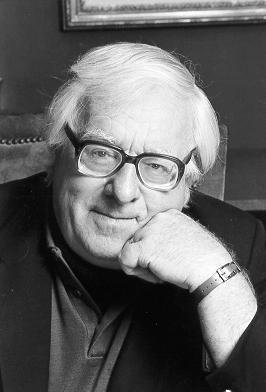
CNN Living included a feature on legendary science fiction writer Ray Bradbury which revealed a surprising aspect of the author’s life and writing inspiration. The title of the article is “Sci-fi legend Ray Bradbury on God, ‘monsters and angels'”. In the piece Bradbury describes himself as a man of religious faith, although not one to which one can easily apply a label. In fact, Bradbury doesn’t want any labels applied to his religious pathway. He describes himself as a “delicatessin religionist” inspired by a number of religions from the East and the West in pluralist fashion. Christianity has been part of this mix, with the Gospel of John and its focus on love a key aspect of it, although surely not the only aspect. The significance and positive role of religion in Bradbury’s life and fiction is a surprise in that two other influential sci-fi authors similar to Bradbury, Isaac Asimov and Arthur C. Clarke, were atheists, or at least agnostic in the latter case. My assumption would have been that Bradbury would have had irreligious views similar to their’s.
Another interesting aspect of this article is the description of his writing as a “summoning [of] ‘the monsters and angels’ of his imagination for his enchanting tales,” and his own description of his writing career as one where he has been “[a]t play in the fields of the Lord.” I find this connection between play, the sacred, and the imagination of interest and have written on this connection previously both in my graduate thesis on Burning Man Festival, as well as my chapter on videogames and digital cultures in Halos & Avatars (Westminster John Knox, 2010).
At times play may be superficial, but at other times it expresses the human desire for the sacred dimension of life. We might recall that experiences of the transcendent in connection with play were part of C. S. Lewis’s discovery of spirituality that eventually led to his embrace of Christianity. In addition, the noted sociologist of religion, Peter Berger, mentions the “argument from play” and connects it to conceptions of human religiosity in his discussion of “signals of transcendence” in ordinary human experience that point beyond that experience and toward the transcendent. It is not a stretch then to view the imaginative play with the fantastic as a signal of and window into transcendence.
The connection between religion, or at least the sacred, and science fiction as well as the broader realm of the fantastic, surfaces from time to time, and it was an interesting pleasure to see this as an aspect of the life and work of one of the most influential writers of science fiction, and grandfathers of the children of the fantastic.
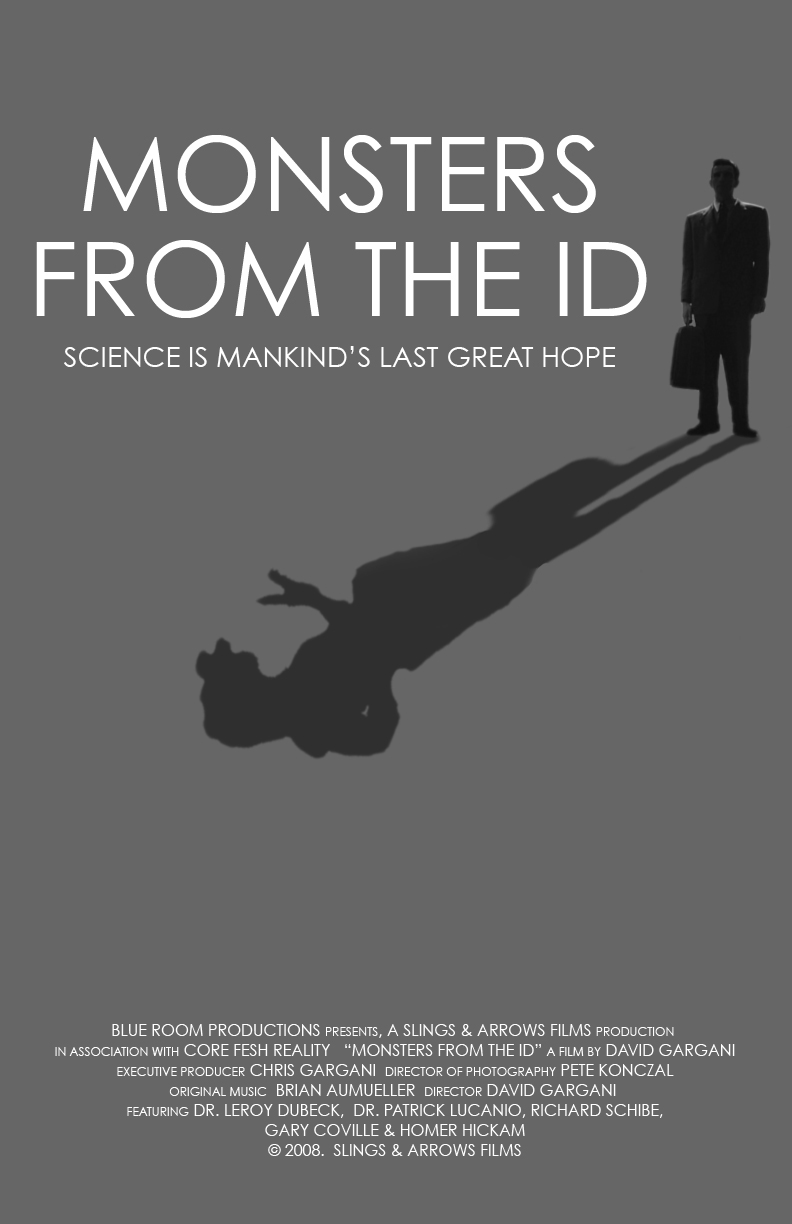
As regular readers of this blog are aware, I am a huge fan of 1950s science fiction/horror, those films that had an early formative influence on my love for the fantastic. In reading through a science fiction magazine today I came across a documentary that makes interesting use of these films as it argues for their positive impact on our culture. It is titled Monsters From the Id: Science is Mankind’s Last Great Hope. The documentary’s website provides this synopsis:
The 1950’s was an idealistic time in American History, filled with hope, opportunity, and wonder. It was also, “The Atomic Age”, where new technology promised to both save humanity as well as put it in jeopardy. All of these factors gave birth to one of the most prolific genres in film history, 1950’s Science Fiction Cinema. More then just bug eyed monsters and little green men, 1950’s Sci-fi Cinema provided science inspiration for millions of eager youths across the country.
While monsters and invaders of many forms have always existed in cinema, it wasn’t until the 1950’s that Hollywood created a new character. This new character is the Modern Scientist. His predecessor, the Mad Scientist was evil and intent on using science for his own personal gains, no matter the outcome. With atomic energy now a part of the world everyone lived in, this type of scientist was more dangerous then ever. Instead, the Modern Scientist was created to calm the fears associated with the atomic age. This new American Citizen was brilliant, polite, thoughtful, charming and not surprisingly very good looking. Just as science took the lead in much of the news of the 1950’s, the scientist became Hollywood’s new leading man and a role model for young boys and girls across America.
Although Hollywood was mostly interested in selling tickets and popcorn, there were others that understood the power of these films and the influence they had on society. Soon filmmakers like Walt Disney and George Pal started collaborating with famed rockets scientists, Werner Von Braun and Willie Ley in an effort to energize the American public and peak their interest in manned space travel. What followed were technically accurate sci-fi films that both entertained and educated the next generation of scientists in America. However as progress marched on, it was a real life event that finally sent the wheels into motion.
On October 4, 1957 the Russians provided the spark in the form of the first man made satellite, Sputnik. America immediately went into a panic and suddenly science and the need to match the Russians in space became a top priority. From that point forward, the American Government took exploratory space flight seriously and the first man they called was Werner Von Braun. With the help of science fairs and a revamped science curriculum an inspired population worked toward one of the greatest achievement of mankind, spaceflight. Along the way, Sci-Fi cinema and science fact worked together to change the lives of American Students in ways we only dreamed of before.
Through the use of the movies themselves and expert analysis from scientists and educators, Monsters From The Id weaves the intersecting themes of over thirty classic films in order to tell the untold story of the Modern Scientist and his role in inspiring a nation. The film continues to explore the psychological and cultural impact of 1950’s Sci-Fi cinema and asks, “where is science inspiration found today?”
As mentioned in the introduction to this post, finding inspiration for careers in the sciences through 1950s science fiction/horror is indeed an unusual and unique approach. But the positive aspects of science and the scientist in these films must be held in tension with the science run amok and “mad scientist” elements also frequently found in these films, and with the anti-rationalizing element in them as discussed by Mark Jancovich in Rational Fears: American Horror in the 1950s (Manchester University Press, 1996).
 A while back I suggested that the development in vampires in film toward a darker expression of the iconic creatures in films like 30 Days of Night may represent a reaction against the popularity of the zombie, and an attempt at reasserting the dominance of the vampire. Now we are seeing depictions of the vampire that also react against vampire concepts such as those in the Twilight films. This has been demonstrated in the recent conference in the UK where scholars raised concerns about the “Americanization” of the vampire, and also through those associated with HBO’s True Blood program. As the creator of the program says in relation to the appearance of some of the show’s cast members on the cover of Rolling Stone,