Our fascination with the devil in popular culture as informed by the Christian tradition continues, or at least Hollywood’s assumption that this figure is of interest to us, with the release of The Rite in January 2011. The film is “inspired by” the book of the same title by Matt Baglio. See the film’s website for a brief description of the story and further production information. The Rite is scheduled to open in theaters January 28.
Be sure to return to TheoFantastique after the film’s premiere to listen to a podcast discussion of it and the related topics of Satan in religion and popular culture, and the phenomenon of possession among our participants including Douglas Cowan, author of Sacred Terror, W. Scott Poole, author of Satan in America, and Paul Meehan, author of Cinema of the Psychic Realm.
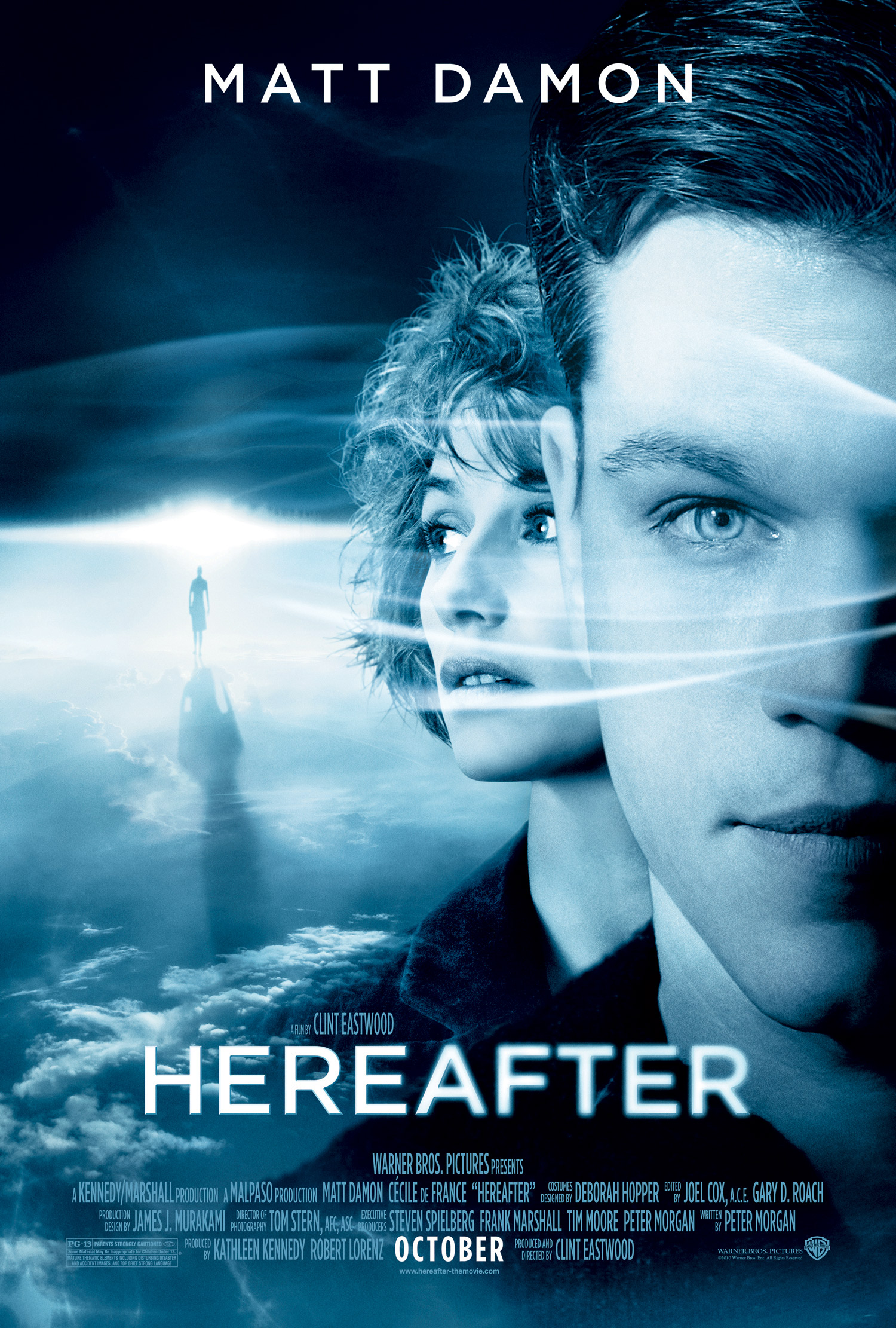
This Friday evening I will be accomplishing two things at the same time. I will be able to enjoy dinner and a movie with my wife, and prepare for my participation in a podcast with CineFantastique Online. I have been invited as a guest by CFQ to provide some thoughts on the movie HEREAFTER, which opens this Friday, October 22. Given that the subject matter deals with psychics, near-death experiences, and the question of life after death, I have been reviewing some of the information in my research files on the paranormal. In addition, I have read a few reviews of the film online. One in particular caught my attention, and I provide a few responsive thoughts below.
The piece is titled “‘A Life that’s All About Death’: A Review of Hereafter” by Gary Westfahl that appears in Locus Online, a publication devoted to science fiction and fantasy. Westfahl states at the outset that he is a fan of these genres, which makes sense writing for a publication like Locus Online. But he then goes on to take issue with Hereafter because it does not take the idea of life after death and tease it out for its possibilities. Westfahl rightly notes that science fiction and fantasy plays with the possibilities presented by alternative worlds and constructs of reality:
Among other things, science fiction and fantasy are all about world-building, using a fantastic idea to construct a fully-realized portrait of an alternative environment and the way of life it would engender. A science fiction or fantasy writer, pondering these accounts of the afterlife, would craft answers to various questions: precisely how are the consciousnesses of deceased people transferred to this new realm? What happens to them there? What are their new lives really like?
Since Hereafter does not do this, but is instead very reserved in its depiction of the afterlife and its application to the world of the living, Westfahl sees this as a shortcoming, and as a result he is less than pleased with Hereafter. But in my thinking this is an inappropriate imposition of genre and its expectations on this film. The film’s director, Clint Eastwood, has not made science fiction or fantasy films previously. His work is in the genre of drama, and therefore it is more natural to read Hereafter as an example of that genre that incorporates common ideas related to the psychic realm and the afterlife found in popular culture.
Westfahl’s attempts at reading Hereafter in light of science fiction and fantasy with its resulting disappointment is curious in that earlier in his review he writes that “my efforts to analyze Hereafter will necessarily be unable to contextualize the film as part of [Eastwood’s] vast and often admirable oeuvre…”. Although Westfahl states that he has not seen two of Eastwood’s more notable directorial efforts that exemplify his interest in drama, he was at least aware of the types of films that he has done, even though he was not able to interact with Hereafter within a broader cinematic context for the director. This general awareness of Eastwood’s tendency toward drama should have been sufficient to read Hereafter in its dramatic rather than fantastic context. I don’t know if Hereafter is a good film or not. I’ll form my opinions after I see it on its opening night. But Westfahl’s review serves as a reminder for film critics and general audience members not to impose genre expectations on a film, but to try to interpret it on its own merits within its genre conventions.
I will share further thoughts after I’ve had a chance to view the film at week’s end, and to reflect on it prior to my participation in the Cinefantastique Podcast Sunday afternoon. I’ll post a direct link to the discussion once it is uploaded at CFQ.
One week ago saw the first of a series of posts by Arlen Schumer exploring The Twilight Zone. (Part 1 can be read here.) Here in Part 2 Schumer continues his analysis, looking at the influence of the series on television past and present, and beginning an exploration of themes of the series:
Star Trek would have simply been a glimmer in Gene Roddenberry’s eye without Serling and The Twilight Zone tackling many of the same socio-political themes Trek would become known for; its first episode was entrusted to veteran Twilight Zone sci-fi scribe George Clayton Johnson, and Roddenberry himself delivered the eulogy at Serling’s funeral (after his premature death at the age of 50 in 1975):
“No one could know Serling, or view or read his work, without recognizing his deep affection for humanity, his sympathetically enthusiastic curiosity about us, and his determination to enlarge our horizons by giving us a better understanding of ourselves. He dreamed of much for us, and demanded much of himself, perhaps more than was possible for either in this time and place. But it is that quality of dreams and demands that makes the ones like Rod Serling rare…and always irreplaceable.”
The series’ impact is felt more obliquely in the edgier, darker works of directors like David Lynch, whose 1977 debut film, the “undergroundy,” black and white Eraserhead, his revealing of the seedy underbelly of suburbia in ‘86’s Blue Velvet, and his meditation on dreams and reality in his 2001 masterpiece Mulholland Drive, all reveal his own private Twilight Zone.
M. Night Shyamalan’s entire career (and Tim Burton’s, to a lesser degree) can be seen as an ongoing homage to The Twilight Zone; the smash hit that made him, 1999’s The Sixth Sense (also the name of a short-lived 1972 supernatural TV knockoff of The Twilight Zone), is a derivation (and conflation) of two classic first-season Zone episodes, “A Passage for Trumpet” and “The Hitch-Hiker.”
Chris Carter’s The X-Files? ‘Nuff said. JJ Abrams’ Lost? Serling had a brief (17 episode) post-Twilight Zone series in the Fall of ’69 called The New People, about a group of young people…survivors of an airplane crash…on a deserted island! Abrams’ new hit Fringe is as much Twilight Zone redux as X-Files, as he said so himself in Rollingstone, which presented its 2009 “Most Shocking Season Finale” award to Fringe, enthusing “Not since The Twilight Zone has a twist ending inspired so many goosebumps,” to which Abrams responded, “It felt exactly like the kind of thing Rod Serling would have done.”
The Twilight Zone is a legacy that continues to teach, entertain, and inspire; it is a measure of that legacy that Rod Serling was able to surmount the obstacles inherent in a commercial medium like television to touch more peoples’ imaginations with more ideas of lasting impact than any American (television?) writer of our time.
Serling and Company’s twenty-three-minute meditations on a wide spectrum of philosophic concerns, from the political to the metaphysical, core concepts and pop philosophies that are the zeitgeist of The Twilight Zone, have so penetrated the mass culture that now, over fifty years since its debut (October 2, 1959), “the twilight zone,” the concept, has become a psychological buzzword, unearthing automatic associations of the existential and the surreal in the commonplace. Its totality and cohesiveness make it Serling’s magnum opus, an oeuvre that communicated to entire generations.
“Rod had some sort of common touch,” remembered producer Buck Houghton, when interviewed in 1988, “whereby a sympathy for the common man and the problems that he dealt with and faced and won and lost was communicated to an awful lot of people.
“His pattern was not only communicable to the people who made his pictures, it was communicable to other writers,” chief among them the aforementioned Matheson, Beaumont and Johnson, along with renowned television writers of the time like E. Jack Neuman (Dr. Kildaire, later Police Story) and up-and-comers like Earl Hamner, Jr. (who went on to create The Waltons). They shared a flair for poetic dialogue that was most dominant in Serling’s writing—actor Dan Duryea commented that he couldn’t remember the last time he had recited poetry without feeling self-conscious about it. Ayn Rand, a writer of stylized dialogue herself, praised Serling at the time, remarking that he wrote “…some of the most beautiful dialogue that has ever issued forth from the mouths of TV characters.”
That dialogue spoke of a humanism, compassion, and respect for man’s potential (to be both good and evil), and can be compared to that of Frank Capra’s (the half-hour fantasy sequence in It’s a Wonderful Life, in which Jimmy Stewart’s George Bailey witnesses his life had he not been born, isn’t so much a throwback to Dickens’ A Christmas Carol as it is a proto-Twilight Zone episode). Both men tried to raise the consciousness of their audiences through commercial mediums, and were chided by critics (“Capracorn”), then and now, for lapsing into sentimental moralizing and soapbox reform.
But if Serling was the Capra of TV, he was also the medium’s Orson Welles, for he exercised a Wellesian control over all creative facets of The Twilight Zone, making him the first dramatic television auteur; though crafted by many writers, directors and actors of different sensibilities, The Twilight Zone was ultimately united under one—Serling’s—vision. From the personal notes of producer Houghton, used as a guide for script purchases:
“The Twilight Zone is a world that allows for things to happen that do not happen in real life: fantasies operate, wishes are fulfilled, life’s loose ends are tied up, frustrations are resolved, discontents are played out, dreams come true, magic asked for is delivered. Unbridled imagination, working to the benefit—or destruction—of commonplace people…the writer is free to pose almost any ‘What if…?’ and proceed with it to some conclusion unfettered by the need to mirror real life; but he can never treat far-outness as an end in itself—the conclusion reached must ultimately appeal to our sense of truth, justice, or irony. It must have a crackling resonance in common human experience.”
Indeed, all the other Twilight Zone writers’ works fall under a set of recurring themes of Serling’s, “The Five Themes of The Twilight Zone,” a syllabus of the greatest episodes (selected from Seasons 1 & 2), and herein “submitted for your approval…”
A QUESTION OF IDENTITY
“The place is here…the time is now…and the journey into the shadows that we’re about to watch could be our journey…”
—Rod Serling’s opening narration to The Twilight Zone’s pilot episode, “Where is Everybody?,” October 2, 1959
The first words spoken by Rod Serling at the beginning of The Twilight Zone’s first episode not only introduced the concept to an unsuspecting 1959 television audience, but ushered them into what would become “The Sixties,” a question of identity for America itself. Lethem, again: “What Serling created, above all else, was a homegrown vernacular of alienation, identity slippage and paranoia, and he did it right when it most needed doing, when his audience was starved for a vocabulary to express their uneasiness—and he did it on weekly television.”
In “Where is Everybody?,” an amnesiac played by Earl Holliman wanders through a strangely deserted town and decries, “I’ve looked and I haven’t seen anybody around…maybe they’re all asleep or something, but literally, there hasn’t been a soul,” Serling himself observing the sleeping giant that was America in the Cold War conformity of the Eisenhower Fifties?
Holliman turns out to be an astronaut in training (torn from the day’s headlines, following the April ’59 naming of the Mercury Seven astronauts by NASA) who, following 484 hours in an isolation tank to prepare him for solo space travel to the moon (three years before JFK’s moon speech), cracked from loneliness and began to hallucinate what we, the audience, thought was the “reality” of the episode—the first Twilight Zone twist ending and still one of its metaphysically best, upending the tacit agreement between storyteller and audience that what you’re being shown is “real,” and endlessly imitated ever since (as in Leonardo Dicaprio’s two most recent films, Shutter Island and Inception).
A true pilot episode (and the greatest in the history of television) in that it included virtually all the existential and surreal motifs that would become associated with The Twilight Zone—isolation, fear, confusion with mannequins, hallucinogenic delusions that seem all too real—“Where is Everybody?” is finally a harrowing visualization of one man’s alienation from reality, indeed from one’s self, which would prove to be the defining, existential crisis facing man in the second half of the 20th Century, a time when the pit of man’s fears and the summit of his knowledge—the atomic bomb—first coexisted.
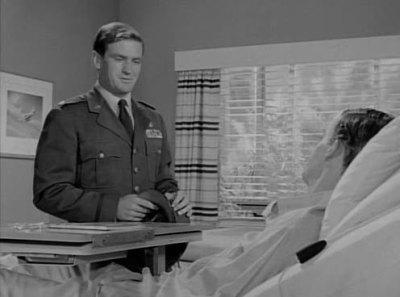
A few episodes after “Where is Everybody?” aired, Serling’s adaptation of a Richard Matheson story, “And When the Sky Was Opened,” also used the space race as a vehicle to explore the nature of identity—conflating the loss of it with the loss of one’s actual, corporeal self. Following a crash landing back on earth, we watch as, one by one, the three surviving astronauts literally disappear into thin air.
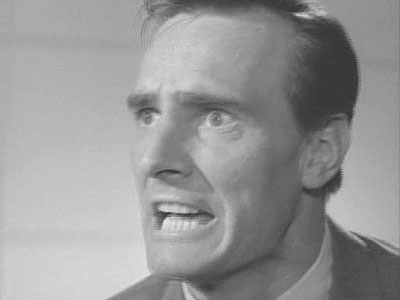
Originally, lead actor Rod Taylor’s disappearing scene “was written as a very painful experience, but I decided to make it a very euphoric experience,” recalled director Douglas Heyes in Marc Zicree’s Twilight Zone Companion. “Instead of playing it for terror or agony—everything had been fear up till then, fear of disappearing, fear of the unknown and so forth—I said to Rod Taylor, ‘Let’s play this as if this is the most marvelous thing that’s ever happened.’” Taylor’s ability to fulfill Heyes’ direction so convincingly is just one example of what became a standard on The Twilight Zone: performances so intense and driven that you can see the belief of the unbelievable on actors’ faces, from the sweat naturally beading on their brows to the absolutely crazed look in their eyes.
An actor who believes he is the man he plays discovers, in Matheson’s “A World of Difference,” “How thin a line separates that which we assume to be real with that manufactured inside of a mind?,” presaging the later-Sixties psychedelic reaction to life being like a movie, while raising age-old questions about destiny and pre-destiny, about man’s free will in a benevolent or malevolent universe. An ur-Twilight Zone episode, with actor Howard Duff giving one of those stark-ravingly believable performances.
The enigmatic Australian director Peter Weir, whose first breakthrough films, ‘75’s Picnic at Hanging Rock and ‘77’s The Last Wave, are like beautifully filmed, full-color, down under Twilight Zone episodes, directed 1998’s The Truman Show, about a man (Jim Carrey) who comes to find that his life, his reality, is a massive fabrication for television—a big screen blowup of Matheson’s television original.
Though convicted murderer Dennis Weaver (in one of the epitomes of these tense Twilight Zone performances) tries to share his recurring nightmare of electrocution to his fellow death-row inmates in the aptly-titled “Shadow Play” (the second of Beaumont’s two definitive Twilight Zone episodes about the nature of dreams; the first, Season 1’s “Perchance to Dream,” is in the following theme “Suburban Nightmares”), beseeching anyone who’ll listen that they, too, are all part of his dream, it is to no avail—he is condemned to walk the last mile every night.
Writer/Director Cameron Crowe was so beholden to “Shadow Play” that he had it playing on the Jumbotron in a totally deserted Times Square (save for a panicked Tom Cruise) during the opening scene of his 2001 film Vanilla Sky (itself a remake of a ’97 Spanish film, Open Your Eyes), which deals with similar themes acted out in the twilight zone between dream and reality, as Beaumont concluded: “We exist, of course, but how? In what way? As we believe, as flesh and blood human beings?”
In “A World of His Own,” Matheson’s lighter-hearted sister episode to his own “A World of Difference,” a writer brings his characters to flesh and blood life, exclaiming to his disbelieving wife, “Fictional characters come alive! They come alive so vividly that they make decisions of their own! A playwright may have worked out some kind of move for them, but they refuse to do it! They become so strong that sometimes they take over the whole story!” The last episode of the landmark first season, “A World…” was based on Serling himself, who similarly dictated his scripts into a tape recorder, and featured his first on-screen Twilight Zone appearance—but at the end of the episode (Serling’s now iconically-familiar on-screen introductions began with The Twilight Zone’s second season in the fall of ‘60).
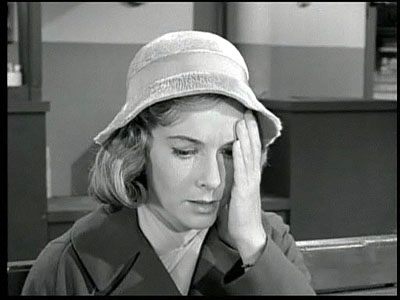
Dummies, doppelgangers, duplicates—The Twilight Zone was rife with them. Serling’s “Mirror Image” is concerned with “…different planes of existence, about two parallel worlds that exist side by side; and each of us has a counterpart in this world, and sometimes…this counterpart comes into our world…” Taking place in a nondescript bus station, peopled by drab figures immobile in the stark Americana like an Edward Hopper painting brought to life, “Mirror Image” is the most Hitchkockian of Twilight Zones— the suspense as palpable as the rain that beats down throughout the episode.
Vera Miles, who would go on to co-star in Hitchcock’s Psycho, gives the female equivalent of the intense Twilight Zone performance, dominated by male leads in this essay, her eyes glazing over as she unravels before our eyes to co-star Martin Milner (who would gain ‘60s TV fame as one-half of the Adam 12 duo in 1968.
Inger Stevens’ dawning acceptance of her own true nature in Serling’s “The Lateness of the Hour,” the second of Stevens’ two superb Twilight Zone appearances (her first, “The Hitch-Hiker,” follows in “Suburban Nightmares”), was the first TZ episode of six to be videotaped in a cost-cutting measure during Season 2. Though uneven in quality, “The Lateness…,” due to Stevens’ compelling presence and performance, manages to rise above it.
“The Lonely,” by Serling, is Jack Warden, a convict serving his life sentence in solitary on a remote prison planet, who, in a gesture of compassion by the authorities, is given a female robotic companion, played by Jean Marsh (later of the British TV hit Upstairs, Downstairs). Though Warden loses himself in her lifelikeness, in the end, he is left alone, bitterly questioning his own—human—identity: “Reality’s what I need because what is there left that I can believe in? The desert and the wind? The silence? Or myself?”
In Part 3 of this series Schumer will continue to explore the themes of The Twilight Zone, picking up the discussion with consideration of “Suburban Nightmares.”
Arlen Schumer wrote and designed Visions From The Twilight Zone, the only coffee table art book about the series, and continues to present a multimedia show based on the book to universities and cultural institutions around the country, including The 2008 Rod Serling Conference at Ithaca University, and the 2009 New York Comic Convention, where he also presented his mini-marathon, “The Five Themes of The Twilight Zone.” He presented his new show, “The Twilight Zone Forever,” at The New York Times’ TimesCenter in New York on the exact 50th Anniversary of The Twilight Zone’s debut, October 2, 2009. On November 11 Schumer will make a presentation in connection with a screening the 50th anniversary of “The Eye of the Beholder” episode at the prestigious Tribeca Cinema. Tickets can be purchased here
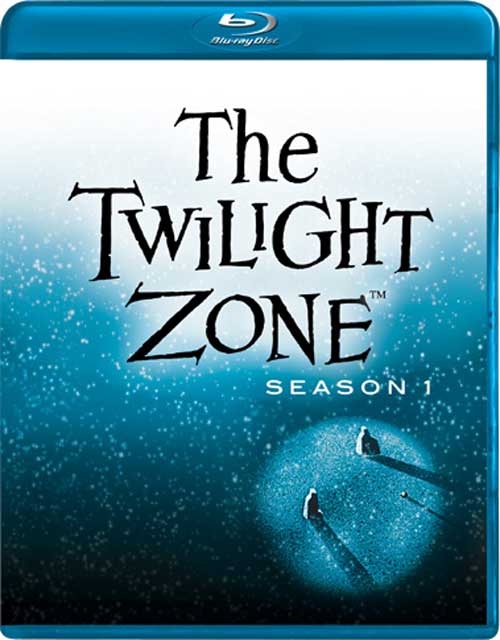
The Twilight Zoneseason 1 & season 2 are available on Blu-ray DVD at the TheoFantastique Store.
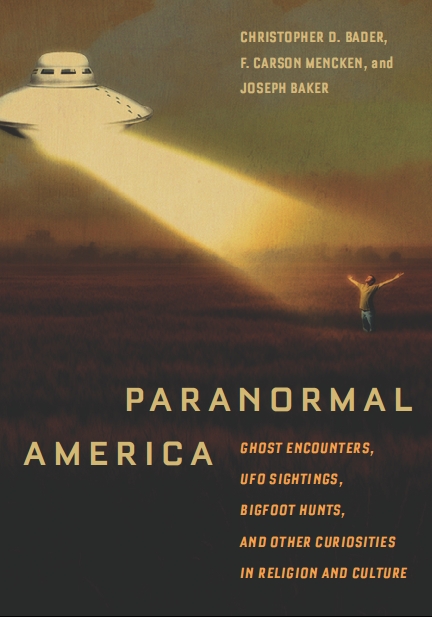
Paranormal America provides the definitive portrait of Americans who believe in or have experienced such phenomena as ghosts, Bigfoot, UFOs, psychic phenomena, astrology, and the power of mediums. However, unlike many books on the paranormal, this volume does not focus on proving or disproving the paranormal, but rather on understanding the people who believe and how those beliefs shape their lives.
Drawing on the Baylor Religion Survey, a multi-year national random sample of American religious values, practices, and behaviors, as well as extensive fieldwork including joining hunts for Bigfoot and spending the night in a haunted house, authors Christopher Bader, F. Carson Mencken, and Joseph Baker shed light on what the various types of paranormal experiences, beliefs, and activities claimed by Americans are; whether holding an unconventional belief, such as believing in Bigfoot, means that one is unconventional in other attitudes and behaviors; who has such experiences and beliefs and how they differ from other Americans; and if we can expect major religions to emerge from the paranormal.
Brimming with engaging personal stories and provocative findings, Paranormal America is an entertaining yet authoritative look at a growing segment of American religious culture.
And a couple of endorsement statements/reviews:
“An essential text for our ongoing consideration of the esoteric realm… This work assembles in a very accessible and readable form all the sociological data currently available on the public’s acceptance of experiences of unusual psychic experiences, our growing toleration of some extraordinary claims about the existence of UFOs, mysterious animal species, and ghostly apparitions, and our quiet dabbling in things occult. This volume has created a foundation for all future inquires.”
“Paranormal America is an authoritative but extremely readable analysis of an important but often ignored subculture. This fine book explains how many people seek personally-relevant meaning in a chaotic and often alienating world. In these pages we learn much not only about believers in ESP, Bigfoot, and astrology, but also about the general ways in which all human minds make sense of our perplexing position in the universe.”
BBC Four will be airing their television version of H. G. Wells’ The First Men in the Moon. Although I haven’t seen it yet, for my money the best version of this story is the 1964 film of the same name produced by Charles Schneer with special effects by Ray Harryhausen. In my view it is one of Harryhausen’s neglected films, eclipsed by his other works such as Jason and the Argonauts, The Seventh Voyage of Sinbad, and Twenty Million Miles to Earth.
The Den of Geek! features a positive review of the new treatment of Wells’ story, and mentions not only its good qualities, but its shortcomings in contrast with Harryhausen’s work.
On October 22 an interesting film will hit theaters. One the one hand it addresses a question as old as humanity itself concerning the possibility and hope for life after death. On the other hand it may also be understood in its more immediate historical and cultural context as an expression of a post-9/11 spiritual quest that seeks to answer this important question in light of the New Spirituality.
Oscar® winner Matt Damon (“Good Will Hunting,” “Invictus”) stars in “Hereafter,” directed by Academy Award® winner Clint Eastwood (“Million Dollar Baby,” “Unforgiven”) from a screenplay by two time Oscar® nominee Peter Morgan (“Frost/Nixon,” “The Queen”).
“Hereafter” tells the story of three people who are haunted by mortality in different ways. Matt Damon stars as George, a blue-collar American who has a special connection to the afterlife. On the other side of the world, Marie (Cécile de France), a French journalist, has a near-death experience that shakes her reality. And when Marcus (Frankie/George McLaren), a London schoolboy, loses the person closest to him, he desperately needs answers. Each on a path in search of the truth, their lives will intersect, forever changed by what they believe might—or must—exist in the hereafter.
The film also stars award-winning French actress Cécile de France (“A Secret”) as Marie, and twins Frankie and George McLaren. The international cast also includes Jay Mohr (“Street Kings,” TV’s “Gary Unmarried”), Bryce Dallas Howard (“Eclipse,” “Spider-Man 3”), Marthe Keller, Thierry Neuvic and Derek Jacobi.
“Hereafter” is produced by Eastwood, multiple Oscar®-nominated producer Kathleen Kennedy (“The Curious Case of Benjamin Button,” “Munich,” “E.T.”) and two-time Oscar® nominee Robert Lorenz (“Letters from Iwo Jima,” “Mystic River”). Steven Spielberg, Frank Marshall, Peter Morgan and Tim Moore served as executive producers.
Behind the scenes, Eastwood reunited with his longtime collaborators, including director of photography Tom Stern, production designer James J. Murakami, editors Joel Cox and Gary D. Roach, and costume designer Deborah Hopper.
“Hereafter” was filmed entirely on location in Paris, London, Hawaii and San Francisco.
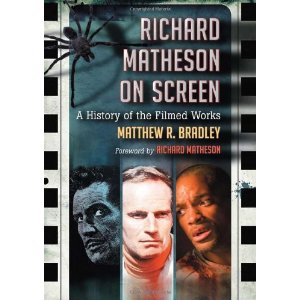
Richard Matheson is one of the great writers of the fantastic who has provided countless hours of enjoyment through his writing, as well as through adaptations of his stories for television and film. Now his work is explored in a new book by Matthew Bradley titled Richard Matheson on Screen (McFarland, 2010).
Richard Matheson on Screen A History of the Filmed Works
Matthew R. Bradley Foreword by Richard Matheson
ISBN 978-0-7864-4216-4
64 photos, bibliography, index
315pp. softcover (7 x 10) 2010
Description
Though innumerable biographies have been written about novelists, playwrights, and poets, screenwriters are rarely granted this distinction, even ones as prolific and successful as Richard Matheson. He has occupied a unique position in cinema as the writer or original author of films from The Incredible Shrinking Man in 1957 through I Am Legend in 2007. This book documents his rise to prominence, parallel literary career, and role in the horror and science fiction renaissance. In chronological order, the exhaustively indexed narrative examines each film written by Matheson or based on his work, with sections devoted to episodic television (including The Twilight Zone) and unproduced projects.
About the Author Matthew R. Bradley is a widely published authority on the work of Richard Matheson. He has written articles, interviews, and reviews for Fangoria, Mystery Scene, VideoScope, The New York Review of Science Fiction, and Cinema Retro. A lifelong resident of Connecticut, he is currently the Copy Specialist for MBI, Inc., in Norwalk. He is creator of the Internet film-related blog Bradley On Film.
Richard Matheson on Screen can be ordered through the TheoFantastique Store at this link.
The Twilight Zone is one of the classic examples of fantasy, thriller, science fiction television, with a legacy that continues into the present day. Next month will see the release of The Twilight Zoneseason 1 & season 2 on Blu-ray DVD. In order to celebrate this event, TheoFantastique will explore The Twilight Zone in several installments by guest writer Arlen Schumer. Schumer wrote and designed Visions From The Twilight Zone, the only coffee table art book about the series, and continues to present a multimedia show based on the book to universities and cultural institutions around the country, including The 2008 Rod Serling Conference at Ithaca University, and the 2009 New York Comic Convention, where he also presented his mini-marathon, “The Five Themes of The Twilight Zone.” He presented his new show, “The Twilight Zone Forever,” at The New York Times’ TimesCenter in New York on the exact 50th Anniversary of The Twilight Zone’s debut, October 2, 2009. On November 11 Schumer will make a presentation in connection with a screening the 50th anniversary of “The Eye of the Beholder” episode at the prestigious Tribeca Cinema. Tickets can be purchased here.
And now, TheoFantastique is pleased to present the first installment by Arlen Schumer:
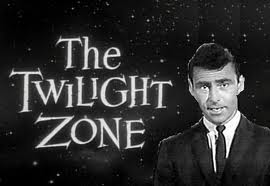
At 10:00 pm on Friday, October 2, 1959, CBS Television broadcast the pilot episode of a new series, The Twilight Zone. The copy in CBS’ newspaper ad for the debut episode “Where Is Everybody?” enigmatically declared, next to an extreme closeup of, atypically, not the episode’s star, but instead, for the first (and only?) time in the young medium’s history, its writer/creator (“one of television’s most famous playwrights”), Twilight Zone was “…defined by the author as: ‘The land that lies between science and superstition, between the pit of man’s fears and the summit of his knowledge. You will find the bizarre, but the believable; the different, the shocking that is yet understandable.’”
A fine definition, to this day, of good science-fiction literature—but the ad’s next line can be read indirectly as a pre-post-modern justification of television itself as being on par with any literary genre or visual narrative, like film—while superseding the medium that preceded TV, radio: “Its tales must be shown; they cannot be told.”
The ad concludes, “And each carries with it its own special surprise,” a foreshadowing of the O. Henry-esque twist endings that are among The Twilight Zone’s most memorable trademarks—along with its eerie, eternal theme music (French composer Marius Constant), and the sound and vision of the series’ only true star (outshining a who’s-who of Hollywood actors), its multiple-Emmy Award-winning creator, head writer, on-air host and narrator, possessed with perhaps the most singular, dramatic broadcast voice of the 20th Century, Rod Serling (1924-1975).
Serling firmly places in the 20th Century post-war pantheon of great American-Jewish humanist liberal writers—Arthur Miller, Budd Schulberg, Mad magazine’s Harvey Kurtzman, Bob (Zimmerman) Dylan, Marvel Comics’ Stan Lee (nee Stanley Lieber)—who, though they toiled in commercial entertainment mediums from Broadway to Hollywood, nevertheless produced great and lasting art that has transcended its genre entertainment origins.
Like Serling’s timeless The Twilight Zone, which Image Entertainment is releasing on Blu-ray DVD this fall: Season 1, a startling quantity of 36 original half-hours of anthology drama of unparalleled quality, depth and breadth in the history of television, comes out on September 14th; Season 2, by default the second-best season—but with its own share of classics—follows on November 16th.
Although it shared conceptual concerns with—and adapted stories from—the cream of the science-fiction field, featuring original scripts by science fiction luminaries like Richard Matheson, Charles Beaumont and George Clayton Johnson, The Twilight Zone cannot be wholly considered a science fiction television series.
It wasn’t horror, either—yet many episodes, and their shock endings, are among the most horrific ever filmed for television (or film). And it would be unfair to pass the series off as pure fantasy, for it was grounded in a reality far more real and true for its day—and ours. Yet, in a televised interview with CBS’ own Mike Wallace ten days before The Twilight Zone debuted (included in the raft of DVD extras), Wallace opened with a whopper of a backhanded compliment: “Now that you’re doing The Twilight Zone,” he addressed Serling, “does that mean you won’t be writing anything important for television?”
Wallace was referring to Serling’s pre-Twilight Zone career as the Golden Boy of television’s mid-Fifties “Golden Age,” hour-and-a-half anthology dramas emanating from New York City that made Serling’s bones (three Emmy Awards three years in a row, for “Patterns,” “Requiem for a Heavyweight” and “The Comedian”) but also broke them—his repeated struggles with the TV censors and its de facto censors, the advertising agencies and their corporate sponsors, ironically gave birth to The Twilight Zone itself, half-hour havens safer for the politically- and socially-conscious Serling to ply his morality teleplays than the 90-minute millstones that had already become obsolete by the end of the decade; like the Brooklyn Dodgers and New York Giants, live TV uprooted and moved to Los Angeles, downsizing to cheaper filmed series that could be rerun in perpetuity—modern television as we know it.
Rather than be caught slumming in the new, déclassé format, Serling’s “television playwright” peers, like Paddy Chayefsky (“Marty”) and Reginald Rose (“Twelve Angry Men”), moved “up” to movies, but Serling chose to remain in filmed TV, in The Twilight Zone, much to the feigned chagrin of middlebrow critics like Wallace crying crocodile tears over the loss of live, pseudo-prestigious productions like Playhouse 90.
Serling’s measured, thoughtful response to Wallace’s (in-?) direct insult reveals Rod Serling to be not just a thinking man’s writer, but a true visionary, a pre-pop artist and avatar of the explosion in commercial creativity—modern American popular culture as we know it— that remains the dominant artistic legacy of The Sixties:
“The exciting thing about our medium is its potential, the fact that it doesn’t have to be imitative. What it can produce in terms of novelty and ingenuity has barely been scratched. We want to prove that television, even in its half-hour form, can be both commercial and worthwhile. This is a medium that can spread out, delve deep, probe fully and reach out experimentally to whole new concepts. The horizons of what it can do and where it can go stretch out beyond vision.”
Serling’s vision, The Twilight Zone, would go beyond making Wallace and his ilk eat their words; it became not only one of the most revered and remembered television shows of all time, but a conceptual catchphrase that would enter the lexicon, a touchstone that would profoundly influence a wide spectrum of American artists, actors, writers and filmmakers—today’s science- fiction, fantasy and horror genre creators, from Steven Spielberg to Stephen King (and all their contemporaries and descendants)—all of whom owe a debt to Serling and his dark masterpiece The Twilight Zone for lighting the imaginative sparks that ignited their greatest works.
Indeed, Serling’s surrealistic concept of alternate realities—the “what if…?” quality of The Twilight Zone—paved the way for, and influenced the turbulent 1960s to come, by implicitly (and often explicitly) stating that things don’t have to be the way they are, that authority and the status quo must always be challenged and questioned—and bettered. “A whole generation is able to associate the Serling program with the budding of The Sixties,” acknowledged prolific horrormeister King in Danse Macabre, his idiosyncratic 1981 non-fiction survey of the science fiction, fantasy and horror fields. “At least, as The Sixties are remembered.”
George Clayton Johnson agrees: “The Twilight Zone played just as much a part in the renaissance transformation of The Sixties as bright-colored clothing, rock music and marijuana did. It helped to jack people up to a higher level.”
A lot of those people were children, according to Buck Houghton, Twilight Zone’s original producer (1959-62). “The appeal to children was a complete surprise to us,” he recalled to Marc Scott Zicree, author of The Twilight Zone Companion in 1981. “We got a lot of nasty notes from parents saying, ‘You’re keeping the kids up.’”
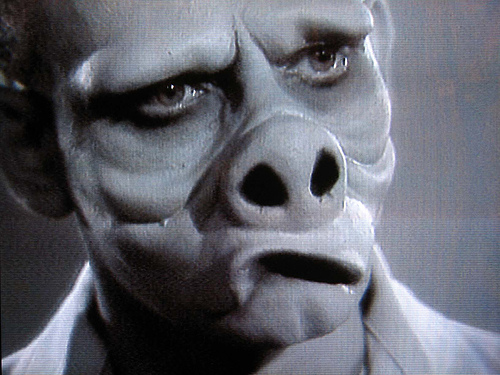
Chances are, if you were ten years old in 1960, and staying up to watch The Twilight Zone’s episodes about racism (“Eye of The Beholder”), prejudice (“The Monsters are Due on Maple Street”) and nuclear war (“Third from the Sun”), then eight years later you were probably marching against the Vietnam War, taking part in social change, countering the culture and the status quo—just as The Twilight Zone itself countered the status quo of the network television programming of its time, which then-FCC Chairman Newton Minow infamously described in 1961 as a “vast wasteland” of wall-to-wall westerns, cookie-cutter cop shows and bland family sitcoms.
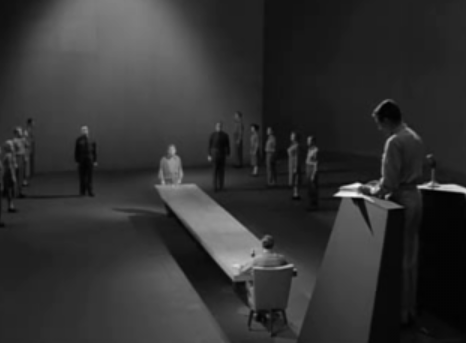
Episodes like Season 2’s final episode, “The Obsolete Man,” filmed on an outsized German expressionist set, must have seemed like broadcasts beamed from alien planets compared to the void of white bread programming surrounding them.
“Here, for once, was something Completely New and Different,” wrote King of The Twilight Zone in Danse Macabre, and of Serling, “who finally answered H.P. Lovecraft, who showed a new direction. For me and those of my generation, the answer was like a thunderclap of revelation, opening a million entrancing possibilities.”
Those possibilities include the productions of not only the most obvious TV knockoffs The Outer Limits (1963), Serling’s own Night Gallery (1969), George Romero’s Tales From The Darkside (1983) and two titular syndicated TV revamps of recent vintage (both in wrong-headed full color and utterly dismissible)—or the Spielberg-produced turkey The Twilight Zone: The Movie (1983)—but practically every example of modern science fiction, fantasy or horror that can trace its roots back to Serling and The Twilight Zone in less than six degrees of separation.
Next Monday, October 18, we will post the second installment that begins with a consideration of the impact of The Twilight Zone on subsequent science fiction, fantasy and horror.
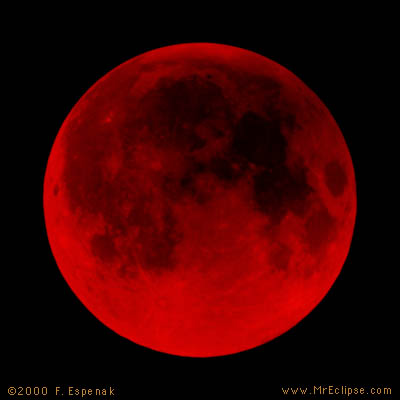
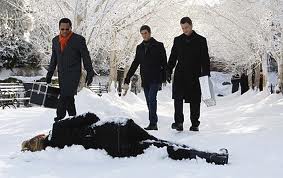
CBS recently aired an episode of CSI: Crime Scene Investigation titled “Blood Moon.” The episode focused on a murder connected to the intersection between the vampire and werewolf communities. In relation to this program TheoFantastique presents an interview with Merticus of the Atlanta Vampire Alliance. Merticus has been a member of the vampire community since 1997. He is one of the founding members of the, co-founder of the research company Suscitatio Enterprises, LLC, the co-organizer for TWILIGHT (vampire conference-style gathering), the current administrator for Voices of the Vampire Community (VVC), organizer for the Atlanta Vampire Meetup Group, and a principal contributing author and researcher for the Vampirism & Energy Work Research Study (VEWRS & AVEWRS). A native to Atlanta, GA, Merticus is active in both the online and offline Community; consulting not only with fellow members of the vampire community but also with academicians and the media on matters relating to modern psychic and sanguinarian vampirism. He has contributed to numerous academic and general media articles regarding vampirism; including an October 2007 interview with TAPS Paranormal Magazine, an October 2008 interview with ABCNews.com, an November 2008 interview with the Washington Post, and an November 2009 interview with the Atlanta Journal-Constitution. He has consulted extensively with Joseph Laycock on a paper delivered before the annual conference of the American Academy of Religion in November 2007, Laycock’s 2009 book Vampires Today: The Truth About Modern Vampirism, and Laycock’s August 2010 publication of an academic paper about the Vampirism & Energy Work Research Study in Nova Religio: The Journal Of Alternative & Emergent Religions. Merticus has also contributed to Brad Steiger’s 2009 book, Real Vampires, Night Stalkers, and Creatures from the Darkside, Corvis Nocturnum’s 2009 book, Allure of the Vampire: Our Sexual Attraction to the Undead, David Skal’s 2009 book, Romancing The Vampire: From Past To Present, and J. Gordon Melton’s 2010 book, The Vampire Book: Encyclopedia Of The Undead (3rd Edition). He has also attended and presented at gatherings throughout the United States and is a member of numerous forums and discussion groups.
Before the interview begins consider an important definition provided by Merticus:
A Concise Explanation Of “Real Vampirism”: Sanguinarian and psychic vampires are individuals who cannot adequately sustain their own physical, mental, or spiritual well being without the taking of blood or vital life force energy from other sources; often human. Without feeding a vampire will become lethargic, sickly, depressed, and often go through physical suffering or discomfort. Vampires often display signs of empathy, sense emotions, perceive auras, and are generally psychically aware of the world around them. Sanguinarian vampires feed by the drinking of blood – either human or animal. Sanguinarian vampires can vary in their experience of blood hunger but the unique craving for blood and the physical symptoms associated with neglecting to drink blood are unifying features of sanguinarian vampirism. The consumption of blood from human sources is facilitated through a consensual agreement by verbal or written contract between vampire and donor. Psychic vampires are understood to feed psychically on life force energy. Psychic feeding is usually performed on a willing individual or from the ambient energies of a large group or crowd.
With this definition in mind we begin our interview.
TheoFantastique: I noted that the episode repeated folklore about satanic and occult ritual murders. Did you note any stereotypes and myths repeated about the vampire, and perhaps even the werewolf communities?
Merticus: With sex, chains, blood, and decapitation involved, it’s not unreasonable to expect the words “occult” and “satanic ritual” to be referenced by criminal investigators. I’m rather relieved that this CSI episode did not venture far down the path of ritual sacrifice and occult crime despite the supposition of bloodletting being common among cults. Many of the usual folkloric and roleplaying stereotypes of the vampire and werewolf were tirelessly recycled in the dialogue including; “to kill a vampire you must decapitate it” to vampires hissing in the presence of those who are not “their kind” to werewolves “shifting during the full (blood) moon”.
Normally this wouldn’t trouble me in the least, however, the concept of sanguinarians (blood drinkers), act of meditation to achieve a vampiric state, and porphyria as a medical explanation for someone associating with vampires and attempting to drink the blood of a dead man, clearly muddled the distinction between harmless fiction and roleplay with that of the real or modern vampire community and sufferers of an unfortunate medical condition that has nothing to do with vampirism.
The vampire community is very loosely defined as anyone who identifies as a vampire. This may also include donors of real vampires (sanguinarian or blood drinking, and psychic or energy feeding), vampire enthusiasts, vampire lifestylers, and even roleplayers. Sanguinarian and psychic vampirism is not a cult, religion, medical condition known as porphyria, a paraphilia or “Renfield’s Syndrome”, offshoot of the BDSM community, community composed exclusively of disillusioned teenagers, and it’s definitely not what’s depicted in fictional books, movies, or television. For those of us who identify with real vampirism, the saturation of interest in the vampire has resulted in a cross-pollination between folklore, fantasy, and fiction with that of our once relatively obscure community.
This episode painted a lurid image of the practice of blood drinking combined with porphyria when the actual murder occurred because a human pretending to be a werewolf later pretended to be a vampire to win the heart of a vampire and ran afoul of his former werewolf pack and current vampire clan. Silly human… everyone knows once you’re a werewolf you can’t become a vampire… it’s written in the scrolls of vampire and werewolf lore from centuries past! In this sense, CSI didn’t give porphyria sufferers nor vampires and therians (were-kin) any breaks. The writers simply reinforced erroneous stereotypes and misinformation that will undoubtedly persist in similar future productions.
TheoFantastique: Does it concern you that commercial television still focuses on vampires in programs largely in connection with Halloween (with the notable exceptions of things like True Blood)?
Merticus: While it’s true that the month of October usually signifies the return of the vampire to the screen and the foreground of pop-culture, lately this has been a year-long phenomenon. Last year (2009) marked one of the most active years for the vampire in recent memory and I expect we’ll see much of the same in the foreseeable future. CSI is no stranger to outlier or fringe subcultures with episodes devoted to furries and several to the BDSM lifestyle with Lady Heather. They have incorporated the concept of real or living vampires and vampirism into their storyline’s on at least two other occasions; CSI: Las Vegas “Suckers” in February 2004 and CSI: New York “Sanguine Love” in February 2010. “Suckers” introduced the Black Veil, sanguinarian vampirism, and other vampire community terminology and “Sanguine Love” illuminated the inner function of a coven (what we generally term as a House or Order). While all of these episodes fell short of an accurate depiction of the vampire community, “Sanguine Love” accomplished what “Blood Moon” and “Suckers” failed to achieve – humanizing the concept of real-vampirism while portraying its participants as ethical, law abiding, and a recognized identity group.
The mainstream culture has increasingly become interested in exploring all aspects of the vampire archetype and the possibility of real vampirism. While there are some in our community who enjoy living the vampire aesthetic, vampirism is largely an amalgamation of physical, mental, and in some cases spiritual attributes. The pop-cultural interest in the vampire has led to the intersection of vampire enthusiasts with that of real vampires. We now find ourselves educating growing numbers of the public that one is born with a vampiric nature and not turned, that we adhere to ethical and safe feeding practices, are of sound mind and judgment, and productively contribute to society. As long as television shows such as CSI are not seeking to intentionally demonize or marginalize those who self-identify as vampires, then I’m not concerned over their occasional explorations into the dark side of reality.
TheoFantastique: The program also stated that the mythologies of the vampire and werewolf overlapped in history, and that a tension continued into the present day. Is this accurate, or is this a Hollywood-inspired idea from films like the Underworld trilogy?
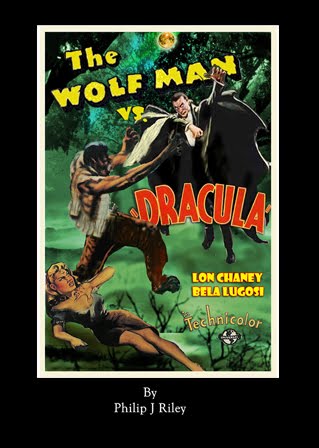
Merticus: Unless one considers Universal’s 1944 unrealized film project of The Wolf Man vs. Dracula as inspiration for eternal conflict between the vampire and werewolf, there is no historical basis in mythology to support such claim. None of the early eighteenth century texts I have from vampire lore researchers such as Dom Augustine Calmet or John Heinrich Zopfius nor sixteenth century accounts of the Peter Stubbe trial and other suspected werewolves include references to both creatures in the same work, much less either being at odds with the other. White Wolf’s, Vampire the Masquerade and Werewolf the Apocalypse, created a roleplaying foundation for strained vampire-werewolf relations and this has remained part of our pop culture ever since. The Underworld franchise capitalized on this idea and for the first time presented the sexy and violent images of warring vampires and werewolves [lycans] we have come to know today.
In subcultural terms, while the otherkin, therian/were, and vampire communities often commingle, there remains distinct and established communities of vampi(y)res and therians. Even so, several vampire Houses and groups are accepting of therians as part of their membership. As far as gatherings, vampires have their “courts” and therians have their “howls”, but both meet socially in clubs and other events of all types. The various factions of the vampire community have a difficult enough time arguing over possible biological, spiritual, and social aspects of vampiric identity without having to worry themselves over other groups. I’m not aware of any current conflicts between any self-identified vampires and therians from the modern (non-roleplaying) communities.
TheoFantastique: Do you feel the writers made an attempt to research the vampire community and its gatherings?
Merticus: Rarely do the writers and producers of such shows seek the guidance and consultation of those from the vampire community. In all fairness, many within the vampire community aren’t willing to extend any assistance after suffering numerous poor treatments at the hand of the media. Still, their lack of contact is ironic because we are accustomed to receiving almost weekly media requests ranging from basic article research to reality television proposals. We’ve come to realize through our work on various television and production projects that more time is spent on casting and visual effects than the background or technical aspects concerning subject matter. Writers often rely on spotty information gleaned from the first few web sites they encounter or from personal [mis]conceptions they have about vampires.
The writer’s job is to provide the most entertaining script in the shortest amount of time which unfortunately means they don’t typically embed themselves within our community nor solicit our feedback on their storyline prior to filming. If they were to approach us with a script in advance I’m sure some of us would be more than willing to make suggestions and improvements that would benefit both parties. There are many aspects to the real vampire community which lend themselves to the theatrical while avoiding the cliché portrayals we’ve grown to expect from these shows. Cultural events such as Dracula’s Ball, Endless Night Festival, Court of Lazarus, and local gatherings throughout the community coupled with the various academic and research texts on modern vampirism would be excellent educational opportunities if the writers would only take the time to explore them.
TheoFantastique: What would you like to see reflected in future television programming that incorporates vampires?
Merticus: The purpose of television programs such as CSI is to first and foremost entertain, not educate. Therefore, I don’t think it fair to demand these shows be held to the unreasonable standard of trying to act as a documentary and drama rolled into one. The concept of modern vampirism is complex and can’t adequately be explained in a forty-minute crime drama. The specifics of vampirism manifest differently on an individual basis and these nuances sometimes insulate the confusion in defining the vampiric range of ability and experience. This is why some vampires view vampirism as a physical condition, others as spiritual or metaphysical, and still others regard it as simply a state of being.
I’d rather these inherent complications not be compounded by writers and producers mixing elements of folklore, fiction, roleplay, and actual subcultures of people into the same episode. Moving ahead, the greatest service they can do for the vampire community and vampire fandom in general is to focus on one specific theme dealing with vampires or vampirism and seek the consultation of experts in that particular discipline. In the meantime, we’ll work within the avenues afforded to us by academia, sociological, scientific, and cultural entities to lessen the stigmas perpetuated by stereotypes and the damaging effect they’ve caused some in our community.
TheoFantastique: Merticus, thank you for responding so quickly to my questions about this recent program, and for sharing your thoughts.
It was my privilege to be one of a handful of guest bloggers at The Vault of Horror as part of the series “The Shadow of Samhain.” My post titled “Putting the Christ in…Halloween?” went up today. I appreciate the invitation and opportunity, and encourage readers to take a look at the series running this month that looks at the pre-modern influences on the Halloween holiday.