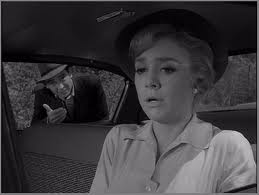
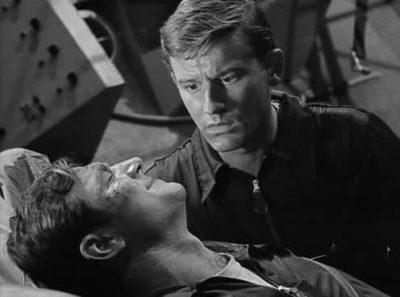
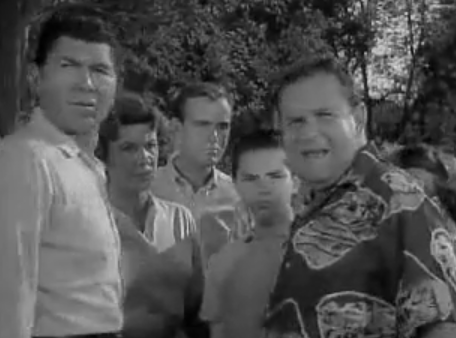
The television series The Walking Dead premiered last Sunday, Halloween night, and I thought before the second episode this weekend I’d share a few reflections.
Given my interests and the social venues and media circles I travel in it was difficult not to become aware of this series. AMC did a masterful job of tapping into various forms of communication in order reach that segment of the population that would have the most interest in this kind of programming. This included not only ads on AMC, but also promotions in magazines like Rue Morgue, other elements of the horror community, and segments of the social networking site Facebook. The marketing then became viral and word of the series was circulated by thousands of horror and zombie enthusiasts. Scheduling the premiere on Halloween night was a brilliant move as well. The result, as reported by Slashfilm.com, was that The Walking Dead “was a gigantic win with not only the largest numbers in AMC’s history (well above Breaking Bad and Mad Men), but the largest 18-49 audience of any series premiere on any cable network this year. An estimated 5.3 million viewers watched the debut episode, and it scored 3.3 in the coveted adults 18-49 demo.”
My review of the promotional materials for the series on AMC’s website looked promising, not only in terms of the quality of its source material in the graphic novels of Robert Kirkman published by Image Comics, but also in terms of the project having director Frank Darabont at the helm, and featuring some good acting and amazing makeup effects that push the envelope for television horror. Even so I was still skeptical that this project would live up to the hype given the tendency of some zombie cinema to focus more on gore and novel zombie kills rather than character development and storyline. Thankfully, The Waking Dead exceeded my expectations and it was a great finale to my Halloween celebration.
There is a wealth of commentary available on the Internet on this series from various websites and blogs, but I’ll add my own thoughts to the mix.
One of the things I most appreciated about the premiere episode was the focus on the dramatic narrative of human relationships and survival in the midst of a horrific breakdown in the social order, and in relation to one of the most popular monstrous icons that embodies some of our greatest fears, rather than on a constant depiction of zombies consuming flesh. In terms of screen time, the zombies were featured in reserved fashion and the bulk of the episode focused on the struggles of the living in the midst of an undead apocalypse. I found this refreshing, and a nice change of pace from a few recent zombie films that go to great lengths to depict creative and many times over the top methods of zombie killing.
The first episode did a wonderful job of not only instilling fear in its audience, but also a sense of sympathy, not only for the living, but also for at least some of the zombies. A standout examples of this is a man who lost his wife to the contagion responsible for zombification who can’t bring himself to shoot her as she continually revisits the home where she previously lived with her husband and son. Both father and son are torn by these visits, the son having to hide his crying in his pillow as his late mother peers through the peephole of her former home, and her husband determined to end her undead suffering by a bullet through the head, but in the end unable to do so as he looks at her through a gun sight. But it is not only the human characters like these we feel sad for, but also some of the zombies. In this immediate instance the man’s dead wife continually hovers around the neighborhood and frequently visits the home where she had a connection and loved ones in life. In Romero’s Dawn of the Dead it was said that the zombies are us, in that film functioning in part as a critique of consumerism. In The Walking Dead the zombies are still us, but at times in ways that allow them to maintain a sense of connection to the living that results in our pity and sympathies.
The makeup effects were amazing, and it was evident that the artists and makeup artists affiliated with the program spent a great deal of time, research, and detail in depicting death in various stages of decay. Some were downright horrific, as in the case of the crawling zombie woman with half a body who was the beneficiary of a mercy killing by Sheriff Rick Grimes.
Another observation comes in the way in which some of the characters attempted to grapple with maintaining a sense of normalcy or connection to the previous social order with its breakdown as a result of the zombie apocalypse. Sheriff Grimes returns to the police station not only to pick up weapons and a patrol car to search for his family, but also chooses to wear his sheriff’s uniform. After Grimes encounters the father and son mentioned above, before sharing a meal the father has the small group pray and offer thanks for the meal and protection in their circumstance, and later, in order to distract his son from his killing of zombies the father instructs his son to read his comic books. All of these activities are rooted in the previous social order but are retained by the characters as a means of continuity with the past, and an attempt to impose familiarity and elements of order in the face of overwhelming chaos.
AMC promotes itself as a channel where “Story matters here.” This has certain been the case with its previous hit programming, and thankfully it has brought the same desire for good storytelling to this top-notch adaptation of graphic novels to the small screen. I look forward to enjoying the unfolding of the rest of the first season of The Walking Dead and hope that we have many more seasons to look forward to. Perhaps AMC and other channels will mine other graphic novels of horror, science fiction, and fantasy for future gems of television.
This post represents a new regular feature for TheoFantastique that will include significant news items on at least a weekly basis depending upon the quantity and quality of news for a given period. We hope you find this information helpful as you keep in touch with aspects of the fantastic in popular culture.
CBS News video: Life After Death – Three-quarters of Americans believe there is some sort of life after death and some believe they’ve actually experienced it, through “near-death experiences” (NDEs). Katie Couric explores the afterlife as she discusses the idea with Hereafter director Clint Eastwood and longtime NDE researcher Raymond Moody.
LiveFeed via Slashfilm.com is reporting that AMC’s 90-minute series premiere of The Walking Dead was a gigantic win with not only the largest numbers in AMC’s history.
Suite 101.com discusses the restored version of Metropolis. It’s not the Holy Grail of lost films. But when Metropolis airs Saturday on Turner Classic Movies, it will include rare footage missing for eight decades.
DenofGeek.com looks at the alien invasion film. As the Strause Brothers’ Skyline prepares to take over cinemas, we take a look back at the 50s era of classic alien invasion films.
A few items have come out lately with commentary on the new sci-fi film Monsters:
The low-budget sci-fi thriller Monsters, which opened Friday in New York and Los Angeles, is just the latest in the never-ending line of alien and monsters flicks that have been popular for decades.
culturemob.com states that Monsters, the independent SF/Horror film written and directed by Gareth Edwards, examines what happens next when mankind ignores Stephen Hawking’s warning [about avoiding alien contact]. For the human race, it’s the slow and inexorable beginning of The Long Goodbye.
i09.com addresses the often neglected figure of the monster hunter. Horror doesn’t just have to be about scary monsters and their victims — some of our favorite horror stories include awesome monster-slayers, who are on a mission to wipe out everything slimy or toothy. Here are horror’s 10 greatest heroes.
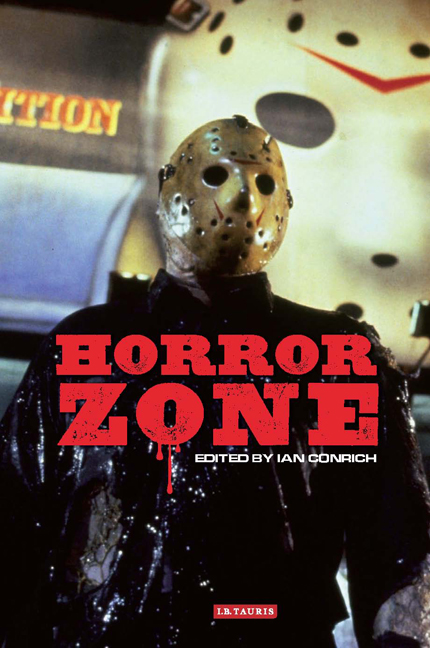
It was my privilege to read select chapters from the new book Horror Zone: The Cultural Experience of Contemporary Horror Cinema (I. B. Tauris, 2010), edited by Ian Conrich. It was an enjoyable read, not only because the contributors are well informed about their subject matter, but also because of the refreshingly different perspective contributors bring to horror in terms of placing horror cinema in its broader cultural context.
I recently interviewed Ian Conrich who discussed the book. Conrich is a Fellow in the Department of Literature, Film and Theater at the University of Essex. His books include The Cinema of John Carpenter: The Technique of Terror (2004), Film’s Musical Moments (2006), and Contemporary New Zealand Cinema (I.B. Tauris, 2008). The interview is available in the first podcast for this website, TheoFantastique Podcast 1:1 which can be downloaded here.
A synopsis of Horror Zone:
In his landmark Introduction to the American Horror Film, Robin Wood noted that horror “has consistently been one of the most popular and, at the same time, the most disreputable of Hollywood genres.” Horror is still immensely popular but its assimilation into our culture continues apace. In Horror Zone, leading international writers on horror take horror out into the world beyond cinema screens to explore the interconnections between the films and modern media and entertainment industries, economies and production practices, cultural and political forums, spectators and fans. They critically examine the ways in which the horror genre functions in all its multifarious forms, for example the Friday the 13th films as modern grand guignol, the relationship between the contemporary horror film and the theme park ride, horror as art house cinema, connections between pornography and the horror film and the place of special effects in this most respectable of Hollywood genres.
Table of Contents
List of Illustrations vii
Acknowledgments ix
Introduction – Ian Conrich 1
Part 1 Industry, Technology and the New Media
1 Dark Rides, Hybrid Machines and the Horror Experience – Angela Ndalianis 11
2 High Concept Thrills and Chills: The Horror Blockbuster – Stacey Abbott 27
3 Bringing It All Back Home: Horror Cinema and Video Culture – Linda Badley 45
Part 2 Audiences, Fans and Consumption
4 Stalking the Web: Celebration, Chat and Horror Film Marketing on the Internet – Brigid Cherry 67
5 Attending Horror Film Festivals and Conventions: Liveness, Subcultural Capital and ‘Flesh-and-Blood Genre Communities’ – Matt Hills 87
6 ‘Trashing’ the Academy: Taste, Excess and an Emerging Politics of Cinematic Style – Jeffrey Sconce 103
Part 3 Manufacture and Design
7 Culture Wars: Some New Trends in Art Horror – Joan Hawkins 125
8 Making Up Monsters: Set and Costume Design in Horror Films – Tamao Nakahara 139
9 They’re Here!: Special Effects in Horror Cinema of the 1970s and 1980s – Ernest Matbijs 153
10 The Friday the 13th Films and the Cultural Function of a Modern Grand Guignol – Ian Conrich 173
Part 4 Boundaries of Horror
11 ‘Parts is Parts’: Pornography, Splatter Films and the Politics of Corporeal Disintegration – Jay McRoy 191
12 Nazi Horrors: History, Myth, Sexploitation – Julian Petley 205
13 Better the Devil You Know: Antichrists at the Millennium – Mick Broderick 227
14 Feminine Boundaries: Adolescence, Witchcraft and the Supernatural in New Gothic Cinema and Television – Estella Tincknell 245
15 Impaired Visions: The Cultural and Cinematic Politics of Blindness in the Horror Film – Angela Marie Smith 259
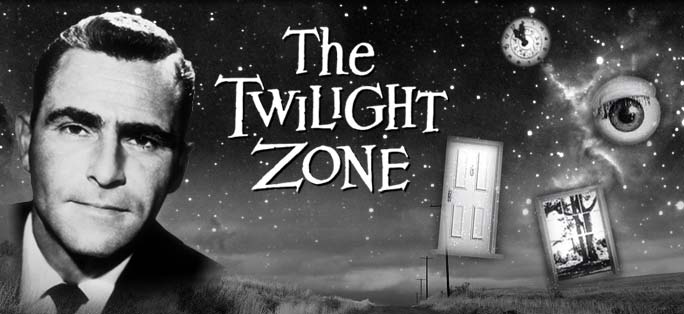
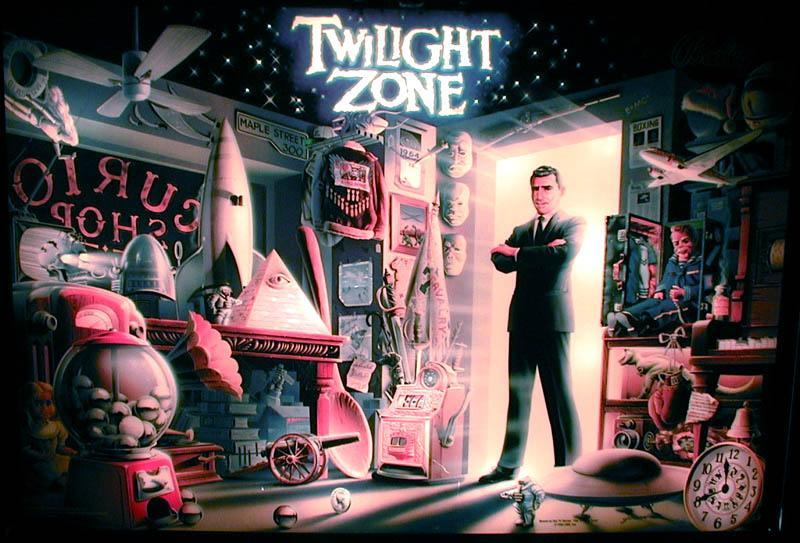
We continue with the final entry in our series of posts by Arlen Schumer exploring The Twilight Zone. (Part 1 can be read here, Part 2 here, and Part 3 here). In Part 4, Schumer continues his exploration of themes of the series, including “the time element,” and “obsolete man”:
THE TIME ELEMENT
The time element was a cornerstone of The Twilight Zone, a dimension Serling described as “timeless as infinity.”
“The Time Element” was a precursor to The Twilight Zone, an episode of Desilu Playhouse’s 1958 season that Serling, by then a triple-Emmy Award-winning television playwright, expanded from his own radio play. The hour-long drama, about a man (veteran actor William Bendix) who believes he has gone back in time to the day before the attack on Pearl Harbor, received more mail than any other Playhouse that year, prompting CBS to commission a pilot for what became The Twilight Zone. Once in The Zone, Serling & Co. would continue to explore time and its discontents.
A strong case can be made for Serling’s first-season “Walking Distance” being not only the best time-travel episode of the series, but the best episode of The Twilight Zone, period. Everything about it is literally note-perfect, from Serling’s beautifully- worded script, full of an aching, nostalgic longing for his own childhood…
“I had been living in a dead run And one day I knew I had to come back here I had to come back and get on a merry-go-round
And eat cotton candy
And listen to band concerts I had to stop and breathe and close my eyes and smell and listen.”
…to Gig Young’s sensitive performance as Serling’s stand-in, photographed for posterity by Twilight Zone Director of Photography George T. Clemens in a series of arresting, character-revealing close-ups; from the subtle direction by Robert Stevens (whose only other Twilight Zone was “Where is Everybody?”), featuring a special effects-free through- the-looking-glass entry back in time and an incredibly stylized carousel climax, to Bernard Herrmann’s truly haunting score, a wistful whine of strings that underscores all the yearning and melancholy associated with the futile quest to recapture youth. “Walking Distance” has subsequently become the benchmark against which all such time-travel television shows and films—Back to the Future, Big, Peggy Sue Gets Married, The Time Traveler’s Wife—are measured. But never bettered.
“The Trouble With Templeton” was TV writer-producer (Dr. Kildaire, Police Story) E. Jack Neuman’s single Twilight Zone episode—but a classic. Aging stage actor Booth Templeton goes back in time 33 years—“Yesterday and its memories is what he wants,” Serling narrates—and is startled to see his longed-for wife and best friend in a speakeasy actors’ hangout—“And yesterday is what he’ll get,” Serling warns. What follows is one of The Twilight Zone’s most stunningly written, staged, lit and choreographed sequences, in which we find out that everyone in the speakeasy had been “acting” for Templeton, turning what had been a somewhat sentimental exercise (perhaps Neuman’s take on “Walking Distance”?) into something more tragic and true.
“Escape Clause” is Serling’s contribution to the Faustian soul-selling-to-the-devil genre, in this case in exchange for immortality. As usual, the seller gets less than he bargained for: “Immortality—what’s the good of it? There isn’t any kicks, any excitement!” bemoans David Wayne in a manic performance that, along with the devilish irony of Serling’s ending, makes this the best of the more lighthearted Twilight Zone episodes.
Playing off the ubiquity of the TV westerns that glutted the era’s primetime schedules, Serling’s “A Hundred Yards Over the Rim” transports its protagonist (Cliff Robertson) forward in time to confront the modern frontier. Another example, like “Walking Distance,” of time travel without special effects, as Robertson simply goes over a rim in the desert and through time.
Picking up from the same Death Valley location, “The Rip Van Winkle Caper,” also by Serling, sends a gang of modern gold-stealing outlaws into the future, via suspended animation—technology commonplace in modern science fiction but pretty new to TV audiences in 1961. A classic study in greed, the episode’s grim denouement delivers an ironic lesson in speculating to the last man standing when he finds that, in the future he escaped to, gold is worthless.
The leader of the “Rip Van Winkle” gang, Oscar Beregi, does a second Twilight Zone star turn as a leader of a different gang, a Nazi concentration-camp commandant come to revisit an old haunt, Dachau, in Serling’s polemical “Death’s-Head Revisited.” Airing in November ’61, months after the trial began in Israel of the Holocaust architect Adolf Eichmann (but a month before he was sentenced to death), Serling puts his proxy- Eichmann through trial by Twilight Zone, delivering cathartic release by driving Beregi’s SS Captain insane with hallucinatory visions of the striped-pajama’d, skeletal ghosts of the prisoners he slaughtered years before.
Just like the 1959 episode “Time Enough at Last” (see the theme “Obsolete Man” below) was America’s first televised look at The Day After the bombs drop, “Death’s-Head…” must have been, for many, their first exposure in primetime TV to a Holocaust-themed dramatization (the film version of The Diary of Anne Frank preceded it by two years, the novel The Pawnbroker came out the same year, the Sidney Lumet film of it, starring Rod Steiger, four years away). A prime example of a subject Serling could never have gotten through intact in the ‘50s, but was able to in The Twilight Zone.
Returning to the suspended animation device, “The Long Morrow” is a sequel of sorts to The Twilight Zone’s pilot episode; the isolation tank-testing that the astronaut-in- training hallucinates through in “Where is Everybody?” was intended to prepare him for isolation in deep space—“the long morrow.” This episode’s spaceman embarks on his journey, but not before he lets affairs of the heart cloud his mission, and, as usual in The Twilight Zone, things don’t turn out as planned.
Teetering on the edge of soap opera, this is another beautifully-worded script by Serling, evidenced in this interior monologue describing the state of suspended animation: “It’s not just the long deep sleep that comes when the fear has left…the cold is felt…the slipping away of feeling is noted and succumbed to. The mind functions…time is distorted, jumbled, telescoped, accordioned…but there is a sense of time, even so…” Even bad makeup doesn’t ruin the poignant sorrow of the episode’s climax.
Which, with the age, and gender, of the couples’ roles reversed, is similar in pathos to that of Serling’s “The Trade-Ins,” a cousin to the Twilight Zone episode “Number Twelve Looks Just Like You” (in “Obsolete Man”) about an elderly couple who may have the opportunity to trade in their old bodies for young ones—if they can afford it.
An offbeat addition to “The Time Element” is “An Occurrence at Owl Creek Bridge,” a short French film adaptation of an 1886 Ambrose Bierce short story that won first prize at the 1962 Cannes Film Festival, bought and repackaged as a Twilight Zone episode to bring the final ’63-64 season in under budget. A terse tale of a Civil War Confederate spy’s last moments before—and after—his execution, “An Occurrence…” both hews to the Twilight Zone twist-ending formula and forecasts the 1990 film Jacob’s Ladder, which transferred the setting to the Vietnam War. Exposure as a Twilight Zone episode enabled “An Occurrence…” to win an Oscar in 1964, fitting tribute to one of the many past masters who helped shape Serling’s timeless classic.
OBSOLETE MAN
“I am a human being! I exist! And if I speak one thought aloud, That thought lives!” —Rod Serling, “The Obsolete Man,” 1961
Invariably, when Rod Serling’s name is brought up, The Twilight Zone comes to mind a lot faster and more often than “Requiem for a Heavyweight,” “Patterns,” or any of his other live dramas from the Golden Age of Television; yet many of the themes Serling would later clothe in fantasy and illusion in The Twilight Zone were first explored in those ‘50s teleplays. His most recurring theme—alienation of the individual through bigotry, prejudice, racism, and corporate and technological oppression—was that of the “Obsolete Man.”
Serling’s breakthrough, the Emmy-winning “Patterns” (1955), was a Death of a Salesman-inspired indictment of grey-flannelled Babbitry, with new kid on the corporate block Richard Kiley knocking heads with CEO Everett Sloane over over-the-hill exec Ed Begley, the “obsolete man” in this story.
Serling returned to this milieu years later in The Twilight Zone with “A Stop at Willoughby,” starring James Daly as a harried adman tired of the rat race, pummeled by his boss’ daily harangue, “This is a push business! A push-push-push business! Push and drive! All the way! All the time! Right on down the line!” Daly’s response, feebly admitted to his ultra-materialist shrew of a wife, would become a familiar refrain of the Sixties’ counterculture:
“Some people aren’t built for competition. Or big pretentious houses they can’t afford. Or rich communities they don’t feel comfortable in. Or country clubs they wear around their neck like a badge of status.”
Seeking refuge in “Willoughby,” a turn-of-the-century haven that exists only in his mind, Daly steps off his train—to his death. “Turn on, tune in, and drop
out,” indeed.
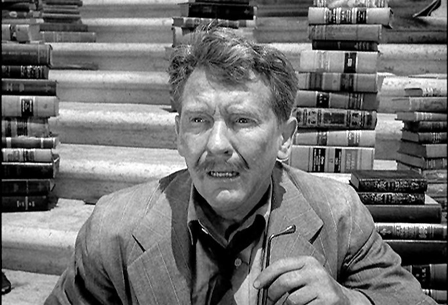
Another sensitive outcast was bookworm Henry Bemis, played by Burgess Meredith, in Serling’s “Time Enough at Last.” His obsession, like Daly’s, for quietude far from the maddening crowd, saves his life when he sequesters himself alone in a bank vault to read, leaving him the sole survivor of a nuclear holocaust (the first fictional visualization of the aftermath of an atomic bomb on American television, and one of the all-time greatest set designs in TV history); it also figures in his downfall. The abrupt, downbeat tone of the ending—Meredith accidentally breaking his glasses, remarkably pessimistic even for Serling (though it was an adapted from a short story by LynnVenable) —accounts for the high esteem this episode is held in today.
Happy endings were not usually Twilight Zone’s forte, especially in the works of Serling’s other writers. Like Richard Matheson’s “Steel,” in which newly-minted movie star Lee Marvin (‘62’s The Man Who Shot Liberty Valance) is the titular manager of a robotic prizefighter (the year is 1974; boxing by humans had been abolished in ’68) who must pose as one because of technical difficulties with his mechanical charge. Steel, a former prizefighter, fights against both his robot’s obsolescence and his own, thinking he still has the right stuff to beat “The Maynard Flash,” his android opponent—man versus machine in Matheson’s métier.
Against the vehement advice of his partner trainer, Steel steps into the ring, ghastly and garish in makeup meant to make Marvin’s already grim visage even more mechanical looking—but to no avail, as he is promptly beaten bloody in a bout staged wonderfully well, particularly the almost-humanlike movements of the robot, terrifying in its relentless, Terminator-like onslaught. If there were ever to be prizefighting robots who resembled humans, they’d definitely look much like the way longtime Twilight Zone makeup man William Tuttle conceived them, poker faces of synthetic flesh with eyes as dead and black as a shark’s, riding that perfect line between fantasy and reality that The Twilight Zone, of course, traveled best.
From boxing to billiards we go, to George Clayton Johnson’s “A Game of Pool,” which poses the question: can there be obsolescence in victory as well as defeat? Coincidentally airing less than three weeks after the strikingly similar film The Hustler debuted (9/25/61), with Paul Newman playing the titular hero against Jackie Gleason’s Minnesota Fats, “…Pool” pits Jack Klugman (tied with Burgess Meredith for most Twilight Zone appearances, four), against the great comedian and entertainer Jonathan Winters as “Fats Brown.”
Winters plays Brown with a dignity belying his jovial girth, a reserved resignation borne from years of having to face off against upstarts like Jesse Cardiff (Klugman), just as a wild west gunslinger had to draw against any cock of the walk. Cardiff does finally beat Brown, but finds winning isn’t everything; it is indeed—as he’ll spend the rest of eternity learning—the only thing.
Johnson got the chance to remake this episode for one of the recent Twilight Zone syndicated television incarnations, based on his original script, in which the supernatural ending of the ’61 episode is eliminated, and Cardiff, rather than go to that great pool room in the sky, instead loses to Brown and lives to play again. Like all the Twilight Zone remakes over the years, it is unarguable that the original episode remains, forever, the better.
In the tale whose title inspired this theme, “The Obsolete Man” by Serling, Burgess Meredith somewhat reprises his “Time Enough…” Bemis role more seriously, this time as a librarian in the near future, aptly-named Wordsworth, who is condemned to death by the fascistic Chancellor of “The State,” fellow Twilight Zone alum Fritz Weaver (“Third from the Sun”), with the utterly memorable monotone mantra, “YOU-ARE- OBSOLETE.” Against outsized German Expressionist sets, “The Obsolete Man” suggests Kafka’s The Trial (though it predates Orson Welles’ ’62 film adaptation by a year) as might’ve been rewritten by Ayn Rand. If a little strident, the episode’s nevertheless the best expression of Serling’s Orwellian worldview:
“History teaches us a great deal. We had predecessors who had the beginnings of the right idea: Hitler, of course; Stalin, too. But their error was not one of excess—it was simply not going far enough. Too many undesirables were left around, and undesirables eventually form a core of resistance. Old people, for example, clutch at the past and won’t accept the new. The sick, the maimed, and the deformed—they fasten onto the healthy body and damage it. So we eliminate them. They can perform no useful function for The State, so we put an end to them.”
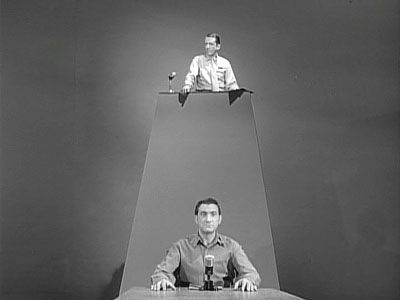
Serling makes the political personal when, in a rare mid-episode Twilight Zone twist, Wordsworth turns the tables on The State and forces an eleventh-hour sudden-death stalemate with The Chancellor, live on State-run television—reality TV years ahead of its time.
The climax of “The Obsolete Man,” 1961. Climaxing in the most stagelike mise-en-scene of any Twilight Zone, The State’s two-dozen drones surround the now-obsolete Chancellor, to the sound of the B-side of their “OBSOLETE” chant, a buzzing drone that increases in intensity until, in a bizarre (even for The Twilight Zone) bacchanalia, they pounce on the pleading man and—beat him? Eat him?
The episode’s closing narration, atypically delivered on-camera by Serling, also achieves relevancy in light of subsequent events in global politics, from Tiananmen Square to the fall of the Berlin Wall to the streets of Tehran:
“Any state, any entity, any ideology that fails to recognize the worth, the dignity, the rights of man—that state is obsolete.”
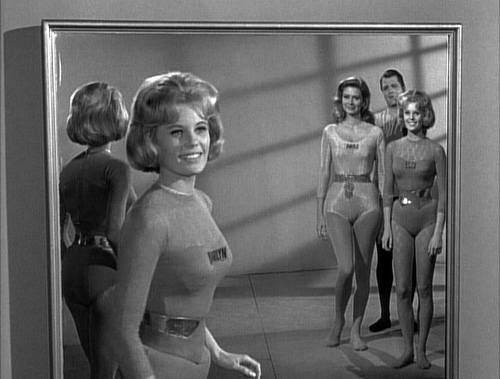
Obsolete, maybe, but until then, still in power, clamping down on all those who refuse to conform—even to standards of physical beauty. The sister episodes “Number Twelve Looks Just Like You” (written by John Tomerlin) and Serling’s “Eye of The Beholder” share this theme.
“Number Twelve…” boasts a number of touches that illuminate much more beyond the confines of the story’s setting, a futuristic hospital where patients cheerfully undergo “The Transformation” into vacuous lookalikes (prefiguring The Stepford Wives, the book and the movie, by a decade): naming the doomed heroine “Marilyn” (Monroe died a year and a half earlier) and her girlfriend, a proto-Valley Girl, “Val” (who recites the State anthem, “Life is pretty/Life is fun/I am all/And all is one!”); Val’s recreational drug of choice, “Instant Smile”; the casting of the real-life Supermodel of the day (1963), Suzy Parker, as Val’s mother; the suggestion, when mom’s maid is condescended to—despite her same Parker supermodel looks—that class differences will always trump physical differences; the original mid-program commercial for “Thrill” dish detergent that (coincidentally?) offers women “a new pair of hands”; and Serling’s concluding, clairvoyant voiceover: “Portrait of a young lady in love—with herself. Improbable? Perhaps. But in an age of plastic surgery, body building and an infinity of cosmetics, let us hesitate to say impossible.”
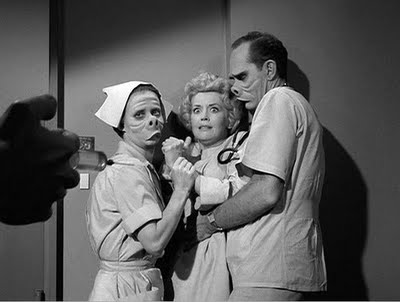
In “Eye of The Beholder,” Serling takes the age-old adage about beauty and gives it such a thorough Twilight Zone treatment that it remains the series’ quintessential episode. When it was originally telecast in 1960, chances are the bandaged Janet Tyler (another strong Serling female lead), considered hideously ugly and threatened with segregation with those of “her own kind” if her (eleventh!) plastic surgery failed, was seen as Serling’s poster child for the burgeoning Civil Rights Movement; but since then, the generic hospital setting and talk of quarantining those “similarly afflicted” reeks of AIDS-era ignorance, while the rant by the “Leader” about conforming to society’s norms not only parallels Serling’s own struggles with the censors, but foretells the culture wars waged ever since:
“It is essential in this society that we not only have a norm, but that we conform to that norm! Conformity we must worship and hold sacred! Conformity is the key to survival!”
The script is a hallmark of Serling’s style: strong on theme, poetic dialogue, morality, and suspense, capped by a truly unforgettable ending. The deft direction by Douglas Heyes and stunning camerawork by George T. Clemens, meant to obscure the doctors’ and nurses’ pig- like faces (the masterworks of William Tuttle) until the end, are nothing if not artistically audacious. And Maxine Stuart, playing the bandaged Tyler (the revealed Tyler was Donna Douglas, soon to be Elly May Clampett on The Beverly Hillbillies), had to act with her hand gestures and voice only—and created a performance for the ages.
“Eye of the Beholder,” Serling’s message of tolerance and compassion, finally reveals that we are all Janet Tylers beneath our bandages, faceless and invisible to a society that would prefer nothing more than to render our individuality…obsolete.
The Twilight Zone is a legacy that continues to teach, entertain, and inspire; it is a measure of that legacy that Rod Serling was able to surmount the obstacles inherent in a commercial medium like television to touch more peoples’ imaginations with more ideas of lasting impact than any American (television?) writer of our time.
“As long as people talk about you, you’re not really dead As long as they speak your name, you continue A legend doesn’t die just because the man does”
—George Clayton Johnson, “A Game of Pool,” 1961.
Arlen Schumer wrote and designed Visions From The Twilight Zone, the only coffee table art book about the series, and continues to present a multimedia show based on the book to universities and cultural institutions around the country, including The 2008 Rod Serling Conference at Ithaca University, and the 2009 New York Comic Convention, where he also presented his mini-marathon, “The Five Themes of The Twilight Zone.” He presented his new show, “The Twilight Zone Forever,” at The New York Times’ TimesCenter in New York on the exact 50th Anniversary of The Twilight Zone’s debut, October 2, 2009. On November 11 Schumer will make a presentation in connection with a screening the 50th anniversary of “The Eye of the Beholder” episode at the prestigious Tribeca Cinema. Tickets can be purchased here.
The Twilight Zoneseason 1 & season 2 are available on Blu-ray DVD at the TheoFantastique Store.
I was one of the individuals tapped to provide information for a piece on the vampire for The Salt Lake Tribune along with Joseph Laycock and James D’Arc. The article by Peggy Fletcher Stack is titlted “Christ’s evil twin? The vampire’s religious roots”. From the introductory material:
It takes more than a theological stake to the heart to kill the vampire legend.
Stories of dark-eyed seducers who prey on unsuspecting victims to suck their blood have persisted for more than five centuries. They have haunted our dreams and films, moving from place to place. And they are reborn in every generation. Today these parasites-on-the-living seemingly are everywhere.
From the television series “Buffy the Vampire Slayer” and Stephenie Meyer’s Twilight books and films to the current HBO saga, “True Blood,” fascination with these so-called creatures of the night permeates contemporary life, albeit in modern forms. Thousands of living Americans even consider themselves vampires.
So why is this mythic figure so long-lived and potent?
For some answers, including some connections between Mormon history and the vampire, read the article at this link. This article was later reprinted in The Washington Post.
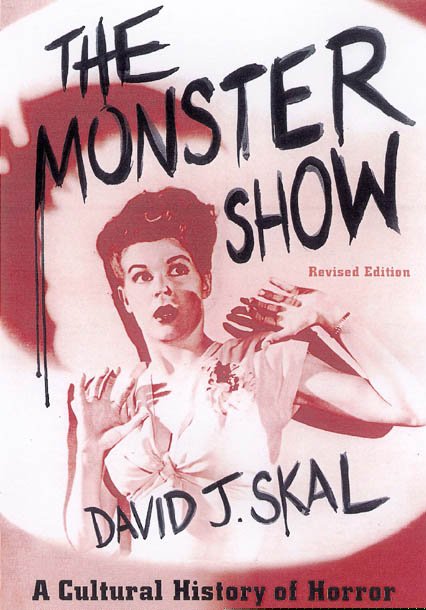
Every once in a while I come across great academic courses related to horror and my latest find is one presented by horror historian David J. Skal. He is presenting a graduate seminar at Trinity College Dublin based upon his book The Monster Show: A Cultural History of Horror (Faber & Faber, 2001). Here is the lecture breakdown:
Class #1 – September 29
Lecture/Discussion: Introduction to topic. The image of the monster in western culture. Roots of modern horror in German romanticism /expressionism. Early silent films, the rise of Lon Chaney as a major horror icon, and the central importance of Universal Pictures and its connection to Germany to the legacy of mass media horror.
Screening:The Cabinet of Dr. Caligari (viewed in class).
Class #2 – October 6
Lecture/Discussion: Mary Shelley and her “hideous progeny.” The literary, theatrical, cinematic and cultural implications of Frankenstein: Or, the Modern Prometheus. “Mad” science as a major twentieth-century myth. Overview of critical approaches to Shelley.
Reading: Shelley, Frankenstein; Skal, The Monster Show (“You Will Become Caligari,” “The Monsters and Mr. Liveright,” and “1931: The American Abyss”).
Screening: Frankenstein (Whale); The Frankenstein Files: How Hollywood Made a Monster (Skal documentary).
Class #3 – October 13
Lecture/Discussion: Roots of the vampire myth in Slavic folklore and English literature, and the history of Dracula from page to stage to screen. Overview of critical approaches to Stoker.
Reading: Stoker, Dracula (including Norton edition essays “Kiss Me with Those Red Lips” by Craft and “The Occidental Tourist” by Arrata); Tolstoy, “The Family of the Wurdalak” (Skal, trans.)
Screening: Nosferatu (Murnau, excerpt); Dracula (Browning); The Road to Dracula (Skal documentary, in-class viewing).
Class #4 – October 20
Lecture/Discussion: The doppelganger as a major horror motif. Second selves, stolen identities, and the recreated/revived/transformed persona. Various critical approaches to Stevenson.
Reading: Stevenson, Strange Case of Dr. Jekyll and Mr. Hyde (including Norton edition essay “Sex, Secrecy, and Self-Alienation” by Linehan).
Screening: Dr. Jekyll and Mr. Hyde (Mamoulian).
Class #5 – October 27
Lecture/Discussion: The emergence of cultural “decadence” as a literary/cinematic horror conceit, and the rise of the gay-monstrous.
Reading: Wilde, The Picture of Dorian Gray including Norton edition essay “Wilde’s Parable of the Fall” by Oates).
Screening: The Picture of Dorian Gray (Lewin); Dracula’s Daughter (Hillyer, excerpt).
Class #6 – November 3
Lecture/Discussion: Evolution, atavism and degeneration.
Reading: Wells, The Island of Dr. Moreau (including Atwood introduction); Skal, The Monster Show (“Tod Browning’s America”).
Screening: The Island of Lost Souls (Kenton); Freaks (Browning); Monster by Moonlight: The Immortal Saga of the Wolf Man (Skal documentary; in-class screening).
November 8-12: Study Break
Class #7 – November 17
Lecture/Discussion: The ongoing influence of German expressionism and World War I on the horror genre, with American censorship as a shaping force.
Screening: The Black Cat (Ulmer); Bride of Frankenstein (Whale).
Reading: Skal, The Monster Show (“Angry Villagers”).
Class #8 – November 24
Lecture/Discussion: Mad science, World War II and Cold War paranoia, anxiety and alienation.
Screening: Invasion of the Body Snatchers (Siegel); The Universe According to Universal (Skal documentary, in-class screening).
Reading: Skal, The Monster Show ( “I Used to Know Your Daddy,” and “Drive-Ins Are a Ghoul’s Best Friend.”).
Class #9 – December 1
Lecture/Discussion: The monstrous-feminine as a major horror theme, with reproductive nightmares as a larger cultural subject.
Screening: Rosemary’s Baby (Polanski); The Brood (Cronenberg).
Reading: Skal, The Monster Show (“It’s Alive, I’m Afraid”).
Class #10 – December 8
Lecture/discussion: The rise of transgressive horror and gruesome special effects during and after the Vietnam era.
Screening: Night of the Living Dead (Romero); The Exorcist (Friedkin).
Reading: Skal, The Monster Show (“Scar Wars”).
Class #11 – December 15
Lecture/discussion: Two Academy Award-winning films reflect a major cultural assimilation of classic horror icons at the millennium.
Screening: Ed Wood (Burton, excerpts); Gods and Monsters (Condon); The World of Gods and Monsters (Skal documentary, in-class viewing).
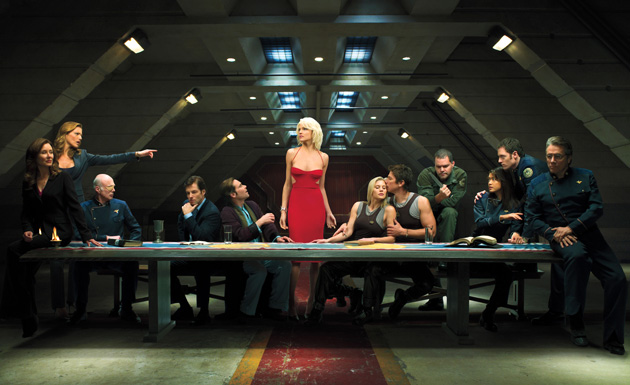
An interesting debate is quietly raging on the Internet concerning science fiction and religion. The debate was launched by the website Airlock Alpha with an article by Tiffany Vogt titled “TV Watchtower: Is Religion Killing Good Sci-Fi Shows?”. As Vogt tries to make her case for answering the question of the article’s title with a resounding “yes!”, she cites Battlestar Galactica, Lost, and Caprica as examples of programs that “lost their way” by relying to heavily on the incorporation of religion. Vogt concludes:
Therefore, modern-day television writers need to remember what kind of show they are writing and who they are writing for. If they are more interested in writing about theology, then they should write those shows and not distort good science-fiction shows beyond recognition. For what purpose does it serve to pull a bait-and-switch on the very audience that provided them with tenure?
But a fellow Airlock Alpha writer provided another point of view, articulated by Dennis Rayburn in “Religion, Science Fiction: Another Point of View.” For Rayburn, religion need not be seen as an unnecessary intrusion into the alternative worlds of science fiction. Rayburn writes:
Seeking to remove religion from science-fiction, in the name or returning science to it, will return the science, but what about the fiction? The immortal words of the opening of “Star Trek” said, “… to explore new worlds, to seek out new life and new civilizations.” We must be brave enough to explore what those new civilizations are like and not blindly assume that they will be extremely similar to ours.
As noted at the beginning of this post, the raising of the question at Airlock Alpha has sparked a debate on the Internet, a phenomenon discussed in yet another essay in this series at the website in a piece by Michael Hinman titled “So Tell Us Honestly, Is There Too Much Religion in Sci-Fi?”. In this essay Hinman summarizes some of the controversy over the issue, and also solicits reader feedback on the question.
In my opinion, science fiction is a genre of literature, television, and film that is just as suitable for the inclusion of various elements of the human experience as any other. Why not religion? The question should not be whether religion has a place within science fiction, unless one assumes sci-fi to be atheistic, and I have yet to see a good argument made that this should be the case, but whether religion plays an appropriate role in storytelling that captures the imagination and reflects the totality of human experience, many times religions, sometimes irreligious. Let the debate continue.
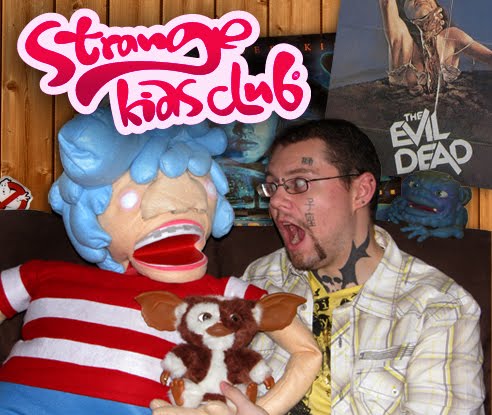
Already it’s been a busy Halloween week, and with this post I share news on my interview at Strange Kids Club by Rondal Scott. From the introduction:
For the most part I like to keep things around the clubhouse light and fun. However, there’s also something to be said for taking a more intellectual viewpoint at times in order to awaken the jiggly grey matter that’s lodged between our ears and in that regard you’d be hardpressed to find a better pen pal than today’s guest: John W. Morehead.
From his own online home at TheoFantastique, John examines the culture of horror from the perspective of a childhood in search of the fantastic. With an assortment of original articles and interviews, TheoFanstique has become a hub for those seeking for a place to start their own spiritual journey into this entertainingly weird world of ours. In addition to his own site, John also contributes his insights to CineFantastique Online in addition to being a fellow member of both the League of Tana Tea Drinkers and the Fantastic Culture Preservation Society.
I hope that readers of Strange Kids Club will not find the interview too formal and tedious, but instead might find a few chestnuts that make the exploration of the strange that much more enjoyable. My thanks goes to Rondal Scott and the Strange Kids Club blog for the opportunity. See the interview at the fine SKC blog at this link.
Yesterday I was privileged to be a guest contributor for Cinefantastique Online with their Podcast 1:37. Here’s the description from the website:
Take a journey into the HEREAFTER on this week’s edition of the Cinefantastique Podcast. Special guest John W. Morehead, of Theofantastique, joins Dan Persons, Lawrence French, and Steve Biodrowski for an in-depth discussion of Clint Eastwood’s drama of people confronting the afterlife, scripted by Peter Morgan and starring Matt Damon. Is this another Oscar-worth contender from the director of UNFORGIVEN and BILLION DOLLAR BABY, or does it disappoint? Listen in and find out. As always, the Cinefantastique Podcast also includes a round-up of recent news, events, and home video releases – everything you need to know in order to be in the know.
I also stayed around for the Post-Mortem Podcast where we discussed other films dealing with the afterlife and additional topics. My thanks goes out to Steve Biodrowski, Dan Persons, and Lawrence French for the invitation and opportunity to be a guest. You can listen to the podcast here.
We continue with our series of posts by Arlen Schumer exploring The Twilight Zone. (Part 1 can be read here and Part 2 here.) In Part 3, Schumer continues his exploration of themes of the series, including “suburban nightmares,” and “science & superstition”:
SUBURBAN NIGHTMARES
“It was the ‘twilight zone’ of the American culture. It was not English or Japanese or German or anything. It’s our Twilight Zone.” —Richard Matheson, 1989
“The Twilight Zone doesn’t only belong to a brief but distinctive epoch in our recent past—it could almost provide that period with a name,” wrote Village Voice film critic J. Hoberman in 1990. “The Twilight Zone defined the shadowy transition between the Fabulous Fifties and the Psychedelic Sixties. The show’s span encompassed the birth of the Space Race, the flowering of the Civil Rights Movement, and the life and death of the New Frontier…as the aspirin-ad angst music, op art patterns and beatnik bongos of the series’ celebrated credit sequence suggest, this historical twilight zone was a time of affluence and anxiety, of suave hysteria with a continual backbeat of crisis.”
Echoed Jonathan (Fortress of Solitude) Lethem, writing about Serling on the online magazine Gadfly in 1999, “Just the titles of his best episodes read like a found poem of All- American dread: Where Is Everybody? Walking Distance. People Are Alike All Over. Time Enough At Last. The Obsolete Man. The Eye of the Beholder. Nervous Man in a Four-Dollar Room. The Monsters Are Due on Maple Street…”
This acute ability by Serling to identify both primal and post-war American fears and crises, then build stories around them, set in commonplace surroundings—a psycho-American Gothic of sorts——was perhaps the single factor most responsible for the success and longevity of The Twilight Zone.
In “Third From the Sun,” Serling zeroed in on the greatest post-war fear, the threat of nuclear war. While it well-predated the October ’62 Cuban Missile Crisis, “Third…” uncannily captured the same armageddon zeitgeist in the nuclear air, as when the teenage daughter of the scientist protagonist (Fritz Weaver, who’s plotting with his test-pilot neighbor to leave the planet with their families before the bombs drop) anxiously murmurs, “Everyone I’ve talked to lately, they’ve been noticing it; that something’s wrong; that something’s in the air; that something’s going to happen—and everybody’s afraid…”
Based on Matheson’s short story, “Third…” also offered a prescient description of what the military-industrial complex would (ironically?) call M.A.D. (Mutually Assured Destruction):
“Talk is 48 hours…48 hours, we’ll have them aloft…then whoosh, up, over and whammo! There goes the enemy! Obliterated—finished. And what are they doing in the meantime? Probably retaliating the best way they can. It’s a waste of time, let me tell you. We get the first licks, so they can’t do much…instead of losing 50 million people, we lose only 35…” The episode’s out-of-left-field twist- ending, in which the planet being emigrated to turns out to be earth, third from our sun, King noted, “…marks the point at which many occasional Twilight Zone tuners-in became addicts.”
Recurring nightmares that seem more real than awakened reality are the stuff of Serling’s “Twenty-Two” (based on an anecdote in Bennett Cerf’s Famous Ghost Stories) and Charles Beaumont’s “Perchance to Dream.”
The circus and roller coaster dream sequences in “Perchance…” (“It was the kind of place you see only in nightmares—everything warped and twisted out of shape—but it was real, too”), and the initial descent into Room #22, the hospital morgue, are among the most visceral Twilight Zone scenes ever filmed (“Twenty-Two”’s even more, as it was shot on videotape, one of six Season 2 episodes taped in a cost-cutting experiment that produced shows of somewhat negligible quality).
Both episodes feature women in peculiarly powerful, secondary roles that remain mysteriously memorable and utterly modern in tone. In “Perchance…,” Suzanne Lloyd plays the mesmerizing “Maya, the Cat-Girl,” a raven-haired, leopard-skin-clad vixen who tempts Richard Conte’s latent libido—in his nightmare—by dancing an overtly sexual tarantella (especially for ‘59 TV) at the Tunnel of Love, beckoning Conte inside with “…her dark…cat’s…eyes!” In “Twenty-Two,” Arline Sax is the morgue nurse who recites her malevolent mantra, “Room for one more, honey,” with a Mona Lisa-like smile and devilish demeanor that is both strangely alluring and utterly repellent—a true Angel of Death.
Serling’s “The Hitch-Hiker” (based on a radio play by Lucille Fletcher, of the classic “Sorry, Wrong Number”) plays on the fear of picking one up, utilizing the shopworn character device of “Mr. Death,” but with a redeeming Twilight Zone fillip, as a “drab, little nothing of a man” plays off against ‘60s beauty Inger Stevens, in the first of her two nuanced Twilight Zone performances.
The Swedish-born Stevens had “…a sadness hidden in that pretty face” (Bruce Springsteen, “Candy’s Room”), her sorrowful eyes betraying her failed suicide in 1959, while foreshadowing her unfortunate, successful attempt in 1970, giving “The Hitch-Hiker”— in which we, and Stevens’ character, come to realize she has been dead all along (shades of Shyamalan!)—a melancholy subtext, much like Douglas Trumbull’s Brainstorm had in 1983, released not long after the sudden death of star Natalie Wood.
Serling featured a startling number of independent women like Stevens in dramatic starring roles on The Twilight Zone, unheard of at a time when most women pictured on American television were either tame housewives or screwball comediennes (or, in the case of Lucille Ball, both).
On a par with Steven’s “Hitch-Hiker” performance is Anne Francis’ in “The After Hours,” because her casting, as a woman who turns out to be a mannequin, is perfect—she actually looks like a human Barbie doll (which, like The Twilight Zone, debuted in 1959 and became an American pop icon overnight, acknowledged as an influence on the plethora of TZ mannequin/doll/dummy episodes by Barbie Bazaar magazine, in its June 2003 issue: “The reason that Twilight Zone still amazes us is the wonder that underlies episodes like ‘The After Hours,’ that recall childhood fantasies of dolls and toys coming to life when no one is watching.”) And childhood nightmares, too—witness the whispering of the store mannequins, en masse, “Marsha, come off it!” to a frantic Francis.
“The After Hours” is one of Serling’s most accessible Twilight Zones—for who has never been afraid of being locked in a department store at night? By tapping into such deep-seated American neuroses, Serling mirrored the anxieties and apprehensions of his audience, as this excerpt from the episode’s closing narration testifies: “Just how normal are we? Just who are the people we nod our hellos to as we pass on the street?”
SCIENCE & SUPERSTITION
Rod Serling’s attitude toward the Space Race of The Sixties was evident in The Twilight Zone’s science fiction episodes: space ships usually never reach their destinations, or crash land if they do. By failing to solve our moral and ethical problems here on earth, Serling implied in first-season episodes like “I Shot an Arrow Into the Air” and “People Are Alike All Over,” we’ll never get to where we want to go— anticipating the platform of all anti-space advocates since. The chain of compromises and human failings that led to the 1986 Challenger shuttle disaster proved the relevancy of Serling’s warnings.
Serling utilized the science fiction genre as a front for his more personal, serious themes (much as Roddenberry would later do in Star Trek) in episodes like “People…,” writing against prejudice and racism on earth/America thinly disguised as a plea for interplanetary understanding, when an astronaut, crash-landed on Mars, speaks, with his dying breath, Serling’s best poetic dialogue:
”People are alike all over/I’m sure that when God made human beings/He developed them from a fixed formula/As long as they’ve got minds and hearts/That means they have souls That makes them people And people are alike.”
His surviving astronaut partner does find out, to his chagrin, that people, whether on earth or other planets, were indeed alike, in their capacity for evil as well as good.
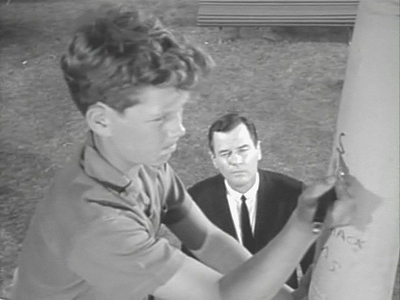
One of the greatest endings in modern movie history—the Statue of Liberty scene that concludes 1968’s Planet of The Apes—most are unaware of was the creation of Serling, (who co-wrote the screen adaptation), a big-screen revamp of his own Zone episode, “I Shot An Arrow In to the Air,” in which an astronaut, crash-landed on a desert planet, discovers—after murdering his two crewmen—that he’s been on earth the whole time, foreshadowed by his murdered crewman’s telephone pole-scrawl in the sand (suggested by an acquaintance of Serling’s at a cocktail party!).
1968’s other sci-fi masterpiece, Kubrick’s 2001: A Space Odyssey, contained numerous Twilight Zone tropes, from the robot HAL’s autonomy (e.g., “The Lonely”) to the film’s spaceship-in-baroque penultimate scene, as surreal a juxtaposition between future and past as the second-season Twilight Zone episode, “The Invaders,” that preceded it by seven years.
Agnes Moorehead’s dialogueless, mimetic performance as a farmwoman terrorized by tiny, mysterious figures, is a tour de force; according to director Doug Heyes, she had actually studied with the legendary mime Marcel Marceau years earlier.
Writer Richard Matheson later remade the episode as “Amelia,” part of a 1975 made-for-TV movie, Trilogy of Terror, starring Karen Black (fresh from her star turn in the film sequel Airport ’75) being chased around her New York City apartment by a truly frightening, knife-wielding “Zuni fetish doll,” Matheson’s substitute for the mini-Michelin Man-like astronauts he was never happy with fourteen years earlier.
Serling’s first-season “The Monsters Are Due on Maple Street” details aliens’ deceptive manipulations of earthmen’s fear and greed to further their conquest, but, like most Twilight Zones, not in the way you expect them to. Following mysterious blackouts of electricity on their block, once-friendly neighbors unravel into an animalistic mob, and ast he sun falls, the episode becomes a kind of proto-Night of The Living Dead as they metaphorically eat each other alive—an equally-scabrous indictment of paranoid McCarthyism, the epitome of the “we have met the enemy and they are us” approach: “They pick the most dangerous enemy they can find, and it’s themselves,” Serling concludes, and speaking for the invading aliens as well as the Twilight Zone viewing audience, “All we need to do is sit back and watch.”
In Part 4 of this series Schumer will continue to explore the themes of The Twilight Zone, picking up the discussion with consideration of “The Time Element,” and Obsolete Man.”
Arlen Schumer wrote and designed Visions From The Twilight Zone, the only coffee table art book about the series, and continues to present a multimedia show based on the book to universities and cultural institutions around the country, including The 2008 Rod Serling Conference at Ithaca University, and the 2009 New York Comic Convention, where he also presented his mini-marathon, “The Five Themes of The Twilight Zone.” He presented his new show, “The Twilight Zone Forever,” at The New York Times’ TimesCenter in New York on the exact 50th Anniversary of The Twilight Zone’s debut, October 2, 2009. On November 11 Schumer will make a presentation in connection with a screening the 50th anniversary of “The Eye of the Beholder” episode at the prestigious Tribeca Cinema. Tickets can be purchased here
The Twilight Zoneseason 1 & season 2 are available on Blu-ray DVD at the TheoFantastique Store.
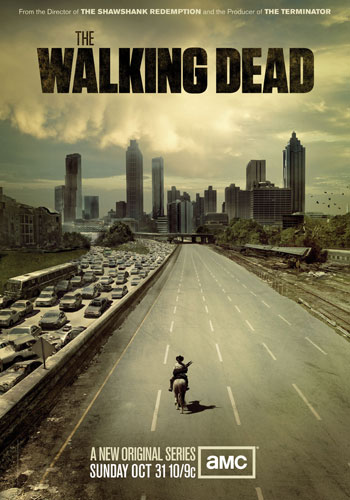 The television series The Walking Dead premiered last Sunday, Halloween night, and I thought before the second episode this weekend I’d share a few reflections.
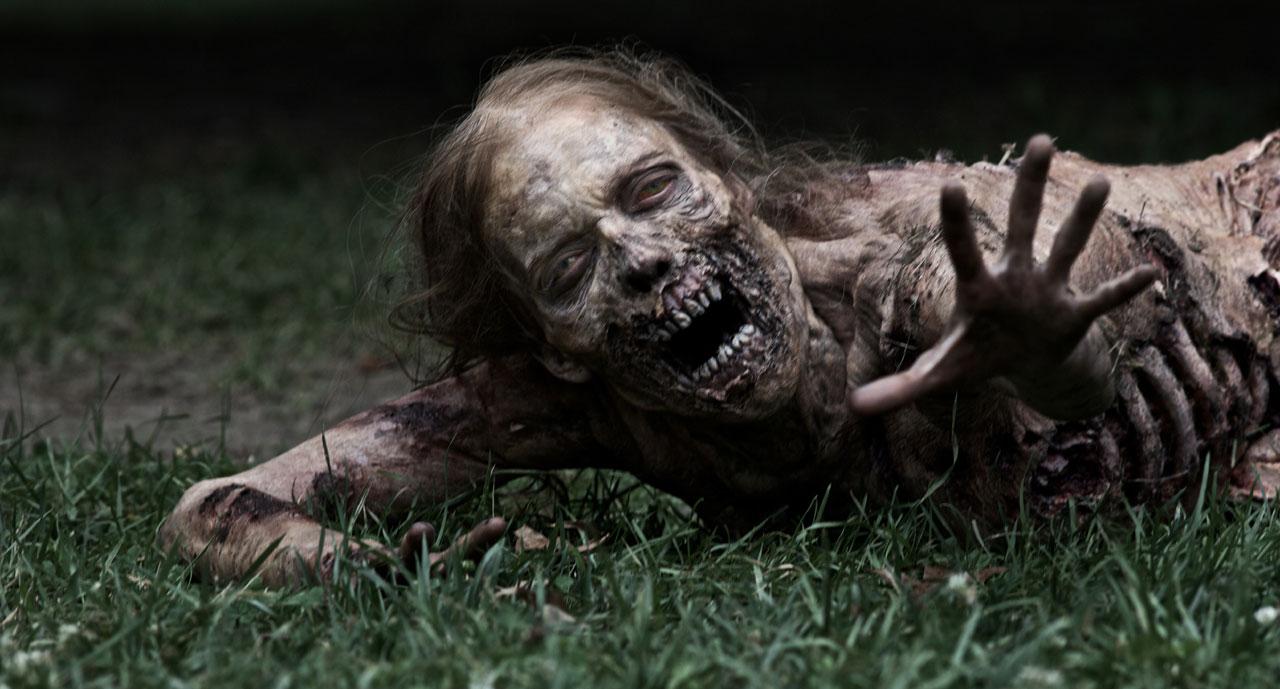 The makeup effects were amazing, and it was evident that the artists and makeup artists affiliated with the program spent a great deal of time, research, and detail in depicting death in various stages of decay. Some were downright horrific, as in the case of the crawling zombie woman with half a body who was the beneficiary of a mercy killing by Sheriff Rick Grimes.