Joseph Laycock on Top 10 Misconceptions of Vampires at Buzznet
Joseph Laycock, author of Vampires Today: The Truth About Modern Vampires (Praeger, 2009), discusses the “Top 10 Misconceptions of Vampires” at Buzznet.
Joseph Laycock, author of Vampires Today: The Truth About Modern Vampires (Praeger, 2009), discusses the “Top 10 Misconceptions of Vampires” at Buzznet.
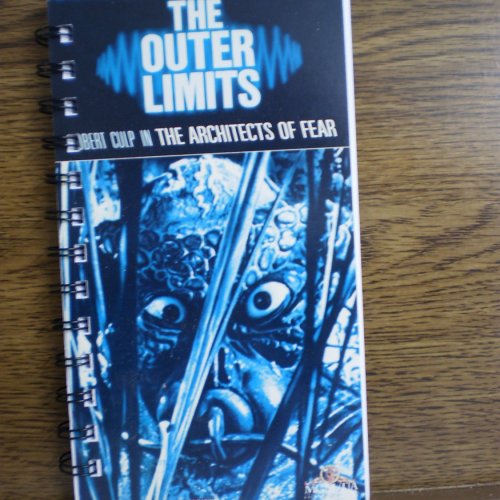 There are stimulus plans, and then there are stimulus plans. In one of the strangest intersections between the fantastic in popular culture and politics, an economist is drawing upon the idea of alien invasion to get us out of the recession. As an opinion piece in The Week writes:
There’s no shortage of ideas on how to help the faltering economy, but Nobel Prize winning economist and New York Times columnist Paul Krugman has come up with what has to be the oddest suggestion yet: Fake a looming invasion from outer space. In an interview with CNN, Krugman cited “a Twilight Zone episode in which scientists fake an alien threat in order to achieve world peace. Well, this time… we’d need it in order to get some fiscal stimulus.”
In the analysis of the idea that continues it notes a major flaw in the idea:
The trouble is, that theory has been “debunked by economists on both the right and the left.” It wasn’t war-time spending that sparked the postwar boom — it was the return to normalcy after years of privation and rationing, and the role our unscathed industries played in rebuilding the ruins overseas.
Beyond this financial critique I’d like to add another for what it’s worth. When I first heard the source cited for this idea, an episode of The Twilight Zone, I scratched my head trying to remember which episode the economist might have in mind. It turns out it was not The Twilight Zone, but rather the source may be found another very good science fiction program from the same time period, The Outer Limits, in an episode titled “The Architects of Fear.” This episode can be watched in entirety at Hulu.
It is curious that in order to pull us out of our economic malaise that we are now reduced to drawing upon science fiction. But does the Obama Administration really want to be associated with The Architects of Fear?
 CALL FOR PAPERS
“MYTHOS: Screening Classical Mythology on Film and Television”
An area of multiple panels for the Film & History Conference on “Film and Myth”
September 26-30, 2012
Milwaukee, Wisconsin, USA
www.filmandhistory.org
Deadline: June 1, 2012
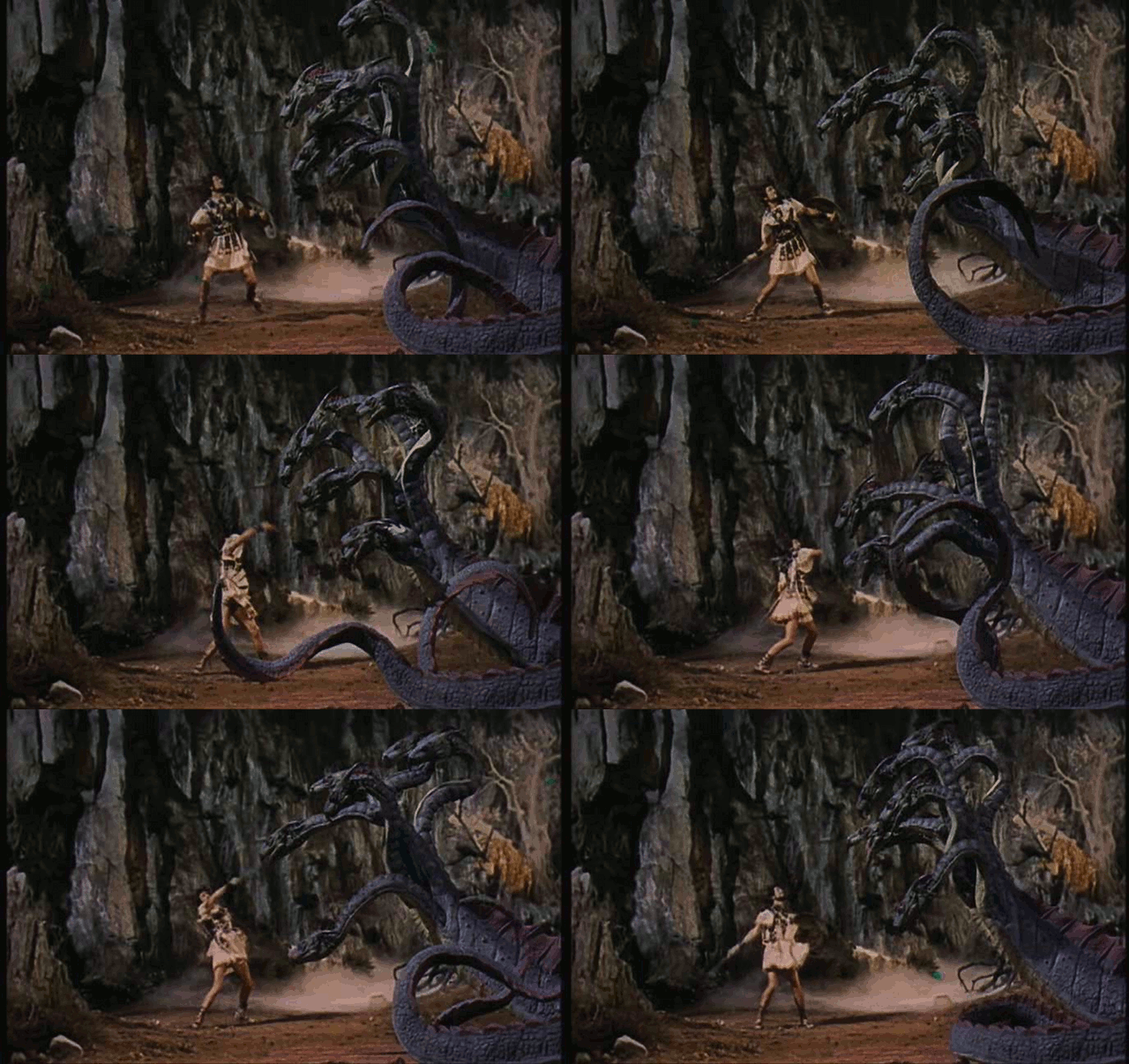
From the earliest beginning of cinema, and throughout the history of screen entertainment, filmmakers and television producers have returned to the narratives and images of classical mythology for subject matter and motivation. Numerous films and television series have been based on ancient Greek and Roman mythological and heroic archetypes (The Matrix; The Lion King), while others take classical literary plots and motifs from the great epics and tragedies and adapt them to the screen (A Dream of Passion; O Brother, Where Art Thou?). Some films and television series even set themselves in an imagined “ancient mythological world” full of gods, heroes, monsters and femmes fatales (Xena: Warrior Princess; Hercules: The Legendary Journeys). Why do the classical mythological narratives and images remain such a powerful source of ideas and inspiration for modern filmmakers and television producers?
This area, comprising multiple panels, will treat all aspects of classical mythology in films and television programs. Papers may explore recreations of ancient myths in “real time” (Clash of the Titans; Xena; Hercules) or adaptations of classical myths and narratives in modern settings (Moulin Rouge; Unforgiven). Possible topics include, but are not limited to, the following:
The Hero’s Journey
Features and Creatures of the Underworld
The Katabasis Myth of Descent and Return
Greek Tragic Myths on Screen
The Odyssey and the Nostos-Myth on Film
Pandora and the Myth of the Manufactured Woman
Homer’s Iliad and the American Western
Myths of Transformation and Metamorphoses
Amazons on Screen
The Dionysian Nature of the Cinema
The Orpheus Myth
Olympian Gods in Modern Settings
Proposals for complete panels (three related presentations) are also welcome, but they must include an abstract and contact information, including an e-mail address, for each presenter.
Please e-mail your 200-word proposal by June 1, 2012:
Monica S. Cyrino, Area Chair, 2012 Film & History Conference
“MYTHOS: Screening Classical Mythology on Film and Television”
University of New Mexico
Email: pandora@unm.edu
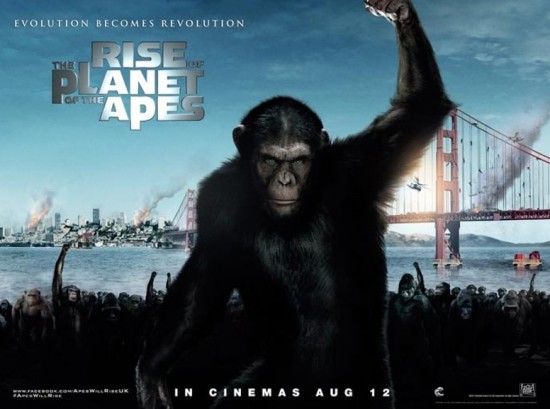 Over the weekend I took the advice of 20th Century Fox years ago when it encouraged audiences to “Go ape!” and I saw Rise of the Planet of the Apes. My expectations for cinematic failure were thankfully never realized, and instead, the film is very well done, and a welcome addition to the Apes franchise and mythological canon.
I wrote a review of the film for Cinefantastique Online titled “Rise of the Planet of the Apes: A Welcome Addition to the Apes Mythological Canon,” which can be found at this link. Here is an excerpt.
The bar was set high in 1968. The original Planet of the Apes combined a number of elements to make science fiction history. These included good source material in Pierre Boulle’s novel, a solid screenplay by Michael Wilson and Rod Serling, A-list actors including Charlton Heston and Roddy McDowall, John Chamber’s groundbreaking makeup effects, Jerry Goldsmith’s daring score, and Franklin Schaffner’s direction. In addition, the story interacted with cultural and social anxieties and issues of the late 1960s, including the potential for nuclear annihilation, racism, as well as evolution and religious fundamentalism. Rise of the Planet of the Apes has continued in this vein, not only providing amazingly realistic apes through its motion-capture CGI, but by combining the special effects necessary to convey the story realistically with contemporary cultural issues, including biomedical ethics and non-human animal rights. In this way the film provides something for those looking for little more than a summer thrill through science fiction cinema, as well as for those interested in speculative fiction as a foil for social reflection and commentary.
In addition to my review, I was a part of a panel discussion on the film at the Cinefantastique Spotlight Podcast 2:30.1. This podcast is the feature at the Huffington Post on the HuffPost Culture page. You might also enjoy the after-the-show podcast discussion that looked at the history of the Apes franchise.
For those interested in exploring Rise of the Apes within its broader context of Apes mythology I recommend starting with Pierre Boule’s novel which was the original source material, and for background and behind-the-scenes for the films take a look at Planet of the Apes Revisited by Joe Russo and Larry Landsman with Edward Gross (St. Martin’s Griffin, 2001), then moving to cultural analysis with Planet of the Apes as American Myth: Race and Politics in the Films and Television Series by Eric Greene (McFarland and Co., 2006). If after this you become a fan, you can watch the original Planet of the Apes on Amazon Instant Video or purchase it on DVD, and even better, grab the 40th anniversary collection on Blu-ray.
Related posts:
“Planet of the Apes: Intelligent Sci-Fi Past and Present”
“Planet of the Apes: An American Myth”
“Robert J. Sawyer, “A long time ago,” and Science Fiction’s Social Commentary”
I recently shared this interesting video snippet at the TheoFantastique Facebook group page and thought it was worth including here. This piece was brought to my attention through Sociological Images in a piece titled “Pregnancy Porn: Alien Impregnation in Science Fiction.” The piece originally comes from Feminist Frequency: Conversations with Pop Culture. This feminist critique of aspects of speculative fiction brings another dimension to our consideration of science fiction and horror. For further exploration of this topic see Crystal Coleman’s “The Dangers of Mystical Pregnancy in Entertainment” at Persephone Magazine.
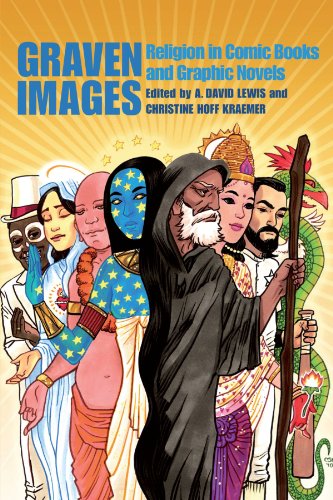 From the back cover of Graven Images: Religion in Comic Books and Graphic Novels, edited by A. David Lewis and Christine Hoff Kraemer (Continuum International Publishing, 2010):
Although they were once considered a medium suitable only for children’s literature, comic books have increasingly become a vehicle for serious social commentary and, specifically, for innovative religious thought. Practitioners of both traditional religions and new religious movements have begun to employ comics as a missionary tool, while humanists and religious progressives use comics’ unique fusion of text and increasing fervor with which the public has come to view comics as an art form and Americans’ fraught but passionate relationship with religion. Graven Images provides an opportunity for discussion of cutting-edge artistic and social issues by exploring the roles of religion in comic books and graphic novels.
In essays by scholars and comics creators, Graven Images observes the frequency with which religious material — in devout, educational, satirical, or critical contexts — occurs in both independent and mainstream comics. Contributors identify the unique advantages of the comics medium for religious messages; analyze how comics communicate such messages; place the religious messages contained in comic books in appropriate cultural, social, and historical frameworks; and articulate the significance of the innovative theologies being developed in comics.
TheoFantastique Podcast 2.4 features an interview with A. David Lewis, a national lecturer in comics studies, an award-winning graphic novelist, and a PhD candidate in Religion and Literature at Boston University. In this interview we discuss comics and the academy, and specifics related to Graven Images, including Superman and Christ-figures, evangelicalism and the comic medium, and Western esotericism in comics and popular culture. TheoFantastique Podcast 2.4 can be listened to here, and at iTunes. Graven Images can be ordered through the TheoFantastique Store.
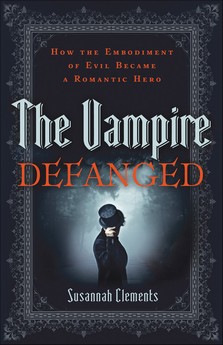 When I first heard that Brazos Press, an evangelical publisher, had produced a volume looking at vampires in literature and film, I was very skeptical. Evangelicals have been less than receptive to this phenomenon, tending to lump vampires in with “occultism” and evil, rather than as pop culture figures for social and theological reflection. Thankfully, I discovered my fears were ill founded after reading The Vampire Defanged: How the Embodiment of Evil Became a Romantic Hero (Brazos Press, 2011) by Susannah Clements. Clements has written a volume that provides a sound analysis of the fictional vampire from a Christian spiritual perspective, and in ways that should be helpful not only to Christians, but to others who want to understand facets of the vampire tradition that have waned with the rise of secularism and late modernity/postmodernity.
The Vampire Defanged approaches the fictional vampire with an eye toward recapturing the creature as an object of theological reflection. With this perspective in mind, Clements looks at various depictions of the vampire over the course of history, and documents how the Christian tradition has been influential in shaping the theological elements of the vampire, and how this has changed as the vampire developed in changing cultural contexts. Clemens begins her analysis with a look at Bram Stoker’s Dracula, and then moves to the work of Anne Rice, Buffy the Vampire Slayer, Sookie Stackhouse of Charlaine Harris’s Southern Vampire Mysteries, and Stephanie Meyer’s Twilight series. Along the way Clements notes a shift from a vampire mythology with strong roots in the Christian tradition and theological explorations or implications, to more contemporary postmodern depictions with interests in guilt, existential angst, sex, and romance.
Two aspects of Clements’s treatment of the vampire are very helpful. First, she avoids the frequent responses of evangelicals in either ignoring the vampire in pop culture, or perhaps more frequently, the equation of the vampire with evil, the occult, and the satanic. In Clements’s view this perspective is inappropriate and shortsighted. She writes:
On the other hand, working from the assumption that any story that features a vampire is evil, demonic, and dangerous is an equally problematic response for Christians, as it is based on a lack of critical thinking and ignores distinctions between how the vampire is portrayed in different contexts.
Clements is not naive in regards to depictions of the vampire. She recognizes that at times this figure has embodied aspects that are at odds with Christian theology and ethics. Nevertheless, she navigates a balanced position that finds value in this monstrous icon as a figure for theological reflection through careful cultural analysis.
The second helpful element in Clements’s work is her analysis of Stoker’s Dracula where she reminds the reader of the significance of Christian elements in the work which arise from Stoker’s background as an Irish Protestant. She notes that many contemporary critical analyses of Dracula tends to approach the novel from psychoanalytical and postcolonial frameworks, in addition to much of the sexual and Freudian analysis of the recent past. Perhaps even more curious, is the tendency of biographers of Stoker to ignore or downplay the presence of his Irish Protestantism and its possible influence on his best known literary work. While Dracula should certainly be approached from a variety of analytical perspectives, the neglect of the theological elements is tragic, and demonstrates the biases of contemporary critics. Clements’s volume provides a helpful corrective to this situation, and provides a refreshing insight into Dracula studies, and a major starting point for the vampire in pop culture.
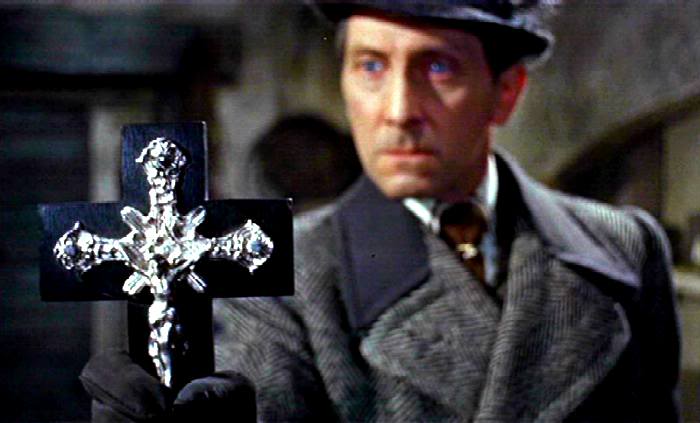 There are two criticisms to be offered to this volume. First, in her sampling of the vampire in pop culture as an object of theological reflection, Clements provides an overview of some of the more important works, and includes vampire films from the 1930s and 1940s. She then jumps to more recent depictions of the vampire in literature and film. In so doing she ignores significant additional examples that would have strengthened her thesis, particularly the Hammer Studios vampire films of the 1950s through 1970s. These films include symbols, rituals, and ideas, including a strong linking of the vampire to the satanic from the Christian tradition. Surely these films were influential in the depiction and evolution of the theological aspects of the vampire.
The second critique is Clements’s treatment of Stephanie Meyer’s Twilight series. In her view, “[i]n Meyer’s Twilight Saga, we can see the end result of the process of secularization. Although Meyer herself is a Mormon, spirituality and religion are not genuinely explored in the books.” She continues and says that while “religion is not completely absent in the books,” nevertheless “it certainly is not a dominant interest…” Here Clements makes the mistake of viewing Meyers’ Mormonism through the framework of Protestant evangelicalism where doctrinal considerations are most important. However, in Mormonism it is the ethical dimension that is significant, summarized by the phrase “choose the right.” This failure to appreciate Mormonism on its own terms is evident in a later statement Clements makes in her analysis of the Twilight series:
Instead of using the vampire to explore theological or metaphysical themes, the major themes in the Twilight saga are explicitly human: family and destined, romantic love.
Given the significance of the human connection to the divine in Mormonism, which includes the importance of eternal family and love, these elements are theological and metaphysical themes in Mormonism, even though they may not be in Protestant evangelicalism. Thus, it can hardly be said that in the Twilight series we see an “irrelevance of a theological framework for Meyer’s narrative” as Clements would have us believe. Through a misinterpretation of Mormonism, Meyer’s misses an important element in understanding the Twilight Saga, and consideration of it not so much as a result of secularization, but rather through the influence of a different religious framework.
Despite these two minor criticisms, Clements’s book is highly recommended for evangelicals willing to consider the positive aspects of the vampire for theological reflection, as well as for those outside of this religious tradition who want to understand the place of the Christian tradition in shaping the vampire mythology.
Related posts:
“Leonard Primiano: True Blood, Post-9/11 Spirituality, and ‘Vernacular Religion'”
“Matt Cardin: ‘Religion and the Vampire’ in The Encyclopedia of the Vampire”
“Christians and Vampire Mythology”
“Titus Hjelm – From Demonic to Genetic: The Rise and Fall of Religion in Vampire Film”
 CFP: The SLAYAGE Conference on the Whedonverses
(SCW5)
University of British Columbia
Vancouver, Canada, July 12-15, 2012
Slayage: The Journal of the Whedon Studies Association (slayageonline.com) and the Whedon Studies Association solicit your proposal for the fifth Slayage Conference: The Slayage Conference on the Whedonverses, sponsored by the University of British Columbia. This conference dedicated to the imaginative universe(s) of Joss Whedon—the Jossverse(s) or Whedonverse(s)—will be held on the campus of the University of British Columbia in Vancouver, Canada, July 12-15, 2012. UBC’s Dr. Sharon Sutherland, Sarah Swan, and Hélène Frohard-Dourlent will be local arrangements chairs.
We welcome a proposal of 200-300 words (or an abstract of a completed paper) on any aspect of Buffy the Vampire Slayer, Angel, Firefly, Serenity, Dr. Horrible’s Sing-Along Blog, Dollhouse, his comics (e.g. Fray, Astonishing X-Men, Runaways, Buffy the Vampire Slayer Season Eight), or any element of the work of Whedon and his collaborators. We invite presentations from the perspective of any discipline: literature, history, communications, film and television studies, women’s studies, religion, linguistics, music, cultural studies, and others. Discussions of the text, the social context, the audience, the producers, the production, and more are all appropriate. Go to Slayage to see a list of possible topics. All proposals/abstracts should demonstrate familiarity with already-published scholarship in the field, which includes dozens of books and ten years of Slayage.
Papers are limited to a maximum reading time of 20 minutes. Please fill out the Word form to be found at http://slayageonline.com (at the top of the home page) and send as an email attachment to slayage.conference@gmail.com. Submissions by undergraduates and graduate students are welcome; however, undergraduate students should provide the name, email, and phone number of a faculty member willing to consult with them (the faculty member does not need to attend). If you wish to propose a prearranged, complete session of multiple presenters, fill out (and send as an email attachment to the above address) the form to be found at Slayage.
Proposals must be submitted by December 1, 2011.



