Dr. Sam George of the University of Hertfordshire informed me about the following upcoming conference.
Open Graves, Open Minds: Bram Stoker Centenary Symposium
20-21 April 2012
This symposium arose from the Open Graves, Opens Minds: Vampires and the Undead in Modern Culture Research Project, led by Dr Sam George at the University of Hertfordshire.
Initiated by a prominent and exciting conference in April 2010, the Open Graves, Open Minds project relates the undead in literature, art, and other media to questions concerning gender, technology, consumption, and social change.
Delegates will investigate the most famous vampire narrative of all — Dracula — on the centenary of Bram Stoker’s death and interrogate its relationship to new developments in interdisciplinary research, drawing on nineteenth-century vampire archetypes. Dracula, of course, is the seminal vampire novel (though it has its antecedents); a gripping narrative that dramatises anxieties over sexuality, new technologies, foreignness, and modernity. Invited speakers will debate the evolution of Dracula from novel to theatre, film to comic book.
The symposium boasts an innovative and exclusive programme of talks and discussions in the period setting of the house of Keats, who explored forbidden vampiric pleasures in his Lamia. We will be joined for a centenary address by Sir Christopher Frayling, author of Vampires: Lord Byron to Count Dracula; and Dacre Stoker, great-grand-nephew of Bram, and author of Dracula: the Un-Dead. Dacre, will collaborate with Prof. Dr Elizabeth Miller, co-editor of the Dracula notebooks, to shed further light on Bram’s notebook writings.
Delegates will be invited to do some vampirizing themselves on a trip to Golders Green Crematorium to pay their respects to Bram on the centenary of his death. In this celebrity-packed resting place, Stoker’s ashes eerily share company with Marc Bolan (‘Girl, I’m just a vampire for your love’); Sigmund Freud and his disciple, Ernest Jones, who theorised the uncanny (Jones wrote on the significance of the vampire in ‘On the Nightmare’); Philip Burne-Jones, painter of The Vampire; Isaac Pitman (inventor of Mina Harker’s shorthand); and Martita Hunt (who acted in Brides of Dracula).
The symposium will also anticipate the publication of Open Graves, Open Minds: Representations of Vampires from the Enlightenment to the Present Day (Manchester: MUP, 2012). Sam George and Bill Hughes will introduce the OGOM research project. Select contributors to the book such as Stacey Abbott, Catherine Spooner, Marcus Sedgwick, Ivan Phillips and Sam George will investigate Gothic tropes and vampire archetypes more widely, drawing on their fields of expertise (celluloid vampires, twenty-first-century Gothic, digital culture, young adult fiction and nineteenth-century vampire narratives).
Vampires, of course, haunt contemporary culture, and novelists such as Marcus Sedgwick, Paul Magrs and Kim Newman will demonstrate how they are resurrecting the myth in inventive new ways.
Meanwhile, current research in Gothic studies is adapting creatively to this phenomenon, as our
speakers will reveal. The symposium will bring together writers, academics, and critics in a number of in-conversation sessions. The novelist Kim Newman will offer up a dialogue on Dracula and vampiric concepts in his own writing in ‘Dracula and Anno Dracula’. In ‘Necrophilia to Technophilia’, the writer Marcus Sedgwick will look at the folkloric origins of the vampire; and Kevin Jackson, author of the Vampire Handbook, will investigate the vampire’s progress from fiction onto celluloid. The two talks combine to show how, very often, technological and practical expediency has driven the artistry of this most crepuscular creature. In the third of these collaborative panels, Paul Magrs (the ‘Brenda’ novels and 666 Charring Cross Road) will share the stage with Gothic specialist Dr Catherine Spooner in ‘”I never drink – wine”: comic vampires from Dracula to Alucard’.
You can book your place for the conference, and download the schedule here.
A video from The Wall Street Journal 2010 Open Graves, Open Minds conference:
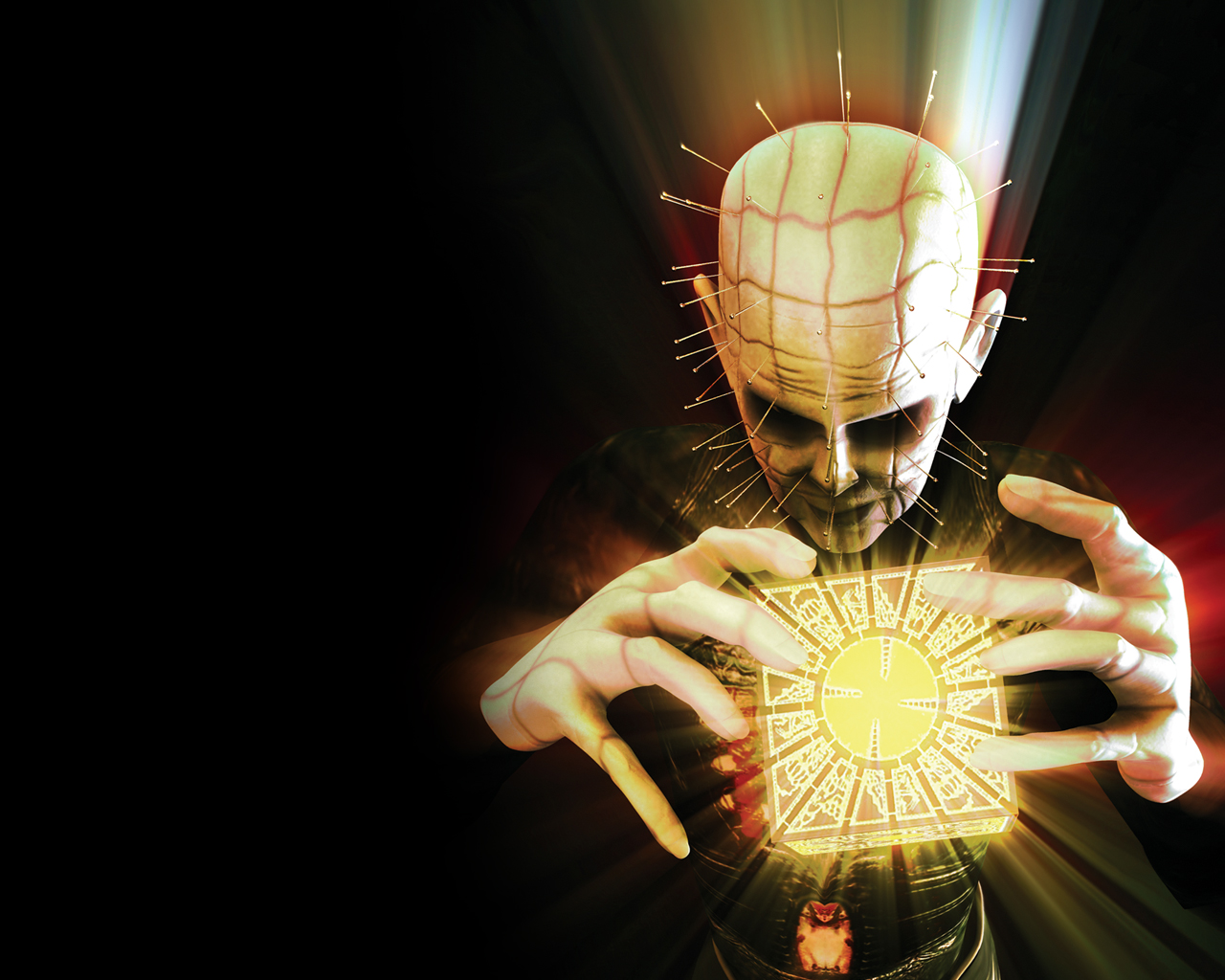
The Academic Study of Magic list recently included a fascinating scholarly paper abstract that dovetails with the interests of TheoFantastique. Leon Marvell of Deakin University will be presenting at the International Conference on Esotericism, Culture and Religion at UC Davis with a paper titled “Under the Sign of Baphomet: Hellraiser and Popular Esotericism.” Here is the abstract:
The study of esotericism in the contemporary academy has been mainly confined to religious studies departments. There has been little attention paid to esotericism as a cultural phenomena outside of such departments, and therefore a wider range of considerations, and a wider range of possible tools of investigation, have been largely absent from studies in esotericism.
This paper proposes that investigative tools found in such disciplines as cultural studies, art theory and media theory may well be important to the study of esotericism in Western culture.
Accordingly this paper opens with the proposition that the so-called “occult revival” of the late 19th century engendered an enduring stream of popular esotericism of diverse forms which was manifested in diverse media: producing, in effect, a transmedial phenomena. We observe here a “leakage” of high esotericism into popular forms.
After a brief introduction and articulation of this thesis, the paper directs its attention to a particular example of popular esotericism: Clive Barker¹s film, Hellraiser.
This film will be analyzed in terms of its esoteric symbolism, its narrative strategies that conform to European esoteric patterns of initiation and its overall significance in terms of the study of popular esotericism.
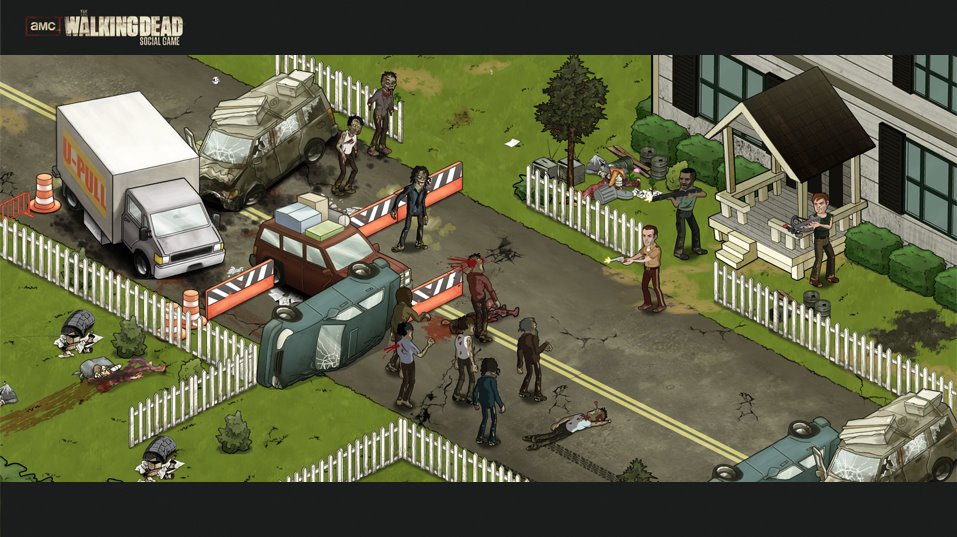
I will be a periodic contributor to a website aimed at fans of The Walking Dead called The Talking Walking Dead. My first post is a news item that discusses the forthcoming “AMC The Walking Dead Social Game” on Facebook. That news item can be found here.
The release of George A. Romero’s Night of the Living Dead in 1968 solidified our cultural awareness of what a zombie was and marked the beginning of the zombie film as a staple of Hollywood storytelling. Now a (regenerative) genre unto itself, the zombie movie invariably sees a band of survivors escaping from hordes of the undead, re-animated corpses limping mindlessly across desolated, post-apocalyptic landscapes that used to be our homes. Defined in part as a response to late capitalism, the zombie has come to represent humanity’s mindless consumerism, as in Romero’s second, and genre defining zombie movie Dawn of the Dead (1978), religious zealotry, the end of civilization, anxiety about our reliance on corporate medicine’s experimentation, 28 Days Later and 28 Weeks Later (2002 & 2007), conservative America’s racism, homophobia or general bigotry and so on.
In the next issue of Incognitum Hactenus – Living On: Zombies – we want to think beyond this narrow category to a beyond, to a realm of post-contemporaneity where the zombie, instead of being a figure of Romantic critique, is seen in a new light. This will be a double-death, the Romantic Zombie dies to make way for the Post-Contemporary Zombie. It is our claim that a rethinking of the zombie in this way produces new languages that can talk about, amongst other things, art beyond the current moment. Post-contemporary art and the Post-Contemporary Zombie stumble hand in hand into a new world. Happy writing.
Open call: if you are interested in contributing to Living On: Zombies please send a 200 word abstract to both editors: tom.trevatt@hotmail.com and caryn@caryncoleman.com. Please note that not all submissions will be accepted for publication.
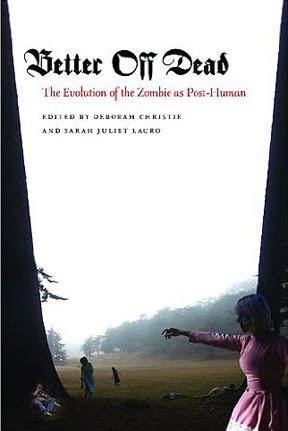
Zombie studies continues to see the addition of new academic analyses as a part of the broader area of horror studies. One of the most recent and valuable additions is Better Off Dead: The Evolution of the Zombie as Post-Human, edited by Deborah Christie and Sarah Juliet Lauro (Fordham University Press, 2011). From the back cover:
The zombie is ubiquitous in popular culture: from comic books to video games, to internet applications and homemade films, zombies are all around us. Investigating the zombie from an interdisciplinary perspective,with an emphasis on deep analytical engagement with diverse kinds of texts, Better Off Dead addresses some of the more unlikely venues where zombies are found while providing the reader with a classic overview of the zombie’s folkloric and cinematic history.
What has the zombie metaphor meant in the past? Why does it continue to be so prevalent in our culture? Where others have looked at the zombie as an allegory for humanity’s inner machinations or claimed the zombie as capitalist critique, this collection seeks to provide an archaeology of the zombie—tracing its lineage from Haiti, mapping its various cultural transformations, and suggesting the post-humanist direction in which the zombie is ultimately heading. Approaching the zombie from many different points of view, the contributors look across history and across media. Though they represent various theoretical perspectives, the whole makes a cohesive argument: The zombie has not just evolved within narratives; it has evolved in a way that transforms narrative. This collection announces a new post-zombie, even before the boundaries of this rich and mysterious myth have been completely charted.
Below, one of the editors, Sarah Juliet Lauro of the University of California, Davis, discusses aspects of this volume.
TheoFantastique: Sarah, thank you for a great read in Better Off Dead, and for coming here to discuss the book. To begin, can you define post-human for readers who may not be familiar with the term, and how did this come to be the approach of the volume?
Sarah Juliet Lauro: For me, most succinctly, post-humanism is a field of study which seeks to get past the binaries and ideals that we inherited from Enlightenment Humanism. Importantly for the zombie, post-humanism tries to trouble concepts like borders and question our opposition of terms like subject/object, male/female, and, increasingly, human/non-human.
TheoFantastique: What interpretive and analytical possibilities were opened up with a consideration of zombies as post-human?
Sarah Juliet Lauro: The zombie has a lot of potential to serve as a kind of icon for various concepts of Post-humanism. For example, the zombie is neither living nor dead, it is “the living dead,” as Romero’s movies make clear. As such, it is a kind of hybrid, not unlike the cyborg, that defies various binary categories. Because the zombie is both living and not living, it specifically communicates with the subject/object binary and raises fascinating ontological questions. My co-author Karen Embry and I discuss this at more length in our “A Zombie Manifesto” (boundary 2, Spring 2008). For the purposes of this collection, though, our invocation of post-humanism was meant to just raise the specter of these ideas, and it was also a bit tongue-in-cheek: even those unfamiliar with post-humanist theory, can see that the zombie is a post-human figure, (that is, literally no longer human), and thus, can get a bit of the gist.
TheoFantastique: In the first chapter there is a mention of an item by way of definition of the zombie. They are described in their various manifestations as having the characteristic of “the absence of some metaphysical quality of their essential selves.” Can you elaborate on what this means, and why it is important for an expanded consideration of the zombie?
Sarah Juliet Lauro: This is Kevin Boon’s essay, and I think that this definition is really central to understanding the whole collection. Since the zombie has evolved so far from its original appearance in Caribbean folklore, in order to be able to talk about all these beings — from the innocuous, Voodoo-controlled, sleepwalking zombies of early films to the fast, viral, cannibalistic zombies of video-games, to even the talking zombies of some, especially comedic representations (like the animated series Ugly Americans) — as zombies, we need a common denominator. For Boon, as for Peter Dendle, what all zombies have in common is the fact that they have been altered, and almost always in Dendle’s approximation, “depersonalized;” they are no longer their original selves.
TheoFantastique: In another chapter their is the intriguing idea that zombies represent a “critique of empire.” I find it interesting that the early Christian movement did something similar, but over time has lost its edge and in some ways has been drawn into empire. Is there the possibility that zombies too will lose their counter-culture ability to critique empire?
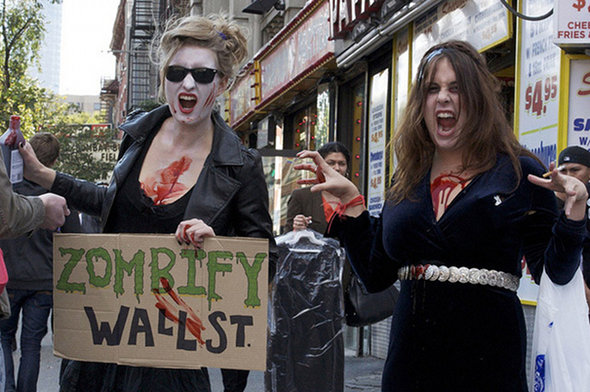
Sarah Juliet Lauro: Yes! This is exactly what I think is happening right now, perhaps not in terms of a critique of empire per se, but specifically in terms of a critique of capitalism. If you look at the zombie mob phenomenon that I discuss in my own chapter in the collection, what we’ve increasingly seen is a movement that began as community-based “play,” wherein people turned up in public dressed as zombies for no apparent reason, increasingly being co-opted by corporate sponsors and local businesses. As we see with with the pivot from zombie walks to zombie pub-crawls, for instance, what began as an entirely playful practice divorced from financial gain is increasingly turned into an opportunity for some people to make money. Thus, the critique of capitalism that was visible in the early days of the zombie mob (2003-2005) is being absorbed by capitalism itself. To me, this is a very depressing turn of events.
TheoFantastique: I was pleased to see a chapter that discusses horror radio, and the presence of zombies in radio dramas. How is this facet of the zombie neglected in academic studies?
Sarah Juliet Lauro: Well, I do know of at least one other zombie collection that has a piece on zombies in radio, but I agree that it is an under mined field and I was very happy to count Richard Hand’s essay among our offerings. My guess is that the lack of attention to horror radio is probably due to access to the archives, but that, in an era where libraries and repositories are working consistently to put things online, we may soon see a boom in attention to early radio drama.
TheoFantastique: How has the breakdown of society’s defining institutions, including belief in the sacred, contributed to the zombie in regards to our cultural attitudes about death? More specifically, as one of your author’s writes, “death is no longer a transition but an outcome.” Or as yet another of your author’s writes, “if death no longer has value – sacred or otherwise – how are we to consider the value of life?” These questions would seem to be at the forefront of contemporary zombie narratives in our post-9/11 environment, illustrated most recently by The Walking Dead.
Sarah Juliet Lauro: Personally, I don’t think that the zombie’s prevalence signals anything like a true devaluing of death; On the contrary, to me the zombie’s popularity shows that even when a culture such as ours has tried to efface death — and I think here of the lack of ritual and festivals around death, of the seeming inoculation to death that we gain by watching the 24-hour cable news cycle, where tragic loss of life is quickly paved over and interrupted by advertisements, or more specifically of the Bush administration’s embargo on showing images of the coffins of returning casualties of the Iraq war — the repressed returns, in the form of the walking dead. As humans, I think we have a real need to work out our feelings surrounding death, and that this can take the form, even, of popular culture’s attention to a figure such as the zombie. Then zombies stalk our movie-screens and college kids play “Zombies vs. Humans” tag on college campuses, I think this enables the viewer and participant a kind of catharsis around our culture’s active diminishment of death.
TheoFantastique: At one point an author states that, “In an increasingly disembodied – virtual generation, the zombie is becoming increasingly biological.” Of course a part of this is also an increasing visceral depiction, which also plays out in crime dramas which focus great attention on the corpse. How is the virtual generation, and perhaps past emphasis on the soul to the neglect of the body, influencing corporeal depictions of the zombie for the millennial generation?
Sarah Juliet Lauro: Well, Peter Dendle’s chapter in the book is one of my favorites (if I’m allowed to have favorites); I think that this see-saw effect that we seem to detect in zombie films is probably visible in horror more generally; there was a great article on Slate.com recently about the way sound effects in horror and thriller films have become more accurate and more disgusting. In the zombie genre, depictions of the body seem to get more visceral, more in touch with corporeal reality and thus, representative of the body as something that falls apart falls apart with age, that becomes wounded, that is threatened by disease and destruction; this is neatly mapped onto our increasing virtuality. We spend so much time online, developing who we are via “tweets” and “likes” that it is possible to forget temporarily that our consciousness is embodied. The zombie is the ultimate reminder that we all live in bodies and that we are vulnerable. This idea is very in line with the post-human theories articulated by N. Katherine Hayles, Anne Balsamo, and others.
TheoFantastique: In your chapter contribution to the book you discuss zombie walks as a form of performance art. How have participants drawn upon this form of art, and what types of messages are they communicating?
Sarah Juliet Lauro: The central thing that the zombie mob and certain types of performance art that I profile in my chapter have in common is the interruption of the everyday, the occupation of public space, and the collaborative nature of the performance. Some performance art may assault you in a comfortable space, like a subway car or a shopping mall, and by means of the performance, force you to re-examine the way you normally inhabit this space, and the role that it plays in your life. Often, bystanders are invited to join in, and because such performances are ephemeral, the viewers lucky enough to be a first-generation audience become, participants; they form the backdrop of the performance, if nothing else. Calling attention to the everyday by means of the performance’s contrast, and the occupation of certain spaces have a lot of potential to critique our society, especially where — as in the commuter’s subway ride, or the shopper’s mall — the performance intervenes in a space associated with work and consumerism.
TheoFantastique: Sarah, thank you again for a fine contribution to the academic study of horror, and the zombie in particular.
Sarah Juliet Lauro: Thank you for inviting me to discuss the collection with you!
The Institute for Comic Studies and Dragon*Con present the fifth annual academic conference for the studies of comics and the popular arts. The conference will take place at Dragon*Con, the largest multi-media, popular culture convention focusing on science fiction and fantasy, gaming, comics, literature, art, music, and film in the US. For more info you check here.
Please submit a proposal that engages in substantial scholarly examinations of comic books, manga, graphic novels, anime, science/speculative fiction, fantasy, or other parts of popular culture. A broad range of disciplinary and theoretical perspectives is being sought, including literary and art criticism, philosophy, linguistics, history, and communication. Proposals may range from discussions of the nature of the comics medium, analyses of particular works and authors, discussions of the visual language of comics and manga, comics and pop culture pedagogy, cross-cultural and cross-medium comparisons, and more. We’re open to any topics relevant to the study of comics and the popular arts.
This conference at Dragon*Con represents the Institute for Comics Studies’ mission to promote the study, understanding, and cultural legitimacy of comics and to support the discussion and dissemination of this study and understanding via public venues.
Acceptance to the academic conference is no guarantee of “guest” status at the convention. In the past, no presenters have received guest status simply for participating in the conference. Dragon*Con is a fan convention and only gives VIP status to celebrity guests. Most presenters and creators pay their own way to the convention.
CALL FOR PAPERS
“Science-Fiction Myths: Travels through Time and Space”
An area of multiple panels for the Film & History Conference on “Film and
Myth”
September 26-30, 2012
Milwaukee, Wisconsin, USA www.filmandhistory.org
Deadline: June 1, 2012
Films that depict travel through time and space captivate us with tales of
the past, the future, the distant, and the alien. These stories are shaped, however, not just by scientific principles, but by complex mythologies that reflect our collective anxieties. How fragile is “our” history? A seemingly trivial change to the past — a dropped book in Back to the Future, an act of kindness in The Butterfly Effect — can sweep away the present and replace it with something far worse (or far better). How do the alien forms of distant worlds beckon us (with a new Earth in Titan A.E.) or disappoint us (with pale imitations of Earth in Firefly) or terrify us (with the upside- down society of Planet of the Apes)? How do space- and time-travel myths give shape to our fears—of loving the wrong person, of leaving home forever, of being forgotten, of entering a foreign world? How do these myths give shape to our hopes—that the future is ours to shape, that the universe is full of wonders, that human experience might transcend time and space?
This area, comprising multiple panels, will treat all aspects of the mythological underpinnings of space and time travel in science-fiction films and television programs. Papers that explore how such myths are played out in science fiction from outside the US and UK are especially
welcome. Possible topics include, but are not limited to, the following:
Nomads: Cold Sleep, Relativity, and the Loneliness of Space Travel
Generation Spaceships and the Ship-as-World (e.g., Alien, Pandorum)
Time Travel and “Fixing History” (e.g., Quantum Leap, 12 Monkeys)
Love, Sex, and the Time Traveler (e.g., Back to the Future, Somewhere in Time)
Who Are You?: Myth and Identity in Space and Time Travel
Paradoxes in Time Travel: Killing Grandpa, and Other Bad Ideas
Just Like California: “Alien” Worlds and Space Travel as Tourism
Galactic Empires: Rome with Spaceships
The Human(oid) Void: Myths of First Contact (e.g., Star Trek, Babylon 5)
Homeward Bound: Myths of the Lost Earth (e.g., Battlestar Galactica, Firefly, Wall-E)
Wormhole Diplomacy: Bridging Cultural Spaces
Proposals for complete panels (three related presentations) are also welcome, but they must include an abstract and contact information, including an e-mail address, for each presenter. Please e-mail your 200-word proposal by June 1, 2012:
A. Bowdoin Van Riper, Chair
2012 Film & History Conference Area: “Science-Fiction Myths”
Southern Polytechnic State University
Email: bvanriper@bellsouth.net
Joseph Laycock has written a new article that explores the Otherkin.
“We Are Spirits of Another Sort: Ontological Rebellion and Religious Dimensions of the Otherkin Community”
By Joseph P. Laycock, PhD Nova Religio – The Journal of Alternative and Emergent Religions
February 2012, Vol. 15, No. 3, Pages 65-90
Otherkin are individuals who identify as “not entirely human.” Scholarship has framed this identity claim as religious because it is frequently supported by a framework of metaphysical beliefs. This article draws on survey data and interviews with Otherkin in order to provide a more thorough treatment of the phenomenon and to assess and qualify the movement’s religious dimensions. It is argued that, in addition to having a substantively religious quality, the Otherkin community serves existential and social functions commonly associated with religion. In the final analysis, the Otherkin community is regarded as an alternative nomos–a socially constructed worldview–that sustains alternate ontologies.
ONE FOR THE ALIENS: If aliens came to earth and could only take one book about comic book art back to their planet, I would give them this tome, that arrived today like a gift from the Art Gods! It is beyond breathtaking, if there is such a thing, and though “only” in black and white, the literal depth of Wally Wood’s artistic masterpieces herein–his shading, his use of zipatones and craftint, remains the highwater mark in comic book history–give these giant-size pages (the classic size of the twice-up original art) an almost three-dimensional feel and look (the cover particularly, with its spot-varnished astronaut figure, had a striking dimensionality that made my jaw drop like a cartoon itself). The printing, book design, layout and typography by IDW is as gorgeous and thoughtful as this magnificent artwork deserved, and they should take a well-deserved bow for creating One For The Ages. Somewhere in Comic Art Valhalla, Woody is looking down, beaming that elfin grin of his with pride in the glorious presentation of the work he bled sweat and tears for, and perhaps wistfully wondering, had a book of this scope and scale been produced in his lifetime, he might not have taken his own life. Now you can truly rest in peace, Wallace Wood. Your legacy is safe for eternity!
Sunday night’s episode of The Walking Dead titled “18 Miles Out” saw conflict among group members come to a head, with a brawl between Rick and Shane as the best illustration of the tensions that run throughout the group. But it would be a mistake to focus on such issues of drama and positive soap opera to the neglect of one of the major issues related to the program, raised in both the final episode of Season 1, as well as several episodes in Season 2. That major issue is suicide.
In previous posts I have noted that The Walking Dead continues to wrestle with many of the ethical issues that Frank Darabont has addressed in his work in films like The Mist, specifically the dangers posed among human beings with the breakdown of the social order, and also the questions related to whether life is worth living at all, all of which take on a greater sense of urgency in the face of the release of creatures from another dimension or a zombie apocalypse.
Of course, the threat of the zombies provides a scenario by which to address these serious questions that are all too pressing in the real world. Beyond the philosophical, theological, and existential issues related to the question of the meaningfulness of life (or lack thereof), The Walking Dead, and specifically the episode “18 Miles Ahead,” has helped focus attention on suicide as a national problem. News stories have raised attention about the alarming rise in suicide among those losing hope in the face of the global recession, among college students, military service members, bullied youth, and members of the LGBT community. Given the diverse parts of culture in which suicide is on the rise, it has truly become an American epidemic. As a parent of a child of suicide I applaud The Walking Dead for raising the issue, and my hope is that it will spur conversations that lead us to consider not only the broader issues of meaning in life, but also provide assistance to those who believe an end to their lives is the only or best option.