Most Influential Science Fiction Movies
Infographic designed and provided courtesy of http://www.turtlemat.co.uk/. Original source at Grasping for the Wind.

Infographic designed and provided courtesy of http://www.turtlemat.co.uk/. Original source at Grasping for the Wind.

Science Fiction Across Media: Alternative Histories, Alien Futures
Umeå University, Sweden
April 23-24, 2012
Science fiction is becoming a mainstream and increasingly popular genre in fiction and film, as demonstrated by recent novels by Kazuo Ishiguro, Michel Houellebecq, Junot Diaz and William Gibson as well as the global success of James Cameron’s Avatar. Yet science fiction is more than simple entertainment. This workshop considers science fiction as multi-medial explorations of alternative histories and alternative futures and invites scholars across the humanities to present their ongoing work on science fiction either in the form of full-length 20-minute papers, or as shorter papers on work in progress or mini-presentations on crucial concepts or ideas (8 minutes).
We are particularly interested in papers that explore science fiction in and across its varied media — novels, short stories, films, animation, comic books, computer games — and/or that focus on some aspect of the complex representation of natural and technological ecologies in the genre:
– alternative social and environmental histories
– new approaches to the representation of crisis and disaster
– alien ecologies and their relation to terrestrial crises
– alternative visions of humans’/nonhumans’ relationship to place
– wild, rural and urban environments of the future or on other planets
– contrast or convergence of organic, mechanical and virtual environments
– mapping and the (technological) representation of territories and geographies
– futurist forms of energy, transportation, food provision and resource extraction
– synthetic forms of nature, including synthetically generated or modified bodies
– environmental utopias and dystopias
– new directions in the representation of gender, race and species in science fiction
– ecological scarcity and abundance
– physical and systemic violence in relationships within and between species
– thematic, stylistic and media changes in science fiction as a genre
– changing audiences of science fiction
The workshop will take place in HUMlab, Umeå University’s digital humanities laboratory, and will emphasize informal, yet critical discussion of papers and presentations.
The workshop is arranged by Finn Arne Jørgensen (Umeå University) and Ursula K. Heise (Stanford University) on behalf of Umeå Studies in Science, Technology, and Environment (USSTE), the Nordic Environmental History Network (NEHN), and the Nordic Network for Interdisciplinary Environmental Studies (NIES).
Please submit a 200-word abstract and a 1-page CV to scifi@nehn-nordic.org by Saturday, March 10. Indicate whether you wish to present a full-length 20-minute paper, a shorter paper on work in progress, or a mini-presentation on crucial concepts or ideas (8 minutes).
We will cover accommodation and meals for all participants, and will seek to provide travel fellowships for participants from the Nordic countries.
For more information, please contact:
Finn Arne Jørgensen
Associate Senior Lecturer, History of Technology and Environment
Department of Historical, Philosophical, and Religious Studies
Umeå University
901 87 Umeå
finn.jorgensen@idehist.umu.se
 Joseph Laycock has recently been given the privilege of guest editing a special issue of Nova Religio on the paranormal. In the last few years, several good books have appeared that consider so-called “paranormal” beliefs, discourses, and experiences as an object of inquiry for religion scholars. Like the category “religion,” the category “paranormal” is poorly circumscribed and may potentially include a wide milieu of supernatural and pseudo-scientific beliefs and ideas. We seek papers that address the place of paranormal discourses within the larger context of religious and cultural studies. We also invite papers on religious aspects of specific paranormal discourses such as UFOs, psychics, hauntings, etc.
Submission Guidelines
Potential authors should first review Nova Religio’s website to get a sense of the aim and scope of the journal. Authors should follow the guidelines for authors on the website for the format of the paper and its citations.
Submission queries, including abstracts, should be sent to Joseph Laycock: jlay@bu.edu. Completed articles are due August 1, 2012, and should be approximately 8,000-10,000 words including all documentation and critical apparatus. As the guest editor, Laycock will make the initial determination about which papers are suitable for publication, and work with authors to improve their draft papers before forwarding them to Nova Religio’s co-general editors. The co-general editors, Eugene Gallagher, Joel Tishken, and Catherine Wessinger, will make the final decision about whether or not a paper can be accepted for publication.
Related posts:
“Joseph Laycock: Vampires Today”
 Scott Derrickson is a film director and writer with a love for horror films. This has been demonstrated in his work on Hellraiser: Inferno (2000), Urban Legends: Final Cut (2000), The Exorcism of Emily Rose (2005), as well as his work in science fiction with The Day the Earth Stood Still (2008). Scott is leading a seminar on horror in film this summer:
Scott Derrickson, director of The Exorcism of Emily Rose and the upcoming Sinister and Two Eyes Staring, is a connoisseur of the horror genre’s spiritual resonances. This summer he will be leading “Transcendent Darkness,” a seminar at the Glen Workshop West, a weeklong arts workshop held in Santa Fe, New Mexico, from July 29-August 5, 2012.
Scott’s seminar and the accompanying discussions will confront the grotesque in the context of grace, in the grand tradition of Flannery O’Connor. In the end, Derrickson believes, confronting the darkness in us is often not only a prelude to understanding hope, but can itself be an experience of the divine. The selection of films, from horror to film noir and more, will be a guided tour through the films that have provided the most transcendent experiences for Derrickson as a Christian and as a filmmaker.
The Glen Workshops (Glen West in New Mexico, and Glen East in Massachusetts) have been hosted by the literary journal IMAGE since 1995, and are geared towards providing a space for artists and inquirers to create and investigate art in conversation with faith. Glen attendees of many religious backgrounds, allegiances, and practices have found an openhearted community that doesn’t shy away from different understandings. The Glen also offers a rich extracurricular menu of readings, discussions, opportunities to share your work with others, ecumenical evening worship services, and a free day to explore the surrounding area and spend time with new friends. Visit www.glenworkshop.org, email glenworkshop@imagejournal.org or call the staff at 206.281.2988 for more details about Scott’s course or the workshops in general.
Related post:
Interview with Scott Derrickson: The Day the Earth Stood Still”
 I received notification this morning that the ballot for the Rondo Hatton Classic Horror Awards is now available online. The Rondo is going on ten years, and it was created for “recognizing the best in monster research, creativity and film preservation.” As I scrolled down the list through the various categories, I was very surprised to find TheoFantastique listed as a nominee in the category of Best Blog for 2011. This is TheoFantastique’s first nomination, it is an honor, and it is greatly appreciated just to be nominated as this blog, in part, attempts to make a contribution to horror culture. Interested readers can cast their votes on the ballot here.
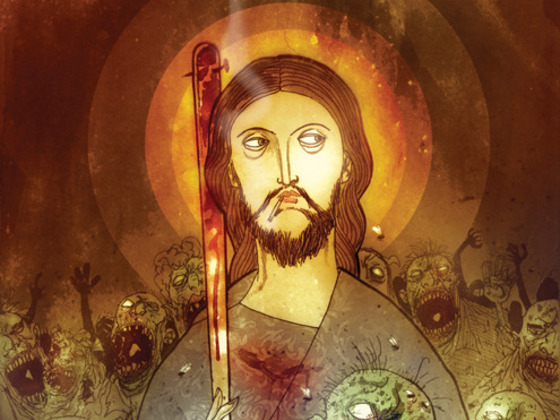
We need your help to raise a small amount of funds to publish THE UNDEAD AND THEOLOGY through a Kickstarter Campaign. The project description:
We need funding for the typesetting costs for the forthcoming book THE UNDEAD AND THEOLOGY (Wipf & Stock). The academy and pop culture alike recognize the great symbolic and teaching value of the undead, whether vampires, zombies, or other undead or living dead creatures. This has been explored variously from critiques of consumerism and racism, explorations of gender and sexuality, consideration of the breakdown of the nuclear family. Most academic examinations of the undead have been done from the perspectives of philosophy and political theory, but another important avenue of exploration comes through theology. Through the vampire, the zombie, the Golem, and Cenobites, contributors address a variety of theological issues by way of critical reflection on the divine and the sacred in popular culture through film, television, graphic novels and literature.
You can learn about the rewards for participating, and make your contribution here.
This widget provides an up to date accounting of pledges toward the project:
The intersection of the fantastic and popular culture was evident at the Super Bowl with the following commercials:
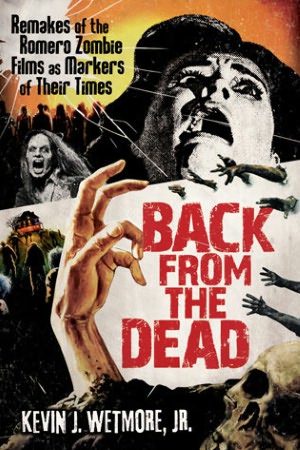 Zombies are more than the monsters of the moment. While their popularity is at an all time high in popular culture, they have been with us decades, and their meaning changes as our cultural fears evolve. In the following interview, Kevin Wetmore discusses his exploration of the shifting meanings related to Romero’s zombies that he describes in his book Back From the Dead: Remakes of the Romero Zombie Films as Markers of Their Times (McFarland & Co., 2011). Wetmore is an actor, director, editor and author, whose previous books have covered topics ranging from Star Wars to Renaissance faires. He is associate professor of theater at Loyola Marymount University in Los Angeles.
TheoFantastique: Kevin, thank you for helping me secure a copy of your book, and for your willingness to be interviewed to discuss it. Given your background in theater, how did you come to develop both a personal and academic interest in zombies?
Kevin Wetmore: Actually, the interest in horror was probably there first. I am an actor and director and academic by training and inclination, but have been a horror fan since I can remember. I had always loved Romero’s films – I remember seeing the commercials for Dawn of the Dead on TV back in 1978, when I was 9 and being both frightened by the images and drawn to them. I asked my parents to take me, but wisely they did not. I eventually saw it as a teenager and have seen all the films since perhaps hundreds of times. I moved to Pittsburgh to attend the University of Pittsburgh for a Ph.D. in Theatre, and Pittsburgh is America’s zombie capital. I talk in the book about moving there the same weekend as the 25th anniversary of Night convention and going to that instead of unpacking. I am also part of a generation of fanboy academics. We would be reading theory and critical analysis in grad school and then go home and watch movies or TV and see the same cultural patterns. While I was doing research on African and Japanese theatre, my present to myself was to write a book about Star Wars (The Empire Triumphant) that took a postcolonial approach to the depictions of religion and race in those films. I have also been fortunate enough as an actor living in Los Angeles to appear in several horror b-movies, so I have been a zombie myself and eaten by zombies (and a werewolf, and a serial killer). So all parts of my life: academic, artist, horror fan have kind of blended together.
 TheoFantastique: In your book you look at Romero’s zombie films, and various remakes or films influenced by his zombie narratives, and you approach them from the perspective of cultural sociophobics. Can you define that, and explain why this perspective helps us understand important dimension of these films and the times in which they were produced?
Kevin Wetmore: Films don’t mean – they generate meaning. You watch, not as some personality-less, history-less witness, but as someone who brings your own stuff to the story. Sociophobics looks at the fears not of the individual but of society as a whole – what scares us collectively? What are we as a nation or even as a species worried about. So you have a number of films in the late Sixties and early Seventies, such as NOTLD that on the surface are simple drive-in horror films but which contain subtext about the Vietnam War or the civil rights movement. And it doesn’t matter what the filmmakers intended, because we are shaped by our culture and times whether we are aware of it or not. So, for example, at a time of economic crisis and concern about the consumer culture, Romero gave us the original Dawn. Seven years later, under Reagan, Day showed an out of control military exploiting amoral scientists. But the 2004 Dawn reflects the realities of a post-9/11 culture: one in which people do not really connect with one another and in which we fear that our neighbors or even friends and family may turn out to be a monster trying to convert us to their way of life.
TheoFantastique: How have sociophobocs changed from 1968 with the original Night of the Living Dead, to our postmodern and post-9/11 period?
Kevin Wetmore: As the nation, society and culture change, so too does what frightens us. We can still watch the originals and they have something of the power to frighten, but they no longer speak with immediacy to our culture. To give but one example of difference. Both versions of Dawn feature humans trapped in a mall confronted by zombies. The original features slow zombies. The remake featured fast, running zombies. We can see this as a marker of the change in fear. 9/11 was fast, took us by surprise, and the threat was immediate. Films reflect the times and the people that made them. It is no coincidence that the Saw and Hostel films were made at a time when our nation was debating torture. It is no coincidence that films like Cloverfield and Spielberg’s War of the Worlds, which show monsters attacking buildings in New York came to prominence after 9/11. All horror, even crappy 2-AM-on-theSyFy-channel horror, reflects the fears of the culture that made it. The best horror films, in my humble opinion, function both as horror and as sociophobic marker. They stand the test of time because they scare us on a visceral level, not by yelling “boo” or showing gore but by filling us with dread. They allow us to view the things we fear from a distance and somehow contain the fear.
 TheoFantastique: One of the interesting facets of this discussion comes up in light of your mention of audiences now being “active participants” in regards to these films. Now with participatory culture fans are involved in participation with the zombie and its sociophobics through websites, blogs, horror conventions, fan film creations, Zombie Walks and other things. How has this participatory aspect of fans helped shape the development of the “zombie canon” of films?
Kevin Wetmore: It’s interesting how the age of the zombie has arrived. I suspect we are seeing a few different phenomena here. First is that the zombie is a monster for all milieu. You can put it anywhere and you can have it while anything is going on. Vampires and werewolves tend to dominate their narratives and must be fought. Zombies are just there and you can do anything with them. This flexibility also means that we can use the zombie to express any fear: of the masses, of foreigners, of change, of religious people, of the young, of the old, and, of course, of the dead. The zombie is also a safe way to think about your own demise. Except for the goths, the truly morbid, and those who like to frighten their parents, few of us think about our own bodies after we die. The zombie gives us a way to live on, so to speak. The horror in zombie films is that once bitten or when one dies, one becomes a zombie, but is that really the worst thing ever? It becomes a form of wish fulfillment: do what you want, when you want, and the only way to cease existing is if you suffer a head injury. There is a freedom in being a zombie. You can disappear into the mob and you have no individual responsibility. There is also a power. Zombies are terrifying. If you are a zombie, others fear you and fear what you can do. Participatory zombie culture is also wish fulfillment on the other end. Last year for Halloween, I went to a “Zombie hunt” wherein one was given a gun that shot soft pellets and had to negotiate a maze set up in a warehouse and emerge on the other side without being caught by the zombies. The zombies wore goggles over their makeup and you could shoot them on sight, but only a head shot would cause the actor playing the zombie to lie down and let you pass. In other words, my friends and I paid for the privilege of running through a warehouse shooting “zombies” in the head without consequences. So all aspects of zombie participatory culture represent freedom and power: I can kill without consequence if I am living or if I am zombie. The participatory culture allows one to act out a part of these fantasies safely, and we see that then echoed in the films, it becomes a kind of loop. At the same time we see what Henry Jenkins calls “textual poaching” – fans take the zombie stories and make them their own, sometimes writing their own and sometimes living their own. It’s the exact same thing as a Star Trek convention. In the case of the zombies, the guy with the dull 9 to 5 job gets to be a monster or a monster slayer, in the case of Trek the same guy gets to be Commander Vertrox of the starship Verillion.
 TheoFantastique: What has been the result of the shift of horror from an adult genre to youth culture in the depiction of zombies and their sociophobics?
Kevin Wetmore: Hmmm…I do not know if I agree entirely that there has been a shift. Horror in one sense has always been a part of youth culture since youth culture developed in the post-war years. The Fifties aimed horror at teens with cars and disposable income. Whereas Dracula and Frankenstein was aimed at adults or at least the whole family, I Was a Teenage Werewolf wears its target demographic on its titular sleeve. Likewise, Eighties slasher films were clearly aimed at the 14 to 30 demographic as well. The original Dawn was released unrated, so on those over 18 were technically allowed to see it, but the development of the home video market in the Eighties also rendered the MPAA ratings kind of moot. I would see twelve-year-olds renting The Exorcist and I Spit on Your Grave. Carol Clover (among others) pointed out that most horror films were, in fact, cautionary tales aimed at the young: if you smoke, drink, disobey authority and have sex, the monsters will kill you. So I actually see a shift back towards more adult or serious horror since 9/11. What we see happen now is a kind of bleak nihilism and a sense of helpless despair. I am thinking here of films like The Mist or The Strangers, but even the remake of Dawn ends with the implied deaths of all characters. In a sense, the original Night, with its bleak, ironic ending, paved the way for the current crop of films which end with the deaths of all the characters, often for stupid, avoidable reasons. That might also explain the current popularity of zombie culture: not that it has caught up with our culture but that our culture has finally caught up with it.
TheoFantastique: You refer to Romero’s zombie films as “apocalyptic and millennial.” What do you mean by this? And how did 9/11 and fears of religious fundamentalism impact this element of zombie films?
 Kevin Wetmore: Yes, I think 9/11 certainly brought religion to the forefront in a number of ways, both the religious faith and culture of the terrorists and our own nation’s response to it. President Bush responded to 9/11 and framed the two wars in its wake in religious language, most obviously casting terrorists as “evil” and America as a force of goodness and Godliness in the world. So we fear religion and we fear those who give themselves wholly over to it, as there is no reasoning with someone who believes God himself wants them to kill you. There are two streams of horror that result from this. The first are films that present evil as real: the devil exists and he is out to get us. The second are films that show fundamentalists as being dangerous. The behind every deeply believing person is a sinister reality: witness The Last Exorcism, End of the Line, The Rite, and The Reaping. Either the devil is real and out to get us, or it does not matter as fundamentalists will actually do his work for him.
But there is also something of the apocalyptic in both the biblical sense and the popular sense both in American culture in general and in zombie films in particular. In the biblical sense, “apocalyptic” means “hidden things revealed,” but in the popular sense it is conflated with eschatological things: the end of the world. Zombies represent the end of the world. Romero shows the dead rising, outnumbering the living, and then eventually owning the world, transforming it in their image. The living have two choices: die in a way that one does not “come back” or become a zombie and perhaps kill those you love. Similarly to President Bush, Romero also frames his stories in religious language. There is a reason that the most famous line from the original Dawn, repeated by the same actor in a cameo in the remake is, “When there is no more room in hell, the dead will walk the earth.” The language of Revelation is also very zombie-friendly. It speaks of the dead returning and rising and battles between good and evil. There is not that much difference between, say 28 Days Later and Left Behind. And there are even some apocalyptic Christian zombie stories out there, most notably Mark Roger’s The Dead. I also find it fascinating that the phrase “the Zombie apocalypse” has come into common usage. It conflates popular zombie narratives with the Christian idea of the end of the world and a battle between good and evil. It is a secular apocalypse, to be sure, but still, religion frames the idea of zombies.
TheoFantastique: In your discussion of Dawn of the Dead (2004) you conclude by stating, “The ending is emblematic of post-9/11 horror. It is bleak, nihilistic and offers little to no hope of survival.” You have a forthcoming book titled Post-911 Horror in American Cinema (Continuum). How do you see the current wave of zombie films, and with The Walking Dead perhaps television too, reflecting various aspects of post-9/11 horror?
 Kevin Wetmore: There are several tropes, if you will, that have risen to prominence in the wake of 9/11 in horror cinema, many of which were present in zombie cinema before but which are now almost central. The first is the bleak ending. Let us compare Dawns. In the first, Fran and Peter get in the helicopter and escape. She is pregnant. They have nowhere to go, but some sense of hope or a future is implied. Four people reach the boat at the end of the remake, but if one continues to watch through the credits, we see the boat run out of fuel, we see them find a living head in a cooler and then we see them land on an island and get attacked by a horde of zombies. The camera then falls and a zombie falls in front of it. The implication being that hope is impossible. We see the tropes as well in Romero’s post-9/11 films. The pseudo-documentary has become a central subgenre in horror: Paranormal Activity, Apollo 18, Devil Inside, and Cloverfield, for example. Romero gives us Diary of the Dead, a pseudo-documentary that still contains his social commentary (the film students are more concerned about how many YouTube hits their footage gets than their friend who just died), but also reflects the mediated-yet-immediate experience of 9/11. For most of us, 9/11 was immediate but not experienced directly. We watched it happen on television in real time, and then repeated over and over and over again. This is what pseudo-documentaries do – give us the echo of the experience of 9/11.
Another trope that the zombie film has had all along, but which we have finally caught up with is the idea of a hostile world. As with ghosts in Pulse and vampires in Stakeland or 30 Days of Night, zombies have taken over “our” world and it is theirs now. If we are to remain safe, we must change how we live our lives and even curtail some of our freedoms and desires in order to remain alive, safe and ourselves. As I noted above when we discussed participatory culture, there is also an element of freedom from restraint that is reflected in post-9/11 horror. Zombies do not deserve mercy, the opportunity to surrender or the protection of the Geneva convention. “They” attacked “us” and cannot be reasoned with, therefore anything we do in response is not only justified but necessary. Fighting zombies allows us to justify the worst kinds of behavior. I am not suggesting it was necessary to read Osama bin Laden his rights, just that zombie cinema reflects a world in which we are fighting to win, but the old rules no longer apply.
Most of all, however, post-9/11 horror is bleak, nihilistic and hopeless. In slasher films, one dies because of what one has done: ignored one’s responsibilities or authority figures, engaged in immoral behavior such as premarital sex, or ignored the dangers of camping where a massacre occurred 25 years ago tonight. In post-9/11 horror, one dies not because of what one did but because of where one is. Perhaps the best example of this comes from The Strangers, in which Kristin asks, “Why are you doing this?” and one of the masked killers answers “Because you were home.” One dies not because of action but because of proximity. The terror attacks of 9/11 showed random, anonymous death killing thousands for no reason other than they were on the hijacked plane or they were in the targeted building. Shows like The Walking Dead demonstrate the same random, anonymous death. People die and/or become zombies for no real reason or justification. And that reflects the world we live in now, or at least the way it is perceived.
It’s their world now.
TheoFantastique: Kevin, again, thank you for your discussion of the book. I hope you can come back in the near future to discuss Post-9/11 Horror in American Cinema.
Kevin Wetmore: I would be delighted to. Thanks again for the opportunity to discuss this book.

A series of bad reviews by film critics, echoed by many rank and file moviegoers, didn’t stop The Devil Inside from doing extremely well at the box office. The film is but the latest in a string of films with the theme of demonic possession, forming a horror subgenre in their own right. This includes films like The Rite, The Last Exorcism, The Exorcism of Emily Rose, The Exorcist, and even films like Paranormal Activity. In the final scene of that film viewers see what appears to be a form of possession having taken place, which signals a shift in the film’s narrative from paranormal ghost to demonic possession horror. Films in other subgenres have blurred the lines as well, as in [REC]2 which, as a sequel from an apparent contagion producing zombie-like victims morphs into demonic possession as the explanatory cause.
This raises the question as to why we are so fascinated by the idea of demonic possession, and in turn, why we produce so many horror films that build upon this premise (with little depth or variation). Psychology Today explores this topic with an essay by Dr. Stephen Diamond titled “The Devil Inside: What Fascinates Us About Exorcism and Demonic Possession?.” Diamond introduces his topic with reference to The Devil Inside by asking
What does the astounding and unexpected popularity of this movie say about us and our culture psychologically? Why are high-tech, scientifically-minded, religiously secular twenty-first century cynics so fascinated with a (bad) film about exorcism, Satan and his demons?
A number of social, cultural, and religious elements could be explored in an attempt to answer such questions, but given Diamond’s area of training, and the focus of the publication in which he is writing, Diamond challenges his colleagues in psychology to consider what belief in possession and exorcism might tell us about the human condition in this area.
Perhaps it’s time psychologists start asking some of those same questions. What is exorcism? How does it heal? Can we learn something valuable about psychotherapy from exorcism? Are there certain techniques employed by exorcists that psychotherapists should consider when treating angry, psychotic or violent patients? Are there vital existential or spiritual questions addressed by exorcism–for example, the archetypal riddle of evil–that psychotherapy detrimentally avoids or neglects?
One need not necessarily accept either religious or psychological interpretations for what Diamond labels “possession syndrome” in order to benefit from an exploration of this topic through this essay. It serves as another reminder that horror films have much to tell us about our fears as well as how they are informed by cultural and religious ideas.
Related posts:
“Satanism, Exorcism, and Social Horror Trends”
“Cinefantastique Online – THE RITE: Satan, Possession, and Unlikely Sources of Faith”
 Doctor Who is a cultural phenomenon in both the UK and the United States, continuing to go from strength-to-strength as it approaches its 50th anniversary in 2013. Over the show’s long history on television—and in various spin-off TV shows, audio adventures, novels and comic books—religion and religious themes have consistently been a subject of interest. In recent years the show has attracted everything from Church of England conferences dedicated to its use in preaching to guest appearances by Richard Dawkins. Abstracts of 300 words are therefore invited for a proposed edited collection examining Religion and Doctor Who. The collection will consider the subject in its widest sense, examining portrayals of religion on the show, in spin-off media (including TV, audio, internet, comic books and video games); fan cultures, and the use of Doctor Who in religious debates. The book will be aimed at popular-academic readership. Possible subjects include, but are not limited to:
• Religious or mythic themes (salvation, return, ritual etc.) in the series.
• Critiques and deconstructions of religion in Doctor Who.
• The use of Doctor Who to chart British religious history from 1963 to the present.
• Death and the afterlife in Doctor Who and Torchwood.
• The Doctor as a Christ figure.
• Portrayals of non-Christian religion in the classic series or BBC revival.
• Fan response to “religious” episodes.
• The use of Doctor Who by religious organisations.
• Religion in audio adventures, comic books and video games.
• Canonicity and Doctor Who as a surrogate religion.
• Doctor Who as a tool for theological reflection.
• Using Doctor Who to teach Religious Studies.
Abstracts should be 300 words in length, and include a short biography of the author. Abstracts should be sent to DrWhoReligion@gmail.com. Deadline for receipt of abstracts: 20th April 2012.



