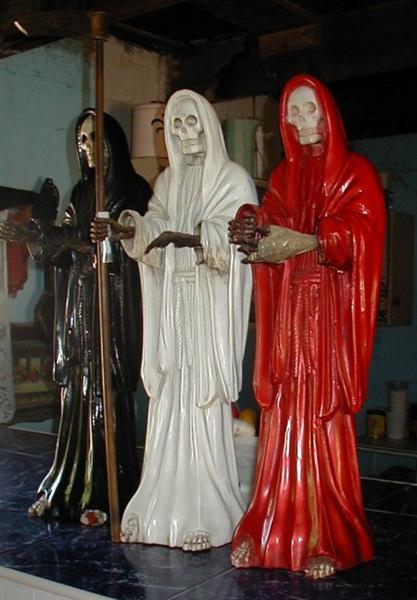
This morning I was catching up on various essays at Religion Dispatches and I came across one that especially caught my attention. It was titled “Death Couture: Not for Halloween Only,” with the byline “De-exoticizing Mexico’s patron saint of death,” by Stephen Andes. This fascinating essay describes La Santa Muerte, translated as “Holy Death” or “Sacred Death,” a figure connected to Mexico’s celebration of the Days of the Dead, and mistakenly equated by the American media only with alleged drug lord cults. A Google search for this saint reveals a number of fascinating images, and the one included with this essay is reminiscent of the representations of death in Roger Corman’s The Masque of the Read Death (1964), while others also give the figure wings. The Religion Dispatches essay describes this saint as
…a feminine representation of death—a fate that, like it or not, awaits all people. She is clothed in long grim reaper-styled robes and often carries a scythe in one hand, and either a globe or scales in the other. Often mistakenly translated as “Saint Death,” La Santa Muerte is closer to orthodox Catholic devotion to spiritual entities such as archangels, not physical human beings. She is the personification of the inevitable, with the hope that the end might not be so painful: “The Lord Almighty grant us a quiet night and a Holy Death,” goes the liturgical prayer.
Given my interest and research in Halloween and related death celebrations by various cultures I found this saint of particular interest. In my view she would make for a wonderful monsterous figure in a new horror film directed by Guillermo del Toro. Would someone pass along the idea and give me credit?
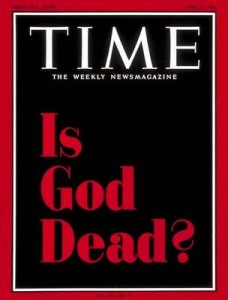
On Halloween I had the opportunity to be a part of a panel on religion and zombies at Emory University’s symposium on Zombies and Zombethics. This session was sold out, and filled with lots of interested listeners. My colleague and friend Scott Poole, author of Monsters in America, was one of my fellow panelists, and our presentations overlapped somewhat as they addressed nihilism in horror and the zombie subgenre. You can find a summary of Scott’s fine presentation on his website.
My presentations served as something of a counterpoint to Scott’s, but did present areas of agreement and overlap in contemporary horror’s fascination with nihilism and how this manifests in a critique of aspects of the Christian narrative in its eschatology, attitudes to the soul and body, and the hopes for life after death. However, my presentation noted that while the postmodern and post-Christendom (distinguished from the post-Christian) aspects of contemporary horror critiques Christian eschatology, it also presents a “neo-apocalyptic variant” that must be wrestled with as well. In addition, my research on the zombie walk phenomenon also reveals that in addition to expressing aspects of entertainment and performance art, participants may also be flirting with subversive ideas related to death and the body, monistic rather than dualistic concepts in human nature, and a synthesis of Christian and metaphysical ideas related to what Catherine Albanese has called the “enlightened body-self.” I concluded by suggesting that theologians need to take such pop culture phenomena seriously through an expanded concept of the sacred, and that by adopting an inductive theological method as in Peter Berger’s approach in A Rumor of Angels, some expressions of the zombie walk may reflect “signals of transcendence,” hints of a connection to the divine through mundane activities that transcendentalizes secularity. These and related ideas are developed more fully in my chapter contribution to https://wipfandstock.com/store/The_Undead_and_Theology titled “Zombie Walks, Zombie Jesus, and the Eschatology of Postmodern Flesh.”
It should also be noted that the subject of nihilism in contemporary horror is a major issue for consideration by scholars and theologians. There is much to discuss and debate as to whether horror’s penchant for nihilism, displayed for example each week in The Walking Dead and in Joss Whedon’s film The Cabin in the Woods, represents an intractable problem for theistic conceptions of the cosmos in favor of atheism, or whether the school of the Graveyard Poets from the past in the Gothic tradition can, with appropriate updating in light of the challenges of modernity and postmodernity, provide some redemption and a “horror with hope” in a contemporary eschatology. The often heated discussion by Matt Cardin at The Teeming Brain, and the work of Scott Poole and myself, point to the significance and relevance of this issue for contemporary discussion among scholars.
In honor of Universal Studios 100th anniversary, their release of Frankenstein and Bride of Frankenstein on the big screen with Turner Classic Movies and Fathom Events, and Halloween on Wednesday, I am drawing attention again to a great short film I’ve looked at previously. It’s The United Monster Talent Agency.
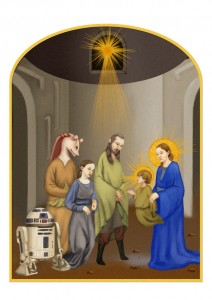
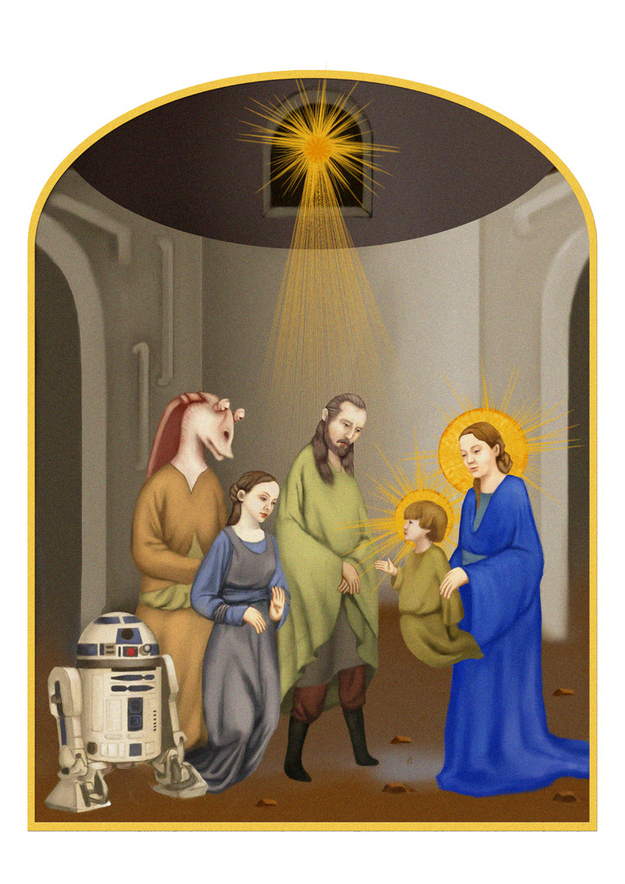
I recently came across a link to some art by Chey Chao that took Star Wars and framed it in the context of Medieval art. Not only is the art interesting, but since Star Wars drew heavily from various mythological sources, has become a mythology in its own right, and provides the basis for the spirituality of Jediism, this combination of Medieval religious art forms and Star Wars is intriguing on a number of levels. See the complete series of work at BuzzFeed.
For examples of other art that connects science fiction to religion see the work of Jeff Carter.
Related posts:
Whitt and Perlich: Science Fiction, Fantasy, and Millennial Mythmaking
Culture, Identities and Technology in the Star Wars Films
Adam Possamai: Jediism, Matrixism and “Hyper-Real” Spiritualities
 James McGrath of the blog Exploring Our Matrix recently brought an item to my attention from i09, a post by Charlie Jane Anders titled “Big Theological Questions that Science Fiction Should Answer.” The essay notes that science fiction frequently addresses theological questions, but suggests a different series of questions that are largely unexplored. This piece makes for a companion with another essay at the site titled “The 7 Deadly Sins of Religion in Science Fiction,” which while very good, should have, in my opinion, been expanded with the addition of number “8: Simplistic religion-bashing in the name of science.”
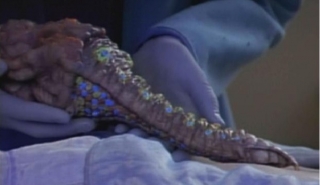
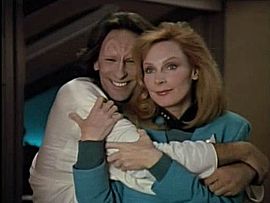
These items are of interest for several reasons. First, a recent press release from the University of Valencia argued that science fiction is not being utilized as a tool to foster student interest in the sciences. (See i09s discussion on this here.) Second, I would build on this and argue that science fiction can and should be drawn upon by theologians as a tool for theological and cultural reflection. I will argue precisely this in a 2013 journal commentary for Multnomah University in an edition dealing with gender. There I will draw upon an episode of Star Trek: The Next Generation titled “The Host,” in which Dr. Beverly Crusher falls in love with a humanoid alien, Odan, who later becomes deathly ill. Dr. Crusher comes to discover that the real Odan is a small, slug-like creature who exists in symbiotic fashion within a humanoid host. Dr. Crusher wrestles with and ultimately comes to accept this situation, until Odan is transplanted into the a female host, making it impossible for Crusher to reconcile this with her ideas on gender and sexuality. In my essay commentary I will argue that since evangelical theologians believe that divine revelation takes place as the transcendent communicates through cultures, that science fiction, which postulates alternative possibilities within cultures and a distancing process which enables fresh thought on difficult issues, this means that the science fiction genre provides unique opportunities for theological reflection.
 The two posts in i09 referenced above that suggest a relationship between theology and science fiction connect with my own thinking on the issues, and I suggest that science fiction not only tackle previously neglected issues in theology, but that theologians also consider science fiction as a genre in which to wrestle in fresh ways with things like origins mythology, conservative theological assumptions about humanity being “alone in the universe,” the incarnation, and the atonement.
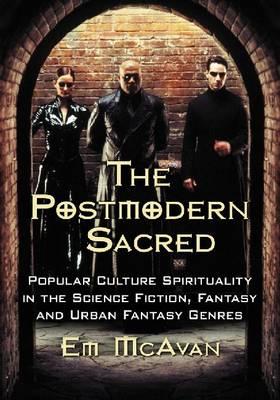
This is a volume I’ve been looking forward to. I enjoyed Emily McAvan’s thesis, summarized in an issue of the Journal of Religion and Popular Culture, and have referenced it in this blog’s About TheoFantastique page. MacAvan is one of a number of exciting women scholars working in religion and pop culture, such as Danielle Kirby and her forthcoming volume Fantasy and Belief: Alternative Religions, Popular Narratives, and Digital Cultures (Equinox Publishing, 2013). The Postmodern Sacred: Popular Culture Spirituality in the Science Fiction, Fantasy and Urban Fantasy Genres published by McFarland is described online:
From The Matrix and Harry Potter to Stargate SG:1 and The X-Files, recent science fiction and fantasy offerings both reflect and produce a sense of the religious. This thoughtful volume examines this pop-culture spirituality, or “postmodern sacred,” showing how consumers use the symbols contained in explicitly “unreal” texts to gain a second-hand experience of transcendence and belief. Topics include how media technologies like CGI have blurred the lines between real and unreal, the polytheisms of Buffy and Xena, the New Age Gnosticism of The DaVinci Code, the Islamic “Other” and science fiction’s response to 9/11, and the Christian Right and popular culture. Today’s pervasive, saturated media culture, this work shows, has utterly collapsed the sacred/profane binary, so that popular culture is not only powerfully shaped by the discourses of religion, but also shapes how the religious appears and is experienced in the contemporary world.
We can run, but we can’t hide. Eventually we will meet our Doom, individually as well as collectively. And there are a variety of ways in which it might happen, with some more plausible than others. Many believe that The End will come in December of this year in keeping with certain interpretations of an ancient Mayan calendar system. Others predict it will come by way of eco-catastrophe, thermonuclear war or global financial collapse.
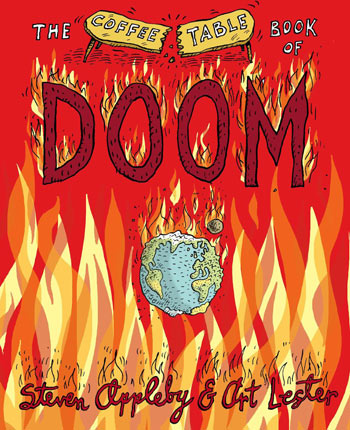
But we might as well have fun as we wait for Doom to tap us on the shoulder, right? And with that I introduce you to the new volume The Coffee Table Book of Doom (Plume, 2012). This is an entertaining and well done volume, that also includes a lot of serious material that can depress the reader when reminded that, short of transcendent intervention, one of the Doom scenarios presented in the volume will eventually play out. The promotional material with the book raises related questions:
* Could an alien invasion really happen?
* Is every creature on Earth becoming female, leading to the end of mankind?
* Is the human gene pool getting weaker?
* Can earthquakes start in outer space?
* What should you pack in your GOOD (Get Out of Dodge) bags?
Fully illustrated in two-color, THE COFFEE TABLE BOOK OF DOOM warns us that it’s not just the Four Horseman of the Apocalypse we have to worry about. This tongue-in-cheek informational book combines fascinating and often alarming facts with each chapter committed to the different ways of how mankind as we know it will come to a grisly end..
Whether we’re baked, fried, frozen or sucked dry…the end is near. We might as well laugh about it.
The popularity of programs like The Walking Dead and Doomsday Preppers remind us that apocalypticism is constantly on our minds. The Coffee Table Book of Doom is a nice contribution to this pop culture niche that is also a growing industry. It is also a book that enables us to have fun and whistle during our stroll through the graveyard.
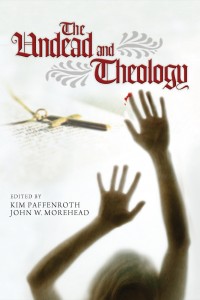
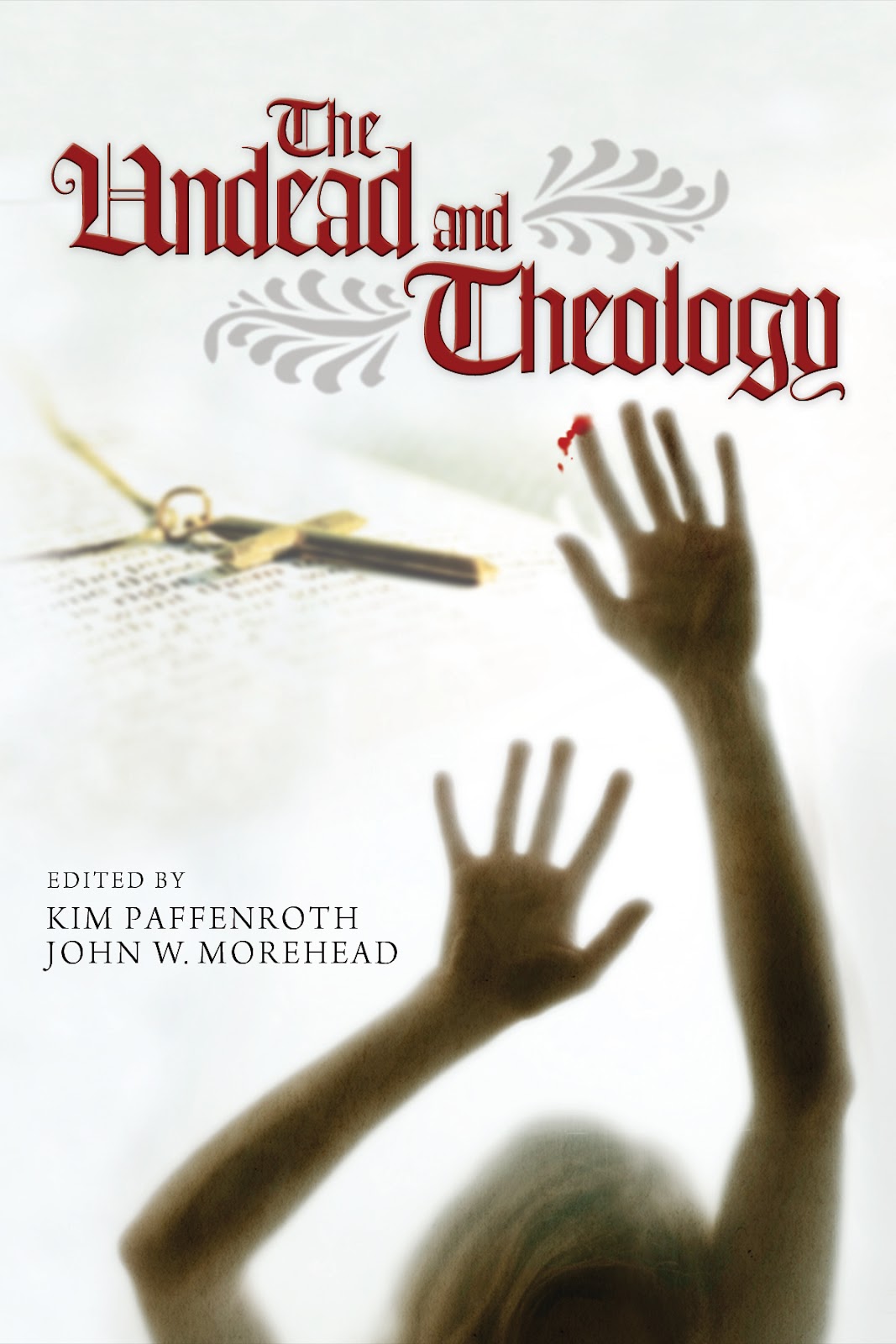
Theology and the Undead (Pickwick Publications) is now available for purchase in digital form for Kindle, MAC and PC through Amazon.com, and in print edition. See the publisher’s website for more information. This is a unique volume that explores various facets of how monsters can provide for theological reflection. It makes the perfect Halloween pumpkin stuffer this holiday season for those interested in monster studies and other disciplines including theology, religious studies, motion pictures, television, literature, graphic novels and comics.