Emory Symposium on Zombies and ‘Zombethics’
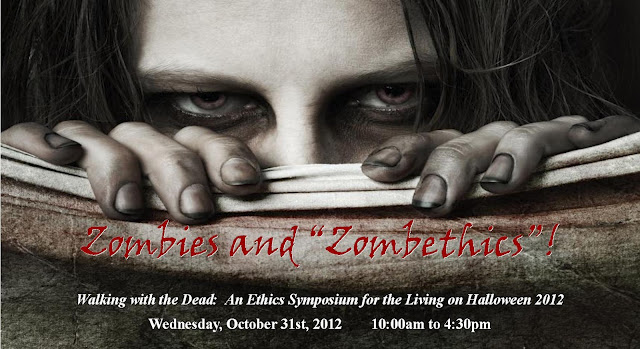
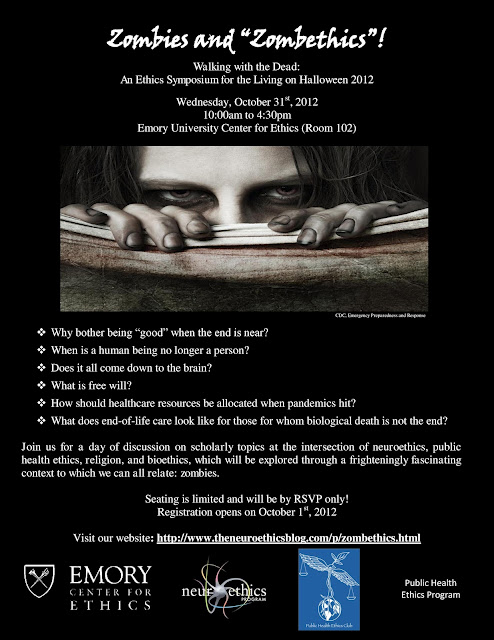
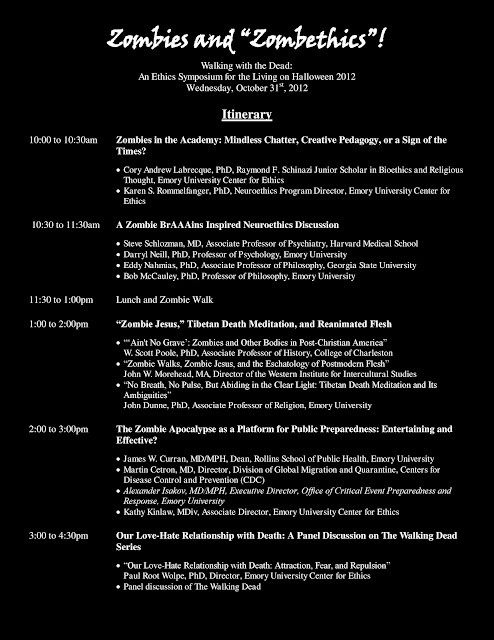
I will be sitting on a panel and contributing to the topic via religion and zombies. For further background see my previous post.
I will be sitting on a panel and contributing to the topic via religion and zombies. For further background see my previous post.
In a recent film review of the new science fiction film Looper, James Pinkerton raised important questions related to science fiction and our utopian vision. In his essay “What ‘Looper’ tells us about the American vision,” Pinkerton opens his piece with the following thought provoking paragraph:
Which science-fiction scenario better describes the future: “Star Trek” or “Blade Runner”? That is, can we look forward to the utopian vista of “Star Trek,” in which we humans have solved the problems of earth, leaving the rest of the universe for us to explore? Or must we dread the smoggy dystopia of “Blade Runner,” in which a brutal world is divided starkly between the huddled poor and the rich luxuriating in their guarded enclaves?
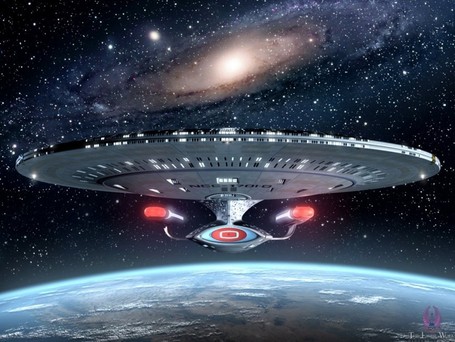
This might be a curious question to raise in what is ostensibly a film review for Looper, but the questions are worthwhile. Star Trek‘s original series recently celebrated its 46th anniversary, and Star Trek: The Next Generation celebrated its 25th. It’s influence continues to be felt, not only by Star Trek fans or in the science fiction subculture, but also in broader popular culture. One aspect of its continuing appeal comes with its utopian vision for humanity’s future. Birthed in the late 1960s when the counterculture hoped for a better way forward beyond the challenges of the times, Gene Roddenberry created a fictional world of the 23rd century wherein human beings moved beyond the challenges of racism, sexism, and war (and even religion), to unite human beings as they looked forward to their exploration of the universe. Earth’s united humanity joined with alien races as part of the United Federation of Planets, which postulated a technological utopia which has been carried through in each incarnation in the Star Trek franchise whether film or television.
This utopian vision was a part of Roddenberry’s own hopes for humanity, which sprang from his Secular Humanism. On more than one occasion Roddenberry would articulate his vision in words like this:

“I believe in humanity. We are an incredible species. We’re still just a child creature, we’re still being nasty to each other. And all children go through those phases. We’re growing up, we’re moving into adolescence now. When we grow up — man, we’re going to be something!”
This was Roddenberry’s dream, and one that human beings share across cultures. It has resonated so strongly with individuals that the secular dreams of Roddenberry became the ethic of Infinite Diversity in Infinite Combination, which has since ironically functioned in a religious sense for not a few Star Trek fans.
Roddenberry’s franchise may be the best example of science fiction’s articulation of the utopian dream. But almost fifty years since since Roddenberry’s vision came to the small screen should it still be viewed as a realistic goal and a prediction for what our future society will look like, whether nationally or internationally? Here an interesting parallel may be found in our current political debates with promises of hope and change tempered by requests for more time, with alternatives presented in the suggestion that we are on the wrong course. Is humanity working toward the Roddenberry utopia with more time needed to realize this dream, or are we on the wrong track living in dystopia perhaps with no possibility of societal redemption?
It is at this juncture that Pinkerton suggests that perhaps Blade Runner is a more realistic depiction of human society for the future. He writes,
But there’s still that “Star Trek” vs. “Blade Runner” business. If it’s true what they say–that sci-fi is as much a meditation on the present as a projection into the future–can we then deduce anything about our society from this particular film?
Pinkerton then sketches the historical developments since Roddenberry first shared his optimistic humanist vision. He notes that the national optimism in certain segments of American society of the late 1960s soon gave way to darker realities. As a result, “the big collective vision of Roddenberry seems, now, to be as far away as Alpha Centauri.”

In contrast with Roddenberry’s optimism, Pinkerton introduces the dark science fiction vision of Philip K. Dick. The dystopian influence of the film Blade Runner is still felt throughout science fiction as evident in the past from films like Terminator, to more recent efforts such as the remake of Total Recall to the new film Looper. Pinkerton contrasts the competing visions of these science fiction writers:
If Roddenberry stood for optimism, Dick stood for pessimism. To Roddenberry, the future was gleaming and beckoning; to Dick, the future was all going to be just a huge misunderstanding, if not an outright evil conspiracy. The protagonists in Dick’s stories may go to space, but if they come back at all, they come back haunted, unsure of such a basic question as their own identity.
As I read Pinkerton’s essay I was struck by the seeming failure of Roddenberry’s vision. Sure, we can argue that we just need more time, and given more education, more technology, more…you fill in the blanks, human beings can and will achieve something similar to Roddenberry’s dream. After all, he did place it in the 23rd century, which gives us roughly two hundred more years to work things out. But skeptics look at the past history of humanity, with its frequent predictions of utopia tempered by the reality of dystopia, and are inclined to doubt our future prospects. It would seem that perhaps Dick’s dark and pessimistic vision is the more accurate predictor of not only the future, but our present state of affairs.
Even so, Pinkerton acknowledges that thousands of people are still animated by Roddenberry’s utopian vision and still hold out hope that his ideals will be realized. The differing assessments of humanity’s future by Roddenberry and Dick represent two competing models from these prophets of science fiction.
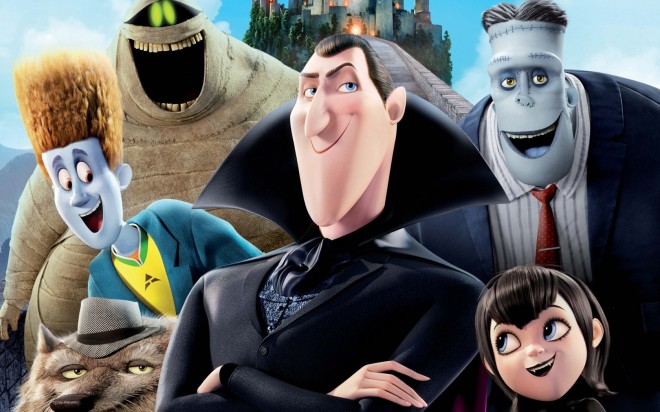
Hotel Transylvania debuted in theaters last night, and may be the leading film in the box office this weekend. It turns in an impressive performance that can be enjoyed by children and adults alike.
Hotel Transylvania is the latest animated film produced by Sony. It tells the story of Dracula who creates a seemingly secluded hotel for monsters designed to protect them from the hatred and destructiveness of human beings toward his kind, and particularly toward his young daughter. As the story develops, we learn that years ago Dracula’s wife was killed by an angry mob of humans. As a result, Dracula conceives of the hotel idea primarily to protect his daughter, and to surround her with their monstrous kind and to provide the seclusion and defensiveness provided by a haunted forest and zombie filled cemetery on the perimeter. Of course the best plans of Dracula are thwarted, which takes place when a young human traveler, Jonathan, stumbles across the hotel and unwittingly falls in love with Dracula’s daughter Mavis, who also falls for him. Dracula does his best to discourage Jonathan and his daughter, but eventually his monstrous hotel guests discover the presence of an allegedly dangerous human in their midst, which disturbs not only Dracula’s plans for his hotel, but also for his daughter’s budding romance and desires for freedom outside the hotel.
Hotel Transylvania is poised to do well with movie audiences. Somewhat surprisingly, even opening night at the late showing included the presence of many parents with young children, whose laughter throughout the film indicated that it was well received. The monster characters are well designed, with a representation that includes stylized (and copyright infringement avoiding) variations of Universal Studios classic creatures including not only Dracula, but also Frankenstein, the mummy, the wolfman, the invisible man, and the Creature from the Black Lagoon. In addition to these monsters we also see other monsters from the silver screen and popular culture such as Bigfoot. The presence of this vast array of monsters, and a scene where the creatures pursue Jonathan into a human town where a monster festival is going on filled with hundreds of “monster geeks,” provides evidence that monsters have moved beyond the monster kid and monster geek subculture of previous generations, to become mainstream pop culture icons. Classic monster fans will be pleased to see variations of the creatures that first haunted the silver screen almost a hundred years ago are still delighting audiences today.
There was some concern about Adam Sandler’s connection to this film prior to its release, who serves as executive producer, and voices Dracula. The actor has seen a number of flops at the box office in his live action films, but his voice characterizations strike the right chord, and to whatever extent he was involved in the creative process in contributing to this film he has found formula for animated success with this film.
I highly recommend Hotel Transylvania as a great holiday film in connection with Halloween, and as a great tribute to monster culture and contribution to good animated films as well.
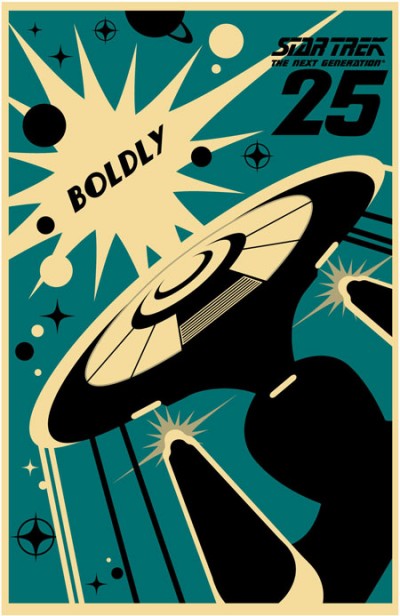
TheoFantastique wishes Star Trek: The Next Generation a very happy 25th anniversary.
Last night I caught a program produced by National Geographic, an episode in their series Taboo. This particular program looked at various aspects of body modification. One expression comes in the form of a new fad introduced in Japan, the “Bagel Head.” In this procedure individuals have saline injected into their foreheads until swelling develops, and then at the end of this two-hour procedure pressure is placed in the middle of the bubble to produce something that looks like a bagel. The effect lasts about twenty-four hours.
The Huffington Post recently ran an article on this procedure:
For those of us who don’t see the appeal in any sort of forehead needles, you can’t help but wonder: why in the world would you want a bagel on in your head? A Japanese artist named Keroppy who pioneered the “modcon” body art explained to Vice back in 2009 that it’s about innovation: “People who like extreme body modification want to find their own way of doing things, and they’re always looking for new ways to do that. The more progressive the scene gets, the more these people have to experiment and go their own way.”
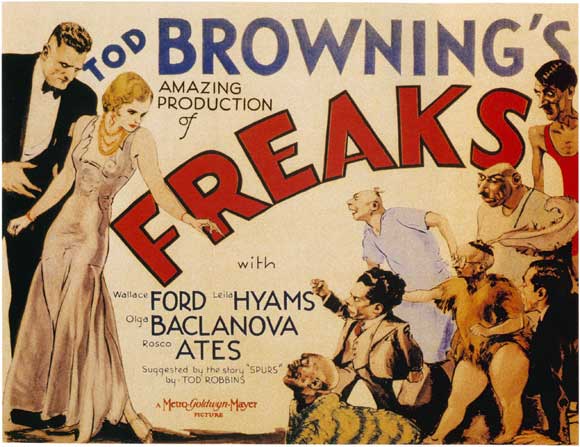
 Indeed, why would one want to go through such a procedure and look so outside the standards of physical normality? One explanation was provided at the end of the program where a scholar opined that the temporary nature of the procedure allows individuals to be different and somewhat groteseque, but without the social stigma attached to those who have permanent physical abnormalities. Horror historian David J. Skal recent called attention to the Bagel Head body modification process on Facebook with a link to the essay above, and the words “Ready for my closeup, Mr. Browning.” This phrase connects the current body modification fad to Browning’s horror film Freaks, and also situates it culturally and historically in our continued love-hate relationship with “freak shows,” the monstrous, and horror. Monsters have always been able to transgress our accepted boundaries, but it seems that with the continued interest in various forms of body modification that try to push the envelope to greater forms of uniqueness and grotesquery, that many are literally attempting to get their personal freak on and embodying a form of the monstrous that continually pushes the boundaries further.
Related post:
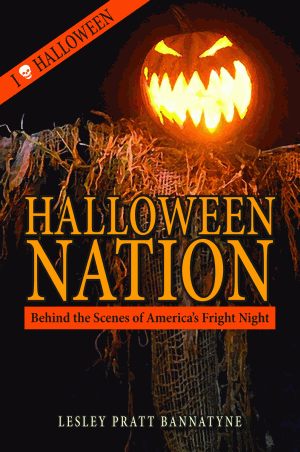
We are kicking off the Halloween season today with this post, an interview with Lesley Bannatyne, author of a number of great books related to this great holiday. In this interview, Lesley discusses her most recent book, Halloween Nation (Pelican Publishing, 2011). If you want to explore the various ways in which fans are enjoying Halloween, then Lesley’s book is a “must have” addition to your library.
TheoFantastique: Lesley, thank you for making some time during the Halloween season to talk about your book Halloween Nation. It’s a great read, filled with people with passion for the holiday, and covering a lot of topics related to it. You have written several books and articles on Halloween. How did it come to be such a personal area of interest for you, and if you were to be featured in your own book, what section would you find yourself in as you devote yourself to one special aspect of this spooky holiday?
Lesley Pratt Bannatyne: I’ve been a Halloween geek since the very first time I put on a cape and a mask and ran out into the dark of suburban Connecticut. It’s physical for me—the light comes at a certain angle in October, the temperature drops, there are colors that only exist at that time—I can sense it more than understand it. If that were my only connection to Halloween, though, I’d be writing fiction. So here’s the story: A publishing house, Facts on File, was looking for writers to put together proposals for holiday books. I pitched a Halloween history book, which, after many years and 30-odd revisions (and this was in the days of typewriters), turned into Halloween: An American Holiday, An American History. It was like falling down a rabbit hole. Halloween’s not just one story, but many: Irish folklore and Scottish history, popular culture, politics, spirituality, commerce, art, music, festival, American history, Victorian manners, publishing, horror, and a huge amount of satire and humor. I consider myself lucky to have fallen into Halloween rather than, say, footwear, bee farming, or Election Day, which was the other holiday I was offered.
If I were to be featured in Halloween Nation, I’d probably be a zombie burlesque dancer. Kidding. I love the paranormal and creative aspects of Halloween, so you might find me in the “terrortainment” (haunted attractions) or ghost chapters.
TheoFantastique: Your book is different from many books on Halloween in that you aren’t look at its diverse cultural background and history of practices, but you are looking at what makes it what it is in the present. Were you surprised by the depth and breadth of the many people and elements that make up this holiday?

Lesley Pratt Bannatyne: I did know that the people shaping paper mache into cats with pointed party hats were as passionate about their Halloween as the people pouring buckets of blood over severed ears. I was surprised, though, at how often Halloween created new communities of like-minded folks; people who move their friendships from Facebook to the real world and meet year-round to talk Halloween. And I am always surprised at how people with radically different personal beliefs and politics can still be Halloween friends. It’s a wonderful buffer zone. Creativity and tribe come to the forefront and there’s a web of tolerance spun through the actual night.
TheoFantastique: In your Introduction I was struck by the insights you have when you mention the significance of things like the 1960s gay community street parties, second-wave feminism, the “occult” renaissance, American attitudes toward death, and our post-Vietnam and post-9/11 worldview are to our present celebration of Halloween. Can you expand a bit from the brief mention in the book as to why these elements are important and how they play a part?
Lesley Pratt Bannatyne: Although people are interested in the roots and rituals of Halloweens past, the holiday we celebrate now has little in common with those celebrated even 100 years ago. (When’s the last time you burned two nuts on the fireplace grate to predict your future love?) There’s something new going on now, something that has grown from, and is part of, who we are today. Street parties, for instance.
If it weren’t for the impromptu gatherings that came out of some of the largely gay neighborhoods in the late 60s and early 70s, we may not have the outrageously wonderful parades we have today in New York, Los Angeles, Key West, Toms River, NJ, and so on. In Greenwich Village, for example, a small group of people wearing artist Ralph Lee’s masks snaked through the streets each Halloween. The idea captured everyone’s imagination, the parade grew, the media covered it, it grew more, and now we have the truly amazing Village Halloween parade, America’s largest Halloween-night event. You could say the same thing about the Castro District in San Francisco, where an annual Halloween costume party grew into a street celebration so big that it became a tourist destination. The large-scale costume parade had been the province of the small-town Halloween celebrations for decades; now it was a magnet that brought urban adults back to Halloween. It wasn’t just the idea of having a costume party out in the streets, it was also that Halloween was a night when anything could happen, when men could dress as women, women as men, when you could wear a goat’s head, fairy wings, or nothing but body paint, and the world was yours for a night, judgement-free.

Also, there was a new wave of interest in the occult in 1960s America that included an interest in witchcraft (and by witchcraft I’m talking about the contemporary magical, earth-based spirituality practiced by thousands of people, not the Bette Midler Hocus-Pocus type). Halloween was the time of year most media were interested in talking with practicing witches (the witch has been a Halloween icon for hundreds of years), and their interviews helped cast Halloween as a time to honor the dead and ancestors. This appealed to many people looking to explain why we celebrate Halloween, to give it meaning beyond candy and costumes.
As for our current attitudes towards death, we have better ways of hiding death than ever before. (A funeral director once told me that the emphasis on cremation was wrong-headed, in that you never see the person dead, they’re just “out there” somewhere as if it didn’t happen.) The more hidden it is, the more fascinated we become with the dead, death, what could happen after death. Halloween’s the time of year we can explore it, be it, make fun of it, revel in it. People are always referring to Halloween as a black holiday, as in morbid, but I don’t see it that way. I think it’s a time when you can bring a little light and humor into all those dark things that scare us.
The last part of your question—about what does Halloween have to do with a post-Vietnam, post-9/11 world—that’s an interesting one. Halloween is our rogue holiday. Because it doesn’t celebrate a person (Mother’s Day), event (Thanksgiving), ethnicity (St. Patrick’s Day), it’s free to ride along our cultural currents and express who we are and what’s important to us. So, yes, we’ve become a very violent, bloody, sexualized culture, and there’s a lot of fear out there. You’re going to see all of it play out at Halloween; the holiday’s a barometer of our national psyche. The first Village parade after 9/11, for example, was contentious. Many people thought it would make New York a target and they wanted to ban the parade. Others thought it should happen because it always has. It was Mayor Giuliani’s call, and a few days before Halloween he gave the go-ahead. The parade folks had built a baby phoenix puppet, and with the smoke still rising from Ground Zero in the background, the phoenix led the parade up Sixth Avenue. The parade organizers said you could feel New York City start to breathe again. People cheered. I knew at that moment we would get over this. We didn’t keep our kids indoors that Halloween, fearful that something bad might happen to them; we sent them out trick-or-treating dressed as firefighters. At Halloween, you can see who we are and what we value.
TheoFantastique: You spent two years researching this book, and covered a lot of ground in travel. Out of all your experiences what things stand out for you in your research and experiences?
Lesley Pratt Bannatyne: I loved walking through Haunted Overload (a New Hampshire haunted attraction) as it was being constructed, and I loved visiting Gore Galore’s shop in Indiana, where you could turn a corner and see twenty pairs of dress oxfords glued to stands, waiting for their zombie bodies. Getting behind the scenes was always my favorite part of any event, even if it meant sitting in the dark, hot, laundry room of a colonial hotel waiting with an EMF meter for a ghost to show (he didn’t). I’d say that shambling through the Monroeville Mall with 2000 zombies was a definite highlight, but so was talking to Devilicia about how she twirled spider-tassels in her burlesque act.
I know that Halloween is contentious; that people rail against it for various reasons, valid (it’s over-commercialized) or not (it’s a Satanic ritual), but in my years of research I can count on two fingers the number of people who weren’t an absolute joy to talk with.

TheoFantastique: What else have you written on Halloween that readers can track down, and what can we look forward to as your next volume on the topic?
Lesley Pratt Bannatyne: I have five books: a history (Halloween: An American Holiday, An American History), an anthology of Halloween (not horror) literature from the last 400 years (A Halloween Reader), a How-To (A Halloween How-To: Costumes, Parties, Decorations, and Destinations), a children’s book (Witches Night Before Halloween), and Halloween Nation. They are all available from online bookstores, from your local bookstore, or you can find them on my site at www.iskullhalloween.com.
TheoFantastique: Lesley, thank you again for discussing this topic, and for a great book. I hope you have a wonderful and frightful Halloween!
Lesley Pratt Bannatyne: It’s a pleasure to be a part of this! Thanks for thinking of me.
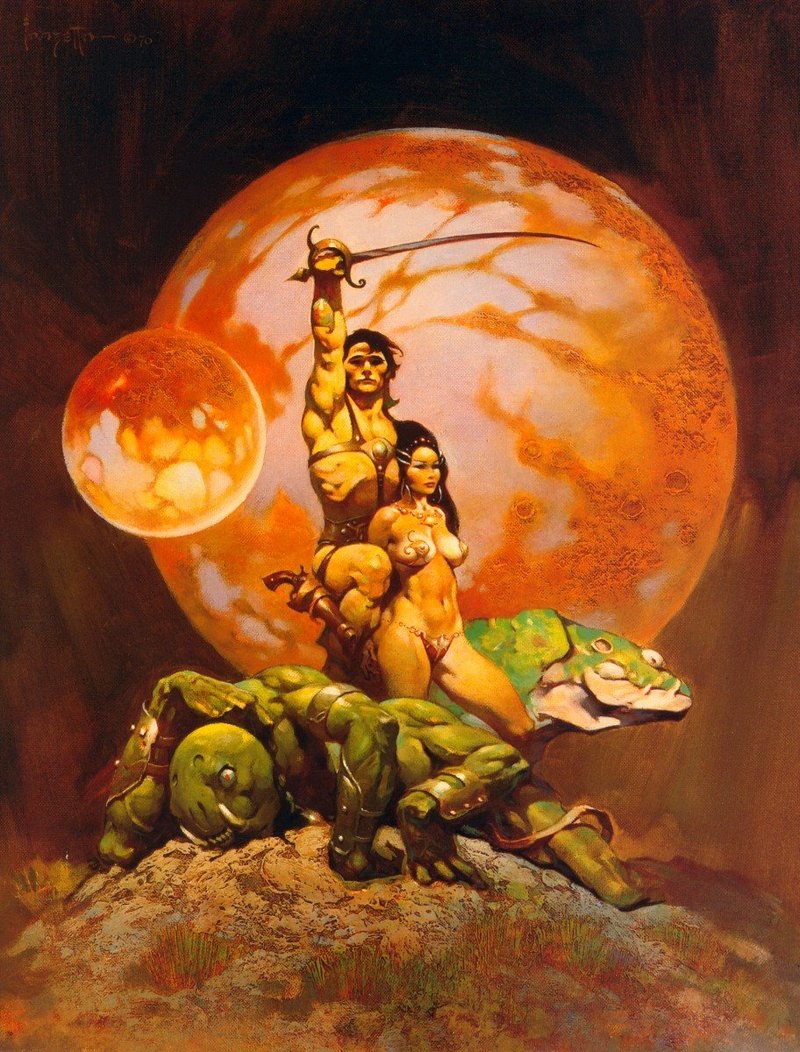
Call for Papers – Swords, Sorcery, Sandals and Space: Fantastika and the Classical World
A Science Fiction Foundation Conference
29 June – 1 July 2013
The Foresight Centre, University of Liverpool
The culture of the Classical world continues to shape that of the modern West. Those studying the Fantastika (science fiction, fantasy and horror) know that the genres have some of their strongest roots in the literature of the Graeco-Roman world (Homer’s Odyssey, Lucian’s True History). At the same time, scholars of Classical Reception are increasingly investigating all aspects of popular culture, and have begun looking at science fiction. However, scholars of the one are not often enough in contact with scholars of the other. This conference aims to bridge the divide, and provide a forum in which sf and Classical Reception scholars can meet and exchange ideas.
We invite proposals for papers (20 minutes plus discussion) or themed panels of three or four papers from a wide range of disciplines (including Science Fiction, Classical Reception and Literature), from academics, students, fans, and anyone else interested, on any aspect of the interaction between the Classical world of Greece and Rome (including post-Roman Britain and the Byzantine empire) and science fiction, fantasy and horror. We are looking for papers on Classical elements in modern (post-1800) examples of the Fantastika, and on science fictional or fantastic elements in Classical literature. We are particularly interested in papers addressing literary science fiction or fantasy, where we feel investigations of the interaction with the ancient world are relatively rare. But we also welcome papers on film, television, radio, comics, games, or fan culture.
Please send proposals to conferences@sf-foundation.org, to arrive by 30 September 2012. Paper proposals should be no more than 300 words. Themed panels should also include an introduction to the panel, of no more than 300 words. Please include the name of the author/panel convener, and contact details.
Any inquiries should be sent to the e-mail address above.
Swords, Sorcery, Sandals and Space is organized by the Science Fiction Foundation, with the co-operation of the School of Archaeology, Classics and Egyptology at the University of Liverpool.
Tony Keen
Chair, 2013 Science Fiction Foundation Conference
Conference Website: http://www.sf-foundation.org/conference
Conference Facebook Page
Call for Papers: Mystery Science Theater and the Culture of Riffing and the mash-up in popular culture
Southwest/Texas Popular Culture and American Culture Association
http://conference2013.swtxpca.org
The Area chair seeks papers/presentations on Mystery Science Theater and the culture of riffing and Mash-up. Due on November 16, 2012.
In the fall of 1988 on a small public access channel, KTMA, in the St. Paul/Minneapolis area of Minnesota, a bizarre show appeared. It featured two hand-made, robot-appearing puppets and a man watching a movie and making comments to the screen. Little did its creator, Joel Hodgson, know that he had created a worldwide popular culture phenomenon known as Mystery Science Theater 3000 (MST3K). The show lasted 10 seasons and spawned a theatrical feature film.
Now riffing movies, television, cartoons, and the rise of the mash-up have become very popular modes of expression. Twenty-three years after its cancellation, Mystery Science Theater is more popular than ever. The former cast members, through Rifftrax and Cinematic Titanic, continue to make audiences laugh and garner new fans. Any aspect of the culture of riffing and Mystery Science Theater will be given consideration.
Some topics that could be discussed and some questions that might be answered include:
* Zombies and riffing (a good topic in light of the popularity of zombie studies)
* iRiffs and the rise of personalized riffing by “amateurs”
* Other fan riffing groups and individuals like Master Pancake Theater, Incognito Cinema Warriors, Josh Way, Laughterpiece Theater, etc.
* Pre-MST3K riffing
* The LA Connection and their role in comedic riffing
* Speaking of Animals
* Fractured Flickers
* Freaks and Geeks MST3K connection
* Fan Culture and MST: The Misties (who are they and why)?
* The original Sci-Fi MST Game
* Gender roles, women and MST
* Frank Zappa and MST
* Superhero movies (why are they so ripe for riffing)
* Monty Python and MST
* Comics and MST3K
* Shakespeare and riffing
* The remix of the movie trailer
* The rise of “forgotten movies” that were used on MST
* The rise of B-movie popularity as a result of being on MST
* Christmas movies and MST
* The pre-MST comedy careers of the cast members
* The KTMA years compared to the Comedy Central Years compared to the ScFi Channel years.
* Movies that deserve the MST treatment but never received it.
* Mental Hygiene films and MST
* The legal battle between Best Brains and Mr. Sinus Theatre (the roots and causes of this).
* What were/are the cultural implications of the original invention exchanges in those early episodes of show?
* What are the differences in the styles of Mike Nelson and Joel Hodgson as hosts for the show?
* The theatrical feature film attempt, MST 3000 The Movie (trials and tribulations of getting director Jim Mallon’s big budget version of MST to the screen)
* Jim Mallon’s genius as producer/director/character
* Modern companies such as Laugh Tracks and MST’s influence on them
* The differences of Tom Servo and Crow (difference in style and tone)
* Actor Joe Don Baker and MST — a perfect marriage
* Spy movies and MST
* Monsters and MST
* Attempts at creating continuity within the “host segments” — what worked and what didn’t (the difference in continuity between Comedy Central episodes and ScFi channel shows).
* Cast characters (e.g., Mad Scientists, Evil Mothers, and weird aliens)
* The hardcore statistical analysis found on websites by dedicated fans (e.g., riffs per show and other weird statistical data — reasons for these weird statistical things)
* MST and the Web — how did the Internet help create such a rabid following?
* Popular music and MST
* Mary Jo Pehl, Bridgett Nelson, and the influence of women writers on MST
* MST fan culture and university culture
* The MST influence on the show Freaks and Geeks
* TV’s Frank and MST and Frank Coniff’s role in America’s Funniest Home Videos
* A look at the influence of music on MST (one could hear a reference to an obscure British band like Hawkwind on the same show as one that might mention a household artist like Brittney Spears or Johnny Cash, for example).
* Bill Corbett as a playwright and performer
* MST and Tape Trading Culture (Keep circulating the tapes some of the MST episodes admonished the fans)
* The lost episodes of MST: The Green Slime, Thunderbirds etc., Where are they? What were they like? Will we ever see them?
* Crow, Tom Servo and the bots in Popular Culture: Non-MST appearances (which continue
to this day)
* MST and the First Amendment to the Constitution: Why did the show always thank the authors of the First Amendment? How did the show use it? Did it push boundaries constitutionally?
* KTMA and MST: Just how could a show like this get on cable access television in the first place? How did it become a movement? Were there glimpses of the greater things to come in those earlier episodes or not?
* Torgo and Ortega: Cult Figures and MST — why so popular with fans?
* The worse a movie is, the funnier and better an episode of MST: Why is that?
* Paul Chaplin, unsung writer on MST The MST writers were, and continue to be, masters of Popular Culture in all its forms (film, music, politics, etc.)
* Movie references and MST — cultural and historical implications
* MST terms and the vernacular (e.g., “Movie Sign”, “Poopie”, “Huzzah”) and their adaptation into everyday language)
* What was Josh Weinstein’s role in those early MST episodes and his post MST career as producer?
Please send a title and 100- to 250-word abstract by November 16, 2012. Submit your title, and 100- to 250-word abstract through our website database, which can be accessed at:
Please make plans to attend our 34th Annual Conference, February 13-16, 2013, at the Hyatt Regency Hotel & Conference Center in Albuquerque, New Mexico, Hyatt Regency Albuquerque, 330 Tijeras NW, Albuquerque, New Mexico, USA 87102
http://conference2013.swtxpca.org
I am the guest in a podcast interview with Jeff Jackson of ComicAttack.net in his column “Comics Are My Religion.” In the podcast Jeff and I discuss my background and approach to the fantastic, the spiritual significance of science fiction and its fandom, and new books worth picking up that probe the fantastic more deeply. You can click to listen to “Comics Are My Religion Podcast: Horror & Sci-Fi Are My Religion, Too!”
Calls for papers: Comic books and graphic novels
44th Annual Convention
Northeast Modern Language Association (NEMLA)
March 21 to 24, 2013
Boston, Massachusetts
Hosted by Tufts University
“Panels and Pedagogy: Teaching the Graphic Novel”
This panel works towards understanding and adding to emerging pedagogies of the graphic novel and other forms of illustrated works. What do these visual texts change about how we approach the classroom? Possible topics include but are not limited to adaptation and teaching across mediums and disciplines; the graphic novel as literature; approaches to visuality as composition; and the limits of genre and medium. Submit 250- to 500-word proposals by September 30, 2012, to Joel Simundich (joel_simundich@brown.edu) and Derek McGrath (derek.mcgrath@stonybrook.edu).
“The Sequential Monster: Reading Comics as Monstrous”
Comic books, graphic novels and webcomics generally combine words and images to create narratives. Though comics are often considered a form in their own right, it is also possible to see them as an amalgam of disparate forms of communication. If we think of comics that way, perhaps we can see them, fruitfully, as monstrous: beasts that combine the elements of verbal and visual, narrative and static communication forms. This panel will examine a social understanding of the comics form (and the kinds of literacies required to accept it) using Scott McCloud’s and Will Eisner’s comics theories as well as Jeffrey Jerome Cohen’s monster theory. Submit abstracts of of 300 words to lauere@sunysuffolk.edu by September 30.
“Show and Tell: A Roundtable of Comic Book and Graphic Novel Creators”
This event hosts artists from a wide spectrum of roles as related to the creation of comic books and graphic novels. This roundtable welcomes participants from around the world and regardless of genre, medium, or years of experience. Artists in the roundtable should bring visual materials to facilitate discussion with a diverse audience of students, professors, and overall fans of this art form. Submit resumes by September 30, 2012, to Derek McGrath at SUNY Stony Brook (derek.mcgrath@stonybrook.edu).



