Computer-generated imagery and motion-capture are all the rage in special effects today, but actors in monster suits can still be found as well. They tap into a form of special effects work, as well as an art form, that goes back for decades in cinema.
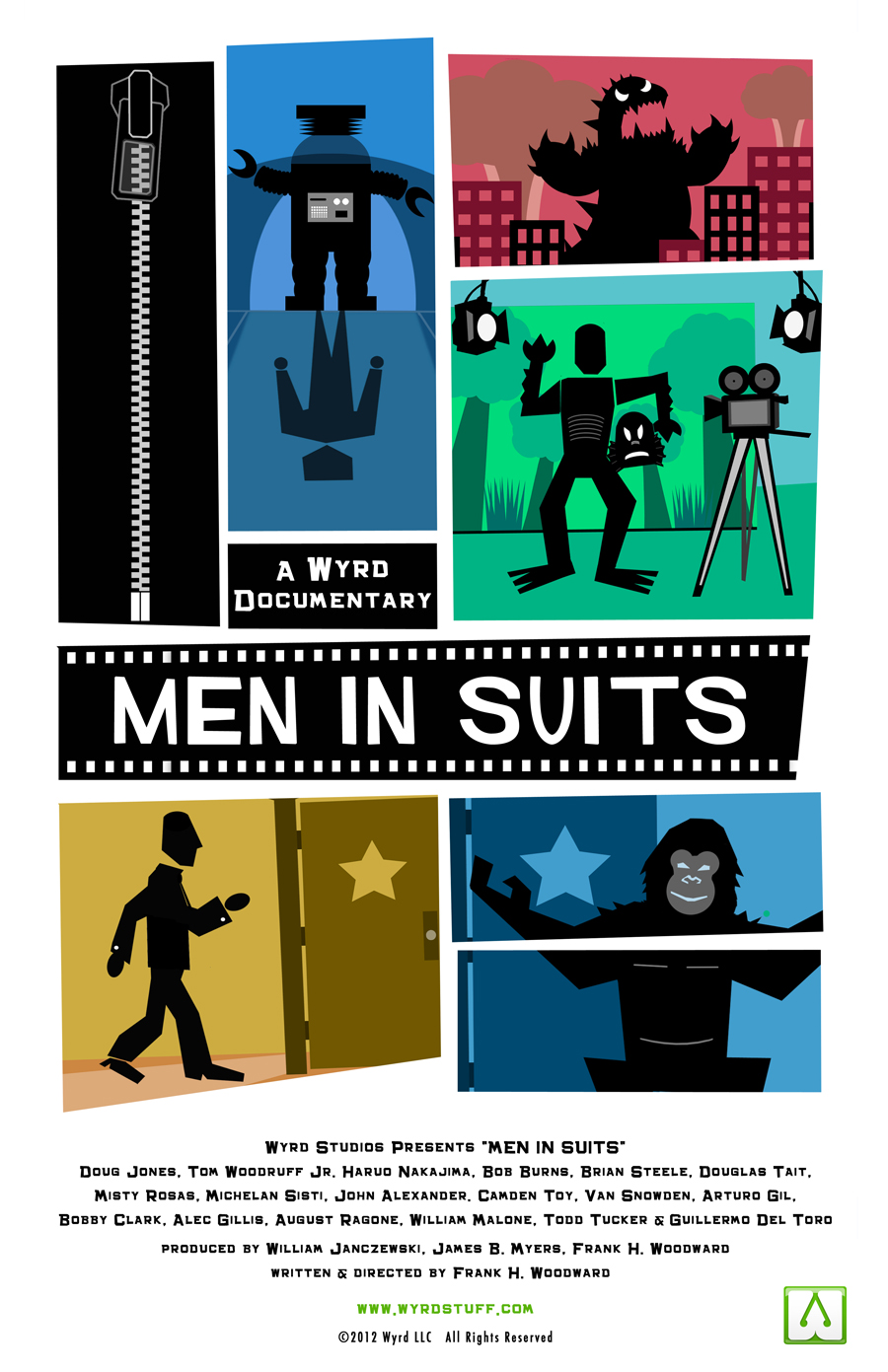
Frank Woodward and the team at Wyrd Films have produced a documentary that explores this subject in MEN IN SUITS. Below is our interview on this topic.
TheoFantastique: Frank, thanks for coming back here to discuss your latest film. Readers may remember your documentary on Lovecraft: Fear of the Unknown. How did the original concept arise in terms of focusing on those unsung heroes of genre films, actors in suits?
Frank Woodward: I think it helped that I was already a monster fan. I knew the names Tom Woodruff, Jr., Bob Burns, Nakajima, Brian Steele, Doug Jones. They were talented actors in my mind and it was always vexing that most people didn’t know who they were. Godzilla, Predator and the Gill Man are icons of cinema yet, unlike James Bond or Indiana Jones, most people can’t tell you who played these characters.
When I started brainstorming about our next documentary with fellow Wyrd producers Jim Myers and Bill Janczewski, the first thing we came up with was a history of make-up. That was immediately seen as too broad and something that had been done to death. We focused on guys in suits because we couldn’t think of any film that explored that topic in depth.
What really convinced us though was when Bill told his wife Stacy about the idea. “We’re thinking about doing a documentary about guys who wear creature suits.” Her response was, “That’s a job?” It was no question after that.
And MEN IN SUITS is made for more than fanboys already in the know. We made the film to show that it’s not only a job…it’s an art.
TheoFantastique: You assembled quite a cast of interview subjects for this documentary. I would assume this is a tight knit group of people who were excited about the opportunity to talk about their work. Is this the case?
Frank Woodward: Most of these guys are familiar with each other for sure. In some cases like Doug Jones and Brian Steele they’ve worked together on a few films. All of them seemed happy to be part of a documentary that finally acknowledged the work they put into their roles.
The term “suit performer” which is often used to describe what these people do really sells them short. It makes them anonymous more than any gorilla head does. These people are actors and have put in that level of training. I hope SUITS can show this to people.
TheoFantastique: Your film begins with a historical perspective, looking at some of the early “men in suits,” from robots and aliens to gorillas and other apes. Who were some of the early pioneers in this form synthesis of special effects and character acting?
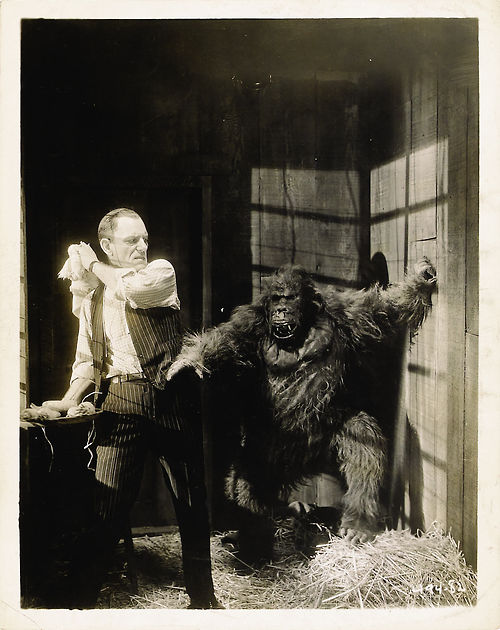
Frank Woodward: Animal roles like apes and bears were among the first guys in suits Hollywood required. We’re talking back in the 1930s. Gorilla men like Charlie Gemora and Janos Prohaska really brought something to their roles. It wasn’t just a P.A. in a furry suit.
In the case of Charlie, he played monster gorillas and comedic ones. Those genres require different timing and it takes an actor to make that work. Charlie Gemora held his own opposite Lon Chaney, Bela Lugosi, Lou Costello and The Marx Brothers. That shows a wide range.
And many Gorilla Men like Charlie and Ray “Crash” Corrigan went on to play aliens and such. Charlie was the Martian in THE WAR OF THE WORLDS. “Crash” was the alien in IT! THE TERROR FROM BEYOND SPACE.
TheoFantastique: I was pleased to see The Creature from the Black Lagoon recognized as providing special legitimacy to this craft. How did that film contribute to this unique form of work?
Frank Woodward: As Bob Burns says in the documentary, “The Creature changed things.” In this case it started with the suit. The Gill Man designed by Millicent Patrick is simply elegant. It was also above and beyond the average monster of the 1950s which were often made on a shoe-string.
What also made the Gill Man stand out were the two actors portraying him: Ben Chapman and Ricou Browning. Chapman played the creature on land, Browning in the water. In the case of Browning, he had a unique swimming style that gave the Gill Man that extra something. It made him seem alien. An extra layer hiding the human inside.
You take all of these factors and put them in a solid movie with more than the usual B-movie budget behind it…you get a classic!
TheoFantastique: I also enjoyed the international dimension of your film which included a look at Haruo Nakajima with his work on Godzilla and Ultraman. How did Japanese genre film make a unique contribution to this work?
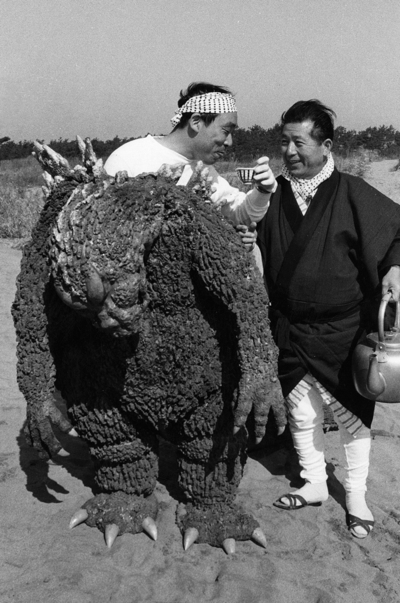
Frank Woodward: Well, you can’t talk about guys in suits without mentioning Godzilla. The Japanese made kaiju films a cornerstone of their film industry. Godzilla also had international appeal and I think that was due to a very distinct character that evolved throughout the films. Like King Kong, Godzilla wasn’t a mindless beast.
I mention King Kong because that was the inspiration for special effects wizard Eiji Tsuburaya (who designed the suits and directed all the creature scenes for Toho’s kaiju films until the 1970s) and actor Haruo Nakajima. Tsuburaya and Nakajima watched KING KONG before shooting GODZILLA. I think you can see the influence.
In the end, though, I think the greatest contribution made by kaiju films is that they’re just so damn fun! One of the first movies I ever saw was GODZILLA vs. THE SMOG MONSTER so I was imprinted early on.
TheoFantastique: At one point in the film there is an acknowledgment of the fear that CGI would destroy suit work just as it largely did stop-motion animation. How have things changed in the industry after a short dry spell for suit actors?
Frank Woodward: I think we’re seeing a mixture of digital and practical more than we did in the honeymoon days of CGI. We’re seeing digital expand and enhance the practical like the Faun’s legs in PAN’S LABYRINTH.
The problem with CGI comes when you overuse it. Magicians say that you should never do the same trick one after the other because eventually the audience will be able to see the trick. This tends to be the problem with films that only do CGI effects. We get wise to it. It’s why films like THE LORD OF THE RINGS succeed so well. They mix miniatures and forced perspective with CG. Practical creatures with motion capture ones.
The biggest problem with CGI as I see it is that producers still think it’s a cheaper solution than doing it practical. Why have a whole crew waiting for the animatronic head to work right when you can give it to one guy at a computer? The thing is that to get motion picture level CGI takes just as much time and in many cases just as much money It’s a wash.
The other thing about CGI vs. practical is you don’t get anything for free. Every turn of the head or twitch of the finger requires someone to animate that in the CG world. An actual actor on set with a symphony of actions and behavior can give you life-like moments for free.
Even Mo-Cap isn’t a guarantee of a full performance. It’s rarely one to one. Animators always have to fill in the blanks that weren’t captured. No offense to Andy Serkis because he brings such a rich foundation to all his roles, but Gollum was also created by a host of animators.
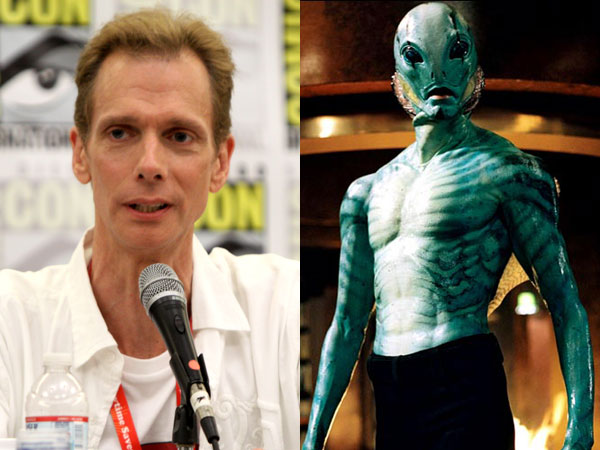
This is true of practical creatures, too. It takes an actor like Brian Steele and a team of puppeteers to realize a character like Mr. Wink in HELLBOY II. It’s just that the current fascination with mo-cap seems to say that actors in leotards with shiny balls can do it all. That’s simply not true.
What’s worse is that some producers and studio heads are actually buying their own hype. Look at a film like RISE OF THE PLANET OF THE APES. Not a practical ape in there as far as I know. And we’ve been doing realistic gorillas for decades now.
TheoFantastique: As you said earlier, many except for the most devoted fans would not recognize these actors because their faces are hidden in layers of rubber and mechanics. Was your film an attempt to bring some much needed attention and respect to these actors?
Frank Woodward: Definitely. These are deeply talented actors and they deserve all the respect and honors their fellow actors receive. Like I said before… it’s a shame that someone can tell me Sean Connery played James Bond, but hardly anyone can tell me Haruo Nakajima played Godzilla. And I think the big green guy has appeared in more films than Bond.
TheoFantastique: What was your favorite moment in the making of this film?
Frank Woodward: Meeting a lot of my heroes. Realizing how generous and delightful they are. This monster kid got to make a movie about monsters and the folks who played them. How cool is that?
There was also that time that Godzilla gave me a big bear hug. Mr. Nakajima is over 80 and he nearly broke some ribs. That will stay with me forever.
TheoFantastique: Frank, thanks again for a great film, and for this interview.
MEN IN SUITS can be purchased in the TheoFantastique Store.
King Kong is now being transformed into an immersive stage performance via puppetry and robotics. The preview performance is scheduled for May 2013 at the Regency Theatre in Melbourne, Australia. Visit the website for additional videos. I hope it becomes an international touring event.
While doing some research online yesterday I discovered that TheoFantastique was quoted in an academic volume. The book is Religions of Modernity: Relocating the Sacred to the Self and the Digital (Brill, 2010), edited by Stef Aupers and Dick Houtman. This volume references TheoFantastique (read it at Google Books) and quotes from an interview with James McGrath in an essay by Adam Possamai and Murray Lee titled “Religion and Spirituality in Science Fiction Narratives: A Case of Multiple Modernities?.” A more recent interview with McGrath is available on this blog where he discusses the book he edited and contributed to, Religion and Science Fiction (Pickwick, 2011), and regular readers of this blog may recall that Adam Possamai has been interviewed here previously on his work on hyper-real or fiction-based spiritualities. He was responsible for recruiting me to write a chapter on Matrixism for his Handbook of Hyper-real Religions which he edited (Brill, 2012) that was part of the Brill Handbook on Contemporary Religion series.
Following is a description of Religions of Modernity:
Religions of Modernity challenges the social-scientific orthodoxy that, once unleashed, the modern forces of individualism, science and technology inevitably erode the sacred and evoke the profane. The book’s chapters, some by established scholars, others by junior researchers, document instead in rich empirical detail how modernity relocates the sacred to the deeper layers of the self and the domain of digital technology. Rather than destroying the sacred tout court, then, the cultural logic of modernization spawns its own religious meanings, unacknowledged spiritualities and magical enchantments. The classical theoretical accounts of modernity by Max Weber, Emile Durkheim and others, it is argued in the introductory chapter, already hinted that there’s a future for such religions of modernity.
Contributors include Stef Aupers, Kelly Besecke, Kirsten Marie Bovbjerg, Siobhan Chandler, Olav Hammer, Dick Houtman, Murray Lee, Carly Machado, Karen Pärna, Adam Possamai, Linda Woodhead, and Dorien Zandbergen.
For ordering information see the Brill website linked to above, or for those with a modest library budget your local city or university library should be able to secure a copy via interlibrary loan.
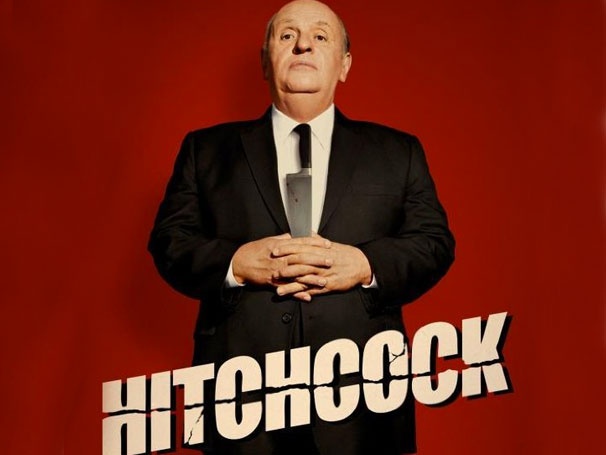
Entertainment Weekly online currently features an essay that looks back at the mystique of Psycho in light of the new film Hitchcock. The essay includes this gem:
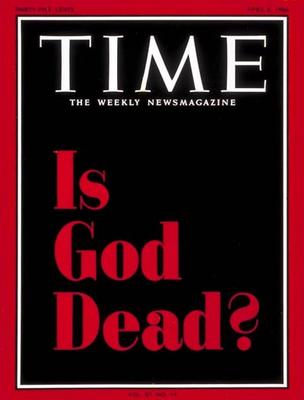
Why it really is about the death of God. Like just about all the greatest movies, Psycho works on the level of myth. It starts out as a faintly chintzy morality play in which Marion Crane, though she made a big mistake, will presumably be chastened, redeemed, protected, and rewarded by a universe that saves those who save themselves. It turns into a movie in which no one — not even a sinner who repents — will be saved. And that, for the first time in Hollywood, is a truly godless world. Psycho cleaves the 20th century in half: It turns order into madness, ushering us into a new way of seeing, of being.
Romance in connection with monsters has usually been reserved for the vampire, and the occasional monster who has the misfortune of falling in love with a human female as in King Kong or Creature from the Black Lagoon. But the trailer for a new film, Warm Bodies, shows that the zombie is now being drawn upon not only as an agent of unrelenting consumption, or a comedic background figure (e.g. Shawn of the Dead, Zombieland), but now as romantic figure. To my knowledge little has been done by way of this type of portrayal before, with Fido being a notable exception. Look for Warm Bodies to hit theaters in February 2013.
I recently received a review copy of The AckerMonster Chronicles!, a documentary on the life of Forrest J. Ackerman. What else is there to learn that hasn’t been said already about this man who made a career out of being a fan of the fantastic, as well as being a literary agent and an influence on thousands if not millions of fantastic fans and filmmakers? As it turns out, new things can be added, and are through this film.
JaSunni Productions, the production team behind Charles Beaumont: The Short Life of Twilight Zone’s Magic Man, are responsible for this venture as well. The film of necessity includes much of the material already familiar to fans of Ackerman, including his basic life story and much of the trivia associated with it. This documentary also includes commentary by many of those who knew him well, such as Ray Bradbury, Ray Harryhausen, Dan O’Bannon, John Landis, Richard Matheson, George Clayton Johnson, David J. Skal, and Marc Scott Zicree.
The Internet Movie Database page for this film provides the following description:
Nudism. Esperanto. “King Kong.” Sci-Fi. What do all of these things have in common?
Simple: Forrest J Ackerman.
“Who’s that?”
Glad you asked… Forrest J Ackerman was an agent, a notorious, serial bit player, and an honorary lesbian.
Known the world over as “Uncle Forry”, “EEEE”, “4SJ”, “Dr. Acula,” and numerous other pseudonyms (a few none too kind), Mr. Ackerman was perhaps best known as the original editor of “Famous Monsters of Filmland” magazine, the creator of “Vampirella,” and all-around mega-fan.
“So what?”
So what! Well you should know that the things you love and people you admire most thought of Forry as a treasure trove of knowledge and enthusiasm: Whether horror, science fiction, fantasy, or just generally being naked, he was there, did it, saw it done, or turned away from it…
As an agent, his clients were a who’s who of genre delights: Charles Beaumont, A. E. Van Vogt, William F. Nolan, Curt Siodmak, L. Ron Hubbard. His friends span the chasm of the Twentieth Century and beyond, be they slobbering sci-fi neophytes, or the likes of Ray Harryhausen, Ray Bradbury, George Pal, or John Landis.
Forry was embedded in the culture of film, fantasy and science fiction. A self-made fan, he was an institution and fixture living in various incarnations of his own personal museum, the AckerMansion in Hollyweird, Karloffornia for almost a century. Like Dracula, the Mummy and Frankenstein’s Monster, he became an icon of fright and fun for countless devotees of terror and s-f.
Whether The “Martian Chronicles,” “Sinbad,” “Logan’s Run,” or “Amazon Women on the Moon,” the hearts and minds that fed these visions all owed a debt to an unflagging dedication and unwavering belief in the goodness of people and the value of their dreams. The human form of this was Forrest J Ackerman.
“Is there more?”
Yes! Follow me this way, don’t mind that coffin: the occupant has been gone for years. We have to be quick, though, as the torch is running low on fuel, and the secret entrance under the crypt is a lot farther than it seems…
Some of the new material, at least to this reviewer, was Ackerman’s exploration of nudism and lesbianism. Yes, you read that right. The documentary goes into some length exploring these topics, and how Ackerman was asked to write about nudism which has involved certain science fiction writers. We also learn that the King of Fantastic Fans was given the title “Honorary Lesbian” by a group of lesbian science fiction fans with whom he developed a relationship. But while these aspects of Ackerman’s life may provide for an interesting fleshing out (pun intended) of his activities, in this reviewer’s opinion the film spends too much time focusing on these aspects which diverts from attention that could have been given to what Ackerman was better known for. In addition, at points it almost seems gratuitous, such as the discussion of Ackerman securing nude photos of pinup girls before going into the Army in World War II so as to be better perceived by his fellow service men. During this discussion numerous photos of nude women pop up on screen, and while this may titillate the viewer it does little to help visually with the documentary’s narrative.
Other elements also detract from the film, such as the background images used behind Ackerman. A digital process was used to project differing backgrounds, and these showed no sense of uniformity that would have helped with the challenges a documentary filmmaker faces with a “talking heads” production in terms of consistency in visual appearance. The end result is a visual piece that is at times distracting from the story about Ackerman that the filmmakers want us to hear and enjoy.
But despite these shortcomings, this film is enjoyable, and any fan of Ackerman should pick up a copy for their library. The AckerMonster Chronicles! can be purchased at the JaSunni Productions website.
TheoFantastique has been quiet for a while because I have been on vacation, enjoying a week with my wife at Disneyland in California. To get things going again, and in honor of one of my favorite rides at the park in the Haunted Mansion, I present this indie horror short Missing in the Mansion. This film combines the best of Disney’s beloved ride with found footage horror. The credits for the film indicate that this is an independent production not done with Disney Studios, so the filmmakers ability to combine special effects footage of the actors, including a young ghost and the hatbox ghost with footage from the ride itself into a seamless video is impressive. The result is a fun piece. It was produced by Josh and Jeremiah Daws, and you can learn more about this film here. For more on the Haunted Mansion I recommend Secrets of Disney’s Haunted Mansion.
It’s important for all people, including those with disabilities, to strike up an exercise regime suited to their needs.
It’s important for all people, including those with a disability, to strike up an exercise regime for both their physical and mental health. While starting an exercise regime may seem daunting at first – stick to it and the benefits will make your efforts all worth it!
While January 1 is often the time that many of us set ourselves the New Year’s Resolutions to and ‘get fit’, sadly, many of us will fall short of making those health-boosting resolutions a reality. According to the ABS National Health Survey, in 2017-2018 over 1 in 2 adults (55%) didn’t participate in the recommended 150 minutes of moderate to vigorous physical activity every week, try out beyond 40 lean belly 3x.
The fact is – in January and every single month after – regular exercise is one of the most important things we can do for our health, and its benefits can be experienced by everyone. Here’s why fitness matters and how you can get involved.
Why fitness matters
It’s important to maintain your fitness as much as possible – you can start slowly and build up over time. For people living with a disability, there are ways and means of getting your fitness fix, so let’s take a look at just why exercising is important. Check out the latest nutrisystem reviews.
According to the Centers for Disease Control and Prevention, regular exercise can be of huge benefit, such as:
Improving stamina and muscle strength – this may really help with some forms of disability.
During exercise, the brain releases endorphins that delivers a feel-good high. This can help ease anxiety and depression, and additionally, lift your mood.
Exercising in a group is a great way to try something different, meet new people and become part of the community.
You’ll gain the ability to maintain a higher level of independence, sense of freedom and quality of life.
Exercise can control joint swelling, and help alleviate pain in the process.
How to start an exercise regime
For starters, it’s important that you let your doctor, physiotherapist or health care provider, as well as your support team know that you have plans to start a regular exercise pattern. Most likely, they’ll be very supportive of your efforts, but he or she will talk to you about finding ways to exercise which will suit your individual needs and disability. You can also talk to your family and friends so that they can cheer you on as you get active – maybe they’ll even join you!
There are many forms of exercise that you can try, but they can generally be broken down into three categories: cardiovascular exercise, strength training and flexibility exercises.
Cardiovascular exercise, which includes jogging and swimming, improves the overall well-being of your heart, blood flow and lungs. Strength training is exactly as it sounds – it will build your muscles and make you stronger, as well as improving your endurance, so you’ll be able to do things for longer. This type generally involves the lifting of weights, in some shape or form. Finally, flexibility exercises will help your body to become more limber, with a wider range of motion in the joints – yoga is a good example this type of exercise.
Remember to always talk to your doctor, physio or health care provider about how different exercises can be adjusted to suit you. For example, most yoga positions can be modified depending on your physical mobility, weight, age and medical condition. Upper body exercises can often be done from a seating position, and specialised equipment may be available such as for those who use a wheelchair.
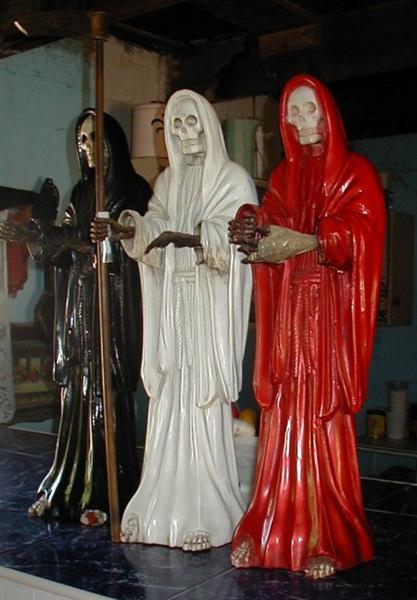
This morning I was catching up on various essays at Religion Dispatches and I came across one that especially caught my attention. It was titled “Death Couture: Not for Halloween Only,” with the byline “De-exoticizing Mexico’s patron saint of death,” by Stephen Andes. This fascinating essay describes La Santa Muerte, translated as “Holy Death” or “Sacred Death,” a figure connected to Mexico’s celebration of the Days of the Dead, and mistakenly equated by the American media only with alleged drug lord cults. A Google search for this saint reveals a number of fascinating images, and the one included with this essay is reminiscent of the representations of death in Roger Corman’s The Masque of the Read Death (1964), while others also give the figure wings. The Religion Dispatches essay describes this saint as
…a feminine representation of death—a fate that, like it or not, awaits all people. She is clothed in long grim reaper-styled robes and often carries a scythe in one hand, and either a globe or scales in the other. Often mistakenly translated as “Saint Death,” La Santa Muerte is closer to orthodox Catholic devotion to spiritual entities such as archangels, not physical human beings. She is the personification of the inevitable, with the hope that the end might not be so painful: “The Lord Almighty grant us a quiet night and a Holy Death,” goes the liturgical prayer.
Given my interest and research in Halloween and related death celebrations by various cultures I found this saint of particular interest. In my view she would make for a wonderful monsterous figure in a new horror film directed by Guillermo del Toro. Would someone pass along the idea and give me credit?
On Halloween I had the opportunity to be a part of a panel on religion and zombies at Emory University’s symposium on Zombies and Zombethics. This session was sold out, and filled with lots of interested listeners. My colleague and friend Scott Poole, author of Monsters in America, was one of my fellow panelists, and our presentations overlapped somewhat as they addressed nihilism in horror and the zombie subgenre. You can find a summary of Scott’s fine presentation on his website.
My presentations served as something of a counterpoint to Scott’s, but did present areas of agreement and overlap in contemporary horror’s fascination with nihilism and how this manifests in a critique of aspects of the Christian narrative in its eschatology, attitudes to the soul and body, and the hopes for life after death. However, my presentation noted that while the postmodern and post-Christendom (distinguished from the post-Christian) aspects of contemporary horror critiques Christian eschatology, it also presents a “neo-apocalyptic variant” that must be wrestled with as well. In addition, my research on the zombie walk phenomenon also reveals that in addition to expressing aspects of entertainment and performance art, participants may also be flirting with subversive ideas related to death and the body, monistic rather than dualistic concepts in human nature, and a synthesis of Christian and metaphysical ideas related to what Catherine Albanese has called the “enlightened body-self.” I concluded by suggesting that theologians need to take such pop culture phenomena seriously through an expanded concept of the sacred, and that by adopting an inductive theological method as in Peter Berger’s approach in A Rumor of Angels, some expressions of the zombie walk may reflect “signals of transcendence,” hints of a connection to the divine through mundane activities that transcendentalizes secularity. These and related ideas are developed more fully in my chapter contribution to https://wipfandstock.com/store/The_Undead_and_Theology titled “Zombie Walks, Zombie Jesus, and the Eschatology of Postmodern Flesh.”
It should also be noted that the subject of nihilism in contemporary horror is a major issue for consideration by scholars and theologians. There is much to discuss and debate as to whether horror’s penchant for nihilism, displayed for example each week in The Walking Dead and in Joss Whedon’s film The Cabin in the Woods, represents an intractable problem for theistic conceptions of the cosmos in favor of atheism, or whether the school of the Graveyard Poets from the past in the Gothic tradition can, with appropriate updating in light of the challenges of modernity and postmodernity, provide some redemption and a “horror with hope” in a contemporary eschatology. The often heated discussion by Matt Cardin at The Teeming Brain, and the work of Scott Poole and myself, point to the significance and relevance of this issue for contemporary discussion among scholars.
 Computer-generated imagery and motion-capture are all the rage in special effects today, but actors in monster suits can still be found as well. They tap into a form of special effects work, as well as an art form, that goes back for decades in cinema.
  The term “suit performer” which is often used to describe what these people do really sells them short. It makes them anonymous more than any gorilla head does. These people are actors and have put in that level of training. I hope SUITS can show this to people.
 TheoFantastique: I was pleased to see The Creature from the Black Lagoon recognized as providing special legitimacy to this craft. How did that film contribute to this unique form of work?
 Frank Woodward: Well, you can’t talk about guys in suits without mentioning Godzilla. The Japanese made kaiju films a cornerstone of their film industry. Godzilla also had international appeal and I think that was due to a very distinct character that evolved throughout the films. Like King Kong, Godzilla wasn’t a mindless beast.
 This is true of practical creatures, too. It takes an actor like Brian Steele and a team of puppeteers to realize a character like Mr. Wink in HELLBOY II. It’s just that the current fascination with mo-cap seems to say that actors in leotards with shiny balls can do it all. That’s simply not true.