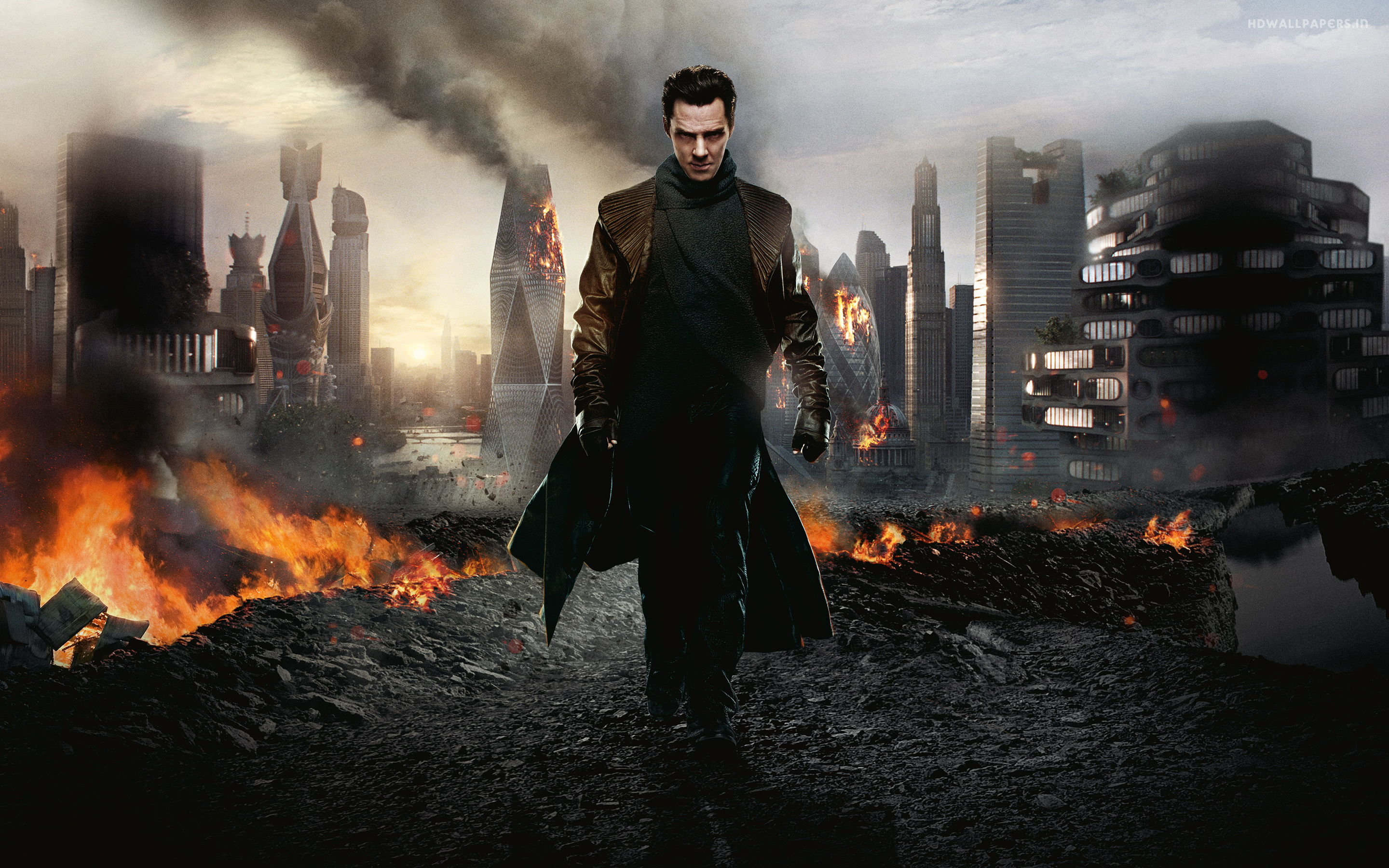
Star Trek: Into Darkness came out this weekend, and as a result reviews have been varied. By and large they seem to be very positive, not only from moviegoers, but also from critics, although there have been some reviews that have been very negative. Unfortunately, with this post I must contribute to the latter category of responses. For those interested in a couple of good critical essays I’d suggest Matt Goldberg’s at Collider.com, J. Bryan Lowder at Slate, and Sujay Kumar at The Daily Beast.
A few preliminary thoughts are in order. I am a nearly lifelong Star Trek fan, having first encountered the series as a child in the early 1970s. I have continued to follow the franchise through its various incarnations over the years, from the initial films based upon the first series, to the later television expressions. So I have a great familiarity with the brand. I addition, I am not a Star Trek “purist,” idealist or original series “loyalist.” Along they way the various installments have been of varying quality, as one would expect from any creative work that has involved many different people building on and adapting original concepts over the course of many years in a changing culture. While I have my preferences in which expressions are better than others, I do not believe that the original series is the only “true” and correct version. So while readers may disagree with the thoughts that follow, they cannot do so by way of the casual dismissal of an original series idealism.Readers should also be aware that previously I have been critical of Abrams’ work in the first Star Trek film, and some of my criticisms of that film also carry over into my concerns over Star Trek: Into Darkness.
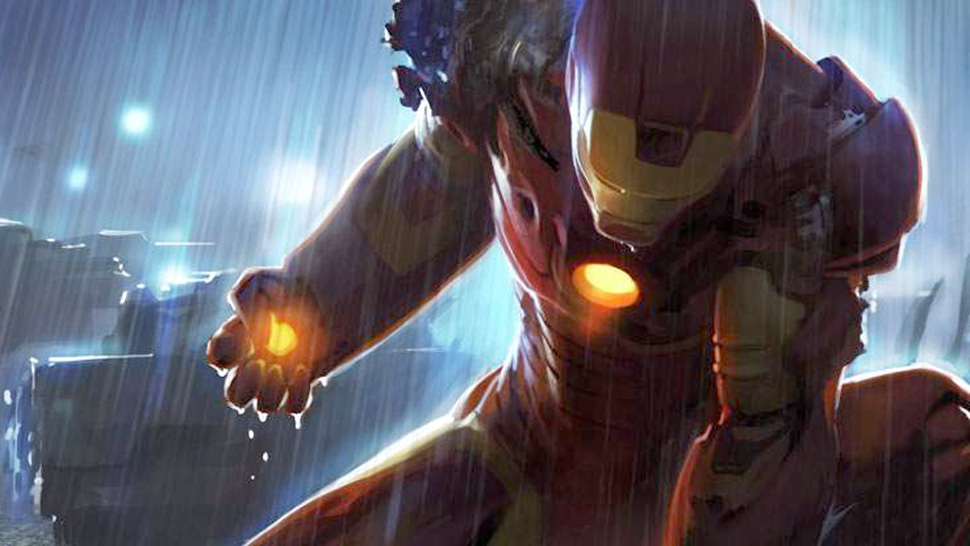
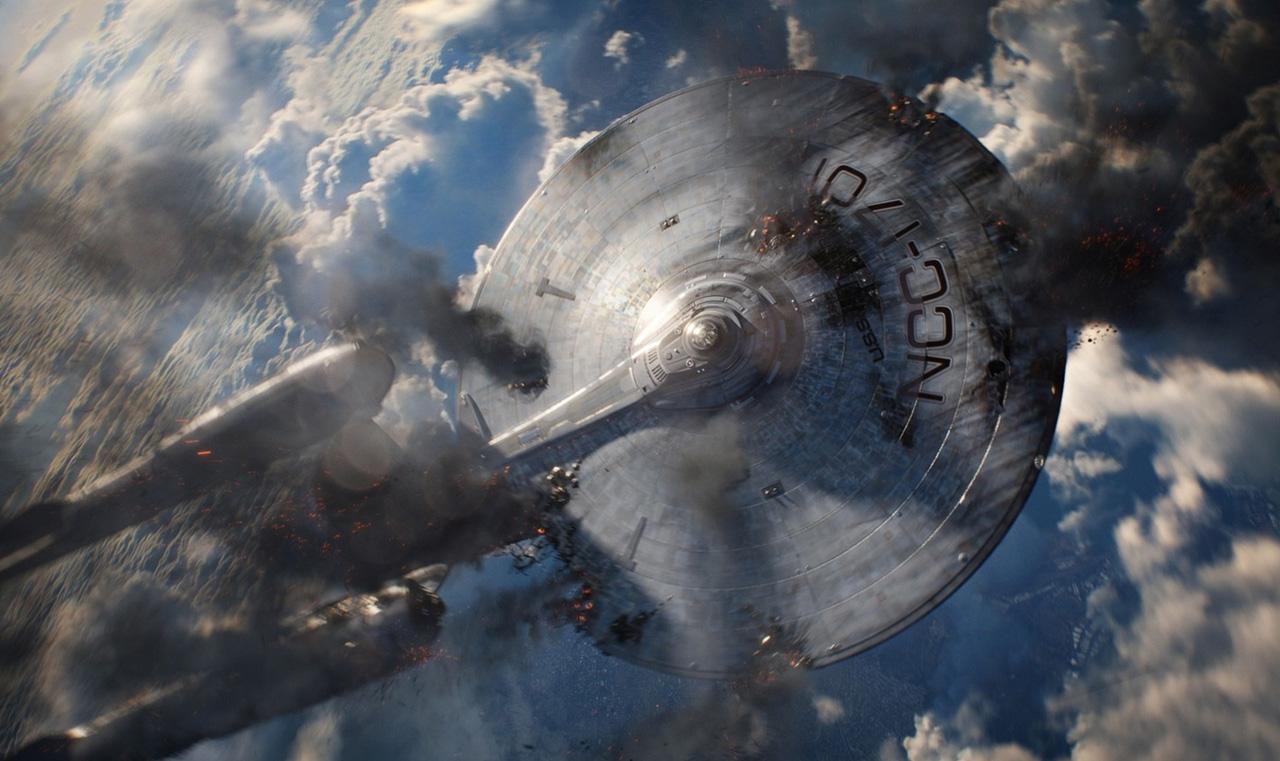
I acknowledge at the outset that this film does include a lot of spectacle. Viewers will get their money’s worth in terms of action and special effects. For these reasons Star Trek: Into Darkness is being touted in advertising as the first major blockbuster of the summer. But surely we’ve seen these elements already, with an entertaining story, in Iron Man 3. Perhaps it’s a matter of defining when summer starts for such accolades. But in my view, there is far more to a good science fiction film, and especially one that is part of the legacy of Star Trek. Science fiction as a genre at its best, not only includes visual splendor, but also takes advantage of its ability to present an alternative universe where the reader or viewer has their assumptions challenged.
Science fiction is able to do this through its inclusion of a facet that has been labeled “cognitive estrangement.” This has been defined in The Science Fiction Handbook as an element “that places readers [or viewers] in a world different than our own in ways that stimulate thought about the nature of those differences, causing us to view our own world from a fresh perspective.” This takes place to a certain extent in all genres, but science fiction is distinguished in that “cognitive estrangement is not only present but dominant.” This feature means that science fiction stretches us. Sense of Wonder: A Century of Science Fiction touches on this and says that “what science fiction offers many readers are new options for thinking through the concerns of their own age, metaphors which help to provide distance, and opportunities to redefine their own perceptions.” This feature gives science fiction a unique ability to address controversial topics like racism, war, and religion. It has done so many times, and Star Trek has been a good example of this, with the original television series tackling all of these topics and more.
Star Trek: Into Darkness incorporates contemporary real-world issues, and does so by way of demonstrating its post-9/11 context, by way of its depiction of terrorism, and the related issues of vengeance and retributive violence. The Federation is the focus of a terrorist attack from an “old” foe, Khan from the original series and the film Star Trek II: The Wrath of Khan. (But in Abrams’ alternative Trek universe this is a new enemy, right?) Kirk, who in Abrams’ universe has become largely a caricature rather than the character of the original series, wants revenge, and rushes off to exact it in ways that echo the “War on Terror” and the attacks on Iraq and Afghanistan, as well as continued US foreign policy on drone strikes that kill not only terror suspects but also significant numbers of innocent civilians in collateral damage.
Two aspects of this narrative are noteworthy in my critique. First, this film shows an increasingly militarized Federation. True, this is called into question, as when Scotty says, ““A military organization? Is that what we are now?”But for my money Abrams doesn’t take sufficient advantage of cognitive estrangement in order to press the issue sufficiently. Any serious concerns such as this quickly give way to explosions and special effects. Some may question why this is an issue for me in light of Star Trek‘s long history of the military action. I stated above that I do not have an idealist view of Star Trek, so I am aware of the fact that while the original series incorporated the Prime Directive and the rights of alien species to self-determination, and much talk of diplomacy and peacemaking, nevertheless, the Enterprise spent a lot of time acting like a military vessel and made frequent use of its weaponry in the process. This reflects Gene Roddenberry’s humanistic utopian vision for humanity, but also the pressing realities of the Cold War and Vietnam as the cultural context out of which the original series was birthed. Star Trek: Into Darkness seems to signal, not a change in mission, but an increasing acceptance of the militaristic element of the Federation.
Second, this film’s portrayal of elements that parallel our ongoing post-9/11 raises important issues, but as with a militarized Federation, it does so without any real critical engagement that good science fiction is known for. The film raises issues, but seems afraid of seriously engaging them. If Abrams wants us to wrestle with questions of national identity that play out as a result of our actions related to terrorism around the world, he certainly hasn’t done so in keeping with good science fiction, or the tradition of Star Trek. Consider the original series episode “A Private Little War.” There Kirk and the Enterprise crew wrestle with an escalating arms race between the warring tribe the Federation supports in order to hopefully defeat the tribe they oppose that is being armed by the Klingons. This episode provides commentary on the Vietnam War raging at the time, and the informed viewer had little doubt wondering where the story came down on the subject. Not so, in my view, in Star Trek: Into Darkness. I would like to have seen more soul-searching on the part of the main characters as to the moral challenges facing them and the Federation.
This then raises questions about why Abrams would miss out on such an important opportunity. Aside from the fact that action and special effects probably provides more of an opportunity for box office success than critical reflection via science fiction, other possibilities present themselves. Previously Abrams has said that Star Wars never seemed like science fiction to him. Of course, it shouldn’t, because it was space opera or space fantasy, not science fiction. Such public assessments do not build confidence that this go-to director knows what genre he’s working in, and its potential. In addition, Abrams also drew the ire of Star Trek fans when he admitted he was not a fan of the franchise. This not only makes one wonder how familiar he is with it, and its extensive mythos that he has taken such liberties with in the construction of his alternative universe, but also whether understands and appreciates how Star Trek was able to draw upon cognitive estrangement in order to address social and cultural issues of the day.
In light of these considerations I am surprised that usually astute observers such as science fiction writer Robert J. Sawyer, who strongly criticized George Lucas for setting back serious science fiction, have been so glowing in their appreciation for Star Trek: Into Darkness. I hate to throw water on the latest installments in one of my favorite science fiction franchises, but in this reviewer’s opinion, this film and Abram’s reboot fall short of Trek’s legacy and truly reflective science fiction.
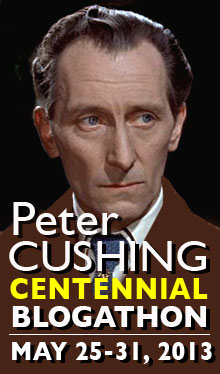
I am proud to announce my participation in the Peter Cushing Centennial Blogathon to be held May 25-31 of this year. I will post my contribution here, of course, and those of other contributors will all be listed at the Frankensteinia blog that is orchestrating this fine effort. For my part, I will explore Cushing’s take on the Abraham Van Helsing character contrasted with the film Van Helsing from 2004 and what this tells us about what Cushing brought to the character, as well as changes to the concept of the monster hunter.
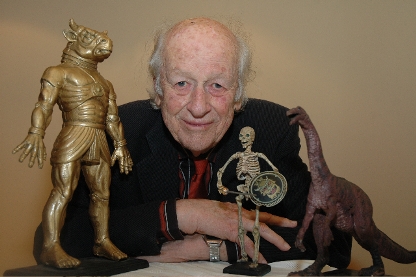
It is not an understatement to say that, for many who work within the industry of fantastic film and those who cover it, Ray Harryhausen was one of the key godfathers of the Sense of Wonder. In such films as EARTH VS. THE FLYING SAUCERS, THE SEVENTH VOYAGE OF SINBAD, JASON AND THE ARGONAUTS, and CLASH OF THE TITANS, Harryhausen’s collection of creatures — singlehandedly and painstakingly stop-motion animated by the man himself — exhibited a wondrous sense of life, and convinced many of us that, with dedication and love, almost anything that could be dreamed of could be realized on the screen.
Come join our special guest, theofantastique.com’s John W. Morehead, as he sits down with Cinefantastique Online’s Steve Biodrowski, Lawrence French, and Dan Persons to celebrate Ray Harryhausen’s achievements and evaluate his indelible contribution to the world of film. Plus: Dan gives his capsule reviews of SIGHTSEERS and THE PAINTING, and previews what’s coming to theaters next week.
CALL FOR PAPERS
Larger Than Life: Superheroes at the Box Office
An area of multiple panels for the 2013 Film & History Conference on Making Movie$: The Figure of Money On and Off the Screen
November 20-24, 2013
Madison Concourse Hotel (Madison, WI) www.filmandhistory.org/The2013FilmHistoryConference.php
DEADLINE for abstracts: July 1, 2013
AREA: “Larger Than Life: Superheroes at the Box Office
The superhero genre has been one of Hollywood’s most lucrative since 2000. The top two domestic money-earners in 2012 – The Avengers, The Dark Knight Rises – were superhero films, while a third (The Amazing Spider-Man) finished seventh. Comic book adaptations continue to be as sure a bet as there is for Hollywood, and this year promises more of the same, with the releases of Iron Man 3, Man of Steel, The Wolverine, and Thor: The Dark World. Fifteen superhero films have crossed the $200 million mark in domestic earnings since 2000, and the genre does equally well internationally.
This area, which will be comprised of multiple panels, seeks to identify and investigate the questions that this genre proposes. Why, after years of poor or mediocre performance, are these types of films now so popular at the box office? To what extent does that success depend on their adaptation of established properties, on A-list in the title roles, or on the unique vision of directors like Christopher Nolan and Joss Whedon? Can they, or should they, be taken seriously by scholars and critics? Is their success a reflection – or a cause – of the increasing juvenilization of Hollywood?
Here are some topics for possible exploration:
• Adult-oriented superhero films and box-office struggles: The Punisher, Darkman
• Indie superhero films: Super; Orgazmo; New Line Cinema’s Teenage Mutant Ninja Turtles and Blade franchises; Lionsgate’s Kick-Ass, The Spirit, and Punisher films
• The marketability of the auteur-directed superhero film: Christopher Nolan, Ang Lee, Sam Raimi, Bryan Singer
• The superhero “reboot”: The Incredible Hulk, The Amazing Spider-Man, X-Men: First Class, Man of Steel
• A Marxist analysis of the superhero genre
• Superheroes in anime
• Failures amid the success: The Fantastic Four, Elektra, The Green Hornet, The Green Lantern, Ang Lee’s Hulk
• Marketing and audience expectations: Hardcore fans, casual followers, and the general public
Proposals for complete panels (three of four related presentations) are also welcome, but they must include an abstract and contact information, including an email address, for each presenter. For updates and registration information about the upcoming meeting, see the Film & History website (filmandhistory.org).
Contact Info:
Zachary Ingle, Area Chair
Larger Than Life: Superheroes at the Box Office
Department of Film and Media Studies
University of Kansas
ztingle@ku.edu
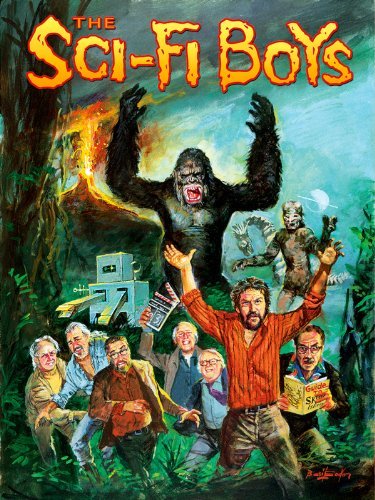
Earlier this week Ray Harryhausen passed away. There was a wealth of coverage all over the media, and as expected, the fan community expressed a lot of appreciation and a sense of loss with his passing. But this has got me wondering. In the past I interviewedPaul Davids who produced the documentary The Sci-Fi Boys. The film looked at the influence of Forrest J. Ackerman, Ray Bradbury, and Ray Harryhausen on generations of fans, many of whom went on to produce various fantasy, science fiction, and horror works of their own. With the death of Harryhausen the sci-fi boys are now gone. As a result I have some questions I’d like to share with readers, and I’d be interested in feedback and discussion:
Who and what are the primary influences of the imagination for current fans?
With the shift from the work of larger-than-life creative individuals in genre to faceless teams of people in a production crew, which individuals stand out with the potential to inspire us today?
Given current audience preferences in literature, film and television, is it less likely that we will see future titans of the imagination?
Will there ever be others that inspire us to the extent that Ackerman, Bradbury and Harryhausen did?
I’d love to hear your thoughts. I’m pessimistic, but hoping others will rise to fill their very big shoes.
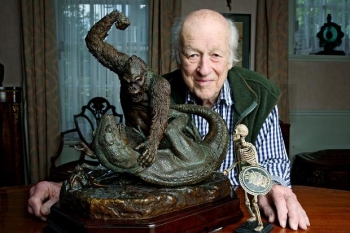
For a few years now I have wondered when the day would come that I would have to write this piece. Sadly, today is that day. Various media outlets are reporting that Ray Harryhausen passed away Tuesday.
Harryhausen was a huge influence on me as a child and teenager. When I first encountered his fantasy and science fiction films on television, the stop-motion animation had a profound impact upon my imagination. I dreamed of becoming a stop-motion animator, and to that end I saved my paper route money and purchased an 8mm camera with single frame capacity. I made several animation test films using jointed action figures and one from clay, and collected everything I could get my hands on that told the story of Harryhausen and the Dynamation magic he used to bring his creatures to life. Back in those days it was far more difficult to find fan material, but through a book dealer I was able to secure a copy of From the Land Beyond Beyond, as well as Film Fantasy Scrapbook. These volumes, coupled with the articles that would come out in publications like Starlog and Cinefantastique, were enough to feed my continual interest in Harryhausen and the stop-motion process. Today a number of books are available for fans, including Ray Harryhausen: An Animated Life, A Century of Stop Motion Animation, and The Art of Ray Harryhausen, not to mention the three volumes in the Ray Harryhausen Master of the Majicks collection available through Archive Editions.
Harryhausen’s influence is difficult to overstate. Many people currently involved in special effects, makeup, and film direction point to being captivated by his fantasy films which led to their career paths. In the wake of his death, Ray and Diana Harryhausen Foundation released this statement that includes tributes from genre notables:
Raymond Frederick Harryhausen
Born: Los Angeles 29th June 1920
Died: London 7th May 2013.
The Harryhausen family regret to announce the death of Ray Harryhausen, Visual Effects pioneer and stop-motion model animator. He was a multi-award winner which includes a special Oscar and BAFTA. Ray’s influence on today’s film makers was enormous, with luminaries; Steven Spielberg, James Cameron, Peter Jackson, George Lucas, John Landis and the UK’s own Nick Park have cited Harryhausen as being the man whose work inspired their own creations.
Harryhausen’s fascination with animated models began when he first saw Willis O’Brien’s creations in KING KONG with his boyhood friend, the author Ray Bradbury in 1933, and he made his first foray into filmmaking in 1935 with home-movies that featured his youthful attempts at model animation. Over the period of the next 46 years, he made some of the genres best known movies – MIGHTY JOE YOUNG (1949), IT CAME FROM BENEATH THE SEA (1955), 20 MILLION MILES TO EARTH (1957), MYSTERIUOUS ISLAND (1961), ONE MILLION YEARS B.C. (1966), THER VALLEY OF GWANGI (1969), three films based on the adventures of SINBAD and CLASH OF THE TITANS (1981). He is perhaps best remembered for his extraordinary animation of seven skeletons in JASON AND THE ARGONAUTS (1963) which took him three months to film.
Harryhausen’s genius was in being able to bring his models alive. Whether they were prehistoric dinosaurs or mythological creatures, in Ray’s hands they were no longer puppets but became instead characters in their own right, just as important as the actors they played against and in most cases even more so.
Today The Ray & Diana Harryhausen Foundation, a charitable Trust set up by Ray on the 10th April 1986, is devoted to the protection of Ray’s name and body of work as well as archiving, preserving and restoring Ray’s extensive Collection.
Tributes have been heaped upon Harryhausen for his work by his peers in recent years.
“Ray has been a great inspiration to us all in special visual industry. The art of his earlier films, which most of us grew up on, inspired us so much.” “Without Ray Harryhausen, there would likely have been no STAR WARS.”
– George Lucas
“THE LORD OF THE RINGS is my ‘Ray Harryhausen movie’. Without his life-long love of his wondrous images and storytelling it would never have been made – not by me at least.”
– Peter Jackson
“In my mind he will always be the king of stop-motion animation.”
– Nick Park
“His legacy of course is in good hands because it’s carried in the DNA of so many film fans.”
– Randy Cook
“You know I’m always saying to the guys that I work with now on computer graphics “do it like Ray Harryhausen”
– Phil Tippett
“What we do now digitally with computers, Ray did digitally long before but without computers. Only with his digits.”
– Terry Gilliam
“His patience, his endurance have inspired so many of us.”
– Peter Jackson
“Ray, your inspiration goes with us forever.”
– Steven Spielberg
“I think all of us who are practioners in the arts of science fiction and fantasy movies now all feel that we’re standing on the shoulders of a giant.
If not for Ray’s contribution to the collective dreamscape, we wouldn’t be who we are.”
– James Cameron
It was not only those of a previous generation who found Harryhausen’s work captivating. A couple of years ago I came across two young boys dressed in plastic warrior garb, including swords and shields. I assumed they were acting out some Roman warrior film or cartoon they had seen, but their mother was quick to correct me. It turns out that their grandfather had recently shown them Jason and the Argonauts, and the young boys were dressed as argonauts in pursuit of the golden fleece! Every generation finds those who encounter Harryhausen’s work anew as it fills their imagination.
With the passing of Harryhausen, and the prior losses of Forrest J. Ackerman and Ray Bradbury, the monster kid generation has lost another hero. Goodbye, Mr. Harryhausen. I was never able to meet you personally, but you inspired me in profound ways. Thank you for bringing your creatures to life, and giving me a sense of wonder.
Back to Top | Comments Off on Ray Harryhausen Has Died: The Loss of a Fantasy Legend
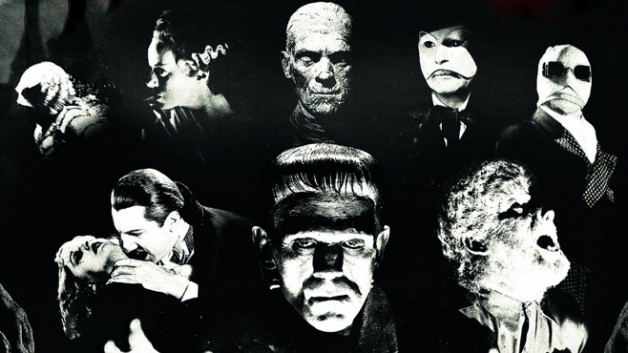
Over at Crave Online Joe Belcastro has a piece on “How to Revive Universal’s Iconic Monsters.” Along the way he suggests ways in which the creatures might be re-invented, even with the potential, as he sees it, of them becoming “modern blockbuster franchises.”
I really appreciate Belcastro’s attempt. I have a fondness for these monsters and would like nothing more than to see them rise again for a new generation of fans. However, I wonder whether this represents a case of idealism rather than a realism. I would never say it is impossible. After all, we have seen these classic monsters come and go over time, and just when we count them out they seem to return as both shadows and reflections of our culture. But our monsters evolve with us as a society. These Gothic horror icons seem more like monstrous fossils from a previous cultural age. Their general species of monster remains with us: vampires, werewolves, mummies, and so on (not to mention their ongoing light hearted legacy expressed through things like Monsters vs. Aliens, Hotel Transylvania, and Frankenweenie). But the specific iconic monsters of Dracula, Frankenstein’s creature, Imhotep/the Mummy, the Wolfman, etc., may have seen their day. Today we prefer more generic types of monsters that allow us to explore our fears without a specific connection to a single iconic monster, and the reigning creature is certainly a general one, the zombie, that represents many things, but surely a general fear of deadness reanimated with little desire beyond endless consumption.
Belcastro presents a number of suggestions to support his pitch, but what do you think? In light of the sociological and cultural aspects of these monsters, can the iconic monsters themselves be revived to blockbuster status?
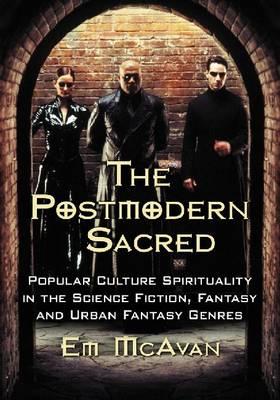
Emily McAvan has been on my radar since I first encountered her research in the sacred aspects of science fiction and fantasy. She teaches cultural, media and gender studies at Murdoch University and Curtin University, both in Perth, Australia. In the interview that follows we discuss aspects of her fine book The Postmodern Sacred: Popular Culture Spirituality in the Science Fiction, Fantasy and Urban Fantasy Genres (McFarland, 2012). (You can learn more about that book and many other fine volumes and other items in the TheoFantastique Store.)
TheoFantastique: Emily, thank you for your time in discussing your book. I have enjoyed your work in this area and was glad to see your fine research come out in book form. Can you briefly define what you mean by “the postmodern sacred,” and how our “terminal identity” plays a part in forming this?
Emily McAvan: What I was really getting at in naming the postmodern sacred is the virtualisation of religious belief and practice in the digital world. With the proliferation of virtual technologies, ever present internet connections, right in the palm of our hand or in our laps, there’s a sense that these form what Scott Bakutman called “terminal identities.” Identity is produced, mediated by, both the kinds of content available and the way it’s delivered, which for me has an impact on the way we experience religion today.
I set out to explore those through a variety of media texts, particularly science fiction and fantasy, terming them collectively as the postmodern sacred because of the religious implications of the stories these texts are telling.
TheoFantastique: How does the postmodern sacred adopt a particular epistemology in relation to those of “real world” religions, and how might this inform clashes from certain religious segments of society over expressions of the postmodern sacred such as those in the past over Harry Potter?
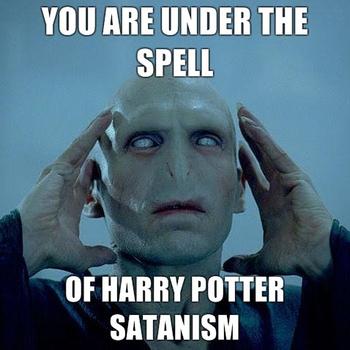
Emily McAvan: In terms of epistemology, way of knowing, the postmodern sacred takes a kind of syncretic approach, pulling together signifiers from various traditions without having any master ideology. Quite naturally, this upsets people who want to maintain their singular purchase on truth. The interesting thing with Harry Potter is, okay it’s a representation of witchcraft on the page and the screen, and yes the Bible says not to suffer a witch. So what? It’s fiction. So why the conflict? The answer I think is that fiction is a way of telling truth slant, to quote Emily Dickinson. Harry Potter gives a little too much life to witchcraft, fires the imagination a little too much, for the comfort of some people.
TheoFantastique: Some scholars have argued previously that at times the experience of film may approximate a religious experience. In your book you take this further and argue that the process of consuming religiously- or spiritually-inflected texts is a form of spiritual experience. How is this so, and how does it relate to more traditional expressions of religiosity? Also in connection with this, how are these encounters with the postmodern sacred in media forms of “second-hand experience of transcendence and belief?”
Emily McAvan: Well, one of the main differences from traditional religious practice is that there’s no communal expectations involved really, no institutions forming. There’s no priests or rabbis. It’s not there’s no ties there – popular culture fandoms definitely create bonds between people – but not to the same degree, not the birth, life, wedding stuff for the most part. This is why I call the postmodern sacred a supplement, an addition and replacement in the Derridean sense. It adds to, and displaces.
But at the same time, of course a text that is drawing on Christianity or Buddhism or whatever for its symbolic power is always a degree removed from the intensity of religious mystic experience. The numinous, as Rudolph Otto termed supernatural elements, is onscreen, it’s not with you.
TheoFantastique: You note that the postmodern sacred is willing to play with the sacred. Is it this element, perhaps through a willingness to go so far as to play in ways that threaten to transgress conceptions of the traditional sacred that make it so appealing to the postmodern mindset?
Emily McAvan: It absolutely is. It can combine, recombine, religions in fairly plastic ways. In that sense, it’s transgressive and indeed pleasurable. Rather than stake out a single religious tradition, it’s perhaps easier – and definitely more profitable – to play with disparate signifiers.
TheoFantastique: In your chapter on “Virtual Religion” you note that the postmodern sacred “temporarily suspend(s) the ‘rational’ laws of the universe that prohibit Gods and monsters from existence.” Does this represent a curious mix of the embrace of an Enlightenment rationalist metanarrative along with a postmodern skepticism of metanarratives, which is then applied to Gods and monsters, as well as to things like the paranormal in expressions like The X-Files as well? How is the postmodern sacred “caught somewhere between belief and unbelief…”?
Emily McAvan: Well, when something’s onscreen, there’s a certain vacillation between belief and unbelief, the suspension of disbelief. When you have a God or a monster onscreen it incarnates the supernatural in a certain sense. As we see with the Harry Potter example, to portray the numinous onscreen in hyper-CGI detail is a powerful thing, there’s a kind of concreteness that these new digital technologies give to the unreal, the supernatural.
TheoFantastique: You state that “we are dealing with a post-Christian polytheistic pop culture, one that feels free to pastiche from many difference religious and mythical traditions.” Can you share an example or two?
Emily McAvan: Sure. Think about the melange of religious signifiers in the TV show Buffy the Vampire Slayer and its spinoff Angel. There’s vampires, King James style language, as well as various demons from fairy tales, and so on. Buffy dies in a kind of Christ-like fashion, but when she comes back from the dead she describes a Zen-like nirvana state where she felt nothing. Angel goes to Hell. And of course at the linguistic level, the infamous Buffyspeak way of talking on the show is in dialogue with diasporic Judaism I think, it’s a kind of unacknowledged teen Yiddishkeit. So the point is, there’s all of these signifiers floating around the series from various religions, all of whom incarnate a certain kind of belief in their concreteness onscreen. So what does that mean? It means that we don’t have a singular Christian purchase on truth, that ideas of the supernatural are diffused, perhaps even confused depending on your point of view, between all these traditions. Spirit, the sacred, becomes relativised.
TheoFantastique: One last question if I may. You write in your conclusion that: “The postmodern religious culture finds itself somewhere between a fundamentalist belief in a singular God, a pagan belief in everything, and a modern skeptical belief in anything – three often incompatible belief systems.” But you go on to note that these incompatible positions have adopted elements of the other. Is this the inclusive and syncretic aspects of postmodern spirituality at play?
Emily McAvan: It absolutely is. Traditions begin to take on elements of each other. For example, the fundamentalists are far more postmodern than they would like to believe, especially the American Evangelical and fundamentalist Protestants. New Age style self-help talk has permeated so much of the culture, and it has changed the way that people think about God and spirit. “Spiritual, not religious” is for more than the Oprah crowd now. The thing is, though, it’s in many ways unacknowledged, which produces an interesting tension in these religions between their Christian elements and the Eastern-influenced New Age elements they’ve taken on. It’s inclusive, but unintentionally so.
TheoFantastique: Emily, thank you for your fine work, and the time you’ve carved out for this interview. I hope your book does well as people explore science fiction and fantasy in more depth.
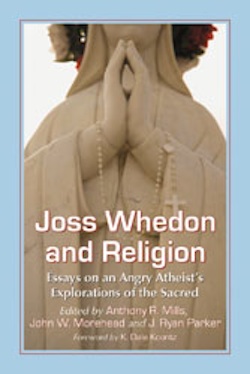
Edited by Anthony R. Mills, John W. Morehead and J. Ryan Parker
Foreword by K. Dale Koontz
Print ISBN: 978-0-7864-7290-1
Ebook ISBN: 978-1-4766-1253-9
notes, bibliography, index
softcover (6 x 9) 2013
Not Yet Published, Available Fall/Winter 2013 through McFarland
About the Book
This is a collection of new essays on the religious themes in, and the implications of, the works of Joss Whedon, creator of such shows as Buffy the Vampire Slayer, Angel, and Firefly, and more recently writer and director of the box-office hit Marvel’s The Avengers. The book addresses such topics as ethics, racism, feminism, politics, spiritual transformation, witchcraft, identity, community, heroism, apocalypse, and other religiously and theologically significant themes of Whedon’s creative enterprises. The disciplinary approaches vary as well; history, theology, philosophy of religion, phenomenology, cultural studies, and religious studies are all employed in different ways. The existential faith commitments of the various essay authors are also different. Some are clearly believers in God, some are clearly not, and others leave that matter aside altogether in their analyses.
About the Author
Anthony R. Mills lives in St. Paul, Minnesota. Researcher and writer John W. Morehead lives in Syracuse, Utah. J. Ryan Parker received a Ph.D. in religion and the arts from the Graduate Theological Union in Berkeley, California, and a master of divinity degree from the Wake Forest. He lives in Clinton, Mississippi; his website is www.poptheology.com.
For a while now we have heard of the lost footage from Hammer’s Dracula (U.K.)/Horror of Dracula (U.S.) that was found in Japan, and that a few seconds of this footage was incorporated into the ending in the restored Blu-ray of the film released in the UK. This footage has surfaced on YouTube and it is included below until Lions Gate removes it.
 Star Trek: Into Darkness came out this weekend, and as a result reviews have been varied. By and large they seem to be very positive, not only from moviegoers, but also from critics, although there have been some reviews that have been very negative. Unfortunately, with this post I must contribute to the latter category of responses. For those interested in a couple of good critical essays I’d suggest Matt Goldberg’s at Collider.com, J. Bryan Lowder at Slate, and Sujay Kumar at The Daily Beast.
 Science fiction is able to do this through its inclusion of a facet that has been labeled “cognitive estrangement.” This has been defined in The Science Fiction Handbook as an element “that places readers [or viewers] in a world different than our own in ways that stimulate thought about the nature of those differences, causing us to view our own world from a fresh perspective.” This takes place to a certain extent in all genres, but science fiction is distinguished in that “cognitive estrangement is not only present but dominant.” This feature means that science fiction stretches us. Sense of Wonder: A Century of Science Fiction touches on this and says that “what science fiction offers many readers are new options for thinking through the concerns of their own age, metaphors which help to provide distance, and opportunities to redefine their own perceptions.” This feature gives science fiction a unique ability to address controversial topics like racism, war, and religion. It has done so many times, and Star Trek has been a good example of this, with the original television series tackling all of these topics and more.
 Second, this film’s portrayal of elements that parallel our ongoing post-9/11 raises important issues, but as with a militarized Federation, it does so without any real critical engagement that good science fiction is known for. The film raises issues, but seems afraid of seriously engaging them. If Abrams wants us to wrestle with questions of national identity that play out as a result of our actions related to terrorism around the world, he certainly hasn’t done so in keeping with good science fiction, or the tradition of Star Trek. Consider the original series episode “A Private Little War.” There Kirk and the Enterprise crew wrestle with an escalating arms race between the warring tribe the Federation supports in order to hopefully defeat the tribe they oppose that is being armed by the Klingons. This episode provides commentary on the Vietnam War raging at the time, and the informed viewer had little doubt wondering where the story came down on the subject. Not so, in my view, in Star Trek: Into Darkness. I would like to have seen more soul-searching on the part of the main characters as to the moral challenges facing them and the Federation.