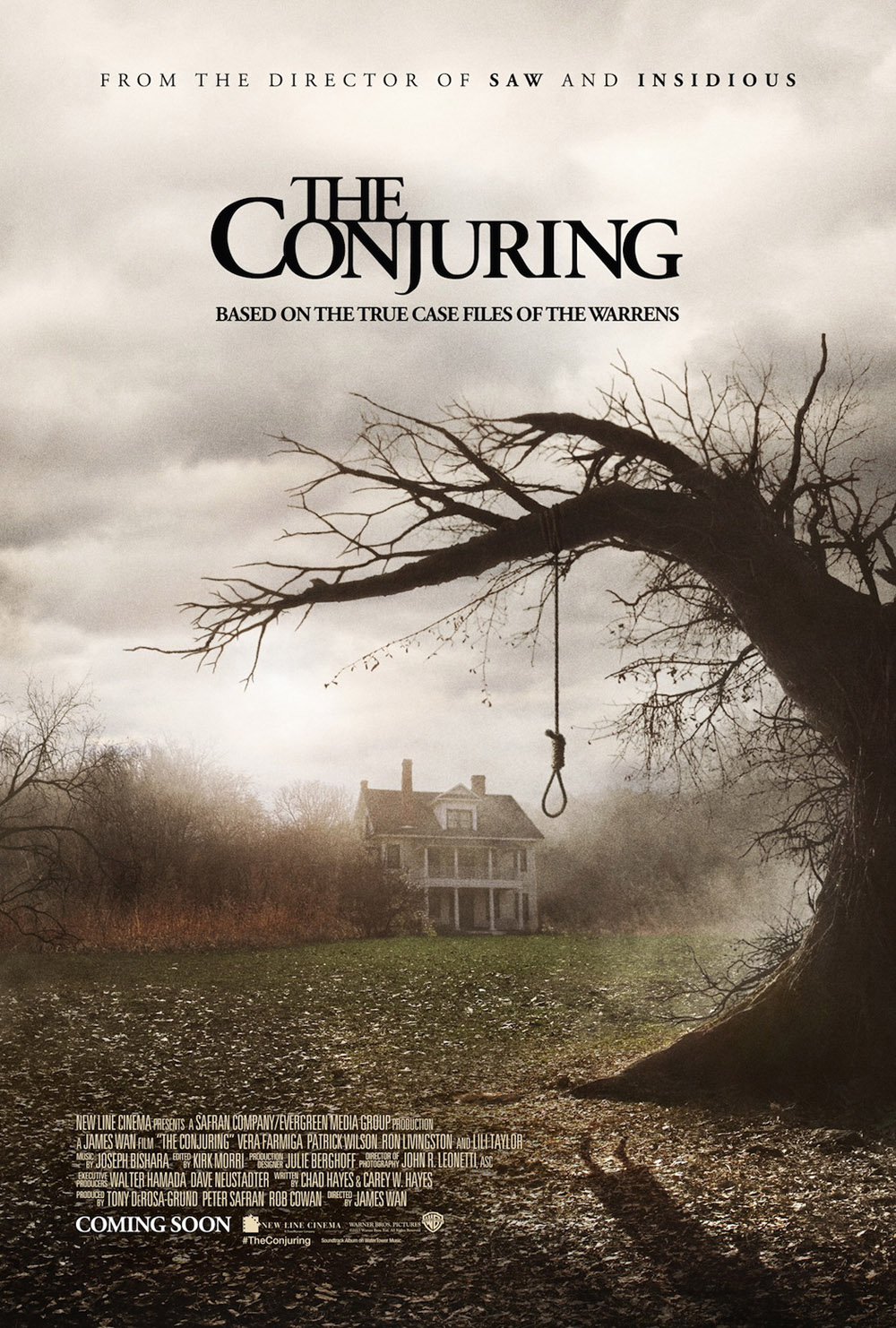
 As mentioned in a previous post, The Conjuring has generated a lot of discussion and controversy. One area that has received a lot of attention is its depiction of evil witches and the “darkness of witchcraft” in connection Christian conceptions of Satan and demonology. You can read my previous post, a guest essay by a Pagan writer and film scholar for that perspective in response. There is also a discussion of this at The Wild Hunt blog which raises the important question of what the legacy of this film will be in depictions of real-world Pagans and Christian interactions with them.
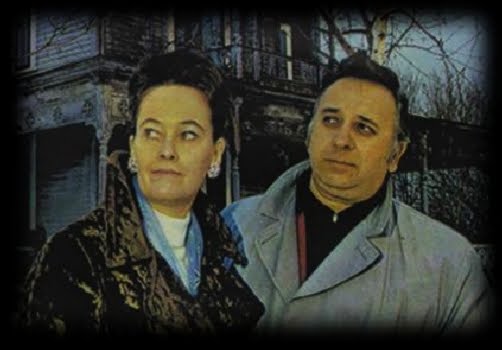
Another element of the controversy, but one that so far has received little consideration, is that of Ed and Lorraine Warren, self-described demonologists and researchers in the paranormal. Ed is now deceased, but Lorraine continues to make the rounds providing stories about their alleged encounters and adventures. They were involved in the Amityville Horror, and have been involved in horror movies that claim to incorporate their experiences, including not only The Amityville Horror, but also the television movie The Haunted, The Haunting in Connecticut, and now The Conjuring.
But what are we to make of the Warrens? Although they combine elements of their Roman Catholicism with psychic gifts, something that would be frowned upon in orthodox Catholicism, they have successfully combined the paranormal, and now aspects of Paganism, to Christian demonological assumptions. Yes, The Conjuring is a work of fiction, and should be taken with a grain of salt, but the film also claims to be “based upon a true story,” and incorporates the work and testimony of the Warrens. Thus, as the film overlaps with real-world concerns their credibility is important. Critical analysis of their work must be considered, and in light of this Flavorwire published “The Long, Strange Career of ‘The Conjuring’ Demonologists Ed and Lorraine Warren.”
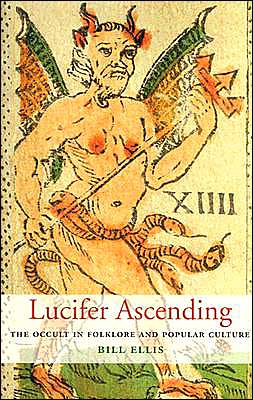 But more critical analysis is needed. To that end, TheoFantastique has solicited comments on the Warrens from its network that includes those with expertise in relevant disciplines. Earlier today one respondent provided his thoughts, Bill Ellis, an expert in the occult and folklore, and who has researched and written extensively on the topic, including Raising the Devil: Satanism, the New Religions, and the Media (University of Kentucky Press, 2000), and Lucifer Ascending: The Occult in Folklore and Popular Culture (University of Kentucky Press, 2004). Ellis wrote:
It’s been a long time since I dealt with this, and since my retirement I’ve passed on my satanism files and books to Penn State’s Library collection. I do recall the two as prominent media figures in both the Amityville Horror house and the Smurl haunting case. They tended to focus on demonic obsession as a primary focus in a way that was similar to the approach of the Deliverance Ministry that I discuss in “Raising the Devil.” That is, paranormal events are the work of Satan’s minions, and even trivial experimentation with the occult can lead to serious demonic attacks. Interestingly, Lorraine Warren functioned as a trance medium as part of their investigations, but then exorcism was, notoriously, a form of occult investigation in which interesting things could be learned by questioning indwelling demons, essentially using afflicted individuals as a kind of Ouija board.
In scattered notes, I also find that the Warrens took a very hard line against Ouija boards, holding that they should be burned, sprinkled with holy water (I believe they were either Catholic in orientation or at least swung that way, as Ed also used a crucifix in his work), and then buried. Cabbage Patch dolls also tended to be foci of occult/demonic activities, Warren alleging that such toys, when treated like real human babies, attracted demons as “souls,” allowing them to levitate and speak to their owners, saying things like “I’m not just a doll — I’m the Lord of Hell.” [Reference: Omni Magazine, Feb. 1985. http://textfiles.com/magazines/HUMUS/humus.001]. They too needed to be sprinkled with holy water and buried to avoid further trouble.
While I would not go so far as to call them “fakes,” it is clear that they represented a fringe approach to the paranormal that was essentially an effort to appropriate emerging forms of occult activity into a form of Christianity by defining them as a form of spiritual warfare. Which is, as you know, essentially what the prosecutors of the Salem Witch Trials did in 1692. It is an effort to compete with the neopagan revival (or at least with what Christians thought neopagans were doing) rather than a movement to combat it.
http://textfiles.com/magazines/HUMUS/humus.001
One of my concerns where the Warrens are concerned is found in the final paragraph of Ellis, the work of the Warrens that has confirmed Christian presuppositions about Pagans as being in league with the Devil, and thus a Spiritual Warfare approach is needed, which may or may not involve modified forms of Roman Catholic ritual. Earlier today I read two blog posts by Evangelicals which picked up on precisely these areas and ran with them, only to confirm stereotypes and spread misinformation about Wiccans and Pagans. And then there’s the possibility of bringing additional lack of credibility to the study of the paranormal, a research area that already struggles with legitimacy.
Before we run with the “facts” of the Warrens in confirming our views of witches, Pagans, the Salem Witch Trials, or even the paranormal, let’s do our homework to see what kind of people we’re dealing with and weigh their testimony accordingly.
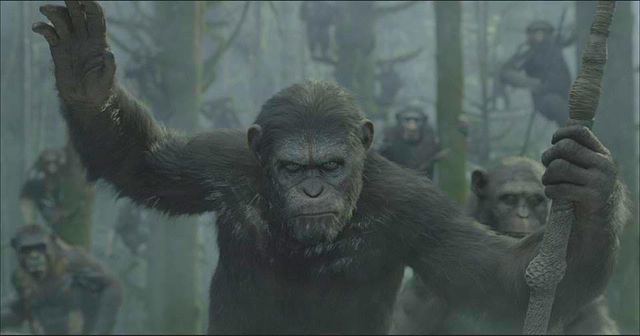 Regular readers of this blog will recall that I am a huge Planet of the Apes fan, as this essay and podcast indicate. Therefore, I was pleasantly surprised with the results of the reboot in Rise of the Planet of the Apes. Those who have seen this film will recall the ending that played out while the credits rolled as a simian flu-infected pilot dripped blood from his nose through an international airport, setting the stage for a worldwide pandemic. In this way Rise set the stage for a sequel, but my question was “Can lightening strike twice?” Could the filmmakers produce a sequel that would be as good as the first film, represent thought provoking science fiction, and also do justice to the Planet of the Apes franchise?
This quest still lingers for me, but some of the tidbits that have been released about Dawn of the Planet of the Apes is promising. This includes interviews and other material made available at Comic con, as well as the viral media campaign which has resulted in a public service announcement type of promotional that warns about “simian flu” (see below).
Time will tell whether Rise of the Planet of the Apes signals that the Apes franchise is reborn with more than a one hit wonder, but here’s to hoping.
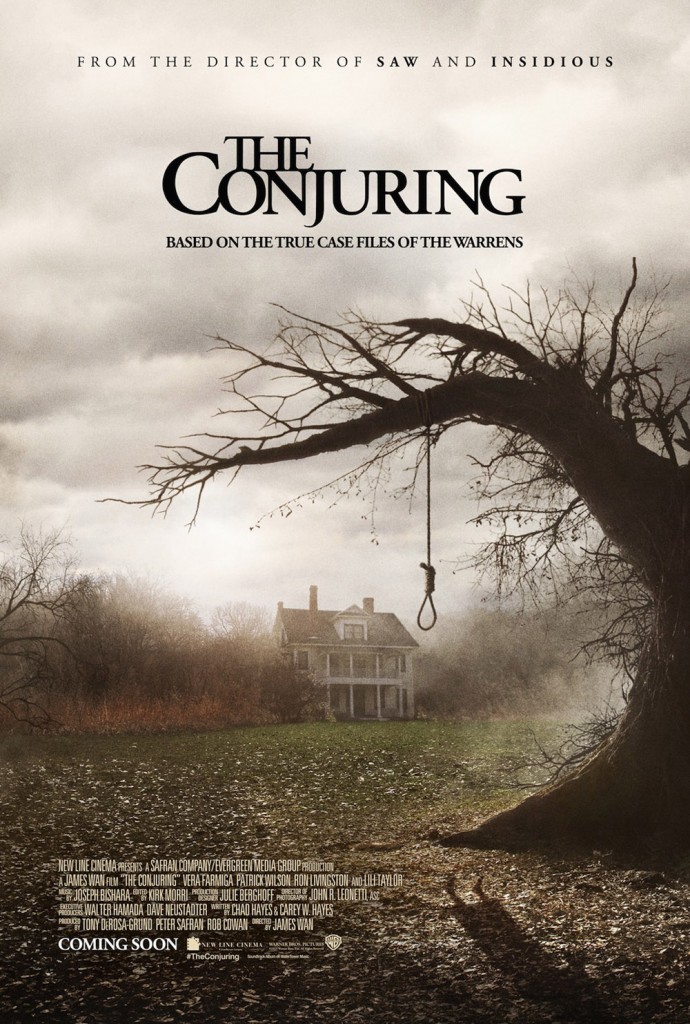 The Conjuring has been the focus of a lot of discussion recently from a variety of perspectives: It surprisingly broke box office records in its debut weekend, beating out much bigger budget movies; Salon.com claimed it was a “right-wing, woman-hating film; two individuals responsible for producing the film stated that they hoped the film, with its metaphysical dualism of God and the devil, would serve an evangelistic function regarding Christianity. But two other areas related to the film have largely been missed outside of narrow discussion circles. One is what to make of the use of “evil witches,” particularly as it relates to the real world Salem Witch Trials as part of America’s problematic religious past. Another is what to make of the present of controversial demonologists and parapsychologists Ed and Lorraine Warren in the film. TheoFantastique hopes to provide commentary on the latter in a future post, but with this guest essay, Heather Greene provides her thoughts on the Witchcraft issues in the film. Greene has a B.A in Film History from Wesleyan University, and an M.A.in Film History and Theory from Emory University. She studied film at both Cornell University and University of Paris. She is also an initiated Wiccan Priestess.
n my current film research and writings, I posit that the character of the Witch within Hollywood film language is derived from fictional constructs with little basis in reality. In other words, the Hollywood witch is not at all a caricature or representative of the modern day Wiccan, Heathen or Pagan practitioner.
The Hollywood Witch’s role in a film’s narrative is based on the cultural acceptance that the witch doesn’t exist. She (or he) lives, so to speak, in the same pre-narrative framework as Frankenstein, Dracula, faeries, elves and even Mickey Mouse. The audience accepts her as a fictional fantasy character.
With that said, the witch does carry with her a load of cultural and historical subtext that originates in European Catholic theology. This theology associates the witch with the Christian Satan. However, in the minds of most modern audiences, these subtexts are relegated to superstition. As such, witches don’t exist.
The horror film genre and its sub genres (slasher, thriller etc) evoke fear by introducing the frightfully fantastic into reality. The more real the setting, the more frightening the film. They are “worst-case scenarios” marinating in the monstrous and the inhuman. Often these films dabble in the esoteric, occult, and other similar practices that have been shunned by mainstream Christian culture for centuries. Fear of the witch is a part of that theologically-based cultural legacy.
From what I understand, The Conjuring is playing directly into that scenario. It uses the legacy of the Salem Witch trials, steeped in Christian superstition, and brings that to life with occult practices. They step it closer to reality by claiming the story is true. This is nothing new.
For modern Pagans who strive to demonstrate that real witches aren’t and have never been fearful figures, Hollywood’s perpetuation of this myth can be troublesome. However, that battle is a monster in and of itself. The stigma on the witch has moved well beyond the realms of theology and is now embedded in secular society.
While we, Pagans, should be mindful of Hollywood’s portrayal of witches, we also should be conservative in any outrage directed toward Hollywood. There are very few cases where any type of real Pagan theology has informed a Hollywood witch character. The Conjuring is a perfect example. The Hollywood witch is not us nor has she (he) ever been. She is a fictional creation. We may have some common roots but we are not one and the same.
I have not seen the The Conjuring nor do I plan to see it anytime in the near future. To be completely frank, I am not a fan of the modern horror film.
Related posts:
“Black Death: Promising Medieval Horror”
“Black Death Podcast: Peg Aloi, Medieval Horror, and Religious Dialogue”
“Karin Beeler: Seers, Witches and Psychics On Screen”
“Carrol L. Fry – Cinema of the Occult: New Age, Satanism, Wicca, and Spiritualism in Film”
“Peg Aloi: Cinema and the Occult Revival”
“Metaphysical Media and a Typology of Media Portraits of the Witch”
“Jason Winslade Interview: Esotericism in Witchcraft and Entertainment”
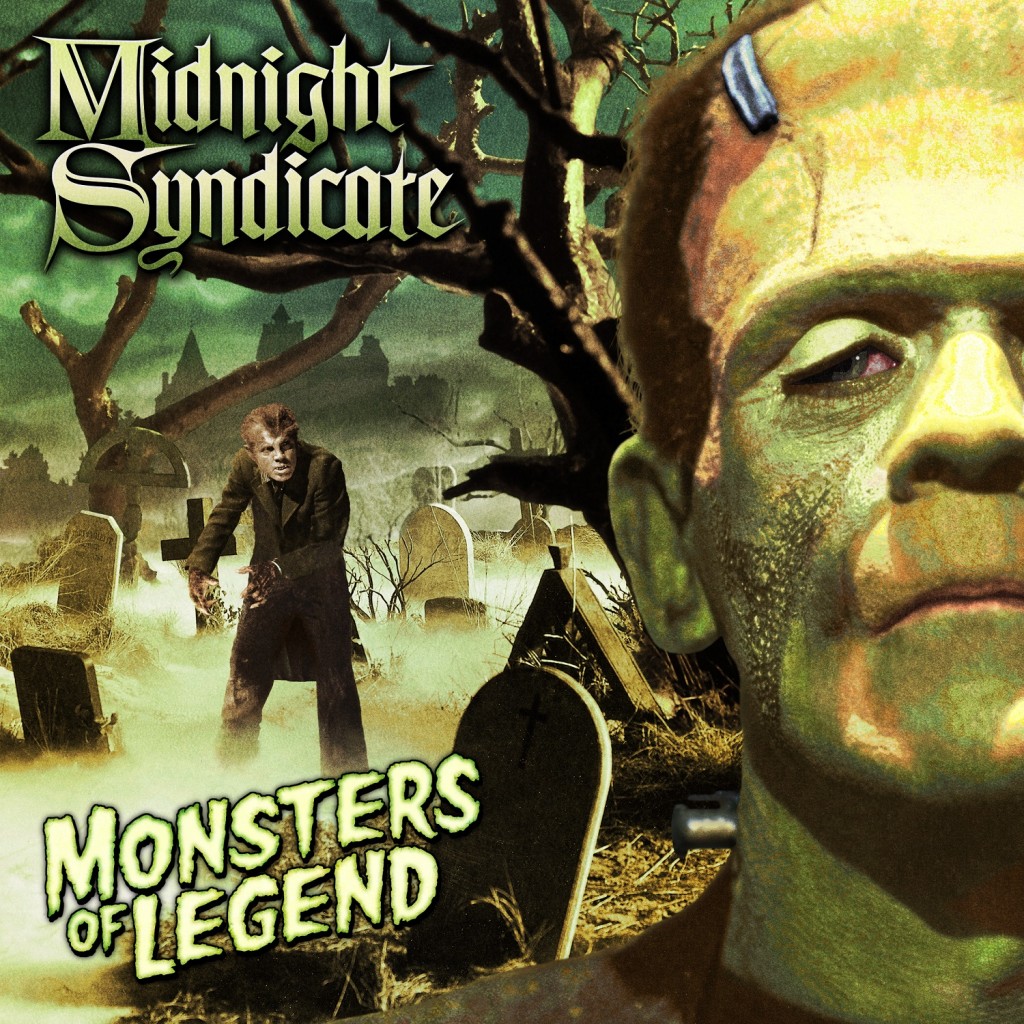
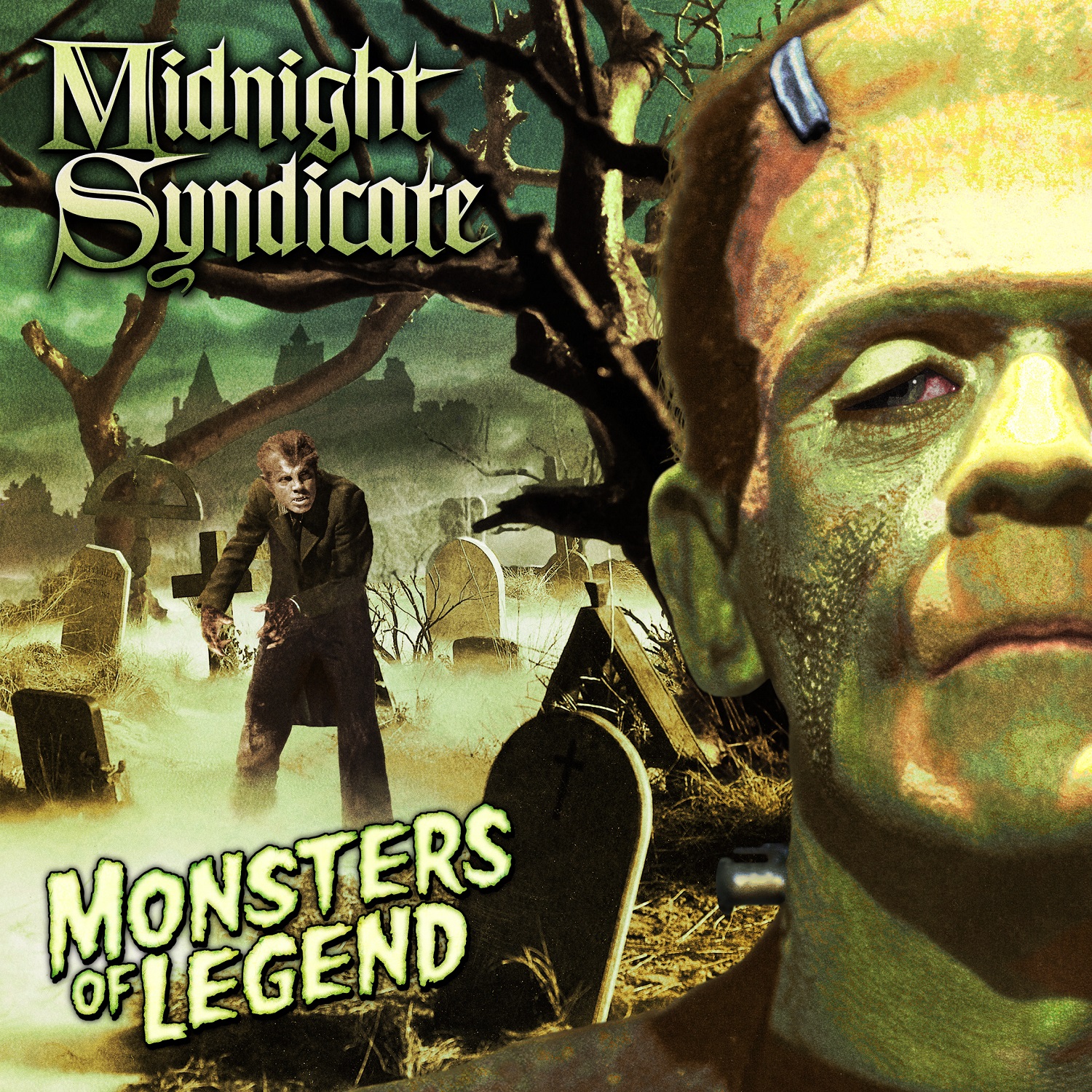
I just received the latest CD from Midnight Syndicate and it’s great. The title is Monsters of Legend, and it represents something of a homage to the classic Universal Studios and Hammer Films monsters from the past. One of the tracks, “It Lives!,” can be previewed from their YouTube page.
This album will have great appeal to various groups of people, from those who enjoy Halloween, to classic monsters from the silent screen and Universal and Hammer, to horrific music lovers. For Halloween fans Monsters of Legend provides a listening experience that helps create a special ambiance associated with the holiday and the season. For classic horror film fans this album includes echoes of scores found in a number of films that bring back fond memories of late night frights in black on white. For those who enjoy horrific music, Monsters of Legend provides a welcome addition to the fan’s musical library that will compliment scores and symphonies of fright. Overall, this album hits the right notes, and in this reviewer’s estimation, is one of the best Midnight Syndicate has produced.
The press release with the album provides further background:
July 19, 2013 (Cleveland, OH) – Symphonic gothic horror musicians MIDNIGHT SYNDICATE have just released their sixteenth studio album, MONSTERS OF LEGEND. This “tribute to the golden age of horror” is inspired by horror films from the silent era, Universal Studios’ horror classics, Hammer Films, and other European horror films of the 60s and 70s. It features sweeping symphonic horror instrumental music and sound effects in the signature style the band helped pioneer. “We want to make you feel like you are a character in one of those classic horror films – that you’ve entered a world where any one of those iconic Universal monsters could be right around the corner,” said composer EDWARD DOUGLAS. The CD artwork features original images from classic Universal Studios horror movies including BRIDE OF FRANKENSTEIN, WEREWOLF OF LONDON, and DRACULA.
“Those classic horror films are at the core of what we do in Midnight Syndicate, so to do an entire disc based on them was a lot fun,” added Douglas. “Musically it required us to use more traditional orchestral instruments, and use them in more ways than we have in the past. The result is a fuller orchestral sound with a heavy classical music influence. There are plenty of nods to James Bernard, Bernard Herrmann, and other early film composers.” Although the band promises the new disc will deliver the dark atmosphere haunted house designers, roleplaying gamers, and Halloween music enthusiasts expect from them, they feel they’ve crafted a disc that transcends their favorite time of the year. “Like CARNIVAL ARCANE, we feel we’ve taken things up a notch both musically and with the sound design on this release,” said GAVIN GOSZKA. “There’s a lot there to listen to and lose yourself in.”
In addition to over 50 minutes of new music, the band went back into its archives and recreated several tracks from its early releases Born of the Night and Realm of Shadows, bringing the total runtime of the disc to over 65 minutes. “Both the new album and those older ones are set in and around the mysterious hamlet of Arcacia. We felt it would be a great opportunity to breathe new life into a few of our lesser known tracks from those discs to help tell this story. For additional atmosphere the band called on voiceover artist Dick Terhune. “Dick’s known throughout the haunted house industry as the “Voice from Hell,” needless to say he was the perfect match for this disc,” added Goskza.
The CD is available now through the band’s website, as well as iTunes and Amazon.com. It will also be available in select Halloween retailers beginning in August. A collector’s edition 12″ vinyl version is also available on the band’s site.
 I will be one of the guests on the Encounter radio program out of Australia on the subject of “Sacred Horror: Zombie Resurrections and Vampire Souls.” The website description:
From the legends of Frankenstein and Dracula to films about zombies, witches and vampires, supernatural horror has always captured the popular imagination. Fictional horror scares us because they confront us with our deepest fears about death and the unknown. They make us tremble, but they also act as catharsis. So it’s no wonder then that the horror genre often intersects with religion.
The lineup of guests includes:
Jana Riess
Author of What Would Buffy Do: The Vampire Slayer as Spiritual Guide
Douglas E. Cowan
Professor of Religious Studies, Renison University College, University of Waterloo, Canada
John Morehead
Co-editor of The Undead and Theology and creator of website TheoFantastique
Mike Duran
Christian novelist, California
Ashley Moyse
Research Affiliate, Vancouver School of Theology, Canada
Philip Johnson
Theologian
My interview will be broadcast this Saturday, 20th July at 5:00 p.m. (AEST) and repeated Wednesday, 24th July at 1:00 p.m. (AEST). The program is approximately 53 mins, and begins just after the news. It will also be available for download shortly after the first broadcast from the Encounter website: http://www.abc.net.au/radionational/programs/encounter/vampires-with-souls2c-zombie-resurrections/4773674
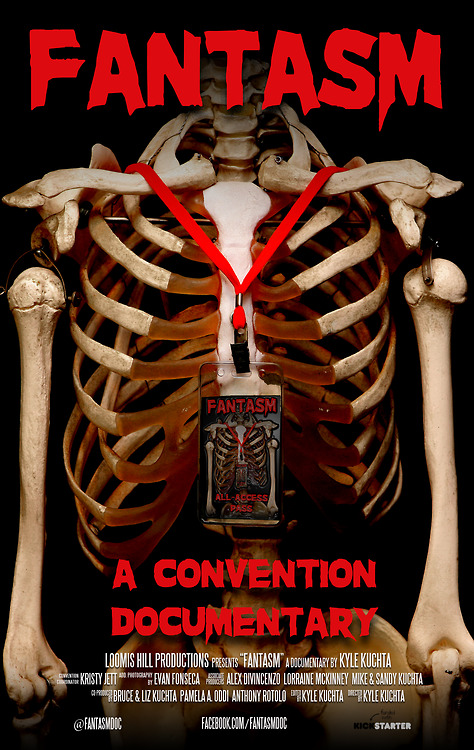
Previously I interviewed Kuchta on his forthcoming documentary, FANTASM, that looks at the fandom at horror conventions. They have now released a poster for the film, and this comes by way of the press release:
Director Kyle Kuchta is excited to reveal the official theatrical poster for his forthcoming horror convention documentary, Fantasm. The film explores the bonds formed by the close-knit community of fans who attend horror conventions. A high-resolution version of the poster is attached for your use.
In addition to a variety of devoted genre fans, Fantasm features insight from several popular horror actors and filmmakers, including Tom Atkins (Escape from New York), Heather Langenkamp (A Nightmare on Elm Street), Amanda Wyss (A Nightmare on Elm Street), Lloyd Kaufman (The Toxic Avenger), Joe Lynch (Wrong Turn 2) and more.
After being shot at six different conventions throughout the country, Fantasm is currently in post-production. “The film is being submitted to festivals and conventions,” Kuchta elaborates. “We’re really excited to be releasing it in the fall when the convention season and the horror community are thriving full-force.”
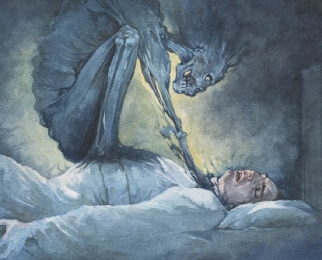 The new issue of Paranthropology officially launches tomorrow, but is available now in Vol. 4, No. 3. I am pleased to have a contribution in the form of “From Sleep Paralysis to Spiritual Experience: An Interview With David Hufford.” The essay can be found on pages 21-28, and the whole issue can be downloaded here.
An excerpt:
John Morehead: What are the various interpretations that are brought to the phenomenon [of SP] in the cultures in which it is found?
David Hufford: That’s a really interesting question. There is variety, but a constrained variety. The interpretations center, as you might imagine, on the intruder. In almost all cases this entity is described as evil or at least threatening. It may be interpreted as a sorcerer or a ghost or demon or some other kind of supernatural, such as a vampire. In many locations it is assumed that more than one kind of creature can do this, such as both sorcerers and ghosts. The definitive characteristics of these categories, of course, are not unambiguously presented in the SP experience. If the intruder is recognized as a particular living person (which seems rare) then it is understandable that it will be interpreted as a sorcerer. If the attack is sexual, which seems infrequent but it does happen, and if there is a term such as incubus or succubus, that will be applied. If the attack occurs in a house believed to be haunted, which is common, then the intruder is generally assumed to be a ghost. When features of an attack do not obviously suggest one kind of entity or another, then local categories fill in, such as the aswang (Tagalog) in the Philippines. This remarkable consistency and similarity across cultures is a product, obviously, of the robust and consistent cross-cultural pattern of the phenomenology of SP.
Related posts:
“Sleep Paralysis, Neurotheology, and Spirits”
“Louis Proud – Dark Intrusions: An Investigation into the Paranormal Nature of Sleep Paralysis”
“Sleep Paralysis Documentary: Your Worst Nightmare”
“The Old Hag, Sleep Paralysis, and Pop Culture”
“Paul Meehan: Alien Abductions and Sleep Paralysis”
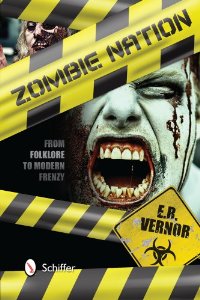 Corvis Nocturnum made a copy of his new book available to me, Zombie Nation: From Folklore to Modern Frenzy (Schiffer Publishing Ltd., 2013). I am featured in an interview in the first part of the book where I discuss the religious aspects of zombies.
From the publisher’s website:
Go on a hunt for the facts, folklore, and fiction about zombies from the 1800s to popular culture. The evolution of the zombie is explored in depth and includes historic accounts as well as a peek into the current craze. From whispered stories in voodoo legends and experiments in reanimation performed in the 1800s to recent events that elude to the scary possibility that such creatures really exist, you are in for a wild ride. Take a look at George Romero’s many contributions to the popularity of the living undead, with films such as Night of the Living Dead. Go inside with the incredibly popular AMC television series, The Walking Dead. Read interviews from people who are involved directly with zombie-mania, such as those who sell themed goods, ranging from bleeding mannequin zombie targets to Zombie Max ammunition. Visit with frenzied groups like the Zombie Squad featured on the History Channel or take a stroll in Zombie Walks taking place around the world. You can even learn to use makeup to become a zombie yourself! All in all, it’s a good day to be undead.
Order your copy today from the TheoFantastique Bookstore.
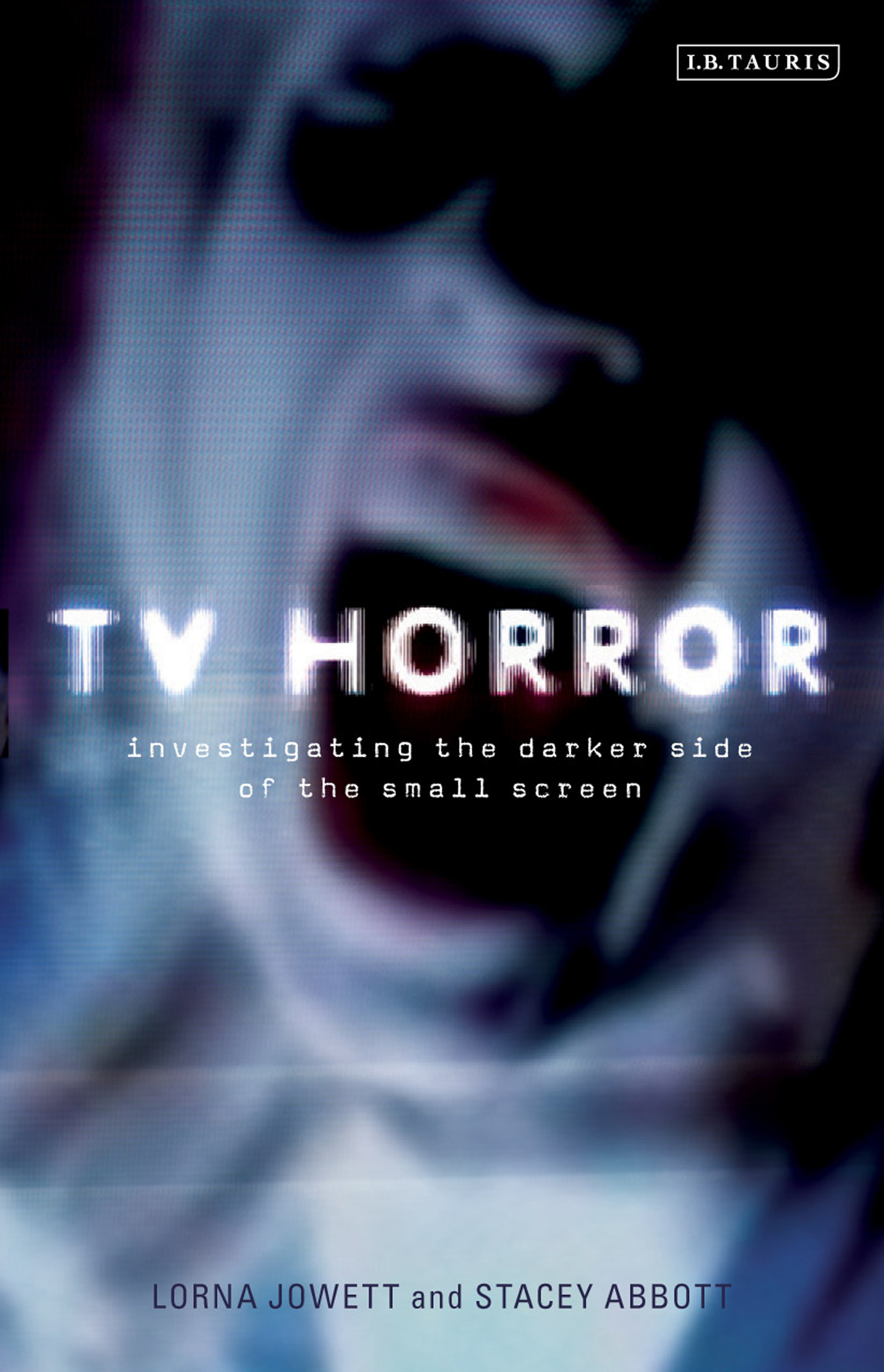
 I have just become aware of an interesting looking book by Lorna Jowett and Stacey Abbott titled TV Horror: Investigating the Dark Side of the Small Screen (I.B. Tauris, 2013).
From the description at Amazon.com:
Horror is a universally popular, pervasive TV genre, with shows like True Blood, Being Human, The Walking Dead and American Horror Story making a bloody splash across our television screens. This complete, utterly accessible, sometimes scary new book is the definitive work on TV horror. It shows how this most adaptable of genres has continued to be a part of the broadcast landscape, unsettling audiences and pushing the boundaries of acceptability.The authors demonstrate how TV Horror continues to provoke and terrify audiences by bringing the monstrous and the supernatural into the home, whether through adaptations of Stephen King and classic horror novels, or by reworking the gothic and surrealism in Twin Peaks and Carnivale. They uncover horror in mainstream television from procedural dramas to children’s television and, through close analysis of landmark TV auteurs including Rod Serling, Nigel Kneale, Dan Curtis and Stephen Moffat, together with case studies of such shows as Dark Shadows, Dexter, Pushing Daisies, Torchwood, and Supernatural, they explore its evolution on television. This book is a must-have for those studying TV Genre as well as for anyone with a taste for the gruesome and the macabre.
And a discussion from University of Roehampton where Dr. Abbott teaches:
The aim of the book is to demonstrate how the horror genre, perceived by some to be incompatible with television, has always had a place on our TV screens, from Quatermass and Boris Karloff’s Thriller in the 1950s and 1960s to 21st Century shows such as Dexter, True Blood and The Walking Dead.
The book also examines how the often contradictory relationship between horror and television has been fueled by changes within the broadcast landscape, and how the genre has repeatedly been re-imaged to suit our understanding of television, while continuing to unsettle audiences and push the boundaries of acceptability.
Jane Espenson, leading writer and producer of acclaimed horror, fantasy and sci fi television series, including Buffy the Vampire Slayer, Battlestar Galactica, Game of Thrones, Once Upon a Time and the online series Husbands, describes the book as a ‘thorough, thoughtful and entertaining look at horror on television, deserv[ing] to be devoured by writers, analysts and fans. You will definitely find something in here to make your pulse jump and your eyes open wide.’
Since completing the book, Stacey, who is a Reader in Film and Television Studies, remains fascinated by TV Horror, a genre that seems more present today than ever before, and this topic remains the focus of much of her research, as evidenced by her recent blogs on TV Horror, The Walking Dead and Fringe for Critical Studies in Television Online.
Abbott and Jowett are also reuniting to co-organise, with Mike Starr of the University of Northampton, a conference on the televisual vampire. TV Fangdom: A Conference on Television Vampires will took place on 7-8 June 2013 at the University of Northampton.
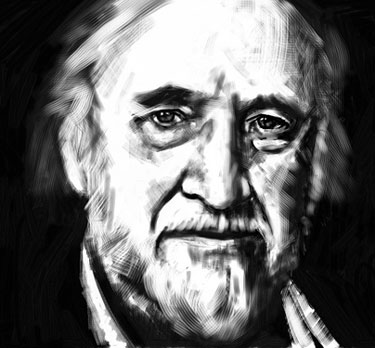 The legend of horror and science fiction writing, Richard Matheson, has passed away. Matheson’s work included I Am Legend, The Shrinking Man, Hell House, and several of the most memorable episodes of The Twilight Zone. Arlen Schumer provided his own eulogy on the TheoFantastique Facebook page:
R.I.P. RICHARD MATHESON–the Lou Gherig of The Twilight Zone to Rod Serling’s Ruth–just passed away. He wrote the 2nd-most episodes after Serling in quantity, but their quality was more uniform than the erratic Serling’s, who wrote the best AND some of the worst episodes. Of all of Matheson’s great ones–from William Shatner in “Nightmare at 20,000 Feet” to Ages Moorehead in “The Invaders”–the one that is most ur-Twilight Zone to me is Matheson’s first-season “A World of Difference,” in which an actor (Howard Duff, husband of fellow TZ actor & director Ida Lupino, giving one of those stark-ravingly believable Twilight Zone performances) who believes he is the man he plays (while the movie crew thinks he’s off his rocker) discovers, “How thin a line separates that which we assume to be real with that manufactured inside of a mind”–presaging the later-Sixties psychedelic reaction to life being like a movie, while raising age-old questions about destiny and pre-destiny, and about man’s free will in a benevolent or malevolent universe (and the basis for the 1998 film The Truman Show). Thank you, Mr. Matheson, for that and so much more! Your work will live forever!
See TheoFantastique’s past interview with Matthew R. Bradley on his book Richard Matheson on Screen for more on this great writer.