 CALL FOR PAPERS ON “CHARACTERS OF THE WALKING DEAD“
This volume is currently under contract with McFarland & Company Inc. Publishers and is co-edited by Kim Paffenroth and John Morehead. As the title indicates, we are seeking chapter submissions that focus on the characters of The Walking Dead television series and uses the characters as springboards into discussions of larger themes developed within the character, the television series, and connected to the broader culture. Several essays are already in hand, but we need another six quality essays of 6,500 words. A firm deadline is in place for chapter draft submission by August 1. Abstracts of 200 words or further inquiries on this volume should be sent to kimpaffenroth@msn.com and johnwmorehead@msn.com.
Tags:
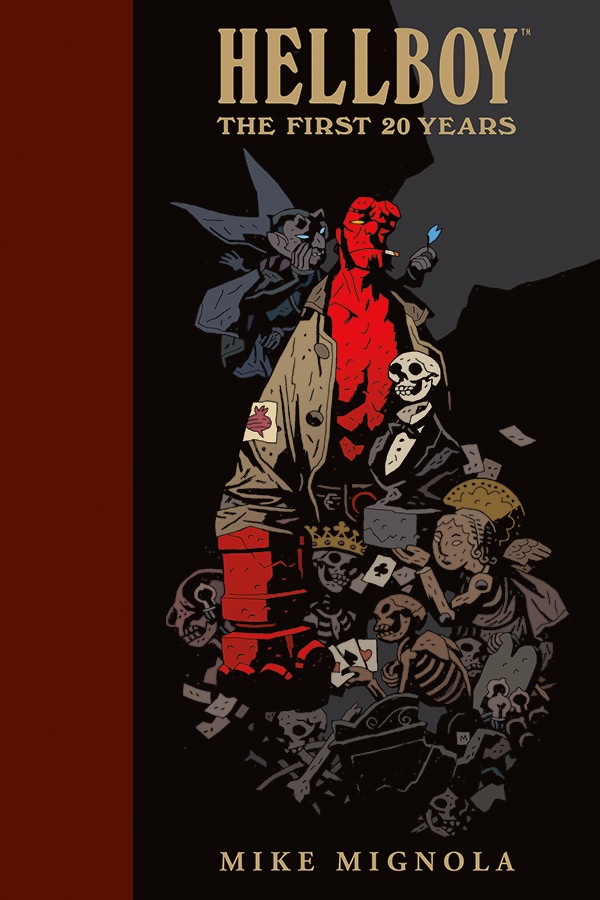
Dark Horse Comics designated March 22 Hellboy Day to coincide with the 20th anniversary of the comic. Read more here.
 Brown University is presenting an upcoming conference titled “Beasts Monsters, and the Fantastic in the Religious Imagination.” The schedule from the website:
Friday, February 28, 2014
Keynote Address
6:30-7:30pm
Dinner Reception
7:30pm
Saturday, March 1, 2014
Breakfast
8am-9am
I. Morning Session: Doing Things with Demons
9am-10:45am
“When a Bad Being Does Good Things: The Demon as the Unsung Hero of the Mahabharata”
Vishal Sharma (Department for the Study of Religion, University of Toronto)
“The Hellhound of the Qur’an: Investigations of a Dog at the Gate of the Underworld”
George Archer (Theology, Georgetown)
“Dangerous Demons and Savvy Sages: The non-human Other and rabbinic identity in Late Antiquity”
Sara Ronis (Religious Studies, Yale University)
“Mourning and the Malevolent: An Analysis of the Lament of Raksas Women in Valmiki’s Ramayana”
Grace MacCormick (M.A., Department for the Study of Religion, University of Toronto)
“Domesticating the Jinn: Sayyid Ahmad Kan’s Exegesis of the Quran”
Mian Muhammad Nauman Faizi (Ph.D., Scripture, Interpretation and Practice Program, Department of Religious Studies, University of Virginia)
Break
10:45am-11am
II. Late Morning Session: The Politics of Composite Creatures
11am-12:15pm
“The Sea Monster Ketos as Jonah’s ‘Great Fish’ in Early Christian Art”
Mark D. Ellison (Ph.D., Early Christianity, Department of Religion, Vanderbilt University)
“Demonizing Dissent in Medieval Japan: Tengu and Religious Rhetoric in the Konjaku Monogatari”
Benjamin D. Cox, (Ph.D., Religious Studies, University of Texas at Austin)
“Counterintuitive Mischwesen: A Cognitive Approach to the Iconography of Hybrid Creatures in the Ancient Near East”
Brett Maiden (Religion, Emory University)
Lunch Break
12:15pm-2pm
III. Afternoon Session: The Unnatural in Narrative and Art
2pm-3:30pm
“Tolkien’s Fairy-Stories and Desmond’s Metaxu: On Secondary Belief and the Primary Ethos”
Michelle J. Falcetano (Department of Philosophy, Villanova University)
“‘And I knew there was a dead man in my room’: Haunting and Modernity in Industrial Pittsburgh”
Andrew McKee (Department of Religion, Florida State University)
“The Disenchanted Gothic: Mary Shelley’s Frankenstein as Religious Declension Narrative”
Don Jolly (M.A., Religion, New York University)
“Monstrous Religious Authority in the films of Paul Thomas Anderson”
Dana Logan (Ph.D., Religious Studies, University of Indiana-Bloomington)
Break
3:30pm-3:45pm
IV. Late Afternoon Session: Bodies and Boundaries
3:45pm-5:15pm
“Barbarians Upon the Horizon: Ethnoreligious Difference in the Colonial Imagination”
Angel J. Gallardo (Ph.D., Relgion & Culture, Religious Studies, Southern Methodist University)
“Embodying Disordered Economy: A Study in Byzantine Theology”
Jessica Wong (Religion, Duke University)
“The Supernatural, Disability, and the Hermeneutics of Childbearing: Reading Martha Beck’s Expecting Adam”
Andrew Walker-Cornetta (M.A., Religious Studies, New York University)
“Reconsidering the Kapalika: Multiple Interpretations and Diversity in Hinduism Made Accessible by the Intriguingly Grisly”
Seth Ligo (Ph.D., Religion, Duke University)
Break
5:15pm-5:30pm
Closing Remarks
5:30-6pm
Dinner Reception
6pm
*Please note that this schedule is preliminary, and will be updated as additional information becomes available.
Seriously Staked Vampire Symposium
Look beyond the Twilight and True Blood frenzy and there is, and always has been, a serious study of vampires. Seriously Staked brings together a wide variety of subject experts and academics to talk about a range of questions concerning vampires. These include:
- Can science explain vampires?
- Do real vampire hunting kits exist?
- How have vampires impacted western culture?
- What is the crossover between vampires and other anomalous phenomena?
- Was Transylvania vampirism a communist trick to attract tourists?
- What is the London vampire community today?
- Do real vampires exist?
Seriously Staked is taking place at Goldsmiths College on 8 March 2014 and is co-organised by ASSAP (the Association for the Scientific Study of Anomalous Phenomena) and the Anomalistic Psychology Research Unit at Goldsmiths College, University of London.
Seriously Staked is the latest is a series of paranormal conferences organised by ASSAP, following in the footsteps of Seriously Strange and Seriously Unidentified. ASSAP is a registered charity and learned society that has been studying the weird seriously (and the seriously weird) since 1981.
Seriously Staked promises a serious but entertaining look at the vampire phenomena.
I really enjoyed Rise of the Planet of the Apes, as my essay at Cinefantastique Online discussed, and I’m hoping next year’s Dawn of the Planet of the Apes adds positively to the rebirthed franchise.
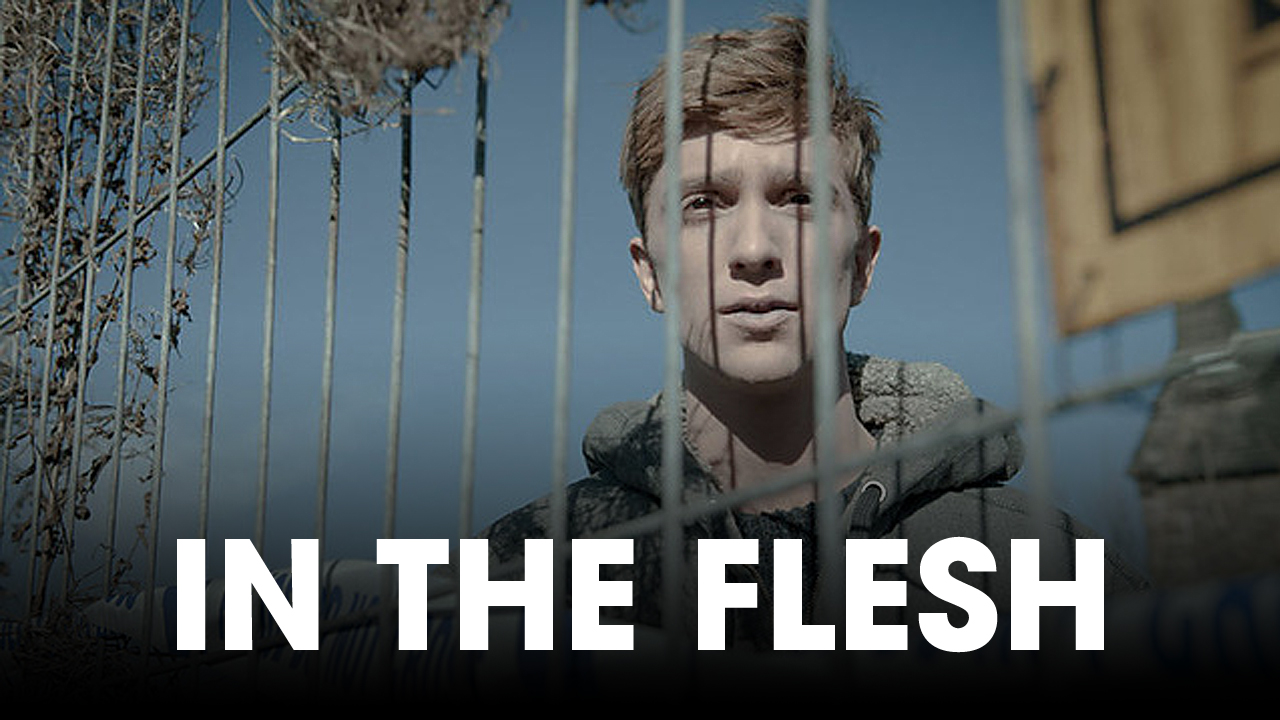
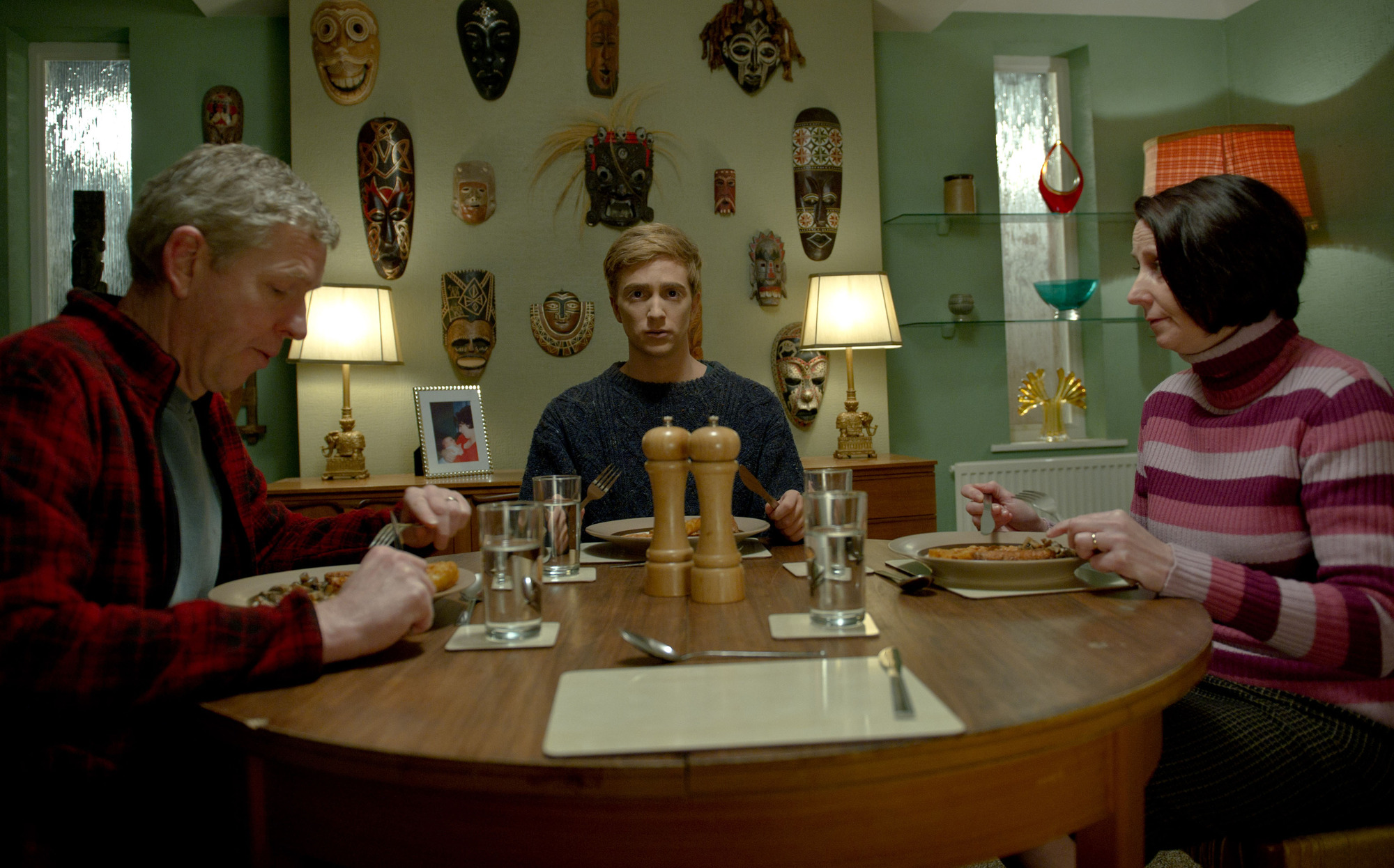
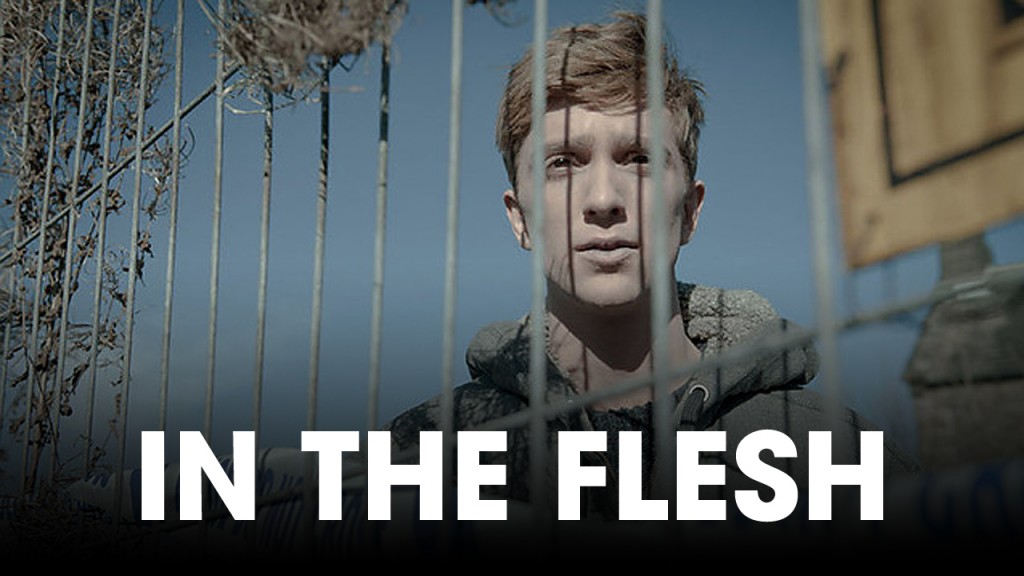 Somehow in my Internet surfing a couple of months ago I stumbled across the website for BBC America and their description of the miniseries In the Flesh. This fresh take on zombie mythology fascinated me, but I was saddened that I wouldn’t be able to do anything other than watch sample clips and background information on the website. To my great surprise, while planning my Halloween DVR program recording, I discovered that BBC America was playing all of this series in a three hour block. It was only recently that I was able to make the time to watch the program.
Zombies have evolved over time, shifting from their roots in Haitian voodoun as living humans controlled by their masters with chemicals and perhaps a little magic, to flesh or brain eating ghouls, to living victims of contagion, to romantic figures in more recent incarnations. Although not as pliable as the vampire, the zombie has demonstrated some flexibility as we use it as a monstrous form to explore various facets of human existence. In the Flesh presents yet another expression of the zombie, a very human one that makes for interesting reflection.
The website for BBC America provides this description of In the Flesh:
Zombie teenager Kieren Walker isn’t comfortable in his ‘undead’ state. He didn’t want to come back – he wanted to be dead. After his suicide four years ago, his friends and family thought they’d never see him again.
But then, shortly after his funeral, thousands rose from the dead; and after months of rehabilitation and medication, the zombies, now known as PDS (Partially Deceased Syndrome) sufferers, are gradually being returned to their homes.
When Kieren returns, he is forced to confront his family, the community that rejected him and haunting flashbacks of what he did in his untreated state. Johnny Campbell directs, Ann Harrison-Baxter produces and Hilary Martin is the executive producer of the three-part series.
In my view In the Flesh involved several thought provoking elements that not only made for moving drama, but also for deep reflection for those willing to go beyond entertainment.
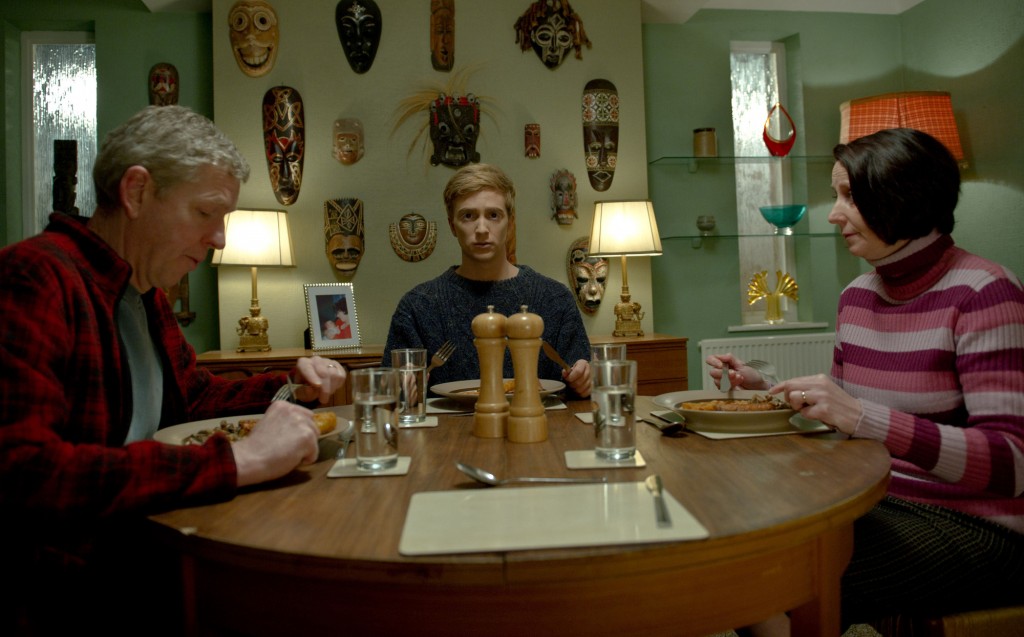
Previously much of the depiction of the zombie emphasizes the cannibalistic and horrific aspect of this figure as ghoul. This naturally produces fear, terror, and revulsion. Rarely has the zombie been depicted in ways that humanize them, a form of depiction that lends itself to sympathetic characters worthy of our identification with their experiences. In the first season and in its first episode, The Walking Dead television series flirted with this idea through one zombie who kept returning to her home in life and looking at the door as if some dim memory remained of life prior to becoming a Walker. Technically the “zombies” who are a part of In the Flesh aren’t dead and risen ghouls, but instead have come back from death as those who suffer from a disease. But this form of depiction of those suffering from Partially Deceased Syndrome (PDS) opens up narrative possibilities that are not found in the more horrific counterparts of this series.
Depicting the returned dead as sympathetic characters wrestling with a chronic disease enables viewers to make connections to real-life conditions which involve social stigma. This includes homosexuality, reflected in this series in Kieren’s relationship with Rick, as well as Muslims, a religious culture finding itself in tension with the majority culture in the UK. Social stigma and otherness is especially evident in this series as it parallels with those who suffer from things like HIV/AIDS, although the stigma there has lessened, but especially mental disease, where social stigma is still very strong. This aspect is reinforced when we consider that the main character, Kieren, took his own life before returning from death with PDS. In this way he carries with him the guilt and social stigma of both suicide as well as PDS, and he must wrestle with this in his neighborhood and broader society, but also in his own family as his parents and sister struggle with understanding the manner in which they lost their loved one, and had him returned to them as well. As a parent who lost an adult child to suicide, I found this element of In the Flesh most significant, and my hope is that it will foster discussion related to suicide and mental health issues for a broad audience.
This series grapples with suicide in moving ways. In one instance, at the end of this series, circumstances arise which mirror those that caused Kieren to take his life leading to PDS. He then disappears, and his family worries about where he is and what may be his fate. His mother finds him and takes him home, leading to a touching conversation between Kieren and his father. At first his father treats him gently, but Kieren pushes him to express his inner anger over not only this incident, but his past suicide. In another instance, Kieren’s friend Amy reveals that she died of leukemia prior to PDS and she asks Kieren what he died of. He tells her he took his own life, and she asks what his final thoughts were before “the end.” He replies, “Relief.” In response to the pain of his personal circumstances and what he assumed was the death of a loved one, he chose to end his life. I found this response applicable to my own questioning. I have often wondered what the last thoughts of my son were before his suicide. My fear is that he thought of remorse. Perhaps if he thought of that event in terms of relief it becomes more comforting.
Religion is the third facet that is most interesting in this series from the perspective of this reviewer. This plays out in two ways. First, the small home town of Roarton where Kieren returns for reintegration after his initial medical treatment has a local church leader, Vicar Oddie, who is extremely influential in shaping negative opinion about PDS sufferers through an appeal to various Bible passages in fiery sermons. The Vicar’s vengeance is played out through the Human Volunteer Force, a group responsible for rounding up and killing PDS sufferers during the initial outbreak, and continuing to do this with those who are attempting to reintegrate into Roarton.
The series plays off of two particular verses, Revelation 1:18 and 11:18:
[Jesus Christ speaking]: I am the Living One; I was dead, and now look, I am alive for ever and ever! And I hold the keys of death and Hades. – Revelation 1:18
The nations were angry,
and your wrath has come.
The time has come for judging the dead,
and for rewarding your servants the prophets
and your people who revere your name,
both great and small—
and for destroying those who destroy the earth.” – Revelation 11:18
The latter passage is used by Vicar Oddie as he argues that PDS sufferers are an example of God’s judgment. As a result, they are extreme “Others,” inhuman beasts and monsters, things to be feared and destroyed so that they don’t compromise the purity of the church, the community, and possibly the world.
The first passage is used by a mysterious figure, a skull-masked Prophet, who maintains a website designed for PDS sufferers where this Bible verse is the password for entry. On the site The Prophet promises a life for those who will join him, a life free from prejudice for those risen like Christ.
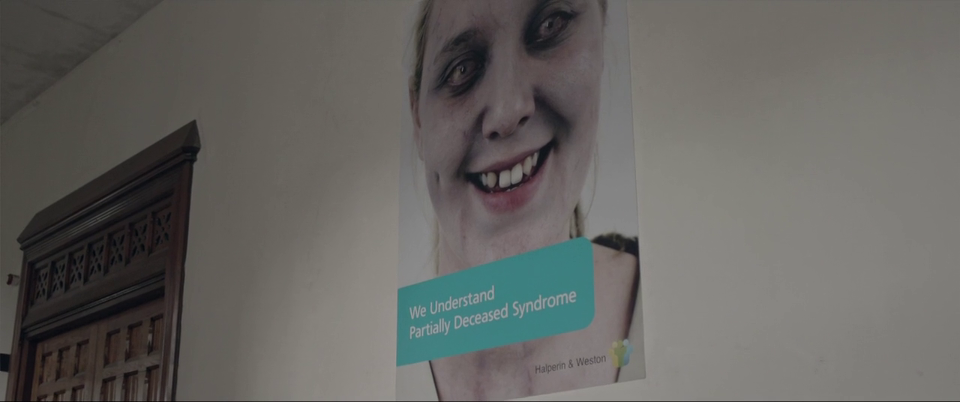
The interesting use of religion in this series is twofold. The first form of religion is that of judgmental and violent fundamentalism of the Vicar. He uses the Bible to create fear and suspicion, and he includes a peculiar “end-times” eschatology of two resurrections: the first of the monstrous PDS as imposters destined for death, and the second for the righteous who return free from physical blemish. Given the decline in credibility in religion in the West, particularly Christianity, this depiction of religion is not surprising. The second form comes by way of The Prophet. He too uses Bible verses, but tantalizes PDS sufferers with a promise of hope, even while remaining hidden behind a mask and residing in an undisclosed location. The viewer is left wondering whether the Vicar and The Prophet represent diametrical opposition in their use of religion, or two sides of the same negative coin.
Given my appreciation for this series, I was pleased to read that filming is now underway for Season 2:
Filming has begun on the second season of the zombie drama In the Flesh. Critically acclaimed creator, Dominic Mitchell, reignites the world of teenager Kieren Walker, a PDS (Partially Deceased Syndrome) sufferer who continues in his struggle to find acceptance. The six-part thriller (6×60), a BBC America co-production with BBC Drama Production North, is set to return to the channel in 2014 as part of Supernatural Saturday.
Those interested in a depiction of zombies that provides room for moving drama as well as personal, social, and religious reflection are encouraged to give In the Flesh a try. It may be repeated on BBC America, and is currently available on DVD and Amazon Instant Video.
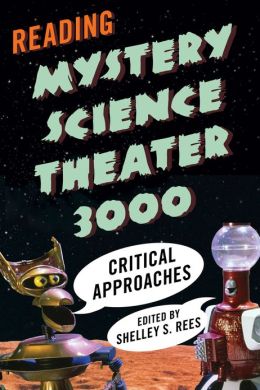 Reading Mystery Science Theater 3000: Critical Approaches (Scarecrow Press, 2013), Shelley S. Rees, editor.
First broadcast in the not too distant past on a television station in Minnesota, Mystery Science Theater 3000 soon grew out of its humble beginnings and found a new home on cable television. This simple show about a man and two robots forced to watch bad movies became a cult classic, and episodes of the series continue to be packaged in DVD collections to this day. Before its final run, the show received Emmy nominations and a Peabody award for Television excellence, and in 2007, Time magazine declared MST3K one of “The 100 Best Shows of All-Time.”
In Reading Mystery Science Theater 3000: Critical Approaches, Shelley S. Rees presents a collection of essays that examines the complex relationship between narrative and audience constructed by this baffling but beloved television show. Invoking literary theory, cultural criticism, pedagogy, feminist criticism, humor theory, rhetorical analysis, and film and media studies, these essays affirm the show’s narrative and rhetorical intricacy. The first section, “Rhetoric and the Empowered Audience,” addresses MST3K’s function as an exercise in rhetorical resistance. Part Two, “Mystery Science Theater 3000 and Genre,” analyzes MST3K through distinct generic traditions, including humor studies, traditional science fiction tropes, and the B-movie. Finally, the third section addresses postmodern and intertextual readings of the show.
By providing an academic treatment of an iconic television phenomenon, these essays argue that Mystery Science Theater 3000 is worthy of serious scholarly attention. Though aimed at a discerning readership of academics, this collection will also appeal to the intellectual nature of the show’s well-educated audience.
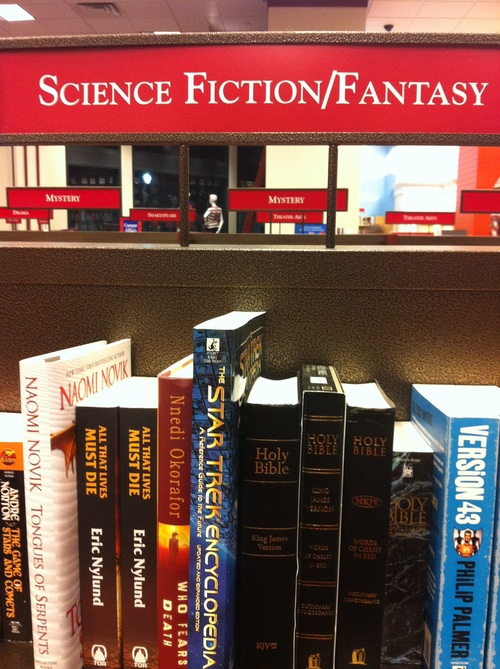 The research group “Science Fiction and the Bible” meets for the second time at ISBL/EABS in Vienna (July 6th-10th). We invite proposals for papers which engage with the possibilities of discussing biblical literature informed by Science Fiction (SF) or closely related genres. Proposals for papers are invited that apply specific works, tropes, or theories from SF to consider whether new insights can be derived from applying concepts of SF to biblical concepts or passages.
Using the concept of SF is a multidisciplinary approach. We encourage proposals from Bible scholars with an interest in SF, but also particularly from scholars in disciplines such as cultural studies, literature, sociology, film/media studies or even engineering and physics. In 2014 we expand our scope to also include considerations about religion and ethics, which may not be directly linked to a specific biblical passage or concept.
Paper prize for students: graduate students, whose papers are accepted for the ISBL/EABS annual meeting, can choose to enter the student paper competition that is held in connection with this meeting (2 cash prizes of 250 Euros).
Abstract deadline: January 31st, 2014.
More information and abstract submission here or by email: f.uhlenbruch@derby.ac.uk
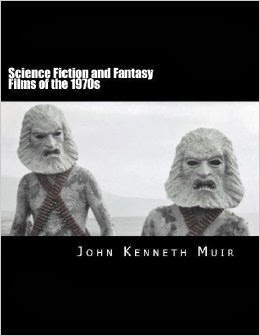 One of the best writers analyzing contemporary genre film and television is John Kenneth Muir. His new volume adds to an impressive body of work with Science Fiction and Fantasy Films of the 1970s (The Lulu Show, 2013).
In this volume he follows a template used in his previous work. Following a helpful Introduction to films of the decade, Muir proceeds to consider each genre film during a given year as it came out in theaters and as it will be remembered by viewers. Prior to the discussion of the films for each year he includes a list of significant historical events that took place during that period, which helps place these films in their cultural and historical context. The discussions of the films include a sampling of critical commentary by others, a list of cast and crew, a synopsis of the story, followed by Muir’s review. Each film also includes a rating based upon a four-star system. The main thrust of volume wraps up with a Conclusion, but Muir doesn’t end his volume there. It also includes several helpful appendices, including a list of conventions of the genre, a hall of fame with actors who “appeared in at least three science fiction films” from 1970-1979, movie tag-lines broken down by year that helps the reader walk down memory lane, a discussion of some of the “most de-humanizing rituals of 1970s dystopias,” a chart that lists 1970s films and their more recent remakes or re-envisionings, and the author’s choice of the ten best films of the decade.
Some may wonder why Muir would devote 454 pages to a discussion of 1970s horror and fantasy films. But knowledgeable film critics, fans, and culture watchers, know exactly why. The 1970s were a significant time period for genre film. Following on the heels of the 1960s counterculture, the 1970s represented a time in which the seeds of the previous decade germinated and bore fruit which matured and expressed itself in human experience. As a keen student of film and culture, Muir recognizes some of these significant signposts, and he shares them with readers in his Introduction. This includes various dystopias, post-apocalyptic, fears related to science that included medicine as well as robots and computers, conspiracy, and nature out of control. the 1970s also saw many films that focused on outer space, and fantasy was alive and well during this period, with the two coming together in 1977 with Star Wars.
Muir’s analysis is always enjoyable, and he does a good job at teasing out elements that the viewer may not have seen in previous viewings. If a critique is to be offered it is a minor one. It involves an occasional disagreement over interpretation of elements of film. For example, in “Appendix D: The Five Most De-Humanizing Rituals of 1970s Dystopias,” Logan’s Run is listed as number 1 with its Carousel as the qualifying feature. Readers may recall that in this futuristic film hedonism is the order of the day as people live until 29 and attempt to achieve “renewal” once they reach their 30th birthday. Carousel is a ritual whereby individuals come dressed in robes and with masks and float into the air hoping to receive a new lease on life. In reality, no one is given renewal, and are instead the victims of state-run extermination in the interests of population control. Muir describes Carousel by saying that “it appears to be a joyous religious ritual,” and just a little later that “it masquerades as a mystical, religious tradition.” In my view the description of Carousel as religious in nature is inaccurate, unless secular civil religion is in view. But this is a minor interpretive disagreement, and an enjoyable one as the reader is able to reflect more critically on these important films from a previous generation through Muir’s analysis.
I have had the privilege of working with Muir by providing guest commentary in his Horror Films of the 1990s. Whether reading his material or working collaboratively, Muir’s writings are a pleasure to engage. Science Fiction and Fantasy Films of the 1970s is no exception, and it is highly recommended.
 What does classical music composed in the wake of World War II and the attempt to grapple with massive death and human cruelty have to do with a popular horror film from 1980? Quite a lot as it turns out.
I should have known this, but to my pleasant surprise I just listened to a piece online at NPR by Arun Rath titled “A Sound of Fear, Forged in the Shadow of War,” where he discusses the music of Polish composer Krzysztof Penderecki that is incorporated into Stanley Kubrick’s The Shining. Even if you’ve never heard of Penderecki, you will be familiar with the eerie music of his Utrenja or Polymorphia that add to the horror of the film. It turns out the real inspiration for their horror is not a silver screen adaptation of a novel by Stephen King, but instead a Christian composer wrestling with the human carnage of the Second World War. As Rath says in the NPR piece:
Penderecki is not Jewish — he’s not a survivor — but he is Polish. Auschwitz is basically in his backyard. A devout Christian writing authentically liturgical music, Penderecki seems to be wrestling directly with the question of how you can make peace with God after such horrors.
Given my interest in genre film and television scores I’m surprised this musical factoid evaded my awareness until now. The points of connection between horror film, the grotesque violence of war, and Christian liturgical music (related to Orthodox Easter celebrations of the death and resurrection of Christ) coming to grips with theodicy are fascinating.
Related post:
“Music in the Horror Film: An Interview with Neil Lerner”