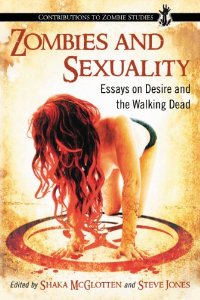
 Zombies and Sexuality: Essays on Desire and the Walking Dead, edited by Shaka McGlotten and Steve Jones (McFarland, 2014)
Since the early 2000s, zombies have increasingly swarmed the landscape of popular culture, with ever more diverse representations of the undead being imagined. A growing number of zombie narratives have introduced sexual themes, endowing the living dead with their own sexual identity. The unpleasant idea of the sexual zombie is itself provocative, triggering questions about the nature of desire, sex, sexuality, and the politics of our sexual behaviors. However, the notion of zombie sex has been largely unaddressed in scholarship.
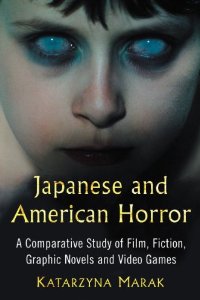 Japanese and American Horror: A Comparative Study of Film, Graphic Novels, and Video Games by Katarzyna Marak (McFarland, 2014)
Horror fiction is an important part of the popular culture in many modern societies. This book compares and contrasts horror narratives from two distinct cultures–American and Japanese–with a focus on the characteristic mechanisms that make them successful, and on their culturally-specific aspects. Including a number of narratives belonging to film, literature, comics and video games, this book provides a comprehensive perspective of the genre. This book sheds light on the differences and similarities in the depiction of fear and horror in America and Japan, while emphasizing narrative patterns in the context of their respective cultures.
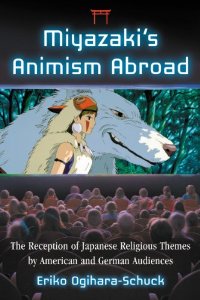 Animism Abroad: The Reception of Japanese Religious Themes by American and German Audiences by Eriko Ogihara-Schuck (McFarland, 2014)
After winning an Oscar for Spirited Away, the Japanese director Hayao Miyazaki’s animated films were dubbed into many languages. Some of the films are saturated with religious themes distinctive to Japanese culture. How were these themes, or what Miyazaki describes as “animism,” received abroad, especially considering that they are challenging to translate? This book examines how American and German audiences, grounded on Judeo-Christian traditions, responded to the animism in Miyazaki’s Nausicaa of the Valley of the Wind (1984), My Neighbor Totoro (1988), Princess Mononoke (1998), Spirited Away (2001), and Ponyo on the Cliff by the Sea (2008). By a close reading of adaptations and film reviews, and a study of transitions in their verbal and visual approaches to animism, this book demonstrates that the American and German receptions transcended the conventional view of an antagonistic relationship between animism and Christianity. With the ability to change their shapes into forms easily accessible to other cultural arenas, the anime films make a significant contribution to inter-religious dialogue in the age of secularization.
 Along with my co-editors, J. Ryan Parker and Tony Mills, I was quite pleased to receive this notification via email today. See all the 2014 finalists here:
On behalf of the Whedon Studies Association’s Mr. Pointy jury, I am honored to notify you that your work, Joss Whedon and Religion: Essays on an Angry Atheist’s Explorations of the Sacred, has been selected as a finalist for a 2014 Mr. Pointy award, in the long category for book-length work published during the previous year. As you may know, the Mr. Pointy award annually recognizes outstanding scholarship in the field of Whedon Studies.
The jury was impressed with the quality and originality of your scholarship, and you are to be congratulated for your contributions to the field of Whedon Studies!
This year’s winners will be announced at the 2014 Slayage Conference on the Works of Joss Whedon, June 19-22 in Sacramento, California.
Again, congratulations!
Sincerely,
Tamy Burnett, PhD
Chair, Mr. Pointy Jury
If you haven’t seen the Salem television series on WGN it’s worth checking out. It eagerly scoops up Christian mythologies of the Witch as the consort of Satan, a frequent trope in horror films, and uses this as the major element in a reframing of the events surrounding the Salem Witch Trials of 1692. Given these aspects of the series it is worth considering how various segments of American culture have reacted to the popular program.
First let’s consider a conservative response. In a piece at The Blaze, Dan Gainor sees the series as part of a larger cultural attack on Christians. He laments:
The first episode of this occult rewrite of history featured sex, devil worship, and a satanic abortion. The Christians in good ol’ Salem are anything but. The town’s first guide in faith hangs people he thinks are witches and brands fornicators before becoming bewitched himself. The next one kills a man under a pile of stones – when he’s not seen in a graphic sex scene with what appears to be a prostitute.
All of that fun was delivered into your home … on Easter Sunday.
No, of course that wasn’t an accident. Few things in TV programming are accidental. Network execs study, analyze, test market, and focus group everything. WGN was trying to create controversy by bashing Christians on the holiest of days.
In Gainor’s view, Salem is one of several expressions of “post-Christian America.”
The Pagan community, which includes contemporary Wiccans or Witches, has reacted to Salem as well. How do they react to a Christian stereotype they have fought so long to counteract, and in connection with an unfortunate aspect of America’s religious history?
In an essay in The Wild Hunt, Crystal Blanton introduces the subject by stating:
Much like with the American Horror Story franchise, Salem is a fantasy horror show that capitalizes on the fears of its audience. These fears are that witchcraft is about pacts with the devil, animal sacrifice and being decorated with blood in the woods. They are based on old-fashioned bigotry and rekindle a lot of misconceptions of those on the Pagan path. Concerns of modern-day witch hunts and fears around the identification of practitioners continues to expand among modern day Witches.
Blanton then goes on to cite various Pagan sources which document a variety of responses to the series, from those who fear the program may fuel stereotypes and witch hunts to those who see the program as pure entertainment.
Surprisingly, my Google search for Evangelical Christian reaction to Salem turned up nothing. The Gainor piece cited above came up in that search, but I can’t verify whether he is an Evangelical. The lack of reaction among Evangelicals to a series that purposefully draws upon Christian mythology related to the Witch and demonology is surprising, especially in light of how this community opposed the Harry Potter phenomenon.
For my own perspective, I must disagree with Gainor as I watch the program and consider my Christian faith in the process. This program reminds us that there is much to be ashamed of in Christianity’s past and present. The Salem Witch Trials were an awful time that ended with the scapegoating and murder of many individuals out of religious fears fueled by hysteria, suspicion, and paranoia. Similar things have happened from time to time with various “satanic panics,” and this happens in the present when Christians perpetuate stereotypes of Pagans and Wiccans, and in places like South Africa with Witch-Hunts. Christians and conservatives may not like what they see in the depiction of hypocritical and abusive Christians, but if we can step back and be self-critical programs like this provide helpful forums for reflection.
But regardless of the reactions to Salem by differing segments of popular culture, the series adds to the many horror programs currently on television, leading some to wonder whether we are witnessing a golden age in this area.
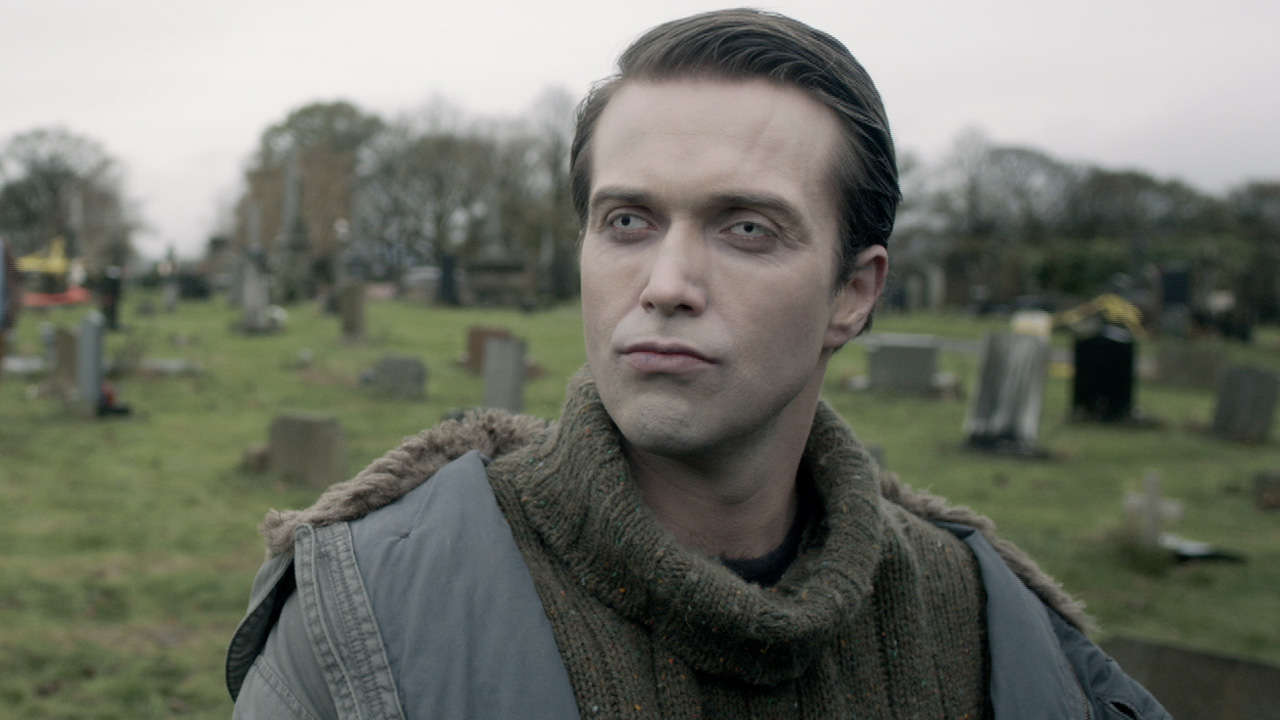
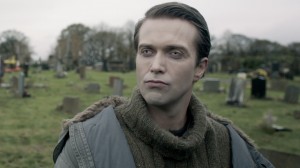 Previously I’ve commented on the interesting program airing on the BBC/BBC America, In the Flesh, which represents a thought provoking subgenre of the zombie narrative. One of the areas of interest to TheoFantastique is the incorporation of a religious element. In this case it’s an eschatological aspect, of sorts, wherein a group of Partial Deceased Syndrome sufferers come to believe that they are not pariahs to be feared as the living tend to view them. Instead, the Undead Prophet who leads the Undead Liberation Army, and who has a group of twelve disciples, teaches that those with PDS are the redeemed, destined for something special.
In Season 2, Episode 3, Simon Monroe, one of the Twelve, provided a bit of a tease on the theological foundation for such views. Simon (a name echoing that of one of Jesus’ closest disciples), sits while quoting from the New Testament to himself. He recites and modifies a text from Revelation 1:18 – “we were dead, and behold, we are alive forevermore, and have the keys of death and of Hades.” The interesting thing about this quotation and application is that in its original context is comes from the resurrected Christ to an individual and for communication to a specific group of Christians. With the reworking from In the Flesh we are not told how the original context relates to the application which is in the plural to PDS individuals rather than singularly to Christ.
Several aspects of this eschatology (doctrine of “last things”) are unclear in the series. The Undead Prophet has sent Simon to recruit new disciples (who in this episode performed a baptism-like ritual with a wet rag used to remove makeup that makes PDS individuals look like the living, revealing the true self underneath, a kind of rebirth), but to what end? Viewers have also heard of a future “second rising” that some of the religiously devout living look forward to. But this second rising seems to be in conflict with the PDS individuals coming back from the dead, so viewers are left with conflicting conceptions of the “resurrection.” Is this a play on the New Testament’s idea of the resurrection of the just and the unjust?
It will be interesting to watch how these theological elements are developed and come together over the rest of Season 2. For those who enjoy thought provoking commentary on social and religious phenomena in their zombie entertainment, In the Flesh is a rewarding experience.
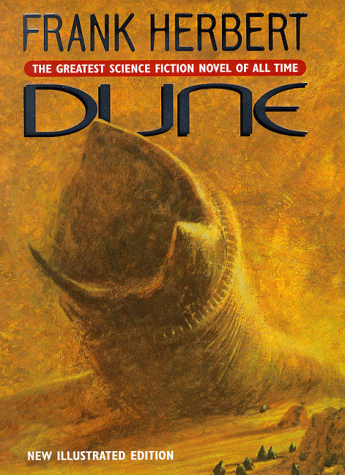
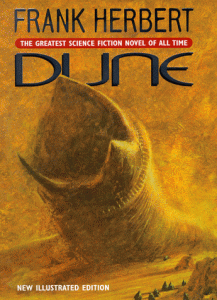 There is an interesting item that appeared in Tablet: A New Read on Jewish Life titled “What Science Fiction Tried To Teach Us About Jihad, and Why No One Listened.” The subtitle explains a little further: “How Alejandro Jodorowsky muddled sci-fi by turning Frank Herbert’s ‘Dune’ into a New Age manifesto.”
In the piece by Liel Liebovitz introduces the subject matter with reference to a documentary film. In his view Herbert’s novel was turned into something far less powerful in terms of social commentary than it could have been. He writes:
The storyboard and its illustrious creator are the stars of a new documentary, Jodorowsky’s Dune. Its thesis is simple and convincing: By taking a stab at filming the sprawling 1965 desert-based novel by Frank Herbert, Jodorowsky had assembled in 1974 a team of inspired artists who had given contemporary sci-fi its visual language, from the light sabers of the Jedi to the face-huggers of Alien, and helped propel the genre to the peak of pop culture cool.
It’s all true—but it pales next to Jodorowsky’s even grander and more questionable achievement, which was to move Dune—and, with it, much of the sci-fi genre—away from the thorny questions of ideology and social conflict and toward a softer, more luminescent set of concerns, like identity and self-empowerment, that now reign supreme. To adopt for a moment the director’s colorful, inflamed language, Jodorowsky was the prophet of the flight from the real. Instead of Herbert’s geopolitical toughness, he gave us rainbows and unicorns of self-revelation. And the rest of us are paying the price.
Later in the essay Liebovtiz describes how Jodorowsky changed Herbert’s Dune into something more in keeping with the spirit of the age of the 1960s than the original vision of the author:
It’s a testament to Jodorowsky’s uncanny ability to so perfectly capture the spirit of the age that his Dune intuited that with the political predilections of the 1960s leaning heavily toward the throbbing questions of identity, science fiction could serve as an intellectual and spiritual Petri dish in which to allow radical ideas to grow. Jungian theories of collective consciousness, Freudian notions of personal psychology, jitters about authority, and an approach to technology that embraces its potential as a tool of salvation while simultaneously recognizing its power to corrode all that is human—these would be the themes of the new art. The novels and stories of writers like Philip K. Dick, the advent of the Internet, and the rise of the cyberpunk movement placed Jodorowsky’s themes at the crux of popular culture, giving us one complex meditation on the nature of the self after another. Some of these meditations are intriguing and inspired. Many others are inane. But none have anything to do with the world of Frank Herbert.
Read Liebovitz’s piece here. And learn more about Jodorowsky’s Dune documentary here. The trailer is below.
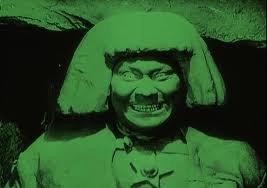 Carl Rosenberg, a reader of this blog, made me aware of an interesting facet of the 22nd Toronto Jewish Film Festival. It features a section on horror titled “The Search for a Jewish Horror Film: Golems, Dybbuks and Other Movie Monsters.” This is described as follows and features the following films:
With a series of screenings and talks, this year’s Toronto Jewish Film Festival attempts to define the Jewish horror film. Horror movies traditionally suggest a Christian worldview; however, recent scholarship is starting to look at the work of Jewish filmmakers, and how they represent the metaphysical and spiritual worlds of horror movies. Add to this, the recent growth of horror movies coming out of Israel such as Rabies, Big Bad Wolves and this year’s very creepy Goldberg & Eisenberg and Jewish horror seems to add an exciting new variation to the genre. This series is based on the recent scholarship of professor and author Dr. Mikel Koven who will introduce most of the screenings.
Films:
The Dybbuk
The Fearless Vampire Killers, or Pardon Me, But Your Teeth Are in My Neck
God Told Me To
Goldberg and Eisenberg
The X-Files: Kaddish
Zeitgeist
There will also be a discussion by Mikel Koven:
Jewish film scholar and horror movie buff, Dr. Mikel Koven, has been searching for evidence of Jewishness in horror movies for as long as he can remember. This FREE TALK is a personal journey through Jewish representation in horror movies (in films like The Exorcist and An American Werewolf in London), where Jewish characters exist on the margins of a Christian cosmos. Koven will also discuss some recent films rooted (not unproblematically) within a more Jewish universe, like The Unborn and The Possession (which are based on Dybbuk stories). He will also touch on the various incarnations of The Golem.
Mikel Koven is Senior Lecturer & Course Leader in Film Studies at the University of Worcester (in the UK). He has published extensively on topics such as Jewish Cinema, horror movies and folklore. His books include La Dolce Morte: Vernacular Cinema and the Italian Giallo Film (2006), Film, Folklore & Urban Legends (2007) and Blaxploitation Films (2010). Eighteen years ago, as part of his doctoral study on Jewish cinema, he participated in the 5th Toronto Jewish Film Festival, interviewing a number of audience members.
Read more on this in a piece at TheStar.com.
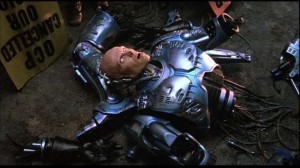 The Real History of Science Fiction aired with its first installment last weekend on BBC America as it tackled the subject of robots. This series is narrated by Mark Gatiss who has done some great documentary work on horror featured here at TheoFantastique previously. It is difficult to tell from the series website whether Gatiss is involved in the project beyond narration.
Like many such documentaries there was little new or in-depth for those immersed in genre. In addition, the choice of characters to focus on in discussing the theme skipped over some major possibilities that could have helped illustrate the points they wanted to make.
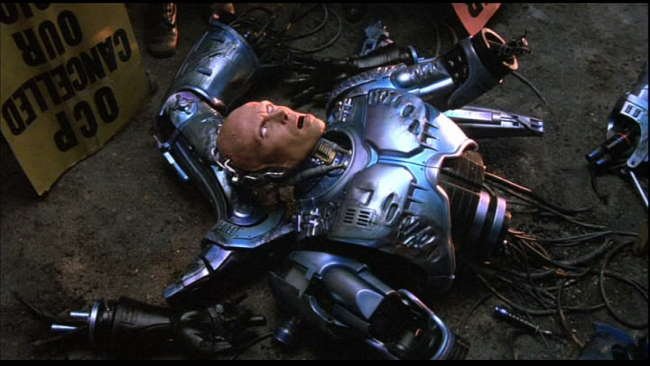
But there was one highlight in keeping with the focus of TheoFantastique. At one point in the program Paul Verhoeven, director of Robocop (1987), shares his thoughts on the subject, specifically about cyborgs and how much humanity is left in the machine-human hybrid. He includes some interesting and unexpected commentary on the “deeper meaning” behind the film. He speaks of the police officer slain and transformed into “robocop” as an expression of the symbolism of crucifixion and resurrection. For Verhoeven the symbolism had definite theological meaning.
Next week’s episode of The Real History of Science Fiction focuses on the general theme of space.
Related posts:
“Robert Geraci: Robots and the Sacred in Science Fiction”
“Cautious Consideration of Christ Figures”
“Documentary: Horror Europa with Mark Gatiss”
“BBC Four Documentary: A History of Horror with Mark Gatiss”
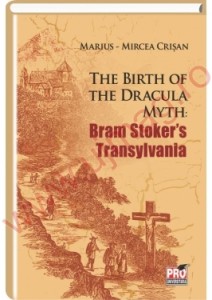 I just learned of the following volume, one difficult to find information about online. The following comes from an abstract and other online information by Marius-Mircea Crisjan.
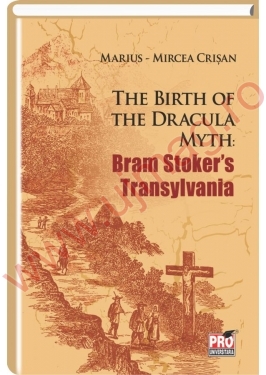
The volume Impactul uni mit: Dracula și reprezentarea ficțională a spațiului românesc (The Impact of a Myth: Dracula and the Fictional representation of the Romanian space) is an interdisciplinary study that combines an imagological perspective with an approach based on Dracula Studies. This book continues the research presented in my previous volume, published in English: The Birth of the Dracula Myth: Bram Stoker’s Transylvania (București: Pro Universitaria, 2013). The Birth of the Dracula Myth analysed the image of Transylvania in Bram Stoker’s Dracula, drawing a parallel between the novel and the sources consulted by Stoker on Transylvania, and focusing on what Stoker read and what he wrote about this region of contemporary Romania.
Impactul uni mit: Dracula și reprezentarea ficțională a spațiului românesc (The Impact of a Myth: Dracula and the Fictional representation of the Romanian space) discusses the complexity of the Dracula myth and its impact on the reflection of Romania in British and American literary representations. This volume also analyses some literary responses of several Romanian writers to the vampiric myth invented by Bram Stoker.