Previously I interviewedJoshua Bellin, author of Framing Monsters: Fantasy Film and Social Alienation(Southern Illinois University Press, 2005), where he interacted critically with various fantasy films. While horror and science fiction films have received a lot of critical analysis, this has not been the case with fantasy films. Thankfully, Bellin moves beyond this in order to grapple with what fantasy films might tell us about ourselves and our social interactions.
I recently reapproached Bellin about his thoughts on two of the King Kong films. In his book Bellin argues that early twentieth century racism is expressed, and I wondered how this might have changed over the decades with the release of Peter Jackson’s take on the great ape in 2005. Belling was willing to discuss this in his second appearance at TheoFantastique.
TheoFantastique: Josh, welcome back and thanks for sharing some further thoughts on fantasy films, in this case a contrast between the original King Kong and Peter Jackson’s more recent take on the story. In your book and in our previous interview you engage the original film critically to note that it incorporates aspects of racism from 1930s America. Can you summarize some of that again as an initial point of departure before we look at the most recent treatment of this film?
Joshua Bellin: Sure. As I argue in my book, the original Kong was released during a time of considerable racial tension and conflict in the U.S. — a time when African-American emigration to urban centers was accelerating, southern and midwestern lynch law was coming to a gory close, and stereotypes of African Americans in minstrel shows and other forms of mass entertainment were being contested by artists such as those identified with the Harlem Renaissance. So persistent structures of racial inequality were being challenged, and in this climate the dominant culture responded with ever-more-desperate attempts to keep the races physically and ideologically separate. Kong takes part in that project: it’s a movie that seeks to draw absolute boundaries between white society, as represented by Manhattan, and black, as represented by Skull Mountain Island, and that punishes the black beast who threatens those boundaries.
TheoFantastique: A number of decades have transpired since the original film, and America has changed in terms of its treatment of race. In your view, does Peter Jackson’s version of Kong include elements that touch on race or does it engage other aspects of Western culture?
Joshua Bellin: I think it’s impossible to do a version of Kong that isn’t steeped in racial history and politics; the story it tells is just too deeply rooted in the racial imaginary of Western society. In the 1780s, slaveowner Thomas Jefferson told white readers that black men preferred white women just as orangutans preferred black women; in the 1970s, the producers of the first Kong remake put out advertisements seeking an “ape-like” black actor to play the role of Kong. For better or for worse, Kong tells us how we as a society think about race.
That being said, I thought the Jackson film also provided some interesting commentary on contemporary Western imperialism: by turning Denham into an exploitative slimeball instead of the “square guy” he ends up being in the first film — and by linking his acts of exploitation to filmmaking — the Jackson Kong offered insight into the role of the media in packaging Western aggression for the hometown audience. Along the same lines, it was interesting — if perhaps a bit too obvious — that Jackson superimposed the story of Heart of Darkness over the Skull Mountain Island expedition; this framing of the voyage through Conrad’s rumination on the rape of the Congo meant that you could never view the expedition as pure adventure, that you were always aware of the dark underside of such overseas escapades.
TheoFantastique: How does it touch on racial politics in ways that are different from the original film?
Joshua Bellin: I was fascinated by the ways in which the Jackson film attempted to comment on the racial contexts of the original. Most notably, Jackson took the dance number from the original film’s Skull Island sequence, reproducing the costumes, choreography, and score, and put it on stage as the prelude to Kong’s New York premiere. I thought that was a brilliant move: to expose the racist spectacle of the original, to show that the images of blackness on which the original film relied were literally fantasies staged by hysterical whites. That was a really smart, inspired piece of cinematic critique.
At the same time, though, I felt that Jackson’s film was far less successful in querying its own racial stereotypes. Most prominently, there were the Skull Islanders: absolutely grotesque caricatures of non-white savagery, exceeding even the jungle-film heavies of the original film. By the same token, I felt that the subplot involving the orphan Jimmy and his African-American protector was both weak — an obvious attempt to ward off any accusations of racism the film might meet — and irrelevant, as the black father-figure was killed off by Kong early in the film and absolutely nothing came of it. And there’s really no escaping the underlying racist conceit that shapes the film: whiteness is represented as the ultimate object of desire (Kong tears apart his black “brides” while rescuing Ann at all costs), and it’s whiteness, in the end, that must be saved by killing the black beast. So I’d say that unless you deconstructed that premise — and Jackson’s film fails to do so, in my opinion — you’re going to have a film that reproduces as much as it questions racist ideologies.
TheoFantastique: As I’ve thought about Jackson’s film I wonder what your feedback would be to changes in Kong and Ann Darrow and their interactions. In the original Kong is a viscious, destructive beast who kills human beings at will and who is feared throughout the film by Ann. In Jackson’s film Kong is still a giant animal but his reaction to Ann is presented much more intimately, and her reaction to him is as well. It may not be a romantic love but she definitely has compassion on Kong and while he searches New York for her to no avail it is she who seeks him out. On top of this during their final moments together there is the “dancing” scene on the ice, and she signals the airplanes off in one of their final approaches on top of the Empire State Building. Unfortunately, Jackson left Ann on top of the building and did not bring her into engagement with Kong’s corpse, or wrap this up in some other fashion, leaving it with the Denham line from the original. In your view, even with the problematic racial elements lingering in Jackson’s treatment, isn’t the depiction of Kong and Darrow’s reaction at least a softening of that?
Joshua Bellin: I found the Ann/Kong relationship in this film touching at times, though really, it’s not that much of an improvement over the ’76 fiasco, where there was a similar affection between the two (and a similar scene in which the Ann character, Dwan, tried to save Kong from the airplanes). What bothers me, nonetheless, is the film’s insistence that it’s only a white woman whom Kong could find “beautiful” (the sign that Ann teaches him). The black brides are ripped limb from limb; the white bride is cherished. That doesn’t make the relationship between Kong and Ann any less interesting, but it does point to the larger racial assumptions that underlie that relationship. So my take on it wouldn’t be that the relationship softens the racism; it would be that the racism is fundamental to the relationship. But then, that’s my theme song when it comes to fantasy films!
TheoFantastique: Josh, thanks again for talking about some of my favorite fantasy films, and helping us understand how they reflect us for good and ill.
One of my guilty pleasures on Friday evenings here in Utah is watching UEN-TV’s SciFi Fridays. Many times the films are pretty bad and they don’t usually hold my interest for long, but the forum and films bring back memories of my childhood with the many hours spent watching Creature Features on Friday and Saturday evenings in northern California. Last Friday evening’s film did hold my attention, however, starting with the title, The Last Woman on Earth (1960). I had never seen this film before, and the exploration of an apocalyptic scenario that deals with the struggles of the last woman rather than the last man on the planet was refreshing, as explored in the various treatments of Richard Matheson’s story in films like The Last Man on Earth, Omega Man, and I Am Legend. The story was even more intriguing in that while the title would seem to indicate a narrative dealing with a single individual it actually presents a single woman living with two men. The plot thickens.
The Last Woman on Earth is a science fiction film directed by Roger Corman. I have enjoyed many of Corman’s films in the fantastic, especially his horror films based upon the Edgar Allen Poe stories, so I was encouraged to see his guiding hand in this early effort. This film tells the story of three people, Harold Gern, a wealthy businessman, his wife Evelyn, and Martin Joyce, Gern’s lawyer and business associate. The three are on a trip to Puerto Rico, and eventually Gern convinces everyone to add scuba diving to their boat outing. After surfacing and attempting to remove their scuba equipment, the three immediately develop breathing problems, and upon reinserting their breathing apparatuses they swim back to their boat. After they climb back on deck they find their crew is dead, having suffocated from whatever caused the others problems when they surfaced. The three head back to shore only to find that everyone is dead, the victims of some unexplained phenomenon (thankfully for the story’s sake) that they assume has plagued the world. This sets the stage for an end-of-the-world scenario that impacts the three as they attempt to survive and wrestle with the ramifications of the apocalypse on their relationships.
I found a couple of the aspects of the story of interest. First, the normal social conventions that operate pre-apocalypse were called into question by two out of the three, with the exception of Harold Gern. Gern assumed that his wealth, prestige, business sense, and marital relationship all retained value in the new world order. His fellow remaining human beings felt differently, pointing out that each of these were open to question at best, worthless in the extreme. Everything was now open to reinterpretation and fresh navigation, including Gern’s marriage to Eve, a relationship he valued beyond the construct of society, but which both Eve and Martin thought was no longer valid and subject to new possibilities both romantically and reproductively. Second, as my wife and I watched this film I turned to her and mentioned that this film would have gone very differently, in my view, had the scenario been two women and one man as the last survivors on earth. In the storyline of The Last Woman on Earth, Eve has conflicting romantic feelings, and with disappointments in her marriage she is all too eager to abandon her husband and to start life anew with Marvin. This leads to a violent showdown between the two men and Marvin’s death. In an alternative storyline involving two women and one man I don’t think it would have led to intense feelings of jealousy between the women, and most certainly would not have led to violent conflict and death. Two women would not have felt such intense desires to objectify a man, and perhaps would have even been more willing to share in such an apocalyptic scenario. My wife agreed so perhaps there’s some merit to my thinking here.
While I wouldn’t list this film as one of my favorites and part of my classic canon of science fiction, I did find it entertaining, and well worth its brief seventy-one minutes. For those interesting in checking it out, The Last Woman on Earth is in the public domain and can be viewed online in its entirety here.
I received an email today from Double Edge Films making me aware of their new independent “urban sci fi fantasy” film Ink by filmmaker Jamin Winans. I had not heard of this before but am pleased to learn of yet another promising work of indie fantastic filmmaking. One of the trailers for Ink can be viewed above, with another here. If only I was able to take advantage of the gracious offer of Double Edge Films to the press screening next week. The film opens in Denver on March 13.
In a recent post I made my own selections for the Premio Dardo Award, a blogger to blogger recognition of a sound contribution to weblogging. One of my selections was Dread Reckoning that is part of PopMatters, a magazine of cultural criticism and exploration. Dread Reckoning is the work of Marco Lanzagorta who goes into depth in his exploration of various cultural and social aspects of horror much as I do here at TheoFantastique. While I have great respect for the way in which the fantastic is probed at Dread Reckoning, of course this does not mean that I agree with every perspective offered in its commentary. In his most recent post Lanzagorta discusses a significant social issue raised at times by various horror and science fiction films, and with this post I will comment on my appreciation for aspects of this subject matter, but will also share areas of disagreement while urging continued dialogue over such issues and interaction with the fantastic that enables us to discuss difficult subject matter such as this. The reader should understand the personal perspectives and biases of mine that inform the commentary that follows, and these include different metaphysical perspectives from that of Lanzagorta, as well as personal experiences with the issue raised in his article.
In his most recent article titled “By One’s Own Hand, Then,” Lanzagorta points out that “horror is about transgressing boundaries and norms.” This means that horror portrays monsters or monstrous situations that allow us to project various issues which do not find expression within the normal venues of society. Lanzagorta, as well as other scholars, have noted that as a result horror films function as “partially sanctioned public venues where we can safely negotiate and articulate our fascination and/or dread of difference.”
One of the thorny social issues that have been raised in horror and science fiction is suicide. Lanzagorta draws attention to several films where this has been addressed in differing ways, including What Dreams May Come (1998), Constantine (2005), Soylent Green (1973), Videodrome (1983), and most recently, The Happening (2008). In Lanzagorta’s view, the latter three films touch on suicide most subversively in that they do so without recourse or conformity to the “moral and theological sphere.”
There are several things I agree with and appreciate about Lanzagorta’s treatment of this topic. First, he rightly draws attention to one of the helpful features of the fantastic (whether horror, science fiction or fantasy) in its ability to function as a venue for the exploration of difficult and taboo topics. The question remains as to whether or not the viewer will move beyond mere projection or surface flirtation with such topics in order to wrestle with the issues at hand, but the forum is available for those willing to take the journey. Second, Lanzagorta is correct that suicide needs to become part of the broader social discourse. Having lost a son, a brother-in-law, and most recently, a friend and neighbor to suicide, I have experienced the social stigma associated with this cultural taboo. In many Western cultures strides have been made in talking more openly about taboos such as sexual abuse but an unfortunate stigma still surrounds suicide which makes it more difficult to address this significant social problem.
Beyond this there are areas where I must disagree with Lanzagorta’s discussion in three main areas. First, he takes issue with moral and theological arguments that rule the day in forming social attitudes toward suicide, and while I agree that there may be other perspectives and voices that need to be brought into the public square in discussion of this important topic, I disagree that moral and theological arguments control the discussion (cultural perspectives that frame an issue are different than those that control it). Surely religion has not always been a force for good throughout history, in fact, many times it has been harnessed for harm, but this does not mean that current cultural perspectives on suicide informed by moral or theological arguments are necessarily harmful or unhelpful in wrestling with this issue. Second, I agree that different cultural, philosophical, ideological, and religious perspectives should be put forward in a pluralistic society when wrestling with such issues, but I stop short of being able to agree with Lanzagorta’s statement that “from cultural and philosophical perspectives, the idea of suicide as a natural part of the human condition is an interesting proposition.” Even assuming the framework of metaphysical naturalism, the act of suicide would seem an aberration that somehow overpowers the internal drive for continued life, propelled, according to some, by the “selfish gene.” And third, the question of suicide must be considered in its diversity, not only in terms of differing cultural perspectives on the issue, but in the differing forms in which it is expressed. Suicide as a political or religious statement, as well as euthanasia, are specific and specialized aspects of the phenomenon that need to be considered carefully rather than lumped together in broad-based fashion in general discussions over suicide.
Having personally experienced and witnessed the negative impact of suicide on numerous lives for several years, I find this topic intriguing. Perhaps this explains my visceral reaction to many scenes in The Happening, particularly the one where people threw themselves off buildings and thudded to the ground around the horrified living. Is this scene, and others depicting mass suicide so horrifying merely or largely because of the inappropriate influence of unfounded moral and theological perspectives on the topic? Perhaps. But it’s also possible that the premise of the film and the depictions of self-murder are frightening because something deep down inside of us tells us that it’s wrong, for whatever reasons. It is to the credit of both horror and science fiction, and to Lanzagorta, for drawing our attention to this important topic. In my attempt to move the dialogue forward on this taboo topic I present my thoughts above for further reflection.
My latest contribution to Cinefantastique Online is now available. I was privileged to cast my votes for the 2009 Wonder Awards for films of the fantastic, and in so doing I was part of a few who did so in ways that might be construed as inconsistent. As I wrote in the introduction of the article:
As cinema buffs and Hollywood’s elite await the Academy Awards this weekend, Cinefantastique Online has addressed the unfortunate lack of critical appreciation for films of the fantastic through its 2009 Wonder Awards. As in any other subjective human endeavor those of us who voted on the nominations disagreed at times with the selections of others. While that is to be expected, some of us took it a step further and split our votes in certain areas in ways that might seem in conflict. For my own part, I voted for WALL-E as the Best Film, and also selected THE DARK KNIGHT for Best Screenplay (by Jonathan and Christopher Nolan). In what follows I will explain the rationale for my voting process, and also comment on why, in my view, HELLBOY 2 should have won for Best Makeup over BENJAMIN BUTTON.
American Scary, a new documentary is now available that I had the privilege of watching last weekend, is now available which represents a great film on an important aspect of pop culture that will take many down memory lane. This film is a nostalgic homage to the glory days of the late night horror shows which features interviews and archival footage of the most famous hosts from the 1950s to the present day. American Scary was written and directed by John Hudgens and Sandy Clark (the latter also serving as producer), with Michael Monahan serving as associate producer. In the following interview Sandy and Michael talk about their love for late night horror hosts and the background for American Scary.
TheoFantastique: How did you come up with the idea of doing a documentary on the television horror hosts?
Sandy Clark: There are two elements to the argument. John likes to talk about being in Knoxville and there was a guy there with a button for Sir Cecil Creape, a Nashville horror host. It was the first time I had ever seen the phrase “horror host,” but it didn’t really stick in my head. I got my friend Lowell to wax poetic about them, and he had this transfiguring moment when he started to talk about it. He went from being a reserved, stoic, serious guy into becoming this nine year-old kid. And I thought that was interesting. What is this thing that can transport men back to their childhood hearts? A couple of weeks later I was pushing a comic book at WonderCon in Oakland and there was a line around the show floor to see Bob Wilkins, now the late Bob Wilkins, who did Creature Features. I was right next to this and I asked what they were selling, what had these people lining up, and when I heard it was a television show that hadn’t been on the air for decades I just couldn’t believe there was still this kind of following. But these horror hosts were worlds apart from each other. Sir Cecil Creape had the hunchback, the teeth, the accent, and then Bob Wilkins had the cigar, the rocking chair, they couldn’t be more different from each other. So I knew I had to draw the various strands together from these very different horror hosts around the country. I started fishing around with the idea of doing a fifteen minute movie short in about two weeks and I was looking for an expert, somebody who could guide me in across the River Styx into this world of horror hosts and that’s when I found Michael.
Michael Monahan: That would be me. Sandy and I hooked up and he came over to my house and I had been researching television horror hosts since about 1998. Bob Wilkins had come out with a series of tapes from his old Creature Features show and it struck a cord with me again having grown up with that in the Bay Area. I started reaching out to find out about hosts from other markets because I was curious and someone sent me a tape of Sammy Terry from Indianapolis, and immediately, as Sandy says, it was worlds away from what Bob was doing, but was still this local core, something that just felt alive. It got me very excited about the genre itself, and I’ve always loved horror films, but after this I began to collect and research people from across the country. By the time Sandy came over I already had a lot of these materials in my collection and I said here’s the history. It began in 1954 with Vampira in Los Angeles; here’s Dr. Paul Bearer from Tampa; here’s Morgus the Magnificent from New Orleans; there’s Stella from Philadelphia; Zacherly from New York. By the end of it Sandy just sat back in the chair and said, “Wow. We’ve got to do this.” It was just such an exciting opportunity once we hooked up and I realized I was going to have a chance to talk to the people I’ve grown to admire. Just being on the project became a very, very exciting process.
Sandy Clark: Something else important came out of that meeting with Michael and I. He said something that shaped the tone of this. We had just seen a review in Arkansas Online that established a tone that we hit with the film, and Michael said it, and he may not even remember it. He said, aside from jazz horror hosts are the only true American folk art form. And it just stuck with me. There is this level of Americana in this, there’s a level of a cultural touchstone to this, and as we went forward that was more of what I tried to bring out of it, is tying it into the whole social experience of growing up in America, not just horror movies.
TheoFantastique: This last comment leads into my next question. What were some of the conditions in television markets and the culture going back to the 1950s and into the following decades that provided the right mix and led to the creation the horror host and brought this aspect of pop culture into being?
Michael Monahan: The roots of this go way, way back to the turn of the century to the painted sideshow and that moves forward through the spook shows that were very popular in the 1930s and 1940s where a traveling magician would take a show around to various movie theaters and do these barnstorming performances. Often those shows ended with the horror film. They would perform their magic act cutting off heads, sawing people in half, and then they would show a horror movie. So in a way the spook show created the template for the horror host. And of course radio finalized the template by having programs like The Witching Hour and The Inner Sanctum where a host introduced the program and also ended with a moral of some type. That extended through Tales from the Crypt, The Vault of Horror, all of the EC Comics which were also hosted horror stories. All of these elements funneled into this television explosion and when Universal released their shock movie package to television stations around the country suddenly had access to this huge library of classic horror. Now the Universal films ran anywhere from sixty to seventy minutes long which was always convenient for programming. Through this the horror host served several purposes. One was presenting a face for the station and having a station personality. The second was filling that time, a ninety minute time slot for a seventy minute film required an additional ten to fifteen minutes of coverage, so the horror host was there to fill in that space.
Sandy Clark: Let me extend what he said a little bit. Horror hosting now when you look at it, all people see are the surface aspects. It seems amateurish, do-it-yourself, the guy in fake teeth with a cape on a makeshift set. At times that’s all people see, but all of that stuff has been articulated and polished and well worn in everything from Vaudeville to the aspects Michael was talking in about in radio and television. Now it’s something that’s very comfortable and familiar. Again, quoting Michael, this goes back to the first time people were sitting around campfire and telling stories to each other in semi-darkness. The host is a guide. He takes you to a place inside yourself where you don’t really want to go by yourself. Ignore the marketing and the need to fill and make it fit the time for a moment. It’s your companion to another place. And the material lends itself so well to being hosted, much better than the movie of the week that we’ve had hosts on, this material you really want to share it with someone, for protection or analysis or revelation.
TheoFantastique: You feature a number of horror hosts in the documentary, and three seem to be most influential to the phenomenon as a whole beyond their individual television markets. These seemed to be Vampira, Zacherley, and Ghoulardi. Can you share a little about them and why they were so influential beyond their immediate viewing audiences?
Sandy Clark: I want to put one disclaimer out front. We found over 300 hosts and that they can’t all make it in. This is the one complaint we get, “Why didn’t host X make it in?” Often times we couldnt’ find their spokesperson, especially if they had passed away. I think we did establish the three main beads of Vampire, Zacherly, and Ghoulardi as being the most influential. But we have to remember there were other hosts that did things first or did innovative things like Morgus, Dr. Paul Bearer that really deserved to get mentioned, but we just couldn’t find that magic trifecta of fans, someone speaking for the host or the host speaking themselves, and great footage from their program. If we couldn’t find those three things then they couldn’t make it in.
Michael Monahan: You basically hit the big three in the sense that if you look at this whole genre Vampira was the king, Zacherly the king, and Ghoulardi the jester. There’s your royal three. Vampira gets credit not only for being the first, but she developed the template for horror hosting that followed. In 1954, in a bit of a vacuum, she pulled all of the elements together and created this one iconic character, probably the first post-atomic, mythological creature in Vampira. Zacherly, for his part, was having so much fun with what he was doing it was infectious. He was someone who connected with his audience because he was just a big kid. He was having so much fun with these experiments, reaching out to his community as well in Philadelphia and later in New York. Ghoulardi had sort of the benefit of timing in a way. When he hit the Cleveland market it’s the dead of winter in February 1963 and people are pretty much trapped in their homes at night, so with three stations to pick from, Channel 8 with this crazy guy on at night is one of the places you’re going to go. So he had a bit of a captive audience to with. And timing wise his arrival also coincided with the arrival of the Beatles in America, and there was this hysteria among the age group that were both targets for Ghoulardi and the Beatles, so I think they were able to build off each other in a way. Ernie Anderson hated the Beatles and rock and roll music, he was a big fan of jazz, but I think they both tapped into the same rebellious spirit, and Ghoulardi benefited from that.
Sandy Clark: One of the things I’ve noticed is that people will frequently imitate Vampira’s design, her style. People will imitate Zacherly’s tone or theme, the light hearted guy. But people imitate Ghoulardi as a holistic thing. It’s interesting that he spawned a way of behaving and hosting the material so much so that he spawned a bunch of offspring. There’s a whole tree that sprouts out of him and you find it really interesting because for each of the others it was broad, but for Ghoulardi it was the sheer force of personality.
Michael Monahan: I’ve often said to Sandy and others that if you wanted to make a film about the history of Cleveland television it would be like the Godfather: a multi-generational story with friendships and hatred and reconciliation and vengeance. People in Cleveland are so passionate about their horror host history and Ghoulardi specifically. They do an annual Ghoulardi Fest. There’s a bar and grill named after him. No other area of the country do you get that in. You don’t have Elvira’s Taco Stand.
TheoFantastique: I think you and I should get together and create some kind of Bob Wilkins franchise, Michael, in the Bay Area.
Michael Monahan: His influence is still felt. There is another documentary called Watch Horror Films, Keep America Strong that is specifically about Bob Wilkins. There’s a new show on KOFY TV-20 in the Bay Area called The Creepy Coffee Movie Time and references to Bob Wilkins pop up in that.
TheoFantastique: Prior to watching your documentary I thought there was level of archaeology involved in this in that I thought the horror host had disappeared, but I was pleasantly surprised to see that there is a new generation hosts on television and the Internet. Can you talk a little about how the old horror hosts on television influenced this new generation and who some of these new personalities are?
Sandy Clark: I think that if you’re going to talk about the new generation of hosts the guy who is your bridge is Count Gore De Vol (Dick Dyzel), because he was the first horror host on the Internet, he’s done a lot of community building, heh bridges the material from television to the Internet, he has contacts that are almost universal through horror hosting and the horror community. He’s kind of the bridging aspect between the old generation and the new generation. The thing that put it all into perspective for me was every new medium that has come along since radio has used a horror host to establish market share early on. Radio did it, VHF stations did it, they had their local hosts, then the hosts moved on to UHF, when the cable networks you had Commander USA establishing local market share. Now that the Internet is here everybody is their own local market. The field is wide open. If the horror host relies on a place that’s a bit like the Wild West where you can do what you want and you can get away with a little more, then the Internet should be an ever-renewing force to see more horror hosts spawning off. It’s open, it has that freedom, you can do stuff and then put it up and watch YouTube. Maybe only three people and your cat will see it, but if it makes you happy you can do it. I’ll turn it over to Michael because he gets to play one of these new generation of horror hosts.
Michael Monahan: My experience is similar to anyone else who went to public access or the Internet to display their own talents as a host. We’re all inspired by the people we grew up with. Everyone in this new generation has their hometown hero. As Sandy was pointing out earlier, he say a Sir Cecil Creape button at a local convention, well that was on the jack of Doctor Gangrene, a host out in Nashville. For me if Bob Wilkins, also Asmodeus on Shock-It-To-Me Theateron Channel 20. Later KBHK syndicated The Ghoul from Cleveland, Son of Svenghoulie from Chicago. We had a rubber mask host movies for a while as The Glob on Channel 44. All of these influences came together in a show I did called The Hip Crypt of Dr. Ghoulfinger on Berkeley public access BTV 25 from 2001 through 2004, and this is a a similar experience across the country. When I began to announce to friends that I was going to do a horror host program on television I literally had one guy jump up from around the table, come around the table and shake my hand. They are just so excited to hear that is happening. That community is already there, it’s established. I think just the sense of support that you get in doing something like this is exciting to people who are pursuing it, and you get a lot of positive feedback. We ended up doing a lot of live shows on a local program called Thrillville that even established the character even more than on television.
Sandy Clark: To mention Doctor Gangrene, he found that as well. He hosted public events in Nashville and found that when you put a horror host back in the public with a live audience it’s like the latent genetic material for antediluvian spook show cells reasserts itself and they have an instant grip on the audience. They are the perfect predator for the entertainment world.
Michael Monahan: You also see in programs like Mystery Science Theater 3000 that immediate reaction from their viewing audience once it hit Comedy Central on cable, the program was structured like a local show, and immediately they got letters and cartoons from kids just like your local host would. Everyone in the country felt like they had a local host back and it tapped into the same sort of community spirit that Sandy was talking about, almost a Jungian race memory of local programming. I think this, and talent, was one of the things that immediately catapulted MST3K to that kind of feeling.
TheoFantastique: Do you see some kind of continued evolution and survival of the horror host?
Sandy Clark: I’ll reinforce a point I made earlier, the Internet means they’ll never go away now. The Internet creates a backstop that means you’re not going back. The Internet creates an ever-renewing place for people to do this with a small or large audience that’s up to the skill and innovation of the hosts themselves. Also, there are lots of imitators in terms of programming, we had Dinner and a Movie a few years ago and other hosted shows that tried to be a little more innovative. MST3K is an obvious spinoff of this, so as long as they have imitators they’re not forgotten as well. But I think the cornerstone is going to be the elixir of the Internet, that mixture of access and available bandwidth and the constant questing of the human mind to find something interesting.
Michael Monahan: I also think again there’s something specific about the wide open rebellious spirit of the horror host that really appeals to creative people. You can pour more creativity into a hosted horror show than pretty much anything else because you can draw your influences literally from anywhere. You can have a stuffed doll, a comic book, a guy in an elaborate costume, any element you pull into the show fits into this horror host, and you can’t really say that about a lot of other genres.
TheoFantastique: What other projects do you have in the works?
Michael Monahan: I’m actually pitching a book on this subject, perhaps through Chronicle Books or McFarland.
Sandy Clark: We’ve got to mention American Scary‘s director, John E. Hudgens is working on a documentary about fan films on the Internet, Star Warsand science fiction fan films and a history of how this subgenre came up. He won an award for a Star Warsfan film from George Lucas himself and we got to go to Skywalker Ranch for this project. This has been going on for a number of years as a part-time project.
I’ve moved on to a number of projects, a series of mystery novels, but my big stuff is working for a company that’s trying to build a relevant space search engine for the Internet where you can find things you need but never saw coming. I’m also working on a lot of community building in my new home in Springfield, Missouri where I founded a non-profit called Eclectic Endeavors and we build fan-based community around the geeky arts. We host a giant picnic in the middle of the summer, and we’ve done four now, and they draw 140 to 200 people, and it’s everything from horror fans to ham radio. We’re sponsoring a convention at www.springfieldgame.com in October 2009 with the Gaming Arts and Media Expo. We’re going to slowly grow that until it becomes a regional magnet for the geek tribes of all stripes in the Midwest.
TheoFantastique: Is your great documentary available for purchase, through what outlets, and how can people learn more about American Scary?
Sandy Clark: It’s available through Cinema Libre Studio, through Amazon.com, and through our website at American Scary, and it’s also available through the various people who participated in the film through their public appearances. One of the things that I think is neat is that Cinema Libre has an affiliate program set up so that if you’re a local host or have a host fan page up you can throw a plug in and offer the movie to the readers directly and get a cut of it. When we made the film one of my goals was that it should be a marketing tool for horror hosts. It should be a film that they can use to say here’s where I fit in the cultural context, and they should be able to get a cut off of it. If I were to pick out of all the places I’d love people to get it then it would be through local horror hosts or fan pages from hosts they remember because then they’d know that some of the money from the purchase is going back to support the memory of that host they love. But those haven’t started popping up yet.
Michael Monahan: Because the people are fans of this genre they are themselves historians of their local hosts. A lot of these people are reservoirs for their local television history. I continue to learn a lot by going to people in various places and learning from people on the ground in their own backyards.
TheoFantastique: Michael and Sandy, thank you again for putting together this documentary on an aspect of American folk art, and for sharing this project with readers.
I received a pleasant surprise this morning with a nomination from John Kenneth Muir of Reflections on Film/TV blog for the Premio Dardo Award. This is an award passed along from one blogger to another in appreciation for their work which “acknowledges the value that every blogger shows in his or her effort to transmit cultural, ethical, literary, and personal values every day.” My thanks go to John for his appreciation of my work here at TheoFantastique.
In response I nominate the following bloggers and recommend their sites as meeting the goals of what the Premio Dardo Award is all about:
1. Voyages Extraordinaires. This great site is described as a weblog for people of intelligence and good breeding who enjoy Victorian-Edwardian Scientific Romances and Retro-Futurism, Victoriana and Neo-Victorianism, Voyages Extraordinaires and Imperialist Romances, Gothic Horror, Pulp Fiction, the Golden Ages of Hollywood and of Travel, silent and early films, points suprêmes and real life adventures into places exotic and historic.
2. Dread Reckoning. This pick may bend the rules in that it is website rather than a blog, but Marco Lanzagorta does a great job on this site as part of the PopMatters cultural studies magazine wherein he probes horror in ways that help us uncover its cultural and social significance.
3. My Monster Memories. A great site that explores movies, tv shows, cartoons, comics, magazines, models, toys, LPs, anything that has to do with the marvelous monsters of youth.
4. Frankensteinia. As the blog’s title indicates, this site is devoted to an in-depth exploration of the Frankenstein myth in the arts, media, and popular culture.
5. Blogue Macabre. The fear of mortality has long been present in all the worlds cultures. You can join the author of this blog on the banks of the River Styx where life and death danse in a cold yet intimate embrace. This is where Life imitates Death, and of course where Death mocks the living. This is a blog for the appreciation of Classic Horror, and all things macabre.
6. Of Epic Proportions. This interesting blog dovetails with my own interests as it looks at mythology, folklore, legends and world religions and how these surface in elements of pop culture.
Please enjoy each of these sites as they contribute to our cultural enjoyment and understanding of the fantastic. They too are worthy of the Premio Dardo Award. Until the Rondo Award recognizes blogging as a legitimate category for the award of horror excellence, recognition like the Premio Dardo will have to do.
One of my personal areas of interest and research which provides one of the emphases of this blog is the growing academic literature on horror, science fiction, and fantasy. A while back I was reading through the bibliographical material for one such work and I came across a volume that caught my attention because it touched on a neglected area. The book was Jasmine Day’s The Mummy’s Curse: Mummymania in the English-Speaking World (Routledge, 2006). After some Internet detective work I was able to track her down and secure a copy of the book. Jasmine is a cultural anthropologist and a committee member for The Ancient Egypt Society of Western Australia. We were able to connect recently for an interview that is lengthy due to the depth of her understanding of the issues and the complexity of this subject matter. Consider several important questions on this topic: Why have mummies been neglected in horror studies? How did the sacred human remains of ancient Egypt become a symbol of pollution and decay in horror? What can mummymania and mummies in horror tell us about ourselves, Western cultures, and the cultures that produced them? In the interview that follows Jasmine day answers these questions as she shares her research on mummymania that combines the perspectives of anthropology, Egyptology and horror studies.
TheoFantastique: Jasmine, thank you for your wonderful book that brings together a number of strands of thought in addressing mummymania. How did you come to apply your doctoral studies in anthropology and Egyptology to this topic in your PhD thesis?
Jasmine Day: The topic of mummymania was always floating in the back of my mind I suppose. When I was about eight years old I was in the library at my primary school and saw a book on archaeology and I flipped through it. I didn’t now what archaeology was but there was a picture in there of a mummy being x-rayed and they found a mysterious figure between its legs that shouldn’t be there. They decided to cut through the wrappings to get to the figure, and when I saw those photos I had what was the only supernatural experience of my life. I suddenly knew who I was and what I was supposed to do, something to do with mummies, Egypt, and archaeology. For many years I interpreted this in a way that I had to be an archaeologist and I talked about this as I was growing up. But when I got to university I fell in love with anthropology, the study of cultures, both ancient cultures, other cultures, and contemporary cultures. And when I was doing my PhD I remembered after many years my encounter with the mummy and I remember this feeling of “follow me, come this way I’ve got something for you to do.” I designed this project which combined my interest in anthropology and the interpretation of other cultures with this character of the mummy in pop culture. I thought the view of the mummy in the Western world is very different from the ancient Egyptian view of the mummy. It was a figure of horror and fear rather than reverence. I wanted to know why we had that belief and the curse of the Pharoahs. I realized that my “mission” was to distinguish fact from fiction about mummies to dispel disparaging myths about them, but also to explain these myths as important aspects of Western culture rather than just some hokey legend that people laugh at nowdays. All of these questions were in my mind so I ended up writing the thesis and later the book that was the kind of book I always wanted to read.
TheoFantastique: In our email exchange prior to this interview you mentioned that horror has finally come of age as a respectable and important artform and that academic literature on horror is an increasingly popular topic in the humanities. As a result it can help us take things like mummymania seriously. How do you see academic studies of horror serving as a tool to help us understand mummymania?
Jasmine Day: I have to start by saying that I haven’t actually read very many academic studies of horror. I read from a wide range of literature to cover the subject matter, given that my project traversed a wide range of literature from Egyptology to Museum Studies to Cultural Studies and Anthropology. I tried to draw from all these different strands but I don’t think I put too much in there. I think I showed where mummymania fits into a wide web of subjects and fields. Some of the books I did read though include Male Myths and Icons by Roger Horrocks with a chapter on men and women in horror films, and in particular I read the work of Barbara Creed in her book The Monstrous-Feminine, but from what I have seen of horror studies so far, collectively they establish the genre as an object of not only artistic, but also historical and social significance. That is, horror films – even bad horror films that might otherwise be rejected on artistic grounds as a film critic – have consistently been proven as a body of work to reflect or even challenge the politics, gender relations, and technologies of the societies that produced them. Many academic authors have pointed out that horror is the underbelly of culture, that it has expressed ideas suppressed in mainstream culture, notably sexual tensions. I would add to that children’s pop culture sometimes borrows and recycles ideas from older horror culture also reflects this underbelly of culture as well. But going back to the function of horror in culture, this fundamental purgative role is certainly seen in the case of mummies, although I question many other horror analysts’ assertion that horror purges just sex. Because I have shown in my book that what mummies have expelled from the Western imagination is dirt and death, with the latter being the flipside of sex. So the mummy serves as a way to do away with decay, dirt, and death. So while their general function is typical of all icons of horror, its specific form – the expurgation of pollution in the late 20th century – seems to me to be almost unique to mummies. So horror studies have established some fundamental concepts that we can use to make sense of mummymania, but a specialized study of mummymania reveals some functions largely specific to this one type of monster.
TheoFantastique: In popular and academic literature certain iconic monsters, notably the vampire and the zombie, have received a wealth of attention, and yet the mummy has largely been ignored. Why do you think this is?
Jasmine Day: The mummy has not been treated seriously enough, and it is only recently that horror film critics have focused their discussion Boris Karloff, Christopher Lee and other aspects of the mummy in horror films. But looking more broadly, particularly the way mummies have been treated in children’s pop culture of the past thirty years that has caused them not to be taken very seriously. We’ve seen other classic monsters like the vampire, the wolfman, and Frankenstein’s monster appear in children’s pop culture and their reputation as a serious horror icon has not been damaged, so why has the mummy been taken less seriously? For one, the paradigms and meanings of mummies have changed more than other monsters over time and that complicates things. But nowdays mummies, unlike some other horror icons such as vampires, do not seem primarily to address issues of sexuality, so they’re less sexy than other monsters. They are rotting and have parts falling off of them, and with the lack of sexuality attached to them perhaps this is why they have been less “sexy” than other monsters. Horror studies generally assert or imply that most if not all Western horror has engaged with various Western sexual anxieties. For example my friend Christopher Frayling wrote a book titled Nightmare: The Birth of Horror where he specified that Dracula represented sex and Frankenstein’s monster warned against the dangers of playing God. So what about the mummy? I have argued that Freudian researchers who have been attracted to the plots of the 1932 and 1959 mummy films are based on incestuous relationships are wrong, they are trying to fit a round page into a square hole, because I argue as a major part of my theory that all Egyptian curse scenarios are explicitly or implicitly, consciously or unconsciously, structured as rape and revenge fantasies – rape, not incest, is the hidden theme, and it derives from the first, much more explicitly rape themed mid-nineteenth century curse stories, but prior to the more famous ones we might think of today. Yes, I must admit this is a sexual issue at the core of mummymania, but it is not “sexy” in the way that Dracula’s seduction of his victims can be appealing to audiences, and it is buried deeply in the plot – otherwise, other researchers before me would have detected a rape theme, but in all of my years of research this has not been detected. This is pretty stunning. So the disturbing nature of what sexuality there is in mummy films and stories, the less and less explicit treatment of this element as time went on, and the eventual replacement of the rape revenge theme with the late twentieth century idea of expulsion of pollution as the function of mummies in popular culture all conspired to stifle the sex appeal of mummy monsters. This lack of sex appeal ¬– the more diffuse and obscure the source of mummies’ horror – made them seem like a simpler kind of monster, one with a crude appeal to those easily frightened or impressed by a shambling, ragged creature – in other words, kids. So mummies became a “kids’ monster”, more easily translated than other monsters into toys and cartoon clowns and more easily dismissed or overlooked by the first serious studies of horror. The mummy with the pollution paradigm lends itself to humor most of all. So it’s easier to turn it into a cartoon. But the figure of the vampire or Frankenstein’s monster is a little more disturbing and so it’s more difficult to turn them into humor.
Secondly, I said that to the extent mummies were linked to sex, it was a disturbing and unappealing element of sex, namely rape. I have recently started thinking about another “unmarketable” sexual theme even more deeply buried in the plots of Classic mummy films and I haven’t published this yet so here’s a website first for you. Nobody has talked about this in connection with mummymania, and that theme is celibacy. The mummy is a man condemned to death for breaking, or intending to break, his vow of celibacy as a priest, and for threatening the celibacy of a sacred princess, the vestal virgin thing. The celibacy of the priest has been threatened and that of the woman. The awakened mummy’s High Priest in the movies – is probably the most overlooked character in mummy lore who has all but disappeared now from it. Why is this character there? I think he is the mummy’s doppelganger, a man who repeats the mummy’s sin despite the example of the mummy before him. This is very interesting and nobody’s talked about it. We could interpret the celibacy motif as a way of representing the tragic confrontation between the desires of an individual to have a partner and the strict, unfeeling rules of his/her society to have a partner they provide. This type of theme is obviously out of place in modern Western culture where you get to choose your partner. But there is a similar idea conveyed by a parallel celibacy motif in late nineteenth and early twentieth century mummy romance fiction, in which a man falls in love with the spirit of an Egyptian queen, forsaking all other women (Theophile Gautier’s The Romance of a Mummy and Henry Rider Haggard’s Smith and the Pharaohs are prime examples). This sort of chastity tragedy story was very popular in the nineteenth century with the possibility of prolonged virginity in that time, but by the age of “sex sells” in the mid-twentieth century, when Classic mummy films met their demise, it was well out of date, and the chastity tragedy doesn’t make sense. I think that the anti-sex message of mummymania, along with the growing association of mummies with pollution by the mid to late twentieth century, explains why mummies have literally not been as “sexy” to consumers, or to horror analysts, as other monsters. But my question would be if mummies aren’t ad “deep” as other monsters why have they gone on, being constantly referenced in pop culture? There’s something there just at the edge or under our consciousness that keeps mummies “alive,” if you will. We never can quite throw them away. Clearly their role as representatives of pollution has been too important for them to be dumped from the lexicon of horror and popular culture – proof that mummies must have been performing a vital, if non-sexual, role in Western culture.
TheoFantastique: In your book you discuss three periods of mummymania: The Pre-classic, the Classic and the Postclassic. How did you develop this conceptual means of analyzing the data, and can you tell us a little more about them and what literary and cinematic aspects fit within them?
Jasmine Day: I noticed up until the point of my writing that most of the material that had been written on mummymania, had been very superficial and many of them were children’s books. I found that frustrating. I wanted to know why mummies were so fascinating in pop culture, and these books never answered my questions so I felt I had to write this book. In dealing with things superficially they tended to look at things in terms of medium, like literature, and story, and movies. This didn’t feel right, especially for someone like me who has hung around museums a lot. I like the more late twentieth century way of organizing things in museums where it’s more thematically organized. Applying that to mummymania I thought what we need is to stop looking at things in terms of medium or object and to start looking at things in terms of paradigm. I thought it was time to look at mummymania in terms of paradigms. After identifying three basic paradigms I thought back to my work as an undergraduate I undertook a unit of study about Mesoamerican cultures (Aztecs, Maya, etc.) with the late Dr. David Rindos at the University of Western Australia. Realising that the paradigms of mummymania had shifted over time in what I thought were three broad phases, I borrowed the historical division of Maya culture into Preclassic, Classic and Postclassic periods to describe this change. I hope people will start to use this terminology because it will fix in their minds the idea that mummymania is not a static phenomenon, as it has so often been portrayed.
I started the Preclassic period at 1800 (a little artificial but it forms the parameter of my study) to 1931, the year before the Boris Karloff film was released. This includes the time when Egypt was becoming popular n the modern world, to the beginnings of early cinema and some of the early mummy films some of which have now been lost. This period was dominated by literature, plays and poetry. There is a debate as to whether the legend of the curse of the pharaohs began in American 1860s pulp fiction or whether it started earlier. The paradigms of this period were curse (rape and revenge), and toward the end of the century that of romance. These are two very different ways of treating the mummy. Some have pointed out that there are other paradigms here that surface in stories of mummies from other worlds or other times who come and serve as “mummy as moral teacher.” In various early plays there was the mummy as “humor” paradigm that should be added to this list, and they may predate even the curse. More works needs to be done on this Preclassic period. So whether we talk about the Preclassic period being part of the eighteenth and early nineteenth centuries and or whether this should be reclassified as an Early Classic Period is something I will continue to ponder pending further research.
Then we come to the Classic period with The Mummy with Boris Karloff in 1932, and this period runs up to to 1971. When we think of mummies we think of Karloff. His film, his portrayal and his makeup by Jack Pierce continue to influence depictions since then. This period is dominated by the ten most important and influential Universal and Hammer mummy films that drew upon but also overturned the literary tradition, and went on to become the principal sources of inspiration for most subsequent mummy productions and products. The paradigms in this period are curse (but here it changes so there are not just one cure of the pharaohs but many curses of the pharaohs). In the nineteenth century was was rape and revenge, and in the twentieth century it was rape, revenge and counter-revenge. The other paradigm of the classic films is romance (in a form that is adulterated by conflict with a modified curse theme, which finally disappeared from some productions).
The Postclassic begins in 1972 (with the end of Classic films’ dominance) to the present time. Initially, films were sporadic and low quality, and derivative animated cartoons, comics and toys came to the fore. It’s interesting to see during this time period what aspects of the literature and films were plucked out and included in children’s culture. What did they pick out, what did they leave, and why? The mummy becomes a stand alone figure able to operate in isolation from the curse, even from Egypt, a stand alone character symbolizing pollution. So the paradigms of this period are first, the mummy as paragon of pollution (derived from use of polluting motifs to portray mummies as evil in the Classic films), second the mummy as icon of decrepitness (a theme in humor and verbal analogy), and third, the mummy as icon of difference (alluding to cultural difference and implying superiority of Western culture, an extension of difference by pollution/decrepitness, in other words it’s an opposition to Western values of hygiene and youth). It almost seems to embody a paranoia cleanliness and beauty. Since 1999, Universal Pictures has resumed dominance of the genre with more prominent films. It remains to be seen whether 1999 should be regarded as the beginning of a New Classic Period, depending on how much influence the interpretations of the mummy unique to Universal’s new films (e.g., scarabs, mummy transformations into sand) have on other representations of mummies.
TheoFantastique: Can you sketch how Western culture’s fascination with Egyptology and mummymania developed?
Jasmine Day: We’re talking about thousands of years of history here, but I can summarize it. Arguably Egyptomania began in ancient times. Egypt was known to Greeks and Romans who imitated and appropriated its material culture and participated in its religion and mummification. For example consider the great Cleopatra. She was the first of the Ptolemy’s to learn the Egyptian language and dress and ceremony. She helped the Egyptians know that she really loved them and that she was one of them. But you can go back further to the 25th Dynasty to the black Pharoahs, the Kingdom of Nubia which the Egyptians called Cush who came in and eventually took over Egypt but they loved the culture and had already been influenced by it. One could argue that they were the first to be struck by Egyptomania. Egyptomania started in ancient Egypt, because ancient Egypt itself last for about 3,000 years, the longest complex civilization. By the end of ancient Egypt, the later periods, the early stuff was looking old, the pyramids were old ruins to King Tut. We have a lot of evidence that the started tourism. They actually went into old ruined tombs from centuries before, and they would go in their and write on the walls with things like “we love the artwork.” Steve Martin was right, King Tut died for the sake of tourism. We have an example of a man who took a sarcophagus from a much, much older tomb and put it in his tomb. He went to the trouble of being an antiquarian. We have many examples of this kind of thing. So the Egyptians were struck by the antiquity of their own civilization. They were the first, followed by the Nubians, the Greeks, and the Romans.
After Egypt was taken over by the Roman Empire eventually Rome becomes Christian. Christianity takes hold in Egypt as one of the first places, probably because Jesus died and resurrected which sounded suspciously like Osiris which had the same thing happen to him, so it took hold there. The Arabs invaded Egypt in 641 AD and with the Crusades and the eventual falling out between the Christians and Islamic people Egypt would become isolated and an Islamic country with Christianity surviving there in the Copts. Moving along historically to the Middle Ages in Europe, Egypt was remembered only through references in the Bible and how it portrayed Egypt. Even a little kid said to me something like “In the Bible Egypt is an evil place.” So this is the vision people had, that Egypt is mysterious and yet evil, alluring and yet repulsive at the same time. But Egypt became of interest to biblical scholars. Later early European priests began explorations in Egypt, reporting back to European audiences about pyramids, the Giza Sphinx and mummies which resulted in exaggerated reports. Europe really came back into contact with this part of the world when Napoleon invaded Egypt in 1798 to block Britain’s eastern trade routes. He is thought to have brought scholars with him to study antiquities. They studied and took the antiquities and published a lot of books which were called the Description de l’Egypte. After Napoleon was defeated Europeans flooded into Egypt, and since there were no antiquities laws yet a lot of things were stolen including mummies and antiquities for museums and private collections. Mummies then became icons of ancient Egypt because they were the remnants of ancient Egyptians. So to get a mummy out of Egypt was considered fantastic. By the 1820s Giovanni Belzoni the famous circus giant brings treasures and mummies back to England and exhibiting them in the Egyptian Hall and the British Museum. In the 1830s and 1840s Thomas Pettigrew started doing public unwrappings of mummies which was both science and entertainment, and everybody wanted to see it. As time moves on we see a gradual improvement in Egypt’s antiquities legislation enforcement and Europeans’ excavation standards that comes about in the late nineteenth century. Eventually Egyptomania goes to the movies, and that takes us into the twentieth century.
TheoFantastique: Contemporary mummy films strongly emphasize the romantic aspect, but you point out that in the changing meaning of mummies the twin themes of romance and horror are structurally related. Can you describe how this is so and provide some examples of it in film?
Jasmine Day: Romance and horror developed in concert in concert with each other in nineteenth century literature (in the dialogue between disparate works, not within a single work) because they were based upon motifs that mirrored each other, opposing motifs that encapsulated conflicts of opinion over how mummies ought to be treated. Romance, as Nicholas Daly pointed out some years ago in an essay called “That Obscure Object of Desire,” he pointed out that romance stories were written primarily by men and were based upon a metaphor of seduction: in nineteenth century fiction, the mummy invites and welcomes her Western archaeologist/seducer. Horror, as I have argued, was written predominantly by women during its origin in the 1860s and was based upon the metaphor of rape: the later, twentieth century cinematic mummy resists and avenges his/her rape with a curse. How often has a man claimed to have seduced a woman who said it was rape? Seduction and rape are two conflicting (and gendered) interpretations of sex, and also of the despoliation of Egypt and its mummies. Were Europeans the rightful possessors of mummies, or did they rape Egypt? Is the curse a wicked cruel spell, or a righteous punishment of evildoers? There’s these two views of the curse, these two perspectives on it. I believe that it is this potential for conflicting interpretations that gives the curse its popular appeal. Interestingly, Roger Horrocks in Male Myths and Icons who I mentioned previously, presented a similar argument that horror films’ appeal lies in their invitation to audiences to lend their sympathies alternately to the heroes and villains. What he sees in horror in this oscillation I’m finding in the mummy film with the curse as evil vs. the curse as good. The origin of the Western curse legend in a moral conflict over colonialism and antiquarianism has attuned it perfectly to the oscillating sympathies of horror cinema.
The structural relationship of romance and horror is one of conflict, of seduction versus rape, of mummy as lover versus mummy as monster, so cinema’s attempts to meld the two in harmony have not worked well. Nineteenth century authors didn’t combine them, but twentieth century scriptwriters have put them together. The best example is in The Mummy (1932), when Ardeth Bey/Im Ho Tep implores Helen Grosvenor/Anck es en Amon to unite with him in an eternity of love, but she withdraws when his crumbling flesh leaves a dusty mark upon her arm. He is a man who feels love, yet also a monster who repels women. Some writers have said this makes him an interesting character, but this reversion of seduction into force (a symbolic rape threatened by Bey’s phallic knife) also renders impossible the fulfillment of the film’s ancient love story. Later attempts to meld romance and horror foundered, notably the implausible pairing of lumbering Kharis with his beautiful co-stars: romance would have it that the two were lovers, but horror insisted that the mummy was a monster upon whom a maiden would be wasted. Maybe this is another reason why the mummy in the Classic period collapsed because there was something implausible about them because of this structural incompatibility.
TheoFantastique: How did the myths of cursed tombs arise, and how did this find its way into mummy films?
Jasmine Day: When we get to the Middle Ages the Arabs had their own stories. Jinn spirits were believed to guard the treasures in Egyptian tombs and even to repel attempts to appropriate mummies for mumia. An Arabic tomb robbing manual from the Middle Ages, The Book of Buried Pearls and of the Precious Mystery, Giving Indications Regarding the Hiding Places of Finds and Treasures, supplied magical incantations to ward off jinn. Some spells were meant to cause treasures believed to have been rendered invisible by the ancients to materialize, and depictions of the Opening of the Mouth ceremony on tomb walls were interpreted as proof that mummies could come back to life. Malevolent spirits manifest the guilt — or fear of social stigma — at robbing the dead that must be suppressed to satisfy a need or greed for their riches.
The vengeful dead of Egypt entered Western tradition via the mumia trade. Jean Bodin’s religious treatise Colloquium of the Seven About Secrets of the Sublime, completed around 1588, reported that mummies smuggled out of Egypt were believed to cause storms at sea, so were thrown overboard to avert shipwrecks. This practice provided an opportunity for smugglers to avoid prosecution and could have been a pretext for discouraging smuggling, but it was fundamentally a magical act, the propitiation of a deity with a sacrifice. As storms threatened their vessels, mixed crews of Greeks, Ishmaelites and Jews chanted to their gods and saints for salvation, lighting upon mummies as their common enemy and most convenient scapegoat. The nineteenth century elaboration of the malevolent mummy concept as a warning against disturbing the dead converted the mariners’ magic, with its self interested motivations, into the first incarnation of the Western curse myth. This investment of mummies with moral import received its greatest contribution from fiction writers.
Louis Penicher recounts a similar story told by Prince Nikolaj Radziwill, in which the ghosts of two mummies appear to a priest aboard a ship until their bodies are jettisoned. Green describes this story as the first European account of a curse but Bodin’s manuscript is older. The mariners’ superstition must predate these stories, considering the antiquity of the mumia trade. The question is whether pre-Western curse beliefs stem from Arabic lore or whether the Arabs adopted their rudiments from native Egyptian traditions that evolved from ancient ideas; consider the living mummy and sin and punishment theme in The Tale of Khamuas and Neneferkaptah.
From these semi mythical, semi historical origins, it appears (given current lack of hard evidence) that such tales influenced European writers of fiction – though nobody has apparently found any European curse tales dating prior to the 1860s, so why it took this long for Europeans to borrow such a promising plotline is unclear. Certainly, the earliest known curse fiction in English, found by myself and my colleagues S. J. Wolfe and Robert Singerman, is American, written by women (hence its rape theme) and dates to the 1860s. These stories were long forgotten by the time more famous tales – usually of a romantic nature – were penned in the late nineteenth century by famous male writers, but the idea of the curse ran concurrently in poplar myths and was occasionally employed by writers of the period. Thus it survived long enough to influence the writers of early mummy films, most of which are now lost, but the plots of several seem to have been about curses. The advent of the Titanic Curse and Tutankhamun Curse in the early twentieth century greatly boosted the familiarity and longevity of curse tales and clearly influenced The Mummy (1932), the first major mummy film.
TheoFantastique: How does the “exaggerated abjection” of the mummy serve as a foil for our fears of defilement (whether death or rape) and pollution (particularly in the form of death and bodily decay)?
Jasmine Day: It’s simple: culture makes representations not only of the virtues and successes it cherishes, but also of the enemies it hates and threats it fears. Thus destroying or casting aspersions upon the images of bad things symbolically defeats these abstract things by making them concrete and vulnerable to physical damage or harm to their reputation. It’s the principle of the voodoo doll or public slander. It’s also the principle of abjection, as explained by Julia Kristeva: heap associations with dirt, defilement and abominable acts upon your enemy. In Classic films, mummies were abjected, portrayed symbolically as “baddies” by means of visual traits associated with pollution (dirt, sand, blood, mould) and decrepitness (ragged, rotting bandages). This abjection had to be emphatic because the filmmakers had to counter the fact that the mummy, as the victim of defilement of his or his princess’ tomb, could attract sympathy. They were trying to turn a century of sympathy for mummies on its head, trying to turn the curse from a “thou shalt not defile the dead” moral lesson for Europeans into an “infernal Eastern magical menace” to be defeated by heroic Britons or Americans. So the mummy had to really look horrible, to allude to what Westerners feared most: pollution (threatening the value of hygiene) and aging/death (threatening the ideal of beauty). The efficacy of the abject motifs associated with Classic mummies is demonstrated by the fact that these motifs took on a life of their own in later, derivative children’s popular culture, in which mummies represented pollution in particular. Thus, they could be taken out of Egypt and a curse plot and used as cautionary examples for children, showing them how not to behave.
You are right to point out that in both their sympathetic original incarnation of rape victims and in their more recent incarnation as polluting/decaying monsters, mummies have consistently expressed our fears about bodily defilement, be it sexual or terminal. Of all the horror icons, the mummy is the one with the most permeable, most delicate and crumbling body (arguably more so than even vampires and zombies), and in nineteenth century fiction and twentieth century films, the final disintegration of the mummy’s body is emphasized, along with its (figurative) initial disturbance/penetration. Whatever the mummy means, its message has something to do with the body. This could act as a metaphor for spiritual matters, and analysts have remarked upon the emotional and spiritual import of mummy narratives, but perhaps it is the mummy’s emphasis upon visceral imagery (including its pollution association) that, together with its anti-sex message I spoke of before, crippled the character’s popular appeal by comparison with that of other horror icons. The mummy irrevocably embodies barrenness, corruption, waste and destruction – an irony, considering that mummies are people preserved for eternity.
TheoFantastique: How have mummies in films impacted our views of archaeology, and the display of the artifacts of various cultures, including human mummified remains?
Jasmine Day: It has informed the idea of archaeology as treasure hunt: even before Indiana Jones and Lara Croft there were the “archaeologists” of mummy movies, stealing and destroying things. But this did reflect reality – albeit a vision of archaeology that was 50 years out of date.
The abjection of polluting mummies in movies, cartoons, and toys has taught museum visitors to fear or loathe mummies. This is a learned, not natural, reaction (compare reactions to mummified saints by the faithful) so it should not be treated as a valid reason to remove mummies from display.
TheoFantastique: In the conclusion of your book you state: “The validity of displaying mummies and fragments is not determined solely by their status as human remains but also by the intentions of their exhibitors and viewers. What is really at stake is not whether human remains should be displayed, but why or why not.” There has been some controversy surrounding a traveling exhibit called Bodyworlds which involves specially treated human remains that are posed in athletic and artistic ways. The intent of this display is to help us understand human anatomy better, but some of the controversy comes with the use of human remains as art. Does the controversy and debate over the display of human remains in the form of mummies shed any light on exhibits like Bodyworlds?
Jasmine Day: Absolutely, but we can also draw some distinctions between the two. First the similarities. Any exhibit of human remains provokes the Western death taboo (which Philippe Aries discusses in his book The Hour of Our Death). Mummified remains, even those that are not Egyptian, provoke recollection of curses and pollution. In short, Western people (and perhaps many others) have poor cultural resources to draw upon when facing the dead, so it’s no wonder that many object to displays of the dead, which in many other cultures have been viewed quite differently and positively regarded. Rather than pandering to demands to put away the dead, we should begin by educating people about death and afterlife beliefs in museums – one of the great, somewhat unrealized potentials of museums – and then ask them what they think about the display of the dead.
But there are also differences. The bodies in Bodyworlds have been deliberately modified with the intent that they serve an educative function; the mummification of ancient Egyptians was performed instead for a religious purpose. Arguably this makes the former more educational than the latter, although this works only in theory and I would like to compare how much and what people thought they learned in one exhibit with similar findings from the other. In addition, the people in Bodyworlds consented to the display of their remains. The ancient Egyptians didn’t. This alone could legitimate one exhibit over the other. It has been argued, however, that 1) Egyptian mummies could not feasibly be protected if returned to their tombs, and 2) under this circumstance, displaying them is the best way to promote remembrance of the dead, which was a major Egyptian cultural value. This argument is a modern interpretation of ancient beliefs, so one may or may not accept it, and it is debatable how much laypeople can learn by just looking at an unwrapped mummy. However, I feel that the emotional connection that some Egyptophiles feel with mummies should count for something (doesn’t it counteract the monsterization of mummies in movies?), as should the long standing Western cultural tradition of displaying mummies as icons of ancient Egypt that inspires so many humanizing (not just dehumanizing) fantasies about them. Most importantly, if we take Egyptian mummies off display, this will only feed the monsterization complex by giving people nothing real to compare the myths with.
So there are similarities and differences, and by reflection on the display of mummies we can learn something more about cultural attitudes toward the display of human remain today in Western cultures.
TheoFantastique: Would you care to make any predictions about how cinema mummies might evolve in the near future? Do you see the romantic theme continuing to be dominant or will the horror theme arise again?
Jasmine Day: Having observed the increasing abjection of mummies from the Classic to Postclassic Periods, I predicted that the 1999 film (which I had not yet seen, or seen advertisements for) would maximize the abject qualities of its mummy to horrify audiences who are no longer easily terrified. Sure enough, Imhotep belched flies and scarabs, was still “juicy” as he slowly rotted away, and purloined people’s vital organs for his own use. The yuckiest mummy yet! That prediction was my coup. With their traditional conservative sexual themes having lost popularity and their abjection now maximized, mummies in the cinema may have played their trump cards. It’s been said that the 1999 film was more Indiana Jones than a true mummy movie, and it’s precisely this modification of a conventional curse/romance plot to incorporate action/adventure that made the film a success. It was not the “purely mummy” elements that ensured success; reliance on those alone would have made it a flop. So I predict that only the continued, creative infusion of elements from other movie genres will preserve – and yet paradoxically, erode – the mummy film genre. We were to have seen the film version of Anne Rice’s Ramses the Damned, which would have combined adult romance with mummies given its inspiration by nineteenth century romance fiction, but this project foundered. To attempt another action/adventure or horror mummy film would be to make a poor imitation of the 1999 film, so I think that one or the other of mummymania’s very early, pre-horror paradigms – romance or comedy – may be in the hustings. The latter has already begun; witness Bubba Ho Tep. Personally I would like to see more mummy comedy – perhaps something inspired by Poe’s Some Words With a Mummythat makes fun of the overcommercialization of mummies!
TheoFantastique: Is your study of mummymania ongoing beyond your thesis and book, and if so, what direction is your research taking now?
Jasmine Day: Absolutely, even though I have no funding or institutional employment at present. Nothing stops my research! I am working with S. J. Wolfe of the American Antiquarian Society to search recently digitized nineteenth century literary works for lost mummy stories and poetry. We are trying to reconstruct the early history of mummymania, i.e. the early Preclassic Period and even earlier still. My aims are to discover how the curse legend migrated from European folklore to American pulp fiction and to study what roles mummies played in society and language of the period. Ms. Wolfe is also interested in mummies’ social roles and wants to discover which real mummies may have inspired fictional characters. Our greatest success so far has been to locate three American short stories about curses that are presently the oldest modern mummy curse stories known in English, perhaps in any language.
TheoFantastique: Jasmine, thank you again for our in-depth research on this topic, your bringing together the various strands of the differing themes and research perspectives, and your fine thesis and your book The Mummy’s Curse. I hope it will be read widely and inspire continued research on this topic in anthropology, Egyptology, and horror studies.
Last week I mentioned the 2009 line of products for the Lemax Spooky Town collection. With this post Joe Davis, a distributor for Lemax, tells us a little more about these interesting collectors items. In addition, I would like you to check what is this pragmatic play slots, be informed and enjoy.
TheoFantastique: Joe, thanks for making some time to talk about the Spooky Town collection. I am a huge fan and can’t wait for the new releases each year. Can you tell me about how and when this line of products first came into being?
Joe Davis: The Spooky Town collection began in 2000 as an offshoot of the Christmas collection. Initially, there were only four houses, 20 figurines, and a couple of table pieces. It was only modestly successful in the first year, so no new items came out in 2001. However, it really caught on in 2001, so there have been new items coming out every year after that.
TheoFantastique: How popular is the Spooky Town collection with fans? I’ve seen a few websites where fans collect and build whole Spooky Town cities. I’m not there yet, but hope to be in the future! Is this line as popular as your Christmas Town collection?
Joe Davis: Things have really picked up for the collection increasing in popularity every year. Three years ago, Lemax dipped their toe into adding a theme within the collection. Coinciding with the release of the third Pirates of the Caribbeanmovie, there were a small number of pirate items added to Spooky Town. Due to its success, the following year Lemax expanded into three new sublines: a pirate theme, an Eqyptian theme, and an Old West theme.
TheoFantastique: Any thoughts about the inspiration for the different pieces in the new lines that are introduced each year?
Joe Davis: The factory is very secretive on what decisions go behind adding new products each year. One thing I can say is that, obviously, previous years sales have an impact. For instance, as time has gone on, more and more of the figurines are trending towards a “scary” look as opposed to earlier on when they were more “cute” for lack of a better word due to customer preference.
TheoFantastique: Can you talk about a few highlights for the 2009 product year, where people can take an advance look, and how and when they can place their early orders this year?
Joe Davis: Three of the new buildings featured this year hail from the sublines. Dry Gulch County Jail from the Old West Line, Black Jack’s Casino from the Pirate Line, and the Doomed Temple from the Egyptian Line. Pictures of all the new items can be seen at: http:www.Lemax-SpookyTown.Com/SpookyTown2009.asp. Pre-orders for the new items will begin in February at a discount, until the actual shipment arrives sometime in June. There is a scrolling news box on the Lemax-SpookyTown.com homepage where information will be posted later in February.
TheoFantastique: Joe, thanks again for giving us some insights and a sneak peek for those of us looking to scratch this itch and feed our addiction for Spooky Town.
For a few years now I have been an avid fan and collector of the Lemax Spooky Town Collection. In case you haven’t heard of them or seen them, they come out in August each year in Michael’s stores and usually occupy an entire aisle of the seasonal items. There you will find a number of animated items with lights and sound effects that revolve around Halloween and horror that includes things like haunted mansions, graveyards, mummy’s tombs, and ghostly pirate ships. The line of products also includes smaller desktop pieces and individual items that includes vampires, witches, mummies, and a collection of materials like trees, fences, and tombstones that enable collectors to create their own Spooky Towns.
The 2009 Spooky Town line has just been announced which includes 72 new items which includes ten new haunted houses. Online orders for this collection begin in February and will receive a 20% discount. The additions and retired list can be viewed here.
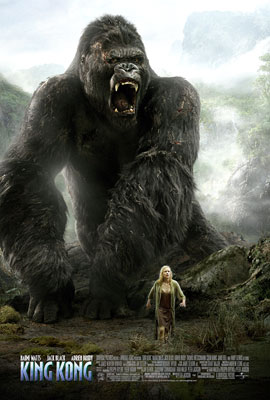 Previously I interviewed Joshua Bellin, author of Framing Monsters: Fantasy Film and Social Alienation (Southern Illinois University Press, 2005), where he interacted critically with various fantasy films. While horror and science fiction films have received a lot of critical analysis, this has not been the case with fantasy films. Thankfully, Bellin moves beyond this in order to grapple with what fantasy films might tell us about ourselves and our social interactions.
 TheoFantastique: How does it touch on racial politics in ways that are different from the original film?
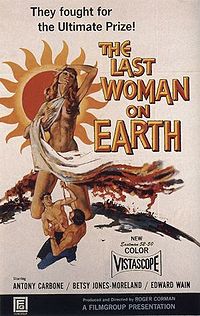 While I wouldn’t list this film as one of my favorites and part of my classic canon of science fiction, I did find it entertaining, and well worth its brief seventy-one minutes. For those interesting in checking it out, The Last Woman on Earth is in the public domain and can be viewed online in its entirety
 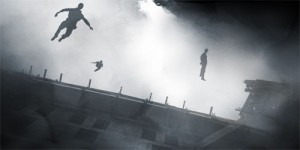 In a recent post I made my own selections for the Premio Dardo Award, a blogger to blogger recognition of a sound contribution to weblogging. One of my selections was
 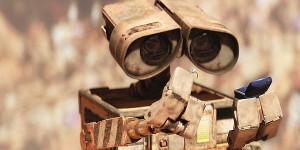 My latest contribution to
 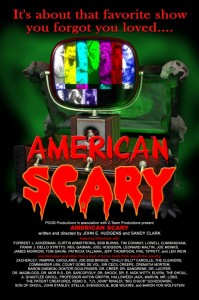 American Scary, a new documentary is now available that I had the privilege of watching last weekend, is now available which represents a great film on an important aspect of pop culture that will take many down memory lane. This film is a nostalgic homage to the glory days of the late night horror shows which features interviews and archival footage of the most famous hosts from the 1950s to the present day. American Scary was written and directed by John Hudgens and Sandy Clark (the latter also serving as producer), with Michael Monahan serving as associate producer. In the following interview Sandy and Michael talk about their love for late night horror hosts and the background for American Scary.
 I received a pleasant surprise this morning with a nomination from John Kenneth Muir of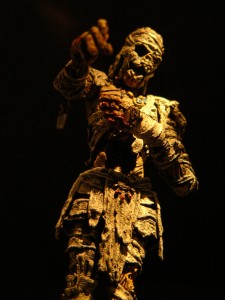
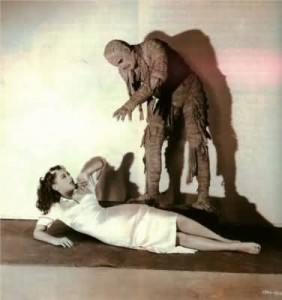 TheoFantastique: Contemporary mummy films strongly emphasize the romantic aspect, but you point out that in the changing meaning of mummies the twin themes of romance and horror are structurally related. Can you describe how this is so and provide some examples of it in film?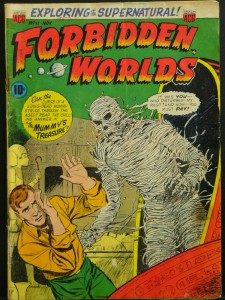
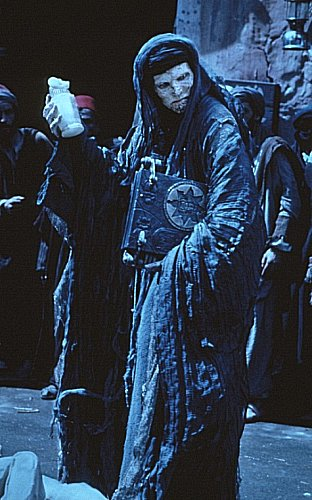 Jasmine Day: Having observed the increasing abjection of mummies from the Classic to Postclassic Periods, I predicted that the 1999 film (which I had not yet seen, or seen advertisements for) would maximize the abject qualities of its mummy to horrify audiences who are no longer easily terrified. Sure enough, Imhotep belched flies and scarabs, was still “juicy” as he slowly rotted away, and purloined people’s vital organs for his own use. The yuckiest mummy yet! That prediction was my coup. With their traditional conservative sexual themes having lost popularity and their abjection now maximized, mummies in the cinema may have played their trump cards. It’s been said that the 1999 film was more Indiana Jones than a true mummy movie, and it’s precisely this modification of a conventional curse/romance plot to incorporate action/adventure that made the film a success. It was not the “purely mummy” elements that ensured success; reliance on those alone would have made it a flop. So I predict that only the continued, creative infusion of elements from other movie genres will preserve – and yet paradoxically, erode – the mummy film genre. We were to have seen the film version of Anne Rice’s Ramses the Damned, which would have combined adult romance with mummies given its inspiration by nineteenth century romance fiction, but this project foundered. To attempt another action/adventure or horror mummy film would be to make a poor imitation of the 1999 film, so I think that one or the other of mummymania’s very early, pre-horror paradigms – romance or comedy – may be in the hustings. The latter has already begun; witness Bubba Ho Tep. Personally I would like to see more mummy comedy – perhaps something inspired by Poe’s Some Words With a Mummythat makes fun of the overcommercialization of mummies!