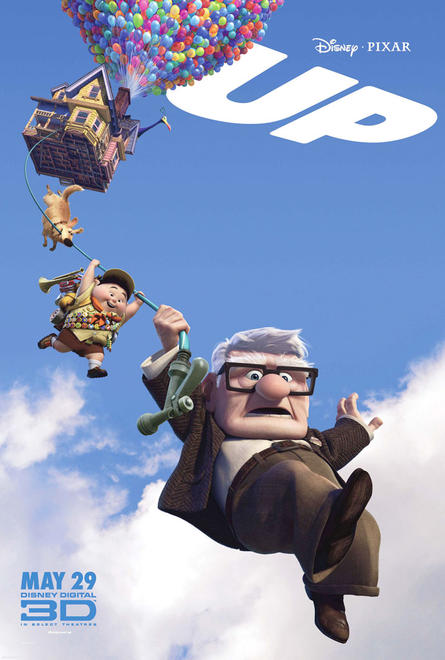
The business section of today’s The New York Times includes an article of interest to TheoFantastique. The story by Brooks Barnes is titled “Pixar’s Art Leaves Profit Watchers Edgy,” and it describes an unfortunate situation. As the article notes, Pixar Animation has not released a movie yet that has not been “a commercial and creative triumph,” but it appears that the Walt Disney company and a few folks on Wall Street, including toy retailers, are concerned that Pixar’s new venture, Up, may not fair well at the box office.
It seems that the concerns relate to some of the artistic daring of the film, a phenomenon also found in Pixar’s Wall-E: “there are stretches without dialogue,” and (heaven forbid) some of the scenes are done in black and white. Up is also said to be influenced by the noted Japanese anime figure Hayao Miyazaki. This pushing of the envelope in terms of artistic expression and artistic influences may not seem like much to worry about for those of us who appreciate filmmakers who go outside of the standard formulas for movies. But to others the bottom line is primary.
The New York Times states that there is concern over Up‘s box office potential as well as whether it will benefit “other Disney businesses.”
Pixar has seen diminishing returns with each successive film, but there is no denying that even those that did not generate as much revenue as anticipated, such as Wall-E, must nevertheless be recognized as an artistic success which was warmly embraced by audiences. This conflict between artists at Pixar and the business people at Disney creates an unfortunate dichotomy. Why can’t a film push the boundaries on artistic experimentation and yet also tell an entertaining tale that does well at the box office? Of course it remains to be seen whether this can be done with Up, but to pre-judge it in this fashion seems harsh. Disney might also remember that its founder was a leader in artistic experimentation in animation that did not always do well with viewing audiences. Recall Fantasia. Nevertheless, Walt strove for finding balance between both artistry and box office, and his corporate successors might reflect on the history of their own organization before too much consternation about Pixar.
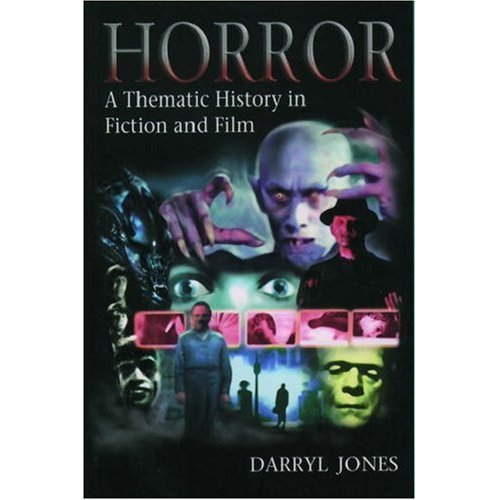
Darryl Jones teaches at the School of English at Trinity College Dublin. He is the author of Horror: A Thematic History in Fiction and Film (A. Hodder Arnold, 2003). After several weeks of trying to connect we were finally able to get together to explore some of the topics covered in this fine book.
TheoFantastique: Darryl, thanks for talking about your book. I was interested in your perspective that began with Gothic literature and then moved to connect this to horror cinema. Why is tracing this literary thread helpful in understanding not only the development of horror film, but also its ongoing expressions?
Darryl Jones: My own background is as a literary scholar, so all of my critical training is in that field, and it’s one I understand: I’m used to dealing with literary texts, and if anything tend to flatten out the differences between fiction and film as a consequence. So, it’s partly a matter of disposition and intellectual tendencies, allowing me to see connections across media. That said, it’s also the case that very many classic horror films, right up to the late 1960s, were adaptations of Gothic literary classics – however loosely adapted some of them may have been. I’ve a sense that it’s not until Romero’s Night of the Living Dead that the connective tissue between horror fiction and film is really severed. Universal and Hammer horrors are inconceivable without the Gothic novel, but the generation of horror film makers that came after 1968 – male baby-boomers – were cineliterate, their sensibilities were formed by moviegoing, rather than by reading, I suspect. Slasher movies, for example, have very little in common with nineteenth-century Gothic fiction.
TheoFantastique: Your book traces horror through various themes, including hating others, mad science, vampires monsters form the id, forbidden knowledge, narratives of invasion, body horror, and the occult. I’d like to probe a little bit in a few of these areas with you. In your chapter “Hating Others” one of the films you discuss is the original The Wicker Man. In what ways does this film depict hatred of the other in terms of Christian views of Paganism, and how might it also depict it in Pagan concerns about Christianity?
Darryl Jones:The Wicker Man is a very even-handed film, I think, and one which doesn’t commit itself on either side of the debate. What people often forget, or overlook, is that the Summerislanders in that film aren’t exactly aboriginal pagans holding on to Druidic, Celtic, or pre-Christian forms of thinking. Paganism was introduced onto the island in the nineteenth century, by a freethinking agronomist, the first Lord Summerisle. So if we want to historicize that film’s religious debates, it would be in the context of a whole complex of Victorian thinking, about anthropology and comparative religion (Anthony Shaffer had certainly been reading The Golden Bough before writing the screenplay, which is almost like a fictionalized version of Frazer’s great work of systematizing anthropology), and about Celticism and occultism. It’s an extraordinarily rich film, and very much an intellectual’s piece. That said, I suppose its ideological heart is really with the pagans rather than with repressed old Edward Woodward in his brown pajamas. An interesting question, though: will his sacrifice really make the crops grow? Do we read that film as materialist or spiritualist? Our Victorian predecessors wouldn’t have understood that distinction, not in the ways we do, but the film’s still smart enough to allow plausible interpretations from both perspectives.
TheoFantastique: In your chapter “Monsters from the id,” you discuss doubles, split personalities, evil twins, and mirrors and mirror images. Can you sketch some of your thinking in this area, and how the frequent use of the mirror surfaces as a symbol of horror in this area?
Darryl Jones: I’m always reminded of that famous line from Borges, who’s my favourite writer: ‘Mirrors and copulation are abominable because they increase the numbers of men.’ I’m fascinated by mirrors, doubles, twins, reflections, symmetry, repetition. In part, this links to the issues of materialism/spiritualism, and body/soul I was discussing above, but it also refers us back to Freud’s Uncanny, a fundamental ambiguity or undecidability as to the ontological status of the subject. Living or dead? Flesh or machine? Simultaneously both? For some thinkers, the double was a kind of warning or harbinger, a messenger sent from the other world to prepare you for your own death, the moment you clap eyes on your own soul.
I also discovered a really startling statistic while researching the book: 25% of pregnancies are twin gestations, but in three-quarters of these cases, one twin is simply absorbed into the other. In other words, a substantial minority of us begin life by eating our own twin! I was always intrigued by the fact that Elvis Presley believed that his own stillborn twin, Jesse, was a part of him, the face he saw in the mirror. Elvis sang gospel, while Jesse sang rock’n’roll. Perhaps, like Bart Simpson, we all have our Hugos in the attic. But what if, like Bart, it’s we who are the evil twin? We like to think we’re all individuals, indivisible, that which cannot be divided, one. What if we’re not? I have no idea what the answers are to these questions, but I know that they’re questions horror poses again and again, consistently puncturing complacent assumptions about identity.
TheoFantastique: In this chapter you naturally discuss the classic tale of doubles and split personalities, Jekyll and Hyde, and you made a connection with this that I should have made before in one of my favorite films, Fight Club. How do you see this film as a contemporary telling of Jekyll and Hyde?
Darryl Jones: In part, as a case in point for what I was talking about above. Fight Club is a kind of Marxist-Anarchist fable: we are alienated from the source of our labour, in classic Marxist fashion, and so alienated from ourselves. We are unrecognizable to ourselves. We feed off waste and conspicuous consumption, wash with soap made from liposucked fat. On top of that, there’s the whole issue of alienated masculinity – Edward Norton’s a white-collar grunt, a wage-slave, emasculated by capitalism (as is Meat Loaf’s Bob, who grows ‘bitch tits’, remember). He transforms into Brad Pitt and starts the fight club in order to be a man again. Interestingly, ‘White Collar Boxing’ is a bit of a boom sport, even amongst us academics. With Jekyll and Hyde, the thing to remember is that this is a novel which takes place in a world without women; it’s strongly implied that Jekyll’s friends believe Hyde to be a spot of rough trade he’s picked up from the docks. If so, the sexual relations between the two of them are narcissistic, masturbatory. And there’s no more narcissistic wanker than Brad Pitt! I mean, can you imagine him choosing to have sex with a woman when he could have sex with someone he really loves?
TheoFantastique: I also want to thank you for some serious reflection on the “cult classic” Phantasm in your chapter “Monsters from the id.” You place this within a “small series of films from its period to feature dream-demons, and to unfold with the narrative logic of a nightmare.” Here you include it with films like A Nightmare on Elm Street and Dreamscape. Do you think Phantasm has been neglected as having something serious to contribute in our reflections on horror and dreaming, and if so why is this the case, and how do you see Phantasm as significant in this regard much like Freddy Kreuger’s cinematic nightmares?
Darryl Jones: You’ll get no argument from me – Phantasm is a wonderful film, and, yes, much overlooked. In some ways I’m glad it never became the semi-camp, endlessly-reproduceable number that Elm Street did. I’m not sure Don Coscarelli ever wanted to be anything other than a cult film-maker, whereas Wes Craven’s ambitions were there for all to see. I can’t imagine ever wearing an Angus Scrimm mask to a Halloween party.
All I can really say about film and dream is how very close they are, and many of the most interesting horror directors know this, either consciously (like Carl Dreyer’s Vampyr, the dreamiest and one of the best of all horror films) or intuitively (many of John Carpenter’s films, from Halloween to The Thing to Prince of Darkness have this nightmare quality, this dream-logic to them. Of course Michael Myers is unkillable; of course he’s everywhere, omnipresent; of course he’s William Shatner, and Laurie Strode’s brother, and the boogeyman, all at the same time. This is what Rob Zombie’s witless, credulous, mean-spirited remake simply doesn’t get, and no end of juicy cameos from Ken Foree or Sybil Danning or even Mickey Dolenz can rectify that one.
TheoFantastique: In your chapter “‘Them!’ Narratives of pestilence and invasion,” you make a comment on Richard Matheson’s novel I Am Legend. You write,
“The novel closes on a relativist note with Neville’s realization that, as the Last Man, he, and not the vampires, is the ethnic minority, and that given his vampire-hunting existence he is the ruthless predator, or even themass-murderer, who deserves to be hunted and killed. The vampires are the victims of a plague, not the embodiments of evil. The monstrosity is his.”
I don’t know if you’ve seen the latest film inspired by this story, the one starring Wil Smith, but there was something of a minor controversy in the horror and science fiction community when an alternative ending was included when the film was released on DVD. In my view the alternative ending was the one that should have been released in theaters in that it not only flows better from the film’s previous narrative, but also brings the film more in keeping with the spirit of the ending of Matheson’s novel. In this way I think the paragraph I quoted form your book above can also be applied to the recent film. Any thoughts on this?
Darryl Jones: I think you can guess from the above that I have an ambivalent relationship with contemporary remakes of horror classics. The Hills Have Eyes may have been an improvement on the original, The Omen was pointless but faithful (or faithfully pointless?), The Texas Chain Saw Massacre didn’t insult the memory of my favourite horror film too much. But as for I Am Legend, I haven’t seen it! I mean to say, Will Smith?
TheoFantastique: You might be pleasantly surprised by both I Am Legend and Smith’s performance in it. I’d encourage you to see it if you can. But at any rate, thanks so much for your book and for discussing it here, Darryl.
Yesterday my family forced me to take a much-needed half-day off, and a part of my relaxation involved taking in a showing of Monster vs. Aliens. I must admit that when I saw the commercials for the film they looked promising but I had my doubts about the ability of the film to live up to my expectations. Thankfully I was wrong.
Monsters vs. Aliens is yet another fine contribution to the computer animated films created by DreamWorks. The storyline involves Susan Murphy, a woman in Modesto, California who has dreams of living a bigger life which she assumes will be realized through her fiance who is a local television personality with his sights on a job in Fresno. As fate would have it, as Susan waits outside the church on her wedding day a meteorite crashes down on her from space filling her body with Quantonium. The side effect of this space energy is a dramatic growth in size and an increase in strength, which is all well and good until the government seizes Susan and locks her up with other monsters as part of a secret military project. Susan and her fellow monsters fear they will never again find freedom until an alien force comes looking for the Quantonium and threatening the destruction of the Earth. In response America’s political and military leaders release the monsters and offer them a pardon if they can destroy the alien invaders.
This film is enjoyable on a number of levels. Science fiction fans will find this film of special interest with its numerous references to aspects of sci fi television and film. For example, in the film’s earliest moments as the incoming meteor is being tracked, it gives off a high energy signature which raises alarms resulting in the event falling under the special code “Nimoy.” And when the President of the United States attempts to make contact with the alien robot sent to retrieve the Quantonium he uses a synthesizer and begins his attempt at contact with the infamous five musical notes from Close Encounters of the Third Kind. Beyond this the film includes a number of influences from science fiction films and monster movies, especially from the 1950s. This is especially evident in the monsters who exhibit influences from The Attack of the 50 Foot Woman, The Fly, The Creature from the Black Lagoon, Godzilla vs. Mothra, and The Blob.
Although those who are not fans of classic science fiction and monster movies may miss some of these connections they will not be disappointed. Monsters vs. Aliens also includes numerous pop culture references outside the genres of the fantastic that add to the comedic nature of this film.
I found an additional element of the film enjoyable, and that was the 3D aspect of my cinematic experience. I have not seen a 3D movie since the debacle of Jaws 3 3D. The technology has come a long way since then, and the 3D experience adds an extra dimension that compliments the great detail the animators put into the texturing of their characters. At present James Cameron is working on his new film Avatar in which he promises a revolutionary experience of 3D which he sees as the future of the film industry. Although we’ve heard that before in everything from 3D to other theater gimmicks, if Monsters vs. Aliens is any indicator of the potential of 3D movies then Avatar may be one to watch for a new industry standard.
All this being said, Monsters vs. Aliensis a great film. It does not rise to the heights of DreamWorks Shrek series, or Disney Pixar’s Wall*E, but nevertheless it is very well done. So if you you’d like an enjoyable film experience that will benefit the whole family, particularly animation, science fiction, and classic monster movie fans, then get to the theater, and don’t forget your 3D glasses.
My fellow members of LOTTD are participating in a unity post focused around some recent comments by film critic Roger Ebert. In a film review for The Last House on the Left earlier this month, Ebert made this comment: “Other scenes, while violent, fell within the range of contemporary horror films, which strive to invent new ways to kill people, so the horror fans in the audience will get a laugh.” The focus for our unity post is our reaction to Ebert’s statement. In my commentary that follows I will relate my view that Ebert’s statement is both understandable and correct in a sense, and yet also indicative of an unfortunate stereotype about horror fans.
Let me begin with articulating how I believe Ebert’s comments are correct and in what senses. At present, teenagers and young adults may comprise the largest demographic segment of horror film audiences. For some time now in developed countries horror films have served as something of a right of passage, functioning as rituals and forms of folklore that serve as a liminal space of gore and violence to be endured on the passage to adult life. Filmmakers are in business to make money, and they understand horror’s primary demographic and their desire to see more violence and gore. When this demographic and its preferences are taken into consideration, and coupled with the dominant underlying philosophy of nihilism in horror films, it should be no surprise that many such films, particularly slasher films or similar cinematic forms of horror, include a heavy emphasis on gore and violence, including depictions of unique ways of killing. With these considerations in mind I think Ebert’s comment is understandable. Many horror fans watching Last House on the Left were probably teens and young adults, and I have no doubt that they did indeed take pleasure in watching the violence on the screens in front of them. But even so, it would be a mistake to say that all horror fans take pleasure in such things.
This leads me to the second part of my response to Ebert’s statement. As a teenager in the 1970s I had a taste for some of the violence in horror at the time. I remember sitting in a theater in California with my brother, and friends, and one friend’s mother as we watched Dawn of the Dead. My friend’s mother came with us because of the rating restriction, and she sat with her eyes closed much of the time while my brother and friends and I watched with glee as zombies ambled about in the mall and alternated between being shot in the head by surviving humans, and chewing body parts off of the humans in their grotesque acts of undead cannibalism. But although the increasing violence of horror films of the 1970s had some appeal for me in the cases of zombie films and Hammer Films’ colorful blood spray, nevertheless, manyof the slasher films and other expressions of horror with gore and violence almost for the sake fo gore and violence did not appeal to me. I have always been attracted to horror with a little more depth and have felt that real fear is generated best by what is not seen or merely suggested rather than what is thrown in the audience member’s face. I know I am not alone in this regard. There is diversity within the viewing audience of horror just as there is diversity in the audience of any particular genre of film. This might be particularly the case with horror films as one moves beyond the teen and young adult demographic. It may be that in the broader representation of horror film audiences there is actually less of a preference for varied depictions of killing with all the violence and gore Hollywood can muster.
I had no interest in The Last House on the Left when the original appeared in 1972, and I have no interest in the remake. This particular formula for horror is not my cup of tea. It is for some, but not for all. In this way it is easy to understand how a noted film critic could be both right in his assessment of horror films, and at the same time wrong in his perpetuation of a stereotype. Personally, I didn’t get my feathers ruffled over Ebert’s comments. I’d rather turn on my DVD player an plop in an offering of my favorite expressions of horror films.
One of the great experiences associated with this blog is finding people who share my interests in the fantastic. One of the people I discovered was Jim Benson, host of the radio show TV Time Machine, and co-author with Scott Skelton of Rod Serling’s Night Gallery: An After-Hours Tour(Syracuse University Press, 1998). I was pleased to connect with Jim recently to learn more about Serling’s work on this series.
TheoFantastique:Even though I am a huge fan of Rod Serling, and his work with The Twilight Zone, I know very little about The Night Gallery. Am I unusual in this regard or is Night Gallery a neglected part of Serling’s career by and large?
Jim Benson: Yes it is. It has always been like the red headed stepchild of The Twilight Zone, normally because the show didn’t run as long, it didn’t have as much of a cultural and societal impact, also it did not become a syndication phenomenon like The Twilight Zone did because Night Gallery was originally an hour-long program. In syndication Universal decided to cut it down to half an hour. So that basically eviscerated the show and much of the dramatic impact was lost. The show had three initial years of strong ratings in syndication and then fizzled out and was only seen intermittenly, hit and miss, for a period of twenty years (1977-1997). So it was essentially lost to time and memory before it was finally released on videotape through Columbia House.
TheoFantastique: I’m assuming Night Gallery is now available on DVD. Has that helped resurrect Serling’s work in this regard?
Jim Benson: The reason that I was able to meet my co-author Scott Skelton was that he was on a mission to find uncut episodes of Night Gallery and also start a campaign to get uncut episodes released on videotape. This was back in the mid-1990s, and he started his website www.nightgallery.net, and that’s how I found him. I emailed him and we started a correspondence, and to make a long story short we decided to write a Night Gallery book together which Scott had already started. He realized I had a lot of connections and a lot of knowledge, and I was as fanatical about the show as he was, so he knew I could help and ease his load, so I joined him on the mission to not only write the definitive book about Night Gallery but also see to it that the uncut episodes would eventually be released, and they were released on videotape through Columbia House Video.
TheoFantastique: How did Night Gallery fit within Serling’s overall career in television?
Jim Benson: It fits in a very unique way because people like me and Scott believe it is a significant part of his career. Others look upon Night Gallery as representative of Serling’s career in decline. This is something we dispute because most people have not taken the time to become familiar with its history and few people are scholars and experts of the show. There are experts on The Twilight Zone but very few on Night Gallery. The more Scott and I researched the more we talked to people associated with the show, and especially when we got access to the uncut episodes, we could see that Night Gallerywas a significant part of Serling’s career. One of the episodes that Serling wrote is probably one of the finest things he wrote for television, and he actually pointed it out as one of the best things he ever wrote, if not the best thing he ever wrote, and that was an episode titled “They’re Tearing Down Tim Riley’s Bar,” which was nominated for an Emmy Award for an outstanding single program 1970-1971. So we discovered that Serling wrote nearly a third of the episodes that represent some of the finest writing of his career, because at the time he was writing for Night Gallery he was in his late 40s, and he only lived a couple years after the show went off the year, but he had become a much more sophisticated, mature, adult writer at this point. His characters, in my mind, sounded more authentic and gentuine at that point in his career. Some of his characters that he wrote earlier in his career for live television productions and The Twilight Zone sometimes come across as a litte caricature-ish and stiff, and Serling himself actually characterized his own writing in that regard. He felt he improved in his writing later in his career as opposed to the conventional wisdom that he was in decline.
TheoFantastique: What was the inspiration behind the series, when did it debut?
Jim Benson: The inspiration for the series actually goes back to The Twilight Zone when CBS cancelled it in 1964. Serling came up with another concept for The Twilight Zone and approached ABC about resurrecting the show. But ABC wanted more of a horror-type show so they suggested that Serling host a show called Witches, Warlocks, and Werewolves, which was the title of an anthology that he edited in the 1970s. Serling didn’t particularly like that so he proposed an alternative concept which he titled Rod Serling’s Wax Museum in which he would walk through a wax museum, approach certain figures and those figures would represent that evening’s story. Later on when he wrote a series of stories which was an anthology called The Season to Be Wary, he decided to take those three stories and tie them together with paintings, so in that sense he came up with the concept of Night Gallery.
TheoFantastique: This leads me naturally to ask about the paintings used to introduce each story. Was there much serious consideration given to the art as an essential part of the storytelling process or was it something that just provided an entry way into the story itself?
Jim Benson: Well, actually the paintings were a very, very important part of Night Gallery. Many people consider the paintings the soul of the show. In many quarters the paintings became more popular than the episodes themselves. When Serling wrote the original Night Gallery pilot which was inspired by The Season to Be Wary stories, those three stories consisted of three stories which had a painting within the stories that became an integral part of the tale. So in that sense there was no separating the stories from the painting, whereas for Night Gallery the series the stories did not necessarily require the element of an actual painting to be part of the story itself, they simply used the paintings as a vehicle to introduce that particular story. But absolutely, the paintings were critical to the storytelling aspects of Night Gallery.
About a third of the paintings exist, two-thirds of them we don’t know what happened to them. They are available at times on e-Bay. The painting for the pilot sold for I think $26,000, which is the highest ever gotten for a Night Gallery painting. There are original prints still available that Universal Studios created in 1972, lithograph posters that represented at least 12 original paintings, and you can find these on e-Bay from time to time.
TheoFantastique: What was Serling’s contribution to the program beyond serving as host, and writing a third of the episodes as you mentioned earlier? How much creative control did he have?
Jim Benson: This is probably the most controversial element of the history of the series, because originally Serling had a fair amount of control in the first season. The majority of the stories were written by him. However, in the second and particularly the third season Serling lost virtually all creative control to producer Jack Laird, who at the start of the second season took control of the show, cast it without consulting Serling, chose all the stories to be adapted, he really was in total control, and only occasionally referred to Serlingon certain issues. The reason this happened is because Serling did not have a creative control clause in his contract. He essentially had been an executive producer on The Twilight Zone and didn’t want that kind of stress on Night Gallery because Twilight Zone really burned him out and he didn’t want to be a day-to-day functioning producer. But he assumed that Laird and others would defer to him on creative issues because it was his show, he created it, he was writing the majority of the scripts the first year, so he assumed something that didn’t happen. That led to a series of events where he eventually became something of a gadfly when it came to Universal Studios’ attitude toward him, and it got to the point where he would call the studio and they wouldn’t even accept or return his calls. By the end of the second season he was largely shut out from the program, and by the third season he wanted his name and presence eliminated from the program entirely but Universal wouldn’t let him out of his series and so they continued with the title and he continued hosting it, but he only wrote four episodes for the third season.
TheoFantastique: What kind of impact has Night Gallery had?
Jim Benson: At the time it aired it had tremendous impact because it appealed to the young, hip generation. It has a huge cult following at the time. There were actually Night Gallery viewing parties at Yale and Harvard on Wednesday evenings for the students. Even before videotape people were bootlegging 16mm prints and viewing them. The show was incredibly popular with young people and it even though the ratings were only fair, if there had been more emphasis on demographics at the time like there is now in television the program probably would have run five to seven seasons. At that time they didn’t place the same premium on young audiences as they do now. So the show has always had this main core, cult audience, even to this day. And people who are Night Gallery fans are very passionate and many have followed the show for forty years.
And another thing, there were individual episodes that have had a lasting impact, and one of them is called “The Caterpillar,” which is basically known as the earwig episode which was the last episode of the second season. That episode and others still resonate and people remember them even though they’ve only seen them once or twice over forty years. These are the types of stories and images that have lasting impact.
TheoFantastique: Where can folks learn more about your book and The Night Gallery?
For as long as human beings have been trying to explain their place in the cosmos they have been creating monsters. We are familiar with many of the contemporary versions of these creatures, but what we might not readily recognize is that one monster in particular seems to be dominant throughout history and across cultures. It surfaces in various guises as contemporary monsters. What is this monster, you might ask? I suggest it is the chaos monster.
In his interesting book Religion and Its Monsters (Routledge, 2002), Timothy Beal looks at some of the earliest monsters of humanity as they were expressed in the cradle of civilization in the ancient Near East. One of these was intimately tied to cosmologies In this context Beal states:
“Less familiar but nonetheless fascinating to those of us attuned to the sciences of chaos is the idea that primordial chaos might take the form of divinity, or rather divine monstrosity. In many ancient Near Eastern stories, the chaos of and against which the world is created is personified as a ‘chaos god’ or ‘chaos monster’ who must be defeated by another god in order to create or maintain cosmic order.”
It is against this backdrop that the ancient Hebrews penned their creation stories, perhaps functioning in some senses as an apologetic against the gods of the surrounding nations wherein Yahweh was conceived of as imposing order on a chaotic creation.
While this scenario might seem far removed from our late modern context and its sensibilities I suggest that we still fear the chaos monster even though it may take different appearances in our cultural context. In fact, our contemporary chaos monster has maintained a significant cinematic expression since the 1960s in one popular form, that of the maniacal and seemingly unstoppable slasher. Heather Duda picks up on the development of the slasher film in her book The Monster Hunter in Modern Popular Culture (McFarland & Company, 2008). She mentions Hitchcock’s Psycho as the film which ushered in the slasher in horror films and then connects them to our fears of chaos. She writes:
“..[T]hese monsters are seemingly immortal in that no matter how many times they are shot, stabbed, or fall several stories, they just keep coming. With their single-mindedness and refusal to play by traditional horror rules, the slash monsters represent chaos. Chaos is the ultimate fear of the humanizing apparatus. When there is chaos all rules and order are thrown by the wayside and the feeling is one of ‘every man for himself.’ When the humanizing apparatuses are thrown into disarray, those people who championed them have nothing left to cling to.” (Emphasis mine.)
It is important to note the dramatic changes going on in America during the time in which the slasher films picked up momentum and the interest of viewing audiences. While Psycho may have helped introduce the slasher in 1960, it took the advance of cultural upheaval that came with the late 1960s which would continue to play out in the 1970s, 1980s and beyond for the slasher film to become a recurring facet of our culture’s expression of angst over chaos. To be sure the slasher is not the only expression of chaos in horror. Any number of apocalyptic scenarios could be pointed to, such as our continued fascination with an end of the world via zombies, as additional examples of our fears of our sense of order being swallowed up in chaos.
Given the long history of humanity’s fears over chaos, and our modern expressions of this fear, what then might we expect in terms of the continued expression and longevity of the chaos monster in cinema? Given the protracted global economic crises (not to mention several other international challenges to global peace and security) it seems likely that the chaos monster will continue to be expressed in slasher films and other forms as Hollywood and independent cinema continues to externalize our inner fears. Perhaps one day humanity will slay this monster, but I wouldn’t count on it any time soon.
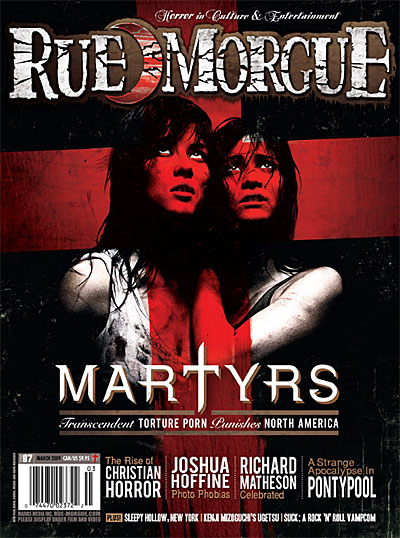
The cover of the current issue of Rue Morguemagazine, Issue #87 highlights a double referent in its contents which dovetail with an emphasis of this blog in its analysis of the religious and social aspects of horror and the fantastic. The cover points toward an article on “Pascal Laugier’s religious-themed torture porn,” but of real interest is the article by Lea Lawrynowicz titled “Divinity in Darkness: The Rise of Christian Horror.”
I was pleased to see Rue Morgue delve into the arena of religion and horror in general, and horror and Christianity in particular, and while there are some helpful aspects to the article’s treatment of this topic, it could have been a stronger piece in my view.
The author expresses surprise at the outset by stating that “the idea of Christian horror is an oxymoron – opposites that just don’t attract.” In my thinking while this might echo the sentiments of many evangelical and fundamentalist Protestants, as well as secular horror fans, it does not include, as the late Paul Harvey used to say, “the rest of the story.” As horror has developed in various cultures through history it quite naturally has reflected various cultural elements and influences. This is the case in the Western world as well where Christianity has been the dominant religious expression. Therefore it should not be a surprise to find that Christianity and horror have had a long relationship, perhaps most visible in the Gothic horror tradition. Whether this can be construed as “Christian horror” is a debatable point, and I’m willing to give Lawrynowicz some slack here, but the point is that Christianity and horror may not have “exactly proven to the be the friendliest of bedfellows,” they have had a relationship in the past as well as the present, and some of us believe they are friendlier bedfellows than many on both sides of this discussion might like to admit.
I was pleased to see the article interact quite a bit with the thinking of Scott Derrickson, a Hollywood director who has been involved with a number of horror and science fiction films, from Hellraiser: Inferno, Urban Legends: Final Cut, The Exorcism of Emily Rose, and most recently, The Day the Earth Stood Still. Derrickson openly presents his embrace of both horror and his Christian faith, a stance I share with this young director. I found myself resonating with many of his comments particular as he shared his concerns over his own experiences in his youth with Christian fundamentalism which is, in his view, “rooted in fear.” He now channels these experience into his production of horror films.
But while Derrickson appreciates horror as a religious person he “eschews the Christian horror label,” another area in which he and I are in agreement. For one the definition is hard to make and sustain, especially since some want to include The Exorcist and The Omen in this subgenre. These films seem to be better classified as horror films which draw upon the Christian tradition, particularly in its demonology and ideas on the supernatural as they related to the battle between good vs. evil, but to classify them as Christian horror seems like a stretch to me, and one which does a disservice to the films themselves.
Beyond this, the article touches on a new wave of “Christian horror” in popular culture that seeks to draw upon the genre but do so in ways that won’t offend its conservative Christian (largely evangelical) audience, by removing sex, violence, and gore. Since these items have been part and parcel of horror in varying degrees since the genre developed, I wonder whether it is fair to consider Christian horror as horror. Surely they have the right to draw upon the genre for entertainment and as a source of moral tale-telling, but in producing it in this sanitized fashion they remove much of the power and subversiveness which makes horror such an excellent vehicle for not only frightening, but also for providing the fodder for cultural, social, and even religious reflection.
It would also seem that with Christian horror many conservative Christians want to have their horror cake and eat it too. Publishers Weekly noted that in general speculative fiction does not do well in this market due to its edginess and concerns over its “darkness.” A common stereotype in this area is that horror is incompatible with proper Christianity, as is fantasy and science fiction much of the time, unless of course the authors are C. S. Lewis or J. R. R. Tolkien, but even then at times these authors or their artistic medium are viewed as suspect. How can horror and other aspects of the fantastic be eschewed by and large and yet also sanitized so as to be permissible in certain contexts?
For my part I think that Christians are missing out on something that can easily be connected to their faith. The Bible itself is filled with monsters like the Behemoth, and the Judeo-Christian creation stories frame the work of creation in response to the gods of chaos as Yahweh brings order out of disorder. The New Testament speaks of a great Dragon and includes stories of possession and exorcism, and of course the Book of Revelation has provided the imaginative fodder for a host of apocalyptic visions and stories.
Perhaps our world is indeed one of “gods and monsters.” If this is the case then Christianity and horror are neither unmixable elements like oil and water, nor a brew which needs to be sanitized like beer without any alcohol in order to be enjoyed.
Related posts:
Interview with Scott Derrickson on The Day the Earth Stood Still.
Interview with Douglas Cowan on the book Sacred Terror (Baylor University Press, 2008).
McFarland is one of my favorite publishers and a recent title caught my attention with the publication in 2008 of Heather Duda’s The Monster Hunter in Popular Culture. Duda is an assistant professor of English at the University of Rio Grande in Rio Grande, Ohio. With this volume she addresses a deficit in the academic literature on horror as she turns her attention to the monster hunter as a compliment to studies on the monster itself.
TheoFantastique: As you note in your book, the vast majority of exploration and critique has focused on the monster but next to nothing on the monster hunter. Why do you think this is?
Heather Duda: First, I want to thank TheoFantastique for giving me the opportunity to discuss my work. I am a big fan of the site and honored that my work is included here. I don’t think people find the monster hunter as interesting a character as the monster. The monster stands in for a wide range of repression from sexual repression to a fear of The Other. It’s a very intriguing character to analyze. On the other hand, the traditional monster hunter – especially going back to Abraham Van Helsing from Bram Stoker’s Dracula– is a white, upper-class, educated male who seeks to maintain the status quo. There is little that is sinister or hidden about him.
TheoFantastique: Of course, aspects of pop culture are reflections of ourselves, and as we change these aspects change as well. You draw attention to changes in horror in the second half of the twentieth century and state that the monster hunter changes as well. How is this so and what kind of changes do you see?
Heather Duda: One of the major changes to American culture that affected horror was an increase in skepticism. Thanks to such events as Watergate and the Vietnam War, the American public has learned that its leaders and its military cannot always be trusted. That lack of trust is certainly apparent in horror as it lead directly to the downfall of the traditional monster hunter. At the time America was becoming more skeptical of its leaders, the slasher films were becoming more and more popular with their random, chaotic villains who refused to play by the established “rules” of the game. When the monster refuses to recognize and play by the rules, the rules are no longer relevant. The keeper of those rules – the monster hunter – is both inadequate and useless. Someone new must step up to try and beat back the new monsters, a someone who knows and understands the new rules. This someone tends to be an ex-monster, which is the most significant change to the monster hunter character. Today’s monster hunters are themselves monstrous, something Abraham Van Helsing would never have considered.
TheoFantastique: In your book you analyze one of the leading monster hunters, Van Helsing from Dracula in literature and film. Can you summarize some of the ways in which this character has evolved in keeping with our evolving culture?
Heather Duda: Abraham Van Helsing is a highly educated, white, upper-class male who leads a group of younger white, educated, upper-class males and one woman on a fight to retain the purity of Victorian ideals. When first introduced by John Seward, Van Helsing’s attributes include physical and emotional strength, an even-temper, and tolerance. There is never a question that he cannot succeed in his quest to maintain the status quobecause he is the epitome of a Victorian gentleman. This prototype continues on through the many vampire movies of the first-half of the twentieth century. As I mentioned above, events like Watergate and Vietnam cause a significant change in the character. With the rise of the slasher villain, the traditional monster hunter disappears because he no longer holds the key to defeating the new monster. But even though Van Helsing may disappear, his characteristics continue on. In his place come monster hunters who are actual monsters but who maintain the ideals of strength and courage. However, one of the big things the male monster hunters struggle with is redemption. Many are drawn to fighting their own kind so they can ease their own guilt over past actions (something Van Helsing never had to deal with). This desire for redemption mirrors our own hope that things can get better and that maybe our leaders will find a way to fix things. If Americans believe they are at least partly to blame for their country’s and the world’s problems, then redemption would be a very important element of the contemporary monster-hunting narratives.
TheoFantastique: You reference Nietzsche’s warning that “He who fights monsters should look into it that he himself does not become a monster. When you gaze long into the Abyss, the Abyss also gazes into you.” How has this applicable to the late modern monster hunter like Angel or Blade?
Heather Duda: Vigilantism is the number one thing a monster hunter should avoid. When a character has so much power, it is easy to abuse that power. Although the monster hunter does, indeed, have abilities far beyond the average person, the concern is always how those powers should be used. A monster hunter spends most of his/her time in a frustrating battle with never-ending evil. A win is never a win for long. The big question for a monster hunter is, “Why shouldn’t I use my power in the way that my enemy does?” This temptation alone illustrates Nietzsche’s warning. Also, with characters like Angel and Blade, they are already on the edge of the Abyss by virtue of being monsters. They not only have to control the urges to abuse their power, they also have the control the urges to return to their previous life as a monster. In almost every monster-hunting narrative I examine, the monster hunter does slip at some point. Luckily, there is always a friend or lover there to pull the monster hunter back. It is really only through a connection to a community that characters like Angel and Blade can use their powers without falling into the Abyss.
TheoFantastique: Would you say that Batman in the film The Dark Knight is perhaps the epitome of the popularized monster hunter that has been transformed by prolonged interaction with the Abyss, and that the huge reception of this character at the box office says something striking about our culture?
Heather Duda: Absolutely. Bruce Wayne must continually struggle against his alter-ego. Being Batman is such a strong compulsion for the character. It must be intoxicating to have so much power, especially in a world where evil has been in control for so long. Yet when Batman takes over, there is the vigilantism risk mentioned previously. Batman is a loner and that is never good. One of my favorite scenes in The Dark Knight is the conversation between Bruce and Lucius over Bruce’s use of the surveillance system. The conversation demonstrates that Batman’s sensibilities have not completely overtaken Bruce’s, thus keeping Bruce from the Abyss; but, again, it is a connection to another being that keeps Bruce from falling too far. An even better example of a character who has fallen into the Abyss is Rorschach from Watchmen. In fact, one of the chapters on Rorschach in the graphic novel is entitled “The Abyss Gazes Also.” Rorschach sees everything in terms of good and evil; all evil must be destroyed, no questions asked. Frankly, Rorschach lives in the Abyss. I quote an interview where Alan Moore says he never intended Rorschach to be liked, yet fans really flocked to him.
You’ve touched on a great point when you ask what characters like these say about our culture. Why do we like vigilantes? Our intense interest in these characters certainly doesn’t seem to reflect a good worldview on our part. Deep down inside, maybe we like the idea of taking matters into our own hands without worry of repercussion. I hope it doesn’t mean that we feel as if we are living in the Abyss with Rorschach; I hope we, as a society, are a little more hopeful than that.
TheoFantastique: You see Mina Harker as the “grandmother of the contemporary female monster hunter.” Can you touch briefly on how this is so?
Heather Duda: Bram Stoker’s Mina Harker does not get nearly the respect she deserves in the various film adaptations. In Stoker’s novel, Mina is a smart woman who brings together the various narratives and experiences of the characters into a cohesive flow. Every time the men keep her in the dark about their plan to defeat Dracula, the plan fails. Towards the end of the novel, Mina is bitten by Dracula and starts to transform into a vampire. It is at this point that she is most powerful because she has a psychic connection to Dracula. She allows Van Helsing to hypnotize her so they can follow the vampire back to his castle. She demands to come along on this final attempt to rid the world of the villainous Count. Without her, the men would certainly fail as they have before. I see Stoker’s Mina as a strong, independent woman who is not afraid to give in to her monstrous side in order to save those she loves. These are exactly the traits that characters such as Ellen Ripley and Buffy Summers will embody a century later.
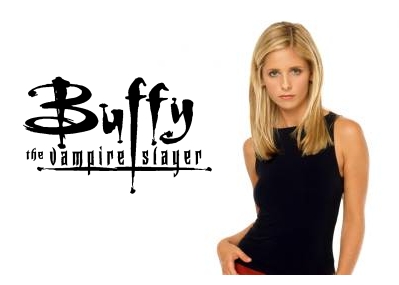
TheoFantastique: How does Buffy the Vampire Slayer signal a dramatic new way forward for female monster hunters, yet perhaps also indicate that we have a ways to go in relating gender to this concept?
Heather Duda: I love Buffy. I think she is an amazingly complex character within the horror genre. Traditionally in horror, female characters are either the victim or the vixen. A victim will be pure and faithful while the vixen will be sexually forward and powerful. At the end of a classic horror film, the victim is saved while the vixen is killed because a woman with agency (especially sexual agency) can never be allowed to survive within a strong patriarchal culture. Buffy and her fellow female monster hunters merge the two into one character. Buffy is certainly never afraid to take the lead and fight the monsters. On the other hand, she also deals with typical teen angst over boys, friends, and clothes. She demonstrates that a woman can be both fragile and powerful; that women are not an either/or creation. Yet, there are problems with the female monster hunter. The biggest concern I have is with numbers. There are far fewer female monster hunters than male monster hunters. It seems like the American public is not entirely ready for a powerful female character who is not afraid – or remorseful – of inflicting bodily harm on the bad guys.
TheoFantastique: In your view, why are monster-hunting texts still so popular in film, television and graphic novels?
Heather Duda: We all want to believe that the world can be a better place. The monster-hunting narrative provides us with a possible model of a better tomorrow. Even if we know that the monster hunter will only succeed for a moment and not for the long-term, it doesn’t matter. The fact that a powerful being is watching out for humanity is enough. As the world continues to be an unpredictable place that is controlled by fear, I predict that we’ll see more and more monster-hunting texts. Wouldn’t it be nice to live in a place without fear of terrorism, war, hostility, famine, and disease?
TheoFantastique: Heather, thank you again for your fine book, your exploration of this neglected topic, and for making time to discuss it here.
Last weekend my teenage son bought me a copy of Diary of the Dead (2008), George Romero’s latest installment in his infamous zombie series of films. I realize that the movie has been out for a while and that a number of reviews and commentary have been posted, but given the focus of this blog I may have something to contribute as I touch on aspects of Romero’s continuing social and cultural critique 40 years after his groundbreaking classic Night of the Living Dead (1968).
While I cannot say that this is my favorite Romero zombie film it did not disappoint, and it rounds out the director’s treatment of this iconic monster. In the late 1960s Romero changed horror films and popular culture forever with his unique take on zombies, transforming the previous conceptions of the figure of a living being in drug-induced limbo in servitude to others taken from from voodoo to corpses risen from the dead in search of the flesh of the living. The original film introduced Romero’s frightening apocalyptic scenario and each successive film in his series built upon this as the living came to grips with the challenges of survival. Diary of the Dead brings Romero’s zombie films full circle in that they return the time frame to the initial moments after the dead begin to rise.
A unique aspect of this film is its almost exclusive use of hand held cameras which simulate the characters’ subjective viewpoints as they record the zombie onslaught. Of course, this technique goes back to The Blair Witch Project, but this is the first time it has been applied to zombie horror. At times I found the use of this technique forced at times and I wondered whether the human desire for video documentation of graphic tragedies could really be stretched to such extensive proportions. Even so, I appreciated what Romero was trying to accomplish with his use of visual imagery in this fashion. As Romero fans are aware, the director has incorporated social and cultural critique in his zombie films, focusing in the past on racism, the breakdown of the nuclear family, and consumerism. Diary continues in this tradition by offering a brief critique of racism and an extended critique of our media saturated and voyeuristic culture.
Four decades after his initial critique of race in America, Diary expresses Romero’s continued concerns in this area. It is expressed in the film as the group of college filmmaking students traveling to escape the zombies encounter a group of African Americans. With the collapse of society they have formed a tight knit group focused on race as they come together to build their collection of weapons, gas, and food for survival. Although this is a brief segment of the film and nowhere near the extended treatment provided in Night of the Living Dead, at one point the leader of the African American group states that the tragedy has provided his group with the means of attaining power. This is obviously indicative of Romero’s continued concerns about racism in America, but given that this film was released prior to Barrack Obama being elected to the presidency it would be interesting to see how this segment of the film might have been modified with this change of circumstances reflecting changing American attitudes toward race.
Diary also includes a major and sustained critique of America’s obsession with the media and voyeurism through the recorded visual image. This plays itself out from the opening scene where the group of college filmmaking students stops their horror film production and the director continues filming which sets the stage for his continued recording of virtually every moment of their struggle for survival. This makes many of the other students uncomfortable, but eventually they take it for granted, and one of them even takes up the cause for continued documentation with [spoiler alert] the eventual death of the character behind the camera. Beyond the critique of our propensity to want to record and share every aspect of our lives, Romero also offers a critique of the expansive presence of the media and its technologies. Various images are shown in the film with voice-over narration that portray our global news media reacting to the zombie tragedy hauntingly familiar from 24/7 news broadcasts available via cable and satellite. Further, the characters in the film depend greatly upon their technology in the form of cell phones and wireless Internet connections expressing great surprise and dismay when these technologies give out as a result of the breakdown in society. No doubt Romero takes advantage of the media and its related technologies that have benefited him in the production and dissemination of his films, but he raises valid concerns about the extent of influence of these things and our obsession with them in terms of priorities and dependencies.
One might wonder whether Romero has gotten any less pessimistic since he first captured his zombies on celluloid. In his first zombie film a strong sense of pessimism, if not nihilism, is present as the major character survives the zombies and great interpersonal conflict with the living only to end up dead as a result of an overzealous “redneck” zombie hunting squad. This pessimism continues throughout the remainder of Romero’s zombie films with a slight injection of hope in Land of the Dead as it appears that zombie culture and living human culture might be able to learn to co-exist. With what may be Romero’s final installment in his zombie series, Diary seems to return once again to a sense of pessimism regarding human nature and the possibilities of avoiding self-destruction. It does so through not only the scenes of worldwide chaos that ensue with the breakdown of society, but most strongly in the final scene. This involves a dangling zombie tied by her hair to a tree limb. Once again the symbol of unthinking human destruction surfaces in the form of the “rednecks” who have been using zombies for target practice. In the case of the woman hanging from the tree they use a shotgun and shoot her in the head leaving only the head from the nose up remaining on the tree, the rest of her body falling limp to the ground. The camera slowly zooms in to the remains of the head as a blood trickle slowly works its way down from the tear duct of the left eye as the narrator asks the question as to whether humanity is worth saving. Although this scene is very graphic it is also very effective in providing a strong visual that climaxes the film while drawing attention to the human predicament. Like The Mist, this film suggests that it is only our social structures that prevent us from self-destruction, and we might indeed engage in sober self-reflection on our violent tendencies. It appears that Romero may not think humanity is worth saving, particularly if we are little more than self-obsessed, animated meat bent on annihilating ourselves and others, whether we document this in our visual diaries or not.
George Romero zombie film fans, and those interested in the social critique which is provided through late modernity’s favorite monstrous icon, will find this film entertaining and thought provoking.
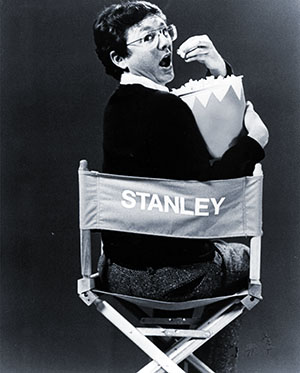
As regular readers of this blog may recall, I grew up in northern California in the 1970s, and part of my formative experiences with the fantastic involved Creature Features originally hosted by the late Bob Wilkins, and later by John Stanley. John recently contacted me to let me know about a new feature-length documentary on the program as well as some of his other materials, and this led to an hour and a half phone call where John shared his background and experiences in becoming a television horror host. Below are highlights of our conversation.
TheoFantastique: How did you get involved in horror, sci fi, and fantasy? What was your personal interest and how did this shift into a professional arena?
John Stanley: People can read the expanded version of this in my book I Was a Teenage Horror Host (Creatures at Large, 2007), and this is also explained in my documentary I Was a TV Horror Host: The John Stanley Story. It really starts when I was about six years old. We lived in Oakland, California and my father would take me over to San Francisco on Saturdays to the Telenews Theater at Fifth and Market. It was a theater that specialized in showing nothing but news reels (if you can believe that). Next door to that was a small movie theater that played double bills, and so after we had seen the news reels we’d go next door and that’s where I was introduced to westerns, musicals, all the things that were considered mainstream genre movies of the time. Sci fi and horror were not as predominate in the 1930s and 1940s. It wasn’t until about 1951 with Howard Hawks’ film The Thing From Another World that connected to the idea of UFOs that was growing across America at the time. That was a movie that really stunned me. I was afraid to walk down an empty corridor for the rest of the summer. We also saw The Man From Planet X which was the second feature. I thought here was something I hadn’t seen much of before. That same summer of 1951 saw The Day the Earth Stood Still, and when Patricia Neal is confronted by Gort and goes into the flying saucer I thought she utterly captured the emotions of terror and fear. This struck me.
So this is where the origins of interest in sci fi and horror began, accompanied by the EC Comics around the same time. I remember discovering Vault of Horror, Tales From the Crypt, Weird Science, and Weird Fantasy. You had horror, sci fi, and war, and later with MADyou had satire. Then there were the pulps, and when you’re young and impressionable there’s nothing better than to see a monster holding a beautiful girl with a very short dress or ripped blouse. And insides the pages of those were these wonderful stories and some of these stories were by writers like Robert Bloch, Richard Matheson, and somehow these names began to stick. I was also brought up on pop music that today would be part of the swing era, and one day I was watching a film called Distant Drums with Gary Cooper and I was taken by the unusual music, atmosphere, and music so I stayed over for the second screening to see the name Max Steiner and I wrote the name down to see if I could find his name and music elsewhere. Film music then became a passion that consumed me. One movie that had a strong impact on me was a war movie called Between Heaven and Hell with Robert Wagner. In his autobiography he dismisses this film but what he doesn’t know is what an influence this movie had on me at the age of sixteen and my friends who were with me. We were drawn into this incredible war story by the music and especially by one scene where Wagner runs down the side of this mountain, and the music just carries you with him. We stayed to see this movie again just to see this moment at the climax of the film again.
Also not only the names of composers but also directors were coming to my mind. My dad took me to see The Steel Helmet, a war movie, perhaps the first about the Korean War, and I was hearing dialogue like I had never heard it before. There’s a scene with a young Korean boy gets killed named Short Round (the use of this name in one of the Indiana Jones films finds its origin in this war film). A Chinese officer pulls a note off the dead boy and reads the plea of the boy and he sneers and throws the paper on the floor. Sergeant Zach is standing and watching and he empties his gun into the officer’s body, shoots down an unarmed man because of what he’s just said about Short Round. That was one of those unforgettable moments at the movies.
My childhood experiences shaped me into becoming the kind of person who might want to work at a newspaper and write about these things.
TheoFantastique: How did you connect with Bob Wilkins in his horror host work in the Bay Area?
John Stanley: I was a copy boy at The Chronicle in San Francisco. I had a temporary writing job that eventually ended after the summer but after that the people at the paper had a new respect for me. There was a movie critic there and each week I would write a movie review and leave it next to his desk and he read it and called me over to critique my view. Each week I would continue to do a review and eventually when he was on vacation with his wife he told me the paper might ask me to fill in and write a review. The paper did, and it was Mysterious Island, Ray Harryhausen’s special effects film. This was the beginning and I was able to later focus on interviewing major television and movie stars which became my speciality over the next few years. Sci fi and horror was never my specialty, only part of what I was doing, although it was a significant and important part. So if you visit my website you’ll see the celebrities and people I’ve interviewed, and many of them come from these genres. I felt interviewing characters from these genres were just as important as interviewing Jimmy Stewart or anybody else from more mainstream genres.
In 1968 you’ve only got a few channels available for television viewing, and cable was a new concept. Fortunately for us if we didn’t have cable where I lived I wouldn’t have been able to see television. One Saturday night I’m watching KCRA Channel 3 out of Sacramento and Bob Wilkins is on there and he’s screening a horror film. I was so impressed and it was so unusual in that while I was aware of horror hosts on radio I had not seen them on television. As a result I wrote a letter to Bob and he wrote back to me. I made a phone call to Bob and he made a phone call back to me. Soon Bob realized he had made an important connection because I worked for a major newspaper, he had a show in Sacramento, and occasionally I would find an excuse to get a mention of Bob in the paper. He called me one day and said he was coming to the Bay Area leaving Channel 3 and going to KTVU Channel 2 with a new show in prime time. Tom Breen, the executive from Sacramento was going to Channel 2 and put Bob into prime time to take the horror host concept with a new approach. He was on at 9:00 p.m. opposite Saturday Night at the Movies and sometimes Bob’s ratings were the highest.
Bob was the host of Creature Features from 1971 to 1978 and it’s in November that I’m working at The Chronicle and it’s a Judith Morgan Jennings who is the publicist for Channel 2. She let me know that Bob was going to retire, and I thought this was a great story for the paper so I called Bob. He was returning to the world of advertising. Bob asked me if I thought about trying out for the job and I told him no. He said I should because I knew the genres. I tried out a few weeks later for the job because I knew the format, I had contacts in the media and public relations world and I thought that maybe I could use those to bring people into the circle for both the paper and television. But I never harbored any thoughts that I would get the role because a lot of established radio and television personalities were trying out for the role. I took it as a fun moment to try to get the part. They gave me two weeks to prepare and we shot some material for an introduction. I did the audition but turned to my wife thinking I had blown it. A couple of weeks go by and I didn’t hear from anybody, and I found out on Christmas eve that I got the job. It was a happy and frightening moment as I wondered how I was going to fill Bob Wilkins’s boots. I continued Creature Features from 1979 through 1984. I knew you can’t copy somebody else you just have to be yourself. Search for what you have that’s special that works. Bob took me under his wing and trained me. After a couple of weeks he let me do my first show. Soon after that Bob left the station. We’d only run into each other at times as Bob became a major advertiser in the area.
TheoFantastique: In the documentary American Scary Joe Bob Briggs calls you the “Leonard Maltin of horror” with your book The Creature Features Movie Guide (Boulevard Books, 1997). How did this project come about?
John Stanley: I had written a couple of game books that had been professional published. I had written a novel called World War II through Avon, a war fantasy novel, originally titled Napalm Sunday. I had also written Bogart ’48 about Humphrey Bogart through Dell Books and that did very well. Avon then asked me to do a novelization about a black private eye. So I had some prior writing experience.
A friend of mine worked for a printing company here in San Francisco which used to bring out variety books. He came to me one day when I was doing Creature Features and he asked my why I didn’t do my own horror guide. I told him I didn’t know anything about self-publishing, so I read up on it around 1981 and did a first edition which did modestly well. Then Warner Books of New York saw the book and liked it and asked for a new edition which came out in 1984 around the time that Creature Features went off the air. There have been six editions of the book and it has done very well.
TheoFantastique: You are currently very busy promoting some materials that look at the history of Creature Features. Can you summarize some of this?
John Stanley: The documentary is called Watch Horror Films, Keep America Strong and it runs 75-minutes. It is a very narrow focus on just one horror hosted television show, Creature Features, but it will be of appeal to not only fans of that show but also of horror hosts in general. I’ve been selling this new documentary to people all over the country. This focuses on Bob Wilkins’s show and my follow up after Bob retired. It includes interviews by both of us, and with Bob’s wife Sally, his son Rob, and his daughter Nancy. It also includes interviews with filmmaker August Ragone, Ernie Fosselius of Hardware Wars, Bob Shaw a movie buff who helped Bob in his early years at Channel 2, and Planet X magazine editor/publisher Scott Moon.
It also includes my 50-minute documentary I Was a TV Horror Host: The John Stanley Story. In this I take you into the Half Moon Bay Cemetery and then into a journey into everything that influenced me in my youth, how I came to replace Bob, I take you to the Castro Theater, the only movie palace left that is open in San Francisco to show the theater environment I grew up in. I also interview Bill Longen, my film editor at Channel 2 who helped me with my mini movie takeoffs on feature films that included Return to Casablanca, Little Shop of Mysteries, and Adventure of the Persian Supper. Then I take you back to Channel 2 to the original station which has since been torn down, and then to the new station and end the film on the note of keeping up the old tradition, “Watch horror films, keep America strong.” I also found some old promos I did with Leonard Nimoy, Buddy Epson, Chuck Norris where we do thirty second promos for the series. There’s also a short featurette called “The Sacramento Years” which shows Bob in Channel 40 doing his horror show simultaneously while doing the show in the Bay Area, and he didn’t quite that show until 1981, so we could say that Bob Wilkins was a horror host in the Sacramento area for almost fifteen years. So he was a very busy guy. This is included in the bonus features.
TheoFantastique: How can people learn more about these materials and where can they order them?
John Stanley: They can go to www.stanleybooks.net and use Paypal or other methods, and the other website is www.bobwilkins.net. Whichever website they would like to go to is fine.
TheoFantastique: John, thanks so much for talking with me. You and Bob were an important part of my childhood, and you talk about your own formative experiences with film, Creature Features was part of mine which shaped my present interest in the fantastic, so this has been a pleasure to talk.
 My fellow members of
 The cover of the current issue of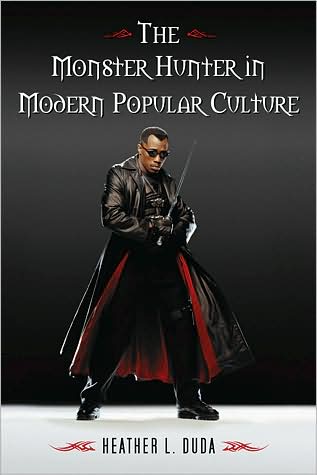
 TheoFantastique: How does Buffy the Vampire Slayer signal a dramatic new way forward for female monster hunters, yet perhaps also indicate that we have a ways to go in relating gender to this concept?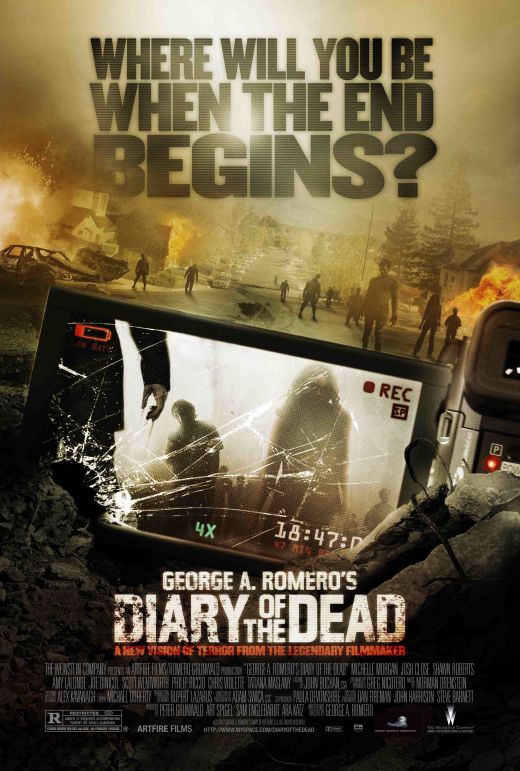
 As regular readers of this blog may recall, I grew up in northern California in the 1970s, and part of my formative experiences with the fantastic involved


