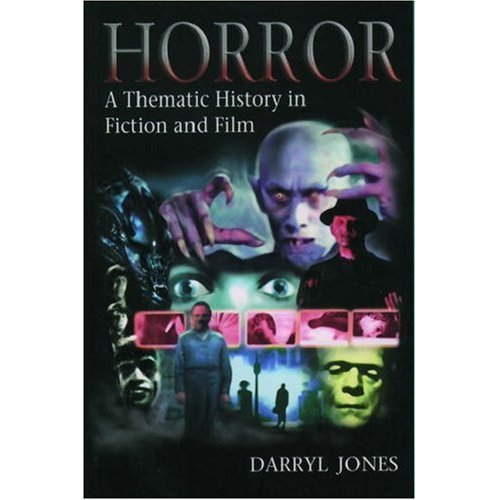
Tonight my wife and I took in the latest entry in the Star Trek franchise, an attempt by Paramount Pictures to rebirth and reinvigorate a long running classic in television and cinematic science fiction. Previously I had seen the trailers for the film on television and had mixed feelings in connection with the possibility of seeing the film. Like any extended project, the various television series, and the films, have been of varying and uneven quality. As I’ve stated in previous posts, I am a long-time fan of the original Star Trek series from the late 1960s, and with these biases stated up front, I present the following reflections on the new film.
My primary concern with the new film was that it would be heavy on action, low on science fiction. Much that passes for horror and science fiction these days is better classified as action-horror (as in Underworld) or action-science fiction (like Transformers), rather than a more pure form of these genres (if there is such a thing). This doesn’t mean that such projects aren’t enjoyable, just that they represent a current marketing and storytelling trend. This is obviously a result of the need to have the most appeal to contemporary audiences, particularly younger movie viewers, who prefer action and special effects many times over substance. But in my view, one of the most appealing aspects of the fantastic, particularly science fiction, has been its ability to not only capture the imagination through action, adventure, and special effects, but also provoke thought and reflection. My concern with the new Star Trek was that it would be heavy on action and skimpy on storyline. If this were to take place Paramount would be taking a risk in that if this film is to be successful it must appeal not only to a new audience possibly unfamiliar with the original series, but also those longtime fans who are very familiar with the early mythos.
To the credit of Paramount, the director, and the screenplay writer, Star Trek strikes a balance between an emphasis on action supported by strong special effects, coupled with a good effort at connecting the current film to the characters and aspects of the original series. This had to be done carefully so as to avoid a cartoon appearance to the film. The last thing the Star Trek franchise needs is something akin to the relationship between the classic Looney Toons and Spielberg’s Tiny Toon Adventures for kids. Although action is an important part of this film, the producers recognized that one of the keys of Star Trek‘s success was the relationships between the characters developed over its initial three seasons, into years of syndication, and eventually through several feature films. The new film continues this process by taking the audience back to the beginning by introducing how each of the major characters came together at Star Fleet Academy, with an emphasis upon the relationship between Spock and Kirk.
But even with these commendable aspects the film is not without its difficulties. Before reading further I should warn the reader that what follows will include plot spoilers. The new film involves a familiar narrative device of time travel common throughout Star Trek’s various incarnations. This introduces elements in conflict with the original series, including the destruction of Planet Vulcan and the death of Spock’s mother. At the end of the film when the villain is destroyed, in part by suction into a black hole which also brought them into a timeline which resulted in the overarching storyline’s contradictions, I assumed all would be set to right as the alternative timeline and life stories of the characters on the Enterprise would be reset to those consistent with the original series. Not so. As the movie ends Vulcan is still destroyed leaving only a fraction of survivors, and Spock’s mother is still dead which will make it very difficult for her to appear in a “future” episode of the series in the franchise’s overarching storyline. Given that those who wrote the screenplay must be aware of this inconsistency my assumption is that the studio hopes this film will be successful and will lead to future films with this cast pursuing this alternative scenario, and in the future a storyline will be introduced that brings the film and the original series into harmony.
Beyond this major story problem other inconsistencies are present that may be noticeable only to Trekkers and those with a detailed familiarity with the Star Trek mythos. For example, Kirk’s first tour of duty out of Star Fleet is on the newly commissioned Enterprise, and yet episodes of the original series indicated that Kirk served on at least one other vessel before taking command of the Enterprise. In the new film Kirk and Spock serve under Captain Pike, who is promoted to Admiral at the end of the film. In the original series we learn that Spock served under Pike, but there is no indication Kirk ever did, and when Spock visits Pike in the two-part episode “The Menagerie,” he addresses Pike as Captain, not Admiral.
Another aspect of this film was a little wierd for me. In this alternative storyline Spock and Uhura have a romantic relationship, something never hinted at in the original series. In addition, this seems to be in conflict with the original series where it portrays Spock as having little interest in females apart from a seven year mating cycle. I’m all for Spock exercising his libido from time to time, but the relationship between Spock and Uhura in the new film seemed a little much in light of the original series.
Overall I’d give Star Trek a B-. It’s a good initial effort at revitalizing and reimagining the franchise. It has it’s problems, but it could have been a lot worse. And that’s saying something from a classic Star Trek fan. Perhaps this bodes well for a summer with lots of promise in science fiction cinema. Here’s to hoping that Terminator Salvation does as well, or better.
I didn’t know my posted commentary would lead to a lively discussion in the blogosphere and on the broader Internet, but this seems to be the case.
Over a year ago I started TheoFantastique as a way in which to express my appreciation for the fantastic, to probe in depth the various genres that make up the fantastic as they are expressed in popular culture, and to also explore the ways in which religion and spirituality influence these genres at times. I have done so as a person of faith, and I see no incompatibility between my faith commitments and my appreciation for the fantastic, including horror. In fact, I have argued that those who share my faith commitments are the ones out of touch with a significant expression of what it means to be human, and a means of engaging others on issues of cultural and religious significance. I have written a few essays on this topic, including “Christianity and Horror Redux: From Knee-Jerk Revulsion to Critical Engagement,” which was aimed at a Christian audience, and more recently, “Divinity into Darkness: The Rise of Christian Horror,” for a general reading audience in response to a recent article on the topic in Rue Morgue magazine.
I know my views on such things are not widely held in conservative Christian circles, but what did surprise me was to find similar sentiments alleging incompatibility between Christianity and horror from a very different metaphysical perspective. One of my fellow LOTTD members, Curt Purcell of the great The Groovy Age of Horror blog, weighed in with his thoughts on incompatibility in “Thoughts on Christian Horror.” This led to a number of comments and lively discussion on the topic, including a few comments of my own. I will add here though that in my view Purcell seems to be defining his terms and concepts, including “Christianity,” “horror” and “compatibility” in ways far different from my own, but interestingly and seemingly in common with fundamentalist and evangelical Christians who likewise find horror and Christianity incompatible bedfellows. With this discussion at The Groovy Age of Horror I thought the topic would be laid to rest. Not so.
Yesterday I discovered that Steve Biodrowski of Cinefantastique Online picked up on the discussion and the interaction, weighing in with his own perspective in an essay titled “Sense of Wonder: Bashing Christian Horror.” Readers of this piece will see that Biodrowski disagrees with Purcell in a few arguments similar to my own.
Readers know where I stand on the issues, as evidenced by my specific writing on the topic, and the overall thrust of TheoFantastique which tries to exemplify not only a compatibility between the fantastic and the transcendent, but also an enriching partnership. I share these items so that my readers will become aware of the discussion on this topic, and in the hopes that they might join in the conversation.
Various aspects of the occult, or as it is more commonly referred to today in academic circles, Western esotericism, have long been facets that have informed storytelling and fear in horror films. A recent book by Carrol Fry touches on this topic, titled Cinema of the Occult: New Age, Satanism, Wicca and Spiritualism in Film (Rosemont Publishing & Printing Corporation, 2008). Dr. Fry has taught at Minnesota State University: Mankato and Northwest Missouri State University. In addition to his articles on film, he has published on eighteenth- and nineteenth-century British literature, science fiction, and fantasy literature, among other topics. Dr. Fry discusses the thesis of Cinema of the Occult and related issues in the following interview.
TheoFantastique: Thank you for an enjoyable read, and for your willingness to discuss the subject matter. How did you come to develop the personal interest in an exploration of the “occult” in general, and particularly its expression or influence in cinema, and how are you defining the term?
Carrol Fry: The term occult is pretty slippery, but in general it means hidden knowledge and the ability to alter what we think of as reality through esoteric practices.
How I got interested in the occult is a long story. I discovered the joys of public radio production when I first came to Northwest Missouri State, as the local radio station, KXCV, was anxious to get faculty participation. I discovered I had a knack for interviewing and scripting and did a number of pieces on folklore and oral history for local distribution. I had sort of run out of ideas for programs, and about that time an India Airlines plane was blown up by Sikh terrorists—must have been about 1985. I was talking to my sister, who lived in Kansas City, on the telephone and happened to mention the incident. “What’s a Sikh?” I asked. “Well you know, she responded, “they’re the people who operate the Golden Temple [a vegetarian restaurant in K. C.].” We had eaten there on a couple of occasions, and the kids who ran it were young Caucasians who dressed in vaguely looking Indian garb. I thought they were a bunch of zoned out hippies. The boys had long hair and beards (if they could grow one), and the girls were similar in appearance (without the beards). Now that’s interesting, I thought. Right here in the middle of the Bible Belt. I started checking around and found that Sikhism was just one of many religions practiced here that were well outside the Judeo-Christian tradition. So I decided to do a series on new religious movements and did five 30-minute documentaries that we distributed nationally by satellite. Somehow (and I don’t remember now how I stumbled onto it), I discovered Wicca and did one of the programs on New Paganism. I thought it was by far the most interesting of those religions I met, because it connected to some of my readings and to film. I went on to do documentaries on cults and intentional communities, but wrote journal articles on Marion Zimmer Bradley’s and Katherine Kurtz’s adaptation of the Old Religion in fiction. And I kept up my Neo-Pagan contacts. When I started seeing film adaptations of Neo-Paganism, I thought it was time to consider occult religions in general as they are adapted on screen. Hence, Cinema of the Occult.
By the way, for convenience and brevity, I mix the terms Wicca (or the Old Religion to its practitioners) and Neo-Paganism, and I should specify that Wicca is one of a larger group of return to occult Pagan religions.
TheoFantastique: You state in your introduction that as filmmakers draw upon the occult it is usually part of a general plausibility mechanism for storytelling, and that it is “usually an extrapolation of its potential to establish sensational plots rather than a totally correct representation.” Given certain aspects of the culture wars where fundamentalist and evangelical Christians, as well as some Neo-Pagans, have complained about such elements in film as either propaganda tool for the occult, or failing to properly represent esoteric belief, isn’t your observation important for viewers to remember? In other words, the esoteric is drawn upon for frame of reference and storytelling in order to create what might be viewed as new forms of fairytale and perhaps the culture wars are unwarranted on one level and might be telling us something else about the continued clashes between certain religious or spiritual subcultures. What would your thoughts be on this?
Carol Fry: Movies about the occult are, well, movies after all and are made for profit not education. The occult is by its nature sensational and sensationalism sells. Filmmakers have target audiences, but they want to reach a broad spectrum of customers. And you have to remember that a lot of films that adapt occult paths are part of the horror genre, and that audience demands sensationalism. So even those Wiccan films that give a favorable spin to the Old Religion might well offend not only Wiccans but conservative Christians, the former because they don’t accurately reflect their beliefs and practices and the latter because they are made at all. I think the one Neo-Pagan film that most Pagans I’ve met would, and do, enjoy is The Wicker Man. This is ironic because director Robin Hardy and script writer Anthony Shaffer intended it to be a warning against occult practices as leading to cults. As I say in my book, those Wiccan films that reflect negatively on the Old Religion, B movies such as Silent Night Deadly Night IV: the Initiation or Suspiria are unrelentingly sexist and even misogynist and reflect on the challenge to male authority that feminist Wicca presents for some people.
TheoFantastique: You also state in the book that the occult in cinema might be construed as a reflection of “the spiritual searching of those who seek alternatives to traditional religious teachings the quest for the numinous.” Can you illustrate or expand on this?
Carol Fry:TIME recently had a cover issue on the decline of Christianity. The feature article makes a good case that most Christian and Jewish paths, excluding the more, uh, “enthusiastic” denominations, have suffered losses and that political clout of conservative Christianity has declined. The Pentecostals and Southern Baptists have responded to the findings of science and the new Darwinism by simply denying anything that conflicts with biblical teachings, and those who search for the reassurance of certainty respond favorably to that line. But to many others, the sexism and authoritarianism of the Religious Right and the Catholic Church are simply unacceptable. Mainstream Christianity has failed to provide an alternative to those who actually think about spiritual matters. I don’t think there is much of a decrease in spirituality in the U. S., but many simply don’t find it in churches. Many of those who are seekers find that spirituality in new religious movements—African American Islam, the Baha’i Faith, various eastern religions, and yes, New Age and occult paths.
TheoFantastique: One of the recurring features of horror in general, but particularly in horror cinema that draws upon the occult, is a depiction of our fear of the Other. Can you describe this phenomenon and provide a few examples of how this takes place in occult cinema?
Carol Fry: Actually, I’m working on a book to be called Primal Screams, Primal Dreams that addresses this issue in depth. The term Other has become one of those undigested buzz words in post-modern criticism since the rediscovery of Hegel and the adaptation of the term by neo-Freudians like Lacan. The other as critical concept gets many different adaptations. To Marxists, for instance, it generally refers to minorities, Third World countries, gays, women, all those marginalized by Western society.
I mean something quite different based on the writings of sociobiologists like E. O. Wilson, Desmond Morris, and recently Richard Dawkins and many others, who speculate that adaptation through survival of the fittest and natural selection did more that create our physical form. These forces of adaptation also created the “whisper within” from thousands of years of evolutionary adaptive behavior. Successful adaptation, for instance, meant being suspicious of the other from the next valley who might kill you and take your women and children. Until recently, psychology and sociology had pretty much adapted the Lockean concept of the mind being a blank tablet at birth, on which experience (and association) writes, the tabula rasa. Sociobiologists would suggest that the tabula isn’t so rasa after all: that we are genetically prompted for many kinds of behavior, including fear of the other, who looks and behaves differently and who poses a perceived threat to our genetic kin group and territory. We see everywhere evidence of this fear of the other: at the mildest and probably most harmless level acted out in sports rivalries (the Yankees and Red Sox) but ranging to tragic violence between Tutsi and Hutu in Rwanda, Shi’ite and Suni in Iraq, Nazi Germany’s holocaust against Jews, Poles, and homosexuals in the death camps, and the killing fields in Viet Nam. Killing in these instances is perceived as o.k. because those killed are other. There is a nature/nurture issue here, of course, as education leads us to civilized behavior despite the whisper within. Anyway, that’s a long answer to the question. I believe the horror genre, as in the Satanic film especially, plays on our fear of the other and the invasions of territory for its evoking vicarious fear. This fear of the other seems an obvious effect in the early vampire novels and films, werewolf, zombie, and slasher films which establish our fear and hatred of this invading other and prompts our satisfaction with the vampire’s stake in the heart (although that formula seems to be changing as we get romantic vampires), the werewolf’s silver bullet, and head shot for the zombie.
TheoFantastique: In my view, a neglected cinematic gem that incorporates “New Age” ideas in connection with near-death experiences (NDEs) is Flatliners. You discusses this in your chapter on New Age in film. Can you touch on this as an example of a thriller incorporating New Age ideas?
Carol Fry: Yes, I thought Flatliners was one of the better New Age films, not only in its adaptation of the near death experience phenomenon but in the creation of screen ambiance and visual symbolism. I don’t think those who believe in NDEs would have much objection to the film’s treatment of the concept. I thought the poster child for New Age movies was an even more neglected classic, Jacob’s Ladder. Few people saw it in theatres when it came out, but it has become a cult classic of sorts in DVD. The darned film is so deep and so demanding that few people are prepared to deal with and understand its message, which is, of course, detachment, as described in the works of Meister Eckhart, whose name comes up at a critical moment in the film. Meister Eckhart is a major inspiration in the New Age movement, even though he wrote 600 years ago.
TheoFantastique: How has the portrayal of Satan and the satanic changed over the course of horror films?
Carol Fry: I think the fear of the New World Order among conservatives and especial conservative Christians has given a different spin to the Satanic film. The cult mania starting in the sixties and all the folklore about Satanic groups has created a great potential other. The Omen was a dandy horror film, but as the franchise developed it because more and more an experience in vicarious paranoia about the enemy within. So the Satanic film has gone from being a religious allegory in Faust movies like The Devil and Daniel Webster and The Sorrows of Satan to the political subtext from all the Omen sequels and other films of that type.
TheoFantastique: Cinema has also changed in its depiction of the witch. Are fairytale depictions as in Harry Potter, as well as those which depict the empowerment of the feminine perhaps the most common modes of expression in contemporary film?
Carrol Fry: Yes, the empowerment of the feminine is the most popular adaptation, whether the film is supportive of critical. I’m sure this has to do with attracting an audience for the film. But Pagans might well feel that Hollywood slights their spiritual paths by concentrating nearly exclusively on feminist Wicca, and then just on the most sensational elements. By the way, there’s a strong subtext of feminist Wicca in The Da Vinci Code that no one much notices, most obviously in Sophie’s (named for Sophia from the Gnostic tradition) blunder’s into a Wiccan ceremony in which her grandfather is “drawing down the moon” as a coven ceremony. There are a few other witch films that are not part of the culture wars, romantic films such as I Married a Witch and Bell, Book and Candle that are neither the silly version of witches (that have nothing to do with Neo-Paganism) such as the Harry Potter novels and films nor adaptations of Wicca.
TheoFantastique: Spiritualism is another aspect you touch on in your book. In your thinking, what films best illustrate this significant expression of the occult in cinema?
Carrol Fry: Spiritualism makes a wonderful frame for ghost movies. Not all ghost movies adapt Spiritualism, of course. A true Spiritualist film uses Spiritualist beliefs on communication with spirits, why spirits remain behind as part of the frame and/or descriptions of the afterlife. A Rumor of Angels comes to mind as an obvious Spiritualist film because it’s based directly on Ruth Boyland’s 1918 book Thy Son Liveth, a classic of Spiritualist literature and an early version of electronic voice phenomenon. Ghost and Sixth Sense are interesting adaptations on why spirits remain behind as ghosts. White Noise is pretty much high concept based on actual Spiritualist electronic voice phenomenon practices, and What Dreams May Come seems based on Spiritualist beliefs about the afterlife. Ghost stories have been with us forever, and Spiritualism give a distinct and interesting spin to these old stories.
TheoFantastique: Thank you again for your book and the exploration of an interesting cinematic expression of the fantastic.
When I grew up in the 1970s I had to work hard to nurture my love for the fantastic, my ever-present “inner geek,” if you will. In those days I was too young early on to be able to see the few films of the fantastic in the theaters, and like everyone else my family only had a few television channels at their disposal. But even with these slim television pickin’s it was a major source of sustenance. I remember grabbing the TV Guide when it was delivered and working my way through page by page and circling every horror, science fiction, and fantasy film listed. I hoped that our antenna would provide the signal reception so I could see the films, and that they would be on when I wasn’t in school. Sometimes feeding this fetish required drastic measures. Thankfully my mom doesn’t read my blog, so I can confess now that on at least one occasion I faked illness so as to watch an afternoon showing of a Ray Harryhausen film during the school week.
During this time period it was also tough to find printed materials that nurtured my inner geek. My brother and I would pick up the occasional issue of Famous Monsters of Filmland, Starlog, and Cinefantastique from a bookstore within a few miles biking distance from our house. Our paper routes provided just enough income to pick up these windows into the wonderful that fed our overactive imaginations.
Thankfully, times have changed dramatically in this area. Now we have the fantastic in film and television available on DVD, and we can record them in any number of ways, from the soon to be extinct VHS, to DVD, to Tivo. We can also watch clips from them, sometimes even entire films and television programs on YouTube, Hulu, Google or other places on the Internet. The number of magazines that focus on the fantastic have also grown in response to a larger reading audience, and bookstores like Barnes & Noble often feature several rows of books, magazines, manga, and graphic novels.
In the twenty-first century the fantastic has moved from the fringes of pop culture to its mainstream. I was reminded of this shift this morning in two ways. First, on my outing to Barnes & Noble I noted a special section of science fiction and fantasy up front near the coffee cafe that was filled with a variety of graphic novels each connected to a popular series of characters from film and television. The literature of the fantastic is no longer relegated solely to specialty stores, or found only in special sections near the back of the bookstore. It is now featured prominently for readers hungry to consume the latest fantastic pop cultural phenomenon.
There was a second way in which I was reminded of the increasing popularly of the fantastic, and that was through several magazines featuring the upcoming Star Trek film on their covers. I have been a huge fan of Star Trek from my earliest years (primarily of the original series, and I proudly acknowledge my previous ownership of a blue science officer’s uniform modeled after Mr. Spock’s that my mom carefully crafted according to Starfleet specifications for her geeky son). In consideration of the attention now devoted to the upcoming film it is not surprising that sci fi magazines would promote it, but the cover story for the May 4, 2009 issue of NEWSEEK is something of a surprise. In a story titled “We’re All Trekkies Now,” author Steve Daly talks about how a short-lived television series in the late 1960s has gone on to become a pop culture phenomenon, so much so that in Daly’s view as stated in the story’s byline, “‘Star Trek’ is way cool. How’d that happen? Because the geeks have inherited the earth, and the White House.”
Daly’s sentiments may be a stretch. Just as in a previous issue the magazine mistakenly generalized that all Americans are now socialists in light of President Obama’s “stimulus package” and various corporate bailouts, so too it is a stretch to state that Americans in general are Trekkers. I also take exception to the magazine’s comparison of Obama to Spock (based upon outrageous ears and an emphasis on logic), but I understand and accept the main thrust of the article: The upcoming Star Trek film is but the latest expression of a pop cultural phenomenon that once inhabited the margins of pop culture among a small group of sci fi geeks, but is now mainstream, hip, and cool. Or at least that’s what Paramount Pictures hopes is the sentiment as it prepares to release the latest incarnation of the Star Trek franchise with an eye toward its revitalization for a new, younger generation of viewers.
The cover is NEWSWEEK is on to something when it states that ” Star Trek taught us to dream big.” Indeed, it did, as has much of the fantastic, whether science fiction, fantasy or horror. I’m proud to have been a Star Trek geek, and beyond that, a geek of the broader fantastic for most of my life. It’s about time others joined the party. While we geeks may not inherit the earth, it’s good to see that at least we take the lead in stimulating the imagination in pop culture.
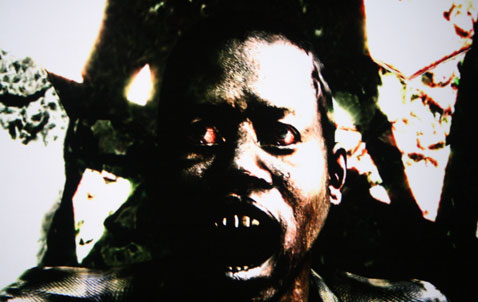
I still remember the first time I encountered the Resident Evil series of videogames. It wasn’t until Resident Evil 2, and it was on my Sony Playstation, both of which still sit in my living room beckoning me for an encounter with the undead. My family’s appreciation of this series continues to the present day with my teenage son currently enjoying Resident Evil 5.
But it was an article by Jeff Jenson in the March 27, 2009 edition of my wife’s Entertainment Weekly on the current edition of the game that got me thinking about two facets of zombies, one common to all expressions of zombie apocalypse, and the other unique to RE5.
Jenson states at the outset that he does not find the threat of zombies scary (which I doubt), but in his view zombie horror offers “a single, disturbing thrill – guilt-free homicide. Because, after all, zombies may look like humans, but they technically aren’t humans. So watching their heads get blown off with a shotgun? It’s all good!”
Popular and academic analysis of zombies in popular culture indicates that they function in a variety of ways in horror, such as Romero’s exploration of racism and consumerism, but Jensen raises an interesting and disturbing facet of zombies that may also contribute to our enjoyment of them. Is it possible that these semi-human, or now undead and perhaps less-than-human creatures provide a safe place for us to engage in homicide and mayhem without the guilt that goes with pursuing such acts in the real world?
Jensen also raises a second point about zombies which is peculiar to RE5. The story takes place in a fictitious region in Africa where the Black Hawk Down film was an inspiration. Jensen states in this regard, “while that point of reference accentuates the impressively rendered Third World squalor, it makes for uncomfortable moral ambiguity…for a few minutes, at least. I found myself asking: Is it okay to enjoy killing mobs of impoverished Africans?” Then, bringing the previous issue together with the concern over the games location Jensen concludes: “Then I remembered they were only zombies, and proceeded to slaughter with impunity.”
Does Jensen raise an additional point of significance with the story location for RE5? It wouldn’t be the first time that varous forms of entertainment in America have used such locations and their inhabitants as foils for our subconscious explorations of racism. King Kong is a primary example of this, but other films have followed suit.
I don’t want the reader to misunderstand me here. I am not the type that wrings my hands over the dangers videogames pose to our youth, and I think we need to be careful in making connections between various forms of entertainment in popular culture and how it may or may not reflect conditions related to our social and cultural contexts. But Jensen raises issues that might give us pause as we engage in deeper reflection on zombies in videogames, and why so many of us love them. Zombies in film have been probed deeply by scholars, but their expression in videogames still awaits closer analysis. Perhaps raising these questions here can contribute to the beginnings to such exploration.
Last night’s episode of CSI: Crime Scene Investigation titled “A Space Oddity,” provided another example of why it is one of the best programs on television, and why CSI is the best of the three programs in the CSI franchise. Unlike CSI: Miami and CSI: New York, CSI incorporates a spectrum of approaches to crime drama, which often includes human and the willingness to engage aspects of popular culture. Last night’s episode included all of these elements as the crime took place within the context of an Astro Quest fan convention, a parody of the classic Star Trek television series and its many conventions.
The storyline involves a lab tech at a convention who accidentally runs into another lab tech, one he has had a crush on for some time, who unknown to him, is also an Astro Quest fan. As they begin to explore their mutual fandom, a movie producer is found murdered, with fingers pointing in multiple directions around convention attendees and those associated with a forthcoming Astro Quest film.
As the storyline develops tongues are planted firmly in cheek as the crime scene investigators make fun of the convention’s attendees and Astro Quest fans. Two of the fans that are suspects are portrayed in stereotypical fashion as nerdy types still living at home well into their thirties and living 24/7/365 as if the world of Astro Quest was real and as their lives full inhabit this mythic domain.
Some of the more entertaining aspects of this episode were the daydream sequences in which the lab tech imagines himself living out his romantic inclinations toward his fellow lab tech, and which take place within the realm of Astro Tech episodes. These daydream sequences mirror episodes of the original Star Trek, specifically “The Menagerie,” with the scenes of Captain Christopher Pike enamored by a dancing Orion slave woman, and especially “The Gamesters of Triskelion,” with Captain Kirk once again utilizing his romantic charm to woo an alien woman named Shahna.
Although this episode did take its jabs at Star Trek and its legion of fans of varying levels of devotion, it also recognized the significance of the program and its existence as a social phenomenon. One of the characters was an academic conducting a research project on the significance of the program’s mythology for its fans, even recognizing that for some it functions as a religion. This mirrors academic studies of Star Trek, and some of the academic research which has noted that Star Trek conventions can be viewed for some as a form of sacred pilgrimage, and in other studies that Star Trek provides the mythological inspiration for forms of hyper-real spiritual devotion.
If you are a fan of Star Trek, and even better, a fan of CSI as well, I encourage you to watch this episode online. It is an entertaining piece that combines both satire and homage for a classic science fiction television program.
Readers should note that in my right hand columns for this blog I include a number of helpful links in two categories, those that provide an opportunity to enjoy the fantastic, and those that help explore the fantastic in greater depth. In the latter category, one of the sites I especially enjoy is The Irish Journal of Gothic and Horror Studies. Not long ago Darryl Jones introduced me to the co-editors of the journal, Elizabeth McCarthy and Bernice Murphy. Following is an interview with the editors as they discuss various aspects of the journal.
TheoFantastique: Bernice and Elizabeth thank you for making some time to talk about the journal. Can you sketch a little of the history of how the journal came into being and how you both personally became involved with it?
Elizabeth McCarthy: Our pleasure TheoFantastique, thanks for inviting us!
One of my earliest memories is the absolute fear and thrill I felt after seeing Hammer’s Dracula on the TV. I was about five years old and my poor sister had to construct makeshift crucifixes (out of hairbrushes and the like) all over the bedroom before I could even begin to think about closing my eyes and going to sleep. I suppose that set the template and I’ve been drawn to the subject ever since… minus the religious paraphernalia. Well, over two decades later I did a PhD on the subject of serial murder at Trinity College Dublin. That’s where I met Bernice… a fellow horror-academic-person-with-red-hair. We’d both discussed the shameful lack of any ongoing Irish academic publications devoted to the subject of horror (literature, film and anything else you care to mention) and after a bit of a preamble we decided to do something about it ourselves. We knew that in Trinity we’d have a very able crew of fellow academics well versed in many different aspects of the genre who would get behind the idea. And so on October 2006we launched the first issue.Bernice and I decided to go for an on-line open-access format because we felt it would give us the most freedom as editors and publishers and it would of course get out there to a far greater audience than any hardcopy publication could ever hope to do.
Bernice Murphy: Well, I did my PhD on Shirley Jackson here at Trinity College, and have been fascinated by horror and the Gothic in all its manifestations since I was a (particularly morbid) small child. I never had to festoon my bedroom with crucifixes though, so maybe I got off lightly in comparison to my co-editor. It seemed surprising to me that given Ireland’s huge contribution to the genre (particularly during the nineteenth century), no Irish-based publication featuring commentary on Gothicand horror texts existed. It was also the case that I happened to meet many good friends and colleagues here who also had a strong interest in the subject area, and as time went on it seemed logical that we pool our talents and try to set up a journal. In many ways, the journal is an evolving reflection of our own interests and enthusiasms, and those of our colleagues. Elizabeth and I are at almost complete odds when it comes to evaluating horror cinema, for example, so we’re a study in contrasts at times, but it’s worked so far… It’s also been great to get more and more outside contributors for our review sections as time passes, and it’s always very interesting to go through each issue’s submissions. It’s funny how often you’ll get four articles on the same thing sent in one issue, and then none on the same topic the next time round: you never know what’s going to arrive in the next batch of emails, and that’s part of what keeps the whole enterprise interesting.
TheoFantastique: Why an academic journal and the emphasis in it on the Gothic in horror, particularly when much of horror cinema, at least in America, seems to have moved far beyond this interesting expression of the genre?
Bernice Murphy: I know what you mean: commercial American horror cinema has come to complete dead end artistically in the past two decades, and if I see an ad for one more 1970s remake, I might go to Hollywood and murder Michael Bay or Rob Zombie myself… (maybe that’s a good idea for a film). But as I think the journal reflects, horror and the Gothic at the moment thrive in places other than the US, and in media other than film. For instance, it’s something of a golden age for horror and Gothic-themed video games, as one could argue that the horror genre has been represented much more admirably on television in recent years than on the silver screen. And you only have to look at films like the remarkable French film Martyrs or Spanish hits The Orphanage and [Rec] to see that fascinating movies are being made in Europe. Even the Swedes are getting in on the act: Let The Right OneIn is one of the best genre films in years, and miles above the sheer crap being pumped out by the studio system in the States. So, even if American horror is relatively moribund and the Asian horror boom seems to have collapsed under the weight of all those creepy dead girls, there’s still lots of interesting stuff out there which isn’t generally being covered by the more traditional academic journals. We like to think that in our own small way we’re helping to bring recognition to trends, tropes and texts which might otherwise be overlooked, as well as serving as a repository for commentary on more obviously mainstream manifestations of the genre.
Elizabeth McCarthy: Well, first off, I would have to say, at the risk of sounding pedantic!, the journal is a “Gothic and Horror” publication not a “Gothic Horror” publication, so I think you can take it as read that both terms can be mutually exclusive and one is not being emphasized over the other. More importantly, as it stands, I think the content of the journal pretty much reflects what’s out there, whether it be termed Gothic or Horror or even (God forbid the confusion!), Gothic Horror. Having said that, I think Bernice’s point about the reemergence of a particularly Gothic mode of horror is an important observation. It would be folly to write off the influence of the Gothic on the horror genre, the imagery and the themes that can be found in, for example, the novels of Ann Radcliffe or the cobweb-festooned castles of Universal Studios can still be seen reviving themselves in contemporary literature, film, video games and graphic novels. I don’t think you can ever put a stake through the heart of the Gothic. Why an academic journal? Well, for better or for worse, I’m an academic, so it seemed the natural choice. I also think it acts as a nice comparative companion to other sites that are coming from more fan-based or journalistic backgrounds.
TheoFantastique: What has been some of the more interesting subject matters that your contributors have written about? I know I appreciated an article in your journal on “road horror” films that led to a post of mine that spawned some of the greatest numbers of comments on this blog, but what other interesting features strike you?
Elizabeth McCarthy: Oh, too many to mention! I really like the one’s that interrogate and challenge the limits of genre itself – from Jarlath Killeen’s article on Irish Gothic literature to Mark Jancovich’s exploration of the 1940s woman’s paranoid film. The reviews are always great fun too. I enjoy their eclecticism. Lost Souls is probably my favorite… not least of all because I’m such a fan of older somewhat obscure horror films and the Lost Souls section has proved a great way of paying tribute to the people who made them.
Bernice Murphy: Well, while we always try to pick interesting articles, and I hope we succeed, I think that at times some of our most lively features have been in the review sections, in which our contributors get a chance to riff on timely trends and topics. For instance, our books editor Dara Downey wrote a piece on Irish road safety adds in issue 5 which I thought was particularly interesting, because they’re incredibly over the top and violent, and whilst I’d heard many people complain about them, I’d never actually come across an analysis of them which quite rightly pointed out their weird similarity to slasher films. I really like the TV section myself, as I think that genre TV is oddly overlooked by academics, as are video games and comic books/graphic novels. We had a great article on Poltergeist by Murray Leeder in the last issue too, which I particularly liked because I’ve just finished a book on the Suburban Gothic, and we’ve had several interesting pieces on the Irish Gothic. We’ve also been very lucky to have Ramsey Campbell do a ‘Lost Soul’ for us, and featured an article by Kim Newman on Irish horror films in the first issue which I thought was great because a lot of people wouldn’t have even been aware that there were any Irish horror films… We’re also probably the only online journal ever to devote 20,000 words to the films of Jess Franco, as John Exshaw’s article in issue one did… I think the eclectic nature of the journal is our strongest point, because we aim to appeal to both an academic and to a more general, fan-based audience, so hopefully anyone with even a passing interest in the genre will find something to interest them in each issue.
TheoFantastique: How did the idea for your Lost Souls section come about, that section which focuses on neglected people in horror?
Bernice Murphy: There’s been some heated debate about that: a pub was definitely involved, and so far as I can remember, somebody mentioned the actress Una O’Connor, and suggested that we feature an article each issue on a person who’d made a contribution to the genre, but been sorely overlooked since… the rest is a bit of a blur, but I really like Lost Souls: I mean where else would you find articles on Fritz Leiber, Gregory of Tours and professional Gorilla Man Charles Gemora all in the one place?!
Elizabeth McCarthy: Right at the end of one of our editorial meetings, there was some faffing around and talking about this and that actor (I think Todd Slaughter and Rondo Hatton may have been mentioned). We all went for a well-deserved-end-of-meeting pint and the idea took off from there (ahem)! I ripped the idea for the name off of the 1932 film Island of Lost Souls.
TheoFantastique: Can you give us a sneak peak into the next issue?
Elizabeth McCarthy:Well, as of this date the submission deadline is still a month away so no final decisions have been made about articles. Our review sections normally have a little more shape to them at this stage though and I know I’m reviewing a recently released Roger Corman box set. Whenever we’ve just finished an issue Bernice invariably says “I think it’s our best one yet!” I’ve no reason to doubt she’ll have cause to say it this time around too!
Bernice Murphy: I hope so too…I think the relief of getting each issue online at last tends to make me a bit over enthusiastic…. The journal is always a work in progress up to the last minute, so who knows! We’re definitely reviewing the fantastically morbid Channel 4 film series Red Riding, and I’ll probably be looking at Joss Whedon’s flawed but interesting new TV series Dollhouse myself. We also have some good video game reviews lined up – that’s all I know for now. Check the website out in June and you’ll see for yourselves! We’re always looking for reviews and articles from new contributors, so if any of your readers would like to get in send us something for consideration, that would be great – our deadline for submissions this time round is May 1st.
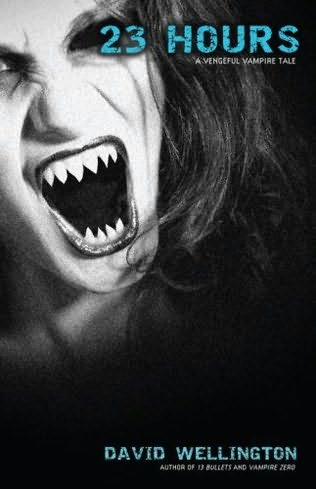
David Wellington, author of three previous vampire novels as part of the Laura Caxton series, including 13 Bullets, 99 Coffins, and Vampire Zero, is about to release the latest in his series with 23 Hours: A Vengeful Vampire Tale (Three Rivers Press, 2009). The press release for the forthcoming book describes its storyline:
After killing her form mentor-turned-vampire, U.S. Marshal Jameson Arkeley, Caxton was nearly left for dead. Taken to prison for assaulting a convict, she now faces her most harrowing hours yet. Locked up in a Pennsylvania correctional facility that holds the state’s death-row inmates, not to mention countless murderers and drug dealers whom Caxton herself has put away, she is an easty target.
But it gets worse. The oldest living vampire, Justinia Malvern, is still on the loose and manages to infiltrate the prison. There she uses the inmates as livestock – taking daily donations of blood at will and slaughtering any who don’t cooperate. But it’s Caxton’s blood she’s most hungry for, and when Caxton’s girlfriend, Clara, comes to visit but ends up trapped there, Justinia will use her as a pawn to get to her most sought-after prey…
23 Hours can be ordered via the TheoFantastique Store, Amazon.com and Three Rivers Press.
Related posts
See TheoFantastique’s interview with David Wellington here.
My interview with Gordon Melton, author of The Vampire Book: An Encyclopedia of the Undead, on vampire mythology.
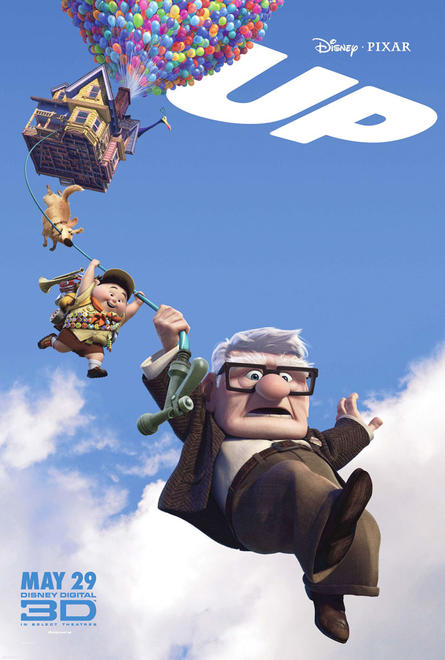
The business section of today’s The New York Times includes an article of interest to TheoFantastique. The story by Brooks Barnes is titled “Pixar’s Art Leaves Profit Watchers Edgy,” and it describes an unfortunate situation. As the article notes, Pixar Animation has not released a movie yet that has not been “a commercial and creative triumph,” but it appears that the Walt Disney company and a few folks on Wall Street, including toy retailers, are concerned that Pixar’s new venture, Up, may not fair well at the box office.
It seems that the concerns relate to some of the artistic daring of the film, a phenomenon also found in Pixar’s Wall-E: “there are stretches without dialogue,” and (heaven forbid) some of the scenes are done in black and white. Up is also said to be influenced by the noted Japanese anime figure Hayao Miyazaki. This pushing of the envelope in terms of artistic expression and artistic influences may not seem like much to worry about for those of us who appreciate filmmakers who go outside of the standard formulas for movies. But to others the bottom line is primary.
The New York Times states that there is concern over Up‘s box office potential as well as whether it will benefit “other Disney businesses.”
Pixar has seen diminishing returns with each successive film, but there is no denying that even those that did not generate as much revenue as anticipated, such as Wall-E, must nevertheless be recognized as an artistic success which was warmly embraced by audiences. This conflict between artists at Pixar and the business people at Disney creates an unfortunate dichotomy. Why can’t a film push the boundaries on artistic experimentation and yet also tell an entertaining tale that does well at the box office? Of course it remains to be seen whether this can be done with Up, but to pre-judge it in this fashion seems harsh. Disney might also remember that its founder was a leader in artistic experimentation in animation that did not always do well with viewing audiences. Recall Fantasia. Nevertheless, Walt strove for finding balance between both artistry and box office, and his corporate successors might reflect on the history of their own organization before too much consternation about Pixar.
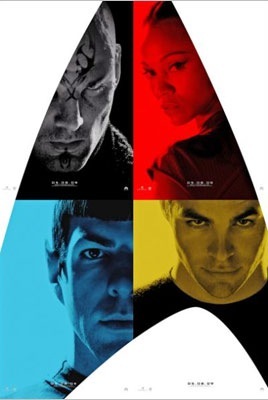
Darryl Jones teaches at the School of English at Trinity College Dublin. He is the author of Horror: A Thematic History in Fiction and Film (A. Hodder Arnold, 2003). After several weeks of trying to connect we were finally able to get together to explore some of the topics covered in this fine book.
TheoFantastique: Darryl, thanks for talking about your book. I was interested in your perspective that began with Gothic literature and then moved to connect this to horror cinema. Why is tracing this literary thread helpful in understanding not only the development of horror film, but also its ongoing expressions?
Darryl Jones: My own background is as a literary scholar, so all of my critical training is in that field, and it’s one I understand: I’m used to dealing with literary texts, and if anything tend to flatten out the differences between fiction and film as a consequence. So, it’s partly a matter of disposition and intellectual tendencies, allowing me to see connections across media. That said, it’s also the case that very many classic horror films, right up to the late 1960s, were adaptations of Gothic literary classics – however loosely adapted some of them may have been. I’ve a sense that it’s not until Romero’s Night of the Living Dead that the connective tissue between horror fiction and film is really severed. Universal and Hammer horrors are inconceivable without the Gothic novel, but the generation of horror film makers that came after 1968 – male baby-boomers – were cineliterate, their sensibilities were formed by moviegoing, rather than by reading, I suspect. Slasher movies, for example, have very little in common with nineteenth-century Gothic fiction.
TheoFantastique: Your book traces horror through various themes, including hating others, mad science, vampires monsters form the id, forbidden knowledge, narratives of invasion, body horror, and the occult. I’d like to probe a little bit in a few of these areas with you. In your chapter “Hating Others” one of the films you discuss is the original The Wicker Man. In what ways does this film depict hatred of the other in terms of Christian views of Paganism, and how might it also depict it in Pagan concerns about Christianity?
Darryl Jones:The Wicker Man is a very even-handed film, I think, and one which doesn’t commit itself on either side of the debate. What people often forget, or overlook, is that the Summerislanders in that film aren’t exactly aboriginal pagans holding on to Druidic, Celtic, or pre-Christian forms of thinking. Paganism was introduced onto the island in the nineteenth century, by a freethinking agronomist, the first Lord Summerisle. So if we want to historicize that film’s religious debates, it would be in the context of a whole complex of Victorian thinking, about anthropology and comparative religion (Anthony Shaffer had certainly been reading The Golden Bough before writing the screenplay, which is almost like a fictionalized version of Frazer’s great work of systematizing anthropology), and about Celticism and occultism. It’s an extraordinarily rich film, and very much an intellectual’s piece. That said, I suppose its ideological heart is really with the pagans rather than with repressed old Edward Woodward in his brown pajamas. An interesting question, though: will his sacrifice really make the crops grow? Do we read that film as materialist or spiritualist? Our Victorian predecessors wouldn’t have understood that distinction, not in the ways we do, but the film’s still smart enough to allow plausible interpretations from both perspectives.
TheoFantastique: In your chapter “Monsters from the id,” you discuss doubles, split personalities, evil twins, and mirrors and mirror images. Can you sketch some of your thinking in this area, and how the frequent use of the mirror surfaces as a symbol of horror in this area?
Darryl Jones: I’m always reminded of that famous line from Borges, who’s my favourite writer: ‘Mirrors and copulation are abominable because they increase the numbers of men.’ I’m fascinated by mirrors, doubles, twins, reflections, symmetry, repetition. In part, this links to the issues of materialism/spiritualism, and body/soul I was discussing above, but it also refers us back to Freud’s Uncanny, a fundamental ambiguity or undecidability as to the ontological status of the subject. Living or dead? Flesh or machine? Simultaneously both? For some thinkers, the double was a kind of warning or harbinger, a messenger sent from the other world to prepare you for your own death, the moment you clap eyes on your own soul.
I also discovered a really startling statistic while researching the book: 25% of pregnancies are twin gestations, but in three-quarters of these cases, one twin is simply absorbed into the other. In other words, a substantial minority of us begin life by eating our own twin! I was always intrigued by the fact that Elvis Presley believed that his own stillborn twin, Jesse, was a part of him, the face he saw in the mirror. Elvis sang gospel, while Jesse sang rock’n’roll. Perhaps, like Bart Simpson, we all have our Hugos in the attic. But what if, like Bart, it’s we who are the evil twin? We like to think we’re all individuals, indivisible, that which cannot be divided, one. What if we’re not? I have no idea what the answers are to these questions, but I know that they’re questions horror poses again and again, consistently puncturing complacent assumptions about identity.
TheoFantastique: In this chapter you naturally discuss the classic tale of doubles and split personalities, Jekyll and Hyde, and you made a connection with this that I should have made before in one of my favorite films, Fight Club. How do you see this film as a contemporary telling of Jekyll and Hyde?
Darryl Jones: In part, as a case in point for what I was talking about above. Fight Club is a kind of Marxist-Anarchist fable: we are alienated from the source of our labour, in classic Marxist fashion, and so alienated from ourselves. We are unrecognizable to ourselves. We feed off waste and conspicuous consumption, wash with soap made from liposucked fat. On top of that, there’s the whole issue of alienated masculinity – Edward Norton’s a white-collar grunt, a wage-slave, emasculated by capitalism (as is Meat Loaf’s Bob, who grows ‘bitch tits’, remember). He transforms into Brad Pitt and starts the fight club in order to be a man again. Interestingly, ‘White Collar Boxing’ is a bit of a boom sport, even amongst us academics. With Jekyll and Hyde, the thing to remember is that this is a novel which takes place in a world without women; it’s strongly implied that Jekyll’s friends believe Hyde to be a spot of rough trade he’s picked up from the docks. If so, the sexual relations between the two of them are narcissistic, masturbatory. And there’s no more narcissistic wanker than Brad Pitt! I mean, can you imagine him choosing to have sex with a woman when he could have sex with someone he really loves?
TheoFantastique: I also want to thank you for some serious reflection on the “cult classic” Phantasm in your chapter “Monsters from the id.” You place this within a “small series of films from its period to feature dream-demons, and to unfold with the narrative logic of a nightmare.” Here you include it with films like A Nightmare on Elm Street and Dreamscape. Do you think Phantasm has been neglected as having something serious to contribute in our reflections on horror and dreaming, and if so why is this the case, and how do you see Phantasm as significant in this regard much like Freddy Kreuger’s cinematic nightmares?
Darryl Jones: You’ll get no argument from me – Phantasm is a wonderful film, and, yes, much overlooked. In some ways I’m glad it never became the semi-camp, endlessly-reproduceable number that Elm Street did. I’m not sure Don Coscarelli ever wanted to be anything other than a cult film-maker, whereas Wes Craven’s ambitions were there for all to see. I can’t imagine ever wearing an Angus Scrimm mask to a Halloween party.
All I can really say about film and dream is how very close they are, and many of the most interesting horror directors know this, either consciously (like Carl Dreyer’s Vampyr, the dreamiest and one of the best of all horror films) or intuitively (many of John Carpenter’s films, from Halloween to The Thing to Prince of Darkness have this nightmare quality, this dream-logic to them. Of course Michael Myers is unkillable; of course he’s everywhere, omnipresent; of course he’s William Shatner, and Laurie Strode’s brother, and the boogeyman, all at the same time. This is what Rob Zombie’s witless, credulous, mean-spirited remake simply doesn’t get, and no end of juicy cameos from Ken Foree or Sybil Danning or even Mickey Dolenz can rectify that one.
TheoFantastique: In your chapter “‘Them!’ Narratives of pestilence and invasion,” you make a comment on Richard Matheson’s novel I Am Legend. You write,
“The novel closes on a relativist note with Neville’s realization that, as the Last Man, he, and not the vampires, is the ethnic minority, and that given his vampire-hunting existence he is the ruthless predator, or even themass-murderer, who deserves to be hunted and killed. The vampires are the victims of a plague, not the embodiments of evil. The monstrosity is his.”
I don’t know if you’ve seen the latest film inspired by this story, the one starring Wil Smith, but there was something of a minor controversy in the horror and science fiction community when an alternative ending was included when the film was released on DVD. In my view the alternative ending was the one that should have been released in theaters in that it not only flows better from the film’s previous narrative, but also brings the film more in keeping with the spirit of the ending of Matheson’s novel. In this way I think the paragraph I quoted form your book above can also be applied to the recent film. Any thoughts on this?
Darryl Jones: I think you can guess from the above that I have an ambivalent relationship with contemporary remakes of horror classics. The Hills Have Eyes may have been an improvement on the original, The Omen was pointless but faithful (or faithfully pointless?), The Texas Chain Saw Massacre didn’t insult the memory of my favourite horror film too much. But as for I Am Legend, I haven’t seen it! I mean to say, Will Smith?
TheoFantastique: You might be pleasantly surprised by both I Am Legend and Smith’s performance in it. I’d encourage you to see it if you can. But at any rate, thanks so much for your book and for discussing it here, Darryl.
 I didn’t know my posted commentary would lead to a lively discussion in the blogosphere and on the broader Internet, but this seems to be the case.
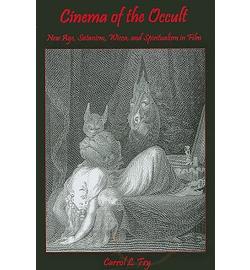 Various aspects of the occult, or as it is more commonly referred to today in academic circles, Western esotericism, have long been facets that have informed storytelling and fear in horror films. A recent book by Carrol Fry touches on this topic, titled
  When I grew up in the 1970s I had to work hard to nurture my love for the fantastic, my ever-present “inner geek,” if you will. In those days I was too young early on to be able to see the few films of the fantastic in the theaters, and like everyone else my family only had a few television channels at their disposal. But even with these slim television pickin’s it was a major source of sustenance. I remember grabbing the TV Guide when it was delivered and working my way through page by page and circling every horror, science fiction, and fantasy film listed. I hoped that our antenna would provide the signal reception so I could see the films, and that they would be on when I wasn’t in school. Sometimes feeding this fetish required drastic measures. Thankfully my mom doesn’t read my blog, so I can confess now that on at least one occasion I faked illness so as to watch an afternoon showing of a Ray Harryhausen film during the school week.
 I still remember the first time I encountered the Resident Evil series of videogames. It wasn’t until Resident Evil 2, and it was on my Sony Playstation, both of which still sit in my living room beckoning me for an encounter with the undead. My family’s appreciation of this series continues to the present day with my teenage son currently enjoying Resident Evil 5.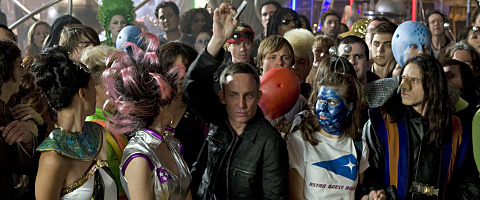
 Readers should note that in my right hand columns for this blog I include a number of helpful links in two categories, those that provide an opportunity to enjoy the fantastic, and those that help explore the fantastic in greater depth. In the latter category, one of the sites I especially enjoy is
  David Wellington, author of three previous vampire novels as part of the Laura Caxton series, including 13 Bullets,