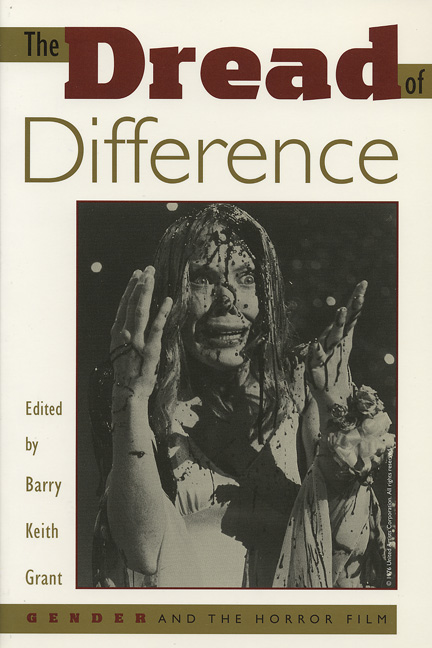
If we probe horror in cinema more deeply we find it touches on a number of aspects of the human experience. One of these is related to gender. An excellent book that looks at various facets of this topic is The Dread of Difference: Gender and the Horror Film (University of Texas Press, 1996). (The book’s Table of Contents and Introduction can be previewed here.) The book is edited by Barry Keith Grant, Professor of Film Studies and Popular Culture at Brock University in Ontario, Canada. Grant discusses his chapter in the book, “Taking Back the Night of the Living Dead: George Romero, Feminism, and the Horror Film” in the following interview.
TheoFantastique: Barry, thank you for making time in connection with your New Year’s celebration to discuss your book. In The Dread of Difference, you note in the introduction that traditionally science fiction and horror films have focused on the question of difference, the other, usually understood in terms fears such as of communism or late capitalism. You suggest, and the contributors to the volume demonstrate through their chapters, that “issues of gender remain central to the genre.” How has feminist theory impacted film interpretation as a means of providing another interpretive layer to our understanding of horror and science fiction?
Barry Keith Grant: I think the explanation is simply a matter of criticism catching up with social change. Sociological, mythic, and vaguely psychoanalytic theory and concepts informed earlier analyses of horror films. These ideas were informed by unquestioned assumptions about “man” and consequently, gender wasn’t regarded as an important issue. It took certain developments in feminist theory and feminist film theory to get people thinking differently and to inspire a new interest in popular film generally and in horror specifically. Not coincidentally, these developments in academic theory were happening roughly simultaneously with the feminist new wave in science fiction.
In my view, it is impossible to underestimate the impact of feminist theory and feminist film theory for our understanding of cinema generally and for horror and science fiction especially. Laura Mulvey’s 1975 discussion of “Visual Pleasure and Narrative Cinema,” in which she posited the idea of a gendered gaze and the patriarchal “look” of the camera in mainstream film, and Robin Wood’s late 1970s writings on ideology in the horror film, informed by Marxist and feminist theory, set the stage for much of the understanding and analysis of both science fiction and horror in the decades to follow.
Such criticism has given us an awareness of “the dread of difference” that seems to haunt horror and offers utopian alternatives in science fiction. In a way, the criticism about these genres by scholars such as Christopher Sharrett, Vivian Sobchack, Harry Benshoff, and Carol Clover is like the science fiction of, say, James Tiptree, Jr., Marge Piercy, or Joanna Russ — it makes us all more conscious of the way our assumptions about gender inform our relations with other people and with the world.
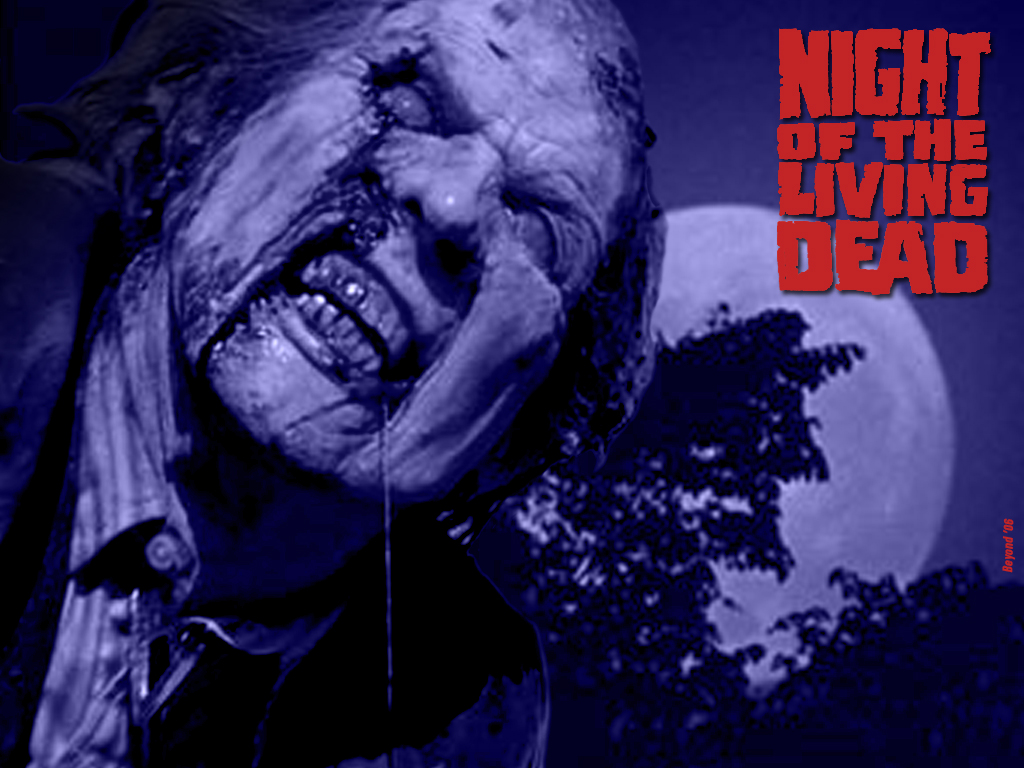
TheoFantastique: You suggest in your contribution to the book that George Romero, through the 1990 remake of Night of the Living Dead, has sought in some senses to overcome “his own monstrous offspring.” Can you touch briefly on what you mean by this?
Barry Keith Grant: I was referring to the less distinguished but nonetheless prevalent — even dominant — presence of horror and science fiction movies that are formulaic recyclings of ideas that were fresh and innovative, even political, in earlier films. Such fare is characteristic of all popular culture genres that are as popular as horror and science fiction, and are probably further evidence of “Sturgeon’s Law.” Cheap knock-offs can be found in art and entertainment just as in brand name fashion wear and electronics. In the case of movies, “cheap” doesn’t apply simply to budget, but also to imagination. So, in other words, I was arguing that in reconceptualizing Night of the Living Dead the way he did for the remake, Romero was trying to redress way too many horror films had reduced his social messages to mindless misogynist violence.
TheoFantastique: Romero’s zombie myth has been interpreted as offering a critique of consumerism and racism. You address issues of gender and sexual politics. Why do you think this aspect of Romero’s zombie myth has not been given the same treatment as other aspects of his storytelling?
Barry Keith Grant: The essay was first published in 1992 in a special genre issue of Wide Angle, once an important academic journal in film studies. Of course, I had written it a year, perhaps two, earlier, as the essay then had to go through the standard and time-consuming peer review process of academic journals, then accepted and placed in the queue before it actually appeared in print. At this time, there were few critics taking George Romero seriously — Robin Wood, Christopher Sharrett, Tony Williams, a few others. The reason for this, clearly, was the lowbrow status with which horror was regarded, for anyone who cared to look seriously at Romero’s films would see an intelligence, an auteur, working within the genre with some serious ideas. It was a puzzle to me why more film scholars weren’t paying more attention to Romero, and to the genre more generally.
Today, almost twenty years later, the situation is rather different, and I don’t think I would make this claim. Indeed, critical commentary on horror, both in traditional print form in journals and books, and in newer digital forms of websites and blogs, such as your own, issues of gender are now common topics in discussions of horror and science fiction, as they are in discussions of other popular genres such as action movies.
TheoFantastique: In your chapter you make an interesting connection between the work of Howard Hawks and its influence on Romero. How do you see this as playing out in 1990’s Night?
Barry Keith Grant: Well, I think to summarize this argument is essentially to summarize the essay, and of course I would prefer that your readers read the essay itself. But in a nutshell, as I tried to argue in the essay is that Romero conceives of the threat of the undead in his zombie films as a situation that calls for violent and unsentimental resistance in order to survive. This is analogous to the frequent situation in Hawks’s action films wherein a mostly male group must employ their own code of professionalism, dictated by the situation rather than some institutional system, to get their job done and reach their goal. (Unlike Hawks, though, Romero’s films follow through on the revolutionary potential of this idea.)
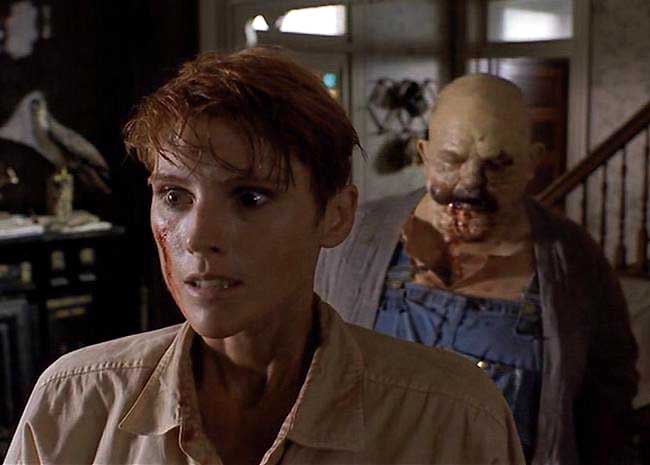
The remake’s major change is in the reconceptualizing of Barbara. Rather than a completely helpless women who must be cared for throughout the siege of the farmhouse by the zombies, as in the original film, the makeover Barbara of the second version transforms from an archetypally meek female into a self-sufficient fighter able to meet the threat of the attacking undead. In order to meet this challenge, and to survive, Barbara must learn to do what is necessary, without sentimentality. The film carefully contextualizes the zombie threat as a metaphor for the horrors of masculine violence and aggression, and her deliberate shooting of Harry this time around makes this point clear.
TheoFantastique: You reference R. H. W. Dillard who has stated that the original Night articulated “a fundamental nihilism and negation of human dignity.” To what extent do you see Romero’s successive zombie films overcoming this, if at all, and if not, how strong an influence might the original Night continue to be on the nihilism of contemporary postmodern horror?
Barry Keith Grant: Romero’s vision is a rather pessimistic view of contemporary society, particularly as it is informed by the values of patriarchy and capitalism. The follies of homo Americanus are amply demonstrated in Land of the Dead, where the political critique becomes most explicit. In the end, there is nothing for the protagonists to do but light out for the territory of Canada, like Romero himself.
Survival of the Dead offers some clever new ways to kill zombies, including sticking the hose of a fire extinguisher in their mouths and filling their heads with fire retardant until it oozes from their various facial orifices and their eyes pop out as in a Frank Tashlin cartoon. But such creative carnage is minimized in favor of excessively broad political satire about two warring clans on an island off the U.S. east coast. Focusing on a Hatfield-McCoy type feud between the two groups, Romero pours southern Gothic and western movie iconography into Delaware, which the last time I looked was a middle Atlantic state. Well, why not? We already have Pride, Prejudice and Zombies.
This composite portrait may be seen as an attempt to subvert the America represented in the westerns of John Ford, which Romero has said he wanted to acknowledge as an influence. Alternatively, perhaps Romero has been based outside of the U.S. so long (the film was shot in rural Ontario) that he may have lost all sense of the country’s geography. Ultimately, the satire is even thicker than the blood this time around, and it suggests that Romero’s view is no less bleak than before.
As for the influence of Romero’s zombie films on contemporary nihilism, I think while tit has certainly inspired and influenced so many others, and the direction of the genre generally in the 1980s toward splatter, at the same time it also expresses through a resonant horror mythology a nihilism that we have every good reason to be feeling in any case as we continue to ravage the planet and make war on each other. Olaf Stapeldon’s Last and First Men should be required reading of anyone holding political power!
TheoFantastique: Barry, thank you again for making some time to discuss your chapter. I hope this discussion gives readers new reasons to pick up a copy of the book.
2010 is here, and it begins with a month that includes three films that hold promise for fans of the fantastic.
The first is the vampire film Daybreakers. It tells the story of a a plague that spreads across the earth in 2019. This transforms “the majority of the world’s population into vampires. Humans are now an endangered, second-class species forced into hiding as they are hunted and farmed for vampire consumption to the brink of extinction.
It’s all up to Edward Dalton, a vampire researcher who refuses to feed on human blood to perfect a blood substitute that might sustain vampires and spare the few remaining humans. But time and hope are running out – until Ed meets Audrey, a human survivor who leads him to a startling medical breakthrough. Armed with knowledge that both humans and vampires will kill for, Ed must battle his own kind in a deadly struggle that will decide the fate of the human race.
The film includes Ethan Hawke, Willem Dafoe, and Sam Neill, and is directed by Peter Spierig and Michael Spierig.See the film’s official website for more information, and for the interesting related website Capture Humans. Daybreakers premiers in theaters January 8.
The second movie I am looking forward to is The Book of Eli, a post-apocalyptic story.
In the not-too-distant future, some 30 years after the final war, a solitary man walks across the wasteland that was once America. Empty cities, broken highways, seared earth – all around him the marks of catastrophic destruction. There is no civilization here, no law. The roads belong to gangs that would murder a man for his shoes, an ounce of water…or for nothing at all.
But they’re not match for this traveler.
A warrior not by choice but by necessity, Eli seeks only peace, but, if challenged, will cut his attackers down before they realize their fatal mistake. It’s not his life he guards so fiercely but his hope for the future; a hope he has carried and protected for 30 years and is determined to realize. Driven by his commitment and guided by his belief in something greater than himself, Eli does what he must to survive – and continue.
Only one other man in this ruined world understands the power Eli holds, and is determined to make it his own. Carnegie, the self-appointed despot of a makeshift town of thieves and gunman. Meanwhile, Carnegie’s adopted daughter Solara, is fascinated by Eli for another reason: the glimpse he offers of what may exist beyond her stepfather’s domain.
But neither will find it easy to deter him. Nothing – and no one – can stand in his way. Eli must keep moving to fulfill his destiny and bring help to a ravaged humanity.
The cast includes Denzel Washington and Gary Oldman, and the film is directed by Allan Hughes and Albert Hughes. It opens in theaters January 15.
The final film is also related to the end of the world, but in this case it is pre-apocalyptic. It is Legion. Like previous postmodern treatments of apocalyptic, this film turns Judeo-Christian notions of judgment, apocalyptic, angelic roles, messianic themes and apocalyptic in general upside down. As the film’s website describes, “When God loses faith in mankind, he sends his legions of angels to bring on the apocalypse. Humanity’s only hope lies in a group of strangers trapped in a desert diner and the Archangel Michael.” Michael goes rogue, turning against God as he unleashes judgment in the form of the angelic host under the leadership of the Archangel Gabriel trying to murder a child of promise.
The cast includes Paul Bettany as the Archangel Michael, Kevin Durand as the Archangel Gabriel, Dennis Quaid, and Charles Dutton. It is directed by Scott Stewart and is scheduled for release on January 22.
Mark your calendars and prepare for a fantastic January.
I haven’t seen Walt Disney’s The Princess and the Frog movie yet, but living in a neighborhood with young families many of them have, and they seem to have enjoyed it. The television advertisements for the film make me a little wary since it is supposedly the best Disney cartoon since The Lion King. But come on, what about The Emperor’s New Groove?
Two articles in Religion Dispatches give me reason for pause in seeing the film, or at least to watching it more critically if I do decide to see it. The first is an article by Anthea Butler titled “Disney’s Lump of Coal.” The author’s displeasure with the film may be summarized with the words, “I’m going to go all out and say that the entire movie is a wholesale desecration of New Orleans, Creole culture, Cajun Culture, religion, zydeco music, the Evangeline story, and Louis Armstrong..”. In the second article, Michelle Gonzalez Maldonado focuses her displeasure with the film specifically on its treatment of Haitian religion in a piece titled “Bad Magic: Voodoo According to Disney.” Maldonado feels that “this film perpetuates offensive stereotypes about Voodoo.” As the author concludes the analysis she writes:
I did not expect critical race analysis or a sophisticated presentation of Voodoo when I walked into the theater. It is, after all, Disney. I did not expect such a blatant, racist, and misinformed presentation of Voodoo, however. The reduction of religion to magic is also reaffirmed in the curious absence of Catholicism in the film. My son is correct, Disney Voodoo is bad magic; it just doesn’t have anything to do with the authentic African Diaspora religion.
But how should audiences react to elements of race, culture, and religion as portrayed in a fantasy cartoon? Even Butler writes, “Yes, I know, it’s just fantasy, right?”
On the one hand, elements within a fantasy film take on the meaning given them by the writer of the story. This is a basic principle of literary, and by extension, cinematic interpretation. So it would be inappropriate to critique Harry Potter for providing “inaccurate” portrayals of witchcraft, since J. K. Rowling was creating a contemporary fairytale form of witchcraft rather than a representation of Wicca outside of her fantasy context.
But on the other hand, it would be a mistake to give fantasy a pass in terms of being divorced from the social and cultural context in which it is produced. Josha Bellin, author of Framing Monsters: Fantasy Film and Social Alienation (Southern Illinois University Press, 2005), reminds us that in addition to entertainment and escapism, fantasy has a dark side that is often missed because it is held to be separate from reality:
But of course, that’s what makes these films particularly powerful vehicles of social alienation, the phrase I use to suggest the whole range of processes by which marginalized groups are stereotyped, victimized, and scapegoated: fantasy films’ resistance to critical scrutiny enables them to perpetuate loathsome social ideologies under the guise of “harmless entertainment.”
My previous interview with Bellin on this topic as the thesis of his book can be found here, along with a second interview contrasting the original King Kong with Peter Jackson’s more recent version. Both interviews shed light on the need for a more critical reading of fantasy films that will enable viewers to gain a deeper appreciation of the many facets of fantasy and how they reflect social and cultural contexts. I offer this as food for thought for those who want to probe Disney’s latest cartoon offering beyond holiday cinema escapism.
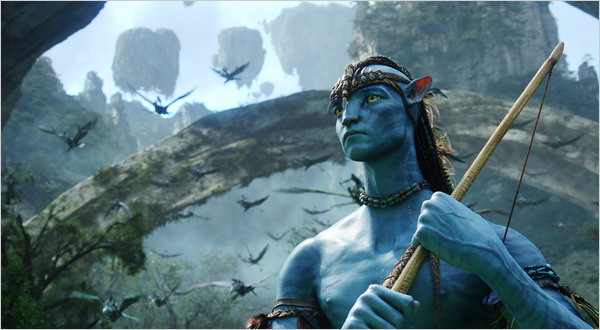
My latest article for Cinefantastique Online is now available at this link, a review and commentary on AVATAR. Following is an excerpt:
In regards to Na’vi religion, some commentators have referred to it as pantheism, but this is technically inaccurate. The Na’vi believe that Eywa, the divine “All Mother,” is connected to and in some sense “in” all things, but the “things” of the planet are not identical to Eywa and the All Mother is not the only reality. AVATAR’s religion may be more properly understood then as a form of panentheism and animism, the belief that deity resides within the world, including its animals and plants, but not that deity is the only reality.
An Internet search of “AVATAR and religion” yields a variety of perspectives, including many from those unhappy with the film’s religion. In one sense, it not well received due to the current culture wars between conservatives and progressives, but even so it would appear to fit well within the context of twenty-first century “progressive spirituality,” which meets current needs, according to scholars like Gordon Lynch, such as “the need for a credible religion for the modern age; the need for religion which is truly liberating and beneficial for women; the need to reconnect religion with scientific knowledge; and the need for a spirituality that can respond to our impending ecological crisis.” Religious conservatives on the right chaff at AVATAR’s depictions of deity and nature, but they might also pause to consider that it may arise as a response to perceived shortcomings or deficiencies in more traditional forms of Western religiosity.
I extend a very merry Christmas and happy holidays to all the readers of TheoFantastique. I hope you have a fantastic and monstrous holiday season that meets your greatest expectations.
And may 2010 bring us better things than the challenges of 2009.
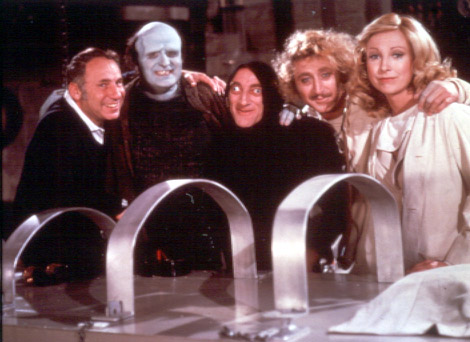
My poking around the fine blog Frankensteinia reminded me that I was remiss in recognizing the 35th anniversary of the film Young Frankenstein which appeared in theaters in North America on December 15, 1974. I saw this film in the theaters at ten years of age and laughed from scene to scene. Today this film is in my DVD collection and I still laugh every time I see it as I recite the dialogue. Thankfully its comedic genius has been passed along to my wife and children as the next generation to benefit from this comedy classic and homage to Frankenstein, Bride of Frankenstein, and Son of Frankenstein. In my view it is Mel Brooks’ best work as a director, largely due to the story put together by Gene Wilder and his work as an actor in bringing the story to life with the rest of the great ensemble cast.
Various media sources are reporting on the death of screenwriter Dan O’Bannon. He was perhaps best known for Alien and Total Recall, as well as the remake or re-envisioning of Invaders from Mars. He also wrote the screenplay for the neglected horror film Dead and Buried, which involves an interesting take on the zombie mythology. O’Bannon died today in Santa Monica at the age of 63 after a long battle with Crohn’s disease. More information is available in the Sci Fi Wire obituary.
I’m reading a couple of books to prepare for interviews after the first of the year. They are both very good, so I’ll give them a plug and a preview.
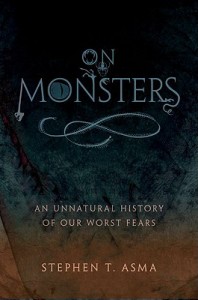
I became aware of the first one while reading a book proposal for my friend W. Scott Poole, author of Satan in America. It is On Monsters: An Unnatural History of Our Worst Fears by Stephen T. Asma (Oxford University Press, 2009). The dust cover for this book reads as follows:
We feared them lurking in our closets and under our beds in our childhood bedrooms. They were the characters exploited every year in our Halloween festivities and rituals. They stalked the pages of some of our favorite books, and now with the release of Where the Wild Things Are, they will roam freely on the movie screen. They are…MONSTERS! And as we continue to walk that fine line of fascination and fear for them, it is valuable to learn and analyze their place in history, so that we are able to face them, regardless of the form they take.
Stephen Asma’s ON MONSTERS explores the history of monsters and analyzes how they have evolved over time, what functions they have served for us, and what shapes they are likely to take in the future. Asma describes how monsters, from the obvious movie creatures to terrorists to serial killers, embody our deepest anxieties and vulnerabilities, and symbolize they mysterious territory just beyond the safe enclosures of rational thought. Exploring philosophical treatises, theological tracts, newspapers, pamphlets, films, scientific notebooks, and novels, Asma illuminates the many ways monsters have come to represent our insecurities and uncertainties in daily life. And in these somewhat frightening times, Asma shows how we can live with our monsters, even if it means holding up the mirror to ourselves.
Asma is Professor of Philosophy at Columbia College Chicago.
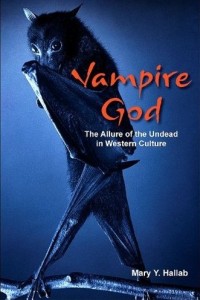
It seems we’re awash in vampires these days, in everything from movies, television shows, and novels to role-playing games, rock bands, and breakfast cereals. But what accounts for their enduring popular appeal? In Vampire God, Mary Y. Halab examines the mythic figure of the vampire from its origins in early Greek and Slavic folklore, its transformation by Romantics like Byron, Le Fanu, and Stoker, and its diverse representations in present-day popular culture. The allure of the vampire, Hallab argues, lies in its persistent undeadness, its refusal to accept its mortal destiny of death and decay. Vampires appeal to our fear of dying and our hope for immortality, and as a focus for our doubts and speculations, vampire literature offers answers to many of our most urgent questions about the meaning of death, the nature of the human soul, and its possible survival after bodily dissolution. Clearly written, with wry human, Vampire God is a thoroughly researched, ambitious study that draws on cultural, anthropological, and religious perspectives to explore the significance and function of the vampire in relation to the scientific, social, psychological, and religious beliefs of its time and place.
Hallab is Professor Emerita of English Literature at the University of Central Missouri.
Look for an exploration of these great books here in early 2010.
The following post brings a little levity to TheoFantastique with a brief clip from a Bob Hope film, The Ghost Breakers (1940), that combines comedy, pre-Romero voodoo conceptions of zombies, and politics. The clip seems especially relevant in light of our current national debate over health care legislation and the Democratic majority related to this decision making process. Whatever your political affiliations and perspectives on our current political debates, please enjoy this clip in the spirit in which it is offered.
Like any specialized blog or website TheoFantastique receives a number of review copies of items, including comics. Comic books and graphic novels are an expression of the fantastic in popular culture, and they have been discussed here in the past. But with this post we turn over comic reviews to a new guest columnist, Richard Moore, a comic artist and writer responsible for Far West, and Boneyard, as well as The Pound and Deja Vu. (See the previous interview with Moore for more background.)
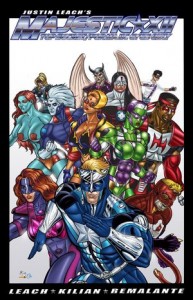
Justin Leach’s MAJESTIC XII
Leach & Kilian
By Richard Moore
For those who’ve been keeping track of the dwindling comics market (yes, I’m speaking to both of you), it’s not pretty out there. No one knows the difficulty of launching a new comic title better than myself, which is why I’m loathe to criticize a new entry into the field. I genuinely wanted to find something worthwhile to recommend in Justin Leach’s MAJESTIC-XII, but unfortunately I was limited to the contents of the book.
MAJESTIC-XII is the story of a team of superheroes charged with fighting a secret war against alien invaders. One has to wonder how these aliens–who already control most of the universe–can possibly be held off by a handful of superhumans, who seem to do nothing but engage in chaotic fist-fights with other superhumans, and moon over each other in constant, maudlin interior monologues. Oh, and did I mention that most of these superheroes(?) are criminals, freshly sprung from prison? See, that makes them a rag-tag group of anti-heroes; it makes ’em edgy.
The writing is awkward at best, from confusing scene jumps to sledgehammer exposition delivered through cliche-ridden dialogue. Consider this charming example, followed by “revealing” inner thoughts, from a superheroine in the midst of a super-powered brawl:
“Eww! That smells like fried zucchini–Ick!” Wow, Legend is soo dreamy!!“
Even the emphasis of particular words within the dialogue is baffling. Emphasis should crystallize dialogue, help it come alive inside the reader’s mind. Here, it creates a verbal obstacle course, tripping-up the reader and requiring multiple readings of the same lines to make sense of them.
All this might at least have been tempered by good (okay, great) artwork, but such is not the case with MJ-XII. Backgrounds are virtually nonexistent, which not only means that no sense of space is created, but at times makes it difficult to tell exactly where things are taking place. Bodies are uniformly massively-muscled, with the only difference between genders being huge breasts on all woman. I realize subtlety is not the point here, but it would be nice if every single character didn’t look like his or her super power were superhuman tolerance of anabolic steroids.
This is only the first issue of MJ XII, and normally I’d allow for the possibility of growth. Unfortunately, about the best that can be hoped for here is that readers will mistake the book’s glaring flaws for camp.
 If we probe horror in cinema more deeply we find it touches on a number of aspects of the human experience. One of these is related to gender. An excellent book that looks at various facets of this topic is The Dread of Difference: Gender and the Horror Film (University of Texas Press, 1996). (The book’s Table of Contents and Introduction can be previewed here.) The book is edited by Barry Keith Grant, Professor of Film Studies and Popular Culture at Brock University in Ontario, Canada. Grant discusses his chapter in the book, “Taking Back the Night of the Living Dead: George Romero, Feminism, and the Horror Film” in the following interview.
 TheoFantastique: You suggest in your contribution to the book that George Romero, through the 1990 remake of Night of the Living Dead, has sought in some senses to overcome “his own monstrous offspring.” Can you touch briefly on what you mean by this?
 The remake’s major change is in the reconceptualizing of Barbara. Rather than a completely helpless women who must be cared for throughout the siege of the farmhouse by the zombies, as in the original film, the makeover Barbara of the second version transforms from an archetypally meek female into a self-sufficient fighter able to meet the threat of the attacking undead. In order to meet this challenge, and to survive, Barbara must learn to do what is necessary, without sentimentality. The film carefully contextualizes the zombie threat as a metaphor for the horrors of masculine violence and aggression, and her deliberate shooting of Harry this time around makes this point clear.
 Various media sources are reporting on the death of screenwriter Dan O’Bannon. He was perhaps best known for Alien and Total Recall, as well as the remake or re-envisioning of Invaders from Mars. He also wrote the screenplay for the
  I’m reading a couple of books to prepare for interviews after the first of the year. They are both very good, so I’ll give them a plug and a preview.
 The second volume I am enjoying is
  Like any specialized blog or website TheoFantastique receives a number of review copies of items, including comics. Comic books and graphic novels are an expression of the fantastic in popular culture, and they have been discussed here in the past. But with this post we turn over comic reviews to a new guest columnist,


