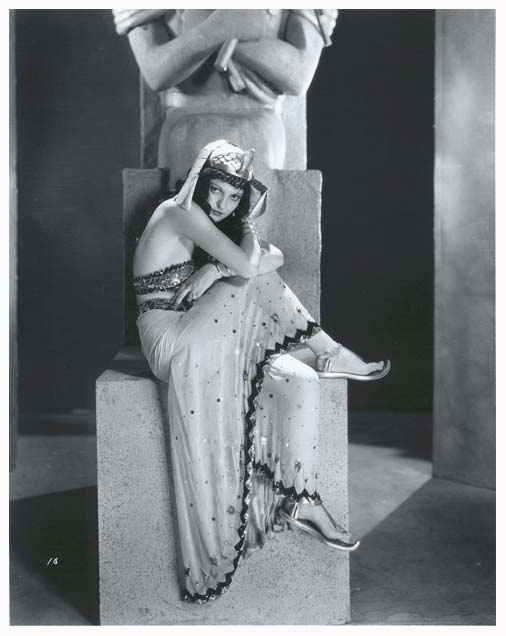
A recent visit to my local library to peruse the shelves for horror and science fiction DVDs revealed a few treasures the other day, including a copy of The Mummy (1932) Special Edition. This is part of the Universal Legacy Series that I have yet to add to my collection.
This 2-disc set includes bonus features, including Mummy Dearest: A Horror Tradition Unearthed and He Who Made Monsters: The Life and Art of Jack Pierce. There were a number of interesting facets of both mini-documentaries, but in the former I found one piece of trivia particularly interesting in regards to Boris Karloff’s co-star, Zita Johann. Two film historians are featured in the documentary who had opportunities to interview Zohann before her death. They both state that she was a practitioner of the “occult sciences,” that she was a believer in reincarnation, and one of the men claims that during filming Zohann passed out and claims to have had an out-of-body experience (mistakenly referred to in the documentary as a near-death experience). This appears to have been a case of art imitating life since Zohann plays a character reincarnated in the film. Just one of the interesting pieces of trivia related to a classic horror film and its connection to the esoteric religious tradition.
Comic artist and historian Arlen Schumer will lecture at Rice University on “Jews ‘n’ Comics.” Schumer’s views on the subject as part of the upcoming lecture are described in Jewish Herald-Voice:
According to Schumer, it’s no coincidence that several pioneers of the America comic book art form were Jews. A short list includes Jerry Siegel and Joe Shuster, co-creators of Superman; Bob Kane (born Robert Kahn), creator of Batman; Jack Kirby (born Jacob Kurtzberg), creator of Captain America; and Stan Lee (born Stanley Lieber), co-creator with Jack Kirby of Spider-Man, Fantastic Four, the Hulk, X-Men, Iron Man and others.
Besides their personal Jewish identities, these artist geniuses infused their superhero creations and their sagas with Jewish culture, Schumer explains in his work.
“I try to demonstrate that there’s been a strong Jewish influence in the creation of our modern-day superheroes that go back to stories that go as far back as you want to go back,” he said in an interview with the JH-V.
The Superman creation story, for example, is based on Jewish archetypes spelled out in the baby Moses story and messianic prophecies, Schumer noted. Iconic superheroes like Superman, Batman and Captain America each were created by first-generation assimilated American Jews at times of national crisis.
“When there was a crisis facing the Jewish people, we can look back to the golem myth from late 16th century Prague. The Jews were threatened by pogroms, so the rabbi conjured a man out of earth and gave life from nothingness to save the ghetto and protect the Jewish people,” Schumer said.
American superheroes of the 1930s, like Batman, were a response to the rise of fascism and Nazism. Others superheroes, like Captain America, were created to help raise American consciousness about the war and to change isolationist attitudes, he added.
The whole article can be read here. See Schumer’s website for further examples of his lectures and work.
Nightmares in Red, White and Blue: The Evolution of the American Horror Film is a feature-length documentary based on the book of the same name by Joseph Maddrey. It examines the idea that horror films reflect the times and places in which they are made – illustrating how classic monster movies exploited the anxieties of war-time generations, and how more savage modern horror films stem from the psychic fallout of America’s counterculture movement and the subsequent rise of increasingly conservative political forces.
At the same time, the documentary explores the timeless, universal appeal of horror movies by examining the pervasive theme of The Outsider. From the silent films of Lon Chaney to the box office reign of Hannibal Lector and his peers, the history of the horror film is a story of the individual at odds with any organization that threatens his life, liberty, and pursuit of happiness. In-depth interviews with many of the nation’s greatest horror filmmakers reveal that the appeal of the genre is rooted not only in timely fears but in the spirit of rebellion – a spirit that consistently defines American life, as well as many of its best horror filmmakers.
Nightmares in Red, White and Blue is narrated by horror icon Lance Henriksen and features exclusive interviews with legendary auteurs like John Carpenter, George A. Romero, Joe Dante, Larry Cohen, and Roger Corman, as well as film historian John Kenneth Muir and Fangoria editor Tony Timpone and others. Their observations are illustrated with clips from more than 150 films – ranging from the classic Universal monster movies to the psychological horrors of film noir, from groundbreaking films like Night of the Living Dead, Rosemary’s Baby, The Exorcist and Jaws to contemporary slasher movies, Torture Porn and beyond.
In short, it is the most comprehensive documentary on America’s most durable and prolific film genre.
Two significant news stories surfaced over the last couple of days that involve extraterrestrials and UFOs. In the first story, several U.S. Air Force officers have come forward claiming that as recently as 2003 several bases with nuclear weapons were visited by and vulnerable to UFOs. As Gather.com reports:
Claims of UFOs circling nukes and military bases are nothing new but what is new is the number of military personal willing to collaborate those sightings. It’s terrifying to think of someone or something being able to tamper with our nukes from a distance.
The Mail Online includes a more extensive discussion of this phenomenon in the U.S. and U.K. You can also view a CBC News clip that features an interview with one of the Air Force officers discussing his experiences on YouTube.
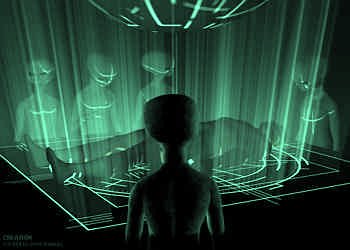
In the second news report various news outlets stated that the United Nations had approved a position for an “alien ambassador” who would serve as a point of contact for possible future extraterrestrial visitors. Although this story was widely circulated it appears to lack confirmation as the Guardian.co.uk reports.
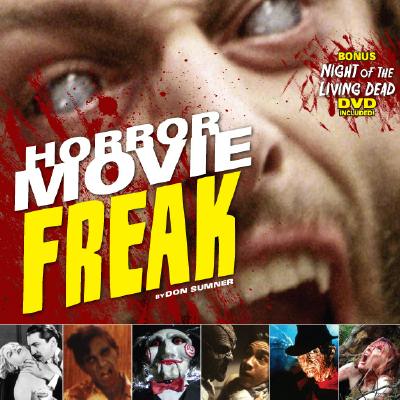
I recently received a review copy of Horror Movie Freak (Krause Publications, 2010) by Don Sumner. The book is an enjoyable discussion of horror films for those fans obsessed with the genre. At one point early in the discussion Sumner provides a description of the purposes of the book:
Horror Movie Freak is not a listing of “best” horror movies, but rather a collection of ones that fall into a variety of horror subgenres with the simple inclusion criteria that they don’t suck.
Sumner’s subgenres include aberrations of nature, aliens and outer space, Asian horror, beginner’s shelf, classics (Universal, Hammer, and others), evil from hell, foreign horror, ghost stories, homicidal slashers, monsters, psychotics, supernatural thrillers, vampires, and zombie invasion. The book also includes discussion of those horror films that receive honorable mention, and various remakes. The book also includes a number of striking photographs from various films, and these alone make the volume worth securing for horror fans. As an added extra, the book includes a bonus DVD of Romero’s Night of the Living Dead with an introduction by Sumner.
In terms of what the book brings to the subject matter by way of narrative discussion in a field with a large numbers of books available on horror films, there is little new ground broken in the author’s discussion of these films, although the passion Sumner has for horror is evident in his writing. With these thoughts in mind, Horror Movie Freak is best suited for the new horror movie fan who wants an introduction to many of the films in various subgenres. You can learn more about the book at the official website, and it can be ordered there or through the TheoFantastique Store.
Graphic novels and comics continue to be a great source for contemporary fantastic film and television. On October 31 Robert Kirkman’s graphic novel The Walking Dead comes together with the direction of Frank Darabont in what promises to be a great horror television series on AMC. You can visit The Walking Dead AMC Series website here, and Robert Kirkman’s website with examples of his other work here.
Douglas Cowan, author of Sacred Space: The Quest for Transcendence in Science Fiction Film and Television (Baylor University Press, 2010, has been interviewed by The Atlantic. In the interview he mentions his next book completing the trilogy on the fantastic titled Sacred Visions: Fantasy, Film, and Mythic Imagination. You can read the previous interviews with Cowan on Sacred Space in two parts with part 1 here, and part 2 here. You can also read an interview with his thoughts from Sacred Terror, his book on religion and horror, also in two parts with part 1 here and part 2 here.
This week has seen a few interesting science fiction items in the news.
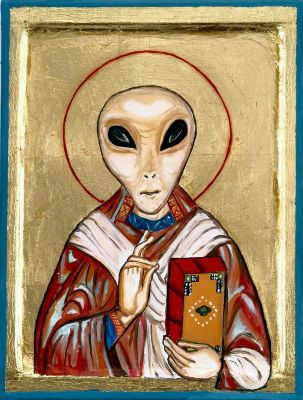
In the first instance, the astronomer for the Pope went on record stating that if alien life exists he would gladly baptize it “no matter how many tentacles it has.” See an example of this brief news item here.
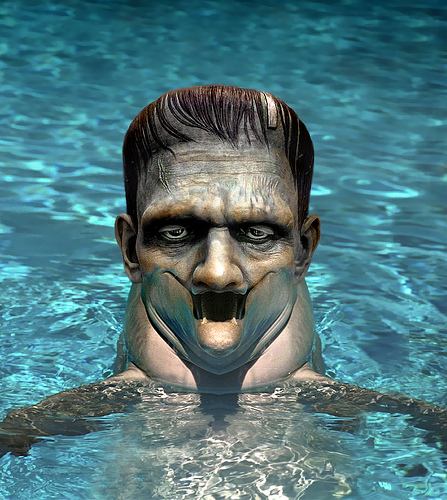
In the second science fiction item in the news, alarm was expressed concerning a genetically engineered form of Atlantic salmon that grows twice as fast as those not tinkered with by geneticists. The Food and Drug Administration will weigh in on whether to approve this type of fish for human consumption.
The interesting facet of this news item is the label applied to the animal by many news stories which referred to it as “Frankenfish.” In her book Frankenstein: A Cultural History (W. W. Norton, 2007), Susan Tyler Hitchcock discusses how the Frankenstein myth has pervaded our culture, so much so that the idea of “Frankenfoods” is now a common label in discussions over genetically engineered foods. In a previous interview with Hitchcock at TheoFantastique:
TheoFantastique: In chapter 10 you discuss scientific developments in genetics and how the novel has been attached to debates on this topic so much so that people have expressed fears about “Frankenfoods.” You write that, “Scientists live and operate within a larger world of culture, and the myths that shape that world exert an influence on their beliefs, fears, and aspirations.” How does the Frankenstein myth serve as positively as a mythic foil in contemporary debates like those over genetics and cloning? Susan Tyler Hitchcock: By the time we were seriously discussing the issues of genetic engineering and cloning in the public forum, Frankenstein had lost its ambiguities and was received by most as having a unified message: Don’t mess with Mother Nature; don’t play God; don’t dare to overstep the limits of knowledge established by the status quo. My belief is that that is not what Mary Shelley originally had in mind when she wrote the novel, but it is what we have made of her story. So Frankenstein has become a code word for the idea that any effort to create life is going to make a monster that will haunt and ultimately destroy us. It’s an easy way to express the conservative argument against scientific experimentation in realms that are new and unknown, particularly those having to do with the manipulation or creation of life-forms.
The other day I was following various research threads on the Internet and discovered the Turner Classic Movies blog titled Movie Morlochs, which classic science fiction fans will recognize as a takeoff from George Pal’s The Time Machine. Unfortunately, despite the clever name, the blog is not solely devoted to science fiction films, but it does include interactions with a variety of film genres, including science fiction and horror films. One of the contributors to the blog is Richard Harland Smith, who also writes for Video Watchdog, a publication that has won several Rondo Awards. A little more Internet research revealed an article by Smith in CINEASTE: America’s Leading Magazine on the Art and Politics of the Cinema, titled “The Battle Inside: Infection and the Modern Horror Film.” In the article Smith discusses several horror films that touch on infection and contagion in a variety of monstrous forms. He provides the following conclusion, directed specifically at Romero’s Night of the Living Dead but also in general to the films of infection that he has discussed throughout the article. It is a conclusion that dovetails with the interests of TheoFantastique:
And precisely who is infecting whom? The implication is that the sins of the living, their pettiness, and their bitterness, their rejection of spontaneity in favor of habit, have driven the deceased to an eternal, shambling unrest.
Whatever the catalyst, infection films, whether concerned with vampires or zombies, continue to fascinate both filmmakers and the civilians who flock to them. In their corruption of the Christian belief of life everlasting, these narratives offer moviegoers a choice of worse-case scenarios: to rise redefined as a malevolent night-feeder — betraying friendships, sacrificing blood ties to bloodlust, and robbing the breathing world of its precious fund of innocence — or to shuffle about mindlessly as a ghoul, feasting upon warm flesh and pulsing gizzards, dead-eyed, beyond hope, beyond caring, footloose in the embodiment of mankind’s abiding attraction to a consumption devoutly to be wish’d.
Today is the anniversary of the debut of The Outer Limits in 1963. This was part of a great collection of television programs that focused on tales of the fantastic, and although The Outer Limits did not capture my imagination with the intensity that The Twilight Zone did, I still remember getting scared to death as a kid watching the insect-like invaders attacking humans in the episode “The Zanti Misfits.” The complete original series can be ordered in a box set on DVD in the TheoFantastique store in the DVD category, as well as an MP3 of the show’s opening theme song.
In November check back at TheoFantastique for a multiple part installment that explores the fiftieth anniversary of The Twilight Zone episode “The Eye of the Beholder” through guest contributor Arlen Schumer.
 A recent visit to my local library to peruse the shelves for horror and science fiction DVDs revealed a few treasures the other day, including a copy of The Mummy (1932) Special Edition. This is part of the Universal Legacy Series that I have yet to add to my collection.