A while back I came across an independent horror film, Midnight Son. I was intrigued by the different take on the vampire story, and that certain aspects of it reminded me of George Romero’s “vampire” film Martin from the 1970s. Today I received an update from the makers of the film letting me know that it is now available on DVD and Digital Download in the U.S. & Canada. (Image Entertainment is handling U.S. distribution, while Mongrel Media is handling Canada.) The DVD should be available in Walmart stores across the U.S., and also online at Walmart.com, Amazon.com, BestBuy.com, Frys.com, and more. Digital Downloads are available from iTunes, Vudu, Amazon Instant Video, CinemaNow, Playstation Store, Xbox Marketplace, and YouTube.
The media kit includes a synopsis of the film:
MIDNIGHT SON is the story of Jacob, a young man confined to a life of isolation, due to a rare skin disorder that prevents him from being exposed to sunlight. His world opens up when he meets Mary, a local bartender, and falls in love. Tragically, Jacob’s actions become increasingly bizarre as he struggles to cope with the effects of his worsening condition. Forced by the disease to drink human blood for sustenance, he must control his increasingly violent tendencies as local law enforcement narrow their focus on him as a suspect in a series of grisly murders.
The kit also includes an interview with the writer/director Scott Leberecht. Following are excerpts from that interview:
Tell us a little about the origins of MIDNIGHT SON, from concept to financing.
When I lived in San Francisco, there was an old house I walked past every day that was boarded up and seemingly abandoned. The odd thing was that someone had covered the windows (from the inside) with whimsical paintings of trees and rainbow landscapes. I imagined a person trapped inside that could not come out, trying to connect with people passing by– someone who perhaps could not be exposed to sunlight, and was very lonely. At that point I realized I had never really seen a vampire film that depicted the physical condition as something debilitating and tragic, as opposed to empowering or romantic.
Vampire films have been the “IT” topic on the big and small screens these days, with much criticism of certain sparkly vampires. You return the genre to its original horror, but how would you say MIDNIGHT SON is different from any other vampire film out today?
One aspect I struggled with was explaining the origin of his condition. Contracting the disease by being bitten felt cliché and derivative of other vampire movies. I wanted my character to be the victim of his own body. Congenital illness, puberty, sexual attraction, and love are all things that happen to us from the inside out. We generally dislike being at the mercy of anything, but when the thing we don’t want emanates from within, our self-image shatters. We must cope with a new set of rules, and our identity is temporarily on hold. These are very scary moments in life. I think the mysterious origin of his illness makes MIDNIGHT SON unique.
In your own words, why should people see MIDNIGHT SON?
MIDNIGHT SON is what I would call a “thinking man’s horror film”. I can’t enjoy movies targeted to teens, so it’s hard for me to find anything that plumbs the depths of human fear in a way that moves me. People should see it if they are looking for a mature, sensitive story that also appeals to the monster-movie-loving kid inside us all.
A piece in this weekend’s Los Angeles Times website holds dire implications for classic fantastic films. It is titled “Perspective: Millennials seem to have little use for old movies” by Neal Gabler. The point of departure for Gabler’s essay is the release of the new Spider-Man film, just a decade after the release of the film that started the franchise. According to those quoted in the article, such a period of time is an eternity for millennials, a major viewing demographic. Beyond this, it also demonstrates something significant about young people and their relationship to film. Gabler writes,
Young people, so-called millennials, don’t seem to think of movies as art the way so many boomers did. They think of them as fashion, and like fashion, movies have to be new and cool to warrant attention. Living in a world of the here-and-now, obsessed with whatever is current, kids seem no more interested in seeing their parents’ movies than they are in wearing their parents’ clothes.
This is very different than my experience, and perhaps the generation in which I was raised. I remember watching films as a kid with my dad, and even without him when my local Fox station held its annual summer film festival which played titles like King Kong, Dracula, The Caine Mutiny, and The Maltese Falcon. As a result I was familiar with stars and films from my parents and even my grandparents generations, a phenomenon which continued as I built upon this with the addition of successive aspects of cinema history. From time to time in the past my now grown children would find me watching black and white films, whether horror films from the 1930s and 1940s, or science fiction-horror from the 1950s, only to ask what obscure films these were, and demonstrating not only no awareness of such things, but no interest as well. In their thinking, surely only current films were worth watching and appreciating. With this in mind it would seem that Gabler’s perspective may be correct, and that millennials do indeed view film not so much as art or history valued in its past expressions as much as in the present, but rather as a trend as fleeting as today’s fashion.
But perhaps such attitudes to film may not be as widespread as Gabler fears. He notes that scientific studies on such questions have yet to be undertaken:
There are, unfortunately, no studies of which I am aware that examine the relationship of millennials to old movies. At best we have dated surveys about the antipathy of young people to black-and-white films. But MTV did conduct a study recently of how young people relate to contemporary films, which found that movies are deeply embedded in the social networking process. Young people begin tweeting about films in anticipation of their release and continue discussing them after the release so that the buzz is now more sustained than it has been. In effect, movies, new movies at least, create an occasion for an ongoing conversation.
But the fodder for conversations on Facebook or Twitter are hardly the stuff of depth in cinematic appreciation, and Gabler’s comments earlier in the essay on millennials and their stance on “old movies” should raise concerns. He writes,
They find old movies hopelessly passé — technically primitive, politically incorrect, narratively dull, slowly paced. In short, old-fashioned. Even Tobey Maguire’s Spider-Man is a Model T next to Andrew Garfield’s rocket ship of a movie. And Model Ts get thrown on the junk heap.
This also raises the question about how millennials define “old movies.” From someone my age this might be understood as films in the 1920s or 1930s, but from a millennial perspective it would appear that any film with a shelf life beyond ten years is in danger of begin cast aside for the latest cinematic fashion update.
I would also suggest that Gabler’s essay poses dire implications for the future of classic fantastic films of the silent era and on into the Universal films of the 1930s and 1940s, and beyond that the horror-science fiction films of the 1950s (and possibly even later films in following decades depending upon how older films are defined). These films, and others, have been extremely influential on a previous generation of filmmakers, and much of contemporary horror, science fiction, and fantasy, has come about as a result of the influence of this body of material. What forces will influence the preservation of these films, not only as entertainment, but also as art, and the foundation of a variety of subcultures? Presently their continued financial value is a sustaining force, as studios release new versions of these films on Blu-ray for contemporary audiences. The forthcoming release of Universal Classic Monsters: The Essential Collection is a welcome example of this. They will also survive in terms of homage, and a contemporary example of this is reflect forthcoming comedy-horror animated films, including Hotel Transylvania and Frankenweenie. But beyond this, if millennials and their attitudes toward “old movies” represent one of the primary forces that shape how film is not only produced for the future, but also how it is remembered and taken care of from the past, then it may be that a vast array of horror, science fiction, and fantasy films are in danger of loss in the following decades. Gabler recognizes this potential for older films in general. He concludes his essay with these sober words:
All of this makes it tough not only for old movies to survive but for movie history to matter. There is a sense that if you can’t tweet about it or post a comment about it on your Facebook wall, it has no value. Once, not so long ago, old and new movies, middle-aged audiences and young audiences, happily coexisted. Movies brought us together. Now a chasm widens between the new and the old, one aesthetic and another, one generation and another. It widens until the past recedes into nothingness, leaving us with an endless stream of the very latest with no regard for what came before. Old movies are now like dinosaurs, and like dinosaurs, they are threatened with extinction.
I have raised this concern previously and wondered what might be done as a result. How might fans and the organizations and networks they have created work together with film and popular culture historians and scholars to preserve older fantastic films? And how might older generations of fans work with those in younger generations to educate and inspire them about their value? Perhaps we can find ways to build bridges across the chasm, and in so doing save our beloved cinematic dinosaurs from extinction.
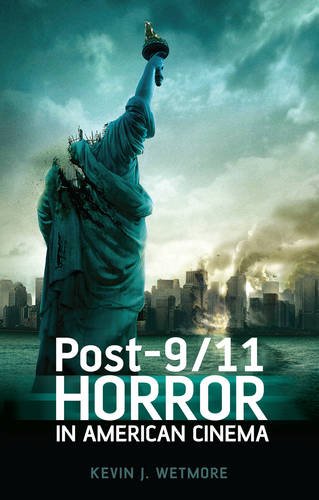
Kevin Wetmore returns to TheoFantastique to discuss his new book Post-9/11 Horror in American Cinema (Continuum, 2012). Wetmore is an associate professor of theatre at Loyola Marymount University, the author and/or editor of ten books including The Empire Triumphant: Race, Religion and Rebellion in the Star Wars Films, and a contributor to numerous volumes on sci-fi, pop culture and religion, including essays on Godzilla, Star Wars, and Battlestar Galactica. Previously he was a guest here when he discussed his book Back from the Dead, which looked at how zombie films reflect the culture of their time.
TheoFantastique: Kevin, your book looking at how 9/11 impacted American horror films was an enjoyable read. When did you first begin to notice that post-9/11 horror was surfacing as an influence, and what specific types of things do you see that is new or amplified that differentiates it from pre-9/11 horror?
Kevin Wetmore: I began to notice that more and more films were concluding with the deaths of the entire cast and that the rules of conventional horror were being violated all over the place. I also noticed a much more dark and bleak attitude within these films. Lastly, like many I noticed the large number of found-footage films. While there are economic reasons to do found footage films (they are cheaper to make, don’t need stars, and can go for easy scares), I think the experience of 9/11, mediated as it was for most of the world, and of the events since, also experienced by most through images on a television screen rather than direct experience, has made people come to perceive found footage films in the same way they do disasters and terrorist attacks. There is a lot of Hurricane Katrina in Paranormal Activity; there is a lot of 9/11 in [Rec] and Quarantine. So sometime around 2008 I began writing about what I saw were the changes in horror as a result of 9/11.
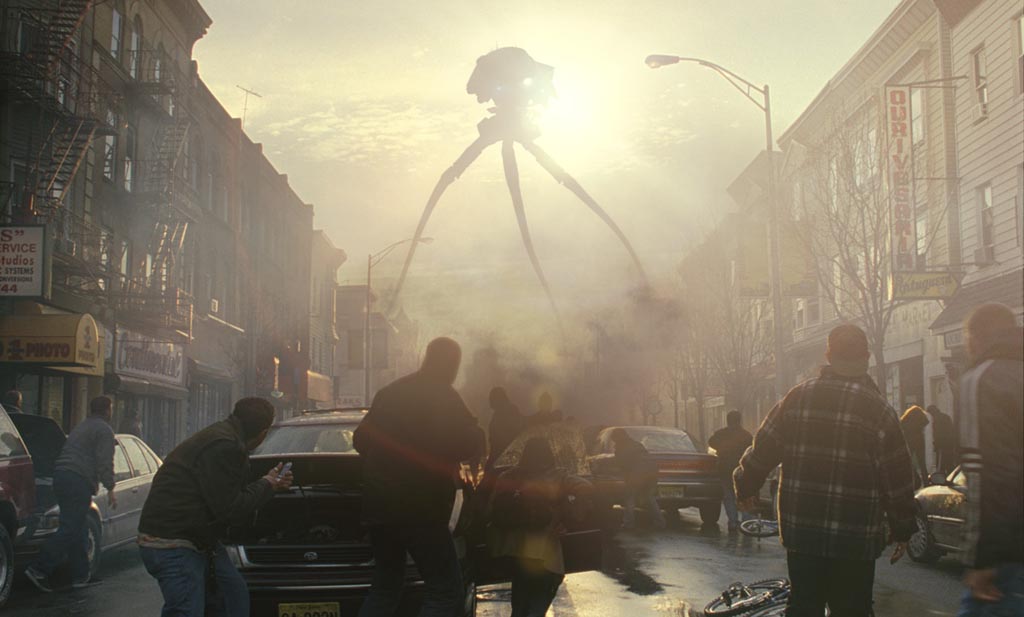
It’s not that 9/11 introduced anything new into horror, but what it did was amplify certain elements and disempower others. We also began to recapitulate 9/11 in film form, so you get movies like Spielberg’s War of the Worlds, Cloverfield, Vanishing on 7th Street, Mulberry Street and Pulse, all of which recreate 9/11 as a horror film, all of which directly quote images from that day.
Other ways that 9/11 has changed horror is an increase in body counts, a transformation in morality in horror films, and an increased nihilism and bleakness. So in the remake of Dawn of the Dead, by the end of the credits all of the characters are dead. Whereas pre-9/11 slasher films dealt with a rather conservative morality – do drugs, have premarital sex or behave foolishly in the woods and you die – post-9/11 horror shows that you die not because of what you did but because you were in the wrong place at the wrong time. And in The Strangers, when asked why they were torturing the couple, one of the killers simply responds, “Because you were home.” The monsters get you because of where you were standing, reflecting the reality of 9/11 itself: if you were on one floor of the twin towers, you lived, one floor up and you died; took one flight on 9/11, you flew into a building, another leaving ten minutes later and you lived. Death is random, meaningless, and undeserved. Horror after 9/11 reflects a much scarier world without rules.
TheoFantastique: One of your discussions that I found interesting was the fear of religion. In a post-9/11 environment a fear of terrorism related to Islam is understandable, but with this has also come a fear of Christian fundamentalism. Can you share how this has surfaced in post-9/11 horror films and why it surfaces along with fear rooted in Islamic extremism?
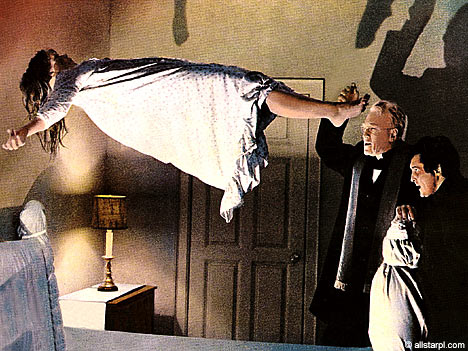
Kevin Wetmore: In the book I argue that religion in horror film is rooted in several different fears. First is the idea that the tenets of religion are real, which means that evil as a personality, as a force, as a group of entities is real. The devil exists. Demons exist. Evil ghosts, monsters and long-legged beasties exist. That is a scary idea and goes against pre-9/11 horror. Look at the most popular horror films of the 1990s – Scream, I Know What You Did Last Summer, Silence of the Lambs – they are all about human monsters, human killers. But the past decade has brought us more films about exorcisms than the wake of the original Exorcist, more movies about demons and ghosts. Again this is not to say that human monsters are passé – for God’s sake there are seven Saw films – but 9/11 brings demons, devils and monsters back to the fore.
Second is the fear of fundamentalism. Yes, Islamic fundamentalism was behind 9/11, but to the best of my knowledge there has only been one film that deals with horror from Afghanistan or Iraq and that is Red Sands. Instead, we prefer the devil we know, if you’ll pardon the pun. I think there is also a concern about our own growing fundamentalist streak in this nation. In the wake of 9/11, President Bush used a lot of religious and especially apocalyptic language. Evangelical Christians cast the war or terror as a holy war. nd we have had our own instances of Christian fundamentalists doing things in this nation that could be perceived as terrorism – shooting of doctors who perform abortions; the Westboro Baptist Church protesting military funerals with hateful, homophobic rhetoric; just recently one minister proposed putting homosexuals into concentration camps and “letting them die out” and his congregation approved. Hollywood has always had a problematic relationship with religion, but after 9/11, fear of fundamentalism trumps fear of Islam. With fundamentalists, it does not matter if the devil is real or not, because they are happy to kill and torture in God’s name.
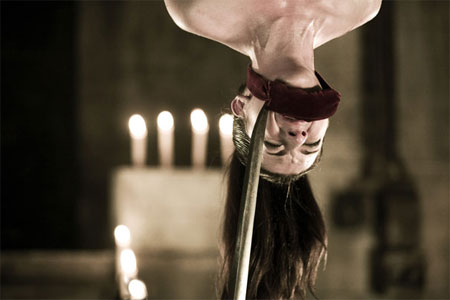
Third, linking the two, is the religious bait and switch – the religious person who is somehow involved in devil worship, or at least facilitating the work of the devil, like in House of the Devil, The Last Exorcism, The Rite, The Reaping and Devil Inside. We distrust people who live their faith a bit too openly. Partly this is because of fallen idols in our own culture: the Catholic Church’s pedophilia scandal, the fall of Ted Haggard, the too-numerous-to-count instances of pastors being caught in sexual scandals combined with the anti-progressive stance of many denominations (the active work of the Catholic Church and the Church of Jesus Christ of Latter-day Saints in California to outlaw gay marriage, for example) reinforce the idea that behind closed doors religious people are even more evil and dangerous than those they speak out against. So we get films in which the rural Methodists are actually Satanists. And they want to sacrifice you to their dark master.
TheoFantastique: One of the most interesting post-9/11 horror films for me is Spielberg’s The War of the Worlds. You mention how this film is very much a representation of the experience of 9/11. It is curious for me in that Spielberg has had a more positive view of aliens in past films (as well as in his personal philosophy of extraterrestrials), and yet it is so dark and depicts the experience of 9/11 and the refugees from war as well. Strangely, one of the first major buildings destroyed in the film is a church, and yet the ending of the film includes the same narration of divine planning which has saved humanity much as in the 1953 version of the film (both representing substantial changes from Wells’ story). In your view, what was Spielberg doing in this film which so graphically depicts not only war (a focus of the director in the past), but also 9/11 and the religious imagery in the film?
Kevin Wetmore: War of the Worlds may end up being Spielberg’s most criticized film, mostly because if its direct quoting of 9/11. More than one critic referred to it as “pornographic” and “needlessly exploitive.” I think in some ways Spielberg was attempting to rewrite 9/11 in a sense. You mention his war and alien fixation, but Spielberg also is a director driven by the need for redemption and reintegration. Heroes must win in Spielberg’s world. His two Second World War movies are Schindler’s List, in which even the horror of the Holocaust is somehow mitigated by Schindler’s work and the personification of Nazi evil in the form of Goeth is justly punished at the end of the film, and Saving Private Ryan, in which even with the deaths of most of the focal characters, Private Ryan is saved and returns to the graves of the men who saved him in order to thank them and show his family who the heroes of the war were. Spielberg wants human action to mean something. After 9/11, much pop culture went nihilistic and existential – bad things happen because bad things happen and we cannot stop it nor even always fight against it. Spielberg on the other hand shows New York and New Jersey being devastated, but a single father is able to get his children safely to Boston and the aliens are defeated. It’s 9/11 with a happy ending, which is why critics object to it.
For me, the defining image of the film is the moment when Tom Cruise and his children hide in the basement of an abandoned upper-middle class house, clearly far larger and nicer than the one Cruise’s character owns. They hear something crashing into the house above and the implication is that the aliens are attacking. Come morning, however, Cruise exits the basement and discovers that a passenger jet liner has crashed into the house (somehow without setting it on fire!?!). It is the literalization of a metaphor: 9/11 is when a plane crashed into every living room in America and changed the world forever. That, I think, is the most effective visual element of War of the Worlds, not the more direct quoting of boards full of photos of the missing, the running crowds or the destruction of buildings seemingly lifted directly from footage of that day.
I suspect religion is not as important in the film. Yes, a church is destroyed first, but other than that there is little religious iconography or theological thought in the film. If anything, it depicts people with no faith trying to survive in a world that suddenly makes no sense and is far more dangerous than any of them thought.
TheoFantastique: How did 9/11 contribute to the so-called “torture porn” subgenre as the nation wrestled with concerns over torture and “enhanced interrogation” in relation to terrorism?
Kevin Wetmore: 9/11 itself did not contribute to torture porn, but American activity afterwards literally invented the genre. In 2002 America began keeping prisoners of war in a camp in Guantanamo, followed by the atrocities at Abu Ghraib in 2003. There were iconic images of people chained in jumpsuits, men made to strip naked and get into human pyramids or be attacked by dogs. Most famous was the hooded man, standing on a box, his face hidden, electrodes attached to his body. These images could have been from horror films or from archives on the Nazis. Instead, these were Americans doing it. Shortly afterwards we began to learn about “enhanced interrogation” and water boarding. There was a huge national debate about torture, which was a deep concern because we were doing the torturing, or at least were the ones sending these people to places we knew they would be tortured. As a result two trends began in horror. The first was the exploration of torture defining Americans abroad. The first two Hostel films show people being tortured not because of anything they did but precisely because they were American. The second one shows Americans paying to torture Americans. The Saw series very rapidly came to be about how the human body might be tortured. So we were exploring our role as torturer while distancing the experience by saying, “Hey, Americans get tortured for being American. It’s a far scarier world for us.” Rapidly, films like Turistas, The Last Resort and even The Ruins follow in which young Americans are tortured and killed because they are young Americans abroad. In almost every single one of these films, however, there is a reversal. One of the people escapes and then begins hunting, torturing, and killing the torturers. The torture of the people who pay to torture Americans and those who work for Elite Hunting in the Hostel films is justified because they started it. In other words, America does not torture people; we are driven to do so when they do it first and we have no other choice. Torture porn allows us the fantasy of torturing without being guilty of being a torturer.
TheoFantastique: I was pleased to see your discussion of The Mist, one of the best horror films of the first decade of the new millennium, in my view. How did this film draw upon 9/11 to include a strong sense of nihilism, despair, and fear of institutions including the military and religious fundamentalism?
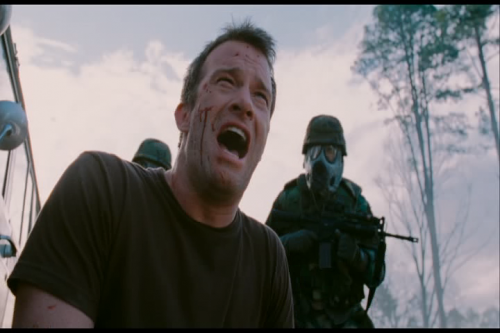
Kevin Wetmore: I loved Stephen King’s novella. I also thought the last lines were wonderful, the idea that this small group had driven south from a Maine still covered in the mist and the two words keeping David going being “hope” and “Hartford” (it also helped that I grew up in Connecticut). The film, however, just blew me away with its unrelenting bleak nihilism and despair. Ironically, the film version, in which the mist dispels fairly quickly, is far more devastating than the implication that the entire world might be covered with the mist and things have changed forever found in the story. The film version keeps most of the novella intact, creating a microcosm within the supermarket. We have a group of people who, faced with an attack from outside, devolve into separate camps: those who do not believe there is a threat, those who want to fortify and then respond as coolly an rationally as possible, and those who see a larger metanarrative in the events (“prophecy is coming true”) and wish to respond through fear and violence. Nobody escapes. Mrs. Carmody is the voice of a judgmental fundamentalism that wants to divide the supermarket into the sheep and the goats, and then sacrifice the goats. Brent Norton thinks the townies are having fun with him and does not believe there is a genuine threat. The military initially keeps information from the civilians, but when soldiers commit suicide, folks begin to realize that the situation is far worse than they imagined. David just wants to get his son back home and rescue his wife. People respond to every crises and every response proves to be unhelpful at best and devastating at worst. Finally, a small group of rational individuals are able to get out to the car and escape, only to learn David’s wife is dead. When they run out of gas, David kills everyone in the car, including his son, to spare them the pain of the monsters in the mist, only to learn seconds later that they were about to be rescued by the Army. Adding insult to injury, the woman who left the supermarket alone after no one would go with her successfully rescued her children and is safe with the military. David just falls to his knees and screams. It’s beautiful. It’s brilliant. And it is one of the most painful moments on film in the last decade. In the theatre where I saw it, the audience, which had been screaming and laughing and responding to the film as one does to horror films, fell silent at that moment. No one talked on the way out except in hushed whispers. It was like we had just seen an atrocity. That, to me, was the heart of the horror of The Mist – no matter what you do, it’s the wrong thing, and those you love will die as a result, but they did not need to. The Mist shows us a world without meaning, without hope, with only bleak despair. The War of the Worlds reproduces 9/11 to make it safer for us; The Mist reproduces 9/11 as it was, not playing at horror but showing loss without hope.
TheoFantastique: At one point in your book you state that “a major theme of horror films of the last decade is that exorcism does not work.” Given the popularity of The Exorcist in past decades, and to expand a little on our discussion of the fear of Christian fundamentalism previously, what types of shifts have taken place that results in a different perception of the place of Satan, diabolical spirits, and exorcism so that these things no longer offer hope?
Kevin Wetmore: It’s funny but yesterday (Friday the 13th) I went to see The Exorcist on stage, where an adaptation of the novel is playing right now in Los Angeles, and I also just showed the film to a class, many of whom had not seen it before. One of the main things folks have said about both is that the story is still scary, but now somehow dated. What people forget, though, is that the exorcism in that film is ultimately a failure. Prayer and rituals do not drive the demon from the girl. Rather, Father Karras demands that the demon “come into me,” and then commits suicide so as to free her from possession. So even the original film does not have much faith, pardon the pun, in ritual and prayer, even if it does have faith in faith. However, look at the post-9/11 prevalence of movies about possession and exorcism: The Exorcism of Emily Rose, The Last Exorcism, The Rite, The Devil Inside, Dominion, and Exorcist: The Beginning, to name just the best known ones. So, as I said before, evil is real. The devil is real. Demons are real. And our biggest weapon against them is a rite that often does not work. The exorcisms do not work in The Last Exorcism, The Exorcism of Emily Rose and The Devil Inside. As often as not, the possessed person dies. More often than not, others die too. As part of the larger continuum of post-9/11 horror, exorcism films show that we have little hope in the face of evil out to get us. Satan, as it turns out, is a diabolical Osama bin Laden. He is out to get us and it will be a long time before we can track him down and defeat him.
TheoFantastique: You include a discussion of The Village, in my view an underrated film by critics of Shyamalan. How did this film’s use of fear through the creation of monsters as a means of social control connect to America’s experience of fear post-9/11?
Kevin Wetmore: The thrust of that film is manufactured fear. You find this also with Cry Wolf, which pretends to be a run-of-the-mill slasher film but turns out to be an elaborate plot to generate chaos for nefarious purposes, one subgenre of post-9/11 horror is the “manufactured fear movie” – films in which the monster or threat has been entirely invented by an individual or a group in order to achieve something else. The elders of the village have created “the ones of whom we don’t speak” as a means of social control. No children or young adults wander too far because of fear. They are also able to preserve the status quo and power structure – only the elders know how to fight the monsters that live in the woods. The problem occurs when Noah finds a costume and begins doing what the monsters in the woods do, which is frighten people and kill things. You must be careful of the monsters you create because they tend to come to life. Likewise, in Cry Wolf, a group of students create “The Wolf”, a serial killer supposedly on their campus. It is revealed, however, that the whole creation of this hoax was so that on girl could get revenge on a teacher who broke off their affair. These films and others like them echo the government’s use of fear after 9/11. We had a color-coded chart for how scared we should be. We also used al-Qaeda as a boogey man to do what we wanted, from the invasion of Iraq to encouraging people to vote a particular way (I am thinking here of Dick Cheney going on the Sunday news shows and saying a vote for John Kerry increased the likelihood of terror attacks). We now take away nail clippers on airplanes because of “the ones of whom we don’t speak,” but insist that we be free to buy armor-piercing rounds for semi-assault weapons. Since horror is the genre in which we explore fear, it is logical that it also be the genre in which we explore the exploitation of fear.
TheoFantastique: Thank you again for your thoughts, and for the great book.
Kevin Wetmore: Thank you for the opportunity and your kind words.
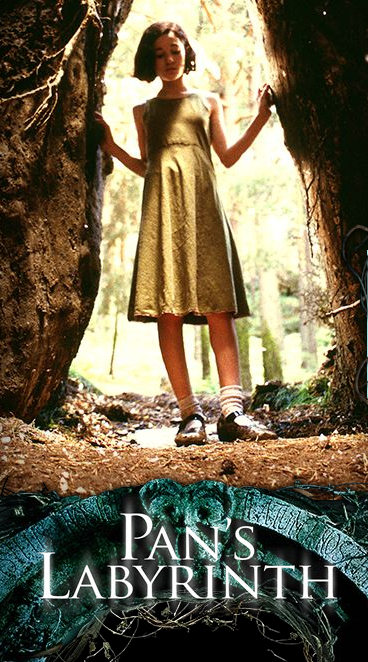
Lindsay’s article considers the myth of Pan’s Labyrinth through the lens of Joseph Campbell’s mythology, but one that is informed about criticisms and concerns in his approach to myth. With this analytical approach Lindsay notes that Guillermo del Toro turns the traditional mythology on its head by featuring a girl, Ofelia, as the main character who takes the hero’s journey. This feminine perspective is found throughout the film, from the characters in the film where Ofelia is mirrored in her journey in the fantasy world by an adult who experiences travails in the mundane world, to feminine imagery such as the Faun’s head which takes on the shape of female internal sexual organs. (Images that support the author’s argument can be viewed in an essay on the piece at Pop Theology.) To those who find this symbolism questionable, Lindsay quotes del Toro in an interview acknowledging the “uterine” concept behind the fantasy world of the film.
One aspect of the essay surprised me when Lindsay referenced another interview with del Toro, this one with the National Film Institute, where a connection was made between Pan’s Labyrinth and The Devil’s Backbone, del Toro’s earlier horror film. Here del Toro said:
I had to make a movie that structurally echoed Devil’s Backbone, and that you could watch back to back. Devil’s Backbone is the boy’s movie. It’s the brother movie. But Pan’s Labyrinth is the sister movie, the female energy to that other one. I wanted to make it because fascism is definitely a male concern and a boy’s game, so I wanted to oppose that with an 11-year-old girl’s universe.
Near the end of the essay Lindsay discusses the death of Ofelia and her “resurrection” in the fantasy underworld where she is a princess. This leads to a consideration of resurrection in fantasy and in religion. Here, del Toro’s concerns over his childhood Catholicism come through as he shares his distaste for resurrection in The Lion, The Witch and the Wardrobe, (a film he was asked to direct and declined) and by extension, resurrection as conceived of in Christianity. Even so, del Toro still seems to appreciate aspects of the passion story:
What is the worth of that sacrifice if he knows he’s coming back? I really enjoy the uncertainty of a guy or a creature going to die for something without knowing if there’s anyone to bail him out. What’s beautiful about the death of Jesus is him saying to his father, ‘Why have you forsaken me?’ That incredibly mysterious and moving passage is so precious because he doesn’t know. If he knew, screw that.
Richard Lindsay’s essay demonstrates the depth and complexity of Pan’s Labyrinth and the work of del Toro. His understanding of myth and religion come together to make for a cinematic experience that rewards repeated viewings and ongoing reflection.
Para*Doxa is seeking submissions of previously unpublished essays on subjects related to
AFRICAN SCIENCE FICTION
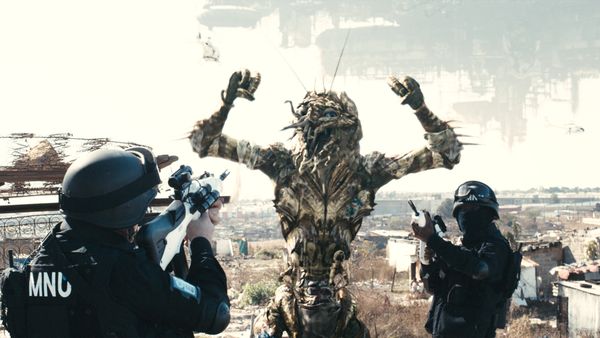
In 2010, Pumzi, the first Kenyan science fiction movie, won the best short film award at the Cannes Independent Film Festival, and the South African co-production District 9 was nominated for multiple Oscars. In 2011, Nigerian-American Nnedi Okorafor became the first author of African extraction to win the World Fantasy Award, with Who Fears Death, and South African Lauren Beukes became the first person from Africa to win the Arthur C. Clarke Award, with Zoo City.
Recent journal issues (African Identities 7.2, Science Fiction Studies 102, Social Text 20.2), edited collections (Barr’s Afro-Future Females) and monographs (Lavender’s Race in American Science Fiction, Nama’s Black Space and Super Black) have been devoted to afrofuturism, African-American SF and African Americans in SF. In addition, there have been numerous publications on the relationships among SF, imperialism, colonialism, postcolonialism, globalization and Empire (cf. Science Fiction Studies 118, Hoagland/Sarwal’s Science Fiction, Imperialism and the Third World, Kerslake’s Science Fiction and Empire, Langer’s Postcolonialism and Science Fiction, Raja/Ellis/Nandi’s The Postnational Fantasy, Rieder’s Colonialism and the Emergence of Science Fiction).
Yet F from Africa, and the Africa(s) in SF, remain relatively unexplored. In order to address this lacuna, the “Africa SF” issue of Para*Doxa is interested in essays that address:
1. Critical work on SF by Africans, including such novels as Mohammed Dib’s Who Remembers the Sea (1962), Sony Labou Tansi’s Life and a Half (1977), Kojo Laing’s Woman of the Aeroplanes (1988), Major Gentl and the Achimota Wars (1992) and Big Bishop Roko and the Altar Gangsters (2006), Ngũgĩ wa Thiong’o’s Wizard of the Crow (2006), Lauren Beukes’ Moxyland (2008) and Zoo City (2010), and Ahmed Khaled Towfik’s Utopia (2008), and such films as Sankofa (Gerima 1993), Les Saignantes (Bekolo 2005), Africa Paradis (Amoussou 2006), District 9 (Blomkamp 2009), Pumzi (Kahiu 2009), and Kajola (Akinmolayan 2010). Can such novels as Ousmane Sembene’s The Last of the Empire (1981) and Adaobi Tricia Nwaubani’s I Do Not Come to You By Chance (2009) be productively read as SF? Is there African SF produced in other media?
2. Critical work on Afrodiasporic authors, filmmakers, musicians and artists, especially as they address Africa, imperialism, colonialism, postcolonialism, globalization, Empire, and/or diaspora, such as Steven Barnes, Octavia Butler, Copperwire, Samuel R. Delany, Tananarive Due, Minister Faust, Andrea Hairston, Pauline Hopkins, Nalo Hopkinson, T. Shirby Hodge, Anthony Joseph, LaBelle, Nnedi Okorafor, Outkast, Parliament-Funkadelic, Charles Saunders, George S Schuyler, Nishi Shawl, Sun Ra, and John A. Williams.
3. Critical work on the representation of Africa in sf by non-African authors, such as JG Ballard, VF Calverton, George Alec Effinger, Jon Courtenay Grimwood, Theodor Hertzka, Julian Huxley, AM Lightner, Ian MacDonald, Mike Resnick, Mack Reynolds, Jules Verne, as well as in comics (e.g., Marvel?s Black Panther, the British-authored Nigerian Powerman) and other media.
Prospective contributors may contact the guest editor with questions about a particular topic?s appropriateness. Double-spaced submissions should be between 6,000 and 10,000 words in length, not including “Works Cited,” and prepared in accordance with MLA style. Please forward manuscripts as MS Word attachments. Within the email itself include name, affiliation, 250-word abstract, and any other relevant information. Submissions should be directed to Para*Doxa’s guest editor, Mark Bould at mark.bould@gmail.com by March 1, 2013. For more information about Para*Doxa see http://paradoxa.com/.
Special issue of the Journal of the Fantastic in the Arts with guest editors Sarah Juliet Lauro and Kyle William Bishop
contact email: afterlivesjfa@gmail.com
The recent flurry of critical attention paid to the zombie and other forms of living dead, such as the vampire (back again to haunt the cultural imagination of a new generation) or the ghost (gliding along a spectrum from spiritual to secularized in the era of the cybergothic), illustrates how our monsters personify the question “What comes next for me?” Additionally, post-apocalyptic fantasies and necroscapes dramatizing the end of human civilization pose the query continually recurring in our collective nightmares: “What is next for humanity?” Recent trends in humanities scholarship move beyond the human to a broader perspective of what constitutes being by looking to the animal, the machine, or the environment, while interest in posthuman figures like the cyborg and the android has not waned.
The special issue will investigate ways of imagining what comes after human life ends—for example, liminal beings that defy this boundary line; narratives about worldwide crisis (doomsday prophesies and environmental catastrophes alike); or simply a deceased person’s Facebook page left “live” as a perpetual, virtual shrine. Such imaginings are, variously, philosophical thought experiments, records of our contemporary moment, warnings about the limitations of our current understanding of “humanity” and “being,” as well as admonitions forecasting an end to the anthropocene era if our values do not change. In our contemporary moment, fantasies about the end of life offer new possibilities for imagining “what comes next” for the human, humanism, and even the humanities.
Call for Papers: “After/Lives: What’s Next for Humanity?”
Journal for the Fantastic in the Arts, the journal of the International Association for the Fantastic in the Arts, invites contributions for a special issue on “After/Lives: What’s Next for Humanity?” Looking at various portrayals of what comes “after” death, the works investigated in this issue will raise the broader question of how such representations reflect our contemporary moment and suggest what will come next for humanity. We welcome essays from all disciplines of the humanities that investigate late 20th and 21st century works of film, literature, the visual and performing arts, and new media. Articles between 5,000-9,000 words might address, but are by no means limited to, the following:
• Representations of monsters/figures of living death, such as zombies, vampires, revenants, ghosts, cyborgs, etc.
• Metaphoric representations of death
• Representations of death in video games and new media, or discussions of death and technology
• Post-apocalyptic spaces, disaster zones, or dystopias that represent a changed relationship between the living and the dead
• Representations of cannibalism in the zombie/vampire and the ethics of meat eating
• Narratives about the afterlife, including virtual afterlives in cyberspace
• Lifestyle and performance of death: Goths, raves, LARPing, and zombie walks (i.e., “playing” dead or undead)
In accordance with the journal’s policy, all contributions will be peer reviewed by the Journal of the Fantastic in the Arts (JFA) and subject to their acceptance. JFA uses the MLA style as defined in the latest edition of Handbook for Writers of Research Papers (New York: The Modern Language Association). For more details, please see and the “Submission Guidelines” section: http://wiz.cath.vt.edu/iafa/jfa/submission.html.
Please submit a 500-word abstract as a Word file via email to afterlivesjfa@gmail.com by 1 September 2012, including a description of what stage of development the piece is in: i.e., already in progress, in development, in draft form, etc. Please declare at this time whether you can commit to an end of 2012 (December 31) deadline for a full-length manuscript.
CFP: Representations of Ghosts in Media and Popular Culture
Society for Cinema and Media Studies 2013 Annual Conference
Chicago, 6-10 March 2013
Deadline for submission of abstracts: 7 August 2012
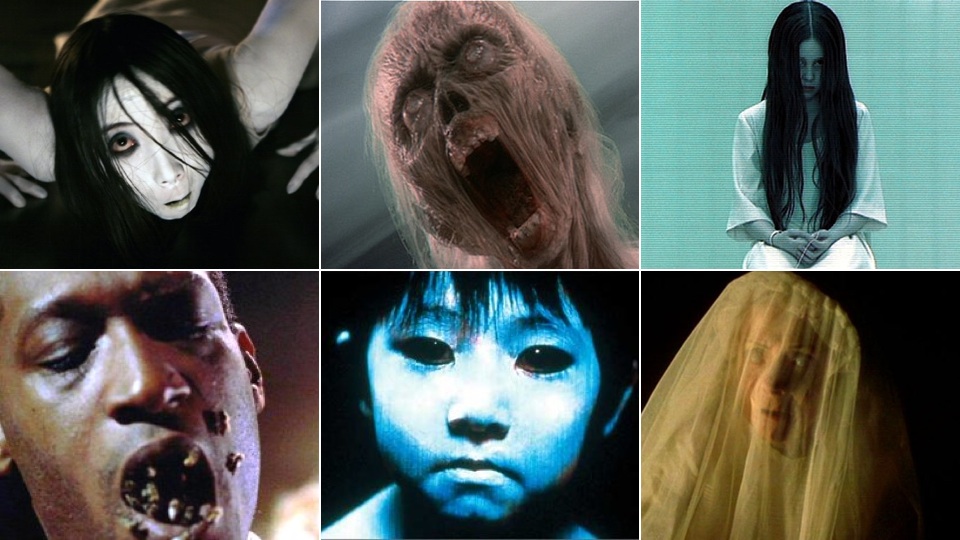
Spirits and ghosts have been part of our culture for hundreds of years. On the stage of Shakespeare’s dramas and in religious rituals, in Dickens’ short stories and in the séances of Victorian spiritualism, in horror movies and urban legends, spectres have been responsible for popular amusements, irrational fears, and acts of devotion. In this regard, the dead coming back from the otherworld to haunt the living is a myth that pertains to the realm of fiction and popular culture as much as to that of religion.
How can we make sense of this coexistence between these two worlds (religion and fiction) that we usually deem as separate? This panel aims to address this question by looking at the way ghosts are represented in several media and cultural forms, including but not limited to photography, theatre, film, literature, television, and popular culture. It will discuss the question of how representations of ghosts waver between fictional and religious contexts, lacking a precise definition of their meaning, or perhaps allowing for the annexation to the worlds of belief and entertainment at the same time. This panel is interdisciplinary in scope. Proposals from different disciplines, including but not limited to film studies, theater, cultural history, photography, media studies, media history, religious studies, and literature, are welcome.
Possible subjects include:
* The supernatural and popular culture
* Ghosts and film technology/theory
* Spirit photography
* Representations of ghosts in literature and theater
* Ghosts and genre: horror, romance, comedy, art film, etc.
* New assessments of classic ghost films
* Mourning and media
* The aesthetics of cinematic ghosts
* The ghost and history
* Ghosts and theories of trauma
Panel convenors:
Murray Leeder
Carleton University
mleeder@connect.carleton.ca
Simone Natale
University of Cologne, Germany
simone.natale@uni-koeln.de
Please submit a 150/200-word abstract to both addresses above, as well as a brief bio, by August 7th. Panelists will be informed by August 15th whether they have been accepted or rejected. Questions are welcome.
This conference — cosponsored by the Eaton Collection of Science Fiction and Fantasy (UC Riverside) and the Science Fiction Research Association — will examine science fiction in multiple media. The past several decades have witnessed an explosion in SF texts across the media landscape, from film and TV to comics and digital games. We are interested in papers that explore SF as a multimedia phenomenon, whether focusing on popular mass media, such as Hollywood blockbusters, or on niche and subcultural forms of expression, such as MUDs and vidding. We invite paper and panel proposals that focus on all forms of SF, including prose fiction, and that address (but are not limited to) the following topics:
* Mainstream Hollywood vs. Global SF Cinema
* SF Comics and Manga
* SF Anime and Animation
* SF on the Internet and the World Wide Web
* Multimedia “dispersed” SF narratives
* Fandom, Cosplay, Mashups, and Remixing
* Broadcast and Cable SF Television
* SF Videogames
* World’s Fairs, Theme Parks, and other “Material” SF Media
* Short-form SF film
* Afrofuturism
* SF and/in Music
* SF Idiom and Imagery in Advertising
* Webisodes and TV Games
* SF Art and Illustration
The conference will also feature the fourth Science Fiction Studies Symposium on the topic of “SF Media(tions),” with speakers Mark Bould, Istvan Csicsery-Ronay, Jr., and Vivian Sobchack. Keynote speakers and special guests will be announced as they are confirmed; see the conference website for periodic updates.
Abstracts of 500 words (for papers of 20-minutes in length) should be submitted by September 14, 2012. We also welcome panel proposals gathering three papers on a cohesive topic. Send electronic submissions to conference co-chair Melissa Conway at Melissa.Conway@ucr.edu with the subject heading: EATON/SFRA CONFERENCE PROPOSAL. Please include a brief bio with your abstract and indicate whether your presentation would require A/V. Participants will be informed by December 1 if their proposals have been accepted.
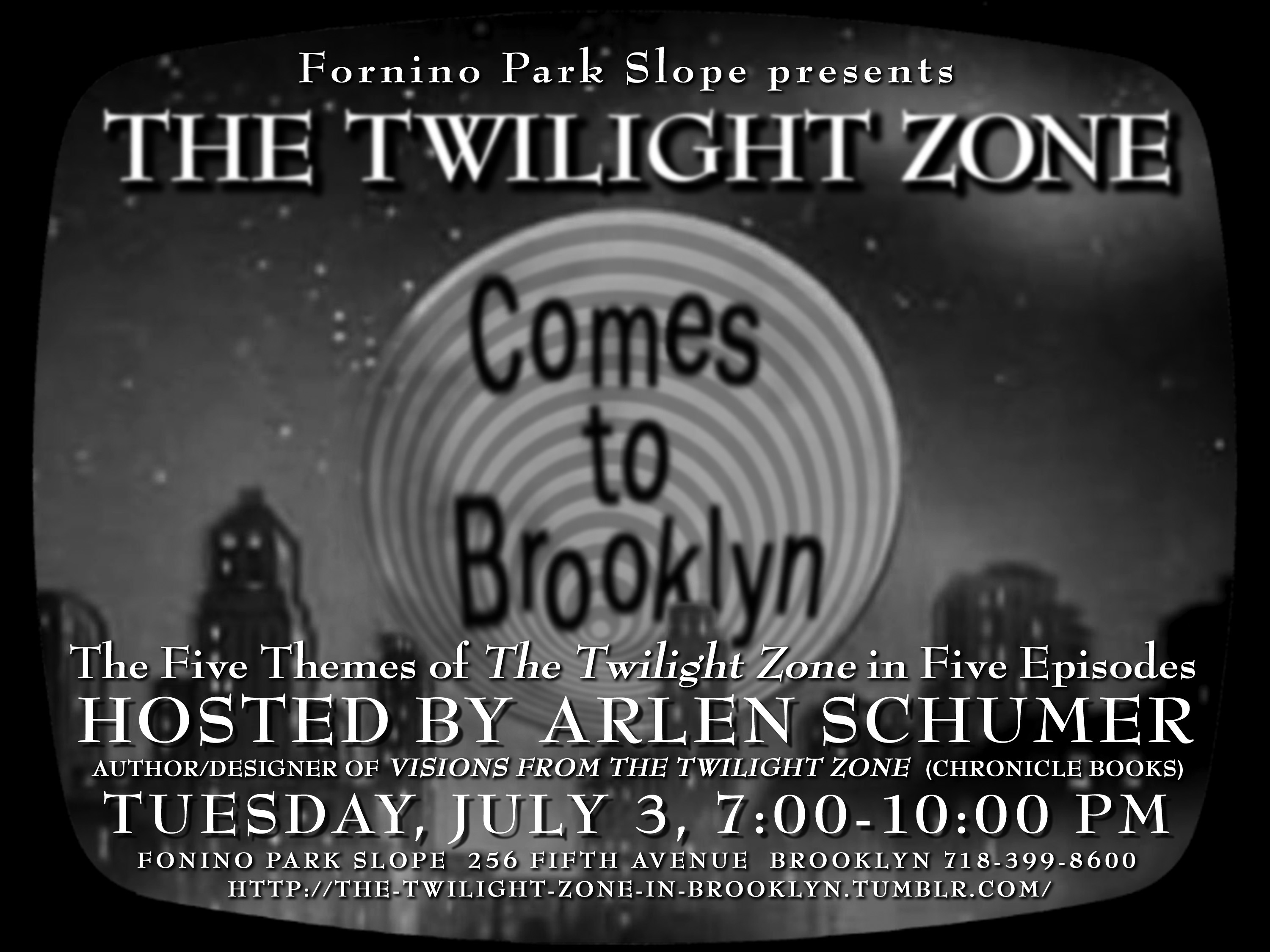
July 4th is not only known for fireworks and barbeques, but for the SyFy Channel’s bi-annual (the other is New Year’s Eve) Twilight Zone Marathon, a 21-hour nonstop lovefest of what Arlen Schumer (author/designer of the only coffeetable art book about the classic television series, Visions From the Twilight Zone ) calls “The Father of American Popular Culture,” because, he asserts, the leading lights of modern sci-fi/fantasy/horror—say, Stevens Spielberg and King, George Lucas — were TZ creator Rod Serling’s virtual children. Except, Schumer says, with all the scenes SyFy has to excise from each 23-minute episode for a raft of commercial filler, and no host or editorial voice guiding you through it all, you’re not getting what he calls the optimal Twilight Zone learning experience.
So come to Fornino’s Park Slope in Brooklyn on TZ Marathon eve, Tuesday night, July 3rd, for his mini-marathon of five of the greatest episodes framed under his “Five Themes of The Twilight Zone” rubric (read his essay online at his chock-full-of-content site), wherein he introduces each episode within a specific theme of Serling’s — like the classic with Anne (Honey West) Francis caught in a department store at night with a bunch of spooky mannequins under the aptly-titled “Suburban Nightmares” theme—with his patented “VisuaLecture” presentation style, in which every image he projects behind him, fading sensuously image to image, is indeed worth the same thousand words Schumer spews with pop culture passion (but without the academic jargon) in his spirited introductions. This ain’t your father’s art history lecture.
To add more to the trippy festivities, Fornino will be serving a special Twilight Zone-homage black & white menu (from Kahlua-and-cream cocktails to homemade black & white cookies), and stipulating all come dressed in black & white. For New Yorkers, not a problem. Tuesday, July 3rd, 7-10pm, Fornino Park Slope, 256 Fifth Avenue, Brooklyn 718-399-8600. Register on the Facebook page, and learn more about the presentation here.
A QUESTION OF IDENTITY
“The place is here…the time is now…and the journey into the shadows that we’re about to watch could be our journey…” These first words spoken by Rod Serling at the beginning of the first episode of The Twilight Zone not only introduced the concept to an unsuspecting 1959 television audience, but helped usher in the 1960s as well. And no episode is more defining of the ‘60s as well as the series itself than the stylized plastic surgery allegory “The Eye of The Beholder,” in which Serling takes the age-old adage about beauty and gives it such a thorough Twilight Zone treatment that it remains the series’ quintessential episode, being both of its time — a metaphor for the burgeoning civil rights movement — and timeless, as his message of tolerance and compassion finally reveals that we are all faceless beneath our bandages, invisible to a society that would prefer nothing more than to render our individuality…obsolete.
SUBURBAN NIGHTMARES
Perhaps the single factor most responsible for the success and longevity of The Twilight Zone was Rod Serling’s acute ability to identify primal American fears and build stories around them, set in commonplace surroundings— a psycho-American gothic of sorts. Like being locked in a department store at night: the sinister setting of the unforgettable “The After Hours.”
SCIENCE & SUPERSTITION
Serling perceived that the benign quest into space nevertheless carried with it the destructive imperialist desire to invade and conquer. Richard Matheson’s episode turns the tables on “The Invaders,” showcasing Agnes Moorehead’s dialogueless, mimetic, tour de force performance as a farm woman terrorized by tiny, mysterious figures.
OBSOLETE MAN
Many of the themes Serling would later clothe in fantasy and illusion in The Twilight Zone were first explored in his Fifties teleplays; his most recurring theme — alienation of the individual through bigotry, racism, and corporate and technological oppression — was that of the “The Obsolete Man.”
THE TIME ELEMENT
The time element was a cornerstone of The Twilight Zone, a dimension Rod Serling described as “timeless as infinity.” And its single greatest time travel episode—not only of the series itself, but of all television shows and movies as well — is the timeless classic, “Walking Distance.”
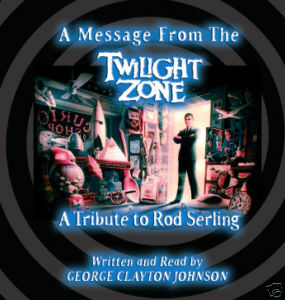
Today I was thumbing through the June 2012 #123 edition of Rue Morgue magazine and an item caught my eye. In honor of a new Twilight Zone collection coming to Blu-ray, the magazine interviewed George Clayton Johnson who discussed his contribution to that classic series. Johnson is the writer of several episodes of the series, and when asked about the legacy of The Twilight Zone, Johnson made the interesting remark that in response to the culture of the 1960s the counterculture gave us marijuana, LSD, The Beatles, The Rolling Stones, and The Twilight Zone. I find it fascinating to lump these elements together, which at first glance might seen incompatible. However, countercultural ideas can be found in each of these examples which challenged the status quo, and in some senses tapped into expansion of the imagination, whether through drugs, music, or televised narrative. Johnson’s comment is insightful, and an example of the continuing cultural significance of The Twilight Zone.