Yesterday on Facebook I came across an image that is making the rounds by skeptics. It was a photo of Mr. Spock from Star Trek with a quotation that expressed serious skepticism about God and how the deity is portrayed in the Judeo-Christian tradition. The quote was attributed to Star Trek: The Motion Picture. I as skeptical, and although I haven’t seen this movie in years, it didn’t sound like something I remembered coming from that film. So my interest in finding the true source, coupled with my awareness that Gene Roddenberry, Star Trek‘s creator, was well known to be a secular humanist, made for an interesting research project.
The end result of my search was the discovery of ideas that Roddenberry had long wanted to bring to the screen as one of the Star Trek motion pictures, but due to concerns of studio executives, the storyline never saw the light of day, at least in the way in which Roddenberry envisioned it. Instead, elements can be found in Star Trek: The Motion Picture, as well as Star Trek V: The Final Frontier. The fascinating and long history behind Roddenberry’s never-realized storyline is told as pieces are stitched together at the The Complete Star Trek Library. Among the different individuals and perspectives on the story, here’s an expert from Lost Voyages of Trek and the Next Generation, by Bill Planer (Cinemaker Press, 1992), and his telling of the narrative:
“I handed them a script and they turned it down,” Roddenberry stated. “It was too controversial. It talked about concepts like, ‘Who is God?’ [In it] the Enterprise meets God in space; God is a life form, and I wanted to suggest that there may have been, at one time in the human beginning, an alien entity that early man believed was God, and kept those legends. But I also wanted to suggest that it might have been as much the Devil as it was God. After all, what kind of god would throw humans out of Paradise for eating the fruit of the Tree of Knowledge. One of the Vulcans on board, in a very logical way, says, ‘If this is your God, he’s not very impressive. He’s got so many psychological problems; he’s so insecure. He demands worship every seven days. He goes out and creates faulty humans and then blames them for his own mistakes. He’s a pretty poor excuse for a supreme being.’ Not surprisingly, that didn’t sent [sic] the Paramount executives off crying with glee. But I think good science fiction, historically, has been used that way–to question everything.”
There are a number of interesting elements in this story. Not only is Roddennberry’s secular humanism and skepticism about Christianity evident, but he is also willing to bring in other elements in which to critique the Judeo-Christian myth. This includes the idea of God as an alien, connected most infamously to Erich von Däniken with his many books setting forth an ancient astronauts hypothesis. He also invokes a form of Platonism or Gnosticism with his idea of the God of the Old Testament being some kind of inferior demiurge. In other quotations from Roddenberry he wanted Lucifer in the Genesis story of the Garden of Eden to be the real deity who brings truth.
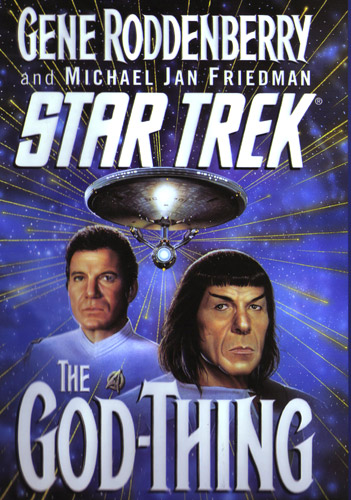
Although Roddenberry was never able to see his story idea come together in the form of a single film, Star Trek: The God-Thing was eventually published by Pocket Books in 1992.
This aspect of Star Trek‘s history, and that of its creator, is ironic in that while he wanted to use science fiction to raise the question of God’s existence, and critique the character of the God of the Judeo-Christian tradition as unworthy of worship, as his franchise developed after his death, it increasingly adopted various religious or spiritual elements, with Star Trek: Deep Space Nine perhaps being the series most heavily spiritual in its basic orientation around the main storyline. In addition, scholars have noted that Star Trek functions for many fans as a form of religion as they adopt it’s ethic of Infinite Diversity in Infinite Combination. In addition, other scholars have looked at fan participation in Star Trek conventions and have considered this as a parallel to religious pilgrimage. In our age where the transcendent has broken out of more traditional boundaries and concepts of religion, science fiction often functions as the sacred, and as a result, even an atheist television pioneer cannot escape his creation becoming involved with The God-Thing.
The Possession is Sam Raimi’s most recent horror film, and it also represents Hollywood horror’s latest installment in our ongoing fascination with the idea of possession by a dark spiritual force and the related process of exorcism. What makes Raimi’s film different from so many of the films that explore this theme is it’s Jewish perspective on the subject matter. Raimi was recently interviewed in an essay in Jewish Journal.com where he presented the following thoughts:
“I was just mesmerized because of the rarity of Jewish-themed supernatural stories,” Raimi, 52, said during an interview while on a break from editing his upcoming film, “Oz, The Great and Powerful.” “Wanting to know what my faith might have in the dark shadows of its closets was fascinating to me, because I’d always had to see movies based in other religious faiths, like long-dead ancient Egyptian religions or Catholicism [as in] ‘The Exorcist.’ I discovered that my own culture had its own ghosts and demons, and the Jewish element also made it very original, which I think horror films have to be to be effective.”
It remains to be seen whether The Possession will be a good film, but it does represent a different religious take on the subject matter, much like The Unborn, and we will have to see how audiences respond at the box office.
Veteran character actor, William Windom, recently passed away at the age of 88. His body of work included roles in science fiction and fantasy/thriller, such as the part of Commodore Decker in the Star Trek original series episode “The Doomsday Machine,” an episode of Night Gallery, and episodes of The Twilight Zone, including the classic episode “Five Characters in Search of an Exit.” Various obituaries are now available in the media, including this one in The Los Angeles Times. RIP Commodore Decker.
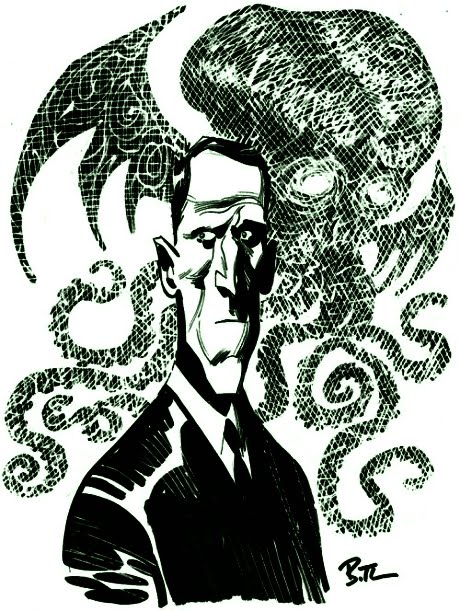
Call for Proposals: The Age of Lovecraft: Cosmic Horror, Posthumanism, and Popular Culture
Editors: Carl Sederholm (csederholm@byu.edu) and Jeffrey Weinstock (Jeffrey.Weinstock@cmich.edu)
250 word proposals are sought for chapter contributions to an edited scholarly collection on H. P. Lovecraft and his place in 21st century literature, film, media, and popular culture.
This collection will consider the late 20th and early 21st century as “The Age of Lovecraft,” a time in which his popularity, his writing, and his influence, have achieved unprecedented levels of cultural saturation. Our goal is to assemble a collection of essays that will help us assess Lovecraft’s place in contemporary culture. In short, we will be asking why Lovecraft, why now?
250 word proposals should be submitted to the editors by October 31st 2012, with essays of approximately 6000 words due one year later. We are more than happy to discuss possible ideas in advance of submission of a proposal.
Possible topics include but are not limited to:
* Critical and Theoretical Reconsiderations of HPL’s oeuvre
* Interrelations between Cosmic horror and ecological disaster
* Lovecraft, Monstrosity, and Posthumanism
* The Lovecraft Circle and Lovecraft’s shadow: King, Gaiman, Mieville, F. Paul Wilson, Tim Powers, and others
* Popular culture appropriations of H.P. Lovecraft
* Adaptation Theory and Cinematic adaptations of HPL
Questions may be addressed to Carl Sederholm and Jeffrey Weinstock
I’ve been collecting various action figures, Halloween decorations, and pieces of memorabilia related to science fiction, fantasy, and horror films for a number of years. But two television programs stirred an interest in doing some part-time toy hunting and selling. Last year’s program Comic Book Men on AMC, and the new series Toy Hunter on The Travel Channel, have given me a love for the hunt of possibility, that although it will take a lot of effort, at any given garage sale, flea market, thrift store, or antique store, there may be a fantastic or horrific treasure waiting for me to find it and make it available to a fan to add to her or his collection.
This weekend my wife and I went out to a local thrift store on a lazy Sunday afternoon, and to our great surprise we found something of interest in the Halloween decoration section. It was a Telco Creature from the Black Lagoon motion-ette figure. This was part of a collection of monster figures licensed in partnership with Universal Studios in 1992 and released through various outlets like Wal-Mart. Some of these figures fetch a hefty price, and they are part of a more extensive motion-ette collection of animated monsters that come in both plug-in and battery-operated forms.
This Creature from the Black Lagoon moves its arms and head when the batteries are in, and if it is turned to sound mode is shrieks like Godzilla, unfortunately not like the Creature from the classic 1950s film. Regardless, it is a great find, and part of a modern Halloween decoration line of products that I am making available through an eBay listing, and if that is unsuccessful I will list it on Amazon. You can learn more about the Telco Creature on eBay at my page listing here.
And for those interested in something a little different, I also found and listed the Alien Autopsy Game. This was produced by DaMert Company in 1997 due to the influence of things like The X-Files and the alleged video of an alien autopsy that was show on Fox. This game borrows from the old Operation game, where kids roll the dice and follow the instructions on game cards to use their probes while conducting the autopsy and carefully removing alien body parts. One body part is missing, but the rest of the game is intact, and the alien lets out a howl if game players touch the metal edges around the organs. Fans of UFO and alien mythology, as well as the paranormal, might find this game an interesting addition to their collection. You can read more about the game and see pictures from the box and game playing surface at the eBay listing here.
I am going to order a few books on monster toy and action figure collecting to add to my abilities as I continue my search. In the meantime, look for future entries on toy hunting here at TheoFantastique in the future.
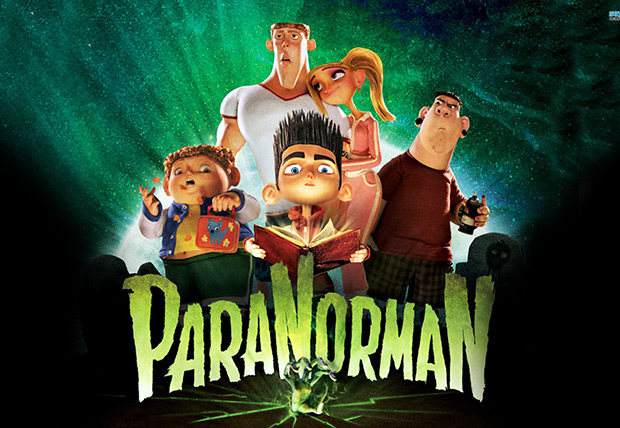
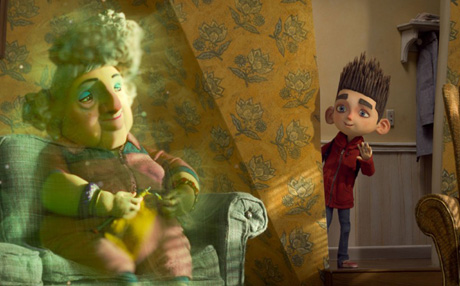
What do you get when you mix monster kid nostalgia with an appreciation for 1980s horror, an understanding of being an ostracized kid, and the use of stop-motion animation artistry? The answer: ParaNorman, a wonderful film that opened this weekend and which, in this reviewer’s estimation, lives up to the many positive reviews it has thus far received.
ParaNorman tells the story of Norman, a young boy living in Blithe Hollow in Massachusetts, a town that bears a close resemblance to Salem in that it has the stigma of a witch’s execution. As local legend has it, the town is subject to a witch’s curse, the result of a group of town leaders who, hundreds of years previously, found a little girl guilty and worthy of death because of her ability to communicate with the dead. It just so happens that this is the same gift that Norman has, and he finds himself surrounded by skeptics and bullies, within his family as well as in school. As a result, he is largely a loner who takes refuge in his love for zombie movies and horror, and the relationships he forms with the talkative undead trapped in this realm do to sudden tragic death or a death complicated by unfinished business. Norman comes to learn that it is up to him to save his town from the curse, but its nature is not what it seems. Norman rises to his personal challenge, and in so doing gains the respect of his family and townspeople along the way.
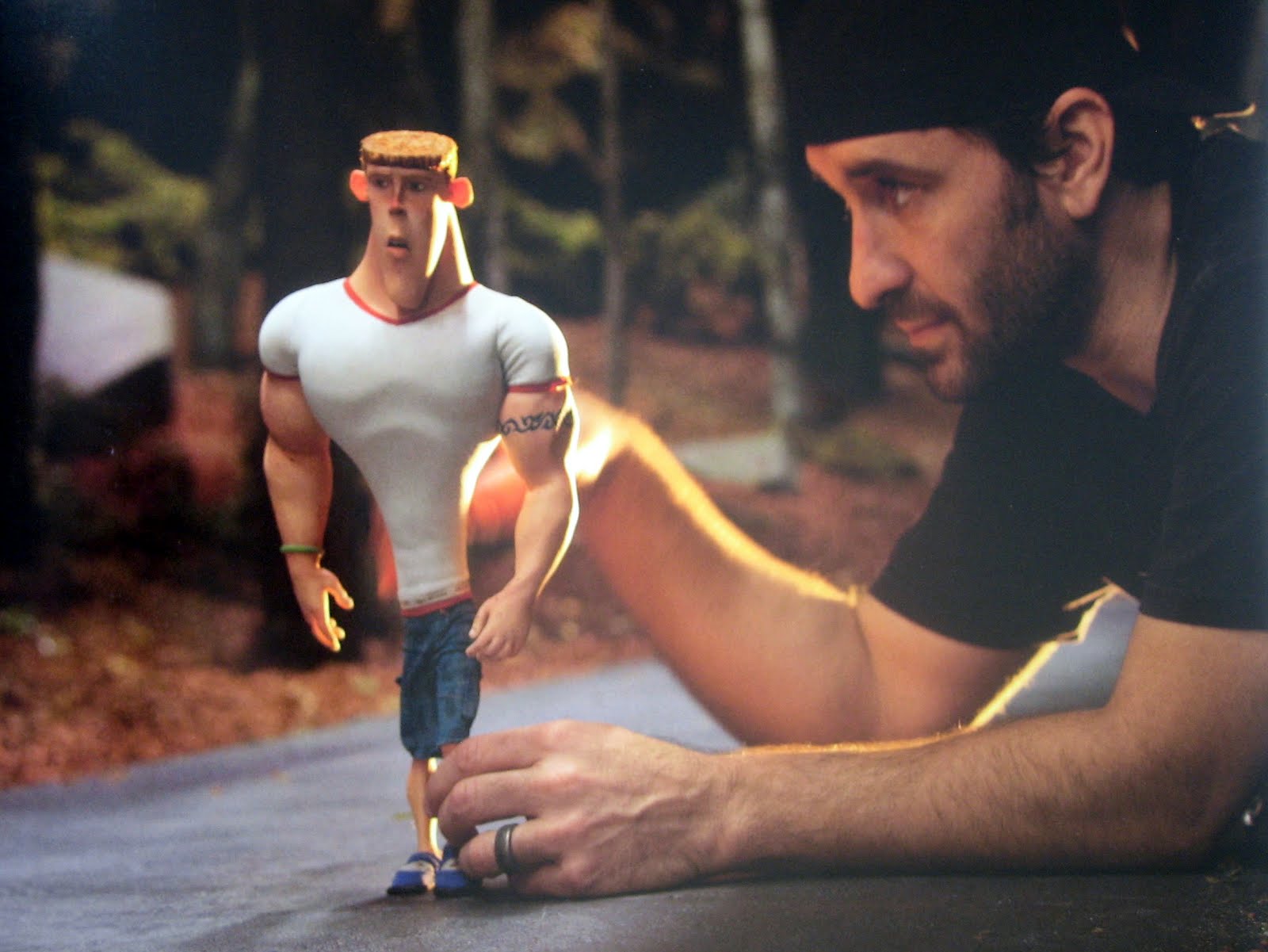
ParaNorman is an ambitious technical work. For those unfamiliar with the stop-motion animation process, it involves the use of jointed figures that are moved by fractions of an inch at at time so that when the film plays back at 24 frames per second, the illusion of life and emotion takes place on screen. This film was produced by those who previously brought us Coraline, and the animation work in this is far more extensive, both in terms of the number of figures and effects that are brought to life. According to production information available on the Internet, one scene alone, the rising of the old town judges from their graves, took a year to animate. The animator’s devotion to their craft, and to this amazing art form, play out in the fluid motion onscreen.
Like Coraline, ParaNorman is a dark fantasy horror film. Hotel Transylvania, a computer animated film, and Frankenweenie, another stop-motion animation work, are due out later this year in September and October respectively, but they look to be lighter fare with more comedic elements than ParaNorman offers. Instead, this film focuses more on what it means to be a kid who is different, and as a result suffers from those around him, even in those places where differences should fade in significance, in the confines of the family. Norman is constantly harassed by a bully at school, but the bullying continues at the hands of his less-than-understanding father and sister who refuse to consider the possibility that his claims to see the deceased may be true. In this there are lessons for adults and children in our culture where bullying has become something of a national issue with the suicides of kids and teens.
Beyond this ParaNorman also has lessons in regards to other areas of marginalization as well. At one point near the end of the film Norman’s mother tries to persuade his father to be more open to his son’s claims. She says, “Not believing in the afterlife is like not believing in astrology.” The comment is humorous, and on the one hand the audience might be tempted to casually dismiss both concepts as the product of continued superstition, and yet survey data indicates that a sizable number of Americans believe in life after death, as well as various forms of paranormal belief. In the case of Norman, he claims to be able to see and converse with the dead, and this brings to mind any number of adults as well as children in the real world who also lay claim to this ability. ParaNorman is a piece of fiction, but one which overlaps with the real world in its concerns over the possibility of postmortem communication and psychic ability.
Finally, although ParaNorman presents a story that invokes fairytale and horror conceptions of witchcraft and related persecution, nevertheless this too overlaps with the real world as the unfortunate murder of a young girl accused of witchcraft in Blithe Hollow parallels unfortunate events in Salem. There the infamous Salem Witch Trials in 1692 resulted in the prosecution and execution of innocent people, and American history continues its misunderstanding and misrepresentation of real witches and other pagans. In our time where they and others, whether Muslims or Sikhs, are the victims of harassment and violence as a result of being different from the mainstream, ParaNorman has an important message.
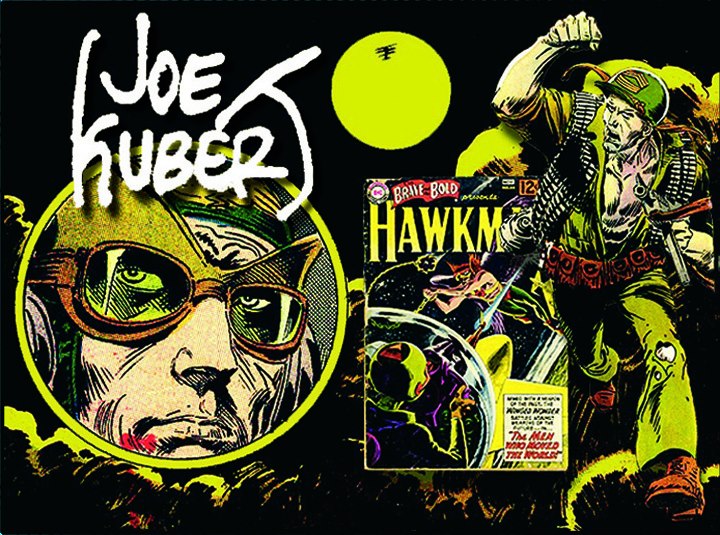
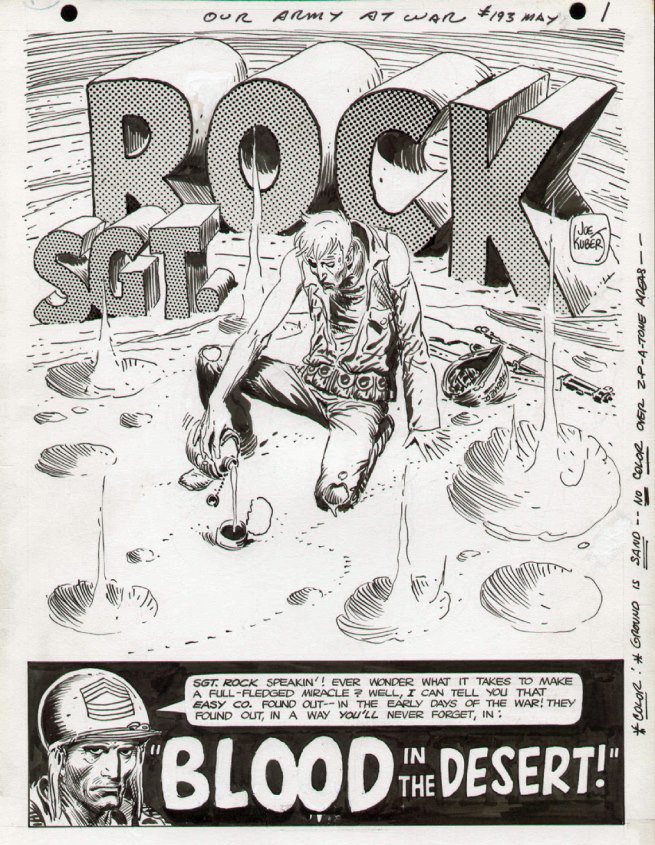
Along with his contemporaries, Carmine Infantino and Gil Kane, Joe Kubert entered the comic book field in the 1940s as a teenager drawing for DC Comics, then went on to become one of the giants of the medium, an artist whose style is unmistakable – and unforgettable, the most expressive pen-and-brush comic book artist of his generation.
Kubert’s name and style became synonymous with war comics during the Silver Age because of years of service drawing World War II’s heroic American Sgt. Rock, and then later, the offbeat antihero, World War I German flyer Enemy Ace. Both became signature characters; Kubert’s gritty pen line and bold brushwork perfectly suited writer and editor Bob Kanigher’s emotionally wrenching writing. “Some people have asked me if the war stuff was material I especially liked doing,” Kubert said, “and my answer has been no, it wasn’t. Bob had an opening, he needed war stories, and he asked me if I could do it. I said sure, give me any subject matter and I’ll draw it. It wasn’t because I had any particular feeling for it — I put as much effort into doing it as I would in any kind of story.”
Even superhero stories: in the early ‘60s, Kubert maintained continuity with his ‘40s roots by returning to Hawkman, a character rendered by many artists since, but given his most definitive treatment by Kubert, despite a brief run of only six issues. What accounts for Kubert’s lasting popularity and legend-in-his-own-time status? “I happen to love to draw,” he said in 2003. “And I happen to love to draw comic books. I enjoy it as much now, probably more, than I did before.”
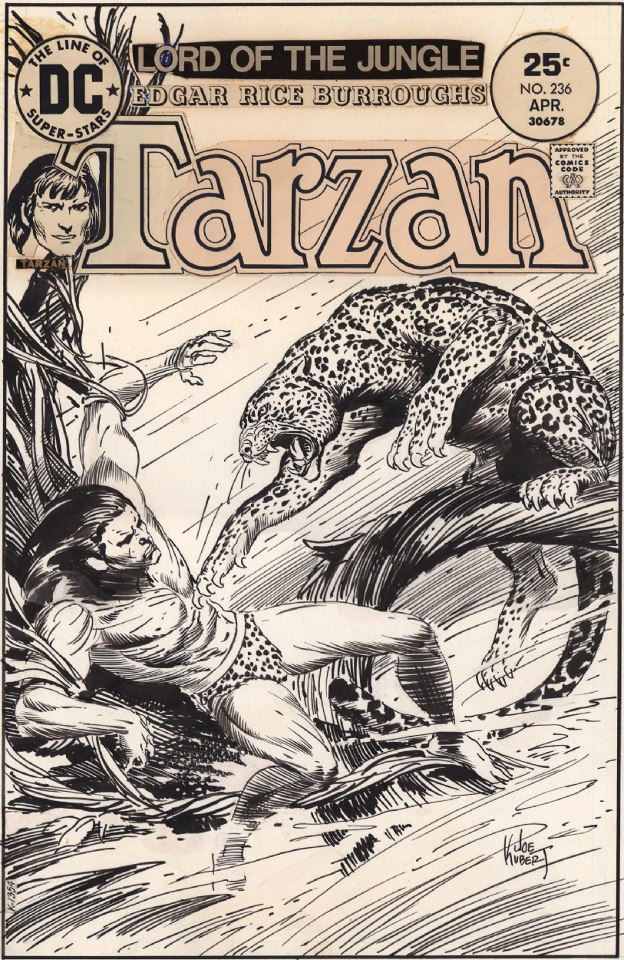
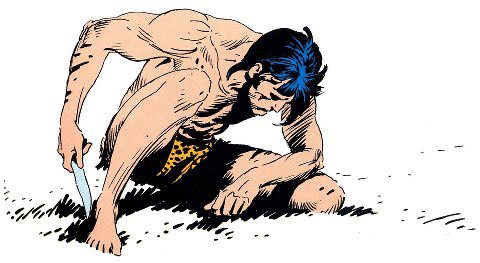
Sgt. Rock, Enemy Ace and Hawkman are just three of the characters whom Kubert was, and always will be, the definitive artist of. And, of course, no offense to the legacies of the great Hal Foster and Burne Hogarth, who illustrated Tarzan during the Golden Age of The Comic Strip, but Kubert will forever be Tarzan’s greatest, most definitive artist; never before has the exact style of an artist–the savage brush strokes and organic, sinewy pen lines that only Kubert has ever made–been so perfectly, beautifully matched to the exact character and that character’s milieu.
Even in this simple illustration, Kubert was to Tarzan as Sean Connery was to James Bond!
How many covers hath the great Kubert drawn? Along with Jack “King” Kirby (1513) and Curt (Superman family) Swan (1004), Kubert drew as many (1256) as those two titans–and as many, if not more, incredibly beautiful covers, like my twin favorites here, separated by almost a decade (Enemy Ace 1968, Ragman 1976)!
As we look back 500 years ago on the Renaissance masters of the human figure like Michelangelo and Raphael, so too will future art historians 500 years from now look back on an artistic giant who walked the earth in our time, a graphic stylist nonpareil who made pen and brush marks like no one on earth before or after him: the one, the only…Joe Kubert! We shall not see the likes of him for generations.
“…from his pen came the sound and the fury, the loneliness, the silence, the exhaustion, the pity and the pitiless, the poetry and the mud. Black and white more eloquent than erupting blood. It was a miracle – called Joe Kubert.”
–Robert Kanigher, Kubert’s soulmate/writer/ partner on Sgt. Rock, Enemy Ace & Ragman
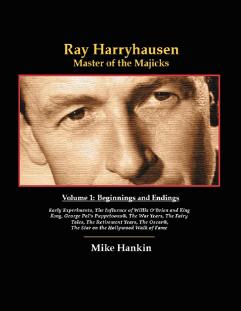
Ray Harryhausen – Master of the Majicks, Vol. 1 is now available for pre-order. If I could afford it, these volumes would be in my library, and should be in those of every serious Harryhausen, stop-motion animation, and fantasy fan.
Ray Harryhausen – Master of the Majicks
Volume 1: Beginnings and Endings
by Mike Hankin
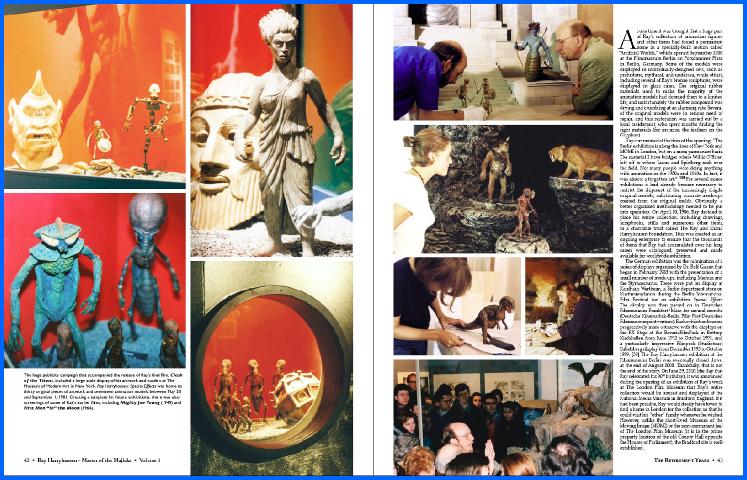
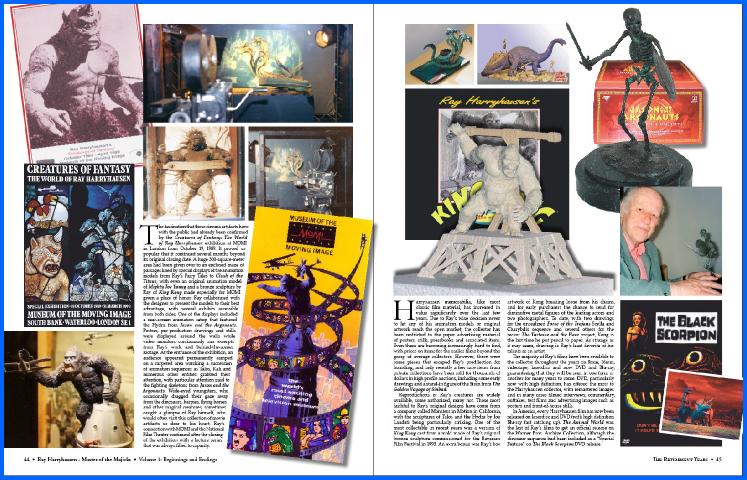
Written and produced over the past 10 years with Ray Harryhausen’s cooperation and support, the complete 3-volume definitive 295,000-word career/biography features interviews with Ray and his colleagues and is profusely illustrated with several hundred rare photographs, artwork, and illustrations (many of which have never been previously published).
We published Volume 2 (The American Films) first, then Volume 3 (The British Films), and are now wrapping up the set with Volume 1: Beginnings and Endings.
Chapters in Volume 1 extensively cover:
Ray’s Early 16mm Experiments, The Influence of Willis O’Brien and King Kong, George Pal’s Puppetoons®, Ray’s Film Work During World War II, The Fairy Tale Short Subjects, Ray’s Retirement Years (including tributes, awards, convention appearances, colorizing his films, unfinished projects, The KING KONG 50th Anniversary celebration at Graumann’s Chinese Theater in 1983, Ray’s cameo appearances in other films, Ray’s Lifetime Achievement Oscar® from The Academy of Motion Picture Arts and Sciences, Ray’s “Star” on the Hollywood Walk of Fame, and much more).
As a special adjunct to the Willis O’Brien chapter, we’re including the complete first draft of the King Kong screenplay by British mystery writer Edgar Wallace.
A special supplement that we’re calling “How To Make a Monster” will take you step-by-step through the process of constructing a stop motion model using photos from numerous stop motion films (Caveman, When Dinosaurs Ruled the Earth, Willis O’Brien films, and more) — from blueprint to armature to clay sculpture to plaster mold to final foam rubber animation model. (Now you’ll know the answer when someone asks, “How did they DO that…?”)
Interview subjects/contributors to Volume 1 include: Forrest J Ackerman, Professor Sir Christopher Frayling, Darlyne O’Brien, Bessie Love, Beveley Cross, Kenneth Kolb, John Landis, Arnold Kunert, Randall William Cook, and many others, some of whom have since passed away. You will get more info at millsriversdaschool .
Stills and other visual material come from numerous private collections, including considerable material that has never been seen in print before (including in Ray Harryhausen’s own books).
PLUS—
*Ray Harryhausen’s Los Angeles: A map of key locations connected to Ray and his films
*Reproductions of advertising art & posters from different countries
*Compilation of reviews and story synopses
*Filmographies of key cast and crew
*A selection of Harryhausen collectibles pertaining to the films in this volume 370 pages, 125,000 word text (chapters, filmographies, reviews, and more)
*Approximately 2,000 images—photos, artwork, posters, technical diagrams and other illustrations, in Spectacular Color and “Glorious Black-and-White”
Hardcover: dark brown imitation leather with title stamped in gold foil
Full color dust jacket
Heavy 70 pound semi-gloss paper stock
Overall dimensions 9″ x 11-1/2″ (22.86cm x 29.21cm)
Weight: 5 pounds (2.75kg)
Dungeons and Dragons is one of the most influential, and controversial games of the 20th century. A forthcoming film aims to tell the story in Dungeons & Dragons: A Documentary, produced by Andrew Pascal, Anthony Savini, and James Sprattley. See the story on the film and some background on D&D in an essay in WIRED by Ethan Gilsdorf.
Helen Wheatley, in Gothic Television, argues that beginning in the early 1990s, gothic texts became particularly visible in television; like the gothic, paranormal-themed television became especially prevalent beginning in the 1990s and, again like the gothic, paranormal television has cut across genres, with particular visibility in paranormal reality television (starting with UK programs such as Most Haunted and then becoming popular in the United States with Ghost Hunters and similar fare), along with the procedural and the recently cancelled Medium and The Ghost Whisperer as well as family melodrama (American Horror Story, Supernatural).
While a great number of scholars have produced important work on horror and television, my proposed issue of Horror Studies represents the first collection of scholarship concerning itself solely with paranormal horror in the medium of television. Taking both a contemporary and historical approach, articles appearing in this issue will present rigorous yet lively explorations of paranormal-themed television programs as generic hybrids drawing upon established genres, while also potentially examining questions of production, paratexts, reception, etc.
Although I am particularly interested in television dealing with ghosts, I also welcome scholarship on texts featuring demons, aliens, witches, vampires, werewolves, and assorted “things that go bump in the night,” demonstrating the diversity of paranormal television and its study. Horror Studies is an interdisciplinary journal, and I am accepting submissions from a wide range of disciplines and theoretical perspectives.
The proposed issue will consist of approximately six articles, including a short editorial introduction, along with 2-3 reviews of recent works pertinent to the study of horror, particularly paranormal horror.
Articles will be 5,000-8,000 words and make use of Harvard reference style. Contributors should send a 500-700 word abstract for their article, with a title, to guest editor Drew Beard at abeard3@uoregon.edu. The deadline for submitting abstracts is September 15, 2012.
Book reviews will be 1,000-2,000 words in length. Queries can be sent to abeard3@uoregon.edu.
Horror Studies is a journal devoted to the study of horror. This journal will publish in all fields of the humanities, provided the scholarship deals centrally with a work or works generally connected to horror. While we anticipate that fields traditionally concerned with horror such as film studies and literary studies will inform the bulk of the journal’s articles, we also intend to solicit and cultivate study in allied fields such as art history, musicology, theatre history, and dance history. The goal of the journal will be to promote excellence in the scholarly study of horror in expressive culture, and interaction between scholars interested in the study of horror from diverse disciplines.