TheoFantastique: Scott, thanks for visiting TheoFantastique once again to discuss your great work. Welcome back! Let’s start with a couple of basic and introductory questions before getting to some specifics about your new book. Can you discuss how you came to develop a personal passion for horror, and how you connected this to your academic life as a historian?
Scott Poole: Thank you for having me back. The origin of my own passion for horror is decidedly un-academic, despite teaching classes in history and horror and now having written five books on the subject. I am a fan and have been since I was 7 or 8. It was the 70s and early 80s but I had the chance to see some of the great, and not so great, horror films of the 30s, 40s, and 50s on my local TV stations Shock Theatre. I of course collected current and back issues of Famous Monsters and read Fangoria. As a historian trained in American history, I think it was natural for me to seek out connections between the literal horrors of our past and the way that they intertwine in popular entertainment.
TheoFantastique: How do you see history bringing an important dimension to our understanding of horror, and why might this be of interest to general horror fans and not merely those working in the academy?
Scott Poole: Historians never simply record the past. We are a bit more like necromancers who try to bring it back to unnatural life and the terrible things we resuscitate also often bring dire warnings for the present. Horror, whether in film or fiction, has often been a way that the dark sides of history have been tucked away. I think horror fans are at least as interested, maybe more interested, in the larger meaning of the genre they love than academics…in fact most of my books are not written for academics but for students and the general reader.
TheoFantastique: As a launching point for a discussion of your book, can you provide a summary of your main thesis?
Scott Poole: Wasteland tells a series of stories of directors, writers, and artists, most of whom experienced the horror of the trenches, and returned home to create what we know as modern horror culture on screen and page and canvas. I hope that by telling these often baleful stories, readers will see how the Monsters of the 20s and 30s are still with us. The idea that the last century of conflict emerged from the Great War certainly plays a role in the book, a kind of tolling bell in the background of these stories from early in the century.
TheoFantastique: A handful of others, such as David Skal, have sketched the impact of World War I on modern horror. How is your treatment similar yet also very different in its exploration?
Scott Poole: David J. Skal is really the dean of American horror history and there really is not a book I’ve written that is not heavily influenced by him. I think my account differs in that I am less inclined to psychological explanations than his discussion of the same period. I also would say that I took some breadcrumbs he drops here and there in his extraordinary book The Monster Show and found even more evidence that what we think of as modern horror came from the Great War. I was delighted he wrote a kind endorsement for the book.
I also have to mention Christopher Bram’s novel Gods and Monsters. Although a fictional account of the last days of James Whale, the director of Frankenstein, the Bride of Frankenstein and other classic Universal horror pictures, Bram brings some extraordinary insights into both horror film and the Great War. I’d be very happy if readers picked up both Bram and Skal’s work along with Wasteland and read them as companion pieces.
TheoFantastique: What do you see as the thread that weaves its way through the years, connecting the experiences from the Great War to expressions of horror such as the German silent films to Universal Studios, and then how this was carried through in Universal’s ongoing influence in horror?
Scott Poole: I hope readers will be as stunned as I am about the number of connections between European films produced after the Great War, the classic Monsters we love from Universal Studios, and many of our present concerns. There are very direct connections such as Paul Leni leaving Germany to create the first great haunted house picture in The Cat and the Canary (1927) and an exercise in body horror called The Man Who Laughs (1928). The latter film heavily influenced James Whale and he watched it and The Cabinet of Dr. Caligari over and over again while working on Frankenstein.
In a broader sense, the Great War created mountains of corpses and millions of scarred and disfigured soldiers and civilians. This confrontation with the dead body and the fear that the dead body is simply an empty husk, becomes a theme we see from Nosferatu through Frankenstein and then reappearing in the modern slasher film. I also make the point in the book that the French film J’accuse (1919 and remade in 1938) became the first cinematic use of an “army of the undead,” an idea that of course Romero fully developed when he created the first zombie film.
TheoFantastique: It’s important not only to observe aspects of history, but also to learn from it. What lessons does the Great War’s influence in the origins of modern horror have for us today so many years removed from those awful events?
Scott Poole: The book deals with the rise of fascism, and it’s relation to the imagery of horror. The lure of fascism, what Walter Benjamin described as a political art of darkness that “promises the people nothing except the chance to express themselves” should have died forever after 1945. But we see it today in Victor Orban’s Hungary, Bolsanaro’s Brazil, and Trump’s America. I hope that readers come away with the sense that using the term fascism has specific historical meaning…it’s not a political insult. Horror fans will be interested to learn that a kind of unreflective horror played a role in the fascist aesthetic in Italy and Germany, leaders and regimes that sought to darkly frighten by, as China Míeville puts it, “enmonster” foreigners, immigrants, and the Jewish people. But they will also see that directors like Fritz Lang used horror to warn, in films like M (the first serial killer picture)…and he had to flee Germany because of this.
TheoFantastique: Why do you think World War I had such a dramatic influence beyond other wars in horror? Why the Great War over World War II, the Korean Conflict, Vietnam, and the so-called “War on Terror?” And do you foresee more recent conflicts having a greater influence on horror moving forward?
Scott Poole: One point I make in the book is that we cannot understand any of the conflicts you mention without understanding the Great War. There’s a sense in which the Great War never ended and we still live in its morbid half light. The uncertain “peace” that came out of the Paris peace conference created the modern middle east as we know it, placing much of it under the colonial control of France and Britain and turning it into the cauldron of conflict as we know it today.
That said, I’m very interested in how postcolonial conflicts like the Vietnam War rattled the United States and helped transform the horror tradition in the work of Romero, Carpenter, Hooper, and Craven. We have already seen the War on Terror playing a direct role in films like Romero’s Land of the Dead and the general confusion about war aims appearing everywhere from Zach Snyder’s remake of Dawn of the Dead to the peculiarly apolitical Walking Dead series. It’s too soon to tell but I strongly suspect the recent wave of films dealing with digital horror and social media will continue. Cyberwarfare, in which bots and fake accounts, play havoc with democracy are very much a part of the terror of online life.
But, again, we are watching, to borrow Walter Benjamin’s image, “wreckage pile upon wreckage” in the world’s history. The trenches and the dead haunt us still and pose questions to us, just as they did in the horror films that appeared soon after 1918.
TheoFantastique: Scott, thanks for taking time to answer some questions and discuss your book. Your continued exploration of the depths and significance of horror in history is much appreciated.
I’ve heard this historical argument made before in horror film documentaries, and in the work of David Skal. So it’s a treat to see Scott Poole, a friend of TheoFantastique (see here and here), pick up this theme with his latest book.
In the early twentieth century, World War I was the most devastating event humanity had yet experienced. New machines of war left tens of millions killed or wounded in the most grotesque of ways. The Great War remade the world’s map, created new global powers, and brought forth some of the biggest problems still facing us today. But it also birthed a new art form: the horror film, made from the fears of a generation ruined by war.
From Nosferatu to Frankenstein’s monster and the Wolf Man, from Fritz Lang, F. W. Murnau, and Albin Grau to Tod Browning and James Whale, the touchstones of horror can all trace their roots to the bloodshed of the First World War. Historian W. Scott Poole chronicles these major figures and the many movements they influenced. Wasteland reveals how bloody battlefields, the fear of the corpse, and a growing darkness made their way into the deepest corners of our psyche.
On the one-hundredth anniversary of the signing of the armistice that brought World War I to a close, W. Scott Poole takes us behind the front lines of battle to a no-man’s-land where the legacy of the War to End All Wars lives on.
The Supernatural in Contemporary Society Conference was held in August of 2018. The conference description:
The media reports ghostly encounters, supernatural TV and films continue to be popular genres, and professionalised groups and organisations offer commercial experiences of the otherworldly. It seems that regardless of scientific progress and rationale thought, the allure of the extraordinary still prevails.
The Supernatural in Contemporary Society Conference (SCSC) aimed to explore the continuing role of the supernatural. SCSC intends to provide an interdisciplinary forum to discuss current and emerging research, and examine these in relation to the impact and value this has on culture, heritage and tourism. In addition, industry professionals were invited to discuss current and emerging issues.
SCSC invited contributions from across disciplines that explore issues in relation to the following themes:
The supernatural in tourism, travel and events: addressing forms of the supernatural in tourism, travel and events, and its impact on heritage, place and community.
The supernatural in media, journalism and popular culture: investigating the role of the media and journalism in reporting and engaging with supernatural encounters and belief
The supernatural as profession and subculture: exploring the prevalence of contemporary and professionalised groups, individuals and organisations dedicated to researching and experiencing the supernatural.
Videos from the lectures are now available. Unfortunately, none of them can be embedded, but I have reproduced the list below. Access the site here and click to views those of interest.
Dr Rachael Ironside – Welcome and Introduction
Professor Dennis Waskul – Let’s Summon Demons! The Promise of the Supernatural (Keynote)
John Sabol – Time, Social Compass, and the Return: Relevant Revenants as Intangible Cultural Heritage
Professor Peter Reid – The ancient dame, the given ground and the quaking fever: the enduring legacy of witchcraft and superstition in the fishing communities of North-East Scotland
Dr Andrea Kitta – Slender Man and the Unacknowledged Common Experience of the Supernatural
Dr Tom Clark – The Devil rides in: ‘Cinematic Satanism’, ‘the swinging sixties’, and the idea of evil in civil society
Dr Derek Johnston – Understanding History and Causality through the Television Ghost Story
Hayley Lockerbie & Dr Graeme Baxter – “Blood has been spilt on that spot”: exploring the relationship between the supernatural and the library and information sciences
Dr Eva Kingsepp – Ghosts, extraterrestrials and re-enchantment: Possibilities and challenges in regional tourism
Dr David Clarke – “What’s all this stuff about flying saucers?”: Extraordinary personal experiences from The National Archives UFO Project (Keynote)
Professor Christopher Bader – Science or Religion? Framing within the Bigfoot Subculture.
Filip Andjelkovic – Haunted Houses, Haunted Minds: Psychical Research, psychoanalysis, and the Philip Experiment
Dr Jack Hunter – Anomalistics and Ecology: Exploring the Threads
Alicia Edwards – A guide to the geography of Ghostland: Ghost Tourism Narratives and the Mapping of ‘Haunted London’
Dr Terence Palmer – Supernatural Experiences in the Hospital Environment
Dr Leo Ruickbie – Victorian Ghost Hunters in the 21st Century: Conflict, Continuity and the Society for Psychical Research
Paula Fenn – The Liminality of Modern Day Exorcists
My friend and colleague, Doug, Cowan, has been prolific lately with his books. One of his latest is now available for pre-order:
Magic, Monsters, and Make-Believe Heroess looks at fantasy film, television, and participative culture as evidence of our ongoing need for a mythic vision—for stories larger than ourselves into which we write ourselves and through which we can become the heroes of our own story. Why do we tell and retell the same stories over and over when we know they can’t possibly be true? Contrary to popular belief, it’s not because pop culture has run out of good ideas. Rather, it is precisely because these stories are so fantastic, some resonating so deeply we elevate them to the status of religion. Illuminating everything from Buffy the Vampire Slayer to Dungeons and Dragons, and from Drunken Master to Mad Max, Douglas E. Cowan offers a modern manifesto for why and how mythology remains a vital force today.
Of God and Monsters
April 4th – 6th 2019
Texas State University San Marcos, TX
Judith Halberstam famously claimed that monsters are “meaning machines” that can be used to represent a variety of ideas, including morality, gender, race, and nationalism (to name only a few). Monsters are always part of the project of making sense of the world and our place in it. As a tool through which human beings create worlds in which to meaningfully dwell, monsters are tightly bound with many other systems of meaning-making like religion, culture, literature, and politics. Of Gods and Monsters will provide focused space to explore the definition of “monster,” the categorization of monsters as a basis of comparison across cultures, and the relationship of monsters to various systems of meaning-making with the goal of understanding how humans have used and continued to use these “meaning machines.”
The Religious Studies program at Texas State University, therefore, welcomes submissions for our upcoming conference on Monsters and Monster Theory. Through this conference, we hope to explore the complex intersections of monsters and meaning making from a variety of theoretical, academic, and intellectual angles. Because “monsters” are a category that appears across time and cultural milieus, this conference will foster conversations between scholars working in very different areas and is not limited in terms of cultural region, historical time, or religious tradition. As part of fostering this dialogue, conference organizers are thrilled to announce that Douglas E. Cowan will serve as this event’s keynote speaker, while archival researcher and cryptid expert Lyle Blackburn will offer a second plenary address. Conference organizers anticipate inviting papers presented at this conference to submit their revised papers for an edited volume.
If interested, please submit an abstract with a maximum of 300-words to TexasStateMonsters@gmail.com by November 1st, 2018. Final decisions on conference participation will be sent out by the first week of December. If you have any further questions, please do not hesitate to contact conference organizers Natasha Mikles (n.mikles@txstate.edu) or Joseph Laycock (joseph.laycock@txstate.edu).
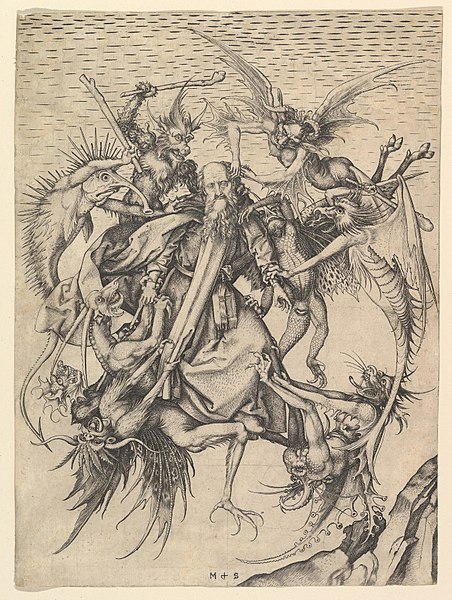
S. Brent Plate has an interesting article at The Revealer titled “Battling our Demons, On Screen and Off.” The byline summarizes the thrust of the article in its discussion of “fighting the demonic stereotypes rampant in contemporary media.”
In the twenty-first century, as in centuries past, stories of the supernatural thrill and terrify us. But despite their popularity, scholars often dismiss such beliefs in the uncanny as inconsequential, or even embarrassing. The editors and contributors to The Supernatural in Society, Culture, and History have made a concerted effort to understand encounters with ghosts and the supernatural that have remain present and flourished. Featuring folkloric researchers examining the cultural value of such beliefs and practices, sociologists who acknowledge the social and historical value of the supernatural, and enthusiasts of the mystical and uncanny, this volume includes a variety of experts and interested observers using first-hand ethnographic experiences and historical records.
The Supernatural in Society, Culture, and History seeks to understand the socio-cultural and socio-historical contexts of the supernatural. This volume takes the supernatural as real because belief in it has fundamentally shaped human history. It continues to inform people’s interpretations, actions, and identities on a daily basis. The supernatural is an indelible part of our social world that deserves sincere scholarly attention.
There is a new trailer for a new zombie film, The Cured. It shows evidence of being influenced by the BBC television series In the Flesh, and follows an approach to this subgenre of horror wherein the alien “Other” is explored as they attempt to fit in or reintegrate with the normal “Us.” For my interests and money this is far more interesting than standard zombie survival horror fare.
The witch as a cultural archetype has existed in some form since the beginning of recorded history. Her nature had changed through technological developments and sociocultural shifts–a transformation most evident in her depictions on screen.
This book traces the figure of the witch through American cinematic history with an analysis of the entertainment industry’s shifting boundaries concerning expressions of femininity. Focusing on films and television series from The Wizard of Oz to The Craft, the author looks at how the witch reflects alterations of gender roles, religion, the modern practice of witchcraft, and female agency.
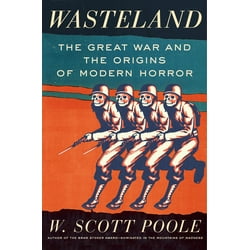 Scott Poole is one of the more interesting writers on horror today, and he has been interviewed here previously on his book In the Mountains of Madness, Satan in America, and Monsters in America. We are privileged to have him back to discuss his new book Wasteland: The Great War and The Origins of Modern Horror (Counterpoint 2018).
 I’ve heard this historical argument made before in horror film documentaries, and in the work of David Skal. So it’s a treat to see Scott Poole, a friend of TheoFantastique (see
  The Supernatural in Contemporary Society Conference was held in August of 2018. The conference description:
 Of God and Monsters
 S. Brent Plate has an interesting article at The Revealer titled
  I am busy co-editing a volume on the paranormal in popular culture for Routledge and came across this forthcoming volume.



