From time to time I try to do a little treasure hunting, not the kind where you dive deep below the ocean’s surface, or the kind where you use a metal detector and scan the sands of the beach, but the kind that can result in literary or cinematic treasures. Last week I engaged in a cinematic treasure hunt as I sifted through the discount video bin at Wal-Mart for DVDs of interest and purchased The Final Cut, a thought provoking sci-fi/thriller from 2004 starring Robin Williams. (See the trailer here.) This film was the brainchild of Omar Naim who wrote the screenplay and directed the film. The limited amount of special features with the DVD includes a “making of” segment where Naim mentions that he came up with the general idea for the story based upon his experiences in editing his documentary project. As he put it, “I really learned how manipulative the media can be, and how much you can transform truth and reality.” This insight, coupled with his curiosity about the background of his parents’ lives, provided the creative inspiration which led to the writing of what would become The Final Cut.
The story takes place in the near-future where parents with financial resources can choose to have their children receive a “Zoe implant,” a chip in the brain that grows with the individual and records every moment of their lives from the first person perspective. Upon the death of the individual, the implant is removed and the years of “footage” that can be edited with the help of surviving family members. There are a small number of people who do the editing, called “Cutters”, who putt together select life moments thus producing a film-like piece that is then viewed by family members and friends in a “Rememory” memorial service. Robin Williams plays a Cutter, Alan Hakman, who is known for the exceptional quality of his work, and also for his willingness to take on projects involving those who have lived less than exceptional lives and whose families want a life edit that presents the best possible Rememory for the individual. As the story develops we learn that Hakman struggles with his own troubling memories from his childhood, and his work on a client, an executive from EYE Tech that produces the Zoe implant technology, involves Hakman in dark memories and a life and death struggle with those opposed to EYE Tech and its impact on society.
Although this film involves an interesting scenario as its premise, and presents an interesting overall story, unfortunately it fails to deliver with its ending, and it left this viewer feeling let down as the many intriguing possibilities were left hanging by its disappointing conclusion. Nevertheless, for those who appreciate science fiction’s ability to present us with a medium for personal, social, and cultural reflection on significant topics of the day, and the critical distance by which to explore them, this film touches on several issues.
Subjective-objective frames of reference – In a scene from the film one of Hakman’s clients asks him if he changed the color of a fishing boat in his late brother’s Rememory that he recalls from a childhood fishing trip. While Hakman denies he’s changed the color and insists “I’d never do that,” this is contrary to the specific memory of the individual. In another scene Hakman revisits his own memory of a detail related to a negative childhood experience. It is Hakman’s faulty memory of this detail that contributes to his life-long guilt over the event. These scenes, as well as the overall thrust of the film, serve as a reminder not only of the faulty nature of our memories of the details of our experiences, but also contribute to our need to reflect on the distinction between the objective and the subjective, an issue of continuing debate in the shift from modernity to late modernity or postmodernity in the area of epistemology or how we know what we know.
Privacy – One of the key issues in this film is the issue of privacy in contrast with public knowledge. In one scene family members for one of Hakman’s clients are shown walking through a crowd of protesters on their way to a Rememory service. Many in the crowd hold up signs as they share their concern over the violation of privacy presented by the Zoe implants (with protest signs and fervor reminiscent of anti-abortion protests). Of course the concern over privacy as depicted in the fictional framework of Final Cut is a live issue in America with our cultural debates over rights to privacy in competition with private information being accessible to various government entities in a variety of contexts from surveillance cameras in public spaces designed to deter crime, to wire tapping of phone calls ostensibly to monitor potential terrorist threats.
Voyeur culture – This film also touches on America’s continued fascination with watching the “real life” experiences of the self and others. In the film this is depicted as the select editing of life experiences for a memorial experience, but this is not far from our current fascination with watching ourselves on so-called “reality shows,” to the uploading of the most mundane experiences on YouTube.
Religious dimension – Final Cut also includes a mild religious or spiritual dimension, and this aspect comes together with the elements referenced above in a scene between Williams and James Caviezel who plays Fletcher, a former Cutter who is now part of the anti-EYE Tech/Zoe implant protest movement. Hakman and Fletcher meet in a public place as Fletcher tries to persuade Hakman to turn over the implant of an EYE Tech executive as a means of exposing his dark deeds rumored to be recorded by the implant:
Fletcher: It’s unbelievable when you think about it. One in twenty of these people have an implant. How will that baby remember his mother years from now? Will he remember the special moments between them, or moments someone like you decides are special?
Hakman: My job is to help people remember what they want to remember, Fletcher.
Fletcher: Ah, that’s noble. But I don’t think you understand the scope of the damage. There is no way to measure the scope of the damage the Zoe implant has had on the way people relate to each other. Am I being filmed? Should I say this or not? What will they think in thirty years if I do this or that? And what about the simple right not to be photographed, the right not to pop up in somebody’s Rememory without even knowing you were being filmed?
Hakman: I didn’t invent the technology. If people didn’t want it they wouldn’t buy it, Fletcher. It fulfills a human need.
Fletcher: Alan, you take murders and make them saints! That’s why we need Charles Bannister. He was a public figure for EYE Tech, their star attorney, well respected, loved his family, gave to charity, and after you get through with him that’s all anyone will ever know. But Bannister is the first EYE Tech employee who’s implant has left the confines of the corporation. His widow fought for that. We know she’s hiding something about him and his daughter, and we’re gonna find it. EYE Tech’s hands are not clean. Bannister’s implant is evidence.
Hakman: So you want to destroy EYE Tech with a scandal.
Fletcher: Absolutely. The press would go ape shit. He’s the perfect candidate. I must have his footage.
[Moving slightly forward in the dialogue.]
Fletcher: These implants destroy personal history, and therefore all history. I will not stand by while the past is rewritten for the sake of pleasant Rememories. Tell me something: Why is your name the first on the list for cutting scumbags and low lifes?
Hakman: Because I forgive people long after they can be punished for their sins.
Fletcher: I know what you do. Why do you do it?
Hakman: Do you know what a sin eater is? It’s part of an ancient tradition. When someone would die they would call for a sin eater. Sin eaters were social outcasts, marginals. They would lay out the body, put bread and salt on the chest, coins upon the eyes. The sin eater would eat the bread and salt, take the coins as payment. By doing this the sin eater absorbed the sins of the deceased, cleansing their soul and allowing them safe passage into the afterlife. That was their job.
Fletcher: And what about the sin eater who bears the burden of all of those wrongs? Hmm?
Hakman: Are you worried about my soul, Fletcher?
As I’ve mentioned previously this film does not end well, and because of this it comes across as an average to bad film overall in that it holds up much promise but in the end it fails to deliver. Nevertheless, for those interested in moving beyond the need for a completely satisfying cinematic experience, it is worth watching and enjoying for those who would like to enter into science fiction’s ability to stimulate reflection on our own lives as we enter into stories involving our speculative future.
In a previous post I mentioned the work of Dr. David Gilmore, an anthropologist who teaches at Stony Brook University. He is the author of Monsters: Evil Beings, Mythical Beasts, and All Manner of Imaginary Terrors (University of Pennsylvania Press, 2002), an interesting book that provides an anthropological perspective on monsters in various cultures. Dr. Gilmore graciously consented to an interview on the thesis of his book.
TheoFantastique: Dr. Gilmore, it’s my pleasure to discuss your book with you as we explore the meaning of our monsters. To begin, you state early on that you have had an “endless fascination with monsters” and as your book continues you note how this is true of all cultures the world over. On a personal level, how did you come both personally and professionally to an interest in and study of monsters in various cultures?
David Gilmore: Some unconscious quirk made me do it! Ever since I could read I was drawn to sci-fi and to the thrill of the unknown, but especially the idea of pure “evil” as an embodiment, a living breathing “thing” arrayed against humanity. I guess I was a pretty lonely repressed kid and I must have felt a secret identification with the “alien” who gets back by attacking the world. Who knows whereof our nightmares come?
TheoFantastique: You note that monsters have a connection to “a divine source,” and that at times they even “[carry] profound, even spiritual meaning beyond just frightfulness.” This might seem a surprise to some in Western culture now that our monsters largely reflect our ambivalence toward religion, but can you comment on the connection between monsters and the spiritual or religious?
David Gilmore: If you reflect on the semantics, you will have the answer. The monster is “awesome,” “terrible” and “superhuman”–these are also words we use for our God, or our gods. There’s a certain ambivalence in the human mind about gods and monsters. Like Jehovah, the monsters of our imagination punish us for transgressions; they are omnipotent; we stand in fear of their awesome power. Monsters, however, are both super- and sub-human, divine and demonic, godlike and atavistic. In the Christian Middle Ages, monsters were thought to be instruments of God, messages, symbols, punishments, warnings.
TheoFantastique: As you put forward your methodology of studying monsters you state that while other academic disciplines have addressed this topic that anthropologists have tended not to do so. I have benefited from anthropology in my graduate studies and it was this perspective that most attracted me to your book. Why do you think anthropologists have been reluctant to apply their discipline to the study of monsters, and why types of unique perspectives might the anthropologist bring to a broader perspective on the topic?
David Gilmore: Anthropology started out as The Comparative Science par excellence. The idea was that by comparing the cultures of the world we could find out things about the bedrock nature of humanity underneath the surface variation. But this useful viewpoint has been superseded by specialized navel-gazing today: anthropologists now spend their entire life engrossed in the nuances of one single culture, rarely comparing anything. It’s a shame.
TheoFantastique: In your methodological analysis you draw upon a variety of theoretical frameworks, including the work of anthropologist Mary Douglas as she touches on the idea of “ethno-monstrosity,” Can you briefly touch on some of aspects that cultural anthropology can provide from this framework?
David Gilmore: Anthropologists have discovered that in virtually all cultures of the world, people tend to place their own order upon the world of nature,” providing a framework for negotiating reality and thereby taming it. But what about those rare instances that do not “fit” these schemes? That’s where monsters and all other ideas of pollution or “the unnatural” come into play. The surface details differ of course but the underlying psychological processes reflect a deeper human tendency–perhaps as Clause Levi-Strauss would have said, dealing with the exceptional, the anomaly, is “hard wired” in the cerebellum.
TheoFantastique: I was also pleased to see the application of Victor Turner’s work on ritual and liminality brought into the analysis. I have appreciated from his work as applied in other contexts but have never seen it applied to a study of the monstrous. How might Turner help us understand the function of monsters in our ritual and liminal spaces, particularly in Western contexts where monsters in film serve as symbolic texts for engagement?
David Gilmore: Turner wrote that all cultures have periodic “times out” (brief vacations from the rules) when people are allowed to think beyond the “normal” and to invent new images and concepts. This is psychologically necessary, he felt, for human growth as well as for social cohesion, as a kind of universal safety valve. One of the things that people give vent to in times of untrammeled freedom is that which most frightens them: their own unconscious fears and primitivity.
TheoFantastique: In your chapter on “Ritual Monsters” you touch on the function of monsters that assists young people in “awakening them to their own values and moral traditions.” The noted horror historian David Skal has made similar observations about ritual and horror in what he labeled as “Monster Culture” among youth. So might there be positive ritual aspects to our monsters for the youth (not to mention those a bit older) and more substance to such interests than the fears that are many times expressed about the gore aspects of many contemporary horror films?
David Gilmore: Yes, but in traditional cultures the monster has a didactic purpose” to teach youngsters about how they must conquer their own worst impulses and to work with others to slay the dragon of aggression and cruelty. I wonder if we are teaching our youth this valuable message. Previously the dragon-slayer was a “Culture Hero” because he/she saved the society from monsters; now the dragon-slayer is just playing a violent video game for amusement. Where’s the moral message?
TheoFantastique: Your book addresses monsters from a variety of sources in a number of cultures throughout the world, and readers will benefit from considering each of them as your book describes their various manifestations. But I’d like to highlight just a few aspects of your discussion that might be most relevant to Western consumers of monsters in popular culture. As Christendom continued to spread in influence throughout the West, how did it shape the presentation of the monster, especially as it surfaced in film?
David Gilmore: The Monster has always sprung from the unknown and the unexplored regions of the world: the unconscious, from the deep earth, from the darkest caves, from the bottom of the sea, and from outer space–the mysterious reaches of the imagination. The new realm of the Monster is Cyberspace.
TheoFantastique: I found your mention of contemporary monsters in folklore and popular culture of great interest as you mention the Loch Ness Monster and Bigfoot and your mention that “Western science has by no means relegated monsters to oblivion.” Whether we consider pre-modern, modern or post-modern cultures it seems as if human beings have a real need to create monsters. What positive contributions do they make to our understandings of ourselves, fellow human beings, our social circumstances, as well as our hopes and fears?
David Gilmore: The Monster is the embodiment of all that we fear–in the world and in ourselves. To be fully human, we all need to confront these fears and to conquer them: hence the endless narrative of the Hero (a la Joseph Campbell).
TheoFantastique: I was most intrigued by your statement that “monsters indeed help us to think and to imagine,” and that they are “are our guides, our entree into the mysterious worlds that lie both outside and within us.” Can you expand slightly on these ideas?
David Gilmore: By creating monsters and thinking about them, we give visual expression and an objective outlet to our imagination and we relieve our own anxieties. The monster represents a repudiation–through projection and distancing–of the deepest and most repellent parts of the self.
TheoFantastique: Dr. Gilmore, thanks again for sharing your thoughts as expressed in your book. They make a valuable contribution to our understanding of our monsters and ourselves.
David Gilmore: My pleasure. Remember the immortal words of Nietzsche: when you look into the abyss, the abyss looks back.
Readers may have noticed a few developments and changes in TheoFantastique over the last couple of weeks. First, I was humbled a while back when Steve Biodrowski of Cinefantastique Online asked me if he could link this blog to his publication. I was even more humbled when I was invited to contribute content to Cinefantastique’s website. Fans of the genres we discuss here will know that for many years Cinefantastique was one of the best magazines on the newsstand that combined the appreciation of fans with solid cinematic critique. A few weeks after this development I received an invitation from John Cozzoli of Zombos Closet of Horror to be part of LOTT-D, the League of Tana Tea Drinkers. As the mission statement describes in part:
“Our mission is to acknowledge, foster, and support thoughtful, articulate, and creative blogs built on an appreciation of the horror and sci-horror genre.”
The statement goes on to say:
“It’s time to honor exemplary horror blogs with our own special insignia: one that signifies the heights to which we aspire, and the code of excellence we follow to promote horror in all it’s wonderfully frightening forms, from classic to contemporary, from philosophical to schlockical.”
I am pleased to be part of this select group of bloggers, and you will find our logo and members listed in the links on the right hand column.
Finally, I’d like to extend a huge thanks to Steve Banes of The Horrors of It All blog for his work in designing the banner that is now featured across the top of my blog. It contributes a nice look and feel that visually communicates a big part of what this blog is all about.
I continue to be pleasantly surprised by the interest in TheoFantastique and I extend a thanks to my readers and colleagues.
A recent e-newsletter from the Constructing Horror website introduced an interesting topic:
“The beasts of past days have given birth to a new kind of creature. In movies like Saw and 28 Days Later, the monsters are powerful and horrifying. But the concept of evil has been turned around on the audiences and what once was a creature of the dark side – has now become something much more complex. When a virus turns our friends and family against us, and antagonists like Jigsaw honestly intends to do good by forcing people to change their lives – the otherwise concrete line of what is good and what is evil becomes very blurred. “
“The human mind needs monsters. In every culture and in every epoch in human history, from ancient Egypt to modern Hollywood, imaginary beings have haunted dreams and fantasies, provoking in young and old shivers of delight, thrills of terror, and endless fascination. All known folklores brim with visions of looming and ferocious monsters, often in the role as adversaries to great heroes. But while heroes have been closely studied by mythologists, monsters have been neglected, even though they are equally important as pan-human symbols and reveal similar insights into ways the mind works. In Monsters: Evil Beings, Mythical Beasts, and All Manner of Imaginary Terrors, anthropologist David D. Gilmore explores what human traits monsters represent and why they are so ubiquitous in people’s imaginations and share so many features across different cultures.
“Using colorful and absorbing evidence from virtually all times and places, Monsters is the first attempt by an anthropologist to delve into the mysterious, frightful abyss of mythical beasts and to interpret their role in the psyche and in society. After many hair-raising descriptions of monstrous beings in art, folktales, fantasy, literature, and community ritual, including such avatars as Dracula and Frankenstein, Hollywood ghouls, and extraterrestrials, Gilmore identifies many common denominators and proposes some novel interpretations.
“Monsters, according to Gilmore, are always enormous, man-eating, gratuitously violent, aggressive, sexually sadistic, and superhuman in power, combining our worst nightmares and our most urgent fantasies. We both abhor and worship our monsters: they are our gods as well as our demons. Gilmore argues that the immortal monster of the mind is a complex creation embodying virtually all of the inner conflicts that make us human. Far from being something alien, nonhuman, and outside us, our monsters are our deepest selves.”
And here is an excerpt from this interesting title:
“The mind needs monsters. Monsters embody all that is dangerous and horrible in the human imagination. Since earliest times, people have invented fantasy creatures upon which their fears could safely settle. Examples from Western lore are Frankenstein and Dracula, all those dragons of the Middle Ages, Hollywood’s ghouls and extraterrestrials, and of course the sharp-toothed bogeymen that hide under children’s beds. Classic works, from the Grimm brothers to recent psychological studies demonstrate the rich variety and the primal power of the imaginary evil creature as a cultural metaphor and literary device in folklore, fiction, art, dreaming and everyday fantasy.
“Today, we use the term “monster” to imply made-up creatures that are frightening and repugnant, but there remains a very powerful sense in which monsters are still signs or portents of something momentous, carrying profound, even spiritual implications. Indeed, as we shall see, the origins of the word reveal yet another aspect of monsters, which is the paradoxical closeness of the monstrous and the divine. For monsters contain that numinous quality of awe mixed with horror and terror that unites both the evil and the sublime in a single symbol: that which is beyond the human, that which is superhuman, the unnamable, the tabooed, the terrible and the unknown. The monster of the mind is both our foulest mental creation and our most awesome achievement.”
I am usually a late commentator on films since I watch few at the theaters and prefer to wait until they come out on DVD. This provides me with a cost savings, and enables me to read reviews and commentary so as not to waste resources on bad films. This last weekend I was able to watch a film that came highly recommended on various websites. It was The Mist, an adaptation of Stephen King’s stories. I am usually hesitant to watch sliver screen adaptations of King’s writings, but was pleased that this film can be added to the small collection of good cinematic treatments of King’s work.
I found this film well directed and acted, and the story provided for chills not merely because of the presence of the mist and its crawling and flying entities, but primarily because the main focus of the film involves the social dynamics of a group of people huddled in a store as the mist descends upon them. This social dynamic and its resulting commentary was the most pleasing and surprising aspect of the film that I enjoyed the most. On other websites I have heard comparisons of this film to social commentary in The Twilight Zone. While I would not take the comparison this far, nevertheless, The Mist includes plenty of critique on religious extremism, politics, the military, even as it wrestles with the darker side of human nature. This all comes together in a scene in the film where several of the characters meet in the store’s loading dock to figure out how they are going to respond to the increasingly bad situation in which they find themselves caused not only by the unknown outside the store, but also by the personality conflicts and decaying social dynamics within it:
DRAYTON: You want another reason to get the hell out of here? I’ll give you the best one. Her. Mrs. Carmody. She’s our very own Jim Jones. I’d like to leave before people start drinking the Kool-Aid.
WEEKS: He’s right. Flakier people get the better she’s gonna look.
DUNFREY: No, I don’t buy that. It’s obvious she’s nuts. Look, a few people, maybe, but…
DRAYTON: No, I count four. She’s preachin’ to ‘em right now. By noon she’ll have four more, by tomorrow night when those things come back she’ll have a congregation, and then we can start worryin’ about who she’s going to sacrifice to make it all better. Hmm? You, Amanda? My little boy?
MILLER: He’s right.
DUNFREY: You don’t have much faith in humanity, do you?
MILLER: None whatsoever.
DUNFREY: I can’t accept that. People are basically good, decent. My God, David, we’re a civilized society.
DRAYTON: Sure, as long as the machines are workin’ and you can dial 9-1-1, but you take those things away, you throw people in the dark, you scare the shit out of them, no more rules, and we’ll see how primitive they get.
MILLER: You scare people badly enough and you can get ‘em to do anything. They’ll turn to whoever promises a solution, or whatever.
DUNFREY: Ollie, please, back me up here.
WEEKS: I wish I could. As a species we’re fundamentally insane. Put more than two of us into a room, we pick sides and start dreaming up reasons to kill one another. Why do you think we invented politics and religion?
For those who enjoy horror films that stimulate the gray matter with something beyond the red matter, The Mist is worthy of consideration.
The April issue of Rue Morgue magazine caught my eye at the newsstand recently with an article titled “The Witch Hunter’s Bible,” an article that explored the infamous Malleus Maleficarum. For those unfamiliar with this document, it comes from the medieval period (perhaps the 15th century) as a Christian manual that purports to provide the tools necessary to identify, describe, and proesecute what was labeled as Witchcraft. The Malleus includes three sections, the first identifying witchcraft and connecting it to the Devil and Satanism, the second presenting alleged case studies and evidences related to witches, and the third constituting recommendations on appropriate ways to prosecute them.
The Rue Morgue article notes that the Malleus had “fallen into relative obscurity” until Augustus Montague Summers, an Anglican clergyman, translated and reprinted the document in 1928. This translation has been called into question, and Cambridge University Press has recently published a new and extended two-volume translation with commentary by professor Christopher Mackay.
The article on the Malleus stood out because I recognize that this was an important document in history as it informed Christendom as to its stereotypes of Witchcraft, and helped fuel the dreadful witch crazes and persecutions of the past. I’m not sure why an article on this topic appeared in a magazine that addresses horror in culture and entertainment, although it is not much of a stretch to consider the witch trials and burning times as real-world horrors. A clue to why this article may have been included in the magazine is given later as Mackay comments on the continuing legacy of the Malleus as he recalls the twentieth century’s witch, occult, and satanic panics. I might have taken this article a step further and helped make it more directly relevant to the magazine’s content. It has dawned on me as I reflect on horror films and their depiction of Witchcraft and the occult as to whether this genre of entertainment does not represent yet another area impacted by the legacy of the Malleus and the development of folk and pop culture stereotypes.
Long time readers of this blog might recall my two previous interviews with Douglas Cowan on the topic of horror films and their connection to religion and fear. Doug shared his insights on these topics as they related to his book on the topic Sacred Terror: Religion and Horror on the Silver Screen (Baylor University Press, forthcoming 2008). These popular interviews can be accessed with the first part of the interview here and the second here. Readers might also be interested to know that Doug is currently working on another book, titled Sacred Space: The Quest for Transcendence in Science Fiction and Television, and I hope to have him come back for an interview or two to discuss aspects of this volume as it unfolds.
Here is the description of the volume from Baylor and endorsement statements:
Sacred Terror examines the religious elements lurking in horror films. It answers a simple but profound question: When there are so many other scary things around, why is religion so often used to tell a scary story? In this lucid, provocative book, Douglas Cowan argues that horror films are opportune vehicles for externalizing the fears that lie inside our religious selves: of evil; of the flesh; of sacred places; of a change in the sacred order; of the supernatural gone out of control; of death, dying badly, or not remaining dead; of fanaticism; and of the power-and the powerlessness-of religion.
Available October 2008
Reviews:
“Up to now, horror films have been largely neglected or denigrated by scholars of religion and film. Doug Cowan offers a new approach, arguing that religious elements are central to the success of horror. He effectively debunks the myth that modern secular rationalism has banished the ghosts of the past, demonstrating that religion-related fears of death, damnation, supernatural forces, and religious “others” often support the continuing ability of horror to terrify and create frisson. A book that is both entertaining and important!”
-John Lyden, Professor and Chair of Religion, Dana College
“Proving that the genre of horror film belongs firmly in the interest of religious studies, Douglas Cowan offers an ample map of where any interested, and perhaps somewhat scared, scholar might turn to revisit this ancient form of storytelling. In the end, we learn about what horror might have to say to the human, beyond the death-life divide.”
-S. Brent Plate, Associate Professor of Religion and the Visual Arts, Texas Christian University, and author of Religion and Film: Cinema and the Re-creation of the World
In my previous post I focused on a classic horror film of the 1970s, and in this post I shift to commentary on horror television from the same decade.
Last weekend I watched a series of VH1 programs that looked back at various aspects of the 1970s. Although I was born in the mid-1960s I really grew up in the 1970s, and it is this decade that involves some of my most formative memories. Looking back, while the decade surely involved a number of questionable entertainment options on television, nevertheless this time period also produced some great horror on the small screen. Many readers will be familiar with House of Dark Shadows (1970), and The Night Stalker (1972) from this time period, but perhaps far fewer will be familiar with what I regard as two gems from the period: The Norliss Tapes and Satan’s Triangle.
The Norliss Tapes appeared on American television in February of 1973 as a part of the creative work of director Dan Curtis who was also involved in Dark Shadows, The Night Stalker, and his later effort in Trilogy of Terror (1975). The story (written by William F. Nolan who also wrote Logan’s Run, and Fred Mustard Stewart), was originally shot as a pilot episode for a series that unfortunately never materialized. As the program opens David Norliss, a writer in San Francisco (played by Roy Thinnes) contacts his publisher to report that his original plans for writing a book debunking the supernatural cannot move forward. Norliss has had a change of heart and he is scared. The situation is urgent as Norliss feels he is in danger and he asks his publisher for an immediate meeting over lunch so that he might share his recorded tapes that detail his experiences with the supernatural. When the publisher arrives to meet Norliss the house is empty and the only clues to the writer’s strange behavior are found on the tapes he has left behind which the publisher begins to play. As the narration on the tapes unwind, the viewer continues the journey into Norliss’s strange experiences involving an Egyptian scarab ring with the power to raise the dead, a millionaire’s widow who tells police she encountered the risen body of her recently deceased husband in his crypt, a number of bloodless corpses, and a ritual designed to raise an ancient pagan deity.
This television program was well written and directed, and from its opening scene involving a a brooding and increasingly paranoid Norliss to several scenes of a rainy San Francisco, the visual atmosphere compliments the story of occultic supernatural horror. But while this program is many times recognized for its quality, nevertheless descriptions of certain elements that to this writer seem silly crop up in many reviews of the program. It is not uncommon to see the zombie-like figure in the film who rises from the dead each night described as a vampire. It might be splitting horror hairs here, this is plainly inaccurate. Although the “creature” does have certain vampire-like characteristics it exhibits other important facets that put it in a different category. This walking corpse does not drink the blood, but collects it in order to mix it with clay in order to raise a deity through ritual occultic magic. In this context the creature resembles the zombie archetype influenced by voodoo legends and combined with foklorish and fictional depictions of the occult and the supernatural rather than a vampire or the flesh eating zombie archetype fashioned by Romero and others. The reader should note that while the creature in this film is frequently depicted inaccurately, it is also possible to find more careful and thoughtful writers on the topic.
Programming like The Norliss Tapes and The Night Stalker fit well within the social context of the 1970s that was still dealing with the increased interest in alternative forms of spirituality brought to the surface by the 1960s counterculture, and served as an exploration of the paranormal in the form of entertainment that came alongside more documentary-like approaches (albeit very speculative and with strong entertainment elements as well) in programs such as In Search of… Quality television programming like this also helped lay the groundwork for later programs in future decades such as The X Files.
Satan’s Triangle was first broadcast in January of 1975. It tells the story of two members of the Coast Guard sent out by helicopter to examine an apparently abandoned fishing boat off the coast of Florida in a part of the sea known as Bermuda’s Triangle. One Coast Guard member (played by Doug McClure) is lowered down to the vessel where he discovers a lone survivor (played by Kim Novak) of a fishing trip which was doomed to suffer from a series of what appear to be supernatural deaths including a victim floating in mid-air. Upon closer examination McClure’s character provides completely rational and non-supernatural explanations for the deaths even as he develops an intimate relationship with Novak’s character. At the end of the program the two are lifted off the craft which leads to a surprise ending and a showdown between good and evil.
Like The Norliss Tapes, Satan’s Triangle plays off of interest in the Seventies in paranormal phenomenon such as the Bermuda Triangle and combines it with the decade’s fascination with Christian forms of demonology, and it does so while providing a horror tale that still delivers good frights that can be expected to hold up for contemporary audiences.
For those who would like to add these gems to their horror treasure chests it is now possible to own copies of these Seventies horror television classics. In 2006 Anchor Bay released a copy of The Norliss Tapes on DVD. Interested readers can watch the whole program on YouTube courtesy of 70sHorrorRealm with the first installment here. The DVD can be ordered through the TheoFantastique Store with associated related to Amazon.com and video retailers like FYE. Satan’s Triangle is much more difficult to find and as far as I was able to determine it has not been released by a major company on DVD. However, Satan’s Triangle is now available for viewing on YouTube with the first installment here. It can also be purchased at select locations such as this website. Those interested in quality television writing and direction, particularly in the genre of horror, will not be disappointed by the addition of these programs to their video libraries.
Of course, there are a variety of factors that contribute to the success or lack of success in films as they are received by viewing audiences. Sometimes a film that is not well received is poorly written, acted, or directed, and sometimes all of these aspects are well done, but other factors related to the social and cultural circumstances that provide the context for a film’s release play a part. At times audience receptivity to other films released during the same period can have an impact as well.
With this post I am taking a risk here with readers as I analyze a classic horror film from the 1970s, The Exorcist (1973) with another film from the same year, The Legend of Hell House, that in my view actually provides for more scares (at least in terms of my preferences for such things). It is well known that the former film became a cultural phenomenon, while the latter has not received nearly the attention from fans or film critics. I’d like to explore a few of the dynamics that might account for this curious phenomenon.
A few years ago I watched an interesting documentary that examined the response of pop culture to The Exorcist when it was first released in 1973. People were scared out of their wits as they watched the story of a teenage girl possessed by the demonic spirit of Lucifer himself. Dick Smith’s groundbreaking makeup effects helped contribute to the shock value as audiences waited in long lines to be scared many times to the point of fainting or vomiting in some news reports. But while The Exorcist is well known, The Legend of Hell House from the same year is not nearly as well known by rank and file horror fans. For those unfamiliar with the film, or those who have not seen it in some time, the film is based upon an adaptation of the novel Hell House by Richard Matheson. The story surrounds a group of paranormal researchers brought together by a millionaire who funds an investigation of “the Mt. Everest of haunted houses.” The millionaire wants to prove the existence of life after death, and he believes that the phenomena reported at Hell House is the proof he is seeking. The research team includes the lone survivor of a previous research team, a medium played by Roddy McDowall, and also includes mental medium (Pamela Franklin), a scientist who specializes in the paranormal (Clive Revill) and his wife (Gayle Hunnicutt). As the story develops the team enters the infamous house once occupied by the late Emeric Belasco who was known for participation in a long list of hedonistic excesses and debauchery. As the research team examines the mysterious power in the house they encounter a number of strange occurrences and mounting personal attacks by a mysterious paranormal evil.
The Legend of Hell House is very different from other horror films of the 1970s. Its presentation of horror elements is extremely subtle as director John Hough utilized lighting, shadow, music, and sound effects as a means of stimulating the minds and tapping into the fears of audience members rather than more explicit makeup and gore effects. In this regard the film’s atmospheric treatment of suspense and horror is similar to The Haunting (1963). But even without explicit horror and gore this film is regarded by some as a horror classic. The acting is well done, particularly by Roddy McDowall as his character wrestles with his past experiences in battling psychic forces that he finally comes to term with in preparation for his final confrontation with the evil of Hell House. The top-notch Matheson screenplay, atmosphere, score, acting, and direction all come together to deliver a great horror experience. But if this is the case, why has this film not received the critical praise that I believe it is due?
I believe the answer to this question may be found in two areas. First, as mentioned previously, Legend of Hell House was released the same year as The Exorcist, and the latter film eclipsed the former. I was reminded of this unfortunate phenomenon as it happened in relation to two other films released in the following decade. In an episode of The Directors on Reelz Channel, John Carpenter was profiled and as he discussed his work he commented on how poorly The Thing was received by audiences when it was released in 1982. E.T.: The Extraterrestrial was released just two weeks prior to Carpenter’s film, and audiences fell in love with the idea of a cute alien stranded on earth and befriended by children. By contrast, Carpenter’s alien was no fantasy film for children. It provided a frightening picture of isolation, paranoia, and graphic horror that jumps from the screen courtesy of Rob Bottin’s makeup effects. The public’s embrace of E.T. seems to have had negative implications for their perceptions of The Thing. In similar fashion, I suggest that the release and popularity of The Exorcist overshadowed that of Hell House, and with the continuing reflection on the former as a classic of horror, this has perpetuated the marginalization of the latter.
Secondly, The Exorcist seems to have been released at a time when social and cultural circumstances strongly favored its expression of horror both in terms of its visual presentation as well as its subject matter in how supernatural evil is identified. The 1970s in America was a time of increasing crime and violence, and this was paralleled in many of the popular films of the times such as Dirty Harry. It should be no surprise that a horror film that depicts evil through subtlety and atmosphere would not be as well received as one that explicitly and graphically presents it. In addition to the visual elements the subject matter is also culturally significant. The Exorcist was one of several films released during the late 1960s and into the 1970s that touched on the satanic and the demonic as informed specifically by the Christian tradition. 1968 saw the release of Rosemary’s Baby, and what would become the first of the The Omen franchise was released in 1976. American culture of the 1970s seemed to have a growing preference for a form of supernatural evil connected to Christian conceptions of the demonic. This may be due to a variety of reasons, including the growing dominance of the Religious Right, the establishment of various satanic organizations in this period such as the infamous Church of Satan in San Francisco, the influence of various anti-cult organizations, and the prevalance of pop occult themes in heavy metal music. All of these elements contributed to an environment where Christian demonologies became popularized and helped provide an atmosphere for audience horror preferences. In this context it seems that invisible paranormal evil was not nearly as attractive to viewing audiences as the literal embodiment of ultimate satanic evil.
I have great appreciation for The Exorcist as a film, and to what it has contributed to the horror genre through its continuing influence over the years. But perhaps there’s additional room at the table for other contributors as well. I’d like to see other worthy candidates like The Legend of Hell House receive greater due than they have in the past.
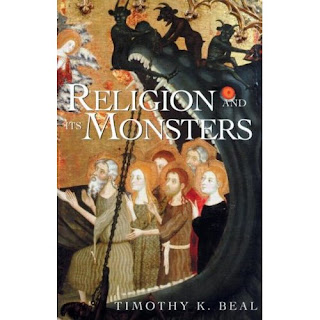
Timothy K. Beal is Florence Harkness Professor of Religion and director of the Baker-Nord Center for the Humanities at Case Western Reserve University. He has published eight books, including Roadside Religion: In Search of the Sacred, the Strange, and the Substance of Faith (Beacon, 2005), which was a New York Times Book Review Editor’s Choice and one of Publishers Weekly’s ten Best Religion Books of 2005; Religion and Its Monsters (Routledge, 2002), which was a Reviews in Religion and Theology Editor’s Choice; and The Book of Hiding: Gender, Ethnicity, and Annihilation in Esther (Routledge, 2007). He has published essays on religion and American culture for The New York Times, The Chronicle of Higher Education, The Washington Post, and The Cleveland Plain Dealer. He has been featured on radio shows including NPR’s All Things Considered and The Bob Edwards Show. He is co-editor, with Tod Linafelt, Georgetown University, of the book series Afterlives of the Bible with the University of Chicago Press.
I was impressed with the perspective that Timothy brought to one of his books, Religion and Its Monsters, and Timothy made some time to discuss various aspects of the book with me.
TheoFantastique: Please accept my thanks, Tim, for your willingness to discuss your book. Perhaps we could begin by further introducing you and the subject matter. How did you personally and academically become interested in both the study of religion and monsters?
Timothy Beal: Thanks, John. It’s great to be part of this project. There are a lot of ways to approach this question. But I think this book owes most to my college students at Eckerd College and then at Case Western Reserve University. The core of the book first emerged in a seminar course I taught toward the beginning of my career at Eckerd College. The course was called “Ecology, Chaos, and the Sacred,” which tried to put biblical and ancient Near Eastern conceptions of chaos into conversation with the contemporary science of chaos and complexity theory, especially in the field of ecology. I had long been interested in the relationship between ecological order and chaos in Hebrew Scriptures and other ancient Near Eastern mythologies — especially those places in which it was personified as a “chaos monster” or “chaos god.” I was noticing somewhat similar representations in some contemporary discourse in chaos theory. So I said, hey, let’s read this stuff together and see what connections we can make.
One of the primary personifications of chaos in the Hebrew Scriptures is Leviathan. Interestingly, there is some ambivalence about God’s relation to Leviathan. Sometimes God identified with Leviathan, and sometimes Leviathan represents the chaotic enemy of divine order. From there, we began noticing deeper ambivalence in the divine character in relation to chaos. This is the case in other ancient Near Eastern mythology as well. Anyway, all this opened new questions about the relation between the divine and the monstrous (as well as our concepts of chaos and order, otherness and sameness, etc.).
When I moved to Case Western Reserve, I began teaching a seminar on “Religion and Horror,” and continued the exploration with many more students. I initially imagined that the book would be about the cultural history of Leviathan as a way of reflecting on the relationship between religion and the monstrous. Leviathan is still a major figure in the book, but the book became … well, monstrous, I suppose.
TheoFantastique: One of the criticisms I receive is that many Protestant evangelicals and fundamentalists do not make the connection between Christianity and the monstrous, especially as it is expressed in horror films. Your book begins immediately in the Introduction by making the connection between the Judeo-Christian tradition and horror through the Frankenstein film. How did you come to your understanding of this connection, and why don’t you think many conservative Protestants make this connection or go even further by being put off by the suggestion of the connection?
Timothy Beal: I’m hesitant to generalize about that. I suppose that for many those representations are simply reduced to “evil” and then seen as being radically opposed to religion. It’s clear, in any case, that much of horror literature and film and culture is steeped in Christian theological tradition. It’s really a deeply theological culture at its core. The second half of my book, “Monsters and Their Religion,” is all about that. In fact, the book considered by most to be the first horror novel begins with a biblical question: are the sins of the father visited on their children? Also, the imagery of the monstrous in horror literature and film is often drawn from biblical texts (especially Revelation) and from other, less familiar religious traditions.
TheoFantastique: Some readers might be surprised by your discussion of monsters in the Bible, specifically in your mention of Leviathan and Behemoth in the Old Testament, and the Great Dragon in the New Testament. Can you say a few things about the biblical depictions of Leviathan and its connection to Near Eastern cosmogonies as it relates to chaos monsters as a threat to cosmic order?
Timothy Beal: Chaos gods or chaos monsters, as biblical scholars have been calling them for more than a century, are present in many ancient Near Eastern myths. They are personifications of chaos — threats to order, both cosmic and social. As such they tend to oppose the creator gods in these stories. A creation story is often therefore described as a chaos battle (German Chaoskampf) in which the creator god establishes order by defeating the chaos god/monster. Sometimes, as in the Enuma Elish (and, in a way, the biblical book of Job, chapter 38), the creator god creates the ordered world from the defeated chaos god. Order emerges from chaos, and vice versa. Also, interestingly, the chaos god and the creator god are sometimes intimately related. In the monotheistic tradition of Israelite religion, I think, both elements may be found in the one God. Thus the ambivalence I mentioned earlier. There’s a lot more about all this in my first two chapters.
Leviathan appears to be related to a similar serpentine chaos monster/god in Canaanite mythology. And the personifications of chaos in the Hebrew Scriptures generally has a lot of connections to those of other ancient Near Eastern mythologies (compare Enuma Elish and Job 38, for example).
TheoFantastique: Can you discuss the connection between Rudolph Otto’s notion of the divine as an oscillation between fear and desire in the mysterium tremendum and how the same dynamic is found in the monstrous?
Timothy Beal: Everyone should read the first chapter of Rudolph Otto’s The Idea of the Holy. It has problems from a comparative religion perspective, but his phenomenology of religious experience is fascinating. I encourage readers to take a look at my discussion of him in the introduction. In a nutshell, Otto saw religious experience as a non-rational encounter with unknowable otherness, the wholly other, the unheimlich (“uncanny” or more literally “unhomey”). He characterizes it as an encounter with mysterium tremendum et fascinans, an unknowable that is both terrifying and fascinating. In this he was influenced by Kant’s idea of the sublime. In this light, it’s interesting to see how descriptions of religious experience are often very similar to descriptions of horror: a vertiginous encounter with otherness that is both fascinating and repelling and that ungrounds us in profound ways. Can horror be a kind of mystical experience?
TheoFantastique: Your chapter on the dragon from Revelation is particularly interesting as you trace its unique construction from chaos monsters of the past for the author’s reading audience, and then note its significant impact in Christian culture and then in broader culture to the present day in literature and film. Can you highlight a few of the ways in which this monstrous figure has influenced contemporary popular culture beyond its more obvious manifestations in evangelical “end-times” literature and films?
Timothy Beal: Where to begin? Harris’ The Red Dragon is a good start. That comes via Blake’s watercolor, but Blake is inspired by the biblical figure. More interesting to me is the way this diabolical dragon, whose own ancestry goes back to Leviathan (read my chapter — it’s a somewhat complex genealogy), traces its way into Dracula and his offspring. And of course they have their own endless theological struggles, as Anne Rice well knows.
TheoFantastique: With my background in intercultural studies I was also interested, and dismayed, by your discussion of monsters outside of the Judeo-Christian tradition as influenced by other religions, and how the West, so influenced by Christianity, has tended to demonize other religious as the monstrous. In your discussion you mention these “colonial projections” as “one pole of modern primitivism,” and then discuss Marie-Denise Shelton’s ideas of “‘official’ imperial discourse, which affirms modern western culture ‘as the perfect and ultimate state of humanity’; and second, the ‘poetic’ discourse which identifies with these colonized, ‘primitive’ others as a means of condemning the modern West as ‘deficient and moribund.'” As I read this I couldn’t help but think of this dynamic as applying to the current state of affairs in the struggles between the West and some Islamic nations and terrorist organizations. Without in any way diminishing the significance of the problem of global terrorism, would you agree that this is taking place and that we are still creating our religious and cultural monsters?
Timothy Beal: I certainly do agree. What is Osama Bin Laden if not a monster of our own making? In my “Religion and Horror,” I always begin one class discussion with the statement, “There’s no such thing as Osama Bin Laden.” And we go from there. In fact, he is a monstrous projection more than a historical person. Indeed, we often imbue his figure with supernatural powers like omniscience and omnipresence.
Of course, there are also the monstrous projections of Jewish people within antisemitic discourse. Here too we face a very long and deeply regrettable tradition within both western European and Islamic discourses (the latter inheriting it from the former in the first part of the twentieth century, when the Nazis enjoyed powerful influence in the Middle East).
TheoFantastique: In your discussion of Dracula, one of the aspects you touch on is the aspect of Dionysian religion. You state that “Christian identity has continued to define itself against Dionysian religion, despite the fact that its rival has long since disappeared.” I wonder whether this idea might be nuanced in that while formal Dionysian religion of the ancient past is gone, various aspects of it continue in a variety of religious and spiritual streams, and Christianity in the West with its long embrace of modernity and rationality while downplaying the more ecstatic elements of religious experience, continues to fight against those expressions of spirituality and religion that emphasize such aspects? Would you see any merit in such an idea?
Timothy Beal: I certainly agree, John. I couldn’t say it better than you just did. I would add only that this is especially the case within Protestant Christian tradition, which is especially modernist/anti-“primitive” in its orientation toward the intellectual/doctrinal and away from religion as aesthetics.
TheoFantastique: As you move to a discussion of monsters on the silver screen one of the films you address is the classic vampire film Nosferatu. I was surprised to learn of the influences of Western esotericism and Theosophy, and that the producers were “explicitly interested in making the monster movie into an alternative venue for religious reflection.” Do you believe that horror still functions in this way for many viewers regardless of the intent of film producers?
Timothy Beal: I think that it often does function in that religious way — at least among the makers of supernatural horror (I don’t know about slasher films). It goes back to religious experience as an encounter with otherness. Is that not what supernatural horror is about? I recently contributed an interview on this subject to a new website, http://www.constructinghorror.com/, which is for horror screenwriters. So I gather that there must be some conscious religious interest among many horror movie makers and viewers.
TheoFantastique: In your concluding chapter you discuss the immensely influential work of H.P. Lovecraft, particularly through his monster gods of “Cthulhu Mythos.” You state that for Lovecraft his supernatural horror was designed to elicit cosmic fear which he felt was “coeval with religious experience.” You also suggest that “monster play operations as a critique of more culturally mainstream religious institutions.” I have noted that Lovecraft’s work is very popular in Neo-Pagan circles, and I wonder whether the elements of his work that approximates a religious experience, coupled with modern horror’s frequent critique of Christianity might come together to account for some of Lovecraft’s great appeal in religious circles and other alternative (sub)cultures like the Gothic movement. Any thoughts?
Timothy Beal: That’s right on, John. I was amazed, by the way, by how many college students knew his stuff. And of course Lovecraft’s mythos also gets play among Satanists, and even finds its way into some ritual texts via Anton LaVey.
TheoFantastique: Tim, your book has helped me understand myself and others a little better. At the close of the final chapter you state:
“But in instances of playing monster, in which monstrosity is embraced, even taken on as a form of one’s own identity, something radically different is at work. Such monstrous performance art works against the general tendency to mark the distance between normative and non-normative identity, pushing us to get to know our monsters face to face – and perhaps, like the blind man in The Bride of Frankenstein, to share a good smoke and some new music.”
I once read an interview with director Guillermo del Toro discussing his life and the influences in his film Pan’s Labyrinth. At one point he made the decision to reject formal religion in favor of monsters and myth. I have chosen another path, and as a religious person I embrace religion, myth, and the monstrous. Thanks for helping me to know myself and my own monsters a little bit better. I hope this interview helps promote your work and generates a few more readers.
Timothy Beal: Thank you, John, for such a generous reading of my work and for inviting me to participate in this project.
 From time to time I try to do a little treasure hunting, not the kind where you dive deep below the ocean’s surface, or the kind where you use a metal detector and scan the sands of the beach, but the kind that can result in literary or cinematic treasures. Last week I engaged in a cinematic treasure hunt as I sifted through the discount video bin at Wal-Mart for DVDs of interest and purchased The Final Cut, a thought provoking sci-fi/thriller from 2004 starring Robin Williams. (See the trailer here.) This film was the brainchild of Omar Naim who wrote the screenplay and directed the film. The limited amount of special features with the DVD includes a “making of” segment where Naim mentions that he came up with the general idea for the story based upon his experiences in editing his documentary project. As he put it, “I really learned how manipulative the media can be, and how much you can transform truth and reality.” This insight, coupled with his curiosity about the background of his parents’ lives, provided the creative inspiration which led to the writing of what would become The Final Cut.


 Timothy K. Beal


