Mechademia 3 Limits of the Human Frenchy Lunning, editor
University of Minnesota Press | 288 pages | 61 b&w photos | 2008
ISBN 978-0-8166-5482-6 | paperback | $19.95
Mechademia Series, volume 3 Exploring the possibilities and perils of a posthuman future through visionary works of Japanese anime and manga
Dramatic advances in genetics, cloning, robotics, and nanotechnology have given rise to both hopes and fears about how technology might transform humanity. As the possibility of a posthuman future becomes increasingly likely, debates about how to interpret or shape this future abound. In Japan, anime and manga artists have for decades been imagining the contours of posthumanity, creating dazzling and sometimes disturbing works of art that envision a variety of human/nonhuman hybrids: biological/mechanical, human/animal, and human/monster. Anime and manga offer a constellation of posthuman prototypes whose hybrid natures require a shift in our perception of what it means to be human.
Limits of the Human—the third volume in the Mechademia series—maps the terrain of posthumanity using manga and anime as guides and signposts to understand how to think about humanity’s new potentialities and limits. Through a wide range of texts—the folklore-inspired monsters that populate Mizuki Shigeru’s manga; Japan’s Gothic Lolita subculture; Tezuka Osamu’s original cyborg hero, Atom, and his manga version of Fritz Lang’s Metropolis (along with Ôtomo Katsuhiro’s 2001 anime film adaptation); the robot anime, Gundam; and the notion of the uncanny in Ghost in the Shell 2: Innocence, among others—the essays in this volume reject simple human/nonhuman dichotomies and instead encourage a provocative rethinking of the definitions of humanity along entirely unexpected frontiers.
Contributors: William L. Benzon, Lawrence Bird, Christopher Bolton, Steven T. Brown, Joshua Paul Dale, Michael Dylan Foster, Crispin Freeman, Marc Hairston, Paul Jackson, Thomas LaMarre, Antonia Levi, Margherita Long, Laura Miller, Hajime Nakatani, Susan Napier, Natsume Fusanosuke, Sharalyn Orbaugh, Ôtsuka Eiji, Adèle-Elise Prévost and MUSEbasement; Teri Silvio, Takayuki Tatsumi, Mark C. Taylor, Theresa Winge, Cary Wolfe, Wendy Siuyi Wong, and Yomota Inuhiko.
It’s that time of year again: Hollywood has begun to release its winter films that it hopes will be blockbusters, or at least do well in box office returns in connection with the holiday movie viewing habits of consumers. The latest fantasy film involving youth and the supernatural (or supranormal) is doing very well in this regard. But this film is not the latest installment in the Harry Potter series. Move over, J.K. Rowling, there’s a new player in town. Instead of wizards and wands its teenagers and vampires in the romanctic vampire hybrid film Twilight,[1] which made $70.5 million dollars through North American theaters in its opening weekend in November, making this the fourth-highest box office opening for a film in that month of the year.[2]
In case you’re not a teenager girl, a woman, or keep up on developments in vampire mythology through literature and film, some background information might be helpful in understanding the Twilight phenomenon. The film is based on the first book in a four-part series that includes not only Twilight (Little, Brown Young Readers, 2005), but also New Moon (2006), Eclipse (2007), and Breaking Dawn (2008). The books are the brainchild of Stephenie Meyer,[3] housewife in Arizona who credited a vivid dream about “an average girl” and a “sparkly” vampire falling in love and dealing with its implications as the inspiration for what would later become Twilight.[4] This unlikely idea for a literary phenomenon has gone to become just that, having spent “a combined 143 weeks on the New York Times best-seller list”, and selling more than 5 million copies of the books in the United States alone.[5]
Twilight introduces us to a Bella, a teenage girl living in Phoenix with her mom and step-dad who must temporarily move to the small town of Forks in Washington State to stay with her father. As the story unfolds the more mundane challenges of moving, the teenage angst of developing a relationship between an estranged daughter and father, and developing an identity and social life in a new high school, are quickly complicated with a romantic angle. Bella becomes aware of a small group of fellow students from the Cullens Family, and soon falls in love with one of them, Edward, who she later discovers is more than he appears. After some research on local Native American legends and folklore on strange creatures in the area, as well as experiences and personal conversations with Edward, Bella learns that Edward is a vampire.
Meyer adds a few new twists to the ongoing development of the vampire mythology through the Twilight series. In keeping with the folkloric creatures of the past the Twilight characters are immortal blood-drinkers, but in Meyer’s mythos the vampires are possess great speed, do not sleep (in coffins or otherwise), do not avoid the sunlight (indeed, they glitter in the sunlight), and each possess singularly unique abilities such as Edward’s power to read minds.
For horror movie fans thinking about rushing to theaters to catch Twilight a few words of clarification are in order. Twilight is probably best understood as a teenage romance film which incorporates elements of vampire mythology rather than a horror film that also includes elements of romance. This emphasis on the romantic in vampire literature is not new. The romantic as well as the erotic aspects of vampire stories have a long history, even before Bram Stoker penned the infamous Dracula novel. Sheridan La Fanu wrote a short story in 1872 titled “Carmilla” which presented a female vampire and included “[e]rotic undertones in the strange, unearthly bond that develops between the vampire and victim [which] echo throughout the story.”[6] With the emphasis on romance, Twilight may be understood as the latest take on the vampire myth which emphasizes this facet. 2007 saw the first and only season of Moonlight,[7] a television program about a vampire private investigator and his romantic relationship with a human reporter. From 1997-2003 teenagers and other television viewers enjoyed the romantic relationship between Buffy in Buffy the Vampire Slayer[8]and Angel, a vampire with a soul, as they pursued not only romance but also saved the world each week from various monsters and frequent near-apocalypses.
Given the romantic element of Twilight the above mentioned influences from treatments of the vampire in pop culture are most apparent, but other influences seem likely. Beyond the tragic teen love story elements of classic literature in Romeo and Juliet, other vampire films seem to have influenced the author. These include Underworld (2003)[9] and Underworld: Evolution (2006),[10] two films which not only involve romance between mortals and vampires, but also introduce the narrative element of conflict between the vampires and another iconic creature of horror, the werewolf. This is only hinted at as a subplot in Twilight through references to ancient folklore and hostility between these creatures, but this element is expanded upon in subsequent books in the series and will no doubt become major elements of the future films as they are produced. An additional cinematic influence can be seen in The Lost Boys (1987),[11] a film about two teenage boys who move to a new town only to encounter trouble through romantic connections to a vampire. The Lost Boys involves a subtext of broken traditional family structures, a social issue that came to the fore in the 1980s, and while Twilight does not address this issue in a major way it can be seen as a background issue in regards to Bella’s divorced parents and her fragile relationship with her father.[12]
In the 1996 volume which he edited, Monster Theory, Jeffrey Cohen suggested that monsters are a projection of the culture that creates them. In his view they are a metaphor that serve as “symbolic expressions of cultural unease that pervade a society and shape its collective behavior.”[13]As a result, he suggests that cultural theorists need to make monsters seriously, and that doing so results in new insights into the culture that creates them. What does our continued interest in the vampire in popular culture tell us about ourselves, and more specifically, what might we learn from the particular expression of the vampire in Twilight?
The vampire has long been recognized as a mythical symbol that embodies a variety of concepts and fears. “These include death (and all of its psychological ramifications), immortality, forbidden sexuality, sexual power and surrender, intimacy, alienation, rebellion, violence, and a fascination with the mysterious.”[14] Although the zombie has perhaps become the most popular monster figure in late modern western culture,[15] the vampire continues to fascinate us as we wrestle with what it means to be human.
Beyond the general considerations related to the vampire figure, Twilight’s appropriation of the creature seems to function as a significant metaphor where ethical choices take center stage:
“Resisting temptation is a constant struggle. Edward’s choice – and the willingness to choose a different way in general – is a major theme in Meyer’s books. ‘I really think that’s the underlying metaphor of my vampires,’ she says. ‘It doesn’t matter where you’re stuck in life or what you think that you have to do; you can always choose something else. There’s always a different path.”[16]
The centrality of ethical choice-making in Twilight may be due to Meyer’s Mormon background which includes a strong emphasis on avoiding temptation and choosing the correct moral path, summarized in the Mormon culture with the phrase, “Choose the right.” In the continued development of vampire mythology Meyer has incorporated not only the more traditional vampiric elements of death, immortality, and sexual conflict, but has also infused ethical considerations into this mix that builds upon previous treatments of this issue. In the 1990s Buffy the Vampire Slayer and Angel[17]television series Angel and Buffy wrestled with their own temptations and the negative ramifications associated with sex that held the potential to unleash the worst in Angel’s nature. In Twilight, Bella and Edward also wrestle with this challenge, and the overarching ethical framework of Meyer provides Edward with the strength to not only avoid sexual transgression, but also an overwhelming violence toward Bella and the rest of humanity. In the Twilight universe this ethical dimension is extensive and is summarized by one of the merchandizing tag lines associated with the series that might be understood in some sense as Mormonism’s ethical echo: “I don’t want to be a monster.” Through her books and film Meyer reminds us that the monster may not just dwell in others, but also lies within us. It is only through love and the exercise of will and self-restraint that are able to contain the monster seeking release from within.
Two interesting responses have appeared with the success of the film version of Twilight. First, some critics have noted Meyer’s Mormon faith and allege racism and sexism in its depiction of Native Americans and women’s roles as a result of the influence of the faith. I have not seen any hint of this in the Twilight material and in my estimation such criticism is suggestive of anti-Mormon bias rather than an outworking of problematic elements of Meyer’s beliefs in her story. Second, horror fans, and vampire fans in particular, are lamenting the heavy emphasis on romance and the downplaying of the more violent and erotic aspects of vampire mythology in Meyer’s treatment of the creatures. A while back I wrote that films like 30 Days of Night might be construed in some sense as a reconstruction of symbolism that attempts to frame the vampire in more violent ways as a means of opposing more benign expressions of the vampire, as well as the culturally popular zombie figure so as to position more gritty depictions of the vampire as the more dominant symbol in horror. My thesis seems to be playing outself out as expressed in some of the critique of Meyer’s conception of the vampire.
It appears that Meyer has the potential to enjoy pop culture success for quite some time. Just recently Summit Entertainment announced that it is moving forward with the second installment in the Twilight series with production of New Moon.[18] Although readers of her books will have to be content with continued re-reading of the completed series of volumes, her fans can anticipate many more years of cinematic enjoyment as future volumes in the Meyer series are translated into film. As a concluding note, Twilight was not my “cup of tea” in that I prefer vampires with a bit more teeth (literally and metaphorically), but this too has its niche. To each their own in vampire mythology.
[6] Martin V. Riccardo, “Foreword: A Brief Cultural History of the Vampire,” p. xi in J. Gordon Melton, The Vampire Book: The Encyclopedia of the Undead (Visible Ink Press, 1999).
[15] There is a plethora of books and movies and phenomenon such as public zombie walks and crawls that take place internationally testifying to the zombie’s increasing and continued popularity rivaling the vampire. Like vampires and other monsters in the academic study of horror, zombies have also become the subject of scholarly investigation as evidenced by the Religion and Popular Culture group of Yahoo! call for papers on an interdisciplinary collection of essays on the zombie.
I was a young child when I first discovered the fantastic through television broadcasts of science fiction films. These became sources that fueled my fears and fed my imagination. My fears took shape through films like Invaders From Mars (1953) with the images of aliens burrowing underground and mind control devices drilled into the base of human skulls. My sense of wonder gorged on films like The Day the Earth Stood Still (1951) with my imagination running wild through the possibilities presented by an army of Gort-like robots zapping people with his laser beam. Over the years my appreciation for these films has increased, and among fans they have become classics. For me, the problem with classics of cinema is that as a general rule they should be left alone in the area of remakes, although I am sympathetic to such films providing the inspiration for new creations of the fantastic.
This is particularly the case with December’s release of a new version of The Day the Earth Stood Still. I first heard that this film was in the works a few months ago and immediately my shields of skepticism were raised as I pondered how bad a remake of the classic could be. My skepticism was tempered somewhat when I heard that Scott Derrickson served as director, perhaps best known for The Exorcism of Emily Rose (2005) and Hellraiser: Inferno (2000). Derrickson has a real appreciation as a fan for horror that contributes positively to his work, and my hope is that this will lend itself to a fresh interpretation of the ideas behind the new take on Klaatu, as well as his 2009 effort in the remake of The Birds. (In my view the remake of Psycho [1998] was unnecessary and contributed nothing to Hitchock’s classic, even reproducing Hitchcock’s orginal shot for shot thus confirming the brilliance of the original, so why The Birds [1963] remake should fare any better is beyond me. But I’m trying to think positively.)
Beyond these general concerns for the new film a few other areas are worth watching for.
First, the context for the 1950s classic was the Cold War, the potential for global thermonuclear war, and the newly formed United Nations. It remains to be seen how the new film will engage its current historical, social, and cultural context of a post-9/11 world of global terrorism and the many failures of the United Nations to address this and other challenges. Hopefully the new film will move beyond the current tendency to create action films with thin veneers of horror or sci fi and will engage our current cultural crises through the promising possibilities of social engagement and commentary provided by science fiction.
Second, Michael Rennie did a wonderful job as the alien Klaatu in the original film, lending gravitas to the subject matter which even his co-stars such as Patricia Neal did not take seriously. Keanu Reeves plays Klaatu in the new film, and while he has established a body of work in science fiction, including the Matrix trilogy, most critics acknowledge his popular appeal while recognizing his lack of depth as an actor. Will Reeves’ popularity in science fiction films in the past be enough to counter possible perceptions of lack of gravitas in the title role? I suppose it depends upon the depth this film attempts to present to viewers, and whether it is a sci fi-action film or a sci fi film with great digital effects which nevertheless wants to be taken seriously in addressing contemporary cultural issues.
Third, the original film is still the subject of academic debate in the figure of Klaatu who is killed and resuscitated by Gort. Many commentators, such as Anton Karl Kozlovic, have interpreted Klaatu as a Christ-figure who dies and rises again, while others such as Douglas Cowan, have challenged this commonly accepted interpretation. It remains to be seen whether the new film will present Klaatu as Christ-figure, especially given Derrickson’s Christian faith, whether the character and the plot are so different from the original that it is not possible to interpret the character in this way, or whether many viewers will interpret Klaatu in this fashion regardless of the way in which the character is depicted. (See Christopher Deacy’s interesting discussion of this phenomenon here.)
Perhaps next month I will be watching this film with greater scrutiny than many of my fellow film goers. But in any event, it holds the potential of being a successful end-of-year sci fi film much like last year’s I Am Legend. Despite my continuing skepticism, I’ll try to think positively. See you in the theater with popcorn and Whoppers in hand.
The discussion list for the Popular Culture and American Culture Associations included an item recently of interest to TheoFantastique. Ithica College is hosting a Rod Serling conference in October 2009. As the college event’s website describes the event:
Picture, if you will, a place where communication students can study the creative work of one of the most prolific writers in television history – not from textbooks – but from the actual scripts he crafted. In the Rod Serling Archives at Ithaca College can be found one the most unique and complete collections of work by a writer whose name is synonymous with the “golden age of television.” It’s the material from which Emmy-award winning programs are made — like Patterns… Requiem for a Heavyweight… and The Comedian and the series that gave birth to the modern “TV marathon” – The Twilight Zone. Rod Serling taught at the Ithaca College Communications School from 1967 to 1975.
Why Ithaca College? Just 50 miles south is Serling’s hometown (Binghamton), and much closer is the family cottage on Cayuga Lake where in an airstream trailer behind the main house – some of the most memorable scripts in television history were crafted. Then, there is the fact that in the early 1970’s, writer became teacher – and shared his creative genius with students at the College… and that after his death in 1975 Carol Serling (a longtime Ithaca College Board member) decided her husband’s work needed a permanent home where it could be preserved and shared.
The 2009 conference will be held October 2-3. The call for papers may be found here.
Related to Serling and his work on The Twilight Zone, readers may recall TheoFantastique’s previous interview with Marc Scott Zicree, author of The Twilight Zone Companion (Silman-James Press, 1989).
Sean Cubitt is Director of the Media and Communications Program at The University of Melbourne. With Zaiudin Sardar he is the co-editor of Aliens R Us: The Other in Science Fiction Cinema (Pluto Press, 2002). As the subtitle indicates, this volume looks at various expressions of science fiction and how the genre has served as a vehicle which portrays the “other,” many times in less than flattering fashion, and in so doing, revealing the worst of Western cultures and those influenced by them. Sean shares his reflections on various aspects of this book in the following interview:
TheoFantastique: Sean, thank you for your willingness to discuss Aliens R Us. I have been a fan of science fiction since my youth, and your book provides helpful materials for reflection on it as an adult in what it tells us about ourselves and our culture. One facet of science fiction that Western consumers of the genre may not reflect on much is the type of culture and civilization it projects into space, the future, and as a representation of humanity. Your co-editor Ziauddin Sardar discusses this in the Introduction to your book with his mention of the “science” of sci fi being that of the “psyche of Western civilisation, its history, preoccupations and project of future domination..” He also notes that sci fi does not exist outside of Western civilisation. Why do you think the West has gravitated toward sci fi as a narrative structure for storytelling, and what does our lack of awareness of its Western emphasis (bias?) tell us about ourselves?
Sean Cubitt: We found in our research that this isn’t exactly the case. Japan is the obvious exception, but Hong Kong has some interesting examples, and there are films and narratives using science fiction devices scattered through Bollywood (e.g. Mr. India where the eponymous protagonist is invisible, a clear political allegory in the film) and Latin American poetic realism. But a major response we heard was “We don’t write about the future because it may never exist for us. Poverty makes you think about survival, not futures”. In the West, we have the long tradition of fantasy as well as science fiction operating as satire, in fact in many of the most famous literary examples (Orwell, Huxley, Zamyatin). What is strikingly western is the space opera, from Edgar Rice Burroughs and EE Doc Smith on down. Some of that is deeply entrenched in colonial attitudes, for example the proximity of Burroughs’ Mars books to his Tarzan cycle. My reading of Zia’s phrase is that the drive of capital in the west is towards not so much domination in the future as domination of the future: the drive to make the future subject to the present, to make it as much like the present as possible. This it shares with Stalinism: both rely on the Five year Plan to ensure that the future is not the future. These Western futures are characteristically either just like the present (Philip K Dick’s hypercapitalist Californias of the mind) or just like the past (all the empires, from Foundation to A.E. van Vogt). There’s an odd convergence between the satirical and the dominating trajectories: both use the future as a way of narrativising the present, though one does it to ensure continuation of the onward expansion of capital, and the other to undermine it, to say that it doesn’t have to be this way. We can usually see the satire, though frankly I always preferred the imaginative aspect over the political or ethical allegories, especially when I got into SF in a big way in my teens.
What we can’t see so much is the normative function of futuristic SF where the ideals carried into the future are so deeply our own – as say in the ‘new frontier’ rhetoric that was so inspiring in the Kennedy era it simply was the new frontier, and critiques that said this was a way of extending the terra nullius doctrine of a genocidally expanding US imperium over the indigenous native Americans to the future would have been at least churlish, and at worst incomprehensible.
TheoFantastique: Another interesting aspect of the Introduction was the recognition that texts like Frankenstein take “up the narrative thread where alchemists, magi and witches left off.” The book even raises the question as to “how important science actually is the genre.” Some have said that sci fiis really the stuff of fantasy and magic but with a thin veneer of technology. Why do you think, in general, that Westerners have been more comfortable with sci fi than fantasy and magic when we consider that there is very little that distinguishes the two subgenres, and that which does separate them is questionable at best?
Sean Cubitt: There is of course Arthur C. Clarke’s famous dictum that any sufficiently advanced technology is indistinguishable from magic. The continuum lies I think in the power of secrecy. In ancient times, we might like to think, everyone in the tribe shared in what knowledge there was, and all forms of knowledge, hunting and cooking techniques, stories of the gods, healing properties of herbs was equal. Under the regime of the temple, some of that knowledge was removed from the commons, and given special status. The Enlightenment tore open the gates but rapidly professionalised knowledge and turned it into specialism, replacing the temple priests with guilds of experts who separated their knowledge through arcane languages and rituals of initiation like university degrees. In the process we have diminished the ancient respect fro common knowledge how to make things, how to do stuff, any knowledge that can’t be expressed in the mathematical or jargon-clad language of specialisation. That’s why hunters and cooks rarely make it as heroes and heroines in SF where technocrats do. The hierarchy of knowledge is reflected in the automation of the kinds of knowledge we undervalue: cooking by ATM aboard the Enterprise!
TheoFantastique: Before we talk about a couple of sci fi staples in the form of film and television, a statement by Jan Mair in the book struck me in connection with the process of “Othering” that goes on in sci fi (and horror too). Mair states that “The pornography of spectacle reigns supreme, and we are all voyeurs now desperately seeking out images of the unthinkable and unspeakable.” I think this is certainly true in certain expressions of horror, such as so-called “torture porn,” or road-horror films. What is it about our late modern or postmodern condition and context in the West that contributes to our desire for voyeuristic spectacle?
Sean Cubitt: Jan is drawing on some critical concepts in European social theory of the last fifty years or so. Guy debord’s Society of the Spectacle argued that capital no longer circulated in the form of money (exchange value in the expert jargon of economics) but in signs: some US sociologists called them symbols, or noted a move to buying things for status rather than use. Reality, Debord went as far as to argue, is a sham: like the stage sets in some of Dick’s novels. We are all rats in a maze of adverts and logos. Jean Baudrillard picked up this theme in the 1970s and 80s. His take on pornography is that it is excessively visible. In the first instance, this means making things visible that are normally hidden like the sexual organs.
But like debord he went much further. The excess of visibility concerned making everything visible all the time, not just sex or violence but everything everyone does everywhere all the time. So the idea of seeking out the unspeakable is a way of forcing the excessive visibility, the pornography of everyday life, to reveal its limits. If we are all voyeurs, and if we all present ourselves as intimately visible, there have to be limits, or the system can’t function. That at least is the theory. But this theory is wrong. It’s based on the idea that western civilisation represses sexuality and violence. Sadly, this is the exact opposite of what’s really the case: the West has, in the entire period since the Enlightenment, devoted itself to genocide, torture and rape on a global scale, from slavery to the genocides in Latin America, Australia, NorthAmerica . . . in a process which continues today in untreated pandemics and the industrialisation of death by drugs. There’s a great SF novel waiting to be written about the connection between the US’s last remaining great industries: software, entertainment and armaments. (And just to balance that out, let’s recall that software and kalashnikovs are not that far apart either).
I’ver never really liked horror. Suspense maybe, but I’m too squeamish. And I think the reason may be that I’m the son of a doctor. My brother is a doctor too. I have the hugest respect for their profession, but no desire to enter it. The respect and the lack of training go hand in hand to produce ignorance on my part. I don’t think that’s entirely autobiographical. My belief is that fewer and fewer of us in the developed world, and perhaps especially the teenage boys who are the biggest market for horror, have any inkling what goes on under our epidermis. Women have a different experience: their bodies have been thoroughly medicalised. But ours aren’t. They are in fantasy at least entirely without orifices (whence the recurrent threat of anal penetration as demeaning and terrifying). Body horror plays on this fantasy of integrity. It shows us bodies inside out, with the wet parts on the outside. This triggers feelings of disgust and shame, feelings that can be conquered. the pleasures of horror are, I think, sociologically about conquering disgust and shame at our own bodies and their frailty. People who are closer to death, who live closer to animals, are used to killing them, who see people die at home rather than in secure, separate spaces surrounded by professionals, have no need for that management of emotion.
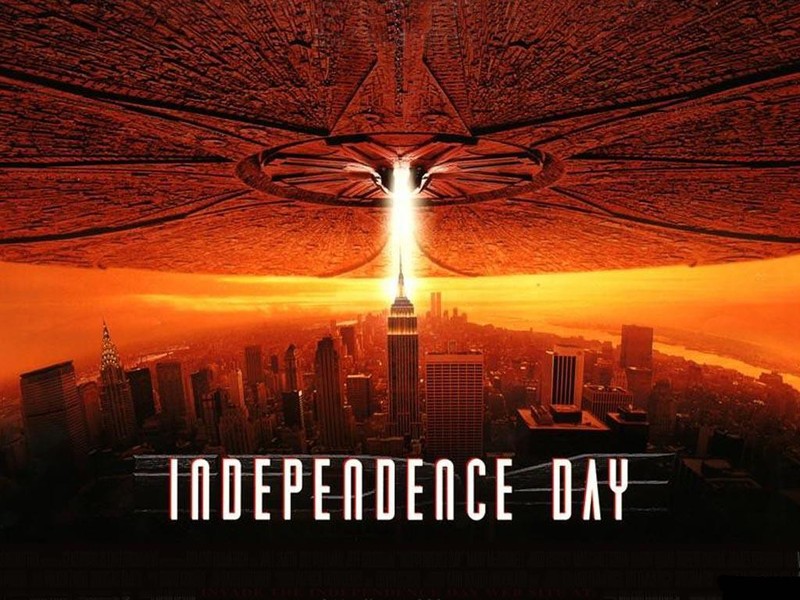
TheoFantastique: Let’s talk about a few specific sci fi films to draw out what they tell us about ourselves. Mair’s chapter discusses Independence Day. The film did well at the box office in 1996, but in critical reflection it presented images of America as world redeemer and stereotypical characterizations of African Americans, homosexuals, and women. How is it that we are able to Other our fear of alien invasion (extraterrestrial or terrestrial) but not recognize the Othering of our national bravado and stereotypes that reveal some of the worst aspects of the American psyche?
Sean Cubitt: I can’t really talk about the ‘we’ of North America. I lived in Montreal for four years, but French Canada is very much not America; and I spent a stint at the University of Chicago. An odd institution, packed with Nobel prize-winners, it’s situated in the heart of the South Side ghetto. You can’t help feeling that the US is an apartheid state there so talking about an American psyche seems odd to me, though from news reports and movies, etc. we non-norte americanos do have a sense of what you mean.
So let me come at it a different way: In the West today, we live in a deeply managed society. From traffic regulation to the management of crowd movements through malls and stations and airports; from statistical aggregation of behaviour to the management of supermarket stock, our societies work on probabilistic predictions that tomorrow will be pretty much the same as today – within statistical variations which themselves can be planned for. In this kind of world, action is incredibly difficult. It’s even more difficult because we are told over and over in our stories that only individuals can take action. But how can little me make an action that changes global warming? I can’t. We feel like action is impossible. In SF, action is possible, heroism, sacrifice, generosity, making a moral choice, changing the course of history.
The alien other in cinema is always a special effect (even if the effects are sometimes cheesy). In one perspective, the alien is a technological artifact of the cinema who has to be somehow brought into relation with the human part. That might simply be a matter of explaining. It might be a wonderful; marriage of the species, as in ET. Or in can come as conquering. I always thought of Independence Day as a remake of Dr. Strangelove: it is a comic pastiche of the kind of heroism we know that US presidents are absolutely incapable of. On the other hand, it might also be that like the Black presidents of the TV series 24, they point towards a future we all wish was going to come true lots of commentators say it’s because of these fictional presidents that it became possible to imagine Obama in the White House. There’s no doubt that the aliens of Independence Day are images of the colonial relation, and as Native American artist Jimmie Durham says, the Indians are always shown as the ones who do the scalping, raping and burning, when historically it was the colonisers. A film that to me is far worse ideologically and morally is Mars Attacks, where we are invited to identify with the attackers, and in my mind to identify with Columbus and the Conquistadors, to laugh at how simply we can erase the colonised other.
Alien mvies were often said to be about fears of communist invasion. I always thought they were about fears of immigration. Catholics coming and breeding all over the place. Nice quiet applicants turning into gremlins the minute they hit Manhattan. It’s odd because some of the most generous-hearted and inspiring SF is about aliens: I’m thinking here of Brin’s Uplift saga, one of my favourites. Really convincingly specific species, but with the extraordinary capacity to help one another. I’m a bit of a softy, but I like my future to have a little hope in it.
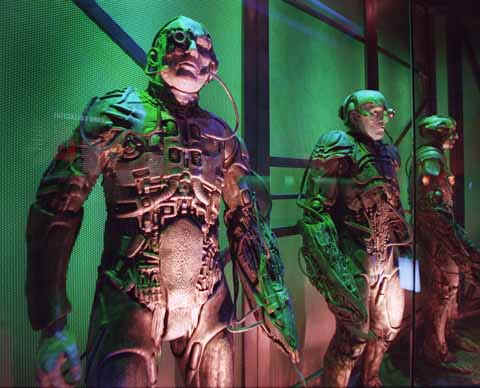
TheoFantastique: Christine Wertheim’s chapter looks at the film Star Trek: First Contact. As a Star Trek fan going back to the original series as a kid this was perhaps the most enjoyable chapter for me, and yet the most troubling in terms of the discussion of the human relationships with The Borg and with the android Data. Throughout the lifetime of the Star Trekfranchise it has claimed to present an idealized expression of future humanity that has “arrived” and moved beyond 20th and 21st century foibles. And yet Wertheim points out that in the character of Data the Other is the machine who seeks to be human, and yet in Data’s quest for humanity it is usually a quest that is only tolerated by humans when it is convenient, as in the example of Data expressing the emotion of fear generated by his emotion chip, and yet Picard suggests (commands?) he turn it off until a more convenient time. Doesn’t the Othering of Commander Data reveal, at least in part, our continuing struggle to come to grips with our interactions with technology, and in particular, issues related to the trans-human?
Sean Cubitt: Absolutely. Data is fascinating. He’s there in the same way Spock functioned in the original series: so there was someone to whom the others could explain what it is to be human. That seemed to be the central purpose of the first two ST‘s. In the best of the movies, First Contact, there’s a stunning scene when Data gets a skin graft from the Borg Queen. You could read that for weeks and still be extracting new layers of meaning and social significance, from the sexualisation of technology (and vice versa) to theories of humanity’s specifically sensual mode of cognition, and on and on. Again, the technology of cinema is driven to daring escapades to pull off the illusion, and part of the fun is that we in the audience are both convinced by the story and at the same time connoisseurs of the special effects. In one way every human actor who appears on a cinema or TV screen is a hybrid of human and technology. And of course actors don’t ‘really’ feel the emotions of their characters: they already have an emotion chip!
Then again it’s fascinating to think of Data in terms of Fanon’s analysis of the experience of being colonised; to be constantly aware that you will always be “un noir” before you are or can be anything else. Data has all the qualities of Fanon’s colonised people except their desire to rise up.
In the Cantos, Ezra Pound says something like “I don’t know how they can stand it / with a painted paradise at the end of it all / without a painted paradise at the end of it all”. SF strikes me like that. The utopias it offers are usually just pretty pictures, and we know they are, but we need those pretty pictures to hope. Hope is believing that the future will be different. Not knowing what it will be or how it will be different, just knowing it will be. Much of the time, the management of capital suggests we have no alternative except Armageddon. SF says no. That’s why I think Vivian Sobchack is right in Screening Space when she says the starfield is the science fiction image of all images, the highest, the most open to all possibilities. The satire, at its best, is razor sharp about what’s wrong with today. But what’s most inspiring is the sense not only that the future can be utterly otherwise, but that we can make it so (to coin a phrase). Without going to the descriptive lengths of an Olaf Stapledon, we can sense, in those images of deep space, the capacity of our species to be utterly different to what it is today. Transhuman themes are for the most part satirical. But in some deft moments like the skin raft sequence, we can sniff at a more indefinite and infinitely more inspiring future.
TheoFantastique: Sean, thank you again for discussing this book. I found its chapters intriguing, and they added new considerations to my reflection on science fiction.
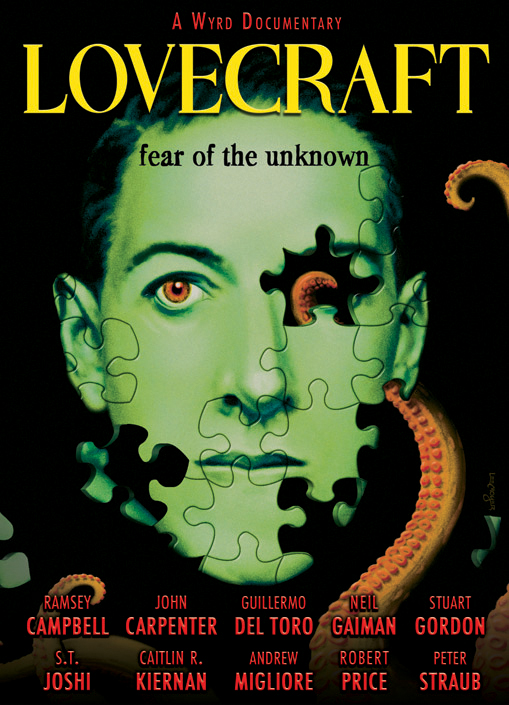
The special Halloween double issue of Rue Morgue magazine included a number of interesting features, as usual, but one which caught my eye was a description of a new documentary on titled Lovecraft: Fear of the Unknown (Wyrdstuff Productions, 2008). This fim was directed and produced by Frank Woodward, and after getting in touch he graciously and enthusiastically talked about this production.
TheoFantastique: Frank, thanks for making this great documentary, and for allowing me to screen it for this interview. How did you come to develop a personal fascination with Lovecraft and how did it lead to this documentary coming about?
Frank Woodward: I first became aware of Lovecraft like most people, I expect.It was the Call of Cthulhu role playing game, mainly the monsters within.I’ve always been a monster fan and who could resist the tentacled beasties in CoC.
That led to my reading some of the major stories… Call of Cthulhu, Pickman’s Model, Rats In The Walls.I have to admit, though, that my Lovecraftian knowledge was basic.
The desire to make a documentary was a more recent one.I occasionally produce DVD extras for Anchor Bay.There was discussion of doing a short bio of Lovecraft for the Re-Animator special edition.It didn’t happen for various reasons.By the time that decision was made, however, I had done quite a bit of research on the man.In some way I experienced what many of the people who’ve seen the documentary experienced.I was reminded how much I enjoyed Lovecraft’s work and wanted to throw myself headlong into learning more.
Making this documentary was almost like a college course. I think that’s how all documentaries should be made.They should be a journey of discovery.The desire to learn all you can is why you bother making the film in the first place.
The other thing that really brought Lovecraft about was the response I received from Neil Gaiman, Guillermo Del Toro, and Peter Straub.They were the first people we approached and all three were generous and passionate enough to sit down and talk about Lovecraft for an hour.Peter Straub even allowed us to interview him in his home.
But, by the time they said ‘yes’, the plans to make a DVD featurette had fizzled.So here I was with Neil Gaiman, Guillermo Del Toro and Peter Straub all willing to be in a piece about Lovecraft, but there was no more piece.That’s when my producing partners Jim Myers and William Janczewski said, “Let’s just do it ourselves.”So Wyrd was formed and Lovecraft: Fear of the Unknown became our first documentary.
TheoFantastique: You have assembled an interesting group of commentators that provide their perspectives on Lovecraft. How did you assemble this group, and specifically, how did Guillermo Del Toro and John Carpenter come to be involved with this project?
Frank Woodward: I think each and every person we interviewed agreed to be a part of the film because they love Lovecraft. It helped that they were also fans because, like many true genre fans, we delve into our favorite subjects and discuss them with others.
For the most part, the only thing we had to do was ask.Obviously we had gained some respectability once Gaiman, Straub and others came aboard.
In the case of Guillermo, I first approached him at Comic Con in San Diego.He had just told a packed hall about his plans for At The Mountains Of Madness (I believe he told us that we would cry and masturbate in a corner once we saw the designs he had in mind for the Elder Scientists – he’s right, by the way).Guillermo said ‘yes’ there and then, but it took a lot of phone calls to actually schedule the interview.This was right before Pan’s Labyrinth was nominated for a few Oscars so he was understandably busy.Thanks to an assist from Andrew Migliore, the director of the H.P. Lovecraft Film Festival and an associate producer on the film, we finally arranged a date.
John Carpenter was also made possible with Andrew’s help.Andrew wanted to honor Carpenter with a Howie Award at the festival.Carpenter couldn’t physically make it so Andrew arranged with me to help videotape an acceptance speech.We timed our request to interview Carpenter for the documentary with this taping.Carpenter was more than willing to answer a few questions.
This passion for all things Lovecraft was also responsible for convincing artists like John Coulthart, Paul Carrick, Tom Sullivan, Paul Komoda and others you’ll see in the film to loan us their work.It also put me in touch with Mars, the film’s composer.Mars put 30-plus years of being a dedicated cultist into the film’s score and I think you can tell.
TheoFantastique: You have screened this film at various festivals and conventions to the delight of audiences. Can you share some of these locations, how it has been received by viewers, and the awards you’ve won as a result?
Frank Woodward: We’ve screened Lovecraft in Los Angeles (Shriekfest), San Diego (Comic Con), Portland (H.P. Lovecraft Film Festival), Erie, PA (The Eerie Horror Film Festival), Fargo (The Fargo Fantastic Film Festival), Sacramento (The Land Beyond), Montreal (Cinema du Parc) and Buenos Aires (Rojo Sangre).
We won Best Documentary at Comic Con.That was all kinds of cool. Montreal’s Cinema du Parc gave us a week-long theatrical run in collaboration with the Fantasia Film Festival.We’ve also received nice write ups in Rue Morgue, Dread Central, Horror.com and the Montreal press.
Audience reaction has been very positive.Obviously fans of Lovecraft have the strongest reactions.I’ve had a few people thank me for making the film.One guy was so thrilled that he had something to show his wife and say, “See?This is why he’s so important.”I’ve also been receiving wonderful emails from people in Montreal.Lovecraft fans are legion.
Even people who don’t appreciate Lovecraft’s writing have been complimentary.I mean, you have to admit that the man, for all his eccentricities, is a captivating subject.
TheoFantastique: As the film concludes it notes how Lovecraft died in relative obscurity as a writer, and yet it also touches on the incredible influence of his writings on the horror genre as well as various parts of pop culture. Can you touch on some of these?
Frank Woodward:The obvious aspects of pop culture that bear the mark of Lovecraft are the ones discussed in the film.Alien and The Thing have definite ties to At The Mountains Of Madness.Davy Jones from Pirates of the Caribbean is clearly Cthulhu spawn.Hellboy takes place in a Lovecraftian universe.You also have the entire Chaosium line of RPGs and board games.
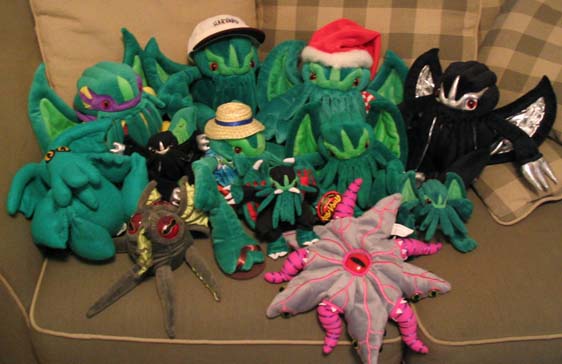
You can also see a fondness for tentacles on line.Sites like Boing-Boing.net, Ectoplasmosis and i09 frequently have posts about Cthulhu inspired art, films and plush toys.
There’s also loose references to be found in Batman (Arkham Asylum), The Evil Dead movies (Necronomicon), Peter Jackson’s Fellowship Of The Ring (if the Watcher in the Lake outside the gates of Moria isn’t an Old One, I don’t know what is) and lost world stories such as King Kong.Caitlin Kiernan pointed out the Kong connection to me.I believe we posted a YouTube video about it.They may not be as apparent as the ones in Hellboy, but the similarities do make you wonder.
TheoFantastique: Why do you think a man who was haunted by his own personal demons of various types has become one of the most influential horror writers of our time?
Frank Woodward: Lovecraft didn’t write stories about standard monsters like vampires and werewolves.He invented his own universe with creatures unlike anything writers were conjuring at the time.To paraphrase Guillermo, I think anytime someone creates a rich mythology like the Cthulhu mythos, it’s hard not to take notice.
The cosmic chaos at the heart of Lovecraft’s work is also something that resonates with people.It’s the whole idea that mankind, for all of his accomplishments, is insignificant in the face of what may lie beyond.If you go through any sort of existential period in your life, the thoughts Lovecraft expresses in his stories may suddenly make sense to you.
There’s also the unexplained.For me (and many other horror aficionados), it’s the things we can’t describe that frighten us the most.The things we don’t understand.I mean, once you explain a monster or shadow, it doesn’t seem as scary.
Think of the first people to experience a tiger.Before its mystery was explained, a tiger was a striped demon with a thirst for human blood striking from the shadows of the jungle.Before… it was a supernatural monster.After… it was another big cat. It became something you could deal with… more or less.
The best horror doesn’t explain itself.This is a lesson Lovecraft taught us.
TheoFantastique: What does the future hold for Lovecraft: Fear of the Unknown in terms of future film festivals and wider distribution? Any chance it might get picked up by a national distributor or perhaps be shown on places like Bio, Chiller, or the Sci Fi channels?
Frank Woodward: I think we’re done with the festival circuit (though we did submit to Sundance and Slamdance, just in case).Now our focus is on distribution.Obviously we would love to have the film handled by a major distributor.We have screeners at many such places.
With regards to cable, we’re talking to the usual suspects.Believe it or not, Sci-Fi Channel has already passed.They passed on Doctor Who initially so we’re in good company.Maybe they’ll reconsider.
Documentaries in general are a tough sell. One way or another, though, Lovecraft will be available to people soon. You can check our blog at www.wyrdstuff.com for updates on our crusade.
TheoFantastique: Any plans for the next documentary or project through Wyrd Productions?
Frank Woodward: Wyrd is currently editing a piece called The Splat Pack.It was a term coined by British film critic Alan Jones to describe the new wave of horror filmmakers such as Eli Roth, Rob Zombie and Darren Lynn Bousman.Whether you respond to their brand of horror or not, these filmmakers were responsible for reviving R rated horror and showing Hollywood that such films could be well crafted as well as profitable.The Splat Pack will most likely be our first foray into internet distribution.
We’re also in production on a non-genre themed documentary.Something about a way of life in America that has come and gone.That’s all I can say at the moment.
I’d love to do another piece on the weird tales genre.Possibly something on Weird Tales magazine itself.First things first, though.Our primary goal is to get Lovecraft out in the world.
TheoFantastique: Frank, thanks again for this great work. I hope this film is disseminated as widely as possible and that more people become aware of the significance of Lovecraft to the fantastic in popular culture.
Lovecraft: Fear of the Unknown can be watched for free online here.
A number of research sources have provided a variety of things to think about in my exploration of deeper levels to the fantastic. One thought provoking source was David Skal’s book The Monster Show: A Cultural History of Horror (Faber & Faber, 2001) where, among other things, he argued for a connection between horror films and Surrealism. Since I read that I have felt that this connection, as well as the influence of Surrealism in pop culture in general, is worth further exploration. I was therefore pleased to come across a book on this topic edited by Graeme Harper and Rob Stone, titled The Unsilvered Screen: Surrealism on Film (Wallflower Press, 2006). The contributors to this volume look at Surrealism in a variety of cinematic expressions, and one chapter that caught my eye dealt with the surrealistic influence in American animation in the early twentieth century. The chapter was authored by Van Norris of the School of Creative Arts, Film, and Media from the University of Portsmouth in the United Kingdom. Mr. Norris spoke with me recently about the focus of his chapter, and his current PhD research.
TheoFantastique: Van, thank you for discussing your contribution to The Unsilvered Screen. How did you come to develop your interest in both American animation and Surrealism, and how did you connect the two in your research?
You’re welcome! I studied Classical animated forms during my undergraduate dissertation years back in the early 1990s, which in turn fed through the Masters programme completed in the late 1990s on animation aesthetics within American film and I’m currently completing a PhD thesis, ‘Drawing on the British Tradition’ on UK Television animation forms, that contextualises contemporary British social and cultural attitudes within mainstream settings and how these interact with extant ideas on comedy forms and narratives. Having long had an interest in how Surrealism is managed within mainstream cinema and throughout aspects of popular culture it struck me that many critics flirt with how these principles can be observed working in popular animation in a broad assumptive sense but often they seem to be perhaps more confident in discussing Surrealism separately and less specific or accurate when referring to the cartoons themselves in any detail – and indeed this occurs vice versa with animation scholars. What also is apparent when mapping surrealist impulses onto such works that the contexts are constantly shifting due to the nature of production circumstances, authorship situations etc so it is apparent that there is still much work to be done on how the form is read and misread in these contexts and I have to say this still all feels like just the beginning of moving towards a truly comprehensive understanding of how this is mapped out, historically, culturally, industrially and textually.
TheoFantastique: For the benefit of readers, can you define “Surrealism” as an artistic movement, and can you share your thoughts on how this came to be an influence in pop culture, including in animation?
Surrealism is a concept that, as The Unsilvered Screen highlights in each chapter, has become somewhat devalued and often misinterpreted in today’s culture. It’s a school of thought that seeks to discuss what lies beneath the surface of our reality (hence the ‘sur’ – meaning under) and expresses the dialogues of the subconscious, the hidden desires and feelings that we don’t express in our daily lives. It does so by using images represented through an adherence to photographic realism and placing them together in incongruous contexts or to produce a disturbing outcome. Andre Breton coined the term in his manifesto in 1924 and relied on a technique called ‘automatism’ by which he would detail unmediated, uncensored, unstructured thought onto a page. He deployed this tool to access what he saw as ‘the truth’ that lay beneath what he saw as the bourgeois construction that was ‘reality’. This unmediated approach to art construction thus offers up images that Breton felt should feed out of our dream landscapes and that then supposedly reveal interior narratives and produce ideas that should be, (if to be regarded as true surrealism) ‘shocking and disturbing’.
The fact that Surrealism has pervaded art to literature to film is hardly surprising. Contemporary culture has absorbed, appropriated and quoted so much of Andre Breton’s original conception that over the 20th century it’s become but one of Western society’s key background narratives. And the shifts in contemporary morality, the expansion of modern media and our late modern fragmentary take on visual culture have all contributed to a ‘flattening out’ and in fact a corruption what was originally an incredibly subversive form.
TheoFantastique: In your chapter you discuss animated cartoons that were used as “fillers” along with newsreels between double features at the cinema. It might be a surprise to some readers to think of these as serious art forms that, as you write, “responded to and articulated a range of complex ideas.” What types of cultural ideas were the animated features in the 1930s and 1940s responding to, and how did Surrealism play a part in that exploration?
Van Norris: In terms of American animation (and in the context of the chapter I’m thinking more about popular Classical forms of the 30s and 40s here) this has arguably always been a form that has flirted with what are in fact related types of dialogues, those which manage incongruous imagery, subversions of a given ‘reality’ and actualise internal desires through visual representations. This can be seen from the early works of J. Stuart Blackton through to Otto Messmer and his 1920s incarnation of ‘Felix the Cat’. Although due to the commercial nature of the form the degrees to how ‘shocking and disturbing’ these can be is obviously compromised.
The cartoon filler is also a form which has since its origins processed popular culture and replayed aspects of it in the public realm continually (see Messmer’s citation of Hollywood, celebrity, industry, the star-system and genre in the 1923 ‘Felix Goes to Hollywood’ for example). I think, using the Warners animation as a more detailed example, they were attempting to define an identity away from the monolithic success of the Disney ‘Silly Symphony’ shorts of the 1930s. In their ‘Looney Tunes’ and ‘Merrie Melody’ cartoons that emerged in the late 1930s they seized on the fact that popular culture, film, radio and literary references went down very well with their proletariat audience base. And often this went beyond mere quotation and moved into parodying items such as a then ongoing media-managed feud between broadcasters and radio personalities, Walter Winchell and Ben K. Bernie in Friz Freleng’s ‘Coo-Coonut Grove’ (1936) through to the compendium of references that mock contemporary values in Bob Clampett’s 1946 ‘Book Revue’ to Frank Tashlin’s 1944 ‘Swooner Crooner’, which is a cartoon that satirises both the entertainment industry through the presentation of a passive audience dominated by manufactured singers and, with the wry positioning of the Porky Pig character, the efforts of wartime industrial profiteers.
Now, animation is a form that crosses boundaries with cinema and art practice and, (like film itself), is preoccupied with continually transgressing recorded realities and thus makes it an obvious platform for the Surrealist. Importantly Franklin Rosemont also talks about how much impact artists like Salvador Dali had on the American psyche throughout the 1930s, whose own work was regarded by the original Surrealists as a somewhat bowdlerized take on the form that was dominated by commerce, self-promotion and was defined by a rationalisation, somewhat shorn of the original movement’s political intent. The Classical animators were all undoubtedly aware of this strand of thinking consciously and unconsciously and its no surprise that aspects of it informed their work. How much of it can be defined as truly ‘surreal’ is another question. And how this form has contributed to this corruption in terms is still another that requires a larger amount than 8000 words to fully assess.
TheoFantastique: How did Warner Brothers studios and their Looney Tunes draw upon Surrealism?
In terms of Surrealism much of Warner’s output dallied with the odd image or juxtaposition of incongruous ideas which appeared to be a stock in trade within Tex Avery’s early work before he left the company in 1941. Bob Clampett’s 1938 ‘Porky in Wackyland’ is perhaps the most celebrated cartoon of the period which explicitly allies itself to what appears a surrealistic register. I think of it as almost an untutored raw misreading of surrealism. In its attempt to push the boundaries of the form, (a preoccupation of Clampett’s) the short contains nods towards the popular misconception of surrealism that had entered the public sphere but also melded aspects of the absurd, (in itself a more nihilistic register) with the surreal by appropriating incongruous pairings of landscape details, using melted clocks in backgrounds and positing images of decay and death – yet in fact removing any potential deeper resonances. Through the combinations of naturalist, Absurdist, expressionist and cinematic grammar, in the flattening out of key surrealistic images and the fragmentary approach to narrative the film is in many ways an ironic, almost Lyotardian commentary on art practice, commerce and indeed popularised understandings of surrealism itself, which through time, cultural factors and simple geography was already moving away from the original Bretonian impulse. The aspects of the surreal here are posited as quotation. Its slickness and knowing quality mark it out with a kind of ‘distance’.
TheoFantastique: How did the Looney Tunes’s use of Surrealism compare with that of the Fleischer Brothers?
Van Norris: First Wave Austrian-Jewish immigrants, The Fleischer Brothers were making less polished shorts than Disney in the early 1930s but still were very highly regarded. These were animations that, too, enjoyed a symbiotic relationship with popular cultural and mass audiences of the period. Often their works presented a slightly less ironic sense of knowing cultural quotation than exhibited by Warners. This process was often restricted to inserting jazz songs by Cab Calloway and Louis Armstrong into narratives at odd moments and included bizarre unexplained appearances such as Frederic March’s incarnation as Mr. Hyde from Reuben Mamuolian’s 1932 version of Robert Louis Stevenson’s story in the finale of Betty Boop M.D (1932) – these are moments that jar and unsettle as much as operate as winks at the intended audience. The shorts also consciously and unconsciously referenced the values, mortality and the experiences of adult life in 1930s urban New York, they demonstrated a rougher, grittier, saltier aesthetic than Walt Disney’s folksy farmyard view of America and one which predicted the free-form cultural riffing of Warners.
Mark Langer refers to the pre-Hayes Code intervention ‘Betty Boop/Talkartoons’ shorts (1930-1933) as being pretty much all about “sex and death” and he’s right, in that whilst Clampett steers well clear of the really disturbing areas, The early Fleischer shorts are a miasma of distorted bodies, phallic objects, vaginal openings, fluid uncontrollable metamorphoses, inconsistent compostional sensibilities, dislocated sounds and all are contained within fractured dream-like narratives that exist as arranged sequences that appear as some kind of half-recalled afterthought. ‘Bimbo’s Initiation’ (1931) is an amazingly complex short which exemplifies this and replicates the dream state entirely through its subversions of space and time. Intriguingly it’s a film that is immersed in all sorts of Freudian totems that suggest acknowledgements around male performance anxieties and about becoming an ‘adult’ as much as any extension of what is permissible in terms of demarcating cartoon space. Like a number of films produced by the studio through this fertile period from ‘Old Man of The Mountain’ (1932) to ‘Is My Palm Read’ (1932) to the celebrated 1933 ‘Snow White’, it’s actually genuinely disturbing in places – which surely the pre-requisite of any surrealistic work. Clampett is more interested in popular culture while the Fleischers exhibit a more explicitly surrealistic approach. This is as much down to the haphazard ways they created their cartoons as it was their favouring of fusing a distinctly European approach to cartoon making to American industrial expectations.
TheoFantastique: In your chapter you also talk about the significance of Walt Disney’s animation, but he did not draw upon surrealism so much as his contemporaries. Where did Disney express Surrealism, and why did his expression of animation not draw upon it in greater ways?
Van Norris: There is something of a myth here, (and which I suspect the downplaying of Disney’s role within popular surrealistic animation in my own chapter in the book is adding to this!) in that the studio rejected this and other high art avant-garde practices. I think the rejection of a directly Bretonian register in such a commercial avenue would have had to have been inevitable as those ideas don’t really correspond with what Paul Wells refers to as the ”folksy Republicanism” that informs the studio’s overall ethos. However Disney experimented with limited/smear animations, abstract forms (which were tellingly rationalised beyond recognition in his 1940 ‘Fantasia’) and surrealism itself through his collaboration with Dali on the remarkable ‘Destino’ project began in 1945, but was never completed. All of this was laudable and certainly progressive in intent but inevitably appeared to be undermined by Disney’s own highly compromised nature as part artist and part business-man. Disney, like Clampett at Warners, seems happier to contain moments which conform to aspects of surrealistic practice (that occasionally could shock and disturb) within dream sequences, extreme moments and as contained within some space away from the universe in which his central characters operate. Which again points to this larger issue that often, as Rosemont points out, American art feels the need to quantify the irrational and the unexplained in terms of form and theme – that such a resolutely European idea as Surrealism inevitably would become transformed into something altogether less contentious.
TheoFantastique: Van, again, thanks for your discussion of an interesting topic. I hope it will give animation and Surrealism fans alike new things to think about.
It is amazing to me how serious social commentary surfaces in films that are often dismissed as mere entertainment. A recent post from the message board for the Popular Culture Association that touched on research resources supporting the idea that popular cultural texts, such as Stephen King’s horror writings, now have become sources for articulating theological and theodical issues (a defense of God’s justice in the face of evil), led to my surfing the Internet today looking for my favorite clip from the film adaptation of King’s The Mist. Not only are King’s writings, and those of other writers of the fantasic and other forms of popular fiction expressive of the theological and theodical, they also find application to our political processes. We live in a time of great political and economic change and turmoil. Watching the clip associated with this post raises flags of warning for American culture, not only for the dangers posed by religion run amok, but for politics as well. We need to be careful not to create or become the monsters we fear and hope to keep in the closet, or at least under our beds. I do not offer these thoughts as a critique of any particular political party or commentary on the outcome of our recent election. Instead, consider this brief post food for thought in reflections on our election process and the great distance we have yet to travel as a country through the challenges we face at home and abroad.
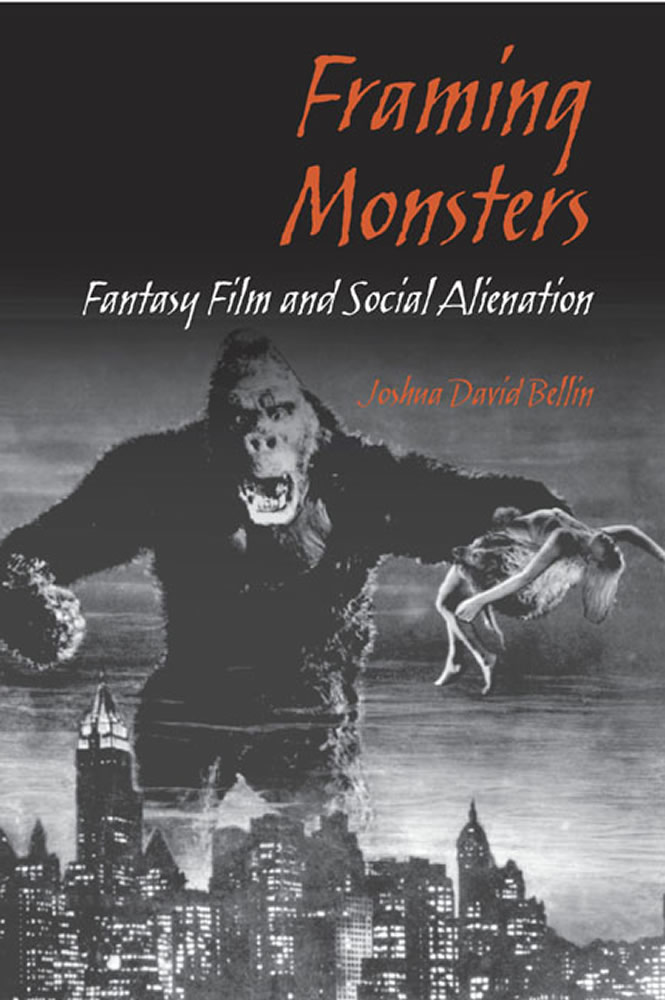
I have read many books and academic articles that probe deeply into horror and science fiction film, television, and literature, but rarely can such analysis be found related to fantasy. For those interested in such an exploration seek no more. Joshua Bellin has done us a great service, providing us with both an academic exploration and a treat for fantasy film enthusiasts. Bellin is part of the School of Arts and Sciences at LaRoche College, and he is the author of a number of books including Framing Monsters: Fantasy Film and Social Alienation (Southern Illinois University Press, 2005). Thankfully he loves to talk about monsters and fantasy film, and he made some time to discuss these as they relate to his book’s thesis.
TheoFantastique: Josh, thanks for writing your book and addressing fantasy films. Some of what follows in our discussion as you flesh out your book’s thesis may be a bitter pill to swallow for some readers. So let’s begin where you begin in your book. Even though you offer a critique of fantasy films as perpetuating problematic social and cultural phenomenon, you are a fantasy film fan. In fact, the original King Kong is your favorite film. Can you share a little of your appreciation for fantasy films, and how this is nevertheless connected to an academic analysis of what might be considered the “dark side” of this genre?
Josh Bellin: I can’t remember a time that I wasn’t a fan of fantasy film. I’ve tended to mark watershed moments in my life via the fantasy films current at the time: Star Wars came out when I was on the verge of my teen years, Jurassic Park appeared just before I got married, The Fellowship of the Ring coincided with my first full-time academic job, and so on.But King Kong was special.I first saw it when I was five years old, and it absolutely changed my life.The combination of amazing visuals and compelling narrative gripped me, inspired me, made me believe that the world was alive with mystery and wonder.I drew books of monsters (most of them looking exactly like Kong!), I dreamed of becoming a stop-motion artist, I drafted countless (unfinished) fantasy novels.In a way, I think my love of fantasy led me to academia; my passion for research and teaching reflects my belief in transcendence, in limitless possibility, and this belief in turn can be traced to my lifelong love affair with worlds of fantasy.
But as I’ve grown, and as my academic training has encouraged me to read literary and cultural texts closely and critically, I’ve become more reflective about fantasy films and my own relationship to them.I’ve come to believe that fantasy films, as cultural texts, are invariably connected to their social, historical, and political contexts, which means they’re also connected to the prevailing prejudices of their time and place.And I’ve had to ask myself how I can love films that frequently promulgate social attitudes I find repugnant: racism, sexism, mistreatment of the mentally and physically different, and so forth.That was the germ of my book: asking myself that question, which is really a moral question more so than an academic question.So this book is the most personal of all my books, the one that touches not only on my research interests but on my history, my self-definition, and my sense of purpose as a human being.Because after all this, I’m still a diehard fan, and that means I need to reconcile my very different personal and professional responses to these films.
TheoFantastique: Can you summarize the thesis of your book?
Josh Bellin: The book’s thesis grows out of the question I just posed: how can I—or more broadly, how can we, as individuals and as members of past and present societies—be so strongly attracted to films that often promote our worst qualities rather than our best?My answer is that fantasy films are particularly adept at representing these negative qualities in ways that insulate viewers from recognizing them or, more specifically, from taking responsibility for them.Because fantasy films can so easily be dismissed as “pure” or “escapist” entertainment, because viewers and reviewers alike tend to divorce fantasy films from social and historical reality, such films become ideal sites for harboring the social and historical beliefs we most wish to distance ourselves from.So when Depression-era viewers watched Kong, which I situate within the context of twentieth-century racism and segregation, they were able to luxuriate in feelings of fear and hatred toward African Americans while simultaneously denying that they held such attitudes or that the film reinforced them.But of course, that’s what makes these films particularly powerful vehicles of social alienation, the phrase I use to suggest the whole range of processes by which marginalized groups are stereotyped, victimized, and scapegoated: fantasy films’ resistance to critical scrutiny enables them to perpetuate loathsome social ideologies under the guise of “harmless entertainment.”
I should also say here—and this has helped me in my own struggle to reconcile my feelings about fantasy films—that the very qualities that make these films such powerful vehicles of alienation can also make them vehicles of liberation: because the genre is steeped in histories of alienation, it can become a fertile ground for investigating, critiquing, and rejecting such histories.
TheoFantastique: You drew upon certain fantasy films as you argued for your thesis, including King Kong, The Wizard of Oz, Ray Harryhausen’s Sinbad trilogy, and Jurassic Park. How are you defining fantasy in relation to sci-fi and horror films, and why did you select these films as illustrative of your thesis?
Josh Bellin: First, I tend not to draw hard-and-fast lines between fantasy, science fiction, and horror; I feel that there are too many conceptual problems in these generic definitions for them to be useful.Just to cite one example: what does one do with a film like Aliens?It’s science fiction, right?But it’s also a monster movie—so I guess it’s also either horror or fantasy, depending on where you fall on that ill-defined difference.You’ll see critics tie themselves into verbal knots trying to prove that these are three distinct genres—yet they always end up admitting that there are exceptions to whatever definitions they propose, and once the exceptions start to outweigh the orthodox examples, you realize that the definitions are attempting to create something that doesn’t exist in reality.It ultimately collapses into tautology: fantasy films become films that possess whatever qualities the particular critic defines as characteristic of fantasy.
That being said, my choice of films was guided by my desire to select films that seemed particularly unlikely candidates for the sort of social/cultural analysis I was conducting—films, that is, that have typically been treated as pure flights of fancy.I figured that if I could demonstrate that even these films are rooted in particular histories of social alienation, readers would be more inclined to see the value of my thesis than if I’d chosen more obvious, transparent, or critic-friendly films.But that also means that I’m courting a certain degree of reader resistance; though many readers would readily agree that a film like Blade Runner (which I don’t discuss in the book) speaks to a range of social issues, they might find it hard to believe that The Wizard of Oz was every bit as pertinent to its historical contexts as Blade Runner is to ours.But that was the challenge of writing this book: making an argument that fantasy films are socially relevant rather than socially redundant.And the payoff is that if the reader finds my analysis convincing, it’s a lot more powerful of an “a-ha!” moment than if I’d gone with more immediately plausible examples.
TheoFantastique: In the Introduction of your book you note that while sci-fi and horror films have been subject to academic scrutiny for their deeper levels of meaning, including the portrayal of the social other, fantasy films have been given a pass. Why is this, and what assumptions have been operating in fantasy films that aren’t present in the analysis of the cousin genres?
Josh Bellin: As I said before, critics have tried to distinguish fantasy, science fiction, and horror as distinct genres.In particular, they’ve tended to define fantasy and science fiction as simple antitheses.Sci-fi, according to this line of argument, relates in specific and identifiable ways to its social contexts; fantasy, by contrast, represents that which falls outside the social contexts of its time, that which is “timeless” or “archetypal” or “mythological.”Needless to say, I don’t buy this argument, which I think is both schematic and reductive.It not only fails to recognize that all cultural productions operate on multiple levels—the historical, the topical, the psychological—but it quite cavalierly categorizes as “fantasy” whatever the critic can’t connect to the social contexts of its time.To return to the example I used earlier, there’s no film so regularly dismissed (or exalted) as “pure fantasy” than The Wizard of Oz; critics either see it as an innocent children’s film or, at best, as an escapist vehicle for Americans caught in the throes of the Great Depression.But as I demonstrate in the second chapter of my book, The Wizard ofOz relates in quite overt and tangible ways to discourses of technological utopianism and class conflict that were pervasive during the 1930s.We don’t see these relationships today because we’ve lost the cultural context in which the film was originally viewed.But with a little historical archeology, reconstructing the era in which the film first appeared, those connections become manifest—in fact, they become so obvious and inescapable, you’re amazed you didn’t see them before.And what’s more, if you look at Oz this way, it becomes apparent that what we call a “fantasy” today would have struck Depression-era audiences as science fiction!So when you do this kind of historical research, you recognize very quickly that the separation of fantasy from its cousin genres simply doesn’t hold water; it’s a self-fulfilling prophecy and an excuse to avoid analysis rather than an analytical tool.
TheoFantastique: In your first chapter you begin with your favorite film, King Kong. At times the film is interpreted as escapist entertainment during the Depression, but you frame it within its “historical and cultural matrix” and thus connect it to the racism of the time. What was the racial situation in 1930s America, and how is some of this coded in the visuals and storyline of the film?
Josh Bellin: The 1930s were a period of great racial tension and transformation in America.In the South, lynch law was coming to a gory end, as its excesses were becoming the targets of journalistic exposés and legal challenges.In the North, meanwhile, the demographics of the region’s cities were undergoing significant changes, as thousands of African Americans from the rural South were relocating to the urban North.So throughout the nation, systems of racial apartheid were becoming strained, and this brought about a predictable backlash by the dominant culture in its attempt to reinforce the practices of de facto and de jure segregation that appeared to be under assault.The backlash manifests itself variously, in everything from racist representations of African Americans in minstrel shows to the rise of the eugenics movement to the mushroom growth of the KKK.I see King Kong as arising from that social climate: it’s not simply an “allegory” about enslavement, as James Snead has argued, but a film that speaks in very specific ways to the fears and anxieties of its time.Viewed historically, Kong becomes a film about protecting the privileges of white society against an overwhelming black threat; the golden woman, Ann Darrow, becomes at once a symbol of white womanhood carried off by a black ravisher and a signifier of imperiled white power and privilege.And in this context, the state-sponsored violence unleashed against Kong becomes justified as society’s necessary and appropriate response to quell such a monstrous threat.
TheoFantastique: Eric Greene makes a similar argument in his book for racism surfacing in the Planet of the Apes films, another collection of favorites of mine. Why do you think we tend not to see these elements?
Josh Bellin: The simple answer would be that we don’t want to see them, and I think there’s a lot of truth to that.But if we ask why we don’t want to see our own worst qualities, we come to recognize that it’s not only a private or personal matter, keeping up our own self-image or something like that.The fact is that whites during the Kong era benefited in every conceivable way from the system of racial apartheid that prevailed in their society; wealth, power, access, and all the other indices of social wellbeing were inextricably linked to the color of one’s skin.But if you come to recognize that—and by “you” here, I mean “society”—then you’re faced with the fact that all the social “goods” you enjoy are unearned, that the system is unjust, that it needs to be dismantled.That was precisely what the Civil Rights activists of a later generation argued, and in so doing they brought questions of race and social privilege into public discourse.But it took a catalyst like that to bring such issues to the fore; it wasn’t going to happen without a struggle.So one way of looking at a film like Kong is that it performed a palliative or even soporific function for its society; it enabled people to continue denying what the plain evidence of their senses should have shown them to be true, and as such it enabled them to retreat farther into the comfortable and comforting fantasies that favored their privileged status.
TheoFantastique: I was pleased to see you include a chapter devoted to Ray Harryhausen’s films. There are a wealth of treatments of his films not only by Harryhausen himself (at times with co-authors), but by his many fans as well. Yet his films have not been the subject of much critical treatment. Why is this?
Josh Bellin: First, let me say that I simply had to include a chapter on Harryhausen in this book!He was an enormous influence on me, second only to Willis O’Brien and King Kong, and it has always bothered me that his films haven’t received anything approximating the critical attention I feel they deserve.But if you accept my thesis about fantasy films in general, it’s not hard to see why Harryhausen has been so critically neglected: because his films seem so far removed from social reality, because they deal with figures from mythology and fable—rocs and hydras and dragons and Ymirs—it’s particularly easy to bracket them as miraculous works of “pure fantasy.”But I’m always skeptical when I encounter the adjective “pure.”It seems to me that the language of “purity” serves as a denial mechanism, and I always want to investigate not only what these “pure” products are but why we’re so heavily invested in insisting on their purity.
Parenthetically, I might add that it wouldn’t take much to argue that Harryhausen’s films should be analyzed in respect to their social contexts.After all, three of them are based on famous works of political satire, while others deal with topical issues such as the A-bomb, alien invasion, and so on.But again, there it is: we seem to have a particularly strong desire to protect fantasy from the dirty work of history.
TheoFantastique: As you situate Harryhausen’s Sinbad films in their cultural contexts of America over several decades you connect them to changing American views of the Middle East. Can you illustrate how you see this connection and its development from the 1950s with The Seventh Voyage of Sinbad, and how this changes as we move to The Golden Voyage of Sinbad, and later Sinbad and the Eye of the Tiger?
Josh Bellin: It would have been fairly easy to demonstrate that the Sinbad films fit into a longstanding pattern in American popular culture of caricaturing and demonizing the Middle East, a pattern that has gained new strength in the post-9/11 era.But rather than showing the presence of what cultural critic Edward Said calls “Orientalism” in these films, I decided to zero in on how the films represent mobile, historically contingent relationships between East and West.In the immediate post-World War II era, for example, Western attitudes toward the Middle East were far more amorphous, ambivalent, than they would later become; most Westerners simply didn’t know much about the Arab world, and so it tended to be represented in Western popular and political discourse as a mysterious region, perhaps a future ally, but probably best left to itself.The first Sinbad film clearly manifests these emergent attitudes: Sinbad is a much more wary hero in this film than in the latter two, while the motivations of the villain and monsters are notably less straightforward than they would become as the series progressed.In the 1970s, however, a number of factors—including the OPEC oil embargo and the rise of Palestinian terrorism—helped bring into being the twin stereotypes we still hold today: the Middle East as an area of dreadful economic power and random, inexplicable violence.The second Sinbad film demonstrates these attitudes as surely as the first demonstrates an earlier mentality: Koura combines the qualities of terrorist and sheik, while virtually all the monsters are pawns in a deadly struggle for geographic and material domination that he orchestrates.Finally, Eye of the Tiger embodies a complementary or competing set of attitudes that arose in the seventies, as increasing sympathy for the Palestinian cause and the Carter presidency’s attempts to broker a deal between Israel and Egypt brought a more balanced assessment of the region’s difficulties and a corresponding hope that its conflicts could be resolved.You see this in Eye of the Tiger both in the internal conflict experienced by Prince Kassim, who must struggle to overcome his bestial self, and in the heroes’ appeal to the Temple of the Arimaspai, a pyramid—symbol of Anwar Sadat’s nation—within which a divine power for mediation and transformation resides.So though I would never be so bold as to say that each film expresses a single attitude toward the Middle East—popular culture is never that simple—I do feel that excavating the guiding philosophy of each film reveals how films we tend to take at face value exist in rich and complex relationships to their historical contexts.
TheoFantastique: In chapter four of your book you discuss gender, the feminine, and the idea of family values in connection with Jurassic Park. You take the position that this film actually confirms notions of patriarchy in connection with family values. Can you give readers a few threads of your argument and how dinosaurs like the rampaging T. rex might be construed as supporting patriarchy vs. the feminine seeking to rise above patriarchal subordination?
Josh Bellin: The book’s fourth chapter marks a shift from “classic” fantasy films to films of the past few decades; I was attempting to show that it wasn’t only in some supposedly benighted past era that fantasy films upheld processes of social alienation.So the fourth chapter, “Dragon Ladies”—a title I’m very proud of, by the way!—focused on the role of monstrous women in contemporary fantasy films.This is one of the most frequently discussed topics in studies of horror and science fiction film; the original Alien film touched off a flurry of feminist studies detailing how male discomfort with female sexuality manifests itself onscreen.But my concern with these studies is that they tend to fall into the trap of universalizing (and thereby de-historicizing) representations of the monstrous feminine; their argument tends to be that men are always and everywhere repulsed, and in identical ways, by female genitalia and reproductive functions.Though this may be true for all I know, such studies overlook the quite specific and historically shifting discourses surrounding women, reproduction, and the family that held sway during the era of the Alien series, the Jurassic Park films, Species, and the other monstrous-women films I discuss.The eighties and nineties were the heyday of the so-called “family values” crusade, when ideologues in or near the Reagan and Bush administrations popularized the belief that the collapse of patriarchal power, the rise of mother-headed families (especially among African American communities), and the degradation of a “culture of life” had destroyed the “traditional” family, with disastrous cultural results.And if you look at the first Jurassic Park, you see all the rhetoric of the family-values campaign: irresponsible men who dabble in reproductive processes outside the sanctioned family unit give rise to super-empowered females whom they are then unable to control.In this light, the whole subplot about Dr. Grant’s initial distaste for children and his subsequent heroic shepherding of Lex and Tim across the female-ruled Park (a subplot that, interestingly, plays next to no part in the novel on which the film was based) becomes an argument for the reassertion of male authority over a feminized wilderness.
As a closing comment, I should say that this kind of analysis is in no way meant to diminish people’s appreciation for the films, on any level—whether that be enjoyment of their special effects or immersion in their fantastic plots.On the contrary, I feel that it diminishes the films to call them “pure fantasies,” to treat them as if they are not products of human labor and history.As a fan, I think we owe it to these films, their creators, their societies—and not least, to ourselves—to acknowledge how complex and powerful they are.
TheoFantastique: Josh, thanks again for subjecting fantasy films to the same probings of analysis through historical and cultural reflection as other genres of film. I hope your thesis provides additional levels of meaning and understanding to the enjoyment of these films.
Plenty of items will be “screened” here in the near future, and in this post I’ll share a few textual trailers to let readers know what to look forward to.
In addition to my own reflections and commentary several interviews will find their way here over the days and weeks to come. These include an interview with Van Norris of the School of Creative Arts, Film and Media at the University of Portsmouth in the U.K. Mr. Norris will discuss his chapter contribution to The Unsilvered Screen: Surrealism on Film (Wallflower Press, 2006), a chapter that looks at surrealism in American animation. The editors of this book, Graeme Harper and Rob Stone have also expressed an interest in discussion of the influence of surrealism in cinema.
Joshua Bellin of LaRoche College will talk about his book Framing Monsters: Fantasy Film and Social Alienation(Southern Illinois University Press, 2005). While sci fi and fantasy films have been the stuff of academic exploration, fantasy films have often been divorced from their historical and cultural contexts. Bellin provides a corrective to this, and as a fantasy film fan he does not shy away from critical analysis of films including the original King Kong, The Wizard of Oz, Ray Harryhausen’s Sinbad trilogy, and Jurassic Park.
Film director Frank Woodword of Wyrd Productions will discuss his documentary Lovecraft: Fear of the Unknown. As the title indicates, this film brings together academics, fans, and some of Hollywood leading fantasy filmmakers as they look at the continuing influence and legacy of H.P. Lovecraft on horror, sci fi, and fantasy. See a trailer for the film here.
Sean Cubitt of the School of Culture and Communication at The University of Melbourne, co-editor with Ziauddin Sardar of Aliens R Us: The Other in Scienc Fiction Cinema(Pluto Press, 2002), will discuss this book’s fascinating thesis as to how the social other is constructed through the genre of sci fi. Other topics addressed in the book include technology, apocalyptic futures, xenophobia, and the role of women.
A recent trip to Barnes & Noble to peruse the shelves of various book categories revealed an interesting book by Eric Nuzum in the cultural studies section titled The Dead Travel Fast: Stalking Vampires: from Nosferato to Count Chocula (Thomas Dunne Books, 2007). This is an interesting personal journey of Eric. a self-described pop culture critic and VH1 pundit, in an exploration of the pervasiveness of vampires around the world. Eric and I will talk about his book and his journeys in a future interview.
My bibliographical research also led me to find a book addressing a neglected topic related to horror and pop culture, that of the mummy. In the near future Dr. Jasmine Day will talk about her book The Mummy’s Curse: Mummymania in the English-speaking World (Routledge, 2006). This book is the most in-depth about “mummymania” in English. And to add another dimension, Day is an anthropologist who also has an appreciation for the growing body of academic literature on horror which she notes has also been an increasingly popular topic in the humanities in recent years. Our interview will make for an interesting interdiscipinary consideration of our fascination with mummy’s in horror cinema and beyond.
I hope my readers will find these and other topics of interest as TheoFantastique continues its celebration and exploration of the fantastic in popular culture.
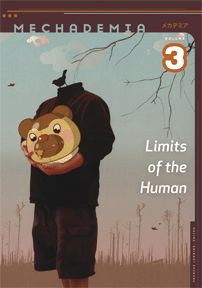
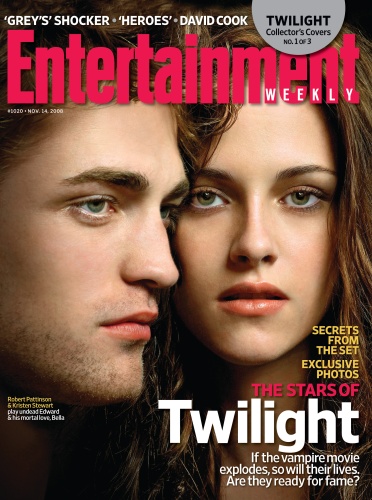
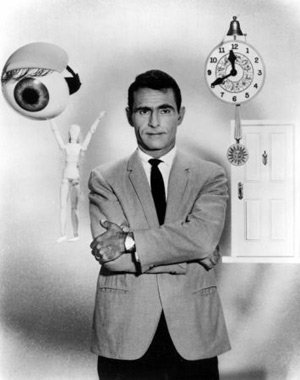
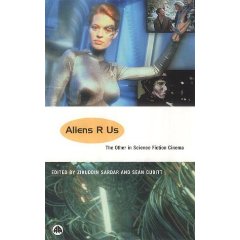 Sean Cubitt