“THIS BOOK CONTAINS: MURDER! MAYHEM! ROBBERY! RAPE! CANNIBALISM! CARNAGE! NECROPHILIA! SEX! SADISM! MASOCHISM … and virtually every other form of crime, degeneracy, bestiality, and horror!”
The words above appear in a report from the mid-1950s titled “Comic Books and Juvenile Delinquency” from the Committee on the Judiciary’s investigation of juvenile delinquency in the United States. It serves as a reminder that more recent concerns about certain forms of music, violence in film, and other forms of popular culture, are part of a long and ongoing series of debates about entertainment and youth. In this instance those in positions of cultural leadership in 1950s America were concerned about horror comics, a story that is detailed in the fine book The Horror! The Horror! Comics Books the Government Didn’t Want You to Read! (Abrams ComicArts, 2010) by Jim Trombetta.
For some reason 1950s horror comics have received a lot of attention lately in various horror magazines and books, and The Horror! The Horror! is an important part of this mix. But while much of the focus is often on the important contribution of EC Comics, this volume moves beyond that to remind the reader of a broad section of horror comics that fascinated and frightened young people during the post-war period. This book reproduces cover art, and at times the inner content, of long-forgotten horror comics such as Marvel Tales, Spellbound, Spook, Strange Terrors, Horrific, Strange Fantasy, and a host of others. Although modern generations of young people are used to plenty of on screen blood and gore in their horror in film and television, there is still plenty in these comics that contemporary readers may find appropriately revolting and worthy of horrific respect.
The Horror! The Horror! not only features color reproductions of 1950s horror comics, but also helpful introductory material where Trombetta sets the cultural stage for the rise of these pop-culture artifacts. Produced as a way of dealing with the national trauma’s of the Great Depression and World War II, Trombetta writes:
“These comics conveyed the unspeakable, and maybe even unthinkable, trauma of a whole society, but in a streetwise, urban-legend way. On one hand, they could be more reactionary, racist, and brutal than the surrounding culture, as if to rub the reader’s nose in a deliberate caricature. On the other hand, their radicalism could be startling. They kicked ove the biggest triumph in history just to see what might crawl out.”
From this cultural matrix Trombetta not only traces the rise of horror comics from crime comics, and discusses the government’s reaction to horror comics among youth, but also includes discussion of various common horror elements found in these materials, such as the werewolf, magic, skeletons, decapitated heads, and various forms of the undead.
One of the main features of this book is not only a fresh consideration of 1950s horror comics, but also the furor they caused as government officials feared they had the potential to corrupt youth. As Trombetta describes on the inside cover of the book, ‘[t]hese outrageous comic book images, [were] censored by Congress in an infamous televised U.S. Senate subcommittee hearing in 1954 investigating juvenile delinquency”. Although this may seem outrageous to us in the 21st century, we might recall that in 2007 Congress held hearings on gangsta rap lyrics, a repeat of similar hearings in the 1990s spearheaded by Tipper Gore. Another interesting feature of this book is its inclusion of a DVD with a documentary television show Confidential File that makes the case for the dangers of horror comics on youth through drama and interviews. As one individual in the documentary pleads with viewers:
“The final responsibility for the control of crime and horror comics rests with you. A few cities have already done something about them, not too many, but a few. Legislation against unfit comic books is possible. Legislation that won’t interfere with the rights of a free press. Contact your city officials. Let them know how you feel about the crime and horror comics. And remember this: America is the richest country in the world. We’re the world’s biggest producer of goods. But our most important commodity, the one commodity we can’t put a price tag on, is our children.”
The Horror! The Horror! is a fine addition to any collection on comic books, art, and horror in general. It can be purchased through the TheoFantastique Store.
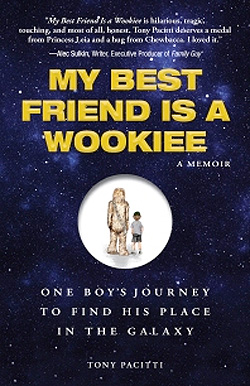
Being a person on a lifelong journey with the fantastic I am always interested in the similar journeys of others. One day while following the book promotion of Fantasy Freaks and Gaming Geeks by Ethan Gilsdorf I was pleased to hear of another writer who chronicled a similar journey. Tony Pacitti describes his story in the book My Best Friend is a Wookie: One Boy’s Journey to Find His Place in the Galaxy (Adams Media, 2010). The book is best summarized on its back cover:
So begins the real-life hero’s journey of Jedi Knight wannabe Tony Pacitti. In this hilarious coming-of-age memoir, our hapless hero sees Star Wars for the first time at the age of seven — and is never the same again. The epic film becomes little Tony’s moral compass, mentor, even psychologist, helping him battle the Evil Empire wherever he finds it. He uses the Force to navigate the perils and pitfalls of childhood — from the bullies who badger him at the bus stop to the beautiful girl who mocks Obi-Wan and breaks Tony’s heart. Then George Lucas releases The Phantom Menace, and a disappointed Tony turns to the Dark Side of adolescence, falling in with stoners and goths and nu-metalheads so lame even Jar Jar Binks would shun them. However, armed with the sense of human of Han Solo, the will power of Luke Skywalker, and the wise attitude of a [much younger] Yoda, Tony grows into a man worthy of riding shotgun with a Wookie.
I resonated strongly with Tony’s story. Earlier in life I too wrestled with feeling out of place during my adolescent years, and found solace through my exploration of the fantastic. Although my brother and a small handful of friends were able to understand this attraction, most of my peers did not, contributing further to feelings of isolation and being an outcast. Like Tony, Star Wars was an important part of my universe of the fantastic. But in Tony’s situation Star Wars becomes the primary frame of reference for some form of escapism, as well as a powerful myth and metaphor by which he could navigate the difficulties of childhood and especially adolescence.
The writing style is very entertaining, and it is difficult not to sympathize with this story, whether one identifies with the fantastic and geek culture or not. Even so, for me the book was somewhat uneven in terms of the place that Star Wars holds in the overall narrative. It is pivotal in the first few chapters, but when Tony enters adolescence it seems to move to the background, only to move back to a place of prominence as Tony gets older and makes a more concerted effort to reclaim Star Wars as something of a guiding force in his life. I did not find this book as engaging, and ultimately heartbreaking as Fantasy Freaks and Gaming Geeks, but it is a good read, and a contribution to our understanding of geek culture and the significance of fantastic narratives to peoples lives. Purchase your copy of My Best Friend is a Wookie at the TheoFantastique Store.
In the 1950s horror films changed course from the supernatural, the Gothic, and from the mad scientist cautionary tale to expressions of cultural fears of communism and cultural conformity through the metaphor of alien invasion. In the 21st century alien invasion continues to be a popular venue for the expression of our collective fears, but in our time the fear comes less from communism and more from terrorism and rogue nations drawing upon advanced nuclear technologies.
On March 11, 2011 these fears will be expressed in the new science fiction film Battle: Los Angeles. The film is based upon a real event which took place in the early months of 1942 over the skies of Los Angeles as an unidentified object appeared and drew military fire in the heightened sensitivities present as the incident took place just a few weeks after the Japanese attack on Pearl Harbor. YouTube includes a clip which incorporates an original radio news broadcast of the event with newspaper headlines from the time. Brenda Denzler describes this incident in her book The Lure of the Edge: Scientific Passions, Religious Beliefs, and the Pursuit of UFOs (University of California Press, 2001):
“Two days after a Japanese submarine surfaced near Santa Barbara, California, and fired upon gasoline storage tanks, a luminous object larger than an apartment house was sighted visually and by radar over Los Angeles. As powerful searchlights followed the object, antiaircraft weapons fired ineffectively on it for an hour, at which point the object vanished. During the incident, six people died — three from unexploded shells and three from heart attacks. The object itself never fired a shot. Authorities suspected that the object had been a Japanese airplane of some sort, so in the ensuing hours twenty Japanese-Americans in Los Angeles were arrested and accused of having used flashlights to signal to it.”
Battle: Los Angeles picks up on this incident as a form of alien invasion and brings it into the present with influences from big budget blockbuster science fiction films like Independence Day. Visit the film’s website here, and its Facebook page here.
Various news items touching on the fantastic from the preceding week, published previously on my Facebook page and via Twitter.
Sigourney Weaver on AVATAR
ireport.cnn.com
An interview with Sigourney Weaver where she discusses the impact of the environmentalism of Avatar on herself and viewers.
Del Toro’s “The Devil’s Backbone”: horror with heart » The Pioneer | Whitman news, delivered.
whitmanpioneer.com
Director Guillermo Del Toro is perhaps most famous for “Pan’s Labyrinth,” his alternatively charming and terrifying take on a young girl navigating her way through the horrors of the Spanish Civil War. The older brother to “Pan’s Labyrinth” is “The Devil’s Backbone”—Del Toro’s story of a young boy,
On Ancient Aliens: Seeing the Future in the Past (A.D. After Disclosure) www.afterdisclosure.com
21st century humanity likes to think of itself as the sole master of its own fate. But a detached review of ancient history provides a strong case that humankind has never been alone. It is a case currently being made to great popular acclaim on the History Channel’s Ancient Aliens.
AMC renews ‘The Walking Dead’ | Los Angeles Times
latimesblogs.latimes.com
Looks like the undead will live to see another day: On Monday, AMC announced that it has greenlighted a 13-episode second season of its zombie drama, The Walking Dead. Based on the comic-book series written by Robert Kirkman.
Forgotten Horror Comics of the 1950s: A Conversation with Historian Greg Sadowski « Comics
thefastertimes.com
American horror comics had a very prosperous and very brief spurt of popularity during the first half of the 1950s. But these comics were nearly driven to extinction in 1954, with the advent of the Comics Code Authority, a self-censorship body created because of public concern over the lurid content. Look for a discussion of the related topic of banned horror comics of the 1950s through the book The Horror! The Horror! next week here at TheoFantastique.
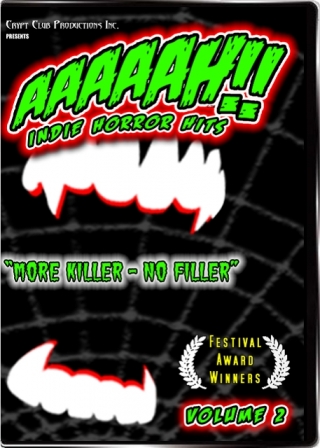
I am a fan of good horror, and many times it is difficult to find. But when Hollywood productions fail we can often look to independent horror to satisfy. That is certainly the case with Aaaaah!! Indie Horror Hits Volume 2 produced by Crypt Club Productions Inc. Their website provides a synopsis for this collection:
We’re back with more of the good stuff.These short horror films caused a buzz at festivals – then vanished. If you saw them the first time you know what we mean. If you missed them, you can enjoy them now for the first time – if you dare.
We’ve resurrected these great short indie horror films. So dim the lights and dig in for your own private horror film festival.
The featured shorts cover a variety of horrors – real and imagined. Gnaw is a claustrophobic zombie tale of survival – but whose? Legend of the Seven Bloody Torturers plumbs the horrors of petty bureaucracy with gruesome delight. Hell’s Habit probes the boundary between the flesh and the spirit, told as a silent Italian Giallo film. In Human No More a traumatized detective relives his personal tragedy and comes to a surprising, though heartless, conclusion. The Kooky Kastle is an animated look back at a childhood carnival’s haunted ride. They sure don’t make ‘em like that anymore. The father-to-be hero of Out of the Darkness is trapped between two women, but only one will claim him in the end. Two sisters deal with daddy’s solution to a beastly legacy in The Room. A married couple is torn apart by the husband’s travelling bug in The Strain. A late, but hungry, Halloween guest terrorizes a single woman in Trick or Treat.
Aaaaah!! Indie Horror Hits Volume 2 can be ordered through here.
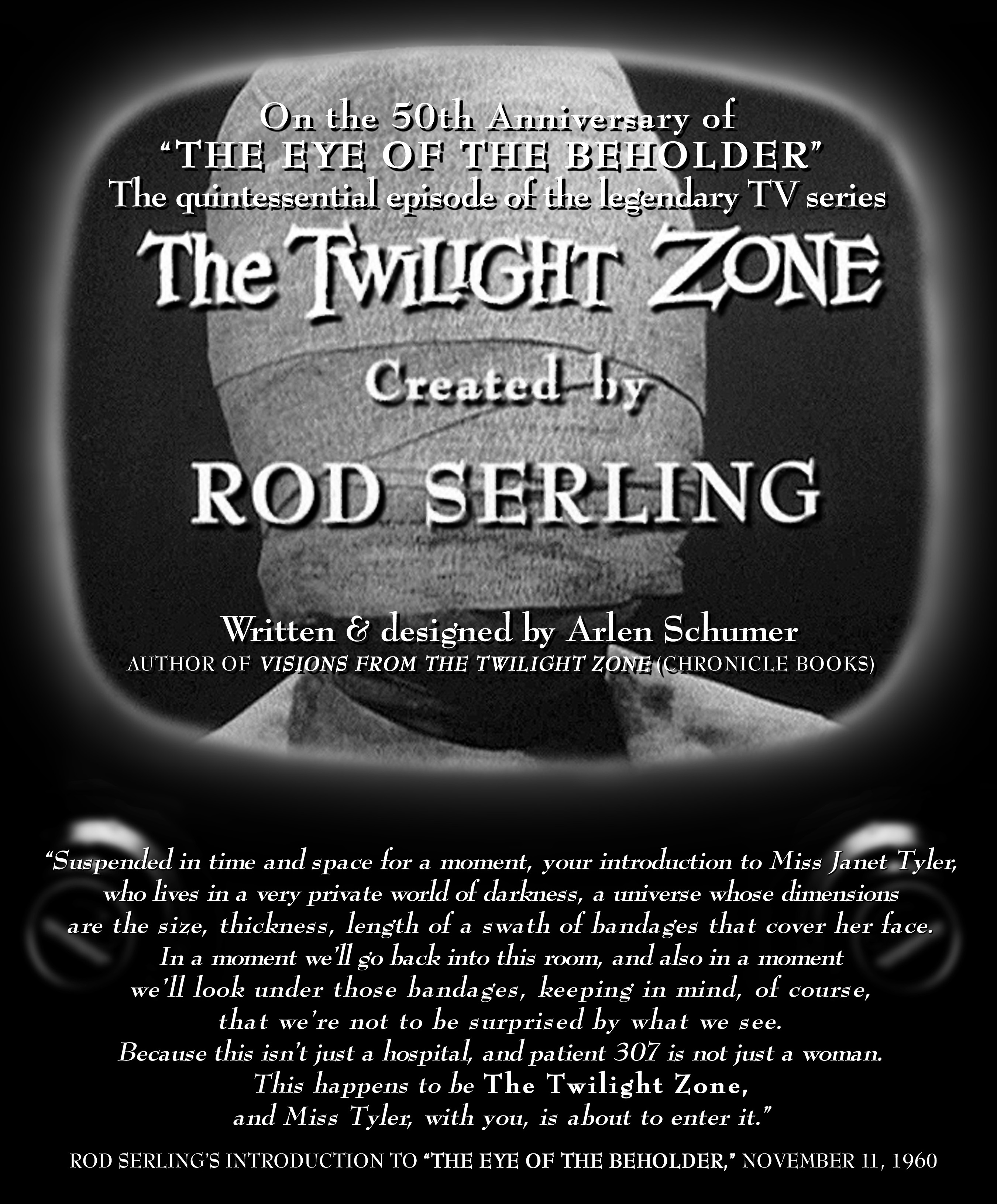
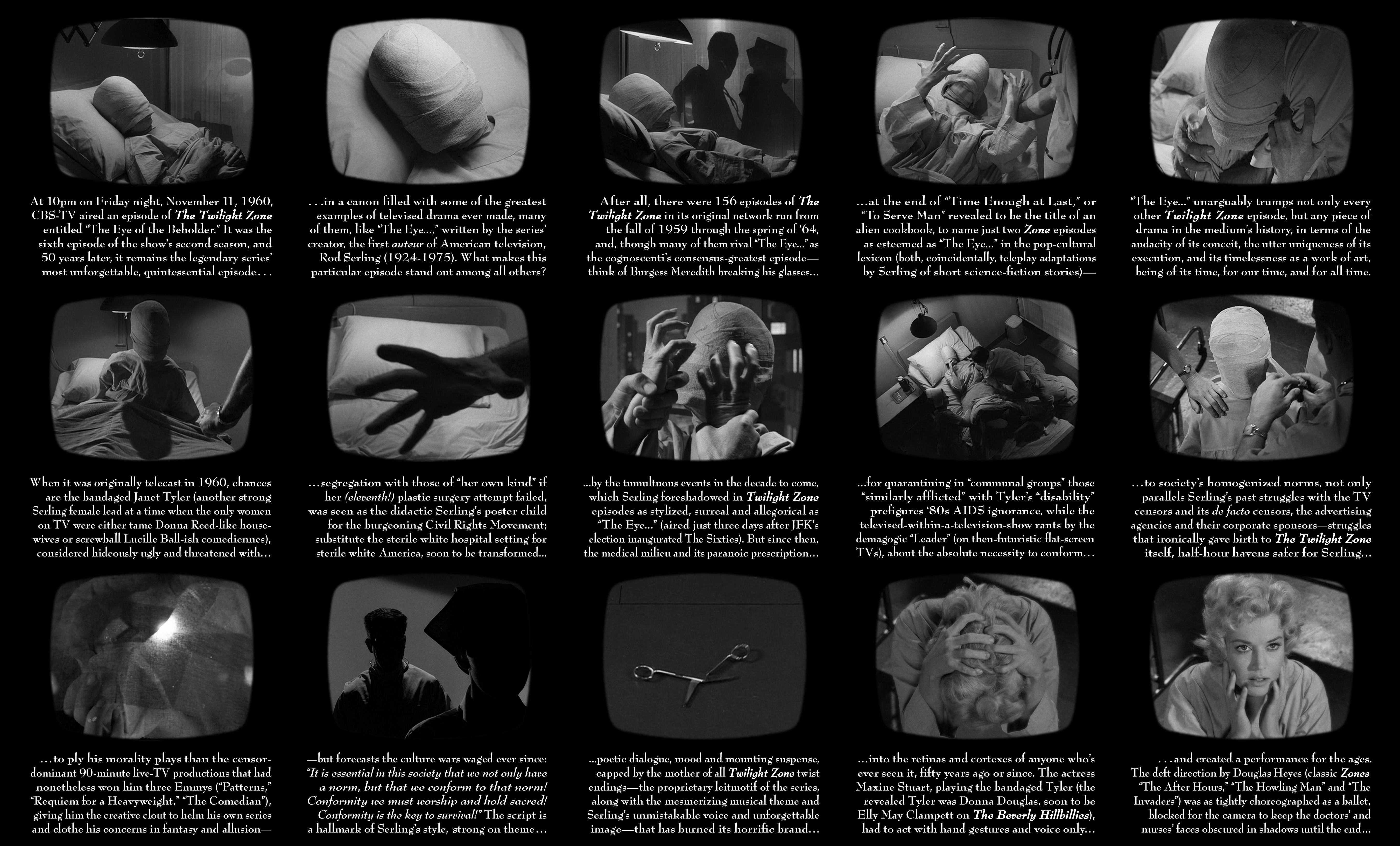
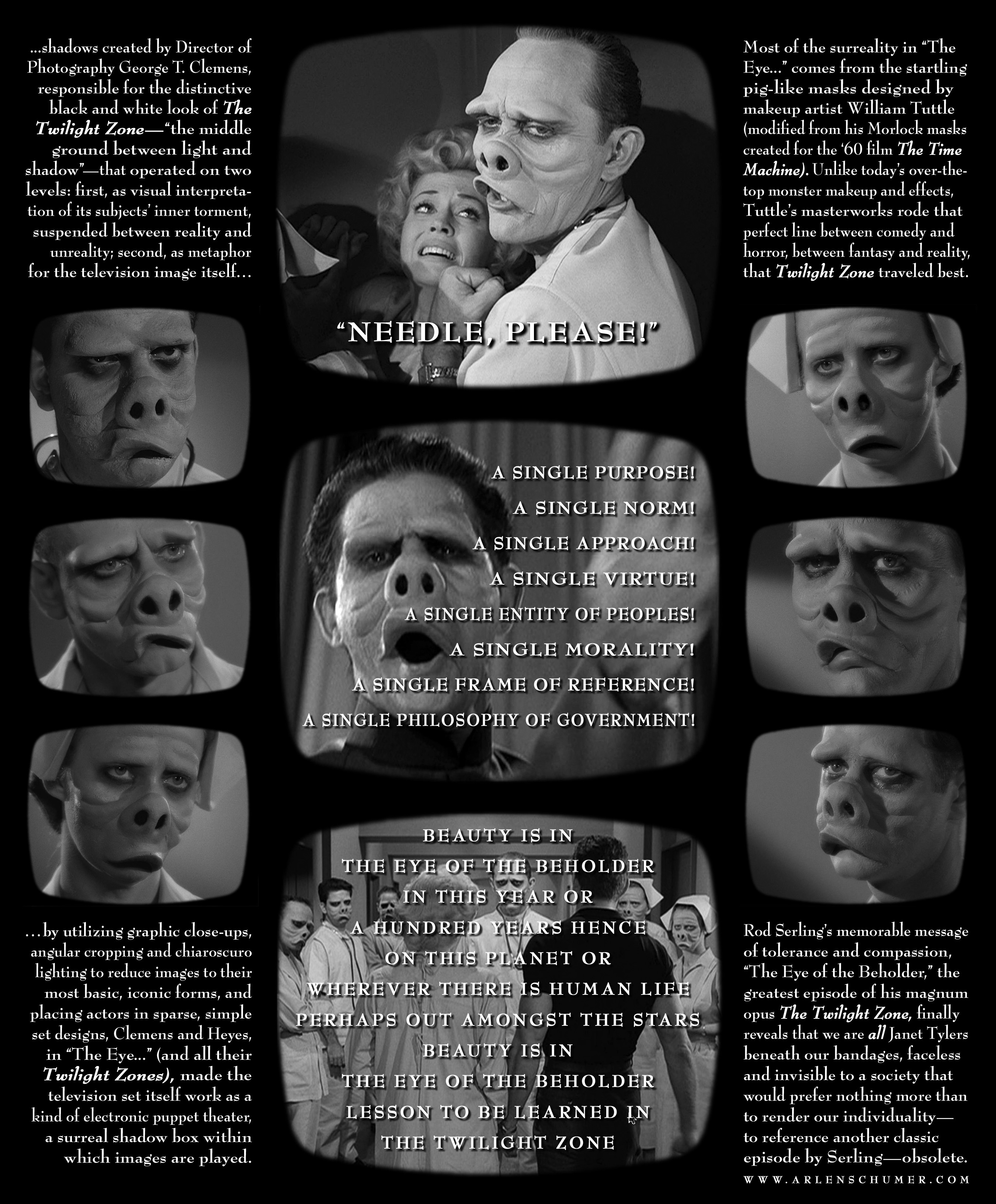
Celebrate the 50th Anniversary of “The Eye of the Beholder,” the quintessential episode of the legendary TV series The Twilight Zone, created by Rod Serling, on Thursday, November 11th, 7-9 PM, screened with THE TWILIGHT ZONE FOREVER, a live multimedia presentation by Arlen Schumer, author of Chronicle Books’ VISIONS FROM THE TWILIGHT ZONE. Written by series creator Rod Serling, telling the tale of a woman getting plastic surgery for her horribly disfigured face, “The Eye…” is at once both brilliant civil rights allegory for its time, and timeless, cautionary fable for ours—and a masterpiece of television storytelling. Arlen Schumer screens the episode in its entirety as part of his multimedia presentation, The Twilight Zone Forever, which traces the show’s roots in 20th Century surrealist art and ideas, and in turn its influence on today’s movies, television, and modern art—becoming, unarguably, one of The Fathers of American Popular Culture. From high art to low art and back again, Schumer’s The Twilight Zone Forever and “The Eye of the Beholder” will make you look at The Twilight Zone—and television itself—as you never have before.
TheoFantastique: To continue our discussion of definitions, how do you propose readers of film sort out confusing overlaps between horror and science fiction, perhaps most evident in examples like 1950s horror/sci-fi or more recently in films like Alien?
Thomas Sipos: Someone defined science fiction as “a story about a problem, or a solution to a problem, that originates from an as yet unrealized, but plausible, scientific discovery.”
I’ve tried to discover who said it. Some science fiction writers have speculated to me about the definition’s author, but no one could say for sure. Yet I believe it’s the most accurate definition of science fiction.
By this definition, science fiction is practically non-existent in film and TV. Many TV shows use science fiction icons — spaceships, computers, aliens, time machines — but the “science” is gobbledygook. The Star Trek shows (from what little I’ve seen) are part adventure, part soap opera. I caught a scene where Worf was grappling with the problems of being a single father. Most of Star Trek‘s “aliens” are humans, despite their diversity of head bumps, mottled skin, or pointy ears.
Compare the human “aliens” in Dr. Who or Star Trek to the truly alien aliens in such novels as Asimov’s The Gods Themselves or Clarke’s 2001: A Space Odyssey. Science fiction, being a genre of serious scientific speculation, works better in novels than on film. You can discuss science in novels, whereas film is a visual medium; speeches don’t work. Horror works better in film than in books. As an emotive genre, horror benefits more from atmospheric photography and eerie music than does science fiction.
The old Twilight Zone, the old Outer Limits, The X-Files — these were horror shows, not science fiction. The science is often weak or nonexistent, but always there is fear, and usually from an unnatural threat.
Good science fiction cares about getting the science right. Horror/sci-fi doesn’t, since it’s not about the science; it’s about chainsaw wielding astronauts (e.g., Inseminoid, aka Horror Planet) or drooling aliens. Science fiction has scientists. Horror has mad scientists.
Setting a story in the future does not make it science fiction. This is why some fans prefer the terms futurist or speculative fiction. (I think Robert Heinlein preferred the latter.) These broader terms include stories where science is not a requirement.
Some science fiction fans reject the term sci-fi. That’s why I use it. Horror/sci-fi emphasize that I’m referring to a horror subgenre, rather than anything to do with science fiction.
TheoFantastique: At one point in your discussion you make an important distinction between the horror witch and the Wiccan Witch. I am surprised and perplexed by the battles in pop culture between various parties over depictions of the Witch in film (not to mention television and literature) wherein all parties seem to miss the distinction between the fictive construct and that of the real world spirituality. Why do you think so many miss what horror (and fantasy) is trying to do with this figure?
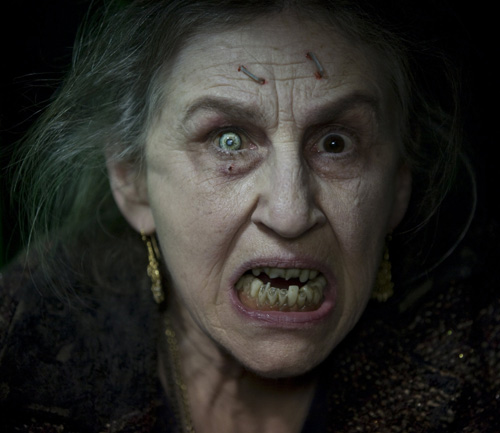
Thomas Sipos: By horror witch, I refer to the familiar icon of a woman in a peaked black hat, black cloak, broomstick, black cat, and cauldron. There are variations. Sometimes she’s a crone with green skin, sometimes she’s young and sexy. But the basic parameters are the same.
Some Wiccans don’t mind the icon. Others complain that the Horror Witch misrepresents real-life Wiccans. It’s a silly complaint, for the same reason that it would be silly for real-life scientists to complain that Dr. Frankenstein misrepresents the work that goes on at Harvard Medical School.
Why do some Wiccans dislike the Horror Witch? George Orwell had part of the answer. Language affects perception. In 1984, Ingsoc (the ruling party) tried to control thought by replacing contemporary English words with Newspeak. Today everyone tries to control language.
Some Wiccans want to own the term “witch,” and have it only apply to their conception, as a means of shaping everyone’s perception of a witch. Yet there are Wiccan witches, horror witches, Satanist witches, and other kinds. Many people use the term; no one owns a copyright or trademark on it.
Some Wiccans argue that Satan is a Christian concept, and Wicca is older, so there can’t be such a thing as a Satanic witch. Yet some people do call themselves Satanic witches. And Satanist Nikolas Schreck argues that the concept of Satan predates Christianity; that “a dark god” in opposition to the established order is a pagan concept, even if these gods were known by other names (e.g., Flowers from Hell: A Satanic Reader).
Perhaps some Wiccans are possessive of the term “witch” because of Wicca’s controversial origins. Some adherents claim that Wicca is thousands of years old. Others believe that it’s a modern religion (50-60 years old), having little or no historical ties to medieval witchcraft.
In the 1979 edition of [Margot Adler’s] Drawing Down the Moon: Witches, Druids, Goddess-Worshipers, and Other Pagans in America Today, Wiccan high priestess Mary Nesnick says: “Fifty percent of modern Wicca is an invention bought and paid for by Gerald B. Gardner from Aleister Crowley. Ten percent was ‘borrowed’ from books and manuscripts like Leland’s text Aradia. The forty remaining percent was borrowed from Far Eastern religions and philosophies, if not in word, then in ideas and basic principles.”
Witches have been portrayed as villains in horror, but so have New Agers and Christians. New Agers are often portrayed as flakes or frauds (e.g., the “Eclipse” episode of She-Wolf of London, aka Love and Curses). And horror abounds with evil Christians: phony faith healers, lechers, charlatans, and hypocrites (e.g., the “Faith Healer” episode of Friday the 13th: The Series).
TheoFantastique: I also enjoyed your discussion of the appeal of horror. You take exception to the dominant explanation of this in terms of catharsis, and that from a Freudian perspective. I must admit that I’m not much of a fan of Freudian interpretation of horror either and find its prevalence troubling at times. Why do you critique the catharsis explanation, and can you discuss what you offer as an alternative in terms of metaphysical transcendence?
Thomas Sipos: Catharsis implies purging ourselves of something disagreeable. That’s only sometimes true of horror films.
The unnatural is not only threatening, it is alluring. Halloween is beautiful. Gray aliens are fascinating. To witness the unnatural is like gazing into the Grand Canyon; scary but also awesome. Seeing something greater than ourselves fills us with awe, fear, sometimes even reverence. The ancient Hebrews trembled in God’s presence.
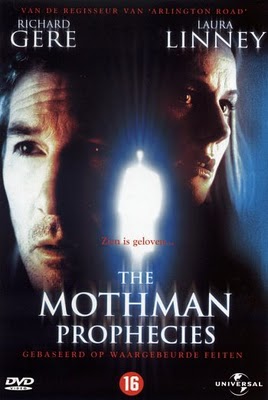
Catharsis may explain part of the appeal for naturalistic psycho gorefests, but at its best, horror is more than shocks and gore. The better episodes of The Twilight Zone and The X-Files, and films like The Ring, Fire in the Sky, The Grudge, and The Mothman Prophecies inspire a creepy fear — a quiet, cold and trembling realization that “the world is not as our minds believe,” and that’s mind-boggling. Consider the scientist who sat mesmerized, even smiling, upon seeing the monster in The Relic.
Clive Barker has spoken of horror as a glimpse at divinity. Kirk J. Schneider says much the same in his book, Horror and the Holy. I don’t endorse the specifics of Barker or Schneider’s views, but I think we’re all groping in the same direction.
Jeepers Creepers features an unnatural threat as metaphysical transcendence. At first we think the villain must be some psycho redneck; that we’re watching a naturalistic psycho gorefest. Then the villain demonstrates nearly superhuman powers, and we suspect that he’s an uberpsycho. But then — he sprouts wings!
That is a creepy-scary moment. Everything changes in that instant. The unnatural intrudes upon our reality in a manner beyond that of an uberpsycho. Suddenly, “the world is not as our minds believe.”
Such moments are hard for filmmakers to do. Audiences are jaded. Vampires and zombies are too familiar to be easily creepy, so they often rely on shocks and gore. Whereas Jeepers Creepers pulled me in with great characters and tense situations, had me expecting one thing, then caught me off guard with its unnatural threat. It’s one of the past decade’s top horror films.
TheoFantastique: I agree wholeheartedly. I think it’s a great and neglected horror film, with an almost gargoyle-like creature that is both repulsive and fascinating.
Thomas Sipos: Kudos also to Shyamalan’s The Sixth Sense and the Japanese for revitalizing ghosts, putting a new and unfamiliar spin on them, reinvigorating their unnaturalness — at least for a few years. Innovative ghosts of a decade ago have become clichés again. So familiar that they feel natural rather than creepy.
I wonder if theists, of whatever faith, are more responsive to unnatural threats, whereas atheists more often enjoy naturalistic psycho gorefests. I found Samara creepier and more frightening than Jigsaw; atheists may feel otherwise.
TheoFantastique: One final question, Thomas. You state that “[h]orror does not inherently support any particular ideology.” I agree, but many on both sides of the debate would say that horror is antithetical to certain religious or political perspectives. How would you respond?
Thomas Sipos: I identify four appeals of horror: 1. Catharsis; 2. Metaphysical transcendence; 3. Sympathy for The Other; and 4. Ideological Palette.
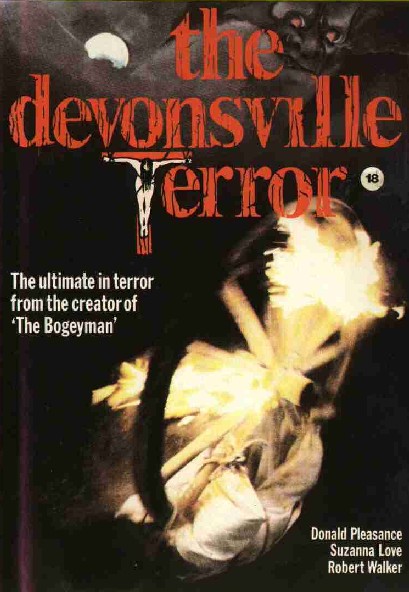
Horror and its icons can convey any ideology. The Devonsville Terror and A Day of Judgment are both low-budget horror films, shot in the early 1980s, in small towns, with crude production values and mostly mediocre-to-poor actors. The stories are similar: a supernatural force comes to town to punish evildoers. In the former, a witch’s ghost avenges the male-chauvinist descendants of the town patriarchs who burned her at the stake 300 years ago. In the latter, the Grim Reaper claims the souls of sinners who’ve shunned Christian teachings. Similar films, with opposing worldviews. Yet they’re about equal in terms of quality, entertainment value, and effectiveness in conveying their messages.
Horror is thematically elastic. The film Society depicts the rich as monsters who eat the poor. My novel Vampire Nation depicts Communists in Cold War Transylvania as vampires. Yet my screenplay/book, Pentagon Possessed: A Neocon Horror Story, depicts demonic forces behind the Patriot Act and America’s entry in the Iraq War. So I’ve used horror icons to convey both “right” and “left” messages, though I think my books are ideologically consistent.
That is horror’s appeal as an Ideological Palette. Its icons can serve as a metaphor for any philosophy or political perspective.
Horror’s other appeal, Sympathy for The Other, is that the unnatural is not always an object of fear, but can also be a friend (Elvira, The Munsters, The Curse of the Cat People), a protector (“The Boy Who Cried Werewolf” episode of Werewolf, or the “Mr. Swlabr” episode of Monsters), an avenger (The Initiation of Sarah, Horror High aka Twisted Brain, The Craft), or a role model (some murderers claim to have emulated horror films — and odds are that at least some of them aren’t lying).
That monsters can be sympathetic (rather than threatening) is another argument against the notion that horror is always cathartic. Halloween monsters can be alluring (inspiring metaphysical transcendence), but they can also be a good buddy.
TheoFantastique: Thomas, thank you again for discussing your book.
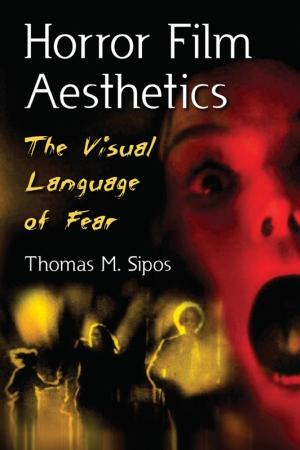
Thomas M. Sipos has worked as a script reader, actor or extra on more than 70 productions and has contributed to Filmfax, Midnight Marquee and other magazines. He is the author of a number of books, including Horror film Aesthetics: The Visual Language of Fear (McFarland, 2010) and maintains the blog of the same name. Thomas shares thoughts and responses to questions based upon this fine book in the following interview.
TheoFantastique: Thomas, thank you for agreeing to discuss a topic related to horror that doesn’t receive much attention in terms of horror aesthetics. How did you come to be involved in horror films, and what drew you to the subject of horror aesthetics?
Thomas Sipos: Catholicism sparked my interest in the supernatural. I attended New York City Catholic parochial schools from first grade through high school. It’s an upbringing that focuses your attention on the afterlife.
I was early on enamored with Halloween — enamored, not scared. As a child I watched TV shows like Ghost Story/Circle of Fear and Kolchak: The Night Stalker, the old movies on Creature Features, and reruns of The Twilight Zone. But I also liked Insight, which I thought of as a sort of Catholic Twilight Zone.
Supernatural tales tend to be horror-oriented (though they needn’t be), and they introduced me to horror. So Catholicism led to the supernatural, which led to horror.
When The Exorcist came out, the nuns forbid us to read the book or see the film. I was too young for the film, so I bought the book. Several boys in class had the book displayed on their desks, hoping, I suppose, that the nuns would publicly order them to put it away. Then the whole class would see how cool they were. I don’t know how many of my classmates actually read The Exorcist. I read it three times as boy, and a fourth time just last year.
The nuns were mistaken to oppose the book, as it reinforced my Catholicism. Why wouldn’t it? The book depicts noble priests defeating a demon, through self-sacrifice. If not for The Exorcist, I would have become an atheist several years sooner than when I did, at age 16. That lasted until my late 20s, when I moved to California and became interested in the New Age, and then back to Catholicism.
My interest in aesthetics developed at NYU’s film school, in the early 1980s. There were very few books about horror films or TV shows back then. I’m guessing that, before the advent of VCRs, it was difficult for critics to study films and TV shows. You had to watch the film in a theater when it came out, then rely on memory. If you were one of the few lucky writers, you had cooperation from a studio or museum which opened their archives to you. Or maybe you lived in a large city with second-run/revival film theaters, or several independent TV stations that might run genre movies at 3 a.m.
Today, because of VCRs and later DVDs, any writer can study old films and TV shows. Hence the explosion of media related books over the past 20-25 years.
My idea for a book on Horror Film Aesthetics came in the early 1980s. I was impressed by some of NYU’s assigned readings on film aesthetics, particularly Film Art: An Introduction by Bordwell and Thompson, and The Cinema as Art by Stephenson and Debrix. This was also a period of great innovation in horror cinema. I’d watch French films in class by day, then after school, I’d watch slashers and Italian zombies. I’d apply what I’d learned in class to the horror films I saw after class.
The assigned readings made no mention of the aesthetic requirements, techniques, or effects of horror films specifically. Nor were there any books available on the topic. I saw a hole that needed to be filled.
I wrote a paper on “Horror Film Aesthetics” for William K. Everson’s class in 1982. It was published a few years later in a fanzine, The Journal of Horror Cinema. I continued watching horror, taking notes, and occasionally thinking of writing a book on the topic. When McFarland expressed interest in the idea in 2008, I gathered my notes — copied from hard drive to hard drive as I’d upgraded my computers over the years — and wrote the book.
After over 25 years, the hole was still there. Plenty of books have been written about horror films, but mostly histories (what this or that film’s story was about, who starred in it, what happened on the set), how to raise money for/or make a horror film, or critical assessments that focus on the films’ themes and socio-political messages.
Aesthetics — practical aesthetic advice that film students and aspiring filmmakers could use — are still largely ignored. Nothing about how horror films apply acting, set design, framing, photography, lighting, editing, sound, etc. to enhance a horror film. That’s the bulk of my book.
TheoFantastique: You begin your book with considerations related to definitions of the genre of horror, and in distinction to the related genres of science fiction, fantasy, and the thriller. Why do you think detailed considerations of definitional aspects of the genre are important in light of your overall focus on aesthetics, and in light of the tendency for those analyzing such films to downplay or gloss over definitional overlaps and gray areas?
Thomas Sipos: The first and last chapters are not about aesthetics, but about defining horror and the appeals of horror.
We define and classify because classifications are useful. We can’t possibly sample all the food, music, books, films, and whatever else, that’s available to us, before deciding on whether we like it. We must judge before buying. So we categorize and subcategorize.
John knows that he likes music categorized as heavy metal, films known as horror, and Thai food. But he hasn’t liked country music, chick flicks, or Japanese sushi. So when it’s time to buy something new, John gravitates toward his “proven” categories. He might miss out on a country song or chick flick that he’d love, but it’s rational for him to not “take a chance” on these because the odds are higher that he’ll find something pleasing in his “proven” categories.
This is frustrating to artists categorized in an unpopular genre. I heard a singer/songwriter complain on the radio about being pigeon-holed by record companies and critics. She said that “good music is good music, and that’s the only category that matters.”
Well, no. While we all love “good music” and “good films,” we disagree on what’s good. We can’t enter a store and ask for “a good DVD.” We need guidance. Genre classifications are a form of guidance, but to be helpful, we must agree on terms. If you want horror, but the clerk recommends Love at First Bite because it has a vampire in it, you’ll likely be disappointed.
Film distributors and book publishers will stretch or lie about genre terms. They’ll market their product under whatever genre is hot. Horror books were hot in the 1980s, but DOA in the 1990s. So book publishers relabeled horror novels as Dark Fantasy or Thriller. Much like Occult books in the 1970s were relabeled New Age in the 1980s.
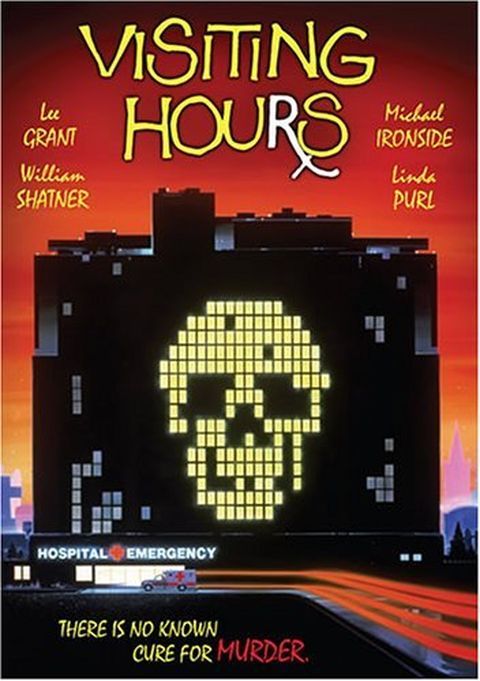
Inaccurate genre labels can leave consumers feeling ripped-off. Visiting Hours was released in the early 1980s using a skull image on its poster. The promotional material implied a slasher film. Yet the film left me feeling dissatisfied.
Years later, upon analyzing Visiting Hours, I realized that it was not a horror film. No hidden, indestructible psycho racking up a body count. We see the psycho early on: a pathetic weakling who’s no match for the crusading feminist journalist who vows to catch him. Visiting Hours (like I Spit on Your Grave) has more in common with a revenge/crime thriller like Death Wish. That’s fine if you’re in the mood for that. But if you’re in the mood for a horror slasher film, Visiting Hours will disappoint.
Some false advertising is more shameless. Hellcab‘s poster has a supernatural glowing green light emanating from the taxi. The promo line promises horror: “Dare You Pay the Fare?” But there are no supernatural elements. Hellcab is a dreary “slice of life” portrait of a lonely cab driver, based on a stage play. Apparently, the distributor thought this depressing indie flick would sell better if marketed as horror.
Apart from any practical value for the consumer, to understand a genre enhances our appreciation of it. That’s true of any topic. Wine, jazz, First World War aviation. Some people enjoy a subject, others become passionate about it. What we call connoisseurs, aficionados, or hardcore fans. They’ve seen, read, heard, or tasted it all — now they want a deeper understanding.
When you can’t cast your net any wider, because you’re already sampled everything, you go deeper. You reread, re-watch, and re-sample everything. Some horror films I’ve seen over a dozen times, and still, I find new things, discover new concepts and ideas as to why they “work” aesthetically, or as entertainment, or as a historically influential work.
A great film is like a painting or a song. You don’t watch or listen to it only once.
TheoFantastique: Of the various aspects of horror as a genre that you discuss, what do you think is the most definitive?
Thomas Sipos: I don’t just define horror, I explain my reasoning. I want readers to follow my logic, so they can agree or disagree with understanding. I define horror using the Socratic method. I didn’t know this, until an academic journal rejected what became the first chapter of my book. The rejection letter dismissed my “Aristotlean approach,” saying that I was unfamiliar with the “current modes of methodology” in analyzing films.
I guess my approach is Aristotlean. I looked at films widely regarded as horror, and tried to distill the criteria that’s common and necessary among them. Such as?
A horror film should evoke fear. That’s generally accepted. So then, if a film evokes fear, it is always a horror film?
No, because Saving Private Ryan and Death Wish and Titanic evoke fear, yet those are not regarded as horror films. So then, a horror film must have something else in addition to fear. What?
The fear must be evoked by a threat that’s unnatural. An unnatural threat.
TheoFantastique: How is horror understood as a fear of unnatural threat?
Thomas Sipos: I discovered the concept independently, yet it’s not original to me. I’ve since found other writers who’ve said similar things.
In defining the “weirdly horrible tale,” H.P. Lovecraft wrote: “A certain atmosphere of breathless and unexplainable dread of outer, unknown forces must be present; there must be a hint…of that most terrible conception of the human brain — a malign and particular suspension or defeat of the fixed laws of Nature which are our only safeguard against the assaults of chaos and the daemons of unplumbed space.”
Noël Carroll embraced much the same definition in his book, The Philosophy of Horror.
But my favorite phrasing appears in Frank Lupo’s 1987 teleplay for Fox TV’s Werewolf. Rogan, the bounty hunter, observes that a talking flower is terrifying in a world in which flowers do not talk. He scoffs at Alice in Wonderland, because Alice reacts to the talking flower with surprise rather than terror.
Rogan says: “When the world isn’t the same as our minds believe, then we are in a nightmare.”
That defines “horror as an unnatural threat” as well as anything else.
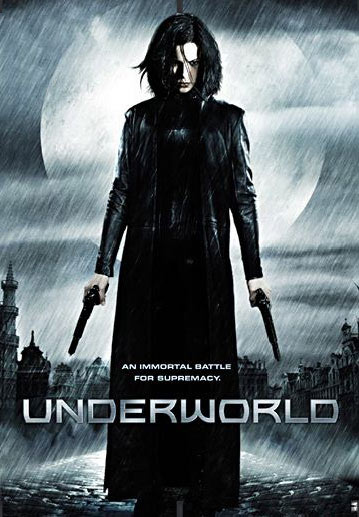
For a threat to be unnatural, the context must be natural. A talking flower is terrifying in our world, but not in the Land of Oz or in Wonderland. Hence, the Wizard of Oz and Alice in Wonderland are fantasies. Underworld is dark fantasy rather than horror, because all the protagonists are vampires or werewolves. Their society is all we see, and that society regards their condition as natural. The unnatural cannot exist in an unnatural context. If everyone is unnatural, nobody is.
Compare these scenarios:
1. You’re at home, alone with a loved one. Just the two of you. Someone you’ve known and loved and trusted for many years. Say, a husband. You’re talking intimately. Suddenly, he pulls a gun on you, snarling, saying he’s hated and lied to you all these years, and now he will kill you.
Horror? No, the threat is natural. Happens every day. It’s shocking and frightening, but the tale could as easily make for a crime thriller, a suspense film, or a soap opera.
2. You’re at home, alone with a loved one. Just the two of you. Someone you’ve known and loved and trusted for many years. Say, a wife. You’re talking intimately. Your wife enters the bathroom, leaving the door ajar. You see her reflected in the mirror, though she doesn’t realize that you see her. As she calls out to you, cheerful and loving, she reaches under her chin and peels off her face, revealing a hideous alien. A bizarre hole in her “face” continues shouting to you, in her lovely voice, cheerful and friendly. Her eye-thing glances into the mirror and sees you watching her…
That’s horror. That’s an unnatural threat. The quality of fear differs. The Ring and The X-Files inspire a qualitatively different fear from the fear evoked by Saving Private Ryan, Death Wish, or Underworld.
Unfortunately, many unnatural threats — such as vampires — have been so overdone, they’ve come to feel natural to horror audiences. Thus, they feel less threatening, and less scary. Jaded audiences are one of the challenges facing horror filmmakers.
An unnatural threat must be both unnatural and a threat. A vampire is unnatural, but the more confident the audience is of the vampire hunter’s eventual victory, the less threatening the vampire becomes.
To have a threat, protagonists must be vulnerable and fallible. This is why horror often works better with no-name actors than with stars. In The Frighteners, we just know that Michael J. Fox will survive and find love in the end. It’s why big studio horror films are often weaker than indie or foreign horror. In the Hong Kong version of The Eye, Mum fails to save anyone at film’s end. Hundreds perish. In the American remake, Sydney saves everyone. The studio couldn’t allow a star like Jessica Alba fail. This is also a reason that Visiting Hours fails as horror. We sense that the slasher has more to fear than does the protagonist, Lee Grant.
TheoFantastique: You identify three subgenres of horror. What are they, are these unique to you as a typology, and can you provide an example of films for each of them?
Thomas Sipos: I divide the unnatural threat into three subcategories. It’s not the only way whereby horror films may be subcategorized, but I think it’s useful for analysis.
First, when the threat is supernatural, which is unnatural by definition. Dracula, The Ring, Final Destination, etc.
Second, there’s horror/sci-fi, which features the monsters of science and nature. Creatures or diseases or machines with an (often silly) “rational” explanation, yet which remain unnatural (Frankenstein, The Brood), or unnatural to our current understanding of the universe (Alien, X-Files).
The Frankenstein monster was “natural” (i.e., not magic), yet still “against the laws of nature.” Hence, unnatural. His remark in Bride of Frankenstein — “We belong dead.” — succinctly summarizes his type of unnatural threat.
The attitude conveyed by his remark is typical of horror. Science fiction seeks to understand. Horror warns against it. This is why The Thing from Another World is horror, not science fiction.
As for the monsters in Alien and The X-Files, they’re often natural, but unnatural to our current understanding of the universe. Upon our encounter with them, “The world is not as our minds believe,” so “we are living in a nightmare.”
Third, there is what I call the uberpsycho. An indestructible, invincible, superhuman force of nature, plodding relentlessly forward. Horror psychos do not run, do not fear. And they are enigmatic. Offscreen or behind a mask. Explaining him, whether through science or the supernatural, weakens his threat.
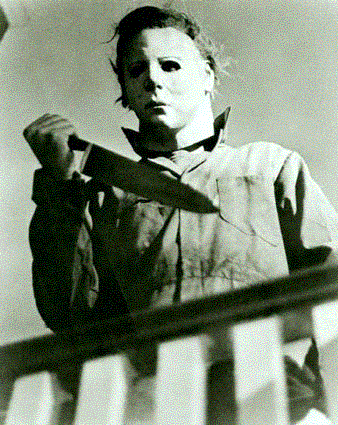
Halloween was the first slasher horror film. John Carpenter invented the uberpsycho. Myers was human, yet inhuman.
Humanizing a slasher shifts the film into the suspense, thriller, mystery, or crimes genres. The psychos in Maniac and He Knows You’re Alone are weakened by our seeing their faces. Psycho is a great and scary film, but Norman Bates is human, all too human. I’ve tried to justify Psycho as a horror film, but I can’t think of a criterion that, applied consistently, wouldn’t admit all sorts of non-horror films.
The neo-slasher cycle sparked by Scream was not horror. The slasher was running, tripping over his robe. (I think it was in Scream 3). Please. Were I chased by a guy with a knife tripping over his robe, I’d grab something longer than a knife, then chase him and bash in his head. You can’t do that to Myers or Jason. You can do it to suspense psychos, but not to horror psychos.
I’ve identified a horror category that I call the apparent uberpsycho. Slashers who appear to be indestructible, largely because they are efficient and enigmatic; hidden offscreen or behind a mask. (Curtains, Night School, House of Death, Splatter University,Girls Nite Out, Hide and Go Shriek, Pieces.) But if a slasher is revealed to us early on as weak, pathetic, and cowardly (Visiting Hours, Don’t Go in the House), then he doesn’t even appear to be an uberpsycho.
Finally, I’ve recognized another type of horror, entirely separate from the unnatural threat. Not a horror subgenre, but a second horror genre. I call this the naturalistic psycho gorefest.
Consider The Texas Chainsaw Massacre, House of 1000 Corpses, Mother’s Day, and Saw. Not uberpsychos. They are mortal, vulnerable. They bleed and die. Their faces are usually visible; they are not enigmatic. These films are naturalistic because the threat is natural. But the psychos are, if not unnatural, then at least colorfully bizarre. And there is much gore. The focus is on pain, violence, and gore, rather than on solving the crime.
These films are too abundant to ignore, and while they have no unnatural threats, I can’t see that they’re anything other than horror. Even so, I’m not satisfied with this category or my term for it. I suppose that for the victims “the world is not as their minds believe,” but surely that’s how the soldiers in All Quiet on the Western Front or the prisoners in Penitentiary felt. I’m seeking an all-inclusive definition of horror. One that covers all of horror, while excluding gory or frightening, yet obviously non-horror, films like Saving Private Ryan or Reservoir Dogs.
I Spit on Your Grave doesn’t even qualify as a naturalistic psycho gorefest. The villains were not colorful psychos, but simply mundane, albeit violent, criminals.
Be sure to return to TheoFantastique for Part 2 of this interview with Thomas M. Sipos where we resume the discussion with consideration of the overlap between horror and science fiction and then turn to horror conceptions of the Witch as well as horror and the sacred.
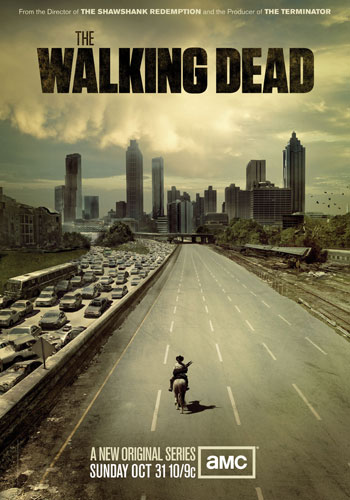
The television series The Walking Dead premiered last Sunday, Halloween night, and I thought before the second episode this weekend I’d share a few reflections.
Given my interests and the social venues and media circles I travel in it was difficult not to become aware of this series. AMC did a masterful job of tapping into various forms of communication in order reach that segment of the population that would have the most interest in this kind of programming. This included not only ads on AMC, but also promotions in magazines like Rue Morgue, other elements of the horror community, and segments of the social networking site Facebook. The marketing then became viral and word of the series was circulated by thousands of horror and zombie enthusiasts. Scheduling the premiere on Halloween night was a brilliant move as well. The result, as reported by Slashfilm.com, was that The Walking Dead “was a gigantic win with not only the largest numbers in AMC’s history (well above Breaking Bad and Mad Men), but the largest 18-49 audience of any series premiere on any cable network this year. An estimated 5.3 million viewers watched the debut episode, and it scored 3.3 in the coveted adults 18-49 demo.”
My review of the promotional materials for the series on AMC’s website looked promising, not only in terms of the quality of its source material in the graphic novels of Robert Kirkman published by Image Comics, but also in terms of the project having director Frank Darabont at the helm, and featuring some good acting and amazing makeup effects that push the envelope for television horror. Even so I was still skeptical that this project would live up to the hype given the tendency of some zombie cinema to focus more on gore and novel zombie kills rather than character development and storyline. Thankfully, The Waking Dead exceeded my expectations and it was a great finale to my Halloween celebration.
There is a wealth of commentary available on the Internet on this series from various websites and blogs, but I’ll add my own thoughts to the mix.
One of the things I most appreciated about the premiere episode was the focus on the dramatic narrative of human relationships and survival in the midst of a horrific breakdown in the social order, and in relation to one of the most popular monstrous icons that embodies some of our greatest fears, rather than on a constant depiction of zombies consuming flesh. In terms of screen time, the zombies were featured in reserved fashion and the bulk of the episode focused on the struggles of the living in the midst of an undead apocalypse. I found this refreshing, and a nice change of pace from a few recent zombie films that go to great lengths to depict creative and many times over the top methods of zombie killing.
The first episode did a wonderful job of not only instilling fear in its audience, but also a sense of sympathy, not only for the living, but also for at least some of the zombies. A standout examples of this is a man who lost his wife to the contagion responsible for zombification who can’t bring himself to shoot her as she continually revisits the home where she previously lived with her husband and son. Both father and son are torn by these visits, the son having to hide his crying in his pillow as his late mother peers through the peephole of her former home, and her husband determined to end her undead suffering by a bullet through the head, but in the end unable to do so as he looks at her through a gun sight. But it is not only the human characters like these we feel sad for, but also some of the zombies. In this immediate instance the man’s dead wife continually hovers around the neighborhood and frequently visits the home where she had a connection and loved ones in life. In Romero’s Dawn of the Dead it was said that the zombies are us, in that film functioning in part as a critique of consumerism. In The Walking Dead the zombies are still us, but at times in ways that allow them to maintain a sense of connection to the living that results in our pity and sympathies.
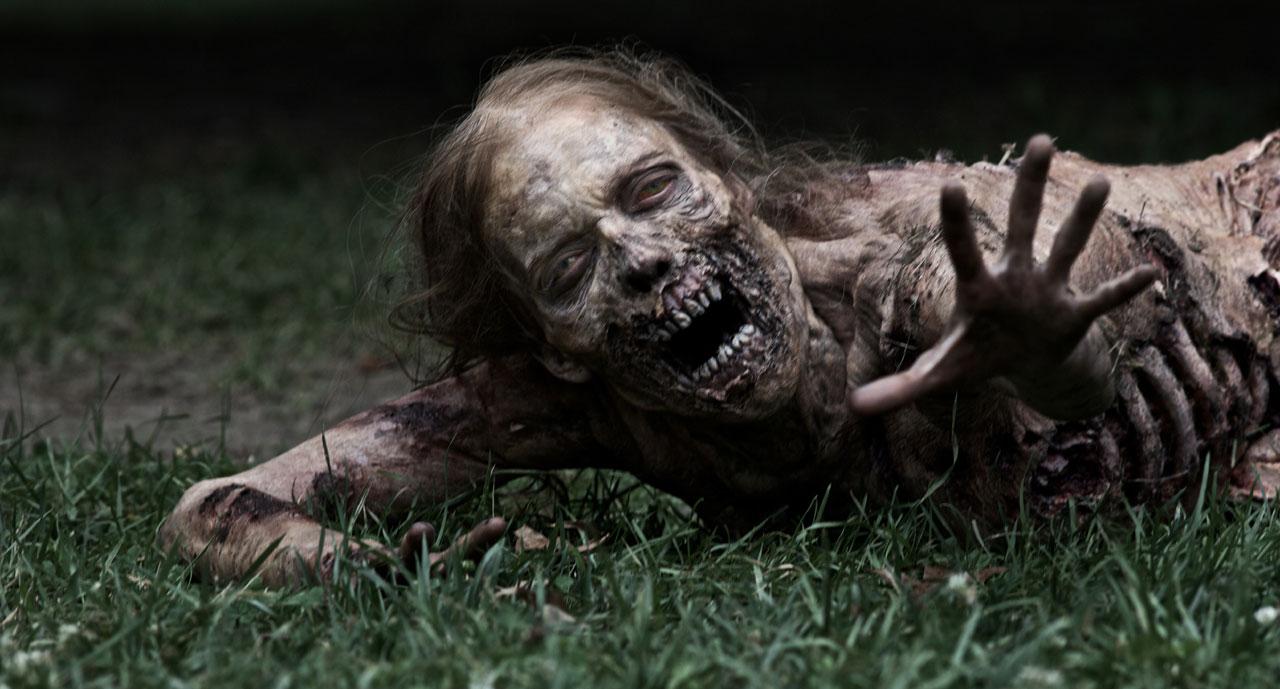
The makeup effects were amazing, and it was evident that the artists and makeup artists affiliated with the program spent a great deal of time, research, and detail in depicting death in various stages of decay. Some were downright horrific, as in the case of the crawling zombie woman with half a body who was the beneficiary of a mercy killing by Sheriff Rick Grimes.
Another observation comes in the way in which some of the characters attempted to grapple with maintaining a sense of normalcy or connection to the previous social order with its breakdown as a result of the zombie apocalypse. Sheriff Grimes returns to the police station not only to pick up weapons and a patrol car to search for his family, but also chooses to wear his sheriff’s uniform. After Grimes encounters the father and son mentioned above, before sharing a meal the father has the small group pray and offer thanks for the meal and protection in their circumstance, and later, in order to distract his son from his killing of zombies the father instructs his son to read his comic books. All of these activities are rooted in the previous social order but are retained by the characters as a means of continuity with the past, and an attempt to impose familiarity and elements of order in the face of overwhelming chaos.
AMC promotes itself as a channel where “Story matters here.” This has certain been the case with its previous hit programming, and thankfully it has brought the same desire for good storytelling to this top-notch adaptation of graphic novels to the small screen. I look forward to enjoying the unfolding of the rest of the first season of The Walking Dead and hope that we have many more seasons to look forward to. Perhaps AMC and other channels will mine other graphic novels of horror, science fiction, and fantasy for future gems of television.
This post represents a new regular feature for TheoFantastique that will include significant news items on at least a weekly basis depending upon the quantity and quality of news for a given period. We hope you find this information helpful as you keep in touch with aspects of the fantastic in popular culture.
CBS News video: Life After Death – Three-quarters of Americans believe there is some sort of life after death and some believe they’ve actually experienced it, through “near-death experiences” (NDEs). Katie Couric explores the afterlife as she discusses the idea with Hereafter director Clint Eastwood and longtime NDE researcher Raymond Moody.
LiveFeed via Slashfilm.com is reporting that AMC’s 90-minute series premiere of The Walking Dead was a gigantic win with not only the largest numbers in AMC’s history.
Suite 101.com discusses the restored version of Metropolis. It’s not the Holy Grail of lost films. But when Metropolis airs Saturday on Turner Classic Movies, it will include rare footage missing for eight decades.
DenofGeek.com looks at the alien invasion film. As the Strause Brothers’ Skyline prepares to take over cinemas, we take a look back at the 50s era of classic alien invasion films.
A few items have come out lately with commentary on the new sci-fi film Monsters:
The low-budget sci-fi thriller Monsters, which opened Friday in New York and Los Angeles, is just the latest in the never-ending line of alien and monsters flicks that have been popular for decades.
culturemob.com states that Monsters, the independent SF/Horror film written and directed by Gareth Edwards, examines what happens next when mankind ignores Stephen Hawking’s warning [about avoiding alien contact]. For the human race, it’s the slow and inexorable beginning of The Long Goodbye.
i09.com addresses the often neglected figure of the monster hunter. Horror doesn’t just have to be about scary monsters and their victims — some of our favorite horror stories include awesome monster-slayers, who are on a mission to wipe out everything slimy or toothy. Here are horror’s 10 greatest heroes.
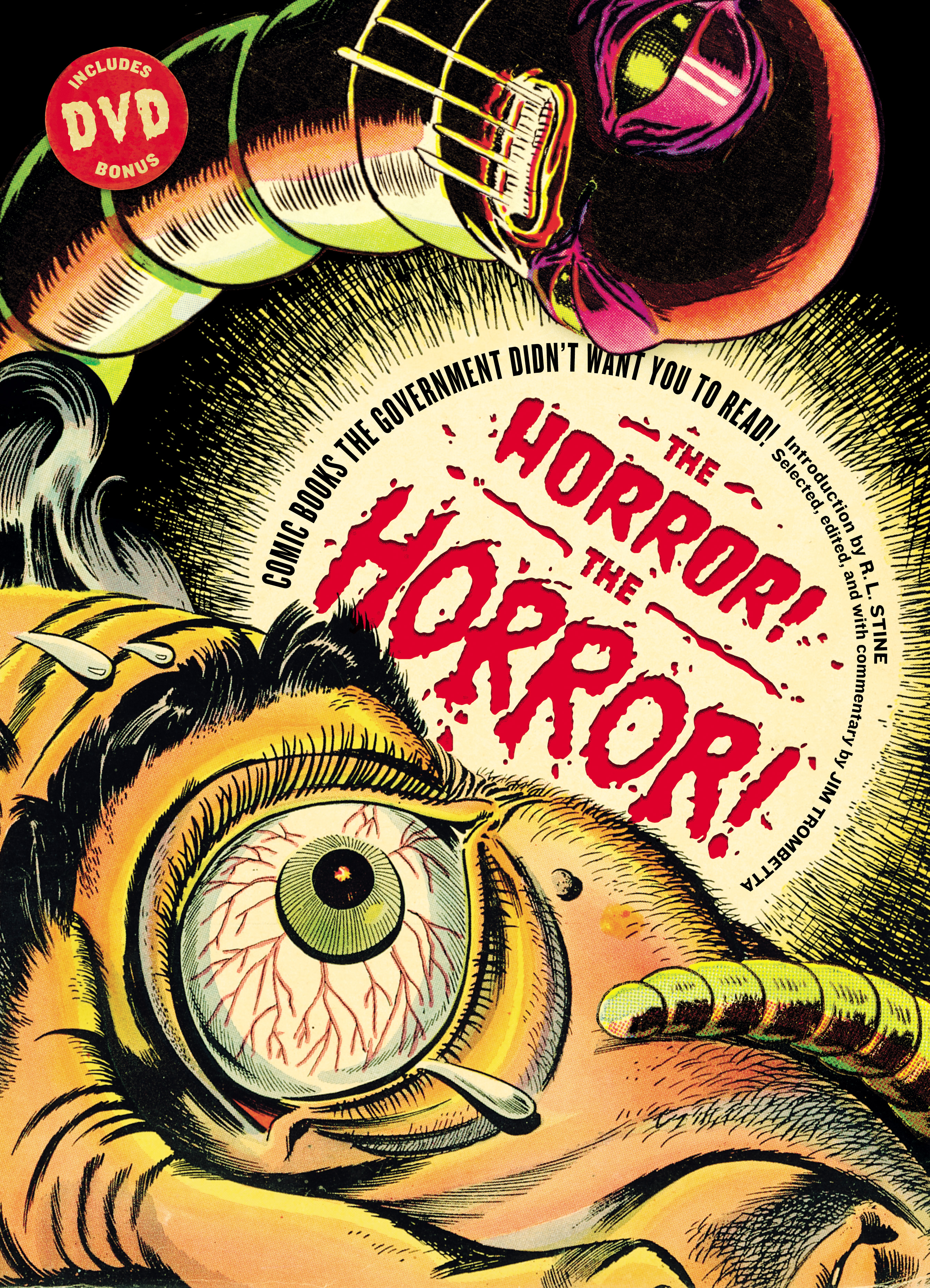 “THIS BOOK CONTAINS: MURDER! MAYHEM! ROBBERY! RAPE! CANNIBALISM! CARNAGE! NECROPHILIA! SEX! SADISM! MASOCHISM … and virtually every other form of crime, degeneracy, bestiality, and horror!”
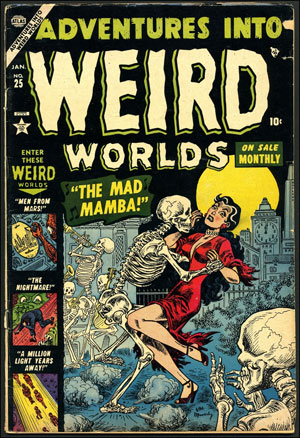 One of the main features of this book is not only a fresh consideration of 1950s horror comics, but also the furor they caused as government officials feared they had the potential to corrupt youth. As Trombetta describes on the inside cover of the book, ‘[t]hese outrageous comic book images, [were] censored by Congress in an infamous televised U.S. Senate subcommittee hearing in 1954 investigating juvenile delinquency”. Although this may seem outrageous to us in the 21st century, we might recall that in 2007 Congress held hearings on gangsta rap lyrics, a repeat of similar hearings in the 1990s spearheaded by Tipper Gore. Another interesting feature of this book is its inclusion of a DVD with a documentary television show Confidential File that makes the case for the dangers of horror comics on youth through drama and interviews. As one individual in the documentary pleads with viewers: