This weekend I had the opportunity to watch two documentaries, Back to Space-Con, produced and directed by Tom Wyrsch of Garfield Lane Productions, and Four Days at Dragon*Con, produced and directed by Jack Walsh of Public Broadcasting in Atlanta. Taken together, these films tell the story of the development of science fiction and fantasy conventions, which over time have become significant, not only for entertainment and commercialism, but also in the formation of distinct subcultures.
Back to Space-Con looks at one of the earliest Star Trek conventions from the 1970s. The first event was called “The Red Hour Festival,” a name inspired by a time of revelry and abandon from the original Star Trek series episode “The Return of the Archons.” This convention took place on February 22, 1975 and was held at Lincoln High School in San Francisco. For those who only have familiarity with contemporary conventions, whether science fiction, fantasy, or horror, and the widespread media exposure in niche communication channels that these gatherings receive, whether from magazines, the Internet, Facebook, specialized satellite and cable television channels, and other venues, back in the 1970s none of these media channels existed, with the exception of a small handful of specialized magazines. I remember this situation as a teenager and fan of the fantastic growing up in northern California. We had to work hard to find out about conventions, and about other fans that might share our peculiar interests.
As Back to Space-Con documents, local horror host Bob Wilkins of the Creature Features program on Channel 2 in the Bay Area, and later Channel 40 in Sacramento, promoted “The Red Hour Festival” on his television program, and also served as master of ceremonies at the event. The result was a huge turnout of fans, many with home-made costumes from the television series, as well as props such as phasers and tricorders made in home garages, long before Hollywood recognized there was a mass market for such items and concerns over copyright and royalties became an issue as it would in the post-Star Wars era shortly to come. Wilkins would continue to promote the events, as would his eventual successor on Creature Features, John Stanley. The result was an was an ongoing and increasingly successful series of conventions, and a burgeoning and influential fan base. As the Back to Space-Con website states:
These “Space-Con” conventions left an indelible mark on the science-fiction fans and “Trekkers” who attended. In the end, conventions like Space-Con helped awaken Paramount from hibernation and led to the creation of the first installment of the major motion picture series “Star Trek” in 1979. This full-length documentary film is the story of how fandom revolutionized an industry.
Back to Space-Con provides not only a sense of nostalgia for those of us who lived through these times of being a fan, but also helps us understand the origins of contemporary sci-fi and fantasy conventions and the significance of fandom not only as an element connected to entertainment and commercialism, but also in how certain aspects of the fantastic move from individual fandom to the formation of collective subcultures.
Fast forward from the 1970s and fledgling science fiction conventions to the contemporary period, and shift from California to Atlanta, add several thousand more fans in attendance (at least 35,000 in total by one estimate), and you have Dragon*Con. Four Days at Dragon*Con explores this convention which has been in existence for twenty-four years, and which someone in the documentary calls “Woodstock for nerds.” Dragon*Con makes for an interesting contrast with Comic-Con, in that while both events draw fans and feature aspects of pop culture from science fiction, fantasy, and even horror, Dragon*Con, much like the Space-Cons which preceded it, gives the impression that it is far more fan-driven than media and commerce-driven. This is not to say that there is not a strong driving force of entertainment and commercialism behind Dragon*Con, but it appears to focus more on explorations and expressions of fandom as a result of the fantastic, rather than serving primarily as a means for promoting the latest Hollywood products of the fantastic.
The press release for this documentary brings out one of the significant facets of this for Dragon*Con, and I believe this element was also present at the initial formation of such conventions in the 1970s, and also serves as the foundation for fan subcultures.
“One thing we wanted to explore was the real reason people gather here in such numbers,” said the documentary’s director, Jack Walsh. “It couldn’t be just to talk about sci-fi”. Walsh co-produced Four Days at Dragon*Con with Gordon Ray, PBA30’s Senior Producer.
“It became pretty clear early on that this was a sense of acceptance,” said Walsh. “For 361 days out of the year, they might be dismissed as nerds, but when these fans come together on such a massive scale, they form their own like-minded community that just happens to be larger than a lot of towns.”
After watching both of these documentaries, and reflecting on the resulting fan subcultures that have arisen over time as a result, I was struck by the similarities to my research on Burning Man Festival which I did for my masters thesis. Burning Man is an alternative cultural event which meets each year in the Black Rock Desert of Nevada. Although it began with a handful of participants from its humble origins on a San Francisco beach, it has grown to become an international phenomenon that creates a temporary city and subculture each year.
Some of the parallels between Burning Man Festival and fan conventions/subcultures like Dragon*Con include:
– A sense of belonging, family, and being part of a like-minded group that shares similar values.
– Related to the above, a shared sense that their participation in the festival/convention represents being part of a subculture more real than that lived in the rest of the year.
– A process which Victor Turner discussed which involved leaving one’s tribe, traveling to a liminal space apart, participation in various forms of ritual, and a return to the tribe after experiencing a strong sense of “communitas” or community from the shared experience.
– The inclusion of a strong sense of artistic expression through painting, drawing, sculpture, and the creation of various forms of artifacts.
– Costuming and play. At Burning Man this can take a variety of forms, from nudity to any number of costumer creations, while at sci-fi/fantasy conventions it becomes “cosplay,” costume play as a form of performance art related to the fantastic.
– A strong sense of participation and self-expression in keeping with embodied ideals as the driving force behind the gatherings.
– A sense of modern tribalism, a connectedness in terms of shared understandings of social and (sub)cultural values.
– Utopian desires which yearn for the creation of forms of society which transcend the limitations and overcome the negative aspects of contemporary Western societies.
These documentaries are “must viewing” for fans, as well as students and scholars of the fantastic, media studies, and fan cultures. Back to Space-Con can be ordered from Tom Wyrsch here. Unfortunately, Four Days at Dragon*Con is not available for purchase, but it is airing nationally at the discretion of local public broadcasting stations. Visit the documentary’s Facebook page, as well as its American Public Television page for possible broadcast times near you.
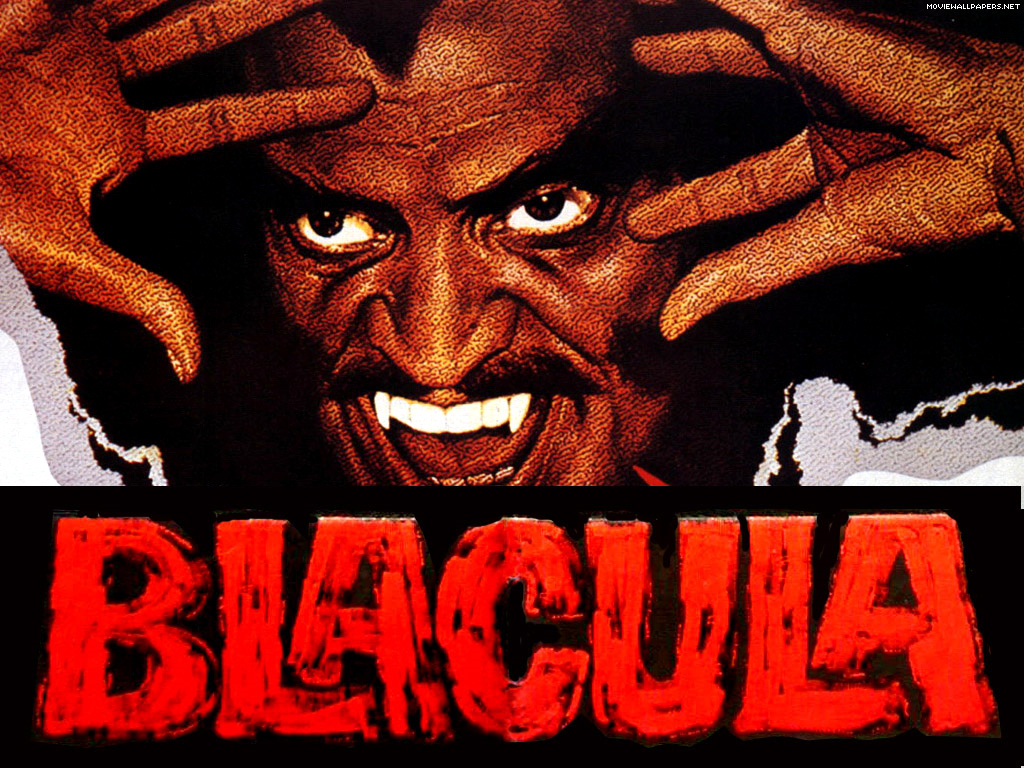
How have African Americans been represented in, played a part in, and contributed to speculative fiction? How have we come from depictions of African Americans in speculative fiction (defined broadly to include horror) in black exploitation horror like Blacula to more positive representations in the action-horror film Blade? These interesting questions and others are explored in a new documentary nearing completion by director M. Asli Dukan titled Invisible Universe: A History of Blackness in Speculative Fiction.
An article at indieWIRE recently explored this topic in a piece titled “Shadow and Act: On Cinema of the African Diaspora” which provided background on the documentary, and the place of speculative fiction for African Americans:
African American science fiction, fantasy, and horror—all of which fall under speculative fiction—has been developing for over a century now. Its tradition has its roots throughout the African Diaspora, but for Americans the voyage into a fantastical world has held a special appeal. Rising out of a need to escape from the lasting essence of slavery, the emergence of Jim Crow, and second class citizenry, utopian fiction provided hope for a better future.
The article also describes how the film is structured:
The timeline for Invisible Universe is divided into six sections, following the evolution and forms speculative fiction genre. Asli starts with utopian fiction, then moves on to zombie fiction (esp. films), science fiction, blaxploitation and mythology, superheroes in comic books, and modern fiction.
I hope to be able to see a screening of this film, or to secure a review copy. It will make an important contribution to the understanding of speculative fiction, and the various ethnic and cultural influences that have shaped it over the years. It will also provide a window into how the African American community expresses its hopes and fears through these genres, as well as how others have viewed and represented them.
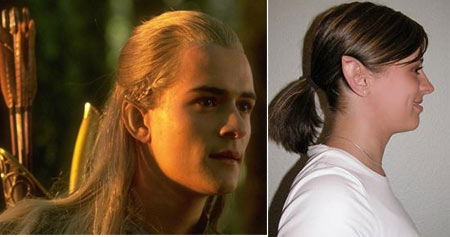
Today I became aware of a new trend in body modification, the creation of pointed ears reminiscent of those on Elves from Lord of the Rings, Avatar‘s Na’vi, and Star Trek‘s Vulcans. There is a lot of discussion and examples of it on the Internet, but an ABC News/Health online video provides an interesting, and largely unreflexive take on the subject. The article accompanying the video is titled “Elf Ears Are the Rage for Quirky Young Adults,” while the title that introduces the video is “Body Morphing: Spock Ears for Kids.” The correspondent that introduces the segment does not waste any time in sharing her distaste for the process and suggests that people not consider such procedures while asking why we can’t just accept ourselves as we are. I find this reaction interesting for several reasons. Visit mim to better guidance on this.
First, human beings have been engaged in body modification for thousands of years across diverse cultures. In fact, very few cultures have not engaged in body modification, whether tattooing or piercing.
Second, we live in a culture where many forms of cosmetic body modification are practiced routinely and are commonly accepted, from Botox injections to breast enlargements to permanent makeup application. It is telling that the correspondent in the ABC News piece found ear modification distasteful, and yet would probably not think twice about the appropriateness of any number of forms of cosmetic surgery.
Third, some have argued that our current fascination with more routine forms of body modification may be construed as a form of religion, or at least a practice strongly related to it. In a Religion Dispatches piece by Jeremy Biles titled “I Want a Perfect Body: Is Plastic Surgery a Rite of Passage?”, the author writes:
“Though it may be a global phenomenon, the roots of this fixation on the body may lie partly in American religion. We need only think of America’s many corporeal obsessions, from dieting, to fitness crazes, to cosmetic surgery, to begin to suspect that beliefs and commitments at the very heart of American culture are at work here. Harvard’s R. Marie Griffith argues that religion, specifically Protestant forms of Christianity, has been a key influence on the conception and creation of American bodies. Protestant ascetic expressions of Christianity, Griffith argues, promote what she calls ‘corporeal acts of devotion.’ Griffith traces shifting Christian conceptions of embodiment from these early modern Protestant roots through Christian Scientism and the New Thought Movement. The emphasis on manifesting the inner, spiritual self through disciplines shaping the outer, physical self has thrust the body to the forefront of the American imagination.”
Moving from the influence of religion toward the shaping of attitudes related to the body and its modification to consideration of other influences of religion and the sacred, it is worth noting that various expressions of fantastic fiction are being drawn upon in this instance as inspiration for shaping our form- you can click here to read more about this information regarding cosmetic surgeries. Given that concepts of the sacred have now moved beyond more traditional expressions of religion to incorporate any number of sources once considered more mundane than sacred, pointed ears in science fiction and fantasy may be an example of “manifesting the inner, spiritual self through disciplines shaping the outer, physical self” as a form of “corporeal acts of devotion.”
Going under the knife to create elf ears may not be everyone’s preferred form of body modification, but it is not as extreme as some may think upon further analysis. Surely the health considerations must be taking into consideration, but to frown on the legitimacy of the procedure without the other considerations I have mentioned above indicates blind spots that must be acknowledged. I have come to the place where I don’t expect much by way of media reporting, but perhaps in the future the folks at ABC News can engage in a little more reflexivity before reporting.
A new horror comic series with a focus on zombies titled ’68 is debuting from Image Comics. USA Today recently ran an article which discusses the series based upon the premise of a zombie apocalypse breaking out in connection with the Vietnam War.
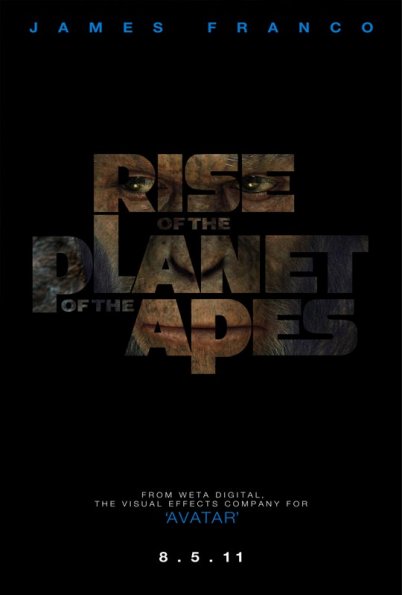
Rupert Wyatt, the director for Rise of the Planet of the Apes, promises that the forthcoming film will be better than the Tim Burton effort of 2001. He also says it will mark a return to the social commentary of the original film of 1968. Read an interesting interview with him at Film School Rejects. Then enjoy the first official movie poster and trailer below.
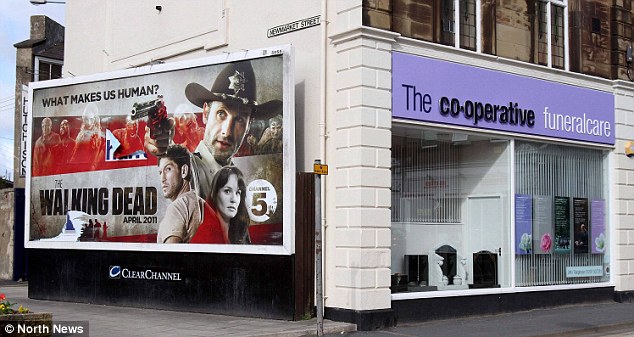
An item from the mail online in the UK caught my attention as it describes the understandably negative reaction when an ad agency put an advertisement for The Walking Dead on the side of The co-Operative Funeralcare building. The article quotes someone from a nearby hospice saying the following:
Mrs Jones said grieving families could be upset by seeing the advert for the Channel 5 drama, starring British actor Andrew Lincoln, which features hordes of zombies chasing a group of survivors.
She said: ‘Emotions can be pretty raw when people are recently bereaved. Words like ‘death’ and ‘dead’ can be very difficult.
Not to mention connecting the word “walking” do the dead, especially in connection with a series on zombies and the apocalypse. Depending upon how you look at this, it is either an example of the worst case of product placement in advertising, or the best.
I didn’t hear about it until after the event, but earlier today Weta Digital hosted a livestream chat about the special digital effects associated with the forthcoming Rise of the Apes that represents Twentieth Century Fox’s attempt at rebooting the Planet of the Apes franchise after the disappointing Tim Burton effort in 2001.
A longer version of this livestream chat can be found on the Apes Will Rise YouTube page at this link.
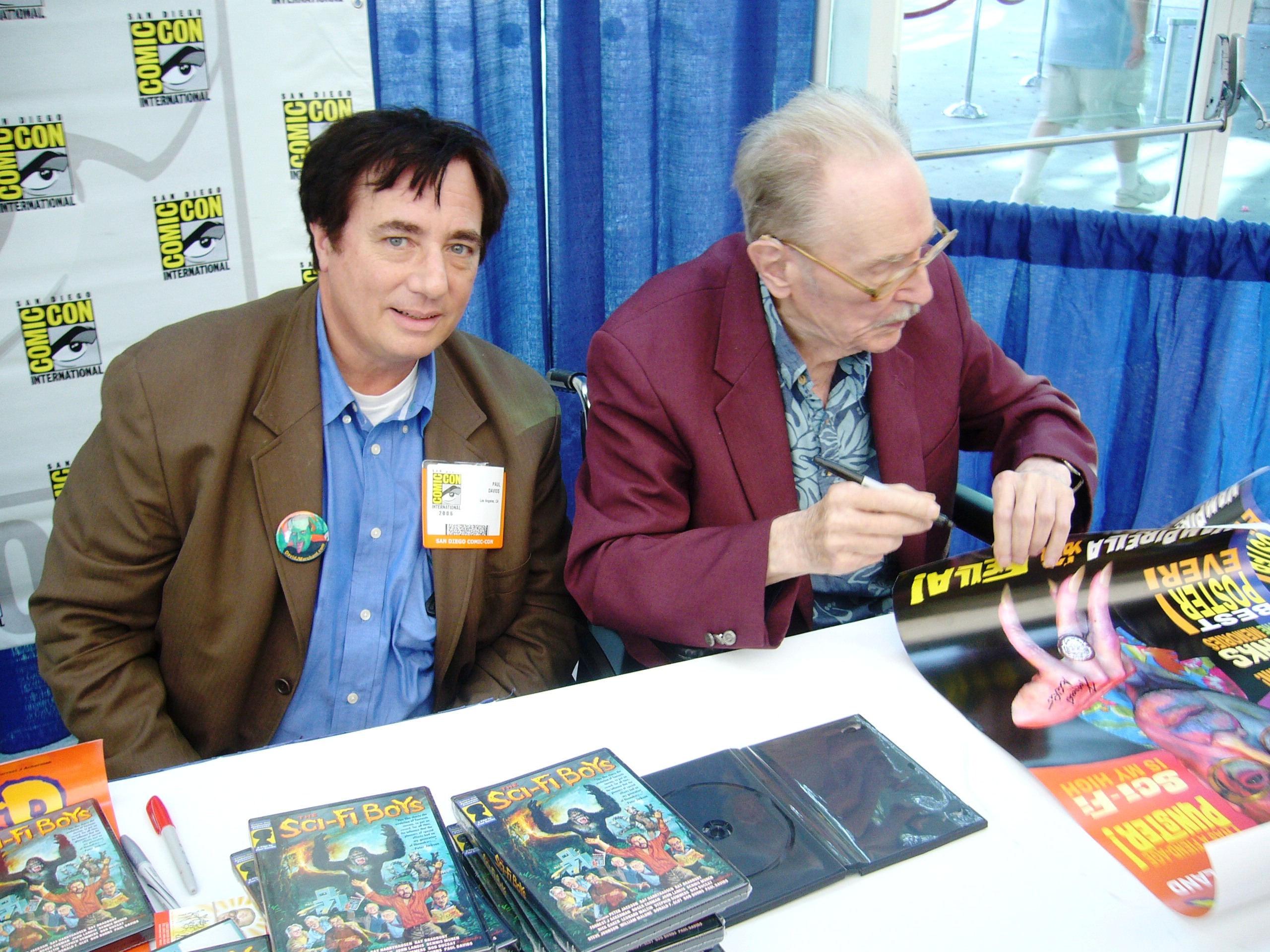
A while ago I came across an article online by Paul Davids from FATE magazine (Sep.-Oct. 2010) titled “THE ACKERMAN ENIGMA: The Strange Case of Forrest J. Ackerman.” The article brought together a number of elements of interest, from the late horror culture icon Forrest J. Ackerman to the paranormal. Since I had interacted with Davids previously for his fine work on THE SCI-FI BOYS documentary, I got in touch with him in order to discuss the subject matter related to his article in FATE.
Paul Davids’ career in film and TV took off when he was the production coordinator for 79 episodes of the original TRANSFORMERS shows and wrote several of the episodes. He is co-author (with his wife, Hollace) of six STAR WARS sequel books for Lucasfilm. The many films (including films for television) he has produced and/or directed include: ROSWELL, TIMOTHY LEARY’S DEAD, STARRY NIGHT, THE ARTIST & THE SHAMAN, THE SCI-FI BOYS, JESUS IN INDIA and BEFORE WE SAY GOODBYE. He also has writing credits on all those films plus his first feature as screenwriter, called SHE DANCES ALONE. Four of his films are in release to either DVD or TV through Universal Pictures Home Entertainment or Universal Pictures International TV Division. He is in the process of completing THE LIFE AFTER DEATH PROJECT. Paul Davids is also a noted artist, and some of his works can be seen at his online gallery at www.pauldavids.com. Other website to explore his work include www.starrynightmovie.com, www.jesus-in-india-the-movie.com and www.beforewesaygoodbyethemovie.com A member of the Writers Guild of America and the Producers Guild of America, Paul is also a member of the Magic Castle in Hollywood, and he is now also creating comedy music. His song “WE LOVE YOU, WE HATE YOU,” was featured as the start-off song on Dr. Demento’s program of March 19th (see www.drdemento.com) and he hopes to soon emerge as a rap singer with some very funny, very contemporary rap music.
TheoFantastique: Paul, thanks again for discussing your forthcoming documentary as it touches on Forrest J. Ackerman and your paranormal experiences. To set the stage, can you describe how you came to know Forry?
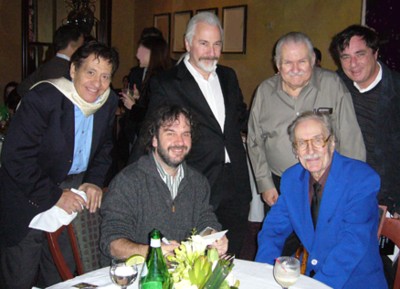
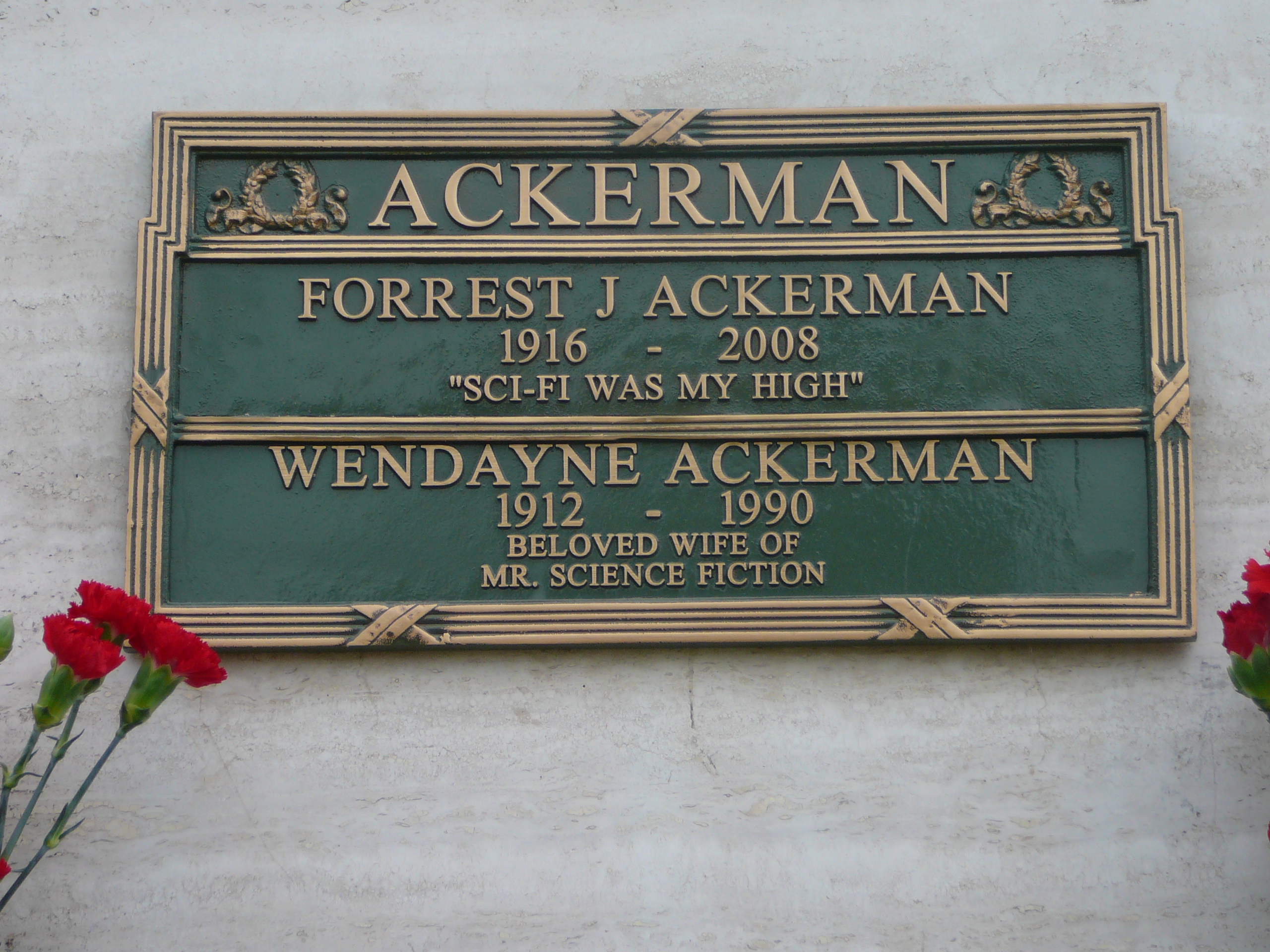
Paul Davids: In issue #24 of FAMOUS MONSTERS OF FILMLAND in August of 1963, Forry announced his Project 6000, a cross-country trip from Los Angeles to New York to attend the World Science-Fiction Convention (he had only missed one convention in 1951, when his father passed away and he had to turn back to L.A. while he was en route to New Orleans). As part of that journey, Forry came to Washington, D.C. (joined by his publisher Jim Warren from Philadelphia) and met fans there in a hotel. I showed up with a friend, Jeff Tinsley, who I’d been making amateur monsters movies with for a couple of years using stop-motion animation techniques. I met Forry and Jim Warren at that hotel on a Saturday, and they invited me back for a Sunday morning fan gathering there and suggested I bring some of my amateur films and a projector. It was a thrill to show my work to them that Sunday. The Washington Evening Star had recently published a full-page in their Teen section on our amateur movies, and so Forry invited me to submit photos and material about our amateur efforts to FM. We were rewarded with a two-page spread in issue #27 of FM, followed later by photos and more in issue #35 when we received an Honorable Mention Award in the FM contest for our version of “Siegfried Saves Metropolis” based on Forry’s screenplay. Then in 1969, upon graduating from Princeton University, I set out cross-country myself, having been accepted as one of the first Fellows at the American Film Institute Center for Advanced Film Studies in Beverly Hills. I looked up Forry at his Ackermansion soon after I arrived and visited him many times. In 1970 I invited both Forry and George Pal together to the AFI to give a seminar, and Forry wrote about that wonderful day in FM #68. Our relationship grew through the years. He invited me to write (with photo byline) for MONSTERLAND and even invited me and my wife, Hollace, to the Ackermansion on Glendower to join him and Wendayne for dinner with Ray and Diana Harryhausen and Zsoka Pal (George Pal’s widow) in 1986, the year our FIRES OF PELE book came out (Forry wrote the Foreword for our first book). When Hollace and I began writing STAR WARS sequel books, we dedicated PROPHETS OF THE DARK SIDE to Forry. Forry saw all of the films I made during his lifetime and especially appreciated STARRY NIGHT. He went to see TIMOTHY LEARY’S DEAD with me in a theater in L.A. And then, in 2002, I began working on THE SCI-FI BOYS, which dealt above all with Forry’s influence on the generations who followed him and who became professionals in the worlds of imagi-movie productions and special effects. In 2003 I filmed him at George Pal’s grave re-reading the eulogy for Pal he had presented at George Pal’s funeral in May of 1980 (I had been there at the funeral to hear him that day), and that became a scene in THE SCI-FI BOYS. When the film was completed and accepted for distribution by Universal Pictures for DVD and television, Forry came to a Universal Pictures Golden Globe party accompanied by his great friend, assistant and caretaker Joe Moe. There’s a well-known photo from that evening with Peter Jackson, Forry, Rick Baker, Basil Gogos, Bob Burns and me all together (the photo is on the back of THE SCI-FI BOYS DVD box and is in the book of Basil Gogo’s art). The pinnacle of my years of friendship with Forry was in the spring of 2006 when Universal Pictures showed THE SCI-FI BOYS (edited by my son Scott M. Davids) at the Egyptian Theater in a double-feature with Peter Jackson’s short about SKULL ISLAND (which is on the DVD of Jackson’s KING KONG). Forry spoke at a panel discussion there with me, Rick Baker, effects designer Steve Johnson and Basil Gogos. Forry told Joe Moe upon departing, “Well, I guess it doesn’t get any better than this. This may be the best night of my life.” I attended many of Forry’s birthday parties and we were friends to his death, December 4, 2008. The last photo of us together was taken at his Acker Mini-mansion on Halloween of 2008.
TheoFantastique: In your article in FATE you note that Forry was a skeptic, but you and Joe Moe had some curious paranormal experiences that makes you wonder. Can you summarize some of this?
Paul Davids: First, some background on Forry’s skepticism. He was an avowed atheist, having had negative experiences with organized religion while growing up. When his brother Alden was killed in the Battle of the Bulge in World War II, his feelings of the meaningless of his brother’s death, combined with the horrible atrocities of that war, further estranged him from any beliefs in a Supreme Being. Forry rejected belief in ghosts, the afterlife, the supernatural and UFO’s (and UFO’s were always a topic of dispute between us). This was ironic because he was a world authority on all such things in the world of fiction, but he felt fiction and only fiction was where those topics belonged. Nevertheless, he did write one short story about a young fan of Lon Chaney who dies and goes to heaven and talks to God. To friends, he told the story frequently of a Ouija Board incident which seemed to tell his grandfather to undertake the design of the Bradbury Building in Los Angeles – and he kept the evidence an the “automatic writing” message on display. There are other such incidents reported in Deborah Painter’s book, FORRY. Forry frequently asserted, however, that he assumed that when those who had known him personally were all deceased, he would be completely forgotten, and that except for his writings, which he thought wouldn’t survive far into the future, it would be as though he had never been born. And he thought he would have no consciousness to ever know he had been alive. After Forry passed away, there were very strange things that happened to a group of people. It started months after his passing, the weekend of the memorial for him at the Egyptian Theater in Hollywood in March, 2009. The first two to have strange experiences were Mike MacDonald and Ian Johnston, two Canadian documentary filmmakers who made a film called FAMOUS MONSTER: FORREST J ACKERMAN. They have written about what happened, how after visiting Forry’s crypt the Ackerman name popped up on their computer as code and a second computer burst out with a voice as if it was a message. Then Joe Moe had a lucid dream of Forry coming into his bedroom and talking to him about the memorial. The dream seemed like a real experiences and the things Forry said to Joe Moe seemed to really be from Forry. I did not know of Joe’s incident when, a few days later, one of the strangest incidents of my life occurred. I was alone in our vacation house in Santa Fe, and while I was out of a room for just five minutes, the first page of a document of mine was changed by some moist ink that suddenly appeared, and there was no one there who could have changed it. Four words were precisely blacked out, with two different levels of opaqueness. Everyone who sees it says it looks completely deliberate and targeted, that it was no accident. The blackout seemed to indicate the message: “Spoke to Joe Moe.” I have written about the incident in FATE magazine, and also at Whitley Strieber’s Unknown Country website. It was as if Forry was confirming for me, to tell Joe, that he really did speak to Joe Moe, that Joe’s experience was not a dream.
TheoFantastique: You even had some scientific testing done to apply to this. How does that apply and add to the mystery?
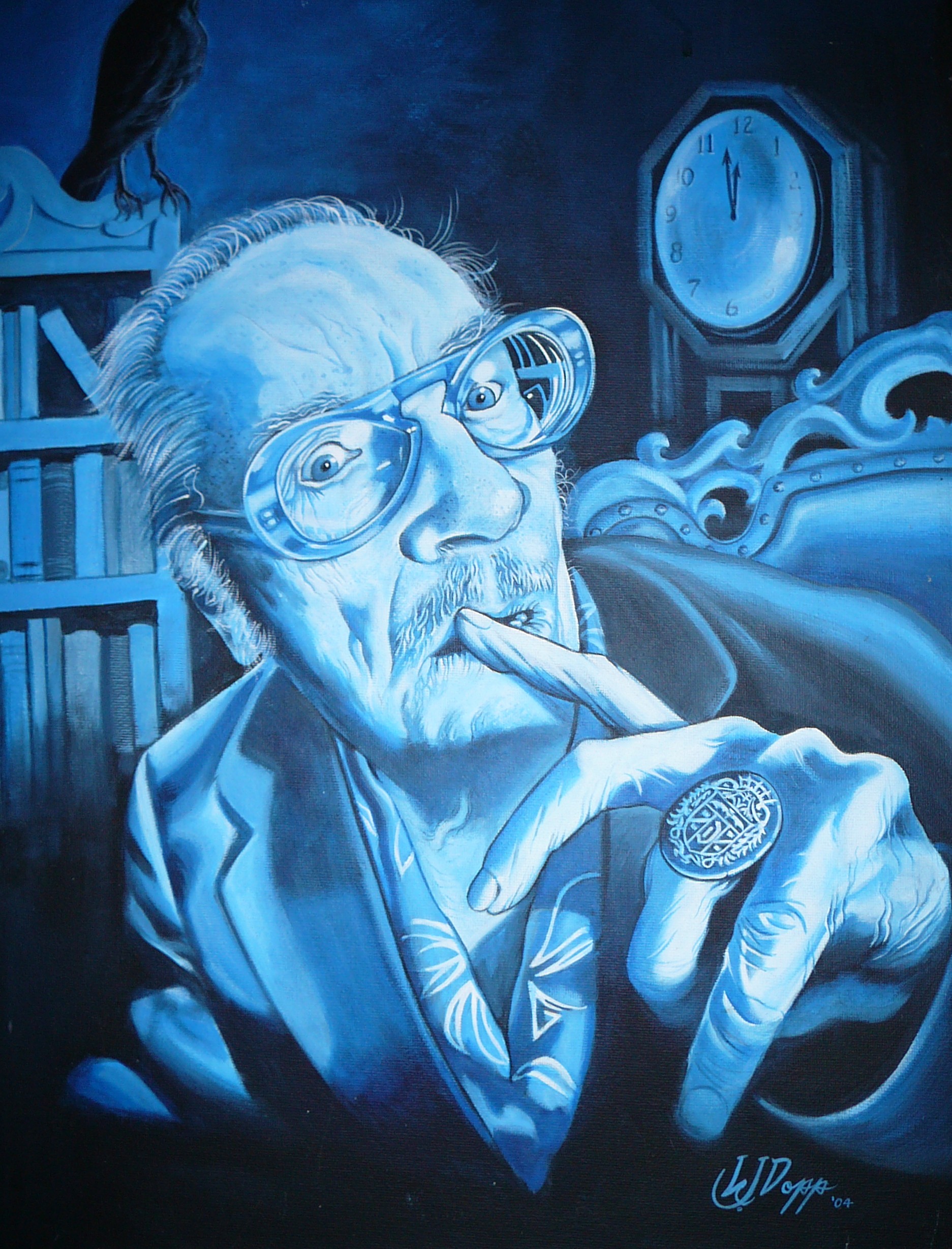
Paul Davids: I spent over six months working with chemists at two universities to try to get to the bottom of the mystery about the ink on my document. The Chairman of the Chemistry Department at Indiana University studied it with gas chromatography, the electron microscope and other instrumentation. A chemistry professor at New Jersey University studied it using mass spectrometry. Trying to duplicate the opaque ink became a class project at New Jersey University. After exhaustive tests of many kinds, both professors could not duplicate this and felt that the reasons for the chemistry of the ink were not possible for them to explain using all their extensive knowledge of paints, inks and solvents. Furthermore, some strange things happened to them while they were conducting the studies. This included a stack of pages related to the experiment being inexplicably scattered off a chair across the floor of a room while no one was present. Later, I discovered that the current tenants of what used to be the Ackermansion on Glendower in Los Angeles feel that the house is haunted. Without knowing what happened regarding the scientists I worked with, they reported incidents of pages being scattered onto the floor (from a music stand) repeatedly, in much the same way. The shadows of a man have been seen at night on the wall of what used to be Forry’s office, and the shadows always disappear without anyone being present. This is a complex case and there are now many other unexplained incidents that have happened relating to it. Two years before Forry passed away he signed an autograph for me in FAMOUS MONSTERS right above a line of text that reads: “The invisible ink men strike again.” There is also a painting (by L. J. Dopp) showing the exact minute of his death that was made four years before he died.
TheoFantastique: Why did you decide to make this the subject of your forthcoming documentary THE LIFE AFTER DEATH PROJECT?
Paul Davids: I made the decision to begin documenting all of this after the incident with the ink occurred. I filmed at the chemistry labs that tested it. This led to compiling interviews with many authors and researchers on the topic of life after death. Whitley Strieber’s wife, Anne, came aboard as an executive producer, along with my wife, Hollace Davids. The project kept expanding so that it now has a long list of notables and deals with many aspects of apparent communication from those who are deceased. The film does not deal with certain aspects of life after death, such as reincarnation, and it only touches briefly on near-death experience. It does deal with spiritual mediums, apports, photographic evidence of communication from deceased persons and other strange experiences that resemble what happened to me. If I was ever a skeptic about spiritualism and afterlife communication, I can say that I now think it is a very real phenomenon, and I think it seems very real that the group of us, including author Deborah Painter, really did hear from Forry after he was gone. Perhaps he is not a skeptic about the afterlife now!
TheoFantastique: Where will interested readers be able to find out more about this film when it is near release?
Paul Davids: It is too early to say when it will be ready. It is in an advanced stage of editing. I have tentatively agreed to screen it in October at the ASPE Conference in Taos (ASPE stands for Alliance Studying Paranormal Experiences), provided it is finished by then (it should be). I gave a lecture at the last ASPE about the strange case of Forrest J Ackerman and some of these experiences. My films usually make it to TV and DVD and sometimes play in some festivals. THE SCI-FI BOYS (available on DVD) played on the SyFy Channel and the Sundance Channel. ROSWELL was a Showtime movie, and JESUS IN INDIA played on the Sundance Channel. My latest film, BEFORE WE SAY GOODBYE (www.beforewesaygoodbyethemovie.com) now has a deal to play in Spanish on TV and throughout Latin America and South America, but we do not have a deal for an English language broadcast in the U.S. yet. Hopefully that will come. Interestingly that film has a life after death theme too, with a Latino cast. It deals in part with the story of the Virgin of Guadalupe, and part of the film was made at the Basilica of the Virgin of Guadalupe in Mexico where the famous tilma of St. Juan Diego with its unexplained image of the Virgin has been on display since the 1500’s. The DVD is available at the movie’s website. As for THE LIFE AFTER DEATH PROJECT, when it is available it will surely be announced at www.pauldavids.com and you will start to see publicity for it, including in FAMOUS MONSTERS magazine, which is being published these days by publisher Philip Kim.
TheoFantastique: Paul, thanks again for letting us now about your new film, and for sharing your experiences with Forrest J. Ackerman in both is mortal life, and perhaps beyond. Maybe Dr. Acula will have the last laugh after all, even beyond his own expectations.
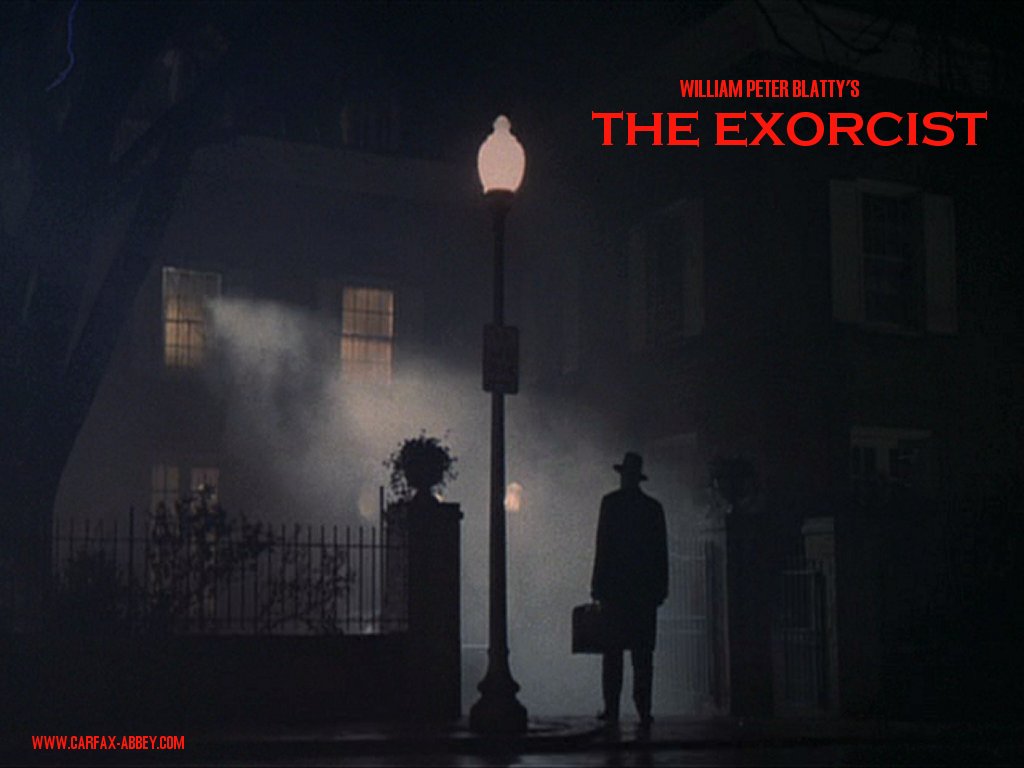
An article that ran in The Telegraph on 7 April titled “Rise in demand for exorcism recalls horror trend,” caught my attention, not only for its connection of concerns over the demonic and contemporary horror films, but also for some of the provocative claims it made. Looking back at The Exorcist (1973) and an increase in the performance of the rite of exorcism by the Roman Catholic Church that came as a result of the novel and film, the article draws similar conclusions in regards to the present through the influence of the Internet and perhaps through contemporary cinema:
That trend is now being repeated thanks to the internet according to the Catholic Church. A surge in Satanism fuelled by the web has led to a sharp rise in the demand for exorcists, as information on Devil-worshipping and the occult is at the surfer’s fingertips.
As a result exorcism is now the subject of a six-day conference being held this week at the Regina Apostolorum Pontifical University in Rome, under the authority of the Vatican.
These claims raised red flags for myself and others, and in order to explore this topic I turn to a researcher and colleague, Jesper Aagaard Peterson. Petersen is a Research Fellow at the Dept. of Archaeology and Religious Studies, Norwegian University of Science and Technology. He has published extensively on modern Satanism and is currently finishing his dissertation provisionally entitled “Between Darwin and the Devil: Issues of Articulation and Legitimacy in Contemporary Religious Satanism“.
TheoFantastique: Jesper, thank you for making some time to discuss your research as it relates to current events in popular culture. As you know, an article in The Telegraph in the UK reported on an alleged rise in Satanism, and according to the Roman Catholic Church, a corresponding need for more exorcists as a response to alleged increases in possession. There is a lot to unpack here, but let’s look at the various elements of significance here. To begin, what type of research have you done on Satanism, can you define Satanism in terms of your research, and has there indeed been any kind of rise in Satanism as the article reports?
Jesper Aagaard Petersen: My research focuses on modern religious Satanism, a heterogeneous assortment of individuals, groups and networks using Satan and other mythological beings as a short-hand for their work on the Left-Hand path. This manifestation of Satanism is recent, only gaining ground and formalization during the occult revival of the 1960s; the most well-known exemplar is of course Anton LaVey’s Church of Satan. Even so, there are many other interpretations alongside LaVey’s – some are atheist and materialist just like the Church, others are explicitly theist, although it often takes a Gnostic or esoteric form rather than a direct mimesis of Christian stereotypes. And there are positions in between. I tend to distinguish ‘rational’ and ‘esoteric’ Satanism as fully developed, autonomous and organized types of religious Satanism. These types should in turn be separated from ‘reactive’ Satanism, which is the (often deeply meaningful, yet fragmented) Satanism of the pact, the teenage bedroom and the black metal concert, and from various demonological discourses on the satanic throughout history.
My studies are primarily based on texts, websites and message boards, but I have complemented these sources with both ethnographic, sociological, and media work. What I do is study the discourses and practices of religious groups through the resources and strategies they bring into the struggle to actually define Satanism. As such, I see contemporary Satanism as a satanic milieu of people, organizations, ideas, practices, and channels for communication. This satanic milieu is both separate from and in dialogue with modern occulture and the wider cultural narratives on the satanic. It is distinct, because modern religious Satanism is about the self and not some diabolical ‘other’. The mythological beings used in this identity work have been disembedded from their original context and ‘de-otherized’ (to use Joseph Laycock’s term). Satan and Satanism are no longer solely defined within a Christian context. As such, ‘Satanist’ has followed the same trajectory as ‘witch’, ‘vampire’, ‘pagan, and ‘queer’, to name a few. Rather than positions of (dangerous) inversion, they are now hybrid roles, used within both cultural narratives of the other and as identities for the self. On the other hand, we should acknowledge some dialogue as well. First of all, dark occulture and cultural narratives do work as pathways to and from the satanic milieu, as Satanists engage with both subcultural and mainstream representations and take what they resonate with. Conversely, real Satanists are not totally below the mainstream radar, even if the media representations are sketchy at best and work more along the lines of freak show exhibits. Although I can say with confidence that theories of slippery slopes are mistaken, these relations thus make popular culture one important socialization ‘stage’ for modern Satanists.
“Little Satanist,” by watchtheicemelt, Deviant Art
Regarding the rise of Satanism, that depends on how you define it. The article you mention calls it a “surge” and a “revival”. It is true that the 1990s and early 2000s saw an increase of interest in Satanism alongside Witchcraft, Neopaganism, and other religious currents with roots in esotericism and occultism. This has to do with the general re-enchantment of the West in the past 50 years (an enchantment that never really went away, actually, but that is another story), which has developed in dialogue with popular media. It is also true that Satanism is more visible and more accessible because of the Internet, and that it flourishes on the de-regulated arenas the Internet provides. On the other hand, membership figures are hard to come by, and should be seen in relation to degrees of affiliation – a majority of witches or Satanists are tourists or dabblers, and only a small minority affiliate with a group and/or develop a long-term engagement. It is likely that more people are attracted to Satanism than before, and they are more visible today, but actual members still amount to thousands and not millions. In any case, where I differ from the article’s conclusion is in the effect of mediated religion on susceptible youth. Watching a movie, accessing a website or participating in a discussion forum does not automatically make you a Satanist, and it certainly does not make you possessed.
TheoFantastique: Is there any reason to make a connection between Satanism in its various forms and the occult and the phenomenon of possession?
Jesper Aagaard Petersen: Well, the simple answer is no. The article in The Telegraph caught my eye, as it fits the recurrent dialectic between real satanic groups on the one hand and anti-satanic discourse on the other, a dialectic covered by for example Phil Jenkins in Mystics and Messiahs (2000). Satanism as a religious option is definitely more visible and has been so since the 1960s witchcraft revival, in no small part because of LaVey’s Satanic Bible and the high media profile of the Church, as well as the meteoric rise of the Internet. On the other hand, the satanic panic and ritual abuse cases of the 1980s and early 1990s did much to reposition anti-satanic discourses of evil as the default interpretation of Satanism. Even though the religious (mainly Evangelical and to a lesser degree Catholic) basis of the moral panic has been exposed, and the secular madness of the media, law enforcement, judicial, education, and social care systems has been criticized extensively, conspiracy and scapegoating remains as a cultural resource. Satanism remains associated with evil in popular discourse and culture.
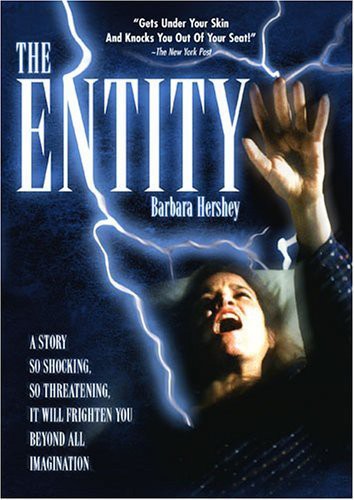
That is why I have a problem with the phrase “rise in Satanism” and “occult” in the article. The connotations become conspiratorial and not statistical. The word occult has a specific meaning within Religious Studies tied to the etymology of the word, as hidden. But in popular parlance and Catholic research it has a sinister ring to it. The article posits an causal connection between ease of access and demand for exorcists, but I think a lot of elements are missing from that equation. We have to ask who is searching online and who is in need of an exorcist? Are they even connected? Who makes the connections? There has been a re-enchantment of sorts, and it could of course be interpreted as the work of a cabal of Devil-worshipers influenced by demons. But there is absolutely no reason to see a rise in Satanism, Witchcraft, holistic spirituality and whatnot as anything sinister. Here, modern religious Satanism and the theological discourses on the satanic are two entirely different animals. On the other hand, a higher visibility of things dubbed “occult” and explicitly diabolical might stimulate a higher rate of possession experiences in Evangelical and Catholic communities. Certainly the interpretation of possession is connected to cultural resources at hand. And by extension, possession narratives are in fact reported in movies, talk-shows and so on outside these milieus. But then we have moved our attention to very different arenas of religiosity which is not directly associated with the people I study, namely Christian communities and the ‘secularized’ paranormal demonologies of horror movies (The Entity [1981] or Paranormal Activity [2009], for example).
TheoFantastique: I too have noted the continued presence of the devil, possession, and spirit entities in various horror films and television programs. This relates to what has been labeled as popular occulture. Why do you think the devilish in popular occulture is so prevalent, and how might this not be a factor in reports of the need for exorcism?
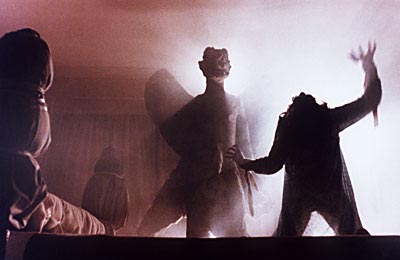
Jesper Aagaard Petersen: The Devil and his minions certainly sell. They are protean figures that can be molded to fit your narrative needs. And all narratives need bad guys, so why not use the Devil as has been done in popular culture for hundreds of years? Various elements of Christianity are topoi we all recognize (or at least most of us): The savior, the corrupted, the alluring, the end and so on. In addition, social anxieties and the speed of change needs a narrative interpretation. But this is cyclical. The 1960s explosion spawned not only the somewhat eccentric satanic witch of Rosemary’s Baby (1968), but also the unabashedly evil Antichrist of The Omen (1976) and the home invasion of The Exorcist (1973). And then came Michelle Remembers (1980), Multiple Personality Disorders and the MacMartin Preschool. Although thoroughly dismissed, these “real” stories never really went away, they just went back to the milieus from which they emerged, and, crucially, into popular culture as fictional tropes. They also underwent secularization: Aside from explicitly religious demonic fantasies, they continued as spiritual or paranormal narratives. For some two decades, anti-satanism has slumbered, while we have witnessed a resurgence of occultural themes in popular culture and as religious currents. This fin-de-siecle re-enchantment is now met with The Exorcism of Emily Rose (2005), The Last Rite (2010), and The Rite (2011), to name a few recent movies. Hopefully we will stop before the next stage.
Of course things are more complicated than this. Yet, we have to see re-enchantment, the mainstreaming of occulture and the conservative reaction as parts of a whole. Nevertheless, to argue that movies or the Internet makes demon-possessed victims in need of exorcism is the worst kind of hypodermic needle-argument on the effect of popular culture. We appropriate culture according to need, context and previous experiences. Of course, the Catholic Church has the Devil and his demons pushing the needle, so all constructivist and reception theory arguments are in vain. In a sense, the periodic resurgence of exorcism and other re-enchantment reminds me that we are not that far removed from Hellenistic times. They too ascribed everything to demonic influence, in part because of the changes they experienced.
TheoFantastique: What kind of conclusions do you draw as a scholar about the kind of sensationalistic and inaccurate reporting in The Telegraph article, as well as that produced by the Catholic Church about this phenomenon?
Jesper Aagaard Petersen: First of all, that causality is still a misunderstood phenomenon. A simultaneous decline in storks and childbirths does not prove that children are brought by long-legged birds. But such “explanations” are easy to sell. Further, it proves that popular accounts of academic research on Satanism and other occultural phenomena are sorely needed. While I have little confidence in the “seriousness and scientific rigour” of the Vatican conference, it obviously has a stronger network in which to promote its views. I might scoff at this article (I did yell at the computer screen when I read it), but it is read by a far wider constituency than any article I have ever written (all of them combined too).
Ultimately, these things move in cycles. In the famous 1972 Time magazine article “The Occult Revival: A Substitute Faith”, many of the same issues are reported. They even comment that the UK is experiencing such a boom in witchcraft and occultism that the Anglicans and Catholics have convened to suggest the appointment of exorcists in each diocese. Sounds oddly familiar in 2011. It is all about social mobilization and the reframing of perceived social problems. The Catholic Church is at odds with a dominant subjectivist trend in modern culture. At times, it tries to accommodate it. At other times, it rejects it and reframes it a social and moral decay. The availability and visibility of Satanism online is an easy target. When connected to the unrelated rise in exorcism movies and popular interest in spirits, demons, and – well, old-school fire and brimstone – a false causality is formed.
TheoFantastique: Jesper, thank you for your time and thoughts on this.
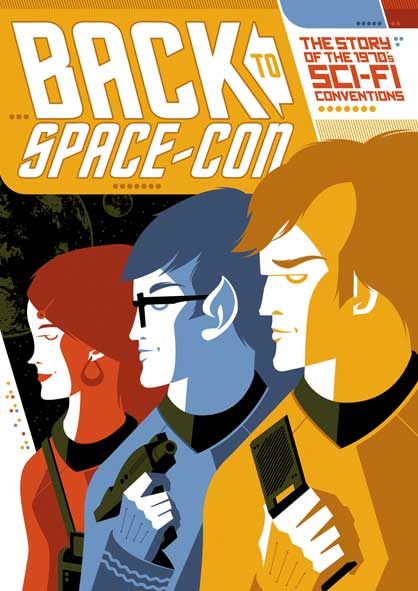 This weekend I had the opportunity to watch two documentaries, Back to Space-Con, produced and directed by Tom Wyrsch of Garfield Lane Productions, and Four Days at Dragon*Con, produced and directed by Jack Walsh of Public Broadcasting in Atlanta. Taken together, these films tell the story of the development of science fiction and fantasy conventions, which over time have become significant, not only for entertainment and commercialism, but also in the formation of distinct subcultures.
 events draw fans and feature aspects of pop culture from science fiction, fantasy, and even horror, Dragon*Con, much like the Space-Cons which preceded it, gives the impression that it is far more fan-driven than media and commerce-driven. This is not to say that there is not a strong driving force of entertainment and commercialism behind Dragon*Con, but it appears to focus more on explorations and expressions of fandom as a result of the fantastic, rather than serving primarily as a means for promoting the latest Hollywood products of the fantastic.