 CFP: True Blood SW/TX PCA/ACA (12/1/11; 2/8-11/12)
Join us for the 33rd Annual Southwest/Texas Popular Culture and American Culture Associations Conference, February 8-11, 2012 at the Hyatt Regency in Albuquerque, New Mexico.
The Science Fiction and Fantasy Area Chairs of the Southwest/Texas Popular Culture/American Culture Associations (www.swtxpca.org) invites paper or panel proposals about the television series True Blood.
Proposal submission deadline: December 1, 2011.
Any and all topics will be considered, although we especially encourage proposals on:
– The series’ vampire mythos in relation to other vampire archetypes/popular constructions of vampires
– The construction of the American South
– Socioeconomic class
– Sexuality & Gender Performance
– Race & Ethnicity
– Violence, Sex, & Eroticism
– The Music of True Blood
– The adaptation/transformation of the Sookie Stackhouse novels by Charlaine Harris into the television series
– Fan culture
– Any topics exploring the intersections of True Blood and this year’s theme “Food and Culture.”
Submit 250 word paper or 500 word panel proposals to:
http://conference2012.swtxpca.org/ (Choose the area “Science Fiction & Fantasy – True Blood.” Online submission will be available after September 1. If you are experiencing difficulties with the website, please email your proposal to the address listed below.)
Direction questions to: Tamy Burnett, tamy.burnett@gmail.com
Deadline for proposal submissions: December 1, 2011. Earlier proposals are welcomed and will be responded to with all due haste. The registration deadline is December 31, 2011. All participants must register by that date or they will not be permitted to present or appear in the program.
Conference hotel:
Hyatt Regency Albuquerque
330 Tijeras
Albuquerque, NM 87102
Phone: 1.505.842.1234
Fax: 1.505.766.6710
For Conference Rate Reservations and other details on the conference, please visit the Southwest/Texas Popular Culture/American Culture Association: www.swtxpca.org.
Follow us on Facebook & Twitter: www.facebook.com/swtxsff and @swtxsffchairs,
More about the SF&F Area:
With an average of 70+ presenters annually, The Science Fiction and Fantasy Area of the Southwest and Texas Popular Culture and American Culture Association is one of the most dynamic and well attended areas at the conference. Numerous book and article publications have originated from our panels.
The Area was founded in 1995 by Prof. Richard Tuerk of the Texas A&M University-Commerce (formerly East Texas State University) and author of Oz in Perspective (McFarland, 2007). The Area is currently chaired by Ximena Gallardo C. of the City University of New York-LaGuardia and co-author of Alien Woman: The Making of Lt. Ripley (Continuum: 2004), Alyson Buckman of the California State University-Sacramento and winner of the 2011 Mr. Pointy Award for best essay in Whedon Studies; Tamy Burnett of the University of Nebraska-Lincoln, co-editor of The Literary Angel (McFarland, 2010); and Brian Cowlishaw of Northeastern State University, author of No Future Shock Here: The Jetsons, Happy Tech, and the Patriarchy (The Galaxy is Rated G, McFarland: 2011). Though the co-chairs consult on submissions, Ximena is primarily responsible for the general organization of the conference panels and coordinates special panels, Alyson and Tamy coordinate the Whedonverse panels (Buffy, Firefly, Angel, and etc.), Tamy coordinates annual special topics related to SFF television, and Brian reviews and organizes the literature panels and other special topics (this year Twilight and Game of Thrones).
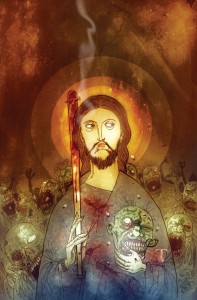 The Undead and Theology has found a publisher in Wipf & Stock. My co-editor Kim Paffenroth signed the contract this week. Submissions by the contributors are due at year’s end. Here is a description, as well as a list of contributors and their chapter topics.
Overview
Kim Paffenroth and John W. Morehead, editors
The academy and pop culture alike recognize the great symbolic and pedagogical value of the undead (or reanimated dead). Vampires, zombies, and other creatures possess an important ability to enable reflection in a variety of personal and cultural ways. This has been explored variously from critiques of consumerism and racism, explorations of gender and sexuality, consideration of the breakdown of the nuclear family; such academic examinations of the undead have been done from the perspectives of philosophy and political theory. But another important avenue of exploration these monstrous icons can lead us is theology.
This anthology volume on the undead and theology is similar in format to those that have looked at various expressions of horror in pop culture and philosophy, such as Zombies, Vampires, and Philosophy (Open Court Press, 2010), True Blood and Philosophy (Wiley, 2010), and Twilight and Philosophy (Wiley, 2009). Submissions address a variety of theological issues by drawing upon the undead as objects of critical reflection.
Contents
“When You’re Undead, the Whole World is Jewish”
Dr. Arnold T. Blumberg; Visiting professor at University of Baltimore
The Jewish myth of the Golem is usually remembered as a magically animated clay construct, but there are Golem stories that shatter the misconception that there are no Jewish zombies…apart from a certain carpenter. Golem folklore often features reanimated corpses in stories of injustice, vengeance, and the search for the soul, with the addition of the Jewish respect for the dead (K’vod HaMes). The creature is impelled by belief in God but a danger to its creator and its intended victims. Tales of the Golem are often overlooked in our expanding exploration of the cultural impact of the undead.
“The Living Christ and The Walking Dead: Karl Barth and the Theological Zombie”
Jessica DeCou, PhD Candidate in Theology at University of Chicago Divinity School
Stepping into the world of The Walking Dead, this chapter considers the “theological zombie” through a Barthian lens. Unlike the philosophical zombie, indistinguishable from us in appearance and behavior, the theological zombie is the recalcitrant corpse of popular imagination, shuffling about in sluggish but relentless pursuit, consuming the living for the sake of the dead. What are the implications of this zombie infestation for a theological understanding of genuine humanity? Can this apocalyptic outbreak serve to “reanimate” theological contemplation of the eschatological promise of bodily resurrection?
“Vampires, and Female Spiritual Transformation”
Dr. Vicky Gilpin, Millikin University
An originator of the “urban fantasy” genre, Laurell K. Hamilton’s Anita Blake series encouraged new pop cultural interpretations of vampire existence and the effects vampires have on humans and other paranormal creatures. Through the mostly human protagonist’s psychological, magical, and spiritual growth as a result of her paranormal connections, the works explore the question “what is the definition of monsterhood?” A character with strong religious identification, Anita’s increasingly sex-based powers and proclivities often cause her to question her spiritual standing. The depictions of religion and spirituality in the Anita Blake series, as well as the constant themes of sexual power, demonstrate the importance of a character’s spiritual and reflective journey as another lens through which to view theology and the undead.
“Crossing the Spiritual Wasteland in Priest”
Joseph Laycock, PhD Candidate at Boston University’s Department of Religion and Theological Studies
Scott Stewart directed Legion and Priest. Both films work by turning the traditional heroes of religious horror films––angels and the Church––into antagonists. This is one of the classic “sociophobics” discussed in Douglas Cowan’s Sacred Terror: the fear of a change in the sacred order. This article explores how Priest attempts to disturb and fascinate by challenging audience expectations regarding spiritual good and evil. The vampire-hunting protagonist experiences moral uncertainty about his Church and these doubts are inflicted on the audience as well. The film’s post-apocalyptic setting is explored as a potent metaphor for a broken sacred order.
“Vampires are People, too: Personalism in the Buffyverse”
Jarrod Longbons, PhD Candidate at the University of Nottingham
Buffy the Vampire Slayer puts forward an interesting image of the vampire: a dead body in which a demon has taken the place of the soul. Moreover, a vampire in the Buffyverse may elect to win back its soul. Though they remain “un-dead,” these “en-souled” vampires display only one significant change: they transform from diabolical parasites into persons for others. Because of its immanent perspective, Buffy the Vampire Slayer’s vision of the soul is a secular parody of Catholic personalism, as explicated in this essay via an analysis of the character arc of the vampire “Spike.”
“Zombie Jesus, Zombie Walks, and the Eschatology of Postmodern Flesh”
John W. Morehead, MA from Salt Lake Theological Seminary
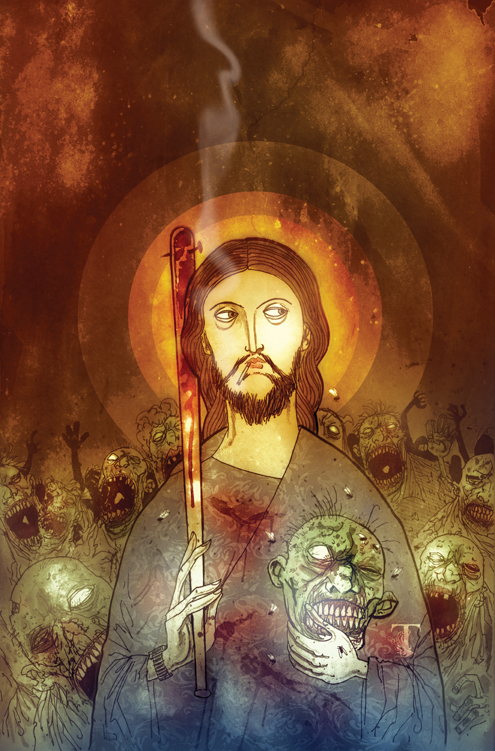
This chapter will describe the origins and expressions of the zombie walk, and Zombie Jesus phenomena, and how these phenomena incorporate postmodern conceptions of the body, and perhaps hint at a critique of the frequent Evangelical Christian emphasis on the soul/spirit to the neglect of the physical body. Finally, this chapter will consider that the mass gatherings of zombies rising from the grave, coupled with the presence of Zombie Jesus, may be understood in part as a form of resurrection without immortal bodily transformation as well as a reflection of critique of Christian eschatology, and the incorporation of postmodern nondualist metphaphysics.
“When All is Lost, Gather ‘Round: Exploring the Theologies of Grief and Hope in The Walking Dead”
Ashley Moyse; Sessional Instructor, Faculty of Science, University of the Fraser Valley, Abbotsford, BC; Ethics Tutor, Undergraduate medical program, Faculty of Medicine, University of British Columbia
This essay will explore the theology of grief and hope as illumined in the debut season of The Walking Dead. Specifically, the essay will argue that The Walking Dead tells the story of how one must rely upon the community, not only for strength but also hope during times of crisis and of grief. In support of this thesis, I will rely upon the theological writings of Dietrich Bonhoeffer, Karl Barth and Paul Tillich who may help explore how communities are constructed, how they labor together in times of grief, and where they may encounter hope.
“Negotiating (Non)Existence: Justifications of Violence in Robert Kirkman’s The Walking Dead”
Dr. J. Ryan Parker
The religious aspects of Robert Kirkman’s The Walking Dead chiefly concern morality and ethics, particularly regarding the brutal violence within various communities of survivors and between these communities and the zombies that plague them. From moral or physical superiority to survival needs to revenge, survivors of the zombie plague attempt to justify their violent actions. Drawing from studies of not only violence in film, television, and video games, but also the ways in which it is defended within such media, this essay further reveals ways in which narratives of the undead speak to the living. In our own world where unthinkable acts of violence (and violent reactions to them) are often cloaked in moral/religious/theological armor, Kirkman’s narrative sheds light on the hypocrisy of one individual or group claiming superiority over another, even if that other is a zombie.
“’The Devil is Born Anew’: The Satanic Turn in the Vampire Legend and the Creation of a Popular Theology of Evil”
Dr. Scott Poole, Associate Professor of History at the College of Charleston, author of Satan in America: The Devil We Know (Rowman & Littlefield, 2009), and Monsters in America (Baylor University Press, 2011)
This essay examines how Hammer Studio films use of satanic metaphors in the late 60’s and early 70s reflected an increased fascination with the Devil as a new kind of horror film monster, as well as anxieties about “real” Devil worship. My analysis includes the work of several significant evangelical and Pentecostal theologians whose work touched on the role of the demonic such as Carl F.H. Henry, Gordon Fee and John Christopher Thomas. The essay will show the links between moral panics, modern folklore, theology and film audiences.
“’Eat of My Body and Drink of My Blood’: Johannine Metaphor, Gothic Subculture, and the Undead”
Beth Stovell, PhD Candidate at St. Thomas University, Assistant Professor in Biblical Studies
Using conceptual metaphor theory, this essay examines inclusion and exclusion in the Johannine literature, Gothic subculture, and modern “undead” literature, suggesting three critical ways that apocalyptic metaphors are used in these contexts: 1) as a reaction against mainstream culture, 2) as a reaction against exploitation, and 3) as a form of paradox and irony that subverts expectation. By creating a group of insiders and rejecting the culture of its time, these “undead” literatures, like the Johannine corpus, provide solace and a community for their readers, reinterpreting apocalyptic metaphor, and informing social identity.
“Fire, Brimstone and PVC: Clive Barker’s Cenobites as Agents of Hell”
Andrea Subissati, MA from Carleton University with a thesis on the sociology of the living dead
In Clive Barker’s novella The Hellbound Heart, Frank Cotton’s search for the ultimate carnal experience leads him to discover a gateway into hell. Far from the orgiastic pleasures he had hoped for, Frank is dragged into hell by cenobites for an eternity of corporeal torture. Barker’s novella and the resulting films are laden with theological concepts, particularly the Christian distinction between body and soul. This chapter will seek to analyze Barker’s version of hell, looking at how it relates to traditional Christian conceptions. Sources will include the original text, comic books and franchise of films.
CALL FOR PAPERS – Histories of the End
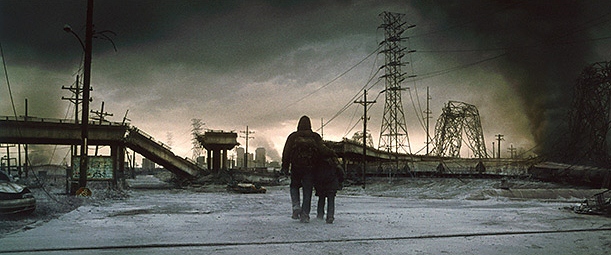
In 2012 Relegere: Studies in Religion and Reception will publish a special issue dedicated to reception histories of the end times, however they might be imagined, in religious contexts. We welcome reception histories not only of Christian imaginaries of the book of Revelation, but also of the end of days in other traditions and in more diffuse settings such as the Western esoteric and New Age milieus.
Of course this can include treatments that touch on the end times Mayan calendars and 2012, zombie apocalypses, science fiction and nature apocalyptic, and so on and so forth.
Those interested in submitting to Relegere‘s “Histories of the End” should send an abstract of a maximum of 300 words to editors@relegere.org by December 1, 2011. The issue will appear in December 2012. Please distribute this Call for Papers widely.
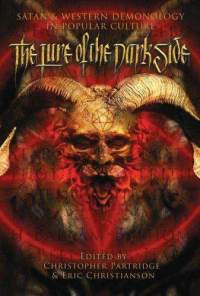 The publication Relegere: Studies in Religion and Reception, includes a book review by Steve A. Wiggins of The Lure of the Dark Side: Satan and Western Demonology in Popular Culture, edited by Christopher Partridge and Eric Christianson (London: Equinox, 2009). The review touches on a number of areas covered by contributors, including a chapter describing changes in depictions of vampires in cinema:
Titus Hjelm’s “Celluloid Vampires, Scientization, and the Decline of Religion,” is a fascinating analysis of the changing standards of vampires in movies. The classic Hollywood vampire of the early twentieth century was a manifestation of spiritual evil whereas more modern vampires are often explained scientifically by genetic mutations or viruses. Comparing classic Hammer Studio vampire movies with the Blade and Underworld series, Hjelm argues that the “migration of the vampire soul” (118) follows the decline in religious belief in society. The vital role of blood and the means of destroying vampires reflect this shift. If caught in a dark, Transylvanian street it is better to have a gun with ultraviolet bullets than to go armed with a crucifix. Recent developments further confirm Hjelm’s thesis: Justin Cronin’s new novel The Passage features viral vampires and word is out that Tim Burton is working on a Dark Shadows movie to be released next year. It will be worth observing how the conflicted soul of Barnabas Collins will fit into this mix of modern vampires.
As this positive review concludes it does not one shortcoming in the bibliography in the absence of Douglas Cowan’s Sacred Terror: Religion and Horror on the Silver Screen (Waco: Baylor University Press, 2008), described as another example of work “demonstrating the close connection of religion and horror.”
Related posts:
“Titus Hjelm – From Demonic to Genetic: The Rise and Fall of Religion in Vampire Film”
“Interview with Douglas Cowan: The Unholy Human, Fanaticism, and Fear of the Flesh”
 Once again science fiction intersects with reality. In a recent example media reports brought together concerns over global warming with the fears of alien invasion. The Guardian described one possible scenario:
It may not rank as the most compelling reason to curb greenhouse gases, but reducing our emissions might just save humanity from a pre-emptive alien attack, scientists claim.
Watching from afar, extraterrestrial beings might view changes in Earth’s atmosphere as symptomatic of a civilisation growing out of control – and take drastic action to keep us from becoming a more serious threat, the researchers explain.
This highly speculative scenario is one of several described by a NASA-affiliated scientist and colleagues at Pennsylvania State University that, while considered unlikely, they say could play out were humans and alien life to make contact at some point in the future.
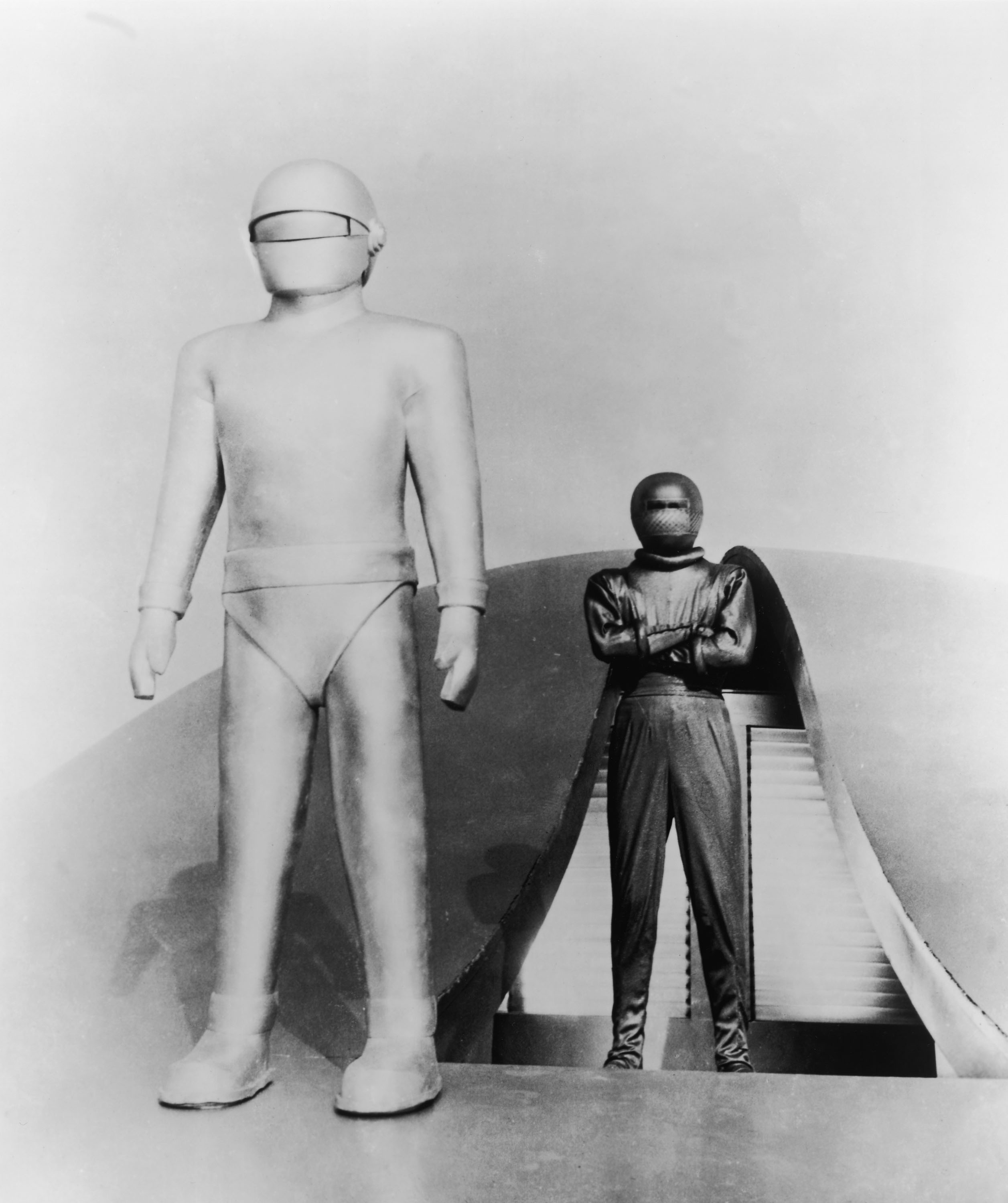
This topic was explored in a report titled “Would Contact with Extraterrestrials Benefit or Harm Humanity? A Scenario Analysis”. Should first contact be negative, and we find ourselves threatened with possible extinction given our use of natural resources, we should remember the words “Klaatu barada nikto.”
CFP for edited collection – Green Planets: Ecology and Science Fiction
Editors: Gerry Canavan and Kim Stanley Robinson (ecologyandsciencefiction@gmail.com)
Abstracts due August 31, 2011
Final essays due Summer 2012
We are seeking proposals for an edited collection tentatively titled Green Planets: Ecology and Science Fiction, with completed essays due in Summer 2012. We seek contributions that touch on any aspect of the relationship between ecological science, environmentalism, and science fiction, with particular attention to such topics as:
* ecological futurity and eco-criticism in SF
* visions of eco-disaster, eco-catastrophe, and eco-apocalypse
* strategies for ecotopia
* the globe and global thinking in SF
* science fictional critiques of global capitalism, consumerism, and ecological racism
* social justice as an ecological technology
* narratives of political resistance
* SF as it figures within current public debate about ecological science (climate change, Peak Oil, etc.)
* philosophies and fantasies of Nature
* narratives of evolution, extinction, and extermination
* eco-feminist SF
* reproductive futurity
* ecology and Afrofuturism
* ecology, digitality, and techno-optimism
* terraforming and other narratives of space colonization
* aliens, alien worlds, xenobiology, and exo-ecology
* ecological thinking as a strategy for cognitive estrangement
* ecological critiques of particular unscientific or anti-ecological science
fictions, or critiques of the history of the genre as a whole
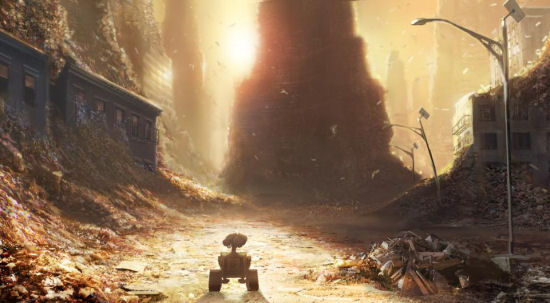
We hope to produce a collection that speaks to the long history of ecological SF, ranging from the climate change that prompts the Martian invasion in War of the Worlds to Oryx and Crake, The Wind-Up Girl, Avatar, and WALL-E (and everything else before, after, and between). We likewise intend SF in its broadest possible sense, to include fantasy and horror literature alongside science fiction more narrowly construed, and hope to receive submissions that properly reflect SF as a diverse and global genre.
Abstracts should be around 250-300 words; submissions should also include contact information and a short bio. Please plan for final essays to range between 4000-8000 words.
Please direct all queries, questions, and submissions to: ecologyandsciencefiction@gmail.com.
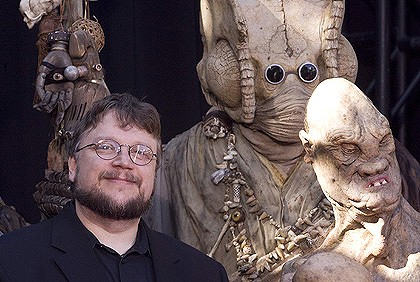 TIME magazine features the piece “10 Questions” with filmmaker Guillermo del Toro from the new September 5 issue which is online today and which will be on newsstands tomorrow. Here is an excerpt from the interview with questions and responses of interest to the focus of TheoFantastique:
You have an interesting living situation, with a house, separate from your family, for just your books, your posters, your art and your work.
As a kid, I dreamed of having a house with secret passages and a room where it rained 24 hours a day. The point of being over 40 is to fulfill the desires you’ve been harboring since you were 7.
What did your wife have to say about that?
She was happy. When you’re 7, your mother throws away your comic books. When you’re 40, you should be able to prevent that.
How do you deal with people who think of the fantastic as infantile?
I try to avoid long conversations with them. You cannot convince a Buddhist to become a Protestant any more than you can convince a person who embraces realism as the highest form of art that fantasy is an equally important manifestation. It’s impossible.
You speak as if your art is your religion.
It is. To me, art and storytelling serve primal, spiritual functions in my daily life. Whether I’m telling a bedtime story to my kids or trying to mount a movie or write a short story or a novel, I take it very seriously.
Link to full story on TIME.com (subscription required): http://www.time.com/time/magazine/article/0,9171,2090370,00.html
Don’t Be Afraid of the Dark, the film del Toro co-wrote and produced, opens in the U.S. on August 26th.
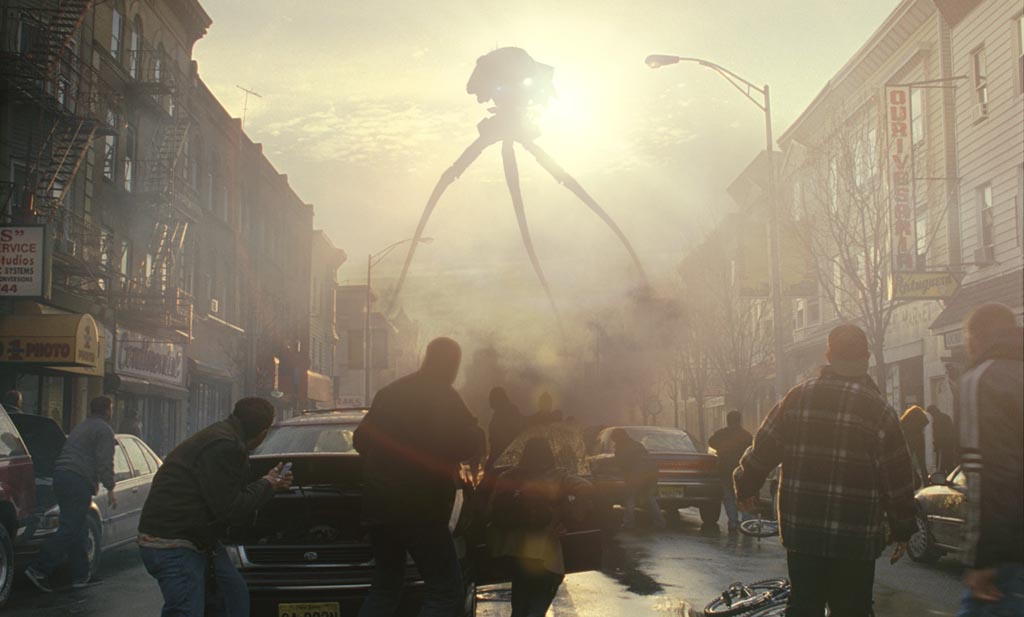 The tenth anniversary of 9/11 is coming up in a few days, and with the remembrance of that tragedy it is helpful to remember how the impact of that event on the national psyche influenced a number of areas, including pop culture. One area is cinema, particularly genre films like science fiction and horror. io9 recently included a piece titled “How 9/11 Changed Science Fiction” that touches on the former. It is a brief piece that lists a few areas where the author suggests 9/11 has made an impact. It’s worth considering.