This is the week leading up to Halloween, and in honor of this great holiday TheoFantastique is pleased to present this documentary look at Halloween from The History Channel.
In addition, below are links to previous discussions of Halloween on this blog that are worth revisiting this time of year.
Last Sunday night AMC aired the premiere episode for season 2 of The Walking Dead. In the process the series set new records:
The 90-minute episode drew 7.3 million total viewers, becoming the strongest telecast for any drama in basic cable history among two key demos.
The zombie drama based on Robert Kirkman’s long-running comics drew 4.8 million viewers in the advertiser-coveted adults 18-49 demographic, 4.2 million adults 25-54 and registered a 4.8 household rating, shattering a nearly 10-year-old basic cable record among the demos for a single drama telecast.
The 4.8 household rating and 7.3 million total viewers represent a 36 percent and 38 percent increase, respectively, over the drama’s freshman season ratings.
This episode, “What Lies Ahead,” did not disappoint in many ways. From the continued development of character relationships and the storyline from the first season, to the intensification of zombie makeups, making this one of the best genre programs currently on television.
One of the more interesting subtexts for The Walking Dead is the place of hope and faith in the midst of an apocalyptic scenario. The series not only asks viewers to wrestle with whether life is worth living in such a context or whether suicide is a more sensible response (thus raising questions about whether self-conscious beings should live at all in a vicious and seemingly nihilistic universe), but also raises questions about the place of religion in such a setting.
In season 1 religious questions lay below the surface. As in other zombie stories, in particular the early films of George Romero, some characters wrestled with whether the zombie apocalypse was the result of God’s judgment. Others expressed doubt about the efficacy of hope and prayer altogether in light of the struggle to survive. Season 2 picked upon on such religious considerations and pushed them further.
With the Center for Disease Control destroyed at the end of last season, the beginning of the new season finds the group of survivors traveling toward an Army base. Along the way they find the highway littered and blocked with traffic, and the vehicles filled with the bodies of the dead. The group decides to use the opportunity to scavenge for supplies. Shane discovers a truck filled with water bottles, and as he opens them and lets the water pour over his head he tells one of his fellow survivors that the experience is like a baptism. This phrase sets the stage for the religious aspects of the episode that follow.
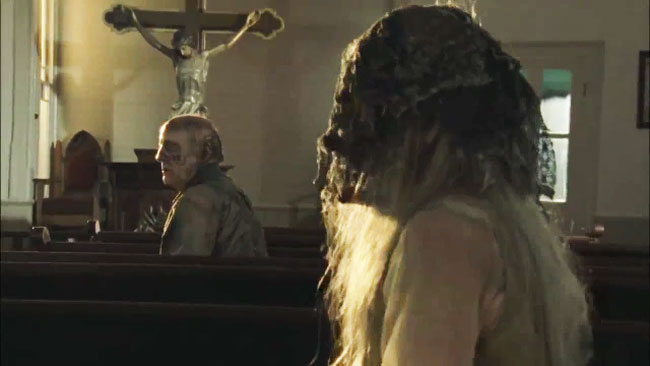
As a major portion of the group searches for a missing girl (interestingly named Sophia, meaning wisdom, raising questions about wisdom, perhaps even divine wisdom, leaving the group), chased into the woods by two zombies, they hear a church bell ringing in the distance. They run to follow the sound, hoping that either the missing girl is ringing the bells herself, or that someone who found her may be doing so as a signal. They find the church, and as the group enters viewers see three zombies sitting on the pews facing forward, a bloody crucifix in the center of the undead worship. The group quickly kills the three zombies, with Rick Grimes looking up at the crucifix after his killing.
Following the zombie church member executions, two of the characters use the setting of the church for prayer and the search for guidance. Carol prays and asks for forgiveness for wishing her abusive husband dead, the victim of a zombie attack near the end of season 1. She fears that God may be bringing judgment through the disappearance of her daughter, the incident that brought the group to the church in their search. Rick Grimes also uses the church for spiritual reasons. He has been functioning as the group leader and tries to provide hope, even when he admitted to the CDC worker at the end of last season that he felt all was hopeless and that everyone was eventually going to die. In a form of prayer, Grimes looks at the bloodied Christ on the cross in the church and shares his frustrations, desperately asking for some kind of sign that he is leading the group in the right direction.
This episode raises several questions whereby zombies, and their presence in relation to a church, provide for spiritual reflection. An obvious question is why a crucifix is found in this church at all. The characters are still in Georgia, a very Baptist state, and as the group makes its way toward the church after running through a graveyard, they pass a sign that provides the name of the church as Southern Baptist Church of Holy Light. Southern Baptists are very Protestant, and such these churches tend to have little to no religious symbols present. When they do it is an empty cross emphasizing resurrection, not a crucifix with a battered and bloody Jesus. The crucifix is out of place in this religious setting and its anomalous presence raises points for consideration. The figure of the body of Jesus suggests a more readily present figure of the divine than does an empty cross which points more toward transcendence. In addition, the beaten and bloodied figure of Jesus makes for a point of connection between Christ and the survivors of the zombie apocalypse, but it also connects Jesus to the walking dead when the resurrection of a dead corpse and the “zombie Jesus” of popular culture are considered.
I have already noted that the question of God’s judgment through the zombies has been hinted at in The Walking Dead. That possibility is raised again in “What Lies Ahead” as the church sign includes a Bible verse below the church name reading Revelation 16:17. This passage discusses the pouring out of the final bowl of seven of God’s wrath upon the earth. Are the writers hinting at divine judgment through zombie apocalypse or does this cataclysmic event simply overlap with a church’s weekly sermon on “end-times”?
And what are we to make of Rick Grimes and his desires for a sign from God as he functions as something of a new Moses leading his people through the desert of the undead? In his prayer he is very forthcoming about his doubts about God’s existence, and yet at the same time his prayer indicates a tension of doubt and faith, reminiscent of a man in Mark’s Gospel who tells Jesus, “Lord I do believe; help me overcome my unbelief!” (Mark 9:24). Interestingly, this passage is part of a narrative in Mark where Jesus is about to heal the father’s boy, thus providing a sign that will lead to the father’s faith and the overcoming of his doubt (Mark 9:14-29). This is related to the situation for Grimes where at the conclusion of the episode (spoiler alert) Rick, his son Carl, and Shane find a deer in a clearing. The boy approaches with wide eyed wonder and gets very close. Smiles form on the face of Rick and Shane as his boy gets close to touching the deer. We begin to wonder, is this the sign that Rick was searching for? Is God answering his prayer, and in a positive way? Such hopeful thoughts are quickly dashed as a shot rings out, hitting both the deer and Rick’s son.
The conclusion of “What Lies Ahead” is a pessimistic one, and viewers are left to grapple with the presence or absence of the divine in the midst of the struggle for survival. Is God present in the midst of even the worst suffering and threat to life imaginable, somehow leading and guiding despite the difficulties encountered? Or is religious hope and faith merely a placebo that may have worked in an ordered civil society with evil and violence escaping through the cracks, but now that death and destruction rule the day religion is shown to be an illusion? Why were the zombies sitting in church in a pose reminiscent of their church attendance and worship in life? Were they going through the familiar routines of their previous life, or do the zombies serve as a metaphor for the deadness and futility of Christianity, and perhaps of all religion?
I don’t know that future episodes in season 2 will provide answers or insights related to such questions, but I am pleased to see The Walking Dead providing a multi-layered story that makes for multiple levels of entertainment and reflection.
“Medieval Magic, Myths, and Legends in Film and Television”
An area of multiple panels for the Film & History Conference on “Film and Myth”
September 26-30, 2012
Milwaukee, Wisconsin, USA
www.filmandhistory.org
Deadline: June 1, 2012
The Middle Ages have inspired some of the most enduring myths and legends of Western culture. Whether painted, on screen, in the bright colors of Camelot and The Adventures of Robin Hood or the drab grays and browns of Robin and Marian and Monty Python and the Holy Grail, they represent a world in which right and wrong, love and honor, heroism and villainy were clearly defined. Tales of larger-than-life medieval characters – whether adapted from original sources, or set in a wholly imagined middle ages – have been staples of film and television for generations. These medieval-themed narratives, featuring historical figures like Joan of Arc, beloved folk heroes such as Robin Hood, and worlds where dragons and other mythical beasts roam the Earth, have retold and adapted familiar stories of adventure, conquest, magic, and romance, while adding new ones to the ancient tradition.
This area, comprising multiple panels, will treat all aspects of the myth and legend in films and television programs. Possible topics include, but are not limited to, the following:
* Arthurian Legends and Myths
* Legendary Heroes Fictional and Factual (Robin Hood, Beowulf, Sigfried, William Wallace, Alexander Nevsky, El Cid, etc.)
* Legendary Saints and Sinners (Joan of Arc, St. Francis, Hildegard of Bingen, Pope Joan, Abelard and Heloise, etc.)
* Norse Gods and Heroes (The Vikings, The Long Ships, Thor)
* Dragons and Other Members of the Medieval Bestiary (Dragonslayer, Gargoyles, How to Train Your Dragon)
* The Imagined Middle Ages (Tolkein, Monty Python, Ladyhawke, The Name of the Rose, The Princess Bride, The Seventh Seal)
Proposals for complete panels (three related presentations) are also welcome, but they must include an abstract and contact information, including an e-mail address, for each presenter. Please e-mail your 200-word proposal by June 1, 2012:
L. Larson, Area Chair, 2012 Film & History Conference
“Medieval Magic, Myth, and Legend in Film and Television”
Our Lady of the Lake University
Email: llarson@ollusa.edu
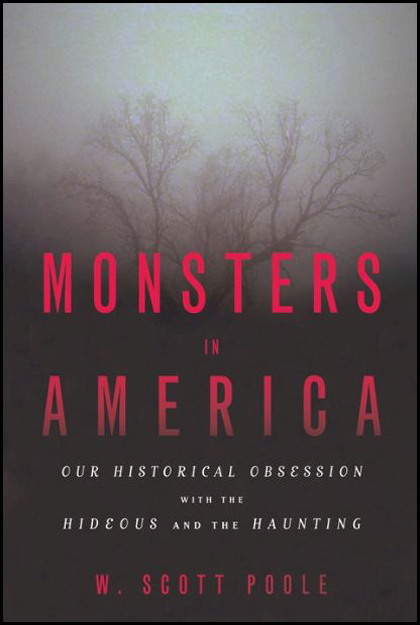
Salem witches, frontier wilderness beasts, freak show oddities, alien invasions, Freddie Krueger. From our colonial past to the present, the monster in all its various forms has been a staple of American culture. A masterful survey of our grim and often disturbing past, Monsters in America uniquely brings together history and culture studies to expose the dark obsessions that have helped create our national identity.
Monsters are not just fears of the individual psyche, historian Scott Poole explains, but are concoctions of the public imagination, reactions to cultural influences, social change, and historical events. Conflicting anxieties about race, class, gender, sexuality, religious beliefs, science, and politics manifest as haunting beings among the populace. From Victorian-era mad scientists to modern-day serial killers new monsters appear as American society evolves, paralleling fluctuating challenges to the cultural status quo. Consulting newspaper accounts, archival materials, personal papers, comic books, films, and oral histories, Poole adroitly illustrates how the creation of the monstrous “other” not only reflects society’s fears but shapes actual historical behavior and becomes a cultural reminder of inhuman acts.
As of the writing of this post there are only 25 days until Halloween. For many of us the party has already started as decorations are already up, horror movie viewing has begun, and we eagerly await horror television as well. With this in mind TheoFantastique begins its own Halloween celebration with the enthusiastic mention of two items.
The first is Midnight Syndicate‘s latest CD Carnival Arcane. Midnight Syndicate has a great reputation for music related to the Halloween season, and they try to top themselves each year. With this year’s offering we find their fourteenth studio album that takes on a dark carnival theme. As the CD’s cover describes:
The train smoke drifting through the pale moon light signals the arrival of the Lancaster Rigby Carnival. In a forest clearing, these mesonoxian visitors await your arrival. Stroll along the midway and behold wonders both fantastic and macabre from every corner of the globe. And be sure to ride their one of a kind carousel for an experience you’ll never ever forget.
This CD includes 25 tracks that blends historical realism with fantastic elements, and which features involved sound design combining music with voice and sound effects. Carnival Arcane is available at the Midnight Syndicate website, as well as iTunes and Amazon.com.
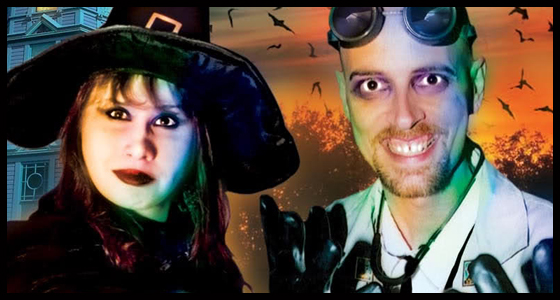
Another media offering that will help put you in the mood for the Halloween season is the DVD titled The Dreadful Hallowgreen Special. It features heirs to the television monster hosts of years past featuring contemporary web horror personalities Doctor Gangrene, Penny Dreadful (both Rondo Award winners), and includes special guest Count Gore De Vol. The DVD cover provides the film’s synopsis:
Sorcery threatens to destroy Halloween as pumpkins turn pink while goblins and ghouls begin acting loveable! To the rescue – infamous Doctor Gangrene and Penny Dreadful, assisted by her werewolf sidekick, Garou, combine science, magic and horrifying humor to save their beloved holiday!
This DVD is fun to watch, especially during the Halloween season, and includes an extended cut with footage that was not seen when the program was first broadcast. It also includes a trailer, shorts, bloopers, and outtakes. Pick up your copy at Amazon.com.
I feel some level of justification as to my intuitions on aspects of science fiction and fantasy conventions and their subcultures. I recently came across a post at The Wild Hunt blog which referenced a lecture by Jeet-Kei Leung on transformational festivals like Burning Man. Jason Pitzl-Waters of The Wild Hunt mentioned that a similar dynamic has been observed at places like Dragon*Con. Not long ago I made similar observations noting parallels between Burning Man and Dragon*Con (see links below). In a post I wrote:
Some of the parallels between Burning Man Festival and fan conventions/subcultures like Dragon*Con include:
– A sense of belonging, family, and being part of a like-minded group that shares similar values.
– Related to the above, a shared sense that their participation in the festival/convention represents being part of a subculture more real than that lived in the rest of the year.
– A process which Victor Turner discussed which involved leaving one’s tribe, traveling to a liminal space apart, participation in various forms of ritual, and a return to the tribe after experiencing a strong sense of “communitas” or community from the shared experience.
– The inclusion of a strong sense of artistic expression through painting, drawing, sculpture, and the creation of various forms of artifacts.
– Costuming and play. At Burning Man this can take a variety of forms, from nudity to any number of costumer creations, while at sci-fi/fantasy conventions it becomes “cosplay,” costume play as a form of performance art related to the fantastic.
– A strong sense of participation and self-expression in keeping with embodied ideals as the driving force behind the gatherings.
– A sense of modern tribalism, a connectedness in terms of shared understandings of social and (sub)cultural values.
– Utopian desires which yearn for the creation of forms of society which transcend the limitations and overcome the negative aspects of contemporary Western societies.
In the video presentation below Leung discusses the significance of a return of mythos and that participants express themselves as co-creators of community. He also mentions the importance of music in such contexts, but in applying his thesis to science fiction and fantasy conventions I would add the significance of mythic stories depicted in various formats from comics to television to cinema. These elements combine at science fiction and fantasy conventions resulting in some instances in expressions of the spiritual and religious. These ideas are worthy of further academic exploration and field study.
I received word today from Vince Liaguno of Dark Scribe Press that my contributor copy of Butcher Knives & Body Counts: Essays in the Formula, Frights, and Fun of the Slasher Film (Dark Scribe Press, 2011) is in the mail. My contribution is a brief essay that argues for the slasher film myth to be understood as a contemporary form of the chaos monster myth in ancient civilizations, particularly those form the ancient Near East.
Vince was interviewed about this book which he edited at Fangoria.com which was posted in various installments. In Part One Vince talks about the origins of Butcher Knives and Body Counts:
FANGORIA: What was the genesis of BUTCHER KNIVES & BODY COUNTS?
VINCE LIAGUNO: The book was actually with another publisher in the UK called Hades’ Gate, and it was originally conceived to be encapsulated reviews of slasher films. But what the publisher was looking for was more like, “What I remember about this film,” “Why it was special to me,” “What was going on in my life when I saw this film”—that kind of thing. So I answered the call; one of my essays was for CURTAINS. She accepted those, which I thought was great and came back and asked me if I could do another one, specifically based on a blog I had written on Rob Zombie’s HALLOWEEN.
A year and a half went by, and there was no news about the book. So I said to her, “I’ve put together anthologies, is there any way I could find the right publisher? I could buy it for a finder’s fee and take it over.” We agreed on a price, she gave me the essays that were part of the project, I read through them, and saw exactly what the intention was, but in looking at them, I said, “There could be so much more to this. This could be so much more than just anecdotal.” There were some writers that were really touching on film theory and film commentary and broader, pop culture commentary.
So I revamped the new submissions guideline. We completely changed the title. On Hades’ Gate it was going to be called THE ESSENTIAL SLASHER GUIDE or THE ULTIMATE SLASHER GUIDE. It mirrored something very close that’s on Amazon right now, one of those little guides. The response was overwhelming; we could not believe how many submissions were coming in. One of the first e-mails I got was from Jack Ketchum; it was actually a reprint piece he did on a Japanese slasher, which I took. It’s Jack Ketchum. He could write about fried green tomatoes in a slasher film and I would put it in the book.
In 2009, I [spoke to] Jane Kozak, one of the actresses in HOUSE ON SORORITY ROW. We got into a conversation at the bar and I asked her “What was making the film like?” And [after] I said Harley, this would make such a great essay, would you contribute?” “Sure,” boom, got her involved. So it just kind of kept growing. When I finally cut off submissions, we were already at like 400 pages to the book, but there were so many films we still hadn’t covered. So I think even after that point, I accepted 15 or 20 stories from people like, “Oh, did you cover JUST BEFORE DAWN? I have this great story about JUST BEFORE DAWN.” “OK, why not?”
The whole title of the book is really a celebration. Slashers are the one part of genre in horror that are really open season. You can always take a pot-shot at a slasher. It’s there, just make fun of it, degrade it, whatever, yet it’s lasted longer than any of the other subgenres. It’s always there. It never seems to die, people always come back. So the whole thing came together in a way to celebrate it, but also pay homage to it in a way that says, “This is really about more than just killing teenagers.”
The rest of Part One of this interview can be read here, followed by Part Two, and Part Three.
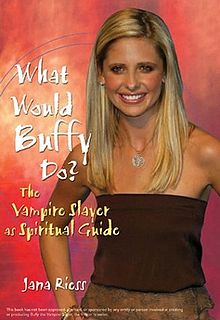
There has been a lot of discussion about various aspects of Buffy the Vampire Slayer, but surprisingly, very little about the spiritual aspects of the television series and pop culture phenomenon. Thankfully this topic has been explored capably by Jana Riess in her book What Would Buffy Do?: The Vampire Slayer as Spiritual Guide(Jossey-Bass, 2004). Below is an interview with Jana from a press kit accompanying the book, but you can also listen as she also explores additional topics, including Buffy’s postmodern religious pastiche, various treatments of the soul, and how to deal with the monstrous other as well as our own inner mosnter in TheoFantastique Podcast 2.5.
Q: You were once embarrassed to admit that you enjoyed BTVS. How does a once-closeted Buffy watcher make the leap to writing a book about the show?
A: Now I’m just embarrassed that I was ever embarrassed. I proudly proclaim that Buffy is the best show that’s ever appeared on television. The first time I saw it, I was surprised by its depth and taken in by its clever, rapid-fire dialogue. I thought, “I’m supposed to be a scholar! How can I love something as unlikely as Buffy the Vampire Slayer?” Then, I realized that some of the best conversations that my friends and I had about ethics, spirituality, and religion were sparked by scenes from Buffy. I read some of the tremendous interpretive work that’s been done on the show, and realized that I had something to contribute.
Q: What are some of the spiritual themes you’ve identified in the show?
A: Buffy is a complex and nuanced series, full of ambiguity. It offers no clear-cut answers, but it takes moral and spiritual issues very seriously. I’m particularly interested in the theme of self-sacrifice in the series. Buffy is a superhero who continually subjugates her own desires to serve the greater good and save the world. And she’s not the only one: Xander, Angel and even Spike teach us how such sacrificial love is the core of morality.
Forgiveness, redemption, consequences, and the role of humor, are a few other themes. My favorite chapter is about how death is our gift. It draws on the show and on Buddhist and Christian spirituality to demonstrate that the unavoidable reality of death should add joy and meaning to our lives and relationships.
Q: Which episodes impressed you the most with their handling of spiritual or moral issues?
A: Some of the season finales—“Prophecy Girl” (1.12), “The Gift” (5.22) and “Chosen” (7.22)—explore what it means to lay down our lives for others. The season six finale “Grave” (6.22) is the most gorgeous expression of the Christian Passion that I’ve ever seen on TV: Xander saves the world through stubborn unconditional love and a willingness to endure ritual wounding to express that love. I also appreciate the episodes that address redemption, which on Buffy and Angel is something that we create for ourselves through the selfless deeds we do for others. Willow’s quest for redemption in season seven, and Faith’s earlier struggle, are unforgettable story arcs. It’s no accident that the one who helps Faith on the road to atonement is Angel, whose whole life is defined by his struggle to make amends.
Q: How prominent are Buddhist themes in the show?
A: Although Buffy creator Joss Whedon is a self-professed atheist, I think he might also be a Buddhist, and those two things are not incompatible. I see strong Buddhist themes in Buffy and in Angel—the shifting nature of reality as perceived by the self, the tension between attachment and non-attachment, the privileging of direct experience over received tradition. Both Buffy and Angel are bodhisattvas, individuals who forsake their own chance at nirvana in order to save others. They’re all about mindful compassion and service.
Q: How is organized religion portrayed on the show?
A: The show takes an eclectic and cheeky approach to religion, mixing Christian symbols, Buddhist themes, Wiccan ethics, and sprinkled references to Judaism. While not religious per se, Buffy is deeply spiritual, and understands the real purpose of religion. More than creeds, dogmas and institutions, religion is about community— something Joss Whedon understands remarkably well.
Organized religion is not always portrayed positively—as Buffy says, “Note to self: religion freaky.” The show mirrors the approach of Generations X and Y, standing aloof from institutional religion, but maintaining a fascination with personal spirituality. In season four, for example, Buffy is asked whether she’s accepted Jesus Christ as her personal savior. She answers that she meant to, but got too busy. Well, she’s been busy saving us from demons night after night! She never stops acting as salt and light, though she rejects the outer trappings of religion.
Q: Is Buffy a moral exemplar?
A: Buffy is usually an outstanding role model. At times she descends into her own selfishness or pain, as we all do, and makes poor choices. What makes the show so real is that Buffy makes mistakes, learns from them, moves on . . . and then may make the same mistakes again. The flaws in her character speak to me just as much as her nobility does. But when the chips are down – and are they ever up in Sunnydale? – Buffy comes through every time. She dies twice to save humanity, and sacrifices her time and talents 24/7 to fight our monsters. I’m glad she’s on our side.
Q: Would Buffy read your book?
A: Nah. She’s far too busy with the slayage. But this book can help the rest of us to understand our own mission and calling. We are “chosen ones” too—chosen to live meaningfully and to contribute something to this world.
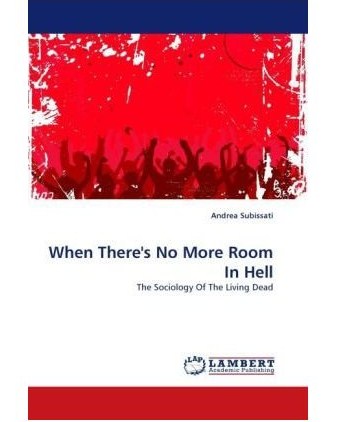
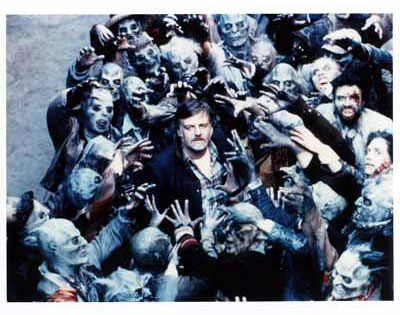
One of the great things about having a niche blog like this one is finding fellow academics exploring the horrific and fantastic. This was the case with Andrea Subissati who wrote her MA thesis When There’s No More Room in Hell on the sociology of zombies, since published as a book through Lambert Academic Publishing. Thankfully I was able to track Andrea down, and she made some time in her schedule to discuss her thesis, and further thoughts on zombies and popular culture.
TheoFantastique: Andrea, thank you for your willingness to discuss your book and helping us understand some of the meaning of zombies in our culture in greater depth. Your book came out of your MA in Sociology at Carleton University. How did you develop a research interest in this topic, and how did you persuade the university to allow you to focus on this for a thesis project?
Andrea Subissati: Thanks, John. When I started my MA, I intended to write my thesis on the recent resurgence of traditionally “domestic” pastimes among young women; knitting in particular. Throughout the course work portion of my studies, I came across Wes Craven’s The Serpent and the Rainbow, which led me to Wade Davis’ ethnographies on zombies in Haitian Vodoun communities. I became intrigued by the transformation of the traditional mythological zombie to their horror movie counterparts, and this transformation or “Americanization” became the foundation for my thesis.
I was further compelled to write on this topic because at the time I started writing (2007), it was apparent that zombies were more popular than ever and were spreading to other forms of media, including television, video games and classic literature. And yet, in spite of their popularity, there were surprisingly few academic resources that gave zombies as much analytical weight as other horror movie monsters, like vampires or mummies. All these factors made a compelling argument for an academic thesis on the cultural study of zombies, and my supervisor was actually eager to oversee such a relevant and as of yet untapped topic in sociology.
TheoFantastique: What analytical strands do you bring together in your analysis of the zombie, particularly Romero’s defining work on this cultural icon?
Andrea Subissati: Cultural materialism is a method for analyzing literature within a Marxist framework, one that focuses on conflict and power imbalances portrayed in text. I use this viewpoint to argue for the critical merit of these films as radical texts that have potential to inspire critical thought about real social issues including consumerism, racism and mistrust in military authority (to name a few). I also draw from tenets of active audience theory to focus my analysis on the analytical potential of the fans and to keep this as distinct from the intentions or motivations of the filmmaker.
TheoFantastique: Many commentators and critics have noted Romero’s critique of consumerism in his zombie films, particularly Dawn of the Dead. In your analysis do you see a variety of critiques in this regard, and what else can we understand Romero to be offering by way of cultural critique through his very different approaches to his canon of zombie films?
Andrea Subissati: Of what little academic resources I was able to find on zombies, the elements of consumerism in Dawn of the Dead were the most popular. The analogy of zombies to shoppers is rather overt, but there are plenty of other critical topics tackled in that movie, particularly in Peter’s theological remarks about his Vodoun granddaddy about “When there’s no more room in hell”. I found that observation to be particularly profound which is why I chose the quote as the title of my book.
I believe that all of Romero’s films featuring zombies are uniquely poised to inspire critical thought because instead of focusing on the undead rising, they focus on the people dealing with the undead rising, and the cultural trappings that keep them from being able to cooperate and survive the onslaught. More and more zombie movies today are focusing their gaze to the zombies themselves and all of the effort goes into making them faster, scarier, grosser, etc. For me, the best thing about Romero’s treatment of zombies is how he is able to show the monstrosity that human beings are capable of, which is a whole lot scarier than a brain-eating corpse!
TheoFantastique: I have been interested in the academic study of the Zombie Walk phenomenon, from sociological, anthropological, and perhaps even religious studies perspectives. I was pleased to see you mention this phenomenon twice in your book. Do you have any thoughts on the meaning of this experience for participants and what they may be saying about issues related to both personal identity and their feelings about society?
Andrea Subissati: The zombie walk is such a fascinating combination of fan convention, flash mob and guerrilla theater. I love it precisely because it’s so difficult to explain. Certainly, there is good clean fun to be had. As a fan of the genre, it is pretty enjoyable to see familiar streets and local landmarks overrun with the living dead, but beyond that I feel that the walks are an expression of the special connection that people feel to zombies. So much of modern life treats human beings like a mindless cannibal horde: junk culture, fast food, and overpopulation come to mind as examples. It is almost as though the zombie walks are a cathartic parody of urban life, expressed in a manner that is simultaneously radical and playful.
TheoFantastique: If we could, let’s move beyond your analysis of Romero’s zombies to these creatures in another context. As you know, The Walking Dead television series was very popular for the AMC network last year, surpassing their expectations for the number of viewers. This seems to indicate that the zombie is a figure of interest beyond the confines of the horror and zombie subcultures to a more general audience. With the challenges we face in society at the present time, perhaps similar or worse to that of the late 1970s when Romero produced Dawn of the Dead a decade after the counterculture, why do you think the zombie in The Walking Dead has resonated with so many people?
Andrea Subissati: I think it’s important to note that The Walking Dead TV show was destined to succeed from the start. The graphic novel series has been celebrated since its first issues in 2004, and following the critical acclaim of Mad Men and Breaking Bad, AMC had been established as a juggernaut on the syndicated TV scene. The TV show debuted in 120 countries and deployed a tremendously expensive and far-reaching marketing campaign prior to its release. This story of production and distribution is such a far cry from Romero’s struggles with Night of the Living Dead which was released independently and grew to notoriety and critical acclaim underground.
In my opinion, something important and subversive was lost in The Walking Dead’s journey from graphic novel series to network TV. I think part of the reason The Walking Dead is enjoying more mainstream popularity than the B-movie celluloid of yesteryear is has to do with the subject matter being polished, paraphrased and made more palatable for a TV audience. To put it more simply (and less snobbishly, I hope), I fear that the novelty and violence of the show is what is resonating with audiences rather than the subversive themes that made Romero’s series what it is. I really enjoy the graphic novel series so I am hopeful that the great characters and plotlines will shine in season 2, but backstage tensions and Frank Darabont’s sudden departure are worrisome.
TheoFantastique: In your bio on the back cover of your book I was struck by the fact that you are smart enough to look beyond the academy “in favor of regular paychecks.” One of the ways you do this is through your Undead Clothing company. Can you talk a little about how this came about, what it involves, and how readers can purchase some of your work in this area?
Andrea Subissati: Undeadclothingco is like the evil twin sister to my master’s thesis: they were both born out of the stress, strain and sweat that came from undergoing graduate studies. I knitted on the bus, I crocheted on my breaks and I sewed while I listened to Romero’s commentary of Dawn of the Dead for the hundredth time. The result of all this creativity was a household that had more crocheted slippers than it did feet to fill them, so I started selling my handiwork online and at craft sales in Ottawa.
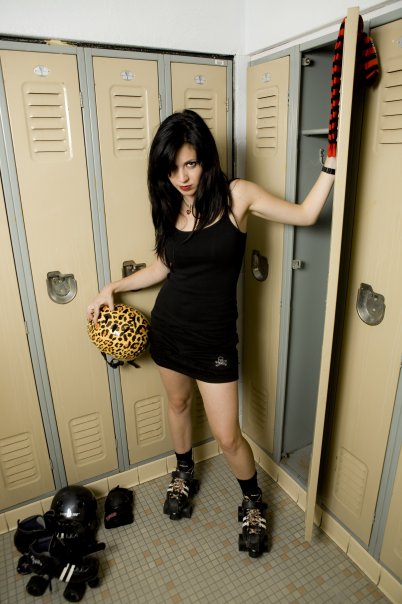
Sadly, abandoning academia also meant getting a 9-5 job in an office, where idle hands are looked upon less favorably. Nowadays, my precious spare time is consumed with writing (including work on a chapter for your forthcoming anthology [The Undead and Theology]), roller derby (keeping me off the mean streets of Toronto) and the occasional guest stint on the Rue Morgue podcast (available on iTunes and streaming off the Rue Morgue website). On the odd chance that free time and inspiration strike at the same time, you can find my handmade goodies listed at undeadclothing.ca and on my etsy site (http://www.etsy.com/shop/undeadclothingco?ref=pr_shop).
TheoFantastique: Andrea, thanks again for your time. I enjoyed your book, and am looking forward to your contribution to the anthology. Keep up the great work among the undead.
The SW/TX PCA/ACA area chair invites papers on Comics, Graphic Novels and Popular Culture.
Any Aspect of Comics and Graphic Novels in Popular Culture will be considered.
Possible panel/discussion topics
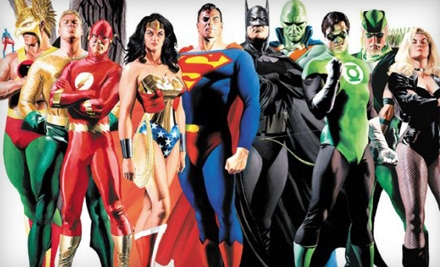
With the recent rise in the Superhero movies, a discussion of 2011’s summer of the superhero or superflop would be welcome eg., Captain America, Green Lantern, Thor, X-Men First Class. What is the future of the superhero based movie?
Pedagogical approaches to teaching graphic novel content. This has become an increasingly important part of comic studies and the area chair seeks those scholars who would like to present on this topic.
Zombies and Vampires in comics continue to rise in popularity. Why are these monsters ideally suited for four colored pages?
Other topics:
Sequential Art and Storytelling
Manga, Anime and the Movies
Comic-Conventions-Fan Culture
Particular Artists or writers (Bendis, Steranko, Kirby, Everett, Niles, etc)
The Rise of the Graphic Novel
What is a Graphic Novel?
History of Newspaper Comics!
Gay Characters in comics
Film, Television, Animation and Superheroes!
Adapting Graphic Novels for the Screen
Racism and the X-Men
Spiderman as the Everyman
Cartoon Network: Good or Bad for Comics
Comics and Philosophy
Graphic Novels as outlets for social justice (i.e., World War III )
Comics as political satire (e.g., Tom Tomorrow, Addicted To War )
Horror Comics
The Resurrection of Captain America-Why NO comic character ever stays dead?
DC, Marvel, and Comic corporations
Comics Studies and Film Studies: How do the two intersect?
The Definition of the Superhero
Indies and their role
Comics and Graphic Novels around the world (e.g., Tintin, Asterix).
The scholarly study of Graphic Novels/comics in the academy
Libraries and Graphic Novels
Proposal submission deadline: December 1st 2011
Please submit your title, and 100-250 word abstract through our website database which can be accessed at http://conference2012.swtxpca.org
33rd Annual Conference Southwest/Texas Popular/American Culture Association
February 8-11, 2012 at the Hyatt Regency Hotel & Conference Center in
Albuquerque,
New Mexico.
Submission Deadline: 12/1/11
Priority Registration Deadline 12/31/11
Conference Hotel:
Hyatt Regency Albuquerque
330 Tijeras NW,
Albuquerque, New Mexico, USA 87102
Tel: +1 505 842 1234 or 888-421-1442