New issue of The Journal of Gods and Monsters
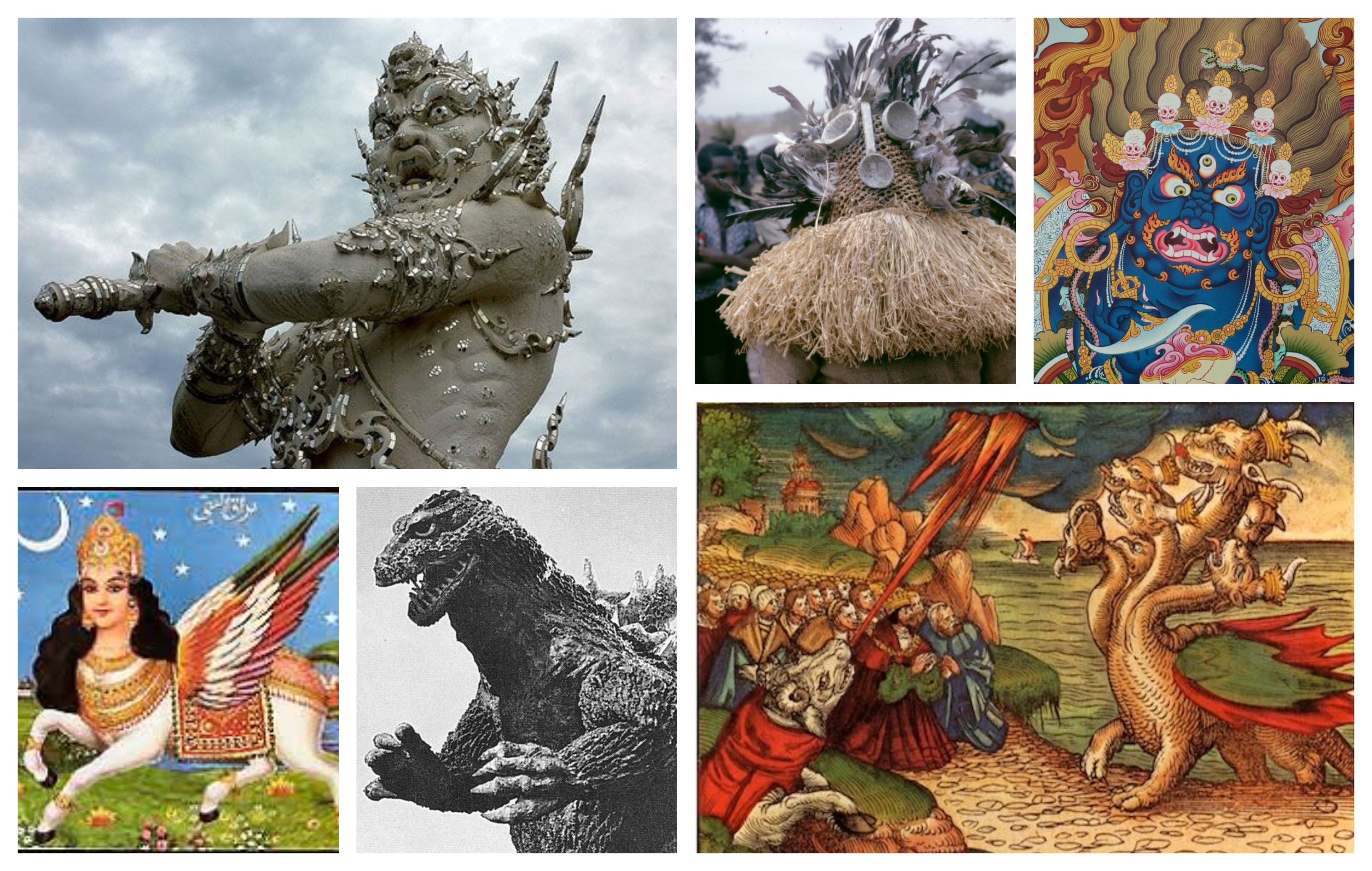
A new issue of The Journal of Gods and Monsters has been published, Vol. 3, no. 1 (Winter 2022). You can view and download here.
A new issue of The Journal of Gods and Monsters has been published, Vol. 3, no. 1 (Winter 2022). You can view and download here.
If you have been reading this blog for any length of time it will come as no surprise that I am a huge fan of Guillermo del Toro. I’ve written numerous blog posts about his work (here’s an example), and edited an anthology on it titled The Supernatural Cinema of Guillermo del Toro: Critical Essays. For this reason I have been anticipating the Netflix release of his feature length stop-motion animation films Guillermo del Toro’s Pinocchio. What follows are some reflections of mine after my initial viewing listed by major topic.

Characteristic del Toro aesthetic: As with all of his work, there is a certain visual aesthetic that is easily discerned in this film. I noticed it in particular in a few places where the “monster” characters are depicted. Del Toro includes his own version of the Blue Fairy common to many depictions of this story, but for del Toro this comes by way of the Wood Sprite, and this character’s sister, Death. Both are blue and in keeping with the Blue Fairy, but that’s where the similarity ends. Each figure has several wings, and the wings have eyes one them. For those familiar with del Toro’s work, the look of these characters are reminiscent of the Angel of Death in Hell Boy II. In addition, the design of the whale that swallows the main characters goes far beyond an angry sperm whale as conceived of in the classic Disney treatment of this story. Del Toro’s depiction is more monsterous than whale-like, including strange orifices that protrude from the creature, a part of its design that makes it more sea monster than seafaring mammal.
Father-Son dynamics: In many of his films del Toro plays with the often difficult relationships between fathers and sons. This is a major facet of this film, where a deeply flawed father grieving years after the death of his son carves Pinocchio out of wood in a fit of drunken anger. During their initial relationship, Geppetto is a seriously flawed father, making him appear very human, who must wrestle with himself as much as his son in what he expects him to be. For me as a father who has his own share of difficult relationships with sons, and who has lost one son to death years ago, I found this treatment of Geppetto and his relationship with Pinocchio to be not only very realistic, but extremely moving.
Fascism and war: As in The Devil’s Backbone and Pan’s Labyrinth, fascism and war are found as a background and context for this story. Their presence makes the characters struggle to find their place in their midst, either through acceptance and participation, or as innocents who must navigate and survive in the presence of this evil. The impact of the violence of fascism and war and what this means for the human condition make for an interesting addition to this previously familiar story.
Religion and death: Perhaps the most important elements for me in this film were the depictions of religion and death. I’ve written quite a bit on del Toro’s lapsed Catholic background and how this continues to find expression in his work even as an atheist. It is fascinating to watch del Toro bring the crucifix into this film in two key ways. First, Geppetto has been commissioned to carve and later repair a crucifix for the local church. This is the first public place Pinocchio walks into after coming to life, and he walks forward toward the crucifix with worshippers on either side seemingly praying to the wooden figure in front of him. After experiencing the town’s fears about a living puppet in their midst, standing in the church while his father works on the crucifix, Pinocchio asks Geppetto “Why do the like him and not me?” From Pinocchio’s perspective it’s a fair question, one wooden figure inquiring about differences in reception toward another. For those familiar with del Toro’s work, an important religious symbol and figure are incorporated into the narrative as the director continues to work out his understanding of the relationship between art and religion. The second of the use of the cross comes by way of Count Volpe who has been humiliated by Pinocchio when the puppet did not perform at his puppet show according to script for Mussolini, and as a result of the traveling show theater was burned by fascists. Volpe wants to take his revenge on Pinocchio, so he ties him to a cross and prepares to burn the puppet “alive.” We might wonder why del Toro choose to have Pinocchio on a cross in this scene. He could have just as easily, and more recognizably, had him tied to a stake for burning. Is this an instance of a moment reminiscent of Bride of Frankenstein where the cross appears, and thereby another example of del Toro incorporating the symbolism of his prior Catholic background? Finally, death is an important facet of this treatment of the story, and one that makes it come close to moving beyond family entertainment. (This isn’t your parents’ Disney film here.) Questions of death, mortality and immortality are front and center, forcing us to wrestle with life’s choices and the embrace of those we have in the moment, for tomorrow they may be gone.

There has been a lot of commentary and buzz about this film. It seems to have been well received by the viewing public, and there is even talk of the possibility of an Academy Award nomination for it. It has even raised the bar for stop-motion animation, no mean feat given the amazing work of studios like Laika. Not bad for a project that took fifteen years to come to the screen, and was turned down by several major studios until Netflix took it on. Fans of Guillermo del Toro will not be disappointed by this unique twist on a classic tale. You’ll never look at this puppet in the same way again.
I had a great conversation with LMK Sheppard about her new book that touches on some great horror films during an important historical and cultural period, and involving certain new religions. A topic that has relevance and application in the present as well.

I recently learned about a book that appeals to me in a number of ways. It is titled Faith Horror: Cinematic Visions of Satanism, Paganism and Witchcraft, 1966-1978. The subject matter of this book dovetails with the two expressions of my work in religion, specifically certain new religious movements, and religion in pop culture as it relates to horror. The time period covered in the volume also relates in part to a time when I was taking in a lot of horror growing up, things which I’ve been able to reflect on academically as an adult. I’m hoping to get in touch with the author for a video discussion to be posted here. Book info below.
Faith horror refers to a significant outcropping of mid-1960s and 1970s films and adaptative novels that depict non-Christian communities of evil doers and their activities. Before this period, the classical horror villain was ultimately ineffectual. The demonic monster was an isolated, lone individual easily vanquished by an altruistic Christian protagonist. Alternatively, the villain in faith horror is organized into identity-affirming, likeminded religious congregations that successfully overcome protagonists. Faith horror was a cinematic trend that depicted Satanism, witchcraft and paganism during a cultural deliberation over the “Death of God,” which debated the legitimacy of alternative spiritualities and the value of alliance to any faith at all. Covering popular works like Rosemary’s Baby, The Wicker Man and The Omen, this book regards these films and their literary sources in relation to this historical moment, providing new ways of understanding both the period and the faith horror movement more generally.
Foreword by Peter Laws 1
Introduction 5
Section I. Witchcraft, Satanism and the Apocalypse
One. Consumerism, Secularism and Faith in Rosemary’s Baby 27
Two. Predestination, Secrecy and Conspiracy in The Omen 56
Three. The Cult of Youth in the “B” Horror Film 78
Section II. Paganism as an Alternative Culture
Four. Ritual and the Rural in Anglo-American Co-Productions 111
Five. A Clash of Convictions in The Wicker Man 141
Six. Paganism, Witchcraft and the Feminine in American Horror 165
Conclusions, After-Thoughts and Legacies: The Conjuring, The Witch, Midsommar and the Post-Millennial Faith Horror 195
Chapter Notes 229
Bibliography 243
Index 253
LMK Sheppard is a film, television and media lecturer at Palomar College. She has published an article on Rosemary’s Baby for a special edition of Film Journal entitled “Screening the Supernatural.” She lives in Norwich, Norfolk in the United Kingdom.
Brandon Grafius is one of the best current voices at the intersection of horror and religion. In this conversation he discusses his book Lurking Under the Surface: Horror, Religion, and the Questions That Haunt Us (Broadleaf Books, 2022). Brandon is associate professor of biblical studies at Ecumenical Theological Seminary in Detroit, where he teaches Old Testament and Hebrew. A film reviewer and columnist as well as a religion scholar, he is a frequent podcast guest, often speaking about film, horror, and religion. His previous books including “Reading the Bible with Horror,” and a handbook on the film THE WITCH.
Brandon R. Grafius: https://www.etseminary.edu/brandon-r-grafius
Matthew John Paul Tan discusses his book Redeeming Flesh: The Way of the Cross with Zombie Jesus. He shares how the idea of the zombie, and Zombie Jesus, can be a helpful tool for theological reflection. Tan is Dean of Studies at St. John Vianney College Seminary in Australia. He is also is a theologian based in the Archdiocese of Sydney, an author and adjunct senior lecturer in theology at the University of Notre Dame Australia, and a member of the Archdiocese of Sydney’s Ecumenical and Interfaith Commission.
Redeeming Flesh: The Way of the Cross with Zombie Jesus
My previous blog posts related to Zombie Jesus
Featuring a roundtable discussion with Douglas E. Cowan on his book The Forbidden Body: Sex, Horror and the Religious Imagination (NUY Press, 2022). In addition to Cowan, participants include Laura Ammon, Associate Professor of Religion at Appalachian State University; Brandon R. Grafius, Associate Professor of Biblical Studies at Ecumenical Theological Seminary; and James F. McGrath, Clarence L. Goodwin Chair in New Testament Language and Literature at Butler University. The conversation is hosted by John W. Morehead, an independent scholar who blogs at TheoFantastique.com.
The Forbidden Body: https://nyupress.org/9781479803118/the-forbidden-body/
Laura Ammon: https://philrel.appstate.edu/faculty-staff/laura-ammon
Brandon R. Grafius: https://brandongrafius.com/
James F. McGrath: http://blue.butler.edu/~jfmcgrat/
John W. Morehead: https://www.theofantastique.com/
#DouglasCowan #horror #religion #body #sex
I recently had the opportunity to have a conversation with Doug Cowan on his new book The Forbidden Body hosted by the Mark Twain House & Museum. That conversation is available in the video.
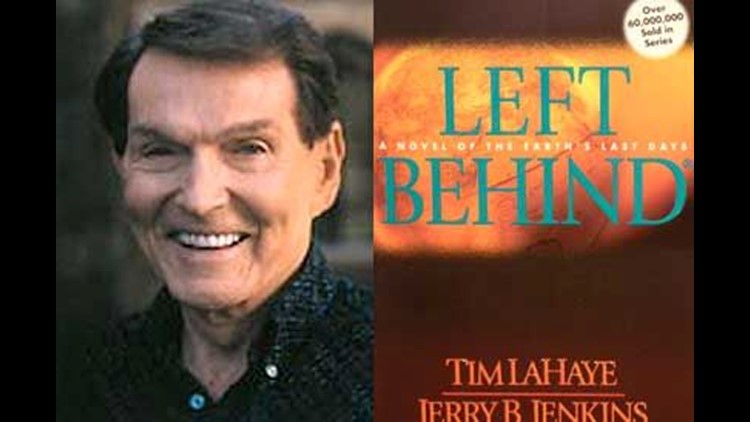
For the last couple of months I’ve been doing research as I draft a book proposal for a potential co-authored volume on the New Christian Right and Satanic Panic. The chapter I’ve been focusing on lately deals with end-times anxiety as a formative element of NCR fear, evangelistic impetus, and revenge on the ungodly. As part of my research I thankfully stumbled upon an article by Brian Froese in Direction journal titled “Monsters in the Church: Marking the Body in Evangelical Horror.” This is a wonderful piece in the most unlikely of sources. Direction has a Mennonite Brethren connection, and I never would have expected an essay acknowledging evangelicals drawing upon horror in the Left Behind book series, and then noting the importance of the body in such pieces of fiction. Here are a couple of excerpts that illustrate the author’s approach and insights:
“In this reading of body and horror in evangelical Christian end-time literature, what appears to be an evangelical preoccupation with conspiracy, international politics and finance, and foreign policy is congruent with the task of destabilizing totalizing narratives in late/post-modernity. Likewise, the often-reported evangelical fixation on the sexual practices and identities of others—even granting the power to destabilize civilization to the private life of a minority—may express not so much Victorian frigidity but rather a concern joined with a particular mythopoetic reading of the stability of the cosmos centered on bodily presentation.”
“I suggest that evangelical concepts of body in twentieth-century American end-time literature go beyond merely inscribing the body with social anxieties and place it (with those inscriptions) at the center of a final mythic cosmic drama.”
I think Froese is onto something here, and I hope to bring some of these insights into my book project in various places. There is one place where I think the author might need to rethink things from the state of affairs when this piece was published in 2010. Froese picks up on the subject of liminality and horror and writes:
“What typically sets a horror story in motion is a liminal transgression: entering a haunted house or opening a grave. In evangelical end-time horror there is no liminal transgression of this sort as the Rapture is typically the plot device that sets up the terrors of the tribulation. However, one’s own body is liminal and crossed with a satanic mark in this mythic cosmos.”
The body is indeed a liminal space in Left Behind, as well as in contemporary evangelical concerns over any number of pop culture and political areas where fears of Satanic influence are seen. But the concept of liminality should be expanded. In light of Christian nationalism so prevalent in American evangelicalism, I suggest that the body politic also represents another source for the cosmic drama to play out in the minds of the New Christian Right as individuals see themselves in conflict with demonic forces working to corrupt a sacred Christian nation.
If you want an interesting take on one of the most influential collections of evangelical horror of the last few decades, read Froese’s essay.

There is an intriguing article at Aeon by Stephen Asma on the importance of imaginative cognition. In a desire to move beyond the binary of reason and emotion, facts and values, he writes:
“After years of working on the problem, and countless conversations, it seems to me that what is required is a third path: to enter the chasm itself, or descend deeper into a submerged mythopoetic cognition, and develop an entirely new way of understanding learning that embraces the true engine of the mind – imagination.”
Asma has been featured on this blog previously in connection with his writing on monster theory and his book On Monsters. You can read the Aeon piece titled “Imaginology” for more on that topic.



