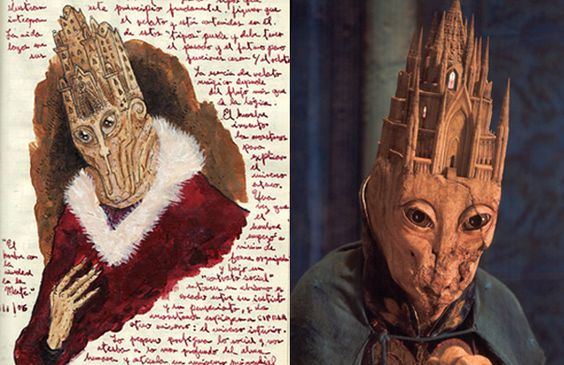
The current issue of Rue Morgue, July 2016, includes an article by Dave Alexander titled “Beyond the Walls of Bleak.” It is inspired by the upcoming tour of some of Guillermo del Toro’s collection in his Bleak House called “At Home with Monsters,” beginning with the venue of the Los Angeles County Museum of Art. (For more background on the exhibit download the PDF file.) In one segment of the article Alexander introduces a quote from del Toro:
“As the show’s title suggests, to understand At Home with Monsters one has to understand the function of Bleak House and its contents. Del Toro regards it as sacred space.
‘It’s where I literally recharge my batteries. I feel a change in my energy, and it’s incredible and inspiring for me, so objects are not there as a collection, they are almost like talismans, they are relics. [They are] holy relics the way that Catholics have an image of Saint Joseph or Saint Peter whoever they worship – that’s the value of these things for me. I have a Saint Gill-Man from Creature From the Black Lagoon or Saint Dick Smith or Saint Dr. Pretorius – images of characters that are a part of my inventory of saints. When people say I am a collector, I feel as if collectors are obsessed with the object, of its value, specifically in the market of collecting. I don’t give a shit about any of that! If I buy a toy, I take it out, I play with it, I put it on the shelf to look at, it’s not hidden. No piece of my collection is hidden from view. Everything is on display…[because] it’s an expression of myself.'”
I resonate with two aspects of this quote. First, del Toro equates his experiences with the items in his collection with a religious or spiritual one, and the items themselves are not just collectibles, they are religious relics. In several previous posts here at TheoFantastique I’ve drawn attention to the religious or spiritual aspects of the fantastic, and this dovetails with del Toro’s own perspective and experiences. Del Toro said something similar to his comments at Rue Morgue on this topic in a recent Q&A with the media at the Fantasia Film Festival that is even more explicit: “I’m not a collector. I’m a religious man.” Second, as a collector myself I’m glad to see del Toro’s approach as a parallel to my own in finding value not in the potential resale of a given item, but instead in the play and experience of the item that constitutes its value.
There is a very interesting article over at The Nation online titled “Can You Spot the American Military in Your Favorite Sci-Fi Film?” by William Astore. The author bring his experience a retired Air Force officer and lifelong science fiction fan to his analysis, and discusses his changing perceptions of the military over the years as perceived through this genre. His take is an interesting one given the shift from the positive portrayals and perceptions of the military in post-World War II science fiction cinema to more recent depictions of the military industrial complex, especially after 9/11. Here’s an excerpt:
In the aftermath of the invasion of Afghanistan and the “shock and awe” assault on Iraq, the never-ending destructiveness of the wars that followed, coupled with the US government’s deployment of deadly robotic drones and special ops units across the globe, alien invasion movies aren’t—at least for me—the campy fun they once were, and not just because the latest of them is louder, dumber, and more cliché-ridden than ever. I suspect that there’s something else at work as well, something that’s barely risen to consciousness here: In these years, we’ve morphed into the planet’s invading aliens.
Now that The Conjuring 2 is in theaters it has become the object of praise as well as critique. An article at iDigitalTimes offers the latter, particularly since the film is promoted as being “based on a true story,” and that it involves the careers of notorious parapsychologists Ed and Lorraine Warren. (See my past critical interactions with the Warrens here, and this critical essay on the Warrens at Week in Weird.) An excerpt from the iDigitalTimes article:
By lashing itself to real life, The Conjuring 2 instead invites extratextual scrutiny and takes on the ugly, garish light of hagiography. By endlessly trumpeting its real-life basis, The Conjuring 2 cheapens its own accomplishments, spending the capital built with excellent writing and direction on real-life frauds and phonies who don’t deserve it.
This is the 200th anniversary of Mary Shelley’s Frankenstein. This story continues to capture our imaginations so many years after it was first conceived. For some insights as to why, enjoy this video featuring Leo Braudy, USC Professor in English, Art History and History. And don’t forget to wish the Creature a happy anniversary.
Dangerous Minds has a piece that draws attention to the paintings used to introduce the stories in the television series Night Gallery. The essay includes a little background information, and images from several of the paintings, including the one above titled “Escape Route.” All of the paintings can be seen at the Rod Serling’s Night Gallery website.
A new documentary on practical effects is coming. It’s called Creature Designers: The Frankenstein Complex. See the trailer above. Beyond the general subject matter that connects to my passions, for me, the initial quotes were priceless in connecting to the broader themes of this blog. Guillermo del Toro says, ““I think we need monsters to explain the world, because without them, we cannot explain our place in the universe.” Alec Gillis rightly notes that “Every culture and religion has had their dark force and their evil entity.”
Visit the documentary’s Facebook page for news and updates.
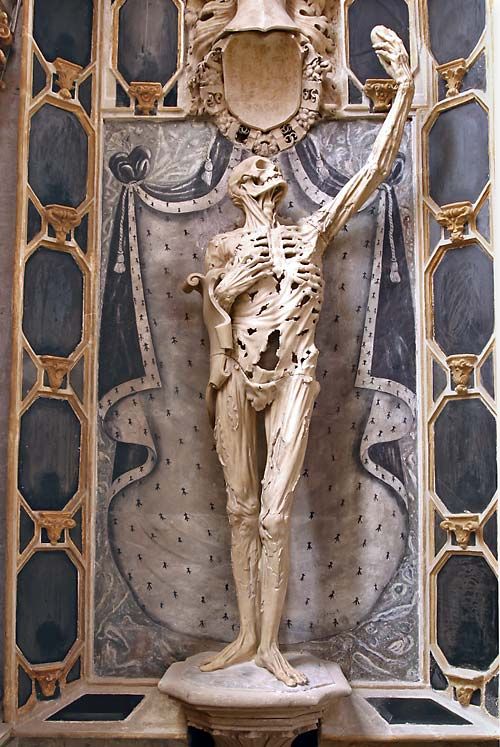
AtlasObscura has a nice piece on memento mori art that includes some photos of different approaches to this. I am fascinated by macabre art and memento mori, and those similarly inclined can find the piece titled “In the 16th Century, the Best Office Decor Was a Tiny Rotting Corpse.” On the sculpture in the photo accompanying this post:
One of the more striking full-sized memento moris of the era is the statue of René de Chalon, a French prince who died at 25 in the 1544 siege of Saint-Dizier. Known as a transi — for its depiction of human transience — the sculpture shows the prince’s desiccated corpse holding his own heart aloft.
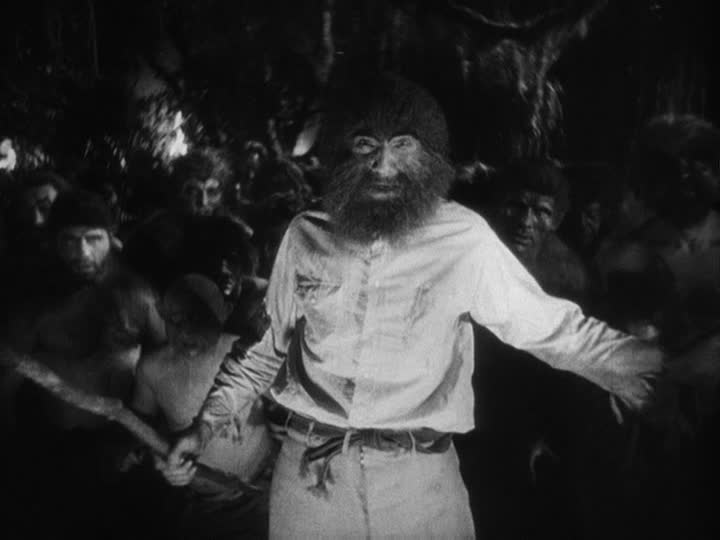
I recently came across two items that made me give new attention to Island of Lost Souls (1932). The first was a commentary on the film that involved John Landis, Rick Baker, and Bob Burns. Their discussion makes for an interesting take on a neglected classic horror film. The second was a series of news items that circulated and reported on current scientific experiments where animal-human hybrid embryos have been created in the search for the cure of disease. See NPR’s reporting on this here. UPDATE: The Huffington Post has an interesting podcast discussing this in “The Island of Dr. Moreau for Real.” The idea of these hybrid experiments immediately brought to mind a line from Island of Lost Souls uttered by one of Dr. Moreau’s creatures played by Bela Lugosi:
Dr. Moreau:
Have you forgotten the house of pain?
Sayer of the Law:
You! You made us in the house of pain! You made us… things! Not men! Not beasts! Part man… part beast! Things!
It is frightening when life imitates art in this fashion. But it provides interested readers with an opportunity to watch Island of Lost Souls, available for free on YouTube.
Camille D. G. Mustachio
contact: kaijupopculture@gmail.com
Kaiju is a familiar trope in film and television that places giant monsters in direct conflict with fellow monsters and/or everyday citizens. While a larger-than-life creature that attacks Tokyo is likely the most familiar form of kaiju, additional iterations include apes, dragons, dinosaurs, and even robots. Kaiju as a genre has evolved along with cinema; technical developments no longer require men stomping around in rubber costumes as CGI enables bigger and more frightening monsters to haunt our screens. With a timeless kitsch quality, kaiju is solidly placed within our collective pop culture psyche. We seek to create an anthology of original essays that explores technical, thematic, mythological, cultural, and historical aspects of various kaiju.
Some potential topics may include:
*individual monsters including but not limited to Godzilla, Mothra, and Daimajin
*folklore
*regional kaiju
*parody
*fandom
*cosplay
*merchandise
*translation
*adaptation from page to screen
*American pop culture endurance
*nostalgia
*development of film, television, comics, and gaming
Send abstracts of 200 words to kaijupopculture@gmail.com no later than Friday, July 1, 2016. Final articles of 5,000-6,000 words are to be MLA formatted (8th edition) with American English styles and spellings. Refrain from using images from Toho films.
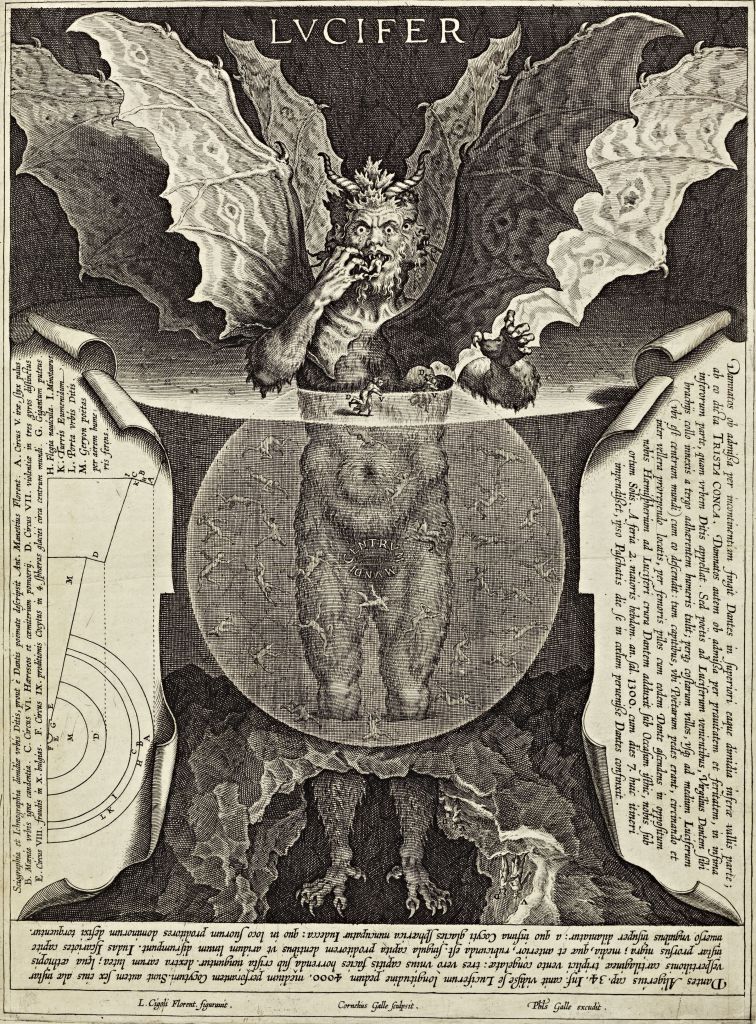
An exhibit from 2014 showed up today in my Google news feed from a Quartz piece called “Five hundred years of Satanic art” that draws attention to an
“exhibition at Stanford University’s Cantor Arts Center, ‘Sympathy for the Devil: Satan, Sin, and the Underworld,’ [that] traces Lucifer’s visual history, from his emergence in the Middle Ages as a horned, cloven-hoofed, foul-smelling, diabolical creature of the night to his denuded and largely ironic image today.”
The Quartz link above features images of some of the artwork on display, and the Stanford link above includes a description of the exhibit.
 The current issue of Rue Morgue, July 2016, includes an article by Dave Alexander titled “Beyond the Walls of Bleak.” It is inspired by the upcoming tour of some of Guillermo del Toro’s collection in his Bleak House called “At Home with Monsters,” beginning with the venue of the Los Angeles County Museum of Art. (For more background on the exhibit download the PDF file.) In one segment of the article Alexander introduces a quote from del Toro: