I am a huge fan of the work of Laika Studios in Oregon. They are the premier torch bearers for the legacy of stop-motion animation. They have continued to push the boundaries of technology in animation as it is wedded to artistry and storytelling. For these reasons, I was excited to receive their new book LAIKA: The Magic Behind a Stop-Motion Dream Factory. It comes in the regular and deluxe editions. From their website:
LAIKA: The Magic Behind a Stop-Motion Dream Factory provides an exclusive look behind the curtain at the creative and innovative world of LAIKA Studios. Authored by Ozzy Inguanzo and with a forward by Mark Salisbury, this studio book features never-before-seen artwork, stunning new puppet photography, and interviews with the artists who bring LAIKA films to life, one frame at a time.
I am honored to announce that The Oxford Handbook of Biblical Monsters (Oxford University Press, 2025), is a Horror Writers Association finalist for a Stoker Award in the category of Superior Achievement in the Category of Long Non-Fiction. I had the privilege of co-editing this volume with Brandon R. Grafius, and working with a great collection of scholars specializing in biblical studies and religious studies. We will see how the volume fares when the winners are announced in June!
I’ve posted previously about the decline of Star Trek as a franchise, perhaps more accurately described as a self-caused implosion. In the video included with this clip I was reminded of the great work done by fans in creating their own material, from a series to plans for a film. This material was so good, respecting the canon and incorporating great storytelling that often involved those creative talents who put together various Star Trek series in the past, that Paramount sued these creators and severely limited their ability to produce content. While the studio might argue this was to product copyrighted material, I would argue it was because the fan material rivaled the quality of what the studio was able to produce. Given the tremendous fan response to fan materials in contrast to Paramount productions for several series, I think this is a fair understanding of the situation. So my question to Paramount executives is, after losing millions of dollars on materials that your faithful fan base doesn’t like, why not embrace the creativity of the fan base and invite them into production of canon-faithful material they would embrace and pay to see?
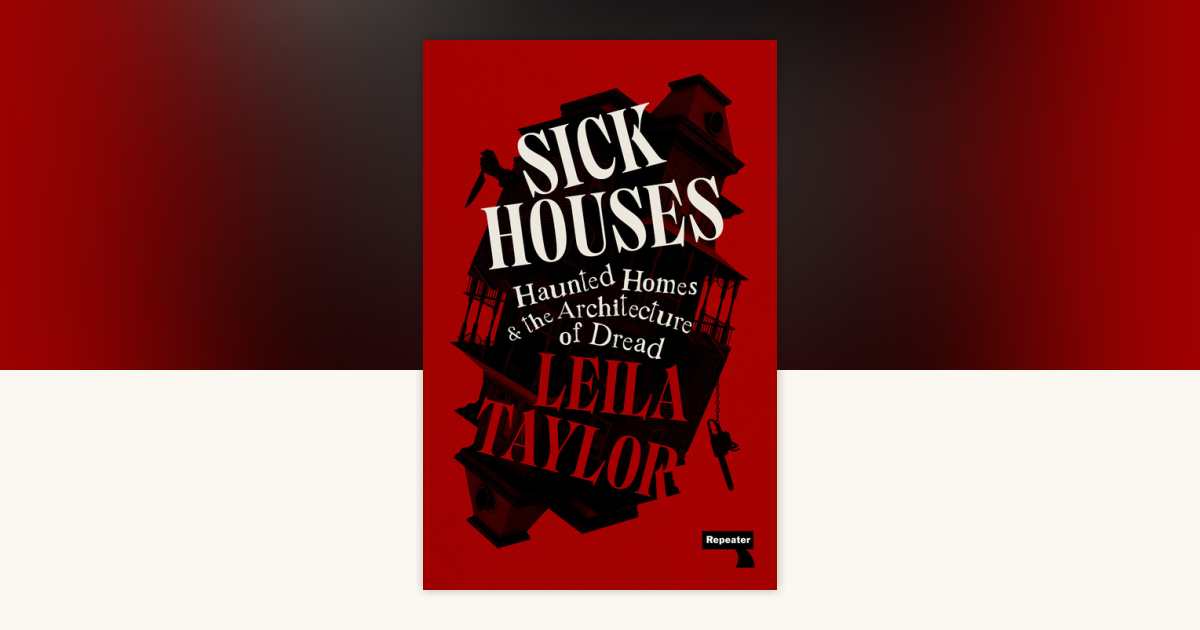
Explores the architecture of haunted houses, uncanny domestic spaces, and how the horror genre subverts and corrupts the sanctity of home.
Horror begins at home.
From family homes in Amityville to Gothic mansions in Los Angeles and the Unabomber’s cabin, houses often capture and contain the horror that has happened within them.
Sick Houses crosses the threshold of these eerie spaces to explore how different types of architecture become vessels for terror and how these spaces, meant to shelter us, instead become the source of our deepest fears. Using film, television, and literature to explain why we are drawn to haunted and haunting places, Sick Houses is a must read for anyone who has ever looked at a house and sensed there might be something unsettling going on inside.
This volume collects chapters written to commemorate the 50th anniversary of Philip K. Dick’s transformative 1974 mystical experiences, through which he ultimately contextualized his influential and posthumously much-adapted science-fiction and speculative fiction. Contributing authors here examine the enduring significance of Philip K. Dick and his work, drawing on diverse scholarly perspectives that engage seriously with his self-understanding as Christian, gnostic, mystic, and theologian. Including contextual introduction and overviews, individual chapters focusing on specific works of PKD (as well as some of their adaptations), critical analysis, and examination of their significance within the life and worldview of PKD and his milieu, this collection continues foundational work that has characterized PKD’s contributions to science fiction and speculative fiction as significant to its increasingly gnostic trajectory, as well as opening new avenues of exploration that situates PKD’s impact within the broader appeal of esoteric worldviews as they have continued to propagate through the counterculture into the mainstream. PKD’s commitment and dedication to Christian belief, faith, and practice, as well as Christian gnosis and mystical experience, are foci of particular interest, and this volume challenges the frequent misconception of PKD as exclusively relevant to Gnostic counter-cultural mysticism. Instead, his esoteric Christian gnosis is identified and analyzed as the basis of his ultimately moral and consistently humanistic theology.
I’m a lifelong Star Trek fan. I remember my dad watching it when I was growing up, and I’m just old enough to have either dim memories of him watching the original airings or catching early syndication. At any rate, I’ve been watching since the early series first put Gene Roddenberry’s secular science fiction vision on the small screen in several incarnations, and later in various cinematic versions.
But while I’m a fan of the franchise I also recognize that it is of varying quality, and in my view it has been in decline for many years. Beyond some of the films with the original series cast being hit or miss, I’ve gone on record previously critiquing the Star Trek 2.0 film reboot as an abandonment of elements of the franchise’s mythos that were important not only in terms of narrative, but also as an important facet embraced by the fan base. This seems to be the case, on steroids, with the new Starfleet Academy series, if the critical reviews are accurate. I’ve shared a video of one review above as an example, but there are others. I recognize that pop culture entertainment needs to be updated for its contemporary social context, but if the culture wars and political commitments are incorporated in so a way that they are accounted for at the expense of its credibility and narrative canon, that’s a problem. As a result, Star Trek will be seen as quickly moving from science fiction icon to unintentional comedy.
Latter-day Saints may not be happy with how their tradition is incorporated into horror films. In 2024 Heretic debuted with a psychological horror tale involving two female LDS missionaries. Now we have Diabolic, a film where “fundamentalist” LDS practices are said to be tapped into to help the traumatized psyche through experiences with the divine.
Author Paul Meehan discusses his book The Alien Abduction Phenomenon: Science, Evidence and the Unknown (Exposit, 2025). Meehan is the author of several books on science fiction, film noir and horror films. A description of the book from its back cover:
News reports, books, articles and films about alien abductions have long captured the public imagination. This book traces the evolution of the phenomenon from the late 1940s flying saucer era and the contactee and occupant sightings of the 1950s to the widespread abduction stories of the 1960s and beyond. It examines how broader social, cultural and scientific contexts have shaped these accounts and offers a critical analysis of their interpretations over time.
Also discussed are the key researchers who have sought to understand the nature and intentions of alleged extraterrestrial beings, or “ufonauts,” while addressing the skepticism about the subject. The efforts of the scientific community to investigate unidentified aerial phenomenon (UAP) and abductions are assessed, acknowledging both the challenges and limitations of such inquiries. Firsthand encounters with non-human entities are examined, attempting to uncover the forces behind these sightings and arguing that there could be unforeseen consequences of ignoring the phenomena.
Brandon R. Grafius is the guest who discusses his new book Scared by the Bible: The Roots of Horror in Scripture (Morehouse, 2025).
You may know the Bible as a testament of faith. But within this sacred book are also the world’s first horror stories.
Conventional wisdom has it that the origins of the horror genre are found in the nineteenth century, in works like Frankenstein, Dracula, and The Strange Case of Dr Jekyll and Mr. Hyde. In this paradigm-shaking new book, Bible scholar and cultural historian Brandon Grafius argues that the Bible is, among other things, the world’s first work of horror literature.
The tropes and themes that we find in slasher movies, body horror, folk horror and zombie apocalypses were kickstarted by the Bible. Before Godzilla, there were the monsters arising from the sea in the book of Daniel. Before The Wicker Man, there was the folk horror violence of the book of Judges. And before The Fly, Leviticus and Paul understood that our bodies are untrustworthy. Sometimes, the Bible has decided that the best way to help us understand the world in new ways is to scare us.
Grafius’s book is a revelatory work of biblical scholarship as well as a cultural analysis of the contemporary horror genre. It is a book that will make readers revise how they see the Bible and impact how they consume horror literature and cinema. It is guaranteed to make them wiser consumers of both.
Brandon R. Grafius is associate professor of Biblical Studies at Ecumenical Theological Seminary, Detroit. In addition to his teaching, he is a noted scholar, author, and speaker. As an author and academic, Brandon is known for his expertise in the fields of both Bible and horror. A member of both the Society of Biblical Literature and the Horror Writers’ Association, Grafius completed his Master of Divinity at Ecumenical Theological Seminary, then earned his PhD from Chicago Theological Seminary under the direction of Dr. Timothy Sandoval. His book, Lurking Under the Surface: Horror, Religion, and the Questions that Haunt Us (Broadleaf Books, 2022) was widely praised, with the Los Angles Review of Books calling it a “surprising, and often insightful, eclectic intellectual enterprise.” He lives in Mason, Michigan.
Regular readers of this blog know that I am a huge fan of director Guillermo del Toro. I’ve done several posts exploring his work that you can find by searching this site, and I edited a volume on him, The Supernatural Cinema of Guillermo del Toro. One of the more interesting facets of the man is his collection of books, art, and memorabilia. I’ve posted previously on how his lapsed Catholicism informs his perspective on collecting. It turns out that the fires in California which got very close to his homes where he houses his collection, as well as his concern for estate planning in connection with his age, have influenced his decision to auction off a portion of his collected materials. This will take place in two phases through Heritage Auctions. You can watch the video above which gives some background related to his collecting and the upcoming auctions.