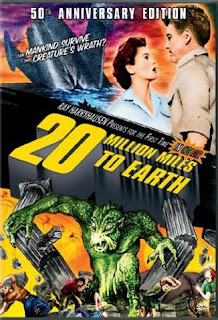
 Arnold Kunert is the friend and agent of Ray Harryhausen, the legendary stop-motion animator and special effects wizard. In the past Arnold was interviewed here in general on Ray’s work and career. In the following interview Arnold made some time to talk specifically about the colorized 50th anniversary edition of Ray’s classic film 20 Million Miles to Earth.
TheoFantastique: Arnold, thank you for taking some time to discuss this new version of the classic film. I’d like to ask a few questions about the background of the film itself, and then ask a few things related to this new 50th anniversary edition. With my previous background in reading about the life and work of Ray Harryhausen I was familiar with his involvement in a great number of areas, from initial concepts to pre-production artwork to the special effects themselves, but in watching this film and the background materials in the extra features I was surprised to learn that the story for this film came from Ray. Can you share a little about how this story came about and moved from story to film production?
Arnold Kunert: Ray’s original story dealt with a creature being brought back by a U.S. rocket from Venus and crash-landing in Lake Michigan, just outside downtown Chicago. As the funding for the film became available, Ray decided to change the location to Italy. He had never been outside the U.S. and decided this might be the best way to get to Europe.
TheoFantastique: This film has been a favorite of Harryhausen fans for decades since its release. The disc of special features in this anniversary edition includes commentary from folks like Rick Baker, John Landis, Tim Burton and other giants of Hollywood in fantasy films. So the film resonated with the well known members of its audience over the decades as well as among many more rank and file fans. It seems to stand out from other science fiction films from the same timeframe as well. Can you discuss some of the elements and features of this film that seem to make it memorable for fans?
Arnold Kunert: The most memorable aspect of the film is certainly the creature design. Of course, the European locations, most of them shot by a second unit before principal photography began, also add to the film’s appeal. Finally, Ray’s stop-motion animation is among the best of his career. Many visual effects artists consider the film one of their two or three favorite Harryhausen films for this reason.
TheoFantastique: I must admit that prior to watching the fiftieth anniversary edition of this film in its colorized version I was opposed to the colorization of classic black and white films, but color in this film is amazing and it has made me a convert to advocates of colorization. I know that in addition to this film Ray has also supervised the colorization of It Came From Beneath the Sea and Earth vs. the Flying Saucers. Can you describe how Ray came to the decision to colorize these films and how Legend came to be involved in the work that resulted in these fine pieces of work?
Arnold Kunert: Four or five years ago, I was contacted by a lady friend in San Diego who knew I was acquainted with Ray Harryhausen. That friend worked for a company called Legend Films, the president of which, Barry Sandrew, was the original inventor of colorization 15 years ago. Legend wanted to colorize one of Ray’s films, but I was originally reluctant to get involved, knowing how Ray felt about colorization and what had been done to 1949’s Mighty Joe Young in the late 1980s. However, after I visited the Legend Films facility, my mind was changed and I convinced Ray to consider working with them. The rest is, as they say, history. Ray personally supervised all three of his black-and-white Columbia films, as well as two of Merian C. Cooper’s RKO films, She and The Most Dangerous Game. Needless to say, Ray is very pleased with the results. Ray always wanted to do his black-and-white films in color, but the budgets wouldn’t allow for color. Now they are in color, exactly where they should have been 50 years ago.
TheoFantastique: How did the colorization process work and what was Ray’s part in working with Legend?
Arnold Kunert: I cannot explain the process beyond saying that it’s simply a matter of determining what colors a scene should have and programming those choices into a computer. Ray was in complete control of all the colors in all of his films, and, working with color designer Rosemary Horvath, made all of the color choices.
TheoFantastique: For me one of the more interesting parts of the extras on the second disc in this set was your discussion of promotional ad artwork during the 1950s that promoted this and other films of Ray’s. How did you come to be a collector of this type of material, and can you share a little with how this material was used in the past to promote films in contrast with film promotion today?
Arnold Kunert: I was given the material by National Screen Service in Chicago during the original releases of the films in the 1950s. I simply enjoyed having mementos of certain films I loved, most of them being Harryhausen films. I don’t know how things have changed since that time. I assume the internet and computers are used more widely today.
TheoFantastique: Arnold, thank you once again for your time and for sharing these great thoughts about this film, made an even better cinematic experience through colorization. Thanks as well for all of your work with Ray through “Ray Harryhausen presents…”
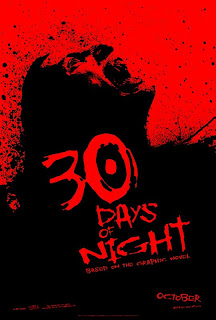 Over the weekend I had the chance to watch several films that have recently been released on DVD. I was especially looking forward to taking a look at 30 Days of Night given that it is vampire film (one of my favorite movie monster icons), I enjoyed the graphic novel by Steve Niles upon which it was based, and I had seen the film positively reviewed in various forums. After watching the film I came away with the general impression that this is a good vampire film with the potential to breathe new life into cultural treatments of the vampire icon, and it is the cultural reconstruction of the vampire through this film that I will touch on with this post.
As horror movie fans and culture watchers know, the vampire has a long history of popularity in film and pop culture, so much so that the vampire has enjoyed great dominance as a horror figure in any number of pop cultural expressions. But the cultural dominance of the vampire has given way in recent years to that of the zombie. Zombie films have been made with increasing frequency, and this may have resulted in the impression by some that the vampire may have lost some of its “edge” as a social and cultural symbol of horror. It appears to this writer that those associated with the cinematic treatment of 30 Days of Night (perhaps those associated with the graphic novel as well) have made a conscious effort to address this phenomenon through the reconstruction of the vampire as a figure that moves far beyond its expressions in the past as a romantic, brooding, and at times comical figure to a fresh embodiment of evil, perhaps a figure reconstructed through this film as a form of opposition to the zombie.
The idea of the 30 Days of Night vampire as oppositional construct occurred to me in various ways. Before the film’s release I read an article in a horror magazine where specific comments were made by those involved in the film’s production noting that the vampires in this film would represent a much stronger sense of horror hubris than that found, for example, in television’s Buffy the Vampire Slayer or Angel. These comments were bold in light of the great popularity and unique nature of Joss Whedon’s vampire treatments, and it set forth for me the initial idea that the 30 Days of Night folks felt the vampire had been somewhat domesticated of late and was in need of reconceptualizing for contemporary audiences. A second clue came to me in the form of the featurettes for the DVD. One featurette looks at the creation of the vampires and it featuress the director and acting coach working with the actors portraying the vampires in the film. The actors are specifically coached not to move their arms and bodies like zombies, but instead to walk confidently and with attitude as focused, no nonsense killers. On the one hand it is understandable that the actors would need to be coached on how vampire body movements would differ from that of the zombie given the prevalence of the cinematic image of the zombie, however, it appears as if those associated with 30 Days of Night took this one step further in coaching the actors to move in different ways that reflects a deliberate sense of purpose in evil for the vampires that makes them more threatening than the zombie.
The visual look, physical abilities, and social characteristics of the vampires in the film also seem to support the notion of the reconstruction of the vampire icon in oppositional fashion. The creatures move beyond the traditional enlarged canines to sport a mouthful of sharp teeth that function in razor-like fashion as they attack their victims. In their physical abilities the vampires not only have great strength, but also great agility as they leap from building to building and descend upon their fleeing victims. As to their social characteristics, the vampires have their own unique language that moves them beyond their traditional mythological function as lone hunters to bind them together as a social unity creating a viscious tribe that rules the night. All of these elements work together to provide the vampires in the film with the elements necessary to make them far more terrifying than many vampires in recent television and film treatments, and in the process they also contribute to the reconstruction of the vampire icon with features that make them more terrifying than the zombie.
The icons and symbols of horror change like any other elements of culture as society changes. If there is any merit to my idea that the 30 Days of Night vampires represent a conscious reconstruction of the vampire icon, and one developed in opposition to the cultural dominance of that of the zombie, it will be interesting to watch the possible impact of this film and the graphic novel upon the ongoing development of the vampire myth, and whether the zombie mythology, a rapidly evolving mythology in its own right, adapts in response.
 “You’re traveling through another dimension, a dimension not only of sight and sound but of mind; a journey into a wondrous land whose boundaries are that of imagination. That’s the signpost up ahead – your next stop, the Twilight Zone!”
If you have spent much time at all watching classic television from the late 1950s into the 1960s then you have no doubt seen The Twilight Zone. This program was a formative one in my childhood and teen years in the 1970s, and it remains a source of fascination for me, as well for countless numbers of people.
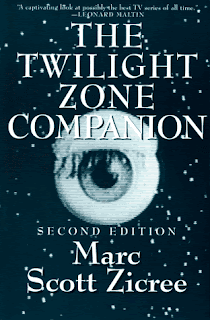
For Christmas in 2006 one of the gifts I received was Marc Scott Zicree’s The Twilight Zone Companion, 2nd ed. (Los Angeles: Silman-James Press, 1989). After reading through the book and enjoying it immensely I contacted Marc through his website. Marc agreed to participate in an interview, but due to his very busy schedule as a writer and producer we were like two ships passing in the night. Just recently we were finally able to connect for a phone interview with the transcript below:
TheoFantastique: Marc, thank you for making time in a very busy schedule to participate in this interview. As we begin, for those who may not be familiar with your work can you sketch some of your background that you bring to the subject matter?
Marc Scott Zicree: Sure. Basically, I grew up in Los Angeles and spent all of my childhood reading science fiction books, comics books, watching television, and drawing, and although I went to UCLA as an art major taking graphic arts and having gallery shows of my art, by the time I was 19 I knew I wanted to be a writer. So I went to the Clarion Writers Workshop at Michigan State University, which is the top science fiction writing workshop in the country. It’s twenty-five students, and each week a different science fiction writer, a famous science fiction writer, lives in the dormitory with you and you workshop and write like crazy. It involves six writers over a six week course. I sold my first short story via Clarion to Damon Knight who was editing a science fiction anthology at that time. I went back to UCLA and got my degree in painting, sculpture, and graphic arts, but once I got out of college I knew I wanted to be a writer, producer, and to work in television.
At that time there really was no where you could go to learn that, so I thought let’s do some research, why not study up on one of the greatest shows of all time, and see how they made that show in order for me to learn how to do that. And the three shows that really made me want to be a writer and producer as a kid were the original Star Trek, the original Outer Limits, and the original Twilight Zone. So I thought of reading up on Twilight Zone and saw that there was written about it, we’re talking 1977. So this was two years after Rod Serling had died. I thought I would have to write the book that I wanted to read to learn what I needed to learn. The challenge was that I had sold one short story and had never even taken a journalism class, and I’d heard that Rod Serling’s widow, Carol, had already turned down major journalists who had wanted to write about Rod Serling and Twilight Zone. I think if I would have taken a poll of 100 people as to what my chances were about getting this book written they would have said I had no chance. It was up to me to make it happen. What I did was, I met one of the writers of The Twilight Zone, a fellow named George Clayton Johnson, at a science fiction convention when I was 16 and I kept in touch with him. So I interviewed George, and then I asked him who he knew, and he connected me with a couple of people and I interviewed them, and then they connected me up with people. Over a three month period I interviewed thirty people who had worked on The Twilight Zone, and it was only then when I really knew a lot about the subject and felt very confident that I could write this book that I went to Carol Serling. I remember going to her house that was exactly as Rod had left it with all of his Emmys were there, and Peabody Awards, and the three Hugos he won, and even his dog was there, an elderly Irish Setter. I remember standing in that very large living room telling Carol Serling what I had in mind, and I just felt absolutely convinced I could pull it off. And then Carol must have talked to someone I had interviewed and asked what they thought of me, and they must have given me a good report, because the next thing I knew Carol Serling said I had access to everything. And I spent the next several years, literally, crawling through Serling’s attic, going through his notebooks, pulling folders out of his files, and opening up boxes and carrying home his 16mm prints of The Twilight Zone episodes from the screening room, and just immersing myself in that subject. The book came out five years later, and it was rejected by twenty-vie publishers, two years of solid rejections, and that was where having my wife, Elaine, was vital who said, “Just keep going.” I did, and subsequently the book came out and was a huge bestseller, it was nominated for the American Book Award, it has sold over half a million copies, it’s been in print for over twenty-five years.
So there begins the tale. I started writing when I was 22 years old, and by the time I was 23 I was writing for television, and I’ve been doing so ever since. In fact, I just got nominated for the Nebula Award for the Star Trek episode I wrote and directed. This happened just last week.
TheoFantastique: Great. Congratulations on the award, and thanks for hanging in there on the book, it’s just wonderful. You mentioned the various television influences, and obviously Rod Serling. Your book begins with a discussion of his life and talks about his writing. Can you highlight some of the significant aspects of his life, in particular his work with Playhouse 90, perhaps his growing frustrations and how he left some of that to experiment with something new that would eventually become The Twilight Zone?
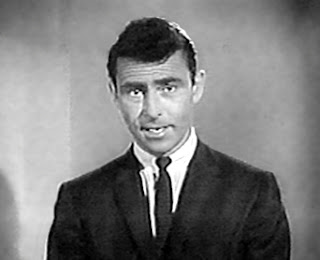 Marc Scott Zicree: Rod was born in Upstate New York, and he was a very outgoing child, very gregarious, very smart, very funny. He was tremendously popular, and then as soon as he graduated high school World War II had just started and so he volunteered and became a paratrooper, and jumped out of airplanes into jungles with Japanese soldiers who were trying to kill him. As a result, he suffered a severe shrapnel wound in his leg. When he came out of the war he had this tremendous need to write, to get things off his chest. He really needed something to process the horrors that he had endured. He started writing, and his initial submissions were to radio shows, and finally he sold something to a show called Grand Central Station. Then he was off and running. Television was just starting up in the late 1940s, and so he transitioned from radio to television. At that time they were really positioning television as this new medium that would be similar to the Broadway stage but that the entire country could watch and millions of
people simultaneously. It was live television at the time. So you got wonderful, brilliant writers producing works that were deeply personal and deeply realistic. And Rod was one of those writers. So from 1954-56 there were a lot of anthology shows on at that time such as Craft Playhouse, and Rod was writing about things society, and race, and politics, and when he tried to write something that was topical that was potentially controversial that came out of his heart and gut he was censored heavily to the degree that he couldn’t use the worlds “Democrat” or Republican,” he couldn’t talk about lynching, he couldn’t talk about major events of the day. So although he quickly became one of the top writers in television, writing things like “Requiem for a Heavyweight,” and although he was hugely successful and well paid, he was not satisfied as an artist because he was constantly feeling shackled as a writer. At one point he had written a political piece for Playhouse 90 and wasn’t able to comment on anything political so he said to the press, “If I’d have put it in the future and populated the planet with robots I think I would have been able to put in more of what I had to say.” This gave him the idea that if he took what he wanted to say and put it in a science fiction or fantasy context the censors wouldn’t notice that he wrote about his own world, but would have been able to get the word out. Which is exactly what happened. He created The Twilight Zone, and it took several years to actually sell it. He worked on a number of pilots before they actually shot the one that sold the show, and then he was off and running, and he had total creative control. There were 156 episodes and Serling wrote 92 of them himself.
TheoFantastique: It’s amazing as you watch the program that he addressed a number of social issues of the time that still resonate today. Why were issues of racism, the social outcast, oppression, and other social issues so important for him to explore?
Marc Scott Zicree: There are two different kinds of writers: there are writers who write to escape from their lives, to hid from what’s around them, and then there are writers who want to comment on their lives, and comment on the world their living in. I’m sort of the latter kind and so was Rod. When you have a medium in which millions of people are watching your work, and it lasts for decades, possibly for hundreds of years, it’s such an enormously powerful medium, television, that you want to say something fresh, you want to say something relevant, you want to say something truthful, and Rod was one of the great torchbearers of that cause, the cause of truth, and a spokesperson for his age. And in the tradition of Twain and Dickens, he wanted to be someone who could speak to what was wrong with society and as a result possibly change it. At the same time Rod was very aware that he had to be an entertainer and had to be entertaining in his work, and I think The Twilight Zone is very entertaining. I think one of the ironies of the fact that that the way Rod had turn The Twilight Zone to avoid censorship was that it forced him to write more universally. So, for instance, if he had been writings shows directly about things like the Cuban Missile Crisis, it would seem very musty that reflected the 1950s or 1960s, but because he was writing about the fear of the destruction of the world, fear of alien nation, fear of being singled out and alone against terrible, dreadful forces, something like “Nightmare at 20,000 Feet,” where William Shatner sees a gremlin on the wing and has to fight the others to prove that he’s sane, anyone who has ever spoken for a cause or gone against the majority opinion has this sense of being an outsider and has this sense of being that lone voice in the wilderness, and so I think Rod is almost unwittingly speaking for the ages because he was speaking more universally as a result of the censorship.
TheoFantastique: My teenage children recently discovered Twilight Zone for themselves and are now digging into my copies on DVD to watch the program, and obviously its appeal over the decades is due to fantastic story writing. I know that Rod Serling wrote the bulk of the stories for the series, but what other writers left their mark on this television experiment?
Marc Scott Zicree: There was a small core of writers on The Twilight Zone. Rod, of course, was writing the bulk of the episodes, but there was also Richard Matheson who wrote, again, “Nightmare at 20,000 Feet,” he wrote a lot of terrific episodes. There was George Clayton Johnson who wrote “Kick the Can” and “Nothing in the Dark,” there was Charles Beaumont who wrote “”Long Live Walter Jameson,” and “The Howling Man.” There was also a writer named Earl Hamner who tended to write stories for the most part that were about rural characters, farmers and backwoods people. He actually went on to create The Waltons after he wrote eight episodes for The Twilight Zone. And then there were a few writers who just wrote one episode, but they were great episodes. For example, E. Jack Neuman wrote “The Trouble with Templeton,” and Reginald Rose wrote “The Incredible World of Horace Ford.” I think more than anything, although The Twilight Zone, although it had great acting, great directing, great music, great cinematography, more than anything The Twilight Zone was a writer’s show. It was run by a writer, and it was a show that showcased and spotlighted great writing. And I don’t thin without the great writing you would have had the great talent in other departments or the longevity the show has enjoyed.
TheoFantastique: This next question will be a tough one given the number of episodes, and so many good ones, if you had to narrow it down to two or three, what are some of your favorite episodes and why do they stand out for you?
Marc Scott Zicree: My favorite episode is “Walking Distance” which was one of Rod’s favorites too. In it Gig Young places a very tired, worldly executive who journeys back to his hometown and finds himself in his own past in his childhood and is determined to stay there. It’s just a great episode, it’s gorgeously written, gorgeously acted, perfect in every department. “Time Enough at Last” with Burgess Meredith as the last man on earth as a little bookworm, of course, is unforgettable. “Miniature” starring Robert Duvall, which is one of the hour-long episodes, is a terrific script by Charles Beaumont that is wonderfully acted by Robert Duvall. Another one I really like is “In Praise of Pip” with Billy Mumy and Jack Klugman, a great Serling script. There are just so many brilliant episodes. But then also there are episodes that sort of have a reach beyond the episode itself, such as “Mirror Image” which introduces the whole notion of the parallel world where your duplicate might try to take over your place in this world. It’s so creepy and I think it spawned a lot of other ideas in film and television.
TheoFantastique: What kind of continuing influence do you think The Twilight Zone has had on film and television?
Marc Scott Zicree: This had an enormous influence. I think there’s a whole subgenre of movies that you could basically say are Twilight Zone movies in feature length form. Certainly Field of Dreams, E.T., you could say Close Encounters of the Third Kind is very much a Twilight Zone kind of movie. Every year I think you can look to certain films that are very strongly influenced by Twilight Zone. Poltergeist is another one. In terms of television, Eureka is reminiscent of Twilight Zone. And something like Pushing Daisies where someone has this miraculous ability. Matheson talked about his concept for The Twilight Zone which was you write as realistically as possible and you drop in one fancy notion, just one, and you see how it plays out. So what if you were an old woman who was afraid of death and Mr. Death came calling in the form of someone who looks like a handsome police officer. So you have this one [fantasy] notion, but the rest of it is reality based. I think Pushing Daisies is that. Lost is strongly influenced by Twilight Zone. So the ripple effect for Twilight Zone has been major. Gene Roddenberry gave the eulogy at Rod Serling’s funeral and I think Star Trek would not exist if not for Twilight Zone. Twilight Zone basically said you can do adult science fiction on television, you don’t have to dumb it down, it’s not just for teenie fair like Space Patrol or Space Cadet. These are shows that I love but they are clearly not the kind of program The Twilight Zone was. The Twilight Zone still packs a punch.
TheoFantastique: You mentioned at the beginning a number of the projects that you’ve been involved in. What might folks look for in their local bookstore or on television that you’ve been involved in?
Marc Scott Zicree: The most fun they can have in terms of my work is if they log onto http://www.startreknewvoyages.com/index.html they can watch the entire episode of Star Trek I’ve just co-written, directed, and executive produced that stars George Takei that was just nominated for the Nebula. If anybody is going to the World Science Fiction Convention and wants to nominate it for a Hugo they’ve got the next two weeks to do so. I’ve also written the Magic Time trilogy of novels, The Twilight Zone Companion is still in print. They are also just about to release a Twilight Zone unabridged audio that will include my interview with Burgess Meredith. This will be great fun I think. And then I’m creating a new television show called Frontier that won’t be out for a little while but is a big, ambitious space-going show. So there’s plenty of stuff on the horizon.
TheoFantastique: Well, Marc, it sounds like the research you did on Rod Serling and The Twilight Zone worked out very well for you in learning the writer’s craft and entertaining people. Thank you so much for taking the time. I appreciate it. I’m glad we were finally able to touch bases.
Marc Scott Zicree: You’re very welcome. I’m happy to do it. And keep enjoying The Twilight Zone.
 The haunted attraction industry is growing with our culture’s increasing interest in Halloween, a phenomenon noted in books like Jack Santino, ed., Halloween and Other Festivals of Death and Life (University of Tennessee Press, 1994), and Nicholas Rogers, Halloween: From Pagan Ritual to Party Night (Oxford University Press, 2002). The popularity of the holiday has resulted in gatherings like HauntCon and the Midwest Haunters Convention, as well as media like Haunted Attraction Magazine, Haunted Media Magazine, as well as another interesting publication in e-zine form, HomeHauntNews. This publication is unique in that it is specifically devoted to home haunters rather than professional haunted attractions. Johnny “Scare Shack” has agreed to talk about his publication and the home haunt industry.
TheoFantastique: Johnny, can you tell us a little about yourself?
Johnny: Most call me Johnny, but I am also known as “The Scare Shack” on various Halloween/Haunt Related forums. I have been home haunting for many years and have a true passion for haunting, anything haunting or haunted. I am the type that once a goal is set I will accomplish it! My family of six has learned this already as well as some non-haunt friends. They have finally come to the conclusion, that if its not related to haunting….it wont spark my brain. I love everyone around me, don’t get me wrong, my family is my life! Now add anything haunt related ….well…
TheoFantastique: How did you decide to create HomeHauntNews?
Johnny: This can be a long winded answer so I will give you the short of it. I have been home haunting for many years. In that time I have learned a great amount from other home haunters in regards to prop building, lighting, make-up and also have made a lot of great friends. I love the whole haunt community from home haunters all the way up to the professional haunted attractions and the people involved. There are many different magazines and e-zines out there related to the haunt community and Halloween. I didn’t see any thing out there that was devoted to just the home haunter. That’s me, these are my people, my friends! So basically I figured I would offer something back to all the home haunters out there as a true thank you to them for being who we all are. This is where the idea of Home Haunters News and Reviews came from. Basically, something I can give back to my fellow haunters for there enjoyment and to aid in the continuous growth of Halloween. I could ramble on, but said “I will give you the short of it”.
TheoFantastique: What types of features do you have in the e-zine?
Johnny: HomeHaunters News and Reviews has many different types of features and content. From offing articles on “Featured Home Haunters”, “Party Ideas”, “Tips N tricks”, “Prop How-to’s”, “Make-Up and Costuming”, “Up-Coming Events”, “Readers Photo Gallery”,“Latest News”, “Vendor Spotlight” and much more. We are adding many different new features in regards to content and as well with diffent options for viewing/downloading the e-zine. The e-zine is being offered bi-montly as of now with many, many, new things coming. I urge all to join the mailing list to keep abreast of the changes as well as the new website coming soon.
TheoFantastique: I know the e-zine has been promoted in a few places lately. In fact, I heard about it through Rue Morgue Magazine. What has the response been to HomeHauntNews?
Johnny: Honestly, so far the response in my opinion has been great. After throwing the idea back and forth with a few others, I decided to do it. I didn’t really think it was going to take off as fast as it did. Especially for not even being 100% finished before I put it out there.I do have to say from e-mails flooding in, and pm’s being sent in, I will admit I’m overwhelmed on the response thus far.
TheoFantastique: How can interested readers get in touch with you to enjoy this publication, and perhaps even to participate by submitting content?
Johnny: That’s very simple. Reader’s can simply join our mailing list by sending an email to Homehauntnews@yahoo.com to receive the latest updated info and issue release date’s. As well as anyone wanting to send in info can contact me directly at Scareshack@yahoo.com.
TheoFantastique: Johnny, thanks again for this interview, and for your helpful and fun resource for home haunters.
Johnny: It was my pleasure. Thank you for having me and always a true pleasure helping to give back to the haunt community.
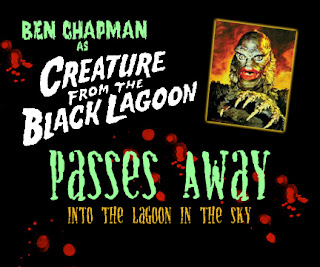 I received an email announcement from Rue Morgue Radio announcing that Ben Chapman, the actor who played the Creature from the Black Lagoon in the land-based scenes from the film, passed away this morning. As I have mentioned previously, this film was the first horror film I saw as a young boy that both frightened me and filled me with a sense of awe as it touched my imagination. The Creature, in part through Chapman’s work, helped shape my lifelong passion for the fantastic and the horrific. I attempted to contact Chapman last year through his website for a possible interview and I received a response from his agent notifying me that Chapman was leaving the hospital in his home in Hawaii only to relocate to the mainland for recovery. Unfortunately, I will not have an opportunity to chat with Chapman, but his legacy lives on in this classic film and in the imaginations of countless people impacted by this iconic Creature through the decades.
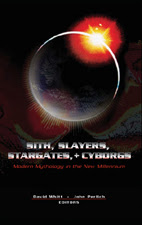 I recently mentioned a new book that looked very interesting to me, Sith, Slayers, Stargates and Cyborgs: Modern Mythology and the New Millennium (Peter Lang Publishers, 2007), edited by David Whitt and John Perlich. Dr. David Whitt is Associate Professor of Communication at Nebraska Wesleyan University, and Dr. John Perlich is Associate Professor of Communication at Hastings College in Nebraska. I contacted David and John and they were were all too willing to discuss this fascinating book. After reviewing some of the chapters we had an opportunity to discuss aspects of the book.
TheoFantastique: David and John, thanks for editing such a great book, and making some time to discuss it here. To begin with, how did the idea of dealing with myth, archetype and contemporary science fiction as a collaborative volume first come about?
David Whitt: John will say it was my idea because I wrote my doctoral dissertation examining cyborgs through texts such as The Matrix, Star Trek (specifically, The Borg) and Japanese anime. Then in 2004 we were both on a panel at the National Communication Association Conference in Chicago titled The Matrix, Lord of the Rings and Harry Potter: Modern Mythology in the New Millennium. Much to our surprise the panel was incredibly well attended and the feedback from the audience during and after the session was remarkable. This overwhelmingly positive response then gave John the idea that we should do a book. So, don’t listen to John. It really was HIS idea!
John Perlich: To be honest the idea was Dave’s! I am a huge science fiction fan so when Dave told me about his dissertation I asked him to send me a copy. After reading his dissertation I was stunned by the significance of Frankenstein myth in contemporary culture and told him that his work should be published. Dave asked me to collaborate with him on a conference submission that was presented in 2004—the reception was so positive that we decided to develop an anthology…and here we are.
TheoFantastique: As you lay the groundwork for the volume you discuss myth. You draw upon the work of Joseph Campbell and others, and as you do this, how are you defining myth and how do you see this connected to science fiction and fantasy?
John Perlich: I’m a devoted fan of Campbell’s work and believe that myth is something we live, not just something we read about. From the time we are born, all of us imagine a story for our lives. That story includes details (possibly including marriage, career aspirations, success, perseverance) and could be characterized as a myth. However, our stories are not unique—we borrow from other stories to create a grand yet personal myth. Science fiction and fantasy fit because they are either reshaping the classic time-honored myths or retelling those myths. The result of these “tellings” is an opportunity to develop our own personal myth. Feminist scholars, for example, will note that classic mythology does not always give positive exemplars for women. But fantasy and science fiction texts provide opportunity for new stories, new myths, new ideas (and ideologies). You’ll notice by my examples that whether highly personal or classic, myths have structure, order, and coherence.
TheoFantastique: You reference science fiction and fantasy as a “New Mythology” for our times. What do you mean by this, and how is it that we have this paradoxical situation where many people explore science fiction in mythic ways as the “music of the spheres,” and yet as you note “some authors also demonstrate the folly of those who are seemingly deaf to the ‘song of the universe'”?
David Whitt: The cover of our book, which was John’s idea, expresses this idea well. It’s an image of earth against a solar eclipse. The cyclical nature of the image suggests that while the centuries may change, the mythic stories we tell are timeless. In terms of the phrase “New Mythology” I must give credit to another source. When writing my dissertation and having to defend the legitimacy of studying science fiction I found THE perfect quote from Voytilla (1999) who stated that “science fiction and fantasy are our New Mythology and provide an important canvas to explore society’s issues.” Historically this certainly has been true as this genre has provided commentary on science, technology, politics, religion, and culture. Everyone from Jules Verne to J.K. Rowling owes a great debt to mythology.
John Perlich: The classic structures known as myth are not fixed but fluid and evolving. As I said before, myths are lived. Therefore, it is crucial that we not simply retell classic mythologies, but actually spend time reinventing mythology. I believe my ideological example above makes the point fairly well; reinventing myth often involves finding room for new voices, not simply providing a platform for those who have been at the podium for quite some time.
TheoFantastique: In addition to editing the volume each of you contributed chapters from your own areas of interest. John, you wrote on the Star Wars films and addressed how George Lucas may have lost his way in the development of his mythos as he moved from his first trilogy to his second trilogy of films. I share this sentiment, but it is all the more striking when we consider Lucas’s dialogue with Campbell along the way as he produced his mythic tale. Can you briefly describe your thesis, and perhaps touch on your theories as to why Lucas may have strayed, even with close proximity to Campbell in the early stages of his mythic development?
John Perlich: This would be a good opportunity for me to tell your readers that they should buy the book for the answer, but you deserve more. LOL. As noted in the book I approached my deconstruction of the Star Wars mythos not as a skeptic but as a life-long fan. That is why it was somewhat painful for me to indict the master of this mythology. To put my thesis as simply as possible, sometimes “less is more,” and in the case of The Phantom Menace, Attack of the Clones, and Revenge of the Sith, it seemed like an odd choice when the decision was made to quantify the mystical energy known as “the Force.” When followed to a logical conclusion this decision has tremendous implications regarding myths that speak to us about transcendence and redemption.
TheoFantastique: David, do you have any thoughts or comments on this?
David Whitt: To say that I was disappointed with the prequels in an understatement. John’s chapter articulates quite well how Lucas abandoned the mythic foundation so strong in the original trilogy. In fact, by the time I was done reading his chapter I was more upset with Lucas than I was before!
TheoFantastique: John, I was intrigued near the conclusion of your chapter with your passing reference to “other new mythologies” where you mention Guillermo del Toro’s Pan’s Labyrinth. Some time ago I posted some auteur exploration of this film on this blog and as I track what brings readers here the mythic and archetypal dimensions of this film are of ongoing interest to many. Would either of you like to say a few things about del Toro and his mythmaking, particularly in Pan’s Labyrinth?
John Perlich: Yes! What a fabulous work. When I make reference to “myths that speak to us about transcendence and redemption,” I speak of this work (and many notable others). The sacrifice of the protagonist in this film is profound (especially as it relates with transcendence and redemption). It’s hard to speak of the accomplishment that del Toro achieved with El Laberinto del Fauno without ruining the plotline, so I’ll just recommend it for everyone (except perhaps small children).
David Whitt: What I loved about Pan’s Labyrinth is how it takes you on an emotional journey that weaves the personal against the backdrop of the political. PL left a powerful impression upon me when I saw it in the theater. I like to think of PL as a bedtime story for adults rather than children.
TheoFantastique: David, your chapter in the volume picks up the Frankenstein myth and applies it to the issues of technology and cybernetics, particularly with application to the Teen Titans comic and television cartoon. Can you sketch your thesis for us, and then touch on how the Frankenstein myth continues to work itself out in a variety of pop culture phenomenon such as Teen Titans?
David Whitt: For years I have been interested in cyborg film and television and how these texts comment on our human development. One area of study I thought was lacking was how our human/machine merger impacts children and their attitudes toward this technology. I became intrigued with the character Cyborg from Teen Titans and his struggle to maintain his humanity and individuality within a cybernetic body. The parallels to Frankenstein seemed obvious so I wanted to explore this more critically.
TheoFantastique: How do you see such contemporary interactions with the myth shaping the attitudes of youth to a technologically-driven society and the question of our human identity in relation to such technology?
David Whitt: I argue that Cyborg initially connects with teens on a mythic level because of their popular culture knowledge of Frankenstein (Halloween, Frankenberry, The Munsters). Additionally, children can relate to this character because he talks and acts like they do, and more importantly, embraces technology. Certainly today’s youth are more technologically savvy than their parents and through a character like Cyborg they see themselves. Cyborg’s struggle with identity teaches important lessons to children about what it means to be human as we continue our inevitable cyborg development.
TheoFantastique: I also appreciated the chapter that looked at how Joss Whedon modified and perhaps even subverted the heroes quest story by not only modifying its traditional gender expressions, but also moving from the one to the many. Can you sketch a little of the discussion for us in the book?
David Whitt: Cochran and Edwards examine the archetypes of myth and how Whedon basically plays with these archetypes in relation to the “Scoobies” in Buffy the Vampire Slayer. This chapter is one of my favorites.
John Perlich: As I noted before, mythology is fluid and lived. Therefore, making room for new voices becomes an interesting point of discussion for comparative mythologists (like Campbell). Slayer fans will enjoy Cochran and Edward’s treatment of the Buffy series very much.
TheoFantastique: In your view, can we anticipate a long and healthy future for science fiction and fantasy in providing a medium for the engagement of myth and the creation of new mythologies in the new millennium?
John Perlich: I have no reservations on this subject matter—most definitely. Science fiction and fantasy genres offer liberating forums and avenues that were popularized with the original Star Trek. We continue to see these avenues and opportunities unfolding in ways that both affirm and critique ideology and modernity.
David Whitt: Absolutely! In fact, with Hollywood finally discovering, or should I say re-discovering, the mythic power of children’s stories and comic book superheroes the immediate future of sci-fi fantasy looks very promising.
TheoFantastique: John and David, thanks again for your willingness to discuss this book. I hope you continue such exploration in future projects.
David and John: Our pleasure! We should mention that we recently posted a call for papers regarding our next project There and Back Again: Mythology in the New Millennium. This volume will be a natural extension of the work in Sith, Slayers, Stargates and Cyborgs. However, instead of focusing primarily on science fiction this collection will focus on fantasy texts. If anyone is interested in submitting a proposal please refer to the call posted on h-net for more details or feel free to contact either John at jperlich@hastings.edu or David at dfw@NebrWesleyan.edu.
TheoFantastique: This next project sounds great. Please keep TheoFantastique in mind for discussing and promoting this volume when it is completed. I hope this interview helps promote your current volume, and perhaps sends contributors your way for the next one. Thanks again.
 In 1954 Marlon Brando uttered a line of dialogue that would become one of the classics of the silver screen. In one of the more riveting scenes from On the Waterfront, Brando struggles with what might have been in his boxing career and delivers the line: “I could have been a contender, I could have been somebody…” As the 80th Annual Academy Awards draws near on February 28th, some of us wonder what films and what actors might have been contenders if only their genres and subject matter had been more “mainstream.” Cinefantastique Online asked me to be a part of a handful of select websites and blogs that would discuss this topic in anticipation of next week’s Oscar night.
As I reflected on Cinfantastique‘s request and looked back at 2007 and what it produced in terms of cinema in the genres of horror, science fiction and fantasy, like any other genres of film, these genres produce a lot of mediocre material, as well as a lot of bad films and performances as well. But such things are surely not limited to the genres of the fantastic. If we look closely we can find a few gems worthy of careful consideration, and I would argue, even a few that should be considered on Oscar night.
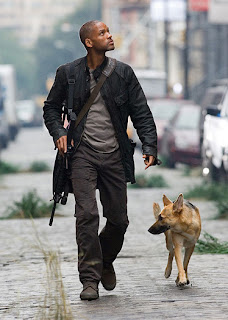
For those of you who have read this blog before, especially over the last six months or so, it should come as no surprise which films I would nominate. The first film that stands out in my thinking is I Am Legend, and readers might take a look at my previous discussion of this film from last December here. This film surprised me in a number of positive ways, not least of which was Will Smith’s strong performance. Most of my exposure to Smith’s acting over the years has been from his early television work, and then his films, particularly his action and comedy movies. I have not seen his more critically acclaimed roles in films such as Ali (2001) or The Pursuit of Happyness (2006), thus I was surprised by the credibility he was able to bring to his character in Legend. Beyond this, Smith’s prior work in science fiction, such as Independence Day (1996), Men in Black I (1997) and II (2002), and even less so but to a certain extent in I, Robot (2004), while representing good acting, in my view Smith’s performance still emphasized his background in comedy rather than drama, and certainly did not rise to the level of serious drama as showcased in Legend. Smith’s performance in this film is especially striking when we consider that for the most part the film is a one-man show, and the story’s initial and ongoing credibility is either sustained or lost through Smith’s acting ability. I believe it would be difficult for any viewer not to suspend disbelief and to enter into Legend‘s story as Smith’s character slowly unravels emotionally as he deals with the ongoing challenges of being (in his mind) the only survivor of a human-made apocalypse that has impacted the globe. For these reasons I would argue that Smith should have been considered for the Best Actor category.
In my mind another film stands out from last year, one which represents a blending of genres, in the form of comedy and horror (a difficult blend to accomplish well), the 2006 film Fido (but which did not see U.S. release until 2007). Readers might recall my previous discussion of this film, a hilarious domestic take on the growing zombie mythology, similar in many ways in style and substance to Shaun of the Dead (2004). Fido may even be slightly better than Shaun in its ability to engage various social, cultural, gender, and religious issues. Unfortunately, this film seems to have received very limited release in the U.S. and thus even many horror fans have not been exposed to this gem. Fido receives my nomination for a new category, that of Best Comedy.
My fellow commentators associated with Cinefantastique will make a case for other films that they feel were worthy of Oscar nominations that will add to my own contribution. But if these films really do represent quality examples of cinema why were they overlooked? We might also ask, why do science fiction, fantasy, and horror films tend to get overlooked by the Academy year after year? I think the answer is because their genres are not taken seriously as legitimate venues for acting and cinematic production. As I mentioned briefly in a previous post:
“the horror genre, along with science fiction and fantasy, are not, in general, taken as seriously as other genres of film. Even though these genres have produced some of the highest grossing films in history (as Jaws, E.T. Star Wars [and Harry Potter] indicate), they still tend to represent marginalized genres…”
While these types of films have always served an important social function in providing a context for the culture to either process issues of contemporary angst, to engage the imagination, or to consider utopian or dystopian possibilties, for whatever reasons, while large segments of the culture draw upon such sources for individual and collective engagement, nevertheless they hover on the fringes of mainstream respectability. I don’t think this situation will change anytime soon, but if anyone from the Acadmy is listenting, how about considering the genres in the future for awards that move beyond makeup, film score, and special effects?
What other fine cinematic treats might have been ignored by the Academy Awards? You can read about Cinefantastiqueonline’s selections and those of the other bloggers and websites here.
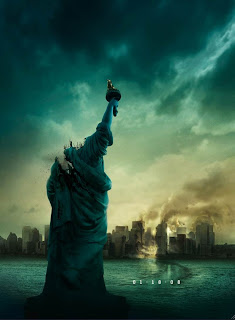 The January 28, 2008 issue of TIME magazine includes an interesting article in its Arts section title “Apocalypse New” by Lev Grossman. The article can also be found online here. The article is worthy of reflection in that it notes the continued exploration of the end of human life and dominance on this planet through various aspects of popular culture, including video games (Half-Life 2), comics (Y: The Last Man), television shows (Jericho, Battlestar Galactica), films (I Am Legend, Cloverfield, and Disney and Pixar’s forthcoming Wall*E), and even music (Nine Inch Nails’ album Year Zero).
As the article sketches the influence on the West in its development of apocalyptic thought it notes the influence of the biblical books of Daniel and Revelation, and then suggests that writers like Mary Shelley and T. S. Eliot helped give the concept shape in secular literary fashion.
The article spends a good amount of space looking at the recent apocalyptic film that is doing very well at the box office, Cloverfield, despite the initial protest of film critics who decried the visual connections to the 9/11 attacks and the negative memories this might invoke in viewers. This protest seemed curious to me since one of the functions of horror films has always been the provision of a safe forum for the expression of social and cultural fears. The producer of Cloverfield is quoted in the article in this regard where he states, “We wanted to let people live through their wildest fears but be in a safe place, where the enemy is the size of a skyscraper instead of some stateless, unseen cowardly terrorist.”
The article closes on an interesting and curious note as it discusses the strange paradox of the apocalyptic which includes elements of both fear and yet also seduction as we contemplate the possibility of our personal and corporate end. It seems as if our ongoing explorations of apocalyptic visions also include elements of our growing dissatisfaction with humanity in general, but in particular certain cultures, no less that of America, as well as our impact on the environment. As a journalism professor states in the article, “There is on some level a secret longing that people have, saying ‘Let’s just give it up. What a mess we’ve made just by being alive.’ We all have this footprint now. We’ve redefined original sin.”
Move over Evangelical Christians. Your explorations of one religious expression of apocalypticism through the Left Behind phenomenon must continue to rub shoulders with secular explorations in the “doom boom.”
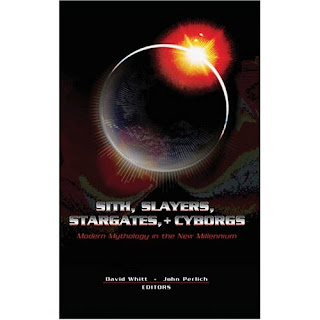 The Popular Culture Association continues to be a great source for addressing fascinating aspects at the intersection between the fantastic and culture. Yesterday I received an announcement concerning a call for papers dealing with the topic of mythology and the new millennium for a volume that is viewed as a logical extension of a new book. This new book is edited by David Whitt and John R. Perlich, and it is titled Slayers, Stargates, and Cyborgs: Modern Mythology in the New Millennium (Peter Lang Publishers, 2007). The book is not yet available from American publishing outlets but can be ordered directly from the publisher or from Amazon.com.
Book Description
The beginning of the twenty-first century has already seen its fair share of modern myths with heroes such as Spider-Man, Superman, and Harry Potter. The authors in this volume deconstruct, discuss, engage, and interrogate the mythologies of the new millennium in science fiction fantasy texts. Using literary and rhetorical criticism—paired with philosophy, cultural studies, media arts, psychology, and communication studies—they illustrate the function, value, and role of new mythologies, and show that the universal appeal of these texts is their mythic power, drawing upon archetypes of the past which resonate with individuals and throughout culture. In this way they demonstrate how mythology is timeless and eternal.
From the Back Cover
“This volume represents fan-scholarship at its most energetic, invigorating, and inspiring. The contributors couple a fan’s close reading and enthusiasm with the confidently-informed theoretical scope of academia—and show that not only do the two approaches mesh perfectly, but that they’re really not that far apart.
“It’s a tribute to the authors that however well you know these shows and movies, you’ll find something here to surprise you; a way of seeing the familiar from a fresh perspective. You’ll want to watch old DVDs again, and check out the ones you haven’t seen. You’ll want to meet the contributors and talk through a few of their ideas— and you get the feeling they’d like that too.”
Will Brooker, Principal Lecturer and Head of Film and Television at Kingston University in London and author Batman Unmasked, Using the Force, and The Blade Runner Experience.
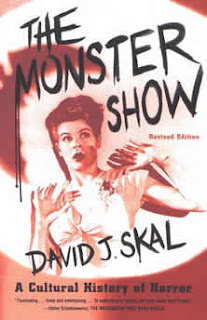 One of the books I have been reading in my spare time is one that I received as a Christmas gift, David J. Skal, The Monster Show: A Cultural History of Horror, rev. ed (New York: Faber and Faber, 2001). This book does a nice job of bringing together various elements of approach to the horror as an object of not only fan appreciation, but also analysis from historical, cultural, and social perspectives.
As I was reading last night a chapter on horror in the 1960s was of special interest to me as this was the decade in which I was born, and thus it was formative in my encounter with horror in the very early 1970s. At one point Skal references “Monster Culture, a phenomenon of horror-movie hoopla that began in the late fifties and continued into the mid-sixties.” An interesting aspect of Skal’s discussion of Monster Culture is his reference to various “participatory rituals” for fans within this culture that take on an almost religious or spiritual aura. At one point Skal discusses one element of horror fan culture in the 1960s, the Aurora Plastics model kits of the Universal Pictures classic monsters, and he notes that as Stephen King referenced this in his novel Salem’s Lot, that it is done with “religio-mythic overtones.” Skal goes on to note that “[m]onsters have traditionally been part of adolescent initiation rituals,” and he then quotes a 1975 essay by Walter Evans that connects such rituals with religion and spirituality. The essay is titled “Monster Movies and Rites of Initiation,” and as quoted by Skal, Evans wrote:
“Most of the definitive elments of premodern societies’ initiation rites also function as definitive elements in the monster movie formula. Fascination with the distant past; the prominence of superstition or archaic religion; the focus on myth; beings who perform an initiatory function; the complementary focus on innocent and untested young people who are transformed by contact with these beings; the symbolic deaths and rebirths; the use of thunder, darkness, and other motifs in elaborate scenarios designed to create terror; the emphasis on ritual passing on of archaic lore by learned elders; these are only some of the most important of numerous formulaic elements which point to the monster movies’ crucial function in the vital process of initiation which modern American adolescents require and demand no less than their brothers and sisters of premodern societies.”
Beyond the general ritual and religious function of horror in society among adolescents, and particularly among those who inhabit Monster Culture, Skal makes a comment that connects horror and religion even more strongly:
“Monsters – as this writer will personally attest – provided an element of reassurance. They were transcendent resurrection figures, beings who couldn’t die. The traditional monsters were perversely Christlike. (Dracula’s most characteristic pose, with outstretched cape, is a blatant cruciform), offering an image of survival, however distorted or grotesque.”
I find Skal’s recognition of the ritual and religious function of horror in culture to be of great interest, and I hope to pursue these research areas in more depth with my continued reading. One book in my “to be read” stack that I have mentioned before on this blog is Roger C. Aden, Popular Stories and Promised Lands: Fan Cultures and Symbolic Pilgrimages (Tuscaloosa and London: The University of Alabama Press, 1999). My studies in anthropology got me interested in pilgrimage, and the idea that this has relevance to popular culture is intriguing. I first saw this book referenced in connection with anime in Mechademia, an academic journal on the topic and I recognized that it has promising application elsewhere. It appears to address Victor Turner’s thesis on liminality, ritual, and communitas, and then connects this to pilgrimage (symbolic and literal) as it relates to various aspects of pop culture fandom. As the dust cover for the book states,
“this book makes a compelling case for understanding the alleged vast wasteland of popular culture as a fertile site of individually and communally created ‘sacred places.’ Through popular stories, fans can imaginatively experience symbolic pilgrimages to new promised lands that offer a sense of centeredness, spirituality, and creativity.”
It seems that Skal’s observations on the impact and significance of horror to American culture and the social order have merit and are worthy of further reflection.





