 The Religion and Popular Culture group on Yahoo! recently issued the following call for papers:
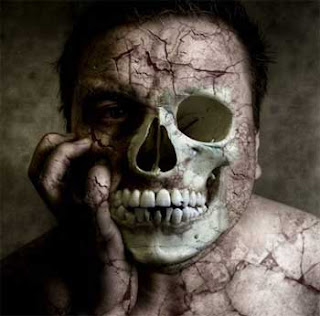
Call for Papers: An Interdisciplinary Collection of Essays on the Zombie
We are seeking proposals for an interdisciplinary edited volume discussing the zombie from a wide variety of perspectives and within a wide range of contexts. We encourage submissions from any discipline, including but not limited to English literature, film studies, media studies, cultural studies, gender studies, queer studies, philosophy, religious studies, anthropology, sociology, history, psychology, economics, and political science. We especially welcome new approaches to the study of zombies. In addition to theoretical essays on zombies, we also welcome critical discussions of specific zombie films, novels, and graphic novels, including those both pre- and post-Romero.
Proposals should be between 200 and 300 words. Authors are asked to include brief biographical details along with their submissions, including name and academic affiliation. Please submit proposals either electronically or by regular mail. Deadline for submissions is October 31st, 2008.
Submit to either:
Dr. Cory James Rushton
Dept. of English
St. Francis Xavier University
PO Box 5000
Antigonish, Nova Scotia
B2G 2W5Canada
crushton@stfx.ca
or
Dr. Christopher M. Moreman
Dept. of Philosophy
California State University, East Bay
25800 Carlos Bee Blvd.
Hayward, CA 94542
U.S.A.
christopher.moreman@csueastbay.edu
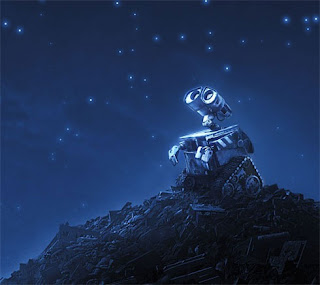 It had been some time since my family and I took in a movie at the theater. Normally we keep our eye out for advertisements of upcoming films, and then once a movie is released to DVD we make a trip to the nearest Redbox DVD rental location and for $1 we have a good night’s entertainment. But yesterday I wanted the full cinematic experience with the large screen, Dolby sound, and of course, the snack bar. My family was somewhat divided over just what would be the the evening’s flickerings fair, but with the vote between WALL-E and Hancock, WALL-E won out.
WALL-E is the latest computer animated film produced by Pixar Studios in collaboration with Disney Studios. I have enjoyed the animated shorts and full-length features done in the past by this creative duo, and the previews for WALL-E piqued my interest in this latest venture, so my expectations were high as I entered the theater. Thankfully, I was not disappointed overall.
As readers may be aware, the story takes place some 700 years in earth’s future in a post-human environment, where human over-consumption and the production of waste run amok, has led to such high levels of pollution that the planet has become uninhabitable. Visual clues in the story’s initial scenes inform the viewer that in the past a mega-corporation, the Buy-N-Large company, produced a group of robots, the WALL-E line of machines, which were tasked with the responsibility of cleaning up the planet. After some time the cleanup efforts were unsuccessful, the human race no longer inhabited the planet, and after 700 years only one robot remains, still pursuing his daily routine of cleaning up after human waste, largely in the form of metal trash compaction and storage. This basic storyline sets the stage for the later arrival of a rocket which drops off a robot probe in search of organic life, and it is this robot which captures the attention and heart of a lonely WALL-E, and which then leads to an adventure in space which unfolds in the remainder of the film.
The animators and technicians behind WALL-E have produced a visually stunning film with this outing. While the main characters still have a “cartoony” feel to them in terms of their appearance, the other elements of the scenes in which the characters perform, including background, “sets” and foreground items, are all done with the appearance of realism and great detail, right down to the rust on metal and dust on a dry earth surface. This combination of realistic surroundings, coupled with a more traditional cartoon approach to character depiction, gives WALL-E an interesting interplay between visual representations that I found intriguing. This contrast is even more striking in that the main feature film is preceded, in typical Pixar fashion, with a computer animated short, Presto, which has an “old school” feel that is reminscent of Chuck Jones’s work in the Looney Tunes.
Another interesting facet of this film is that the ininital scenes which set the foundation for the rest of the story. These take place without any dialogue and it is pure visual imagery, and the emotion conveyed through three characters, WALL-E, his “pet” cockroach, and the robot EVE, that both provide the foundational elements of the storyline and develop emotional bonds between the characters and the audience. Granted, storytellers have been anthropomorphizing non-human characters for quite some time, but Pixar’s animators have done a wonderful job in communicating human emotions and relationships through WALL-E‘s robotic main characters.
Beyond its straightforward family entertainment value, this film is not without its social commentary. A few conservatives have lamented the film’s premise of a planetary environment tainted by human pollution, but this element is handled lightly and serves as a subtle background assumption for the plotline. The film can also be understood as touching on other elements of the contemporary human condition, including our (over?) reliance upon technology, and questions surrounding sentience and the nature of personhood as they relate to complex robotic technologies.
One problem I did have with the film on a visual level was the inclusion of traditional, non-animated video footage of human beings at various points in the story. In previous efforts Pixar has animated all of its characters, including the human ones, and the mix of animated and real human video imagery came across as visually disjointed to me, and it didn’t seem to assist the storytelling either.
Independence Day weekend filmgoers will not be disappointed by this animated fantasy-sci fi adventure that includes aspects of enjoyment for young and old alike.

Within the last couple of months I have been pleased to begin a relationship with Miguel Gallego who is the creative force behind AAAAA!! Indie Horror Hits as well as The Crypt Club. As I reviewed Miguel’s websites and read a few interviews with him on the Internet I noted our overlapping areas of interest and common cinematic influences growing up. Thankfully, Miguel agreed to an interview that touched on his work in independent horror films, as well as his thoughts on Disney and horror, myth, and archetypes.
TheoFantastique: Miguel, thanks for taking time out of a busy schedule to respond to a few questions about your work. To begin, can you talk about how you came to be interested in horror films on a personal level, and how did this translate into a career?
Miguel Gallego: Well, the short answer is that I loved movie monsters and wanted to learn everything about them. This curiosity led to learning about films and filmmaking magic, which led to formal film studies and, finally, working in the film industry. You could say that movie monsters were the gateway drug that led to my life as a film addict.
The longer, more detailed answer is that as a kid the Universal Studios’ monsters fascinated me. Dracula, the Wolf Man, the Phantom of the Opera, et al had a dark appeal. They were outsiders and romantic figures of dread, scorn and hatred. As the son of Spanish immigrants living in Anglo-Saxon Canada I immediately identified with these dark, tragic outsiders. More than the rest of my family I really lost myself in films. My doctor father claimed that I suffered from ‘monster-itis’.
Around this time – in the dark ages long before the Internet and DVDs with special features were common – there was a show on TV Ontario (our educational channel) called Magic Shadows hosted by Elwy Yost, the father of screenwriter Graham Yost who wrote Speed. On weeknights after dinner Elwy would show half-hour of a classic feature film and give background info on it. On Fridays he’d screen a chapter of an old movie serial. I watched the show religiously to learn everything I could about the films and the filmmakers.
Elwy Yost later hosted TVO’s Saturday Night at the Movies, which paired two classic feature films with actor and filmmaker interviews in between. In the era before every college had a film department it was the best film school available.
I entered university to study medicine, but an elective cinema studies course caught my interest. After that course I knew I wanted to work in film. I had no idea how. Toronto was not yet the production hotbed that it would become. I joined the film society and made my first Super 8 film, Washday, about a laundry monster that terrorizes a slovenly guy. The crowds laughed in the right spots, the film won an award, and I was hooked.
After earning a B.A. in cinema studies I found an apprentice position on the nature show Lorne Greene’s New Wilderness. Within the year I was production coordinating and still catching three to five films a week. Then I went to the American Film Institute in Los Angeles to learn more practical filmmaking.
When I came back to Toronto, the city was starting to swell with film and television production and I was lucky enough to catch that wave. I worked on some direct to video films and TV commercials. I worked a few years in corporate video production. The money was good, but I missed working on dramatic projects. I joined the Directors Guild of Canada and got back onto film sets, working my way up to assistant director. There’s nothing like being part of a band of gypsy film brothers working on a show. It’s as close as you’ll get to running away and joining the circus without having to muck out the elephant stalls. And when your work is done you get to join the crowd to experience the show you’ve worked on.
In time I made enough friends and contacts in the business so that I could put my money where my mouth was and produce my first short film, The Crypt Club. It’s a cautionary tale about peer pressure and bullying inspired by the legend of Black Aggie. Again, themes of outsiders and belonging crept in. It’s funny how you never stray too far from what inspired you in the first place.
Since The Crypt Club I’ve met a lot of filmmakers and found that short horror films don’t have legs. They play at festivals and disappear pretty quickly. I came up with the title ‘AAAAAH!! Indie Horror Hits’ and I started licensing these small horror gems to create a collection to preserve and share them. So a second career track has begun thanks to the love of monsters.
TheoFantastique: You are involved in a number of projects including what you just mentioned, AAAAAH!! Indie Horror Hits, and Crypt Club Productions Inc. Can you summarize your work as a filmmaker and as a promoter of independent horror films through these projects?
Miguel Gallego: Well, it may be a little early to summarize because both ventures are still taking baby steps, but here goes.
Crypt Club Productions Inc. is my umbrella company for film production and other horror based projects. The first film is The Crypt Club. It screened at over 45 international film festivals, and won 18 awards. It aired on TV in Canada and Argentina. I’m currently working on the deluxe archival DVD edition. Once that’s on the market I’ll begin refining some feature film ideas that have been percolating in my brain.
AAAAAH!! Indie Horror Hits is the next project from CCPI. It’s a collection of great short horror films from independent filmmakers worldwide. We’ll be distributing DVDs with about 2 hours worth of films per volume starting this summer. It’s like a horror film festival on disc. And we’re always looking for more great short horror films.
And then there are some other projects that are still in the embryo stage. They’re joint ventures with some other horror folks, but I can’t give out details just yet.
TheoFantastique: What attracts you to indie horror rather than that produced through mainstream studios?
Miguel Gallego: Well, a good film is a good film regardless of its origin. For me the difference between indie and studio horror films has to do with the passion and the vision of the filmmaker and the film’s creative process. I think it comes back to the insider/outsider argument.
Studio films often suffer from committee-think. True indie films are auteur driven. Right or wrong the indie films have a singular voice and a point of view. And that’s refreshing. Most studio horror films are cynical economic exercises. These films are not about storytelling but about marketing and return on investment, which is why the studios churn out re-makes of old films or clones of recent indie or foreign hits. hey’re playing it safe. There may be a high degree of craftsmanship, but very little innovation.
If the indie horror formula of low-budget spectacle with a high profit ratio didn’t work, the studios wouldn’t venture into the unsavoury field of horror. But the money’s too tempting and it helps the studios’ cash flow. It helps so much that several studios created indie-style production and distribution units. But here’s the problem: they haven’t been able to recreate the indie horror phenomenon in their in-house laboratories.
Horror is a lone wolf genre. Its purpose is to howl in the wilderness and chill us. The studios have tried domesticating it for their purposes and created a breed of snarling toy poodles in spiked collars. Basho wrote, “Do not seek to follow in the footsteps of the wise. Seek what they sought.” Studios are treading in the wolf’s footsteps without a clue what they’re searching for.
Now don’t get me wrong. There is a lot of bad, derivative indie filmmaking too. But once in a while a film comes together where the whole is greater that the sum of its parts. A paradigm shift in any field rarely comes from the people who are entrenched experts in that field. It comes from outsiders with a fresh, sometimes naive perspective. That’s why indie horror films matter. I believe it’s where the creative, thematic, and sometimes technical innovations will continue to originate.
TheoFantastique: As I reviewed your website for AAAAAH!! I noticed several films that you have been responsible for, but out of all of them which ones are you most proud of and why (or is this like asking you to choose which of your children is your favorite)?
Miguel Gallego: Actually, the only film in the collection that I’m directly responsible for creating is The Crypt Club. But I am proud of each film in the collection. Let’s just say they’re my adopted kids and I can’t chose between them. Each one is unique and lovable in its own creepy way.
The reason is that there’s an empathetic fraternity among indie filmmakers because we each wrestle with internal and external obstacles to reach our goal of sitting in the back of a theatre watching the back of people’s heads, waiting for their reaction to what we did months – sometimes years – before that moment. The war story details may vary from filmmaker to filmmaker but we all have similar tales of idealism, struggle, loyalty, heartbreak, and sometimes triumph.
Because of all the moving parts involved, the completion of a film – any film – is a minor miracle. And indie filmmakers are doing it with fewer resources than studio films, and a whole lot of heart. You gotta admire that feat, and support and nurture it because it may be the only reward these filmmakers get for tilting at windmills. And where would we be without these dreamers and creators?
While working on my film I was overwhelmed with admiration and gratitude for the selfless people who were helping me create it. It was, and still is, quite humbling. So I was compelled to work even harder to make the best film possible. It was no longer just for myself, but also to honour the trust and faith that these people had placed in me.
I have the same feeling for the films in the collection. These filmmakers have placed their faith in our idea and we’ve got to deliver for them.
TheoFantastique: I was intrigued by some statements you made in an interview for New Voices in Horror where you listed your favorite horror films and you included early Disney films and fairytales in that collection. This struck me in that my own appreciation for these influences is similar and not everyone remembers Disney’s dark side and that studio’s contribution to America’s Halloween mythos from the early cartoons. Can you provide a few examples of Disney’s work that you would classify as horror and why you found it significant?
Miguel Gallego: I’ve gotten several comments from people for calling Walt Disney’s Snow White and the Seven Dwarfs a horror film. This whole Disney horror thing started because I meet people who categorically refuse to watch “horror” films, yet they watch films that contain horror elements but that aren’t marketed as “horror”. So I ask these horror adverse people if they like early Disney films. And when they respond, “Of course. They’re great wholesome family films,” I explain to them how they have secretly gotten their recommended daily dose of horror without realizing it.
“See? You like horror. I hid it in the pudding and you ate it. So shut up and eat your scary vegetables.”
People think of Uncle Walt and recall Mickey Mouse and family entertainment. Walt is associated with joy and magic, but Disney’s genius as a storyteller came from his use and command of dramatic elements – including the horrific.
Disney combined comedy and horror to tremendous effect, resulting in a rich, emotionally satisfying catharsis for the viewer. His films alternated bitter and sweet for maximum emotional contrast, but he made sure the sweet was the first taste so you’d settle into the story and identify with the protagonist’s dreams.
Then Disney would introduce the bitter element, and he rarely held back. Disney’s best dramatic spice for family-oriented films was Death itself. Unlike other watered down family fare, Disney’s protagonists faced real and present mortal danger throughout the story.
Walt also made sure that the final taste in your mouth was sweet so you’d come back for a second (and third, and fourth…) serving. The stronger the audience’s emotional experience the more goodwill is generated toward the filmmaker who causes it.
If Walt Disney’s first mark of brilliance was to raise his film’s dramatic stakes to dire mortal consequences, then his second mark of brilliance was to market the films as family entertainment.
You can argue that Walt Disney’s films are not horror because they aren’t presented as such, but I’ll say that the engine that drives several of his animated feature films is pure horror.
Here are some examples to support my nomination for Walt Disney as a master of horror:
Snow White is about a vain queen who orders the murder of her increasingly beautiful stepdaughter. She orders a hunter to bring back Snow White’s heart as proof. When the compassionate hunter confesses the murder plot to Snow White she flees into the now terrifying forest. Learning that Snow White is alive the Queen turns herself into an old crone to deliver a poison apple to the girl. She even has a raven as her familiar. Snow White succumbs and falls into a death-like sleep. The vengeful gang of club wielding dwarves chase the crone through the forest to a cliff where she falls to her death. The happy ending comes when the handsome prince kisses Snow White as she lies in a glass coffin. Surprisingly, no audience has shouted, “Ew! Gross. Necrophilia!”
101 Dalmatians is a cute, cuddly story of a pair of Dalmatian parents protecting their 15 offspring from a witch (Cruella De Vil) who wants to skin the puppies to make a fashionable coat. The puppies are kidnapped and taken to Cruella’s mansion, Hell Hall. The parents find their brood and 84 other puppies in this country puppy mill. A rescue, escape, and chase ensue with the Cruella done in by her bumbling henchmen.
In the original Cinderella story the stepsisters cut off their heels to fit their feet into the slipper to win the prince. Disney omitted some of the gorier elements of the original story, but kept the threat level to his heroine high with a realistic rendering of the cruel stepmother in contrast to the more caricatured stepsisters and secondary characters. This wicked stepmother has a predator’s maternal instincts. She may not want to kill Cinderella, but her cruelty toward her is, perhaps, a fate worse than death.
In Bambi, the mortal danger is presented one third of the way through the film when Bambi’s mother warns him about Man and going into the open meadow. At the midway point a hunter kills Bambi’s mother off-screen in a heartbreakingly stark scene that still chills the pit of my stomach. In the final act Bambi faces Man the hunter, Man’s hunting Hellhounds, and then escapes a raging inferno that destroys the forest. As with many “fairy tales” it’s a story of maturation, which can be both scary and full of wonder. Bambi is born, learns about life, death, love, sacrifice, and in the end becomes a father himself. It’s the circle of life long before it was recycled for The Lion King.
What I find most significant about Walt Disney and his films is that Uncle Walt entertained millions of people, young and old, by making them laugh and by frightening them, proving that horror is an essential part of a balanced dramatic diet. Yet few people consider him a master of horror. And too many people still turn away at the mere mention of a horror film. Pity.
TheoFantastique: I also noted in the interview that you are a fan of mythology and folklore, interests you and I share. How do you explore these elements in your filmmaking and appreciation for the horror genre? And would you agree that we need more filmmakers exploring myth and folklore through film to create dark, adult fairytales much like Guillermo del Toro?
Miguel Gallego: While I studied film in Los Angeles I discovered Jan Harold Brunwand’s books on urban legends and Joseph Campbell’s The Hero With A Thousand Faces. These books opened up in me a new appreciation and interest in myth and folklore as wellsprings for story ideas and story interpretation. I grew up with Bible stories and tales of Greek and Roman heroes, but I hadn’t looked behind the stories to see how and why they worked. And now the mechanics of story craft fascinates me.
The Crypt Club was directly inspired by the tale of Black Aggie, which is an urban legend with its origin in the Middle Ages. I used the urban legend as a starting point and built the plot and characters out of that elemental cautionary tale.
Myths and folklore are either tales of adventure and achievement (do something good) or cautionary tales (don’t do something bad). These classic stories endure because they still speak to us. So, going back to the Basho quotation, I go to these stories to seek what those storytellers sought in the hopes of bringing something worthwhile to my stories.
As far as horror, I think worthwhile horror stories are – at their stripped down basics – cautionary tales. They’re warnings to us about unwise choices. Why else would you revel in gruesome horrors? Sure there may be a macabre fascination with the subject matter. But psychologically it’s not a great place to spend all of your time. Henry Frankenstein didn’t hang out with corpses because he liked them. He had a higher purpose, which was to create life. The corpses were his raw material not his intended end product. Unfortunately, I find too many horror films don’t have a purpose beyond causing shock or revulsion.
In the last twenty years we’ve seen a boom in the number of people teaching storytelling and screenwriting. It seems that everyone who has seen a film is teaching how to write one based on a secret insight into the process. I think it’s a great thing that so many resources exist for potential filmmakers. But the funny thing is that all of these story gurus’ theories stem from the same ancient source material: Aristotle’s Poetics. The principles of dramatic storytelling haven’t changed in over two thousand years. They may have been refined, but not drastically altered.
I think it’s important for filmmakers and storytellers to have a sense of history. In the early days of television you had all these great shows written by guys who read books and plays. They brought that understanding of drama and narrative to television. Now, two generations later, it’s people who grew up watching the tube who write the shows. It’s created an inbreeding of ideas and references. I see the same thing happening in horror films of the past ten years. They all take Night of the Living Dead as ground zero.
Folklore and mythology represent the timeless stories and themes of the human heart. Any current story you can point to has an antecedent, and you can save yourself a lot of time and creative energy if you acknowledge and build upon those stories rather than trying to re-invent the wheel. I think the broader knowledge you have the more it can help you bring up something fresh and understand why it works.
So, I think we need to explore myth and folklore to understand story craft – in any genre. And then use these fundamental principles (not pat formulas) to create new myths because today’s solid stories become tomorrow’s myth and folklore. I’ve heard a Cinderella story referred to as a Rocky story. We need to keep revisiting in order to reinvent. We need to understand archetypes rather than recycle stereotypes. Look to the classic source material to see why it worked and then make it your own. If storytellers go back to the classics and draw from the archetypes to create new characters we’d have richer stories instead of re-treads.
TheoFantastique: You are preparing to launch The Crypt Club Deluxe Archival Edition DVD as well as the AAAAAH!! Indie Horror Hits, Volume One. Can you describe these for folks, and where can they pick them up?
Miguel Gallego: Well, The Crypt Club Deluxe Archival Edition will have a crypt load of bonus features, including behind the scenes photos & footage, and material taped during our screening Q&A sessions explaining how we put the film together from idea through filming, post-production, selling the film, festival strategies, and more. There’s also a companion book in the works, The Crypt Club Chronicle.We’ve even had interest from educational sources to use The Crypt Club as a teaching aid on the topic of bullying and peer pressure. The disc will appeal both to horror fans and to indie filmmakers who want to see how we did it.
The AAAAAH!! Indie Horror Hits, Volume One DVD will have about a dozen great short horror films. It’s a mini international horror film festival on one disc. We’ve gotten film submissions from across Canada and the U.S., as well as Mexico, Australia, England, and Spain. Some are high budget, some are low budget, but each film is a real indie gem. If you missed them at festivals this is your chance to see them. I’m really excited about getting this DVD out there and challenging more filmmakers to send us their best short horror films for future volumes. The plan is to launch both DVDs at our booth at the Rue Morgue Festival of Fear here in Toronto, August 22-24. And we’ll have some other goodies available, including The Crypt Club posters, and samples from our new line of Crypt Wear™ apparel.
After that convention the DVDs and the goodies will become available on-line at both of our web sites: http://www.thecryptclub.com and http://www.aaaaah-films.com.
TheoFantastique: Miguel, it has been a pleasure. I look forward to following your work in indie horror, and if you ever come out to Slamdance as part of the Sundance Film Festival in Utah we need to get together. Thanks again for sharing your thoughts.
Miguel Gallego: My pleasure. Thanks for the chat. I’ve been following your blog for a while, so I’m flattered to be part of it. And I look forward to hooking up with you in Utah in the near future. The first round of chocolate milk is on me.
My friend Marc Lougee, producer of Ray Harryhausen Presents The Pit and the Pendulum, attended the Starfest Convention in Denver not long ago, and one of the people he introduced me to is Brad Rusk. Brad helps with the programming for the Horrorfest Convention part of Starfest, and he recently made some time to talk about his contribution to the convention and the convention itself.
TheoFantastique: Brad, I appreciate your willingness to discuss your work with the Horrorfest Convention within the Starfest Convention. Let’s begin on a personal note. How did you come to be interested in horror, and how did this eventually lead to your work through Starfest?
Brad Rusk: I became interested in horror when I was younger. My mom and I would watch Kolchaks Night Stalker and Rod Serling’s Night Gallery on TV and scary movies like the original Friday the 13th, and The Changeling with George C. Scott – as a result I had nightmares about that ghost rolling wheelchair as a kid. I used to have a lot of nightmares so I used to read at look at Fangoria magazine and finding out that the blood and gore was special effects it eliminated the nightmares and I became more interested in horror films.
My first Starfest convention was in 1987 and I didn’t go back until 2002. I did interviews with some of the Starfest guests for my local radio station then established a relationship with KathE and Stephen Walker (who have organized the Starfest conventions for over 30 years) since 2002 and I wanted to help out in some way, make a contribution to help with the convention, so in 2006 I emailed Kathy Josey who is the coordinator of the Horrorfest part of Starfest and wanted to offer my services to help out. By living in Nebraska I couldn’t do much in Denver to help, so I offered to do research and contact horror celebrities and horror related movie companies and help acquire raffle items for the Horrorfest annual fundraiser, that benefits the Diana Price-Fish Cancer Foundation out of Denver, Colorado.
So I have continued to do that since then. And in the process of contacting potential donors, I would come across movie companies mostly independent companies and filmmakers who would have a new film coming out and I would inquire about getting a copy for the fundraiser and they would want us to screen their film and we would end up including it in our weekend programming. And as of last year, I ran across an article on a film called Zombie Farm on a horror website and I emailed the film company about it and the ante’ rose with BLB Movies wanting to come out with some of the actors and the producers and director from Los Angeles and World Premiering Zombie Farm (which has been released on DVD with some Horrorfest/Starfest footage on the Special Features on the disc). In fact when they committed to coming the film wasn’t even done yet. They did a lot of editing and slapped together a great rough cut of the film within a few weeks before the con so they could premiere it in Denver, which was a great honor that they chose Denver to do so.
Last year I went to the Crypticon horror convention in Minneapolis to research and see how other horror conventions are run and met some great independent film companies. So again I asked for screeners of their films to consider our programming and they all wanted to come out to Denver. I continued to send out requests for our fundraiser and ran across Marc Lougee’s Pit and the Pendulum short film on MySpace and we corresponded and next thing I know he came out. MySpace has been a great avenue to finding independent horror films and filmmakers.
TheoFantastique: Can you tell me about Starfest, how it came about and how long it has been in existence?
Brad Rusk: Starfest is one of the very few independently run Science Fiction Media conventions that is organized and run by KathE and Stephen Walker in Denver, Colorado. From what I understand they were went to other Sci Fi conventions and wanted to organize one in Denver, they formed a company called Starland and their first convention was in 1977 and started in a good year. They were a part of the initial Star Wars advertising campaign when George Lucas was advertising the film. Last years Starfest celebrated thirty years. They had one show a year then moved up to doing 2 conventions, Starfest in the Spring and Starcon in the Fall. They went back to one big convention in 2002 which is Starfest in the Spring. Last years Starfest celebrated thirty years.
TheoFantastique: You help put together the programming for the Horrorfest Convention within Starfest? How long has this been going on, and how did the Horror Convention begin to take on its own life within the broader Starfest Convention?
Brad Rusk: Horrorfest celebrated 10 years last year. It started with a video room, where horror movies and horror-based television shows were played. It was primarily a place for people to go to take a break from the sci fi to rest and catch some shows. Then over the years the interest in horror grew and it would progress from a video room the there were additions of panels, and then horror trivia, horror authors, the fundraiser, the annual Rocky Horror Picture Show. We kept adding more and more stuff and we kept taking up more rooms in the hotel and as of this year we took over one third of all of the convention rooms. Starfest gave us all of the convention rooms on the South side of the hotel. Starfest is not just Starfest anymore. Horrorfest is its own convention within a convention if you will. The growth has been tremendous. We are like a rash that is spreading. Spreading enough that there is a possibility in the future that we could break off and have a separate Horrorfest convention. We will see.
TheoFantastique: Can you share some highlights from last month’s Horrorfest 2008?
Brad Rusk: Some highlights were that for the exception of a couple mainstream movies in our programming all of the films we showed were independent horror films. And the response for all of this new horror has been overwhelming. We pretty much have our own independent horror film festival.
We hosted the World Premiere of Attitude for Destruction (which is now on DVD) with the cast and director in attendance. Our good friend Jed Rowen who is in the film was here last year with Zombie Farm. I kept in contact with him after last year and networking with him got us the Attitude screening. He, along with the rest of the crew wants to come back again next year.
All of the independent filmmakers including Marc Lougee are vowing to come back next year. The overall Starfest/Horrorfest experience for them has been astounding and I was told by them all that its been the best convention experience they have had, which is encouraging, because I think the word of mouth will spread and more filmmakers and companies will want to come to Denver, which could lead into bigger things for the convention. We never expec
ted how big this thing has become over the past 3 years. The Starfest/Horrorfest convention is one of the very few independently ran conventions in the United States that has had great success and we encourage people to give it a try next year. They can go to www.starland.com and the Starland MySpace page for more information on the Starfest and Horrorfest convention. They can access past convention information on the links and look on the message board to get information on next years convention which will take place April 17-19, 2009 when it becomes available. They can also email me at bradleyrusk@msn.com if they want more info or to contact me if they have a film they would like us to screen for next year.
TheoFantastique: Brad, thanks again for sharing about Starland and Horrorfest. I hope to make it out to the convention in the near future.
Brad Rusk: Thanks John for the opportunity and you can contact me anytime for a followup and I will fill you in when info for when next year happens. We start really planning about end of the year beginning of January.
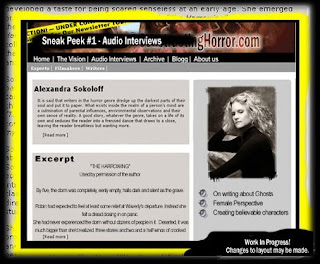 In the past I’ve mentioned an interesting website that I stumbled upon, Constructing Horror, a website that serves as a resource for horror writers.
One of the perspectives that they address is the connection between religion and horror, an area of research interest for me, and their current e-newsletter touched on this topic with the title “Why Religion is Deeply Connected to Horror.” Although their recent email was brief, it confirmed that I am not the only one who sees such connections in contemporary horror (as well as sci fi and fantasy), and it also raised some interesting issues for me.
As to my seeing a connection between religion and speculative fiction in film, I try not to inappropriately read things into film, but instead attempt to allow the storytellers to convey the aspects of their stories that they want for viewers. My reservations about reading something into films that is not there made me hesitant to see much by way of the significance of the symbolism in the Spielberg remake of War of the Worlds, but as the reader will see below where I have copied the bulk of the Constructing Horror email, those at Constructing Horror saw something significant in one of the film’s scenes as well:
“Hell is overflowing, and Satan is sending his dead to us. Why?
Because, you have sex out of wedlock,
you kill unborn children, you have man on man relations,
same sex marriage. How do you think your
God will judge you? Well friends, now we know.
When there is no more room in hell, the dead will
walk the earth.”
– Televangelist, Dawn of the Dead
“Horror writer, director and producer Clive Barker once said that there are at least two books in every American household: ‘One of them is the Bible and the other one is probably by Stephen King.’ The connection between horror and the supernatural forces are everywhere. Not only in movies like The Exorcist, The Omen, and more recently films like The Reaping. It goes far beyond that and is a powerful tool in creating uncertainty, the doubt of hope and horror.
“Stories are filled with supernatural creatures. The first descriptions of a Land of the Dead where written by Sumerians some four thousand years ago on tablets made of clay from the Tigris – Euphrates Valley north of the Persian Gulf. One of the first stories ever written, The Epic of Gilgamesh, is about the mythical king Gilgamesh’s journey into the regions of the underworld in his quest for immortality.
“It is easy to think that the power of religion has faded away in a modern, secular society – but in the 1950’s a survey revealed that 50% of Americans still believed in “Hell.” In a second survey, 66% of the American population expressed that they believe in the “Devil” (1988).
“While movies like Hellraiser, Event Horizon, and Angel Heart successfully use traditional religious imagery – repetition make clichés.
“How can you use the powers of heaven and hell in your stories?
“Think about it. What building was the first to collapse in the remake of War of the Worlds? What was on the radio during the first few minutes of Jeepers Creepers? Who was the first infected person that the protagonist of 28 Days Later saw in the otherwise deserted London?
“These choices were all conscious decisions made by the horror storytellers. The church is the first building to be demolished by the aliens in War of the Worlds. The God referred to by the crazy evangelist on the radio in Jeepers Creepers will not be of any help to Trish and Darry, and you will definitely not be receiving a good blessing from the contaminated priest in 28 Days Later.
This technique is used everywhere. The unfortunate victims in the remake of The Hills Have Eyes soon realize that their prayers have no effect. Nobody, not even God, is coming to help anyone. Learn to use religious imagery in both obvious and subtle ways and you will have a powerful tool at your disposal.”
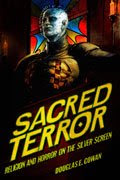
For those interested in an exploration of the complicated and often ambiguous relationship between horror and religion I highly recommend Douglas Cowan’s forthcoming book, Sacred Terror: Religion and Horror on the Silver Screen (Baylor University Press, October 2008).
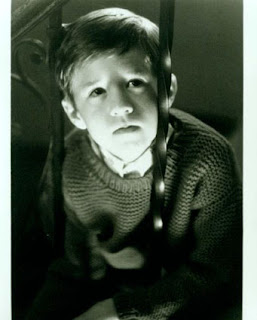 Regular readers of this blog might recall that in a previous post I mentioned my involved with LOTT D, a group of horror bloggers committed to excellence as they rise above the all-too-common froth of superficial commentary in the blogosphere. From time to time the members of LOTT D emphasize the community aspect of their work through the collective commentary on a given topic. I found the current topic of interest as it addresses “evil kids” in horror films and why they both fascinate and bother us so much.
I have yet to read the thoughts of my fellow LOTT D members on this topic, and this is purposeful on my part as I wish to contribute something that I hope will be unique. At any rate will at least come from the heart in my own experience, sprinkled with just a dash of intellectual reflection to boot. With this post I’ll provide a few reasons why I find kids in horror so disturbing, and perhaps these will resonate with others.
In my view there are at least two primary reasons why we find evil children so repulsive and fascinating in horror. First, children represent our individual and collective future, both in terms of the continuance of our individual family lineage as well as in the continued existence of the human race. We want our progeny to reflec the best of our contributin to the human race, not detract from it in significan ways. Secondly, the presence of evil children challenges parents in how well they did or did not raise their child, which raises the spectre that they may have contributed to the evil conducted by their offspring. Both aspects are tremendously important and may reflect on a portion of our angst over kids in horror.
Related to the first instance, I recently caught a program that looked at the past and continuing legacy of Hitler both in terms of his family members while he was alive, as well as those contemporary Hitlers who have branched out from the dictator’s family tree. Their connections to this evil individual had and have radical implications, both during World War II when a favored nephew was captured by the Russians in battle only to die in captivity due to the family connection to Hitler as a sinister uncle, and in the contemporary period where Hitler family members often live in seclusion. An evil child, or a child who at least grows up to become evil, taints our personal family lineage for generations to come.
In addition, there are the parental aspects of this topic, which may be even more disturbing than the question of lineage. Most parents try to do the best they can, and yet at times children turn out in ways which are less than the parenting ideal. This then leads to the nature vs. nurture debate as we wonder whether a child is born with “evil” inclinations or whether parental nurturing activities contributed to the negative state of affairs. In my casual reflection on this in light of horror films it seems like we tend toward an emphasis on the former prospect. In films like
It’s Alive (1974), or the classic
Twilight Zone episode
“It’s a Good Life” (1961), we have examples of children born monstrously evil. Such scenarios, although terribly frightening for the parents and the public which serves as victims, is
somehow palatable in that we would not blame the parents for some kind of genetic mutation. After all, our genetic code is inherited and out of our control (at least with present technology). Other films present scenarios where children are the result of a supernatural insertion of evil, both genetically and spiritually, into the human race. This can be found in films like
Rosemary’s Baby (1968), and
The Omen (1976). In this scenario we are faced with a child who is the spawn of Satan, and that has to be worthy of a visit to Dr. Phil for parenting advice, but as a variation on the genetic mutation, it too provides parents with a plausible level of deniability. Far less frequent, however, is the cinematic depiction of evil in children as a result of parental failings. It is far more comforting, it seems, to blame nature rather than our nurture.
But regardless of the reasons why, and my meager thoughts are by no means the only considerations on this topic, evil children are a facet of horror that has contributed both to our paradoxical repulsion and enjoyment of them, as well as the success of films that explore the subject.
You can find other thoughts on this topic that represent a sampling of contributors from LOTT D at blogcritics.org by clicking
here.
 The Religion and Popular Culture group on Yahoo! recently issued the following call for papers: