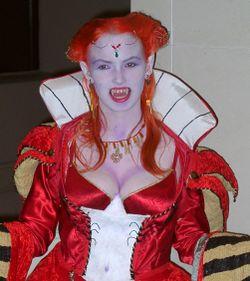
One of my favorite magazines that part of my Barnes & Noble viewing ritual is Cryptic Magazine. The Publisher, Chazz DeMoss, talks about the magazine and some of his other projects:
TheoFantastique: Chazz, thanks for agreeing to discuss some of your many horror activities. To begin, how did your imagination come to be captivated by all things horrorible, and how did this lead to your projects like Cryptic Magazine?
Chazz DeMoss: I was hooked on horror at birth, my rents took me to the drive in every weekend to see the latest horror features and I obviously became consumed by publications like Creepy, Eerie, Fangoria, Famous Monstersand more. I produce in film productions like a major budgeted horror feature titled “CYRUS” with Executive Producer Joel Castelberg and Director Mark Vadik. I am in the middle of producing this particular feature in Michigan and will be shooting throughout October 2008. I also play in a band called Wrecking Day and am being produced by Chad Banks of American Head Charge. I also produce horror convention such as CRYPTICONMINNEAPOLIS.com and CRYPTICONSEATTLE.com or The Minneapolis Indy Horrorfest as well as currently producing comics for Image Comics and just finished producing a band called Hate Incorporated from Kansas City, MO on a label called Arkham Music Inc. So Cryptic Magazine is one of many things horror I am involved in and as to how I got here? Pure passion for the genre I suppose.
TheoFantastique: Can you share a little of the origins and history of Cryptic Magazine?
Chazz DeMoss: It started of as a comic book company called Dead Dog Comics that put out many horror titles of either original creations or licensed such as Night of the Living Dead, Day of The Dead, Tom Sullivan’sBooks of the Dead or Curse of the Blood Clan to name just a few. Then evolved into this amazing and horror-driven publication that is made up of all the things horror I personally love… with a lot of influences that obviously show in its production.
TheoFantastique: For those who may not be familiar with its content, what types of subjects do you tackle in the magazine?
Chazz DeMoss: New Releases; Indy films; Cult Classic Cinema; Tattoos; Interviews with writers, directors, famous monsters, custom bikes, scream queen hotties; convention info: interviews with top name rock, metal, industrial or punk bands; and the best part, six horrifying tales illustrated and written by some of the best names in the genre… I could go on forever on this topic, I suggest you read it and find out for youself, if you are a real horror fan then you owe it to yourself to check it out.
TheoFantastique: What are some of the influences that go into it for the artists and writers?
Chazz DeMoss: Some stories I drive myself from starting conception to finished pages working with some of my favorite artists, like Tim Seeley, Mark Kidwell, Nat Jones or the amazing Jay Fotos to name a few. So when real talent comes calling I just can’t seem to turn it away, I wish every artist could get in the mag but it has become something more than just a mag, it has evolved and will soon become an online publication and television station known as www.crypticTV.com and is already growing new wings, so as for what is influencing, the artist in the form of either me or their own sick and twisted imagination.
TheoFantastique: Let’s talk a little about Crypticon Minneapolis. In November you will hold your third annual convention. How did you move from horror zine to convention?
Chazz DeMoss: I have been to every consistent horror show across this great nation and even some out of it, but wanted to bring that same love to areas that don’t have it. Besides it is every horror fans dreamworld to be in a convention filled with all things horror as well as some of your favorite stars, the magazine was only a tool to help such things grow. We also put on CRYPTICONSEATTLE.COM as well. I must say though that behind each show is also a great promoter. For example with Minneapolis (it’s my brother from another mother) “Nick Kaufman”, he is the real brains behind the Minneapolis show and the brawn behind Seattle is all around promotor master Bill Berry of Random Acts & BBM&E. Also the agents who book the talent are great to work with and help bring new and fresh faces from the core of the industry, this will be our second show in Seattle and our third in Minneapolis and both are growing rapidly thanks to not only us the fans but the agents and promoters alike.
TheoFantastique: What types of guests have you had in year’s past, and who are some highlights for 2008?
Chazz DeMoss: I have to say Sid Haig and Bill Moseley are my faves as far as past guest go (check out the links to past con guests right from the sites). But so far this year Tom Savini, a man of many talents and skills who has made himself an icon to the genre, will be great at this years show, and of course Doug Jones from Pan’s Labyrith and the Hellboymovies is someone I have yet to meet in all my many years of con going and creating. Doing cons, film festivals, and even promoting concerts are a few more of my sick passions with horror in its many forms but the con after parties are my favorite pass time and I usually have way too much fun to remember all of those so called highlights. If its horror related, then to me, its a highlight. I suggest you attend the Cinema Wasteland Show, in Strongsville OH. It’ the best cult cinema show in the country and by far my favorite show to attend. This year’s is Oct. 3-5 right outside Cleveland OH. I will be there and ready for lots of horrorfying fun!
TheoFantastique: What other companies and projects might readers be interested in?
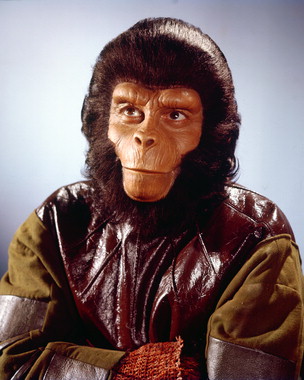
I’m a little late in promoting this information from a press release from Fox announcing the Blue-Ray DVD release of Planet of the Apes this November. I am a huge fan of the franchise as a formative one in my childhood interaction with sci fi, and last night’s research in trying to track down Eric Greene, author of Planet of the Apes as American Myth: Race, Politics, and Popular Culture (McFarland & Company Publishers, Inc., 2006), resulted in my discovery of the information. Incidentally, if anyone knows how to get in touch with Greene please pass along his contact information. I’d love to interview him about his book and how Planet of the Apes still serves an important function as American myth, a subject which I have posted on previously after reading the book but without benefit of direct interaction with the author.
For those fellow Apes fans who can’t get enough of this long-lived franchise, here is the information on the forthcoming Blue-Ray release:
Humans are even uglier in High-Defwhen Planet Of The Apes: 40 Year Evolution Blu-ray Collection takes over the Earth November 4th in North America and throughout the Fall Internationally from Twentieth Century Fox Home Entertainment. This spectacular set includes all five hair – raising Planet Of The Apes films on Blu-ray for the first time, including Beneath The Planet Of The Apes, Escape From The Planet Of The Apes, Conquest Of The Planet Of The Apes, Battle For The Planet Of The Apes, and the 1968 original Planet Of The Apes, which stunned audiences with its now-iconic conclusion and shockingly dystopian view of humanity’s fate. From an age of film when science fiction served as allegory in addition to providing thrilling spectacle and edge-of-your-seat adventure, the Planet Of The Apes franchise set the gold standard for Sci-Fi films. Now the films that changed the face of science fiction forever will be available in the ultimate home viewing format. This year’s Comic Con International 2008 provided fans a first look at some of the exciting extras to be featured on the Blu-ray discs.
Planet Of The Apes: 40 Year Evolution Blu-ray Collection is packed with exclusive new High-Def content. As a special treat for Apes fans, the collection includes an unrated version of Conquest of the Planet of the Apes. Previously unreleased in the United States, this version includes eight minutes of unrated footage. Other new special content includes an “Evolution of the Apes” documentary chronicling the evolution of the Apes universe from novel to the big screen, an “Impact of the Apes” featurette exploring the cultural impact of the franchise and a never-before-seen public service announcement from ANSA about the seminal flight of the “Project Liberty” crew. Each Planet Of The Apes sequel included in the beautifully packaged collection will contain brand new High-Def making-of featurettes and will be available for the suggested retail price of $159.98 U.S.
In addition, the previously released Limited Edition Planet Of The Apes Ultimate Collection will be available in the uniquely packaged ape head just in time for the holidays at a more attractive price.
Planet Of The Apes: 40 Year Evolution Blu-ray Collection Blu-ray Disc Special Features:
Each Planet Of The Apes Blu-ray Disc will be authored in Java on a double-layer disc presented in widescreen (2.35:1 aspect ratio) with newly mastered English 5.1 DTS Master Audio, English, Spanish and French Mono and includes English and Spanish subtitles. All new special features will be presented in High-Def. Bonus features include:
NEW Science of the Apes BONUSVIEW – Scientists, anthropologists and sociologists discuss the facts and fiction of the first film
NEW “Beyond the Forbidden Zone” Adventure Game
NEW “A Public Service Announcement From ANSA” in HD – A mission report from the agency regarding their brave astronauts
NEW “Evolution of the Apes”- HD featurette tracing the apes story from the original novel to the screen
NEW “Impact of the Apes” – HD featurette on how to market a worldwide pop culture phenomenon. The story behind the marketing and merchandising of one of the first ever film franchises and the series’ lasting influence on pop culture through the years
NEW HD Making-of Featurette for Each Sequel:
Beneath the Planet of the Apes – “From Alpha to Omega: Building a Sequel”
Escape from the Planet of the Apes – “ The Secret Behind Escape”
Conquest of the Planet of the Apes – “ Riots and Revolutions: Confronting the Times”
Battle for the Planet of the Apes – “ End of an Epic: The Final Battle”
NEW Each Apes sequel will have an isolated score track in 5.1 DTS Master Audio
Commentary by Composer Jerry Goldsmith
Commentary by Actors Roddy McDowall, Natalie Trundy, Kim Hunter and Makeup Artist John Chambers
Text Commentary by Eric Greene and Author of “Planet of the Apes as American Myth”
Behind the Planet of the Apes Documentary – Includes all new interactivity and timeline
Behind the Planet of the Apes Promo (1988)
Planet of the Apes Makeup Test with Edward G. Robinson (1966)
Roddy McDowall On-set Footage
Planet of the Apes Dailies and Outtakes (No Audio)
Planet of the Apes NATO Presentation (1967)
Planet of the Apes Vintage Featurette (1968)
A Look Behind the Planet of the Apes (1972)
Don Taylor Directs Escape from the Planet of the Apes
J. Lee Thompson Directs Conquest of the Planet of the Apes
Original Theatrical Trailers
Original Sketches by Costume Designer Morton Haack
I’ve been reflecting on science fiction films recently in preparation for a future interview to be posted here. Years ago it was an encounter with science fiction, later fantasy films, and eventually horror, that produced a lifelong interest in the fantastic. For some reason two sci fi films from the 1970s have been on my mind, and with the discovery of a few items related to each on YouTube to spur my memory I thought I’d comment on them.
While the 1950s are usually considered as one of the high points for sci fi films in light of those cinematic gems that addressed American fears of the bomb, communism, and cultural conformity, other decades have much to offer in this genre as well. Some of the highlights of 1970s sci fi include Colossus: The Forbin Project (1970), The Andromeda Strain (1971), A Clockwork Orange (1971), The Omega Man (1971), Soylent Green (1973), The Stepford Wives (1975), Invasion of the Bodysnatchers (remake) (1978), and Altered States (1980). (For those wondering why Alien[1978] is not on my list, although it is highly regarded in my thinking, it is more properly classified as a horror film set in space rather than a sci fi film.) Two additional sci fi films in this genre worthy of mention are Westworld and Logan’s Run. These films are still rewarding cinematically, and offer fodder for reflection.
Westworld (1973) was the second of Michael Crichton’s novels to be turned into films. The first was The Andromeda Strain, but this second novel adaptation saw the author’s imprints on the screenplay and film direction. The storyline is set in the near future where advances in robotics have permitted the creation of a theme park with three themes of the Old West, medieval Europe, and ancient Rome recreated and available for guests to enjoy and explore in a living fantasy. Think Disneyland for adults with no childlike connotations. Theoretically the robots, which look almost perfectly human with the exception of minor flaws in appearance, are programmed in such a way as to prohibit the harm of humans. However, the robots eventually begin to suffer a series of behavioral problems which eventually expand into a systematic failure resulting in all of the safety features being overridden, and along with it, the injury and death of park vacationers.
As the title indicates, the film focuses on the Old West fantasy scenario, particularly in the form of Richard Benjamin’s character as an urban vacationer, and a robotic Gunslinger played by Yul Brynner. The first few interactions between Benjamin and Brynner are fairly routine in terms of cowboy shootouts resulting in the death of the villain dressed in black. But once the robotic system breaks down, Benjamin is in a fight for his life as he seeks to escape the Gunslinger hunting him with advanced senses of automated sight and hearing.
Although this film does not appear to be discussed much in film criticism that addresses sci fi, it has been influential in popular culture with several episodes of The Simpson’s engaging in parody of the film, and horror and sci fi director John Carpenter claiming the Brynner’s Gunslinger was the inspiration for the Michael Myers character in Halloween.
Westworld is a film worthy of fresh visitation, if not a remake. Like Crichton’s later novel and book, Jurassic Park, it addresses our anxieties over science and technology run amok. With the major advances in robotics and issues surrounding the trans-human, the issues raised by Westworld would seem even more timely in the 21st century.
Logan’s Run(1976), is another significant sci fi film from the decade. This film is based upon a novel authored by William F. Nolan and George Clayton Johnson. It too is set in the future, but unlike Westworld, this film presents a postapocalyptic, dystopian future where life involves living life to its fullest in fulfillment of almost any fantasy but with a serious catch: due to overpopulation lifespans are limited to thirty years. As these citizens of the future near their thirtieth birthday they are to report to authorities, and many do so with the hope of receiving renewal and extension of life beyond year thirty. However, as might be expected, not everyone is pleased with the idea of execution at such an early age, and those who do not report become runners who are hunted by authorities. One of the main characters is one of these authorities, a Sandman, played by Michael York. Although only twenty-six, his lifeclock is changed by the system to appear as if he is thirty, and he is turned into a runner so that he might find the rumored Sanctuary for those runners escaping death.
In my view, Logan’s Run is not as good as Westworld, nevertheless it is still a good film. It too touches on cultural and social themes that are of interest to a twenty-first century audience, even more so than for those of the closing decades of the twentieth century when the film was originally released. The aspects of the story arch that touch on apocalypticism, overpopulation, and the definition of old age are of continued interest in our time, and Logan’s Run provides the “othering” and critical distance necessary for us to reflect upon them.
In 2007 Ridley Scott expressed his dismay at the state of science fiction films and wondered whether they have gone the way of the Western. But is sci fi dead? As the continued relevance of these two classic sci fi films indicate, it is not the genre that has passed into irrelevance, it is the lack of imagination and creativity on the part of filmmakers and storytellers in the late modern period that has contributed to sci fi’s malaise. Perhaps films like these can provide inspiration for new sci fi epics that capture our imagination and challenge our thinking.
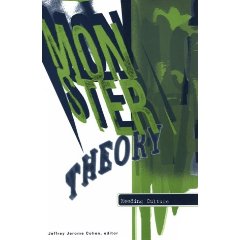
As I searched Amazon.com for reading materials related to the fantastic to add to my wishlist the description of Monster Theory: Reading Culture (University of Minnesota Press, 1996) struck me as intriguing:
“Explores concepts of monstrosity in Western civilization from Beowulf to Jurassic Park.
“We live in a time of monsters. Monsters provide a key to understanding the culture that spawned them. So argue the essays in this wide-ranging and fascinating collection that asks the question, What happens when critical theorists take the study of monsters seriously as a means of examining our culture?
“In viewing the monstrous body as a metaphor for the cultural body, the contributors to Monster Theory consider beasts, demons, freaks, and fiends as symbolic expressions of cultural unease that pervade a society and shape its collective behavior. Through a historical sampling of monsters, these essays argue that our fascination for the monstrous testifies to our continued desire to explore difference and prohibition.”
Monster Theory is edited by Jeffrey J. Cohen who is associate professor of English and human sciences at George Washington University. Dr. Cohen agreed to discuss the collection of essays that make up this book, and in particular his contribution to the volume.
TheoFantastique: Dr. Cohen, thank you for your willingness to discuss the book you edited that discusses monsters and their part in culture. With an intercultural studies background, and a personal interest in expressions of the fantastic and monstrous in pop culture, your book struck a number of chords with me. In the preface you note that “monstrousness” has become “a mode of cultural discourse.” This may seem strange to some who only see this as a fringe phenomenon that surfaces at Halloween or in horror films, but can you provide some examples of how this manifests itself?
Jeffrey Cohen: It’s funny, we’re used to thinking about monsters as fringe phenomena, but there is nothing ultimately all that marginal about them. Although we tend to place them at the world’s borders, at the edges of calendars, at the farthest reaches of outer space … they nonetheless reveal themselves as intimate to everything we do. Look at the adjective we both just used to describe the monster, fringe. That happens to be the name of a new television show I watched last night, a repackaged and gorier version of The X Files. The show is filled with monstrosities, like a baby that ages to a decrepit old man in a matter of minutes. I’ve also been watching the BBC series Primeval, about intrusions of dinosaurs into contemporary London. Horror films don’t appear only at Halloween: they represent one of the most perennially popular cinematic genres. So, even though we’re used to thinking of the monster as inhabiting some distant geography, it always turns up much closer to home, and much more frequently than you might expect.
TheoFantastique: In your chapter in the book you provide what you call “a new modus legendi: a method of reading cultures from the monsters they engender.” How did this interest in cultural reading come about for you on a personal level?
Jeffrey Cohen: That’s a tough question! I suppose I could push my fascination with monsters all the way back to my childhood, when I was haunted by frequent dreams of stone giants, so much so that I developed an elaborate personal mythology about them. I also loved watching B grade monster movies: my Saturday afternoons were frequently lost to “The Creature Double Feature.” There is nothing more enjoyable than a badly done 1950s alien or monster film.
TheoFantastique: Can you provide a few thoughts about what America’s monsters say about us as a culture, and connect this to a few examples from popular culture?
Jeffrey Cohen: Not really. I don’t understand contemporary American culture very well because I live it. Being in Washington DC and feeling alienated from most of what goes on at the White House doesn’t help. Actually, I’ll offer this hypothesis: it is very difficult to come up with a monster that reveals much about our culture because at this point we’ve come to believe that we do not possess a common one — that is, we have been in an enduring state of thinking passionately about what sets citizens of the US apart from each other (red versus blue, believers versus secularists, liberals versus conservatives, and so on). We don’t really want a monster to give us unity, to organize us into a collective against something.
TheoFantastique: You also state that “monsters are never created ex nihilo,” and that they “must be examined within the intricate matrix of relations (social, cultural, and literary-historical) that generate them.” You then discuss this in light of the evolution of the vampire from Stoker’s literary creation to Anne Rice’s vampires to Coppola’s film Bram Stoker’s Dracula. What aspects of cultural development have impacted this metamorphosis in the vampire and how does this shift in the monstrous help us to understand our anxieties?
Jeffrey Cohen: You could argue that what Stoker explored through his rather xenophobic rendition of a vampire was contemporary national identities and what was for him the problem of foreign immigration. There is also a current of sexual fear in his monsters. Anne Rice’s sympathetic vampires are about the positive allure of the erotic. They are also, at least early on, a drinker’s paean to alcoholism. Each book was popular in its time because it managed to tap into the fears and desires of its audience: Stoker reacts against a historical reality, Rice responds positively to (and here I’ll pick up another theme from her work) the gay rights movement and offers an positive vision of homoeroticism.
TheoFantastique: In your discussion of “seven theses toward understanding cultures through the monsters they bear,” thesis seven is “The Monster Stands at the Threshold … of Becoming.” Under this thesis you state that “monsters are our children” and that in a sense “they ask us why we have created them.” This thesis might make readers a little uncomfortable in that monsters for many are more fun as escapist entertainment. But if we want to understand ourselves, our social interactions, and our culture better by way of self-reflection in light of our monsters how might we take more ownership of them as our offspring even if we consider them our illegitimate children?
Jeffrey Cohen: Disidentification against the monster is too easy, and will never allow us to understand why children AND adults get so much pleasure from donning a frightening costume every Halloween. Prospero said it best at the end of The Tempest: “This thing of darkness I acknowledge mine.” Monsters can be used for all kinds of evil, especially to demonize and dehumanize groups and cultures. To acknowledge the monster’s source in the self is not only to have a more capacious view of humanity, it is also to act responsibly to our fears and desires.
TheoFantastique: Thank you for your discussion of this interesting book. I hope as a result of our dialogue that it becomes a source for more reflection.
At times the lines between fact and fiction are blurred when it comes to the fantastic in popular culture and identification with the various characters and creatures that inhabit it. At times the lines are not so much blurred as they are dissolved. Christopher Partridge speaks of “fact-fiction reversals” that exist, and that as a result various influences in entertainment have such a strong influence that they begin “to have a shaping effect on Western plausibility structures.” This is particularly the case with popular sacred narratives that are informed by what Partridge calls “popular occulture” with its exploration and celebration of fairies, vampires, werewolves, orcs and Jedi knights. Adam Possamai has discussed the significance of these characters and their accompanying myths as well in his exploration of “hyper-real religions” devoted to myths such as Matrixism and Jediism. Given the impact of the literature and films of the fantastic on popular culture and its participants, scholars like Partridge conclude that it represents a phenomenon that “is socially, psychologically, and spiritually consequential.”
Within the context of the nexus of the fantastic and popular culture one of the more interesting expressions of this is the Otherkin. Danielle Kirby has written on this fascinating community in Frances Di Lauro, ed., Through a glass darkly: reflections on the sacred(Sydney: Sydney University Press, 2006). She also presented a paper on this topic at a conference titled Exploring the Religion and the Sacred in a Media Age in the U.K. in 2007. The paper was titled “Pulp fiction and the revealed text: an inquiry into the treatment of fantasy and science fiction narratives within the Otherkin community.” This paper was revised to become a chapter contribution as part of a forthcoming book to be published by Ashgate.
Kirby describes the Otherkin as “a loosely affiliated virtual community with an alternative metaphysical foundation” which can be found at websites such as www.otherkin.net. In her discussion of this community she notes that “The unifying feature of the Otherkin community is a shared belief in non-human, often fantastic or mythological, souls and selves.” As noted above, this understanding of self-identity is forged through the “conscious integration of explicitly fictional narrative into a sacred or spiritual context.” Here the fictional texts of the films of Star Wars informs Jediism, H.P. Lovecraft’s writings inform the Church of All Worlds, and the corpus of vampire mythology in literature and film informs vampires within the Otherkin.
One of the striking features of the Otherkin community is how their interaction with narrative fiction informs a sense of self-identity that goes much further than those involved with Jediism or various aspects of Neo-Paganism. Kirby says that the Otherkin “believe, primarily, that they are in some way other than human. The non-human aspects appear to have been largely drawn from mythology and fantasy literature,” and “[t]his relationship to the fantastic takes a variety of forms and can mean a non-human soul in a human body, multiple souls residing within the same person or inter-species reincarnation.”
In my exploration of the fantastic in popular culture as an academic, the existence of subcultures like the Otherkin with their neo-religiosity represent a fascinating path for research and understanding.
One of the very first books that I purchased wich explores horror films from an academic perspective was Gregary A. Waller, ed., American Horrors: Essays on the American Horror Film(Urbana and Chicago: University of Illinois Press, 1987). The volume includes a number of intriguing essays, including one by Virginia Wright Wexman titled “The Trauma of Infancy in Roman Polanski’s Rosemary’s Baby“. Dr. Wexman teaches in the Department of English at the University of Illinois at Chicago. Her contribution to American Horrors drew in part upon her her PhD studies. The abstract for her chapter reads as follows:
“Drawing upon material included in her 1985 book, Roman Polanski, Virginia Wright Wexman situates Rosemary’s Babyin the context of Polanski’s career, particularly his other horror films, which take as their pincipal concern not simply the ‘other’ – a time-honored motif in the genre – but ‘otherness’ itself. Wexman argues that by presenting insanity, regression, physical alienation, and female sexual dis-ease against a realistic backdrop, Rosemary’s Babyand Polanski’s other horror films evoke the sort of ambiguity that Tzvetan Todorov finds to be characteristic of the ‘fantastic..’ Unlike Dillard, Wexman devotes considerable attention to the textual positioning of the film viewer and thus raises fundamental questions about our role in response to horror films.”
Dr. Wexman recently responded to a few questions concerning her thoughts about Polanki’s horror, particularly Rosemary’s Baby.
TheoFantastique: How did you come to the study of Roman Polanski’s work, and what place does Rosemary’s Baby have for you in his cinematic canon?
Virginia Wexman: I had written a chapter on Chinatown as part of my PhD dissertation on the hard boiled detective film and became interested in Polanski as a result
of that research.
I see Rosemary’s Baby as the most successful example of Polanski’s popular horror films (which include Repulsion, Dance of the Vampires, The Tenant, and The Ninth Gate).
TheoFantastique: In your discussion of Polanski’s films in American Horrors you refer to Polanski’s ability to transform the horror genre’s focus on the “monstrous other” as he shapes it into the “monstrous us.” How did he do this in Rosemary’s Baby?
Virginia Wexman: Polanski is able to engage his audiences’ sympathies with the “monstrous” characters at the center of these films (for example, the murderous Carol Ledoux in Repulsionand the profoundly disturbed Trelkovsky in The Tenant). In the case of Rosemary’s Baby, the threat of Satanism lies outside of the heroine, but the changes in Rosemary’s appearance and the putative devil child in her womb put her own body at the center of the horror that is being perpetrated.
TheoFantastique: One of the interesting facets of your discussion for me was when you drew attention to the positive and unambiguous depictions of religion in Levin’s story upon which Polankski’s film was based, but that this was changed so that religious belief is satirized and made more ambiguous by Polanski. Was this just a reflection of the culture of the 1960s or was this somehow a reflection of Polanski’s own feelings on such matters?
Virginia Wexman: Polanski has always been inclined to satirize religious beliefs. One can see this tendency even in the short film When Angels Fall, which he made while still a student at the Lotz film school.
TheoFantastique: In the forty years since Rosemary’s Baby appeared in theaters how do you think it holds up as a film in general, and specifically as a horror film? And what might its legacy be?
Virginia Wexman:Rosemary’s Baby began a cycle of devil child films that lasted through the early 1970s. More generally, it rescued the horror genre from the exploitation backwater it had fallen into during the 1950s, opening the way for subsequent prestige horror movies such as The Exorcist and Alien.
TheoFantastique: As a student of Polanski’s work, what are your thoughts about The Ninth Gate? Some have suggested that this film may rival Rosemary’s Baby as his finest piece of horror cinema.
Virginia Wexman: I find Rosemary’s Baby of special interest because of the way in which it creates ambiguities between the “real” world and what is going on inside Rosemary’s mind and body. These ambiguities are part of a larger uncertainty the film develops about whether Satanism or insanity is at issue. The Ninth Gate, in my view, lacks these ambiguities; it is closer to a conventional horror film, with an emphasis on the supernatural.
TheoFantastique: I appreciate your perspective on that film but this is where I would have to respectfully disagree. On my first screening of The Ninth GateI initially dismissed it, but upon subsequent viewings and reflection, I think it is a multi-layered, significant, and neglected horror film and piece of Polanski’s work in horror. While it may not include the ambiguities that Rosemary’s Baby does, the way unique way in which it treats the figure of Satan, and its incorporation of Western esotericism within the horror genre, make one of Polanski’s best films, and perhaps a horror film that rivals Rosemary’s Baby. For those interested in my discussion on this see my previous post on the topic of “Satanic Cinema.”
Dr. Wexman, thank you for sharing your thoughts on Polanskis’ horror, and specifically on Rosemary’s Baby.
Virginia Wexman: Thanks for your interest in my work.
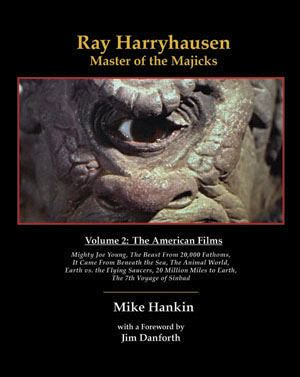
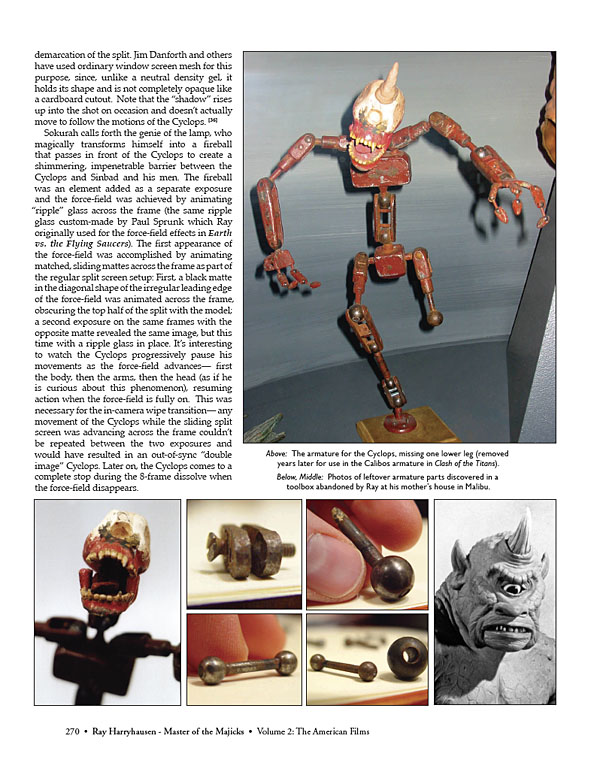
I recently became aware of a new and extensive book on the work of Ray Harryhausen that will be published this coming weekend. The book is coming out as part of a three-volume series called Ray Harryhausen – Master of the Majicks. It is authored by Mike Hankin and published by Archive Editions and Ernest Farino. Both Mike and Ernest have carved time out of their busy book promotion schedules to talk about this great new work.
TheoFantastique: Mike, thanks for your willingness to discuss this book. You bring not only an appreciation for Ray’s work as a fan to this new book project, but also a long friendship. Can you sketch for us when you first caught the “Harryhausen bug,” how you and Ray came to be acquainted, and how your relationship coalesced into Ray Harryhausen – Master of the Majicks?
Mike Hankin: The first Harryhausen film I saw was Mysterious Island, released in the UK in the summer of 1962. I had seen the upcoming trailers and was so keen to see the film that I was at the cinema for the very first showing at 1 p.m., and didn’t come out until the last showing finished at 11 p.m. I was only thirteen years old and, as you can imagine, by the time I got home my parents were going mad with worry. Despite a severe telling off, I went back to see the film the following day and saw it at least twice each day until the end of its run. It is still my favourite Harryhausen film.
I first met Ray at a film convention in London, where he was giving a lecture. I wanted to interview him for a project I was working on, and through a friend got introduced, then invited to his home in London. I discovered we had so many interests in common, including film music and Laurel and Hardy. I arranged for Ray to become an honorary member of the the Sons of the Desert (the Laurel and Hardy Appreciation Society), and we exchanged film soundtracks.
From then on I became a regular visitor to Ray’s home, and got involved with several projects connected to his work. In casual chats I was learning so much about his films, much more than he had mentioned in any interviews. I constantly tried to persuade him to write a full autobiography, but he always said he had other things he would rather do. Eventually, I plucked up the courage to ask if he would let me write a biography. He just said “Go ahead.”
Shortly after I spent two days at his home, just looking through the bound scrapbooks he keeps on each of his films. These contain the script, storyboards, pre-production and production stills, reviews, clippings and much more. I was in seventh heaven. That was in 1986.
So many people have remarked, how can you spent so long on one project. All I can say is that I was having so much fun. I have travelled thousands of miles, written hundreds of letters, made numerous phone calls and traded countless emails, meeting so many wonderful people along the way. First and foremost I am a fan of Ray Harryhausen. I admire his many skills, how his mind works, I wanted to find out every minor detail about his career, and Ernie is the same. The whole enterprise has been so rewarding. During the time I was putting this all together I have chaired a lecture with Ray at a film festival; I have sat with him during a so-called sweat-box session for a new film project at an animation studio in England; I sat between Ray and Ray Bradbury at the pre-Star on the Hollywood Walk of Fame dinner, and had Ray Bradbury say to me, “It’s good to sit next to a fellow author”. Can you imagine what that was like for a Harryhausen fan! Yes, I would be in cloud cuckoo land to believe for one moment what the great Ray Bradbury said to me, but it not only sent a shiver down my spine, but I also had a smile on my face continuously for the rest of the trip.
TheoFantastique: I remember as a young Harryhausen fan in the 1970s how difficult it was to find books on Ray and his films, and many times sci fi and monster magazine articles and interviews had to suffice. Now we have several good works that are available. What makes this new work stand out as a unique contribution to works that discuss Ray’s work and legacy?
Mike Hankin: Without doubt it is the interviews I conducted with so many people. I had great chats with Diana and Vanessa Harryhausen, when Ray was sent out of the room. Ray put me in contact with many people, such as Ray Bradbury, Wilkie Cooper and Beverley Cross. Other people took a little more tracking down, such as Michael Craig in Australia, John Cairney in New Zealand, Enzo Musumeci-Greco and Ferinando Poggi in Italy, as well as people such as model builder Arthur Hayward, film editor Jenny Holt, who were no longer involved in the film industry and Roy Field, who finally answered so many questions I had on the fate of the superior Sodium Light Travelling Matte system. Actor Tim Pigott Smith told me what it was like to be directed by Ray during the scorpion fight in Clash of the Titans (he was actually telling me the story in a busy restaurant, which suddenly became quiet as everyone listened). Each person, actors, directors, writers, cinematographers, technicians, friends, each had a story to tell, many who had never been asked before, and sadly many are no longer with us, which makes this record all the more important. Another important point is that time plays havoc with your memory, so we always checked, then checked again whatever we were told. We never took stories we heard about Ray as fact, we questioned everything.
TheoFantastique:Master of the Majicks will be released in three volumes with the first release, Volume 2, coming out on Sunday, September 14. Why three volumes, and why is the second volume going to be released first?
Mike Hankin: The book was very different when it was originally going to be published by another company in the early 1990s. Since Ernie Farino became involved, the book has expanded so much that it would have meant drastic cutting to get everything into a single volume, which neither Ernie or myself wanted to do. We decided to split the book into three volumes, covering the early years; Ray’s first venture in feature films to his last film made in America; then finally the films he made when he moved to England and beyond. There were many people who read through the manuscript and learnt so much in the early chapters, but couldn’t wait to get to the feature films. These are the films that they grew up with and wanted to read about. So, we thought start with the big story, then go back to the beginning. Well, Star Wars did it, so why not us.
TheoFantastique: What are some of the facets of this three-volume series that in your view will make it an important contribution to the library of Harryhausen fans, as well as fans of fantasy films and special effects wizards?
Mike Hankin: I believe it is the coverage of everything Harryhausen, his whole creative process, his influence on others in the industry and also other fields, which is really quite amazing. It will also compliment Ray’s own book, by adding details to stories that he may have only briefly mentioned, such as the fate of the models and equipment he used. Whenever a film process is mentioned, we have gone to great pains to explain how and why it works. It will also be a source of information for the collector, with numerous images of posters, magazine covers, lobby stills from around the world, plus all other materials connected to the films. We haven’t forgotten things such as contemporary reviews, budgets, music, promotions and scores of other items that are sometimes neglected.
TheoFantastique: I understand that your book will include new photos and other visual materials. Can you comment on what we might anticipate? Mike Hankin: Ray gave me many stills before he began writing his own book when, for obvious reasons, that particular source came to an end. Many of the people I interviewed loaned me stills from their private collections. Then Ernie got to work, contacting many collectors and archives, finding the material that few people had seen before. Many of these images would often throw up new questions that we set about answering. For instance, in volume two there images from an outtake reel featuring unused animation cuts from The Beast From 20,000 Fathoms and It Came From Beneath the Sea. Ray explains why these weren’t used.
TheoFantastique: How did you come to be associated with Archive Editions as the publisher for this book series?
Mike Hankin: When I was with my original publisher I contacted Ernie Farino and Sam Calvin for information about the creation of the Harryhausen fanzine FXRH. Ernie kindly loaned me a stack of stills covering Ray’s early experiments. When my publisher went out of business I wrote to Ernie asking if I could hang on to the stills while I searched for another publisher. Ernie had just set up Archive Editions and was planning to do a Best of FXRH as his first project, but came in with an offer to do my book instead. I knew straight away that Ernie would bring to the project much more than any other publisher, and I haven’t been proved wrong. He laid down his plans, targeted the areas he thought could be improved and set me a whole lot of extra work, but it has been worth it. It has been a bit of a roller-coaster ride over the last few years, just financing this huge enterprise, yet here it is, the best possible way of expressing our gratitude for Ray’s choice of career.
TheoFantastique: Ernie, let’s get your perspective on this project as the publisher through your Archive Editions. Let me ask you a question similar to one I asked Mike. I remember many years ago that it was difficult to find books on Ray, but I managed to go through rare and used book dealers to find copies of From the Land Beyond Beyond, and later Film Fantasy Scrapbook. Now we have several good books out, including a few contributed to by Ray himself. What was it about this book project that made you want to get involved in seeing it published?
Ernest Farino: As Mike mentioned, I was the co-creator of the Ray Harryhausen fanzine FXRH, four issues of which were published from 1971 to 1974. Like many people, Ray’s work inspired my interest in animation and visual effects and the magazine was a great way to combine that interest with my interest in graphic design. Later, my work in animation escalated into a professional career and I worked on numerous films and television projects, some involving stop motion.In 1994 I was in Prague as Visual Effects Supervisor on a film called Snow White in the Black Forest starring Sigourney Weaver, and I first started to contemplate getting back into publishing. Ever-improving computer technology was clearly starting to make this idea a viable possibility in terms of page layout software, photo treatment, and so on.
I began to consider ideas for projects, but it wasn’t until 1997 that Mike Hankin contacted me (ironically, I was once again out of the country working on a mini-series in Australia). The original publisher for Master of the Majicks had dropped out and Mike was letting me know that material I had previously contributed from my own collection was still safe and sound. That jump-started my thinking that this might be the perfect project to embark on this new enterprise, and Mike and I soon made a deal to do the book.What followed was an involved process that saw the evolution and development of the book itself running parallel to my setting up my business, acquiring hardware and software, and many other details.
Having said all that, the subject matter really made the difference, of course. I don’t think I would have had as much drive and interest along these lines had the book been about something else. But here, the perfect subject came together at the right time.
TheoFantastique: Given your long association with Ray and familiarity with his work, was there anything in this book series that took you by pleasant surprise?
Ernest Farino: There’s no single event or discovery that stands out, but, rather, an ongoing series of discoveries and revelations in terms of photographic material and the kind of information that only comes from focused research. It was great to have the platform for pursuing historical and technical details related to Ray’s films and in some cases, other films from the period that relate to Ray’s work. Mike has been able to contact any number of people who worked on Ray’s films, such as all three “Sinbad” directors: Nathan Juran (The 7th Voyage of Sinbad) and Gordon Hessler (The Golden Voyage of Sinbad) and Sam Wanamaker (Sinbad and the Eye of the Tiger), actors like Kerwin Mathews (The 7th Voyage of Sinbad) and Paul Christian (The Beast from 20,000 Fathoms), and various technicians who worked on the miniatures and opticals on Ray’s films. Many stories and details have come to light that I don’t believe have ever been explored in the past.
One interesting example came from another bit of serendipity or coincidence. In the early 1990s I directed a one-act play in Los Angeles, a very funny comedy called Dub. The play was written by Henry Slesar, who lived on the east coast, and I had occasion to speak to Slesar a couple of times about the play. His name sounded familiar to me, but I thought it was just from some TV shows he’d written, such as classic episodes of The Twilight Zone and Alfred Hitchcock Presents. It wasn’t until a few years later when working on the Harryhausen book that I finally made the connection: Henry Slesar had written the Amazing Stories “novelization” of Harryhausen’s film 20 Million Miles to Earth, which was later serialized in Famous Monster of Filmland magazine. I immediately got back in touch with him; Slesar remembered me from the play and kindly wrote a nice recollection of his experience writing the novelization of 20 Million back in 1957. This story is new and exclusive to the book and, since Slesar passed away a couple of years after that, something I’m all the more pleased to include “for the record.”
TheoFantastique: How do you see this new book as a “must have” for serious Harryhausen fans?
Ernest Farino: One thing I realized right from the start was that, unlike Ray’s own books, including Film Fantasy Scrapbook from the 1970s, we were going to be able to provide a much broader perspective to the making of these films. Ray’s books are memoirs from his own perspective, which is perfectly valid, but we’ve been able to enhance and elaborate on many of the details of the history and techniques behind the films. So I think this 3-volume set is not only a legitimate companion to Ray’s books but a research source that goes much farther as a comprehensive overview.
We’ve also structured the chapters much like the actual making of the films themselves. Each chapter starts with the initial concept or idea behind the film, then the development of the script and pre-production, then filming of the movie, the post production animation and visual effects, and finally wrapping up with the advertising, publicity and release of the completed film. So one can get a feeling for the natural, chronological process that went into making the films.
TheoFantastique: Mike and Ernie, thanks again for sharing about this book. I hope it will become a cherished part of the collection of Harryhausen fans around the world. Readers can click here for more information, a preview, and to place orders.
The Halloween season has already begun around the country, particularly in Utah. I have been enjoying the Michael’s store collection of the Lemax Spookytown items, and Walgreens now has their Halloween items displayed. I understand that Big Lots! has their’s in, and Wal-Mart and Target will soon follow suit. The hint of fall, and the Halloween season are in the air!
I am pursuing my love for this season in new ways this year by putting together my most ambitious home haunt display. In addition, I will be working as an actor with my son at the Nightmare on 13th haunted house in Salt Lake City. There are some 1,300 haunted houses nationwide, not counting the 300 theme parks that also include haunt aspects, making this a large and growing industry. Nightmare on 13th is considered one of the top one percent of American’s haunted houses based upon the professionalism of the haunt, and the number of people that visit each season.
Click on the Youtube video above to see their 2008 television ad. If you’re in the Utah area I hope to scare you soon at the Nightmare on 13th.
I recently discovered an interesting academic source that explores horror and which I have included in my Exploring the Fantastic links, the Irish Gothic Horror Journal. This is a publication available in totality on the Internet, and as I reviewed the contents for various issues one of the items that caught my attention was an article by Finn Ballard titled “No Trespassing: The Post-Millennial Road-Horror Movie.”
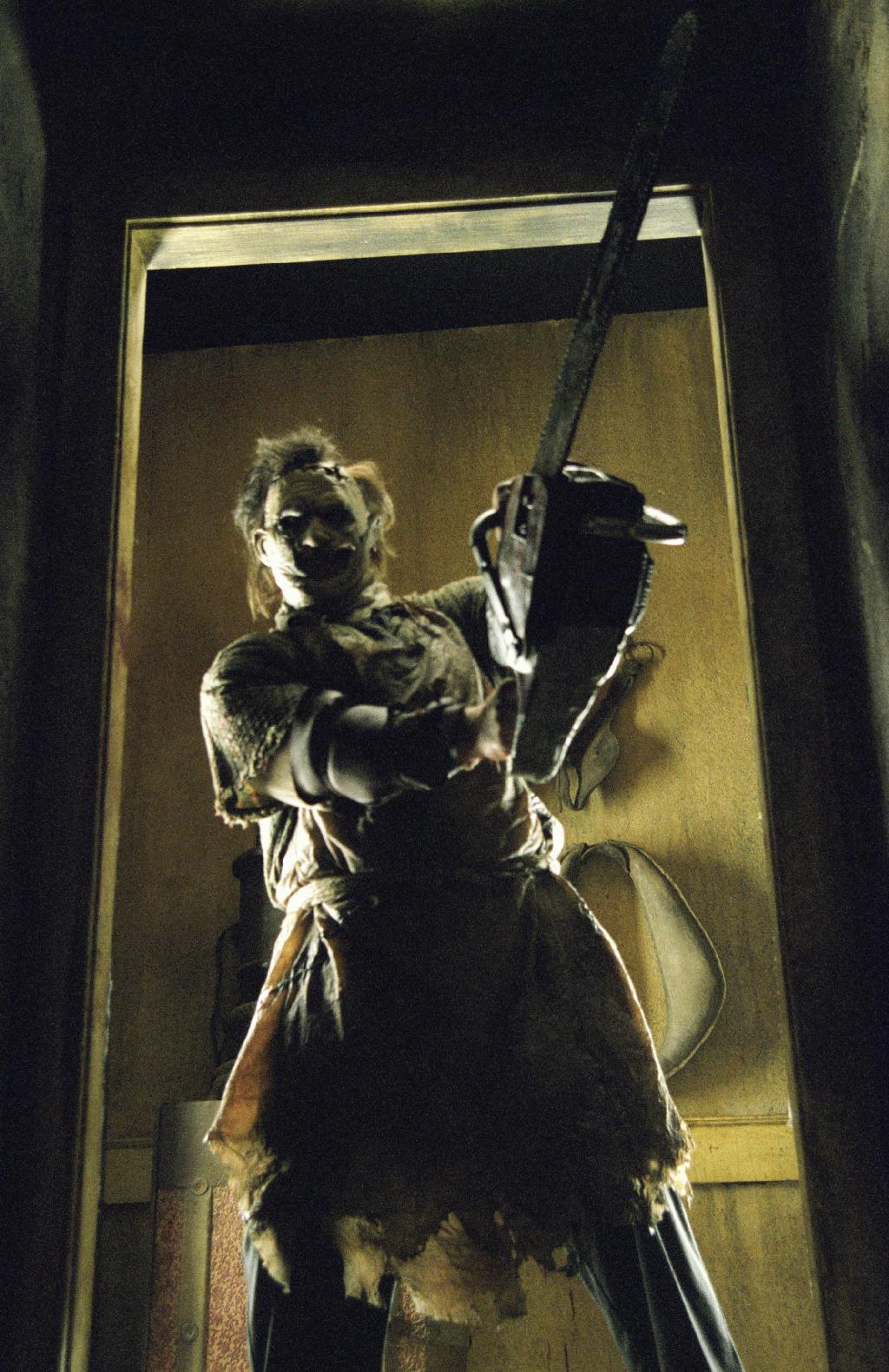
In this article Ballard explores contemporary road-horror films and contrasts them with their origins in road-horror from the 1970s in films like The Texas Chainsaw Massacre (1974) and The Hills Have Eyes(1977). The characteristics of this subgenre of film involve “the centralisation of a group of generally young protagonists; the journey of this group into an unknown and hostile location, and its resulting encounter with a murderous, perverse and often interrelated clan of killers, preceding vile and gory consequence.” Ballard attributes the post-millennial revival of road-horror to Jeepers Creepers (2001), which in turn spawned films like Wrong Turn (2003), House of 1,000 Corpses (2003), and The Devil’s Rejects (2005).
One of the more interesting facets of Ballard’s discussion is the connection of road-horror to the folklore of the European Middle Ages, particularly in the the fairytale known as Warnmarchen, “which encompasses those stories that involved an act of transgression followed by a delineation of consequences.” With these origins, contemporary road-horror films are similar to another aspect of folklore studies, that of legend-tripping. Folklorist Bill Ellis discusses this in his helpful book Lucifer Ascending: The Occult in Folklore and Popular Culture(University Press of Kentucky, 2004) when he mentions the legend-trip as “a set of cautionary legends that both warn of the danger of a site, and then functions as a dare to visit the very place and carry out the ritual that leads to danger.” When we consider that the primary audience for road-horror films are youth, as acknowledged by Ballard, then it is clear that road-horror functions in folklorish fashion both in an expression of warning related to the “dire consequences of straying from the path,” and also as a rite of passage for youth to undertake symbolically in conquering the trip through forbidden places by the act of viewing of such films.
Overall I greatly appreciate Ballard’s discussion of the topic, but I do have one disagreement. As previously mentioned he considers Jeepers Creepers the first of the post-millennial road-horror films. In my view Jeepers Creepers is better classified as either a modern monster movie connected to teen travels, or perhaps a combination of the traditional monster film with elements of road-horror. This would seem the best interpretation or classification in light of Ballard’s own discussion, not only in the characteristics of the sub-genre as noted above, but also where he contrasts teen slasher films and torture porn with road-horror and states that, “the villain of the road-horror is motivated primiarly by bloodust, and enacts the logic of the teen horror by dispatching those victims who commit misdemeanors by initiating sexual contact, consuming alcohol or drugs.” The creature of Jeepers Creepers does not fit this definition of the road-horror villain, and in light of other aspects of Jeepers Creepers and the road-horror sub-genre, is probably best understood as a postmodern treatment of older monster figures such as the demon or gargoyle.
Ballard’s article represents an interesting exploration of a sub-genre of horror. I have never been a fan of road-horror, either in the 1970s or the present. Nevertheless, this sub-genre is worth understanding, and Ballard suggests that these films are “the last remaining constitutor of ‘otherness’ in post-millennial America. The ultimate fear for contemporary cinemagoers is not that of discovering a refined psychopath living next door, but of being utterly isolated in an unnavigable environment, without recourse to rationality and to the tenets of modernity.”
The haunt industry is now in full swing as preparations are made for the 2008 Halloween season. One of the contacts I have been fortunate to make in the haunt industry is KathE Walker, who made time in her increasingly busy schedule in haunted houses and convention planning to discuss her work.
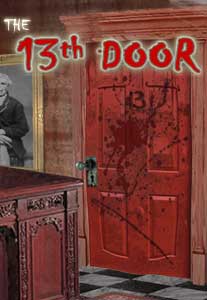
TheoFantastique: KathE, thanks for agreeing to talk about your work in the haunt industry and related activities. I know that preparations for the haunt season are underway, and I appreciate that you made time for our discussion. As we begin, I have a great fondness for the haunt industry given my love for the Halloween season, and my childhood spent with many hours of horror film viewing and listening to albums like Disney’s Night in a Haunted Mansion. You run the 13th Door and Curse of the Slaughter Gulch haunted houses in Colorado. How did you come to be involved in the haunt industry, and with these particular haunted houses?
KathE Walker: Our family has run the local Science Fiction/Media convention in Denver for the past 31 years. We realized that there wasn’t any of the haunted houses at the time that offered a haunt that had a science fiction flavor to it. We wanted to see Aliens , The Terminator, Close Encounters, not just Zombies. So we set out to do something completely different. We put together a haunt that made the people feel they were part of the action. We created scenes from each of our favorite sci fi movies and put the audience and the characters from the show in the scene together. We called our first haunt “Alien Encounter”. Over time we realized that most people prefer a more traditional haunt house experience and that was how 13th Door and Slaughterhouse Gulch came about. We still make the audience part of the action while trying to ‘scare the screams’ right out of them.
TheoFantastique: I understand that your whole family is involved in the haunt business. How did your whole family come to catch the spirit, and what part do family members play in your haunt activities?
KathE Walker: We have always had a family business since our sons were very young, so they grew up always being part of working with the family. I think we were very lucky that they also enjoy haunted houses and it was just a natural extension of what we were already doing as a family business. In fact, our son Michael went to college and got a degree in Mechanical Engineering so that he would be able to make the props and effects for our haunts even better. Our son, Stephen received his degree in Business Administration and Marketing and takes care of all our advertising and most of the business decisions for the company. Their wives and children also work at the haunts as well as our extended family – sisters, brothers, cousins, nephews, nieces…no one is safe.
TheoFantastique: The haunt industry is now gearing up for October. What types of things are you involved in right now that fans in Colorado can look forward to with your haunts?
KathE Walker: We are working on some really unique scares this year that I think will generate a lot of interest. We always try to bring something different to the mix and stay on the cutting edge. Of course, we still offer some of the tried and true scares as well. We are also very fortunate to have some of the very best actors in Colorado working at the two haunts. Nothing can scare you more than an actor who takes his job very seriously.
TheoFantastique: Your company also produces a haunted house effect called The Black Hole that you’ve sold to some major haunted attractions. Can you describe this effect, and tell us about some of the places it has been sold and used with great effect?
KathE Walker:We make an effect call The Black Hole. It is a spinning tunnel that you walk through that makes you feel as if you are moving. It affects your sense of balance. It is an incredible effect and one we brought to the haunted house industry in 1991. We were the first to be able to offer this effect to the industry and have sold them to companies all over the world. There are Black Holes in Six Flags Amusement parks, Wonderworld in Florida, Ripley’s Believe It or Not, Universal Studios and over 85 haunts across the country. Overseas we have them in the Canada, United Kingdom, Russia and even the United Arab of Emirates.
TheoFantastique:One of the other hats you wear is webmistress for Haunted Ratings that includes reviews and ratings for Denver area haunted houses. Has this proved a useful tool for haunt fans and haunt providers alike in providing a source for comparison of haunted houses, perhaps raising the bar for quality scares, and creating a sense of community among haunt fans?
KathE Walker: HauntedRatings.com lists all the haunts in the Denver Metro area. We have a review team that goes to each of the Haunts and offers up unbiased reviews online for our readers. Each Haunt is unique and our Review Team points out the positive elements of each haunt letting the readers know what kind of experience they can expect. We also print reviews from our readers so that we can offer a very well rounded glimpse of each haunt. This has created a wonderful sense of community among the haunted house fans and as a haunted house owner I know we are always interested in hearing what the attendees have to say about our Haunts. HauntedRatings.com is constantly changing and growing. This year we are sponsoring a food drive for the Food Bank of the Rockies. Several of the Haunts in the area will be offering discounts off the price of admission in exchange for a can of food to benefit the Food Bank. It’s a great way for the haunt house Owners to give back to the community
TheoFantastique: As a busy woman in this area, you are also involved with the Starfest Convention and its many facets. What is your role within the convention?
KathE Walker:As I said in the beginning, we have been putting on the StarFest conventions for the past 31 years. My main role at the convention is as the Convention Co-ordinator. I try to make sure all the elements of the convention come off without a hitch. It would be an impossible job if I didn’t have the constant support of my family. As with everything in our Family Business – everyone is involved.
TheoFantastique:One more question, KathE. I hope to get my foot in the door in the haunt industry this year as an actor in a Utah haunted house in Salt Lake City. As you describe your various activities in Denver I wonder whether you would ever consider expanding your empire into franchises in Utah, a very haunt and fantasy-friendly state (he asks drooling at the possibilities)?
KathE Walker: Right now we run 4 and at times 6 different Haunted Attractions in the Denver Metro area. We have thought about expanding, but for right now have no immediate plans for it. Besides, you have some of the best Haunts right there in Salt Lake City. You will have a blast working as an actor. I will be very interested in hearing how you enjoyed your “scary” experience. If you ever have a chance to come to 13th Door or Slaughterhouse Gulch remember that the ‘scares’ are on us!
TheoFantastique:KathE, thanks again for carving time out of a busy haunt season to talk about your many projects. I wish you the best with this year’s season.
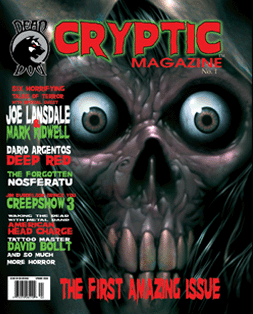 One of my favorite magazines that part of my Barnes & Noble viewing ritual is Cryptic Magazine. The Publisher, Chazz DeMoss, talks about the magazine and some of his other projects: