This week I have been tending to a personal matter and have been out of the loop in my interactions with the fantastic. With this post I will point to a couple of items from the past week that I find noteworthy and which attempts to catch me up on recent relevant events.
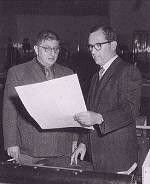
First, yet another significant figure in the cinema of the fantastic has passed away with the death of Charles H. Schneer, pictured to the left with frequent musical collaborator Bernard Herrmann. Schneer served as the producer and collaborator with Ray Harryhausen in his fantasy and science fiction films from the 1950s until Harryhausen’s final film Clash of the Titans. Without Schneer’s vision and support of Harryhausen’s fantastic ideas many of his film classics might not have found the funding necessary to see the silver screen.
The second item of possible interest to my readers is the Cinefantastique Online first annual Wonder Awards. As the omissions in the Academy Award nominations indicate, the cinema of the fantastic has still yet to receive the critical praise it deserves in the academy, even while these films do exceedingly well at the box office. Cinefantastique seeks to address this deficiency and has done so for the first time with nominations for the films of 2008 to which I contributed my own nominations. The complete list of nominations can be viewed here.
I admit that when it comes to being able to take in the latest box office happenings I am often late to the party. Time and budgetary restraints mean that I usually take in recent films as they come out on DVD. Thankfully the lag between box office and DVD debuts are shrinking these days.
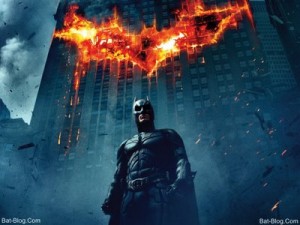
Last night I rented a few DVDs from my local RedBox display which included The Dark Knight, a film which my family saw this summer but which I was unable to take in. As a result of last night’s screening, although these thoughts are belated, I will share some of my reflections on the film for what they are worth.
In my view this is the best of the series of Batman films over the years, and while I have my appreciation for the way in which this character has been treated by different directors and filmmakers in the past, what I appreciated about The Dark Knight was the loosening of its moorings from the realm of comic books which results in its a context closer to the real world and its challenges. This different context is evident itself from the opening scene where Gotham City is presented less in surrealistic and comic book form and more akin to a large, contemporary urban environment, such as New York City. The change of context and scenery is significant in light of the background issue explored in the film, the global “war on terror.”
Of course, I am by no means the first commentator to see this connection to the film. A number of newspapers, magazines, websites, and blogs have discussed the issues related to terrorism that are explored through Batman’s clash with the Joker, but in my reading of much of the commentary a couple of interpretive elements have been missed. Before I suggest these recall how The Dark Knight explores terrorism. In the past as Batman fought various bad guys they were construed as comic book villains pursuing their evil deeds within the context of civil criminal activity. With The Dark Knight this changes and the Joker is called a terrorist at several points in the film. Beyond this several elements in the film parallel contemporary debates over terrorism and its relationship to civil liberties. At one point in the film Commissioner Gordon turns his back and suspends the Joker’s civil rights during interrogation and brings in Batman to beat him into providing important information that can save lives. This scene parallels the cultural debate over definitions of torture in relation to perceptions of imminent terrorist attack. There is also question raised in the film as to where the Joker and his henchman are best kept imprisoned. This parallels debate over Guantanamo Bay and whether this facility can or should be closed with the new presidential administration. And finally, among Batman’s vast array of technological wizardry in this film, his final tool utilizes a form of sonar that taps into the cell phones of Gotham’s citizenry. This parallels the debate over privacy rights and wiretapping under the Bush Administration.
This brings us to a consideration of additional aspects of the film. Much of what I describe above has been recognized in other commentary, but two important and controversial facets are missing in my view. First, not only does The Dark Knight raise issues related to the contemporary ‘war on terror,” but it does so with the dramatization of Bush Administration policies that carry over into Gotham City’s fight against the Joker. Beyond this it seems to do so positively. To be sure the film wrestles with the ethical problems associated with such stances. There is recognition that such policies and actions enter questionable ethical ground that would not be considered if circumstances were not so dire. But the film’s leading “good guy” characters seem to support such actions and are willing to live with the ethical tension that surrounds them.
Which leads me to the second element of the film that appears to be missing in much of the commentary. The film presents “good” and heroic characters in an ambiguous sense. In this film Nietzsche’s saying that “He who fights monsters should look into it that he himself does not become a monster. When you gaze long into the Abyss, the abyss also gazes into you” is realized in Commissioner Gordon and Harvey Dent, but most especially in Batman himself. The Dark Knight presents the kind of “monster slayers” that are fit for our post-Vietnam, post-modern, post-9/11 world, the kind of monster hunters Heather Duda speaks about The Monster Hunter in Popular Culture (McFarland, 2008), where the monster hunters live in a gray ethical area “where the battle is often with their own inner natures as much as with the ‘evil’ they fight.” In this way the heroic monster hunters frequently resemble the monsters they seek to destroy.
Considered in this light another aspect of symbolism seems to come to the surface in The Dark Knight. At the conclusion of the film Batman makes the decision to continue to be the outcast, taking the blame for killings he did not commit, and continuing to follow his controversial pathway in fighting Gotham City’s evil. Might Batman then be a symbol for post-9/11 America as a country under the Bush Administration, a country which lost its sense of national purity post-Vietname/Watergate and has looked into the abyss of terrorism resulting in a course of action in fighting terrorism that is controversial and yet its leadership has seemed willing to continue to bear that stigma as it hovers on the fringes as the outcast Superpower?
If my reading of the film has merit, and a positive acceptance of Bush Administration policies on terrorism serve as a backdrop for many elements of the film, then I am greatly surprised that it did as well as it did at the box office. True, the film is very well done on a number of levels, but given its apparent acceptance of controversial policies as a foundation for the film, and much of America’s opposition to such practices (at least in many opinion polls), the box office success of the film seems counter-intuitive. One of the strengths of fantasy films is their ability to serve as a space for the engagement of foundational and at times controversial issues. Perhaps The Dark Knight is the perfect film for this time in American history as it peers into its own soul, and this facet accounts for some of its success.
As this post is uploaded we stand on the verge of the inauguration of a new presidential administration. Although candidate Obama took a firm and critical stance on issues related to terrorism that included pledges to close Guantanamo Bay, end wiretapping of international calls, and eschew interrogation techniques like waterboarding, President elect Obama seems to have slowed down on following through on these campaign promises, perhaps even backed off from such stances. The messy realities of fighting real Jokers as President is more complex than running for political office. Time will tell whether the Obama Administration continues in the way of The Dark Knight or moves the nation into other pathways in a dangerous world. But it’s interesting that it took a popular fantasy film to help the nation move beyond its divisive rhetoric to wrestle with one of the major international challenges of the twenty-first century.
As readers of this site are aware, I attempt to move beyond a surface level analysis and appreciation of the fantastic in cinema and television to dig a little deeper in order to discover their social, cultural, and at times religious or spiritual aspects these venues provide. Last year I had the opportunity to teach a graduate level course on film and theology, and I used two films of the fantastic to illustrate a process of theologizing that takes place in film in ways that many people may not recognize as an exercise in metaphysics.
The first film was Minority Report(2002), a science fiction film starring Tom Cruise who plays a police officer with the Pre-Crime Unit that draws upon the psychic abilities of three “pre-cognitives” or “pre-cogs” who sense impending murders and provide a narrow window of time for authorities to decipher the visual clues provided by the pre-cogs so that would-be murderers can be arrested before they actually commit their crimes. The program is understandably controversial, and early on it comes under scrutiny through a character played by Colin Farrell. In a scene near the film’s beginning Cruise and Farrell discuss the idea of Pre-Crime against the backdrop of metaphysical questions of human will and responsibility in relation to time (at 3:07-3:53 in the clip found above). Theology hovers in the background of this discussion as the room where the pre-cogs stay is referred to as “the temple” (6:43-7:53 in the clip), the members of the Pre-Crime Unit think of their function as priests, the pre-cogs work together as three persons in unity reminiscent of Christian trinitarian theology of the divine, and the key figure among the pre-cogs is a female reminiscent of feminine aspects of the Holy Spirit. In addition, Farrell’s character, toward the conclusion of the metaphysical discourse with Cruise, makes reference to his studies in the past at Fuller Theological Seminary, a major Protestant theological institution in southern California. This dialogue then represents an aspect of science fiction which lends itself naturally to metaphysical and theological discussions of human nature, free will, and the divine relationship to time.
The second film I used in the course was The Devil’s Advocate (1997), which combines aspects of courtroom drama with demonological and apocalyptic fantasy. Al Pacino plays the owner of a major law firm and Keanu Reeves is his young, aggressive protege. Reeves’ character comes to realize at the climax of the film that his boss is in fact Satan who seeks his help in bringing the antichrist into the world. Reeves resists given his guilt and conservative Christian upbringing, which leads to a lengthy speech by Pacino (an excerpt of which can be found in the clip above) who questions whether God as conceived of in the Judeo-Christian tradition is worthy of worship. While it would be easy to dismiss this film on a superficial level, Pacino’s speech raises serious theological and metaphysical questions related to theodicy, the attempt to justify God’s goodness in the face of evil.
Science fiction, fantasy, and horror might be the last places many people would think of as sources for significant metaphysical reflection, but if are willing to look more closely the material is there to challenge us.
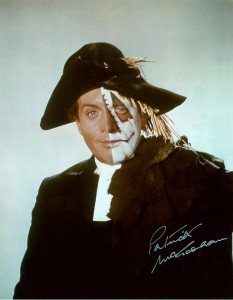
This seems to be the week for the passing of childhood heroes for monster kids and those of us raised on the fantastic in cinema and television. In a previous post I mentioned the death of northern California’s Creature Features host Bob Wilkins, and now news is being circulated that Patrick McGoohan has died. McGoohan had a long career in television and film, perhaps best known by the contemporary general public for his role in Braveheart, but known by fans of the fantastic for his role in the 1960s television series The Prisoner. To this I would add the often neglected role of Dr. Christopher Syn in Walt Disney’s The Scarecrow of Romney Marsh (1963). This program aired in three parts and told the interesting story of a vicar with a costumed alter ego, the Scarecrow, who fights the British in the 18th century. McGoohan’s portrayal of the Scarecrow is an interesting one, combining elements in a role that almost a prefigures a combination of The Dark Knight’s Batman and the Joker.
McGoohan made a deep impression on me as a consumer of the fantastic in the 1970s, and his contribution to cinema and television will be missed.
Steve Biodrowski of Cinefantastique Online asked me if I would be willing to write an article each month that provided an analysis of certain aspects of fantastic cinema. I was all too happy to accept the invitation. The first article, “Of Folklore and Fatherhood: THE UNBORN and Cinematic Reflection,” has been posted here, and below is an excerpt:
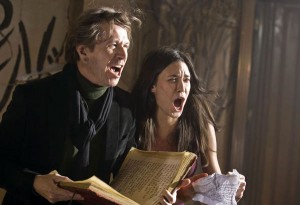
Two additional elements of THE UNBORN held special appeal for me and are worthy of further reflection. First, although the film touches on the issues of possession and exorcism, common elements from any number of horror films since the 1970s, it does so by way of different source material. In the United States, most past possession and demonological films such as THE EXORCIST and THE OMEN, to more recent efforts such as THE EXORCISM OF EMILY ROSE, have tended to find their narrative grounding for the supernatural in the Christian tradition with its concepts of God, Satan, and possession. THE UNBORN breaks new ground in basing its narrative in Jewish folklore and mysticism. The movie’s heroine, Casey Beldon (played by Odette Yustman), comes to discover that her nightmares and ghostly visitations are the result of a dybbuk, defined by the Encyclopedia Britanica online as “a disembodied human spirit that, because of former sins, wanders restlessly until it finds a haven in the body of a living person.” In order to learn more about how to combat this supernatural creature Casey consults a volume of Jewish mysticism from the Kabbalah. Given that the text is written in Hebrew, Casey visits Rabbi Sendak, a skeptical clergyman who is eventually forced by his own supernatural experiences to come to grips with the reality of the situation facing her.
Another formative piece of my childhood was lost today as Bob Wilkins, the first Creature Features host in northern California, passed away from Alzheimer’s. (See the great tribute to Bob on his website, and click around to learn more about his work.) I remember many late nights in the early 1970s huddled around my nineteen-inch black and white television with my brother as we watched a wide range of horror, science fiction, and fantasy films flicker on the screen before us. These late night cinema experiences exposed me and many others (including a young George Lucas) to a broad range of cinefantastique experiences, including not only the films themselves, but also numerous interviews with those involved in their production. Bob was always gracious with his fans, answering many of my letters as a teenager, even sending along autographed pictures of my animation idol Ray Harryhausen that adorned the walls of my bedroom. Bob will be missed, as will his contribution to monster kid culture. With his passing a piece of my childhood goes with him. Thanks Bob for many nights of fun and frights.
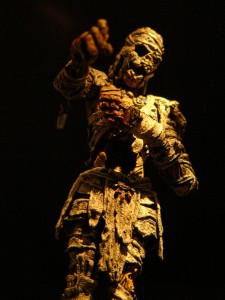
My research and exploration of the fantastic over the last few months has unearthed some interested gems that touch on neglected aspects of horror. These include the book The Mummy’s Curse: Mummymania in the English-Speaking World(Routledge, 2006) by Jasmine Day, a lecturer in Egyptology. Of the various monster archetypes the mummy is one of the most neglected, but Day remedies this in her fine treatment, an adaption of her doctoral dissertation, described as follows on the the back cover of the book:
“The riddle of the ‘curse of the pharoahs’ is finally solved via a radical anthropological treatment of the legend as a cultural concept rather than a physical phenomenon. The most penetrating study of the curse ever conducted shows that its structure and meaning changed over time, as public attitudes towards archaeology and the Middle East were transformed by events such as the discovery of Tutankhamun’s tomb. Victorian women writers likened unwrapping to rape, but to exploit the growing popularity of Egyptology, Hollywood turned mummies from victims into monsters, destroying the curse’s power to challenge abuses of human remains. Mummies came to symbolize everything wrong and rotten: pollution, age, death, difference and defiance of authority, becoming imaginary friends or cautionary examples for children.
“The Mummy’s Curseuncovers forgotten nineteenth-century fiction and poetry, revolutionizes the study of mummy horror films and reveals the prejudices embedded in children’s toys. Original surveys and field observations of museum visitors demonstrate that media stereotypes – to which museums inadvertently contribute – promote vilification of mummies, which can invalidate demands for their removal from display. The Mummy’s Curse asks: must we debase other cultures in order to promote our own?”
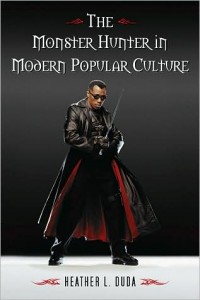
The second volume that deals with a neglected aspect of horror is The Monster Hunter in Modern Popular Culture (McFarland, 2008) by Heather Duda. Of course, monsters have received a great deal of attention from readers and viewing audiences throughout the centuries, and most recently from scholars in a variety of disciplines, but Duda points out in her book, based on a revised and expanded form of her doctoral dissertation, that the figure of the monster hunter has been neglected. The back cover of Duda’s book describes its contents:
“As monsters in popular media have evolved and grown more complex, so have those who take on the job of stalking and staking them. This book examines the evolution of the contemporary monster hunter from Bram Stoker’s Abraham Van Helsing to today’s non-traditional monster hunters such as Blade, Buffy the Vampire Slayer, and Watchmen.
“Critically surveying a diverse range of books, films, television shows, and graphic novels, this study reveals how the monster hunter began as a white, upper-class, educated male and became everything from a vampire to a teenage girl with supernatural powers. Now often resembling the monsters they’ve vowed to conquer, modern characters occupy a gray area where the battle is often with their own inner natures as much as with the ‘evil’ they fight.”
Look for interviews with both of these authors here in the near future as we explore these neglected and important aspects of horror.
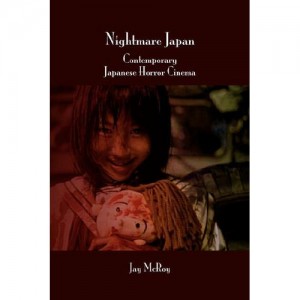
As a student of intercultural studies I have found the discipline very helpful in my appreciation and analysis of the fantastic. Of course, this is particularly the case when considering the fantastic and horrific produced by other countries. One of the expressions of horror films that intrigues me is that coming out of Japan. In my research I was pleased to find a helpful book on this topic edited by Jay McRoy, Associate Professor of English and Cinema Studies at the University of Wisconsin – Parkside. He is the author of Nightmare Japan: Contemporary Japanese Horror Cinema (Rodopi, 2008), the editor of Japanese Horror Cinema (Edinburgh University Press, 2005), and the co-editor (with Richard Hand) of Monstrous Adaptations: Generic and Thematic Mutations in Horror Film (Manchester University Press, 2007).
TheoFantastique: Jay, thanks for giving me an opportunity to take a look at your book. Most of my reflection has been on American horror, but as your book makes clear, there is much to be learned from Japanese horror films. To begin, can you share how you came to be interested in “New Asian Horror” or “J-Horror”, and do you think it is starting to come to the attention of scholars in greater ways as has other cultural expressions of horror?
Jay McRoy: My initial introduction to Asian horror cinema occurred when I was in high school and saw Mizoguchi Kenji’s Ugetsu (1954) and Shindô Kaneto’s Onibaba (1965). Although the prints I viewed were worn and the subtitles difficult to read, I remember being struck by how radically the tone of these works differed from the “giant monster” films that a local television station played every Saturday afternoon. Ugetsu and Onibaba were “creepy,” but they were also heart-breakingly poignant in ways that I registered emotionally but did not yet possess the vocabulary or critical savvy to articulate.
When, in the late 1990s, I came into contact with works like Nakata Hideo’s Ringu (1998) and Dark Water (2002), I felt a similar emotional response, and this sparked my curiosity as both a fan of horror cinema and as a film scholar. Of course, the Internet, and the plethora of fan-based communities and retail sources that this technological innovation has abetted, was an essential tool in my quest, as I am sure is the case with many cinephiles who share a passion for the motion pictures or film genres of nations other than their own.
TheoFantastique: What are the theatrical and literary traditions, and cultural experiences that inform Japanese horror, and how are these expressed in its primary motifs?
Jay McRoy: The theatrical and literary traditions are many – entire books could be written on this component of Japanese horror cinema alone. For the purposes of this interview – and in the interest of providing potential scholars with some starting points for their own research projects – I will mention a few. Certain themes and motifs that emerge and re-emerge in Japanese horror film can be traced back to Japanese folklore, as well as the performative traditions of Noh and Kabuki theater. For example, the “avenging spirit” figure in Japanese cinema has its precursors in the Shura-mono (battling ghost plays) and the Kyojo-mono (mad woman plays) traditions in Noh theater; similarly, the highly-stylized trappings of well-known Kabuki plays, like Yotsuya Kaidan (The Yotsuya Ghost Story, 1824), still resonate in many works of Japanese horror cinema.
TheoFantastique: Most American viewers are probably most familiar with the female avenging spirit in Japanese horror. Why is this image found frequently in their cultural expression of horror, and what types of things does it symbolize? How have changing gender roles in Japanese society played themselves out in their expressions of horror?
Jay McRoy: To relate the tale of a “wronged,” primarily female spirit returning to avenge herself upon those who harmed her, films like Kwaidan (1964), Ringu (1998), and Ju-on (2000), to name only a scant few, draw on a multiplicity of religious traditions (e.g. Shintoism, Christianity, etc.), as well as plot devices from literature and theatre (e.g. Noh and Kabuki). Prominent features associated with the woman as “avenging spirit” include long black hair and wide staring eyes (or, in some instances, just a single staring eye), as long black hair is often linked with notions of feminine beauty and sensuality.As was the case with the emergence of the figure of the femme fatale in U.S. film noir post World War II, shifts in gender roles over the last few decades have impacted this tradition in Japanese horror – but more so in terms of the depiction of males responding to the threat of the monstrous feminine.
TheoFantastique: Can you discuss some of the impact in the national psyche for the Japanese as the only culture to have been the focus of a nuclear attack and how this apocalyptic memory surfaces in their horror?
Jay McRoy: The devastating impact of the U.S. attacks on Hiroshima and Nagasaki – as well as the legacy U.S. cultural, military, and economic imperialism – certainly informs works of Japanese cinema across multiple genres. For example, works by Japanese New Wave directors like Imamura Shohei and Oshima Nagisa address these concerns in various ways, as do – albeit “more subtly” – films by Kurosawa Akira and Ozu Yasujirō. The theme of apocalypse (both on the larger social and on the more intimate biological level) remains a recurring component of Japanese horror cinema, but what I find especially intriguing about this trend, and the notion of apocalypse in general, is the promise of rebirth and the potentials for radical change and transmutation. This is probably why I felt so compelled by the cinema of Kurosawa Kiyoshi, particularly a film like Kaïro (2001), or why I was so enthralled by the Battle Royale films (2000 and 2003), helmed by Fukasaku Kinji and Fukasaku Kenta respectively.
TheoFantastique: In the U.S. we have filmmakers like David Cronenberg who incorporate postmodern concerns of the body in their work. How has Japanese horror dealt with the body related to gore and dismemberment?
Jay McRoy: Absolutely, and in ways that are every bit as philosophically compelling. Tsukamoto Shinya comes immediately to mind, particularly films like The Adventures of Electric Rod Boy (1986/87), Tetsuo: The Iron Man (1988), Tetsuo II: Body Hammer (1992), Tokyo Fist (1995), Bullet Ballet (1998), and Vital (2004). Like Cronenberg, Tsukamoto frequently uses corporeal transformation, radical fusions of the biological and the technological, and phenomenological concerns regarding the “mind-body” relation to explore changing notions of the “human” and what it means to exist in a rapidly shifting post-industrial landscape. His work is endlessly fascinating, and I recommend Tom Mes’s book, Iron Man: The Cinema of Shinya Tsukamoto, as an essential introduction/point of departure for anyone interested in learning more about one of the most consistently daring and intellectually demanding visual artist creating cinema today.
TheoFantastique: Fear is in many ways culturally-based. In the instances in which Japanese horror has been translated into American horror films what types of cross-cultural changes have had to be made for them to be intelligible and scary for a different culture?
Jay McRoy: I have always felt that if one way of learning about a society is to study its monsters, to see what figures or images are mobilized for the purposes of evoking fear and terror in audiences. Certainly, Japanese horror films are experienced differently by a Japanese audience than they are by a U.S. audience. Each viewer brings their own set of expectations, their own process of cognitive mapping. Consequently, if a U.S. producer creates a shot-by-shot and line-by-line adaptation of a Japanese horror film, the chances of its success are mitigated by culturally specific details that may be lost in the process of translation. Thus, a successful adaptation would have to take cultural differences into account. Once this takes place, the work’s success becomes an issue of style and execution. The very fact that U.S. audiences have found Japanese horror an enticing alternative to Hollywood and so-called Independent genre offerings is a point of fascination for me. It suggests that there is something uncanny that transcends culturally-based dynamics, something that elicits a “fear without frontiers,” to borrow from the title of Steven Jay Schneider’s terrific 2003 anthology of essays on horror cinemas from around the globe.
TheoFanastique: How has American horror influenced that of Japan, and how has their unique cultural perspective on horror influenced American horror?
Jay McRoy: In the late 19th century, Japan and the U.S. have participated in a profound and complex process of cultural cross-fertilization, of which horror cinema is a rather small, if – in some circles – highly visible contribution. That said, directors like Sono Shion, Kurosawa Kiyoshi, and Shimizu Takashi have been very open about the impact of U.S. horror films of the 1970s and 1980s upon their imaginations during their “formative years.” Likewise, a simple stroll through the New Release section of one’s local video rental store will reveal the extent to which film distributors have adopted (or perhaps a more accurate word might be “abducted”) the more pronounced visual iconography associated with Japanese horror cinema: long black hair revealing a single staring eye; the ghostly, ghastly faces of traumatized youth bathed in a deathly blue light; young girls in short skirts and knee socks smiling menacingly in long shot. Sometimes I have to pick up the boxes to see if I have inadvertently missed a recent import (which I guess means that said marketers have done their jobs well). It will be instructive to see how future directors, some of whom may very well be strolling down those video store aisles as I type this, incorporate the conventions of Japanese horror film into their personal cinematic visions.
TheoFantastique: What types of things might film critics and scholars consider in their further and deeper analysis of Japanese horror for the future?
Jay McRoy: This is a terrific question. Lots of analysis and research remains to be done, and with each new film, the potentials for further study from a plurality of critical perspectives only increases. I frequently receive emails from students around the globe who are embarking upon explorations of the horror genre in Japanese film, and this fills me with excitement and anticipation; I can’t wait to read the critical engagements that will undoubtedly emerge in the years to come. Personally, I look forward to reading more about the reception of, and reactions to, the “J-horror” phenomenon within Japan. I also think that as directors often linked with the perceived re-emergence of the horror genre in contemporary Japanese cinema continue to develop as artists with unique visions and styles – and here I am thinking of directors like Kurosawa Kiyoshi, whose output is by no means limited to the narrow confines of a specific genre like “horror” – we will begin to see detailed and insightful studies of their individual oeuvres.
TheoFantastique: For those looking to explore Japanese horror in greater depth, what are some of the best films that you can recommend?
Jay McRoy: Although I have had spirited debates with friends on this subject, I really enjoyed Shimizu Takashi’s Marebito (2004) and Tsukamoto Shinya’s Haze (2005). In the case of the former, I was attracted by the film’s extravagant merging of H. P. Lovecraft’s mythology, hollow earth theory, and the Frankenstein motif; with the latter film, I was captivated by the degree to which the work’s minimalist aesthetic evoked an uneasy combination of fear and dread that, rather than dissipating, actually increased with subsequent viewings.
TheoFantastique: Jay, thanks for sharing your thought on this. My own cross-cultural appreciation of horror has been stretched as a result of our conversation. I hope more people seek out Nightmare Japan.
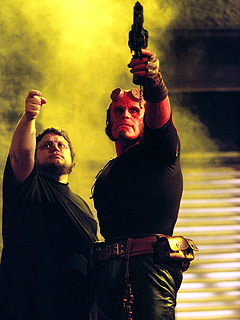
Given that my family has shifted in the last couple of years to opening Christmas presents on Christmas Eve, and that the vast majority of the gifts that I receive are related to the genres of the fantastic, I really do have a Nightmare Before Christmas. One of my gifts this year has been especially enjoyable, a copy of Hellboy II: The Golden Army on DVD, and after watching it on Christmas Day it spawned a few thoughts for what they’re worth.
I remember as I enjoyed the fantastic as a kid that many of my teenage friends enjoyed horror (few teens don’t), and a few fellow geeks liked science fiction, but very few shared my love for fantasy films (until Star Wars, that is). Unless fantasy is framed in children’s garb (e.g., Harry Potter) or dark action (e.g., The Dark Knight), it tends not to receive the popular or critical attention that I believe it deserves. And very few filmmakers even attempt to put together good fantasy films for adults. That is, until Guillermo del Toro.
I have long been a fan of del Toro’s work who has proven himself a competent director and storyteller with horror films such as Cronos (1993), Mimic (1997), and The Devil’s Backbone (2001), as well as comic action films like Blade II (2002) and Hellboy (2004). All of these films are very enjoyable but it was his work in Pan’s Labyrinth (2006) that established him as a visionary filmmaker, not only as a director, but also as a writer with a special gift for fantasy films.
As I have posted previously, Pan’s Labyrinth incorporate myth, archetype, and symbol into his a story that provides for multiple levels of meaning and interpretation. This film caught the attention of the viewing public and garnerd three Oscar awards. In many ways Hellboy II is a sequel to Pan’s Labyrinth, at least in terms of the mythic dimension it incorporates. With this second installment in the Hellboy series based upon the comics of Mike Mignola, del Toro creates an expansive mythic and fairytale world for the characters to inhabit that is multifacted, rich in depth and detail (e.g., the words on a portal to Troll Market relate to a Jungian concept), and visually stunning. For fans of fantasy films and mythmaking, Hellboy II is a true pleasure to watch, and additional rewards come from multiple viewings so that more of the depth and detail can be appreciated.
For many years I have been, and remain, a Ray Harryhausen fan. For generations of people he has been the king of fantasy films who brought creatures to life through stop-motion animation who appeared to live and breathe in mythic worlds. But in many ways in my opinion, and I say this as a serious fan, Harryhausen’s films lacked a depth of mythology that interfered with their ability to be appreciated by broader aspects of popular culture. Even so, Harryhausen is an icon in fantasy films who inspired a number of filmmakers, including del Toro. Perhaps del Toro might be considered in some sense as Harryhausen’s successor, the next generation of fantasy filmmakers, who is able to put together fantasy films that not only entertain on a surface level, but also incorporate aspects of myth, archetype, and symbol that make for a rich tapestry that rewards deeper reflection.
Guillermo del Toro has expressed an interest in making another Hellboy film to complete a trilogy. As a fan of his myth-making I hope is able to make it. If not, perhaps another cinematic endeavor will enable him to build on the mythic vision of Pan’s Labyrinth and Hellboy II. The realm of imagination will be the richer for his continued artistic expression.
My friends and neighbors who know of my interest in horror and other aspects of the fantastic assume that I enjoy every film connected with the genre. Many times I am asked if I have seen the television ads for a new film and whether I am going, and my answer is often that I have seen the ads, but no I’m not going because the film doesn’t look like it will be any good. I’m pretty discriminating in my consumption of the fantastic. But I must admit that the trailer for a new horror film has caught my attention.
Over the last couple of days ads have been running for The Unborn which opens in theaters January 9. The website for the film provides the following synopsis:
Sometimes the soul of a dead person has been so tainted with evil that it is denied entrance to heaven. It must endlessly wander the borderlands between worlds, desperately searching for a new body to inhabit.
And sometimes it actually succeeds.
Writer/director David Goyer (Blade: Trinity, The Invisible, Batman Begins) gives a terrifyign glimpse into the life of a young woman pulled into a world of the undead in The Unborn, a supernatural thriller that follows a young woman pulled into a world of nightmares when a demonic spirit haunts her and threatens everyone she loves.
Casey Bell (Odette Yustman) hated her mother for leaving her as a child. But when unexplicable things start to happen, Casey begins to understand why she left. Plagued by merciless dreams and a tortured ghost that haunts her waking hours, she must turn to the only spiritual advisor, Sendak (Gary Oldman), who can make it stop.
With Sendak’s help, Casey uncovers the source of a family curse dating back to Nazi Germany – a creature with the ability to inhabit anyone or anything that is getting stronger with each possession. With the curse unleashed, her only chance at survival is to shut a doorway from beyond our world that has been pried open by someone who was never born.
Several elements make this film look intriguing for me. First, I have enjoyed the director’s previous work, particularly in Blade: Trinity and Batman Begins. Second, Gary Oldman is a veteran actor with experience in horror and fantasy films (such as Bram Stoker’s Dracula, Harry Potter and the Order of the Phoenix, The Dark Knight and others) who should help bring credibility not only to his own role but perhaps also to the project as a whole. Third, the trailer for the film includes some arresting visual imagery that promise to provide a dimension of fright to the film.
From the storyline and visuals it is possible to detect a number of influences in the film which also add to the expectations. These include demon possession and exorcism elements from films like The Exorcist and The Exorcism of Emily Rose, demonic children from influences such as The Omen series of films, ghost story elements from any number of horror films, and the influence of Japanese horror cinema and its American remakes in narrative and visual elements.
Perhaps I’ll be disappointed after January 9 like many other horror fans. But at least The Unborn gives me something to look forward to in horror for the first part of 2009.
 This week I have been tending to a personal matter and have been out of the loop in my interactions with the fantastic. With this post I will point to a couple of items from the past week that I find noteworthy and which attempts to catch me up on recent relevant events.
 I admit that when it comes to being able to take in the latest box office happenings I am often late to the party. Time and budgetary restraints mean that I usually take in recent films as they come out on DVD. Thankfully the lag between box office and DVD debuts are shrinking these days.
 McGoohan made a deep impression on me as a consumer of the fantastic in the 1970s, and his contribution to cinema and television will be missed.
 Steve Biodrowski of
  My research and exploration of the fantastic over the last few months has unearthed some interested gems that touch on neglected aspects of horror. These include the book
  The second volume that deals with a neglected aspect of horror is
  As a student of intercultural studies I have found the discipline very helpful in my appreciation and analysis of the fantastic. Of course, this is particularly the case when considering the fantastic and horrific produced by other countries. One of the expressions of horror films that intrigues me is that coming out of Japan. In my research I was pleased to find a helpful book on this topic edited by Jay McRoy, Associate Professor of English and Cinema Studies at the University of Wisconsin – Parkside. He is the author of
  Given that my family has shifted in the last couple of years to opening Christmas presents on Christmas Eve, and that the vast majority of the gifts that I receive are related to the genres of the fantastic, I really do have a Nightmare Before Christmas. One of my gifts this year has been especially enjoyable, a copy of Hellboy II: The Golden Army on DVD, and after watching it on Christmas Day it spawned a few thoughts for what they’re worth.


